Category: Electronics

Retail News Asia is committed to providing both local and global retailers with the latest Electronics news throughout the Asian market. This on a daily base.

  • Popular Pixel widget will gain new options

    Popular Pixel widget will gain new options

    The Pixel Launcher’s At A Glance widget shows the day, date and information related to the weather, including the temperature. Tapping on the day and date will open the calendar while tapping on the weather information will take you to Google’s weather app. The widget also alerts you to a calendar appointment, an upcoming flight (including the boarding time) and unusual traffic changes.

    Now, the At A Glance widget has some new features. Long press on the widget and tap on preferences and you’ll see all of the available information that the widget can display. This includes Calendar events, Upcoming flight information, and Traffic information along with two new features: Reminders and Intelligent tips. The former will show you the next upcoming reminder alerts. For example, let’s say you set a reminder to alert you when you can take Tylenol again; this will show up on the widget. The latter reveals intelligent tips powered by Google Assistant.

    We’re guessing that these are suggestions about what features available on your phone use should use in certain situations. Right now, both of these new features are not working even though they are listed as preferences for the widget.

  • Samsung Galaxy Studio creates Heartbeat Experience

    Samsung Galaxy Studio creates Heartbeat Experience

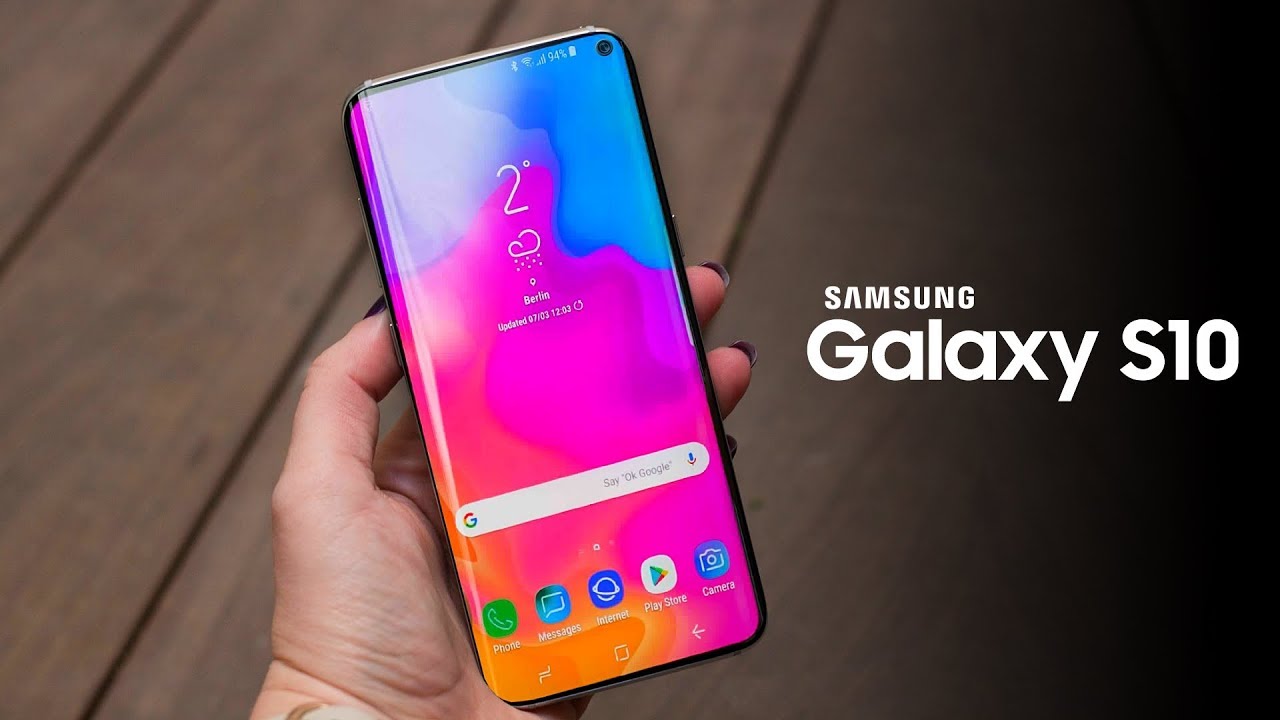
    Samsung Galaxy Studio pop up in Causeway Bay marks the Galaxy S series’ 10th anniversary smartphone.

    Interactive digital lights in the studio allowing participants to create visually stunning motion images responding to their own heart rates and eye images in order to demonstrate the quality of the latest Galaxy S10 phone camera.

    Every participant visiting the Samsung Galaxy Studio will be equipped with a Galaxy S10 smartphone to experience different zones, where they can personally try out the phone’s extensive functions. Participants will be awarded limited prizes upon completion.

    “Samsung has been upholding the belief of innovation for the past 10 years, bringing consumers an excellent smart mobile experience,” said Samsung Electronics HK MD Yiyin Zhao. “At the same time, we understand how Millennials crave for an all-new experience, so we opened the all-new Galaxy Studio in Causeway Bay, where fashionistas gather.”

    Visitors who register at the check-in counter to get a Galaxy S10 smartphone with the Galaxy Buddy app installed are then led through different experience zones. After completing an experience, participants receive a digital stamp through the Galaxy S10’s NFC tag function. Participants may redeem gifts after collecting four digital stamps, and are encouraged to upload their photos to their social media accounts.


  • Samsung sends out patch that improves the performance

    Samsung sends out patch that improves the performance

    Owners of the Samsung Galaxy S10 and Galaxy S10+ might have recently noticed an improvement to the in-display fingerprint scanner found on both devices. Reddit posters shared information recently about a 6.9MB update sent out to both models. The update is a biometrics security patch designed to improve the performance of the in-display ultrasonic fingerprint scanner used on the two handsets.

    Some of those who installed the update claim that the fingerprint scanner now works “instantly” to unlock their phone. Samsung didn’t include a changelog with the update, so we really don’t know how the fingerprint scanner has been improved. Those who do notice a difference say that they did not have to re-scan their fingers after the update was installed. However, if you load the update and don’t notice a change, you might want to consider rescanning your fingers.

    The Galaxy S10 and Galaxy S10+ both use an ultrasonic in-display fingerprint reader. This is a more accurate and faster technology than the capacitive readers used on most devices. The ultrasonic technology uses sound to produce a 3D map of a user’s fingerprints. As we pointed out last week, the ultrasonic fingerprint scanner on the Galaxy S10 and Galaxy S10+ can still be tricked into unlocking either phone. The capacitive readers feature circuits that capture unique information about a user’s fingerprint. The “more affordable” Samsung Galaxy S10e features a capacitive fingerprint scanner mounted on the right side of the device.

    Keep in mind that this is not a system update. Instead, it is an update to the fingerprint module in the Galaxy Store. There is no way to trigger it, so it is just a matter of being patient. Eventually, the notification will arrive to let you know that the update is ready to be installed.

  • Microsoft reportedly builds Surface Pro prototypes

    Microsoft reportedly builds Surface Pro prototypes

    Microsoft has apparently become more serious about offering at least some versions of its Surface Pro tablets powered by ARM-based processors. Right now, the Surface Pro 6 runs on an Intel Core i5 or Core i7 processor. According to Thurrott, Microsoft has built prototypes of the Surface Pro that run on Qualcomm’s Snapdragon chips. The report says that Microsoft has considered stuffing some of its low-end Surface Pro models with a Snapdragon processor.

    There also is speculation that the original plans for Microsoft’s iPad competitor, the Surface Go tablet, called for the device be powered by Qualcomm’s Snapdragon chips. Intel reportedly pressured Microsoft to have the lower priced tablets run on Intel’s Pentium Gold Processors instead. If Intel doesn’t put the squeeze on Microsoft so hard this year, the second generation Surface Go models could end up with Intel outside and Qualcomm inside.

    The Surface Pro line is supposed to get a major redesign with new models to be unveiled during the fourth quarter of this year. Thurrott’s Brad Sams says to expect thinner bezels, the long awaited USB-C port, new color options and some other changes. That would be the time to expect Microsoft to make the change to Snapdragon chips for the Surface Pro, starting with the lower-end variants of the tablet.

    In a related piece of news, testing has started on the Firefox for Windows 10 ARM browser.

  • Oppo makes official the latest replacement for the notch

    Oppo makes official the latest replacement for the notch

    With the unveiling today of the Oppo Reno, we got to see the latest attempt by a manufacturer to replace the notch. The ultimate goal, of course, is to give the consumer a device that carries a high-screen-to-body ratio. The wedge is motorized and contains the front-facing selfie camera and the flash for both front and back cameras. There are two versions of the device, which we get to in a moment.
    The standard version of the Oppo Reno sports a 6.4-inch OLED display carrying a 1080p FHD+ resolution and is powered by the Snapdragon 710 Mobile Platform. The device carries 6GB or 8GB of memory. The microSD slot offers as much as 256GB of additional storage, and the handset comes with a dual-camera setup (48MP + 5MP depth sensor) on back. A 5x hybrid zoom is available. The selfie snapper that resides on the wedge weighs in at 16MP, and the lights are kept on by the 3765mAh battery that is included with the phone. The battery can be rapidly charged at 18W.
    For those looking for a wedge phone with higher-end specs, Oppo is offering the Reno 10x Zoom Edition. This model features a 6.6-inch OLED panel with a 1080p FHD+ resolution and is equipped with Qualcomm’s latest and greatest Snapdragon 855 Mobile Platform under the hood. 6 or 8GB of memory is inside, and this unit comes with the same capacity microSD slot as found on the standard model.
    This version of the Reno sports a triple-camera setup (48MP primary + 8MP super wide-angle + 13MP periscopic zoom) that together offers 10x hybrid zoom and OSI. The 16MP front-facing selfie camera appears on the pop-up wedge. Speaking of the wedge, it allows the Reno to feature a screen-to-body-ratio of 93.1%. The Oppo Reno 10x Zoom Edition comes with a larger 4,065mAh battery, which uses VOOC 3.0 to charge 23.8% faster than the previous version of the rapid charging system. The phone also features an in-display fingerprint scanner
    The wedge has been designed to last over five years as long as you open it no more than 100 times a day. And thanks to a sensor built into the phone, if the device should fall with the wedge open, the part will automatically close right away. That’s a feature that could be used to protect other parts of a phone, including the screen, in the future.
    The standard Oppo Reno is offered in Pink, Gradient Purple, Black, and Blue, and is priced at the equivalent of $450 USD for the model with 6GB memory and 128GB of storage. The Reno 10x Zoom Edition is available in Gradient Blue and Black and costs the equivalent of $600 USD for the version carrying 6GB of memory and 128GB of storage. The unit equipped with 8GB of memory and 256GB of storage will run you about $710 USD based on today’s foreign exchange rates. More information about pricing will be revealed on April 24th at the Reno’s European unveiling in Zurich.
    Meanwhile, there will be a 5G version of the Oppo Reno. The device was used by carrier Swisscom today to show off its 5G network and hit a peak download speed of 1.86Gbps. The device will be offered next month by Swisscom, priced at the equivalent of $1,000 USD. Based on the Reno 10x Zoom Edition, the phone is powered by the Snapdragon 855 Mobile Platform and is equipped with a 4065mAh battery.
  • Samsung’s new Galaxy Tab S5e and Galaxy Tab A 10.1 Nearly Arriving

    Samsung’s new Galaxy Tab S5e and Galaxy Tab A 10.1 Nearly Arriving

    Today was a pretty busy day for Samsung, but the world’s largest smartphone vendor is actually not done announcing new stuff, quickly following up the global introduction of the eye-catching Galaxy A80 and not-too-shabby Galaxy A70 handsets with some US-specific news on the tablet release front.

    No, it’s not already time for a high-end Galaxy Tab S5 with a Snapdragon 855 processor to take on Apple’s latest iPad Pro generation, as the Snapdragon 835-powered Tab S4 is still relatively fresh… and yet completely outdated. Instead, the mid-range Galaxy Tab S5e and Galaxy Tab A 10.1 (2019) that the company took the wraps off a good couple of months ago finally have official US availability details attached to their somewhat confusing names.

    Okay, perhaps this is not the iPad Pro killer Android enthusiasts have been eagerly expecting since the announcement of Apple’s first such tablet. But at a starting price of $399.99, the Samsung Galaxy Tab S5e does at least manage to substantially undercut both 2018 iPad Pro variants, as well as the $500 and up 2019 iPad Air. Believe it or not, Samsung’s brand-new 10.5-inch slate is thinner than all its three aforementioned iOS rivals, at an outright anorexic 5.5 mm.

    Despite that unbelievably slim profile and a lightweight 400-gram body, the Tab S5e packs a decent-sounding 7,040 mAh battery with fast charging support. That ticker is slightly smaller than the one squeezed inside the 7.1 mm “thick” Galaxy Tab S4, but it’s still rated at a respectable 15 hours of continuous running time.

    While it’s not entirely clear how much memory and storage you’ll be getting in exchange for your four Benjamins starting April 26, we’re guessing it’s 4 and 64 gigs respectively, with a 6/128GB configuration likely to cost a little more. Obviously, no other differences are to be expected between the two variants, which should both come with a 13MP rear and 8MP front camera, pre-installed Android 9.0 Pie software, quad AKG-tuned speakers, a USB 3.1 Type C port, and octa-core Snapdragon 670 processing power.

    The 10.5-inch Super AMOLED display is undoubtedly one of the highlights of this relatively affordable tablet’s list of features, sporting the same 2560 x 1600 resolution as the “premium” Galaxy Tab S4, which typically costs $530 and up. The beautiful screen is surrounded by similarly thin bezels, and the Galaxy Tab S5e even adds a fingerprint sensor into the equation that the Tab S4 is missing.<

    A range of optional accessories can seamlessly enhance the productivity of the 10.5-incher, including a book cover keyboard and POGO charging dock, although there are no words on prices for these. Pre-orders for the attractive tablet will kick off on Friday, April 12, rewarding early adopters with a free Samsung SmartThings Hub, normally available for around $70.

    Like the Tab S5e, the newest 10.1-inch edition of the budget-minded Galaxy Tab A is scheduled for a commercial US release on April 26. Naturally, the key selling point of the smaller, slower, and yes, uglier slate is a lower price, but at least at first glance, $229.99 doesn't feel low enough. That's because the Tab A 10.1 (2019) makes a huge number of major compromises compared to its higher-end cousin, starting with a lower-quality and lower-res 1920 x 1200 LCD panel.

    Despite being a whopping 70 grams heavier than the Galaxy Tab S5e, this thing packs a smaller 6,150 mAh battery, obviously paired with an inferior Exynos 7904 SoC. Meanwhile, your 230 bucks will probably buy you just 2 gigs of RAM and 32 of internal storage space, although 3/64 and 3/128GB versions are also coming, all equipped with microSD card slots for extra digital hoarding needs.

    The rear and front cameras are downgraded to 8 and 5MP sensors respectively, there are only two speakers on deck, and even the USB Type C port is of the slower 2.0 generation. On the bright side, the Tab A 10.1 also runs Android 9.0 out the box, while retaining the traditional headphone jack the Tab S5e is "courageously" leaving behind. The design is not bad for the sub-$300 price bracket either, including "minimal" bezels, sharp corners, but alas, no room for a fingerprint reader.


  • Google Duo’s update saves users from overages and throttled data speeds

    Google Duo’s update saves users from overages and throttled data speeds

    Google Duo is the company’s video chatting app that allows users to stream video, make audio-only calls, and send video and voice messages. The app is available for Android and iOS users. As you might imagine, engaging in a video chat uses plenty of data. So Duo users used to be able to toggle on a feature that would limit the amount of mobile data they consumed while employing Duo.

    An update to the app replaces the Limit Mobile Data toggle with Data Saving Mode, which is turned off by default. The new feature works to lower the consumption of both cellular data and Wi-Fi data when Duo is being used. After all, many wireless carriers and home Wi-Fi providers have data caps. Breaching these caps can result in overages or throttled data speeds, two punishments that no Duo user wants to receive.

    To lower mobile and Wi-Fi data consumption, Google drops the quality of a video chat to a lower resolution. Before you decide whether to use Data Saving Mode on a video chat, a preview will show you what the video chat will look like with the feature disabled (again, the default setting) and what it will look like in the lower resolution used when the feature is enabled. With Data Saving Mode toggled on, you won’t be the only one saving mobile and Wi-Fi data. That’s because the party on the other end of the video chat will also be viewing and sending videos in low resolution, helping to lower his/her mobile and Wi-Fi data usage as well.

    This new feature, found on version 51 of Duo, is being sent out via a server-side update. If you’re an impatient sort, you can find this version of the app offered on the Google Play Store.

  • Google confirms more Pixel tablets to Arrive

    Google confirms more Pixel tablets to Arrive

    The Android tablet market was once much riches with many more options than the iPad market, but as consumers shifted their attention to smartphones with big displays, many companies have decided to shrink their tablets portfolio or drop it altogether.

    Google has adopted the same strategy in the last couple of years. Even though the Pixel Slate was launched about six months ago, this is a 2-in-1 tablet and laptop rather than a pure Android tablet. The last such product Google released on the market is the Nexus 9, an Android tablet built in collaboration with HTC, which made its debut on the market back in 2014.

    Samsung on the other hand, along with a couple of other Chinese companies like Lenovo and Huawei, has continued to launch Android tablets on a regular basis. Of course, the same applies to Apple, as the Cupertino-based giant now owns an impressive iPads portfolio.

    All information coming from various sources painted a rather bleak picture for the Android tablets segment, as reported last month that even Google plans to move dozens of employees from its laptop and tablet division to other posts within the company.

    The report cites “roadmap cutbacks,” but also points out that team members have been advised to find new roles “temporarily” within Google or Alphabet. The fact that people working for the laptop and tablet division were supposed to find temporary roles in other teams suggests that Google may decide to boost staffing on these teams at any time.

    At the beginning of the week, at Cloud Next 2019, Google hosted a conference, suggestively named “Introducing Google Hardware for Business,” where it reiterated that a new device to help the workforce “be production on-the-go” might be launched soon.

    The tools they have aren’t really conducive to the lifestyle and work style that makes them maximally productive and excited about going to work every day. And we think there are some unique things we can do differently than the Pixelbook and Pixel Slate that are going to really help give them what they’re looking for when they’re working in this new modern cloud-first era.

    A Pixel Slate sequel is more likely rather than a traditional Nexus tablet. Google also mentioned that although it doesn’t have any announcements ready to go live regarding the upcoming laptop/tablet this week, such a product will certainly be revealed “down the road.”

    Although statements made during Google’s Cloud Next 2019 even allow us to make some predictions the company’s plans for the laptop and tablet division, it’s impossible to tell what the search giant wants to do “differently than the Pixelbook and Pixel Slate.”

    Interestingly enough, Steve Jacobs, Pixelbook Group product management leader, who stated the above, coordinates three different categories within Google’s Core Technology group: Pixelbook, Pixel Slate, and Emerging.

  • Three new Snapdragon chips unveiled today

    Three new Snapdragon chips unveiled today

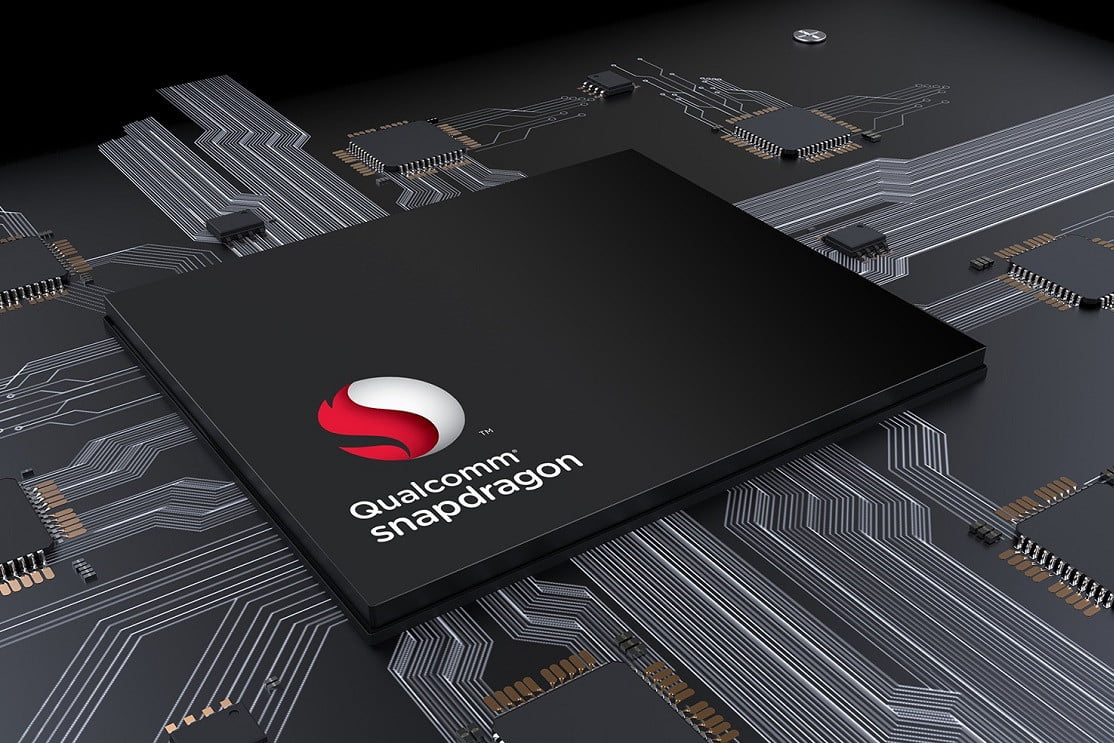
    Qualcomm unveiled today the Snapdragon 730, 730G and 665 Mobile Platforms. The chip maker says that the new chips are designed to offer customers “exciting experiences” in gaming, AI and performance. The first new devices to be powered by these chipsets will hit the market in the middle of 2019.

    The Snapdragon 730 is the first 7 series SoC from Qualcomm that brings certain features previously found only on the flagship 8 series chips. Replacing the Snapdragon 710, the new SoC comes with on-device AI to provide “intuitive image capture, exceptional gaming, and optimized performance.” The Snapdragon 730 is equipped with Qualcomm’s fourth generation multi-core Qualcomm AI Engine, twice as powerful as the previous generation’s AI Engine. It also includes the Qualcomm Spectra 350 image signal processor (ISP), found for the first time ever in a 7 series chip. The ISP provides four times the power savings as its predecessor and can support a triple-camera setup made up of telephoto, ultra-wide and portrait lenses. It will record 4K HDR video in Portrait mode.

    Made using the 8nm process, the Snapdragon 730 includes the Adreno 618 graphics processing unit (GPU) and a state-of-the-art graphics library that uses 20% less power than Open GL ES. This means that the chip will provide gamers with improved graphics and longer battery life. And with Qualcomm aptX Adaptive audio and Qualcomm Aqstic audio technology, gamers will be able to experience surround sound while playing mobile games.

    The new chip is Wi-Fi 6 ready, and with the Kryo 470 CPU on board, each core brings as much as a 35% improvement in performance. The Snapdragon X15 LTE Modem handles LTE download speeds as fast as 800Mbps.

    “With the introduction of the Snapdragon 730, 730G and 665 Mobile Platforms, we are bringing features such as sophisticated AI, exceptional gaming and advanced camera capabilities to a broad spectrum of devices at exceptional performance. Each iteration of Snapdragon drives immense innovation that will surpass customer expectations.”-Kedar Kondap, vice president, product management, Qualcomm Technologies, Inc.

    The Snapdragon 730G Mobile Platform is made for gaming phones, thus the “G” tacked on to the name of the chip. With an enhanced Adreno 618 GPU, graphics are rendered up to 15% faster than seen with the Snapdragon 730. Qualcomm met with some of the top mobile game developers to optimize the Snapdragon 730G. There is a Jank Reducer feature that removes up to 90% of janks with games running at 30fps. The chip also makes sure that players aren’t cheating, and the Wi-Fi latency manager keeps gameplay running smoothly. With over 1 billion different shades of color, games won’t only play better, they will look more realistic too.

    While the Snapdragon 730 and 730G will be used in handsets that are just not quite flagship material, the new Snapdragon 665 Mobile Platform is earmarked for pure mid-range models. But that doesn’t mean you won’t find some interesting features on the chip, like the third generation Qualcomm AI Engine. This provides twice the performance as the second generation AI engine. Speaking of AI, the Spectra 165 ISP found in the chipset includes AI capabilities. It also supports a triple camera setup made up of telephoto, wide-angle, and ultra-wide lenses. It also can handle images taken with today’s 48MP sensors.

    For gamers, the Snapdragon 665 SoC comes with the Adreno 610 GPU for “improved and longlasting gameplay.” The chip itself features four performance cores to handle the heavy-duty tasks, and four efficiency cores to take care of the light housekeeping. The Snapdragon 665 employs the Kryo 260 CPU and the Snapdragon X12 LTE Modem. The latter handles 4G LTE download speeds up to 600Mbps.

  • Surprise New Model Introduction by OnePlus

    Surprise New Model Introduction by OnePlus

    Sparking rumors that the unwrapping of the OnePlus 7 is imminent, OnePlus today cut the price of its current model by 400 Yuan ($60 USD) in China only. This means that the OnePlus 6T now starts at 2,299 Yuan in the country. That is the equivalent of $342 USD based on current foreign exchange rates. This across the board price cut is a permanent one and is a move typically done by phone manufacturers to clear out inventory of a model that is about to be replaced by a newer device.
    That newer device would be the OnePlus 7. Exactly one month ago today, e-tailer GizTop listed the unannounced device revealing a treasure trove of possible, if unconfirmed, specs. If the leak was legit, we expect to see the latest OnePlus model feature a 6.5-inch AMOLED display. The device will be powered by Qualcomm’s latest and greatest chipset, the Snapdragon 855 Mobile Platform. Apparently, there will be three configurations, one with 8GB of memory and 128GB of storage, one with 8GB of memory and 256GB of storage and the top-of-the-line unit sporting 12GB of memory along with 256GB of storage. A triple-camera setup is said to adorn the rear of the device (48MP + 20MP + 5MP depth sensor) and we should see a 16MP pop-up front-facing selfie snapper. Keeping the lights on will be a 4000mAh battery with 44W rapid Dash charging, and OnePlus’ Oxygen OS 9 (based on Android 9 Pie) will be pre-installed. The price posted was $569, but the listing could have been a placeholder.
    After the price cuts are calculated, the OnePlus 6T with 6GB of memory and 128GB of storage is tagged at 2,299 Yuan. The model with 8GB of memory and 128GB of storage now costs 3,199 Yuan, and the variant with 8GB of memory and 256GB of storage will now run you 3,599 Yuan. In the U.S., the OnePlus 6T model with 8GB of RAM and 128GB of native storage is available from T-Mobile for $550 (or 24 monthly payments of $22.92). At the moment, that price is unaffected by the move made today by OnePlus. There have been rumors calling for a May release of the OnePlus 7, which makes the timing of today’s move rather intriguing.
    T-Mobile is the first U.S. carrier to team up with OnePlus and the partnership has proven to be beneficial to both firms. Even though the OnePlus 6T wasn’t available to T-Mobile subscribers until last November, the carrier sold enough units for OnePlus to finish fifth among phone manufacturers selling premium models in the states. As a result, we would certainly expect to see the OnePlus 7 offered by T-Mobile.
    What U.S. consumers won’t get this year is the first 5G enabled OnePlus phone. Back in February, OnePlus founder and CEO Pete Lau said that the company has long term goals regarding 5G in the U.S., but it won’t be shipping such a model into the U.S. this year.
  • Apple’s main chip supplier on track to make next-generation 5nm silicon

    Apple’s main chip supplier on track to make next-generation 5nm silicon

    Semiconductor manufacturers might not be following Moore’s law to a T, but that doesn’t mean they’re not making good progress. Last year, we saw the first mobile chips using the 7nm architecture: Apple’s A12 and HiSilicon’s Kirin 980, followed by the Snapdragon 855. It was expected that processors will remain on that level for a while, considering that producing smaller transistors gets exponentially harder with the reduction of their size.

    Turns out, we might not have to wait as long as we thought. News coming from Taiwan, raises hopes that the next jump might be just a year away. TSMC, one of the world’s biggest semiconductor manufacturers and the main chip supplier for Apple’s own A12 and upcoming A13 SoC, has announced that its design infrastructure for 5nm chips is now available for potential customers to download and start working with.

    This means that TSMC clients, such as Apple, now have the tools to design their next-generation chips. This will likely allow TSMC to secure orders from Apple for at least a couple of years. But what would the new architecture mean for performance?

    Exact gains are hard to predict, but what TSMC says is that it will be able to fit 1.8 times more transistors within the same surface and expects about 15% speed gain in ARM’s Cortex-A72 Cores. Power efficiency will also be higher than that of 7nm chips, which should lead to better battery life.

    TSMC is also proud of the progress it’s making in terms of yield, which was one of the main problems with the mass production of 5nm chips. Using EUV lithography, which replaced FinFET as the size decreased, the company is able to achieve yields comparable to those of its larger nodes when they were at the same stage of development. This means, of course, there’s still work to be done before the chips can enter mass production, but the important takeaway is that the technology is advancing on schedule.

    The potential arrival of the 5nm chips in 2020 is actually good news for Apple. This year we expect to see the major design changes coming with the iPhone 11, leaving the performance improvements to be the major selling point of the 2020 iPhone 11S. In other words, business as usual.

    Of course, other manufacturers will also be able to benefit from TSMC’s developments, but only if they manage to secure any of its production capacity, for which Apple is paying top dollar, we’re sure.

  • Honor Starts Looking for Market Dominance

    Honor Starts Looking for Market Dominance

    Huawei’s CEO has revealed details of how the telecommunications giant will foster its spin-off Honor brand in Asia.

    The strategy includes store rollouts, an increasing focus on online sales and revised price positioning differentiating the two brands.

    Richard Yu, CEO of Huawei Consumer BG, posted details on his Sina Weibo account, predicting Huawei will become the world’s largest smartphone maker this year through its two-brand strategy. Honor on its own is tipped to become China’s second largest-selling smartphone brand and fourth in the world.

    “The company will support Honor in the development of cutting-edge products and continue its investments in technology innovation, channel distribution and retail strategies while maintaining a firm dual-brand strategy between Honor and Huawei,” said Yu.

    Both brands will maintain “a forward-thinking mindset and help create an intelligent, fully-connected world”.

    While IDC figures show global shipments of smartphones fell by 3.1 per cent in the first three quarters of last year, Honor’s volumes soared 27.1 per cent.

    Last year, Huawei’s consumer business grew by 48.4 per cent, outperforming the company’s carrier-network business and becoming the company’s largest revenue earner.

    George Zhao, Honor’s president, told the recent Mobile World Congress that Honor is “on the brink of yet another breakthrough and there is no slowing down for us”.

    “As the going gets tough, the tough get going. We’ll treat each day as an opportunity to deliver greater value to our fans. For Honor, the best is yet to come,” he said.

  • Samsung to launch four Galaxy Note 10 models

    Samsung to launch four Galaxy Note 10 models

    Samsung has already outlined its strategy for its next lineup of flagships – Galaxy Note 10, and it involves a lot more than just two phablets. Our most recent report concerning the Galaxy Note 10 series claimed Samsung plans to launch two models in Q3 2019, temporarily dubbed Note 10e and Note 10+.

    The reason behind Samsung’s decision to launch a smaller Galaxy Note 10 this year is probably related to the success of the Galaxy S10e. Samsung has yet to disclose any Galaxy S10 sales numbers, but we do know the volume of the units shipped in the first day of availability was 120% of the Galaxy S9.

    Now, a new report coming from the South Korean media claims Samsung will launch not two, but four Galaxy Note 10 models. That’s because the smartphone giant doesn’t want to miss the 5G bandwagon and at least two Note 10 variants will include the new technology.

    Along with this piece of information, the report contains some details about the Galaxy Note 10 configurations and the reason Samsung has decided to come out with at least four models rather than just one or two.

    At least two different LTE models and with 5G support

    The first thing mentioned in the report is that the two LTE-only Galaxy Note 10 models will boast 6.28-inch and 6.75-inch displays. They are not mentioned by names, but they might as well refer to them as Note 10e and Note 10+. These “cheaper” Galaxy Note 10 smartphones will have triple and quad camera setups, but there are no details about the battery.

    A third Galaxy Note 10 model will feature 5G support and the specifications of the display and the rear camera “are almost the same as those of the LTE model,” sources familiar with Samsung’s plan claim.

    The fourth Galaxy Note 10 variant that isn’t mentioned in the report could be the smaller Note 10e that popped up early this month, which is rumored to sport a 6.4-inch display. Apparently, all Note 10 models will include larger than 6-inch displays and the Note 10e should be the smaller of them all.

    To summarize the latest rumors about Samsung’s upcoming Galaxy Note 10, the South Korean company plans to launch two or three LTE models and one 5G variant, which will only be available in those markets that already benefit from 5G network coverage.

    Based on these reports, it appears that Samsung will apply the same marketing strategy as it did with the Galaxy S10 lineup, but that’s quite unusual for the Note family. While Samsung’s Note series remain premium, we can’t help but wonder what many fans of the phablets will think when they will be give the option to choose from multiple Note 10 variants with less than stellar specs.

    Samsung Galaxy Note 10 availability and price

    The report outed by the South Korean media earlier today mentions that industry source claim Samsung plans to unveil the new Galaxy Note 10 devices on August 8. Although we expect the smartphones to be available for pre-order shortly after the official announcement, they might not hit the shelves until late August.

    As far as prices go, there’s little to no information about how much the Galaxy Note 10 will cost, but we don’t expect these to go lower than $1,000. Considering that the cheapest Galaxy Note 9 was available for $1,000 and the most expensive $1,250, there’s a high chance that the “lesser” Note 10 models will cost around the same amount.

    The Galaxy Note 10 5G variant is an entirely different matter and while we’re certain that it will be the most expensive of the four, the final price remains a mystery for now.

  • Android users should now have a better performing Snapchat

    Android users should now have a better performing Snapchat

    Snapchat disseminated a tweet today announcing that it has released its new Android app. The app was rebuilt from the ground up so that it could be faster for Android users. In rebuilding its Android app, Snapchat had to take into consideration the many different cameras and chipsets used on various Android handsets. The decision made to revamp Snapchat’s Android app came in 2017 when it became clear that the messaging app’s iOS version was superior.

    In early 2018, Snapchat staff realized that the Android app was always trying to run code in the background, leading it to act laggy. Thus, the decision was made to rebuild the Android app from scratch. The challenge facing Snap’s director of engineering, Gustavo Moura, was how to make the messaging app run the same on flagship Android devices and lower-end models alike. Eventually, the Snapchat development team was able to get it done and the app’s Android subscribers should see Snapchat run faster once the new version is installed. In addition, better performance should be seen on lower-end phones. To make sure that updates are running bug-free now and in the future, Snapchat is testing them on a larger number of Android-powered devices.

    “Android devices don’t all behave the exact same way, right? It’s very easy for us to build an Android app that will work well on flagship devices like the Pixel 3. It’s more challenging when you have to capture the whole ecosystem, especially when the camera works very differently from manufacturer to manufacturer.”- Gustavo Moura, Director of Engineering, Snapchat.

    Those installing the updated Snapchat app on their Android device won’t notice any changes to the UI. Instead, Snapchat concentrated on improving things under the hood so that the Android app could run as fast as its iOS app. And while the new version of Snapchat for Android has begun rolling out to some now, it won’t be fully available until the end of this year.

    Originally known for its self-destructing messages that would automatically delete after ten seconds, Snapchat developed the Stories feature in 2013. Users can post a series of images that remain on Snapchat for 24 hours to help them convey a story. In addition, the popular Snapchat Lenses feature uses AR to help add cartoonish features to a member’s selfie.

  • HTC is doing something with its Play Store apps

    HTC is doing something with its Play Store apps

    While we have yet to see HTC release a new smartphone for 2019, data from AppBrain reveals that 14 apps from the manufacturer have been unpublished from the Google Play Store. This month alone, HTC has removed the Sense Home Launcher and HTC People. The former was a launcher that showed apps that users might want to open depending on their current location. There were three different options available: home, work, or out. The latter was an app that helped users manage their contacts, dialer and call logs.

    In February, apps like HTC Calendar, HTC Mail and HTC Dot View were unpublished. Calendar and Mail are pretty self-explanatory, and the Dot View app worked with the case of the same name. Tap on the front of the case, and a pixelated view (or a dot view) of the time and temperature would appear as well as information about incoming calls.

    Some of the unpublished apps had gone a long time without being updated and probably were no longer supported by HTC. But others, like HTC Calendar, HTC People and HTC Mail were pre-installed on HTC handsets. This doesn’t necessarily mean that HTC has given up on the smartphone industry. In fact, that is a rumor that the company denied late last year. HTC is expected to deliver its first 5G phone in the second half of this year.

    HTC’s decision to unpublish some of its apps would make sense if it decided to make its upcoming handsets run Android One. This is a near stock version of Android that keeps out bloatware from manufacturers.

    The last phone HTC released was its Exodus 1 Blockchain phone designed for cryptocurrency investors. Launched in December, the device comes with a secure wallet and a 6-inch QHD+ display. Powered by the Snapdragon 845 Mobile Platform, the Exodus 1 features 6GB of memory and 128GB of storage. There is a dual-camera setup on back (12MP + 16MP), dual 8MP selfie snappers, and a 3500mAh battery. The price of the Exodus 1 is $699.