Category: Electronics

Retail News Asia is committed to providing both local and global retailers with the latest Electronics news throughout the Asian market. This on a daily base.

  • Xiaomi’s Black Shark 2 gaming smartphone goes on sale

    Xiaomi’s Black Shark 2 gaming smartphone goes on sale

    Great news for mobile gaming fans looking to buy one of the most powerful gaming smartphones available on the market, as Xiaomi has just announced their new product, Black Shark 2 is now up for grabs in Europe.

    Initially introduced in China on March 18, Xiaomi Black Shark 2 can be purchased from Europe beginning March 28, at 6.00 PM CET. You’ll be able to buy the phone from every European country where Xiaomi officially sells its phone, and here is how much you’ll have to pay.

    The Black Shark 2 with 8GB RAM and 128GB internal memory will be available for purchase for €549, while the 12GB RAM and 256GB storage will cost €649. For customers in the UK, the smartphone will be available for £479 and £559, respectively.

    If you take away its gaming-related features, the Black Shark 2 remains a very powerful flagship smartphone, so even if you’re not a gamer, it can be a great alternative to Samsung, LG and Huawei’s flagships.

    Speaking of gaming features, Xiaomi explains that the Black Shark 2 embeds the only direct touch liquid cooling system in the work. Also, the phone’s display benefits from the world’s lowest latency touch.

    As far as US availability goes, we doubt this will come in the United States at all since Xiaomi hasn’t yet officially entered the market, although it repeatedly said it will eventually happen.

  • The Razer Phone 3 delayed because of 5G

    The Razer Phone 3 delayed because of 5G

    Most of Razer’s mobile division staff were either relocated or laid off last month, sparking speculation that the brand’s next smartphone may have been canceled. Last week, though, a report claimed that Razer had simply delayed its next-gen device and now the reason for this may have been revealed.

    In a recent interview with Engadget, Razer CEO Min-Liang Tim suggested that buying a gaming smartphone right now may not be the best idea. He believes that gamers looking to purchase a device this year will “want to buy a 5G phone,” but purchasing one now means that there’s “no network to use it on.”

    In the eyes of Razer, this essentially makes the higher price that 5G smartphones command unjustifiable at the moment. It also means that there’s less demand for 4G-ready gaming smartphones because consumers are waiting for 5G alternatives to become widely available.

    Like its predecessors, the Razer Phone 3 wasn’t expected to arrive until mid-October or early November. But considering Razer’s current view on 5G networks, the smartphone now probably won’t make its debut until early 2020. By then, 5G networks should be up and running across the globe and there should be sufficient demand for such a device.

  • Sony Mobile insists the end is not near after it closes a smartphone plant

    Sony Mobile insists the end is not near after it closes a smartphone plant

    While Sony’s fall from grace in the global mobile industry hasn’t been as dramatic as those suffered by Nokia, BlackBerry, and even HTC, it’s more than obvious the Japan-based tech and entertainment behemoth needs to do something about its smartphone division. Unfortunately, as the company’s various attempts at revising and transforming the Xperia portfolio over the last few years have failed to turn a profit, the time has come for more drastic austerity measures.

    After laying off 200 employees in Europe to cut costs across a number of mobile business areas, Sony has confirmed long-rumored plans to close an entire factory in China earlier today. The Beijing plant will reportedly cease all smartphone manufacturing activities in “the next few days”, although Sony does intend to “shift production” to a different factory in Thailand in a move expected to greatly contribute to reducing expenses by around 50 percent.

    The ultimate goal is to make the smartphone division profitable again as early as 2020 after years and years of bleeding serious money, but it remains to be seen how much of a mobile business Sony will be left with when that happens. According to the latest official estimates, yearly Xperia shipments are down to as little as 6.5 million units. To put that number into perspective, Samsung’s Galaxy S10 lineup was projected to hit 10 million global unit sales in just its first month of availability.

    Of course, Sony has repeatedly claimed in the past year or so it has no intention to abandon the smartphone market on the eve of a 5G revolution. Once again, the company is highlighting its strategic measures are simply meant to strengthen the business rather than killing it piece by piece. And while it’s definitely not unprecedented to see a major smartphone vendor cut its Chinese costs, it remains unclear exactly how much of Sony’s Bejing operations will “shift” to Thailand.

    Either way, this probably won’t impact the Xperia 1 launch or even the rumored Xperia 2. What comes next, however, is anyone’s guess.

  • Apple patent application “confirms” a new feature for iPhone

    Apple patent application “confirms” a new feature for iPhone

    Earlier this month, we passed along a rumor stating that the 2019 Apple iPhone XI line will feature a new Underwater Mode that would allow users to snap pictures and navigate the screen even with the phone submerged in water. The original rumor mentioned that the Underwater Mode would be patented, and today the actual patent application was released by the U.S. Patent and Trademark Office.

    The application is titled Submersible Electronic Devices With Imaging Capabilities, and mentions a device, like an iPhone, that has the capability to capture images. This device includes an ambient light sensor to determine the lighting underwater. The device also features an image sensor to capture pictures, and sports circuitry designed to measure the depth of the image sensor. Information about the depth of the image sensor and the ambient underwater lighting would be used to adjust the color balance of an underwater photograph. Photos taken underwater by a camera that doesn’t include the patented features could result end up with a “undesired greenish color cast,” Apple says in the patent application.

    According to reliable Apple analyst Ming-Chi Kuo, both the Apple iPhone XI Max and iPhone XI will feature a triple-camera setup on back, The third camera will be a Time-of-Flight (ToF) sensor that measures how long it takes for an infrared light emitted from the camera to bounce off a subject and return to the camera. This will result in more accurate depth information that could be used for a rear-facing Face ID feature, improved bokeh effects and more AR functionality.

    Underwater Mode wouldn’t be possible without the iPhone’s Ingress Protection rating

    Of course, we wouldn’t even be writing about an Underwater Mode if the iPhone didn’t include an Ingress Protection (IP) rating. Both the iPhone XI and iPhone XI Max will most likely continue to sport an IP68 rating. This means that both models are protected from dust, and can be submerged to a depth of nearly five feet for as long as 30 minutes. At this point, with the original rumor singling out the iPhone XI and iPhone XI Max, it is not certain whether Underwater Mode will be found on the iPhone XR (2019). If all things stay the same, the latter would keep its predecessor’s IP67 rating that allows a phone to be submerged to a distance of a bit over three feet for up to 30 minutes. The 2019 iPhones most likely won’t be unveiled until this coming September.

    “A submersible electronic device such as a waterproof cellular telephone may be provided with an image sensor. The image sensor may capture images of underwater objects. Control circuitry in the submersible electronic device may adjust image contrast and color balance based on information from sensors and other information. The electronic device may have an ambient light sensor. The ambient light sensor may be a color ambient light sensor and may be used in measuring ambient lighting conditions above water and underwater. A depth sensor may be used in measuring the depth of the image sensor and other components of the electronic device underwater. Information on the depth of the image sensor, information on the distance of an underwater object to the image sensor, and angular orientation information for the electronic device and image sensor may be used in color balancing an image.”-Apple’s patent application

    Apple first filed the application for its patent in September 2017. The patent application number is 20190098179. If the Underwater Mode doesn’t make it to the upcoming 2019 iPhone models, it would seem a sure bet for 2020.

  • Apple and its partners seek billions from Qualcomm

    Apple and its partners seek billions from Qualcomm

    A trial starting in San Diego on April 15th has all the makings of a big courtroom battle. Apple and its contract manufacturers are suing chip maker Qualcomm. The firms that assemble the iPhone such as Foxconn, Compal, Pegatron, and Wistron are seeking $27 billion in damages from Qualcomm, claiming that the company violated antitrust laws and breached various contracts. You might wonder why they are involved in this battle at all. That’s because they are the companies that license Qualcomm patents for Apple. Both Apple and Qualcomm are also seeking damages.

    The trial is scheduled to run for 20 days, and a joint filing made by Apple and Qualcomm includes a witness list that names the CEOs of both companies (Tim Cook and Steve Mollenkopf, respectively), as well as executives from other phone manufacturers like Samsung and Motorola, and industry experts. Qualcomm owns patents on software used in most smartphones, and technology related to 3G, 4G and 5G connectivity. That is in addition to patents it owns for the chips that it sells. Apple instructed its contract manufacturers to stop paying royalties to Qualcomm and has claimed in other lawsuits that the chip maker failed to license its standard-essential patents in a fair, reasonable and non-discriminatory (FRAND) fashion as required. Such patents must be licensed by manufacturers to make sure that their products meet technical standards.

    Apple, and other phone manufacturers, are not pleased with Qualcomm’s “no license, no chips” policy, and claim that they are paying royalties to Qualcomm for phones they sell that don’t use any of the chip maker’s patents. And while the $27 billion claim certainly makes you take notice, we are awaiting a decision on a more important case held earlier this year. The FTC v. Qualcomm trial was a non-jury affair, and depending on how Judge Lucy Koh rules, the company might have to change the way it licenses and sells its chips.

    Qualcomm loses one of its patents

    Qualcomm has been successful in several cases where Apple has been found to have infringed on various patents related to the Snapdragon designer. Earlier this week, ITC Judge MaryJoan McNamara ruled that Apple had infringed on a couple of Qualcomm patents and recommended that an exclusion ban be imposed on the versions of the iPhone 7, iPhone 7 Plus, iPhone 8, iPhone 8 Plus and iPhone X using an Intel modem chip. That decision now goes for review in front of the entire commission, and a final decision will be announced in July. The same day that decision was announced, a final ruling was issued by the ITC in another patent infringement case involving Qualcomm and Apple. Originally, Judge Thomas Pender ruled that Apple infringed on a Qualcomm patent, but didn’t recommend a import ban on certain iPhone models. The entire commission decided that Qualcomm’s patent was invalid, which left them no choice but to uphold Judge Pender’s decision not to ban the iPhone in the U.S.

    All of these legal battles have affected Qualcomm’s relationship with Apple and has cost it business. From 2011-2015, Apple exclusively sourced modem chips for the iPhone from the San Diego based company. Over the subsequent two years, both Qualcomm and Intel shared the task of supplying Apple with this all-important part. But last year, Apple decided to drop Qualcomm and the 2018 iPhone models sport Intel modem chips only.

    One of the most interesting court cases involving Qualcomm is a class action lawsuit that can be joined by anyone who purchased a smartphone after since Feb. 11, 2011. Dubbed the biggest class action in history, more than 250 million phone owners are seeking damages ranging between $4.84 billion and $5.54 billion.

  • Lululemon says e-commerce investment pays off

    Lululemon says e-commerce investment pays off

    Athleisure retailer Lululemon’s investment in e-commerce — revamping its website and improving on direct-marketing efforts to draw new customers — has paid off. Lululemon has posted a 46 per cent increase in its online revenue last year, adding that it has reached an e-commerce penetration rate of 26 per cent.

    The company announced it will be investing aggressively in e-commerce in new territories and plans to open e-commerce markets in France, Japan and Germany. The retailer also said it will roll out its “order online, pick up in store” program across the US by the winter holidays this year.

    The Canada-based retailer said they will step up on their international expansion plans, saying more than half of its planned 40 to 50 store openings this year would be in overseas markets.

    Lululemon posted a 24 per cent increase in revenue to $3.3 billion for the fiscal year ending February 3 from the $2.65 billion from the previous corresponding period.

    “Lululemon has delivered one of its strongest years yet, a result of broad-based strength across the business,” said company CEO Calvin McDonald in a press release.

    “We are energised to build upon our momentum and to seize the many opportunities ahead for Lululemon around the world.”

    For the fourth quarter, Lululemon said net revenue rose 26 per cent to $1.2 billion aided by holiday sales.

    Total revenue for fiscal 2018 was $3.3 billion.

    The retailer’s profitability in Asia and Australia more than offset the operating loss in Europe. Now with the company having 21 stores in Europe, Lululemon said it was about a year and half away from breaking even in Europe.

    The company forecast the momentum would continue this year, saying they expect a net revenue to be in the range of $3.7 billion to $3.74 billion for the full fiscal 2019.

  • Apple Watch’s ECG became finally available in Europe

    Apple Watch’s ECG became finally available in Europe

    The Apple Watch is the world’s most popular line of smartwatches right now, holding about 50% of the global market. When Apple announced the Apple Watch Series 4 last year, there was one feature that stood above all. It wasn’t the larger display or the Digital Crown with tactile feedback.

    Instead, it was the addition of ECG (electrocardiogram) capabilities without any additional hardware needed (besides the Apple Watch itself, of course). The feature allows the user to quickly and easily take an ECG and then, if need be, send the results to their doctor. Even without having the results looked at by a specialist, the device’s own algorithms would alert the user if they notice something out of the ordinary. Since then, reports are showing up regularly about how the Apple Watch helped one person or another notice an issue with their heart that was later confirmed by a cardiologist. This allowed proper measures to be taken a lot sooner than if the patient had waited until the problems became obvious.

    Unfortunately, despite the Apple Watch being loved all around the world, the ECG functionality was limited only to the United States. Not anymore!

    Select European countries and Hong Kong are getting ECG

    Apple’s watchOS 5.2 is now available for all Apple Watch models and adds a couple of features for users in 19 European countries and Hong Kong. The more important one is ECG, which comes only to the Apple Watch Series 4. Here’s the full list of European countries that are getting the new feature:

    Austria, Belgium, Denmark, Finland, France, Germany, Greece, Hungary, Ireland, Italy, Luxembourg, Netherlands, Norway, Portugal, Romania, Spain, Sweden, Switzerland, the UK.

    Despite the ECG app and the Irregular Rhythm Notification (more on it below) being cleared for use in the European Economic Area, according to Apple, there are several countries that are part of the EEA and won’t be getting these features yet: Bulgaria, Croatia, Czech Republic, Estonia, Iceland, Latvia, Lithuania, Poland, Slovakia, Slovenia.

    The reason for that is unknown. It could be due to additional regulatory approval needed or, alternatively, those are just markets Apple isn’t as interested in right now.

    A more notable country that’s also missing from the expansion list, although not in Europe, is Canada. It was expected to be one of the first countries besides the US to get the ECG app, but it appears that Canadians will have to wait at least until the second wave of expansion.

    ECG on a smartwatch, how does that work?

    For those of you that are just hearing about the Apple Watch’s ECG, here’s a quick rundown. Electrodes inside the Apple Watch Series 4 measure the electrical impulses your heart is releasing when beating. To do that, the user must touch the Digital Crown (the rotating bit on the side of the watch) in order to close the circuit, creating an effect similar to a single-lead electrocardiogram.
    After 30 seconds of measuring your rhythm, the ECG app will classify it as either AFib or sinus rhythm. If you get AFib as a result, you might want to get a consultation from your general practitioner or cardiologist. Of course, the results won’t be nearly as accurate as those taken by professional medical equipment, but the Apple Watch feature is far from a gimmick. Medical trials have shown that the wearable device is classifying the different heart rhythms with very high accuracy.
    The watchOS 5.2 update is also bringing a health-related feature to older Apple Watches as well. Called Irregular Rhythm Notification, this feature is coming to Apple Watch Series 1 and newer models. It checks the user’s heart rhythm on regular intervals using the optical sensors of the device and sends a notification if five irregular rhythms are detected over the span of at least 65 minutes.

    Sinus rhythm notification on the left (in Spanish) and an irregular heart rhythm warning on the right (in Italian

    To start using the new features, users have to enable them from the Health app on their iPhones. Obviously, the Apple Watch must be updated to watchOS 5.2, but to do that the iPhone itself must be updated to iOS 12.2.

  • Scootch, display speakers and finger scanners

    Scootch, display speakers and finger scanners

    We shudder to think how expensive a screen replacement is going to get once manufacturers stuff everything they are intent on stuffing in there. In the last few years alone they fused the touch layer into the display itself, increased the resolutions, moved to the more expensive OLED variety, started bending, folding or piercing them to fit various design trends, tacked in-display fingerprint readers on, started using them as sound emitters instead of the good ol’ earpiece, etc.

    Now, what else can we slap into the display package, wondered LG, and came up with an idea. The phone maker has reportedly managed to save precious space inside phones by integrating… wait for it… 5G antenna in the display itself. Well, integrating is not the right word, as it looks like the LG engineers simply slapped thin antenna films on the back side of the screen, but still.

    Given that the current number of antennas needed for grabbing 5G coverage borders on 30, and that adds significant bulk to the usual phone antenna design, being able to move the 5G antenna to the display package sounds like a practical space-saving solution, especially if it improved the coverage as well.

    LG said it can also apply the 5G antenna films on the back of the phone, and again improve reception by using the vast surface but, come to think of it, space there may be needed for all those wireless charging coils that are becoming the norm, too.

    In any case, LG seems to have circled the wagons around its 5G-in-display invention with patents, but apparently, we won’t see the technology applied to the V50 in May. That one will still have the current bulky 5G antenna design.

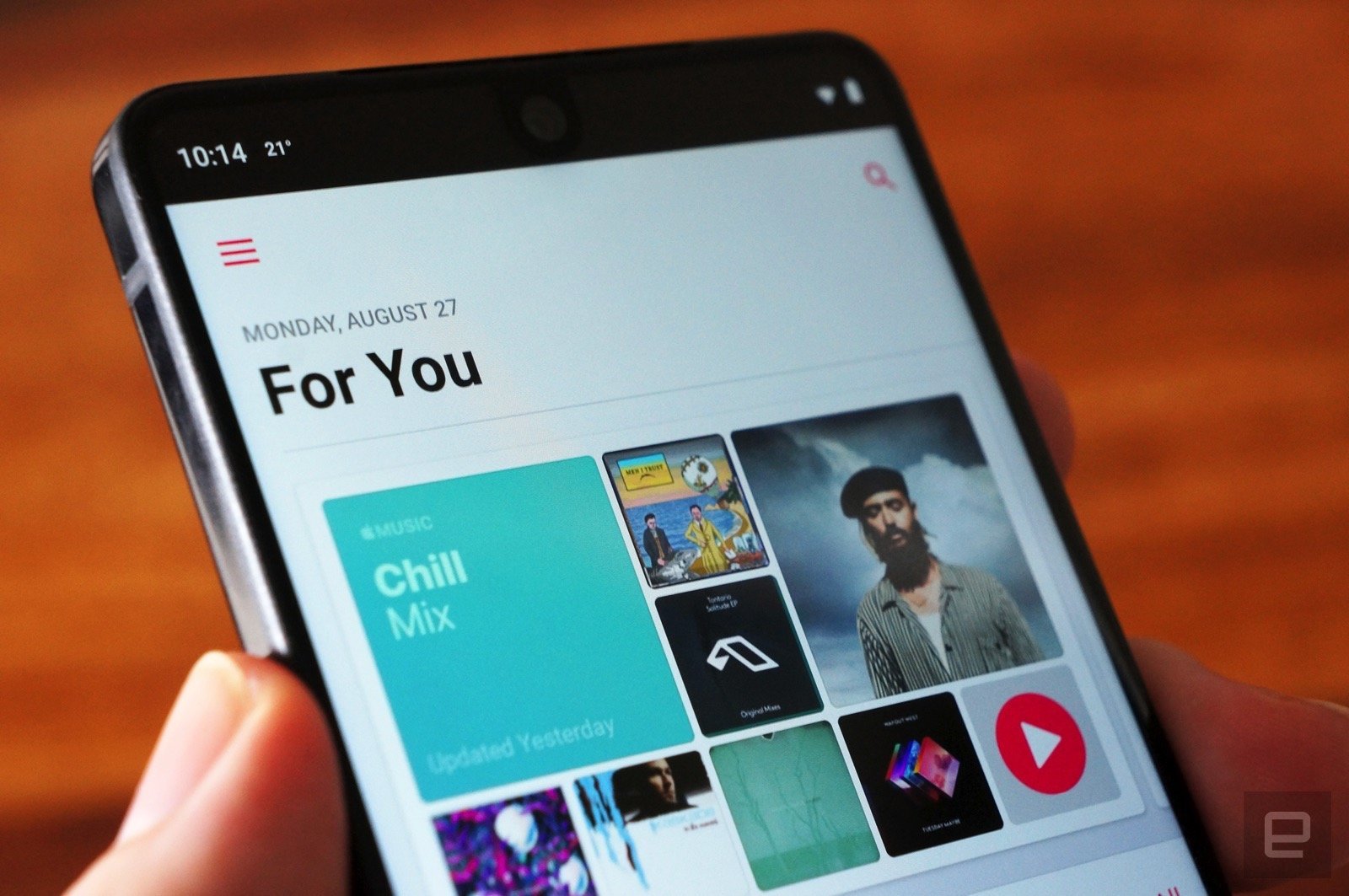
  • Apple Music is rapidly growing in popularity on Android

    Apple Music is rapidly growing in popularity on Android

    Apple unveiled a ton of interesting stuff at a (Hollywood) star-studded event yesterday, but much to the disappointment of iPod Touch fans and potential AirPower buyers, not a single hardware announcement was made on stage in the Steve Jobs Theater during this “Show Time” shindig. While Apple’s focus on the so-called “services” business has sharply increased over the past year or so, it’s safe to assume the company’s TV+, News+, and Arcade platforms wouldn’t have happened were it not for the success of Apple Music.

    Released back in 2015 in more than 100 countries around the world, the music streaming service quickly emerged as the primary challenger to Spotify’s throne. Almost four years later, the global subscriber gap between the two remains pretty large, but Apple Music continues to make great strides in the US, as well as on other platforms apart from iOS.
    After expanding its support to Alexa-powered smart speakers, the service recently crossed an interesting milestone on Android, according to Sensor Tower estimates. Even though the app isn’t exactly well-reviewed in Google’s Play Store, with a mediocre 3.5-star average score based on over 280,000 ratings, a whopping 40 million Android users in total have reportedly tried out Apple Music since its 2015 debut. That’s not bad for something that’s only gained Android tablet compatibility a couple of months back.
    What’s perhaps even more impressive is that quarterly Android installs have apparently begun to surge again after a temporary but steep decline in late 2017 and early 2018. In fact, Q1 2019 could be Apple Music’s best-ever three-month period in terms of Google Play downloads, which are expected to reach 3.8 million by the end of March. That would represent an increase of half a million downloads from the final quarter of last year and an incredible 1.5 million more installs than back in Q2 2018.
    Obviously, it’s unclear how many of these downloads typically end up converting into long-term paid subscriptions, but that figure is also up, so there’s definitely a correlation between the two, even when not taking iOS usage and install numbers into consideration.
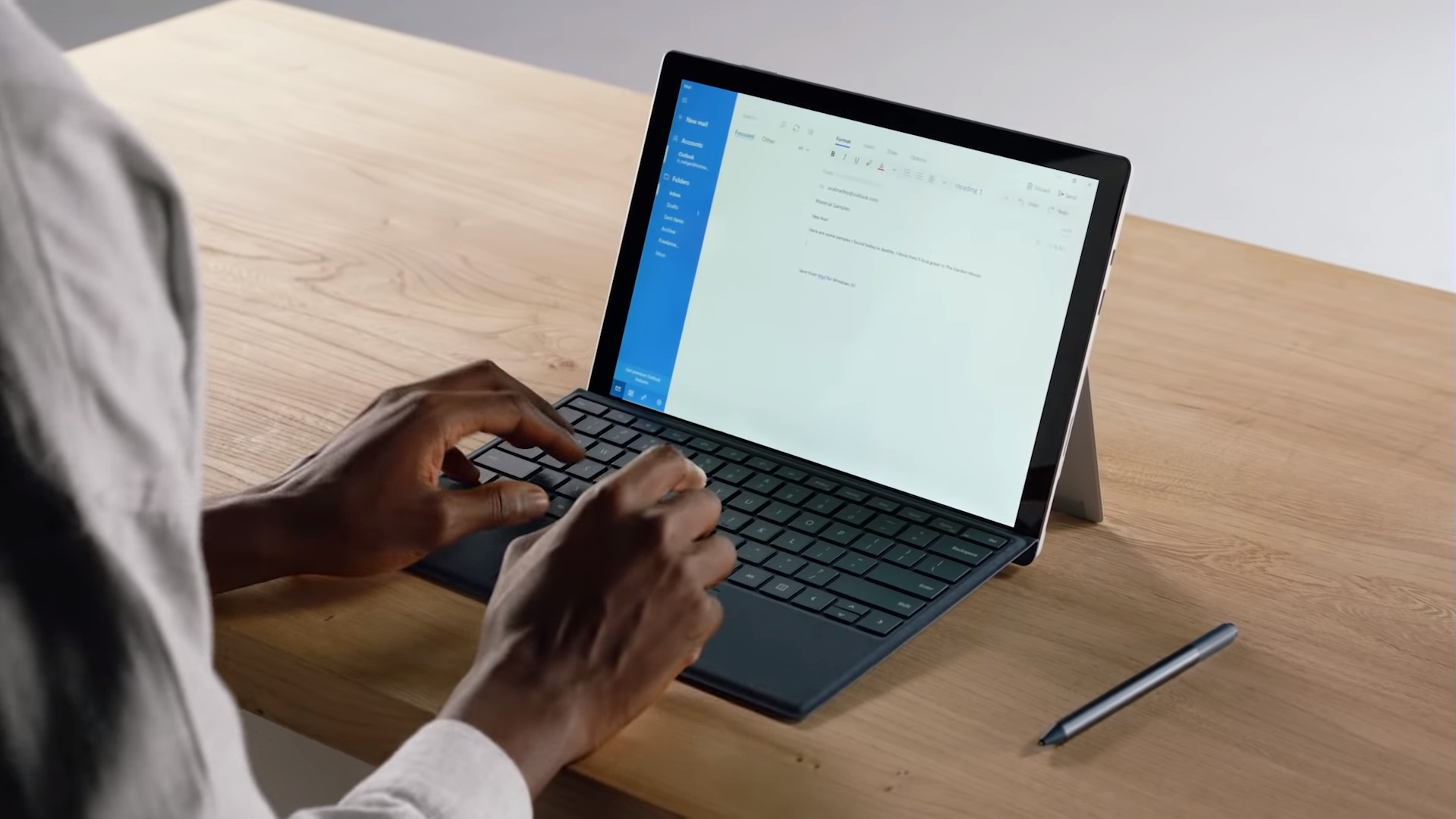
  • Microsoft offers free keyboard and Surface Pen with select Surface Pro 6

    Microsoft offers free keyboard and Surface Pen with select Surface Pro 6

    It’s been raining sweet deals of late at Microsoft and third-party retailers like Best Buy on both 2018’s Surface Pro 6 and fifth-gen models released the previous year, but if you don’t want to make any processing power compromises, today’s the day to pull the trigger and score a discount of up to $259.

    Five different Surface Pro 6 variants are currently eligible for a pair of cool freebies on their manufacturer’s official US e-store. If you’re wondering what this fast five has in common, the answer is actually quite simple: a state-of-the-art 8th Generation Intel Core i7 chipset. That makes this tablet a very worthy replacement for essentially any conventional laptop out there, so it’s definitely fitting (and nice) that Microsoft lets you bundle these powerhouses with a keyboard and Surface Pen at no extra cost.

    You can get the complimentary stylus in your favorite color from a quartet of options including black, platinum, cobalt blue, and burgundy, while the gratis keyboard can be an older Surface Pro Type Cover model, normally worth $129.99, or a newer, fancier Signature Type Cover in platinum, blue, or burgundy, which separately fetches $159.99. All in all, after also taking the $99.99 retail value of that productivity-enhancing Surface Pen into consideration, you’re looking at maximum savings of around 260 bucks.

    Of course, you’ll have to cough up a pretty penny to get a Surface Pro 6 with Intel Core i7 inside in the first place and qualify for the two extremely valuable and popular gifts. We’re talking at least $1,499 if you can “settle” for a 256GB SSD/8GB RAM configuration and up to a whopping $2,299 for a Windows 10 tablet/laptop hybrid pulling out all the stops, with 16 gigs of memory and a full 1TB of storage space.

    The most “affordable” model on sale today is available in black and platinum paint jobs, while the costliest version can only be purchased in platinum. Finally, black and platinum models with 16GB RAM and 512GB storage will set you back $1,899 a pop in combination with a pen and keyboard that you need to add to your cart before checking out.

  • DJI Introduces DJI Terra To Capture, Visualize And Analyze Drone Data

    DJI Introduces DJI Terra To Capture, Visualize And Analyze Drone Data

    DJI, the world’s leader in civilian drones and aerial imaging technology, today introduced DJI Terra, a new software tool that transforms drone data into digital 3D models and maps for easy analysis and decision making. DJI Terra enables businesses and organizations using DJI drone technology to capture, visualize and analyze aerial images for a wide variety of applications across the public safety, construction, infrastructure, agriculture and film industries.

    “As the leader in the commercial drone industry, DJI continues to develop accessible and easy-to-use hardware and software solutions that help organizations transform their operations with drone technology and gain a competitive advantage in their industries,” said Sunny Liao, Director of Enterprise at DJI. “As an all-in-one mapping and modeling solution, DJI Terra makes it simple and efficient to extract value from drone data, generating conclusions and recommendations across multiple use cases from crash reconstructions to critical infrastructure inspections as well as agriculture field mapping and construction site modeling.”

    Automatic Flight Planning and Data Capture

    DJI Terra helps commercial drone pilots quickly plan automated flights with several easy-to-use options based on the area or objects they’d like to capture and the type of map or 3D model they’d like to create. It features three mission planning types:

    • Area – Capture a specific area quickly and easily by drawing a custom polygonal flight zone on a map. DJI Terra automatically generates efficient flight path options based on the area selected.
    • Waypoint – Create dynamic custom flight paths through an area or around objects using waypoints and adjustable parameters like aircraft altitude, speed, heading, gimbal pitch and angle. For more complex missions that require high attention to detail, the 3D Flight Visualization feature enables the design and simulation of missions on existing 3D models.
    • Oblique – Capture a rich data set by automatically flying the same route multiple times. Each flight automatically adjusts the angle of the camera to capture new details, giving an extra crisp 3D model of the object or asset from multiple angles.

    Real-time Mapping and Detailed 3D Models

    With real-time mapping capabilities, DJI Terra allows drone pilots to quickly generate 2D orthomosaic maps as the drone flies, ideal for time-sensitive missions where situational awareness is critical and decisions need to be made in minutes. DJI Terra’s fast processing capability also creates sharp and realistic representations of any environment through detailed 2D orthomosaics and 3D model reconstructions used for industrial applications like reconstructing vehicle crashes, tracking progress on construction projects or conducting large-scale critical infrastructure inspections on bridges and roadways.

    Easy Data Analysis

    In addition to map and model creation, DJI Terra helps users analyze data and generate instant insights with easy-to-use analysis tools that provide a variety of measurements including linear distance, surface area and volumetric estimations. To improve team communication and reporting throughout ongoing projects, annotation labels can be edited and shared. For detailed site inspections and accident reconstruction situations, DJI Terra’s photo inspection tool lets users closely examine every photo used to create the model so they can pinpoint and highlight critical elements.

    Availability

    DJI Terra is available today for purchase through authorized DJI Enterprise resellers worldwide and is compatible with Windows PCs and all current DJI Phantom 4 Series drones.

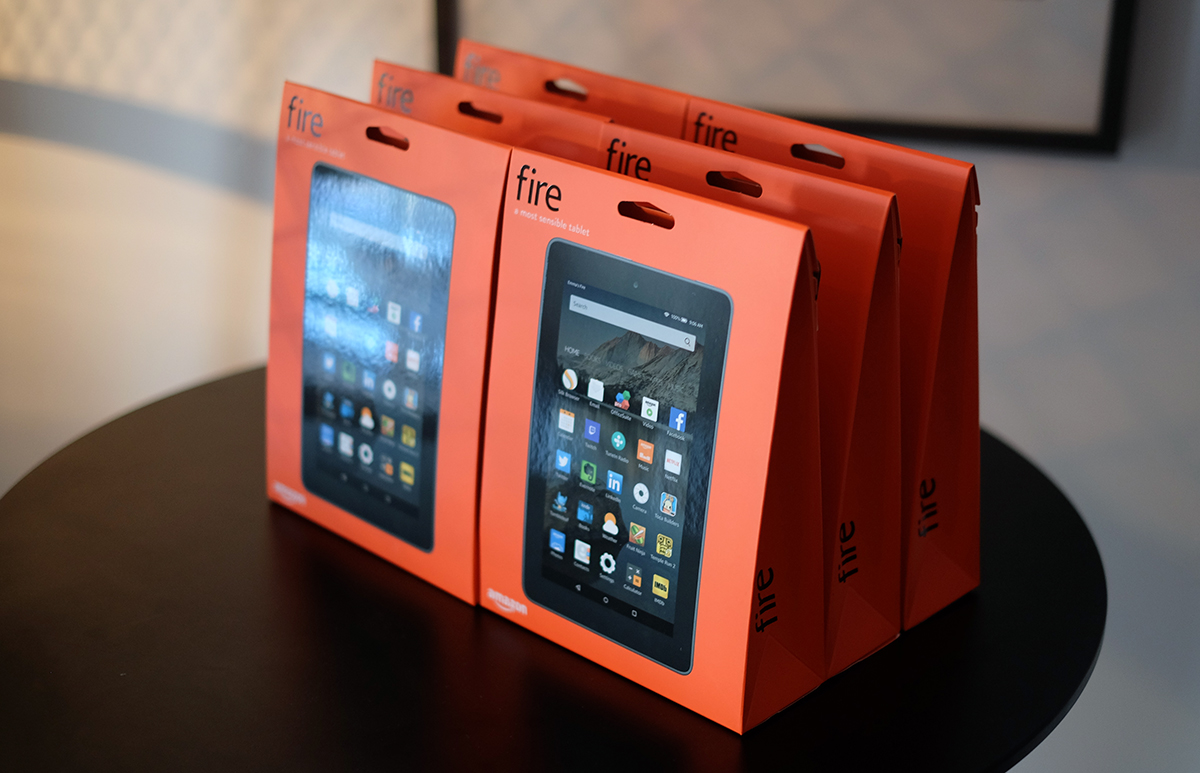
  • Prime members can get Amazon’s Fire tablets at massive discounts

    Prime members can get Amazon’s Fire tablets at massive discounts

    If you’re in the market for a significantly cheaper tablet than the likes of Apple’s 2018-released iPad Pros or the last two Surface Pro generations, the Amazon Fire 7, Fire HD 8, and Fire HD 10 should be at the top of your wishlists. By no means powerhouses, these three typically deliver some of the best possible bang for your buck starting as low as $50.

    Even better, they’re frequently on sale at hefty discounts, recently reaching as high as 30 percent off the list price of a kid-friendly Fire 7 variant. Unfortunately for parents thinking of introducing their children to mobile technology, the Fire 7, HD 8, and Fire HD 10 Kids Editions are not marked down this time around. But if you’re an Amazon Prime member, you can get the regular Fire HD 10 for a whopping 50 bucks less than usual.

    That represents a 33 percent price reduction that brings the 10-incher down to its lowest retail cost in several months. The same $50 discount applies to the 64GB configuration as it does to the entry-level 32 gig version, both of which pack a respectable 2GB RAM and quad-core processor clocked at up to 1.8 GHz. The 10.1-inch screen delivers decent 1920 x 1200 resolution while helping the battery last an excellent 10 hours of mixed use between charges.

    Naturally, the Amazon Fire HD 8 is both smaller and slightly lower-end, with a slower quad-core chipset, 1.5GB RAM, and 1280 x 800 display in tow, but the same winning 10-hour battery endurance rating. The 8-incher can be had at $30 off with a Prime membership in 16 and 32GB configurations, the former of which is thus discounted by a sweet 37 percent or so.

    Finally, the ultra-low-end Amazon Fire 7 is getting the smallest markdown of the trio, but it’s actually dropping to its lowest ever price, also as an exclusive Prime offer. The $15 discount applies to both 8 and 16GB variants, the latter of which is however listed as “temporarily out of stock” at the time of this writing. The 7-incher comes with a modest screen, 1GB RAM, and only up to 8 hours of battery life, but just like its bigger brothers, it supports hands-free Alexa interaction.

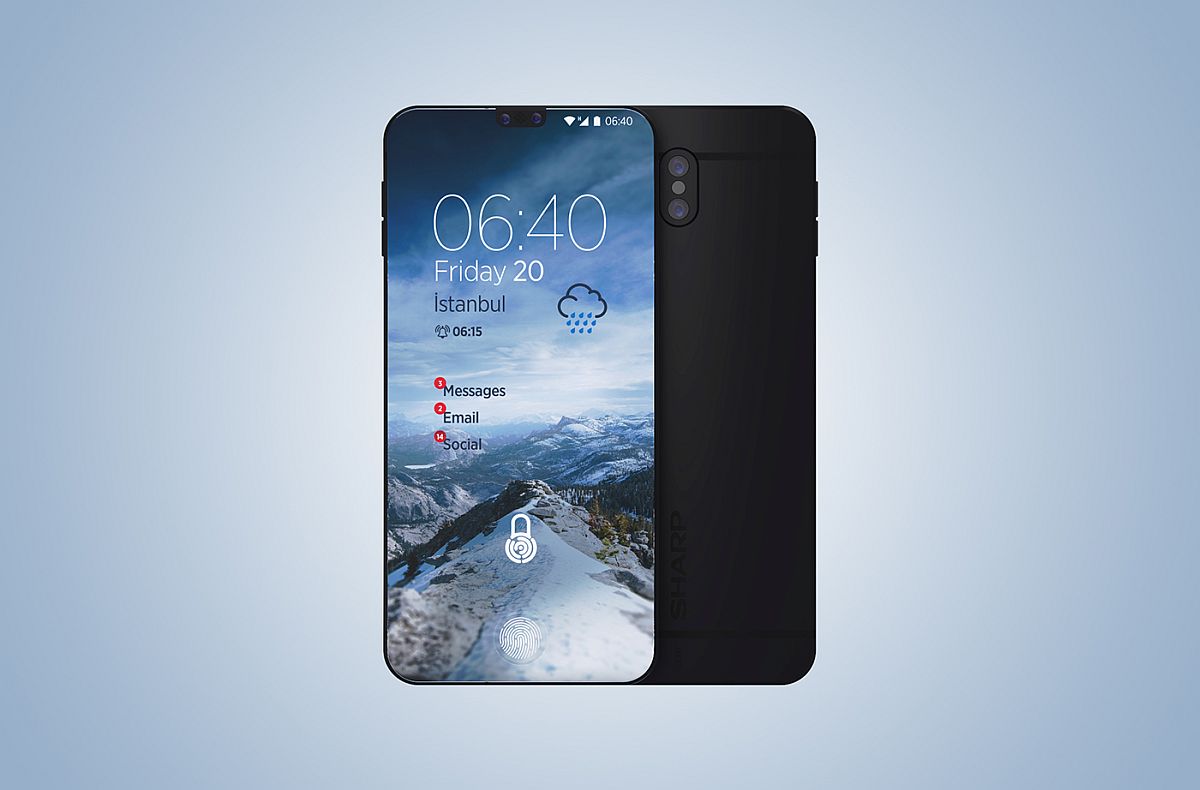
  • Sharp has patented a sleek foldable phone

    Sharp has patented a sleek foldable phone

    Sharp is not a smartphone brand that makes the news frequently. Its phones are mostly sold in Japan with some models making an appearance in Europe as well but in fairly small numbers. This is probably no one is expecting them to have a go at the latest trend in mobile tech: foldable smartphones. By now, you’re probably familiar with the Galaxy Fold and the Huawei Mate X, the two phones of that new class that you’re most likely to see in the real world (if you’re lucky). We’ve also seen hints that Motorola and Google are working on their own interpretations as well.

    Coming from patents yet again is information about Sharp’s intentions for a foldable phone. Picked up by LetsGoDigital and visualized in renders are drawings from an application to WIPO (World Intellectual Property Office) that was submitted by the Japanese tech giantThe design proposed by Sharp has some familiar elements with a twist. The fold of the display is horizontal, similar to that of the rumored Motorola phone, which means the screen size will be similar to current flagship phones, but the device will be more compact when folded. That approach has its advantages, but it seems that users have now accepted the form factor of current phones and prefer to get a larger display if their device is to be foldable.

    There are two things that grab our attention when looking at these renders. First, there seems to be no gap when the device is folded, which is something current foldable displays can’t accomplish. Of course, devices in renders are often quite different from real products, so it’s too early to judge. Sharp is one of the major display manufacturers, however, and it’s possible that the company is working on its own tech to achieve those results.

    The other curious thing is that the device has two hinges about half an inch apart, which allows the lower panel to either completely cover the top one or to leave about an inch of the display clear for notifications and other system indicators. While that might be handy in some situations, the added hinge is also another weak point for this device.

    There also appears to be no selfie camera in the drawings Sharp submitted, but this is likely just another omission until the design reaches a stage closer to realization.

    Currently, there are no hints from Sharp when or if we should expect a device like the one pictured above, but we certainly hope that more companies will join the foldable phone stage with their own ideas.
  • Samsung Galaxy A90 tipped to sport huge display

    Samsung Galaxy A90 tipped to sport huge display

    The Samsung Galaxy A90 is expected to debut in early April, and with less than three weeks to go some extra information about the smartphone’s most important feature has just leaked. As confirmed earlier this week by Samsung’s own website, the Galaxy A90 will be the company’s first and only smartphone to feature a ‘notchless Infinity screen.’ Naturally, this means that there will be no controversial notch or display cutout, with the smartphone instead expected to sport slim bezels all around.

    This prediction was today backed up by a leaked Galaxy A90 screen protector which clearly shows razor-thin bezels and a slightly larger chin. To further solidify the rumors, tipster Steve Hemmerstoffer weighed in on the matter by reaffirming the lack of a notch and pointing towards bezels that are just 1.2mm thick and a chin that measures in at 3.6mm. On a related note, it’s worth pointing out that Hemmerstoffer also believes the Galaxy A90’s display will boast a huge 6.73-inch diagonal, thus putting it on par with the Galaxy S10 5G and subsequently making it one of Samsung’s biggest smartphones ever.

    Expect a pop-out camera mechanism that also rotates

    Despite the company’s efforts to develop in-screen camera technology, Samsung recently admitted that ‘perfect full-screen’ smartphones are still a few years away. Because of this, the South Korean giant has apparently opted for a more unorthodox solution on the Galaxy A90. To be precise, Samsung’s upcoming smartphone is said to include a pop-out camera mechanism which houses the selfie cameras. These sensors, however, can also be used as the rear sensors thanks to a rotating mechanism that the pop-out module includes. Details about the cameras remain quite scarce, but the general expectation is that the device will feature at least three. According to previous leaks, the primary one will sport a whopping 48-megapixel resolution. The resolution of the other sensors hasn’t yet been revealed, but one will probably sport a wide-angle lens, while the other could act as a dedicated depth sensor.

    As a result of this unique setup and the lack of rear cameras, the Galaxy A90 is also expected to sport a very minimal rear design. In fact, the only noticeable element will probably be the Samsung logo – the Galaxy A90 is expected to adopt an in-display fingerprint scanner.

    An impressive processor that could beat the Snapdragon 845

    The inside of Samsung’s upcoming device remains a bit of a mystery. One rumor claims the company is preparing a budget Snapdragon 855-powered flagship which could easily be the Galaxy A90 – the smartphone is expected to sit directly beneath the Galaxy S10e in Samsung’s lineup. However, tipster Ice Universe believes this isn’t the case. Rather than using Qualcomm’s latest flagship chip, the historically-reliable source believes Samsung’s Galaxy A90 will make use of the yet-to-be-announced Snapdragon 700-series chip currently referred to as the ‘Snapdragon 7150.’

    Little is known about this chip right now, but the expectation is that it’ll take advantage of the 8-nanometer manufacturing process. Moreover, in terms of performance, it should sit somewhere between last year’s Snapdragon 845 (10-nanometer) and the newer Snapdragon 855 (7-nanometer) found inside the Galaxy S10 series. No further details about the Galaxy A90’s internal setup were provided, but the smartphone will most likely debut with a minimum of 6GB of RAM and 64GB of storage. However, more impressive variants with extra storage and potentially more RAM do seem extremely likely. Completing the smartphone’s setup should be Android 9 Pie straight out of the box and a 3,700mAh battery. But considering the rumored display size, it’ll remain to be seen what kind of battery life results this produces. In any case, improved fast charging of up to 25W is now expected.

  • Apple may have a surprise subscription service

    Apple may have a surprise subscription service

    We’ve heard a lot about what to expect from Apple’s planned event on Monday. We know that Apple likely won’t have any hardware to announce since it quietly already launched two new iPads and its second generation AirPods as well. We’re expecting some sort of TV service and a news subscription service, maybe even an Apple credit card, but a new report says there might be another subscription service announced that we didn’t know about.

    Apple might be getting ready to announce a game subscription service for iOS devices. Many will call it “Netflix for games,” but calling everything the “Netflix of whatever” often ignores companies that actually exist, so we’ll say it’s more like a digital version of Gamefly. Although it’s unclear if Apple will be announcing the game service on Monday, the report says Apple is talking to partners to build up the service. The way it would work is users would pay a monthly fee to get access to select games that would normally be paid and Apple would distribute the revenue (minus its cut) to developers based on how long users spend playing each game.

    Depending on the games made available as part of such a service, it could end up being the surprise star of the show for Apple. As we get closer and closer to the event, Apple’s video service is sounding less interesting as the latest rumors make it out to be a glorified Apple TV homescreen rather than a real competitor to something like Netflix or Hulu. Apple’s news service may be okay, but without big names like the New York Times, it’s hard to imagine that generating much excitement. But, a subscription game service could be pretty great if done right.