Category: Fashion

Retail News Asia is committed to providing both local and global retailers with the latest Fashion news throughout the Asian market. This on a daily base.

  • Younger buyers seen as key for luxury industry

    Younger buyers seen as key for luxury industry

    The younger generation will be key for the luxury industry in the next decade as it enters a “new normal” characterised by lower growth, new research shows.

    To find success, brands will need to refocus on their customers to better anticipate and cater to their needs, according to US global consulting company Bain & Company, which ran the research for luxury fashion e-commerce group Farfetch.

    The research estimates that millennials will represent 40 per cent of the global personal luxury goods market by 2025, and the characteristics of millennial behaviour are already seeping through to older generations, which accounted for 73 per cent of luxury purchases last year.

    The resultant “millennial state of mind” is characterised by three main traits:

    • Uneasiness. Digital interaction with peers is rising when it comes to choosing a product.
    • Urgency. “I want it fast, and I want it now.” The time to make a purchase is shrinking, with younger customers taking a third less time than older customers to make decisions.
    • Uniqueness. Consumers now expect brands to align with their personal values and passions.

    Online interactions are now influencing 70 per cent of luxury purchases, which means at least one digital interaction has taken place with the brand or the product before those purchases.

    For consumers between 18 and 24 years old, 14 per cent make their first luxury purchase online, and digital traffic to websites of luxury brands is double the number of store visits.

    By 2025, says the research, online and monobrand stores will become the two largest channels for luxury sales, each accounting for 25 per cent.

    Bain & Company believes that stores will continue to play a critical role in the luxury market, accounting for 75 per cent of purchases by 2025.

    Asian consumers will continue to account for more than half of the luxury market, with generation Y (millennials) and generation Z accounting for 45 per cent.

    Headquartered in Boston, Bain & Company has 55 offices in 36 countries.

    Farfetch partners with luxury boutiques and brands and was founded in 2008 by Portuguese entrepreneur José Neves. Its online platform is in nine languages, the company has offices in 11 cities globally and it express ships items to more than 190 countries.

  • Uniqlo Canada expanding to British Columbia

    Uniqlo Canada expanding to British Columbia

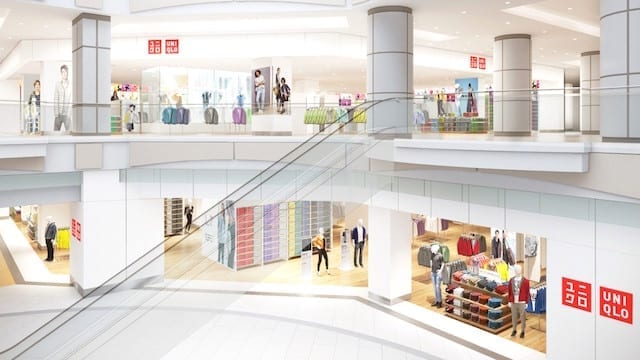
    Uniqlo Canada has announced plans to open its third store.

    Its debut in British Columbia, the store will open late this year, 12 months after Uniqlo entered Canada with an outlet in Toronto.

    Opening at Metropolis at Metrotown in Burnaby, British Columbia, the casual apparel retailer’s store will have 20,630 sqft (1917 sqm) of sales floor and offer its full range of core items.

    “Canada continues to be an important focus for the company globally,” says Uniqlo Canada COO Yasuhiro Hayashi. “This country’s cultural and climatic diversity represents the perfect platform for Uniqlo and our philosophy of LifeWear.”

    Product offerings at the new store will include the brand’s signature collections such as Airism, Cashmere, HeatTech and Ultra Light Down.

    Since opening its first store in Japan in 1984, Uniqlo has expanded to more than 1800 outlets worldwide. It is one of seven brands under the umbrella of Japan’s Fast Retailing.

  • Woodland India eyes Japan, South Korea

    Woodland India eyes Japan, South Korea

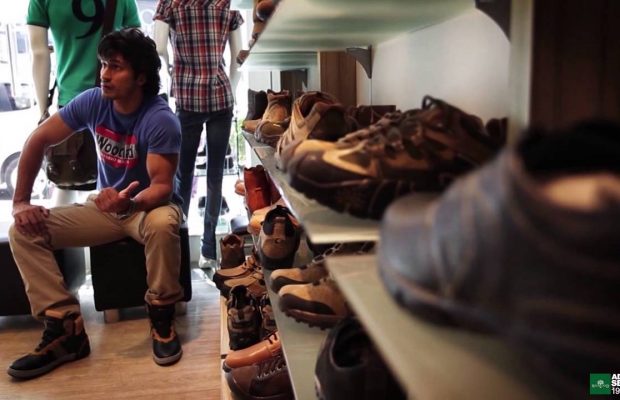
    Footwear and apparel firm Woodland India plans to enter the Japanese and South Korean markets in the next 12 months.

    Owned by the Aero Group, the company is also expanding at home with plans to add 120 exclusive outlets across India by the end of next year.

    Woodland India MD Harkirat Singh says the company also plans to grow its presence in multi-brand outlets.
    He says the company clocked revenue of Rs 1200 crore (US$279.9 million) in the last fiscal year and is seeking growth of 15 to 20 per cent going forward.

    Woodland, which makes most of its products in house, is also looking to add to its employee strength.
    Currently, the company has 600 exclusive outlets apart from presence in 5000 multi-brand stores in India.

  • Chloe Singapore launching at Marina Bay Sands

    Chloe Singapore launching at Marina Bay Sands

    Chloe Singapore will launch its first boutique at The Shoppes at Marina Bay Sands this month.

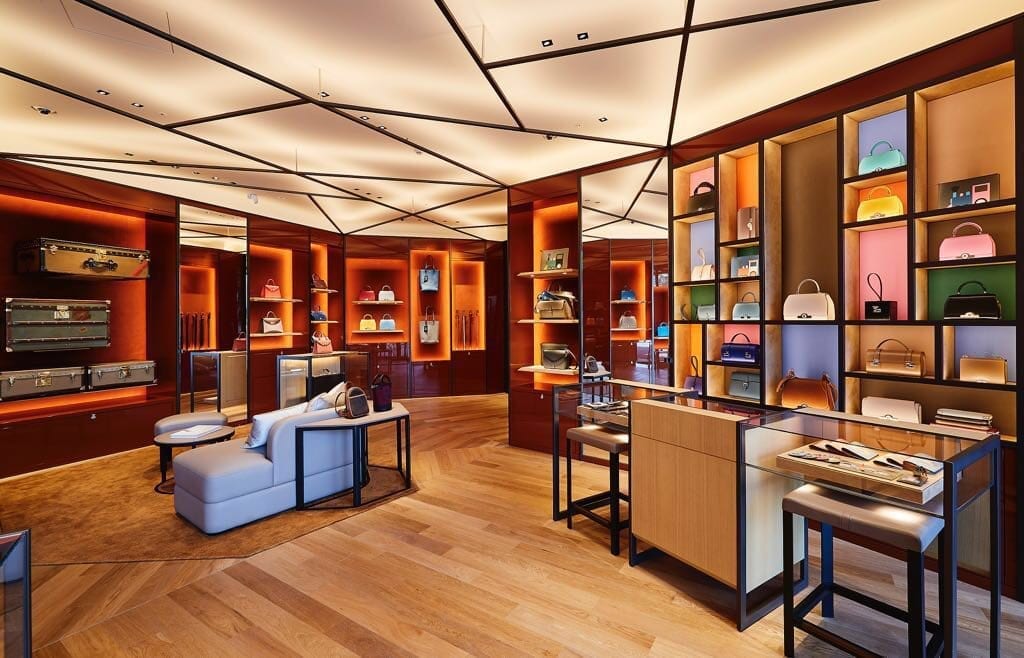
    Its store’s decor will feature textured furnishings, powdery rose beige tones on the walls and robust architecture complemented with linear lines, reports Buro 24/7.

    The French luxury fashion brand will be offering all ranges of its accessories and ready-to-wear fashion.

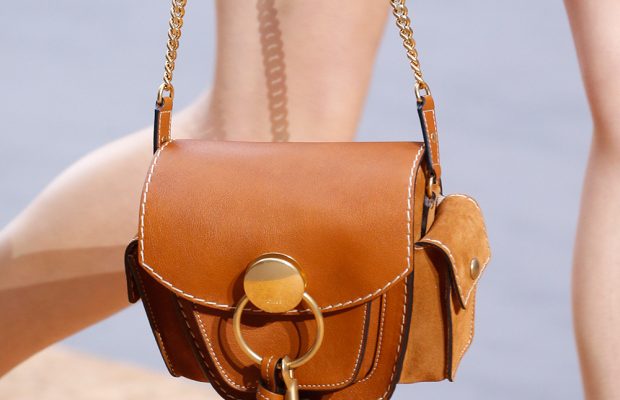
    To mark the opening, there will be a limited-edition calfskin and suede Faye bag – only eight pieces made – adorned with patchworks of orchid and phoenix (symbols of its new address).

    Chloe was founded by Gaby Aghion in Paris in 1952.

  • LVMH sales soar as shoppers return to luxury

    LVMH sales soar as shoppers return to luxury

    LVMH sales surged 15 per cent in the latest quarter to €9.88 billion (US$10.477 billion).

    That was nearly €400 million more than analysts had been expecting, with the result driven across all of the luxury group’s business units.

    Fashion and leather goods, which account for more than half the company’s turnover, rose 15 per cent during the quarter. That compares with static growth the same quarter last year. Fendi and Louis Vuitton were singled out by analysts as strong performers, with Celine, Kenzo, Loewe and Berluti also showing progress.

    LVMH’s leather and fashion brands also include Dior, Emilio Pucci, Fendi, Givenchy, Louis Vuitton, Marc Jacobs, Moynat, Rimowa and Thomas Pink.

    ‘Selective retailing’,  the group’s second-largest division, had been dragged down by DFS in prior quarters, offsetting a strong performance by Sephora cosmetics chain, observed Deborah Aitken, an analyst with Bloomberg Intelligence. But the latest quarter it showed improvement of 11 per cent. Sephora continued to gain market share globally and recorded double-digit revenue and profit growth for the quarter.

    “This could be an important turnaround,” said Aitken.

    Liquor – including brands such as Cape Mentelle, Chandon, Cloudy Bay, Dom Pérignon, Glenmorangie, Hennessy, Krug, Moët & Chandon and Veuve Clicquot – was the second best performing sector, up 13 per cent organically. Hennessy was a star performer.

    Sales of watches and jewellery also rebounded, rising 11 per cent. Bulgari continued to gain market share and Tag Heuer successfully launched its new Connected Modular 45 watch.

    And the perfume and cosmetics business grew sales by 12 per cent.

    Fung Global Retail observed that Parfums Christian Dior reported good growth and Guerlain launched a new women’s fragrance called Mon Guerlain during the quarter. Parfums Givenchy benefited from the success of lipstick lines, which saw rapid development in Asia. In addition, the Kat Von D brand launched exclusively in January 2017 at Sephora in France.

    Managing expectations

    While the company was clearly pleased with its results it did warn shareholders to keep their expectations modest, pointing out the growth had come against a 2016 quarter when the industry was struggling with Paris terror attacks. It said such levels of growth should not be expected for the full year.

    LVMH shares rose to a record in Paris after the results were announced.

    The LVMH figures will set the standard for a raft of luxury retail earnings due to be released in the coming days. Prada reports results today and Kering, parent of Gucci, on April 25.

  • Fred Segal opens Kobe store

    Fred Segal opens Kobe store

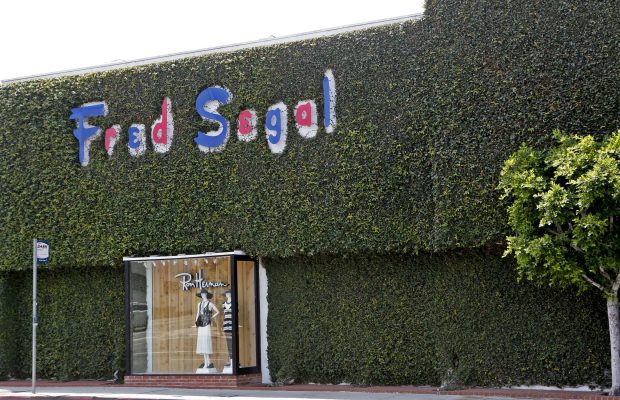
    American fashion retailer Fred Segal has opened its third store in Kobe, expanding its footprint in Japan.

    Spread over the first and second floors of a Daimaru affiliated shop in Shosen Mitsui Building, Kyu-kyoryuchi area, the 1175 sqm store features an all-white interior.

    Fred Segal Japan Kobe 1

    Fred Segal brings exclusive lines from the US such as SMN jeans, Jaguar Design shirts, Delfina Balda skirt and tops, Thomas Wylde swimwear and scarves, and Sigerson Morrison shoes.

    Brands such as LA’s Atelier & Repairs, Buaiso are displayed in the “Sunset” showroom along with “La Cienega” VIP salon.

    Fred Segal Japan Kobe 2

    The store’s second floor offers a new dining concept called The Cellar at Fred Segal with a wine bar and restaurant featuring more than 200 varieties of California wine and cuisine.

    The Cellar mirrors the experiential retail trend with a focus on dining, and California flavours specifically, which, like its fashion, is considered an enviable novelty in Asia.

  • Mujosh Philippines opens two stores

    Mujosh Philippines opens two stores

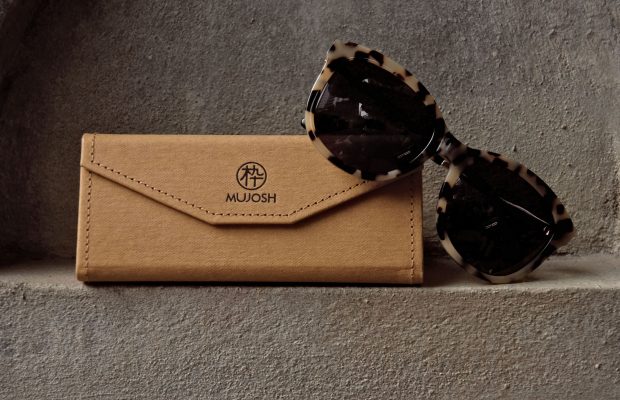
    Mujosh Philippines has launched two stores, at Alabang Town Center in Muntinlupa and Ayala Center Cebu.

    Both locations feature the Hong Kong eyewear brand’s latest collection of sunglasses and optical frames from its designers in China, Hong Kong and Korea.

    Mujosh Philippines

    Coolbe, Lifestyle and Sense are the main collections of sunglasses, while the optical frames feature the Cat-Eye, Eyebrow, Pilot and Retro models.

    Established in 2010, Mujosh has more than 700 specialty stores in malls and department stores throughout Australia, Canada, China, Hong Kong, Malaysia, Singapore, Taiwan, Thailand and Vietnam.

  • Samsonite International paying $105m for eBags

    Samsonite International paying $105m for eBags

    Hong Kong-headquartered luggage company Samsonite International is to buy online retailer eBags for US$105 million cash.

    The deal is part of Samsonite’s strategy to accelerate the growth of its e-commerce business.

    “With eBags’ immediate resources and digital expertise, we are able to expand our online retail capabilities in a meaningful way, driving stronger sales growth across all the brands in Samsonite’s portfolio,” says Samsonite CEO Ramesh Tainwala. “E-commerce is fast becoming a vital part of our business, and will continue to be central in our strategy.”

    EBags president/CEO Mike Edwards describes the move as “a perfect match”.

    Founded in 1998, eBags offers travel bags and accessories including backpacks, handbags, business bags, travel accessories and apparel from a range of travel and fashion brands. It had net sales of US$158.5 million last year, up 23.5 per cent from the previous year.

    The acquisition is expected to be completed within a couple of months.

  • Chow Tai Fook Shows Long-Awaited Sales Gains

    Chow Tai Fook Shows Long-Awaited Sales Gains

    Chow Tai Fook saw positive retail sales growth in the fiscal fourth quarter, ending a long run of declines at the Hong Kong-based jeweler. Retail sales in mainland China increased 16%, with same-store sales rising 12% during the three months that ended March 31, the company reported Wednesday. Overall retail sales in Hong Kong and Macau grew 1%, and same-store sales rose 4% — the first quarterly increase in three years in Hong Kong and Macaua, Chow Tai Fook said.

    Driving this growth were sales of gold products – up 17% in mainland China and 19% in Hong Kong and Macau – as the jeweler benefited from a 3% rise in gold prices and a higher average weight per gold product sold. Gem-set jewelry sales rose 5% in mainland China, but fell 17% in the municipalities due to a decline in the average selling price: The company had sold a number of big-ticket items in Hong Kong the previous year that it was unable to match during the reporting period, management explained.

    Chow Tai Fook’s ecommerce sales spiked 85% in mainland China, strengthened by its cooperation with existing online platform partners.

    The company, considered the largest jeweler in the Asia Pacific region, operated 2,381 points of sale at the end of March, of which 2,129 were jewelry locations in mainland China. It opened six jewelry points of sale in China and closed two watch locations during the quarter.

  • Goldman Sachs linked to The Body Shop bid

    Goldman Sachs linked to The Body Shop bid

    Investment bank Goldman Sachs is reportedly preparing a £600 million bid for The Body Shop.

    Owner L’Oreal decided to put the ethical cosmetics brand on the market last month, apparently unwilling to invest in arresting falling sales and market share.

    The Body Shop bid price would fall considerably short of the £850 million L’Oreal is said to be seeking – a figure roundly considered as highly optimistic in the investment community.

    Private equity companies Carlyle, CVC Capital Partners, Advent International and Apax Partners have all been reported to have shown an interest in the business. L’Oreal paid £650 million for the business in 2006.

    Founded by Dame Anita Roddick and her husband Gordon in 1976, The Body Shop has grown to more than 3000 stores in 66 countries. The original concept was to create an ethical approach to cosmetics with fewer chemicals and no animal testing.

    Sales fell 3.2 per cent in the first half of 2016 and by 2.8 per cent in the third quarter. Another decline is expected to be reported when L’Oreal releases its results this month.

    Charlotte Pearce, an analyst with GlobalData, warns The Body Shop needs to freshen its offer or face its eventual demise.

    “The brand has become outdated and has failed to provide an innovative offer with exciting new products to entice customers into stores, causing the retailer to lose out to brands with more relevant beauty and skincare ranges,” said Pearce.

  • South Korea making mark in global beauty markets

    South Korea making mark in global beauty markets

    South Korea is among the top 10 global beauty markets, estimated to be worth more than US$13 billion this year, according to London-based market research firm Mintel Group.

    Its research was released on the eve of the 27th edition of In-cosmetics Global in London, said to be the world’s foremost exhibition for personal-care ingredients. As well as spotlighting South Korea’s beauty market, the research looks at trends impacting the global beauty industry and innovations in textures, ingredients and product experience.

    Facial skincare accounts for 51 per cent of total market share with $6.5 billion in retail sales and a projected 5.8 per cent CAGR over the next five years to reach $7.2 billion by 2020. Much of the success of the category comes from an abundance of product development and the fact that 68 per cent of total skincare product launches in South Korea for 2015-2016 were facial skincare products, according to the Mintel Global New Products Database (GNPD).

    Colour cosmetics make up the second-largest beauty category in the South Korean market, valued at $2.3 billion this year. Mintel research indicates the market is actively supported by consumers with a per capita spend at $45, compared to $43 in the UK and $37 in the US, and more than double the global average of $21. With a projected CAGR of 8.1 per cent over the next five years, the market is estimated to reach $2.8 billion by 2020.

    “The Korean beauty market remains buoyant thanks to fast-paced innovations and highly engaged consumers who don’t hesitate to adopt novel products,” says Mintel senior beauty analyst Jane Jang.

    Several South Korean beauty and personal-care trends are set to impact global beauty markets, says Jang…

    Facial skincare

    For facial skincare, this will be a year of extreme segmentation, says Jang. Products will become increasingly targeted and multi-functional, responding to the needs of knowledgeable and demanding consumers.

    South Korean beauty routines can comprise up to 10 steps, with moisturising, brightening, whitening and anti-ageing specific obsessions.

    “Expect to see hybrid concoctions, such as daily exfoliating moisturisers, anti-wrinkle whitening tone-up creams and lightweight nourishing oil serums, but also transformative textures, like powder-to-serum, oil-to-foam and water-to-cream. Overall, lines are blurring in every possible way to deliver new experiences and create continuous excitement around skincare.

    “A strong focus on quality and safety supports a fascination for natural ingredients, in line with ‘hanbang’, the ancient Korean herbal medicine. Tradition is taken to the next level through scientific improvements, and 69 per cent of facial skincare launches last year featured herbal/botanical claims.”

    Jang says the sheet mask craze does not seem to be slowing down. “Moving beyond basic hydrating benefits, sheet masks and patches are now designed for each part of the body and every member of the family, babies included… Some interesting examples include masks inspired by oriental acupressure massage techniques, plus injection treatments at clinics featuring micro-needles and pressure points, and sauna-effect masks that lock in moisture while trapping body heat.”

    Make-up

    South Korea’s make-up rituals last year focussed greatly on lips and complexion, using products in a diversity of shades with a variety of contouring techniques. “As such, the number of  lip colour and face make-up product launches tend to be higher than the global average,” says Jang. Mintel GNPD says lip colour launches accounted for 30 per cent of all launches of colour cosmetics in South Korea last year, compared to a global average of 27 per cent. This is followed by foundations and fluid illuminators, accounting for 16 per cent of launches.

    “The boom of hybrid formats has spawned a variety of new lip products, like lip syrups, lip crayons, lip-quids and gel sticks,” says Hang. “Lip tints are also widely diffused, but contrary to their potentially drying Western counterparts, South Korean products are lightweight and glossy, and often come as oils.”

    A Korean success story for the past few years has been cushion compacts, breaking through the Western market last year. “New launches in South Korea include multi-functional skincare claims such as moisturising, anti-ageing, whitening and UV protection; foundation-like properties; and hygiene and application innovations.”

    Jang says the trend for hybrid textures and formats is borrowed from skincare. “South Korean brands are increasingly focussing on gels, jellies, mousses and watery oils. Moreover, transforming textures combine the benefits of two or more textures within one product. For instance, liquid textures such as cream and oil that provide high moisture and spreadability transform into a water or serum for fast absorption or into a powder to give a matte and lasting finish.”

    Summing up, Jang says that because of K-beauty’s growing popularity worldwide, Western brands are constantly looking to South Korea for inspiration.

    “The popularity of South Korean beauty products lies in their high performance combined with fun packaging and sensorial cues, as well as affordable prices.”

  • H&M Sustainability goal: 100 per cent recycled by 2030

    H&M Sustainability goal: 100 per cent recycled by 2030

    The latest H&M Sustainability Report released this week aims for 100 per cent recycled or other sustainably sourced materials by 2030.

    And the Swedish headquartered retailer says it wants to be “climate positive” throughout its entire value chain by 2040.

    Another key highlight is a commitment to switch to 100 per cent renewable electricity. In 2016, 96 per cent of the company’s global electricity in its own operations came from renewable sources.

    The report also mentions that H&M in 2016 was named the biggest global user of cotton  certified by the Better Cotton Initiative.

    “When it comes to recycling and reuse, the H&M group is continuing to drive an ambitious development plan,” the company said in a statement.

    Since the start of the global Garment Collecting initiative in 2013, the H&M group has collected 39,000 tonnes of unwanted textiles. By 2020 the company aims to collect at least 25,000 tonnes of textiles every year. The report also shows that the work to scale-up the H&M group’s industrial relations and fair living wage programs continues with good progress.

    “We want to use our size and scale to lead the change towards circular and renewable fashion while making our company even more fair and equal. This is why we have developed a new strategy aiming to take our sustainability work to the next level,” said Anna Gedda, head of sustainability at the H&M group.

    “We want to lead by example, pave the way and try new things – both when it comes to the environmental and social side – to ultimately make fashion sustainable and sustainability fashionable. Our climate positive strategy is one way of doing this,” she added.

    DBL factory visit. Savar. Bangladesh

    Fashion from plastics

    This year, H&M launched its first Conscious Exclusive collection featuring clothing made from Bionic, a polyester made from recovered plastic from shorelines.

    “We are committed to proving that sustainable fashion has a place on the red carpet as well as making it part of the standard offer in our stores,” the report says.

    The Conscious Exclusive collection is available in about 160 H&M stores worldwide, as well as online from April 20.

    “We continually work with materials and processes that make our products more sustainable. In doing so, we contribute to the democratisation of sustainable fashion by making more environmentally friendly choices available to our customers.

    “We also help lift these materials to scale and create demand for further innovation. In the long run, this can change the way fashion is produced by greatly reducing the need for raw materials, which in turn lightens the burden on our precious planet.”

    Other sustainable materials in the Conscious Exclusive collection and in other H&M ranges available throughout the year include fabrics such as recycled polyester, Tencel and organic cotton.

  • CDF-Lagardere, Shilla win Hong Kong Airport concessions

    CDF-Lagardere, Shilla win Hong Kong Airport concessions

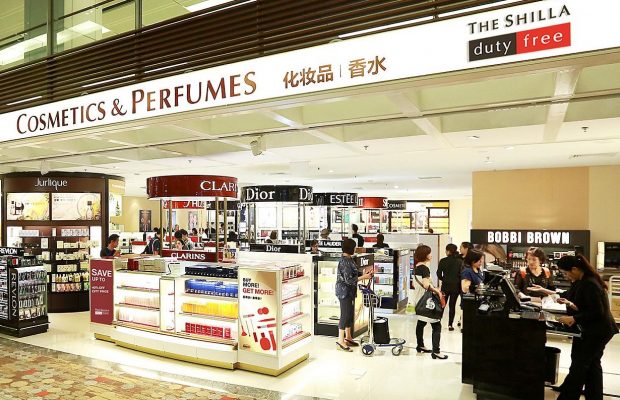
    Key Hong Kong airport concessions for cosmetics, fashion accessories and liquor & tobacco have been awarded at Hong Kong International Airport.

    The Airport Authority of Hong Kong has awarded the liquor & tobacco concession to China Duty Free – Lagardere Company and the perfume & cosmetics and fashion accessories concession to Shilla Travel Retail Hong Kong Limited (Shilla).

    The concessions will open from November 2017 and follow an open tender exercise.

    Cissy Chan, executive director, commercial of the Airport Authority said she is confident the new concessions “will elevate the overall airport experience and create a new shopping journey for the worldwide passengers”.

    The liquor & tobacco concessionaire will have the flexibility to include complementary products and upmarket gourmet food items.  The perfume & cosmetics and fashion accessories concessionaire will offer a one-stop shopping destination for beauty and fashion accessories, such as sunglasses, fashion watches, small leather goods and handbags.

    CDF – Lagardere, the awardee of the liquor & tobacco concession, will be introducing new experiential concepts, which include a wide selection of Chinese liquor assortment, a whisky chamber bringing an extensive offering under one roof, an in-store VIP lounge, tasting bars and more, said Chan.

    Shilla, which will be operating the perfume & cosmetics and fashion accessories shops, will bring a wide spectrum of beauty products and fashion accessories representing almost 100 brands that are new to HKIA.  There will be a dedicated zone for male-specific products, as well as a New Generation zone providing a platform for emerging Korean and Japanese brands.

    Both concessionaires will bring in new ideas to deepen customer engagement through digital initiatives. Interactive zones with virtual reality (VR), interactive and digital devices, together with iBeacon technology, will be installed inside the shops to enhance in-store navigation and real-time promotional offers.

    Charles Chen, President of China Duty Free Group (CDF) said being awarded the liquor & tobacco concession at HKIA marks an important milestone in the international development of the organisation’s duty free business.

    “We extend our sincere gratitude to the AA for their trust, and we will join hands with Lagardère Travel Retail to present a world class duty free shopping experience to the HKIA passengers.”

    Dag Rasmussen, chairman & CEO of Lagardere Travel Retail promises the company’s teams across the world will collaborate with brand partners “to bring to life a new benchmark for quality and engagement in travel retail”.

    And Roberto Graziani, president, Hotel Shilla Travel Retail says the highly contested tender win is a tribute to Shilla’s innovative category insights, deep understanding of customer needs and long-standing operational excellence.

    “We are grateful to the AA for this vote of confidence and look forward to warrant to our customers and all stakeholders, offers, services, and operational performances which will stay abreast of trends and changes in the consumers’ preferences, always maintaining a strong competitive edge throughout the length of the concession.”

  • Chanel Vietnam opens first cosmetics boutique

    Chanel Vietnam opens first cosmetics boutique

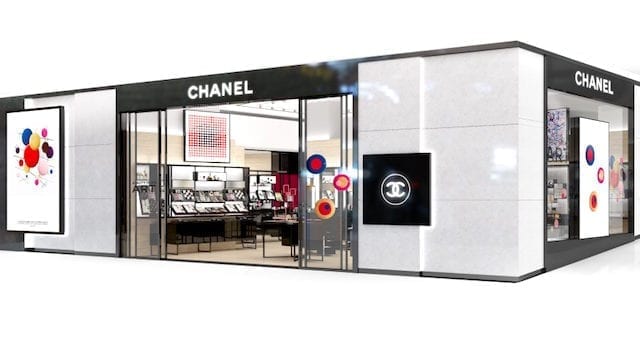
    Chanel Vietnam has opened its first dedicated cosmetics and perfume boutique.

    The 133 sqm store is located on the ground floor of the Saigon Center shopping mall in the heart of Ho Chi Minh City. It is decorated with a three-color theme of black, beige, and burgundy.

    The store showcases Chanel’s latest collections of makeup, skincare, and perfumes – with special emphasis on the “Les Exclusifs de Chanel” perfume collection with 16 scents.

    Customers will also enjoy a special skincare service called Sublimage from Chanel beauty team.

  • Burberry changes strategy to boost up sales

    Burberry changes strategy to boost up sales

    In a significant strategic u-turn the Burberry beauty business is to be out-sourced again.

    The UK fashion brand has announced a partnership with Coty to help boost the growth of Burberry beauty products from October.

    “We are delighted to partner with Coty, a world leader in luxury fragrance and makeup,” said creative chief Christopher Bailey in a statement. “Working with a global partner of their scale and expertise will help drive the next phase of Burberry Beauty’s development and position this business for future growth.

    “Further, the combination of the upfront payments and ongoing royalties is financially attractive and is expected to provide an accretive impact to our earnings from 2018/19.”

    The Burberry beauty portfolio includes fragrance lines Mr Burberry and My Burberry and make-up products. It turned over about £203 million last fiscal year.

    The appointment of Coty suggests the failure of a four-year old decision to take the beauty business in-house, after previous partner Interparfums was ended. But management disagrees.

    “We are in a very different position now to the position we were in four years ago,” said Julie Brown, Burberry’s chief operating and financial officer, explaining the strategic shift.

    “There was quite a high level of distribution of beauty products four years ago and what we wanted to do was bring it back in-house, control it a lot more carefully, and ensure we repositioned it, alongside the rest of the Burberry range.”

    Executive director John Smith said taking the portfolio in-house had helped strengthen the brand but “at the same time, we are on our own, in an industry where there is lots of competition. By partnering with Coty with their sheer scale… we do feel that we will have a lot more force in the marketplace in terms of distribution and relationships with wholesalers, department stores and so on.”

    Burberry expects be paid £130 million ($163 million) for the long-term exclusive global licence and related transfer of the beauty business, and £50 million for assets.

    Under the deal,Burberry will lead the creative parts of the business and Coty will use its industry expertise and global distribution network to optimise sales.