Category: Fashion

Retail News Asia is committed to providing both local and global retailers with the latest Fashion news throughout the Asian market. This on a daily base.

  • Zoff to open flagship in Orchard Central

    Zoff to open flagship in Orchard Central

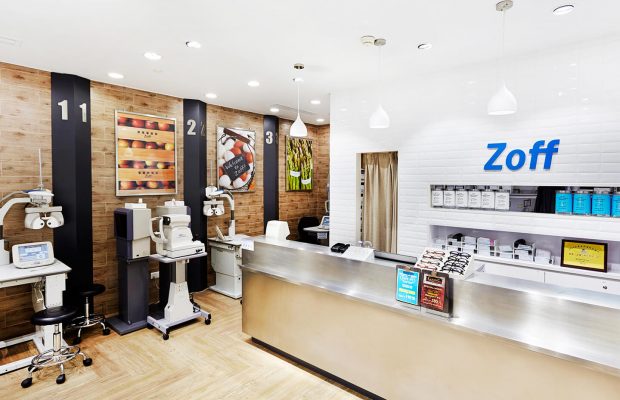
    Japanese eyewear chain Zoff is expanding into Southeast Asia with a flagship outlet at Orchard Central in Singapore.

    Zoff, known for consistently introducing two collections every month, has more than 200 stores in Japan and China. Its Singapore flagship store at Orchard Central will open on April 7 with a traditional lion-dance performance plus a performance by dance duo Scrach Marcs.

    Zoff president/CEO/COO Teruhiro Ueno will attend the opening and is expected to speak about the company’s expansion plans.

  • Zalora Philippines partners with Inquirer.net

    Zalora Philippines partners with Inquirer.net

    Online fashion store Zalora Philippines has signed a partnership with media site Inquirer.net with the aim of making online shopping more convenient.

    Zalora Group sells fashion and lifestyle products online in Brunei, Hong Kong, Indonesia, Malaysia, Singapore and Taiwan as well as The Philippines. Its partnership with the news site is a response to the growing Filipino digital lifestyle.

    The contract signing was attended by Zalora Philippines co-founder/CEO Paulo Campos III and Inquirer.net president Paolo Prieto and COO Gary Libby.

    Campos says that with the average Filipino spending eight hours a day online, half on desktop and half on mobile, the Philippines is the leading country in terms of time spent on social media and on the internet overall.

    He says 70 per cent of the population is 35 years or younger, with the median age being 23, and with the average Filipino connected all the time “that’s something very revolutionary”.

    He says it is a “cataclysmic shift” in consumer behavior and in the market in a good way.

    However, he sees the challenge in online shopping as removing frustration and disappointment such as unexpected delays on deliveries.

    Campos says that in most cases, Metro Manila online shoppers will receive their purchases within a day, with the average delivery time being 1.3 days. In other key cities like Bacolod, Cebu, Davao, Iloilo, Pampanga, Tacloban and Zamboanga it will take an average of 2.5 days for an item to be delivered, and an average of 3.5 days to one week for further-flung cities and remote areas.

    Zalora will next month add international brands such as Abercrombie and Fitch, Burton Menswear, Dorothy Perkins, Hollister and Topshop/Topman to its site.

  • Octogenarian new ambassador for Reebok China

    Octogenarian new ambassador for Reebok China

    Octogenarian Wang Deshun, a silver-haired actor known as “China’s hottest grandpa”, is Reebok China’s newest brand ambassador.

    Wang, who was born in Shenyang in 1936, stars in the sports brand’s latest Chinese video campaign “Be More Human” alongside actress Yuan Shanshan and actor Wu Lei.

    The senior citizen first caught attention in 2015 when he strutted bare-chested down the runway for a local designer in Beijing Fashion Week.

    “Only seriously getting into fitness at the age of 70, Wang’s example has helped reshape China’s views on aging and shown you’re never too old to pursue your goals,” says Reebok, which aims to become “China’s best fitness brand”.

    It is expanding its new lifestyle retail concept FitHubs, which integrate retail, fitness and other activities for customers. There are locations already in Hangzhou, Qingdao and Wuhan, with 50 scheduled to open this year. Reebok, owned by Adidas, plans to have 500 FitHubs by 2020.

    Its focus is on three key categories: running, training and classics. This year it is especially promoting its running line.

    “With running in particular experiencing an unprecedented surge in popularity in China in recent years, the category is a key focus for this year,” says the company.

  • Diesel Myanmar opens monobrand store

    Diesel Myanmar opens monobrand store

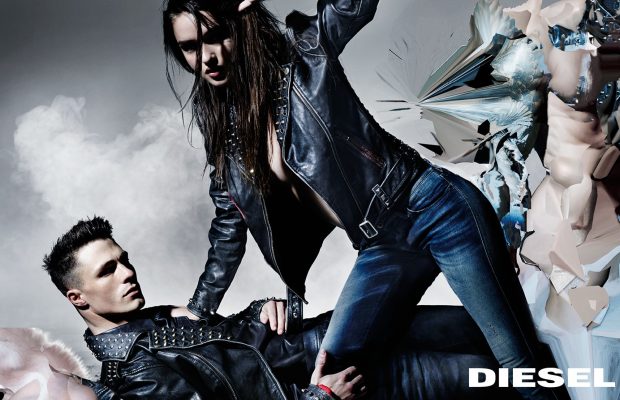
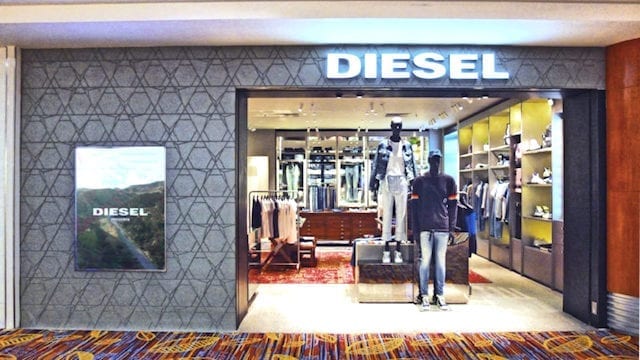
    Diesel Myanmar has opened its first monobrand store, at Yangon International Airport.

    With a new design concept, the 100 sqm outlet was conceived in collaboration with Japanese architectural firm Wonderwall, headed by interior designer Masamichi Katayama.

    In collaboration with Diesel artistic director Nicola Formichetti, the Tokyo team came up with the concept of an apartment space, like a “symbolic new house” for the brand.

    The Italian lifestyle brand says the design aims to create a distinctive atmosphere in which the customer can feel at home.

    The store’s opening coincides with launch of Diesel’s latest spring/summer collection.

    Meanwhile, Diesel plans further travel-retail openings in Singapore and Guam.

  • Mulberry Asia launches with Challice as partner

    Mulberry Asia launches with Challice as partner

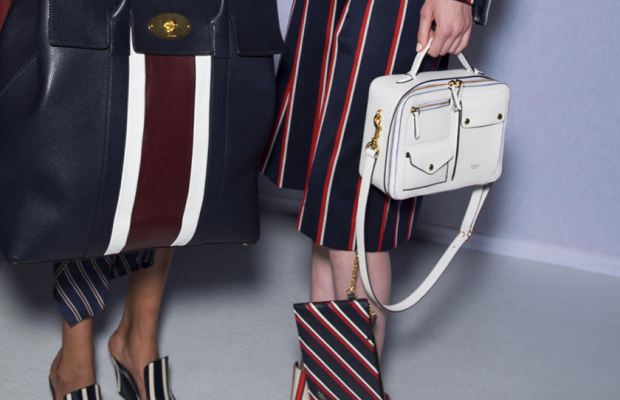
    English luxury brand Mulberry Group has launched Mulberry Asia in partnership with Challice, which will run its business in China, Hong Kong and Taiwan.

    Mulberry Asia will start trading in Hong Kong from April 3, with a subsidiary in China and a branch office in Taiwan expected to follow this year.

    Mulberry owns 60 per cent of the share capital of Mulberry Asia, with Challice holding the balance.

    There will initially be four stores: two in China, one in Hong Kong and one in Taiwan. The new JV will also manage regional wholesale sales. A Chinese-language Mulberry.com site will be launched along with a regional omni-channel platform, with the partners planning “significant” marketing investment in north Asia.

    Mulberry plans to invest about £3 million (US$3.7 million) in additional support over the next two years to build brand awareness in the region.

    In the near term, a store will be opened in Shanghai, while stores in Beijing and Hong Kong will be relocated.

    Founded in the UK in 1971, Mulberry is best known for its leather goods.

  • Sportswear retailer streamlines trade operations in China

    Sportswear retailer streamlines trade operations in China

    Adidas Group wants to kick off its expansion in China on the right foot. The sportswear brand plans to bolster its retail sales network to 12,000 outlets in China by 2020, with much of the growth slated for smaller cities. However, the company also knows that conducting international trade within China can be difficult and complex due to challenges presented by huge import and export volume, and minimal advance notice of regulatory changes.

    As a result, Adidas began searching for an automated solution to help reduce manual-based operations, minimize clearance delays and compliance risks, and respond to regulatory changes quickly. The company found its solution through the CTM platform from Amber Road.

    Specifically, Amber Road’s CTM InSight function will equip the Adidas China team with self-compliance capabilities, which will help them conduct comprehensive and regular internal audits to proactively identify and resolve non-compliance issues with agencies in a timely fashion. Meanwhile, the CTM Business Intelligence (BI) Dashboard will supply information to centralize management, improve clearance process visibility, and enhance internal controls.

    By implementing Amber Road’s CTM solution, Adidas Group will be well prepared to apply for China Customs Advanced Certified Enterprise (AEO) status, which will enable the company to enjoy international trade facilitation measures, according to Kae-Por Chang, managing director, Amber Road China.

  • Esprit jewellery set for revamp with new partner

    Esprit jewellery set for revamp with new partner

    The Esprit jewellery line-up is set for a major revamp after the appointment of a new licensee, Versteegh modeaccessoires effective July 1.

    Esprit says that with more than 60 years of experience in the wholesale trade, Versteegh brings valuable know-how and important expertise in the field of fashion accessories to the partnership.

    “Thanks to their excellent supplier network, Versteegh is able to guarantee short and reliable delivery times. The Esprit-branded jewellery collection from Versteegh will be available internationally in Esprit’s own retail stores and online,” said Maria Pambori, VP head of global licenses/product with Esprit.

    “Together with our new partner, we want to excite our customers with a product portfolio that reflects the latest trends and interprets them through the philosophy of our brand Esprit. With Versteegh we have found a partner who attaches great importance to quality, has a keen sense of trends and thus perfectly meets our high requirements.”

    Versteegh director Frans Lenting said the positioning of Esprit offers his company an ideal platform for its products.

    “We are looking forward to making a great impression on Esprit customers with our collections.”

    Headquartered in Houten in the Netherlands, Versteegh is an international wholesaler in the field of fashion jewellery and accessories. Its own design and styling team regularly provides for new collections.

    Alongside jewellery, the company also sells bags, sunglasses, watches, hair accessories and gloves.

  • ‘Korean Chaos’ Worries the Fashion Industry

    ‘Korean Chaos’ Worries the Fashion Industry

    SE“The last four or five months have been complete chaos,” admits Jung Kuho, executive director of Seoul Fashion Week. “Everyone is so concerned with politics and the economy that they don’t want to spend their money. You don’t buy luxury goods when there’s this much uncertainty.”

    Seoul is home to one of the most important luxury goods markets in the world, an entertainment industry that dominates Asian culture, beauty brands with global reach and a fashion week that sits firmly on the international calendar. But as editors, buyers and street style stars gather for Seoul Fashion Week, the collections this season will be overshadowed by serious political and economic upheaval.

    In October, a major corruption scandal in South Korea led to public outcry and widespread street protests which resulted in the recent impeachment of the country’s president Park Geun-hye. Now, in the wake of counter-protests and other domestic instability, a diplomatic crisis with China has emerged. One result of these crises is that related security concerns are deterring both local and foreign shoppers.

    According to Bain & Company, sales of luxury goods in Seoul reached $7.6 billion last year. To put that into perspective, it means that luxury sales in the South Korean capital alone are not far off those for the entire Middle East region (at $8.7 billion). Clearly there is a lot at stake.

    But last month, Global Blue reported that in January alone, travel retail sales in Seoul declined by an alarming 19 percent year-on-year and by 15 percent year-on-year for January and February combined. Earlier this month, shares of companies trading in cosmetics and travel dropped sharply in Seoul and, in January, the Baidu Index reported a 25 percent decline in growth for Korean beauty brands in China.

    Between a rock and a hard place

    At the beginning of March, the first pieces of a US-built missile defence system designed to ward off a threat from North Korea arrived at the Osan Air Base in South Korea. It is called the Terminal High Altitude Area Defense system (Thaad) and China has been particularly vocal in its opposition to it. The reason for this appears to be related to Thaad’s tracking devices, which have the potential to follow China’s missile systems and would give the United States an advantage in any potential conflict.

    Since the official launch of the programme, the Chinese government has retaliated to what it sees as a military threat by putting economic pressure on Korean firms. Dozens of supermarkets owned by the Lotte luxury department store group have been shuttered across China on the pretext of fire safety; Chinese visitors have been stopped from visiting South Korea in groups; K-Pop bands have been restricted from airing on Chinese television; licences for South Korean video games have been frozen; and even imports of 19 Korean cosmetics products have been refused on ambiguous-sounding quality-control issues.

    “The temperature that is felt within China can only be measured by those within the region,” says Inhae Yeo, the director of Oikonomos Fashion Consulting, “But here on the Korean side, there are constant media reports about it and on the Chinese government banning large groups of tourists travelling to Korea.”

    China has used these tactics to turn the popularity of Korean products into a method to spark anti-Korea sentiment. The Hallyu wave of Korean culture has been flooding China since 2010, helping to make everything from Korean shoes and lipstick to musicians and actors popular. But now, because of the restrictions on Korean imports in China, the media and ordinary Chinese citizens are being compelled to take a stand against Korean products in the name of patriotism.

    Luxury sales in the South Korean capital alone are not far off those for the entire Middle East region.

    This is proving problematic for Seoul as China is South Korea’s largest trading partner, with exports to the country worth $142 billion in 2014, and cultural products hitting a record $5.3 billion in sales the same year. So understandably, the Korean fashion and beauty industries have become increasingly reliant on both sales in China and the constant influx of Chinese tourists who fly to Seoul primarily to shop for Korean products and international luxury brands.

    “At the present, a wide range of Korean industries — not just beauty and fashion — have started to suffer from this strong Chinese national action,” says Julia Juyeon Kang, the editor-in-chief of Elle Korea. “Experts are saying that whether it continues or not depends on our new next government, which can negotiate between China and US.”

    Seoul Fashion Week’s Jung agrees: “I don’t think the numbers will pick up until May when we have an election and hopefully then we will get back on the right track,” he says.

    Domestic instability upsets retail

    Compounding upon the dramatic drop in their largest customer-base, fashion brands in South Korea have also been dealing with a major political fallout. On March 10, Park Geun-hye became the first president of South Korea to be forcibly removed from office. Park was accused of colluding with controversial figure Choi Soon-sil, the founder of the Church of Eternal Life, to extort millions of dollars in bribes from major South Korean firms and allowing Choi to interfere in government matters.

    The impeachment was preceded by months of protests both for and against President Park, which led to the closure of businesses, shopping malls and restaurants around Seoul as the public took to the streets. This unrest was undoubtedly another factor in China’s reluctance to allow its citizens to travel to Korea, partly for their safety but also because it is an example of the kind of public demonstration that Beijing both fears and detests.

    Meanwhile China is showing no sign of backing down its call for protests against South Korea, which are apparently erupting around the country with videos of bloggers destroying Korean goods going viral and the state-run Global Times running anti-Korea editorials. “We will not sacrifice the national interest for Korean cosmetics,” says one. “We should start increasing sanctions toward Seoul in an orderly way, comprehensively lower the level of Sino-South Korean exchanges [and] roll back all privileges that Seoul has gained from China,” says another.

    But can this newfound Chinese antipathy for Korean brands really last? And how widespread is it? There have been suggestions in the Korean press that some of these protests have been staged or at least exaggerated by the Chinese media.

    But if they are real and indeed grow, will loyal consumers remain undeterred in the long run?  Korean beauty brands saw an 84 percent year-on-year Baidu Index growth in December 2016, a rate more than double that of Western, Chinese, or Japanese rivals. That growth did sharply decline as the crisis took hold in January, falling below Japanese brands, but nonetheless it has managed to stay ahead of other competitors.

    China is showing no sign of backing down its call for protests against South Korea.

    “Chinese consumers have continued to show a high interest in Korean brands throughout the dispute,” says Liz Flora, the editor of Asia-Pacific research for business intelligence centre L2.

    “But of course, boycotts in the name of nationalism can have a significant impact on brands’ sales — we saw this in the case of China’s anti-Japan boycotts in 2012, and Korean sales are certainly taking a hit. But Japan was able to bounce back after about a year, and saw a massive influx of Chinese tourists in 2015 thanks to the declining value of the yen. This shows Chinese consumers will be nationalist in their consumption habits to a point, but price advantages and higher quality will ultimately win them over.”

    However, it is important to remember that Korean beauty brands are in a significantly more powerful position than their fashion counterparts. “Sure, Korean fashion is not yet as popular as Korean beauty [but] within the fashion industry, the delicate designer brands which are hard to find and more difficult for the Chinese to copy, are still highly valued,” says Park Yeon-joo from the Council of Fashion Designers of Korea.

    “But due to the restriction order, numerous events related to Korean fashion have been cancelled. So, yes, the chances of Korean fashion brands expanding into the Chinese market have now decreased. Therefore, we’re decreasing the dependency on the Chinese market, and focusing on the so-called ‘Post-China market’ of Vietnam, Indonesia, Thailand, and so on.”

    According to Yeo of Oikonomos, the continued professionalisation of South Korea’s fashion market and the role of the government will be key to its resilience in the face of recent challenges.

    “Fashion is a very complicated industry and there are layers and layers of strategies as well as key points that need to be addressed and developed. This is only possible when experts with experience can come together,” she says, referring to the need to build “network infrastructure” between the public and private sectors.

    The sting of anti-corruption legislation

    In addition to the current political and diplomatic crises, fashion brands in South Korea have other reasons to be worried. The country’s new anti-graft law, popularly known as the Kim Young-ran Act, took effect at the end of September 2016 and has had a marked effect on the luxury goods market.

    In an effort to stamp out corruption, this new law bars public servants, government officials and others from accepting gifts worth more than $45 and is being seriously enforced. Members of the fashion community are becoming increasingly concerned because some brands — both local and international — have become reliant on luxury gift-giving for a significant proportion of their profits.

    “I do think that the decrease of Chinese tourists is the main reason for the decline in sales we are seeing, but the anti-graft law has also had a huge impact on Korean society, which conventionally gives and takes gifts,” says Kang of Elle. “I’ve heard a PR person from one of the big French luxury house saying that some of the low-priced products like ties and scarves are still selling well but high-priced bags are selling very little.”

    Bom Lee, the editor-in-chief of Dazed Digital Korea goes one step further, insisting that this new law bears the most responsibility for the recent drop in sales in Seoul. “The Kim Young-ran law has caused at least 50 percent of the problem,” he says. “Thaad, the presidential impeachment and tension with North Korea are responsible for the other 50 percent. But I hope that the sensitive issue with Thaad will fade as soon as possible.”

    The anti-corruption law has certainly come at a sensitive time, while the presidential scandal makes the likelihood of it being repealed very slim. Members of the fashion industry are still pinning their hopes for a return to normalcy on the upcoming election that will lead to a recovery in sales.  But this relies on the assumption that the political and diplomatic events that provoked the crisis are temporary in nature and can be solved with the arrival of a new president in May. And that the underlying economy is in good shape — as assertion which some economists dispute.

    “Well, we have a lot Chinese buyers coming to Seoul Fashion Week now and they are confident that their customers will continue buying Korean fashion because a new president will solve the Thaad dispute,” says Jung. “But maybe this incident has taught us an important lesson that in future years we need to be more prepared for these types of event, and not be so reliant on China ever again.”
     

  • M&S launches boutique concept in Malaysia

    M&S launches boutique concept in Malaysia

    Marks & Spencer (M&S) has launched a premium boutique concept in Kuala Lumpur, in Sunway Velocity Mall.

    M&S Malaysia

    Covering more than 10,600 sqft (985 sqm), the M&S boutique concept – the first of its kind in Malaysia – features large mirrors and seasonal imagery. A welcome zone at the entrance showcases the season’s trends, and boutique displays allow customers to see the range of styles, fits and outfit ideas available.

    M&S Malaysia 3

    As well as offering the UK retailer’s clothing and accessories across womenswear, menswear, childrenswear, lingerie and toiletries, the boutique has a food hall featuring more than 800 lines plus an in-store bakery with Coffee-To-Go, offering coffee and tea alongside breads and pastries baked on-site.

  • Li Ning e-commerce sales leap 90pc

    Li Ning e-commerce sales leap 90pc

    Li Ning e-commerce sales soared 90 per cent last year, driving an overall 13 per cent gain.

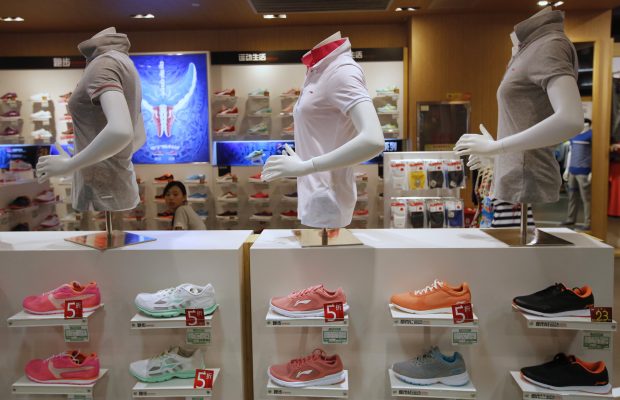
    The Chinese sportswear company closed the year with CNY8.015 billion (US$1.165 billion) in sales, while its gross margin grew 1.2 points to 46.2 per cent. Its net income also increased, reaching US$144.5 million, compared to $116.2 million the previous year.

    Footwear again led sales, up 15.7 per cent to $569.378 million, while apparel sales rose 12.7 per cent to $512.875 million and equipment/accessories followed with 4.9 per cent growth to $67.369 million.

    In contrast, sales for third-party brands such as Aigle, Kason and Lotto, slumped by 23.6 per cent to $11.957 million.
    Internationally, sales for the Li Ning brand itself grew by 36.4 per cent, reaching $29.356 million – just 2.6 per cent of the brand’s overall revenue.

    At December 31, Li Ning had 6440 stores, up 5 per cent on the previous year. These comprise 4829 franchised stores (up 4.6 per cent) and 1611 (up 6.3 per cent) run directly.

    In its annual report, the company says that while its business covers 44 countries, it believes that developing Asian countries will be crucial. “Cross-border e-commerce will remain our international team’s main focus this year.”

  • Bad record for Bonjour Holdings

    Bad record for Bonjour Holdings

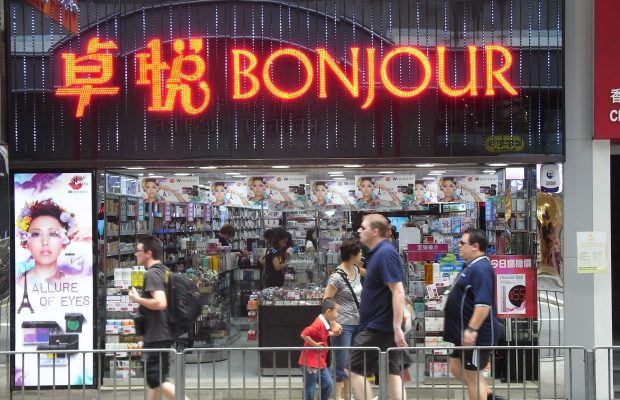
    Tumbling turnover and gross profit margin have flipped an operating profit to a loss for beauty and healthcare retailer Bonjour Holdings.

    Its turnover for last year fell 12.8 per cent to HK$1.995 billion (US$256.8 million), while its gross profit margin dropped from 41.8 to 38.1 per cent. This gave the group a loss of HK$77.9 million compared to a profit of HK$50.7 million in 2015.

    During the year, the group rationalised its retail network from 47 to 42 outlets.

    Hong Kong and Macau retail sales fell for the second straight year, the company’s audited results show.

    Same-store sales fell 10.1 per cent despite the average sales value per transaction for mainland tourists rising by 7 per cent. However, the total number of mainland customers dropped by double digits last year. The company says the drop in its total number of customers contributed about 9 per cent of the overall retail decline during the year.

    Bonjour says an enormous demand continued for Korean beauty and skincare products in Hong Kong’s retail market. Because of this, the group has formed dedicated procurement team to explore this trend.

    During the year, Bonjour continued to introduce a variety of mass Korean beauty products to keep the market competitive and to offset the negative impacts of the falling sales of Western and Japanese premium brands.

    Meanwhile, the group has been increasing awareness of its brand through online platforms. It partnered with Tmall and WeChat during the year to broaden its touch points with target consumers.

    “Additionally, with the rapid rise of live-streaming and photo-sharing apps, video and photo content and key opinion leaders (KOL), partnerships has taken up a significant role in our marketing campaigns,” says Bonjour. “Online image sharing has become a critical element for us to communicate with our target consumers.”

    Delivery service

    The group partnered with Alipay in two one-day events during the year, “2016 Carnival All the Way” and “Double Eleven”. The group also cooperated with China Post Cross-border eCommerce (CPCBE) to launch the cross-border shopping platform www.bonjourO2O.com (BonjourO2O). With its direct delivery service, customers can buy overseas items not available in Bonjour’s mainland stores.

    Online retail sales last year reached HK$40.1 million, up 7.4 per cent from 2015.

    At the end of the year, the group had 42 stores in Hong Kong, Macau and Guangzhou. During the year, sales continued to decline in the face of “sky-high” rents. While rents have been adjusting over the past two years, the reduction has not been fully reflected in the company’s income statements as it is usually locked into leases with a three-year term. The company is able to renew only about a third of its agreements each year.

    “We believe that stabilising sales along with falling rents should help improve our profitability gradually,” says the group.

    Bonjour currently distributes 180 international cosmetic, skincare and healthcare products including Dr Schafter, Suisse Reborn, WowWow and Yumei. During the year the company adjusted the product mix, increasing international parallel-import products and mid-to-lower-priced trendy products while cutting back on higher-priced exclusive products.

  • Diesel makes Myanmar debut at Yangon airport

    Diesel makes Myanmar debut at Yangon airport

    Diesel has opened a new monobrand store in Yangon airport as the brand makes its debut in the Myanmar market and reinforces its presence in global travel-retail.

    With the new 100sq m store, Diesel opens the doors to its renewed retail design concept. The store is the first monobrand boutique for Diesel across Asian travel-retail developed in collaboration with Japanese architect firm Wonderwall, headed by interior designer Masamichi Katayama.

    The Tokyo-based team, in collaboration with Diesel Artistic Director Nicola Formichetti, envisioned a simple yet unexpected concept: the idea of an apartment space, like a symbolic new house for the brand. The aim is to create a distinctive atmosphere, combining it with the brand’s identity, where the customer can feel “at home”.

    The new opening coincides with the perfect season for travellers to explore the Spring Summer 2017 Collection, ranging from apparel to accessories for women and men, not to mention the wide selection of denim and joggjeans. The Spring Summer offer is renewed every season with new fits and washes for denim, while innovative materials and unique fabrics are incorporated into  the authentic joggjeans.

    Diesel stated: “The travel-retail channel is extremely crucial for the brand, in fact Diesel is reinforcing its presence in the global travel-retail market and to confirm this, future openings are planned in Singapore, Waikiki and Guam.”

  • MaxMara Thailand opens two spin-off stores

    MaxMara Thailand opens two spin-off stores

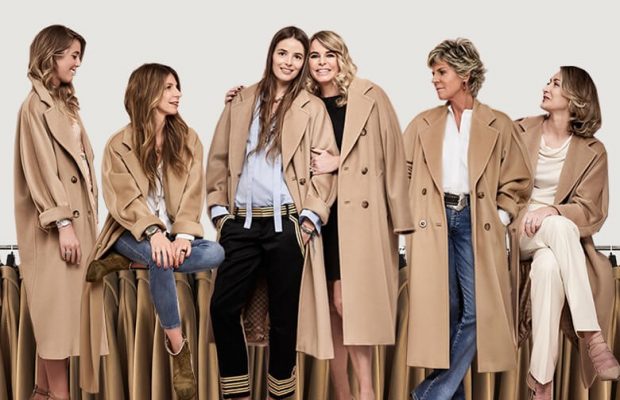
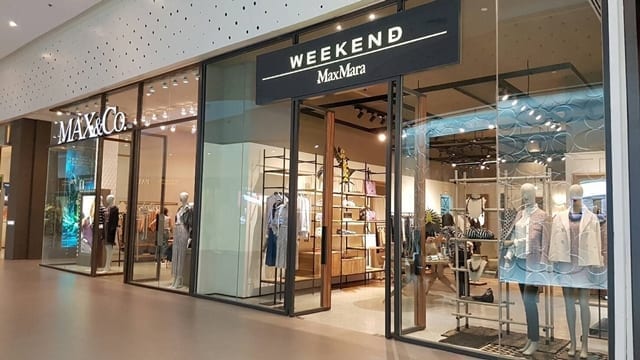
    Max&Co and Weekend MaxMara stores have opened at CentralWorld, joining the MaxMara Thailand store at Gaysorn Shopping Centre.

    They have been opened by the Italian fashion house’s sold distributor for Thailand, Pacifica Group.

    On the second floor of the Groove Zone and managed by Opras, Sopana and Prasert Lavichant of Pacifica Group, the Max&Co flagship store attracted a crowd of Thai fashionistas to its opening, revealing the brand’s spring-summer line.

    “We’ve been importing Max&Co clothing for more than a year and have had great feedback,” says chief executive Opras.

    “The store interior is typical of the brand, meant to resemble a cosy Milanese apartment, in subdued tones that convey wellbeing and serenity. It is designed to make women shoppers feel more at home.”

    At Weekend MaxMara, the focus is on leisure and cruise looks with matched blouses, trousers, skirts, shorts, swimwear, bags and shoes. It covers 95 sqm and features strips of walnut wood contrasted with grey glazed Cotto tiling above Italian cementine flooring. Sofas, chairs, lamps on tables and a smattering of books and magazines invite shoppers to linger. Founded in 1984, Weekend MaxMara features mainly outdoors clothing.

    Meanwhile, the main MaxMara store at Gaysorn is showing the spring-summer line from creative designer Lina Bo Bardi, who injects modernism into sensual, sleek and luxuriant clothes that might be athletic or hi-tech, as reported. MaxMara also uses high-performance jersey and nylon for its body-hugging dresses.

  • Takashimaya Duty Free Shop opening soon

    Takashimaya Duty Free Shop opening soon

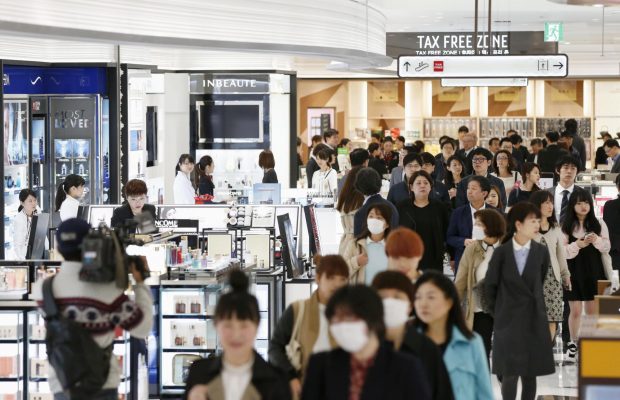
    Takashimaya Duty Free Shop, Tokyo’s latest downtown duty-free store, will open late next month.

    The 2800 sqm retail outlet is a JV between department store company Takashimaya, travel retailer ANA Trading and Hotel Shilla. It will be on the 11th floor of the new Takashimaya Times Square development, in the Shinjuku area.

    Other major downtown duty-free projects scheduled to open in Tokyo include Japan Duty Free Ginza and Lotte Duty Free Tokyo Ginza.

    Takashimaya Duty Free Shop is directly connected to Shinjuku Station and to Shinjuku Expressway Bus Terminal, allowing easy access to Tokyo’s airports.

    A spokesperson for The Shilla Duty Free says Japanese cosmetics will be a key focus of the store. There will also be a tax-free zone for Japanese brands including cosmetics, food/confectionery, souvenirs, fashion and electronics.

    Goods bought at downtown duty-free stores must be collected at Narita or Haneda airport, while tax-free Japanese-made items can be collected in the stores.
    Chinese group tours will be a target audience, with Takashimaya Duty Free establishing infrastructure such as bus parking spaces, and developing offers to appeal to such visitors.

    A&S Takashimaya Duty Free Company was established last June, with Takashimaya holding a 60 per cent stake, with ANA Trading and Shilla each holding 20 per cent.

    Takashimaya Times Square includes a Takashimaya department store, brands like Nitori, Tokyo Hands and Uniqlo, as well as restaurants and a spa avenue.

  • Emilio Pucci launches into Korea

    Emilio Pucci launches into Korea

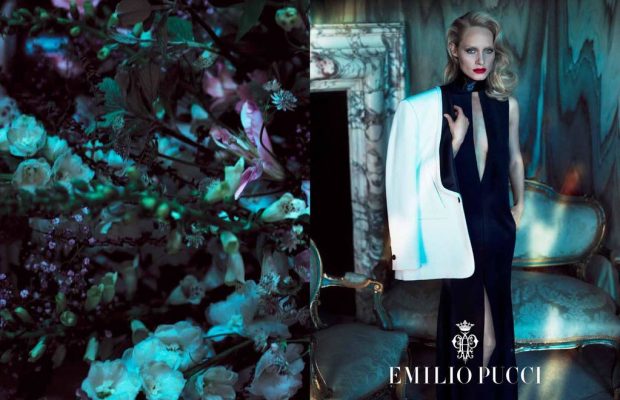
    Italian fashion label Emilio Pucci has opened in Seoul its first store in South Korea, in Seoul.

    On the third floor of Galleria Luxury Hall East, the store carries the brand’s ready-to-wear range, silk accessories, handbags, shoes, small leather goods and beachwear collections.

    Emilio Pucci has stores in Bangkok, Hong Kong, Kuala Lumpur and Tokyo.

    The brand was founded by Don Emilio Pucci, the Marchese di Barsento, a Florentine Italian fashion designer and politician.