Category: Fashion

Retail News Asia is committed to providing both local and global retailers with the latest Fashion news throughout the Asian market. This on a daily base.

  • Daniel Wellington Expands Across Hong Kong

    Daniel Wellington Expands Across Hong Kong

    Leading watch company Daniel Wellington revealed its brand new Classic Petite collection and global marketing campaign featuring four a-list global icons today at LCX, Harbour City. Hong Kong expansion plans are also under way as the brand announced their goal to open around 10 new stores across the city over the next year.  

    Celebrity Cantopop singers Fiona Sit and Pakho Chau helped launch Daniel Wellington new Classic Petite collection and the brand’s global marketing campaign today at LCX, Harbour City.

    The new Daniel Wellington faces are world-famous, incredibly successful, young global icons: model and TV personality Kendall Jenner is featured across Daniel Wellington media wearing the brand new Classic Petite watch alongside highly sought-after model siblings Lucky Blue Smith and Pyper America Smith and model, TV personality, actress and singer ROLA.   

    Kendall Jenner is one of the most influential people on the internet, boasting a staggering 75.9 million Instagram followers. Lucky Blue (2.8 million followers) has been a successful model since a young age while his sister Pyper America’s (722K followers) modelling career has been skyrocketing over the past year. Rola, with 4.4 million Instagram followers, was discovered in Japan at the age of 16 and rose to fame in no time due to her character, sense of style and distinctive beauty.

    The campaign release comes hand in hand with four new watches launched under the brand’s newest Classic Collection named Classic Petite. Available in the signature rose gold and silver, they are inherently Daniel Wellington , the quintessence of classic sophistication and timeless design, intended to match any occasion and outfit. Thin, refined and perfectly round, the Classic Petite 32mm watch is the ideal staple especially for females.

    Inspired by an intriguing gentleman with impeccable style who caught Founder Filip

    Tysander’s eye on a trip across the globe back in 2011, Daniel Wellington watches are known and loved worldwide for their classic, minimalist design and interchangeable straps. Carried in all major cities worldwide, the company has firmly established itself as one of the most beloved watch brands in the industry, which is not traditionally known for being active on social media. Having started the brand with a no-traditional-advertising rule, Daniel Wellington is proof that carefully planned online content truly is the best brand catalyst. With over 2.9 million followers and over 1 million uses of the hashtag #danielwellington, their combined strategy of influencer activity and user generated content has clearly paid off and changed the watch industry forever. 

    The brand celebrated the campaign kick-off at a pop-up event at LCX, Harbour City, with celebrity Cantopop singers Fiona Sit and Pakho Chau taking centre-stage alongside the anticipated global icons campaign and coveted new watches. In line with the way the brand rose to fame, many of Asia’s top social influencers were invited to participate in the pop up event. The store will remain open to the public until Sunday, March 19 th .  
  • Jabong adds Virat Kohli’s breakaway fashion brand ‘WROGN’ to its product portfolio

    Jabong adds Virat Kohli’s breakaway fashion brand ‘WROGN’ to its product portfolio

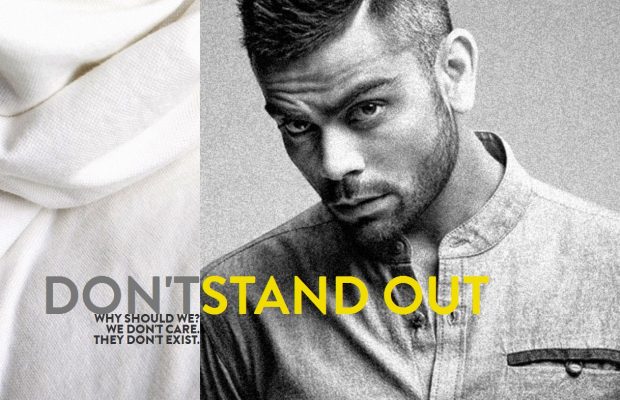
    India’s leading online fashion portal Jabong, has announced the addition of Virat Kohli’s breakaway fashion brand WROGN to its product portfolio. The men’s fashionwear brand will be available on Jabong in 450 variants with prices ranging from Rs. 799 to Rs. 3599.

    The launch will be supported by digital and social media campaigns including Virat’s selfie video announcing the brand’s launch on YouTube, Facebook, Twitter & Instagram. A separate Shop-In-Shop promotion will highlight the WROGN’s latest campaign images, videos, main categories & brand description on Jabong’s website & mobile app as well as the Jabong’s digital fashion blog. The top two highest spenders on the day of launch will be invited for a Meet & Greet with Virat Kohli while the remaining five highest spenders will receive merchandise signed by the Indian cricket captain.

    Rahul Taneja, Chief Business Officer, Jabong said, “We are pretty stoked to launch WROGN on Jabong, which comes from a similar philosophy of being comfortable in your own skin, and therefore, is a great fit for Jabong’s core shoppers. Virat Kohli is a true Indian icon, especially amongst the youth and is a great example of rising above the ordinary by just being himself. Jabong speaks the same language and it’s exhilarating that we will bring more joy to our customers with WROGN on board.”

    Kalyan Kumar Gunasekaran, Chief Merchandising Officer, Jabong added, “It brings great pleasure to us to launch WROGN on Jabong. The collection exudes candid and comfort fashion and allows one to carry their own style effortlessly. Each brand uniquely differentiates itself in its language, WROGN for us is just the right click and we are elated to welcome the brand in the cartel.” 

     Anjana Reddy, CEO Universal Sportsbiz & owner of WROGN, said, “WROGN is one of the fastest growing men’s youth fashion brand in India, and we are very excited to partner with Jabong and launch our latest SS’17 Collection. Jabong has a strong base of fashion forward consumers and I am sure WROGN as a brand will fulfill their needs”.

    Jabong is known to have introduced a multitude of fashion and sports brands in India in the past such as TOPSHOP, TOPMAN, Dorothy Perkins, Missguided, Next, ASICS, ALCIS, Hummel, DC and New Era Caps to name a few.

    Virat Kohli has made into the heart of millions and is touted as the best of all times with Kapil Dev even comparing him to the legendary Don Bradman. Virat has been the highest run scorer for India for 6 years straight and was the fastest in the world to reach 25 centuries in ODIs. He also holds the record for the fastest century by an Indian cricketer in ODIs (in 52 balls), the fastest to reach 7,000 runs in ODI’s, first cricketer to score three centuries in his first three innings as Test captain, first Indian Test captain to score a double century overseas and first Indian Test captain to score two or more double centuries.

  • Emerging markets like Vietnam help Zara-owner Inditex outpace H&M

    Emerging markets like Vietnam help Zara-owner Inditex outpace H&M

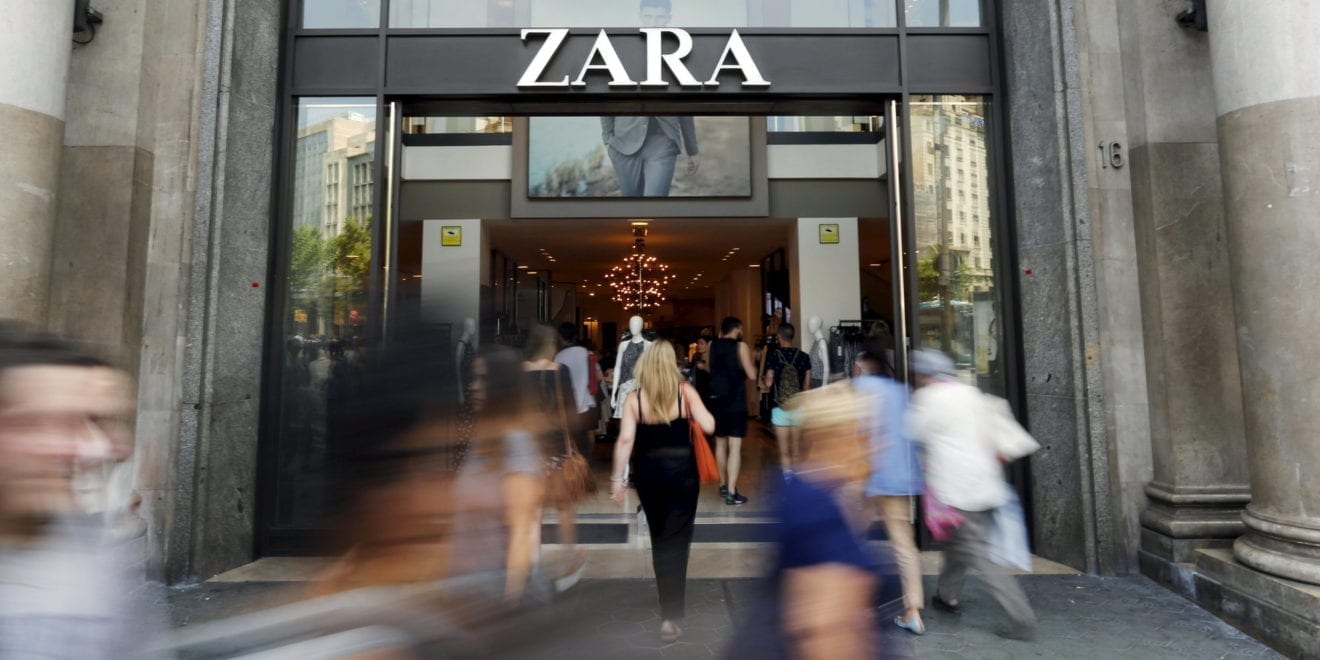
    Indite has consistently outperformed H&M in the past few years as a result of online growth and its push into new markets. Fashion retailer H&M’s sales fell unexpectedly in February while Inditex, which owns Zara, pulled further ahead of its Swedish rival, helped by its expansion online and a bigger emerging market presence.

    Inditex, the world’s biggest clothing retailer, has consistently outperformed H&M in the past few years as a result of online growth and its push into new markets. The Spanish company has also diversified more quickly into higher-priced brands, reducing exposure to the rise of discount chains like Primark.

    H&M has embarked on plans to roll out ecommerce in more markets this year and speed up expansion of newer brands such as the mid-market COS and & Other Stories.

    But on Wednesday H&M revealed that local-currency sales fell in February for the first time in four years, slipping 1 percent year-on-year, against a forecast in poll of analysts for a 6 percent rise. H&M’s shares fell 5 percent.

    In contrast, Inditex’s local currency sales rose 13 percent from February 1 to March 12, as customers snapped up items from spring collections like double-breasted jackets, palazzo trousers and embroidered tulle tops.

    This was adjusted for an extra trading day in February 2016. H&M sales were up 3 percent in February, taking that calendar effect into account.

    Inditex results highlight the success of its strategy, with like-for-like sales up 10 percent in the year to end-January, helped by a shift towards opening bigger stores in prime locations that are then integrated with online operations.

    Inditex’s gross profit margin missed analyst expectations, falling to 57.0 percent in its 2016 financial year from 57.8 percent in 2015. This weighed on the company’s shares which were down 1.4 percent by 1014 GMT.

    Inditex, known for speeding the latest trends from runway to stores in a matter of days, reports in euros but makes more than half its sales in other currencies, exposing it to falls in the likes of the Mexican peso and the Russian rouble.

    Chairman and Chief Executive Pablo Isla said this margin metric would have increased on the year had it not been for the negative currency effects.

    Analysts expect this effect to swing in Inditex’s favor over the next 12 months with a consequent boost to profit margins.

    “We are very keen buyers of Inditex for 2017,” Anne Critchlow, analyst at Societe Generale, said. She said Inditex trades on 26 times forward earnings, compared to H&M on 21 times.

    Inditex opened stores in 56 countries during the year, including first openings in New Zealand, Vietnam and Paraguay, bringing its total store count to over 7,200. It launched online sales across its stable of brands in Turkey and said on Wednesday it would start online sales in India in 2017.

    H&M is more reliant on Europe than Inditex. In Germany, for example, which is H&M’s biggest market, apparel sales fell 9 percent in February, according to trade journal Textilwirtschaft.

    “Market conditions are the main driver of the weak February number,” UBS analyst Adam Cochrane said. “There’s a fear that they are losing market share on a like-for-like basis.” UBS has a “buy” recommendation on H&M.

    H&M reported that sales in local currencies rose 4 percent in its fiscal first quarter to February 28. That compares with a new target for annual sales growth of 10-15 percent. H&M is due to publish its full fiscal first-quarter report on March 30.

  • Further ‘exceptional’ growth for Furla Group

    Further ‘exceptional’ growth for Furla Group

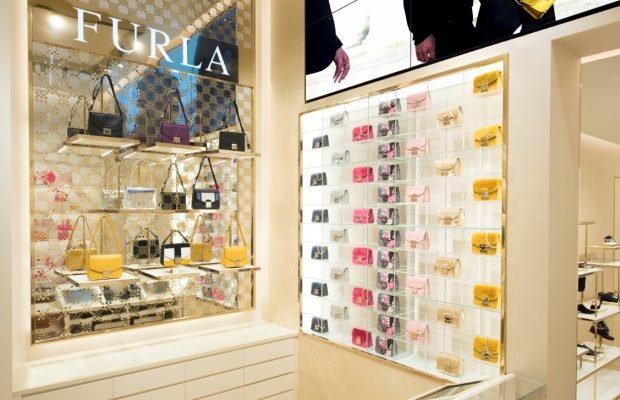
    Italian luxury company Furla Group has had another year of what it describes as “exceptional growth” in turnover and profit.

    Sales soared 31.7 per cent in Japan, its strongest market in Asia, and the company is now setting its focus on boosting sales in China and Australia in the year ahead.

    The fashion house turned over €422 million last year (US$446.7 million), up 24.5 per cent year-on-year at constant exchange rates. Pre-tax earnings rose 48 per cent and worldwide like-for-like sales were up 9 per cent.

    Furla says the key factors behind its outstanding performance across all markets and distribution channels were a growing appreciation by international consumers for the brand and its collections, the company’s significant investments in marketing, and its constantly expanding distribution network.

    Furla has a direct presence in 100 countries. Its monobrand stores total 444, compared to 415 in 2015, and these are split evenly between directly owned boutiques and franchises. The company also has wide distribution in multibrand and department stores in 1200 international locations.

    During the year, Furla opened stores on Nathan Road in Hong Kong, Nanjing Road in Shanghai and other upscale addresses in Australia, China and South Korea.

    During the year the company’s travel retail sector also grew significantly, to a total of 262 stores in 63 countries, with a 40 per cent increase in turnover.

    “We are particularly proud of the 2016 results,” says Furla Group GM Alberto Camerlengo. “The investments of the shareholders, our constant efforts in research and product innovation, all the way to distribution, have allowed us to be a leader in the top international markets.”

  • Omega Malaysia opens fourth boutique

    Omega Malaysia opens fourth boutique

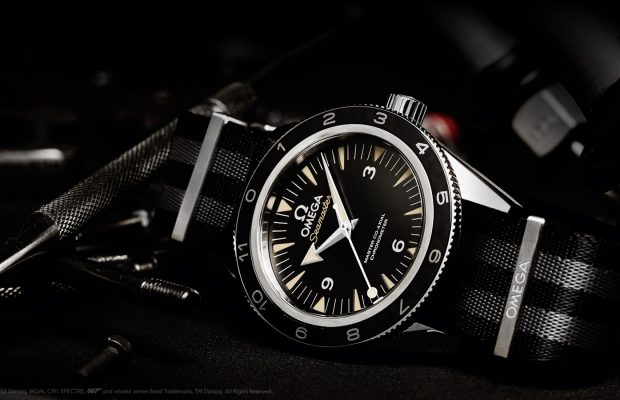
    Omega Malaysia has opened its fourth boutique, at Suria KLCC in Kuala Lumpur.

    As well as a ribbon-cutting ceremony, there was a traditional lion-dance performance. Guests included actors Jojo Goh, Nazim Othman, Siti Saleha and Tasha Shilla, singer Sheila Majid and beauty queen Serene Lim.

    Omega president/CEO Raynald Aeschlimann told guests that the brand had established a strong presence in Malaysia over the past 11 years.

    He said the level-one store would showcase the Swiss luxury watch maker’s full range of products.

    Omega’s first boutique in Malaysia opened its first boutique in Starhill Gallery, Kuala Lumpur, in 2006, followed by stores in Pavilion Kuala Lumpur and Gurney Plaza, Penang.

    Like Omega’s other boutiques, the new store has a design inspired by the natural elements of air, water and sunlight, depicted using cream and champagne colours in the interior design, along with reconstituted zebrawood furniture and chiselled glass surfaces.

    Apart from watch collections, the store also offers fine jewellery, leather goods and sunglasses.
    Founded in 1848, Omega is a brand within the Swatch Group.

  • Adidas sales soar on reformation plan

    Adidas sales soar on reformation plan

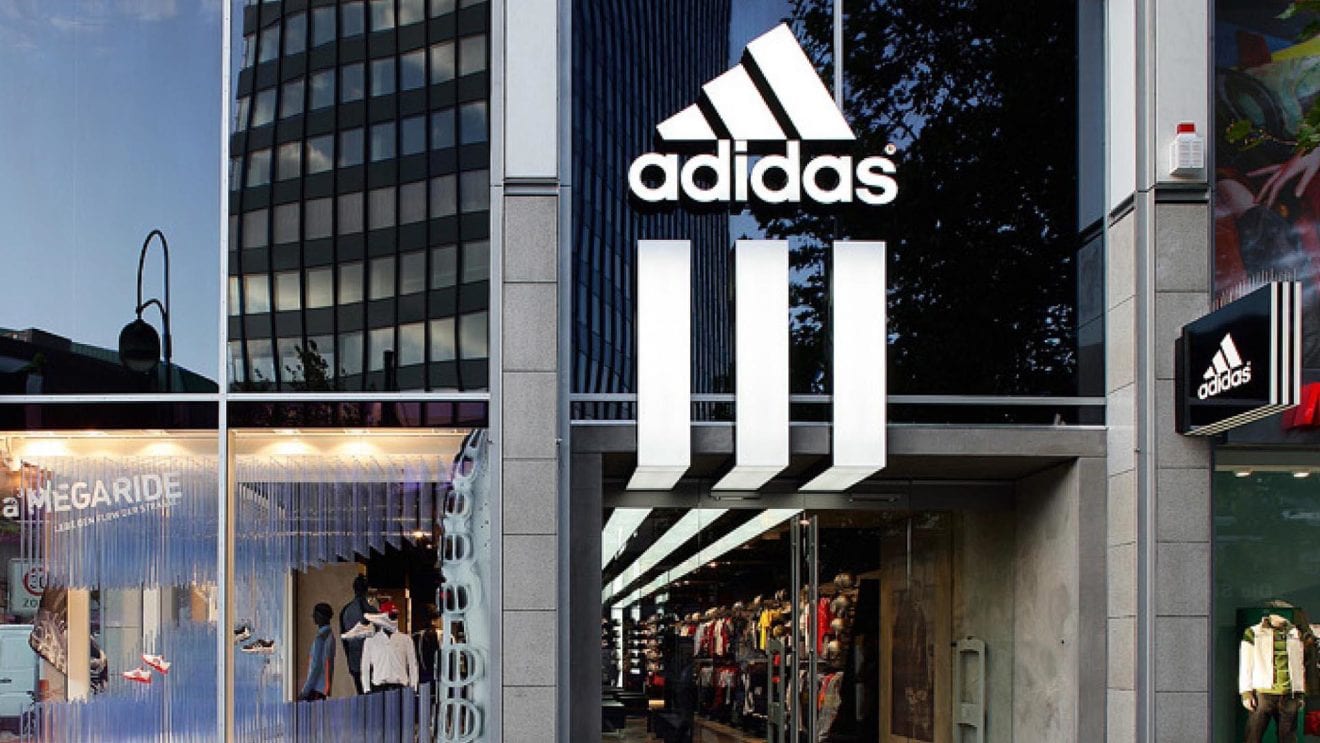
    Adidas sales have soared 18 per cent last year as the German sportswear brand plays catch-up with America’s Nike.

    For the first time in its history, Adidas’ net income topped euro 1 billion.

    In Greater China, sales soared 28 per cent year-on-year.

    “These results are proof positive that our strategy ‘Creating the New’ is paying off,” said Adidas CEO Kasper Rorsted. “2016 was an exceptional year for Adidas. We have improved the desirability of our brands and products around the globe. Building on our 2016 performance, our momentum continues and we will again achieve strong top- and bottom-line improvements in 2017.”

    Total sales reached euro 19.3 billion with operating margins up 1.3 percentage points to 7.7 per cent. Net income soared 41 per cent to euro 1.019 billion, allowing the company to promises shareholders a two euro per share dividend.

    The company is projecting another sales increase during 2017 ranging from 11 to 13 per cent, another increase in operating margin to between 8.3 and 8.5 per cent and net income up between 18 and 20 per cent to euro 1.225 billion.

    Even the troubled Reebok brand gained ground in 2016, currency-neutral sales up 6 per cent year-on-the-year, reflecting double-digit sales increases in its Classics range as well as mid-single-digit growth in the training and running categories.

    The Adidas group achieved double-digit revenue growth in nearly all market segments. In Western Europe, sales increased by 20 per cent, in North America by 24 per cent, in Russia by 3 per cent, in Latin America by 16 per cent and in Japan by 16 per cent. Revenues in Middle East and Africa also grew 16 per cent on a currency-neutral basis, reflecting double-digit growth in almost all of the region’s countries.

  • New face of Louis Vuitton Hong Kong Landmark

    New face of Louis Vuitton Hong Kong Landmark

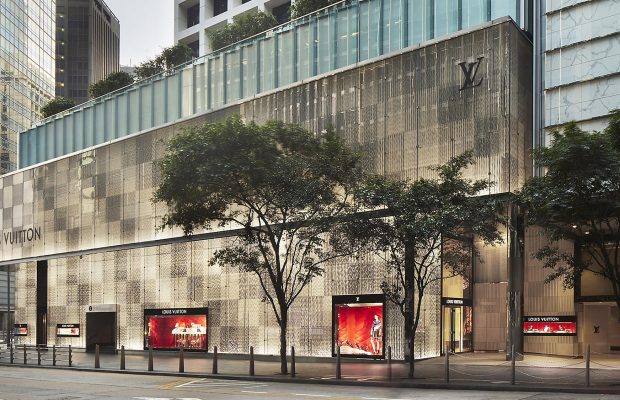
    Following a transformation, the Louis Vuitton Hong Kong Landmark has a new look.

    At one of the busiest junctions in Hong Kong, the flagship maison in Central has a new glass facade designed by Japanese architect Jun Aoki, who also designed the exterior of the brand’s store in Ginza, Tokyo.

    There is a new interior by New York architect/interior designer Peter Marino, who has designed Louis Vuitton stores in London and Los Angeles. It includes an intimate space across two floors where customers can sit on plush sofas and lounge chairs while browsing through the latest collections of ready-to-wear, leather goods, accessories, fragrance, jewellery, watches and shoes. There is also a private space by invitation only for a personalised shopping experience.

    There was a red-carpet opening in The Landmark atrium for the redesigned store, attended by special guests including Hong Kong actress/model Janice Man (Wing-San Man).

    As well as the complete revamp of the Landmark maison, Louis Vuitton is also rebuilding its flagship store in Canton Road, which opened in 2008.

    “The leader in the market believes in Hong Kong,” says LV CEO/chairman Michael Burke, who says the company needs to keep investing in Hong Kong as a “unique, iconic destination in the world that will remain important for Chinese shopping”.

    “There was a moment two years ago in Hong Kong when the day trippers were excessive,” he says. “We had what we call ‘froth’ in the market. If we have a drop in froth, there’s no problem.”

    He says the key is looking long-term, with short-term swings, temporary rises and falls, not really affecting strategy.

    “We’re coming back now to a more healthy situation. The norm is going to be the steady, uphill growth of the upper middle class in China.”

    LVMH chairman/CEO Bernard Arnault also believes Hong Kong’s downturn is just a “cyclical problem”.

    “Hong Kong will remain one of the high points in Asia and one of the drivers of our growth,” he says.

  • Retail woes a boost for Hong Kong indie fashion

    Retail woes a boost for Hong Kong indie fashion

    High-end international brands have long held court alongside local Hong Kong indie fashion designers – who are now enjoying greater visibility in the city’s vibrant retail market.

    The city’s deep-rooted love of luxury has seen names like Gucci and Hermes open multiple stores in the city – stores that have co-existed with a stable of local apparel brands, such as Giordano, Baleno, Bossini and Esprit.

    By 2014, consumers’ tastes had diversified and fast-fashion overseas brands began descending on Hong Kong. The arrival of names like Topshop, American Eagle, H&M, Zara and Mango added yet more to the mix in Asia’s favourite shopping destination. Now that shop rents are finally becoming more affordable, independent fashion retailers are increasingly making their presence felt.

    Structural change

    In a report by commercial real estate firm CBRE, Joe Lin, executive director, retail services at CBRE Hong Kong, said that the city is undergoing a period of structural change.

    “Over the previous decade, high-street shop landlords have reaped the benefits of strong demand from luxury retailers and massive rental growth.”

    Lin noted that in the past 12 months, luxury retailers have adjusted their leasing strategies to save costs. “Landlords have become more realistic on rental negotiations, enabling more mid-range brands to tap into prime locations at relatively affordable rental levels.”

    The trend has opened the door for mid-market brands to expand, and for the rise of independent labels.

    “More independent stores are coming back to the market, streets, malls, and even some up-and-coming revitalised buildings in the traditional industrial districts, such as Lai Chi Kok and Kwun Tong,” said Lin. “They modernise the decoration and with the decent F&B outlets that draw good foot-traffic to these areas, independent retailers also benefit from this new trend.”

    Refined taste

    British fashion designer Elizabeth Lau established The Refinery in 2014 after moving to Hong Kong with her husband. Lau said she saw an opportunity to “curate for individuals” in Hong Kong by introducing unique fashion, accessories and lifestyle brands from around the world.

    Her first store, at the creative and design hub PMQ in Central, found a steady following, and in January 2016, The Refinery opened a second retail outlet in Tai Koo.

    Fashion edit

    Partners in fashion Genevieve Chew and Jacqueline Chak, an accountant and architect respectively, launched Edit in Central in 2012 as a concept store stocking emerging brands. They later created their own in-house label, which is described as “one part eclectic femininity and the other relaxed ease.” Their collections are worn by fashion personalities such as Yasmin Sewell, Margaret Zhang and Amanda Strang. The partners have also designed uniforms for Hong Kong’s new boutique Tribute Hotel in Kowloon.

    Fé Valvekens is another career-change entrepreneur who found her fashion foothold in Hong Kong. German-born Valvekens is a qualified engineer who founded fashion label A Day with Fé, blending daywear with yoga wear. Her PMQ store in Central also holds yoga and fashion styling workshops

    Quality indie labels

    Building on her established career in fashion, US expat Jamie Dredge co-founded Polkadot Boutique on Hollywood Road, Central, in 2011. After moving to Hong Kong two years earlier, Dredge spotted a gap between high-end luxury designers and mass-market clothing in Hong Kong.

    Her idea was to offer quality, well-designed womenswear and accessories from indie labels in the US, as well as supporting upcoming local designers.

    “We still have our local-based designers, but are also working with hot new labels out of Los Angeles and New York,” she said. Examples include Yumi Kim and Blank NYC Denim from New York, Veronica M from Los Angeles, and Hong Kong’s What the Frock?!.

    Being an independent retailer in Hong Kong has its challenges, said Dredge. Rents remain high, especially for smaller operators who don’t have the negotiating leverage of a famous brand. The demise of free print lifestyle magazine HK Magazine, which folded last year after 25 years, closed one door for independents to build a profile – and paid advertising is expensive.

    “We now have to work harder on our social media channels – and be more creative in our promotions,” Dredge said.

    On the other hand, word-of-mouth networking is an advantage in a city as close knit as Hong Kong.

    Pop-ups and collaborations

    One of Polkadot’s strategies is to host events where customers can meet the designers for a social night out, which might involve hair and makeup as well as fashion. One of the “biggest perks of Hong Kong” is the willingness of businesses to collaborate with each other, Dredge said.

    “Hong Kong is great for doing pop-up events and collaborations, which get the customers involved,” she said.

    It also illustrates how a physical boutique can still be successful, despite the challenges of online shopping.

    “People still like to feel the clothes, to try them on, to talk to the designer,” she said.

    “A lot of our garments are unique, and many of them exclusive. Our customers aren’t walking around seeing other people dressed the same, and that’s why they come to us.”

    -HKTDC

  • H&M joins Better Than Cash Alliance

    H&M joins Better Than Cash Alliance

    Sweden’s H&M has become the first global fashion brand to join the United Nations’ Better Than Cash Alliance.

    The retailer says it will encourage its suppliers to pay their workers through mobile money or other digital forms to improve the livelihoods of its workforce, enhance transparency and cut factory costs.

    The Better Than Cash Alliance is a partnership of governments, companies and international organisations aiming to accelerate the transition from cash to digital payments.

    “Digital payments are an efficient and scalable way to improve the lives of the employees of our suppliers,” says H&M social sustainability manager Gustav Loven. “They offer a faster, safer and more transparent way for people to receive their salary, increase financial inclusion and support women’s economic independence.

    “Also, for our suppliers, paying wages digitally can generate savings, increase security and provide more accurate data on wages.”

    Of the 1.6 million people employed along H&M’s supply chain, 65 per cent are women, many with limited access to the financial services they need to create a better life for themselves and their families. Many factory workers worldwide are paid entirely in cash, which entails cumbersome, expensive and dangerous processes for both factories and workers.

    Encouraging suppliers to pay wages through digital channels, such as bank accounts, cards or mobile money, will build on H&M’s sustainability commitment to work with its business partners to promote good working conditions, fair living wages and sustainable economic growth.

    “H&M’s leadership will help inspire other companies in the industry, and beyond, to make the shift to digital payments,” says Better Than Cash Alliance MD Dr Ruth Goodwin-Groen.

    Expanding digital payments to the world’s cotton supply chain could potentially reach 250 million people, including smallholder farmers who have limited access to digital payment systems and financial services in general.

  • Mamonde launches Singapore site on Lazada

    Mamonde launches Singapore site on Lazada

    Korean beauty products brand Mamonde has launched an e-commerce site on Lazada to introduce its skincare and makeup products into Singapore.

    Mamonde’s USP is using flower extracts in its products. Camellia, hibiscus, honeysuckle, lotus and magnolia blooms are hand-picked and frozen or heat dried, with the active ingredients then being extracted.

    Mamonde Lazada SG

    There are plans to also open a physical store in Singapore eventually, says Amorepacific, which also owns the brands Etude House, Innisfree, Laneige and Sulwhasoo.

    “Launching digitally first in Singapore was a deliberate move that allows us to observe consumer purchasing habits before scaling up operations in the market,” says Amorepacific Asean regional head Robin Na.

    “While the beauty industry in Singapore is mature, we believe that consumers there are still hungry for new brands.”

  • Nike develops performance hijab

    Nike develops performance hijab

    Nike has developed a performance hijab for Muslim women athletes.

    The head covering, called the Nike Pro Hijab, has a single-layer pull-on design made from lightweight polyester in dark, neutral colors. Tiny holes in the fabric make it breathable while remaining opaque.

    Nike says it began work on the hijab after Muslim athletes complained about wearing a traditional head scarf during competition. The design process took 13 months, and the final product will be ready to roll out in the company’s spring 2018 collection.

    Meanwhile, a prototype is already being worn by Emirati figure skater Zahra Lari, who says few hijabs work for her when performing. “But once I put on the Nike hijab and took it for a spin on the ice, I was blown away by the fit and the light weight.”

    News of the new product comes just weeks after Nike released a commercial in the Middle East featuring five female professionals from different parts of the Arab world pursuing their athletic dreams while a voice asks, “What will they say about you?” – a rhetorical question many young Arab women face if they step out of cultural and traditional norms. The video went viral with million of views on social media, prompting a debate over its message.

  • L’Oréal named 2017 World’s Most Ethical Company by the Ethisphere Institute

    L’Oréal named 2017 World’s Most Ethical Company by the Ethisphere Institute

    L’Oréal, the world’s leading beauty company, has been recognized as 2017 World’s Most Ethical Company by the Ethisphere Institute, a global leader in defining and advancing the standards of ethical business practices.

    L’Oréal has been recognized for the 8th time and is one of only 2 in the Health and Beauty industry, underscoring their commitment to leading ethical business standards and practices. 

    “Culture is the foundation of a high performing, innovative and sustainable company” said Jean-Paul Agon, Chairman and Chief Executive Officer of L’Oréal. “I am proud that ethics is the key pillar of our culture and leadership, requiring our teams throughout the world to always include ethics in the decisions they make”.

    “Receiving this recognition from Ethisphere for the 8th time is a source of pride for everyone at L’Oréal. Ethics is the new decision-making framework and we are convinced that a strong culture of integrity is an essential component for long-term success” said Emmanuel Lulin, Senior Vice-President and Chief Ethics Officer.

    Twenty-seventeen is the eleventh year that Ethisphere has honored those companies who recognize their role in society to influence and drive positive change, consider the impact of their actions on their employees, investors, customers and other key stakeholders and use their values and culture as an underpinning to the decisions they make every day. 

    “Over the last eleven years we have seen the shift in societal expectations, constant redefinition of laws and regulations and the geo-political climate. We have also seen how companies honored as the World’s Most Ethical respond to these challenges. They invest in their local communities around the world, embrace strategies of diversity and inclusion, and focus on long term-ism as a sustainable business advantage,” explained Ethisphere’s Chief Executive Officer, Timothy Erblich. “Congratulations to everyone at L’Oréal for being recognized as a World’s Most Ethical Company.” 

    Methodology & scoring

    The World’s Most Ethical Company assessment is based upon the Ethisphere Institute’s Ethics Quotient® (EQ) framework which offers a quantitative way to assess a company’s performance in an objective, consistent and standardized way. The information collected provides a comprehensive sampling of definitive criteria of core competencies, rather than all aspects of corporate governance, risk, sustainability, compliance and ethics.

     Scores are generated in five key categories: ethics and compliance program (35%), corporate citizenship and responsibility (20%), culture of ethics (20%), governance (15%) and leadership, innovation and reputation (10%) and provided to all companies who participate in the process.

    ­­

    Honorees

    The full list of the 2017 World’s Most Ethical Companies can be found at: https://worldsmostethicalcompanies.ethisphere.com/honorees/.

    Best practices and insights from the 2017 honorees will be released in a series of infographics and research throughout the year. Organizations interested in how they compare to the World’s Most Ethical Companies are invited to participate in the Ethics Quotient.

  • Footwear, leather promotion conference scheduled this week

    Footwear, leather promotion conference scheduled this week

    A footwear and leather export promotion conference will be held in HCM City next week. In 2016, the sector earned an export revenue of US$16.2 billion, representing an year-on-year increase of 8.8 per cent.

    The information was released on Friday by the Viet Nam Leather, Footwear and Handbag Association (Lefaso), which said this would be an opportunity for the Vietnamese footwear sector in general and Lefaso in particular to promote images and improve prestige and positions in the Asian region and the world.

    The conference will also give an opportunity for local businesses to meet and share experiences with local partners, approach foreign importers and investors and seek co-operation agreements.

    Some 300 firms manufacturing footwear and materials for the industry inside and outside Viet Nam are expected to participate in the conference, which will focus on issues such as footwear planning and related policies, investment environment, impact of free trade deal on the sector, labour relationship management in the labour-intensive sector, and supply chain optimisation to boost competition and sustainable development.

    They will also discuss the state of the industry in Viet Nam in the context of integration, market demand and technical requirements for the industry to benefit from free trade deals.

    Viet Nam’s leather and footwear industry expects to reach a total export value of US$18 billion this year, up 10 per cent from last year, the association said.

    In 2016, the sector earned an export revenue of $16.2 billion, representing an year-on-year increase of 8.8 per cent.

    Of which, $13 billion came from footwear and the remaining was from handbags and leather items, marking respective annual rises of 8.2 per cent and 11.1 per cent.

  • Mujosh eyewear to open in Vietnam

    Mujosh eyewear to open in Vietnam

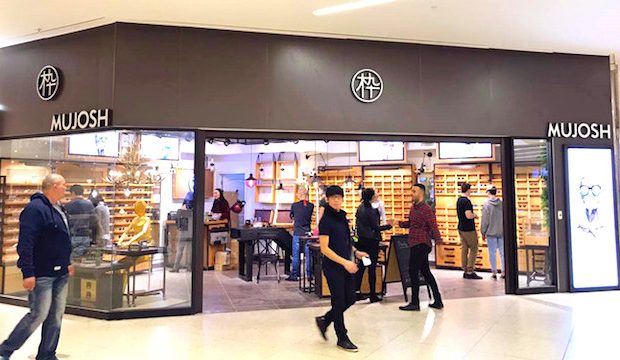
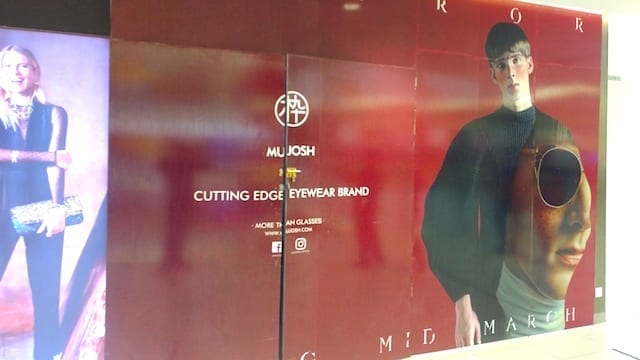
    Hong Kong-headquartered Mujosh eyewear is about to open its first store in Vietnam.

    The edgy brand, which made its international debut in Malaysia just last year, will open a store inside Saigon Center in Ho Chi Minh City. The mall houses the Takashimaya department store along with the first Japanese-headquartered Owndays shop in Vietnam.

    The store is undergoing fitout with a billboard promising an opening in “mid-March”.

    Established in 2010, Mujosh describes itself as “an innovative fashion eyewear brand” which combines unique elements and styles into frame designs.

    “Appreciating creative ideas, valuing the value of handicraft, cherishing the original touch of materials, Mujosh is deeply loved by fashion icons and wearers.”

    The brand also has stores in Singapore (on Haji Lane), Thailand and Australia. It plans to open 1000 stores globally within five years.

    Owned by Photosynthesis Group Co, Mujosh is the company’s first brand to go international since it started its international business expansion at the beginning of 2015.

    Edmonton marks Canadian debut

    Meanwhile, Mujosh opened its first store in Canada, a flagship in West Edmonton Mall, the largest shopping centre in North America. The mall hosts about 32 million visitors per year; between 90,000 and 200,000 daily.

    Among early customers was one who said she had become familiar with the brand while travelling in Shanghai and Singapore.

  • Memebox Hong Kong opens flagship

    Memebox Hong Kong opens flagship

    Memebox Hong Kong has opened its first stand-alone flagship store in the city – in Causeway Bay.

    The brightly coloured store is located at 20 Pak Sha Road, amid the street’s growing collection of sports apparel pop-ups and eclectic cafes.

    Memebox Hong Kong, Harbour Town - Tsim Sha Tsui

    Headquartered in San Francisco, with global hubs in the US, China, and Korea, Memebox claims to be the fastest-growing beauty brand in the world with over 500 employees across six countries.

    The company’s newest store stands out externally thanks to a bold red colour scheme and the distinctive laboratory-style treatment area inside.

    Memebox Hong Kong, Harbour Town - Tsim Sha Tsui 2

    Memebox Hong Kong already has three counters in the city – at Harbour City in Tsim Sha Tsui (Facesss), LAB Concept at Admiralty (Facesss) and Tuen Mun Town Plaza (Kiosk 10).

    The company’s philosophy is melding beauty with technology. It has collaborated with YouTube celebrities and beauty specialists to create its products and pursues a digital-first approach to marketing.

    “We’re changing the face of the beauty industry, one smile at a time,” the company proclaims on its website. “We’re dedicated to bringing the best beauty products available to a global, connected audience, since everyone deserves happy skin.”