Category: Fashion

Retail News Asia is committed to providing both local and global retailers with the latest Fashion news throughout the Asian market. This on a daily base.

  • Lacoste Singapore scores airport outlet

    Lacoste Singapore scores airport outlet

    French clothing company Lacoste Singapore has tendered successfully for an outlet at Changi Airport.

    RSH Singapore, which represents Lacoste, has been awarded a 78 sqm concession in the west departure/transit lounge on level two.

    Calling for mid-priced fashion tenders in Terminal 1, Changi Airport Group awarded two other concessions to Dufry (The Nuance Group Singapore), which will use its 70 sqm and 83 sqm concessions for the Kipling and Trunk & Co brands.

    All concessions are in the same area with three-year contracts, with no option to renew. The tenders attracted 13 participants.

    Meanwhile, Dufry, in partnership with MCM, has also won an extra 104 sqm speciality tender in the same location, also for three years.

  • Tourism slump hits Burberry Hong Kong sales

    Tourism slump hits Burberry Hong Kong sales

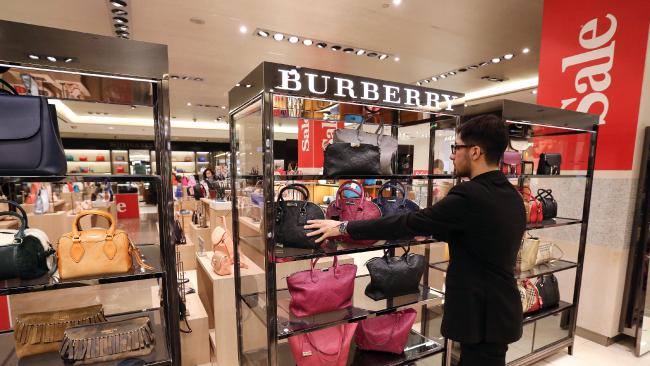
    British luxury brand Burberry Hong Kong has seen its sales slide by more than 20 per cent for the third quarter in a row.

    The result reflects the continuing fall-off in tourist numbers to Hong Kong from China, including a 26 per cent drop in February.

    Burberry’s second-half sales results, just released, show a “challenging” environment for luxury, says CEO Christopher Bailey. Global comparable sales declined by 2 per cent, dragged down by Hong Kong and Macau. Global comparable sales excluding these regions actually edged up 1 per cent for the half.

    Burberry’s bright spots were Mainland China, Japan and Korea, which all saw positive growth. Japan, which has become a luxury shopping hotspot for Chinese tourists, had double-digit growth in total retail revenue.

    Sales also slowed down in Europe, as luxury shoppers from China avoided the region following the Paris terror attacks in November. Demand for Burberry goods fell in France, Germany, Italy and Spain amid a general sense of unease about security and fears of further terrorist attacks in Europe.

    However, it is not all doom and gloom for Burberry, says Verdict Retail analyst Andrew Hall, citing growth in online sales and the launch of the Mr Burberry fragrance. The success of Burberry’s fragrances has seen the brand’s beauty division achieve underlying growth of 10 per cent in the second half.

    “Furthermore, Burberry continues to be at the forefront of luxury fashion retail, making headlines with high-profile collaborations – for example, Steve McQueen – and sending waves across the industry as it shakes up the traditional fashion show timetable,” says Hall.

    “Burberry can certainly be proud of the hard-won successes, but long-term strategic leadership is needed to overcome the blows dealt by performance in some Asian markets. Until this is achieved, the good work will continue to be overshadowed by falling demand in Hong Kong and Macau.”

  • Issey Miyake China launches in open-air complex

    Issey Miyake China launches in open-air complex

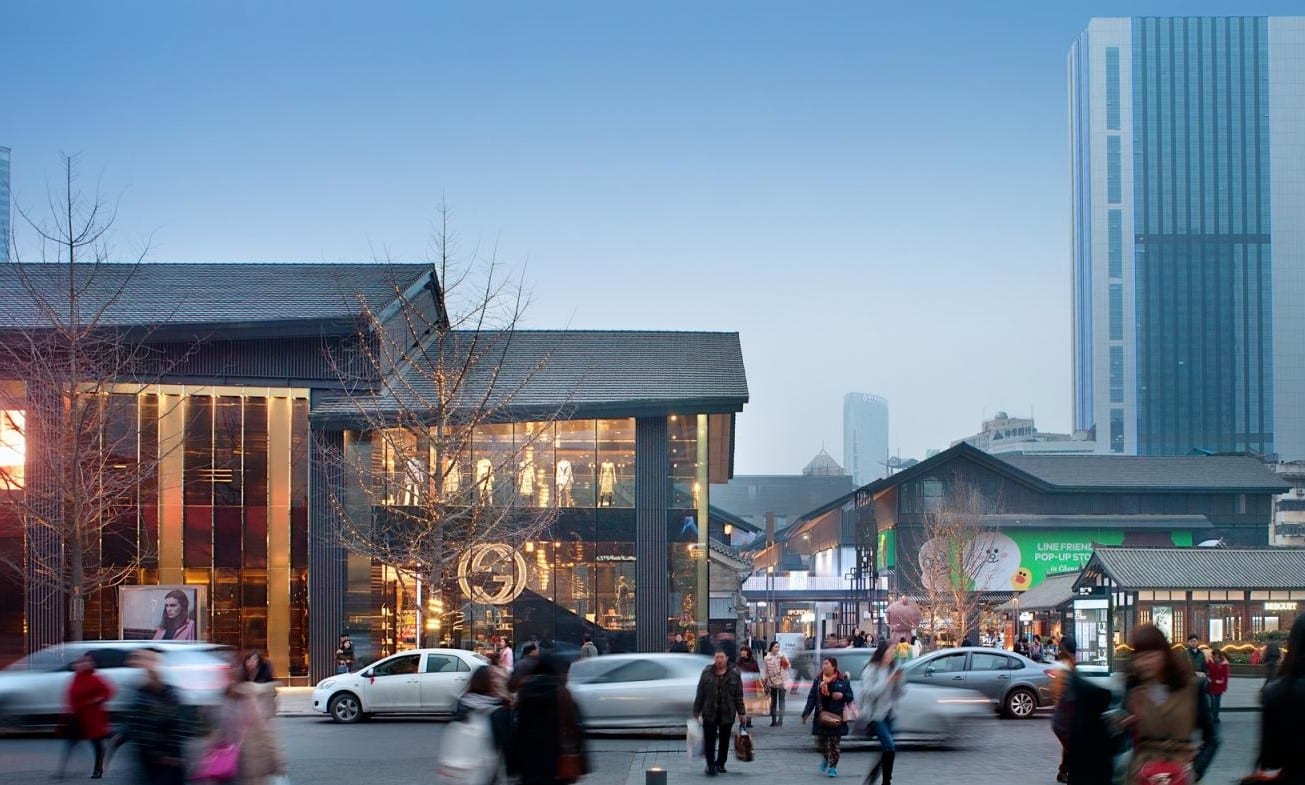
    An Issey Miyake China boutique has opened in Chengdu, at the open-air shopping complex Sino-ocean Taikoo Li.

    Covering two floors, the Japanese fashion store has a white interior with modular displays and sleek metal racks that makes the products stand out. Its range includes women’s items from the Issey Miyake main collection, as well as Pleats Please, Bao Bao and Me Lines items.

    Issey-Miyake-store-Chengdu-China

    Sino-ocean Taikoo Li is centered around the historic Buddhist Daci Temple. It is a low-rise project that includes shopping, dining, drinking, entertainment, offices and hotels with the setting of lanes, squares, streets, alleys and courtyards.

    Issey-Miyake-store-Chengdu-China-02

    Its retail planning concept is “Fast Lane” and “Slow Lane” (play fast, live slow). “Fast Lane” incorporates luxury brands and high-end contemporary fashion, while “Slow Lane” comprises outdoor dining and lifestyle stores.

    Master planner for the project and lead architect was the Oval Partnership.

    Issey-Miyake-store-Chengdu-China-03

  • More Thai Men Shopping for Women’s Underwear Online

    More Thai Men Shopping for Women’s Underwear Online

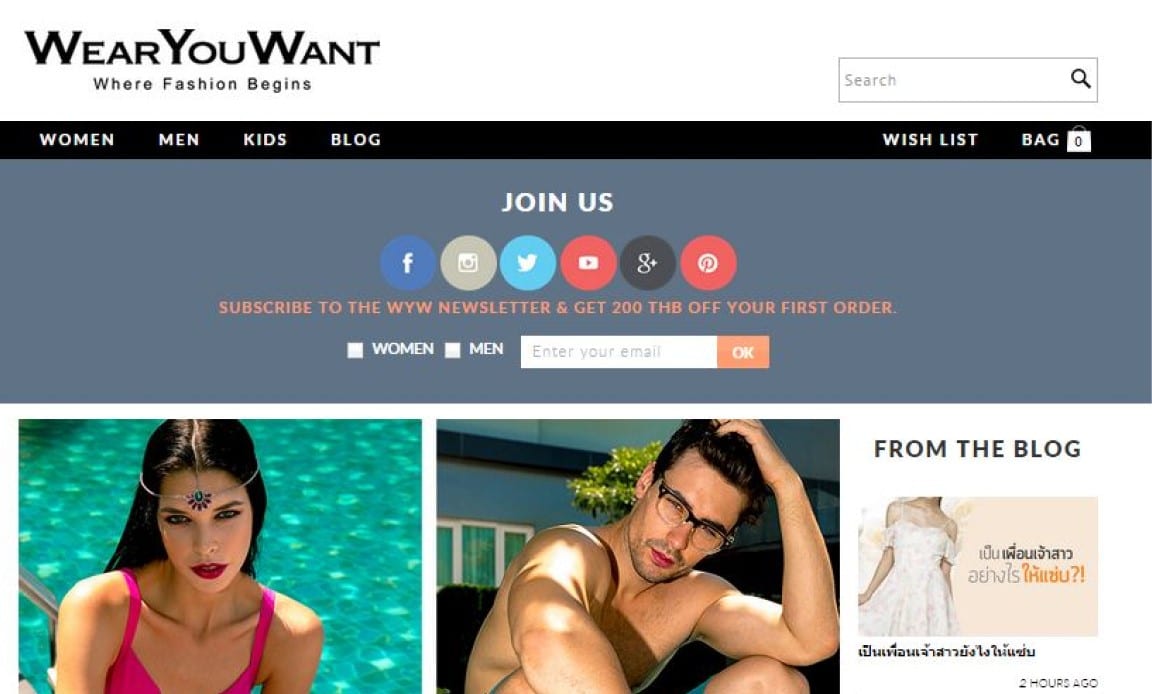
    WearYouWant, Thailand’s leading online fashion and beauty marketplace, is praising the romantic generosity of its male customers in Thailand. Since the start of 2016, there has been a steady rise in men buying underwear online at WearYouWant for that special woman in their life.

    According to WearYouWant, in the last six months, underwear purchases by men on their online shopping platform have increased by 22%, with the first half of April seeing record highs. Approximately 56% of underwear sales are to men in Bangkok who seem to know exactly what women in Thailand want!

    It could be the summer sun turning up the heat on underwear purchases by men or perhaps the Thai New Year Songkran festival spirit has meant more men showering women with gifts. With a few clicks, shy men can easily shop for lingerie online for their loved one.

    Of course, WearYouWant stocks much more than lingerie, retailing over 17,000 different fashion and beauty items, including shoes, dresses and men’s clothing too.

    Julien Chalté, Co-Founder & Co-CEO of WearYouWant.com welcomes the sales, even if they are a little unexpected. “On WearYouWant, it’s always been women who have bought their own underwear traditionally, so it is surprising to see that in 2016, that trend is shifting. Perhaps it is that more men are in touch with their feminine side and keen on using women’s underwear,” he adds with a smile, “or maybe it is just more men are shopping online for underwear as presents for women.”

    It is not just men who like their loved ones to be well-dressed when they are undressed either. Women in Thailand also enjoy shopping for boxer shorts and briefs for their male partners too. Some 19% of all men’s underwear bought online at WearYouWant in February 2016 was purchased by female customers.

  • Cortina opens South East Asia’s biggest Patek Philippe boutique

    Cortina opens South East Asia’s biggest Patek Philippe boutique

    The current downturn in the luxury watch business is not stopping Cortina Watch from pressing on with its expansion plans.

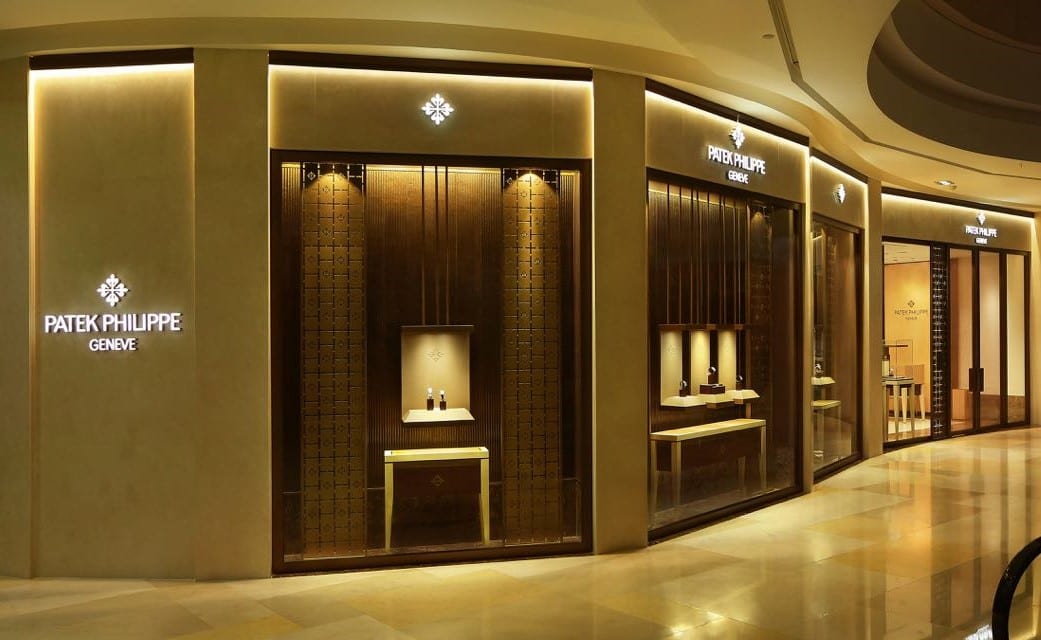
    Last week, Singapore’s second-biggest watch retail chain officially opened South-east Asia’s biggest Patek Philippe boutique in ION Orchard, Singapore’s premier shopping mall. Later this year, Singapore’s biggest Rolex shop run by Cortina will also open its doors at Marina Square.

    cortina_05

    “It’s all about location, opportunity and timing,” Cortina’s chief operating officer Jeremy Lim explains. “If we (had) worried that business is bad, then we wouldn’t have gotten this location,” he says of the Patek Philippe boutique in ION. “This kind of location doesn’t come all the time.”

    The Patek Philippe boutique in ION came just over a year after Cortina pumped S$4 million to unveil the world’s biggest Patek Philippe boutique in Taipei 101, a landmark building at the heart of Taiwan’s capital. It was conceived three years ago with the blessing of Patek Philippe’s president Thierry Stern.

    cortina_02

    Cortina, which both its sales and net profits fell in the first nine months of its financial year ending March this year, operated a smaller Patek Philippe boutique in ION then. After looking around the shopping mall and found it to be a good location, Mr Stern agreed that Patek Philippe should have a bigger presence there.

    The new 265.48 square metre boutique, over four times bigger than Cortina’s first Patek Philippe boutique at ION, is an extension of the earlier boutique first opened in 2009. The bigger space offers customers more personal service and a better showcase of the Swiss watch brand’s coveted timepieces.

    cortina_06

    Cortina, which also operates a Patek Philippe boutique in Marina Bay Sands, spent an estimated S$2.5-3.0 million renovating and remodelling the boutique, which has the novelty of having a “private” door for discreet and busy customers.

    The work on expanding the boutique took four months to finish, but the boutique only opened recently because Cortina had to wait for the leases of the adjoining space, occupied by other tenants, to expire before it could move in.

    The new Patek Philippe boutique in ION came when the dip in global sales of Swiss luxury timepieces last year, the first yearly drop since the 2009 recession, might have finally caught up with Singapore.

    While the export of Swiss watches worldwide slipped 3.3 per cent in 2015 to 21.5 billion Swiss francs (S$30.7 billion), shipments to Singapore still rose one per cent to 1.13 billion Swiss francs. But the latest numbers show retail orders of Swiss watches in Singapore, one of the 10 biggest markets for luxury timepieces, plunged 22.6 per cent in January this year – the second-biggest fall in the top 10 markets.

    “It would be a lie if I tell you we’re not affected,” Patek Philippe’s commercial and marketing director Jerome Pernici says.

    While 2015 was “the best year ever” for Patek Philippe, arguably the top Swiss luxury watchmaker, Mr Pernici discloses that this was largely in the first three quarters of the year. “The last quarter was more difficult and definitely 2016 will be challenging. We know it,” he says.

    Yet Patek Philippe, which celebrated its 175th anniversary last year, has weathered many crises in the past and came out of them stronger, Mr Pernici says.

    “We keep looking at the long term. I don’t know how long (this downturn) will be but once the market recovers, we will be ready.”

    The Rolex shop Cortina is working on will be the listed company’s single biggest project ahead, involving 5,500 square feet of space for watch displays and events. Renovation costs alone could work out to around S$4 million.

    Cortina, which also carries other brands such as Vacheron Constantin, Omega, Longines and Jaeger LeCoultre, is also likely to refurbish its multi-brand outlet at Raffles City this year.

    Last year, the watch retailer opened a S$2 million multi-brand boutique at The Capitol, a luxury hotel and shopping development. At the same time, its Paragon outlet grew from 2,000 to nearly 3,000 square feet.

  • Warburg Pincus takes Reiss stake

    Warburg Pincus takes Reiss stake

    A majority stake in UK luxury fashion retailer Reiss has been bought by private equity company Warburg Pincus.

    The transaction values the brand, which started out as a menswear store in 1971, at £230 million.

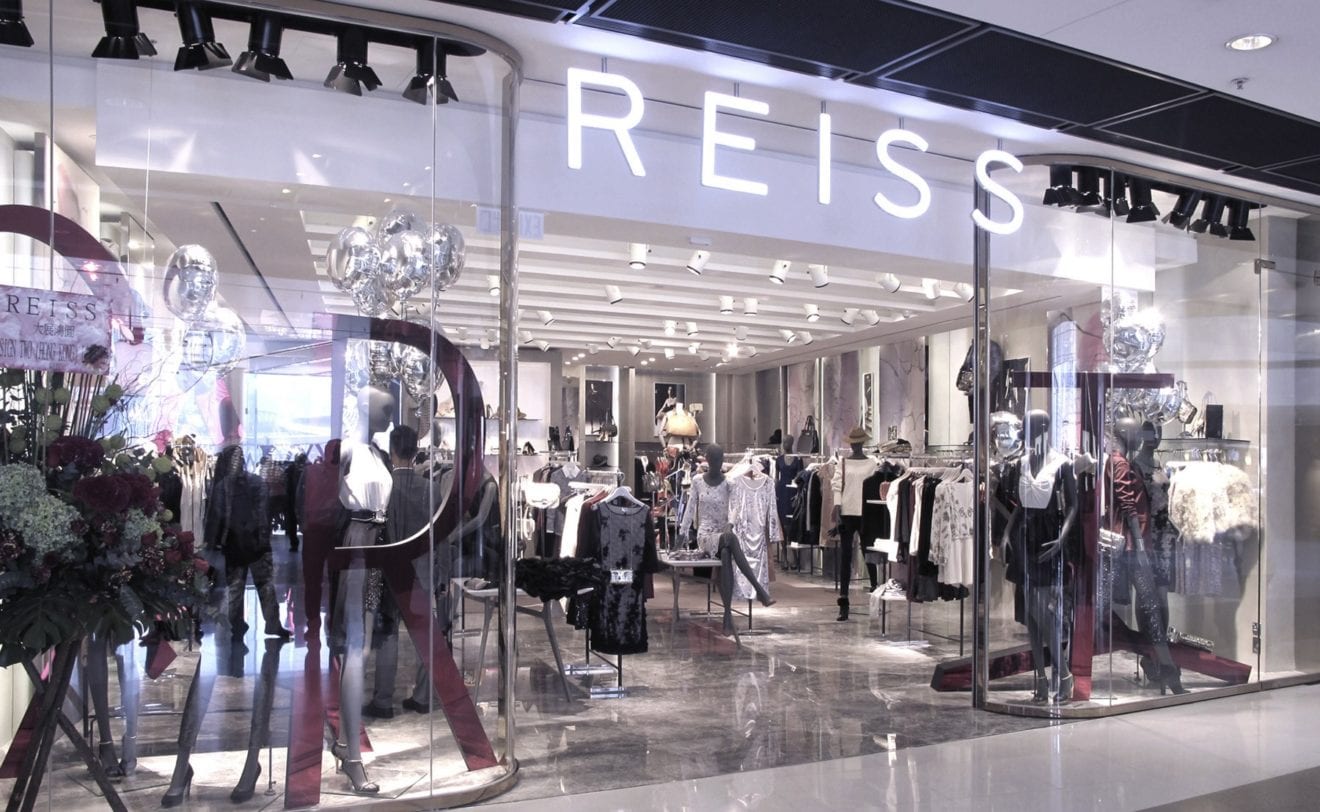
    Reiss has two stores in Hong Kong and four in Manila, Philippines; its only stores to date in Asia. The Hong Kong stores are located in IFC Mall and Ocean terminal, Harbour City. It also sells online, on its own website and on Asos. It has 160 stores globally.

    The sale ends more than six months of talks between founder David Reiss and several potential investors, one of whom was revealed as Permira, which is the private equity investor in Dr Martens.

    According to UK media, Reiss achieved total sales of £146 million in the year to January 31, up substantially from the £111 million of the previous year. Pre-tax profits soared from £3.6 million in 2013 to £10 million during 2014.

    Warburg Pincus MD Paul Best says he plans to expand the brand’s presence internationally.

    “The business has built an enviable position in its core UK market, with a broad and loyal customer base. We believe there is significant opportunity to build on this success,” he said in a statement.

    Reiss, who will remain as chairman and CEO, says the deal will allow the business to grow into a “truly global fashion brand”.

    “We have built a great business providing our customers with timeless luxury at affordable prices.”

    Reiss and Best said the company’s expansion strategy would be focused on the US, Canada, Asia and Australia.

  • Hong Kong and Macau drag down Prada profits

    Hong Kong and Macau drag down Prada profits

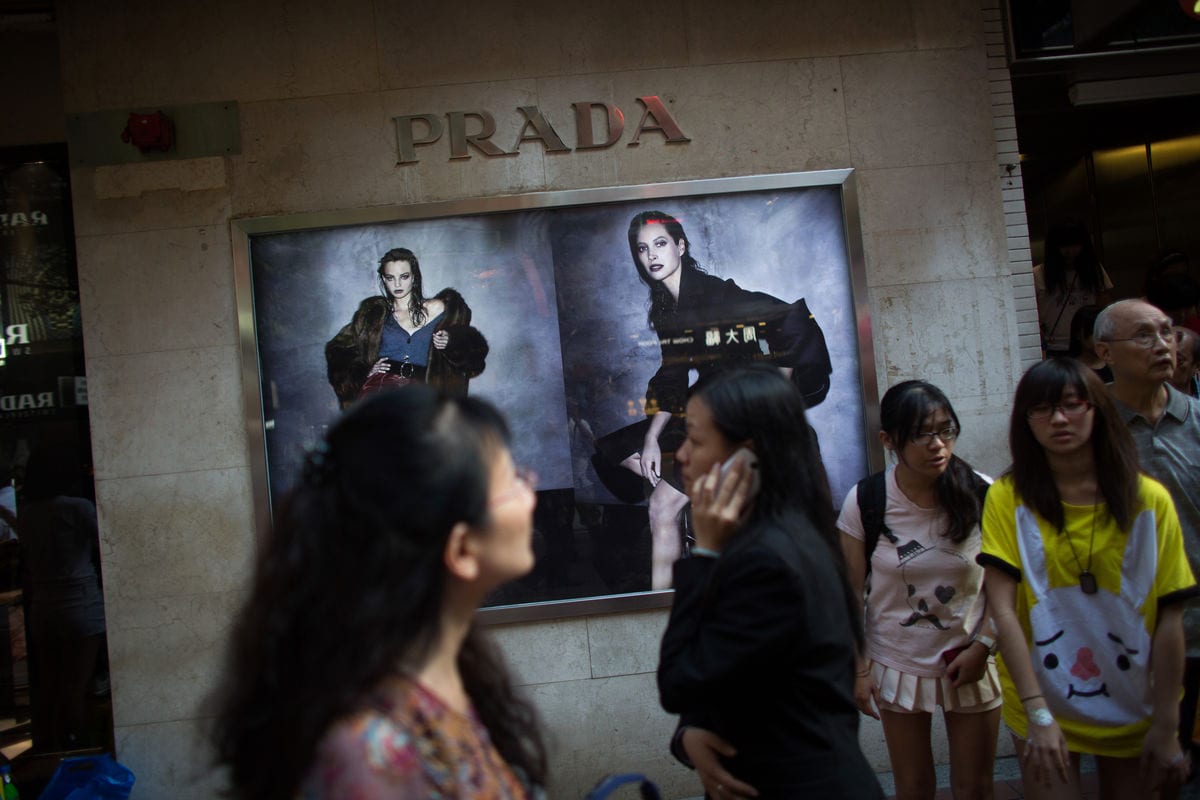
    Difficult times on Asian markets, especially in Hong Kong and Macau with lower local demand and fewer tourists, have impacted Prada profits.

    “At the same time, social and political tensions worldwide further contributed to a general decrease in willingness to consume and in tourist flows,” the Milan-based group says in its annual results.

    The company plans to offset new shop openings with selective closures this year and next in an effort to shield profit margins from weaker demand, according to Business Insider.
    Prada profits fell by a larger-than-expected 28 per cent in the 12 months to January 31 – to 14 per cent of revenue, down from 20 per cent the previous year.

    After listing on the Hong Kong bourse in 2011, the group expanded its retail outlets in the territory. Now it has been hit by China’s economic slowdown as well as a crackdown on extravagant gift-giving. Similarly affected, luxury goods industry leader LVMH has just posted first-quarter sales below forecasts.

    CFO Alessandra Cozzani, who took over the role in February after the sudden resignation of Donatello Galli, says Prada will balance new openings with closures and work to keep operating expenses flat.

    “The retail network will remain the same for sure in 2016 and probably also 2017. We’re working on increasing the productivity of stores.”

    Prada’s directly operated stores (DOS) increased from 594 to 618 in the 12 months to January 31.

    Head of strategic marketing Stefano Cantino says the group will bet on eCommerce with the aim of doubling revenues over the next two years. It will start working with partners such as Yoox Net-A-Porter to sell its products on multi-brand e-shops.

    Digital and marketing initiatives will also be used to strengthen relationships with clients.
    Meanwhile, the Asia Pacific is still the group’s leading market, generating new sales of €1080 million (US$1.23 billion) during the year. However, net sales fell by 4.4 per cent at current exchange rates and by 16.1 per cent at constant exchange rates.

    In Japan, where there was a strong flow of tourists, the brand ended the year with net sales of €403.7 million, a 10.7 per cent increase.

  • Technology drives Timberland sales

    Technology drives Timberland sales

    In-store technology is helping brick-and-mortar stores like Timberland retain their relevance in a fast-growing online world according to leading US retailer VF Corporation (VFC).

    Todd Starcevich, Americas VP of direct-to-consumer with VFC, says his company is focused on growing its business at retail level and points to research from the International Council of Shopping Centers (ISCS) reminding etailers that brick-and-mortar stores continue to deliver the bulk of today’s total industry retail sales.

    VFC, which owns high-profile brands including Timberland, 7 For All Mankind and The North Face, achieves 85 per cent of its sales in its direct-to-consumer business through its onground stores.

    “We are building our sales by focusing on building our retail technology foundation while simultaneously experimenting and testing new technologies and experiences in-store,” said Starcevich.

    Consumer insights are woven into every aspect of VFC’s retail business. During testing periods, retail teams watch how consumers engage with various technology and process adjustments.

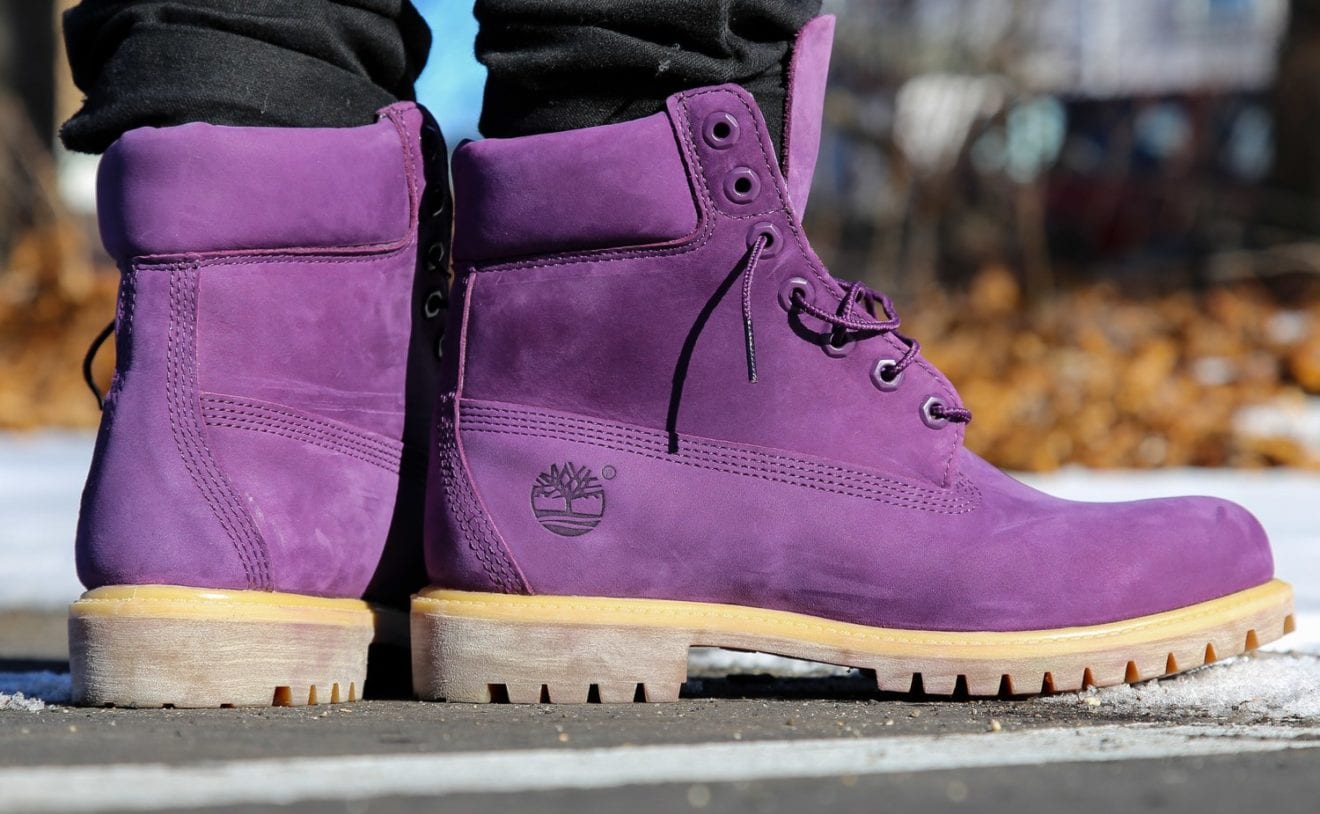
    In one recent experiment, Timberland deployed tablets to customers at its Herald Square store in New York City, allowing them to engage with every product in the store without having to sign up, download an app or initiate registration.

    As part of its Connected Store, which was introduced at the last National Retail Federation trade show, shoppers receive a guided Timberland sales experience with rich digital product information, styling options and recommendations for footwear, apparel and accessories. They can then choose to opt in via email to receive personalised content related to their store visit.

    Timberland’s Connected Store also offers “tap walls” featuring exclusive merchandise. Nimbus, CloudTags’ in-store recommendation engine, allows customers to shop from an extended range of styles, colours and sizing based on their location and interests.

    Meanwhile, The North Face and 7 For All Mankind brands have partnered with California-based Jaunt on innovative virtual-reality experiences. Shoppers at select The North Face stores could experience remote hiking or base jumping.

    Also partnering with Jaunt, 7 For All Mankind offered its customers Visions of California, filmed against the backdrop of a Paris chateau using 360-degree, stereoscopic 3D cameras and advanced 3D sound-field microphones. To amplify the content, Elle, the first fashion brand to collaborate with Jaunt, will promote the content across its digital platforms.

    Both The North Face’s and 7 For All Mankind’s virtual experiences are available via apps.
    VFC’s direct-to-consumer business accounts for about 30 per cent of its overall revenue. It includes 1520 retail stores and eCommerce sites.

  • Muji India set to make history

    Muji India set to make history

    Muji India  is about to become the first Japanese retailer to open stores in the nation.

    One is planned for Mumbai, the commercial capital, and another in Bangalore, the hub of the IT industry.

    This follows the forming of a joint venture by Muji owner Ryohin Keikaku, Tokyo, with Reliance Brands, based in Mumbai.

    Ryohin Keikaku is also the first-ever Japanese retailer to receive individual approval for a direct investment from the Indian government’s Foreign Investment Promotion Board.

    Its first venture will be the Muji Palladium. Opening in 2009, Mumbai’s Palladium is one of India’s largest shopping centres, attracting more than 24 million visitors every year. It has luxury retail brands, restaurants and a food court, and is next to a five-star hotel and cinema complex. The Muji India store, scheduled to open in August, will cover about 207 sqm.

    Muji’s second outlet will be in the VR Mall next to Phoenix Market City, which has fashion stores as well as a cinema complex and restaurants. Covering about 485 sqm, the Muji store is scheduled to open in September.

  • Tenant Manila is a cafe and a surfwear shop in one

    Tenant Manila is a cafe and a surfwear shop in one

    On the ground floor of Solace Hotel in Makati, there is a coffee shop, and just above it, a lifestyle boutique specializing in surfwear. It’s an unfamiliar, if welcome, amalgamation of the laid-back vibe of a neighborhood cafe, the stylish urbanity of the city, and the anything-goes attitude associated with going out to the water to catch some waves. How, then, has such a place come to exist?

    tumblr_o37d6py7wa1qf32sfo1_1280

    Nearly 20 years ago, the designers Anton Lopez and John Esguerra met while working at Diesel in Italy before eventually going on different paths. “When John moved to Hawaii to surf and design, I moved to Hong Kong to work for Nike,” Lopez explains. “We stayed in touch and always spoke about the potential of developing our own brand and retail concept.” Despite their Filipino heritage, neither Lopez nor Esguerra grew up in the Philippines. This led them, Lopez says, to be “fascinated with the idea of coming ‘home’ and developing a unique brand that was based in Manila [and] had strong influences and inspiration from all the places we’ve lived.”

    Tenant Edit.jpgQuality Peoples statement tee. Photos by PATRICK DIOKNO.

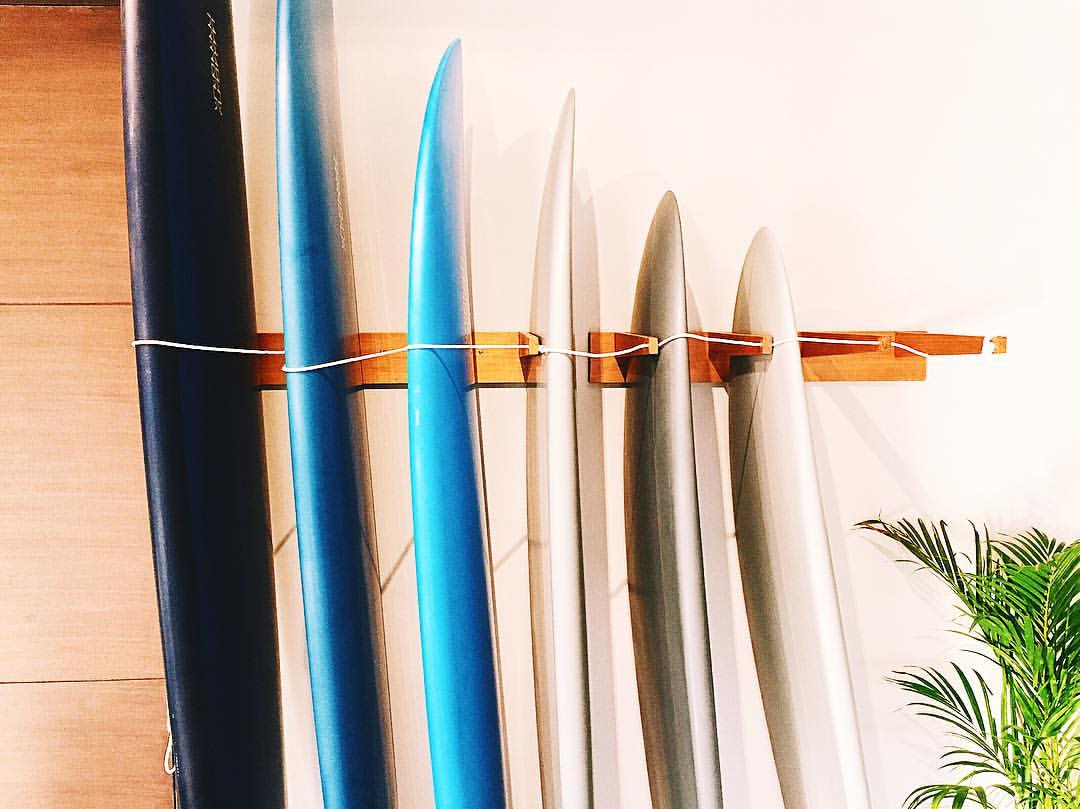
    Out of that fascination came Tenant Manila, a cafe-boutique opened in February that is, according to Lopez, “rooted in surf and beach culture,” something they felt was “a natural and authentic fit for a brand developed in the Philippines.” The coffee shop serves an array of drinks (aside from the caffeinated kind, they have tea, juices, and alcoholic beverages), snacks, and meals. Meanwhile, the second-floor shop sells everything from men’s apparel and accessories to surfboards and even books. “The idea behind merging a cafe and a retail shop was to blur the lines of what a retail experience is meant to be,” Lopez says. It’s a concept that they believe appeals to everyone: “We wanted to create a space where you can shop, design, meet, have a drink — multipurpose without any pretenses.”

    Tenant 4.jpgMollusk windbreaker, Saturdays NYC tee and H&M trousers. Photos by PATRICK DIOKNO.

    Lopez believes that Tenant is distinct in its branding. “We believe we distinguish ourselves first by our unique brand partners,” he says. “Most of [them] decided to launch first with us in the Philippines.” The shop carries products by Saturdays NYC, Converse, Kapital, Mandala (making its retail debut), Mollusk, and Esguerra’s own Quality Peoples, to name a few. In addition, they are expanding the shop’s offerings within the year with new menu items, new brands, and events relating to art, music, and film.

    The largest project will involve the development of an in-house brand with its own products this summer. “[It] will encompass Tenant culture,” Lopez says. “Good quality, attention to detail, relaxed and authentic clothing and accessories.”

    tumblr_o3cqsvmJH21qf32sfo1_1280

    Lopez and Esguerra believe that what they’ve built really connects to the modern Filipino lifestyle. “I think we are, in essence, a modern concept and creative brand,” Lopez shares. “And with that alone, I think we fit into anyone’s lifestyle. We hope to connect with Filipinos based on our honest and thoughtful approach through all aspects of the Tenant brand.” He adds: “Our hope is that Tenant is recognized as a creative environment for everyone, a space with beautiful and well-curated apparel and goods. Somewhere to have a great cup of coffee and good conversation with your friends.”

    Tenant 5.jpgSaturdays NYC knit pullover (left) and Saturdays NYC bonnet. Photos by PATRICK DIOKNO.

    ***

    Styled by David Milan
    Grooming by Gery Penaso for MAC Cosmetics
    Modeled by Javi Marcalain
    Shot on location at Tenant Manila


  • Shop young progressive Malaysian brands at LOKA, NU Sentral

    Shop young progressive Malaysian brands at LOKA, NU Sentral

    Homegrown brands in Malaysia usually start off by participating in bazaars or selling online.

    With limited funding, it is difficult to penetrate into big retail malls. One way is to succeed collectively, as seen in LOKA, an initiative to foster the talents of the next generation brands so they can hopefully expand in Malaysia and even in the ASEAN region.

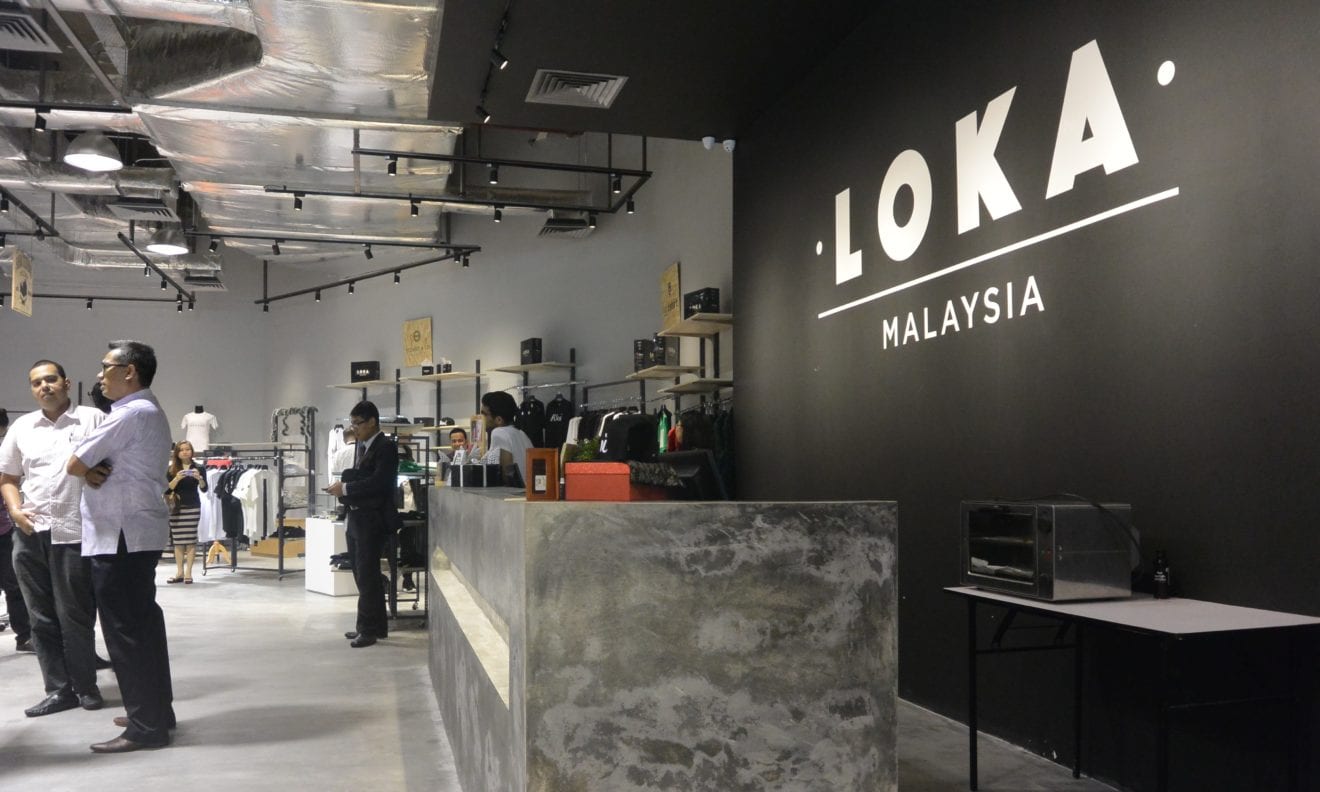
    Located in NU Sentral, next to H&M, LOKA is home to startup brands like Ash Be Nimble, Cufica, Greenroom136 and many more.

    Kamarulazhan Abdullah (co-founder of Cufica), Zye Ramli (LOKA store manager), Kamarul Akbar (co-founder of Cufica) and Patrick Lim (founder of Greenroom136) are advocates of homegrown brands.

    Kamarulazhan Abdullah (co-founder of Cufica), Zye Ramli (LOKA store manager), Kamarul Akbar (co-founder of Cufica) and Patrick Lim (founder of Greenroom136) are advocates of homegrown brands.

    Zye Ramli, the general manager of LOKA, has a lot of experience in mentoring startups. She was previously in publishing and media, public relations and subsequently worked on incubating startups in Malaysia. “LOKA is a movement, a curator of local brands. It is an organisation, a company, an agency that curates all local lifestyle brands under one roof.”

    As Zye elaborates, the company that owns LOKA is called Gemilang 4E where the term 4E stands for “for entrepreneurs.”

    “It is an entrepreneurship development agency that solicits for local designers and artists, asking them to come onboard and help them to elevate their businesses. The reason why Gemilang 4E does this is because they realised a couple of years back that the ministry and government gave a lot of support and attention to technology startups but not so much to lifestyle entrepreneurs.”

    Nightwear and children’s wear are some of the offerings at LOKA (left). Eco-friendly bags are sold at LOKA (right).

    Nightwear and children’s wear are some of the offerings at LOKA (left). Eco-friendly bags are sold at LOKA (right).

    Gemilang 4E took the initiative to start campaigns for the entrepreneurs. Zye noted also that they realised these local brands go for ground events like Tempatan Fest and Urbanscapes where they build their platform.

    However, because they are designers, Zye is of the opinion that many of them lack business sense. “They don’t have the funds or capabilities to go into a premium mall so they keep on following these on ground events and e-commerce events but what we want to do is elevate their business to another level.”

    LOKA approaches these homegrown brands by asking them to join in. Most of the brands were open to the idea because on their own they cannot afford the rental at such a premium space in a mall. So far, LOKA has amassed around 40 brands.

    Each brand is given an individual space and they are on consignment basis. LOKA takes a percentage from the consignment. The space is not calculated as rental but the brands pay a service fee.

    These colourful tassels will brighten up anyone’s mood (left). Doof bean bags are great alternatives to couches and chairs (right).

    These colourful tassels will brighten up anyone’s mood (left). Doof bean bags are great alternatives to couches and chairs (right).

    In return the LOKA ambassadors sell the products for them and LOKA runs marketing campaigns for individual brands too. All the brands under LOKA also sign an agreement where the products will be there for three months and under review for its sale performance.

    After three months, both LOKA and the brand will decide whether to continue. It has to be a mutual decision between two parties meaning that you can’t just simply open a space one day and move out the next day.

    Before LOKA opened, food was part of the plan but due to time constraints, they couldn’t bring in the food vendors on time. Currently the plan to bring in food is put on hold for the moment.

    There are some homeware products but the majority are fashion, accessories and lifestyle products. Each brand goes through a screening process where they are evaluated based on their history and social media followers.

    The brand also has to be the right product mix for LOKA. “We do get a lot of proposals. If we have too many street wear brands, I will have to see if they can compete with the current products or I have to put them on KIV (keep in view). If someone approaches me with something we don’t have and it looks interesting, we will look into it,” said Zye.

    Choose from a variety of Malaysian brand shoes (left). Decorate your house with some greens (right).

    Choose from a variety of Malaysian brand shoes (left). Decorate your house with some greens (right).

    The reason NU Sentral was chosen is because it is a good catchment area, a centralised location that serves the Petaling Jaya and Kuala Lumpur market as well as a tourist hub. LOKA has launched their outdoor campaigns in Jalan Travers, Bangsar and parts of KL to also create a buzz for the shop.

    “We haven’t launched a 100 per cent campaign yet. We will have escalator wraps in NU Sentral and KL Sentral and we plan to go to the campuses as well. There are 22 corporate buildings around KL Sentral and we will market to them too,” said Zye.

    So, how do homegrown brands expand with the help of LOKA? “They are the brand custodians of their own products. LOKA will assist them in terms of elevating their standing in the market but at the end of the day, they are the brand custodians. So whatever they do out there, they have to give us enough support to complement each other. They need to find ways to get into market expansion. We provide the facilities for them but we can’t provide everything for everyone,” she said.

    Ultimately, the brands have their own team and investors and should they need extra assistance, LOKA can step in to assist. The first phase of LOKA NU Sentral is completed and phase two would entail opening another outlet outside KL. Kota Kinabalu, Kuching, Johor Bahru and Penang are places they are considering for phase two. For phase three, LOKA plans to expand to the ASEAN region.

    With regards to LOKA, there are people curious enough to come and find out what’s available. “It has been encouraging. For two and a half months we are doing okay. There is buzz, talk and a lot of reviews. Fridays, Saturdays and Sundays are better,” said Zye.

    Local bag brand Greenroom136 is one of the vendors at LOKA.Local bag brand Greenroom136 is one of the vendors at LOKA.Patrick Lim of local bag brand Greenroom136 is one of the first few vendors under LOKA. He started out his brand online and now he sells his products with LOKA.

    “LOKA called me. So,they came by our studio and introduced the concept and we were interested. The emphasis is on local entrepreneurship, something we always advocate in our brand. Immediately we saw a brand fit. The fact that we have an opportunity to set up in a mall was the other pulling factor. We have been onboard since day one. We are expanding our operations, hiring more people for production and get things to the next level since being part of LOKA,” said Lim.

    He feels that LOKA is a good opportunity for local independent brands who start up small to have an establishment to support the front line efforts. Being part of LOKA will be a permanent initiative by Greenroom136 as they want to expand as LOKA opens more outlets. It helps them to grow, an opportunity that is hard to come by for local brands. Lim said that if he called a premium mall, they would prefer to pick an international brand rather than a local one.

    “We started off as an online business and we sell products that are RM300 and above. We pride ourselves on quality. Some customers are bitten by the made in Malaysian bug so when you have a higher price, they feel it is dubious so it is better that they can touch and feel the product in person. So it is a win-win all across,” he said.

    Another vendor at LOKA is Cufica, a Muslim lifestyle product brand that sells home decor and fashion apparel. It was started by friends Kamarulazhan Abdullah and Kamarul Akbar. The products are designed by them personally and made in Malaysia. “We joined LOKA since December and so far, it’s been good. Our sales and performance have increased since being part of LOKA. The location is good and it is easier for our customers to buy our products,” said Kamarulazhan. As the duo are based in Sentul, the shop at NU Sentral is also a strategic spot for them. Cufica started having a lot of new followers since being part of LOKA. They also started getting international customers that is a boost for the brand. Kamarulazhan said that they plan to stick around with LOKA as long as they can.
     

  • Burberry posts disappointing second-half sales

    Burberry posts disappointing second-half sales

    Burberry posted disappointing fiscal second-half sales and warned on profit for the current fiscal year, sending its shares lower and highlighting the pressure on chief executive Christopher Bailey to turn around the British luxury retailer’s performance.

    Burberry reported a 2 per cent decline in comparable sales, a closely watched figure that excludes store closings and new store openings, that missed analyst estimates. Results were hurt by a 5 per cent decline in its fourth quarter ended March 31 amid a poor performance in Hong Kong, the US, Europe and Britain.

    Shares fell as much as 7 per cent before retracing some of the loss to close nearly 70 pence lower at 1275 pence in London.

    “Sales look to have been under pressure in all areas,” said Liberum retail analyst Tom Gadsby.

    Burberry isn’t alone in struggling against headwinds in global luxury. LVMH Moet Hennessy Louis Vuitton earlier this week reported first-quarter sales rose 4 per cent, below what analysts were expecting, as the company grappled with sluggishness in France following the Paris terror attacks.

    Mr Bailey took Burberry’s helm in May 2014, shortly before currency gyrations and political unrest hammered sales in greater China, a typically high-margin region for the company.

    Mainland China is now bouncing back, but sales have stayed weak in Hong Kong — where Burberry has 14 full-scale stores and a number of concessions — in the wake of tighter visa policies for residents in nearby Shenzhen, previously frequent visitors to Hong Kong.

    Mr Bailey has moved to renegotiate rents and reduce store space in Hong Kong, along with tweaking marketing and product assortments to better appeal to local shoppers. Sales in Hong Kong nevertheless fell more than 20 per cent in the fourth quarter.

    Beyond Asia, Thursday’s results showed broad-based weakness, indicating that Mr Bailey is struggling on a number of fronts.

    The US, the world’s largest luxury market, has been particularly difficult for Burberry. The company’s long-term push to burnish its brand there hasn’t yet gained enough traction.

    “We are focused on elevating our brand in the US longer-term,” said chief financial officer Carol Fairweather, describing choppy demand from US shoppers as “perplexing”.

    As with LVMH, the terror attacks in Europe took their toll on Burberry. Comparable sales in Europe weakened in the fourth quarter as tourism declined in recent months. “Clearly, events in Paris and Brussels do have an impact on sentiment,” Ms. Fairweather said.

  • Why online retailers are opening Hong Kong pop-up stores

    Why online retailers are opening Hong Kong pop-up stores

    Numerous reports have been written on how eCommerce spells the death for brick-and-mortar stores in the retailing industry.

    But others have written on how the preference of customers taking in the whole in-store shopping experience will ensure that there will always be a need for real world stores.

    Unlike in other markets, eCommerce in Hong Kong has yet to gain a strong foothold. According to Euromonitor International, online retail sales accounted for only 3 per cent of the city’s total retail sales in 2015. The insignificant share of online sales has even seen the tables being turned, with online retailers opening offline stores to communicate brand value and as a means to convert bricks and mortar store shoppers to online platforms.

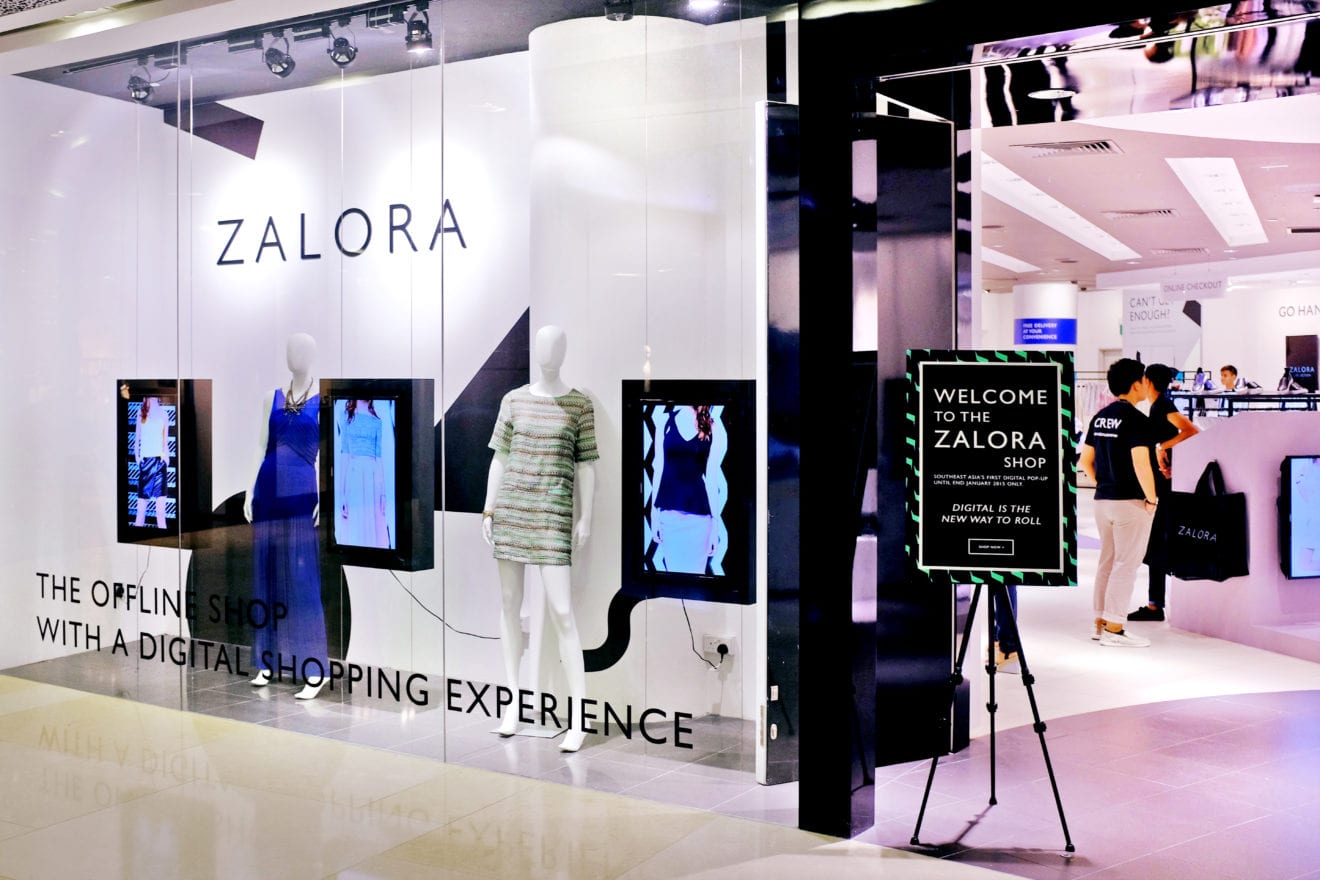
    Online fashion retailer Zalora is just one brand which opened Hong Kong pop-up stores last year to test the waters without committing to a long-term lease. Other than cost concerns, the use of a pop-up store also allowed the retailer to move the store around various shopping centres in the city to maximise exposure.

    Real world stores opened by online retailers are generally designed for experience and as a place to educate potential customers to buy online. Similarly, Line – the mobile social networking platform – also opened a pop-up store last year, before opening a more permanent store to sell Line character merchandise as well as build its brand image and customer base.

    While pop-up stores are the preferred format for Click-to-Brick retailers (at least at the market entry stage), when it comes to setting up a more permanent store, the overwhelming preference is to be located in prime shopping centres in core locations since they provide an all-weather shopping environment, controlled trade mix and a more focused customer base.

    For landlords, the allure of pop-up stores is that they can better utilise space within the shopping centre and minimise void periods; an important consideration given the current challenges facing the city’s retail sector. The ever changing goods offered by different pop-up stores can also freshen the shopping experience of customers.

    The Click-to-Brick trend is still at a nascent stage, hence it is too early to conclude whether it will establish as a key driver of demand in the city’s retail leasing market over the longer-term. In the interim, it will be a welcome addition to shopping centre landlords who continue to look for new means to differentiate against their competitors amid an increasingly challenging retailing environment.

  • Uniqlo Philippines to open six new stores

    Uniqlo Philippines to open six new stores

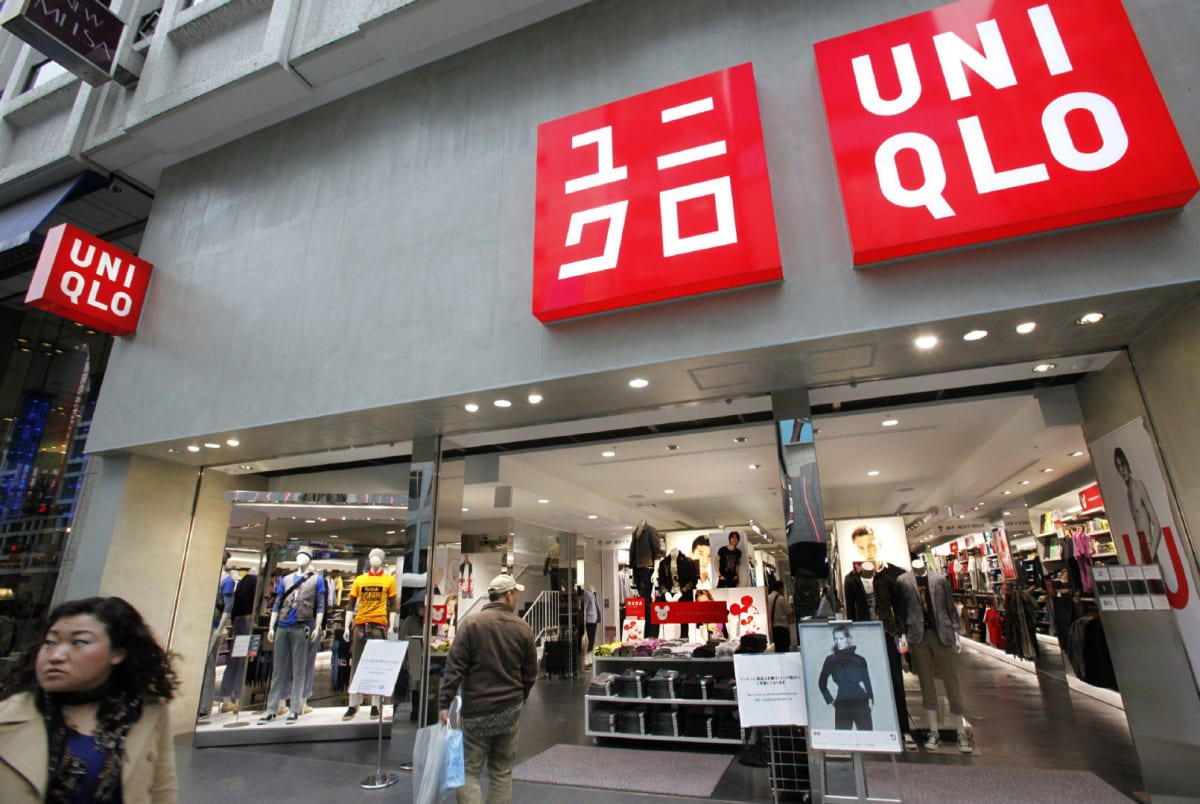
    Japanese fashion brand Uniqlo is opening six stores in the Philippines by June 2016.

    “We are thrilled to announce that Uniqlo will open four new stores in Luzon by May and two new stores in the Visayas by June, as we continue to bring high-quality and innovative clothing to Filipinos,” said Katsumi Kubota, COO of Uniqlo Philippines.

    The Luzon branches of Uniqlo Philippines will be in UP Town Center in Quezon City; Solenad 3 in Nuvali, Laguna; Evia Center Vista City in Daang Hari Rd, Cavite City; and SM City Cabanatuan in Nueva Ecija.

    The Visayas stores will be in Iloilo City and Bacolod City, adding to the existing outlets in SM City Cebu and SM Seaside City Cebu.

    Uniqlo is a brand of Japanese global retail holding company Fast Retailing, which designs, manufactures and sells clothing under seven main brands: Uniqlo, GU, Comptoir des Cotonniers, GU, Helmut Lang, J Brand, Princessetam.tam and Theory. It has global sales of about US$13.88 billion.

    There are more than 1700 Uniqlo stores in 17 markets, including Australia, China, Hong Kong, Indonesia, Malaysia, Philippines, South Korea, Taiwan and Thailand.

  • Uniqlo profit drops

    Uniqlo profit drops

    Uniqlo profit has plummeted in the Japanese fast fashion chain’s first half year.

    Parent Fast Retailing has revealed a 33.8 per cent decline in year-on-year surplus, despite a 6.5 per cent increase in sales from September 2015 to February 2016.

    Consolidated revenue reached JP¥1.0116 trillion (US$9.385 billion) and profit ¥99.3 billion (US$1.535 billion).

    While Global Brands reported a rise in both revenue and profit, Uniqlo Japan reported declines in both revenue and profit, and Uniqlo International reported a rise in revenue but a decline in profit.

    The company blamed the Japanese decline on poor sales of winter ranges and lower gross margin, with same-store sales down 1.9 per cent.

    “Subsequent stronger discounting in January and February contributed to a 3.5 per cent fall in the first-half gross margin.

    Uniqlo profit was down on weaker sales in Greater China, South Korea and the US in the company’s international division. However sales and profit rose in Southeast Asia, Oceania and Europe.

    In the Global Brands division, revenue and profit both rose on strong sales of GU ranges. “GU’s widely advertised campaign items such as knitwear and trendy bottoms such as wide pants and jogger pants all generated strong sales, fueling double-digit growth in same-store sales,” Fast Retailing reported.

    The company is predicting a better second half but has revised its earnings forecast to a 7 per cent rise in revenue and a 27 per cent decline in operating profit.