Category: Fashion

Retail News Asia is committed to providing both local and global retailers with the latest Fashion news throughout the Asian market. This on a daily base.

  • Kipling launches exclusive collection for Asia

    Kipling launches exclusive collection for Asia

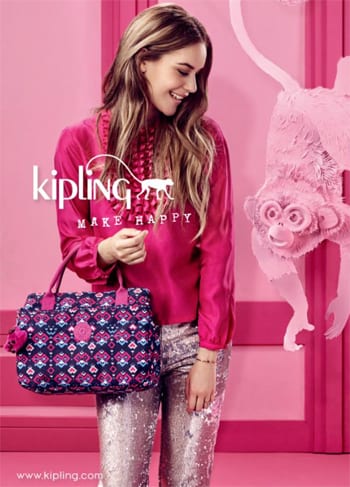
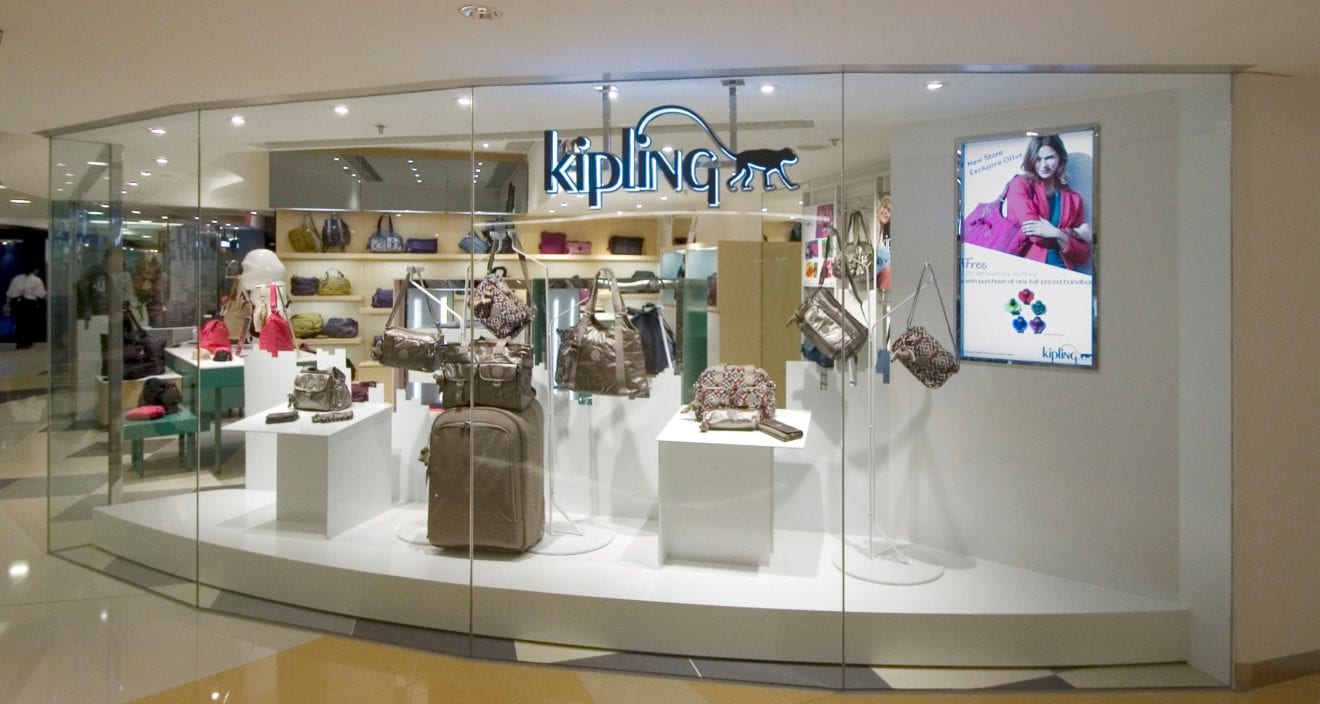
    Kipling-Asia-range-lead Kipling has introduced an Asia exclusive collection, which celebrates individual style with ‘optimism and functionality’ and has been specially designed for the Chinese Zodiac’s Year of the Monkey.

    The monkey plays a key role in the Kipling accessories, as it is said to represent the smart, adventurous and playful spirit of the brand.

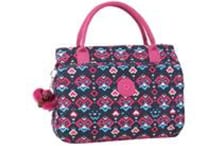
    Kipling-Asia-range-pinkThis season, Kipling’s Asia limited edition range offers ‘classic’ handbags and ‘functional’ backpacks, to ‘small and fun’ purses.

    Made for the ‘modern day’ woman the Monkey print collection showcases a collection of carry-ons that features monkey designs in shades of purple and hot pink.

    Kipling’s Monkey Print Collection has been launched exclusively in China, Hong Kong, Taiwan and Singapore, and is currently available in stores.

  • Rotary Watches opens first China boutique

    Rotary Watches opens first China boutique

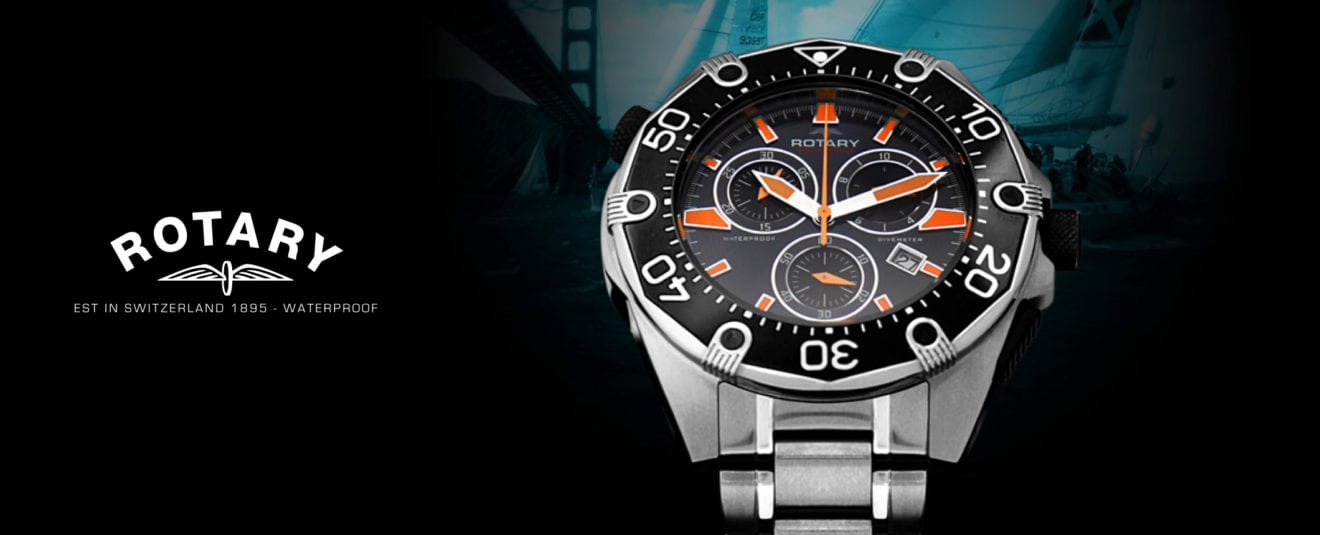
    Since launching in China last Summer Rotary has opened 24 Rotary shop in shops strengthening the brands presence in the market.

    The 107 sq ft boutique complete with tailor made fixtures and fittings, Rotary’s full range is displayed in the Poly shopping Mall boutique.

    The brand continues to prove in China with its mid-market price range and is committed to an aggressive shop in shop roll out plan for 2016.

    Rotary anticipates 150-200 points of sale in People’s Republic of China by the end of 2016.

  • Stelux sales slide in third quarter

    Stelux sales slide in third quarter

    Stelux Holdings International has reported a 12.7 per cent slide in sales in the three months to December 31.

    A large component of the decline was the exchange rate – on a fiscally neutral basis, sales fell a more modest 8.8 per cent, the company has reported to the Hong Kong stock exchange.

    Turnover totalled HK$850.8 million for the quarter, down from the $974.6 million of the same period last year.

    “Our Mainland Optical 88 operations saw turnover growth of around 8 per cent in local currency terms, and the growth momentum from our eGG business in Greater China was sustained, but other business units within the group generally saw turnover decline,” the company reported.

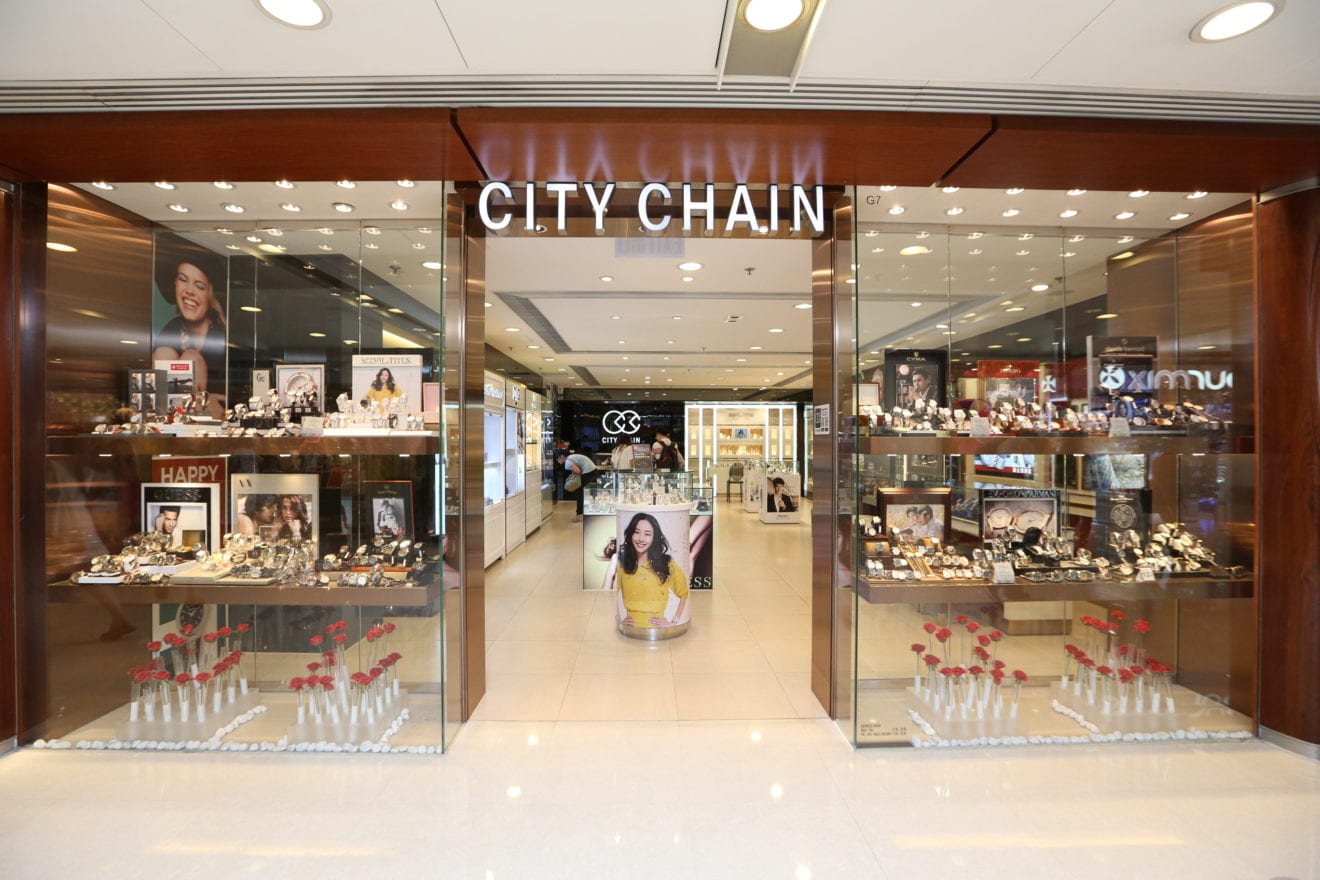
    The main contributor of the decline would appear to be the City Chain jewellery and watch operation which has been hit by changing tourist spending patterns in Hong Kong and weak consumer sentiment in Malaysia, Singapore and Thailand. Stelux did not release figures for that subsidiary.

    The unaudited consolidated turnover of the Group for the nine months to December 31 was HK$2.637 billion, a decrease of 11.4 per cent, or 8 per cent on a foreign exchange neutral basis.

    “The group maintains stable liquidity with reduction of inventory by around 7 per cent and 15 per cent against that as at the end of September 2015 and March 2015 respectively,” the statement concluded.

  • Lane Crawford Fetes Lunar New Year With Visual Art Installations

    Lane Crawford Fetes Lunar New Year With Visual Art Installations

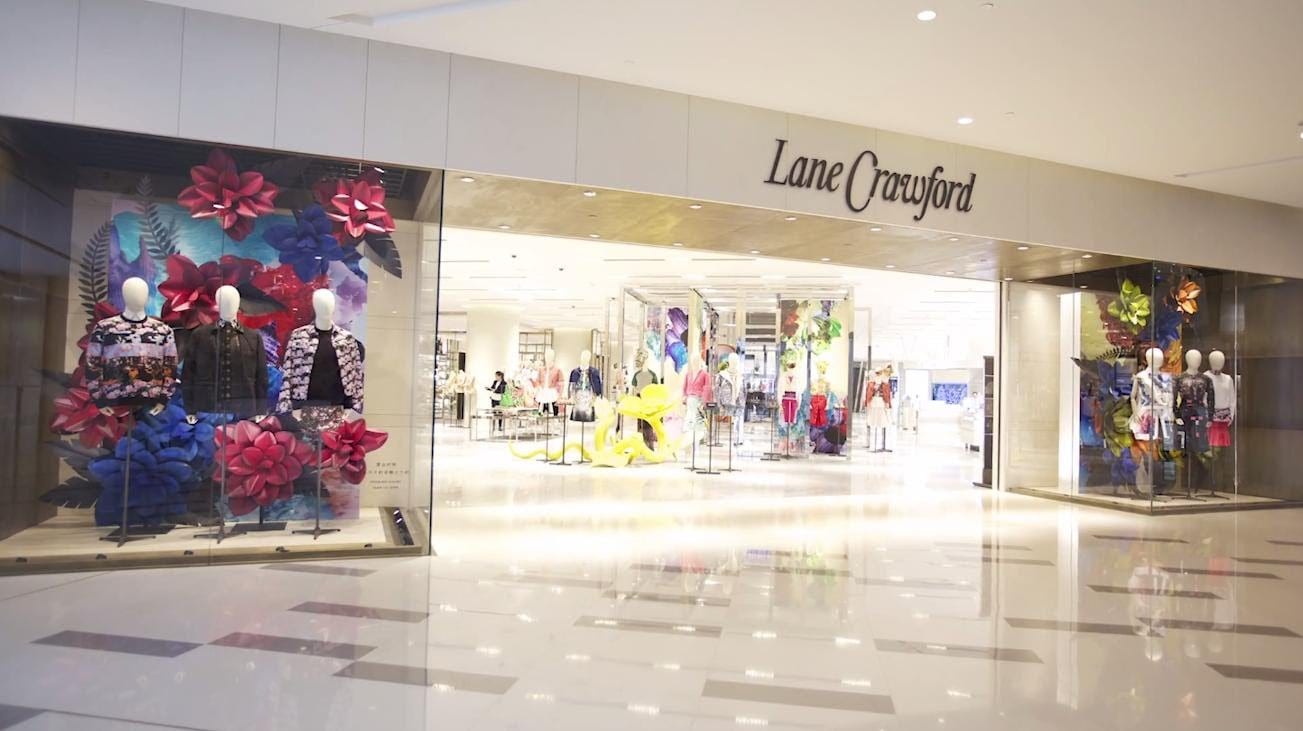
    Lane Crawford has big plans to celebrate the upcoming Lunar New Year — also called the Chinese New Year — which kicks off in early February.

    According to the Chinese zodiac tradition, this will be the year of the monkey. Lane Crawford has tapped nine artists to create a series of visual installations for the luxury retail company’s stores in Hong Kong and China. 

    Participating artists include Andrea Minini, Angel Chen, Desmond Leung, Hui Hoi Kiu, Huijun Guan, Mosaic Art Projects (which is led by visual artists Karen Pow and Chao Harn Kae), Jan Zhou and Yeli Gu — WWD reported. 

    Pow and Kae created a massive, papier-mâché sculpture of a monkey, which references the traditional Chinese art of paper-cutting. 

    In related news, British luxury brand Burberry is also celebrating the Lunar New Year in February.

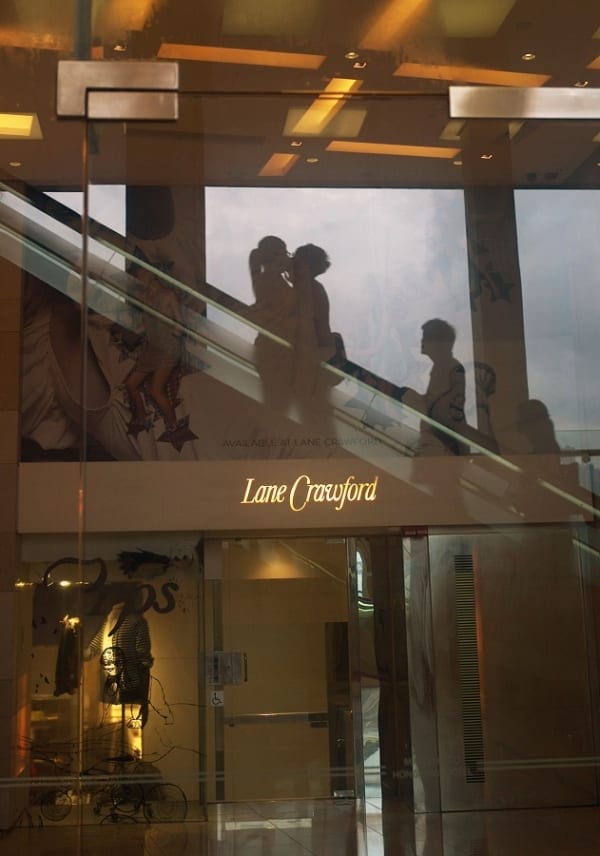
    Shoppers viewed through a window of the Lane Crawford store in Hong Kong

    Beginning at the start of the Chinese New Year, Burberry fans will be able to use WeChat, a popular Chinese social messaging platform, to reveal gifts from the label and send personalized celebratory envelopes to family and friends.

    Additionally, users in China will have the opportunity to win limited edition physical Burberry Lunar New Year envelopes.


  • Siam Piwat mounts “The Siam Prosperous Chinese New Year 2016”

    Siam Piwat mounts “The Siam Prosperous Chinese New Year 2016”

    Siam Piwat Company Limited—the operator of Siam Paragon and Siam Center—together with Muang Thai Life Assurance Public Company Limited, Kasikornbank, and Advanced Info Service Public Company Limited, sends happiness during Chinese New Year to welcome the lucky year by launching a special campaign “The Siam Prosperous Chinese New Year 2016” to boost spending during the festival and to attract local shoppers and international tourists to the shopping centers where they enjoy shopping for propitious items as well as fashion and lifestyle ones from leading brands in Siam Paragon and Siam Center. Moreover, the two shopping centers are offering a blow-out sale with up to 80% discount while giving customers a chance to win Siam Ang Pao (red envelope) and many other prizes totaling over 7.5 million baht.

    These special promotions are available from 3 February to 13 March 2016. Siam Paragon also holds a special activity “Siam Paragon The Prosperous Chinese New Year 2016”, allowing its visitors to witness the magnificence of a Hong Kong-based rare-to-see performance “The Magic of Seven Animals of the Gods” by “Lok Chee Fu”—the old performance troupe renowned for over eighty years. The official opening of the event is schedule on Thursday, 4 February 2016 at 17.30 hrs at Parc Paragon. The performance is open to the public with free of charge from 5 to 8 this February, one session a day at Parc Paragon from 17.00 hrs onward.

    Miss Chanisa Kaewruen, Deputy Managing Director for Marketing Events and Business Relations, Siam Piwat Co., Ltd., says, “Every year during the Chinese New Year festival sees a big increase in spending. Siam Piwat has been investing in activities and promotions in order to boost sales in the first quarter. As seen previously, we are constantly holding activities to celebrate many occasions from the New Year festival to Children’s Day and upcoming Chinese New Year and Valentine’s Day. Each of the previous activities attracted the attention of many Thai shoppers and foreigners, allowing the lively economic atmosphere and boosting sales.”

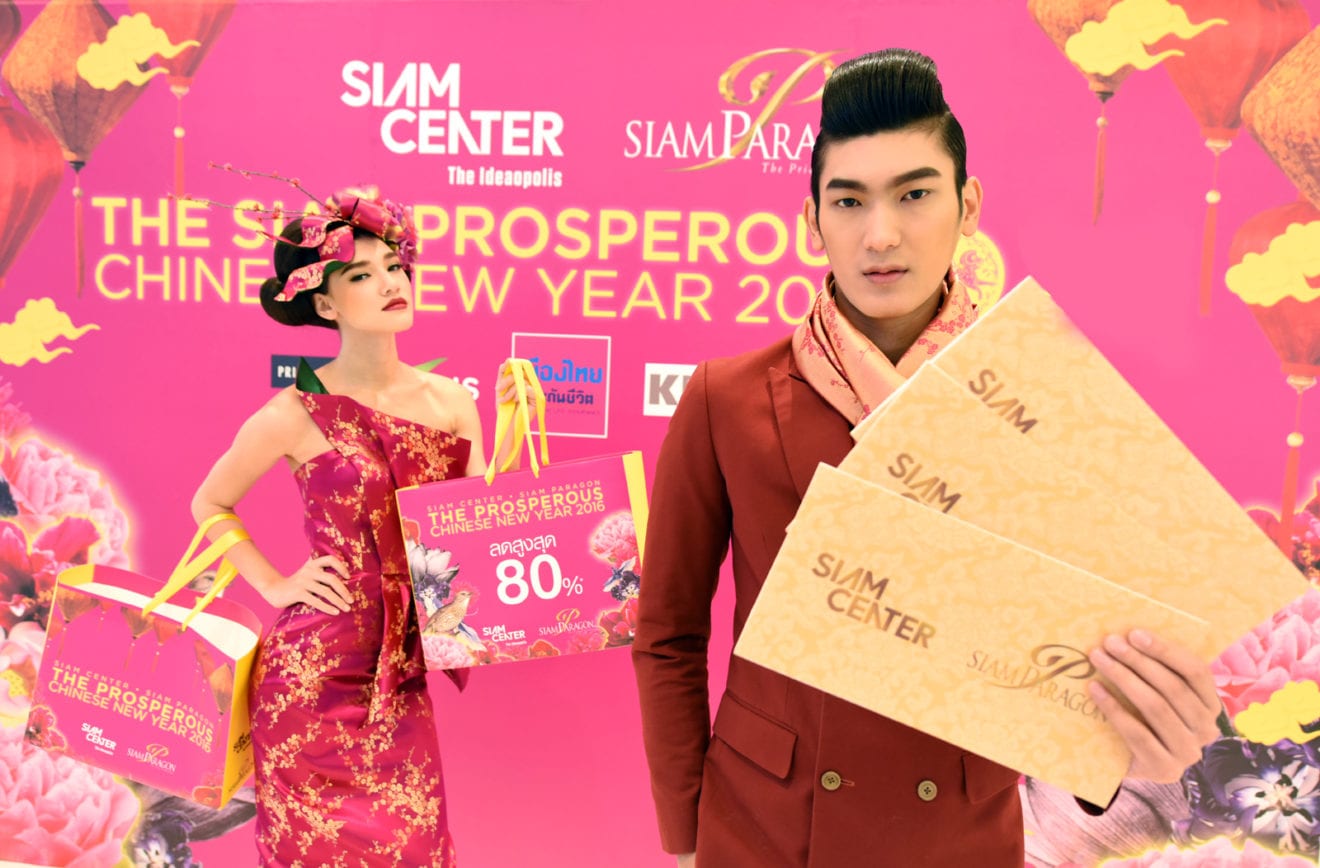
    Chanisa Kaewruen, Deputy Managing Director for Marketing Events and Business Relations, Siam Piwat (center) and models

    Chanisa continues, “The Chinese New Year festival marks the celebrations of Chinese New Year and the ASEAN Economic Community (AEC). Siam Paragon and Siam Center consequently mount “The Siam Prosperous Chinese New Year 2016”, the first campaign with a budget of over 7.5 million baht to have special activities and promotions. This is to create atmosphere which will then persuade consumers, both Thai shoppers and foreign tourists into spending more—making the economy flow—on fashion products, clothes, accessories, gold jewelry, IT products, food products to name but a few. The Chinese New Year festival is the festival which has the biggest spending of the year, allowing an immense amount of money spent each year. This festival manages to attract more tourists—especially the ones from China, Hong Kong, Taiwan, Singapore and South Korea—to the shopping centers than ever. These tourists of Chinese descent are almost 50 percent of the number of foreign tourists who enjoy visiting the two shopping centers. At the same time, this Chinese New Year marks the first year when the ASEAN Economic Community has been officially effective. More Asian people of Chinese descent from different countries joining in the AEC are expected to travel and spend in Thailand.”

    The promotional campaign to welcome this Chinese New Year includes a parade of full-on promotions that feature a chance to win grand prizes. Simply spend every 2,000 baht in the two shopping centers, get one lucky-draw coupon to have a chance to win several special prizes worth over 7.5 million baht. The biggest prizes include gold bullion worth 1 million baht with a quota of one, Royal Barge Suphannahong’s propitious piece of craftsmanship made of 99.9% yellow gold by Prima Art, with a quota of two, as well as eight propitious trees made of 99.9% yellow gold by Prima Art with a quota of twenty. Customers with top spending of the week instantly win The Scarlett Clinic’s Golden Ratio Body Contouring course worth 100,000 baht with a quota of twenty four. Plus many privileges from the participating credit cards.

    Last but not least, the campaign allows customers to go on shopping thanks to “Siam Chinese New Year Sale”—the sale which offers up to 80% discount on items from leading brands from 3 to 14 February 2016. Special Siam Ang Pao, aka Siam red envelopes, are also given away to win many prizes such as gift vouchers from shops, discount cards and complimentary vouchers from service shops in the two shopping centers. These Ang Pao are available from 6 to 8 February 2016 for any customer who shops in Siam Paragon and Siam Center. Very special to Siam Paragon’s customers only on 8 February, spending of 300,000 baht instantly gets TWG Hamper Set worth 10,000 baht with a quota of ten.

    Enjoy shopping with the promotion “The Siam Prosperous Chinese New Year 2016” in celebration of Chinese New Year from 3 February to 13 March 2016 in Siam Paragon and Siam Center.


  • Singapore designer Sabrina Goh is creating a new fashion vision

    Singapore designer Sabrina Goh is creating a new fashion vision

    The petite designer has launched her new concept store at the boutique-centric Capitol Piazza

    Local fashion had a tough year in 2015, what with the high-profile shuttering of well-known labels such as Hansel by Jo Soh, the long-standing M)phosis and multi-label boutique Inhabit at Mandarin Gallery.

    The influx of fast fashion brands and e-commerce, rising rents and a murky economic outlook have all resulted in a particularly challenging retail environment here, with smaller labels taking the brunt of the impact.

    Yet, there have been a few bright sparks in recent months. There was the opening of local fashion label In Good Company’s first stand alone store in ION Orchard; and the sprawling 5,000 sqf Mporium, which champions Asian designers and indie labels, that took root at Suntec City. This week, local fashion designer Sabrina Goh officially launched her new flagship store at Capitol Piazza.

    sabrinagoh

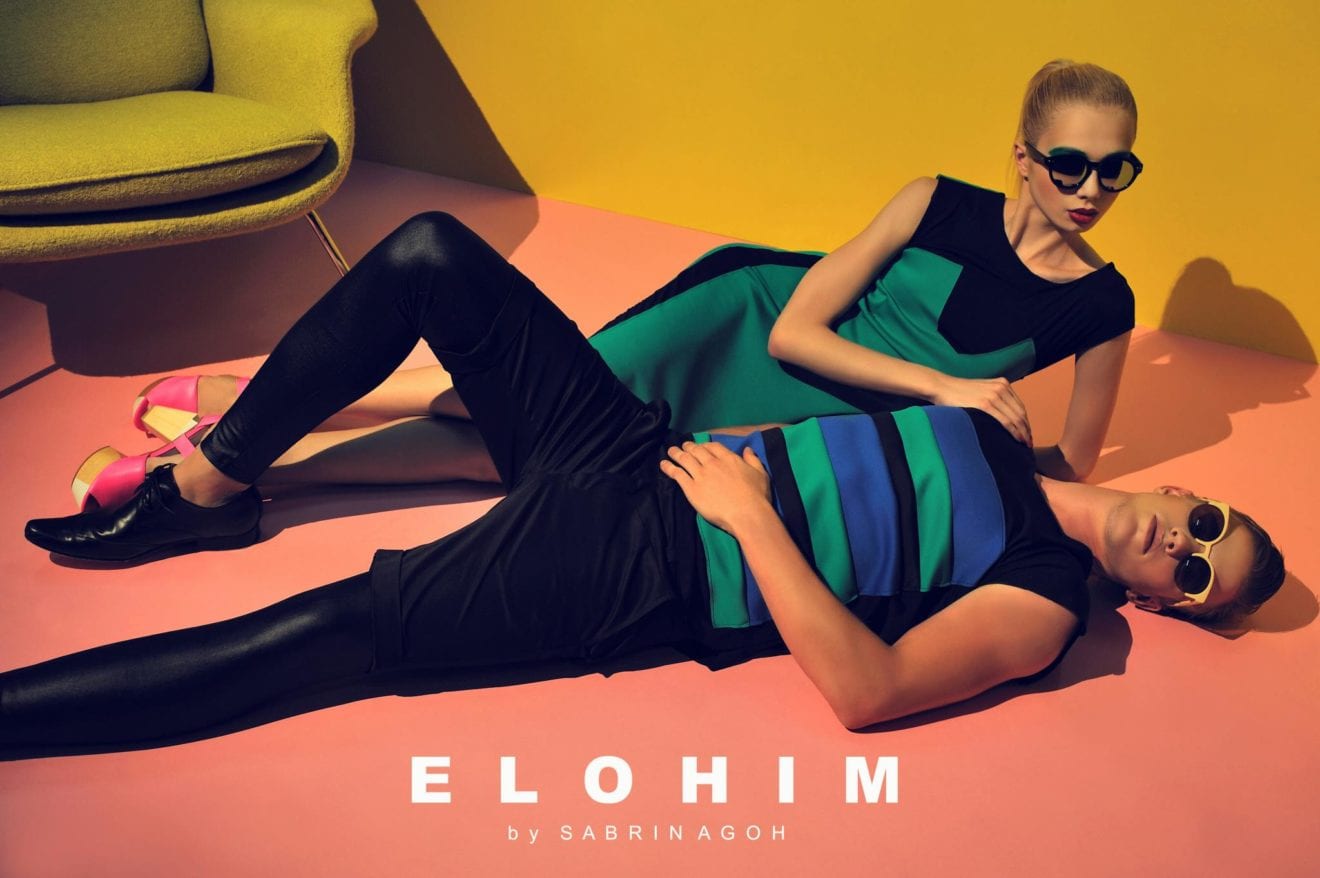
    Simply called SABRINAGOH, the launch also coincides with the seventh anniversary of her label ELOHIM by Sabrina Goh. The petite designer spearheads two of her own labels — Light by Sabrina Goh, and the more conceptual, premium label, ELOHIM — both of which are stocked on the 870 sqf store at the second level of the boutique-centric mall.

    However, unlike her previous boutique at Orchard Central, which closed in August last year, this flagship store boasts a new retail concept. Apart from Goh’s own designs, it also features offerings from other independent Singaporean and Asian labels that, according to Goh, share a similar DNA with her designs.

    The in-store offerings range from skincare, courtesy of Singaporean beauty labels FrankSkincare and Rough Beauty; to handmade cookies infused with local flavours from Spatula & Whisk. Handcrafted accessories such as snap-cases for iPhone 6 (by Fabrix), cool and quirky handbags (from Woodview) and whimsical stationary from local brand The Paper Bunny also make up the indie vibe at the boutique.

    “I was looking to shift from our previous location at Orchard Central as it was undergoing major revamp and renovation, and I felt that Capitol was very suitable for a new-to-market concept store like this,” said Goh. “My team and I wanted to develop a different kind of retail concept that is more about a complete lifestyle — but also showcasing many more Singaporean and international labels that people may not be familiar with.”

    Still, it’s interesting that, at a time when retailers are either downsizing their brick-and-mortar businesses or closing shop altogether, Goh has decided to take this leap of faith at this particular juncture in her designing career. Here, she explains why she made such a move.

    Q: What was behind the decision to open a flagship store at this point in time?

    A: I’ve always felt that having a physical space is very important. When we started in 2009, we were stocked in different concept stores where it was difficult to communicate our story. A stand alone store will be better able to have more interaction and receive feedback from our customers, which helps the brand to shape and grow. Plus, a store where people can try on your clothes is crucial to recruiting new customers to your brand, especially for one with our unique aesthetic.

    Q: Many local brands are going online. What do you think of the current retail environment for niche brick-and-mortar stores such as yours?

    A: After five years of running the boutique at Orchard Central, I realised that retail is very dry, very transactional — I feel challenged when it comes to retail. It’s very cold and there’s not much conversation about the creative process, or two-way communication between the designers and the customers. I feel that as a local designer, I cannot compete with big brands with big budgets, but I can share my feelings and my inspirations and brand identity; and this is the strength of the indie designer.

    Q: How is this translated in the store?

    A: There’s a need for designers to share and communicate the stories of their brands to their customers, something which we emphasise in the store. We trained our staff to share the story of all the different brands we carry: How they started, the inspirations (behind the designs or products), the unique stories — in order to create a more intimate retail experience. We also conduct workshops in-store where we invite customers and our partner brands to come and share their stories. We’ve done two for FrankSkincare and Amuse Projects Tea, and they have both been very well-received.

    Q: But why open a multi-label, lifestyle concept store?

    A: I wanted a more diverse range of products that have the same DNA as my labels, and we wanted to showcase other labels made in Singapore. We want to build a community in the creative industry here as retail is so transactional and it’s hard to find stockists here (for indie labels). We also find that Singaporean shoppers are now more open to hearing about the stories of the brands. They are looking for more meaningful products, in fashion and everywhere else in their lives.

    Q: What’s your advice to young designers looking to break into the local fashion scene?

    A: For new local designers, it’s definitely more challenging than when we started in 2009. There weren’t as many brands and variety for customers to choose from then; now, it’s more crowded. It’s essential to have a very strong unique point of view, otherwise you won’t stand out.

    We try not to compare ourselves to other local labels — we wanted to focus more on creativity with fashion design, conceptual clothing, playing around with cuts, materials and silhouettes. And we are fortunate to also have gotten international interest (ELOHIM is currently retailing in selected stores in the United States and Japan); and this year, we are also focused on moving into department stores such as Tangs and Takashimaya to try and capture a 
wider audience.

    The SABRINAGOH flagship store 
is at #02-14 Capitol Piazza.

  • Thailand Lingerie Sales Rise As Temperatures Fall

    Thailand Lingerie Sales Rise As Temperatures Fall

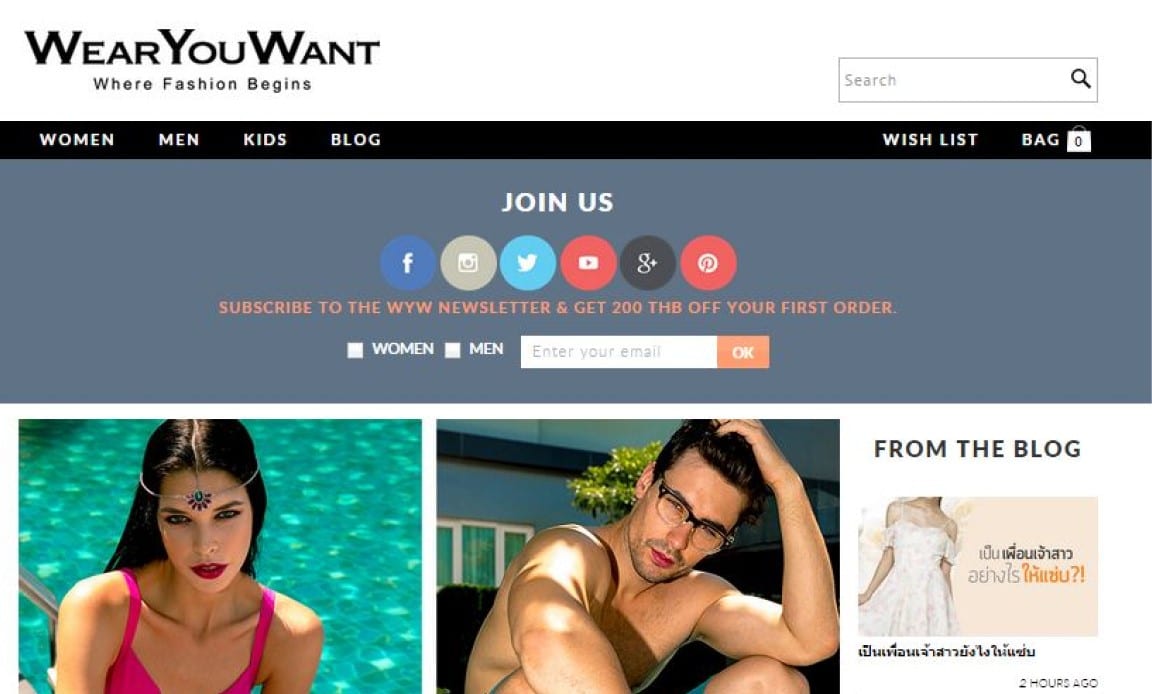
    WearYouWant, Thailand’s leading online fashion marketplace and beauty platform reports that far from adding on extra layers to guard against the sudden chilly weather, Thais could be doing the opposite – staying indoors more and wearing less!  With temperatures dropping the site has seen a sudden rise in lingerie traffic and sale in Thailand.

    It seems that instead of digging out an old sweater or cardigan, the cold weather is inspiring more cuddle-time with couples. Of course Thailand’s/Bangkok’s fashion conscious want to look great whether they are stepping out and about or snuggling up with a loved one at home…in their underwear.

    WearYouWant recorded a 70% increase in the sales of lingerie since the temperature plunged early this week.

    There are no doubt many who are hoping that the cold-blast continues for a little longer yet.  Many others are also now realizing that their undergarments need an upgrade and are logging on to WearYouWant to get their lingerie delivered straight to their door so they do not have to go out in the cold!

    WearYouWant’s CEO, Julien Chalté, finds the development amusing.

    “We cannot state whether this is related to the weather or not, but it is not difficult to imagine that the chilly temperatures may encourage certain indoor activities for which the lingerie would certainly be useful,” says the CEO with a smile.

  • Balenciaga Malaysia opens second store

    Balenciaga Malaysia opens second store

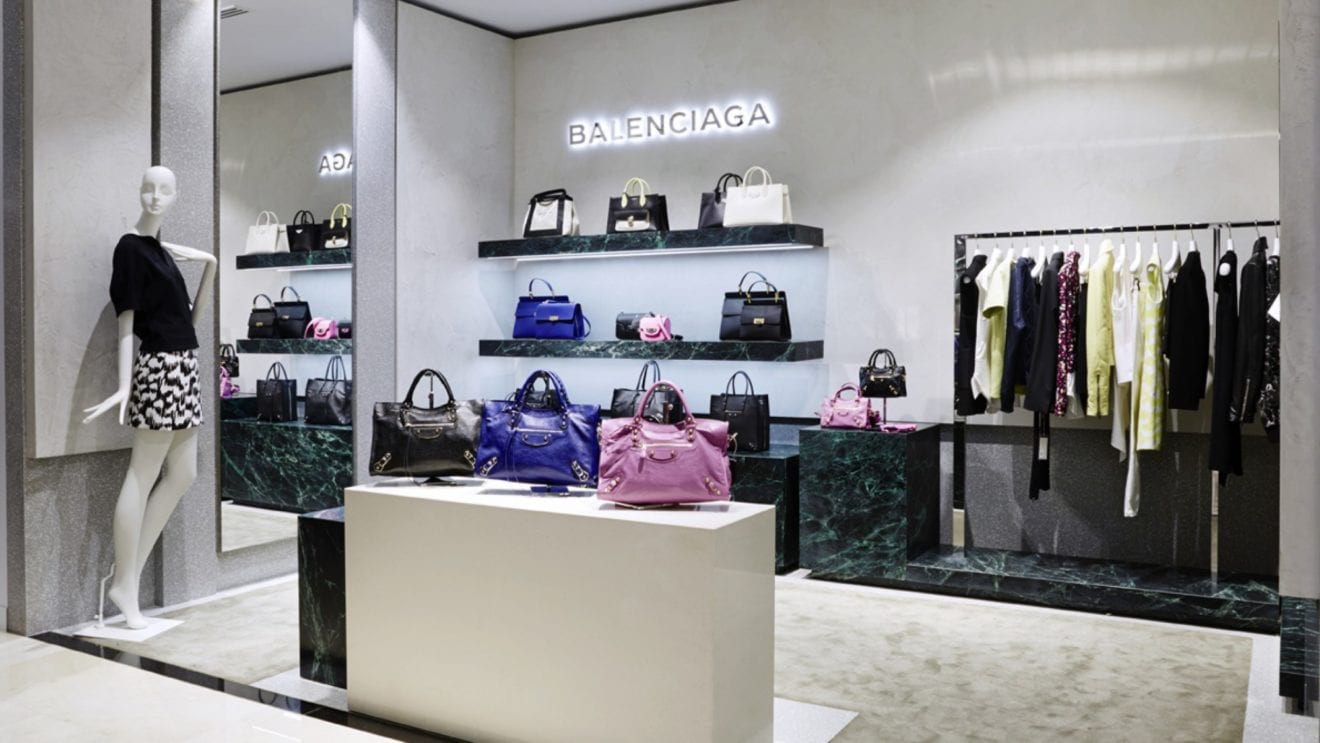
    Balenciaga Malaysia has opened its second boutique – located in The Gardens Mall.

    It is the brand’s first store to stock both the women’s and men’s collection. The brand’s original boutique, in Suria KLCC stocks only the women’s.

    Balenciaga Malaysia 5


    Balenciaga Malaysia 3


    The design and fitout of the new store was inspired by the brand’s Parisian flagship. It features marble, terrazzo, marmorino, limestone and chrome, with contrasting suede carpets and sofas.

    Balenciaga Malaysia 1


    Balenciaga Malaysia 4

    The store has opened with the Autumn Winter 2015 collection, the second to last collection by Alexander Wang, whose last offer if the Spring Summer 2016 range.

    Balenciaga Malaysia 2


    The Spanish-founded luxury fashion brand Balenciaga is now owned by France’s Kering.

  • Tight market hits Watches & Wonders

    Tight market hits Watches & Wonders

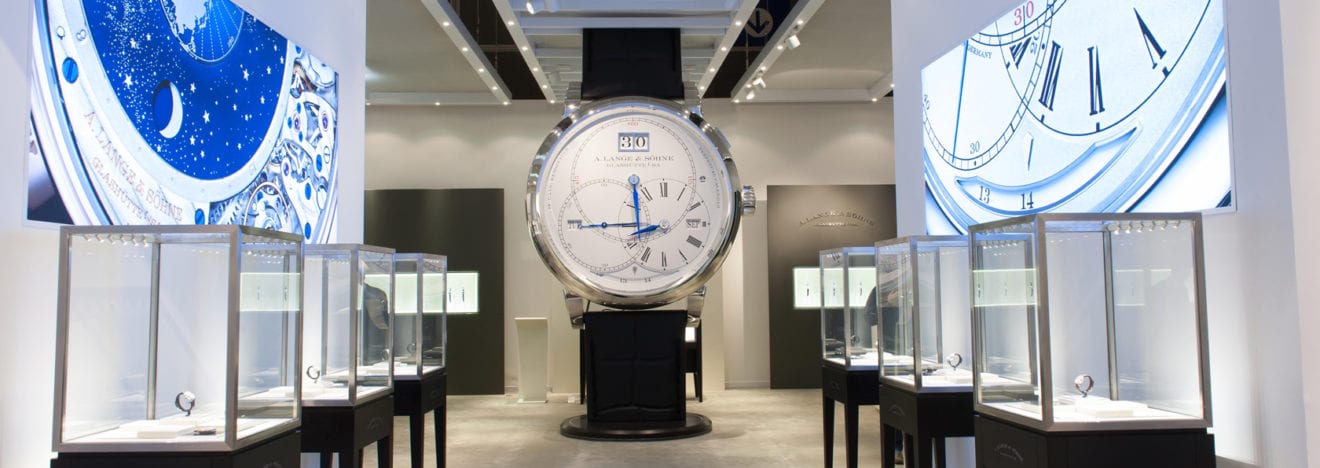
    With sales slipping in the industry’s largest market, the annual Watches & Wonders exhibition in Hong Kong may be cut back to every two years.

    High-end watchmakers are looking at a shift in strategy in Hong Kong in the face of the most severe downturn the industry has faced since the 2008-09 financial crisis, reports Reuters.

    Branching out from the two biggest trade shows in Switzerland, the Salon International de la Haute Horlogerie (SIHH) in Geneva and Baselworld, Watches & Wonders was launched in 2013 by theFondation de la Haute Horlogerie, which is now talking with exhibitors about the show’s future format, according to Richard Mille, CEO of independent watchmaker Richard Mille.

    Watches & Wonders mainly showcases Richemont-owned brands like Cartier, Montblanc and Vacheron Constantin, as well as some independents, reports Bloomberg.

    “Some brands have been fighting to get out, completely out, to stop Watches & Wonders,” Mille said at this week’s SIHH in Geneva, the industry’s first event of the year.

    “Some of the brands want to do it every two years, some say every year. It’s a negotiation.”

    A decision will be made after this week’s show, according to foundation chairwoman Fabienne Lupo.

    The event also competes with the annual Hong Kong Watch & Clock Fair, which had nearly 800 exhibitors last year.

    China’s crackdown on extravagant spending plus currency fluctuations have hit the demand for expensive timepieces in Hong Kong, with Swiss watch exports to the island city plunging 23 per cent in the first 11 months of 2015, and facing the first annual decline since 2009. TAG Heuer closed one of its Hong Kong stores in August.

    Mille, whose watches sell from about 70,000 Swiss francs ($70,000) upward, says the objective of exhibiting in Watches & Wonders is to make contact with clients who are unable to attend the boutique shows. “It’s not cheap, but it’s worthwhile.”

    Meanwhile, high-end watchmakers are considering expanding their range of more affordable products. Executives at the Geneva event say the industry is having to adapt to a market with fewer Chinese, Middle Eastern and Russian buyers than a year ago, an outcome of record low oil prices and signs of economic weakness in China.

    Cartier, Richemont’s leading brand and main source of profit, is presenting more models than ever at more accessible prices at this week’s SIHH. Among them is Cartier’s new Drive model, a steel-cased men’s watch priced at a little more than 5000 euros ($5430). Previously, Cartier would offer only new models in gold and leather, with prices starting at more than 10,000 euros.

    Sister brand Piaget, generally starting no lower than 10,000 euros, has re-launched a women’s line starting at about 7000 euros, while Richemont stablemate Montblanc has introduced a wide range of lower-priced models.

    Montblanc CEO Jerome Lambert says that whatever happens, his company will stay active in Hong Kong with major exhibitions.

    “There is a different price awareness among customers now… and less price elasticity,” Piaget chief executive Philippe Leopold-Metzger told Reuters at the fair. “Times are difficult.”

    Several watchmakers have cut staff numbers in recent months, including Kering‘s newly acquired Ulysse Nardin and privately owned Parimigiani and Christophe Claret. Piaget closed a boutique in Shanghai last month, and Parmigiani plants to cut back its global outlets to about 250 from around 300 by the end of the year.

    Van Cleef & Arpels, one of the fastest-growing brands within the Richemont group, has also seen a slowdown in Hong Kong, Macao and the US. It is looking at new growth opportunities in such markets as Australia, Canada and Thailand, where it has just opened a store.
  • China, e-commerce bolster Burberry’s sales growth

    China, e-commerce bolster Burberry’s sales growth

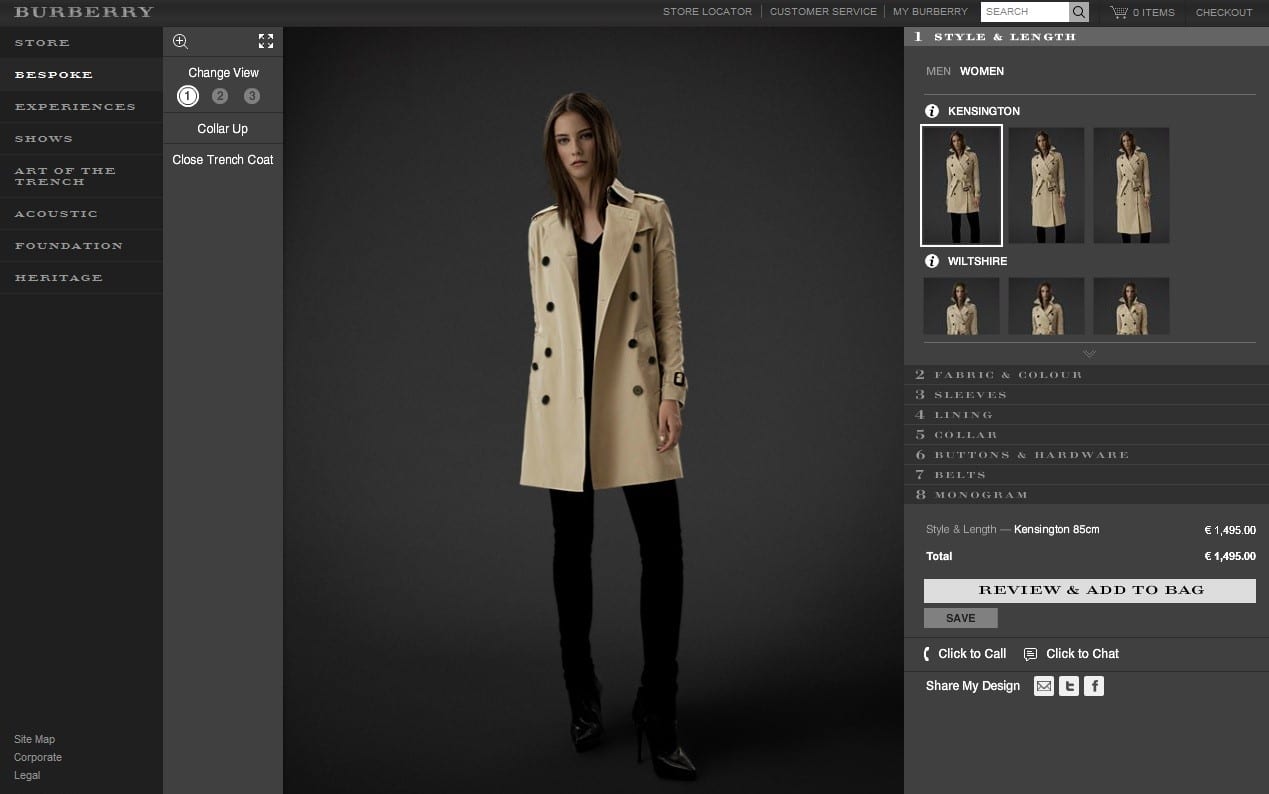
    The mobile and e-commerce news from Burberry is an indication that luxury fashion brands can succeed in the space, despite initially struggling to do so. Luxury brands have historically avoided e-commerce due to the demands of building and managing online operations, preferring to outsource those functions whenever possible.

    However, Burberry’s movements show that these high-end brands can successfully build a strong digital presence. Fellow luxury brands such as Hugo Boss and LVMH’s Fendi and Dior are starting to develop their own e-commerce capabilities as growth in China becomes sluggish, according to a report.

    Meanwhile, China’s economic uncertainties haven’t hit Burberry too hard, but the brand was not immune to the slowdown. While traffic at its bricks-and-mortar stores slowed significantly (20%) in the former protectorates of Hong Kong and Macau due to a decrease in tourism, consumers in Mainland China continued to buy outerwear, scarves and apparel from the luxury brand. China accounts for about one-third of Burberry’s global revenues, according to estimates.

    Burberry will find out if that renewed momentum in Asia can spread to Hong Kong and Macau during the upcoming Lunar New Year celebrations. Burberry will focus on cost controls and mobile to meet analyst expectations.

  • Bossini profit decimated

    Bossini profit decimated

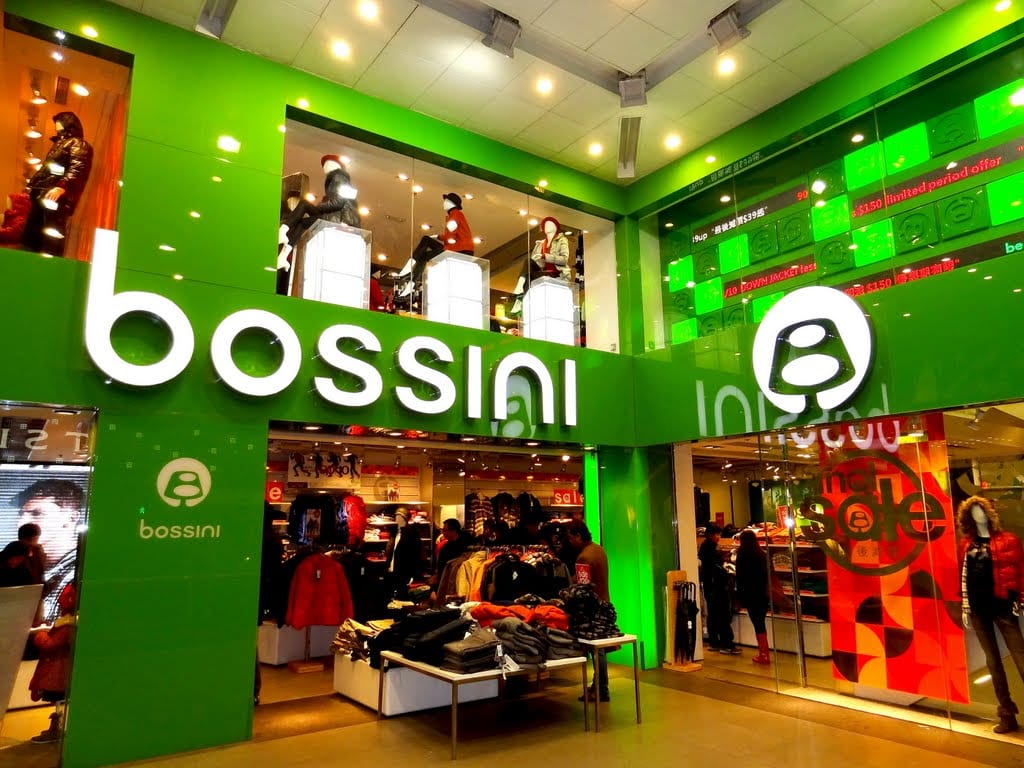
    Fast fashion retailer Bossini has warned shareholders its profit for the six months to December 31 will be down by between 80 and 90 per cent.

    Based on the comparable trading period to December 31, 2014, when Bossini reported a profit  of HK$665 million, that suggests a profit in the range of $66.5 million to $133 million.

    In a profit warning issued to the Hong Kong stock exchange, the company says the profit plunge “was mainly caused by the significant decrease in revenue and gross profit attributable to (i) less visitors and strong Hong Kong dollar which led to less consumption from them in Hong Kong and Macau, and (ii) weak local consumer sentiment, unseasonal warm winter weather and intensified competition in several core markets where the group operates”.

    “As the company is still in the course of preparing and finalising its interim results for the six months… the information… is only based on a preliminary assessment on the information currently available.”

    The full financial details, including the final Bossini profit, will be revealed in late February.

    While Bossini is not the first Hong Kong based retailer to warn of or report profit declines, most of the others are operating in the luxury end of the market, where sales of watches, jewellery and luxury fashion goods and apparel are down by up to 20 per cent year on year.

    But Bossini has no exposure to that market – its business is based on selling t-shirts and casual clothing at low price points.

    Data from GfK shows the number of Mainland Chinese visitors to Hong Kong in 2015 – up until November, at least – rose by 37 per cent. As previosuly reported by Inside Retail Asia, the issue for Hong Kong retailers is not that there are fewer tourists visiting the city – but there are fewer wealthy tourists visiting the city. So Bossini, and other retailers targeting the lower end of the market, are not managing to capture the imagination of the more profilgate shoppers now coming to the territory.

    Even more puzzling is that Bossini has been one of the few retail brands to stand out over the last 12 to 18 months as bucking the broader retail trend.

    In September, the company revealed its results for the year to June 30, reporting a mere one per cent decline in sales to HK$2.523 billion, and a three per cent decline in gross profit to HK$1.264 billion with gross margin down one per cent to 50 per cent. Profit attributable to shareholders fell nine per cent.

    “During the fiscal year 2014/15, despite facing challenging retail conditions in Hong Kong and Macau, its segmental business, which includes the export franchising operations, registered record-high sales with flat same-store sales growth for the directly managed stores,” the company said at the time.

    “The operations in mainland China, Taiwan and Singapore all experienced improvements in segment results, resulting from the continuously improving shop productivity and stringent cost control measures. Mainland China segment achieved six per cent same-store sales growth and also recorded nine consecutive quarters of positive same-store gross profit growth. Taiwan segment saw a same-store sales growth of seven per cent, representing seven consecutive quarters of positive same-store sales growth.”

    In the half year to December 31, 2014, Bossini reported a revenue increase of four per cent year-on-year to HK$1,319 million (then US$170,056,190) and gross profit for the period under review was HK$665 million (then US$85,737,200).

  • Tiffany struggles as Mainlanders baulk

    Tiffany struggles as Mainlanders baulk

    If Tiffany was hoping for some holiday respite following a year of negative numbers it will be sorely disappointed by its latest results.

    Indeed, the pace of decline has actually accelerated since the third quarter, which covered the three months up until the end of October. Given the significant opportunity that the holiday season affords this is a worrying outcome.

    Reported in US dollars, worldwide net sales of $961 million were 6 per cent lower than the prior year.

    Despite some solid growth in China and Japan – the latter coming off weak comparatives – the poor numbers out of Hong Kong, which has suffered from a decline in visitors from the Chinese mainland, pulled down the regional result.

    In the Asia-Pacific region, on a constant-exchange-rate basis total sales and comparable store sales declined 6 per cent and 9 per cent, respectively. A continuation of strong sales growth in China was more than offset by significant weakness in Hong Kong and Singapore, with varying performance in other markets. Reported in US dollars, total sales of $187 million were 11 per cent below the prior year.

    In Japan, on a constant-exchange-rate basis total sales increased 12 per cent and comparable store sales rose 10 per cent, reflecting higher sales to local customers and foreign tourists. Reported in US dollars, total sales rose 9 per cent to $123 million.

    Globally, as it did throughout 2015, Tiffany has pinned the blame for its sales declines on the strong dollar. There is truth in such an assertion, although it is not the whole truth. This is evidenced by the fact that even on a constant currency basis worldwide sales still fell by 3 per cent in total and by 5 per cent in comparable terms. Clearly, there are forces other than fluctuating exchange rates at play.

    The Americas is a case in point. Although the magnitude of the sales decline in the region was broadly similar to that posted last quarter, it still represents a marked deterioration in trade. The claim that tourist spending on jewellery in key locations like New York was down thanks to an unfavorable exchange rate has some validity, even if it sits somewhat uncomfortably with MasterCard data that shows 2015 was a record year for international visitor spending in the Big Apple. However, sales were not just down at Tiffany’s stores in tourist destinations, they were down across most of the US.

    One of the factors at play, at least in the US, is a shift in holiday purchasing. Prior to the economic downturn of 2008 the period between Thanksgiving and Christmas was key for jewellery buying. Today, while it remains the most important single period for purchasing, it accounts for a much smaller share of annual sales than it once did. Jewellery is no longer at the top of the Christmas list. For a brand like Tiffany, where lavish gifting is an important driver of buying, such a trend is distinctly unhelpful.

    As important as this factor may be, it is exacerbated by the more competitive environment for jewellery and the rise of other brands. Against this backdrop Tiffany has lost some of its relevance, especially to more moderate spending shoppers. The company has tried to arrest this development with new collections such as Tiffany T, but the results to date have been lacklustre.

    These brand issues are somewhat less relevant to the Asian markets where Tiffany is still seen as a hallmark of fine jewellery.

    The consequence of a weak holiday period is that final quarter profits will now come in lower than previous guidance.

    Tiffany is ending its fiscal year with very little sparkle.

  • H&M Hong Kong plans new flagship

    H&M Hong Kong plans new flagship

    A newly built full-concept flagship store for H&M (Hennes & Mauritz) will officially open in Mongkok on January 29.

    The new H&M Hong Kong store spans three floors at Gala Place, a shopping destination known for young and trendy fashion. It will be the largest H&M store in Kowloon, offering a wide range of items for women, men, teenagers and children, as well as a home collection featuring Scandinavian designed bed linen, tableware, cushions and decorations.

    It is the second H&M home store for Hong Kong, and its LED facade will echo the neon lights of Mongkok.

    On its grand opening day, the first 100 customers in line will be rewarded with $100 gift cards and a limited-edition giveaway. Shopping hours will be extended until midnight, with normal hours (11am to 11pm) resuming from February 1.

  • Chengdu IFS challenge to Hong Kong

    Chengdu IFS challenge to Hong Kong

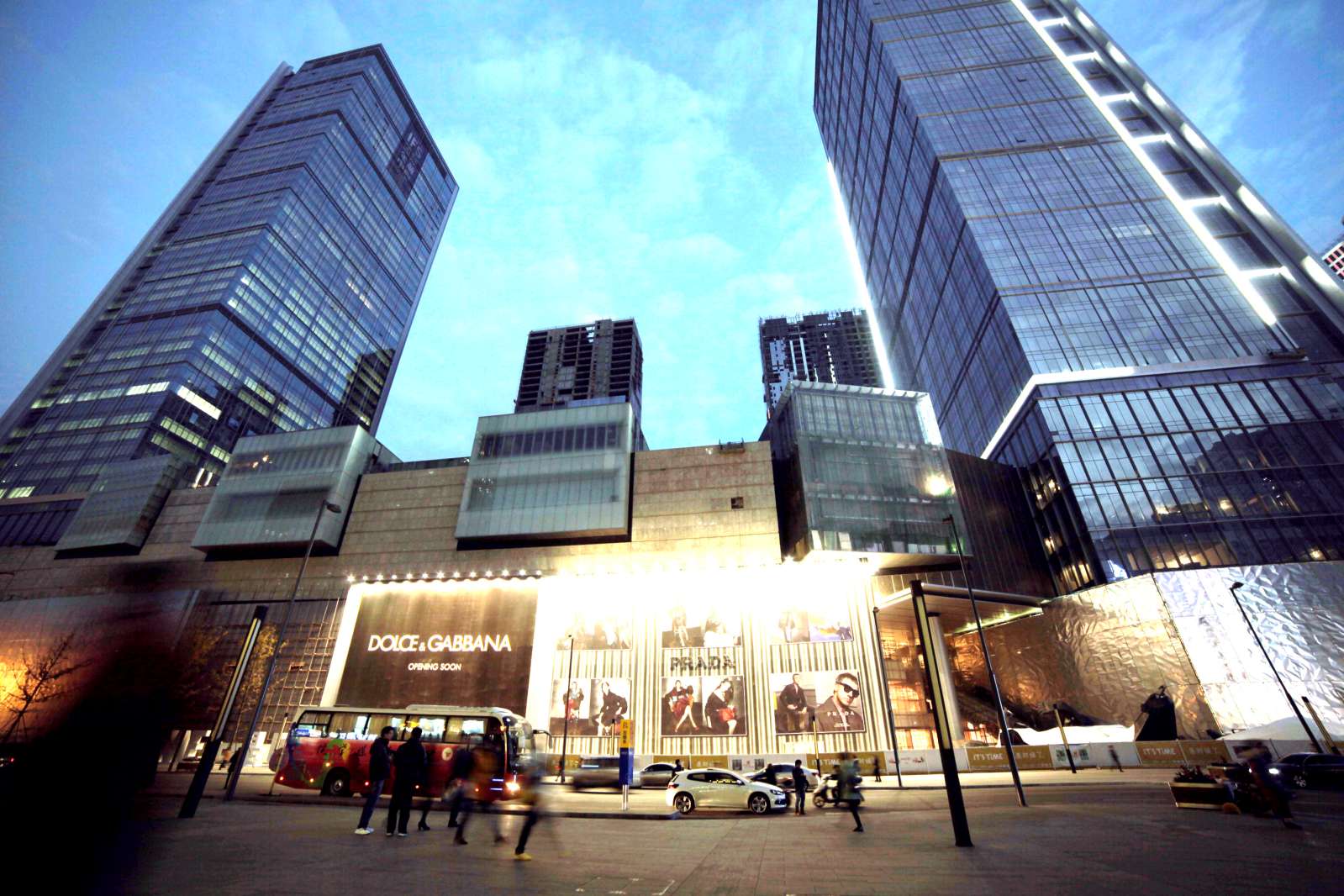
    To mark its second anniversary, Chengdu IFS has launched the “All In Here – World Fashion Tour” to introduce the south-west China city’s latest initiative to be part of the global fashion scene – and a direct challenge to Hong Kong’s Harbour City on Canton Rd.

    A key event of the Jinjiang Shopping Festival, the tour was organised by the Chengdu municipal government and Jinjiang district government in a move toward transforming the city into an international travel and shopping destination. It has been supported by trade representatives from France, Italy and Switzerland as well as Elle magazine.

    Chengdu IFS opened in 2014, and with its architecture, brand collections and international-standard management has become a landmark in the city. As the first major world-class, high-end mixed development in urban Chengdu, it brings together about 300 top brands, 90 of which are new to the region. Multi-level flagship stores featuring international brands line Hongxing Road as part of the 530 metre. ‘International Fashion Walk’”.

    Chengdu’s city fathers announced an action plan in July to build Chengdu into an international shoppers’ paradise as a key element of its development as a new first-tier city. Officiating at the launch ceremony of the “All In Here – World Fashion Tour” were Chengu Business Committee deputy-director Wen Feng, Jinjiang district deputy-head Wu Wenhui, Wharf Holdings vice-chairman Doreen Lee Yuk Fong and Wharf China Estates GM Christina Hau.

    Speakers also included Italy’s consul-general Sergio Maffettone, France’s consul-general Olivier Vaysset, Milan’s general director of creative programs Alessandro Pollio Salimbeni, Swiss Chinese Chamber of Commerce GM Rolf Studer, and Elle China publisher Chris Hu.

    Taking on a carnival atmosphere, the opening brought together art, fashion, tradition and style with performances including a mid-air fashion show, a parade of orchestral musicians and a VIP gala dinner at the Niccolo by Marco Polo. Guests at the dinner were surprised when Hong Kong artiste Carina Lau wore her own Anirac creations to present the brand’s first-ever catwalk show.

    Since its “I Am Here” promotion in 2014, Chengdu IFS has increased its turnover and traffic flow by 50 per cent. The number of VIP members doubles last year, with sales up 50 per cent. As the first of five IFS projects in which Wharf Holdings has invested RMB 46 billion (US$6.9 billion), Chengdu IFS has set a solid foundation for the development of Chongqing IFS, scheduled to open next year as a boutique version of Harbour City, and also Changsha IFS, which will be the largest of the group.

    Featuring panda sculptures as an external feature, Chengdu IFS has become a benchmark for urban fashion as well as a favourite spot for young people to meet.

  • H&M India plans largest store yet

    H&M India plans largest store yet

    H&M India says it will soon open its first flagship store in the country – its largest yet.

    The new shop is under construction at the DLF Mall of India, the company said in a statement. It will comprise 37,000 sqft (3440 sqm) spanning four floors in the mall, and is expected to open in Spring.

    This year, the Swedish retailer also plans to open stores in Bengaluru, Gurgaon and Mumbai.

    H&M opened its first store in India on October 2  last year in New Delhi’s Select Citywalk mall.

    “After successful store launches last year, we continue the trend by expanding to some of the most exciting retail destinations across the country with H&M’s business concept of fashion and quality at the best price in a sustainable way.” said Janne Einola, country manager, H&M India.

    The company says it plans to open 50 stores in India after  gaining Foreign Investment Promotion Board approval to open mono brand stores in december 2013.