Category: Finance

Retail News Asia is committed to providing both local and global retailers with the latest Finance news throughout the Asian market. This on a daily base.

  • Malaysian businesses expect slower growth in third quarter

    Malaysian businesses expect slower growth in third quarter

    Businesses expect growth to slow in the third quarter due to lower confidence levels after recording positive business performance in the second quarter of the year, according to the Statistics Department.

    The department’s Business Tendency Statistics for the third quarter 2018 which presents statistics on business performance based on a survey conducted on a quarterly basis – said the second quarter of the 2018 was positive with an overall net balance of +3.6%, mainly contributed by services sector (+22.0%).

    As for the third quarter, overall business performance is expected to grow at a slower pace with confidence indicator of +6.0% compared to the +7.8% in the previous quarter.

    On a sectoral basis, services sector is expecting their business performance to continue to grow in the third quarter of 2018 with confidence indicator of +16.5% as compared to +8.6% in second quarter of 2018.

    Other sectors such as industry and wholesale and retail trade which are also of the expectations of their business situation improving albeit at a moderate rate with smaller confidence indicators at +2.1 % and +3.6% respectively.

    However, the construction sector expects their business situation to be less bullish with a confidence indicator of -7.7%.

    “Majority of the respondents in all surveyed sectors which was 45.1%, anticipated that their gross revenue to increase while 44.4% expected unchanged. In contrast, 10.5% of the respondents foresee a decrease in gross revenue,” said chief statistician of Malaysia Datuk Seri Dr Mohd Uzir Mahidin.

    On another note, business performance is expected to continue to grow for the period of July to December 2018 based on a net balance of +11.6%, supported mainly by services sector that was most optimistic with a net balance of +25.3% as compared to +15.3% for the period of April to September 2018.
  • Indonesia to Unveil Higher Import Tariffs Soon Amid Push to Aid Rupiah

    Indonesia to Unveil Higher Import Tariffs Soon Amid Push to Aid Rupiah

    Indonesia will release a list of goods subject to higher import taxes in the next few weeks, ministers said on Friday (24/08), part of efforts to shrink a widening current account deficit and curb pressure on its shaky currency.

    The rupiah on Friday slipped to 14,660 to the dollar, its weakest level since October 2015.

    A central bank official on Thursday blamed the rupiah’s drop on high demand for dollars by local importers. But the currency has also been caught up in a flight from emerging market assets as US interest rates rise and worries about global trade fights increase.

    Indonesia’s July trade deficit was the biggest in five years and the second-quarter current account deficit, at 3 percent of gross domestic product, was the largest in nearly four years.

    “We are reviewing 900 imported commodities to see the domestic industry’s capability in producing them,” Finance Minister Sri Mulyani Indrawati told a news conference with other ministries and Bank Indonesia (BI).

    Indrawati previously said the government would impose a 7.5 percent tariff on about 500 imported goods that can be locally made.

    Southeast Asia’s largest economy currently applies a 2.5 percent import tax on a vast range of products for registered importers, but it charges 7.5 percent for unregistered importers.

    Suahasil Nazara, head of the finance ministry’s fiscal policy office, said the government was rethinking the tariff difference between registered and unregistered importers.

    “We will hike the import tariffs from the current rates to give a signal, ‘let’s use domestic production,’ ” Nazara said.

    Trade Minister Enggartiasto Lukita said the measures to contain imports should not disrupt investment because the list would not include raw materials for production.

    A senior government official told the list, which is not finalised, will focus on semi-durable and perishable goods, including consumer goods used by hotels and restaurants.

    Stabilising the rupiah has been a top priority for the government and BI. The central bank has raised interest rates four times by a total of 125 basis points since mid-May.

    BI governor Perry Warjiyo said the central bank continues to intervene in the FX and bond markets to defend the currency.

    The government’s measures to control imports also include delaying some infrastructure projects and forcing a greater use of biodiesel.

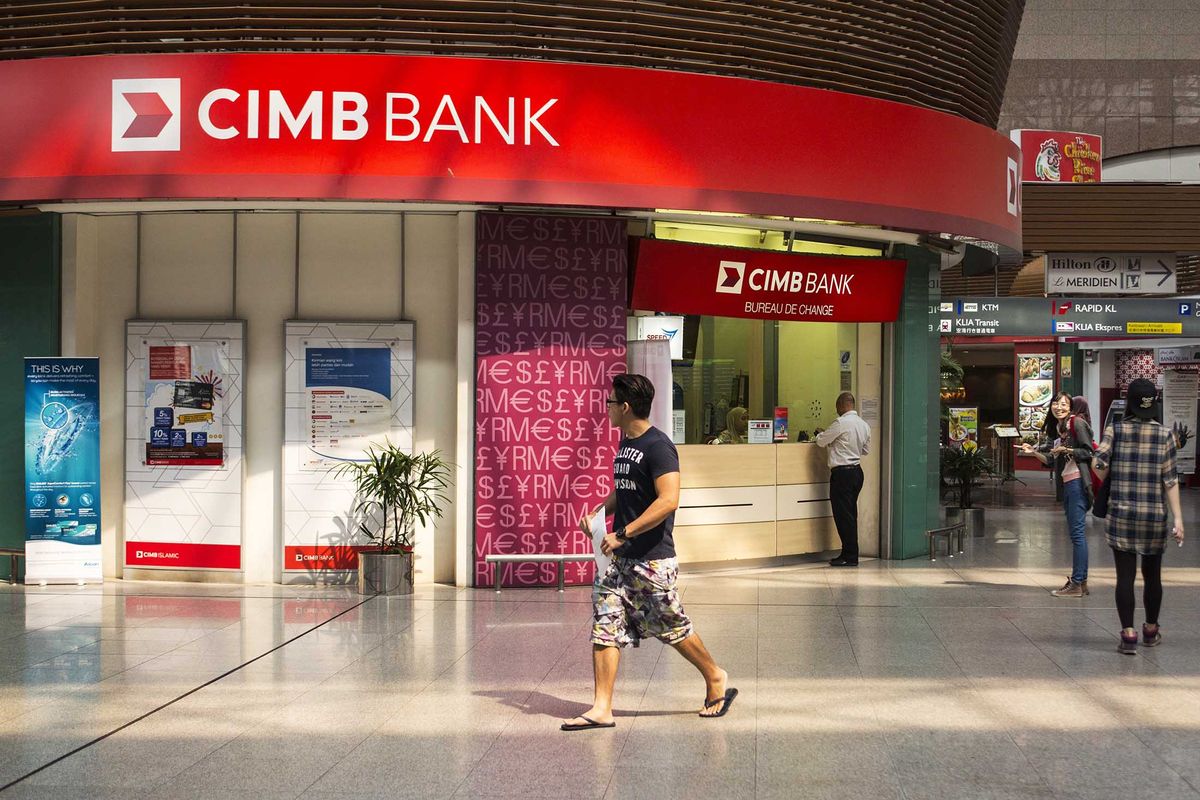
  • CIMB Bank Philippines teams up with G-Xchange for marketing of financial products

    CIMB Bank Philippines teams up with G-Xchange for marketing of financial products

    CIMB Bank Philippines Inc has signed a memorandum of agreement with G-Xchange, Inc (GXI) for the purpose of creating and marketing financial products on the latter’s digital platform in the Philippines.

    In a filing with Bursa Malaysia, CIMB Group Holdings Bhd said the agreement will be effective for three years from the signing date.

    CIMB Bank Philippines is a foreign bank branch of CIMB Bank Bhd, a 99.99% subsidiary of CIMB Group Sdn Bhd, which in turn is a wholly owned subsidiary of CIMB Group Holdings.

    GXI is a wholly owned subsidiary of Globe Fintech Innovations, Inc, which in turn is owned by Ant Financial, Ayala Corporation and Globe Telecom.

    CIMB Group Holdings’ share price rose 0.67% or 4 sen to close at RM5.98 with 8.52 million shares traded on Friday.

  • Bitcoin mining makers plan Hong Kong IPOs

    Bitcoin mining makers plan Hong Kong IPOs

    Three of the world’s largest bitcoin mining equipment makers plan to raise billions of dollars with initial public offerings in Hong Kong, even as other companies report plunging demand for the chips needed to make bitcoin and a halving in the price of the cryptocurrency.

    Soaring cryptocurrency prices last year triggered a boom in demand for specialist mining chips and in developing “mines” – facilities with thousands of machines that create the coins by solving complex mathematical puzzles.

    Yet the U.S. chipmaker Nvidia said this month that second-quarter sales to crypto miners totaled just $18 million, compared with $100 million expected by analysts.

    Nvidia’s chief financial officer, Colette Kress, said she anticipated “no contribution” to revenues from cryptocurrency in coming months.

    That has raised concerns about the upcoming Hong Kong listings by three Chinese manufacturers of bitcoin mining equipment, Bitmain, Canaan and Ebang International Holdings.

    The companies all design high-end computer chips intended for mining cryptocurrencies, particularly bitcoin, and sell mining equipment containing the chips. In addition, Bitmain mines cryptocurrencies on its own account. Companies like Nvidia also sell specialty chips used for mining.

    “The marked decline in the price of bitcoin since the start of the year is likely to weigh on investors’ interest in these companies,” said Benjamin Quinlan, chief executive of financial services consultancy Quinlan & Associates.

    But, he added, “the fall in the price of bitcoin from its peaks has not been matched by an equivalent fall in the numbers of people mining it.”

    Bitcoin is currently trading at $6,699, down 64 percent from its December 2017 peak of $18,690. Daily mining revenue was 77 percent lower than in December, according to Blockchain.info, a data analytics and wallet provider.

    “As the bitcoin price decreases, so does the profitability of mining itself, which decreases demand for mining chips and miners,” said Wang Leilei, a consultant at financial services consultancy Kapronasia.

    It is not just the price of bitcoin that is causing worries.

    People close to the IPOs said regulatory scrutiny and a patchy performance by Hong Kong offerings this year were additional concerns.

    Julian Hosp, president of TenX, a Singapore-based blockchain firm, has also warned that if coins switch mining algorithms, then the machines designed to mine them would become useless.

    “I would be quite wary of investing in these miners,” Hosp said, referring to the equipment makers. “They are not long-term businesses and I think they’ve had their uptrend for now.”

    Canaan and Ebang filed plans in May and June respectively for floats in Hong Kong, while Bitmain is expected to file its plans next month for an IPO in which it aims to raise at least $3 billion, sources close to the deal said.

    Cryptocurrency trading is a global activity, but Chinese chipmakers have led the way in developing the most efficient means to mine the coins.

    Bitmain had three quarters of the market for the specialist chips last year, followed by Canaan on 14 percent, according to estimates by analysts at Bernstein.

    Ebang is aiming to raise up to $1 billion, according to sources, while Canaan is targeting at least $400 million – down from a figure of up to $2 billion touted earlier this year by people involved in the deal.

    While EBang is expected to face Hong Kong’s listing committee in September – a key approval needed for marketing the IPO – Canaan’s offering is taking longer.

    A source close to Bitmain’s IPO said the company was aware about the potential for close regulatory scrutiny.

  • July inflation expected to be cushioned by zero-rated GST

    July inflation expected to be cushioned by zero-rated GST

    RAM Ratings expects the zero-rated goods and services tax (GST) to act as a cushion limiting inflationary pressure on Malaysia’s July inflation rate, which is projected to increase to 1% from 0.8% in June.

    Meanwhile, full-year inflation is expected to stand at 1.3 %.

    Transport fuel is seen as a trigger to higher inflation given the 12.4% rise in the average price of RON95 petrol in July (June: 9.9%) amid low-base effects. Prices had averaged RM1.96/litre in July 2017 compared with RM2/litre in June 2017 against the current subsidised level of RM2.20/litre.

    Commenting on the sales and services tax, RAM head of research Kristina Fong said initial assessment on the new tax regime and its potential inflationary impact does not indicate any destabilisation of prices or consumption at this juncture due to the smaller share of products in the consumer price index basket and its nature as a single layer tax applying to manufacturers rather than end-consumers directly.

    This is supported further by the less restrictive administrative costs of implementation and proposed exemptions on raw materials, components, and packaging for registered manufacturers.

    “In view of the deflationary pressure from the change in the taxation system, coupled with lower fuel prices from the reinstatement of fuel subsidies and a persistently weak growth trajectory for food prices, overall inflation is envisaged to average 1.3% this year,” she said.

    Given the lower core inflation and moderating GDP growth (4.9%), RAM said it appears to be a downward bias for the overnight policy rate (OPR) this year.

    However, it expects the interest rate to remain unchanged at 3.25% through the rest of 2018 on the back of lingering policy uncertainties and some macro risks may still pose a risk to capital outflows.

    “That said, we believe that monetary policy will play a bigger role because fiscal consolidation is perceived as a key trend going forward; hence less scope for additional pump-priming.”

  • WeChat launches digital wallet in Malaysia

    WeChat launches digital wallet in Malaysia

    WeChat, China’s most popular social media app, has launched its digital payments platform in Malaysia. It is the platform’s first market in Asia beyond China and Hong Kong.

    The digital payment feature of WeChat allow its users to transfer money among themselves and make payments to offline merchants in ringgit. Rather than taking the common route of overseas expansion used by Chinese mobile-app providers catering to Chinese tourists or nationals living abroad, Tencent here seems to be building a local payment service.

    Malaysia’s central bank has been implementing policies promoting electronic payments in a bid to boost a network that lags behind other Southeast Asian markets. Their move has triggered the launch of digital wallets by other strong players, including Grab, the south-east Asia ride-hailing company.

    “Malaysia is a vibrant market. Technology-savvy Malaysians are embracing a digital lifestyle and to meet this shift, the payment experience has to evolve. Bringing WeChat Pay to Malaysia is our response to this,” said WeChat Pay Malaysia.

    SY Lau, senior vice-president at Tencent said in November when the company acquired a Malaysian epayment licence, that WeChat had 20m users in the country, equivalent to almost two-thirds of the population.

    The potential for mobile payments is vast in Malaysia, where cash is still king, but the number of mobile phones, mostly smartphones, outstrips a population of 32.1m by more than 10m, according to the central bank.

    But collaborations with local banks, of which WeChat has none, will be just as important for WeChat Pay to flourish there.

    At home, it took Tencent and Ant Financial, Alibaba’s electronic payments affiliate, years to build the links with hundreds of Chinese banks that make their services possible.

    Grab has already partnered with top local bank Maybank to bolster its mobile wallet, GrabPay. Coupled with its strong ride-hailing network in its market of origin, Grab is set to be a tough competitor for WeChat in Malaysia. According to Grab, its app and mobile wallet are already on half of all mobile phones in Malaysia.

    The number of emoney licences issued by Bank Negara to non-bank entities has almost doubled to 44 in the past two years as the central bank looks to reduce cash usage to curb tax evasion and corruption, according to Nor Shamsiah Mohd Yunus, Malaysia’s central bank governor.

    In Asia more broadly, however, some analysts say WeChat might struggle to expand beyond Malaysia, where the population is more than one-fifth ethnic Chinese.

    While the use of mobile payments is rapidly overtaking cash and cards for daily transactions by China’s smartphone users, WeChat Pay also faces the challenges of different local infrastructure and app-use habits in going abroad.

    WeChat Pay’s Malaysia launch comes at a tricky time for Tencent, whose second-quarter earnings were hit by domestic reforms delaying the licensing of new games.

  • US-China trade war escalates as new tariffs kick in

    US-China trade war escalates as new tariffs kick in

    The United States and China escalated their acrimonious trade war today, implementing punitive 25% tariffs on US$16 billion (RM65.6 billion) worth of each other’s goods, even as mid-level officials from both sides resumed talks in Washington.

    The world’s two largest economies have now slapped tit-for-tat tariffs on a combined US$100 billion of products since early July, with more in the pipeline, adding to risks to global economic growth.

    China’s Commerce Ministry said Washington was “remaining obstinate” by implementing the latest tariffs, which kicked in on both sides as scheduled at 12.01pm in Beijing (11.01pm Malaysian time).

    “China resolutely opposes this, and will continue to take necessary countermeasures,” it said in a brief statement, adding that Beijing will file a complaint over the latest tariffs with the World Trade Organisation.

    US President Donald Trump has threatened to put duties on almost all of the more than US$500 billion of Chinese goods exported to the US annually unless Beijing agrees to sweeping changes to its intellectual property practices, industrial subsidy programmes and tariff structures, and buys more US goods.

    That figure would be far more than China imports from the US, raising concerns that Beijing could consider other forms of retaliation, such as making life more difficult for American firms in China or allowing its yuan currency to weaken further to support its exporters.

    Economists reckon that every US$100 billion of imports hit by tariffs would reduce global trade by around 0.5%.

    The tariffs took effect amid two days of talks in Washington between mid-level officials from both sides.

    Washington’s latest tariffs apply to 279 product categories including semiconductors, plastics, chemicals and railway equipment that the Office of the US Trade Representative has said benefit from Beijing’s “Made in China 2025” industrial plan to make China competitive in high-tech industries.

    China’s list of 333 US product categories hit with duties includes coal, copper scrap, fuel, steel products, buses and medical equipment.

  • U.S.-China trade war doesn’t rattle Korea yet

    U.S.-China trade war doesn’t rattle Korea yet

    The United States on Wednesday levied 25 percent tariffs on $16 billion worth of Chinese imports. China immediately retaliated by putting the same level of tariffs on $16 billion of American goods.

    Since July 6, each country levied 25 percent tariffs on $34 billion worth of goods, bringing the total of exports slapped with new tariffs to $50 billion on each side.

    And although low level talks are going on between the two countries, the U.S. government is looking into levying 25 percent tariffs on $200 billion worth of Chinese goods. Beijing has warned that it will levy 5 to 25 percent tariffs on $60 billion worth of American goods if the Trump administration actually goes through with its threat.

    While the escalating trade conflict between the world’s two largest economies has cause global concern, the Korean stock market wasn’t heavily affected, closing 0.41 percent or 9.27 points higher on Thursday than the previous day.

    One major reason is that the new tariffs were telegraphed in advance and some analysts believe the two sides will eventually reached an agreement. If they do, that could help the Kospi rise around the third quarter.

    At the beginning of the year, the Kospi enjoyed a bullish rally that even pushed it to beyond 2,600 in inter-day trading. But lately, it has been hovering around the 2,200 mark.

    The trade war between the United States and China is considered one of the biggest factors keeping the Kospi down, along with the recent fear of an emerging markets crisis after Turkey’s currency and debt woes.

    However, there is growing speculation that the Chinese government is under pressure to strike a deal with the United States as its economic indicators have been sagging lately.

    China’s 6.7 percent economic growth in the second quarter was 0.2 percentage points lower than in the first three months of the year. There’s already consensus that, in the second half, China’s growth will slow to 6.5 percent.

    The Chinese stock market has been bearish. Last week alone the index fell every day, closing the week at its weakest level since January 2016. The close on Aug. 17 was a 25 percent drop compared to Jan. 29, when it hit a high for the year of 3,587.03.

    Market analysts are projecting that once the trade conflict is resolved, the Kospi could rise to around 2,580 and 2,650 within this year. Korea Investment & Securities is even more optimistic as it projected the Kospi to reach as high as 2,800.

    “While the conflict between the United States and China is getting worse, it seems the United States has no intention or reason to expand the situation to the point of driving the global economy into the ground,” said Shin Dong-suk, head of Samsung Securities’ research center. “In reality, Donald Trump, who is facing a mid-term election in November, will look for ways to resolve the situation and make the Chinese yield.”

    He said Korea’s stock market will likely see a mild recovery in the third quarter.

    Yoon Hee-do, head of Korea Investment & Securities’ research center, said while the conflict between the United States and China is still worrying, the depreciation of the Korean won against the U.S. greenback will likely improve the performances of listed companies in the third quarter by raising the price competitiveness of their exported goods.

    But some believe the Kospi might not see a significant increase.

    “It’s likely that the market could be moving within a limited range,” said Lee Kyung-soo, head of Meritz Securities’ research center.

    Some raised concerns about Korea’s semiconductor companies, with demand for mobile DRAM chips reaching saturation and Chinese memory chip manufacturers overproducing.

    But Lee Chang-mok, head of the NH Investment & Securities Research Center, said there are still hopes for favorable news such as improvement in South and North Korea relations.

  • Mastermind and A Bathing Ape first concept store opens door

    Mastermind and A Bathing Ape first concept store opens door

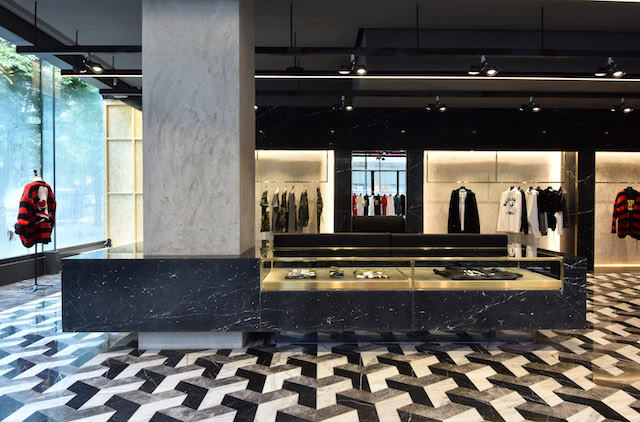
    Mastermind and A Bathing Ape have collaborated to open their first crossover concept store in Hong Kong.

    The store, which opened on Saturday in Causeway Bay, features a streetwear collection from the two Japanese brands.

    Decked out in black and white with accents of gold, the store combines the “gothic underworld” of Mastermind with A Bathing Ape’s neon-highlighted fun persona. Marble is used extensively in both the interior and exterior, with metallic racks to create “a sophisticated and imposing atmosphere” according to a spokesperson for the brands.

    “A concrete visual wall embodies the brand’s rebellious spirit while the artfully placed Japanese window blinds add a refined touch from Japan. The op-art style ‘Y’ patterned tile flooring appears to extend endlessly to promote a mysterious and sci-fi sense of scale.” Another highlight is the mastermind x Mobile Suit Gundam Zaku figure in black with the brand’s unique skull and crossbones logo at the entrance.

    Mastermind was conceived by Masaaki Homma in Japan 1997 after eight years as a Yohji Yamamoto sales representative. The name Mastermind Japan stems from ‘M’asaaki and his tribute to his father who is a master hairdresser. The brand’s skull logo “symbolises the battle between good and evil, which underscores the ethos of the brand saying ‘Don’t Give Up Your Dream Until You Die’,” Homma explains.

    Mastermind Japan shut its doors in 2013 with a view to focusing on collaborative projects but later re-entered the fashion scene with the shorter ‘Mastermind’ brand name.

    The military-inspired Mastermind and A Bathing Ape 2018 Fall-Winter capsule collection launched in the new store features a series of hooded sweatshirts, short-sleeved t-shirts, shorts, cap and mask emblazoned with the codes of both brands: camouflage, skull and shark head.

    View the gallery below (5 images) :

  • Tax office probes Jin Air over possible evasion

    Tax office probes Jin Air over possible evasion

    Korea’s tax office is investigating Jin Air over potential tax evasion, the latest in a series of investigations into Hanjin Group’s founding family members over alleged wrongdoings, industry sources said Monday.

    The tax probe came days after the transportation ministry last week said it has decided not to revoke Jin Air’s business license, ending weeks of uncertainty for the low-cost affiliate of Korean Air. The company appointed a foreign national to its board of directors, a violation of Korean aviation law.

    In the interest of national security, only Koreans are permitted to serve as directors of commercial airlines.

    The company, however, appointed Cho Hyun-min, an American citizen and the younger daughter of Hanjin Group Chairman Cho Yang-ho, to serve as a board member of Jin Air between 2010 and 2016.

    The tax probe centers on whether a severance payment to Hyun-min was acceptable and whether the airline gave undue favor to the Cho family through its in-flight duty-free goods operation.

  • Australia Expects Free-Trade Deals With Indonesia, Hong Kong This Year

    Australia Expects Free-Trade Deals With Indonesia, Hong Kong This Year

    The Australian government expects to seal free-trade agreements with Indonesia and Hong Kong by the end of this year, its trade minister said on Friday.

    Concluding the two agreements would wrap years of talks, which in the case of Indonesia have dragged on since 2010, stalling along the way as diplomatic tensions between the two sides flared.

    “I think by the end of this year we’ll conclude successfully an FTA with Indonesia, an FTA with Hong Kong,” Trade Minister Steven Ciobo said at a business lunch in Sydney, when asked about the outlook for the next 12 months.

    He gave no further details on timing, though a deal with Indonesia, Southeast Asia’s largest economy but only Australia’s 13th-largest trading partner, could come as soon as next month when Australian Prime Minister Malcolm Turnbull is scheduled to visit.

    Ciobo, who has already sealed Australian trade deals with Peru and with the 11-nation Trans-Pacific Partnership this year, also said United States President Donald Trump’s protectionist rhetoric had made his counterparts elsewhere more willing negotiators.

    Since Trump’s election, there has been a “desire from a number of countries to double down” on trade pacts, Ciobo said, helping him to seal deals.

    He added that he was “hopeful” of also signing Australian agreements this year with the Pacific Alliance, a Latin American trade bloc and with the China-led Regional Comprehensive Economic Partnership.

    A deal with Hong Kong, Australia’s 12th-largest trading partner, has been under negotiation since last year.

    Two-way trade between the pair is worth roughly A$16.3 billion ($12 billion), according to Australian figures, nearly the same as the country’s two-way trade with Indonesia.

  • Jokowi Says Indonesia Committed to Closing Wealth Gap

    Jokowi Says Indonesia Committed to Closing Wealth Gap

    President Joko “Jokowi” Widodo said his government will continue its efforts to reduce income inequality in Indonesia, following encouraging results in overcoming wealth disparity over the past few years.

    “Economic justice is a serious concern for us, especially regarding the poorest 40 percent of our population… efforts to achieve social justice for all Indonesians will never stop,” the president said during his state-of-the-nation address in the national legislature in Jakarta on Thursday (16/08).

    Southeast Asia’s largest economy has managed to reduce its Gini ratio to 0.389 – the lowest in the past six years – thanks to land redistribution and cash transfer programs aimed at the country’s poorest.

  • CIMB Niaga Indonesia first-half earnings 28% higher year on year

    CIMB Niaga Indonesia first-half earnings 28% higher year on year

    PT Bank CIMB Niaga Tbk (CIMB Niaga) posted a net profit of 1.8 trillion rupiah (RM504.3 million) in the first half of 2018 (1H18), representing a 28.1% year-on-year (y-o-y) growth, which translates into an earnings per share of 70.54 rupiah.

    The improved net profit came on the back of a 32.6% increase in non-interest income to 1.9 trillion rupiah and a 27.1% y-o-y decline in provision expenses, it told the stock exchange yesterday.

    Its loan loss coverage (LLC) remained comfortable at 106.83%, it added.

    CIMB Niaga president Tigor M. Siahaan said its 1H18 operating income managed to grow by 1.5% y-o-y thanks to the y-o-y improvement in non-interest income.

    Tigor added its operating costs continued to be well managed, rising only 3.4% y-o-y, while the gradual improvement in the economic environment positively impacted its provisions which declined 27.1% y-o-y.

    “We will continue the cautious growth trajectory with asset quality as a priority. With total assets of 260.1 trillion rupiah as at June 30, 2018, representing a 7.6% y-o-y growth, CIMB Niaga maintained its position as Indonesia’s second largest national private-listed bank by assets.”

    As at June 30, CIMB Niaga’s total gross loans increased 3% y-o-y to 185.7 trillion rupiah.

    “Our strategy to focus on the mortgage and small medium enterprise (SME) segments is gaining traction, with each segment growing by 8.9% and 6.2% y-o-y respectively, while our corporate loans grew by 8.8% y-o-y,” Tigor added.

    Its total third party deposits stood at 190.3 trillion rupiah as at June 30 2018, underpinned by a 12.8% y-o-y growth in CASA (current account, savings account).

    “Going forward, we will continue to optimise CASA with our consumer and SME digitalisation, and strengthen our Sharia business proposition and Sharia-compliant product offerings,” Tigor said.

  • Plastic industry hit hard by abrupt scrap import ban

    Plastic industry hit hard by abrupt scrap import ban

    Vietnamese plastic firms are unable to import scrap following a ban by the government, and said costs are becoming unaffordable as a result.

    “We’ll lose $10 million this year if we cannot import plastic scrap for manufacturing,” Tran Vu Le, director of Le Tran Plastic, told a conference organized Tuesday by the Vietnam Plastic Association (VPA).

    Other businesses attending the event said the inadequate plastic recycling in the country means they cannot source scrap locally.

    “HCMC produces 900 tons of plastic waste daily, but only 90 tons are recycled,” Hoang Phi Vu, director of Minh Tam Tin Nghia Plastic Company, said.

    Most of the plastic waste is mixed with regular trash and not sorted, and so does not meet export standard, he said.

    metric tonsVietnam’s 2016-2017 plastic waste import20162017PEPETPVC05101520253035404550Resource Recycling Inc.

    The problem began recently after Vietnamese authorities banned scrap imports just like China, which banned imports of certain wastes last January.

    As of August 13, there were over 6,600 containers of scrap remaining unclaimed at Cat Lai Port in HCMC and Hai Phong Port, according to the two ports.

    They have been there for over 30 days, 90 days in the case of a majority of them.

    Scrap importers have been reluctant to claim the containers because of “unsuitable” regulations related to their import, VPA chairman Ho Duc Lam told the conference.

    One such regulation requires import of plastic scrap with less than 2 percent impurities.

    “It is very difficult to extract the scrap from the containers to measure if it is below 2 percent,” Dinh Xuan Thang, director of the Hoa Lu Environmental Research and Application Center, pointed out.

    Vietnamese regulations allow empty plastic water bottles to be imported, but not bottles that contained sweetened drinks.

    “Who will sort these bottles to sell to Vietnam?” Hoang Duc Vuong, a spokesperson for recycling businesses in the VPA, asked.

    Plastic exporters to Vietnam H1 2018by percentageJapanU.S.KoreaThailandOther countriesVietnam Customs

    The VPA said in a release: “Vietnamese customs on July 7 slapped without prior warning an abrupt ban on scrap imports which did not give businesses time to react.”

    This ban has imposed a “burden” on plastic scrap importers, it said.

    Lam said he has written to Prime Minister Nguyen Xuan Phuc and the Ministry of Natural Resources and Environment about the problem.

    In the first six months of this year Vietnam imported 277,000 tons of plastic scrap mostly from Japan, the U.S. and Korea.

  • Malaysia’s second quarter GDP growth expected to ease to 5.2%

    Malaysia’s second quarter GDP growth expected to ease to 5.2%

    Malaysia’s economic growth pace likely slowed again in the second quarter of 2018, a Reuters poll showed.

    The median of forecasts from 14 economists is for annual growth of 5.2% in April-June. That would be a dip from January-March’s 5.4% and make the latest quarter – during which Malaysia surprisingly got a new government – the third in a row of slowing growth.

    Forecasts for second quarter growth ranged from 4.7-5.6%.

    “Growth likely eased in Q2 and may continue to moderate, with growth drivers shifting more to private consumption than investment,” Standard Chartered said in a research note.

    The bank said growth may have been weighed down by a 6.4% drop in palm oil production from a year earlier and by Prime Minister Tun Dr Mahathir Mohamad’s push to review major infrastructure projects which has spooked investors.

    Since his coalition gained power in a shock May general election, Mahathir has scrapped a broad-based consumption tax and announced plans to potentially scrap multi-billion dollar rail projects with China and Singapore.

    Mahathir, who at 93 is on his second stint as premier, has said that mismanagement by the past administration has caused national debt to balloon to RM1 trillion.

    Ratings firm Moody’s said demand for tech exports has helped Malaysia’s manufacturing and exports in the second quarter, along with higher private spending following a tax holiday that started in early June when the government zero-rated its goods and services tax.

    “The brakes will be applied a little to the upbeat growth engine in the second half as the newly elected government has ended some infrastructure projects,” Moody’s said in a research note on Aug 7.

    Malaysia’s central bank left its key interest rate unchanged at 3.25% in July, at its first policy meeting under new governor Datuk Nor Shamsiah Mohd Yunus.

    The central bank raised its rate by 25 basis points in January, its first hike since July 2014, and the first change since July 2016 when it slashed the rate by 25 basis points.