Category: Finance

Retail News Asia is committed to providing both local and global retailers with the latest Finance news throughout the Asian market. This on a daily base.

  • Malaysian economy could shrink if US-China trade war escalates

    Malaysian economy could shrink if US-China trade war escalates

    Malaysia’s gross domestic product (GDP) could contract by 1.3% in two years should the trade war between the United States and China intensify.

    CIMB Group chief economist Dr Donald Hanna said Malaysia’s economic growth could shrink in the event of continuous escalation in tariff imposition and a confidence shock in the financial market, which could result from, say, China offloading its substantial holdings of US debt.

    That will not only result in a reduction of global trade but will also affect Malaysia, which is an open economy – and trigger interest rate increases in the US.

    However, at current levels, Hanna noted that the impact of the trade duel between the two economic giants on Malaysia is small.

    He projected GDP growth to decelerate to around 5.1% in the second quarter (Q2) of 2018 from the 5.8% recorded in Q2 2017 – taking the cue from the slower growth in the Industrial Production Index for June, which rose only 1.1%.

    Full-year GDP growth is expected to be around 5.1-5.2%. This will be due to the natural moderation in GDP growth which started slowing down after a robust expansion in the second half of last year and not due to the US-China tensions.

    Hanna said the trade war appears to be one of US President Donald Trump’s policies that could see some longevity, compared to others on issues such as immigration and abortion.

    He noted that if Trump’s objective of waging a trade dispute is to shrink the US trade deficit, it is not likely to be achieved because of other macroeconomic policies that the US administration has in place.

    Hanna, who was speaking at the 13th CIMB Asean Research Institute’s Asean Roundtable Series: Trade War and Its Impact on Asean, also said Malaysia could be a preferred location for US and Chinese companies to relocate their investments – in the face of tariff slapping.

    Echoing that sentiment, European Union-Malaysia Chamber of Commerce and Industry CEO Roberto Benetello said China is likely to rethink its trade alliances in the region and get closer to partners in Asean.

    This could be a call to accelerate the Regional Comprehensive Economic Partnership (RCEP), which could see a slowdown in the ratification process, thanks to the ongoing spat.

    American Malaysian Chamber of Commerce executive director Siobhan M Das said that without the US market, Asean could become a dumping ground for China’s excesses.

    Malaysia Productivity Corp board member and former ambassador of Malaysia to the World Trade Organisation (WTO) Datuk Muhamad Noor Yacob said the focus should be on the WTO’s Dispute Settlement Body.

    Although observers have voiced their concerns over the possibility of Trump pulling the US out of the WTO, the country has been one of its active users, accounting for more than 100 of the 500 disputes attended to by the body since 1995. It has also been an active respondent to many disputes.

    The roundtable also saw speakers stressing on the importance of the RCEP and free trade agreements between the regional trading bloc and potential trading partners.

  • Vietnam most vulnerable in ASEAN to US-China trade war

    Vietnam most vulnerable in ASEAN to US-China trade war

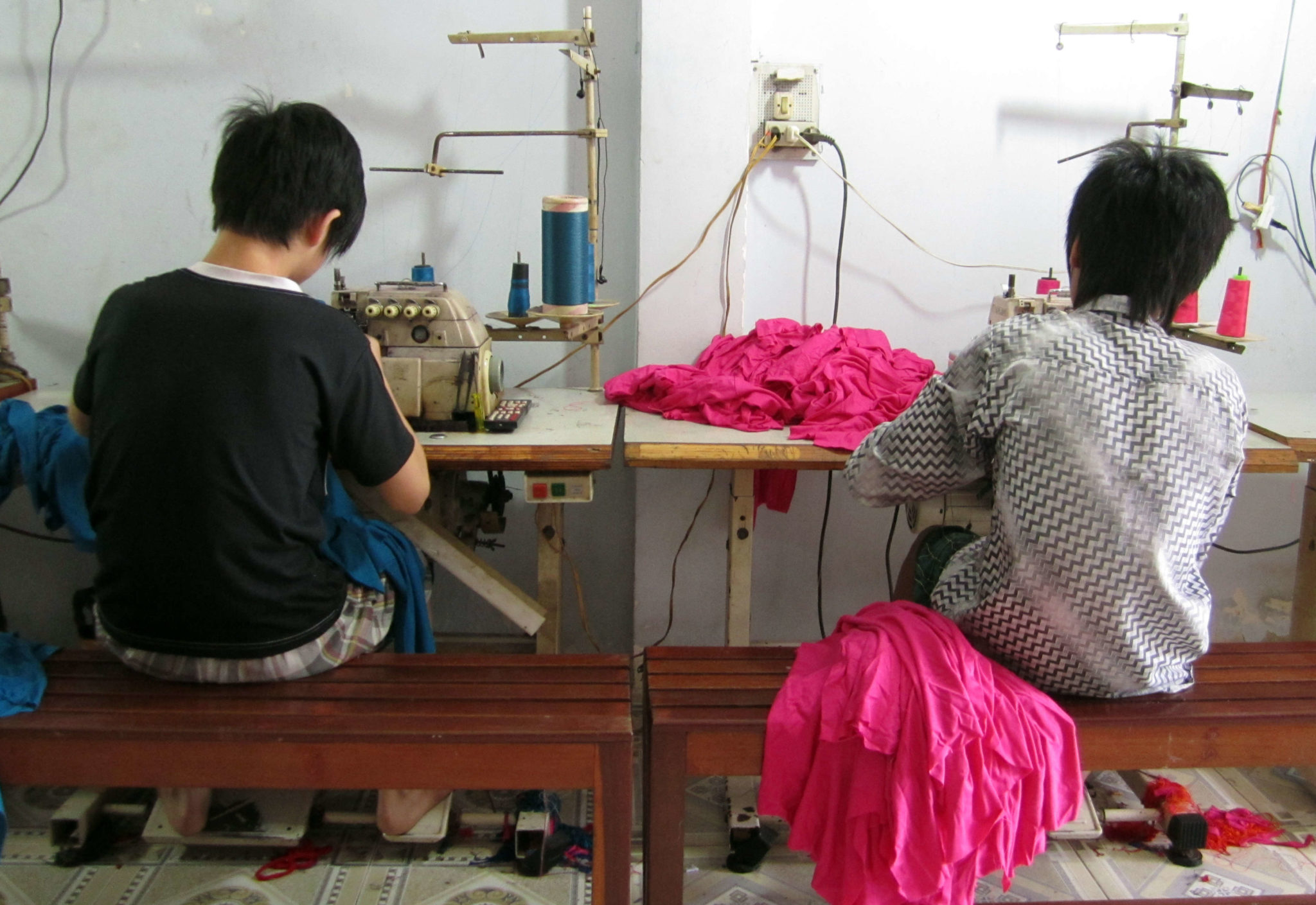
    Vietnam will be the most vulnerable country in Southeast Asia should the U.S.-China trade war persist, according to recent research.

    This is because Vietnam is the most export-dependent of the ASEAN big five, which also includes Indonesia, Malaysia, the Philippines, and Thailand, quoted from Financial Times Confidential Research report.

    Vietnam’s exports were worth $214 billion last year, 21 percent up from 2016, according to Vietnam’s Customs. The U.S. was the largest importer of Vietnamese goods last year, buying goods worth over $41.6 billion.

    “Vietnam’s exports to the U.S. rank first among the ASEAN five, making the country sensitive to softening U.S. consumer demand,” the report said.

    Another reason that Vietnam and other ASEAN member countries would be impacted by the escalating trade tension is the strengthening of the U.S. dollar, it said.

    The dong has been devalued by 1.5 percent this year, and the government could take more aggressive action if exports slow significantly, it said.

    But Vietnam, Thailand and Malaysia might still benefit from the currency weakness “if foreign direct investment shifts away from China as more companies hedge against the risk of trade action,” it added.

    Trade tension between the U.S. and China continues to escalate. A Reuters report cited Beijing as saying last week that it would slap additional tariffs of 25 percent on $16 billion worth of U.S. imports.

    The announcement came after Washington said it would impose 25 percent tariffs on another $16 billion in Chinese goods after imposing tariffs on $34 billion last month.

    So far, China has now either imposed or proposed tariffs on $110 billion of U.S. goods, representing the vast majority of its annual imports of American products.

    Vietnamese experts too have cautioned that the country would suffer collateral damage because of this trade war.

    A report released last week by the Ministry of Planning and Investment’s National Centre for Socio-Economic Information and Forecast said Vietnam’s GDP growth would take a hit from the trade tension.

    The report predicts a drop of 0.03 percent this year, 0.09 percent next year and 0.12 percent in 2020 and 2021.

    In money terms, it translates into VND8 trillion ($344 million) in 2021.

  • Public Bank Malaysia Q2 earnings up 4.8%

    Public Bank Malaysia Q2 earnings up 4.8%

    Public Bank Bhd’s net profit for the second quarter ended June 30, 2018 rose 4.8% to RM1.40 billion from RM1.33 billion a year ago mainly due to higher net interest income, higher income from Islamic banking business, lower loan impairment allowance and higher net fee and commission income.

    Its revenue jumped 5.2% to RM5.44 billion compared with RM5.17 billion in the previous year’s corresponding quarter.

    For the six months period, the bank’s net profit increased by 8.6% to RM2.80 billion from RM2.58 billion a year ago, mainly due to higher net interest income, higher net fee and commission income and higher income from Islamic banking business.

    Its revenue jumped 5.8% to RM10.79 billion compared with RM10.20 billion in the previous year’s corresponding period.

    Public Bank founder and chairman Tan Sri Dr Teh Hong Piow said the higher profit for the period was largely driven by growth in its loan and deposit business, with further impetus from a 4.9% growth in non-interest income.

    “Sustained business strength continued to place the group in a strong competitive position, with its net return on equity standing at 15.0%. Similarly, the group’s cost-to-income ratio of 33.1% and gross impaired loans ratio of 0.5% remained the best in the domestic banking industry,” Teh said.

    The board of directors declared a first interim dividend of 32 sen per share, which will be paid on Sept 19, 2018, resulting in a total dividend payout of RM1.24 billion.

    “The Public Bank group will continue to ride on the growing economy to strengthen its banking business along its organic growth strategy. The group’s resilient fundamentals, consistent financial performance, agility to market changes and strong customer service culture will continue to be the essential qualities in driving the sustainability of the group’s business, for the interests of all its stakeholders,” Teh said.

  • Dong dips to new low against the greenback

    Dong dips to new low against the greenback

    The U.S. dollar strengthened against the Vietnamese dong on Tuesday as the central bank upped its reference rate.

    The State Bank of Vietnam (SBV) set its highest-ever reference rate for the greenback at VND22,686 on Tuesday, up VND10 from last Saturday.

    Eximbank and Vietcombank were selling the U.S. dollar for VND23,350 at 10:29 a.m. Tuesday, up VND10 from last Saturday.

    A recent report by the Ho Chi Minh City Securities Corporation (HSC) estimates that the SBV has sold about $2.5 billion in total since July, intervening to keep the exchange rate stable.

    The report forecast that the U.S. dollar will continue to strengthen against the dong to reached VND23,500 in the upcoming months.

    The SBV might sell $6-12 billion of its foreign exchange reserves by the end of this year, including the amount it has already sold, the HSC report said.

    Experts have forecast the dollar to rise by 3 percent this year against the dong.

  • Maybank IB named best investment bank for fourth time running in Euromoney Awards

    Maybank IB named best investment bank for fourth time running in Euromoney Awards

    Maybank Investment Bank Bhd (Maybank IB) was named the best Malaysian investment bank for the fourth time in a row in the Euromoney Awards for Excellence 2018.

    According to Euromoney, the accolade has been conferred on Maybank for its strong performance during the period under review.

    “Maybank IB had gone from strength to strength as a regional firm that now stands in comparison with all international and regional peers in Asean investment banking and advisory,” said Euromoney.

    It noted that the bank is the clear leader in investment banking in Malaysia.

    Maybank IB also topped the league tables in ringgit sukuk and conventional bonds.

    Euromoney received almost 1,500 submissions from banks for the award programme that covers 20 global awards, more than 50 regional awards, and best bank awards in close to 100 countries.

  • Trade wars to hit Malaysian steel sector

    Trade wars to hit Malaysian steel sector

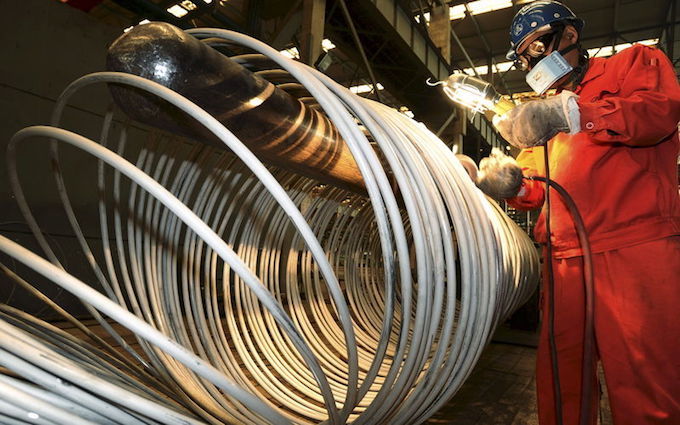
    The Malaysian steel sector will be affected negatively in 2018 and 2019 due to the trade wars on the external front, said MIDF Research.

    “Changes in global trade policies, tepid global demand as well as the local steel mill cost structure will continue to impede any positive demand for the companies under our observation,” it said in a report.

    It expects the steel sector to experience more headwinds from the trade wars as China’s demand for steel is shaky, coupled with the slump in its construction industry.

    “The demand from China’s manufacturing sector takes up to 360 million metric tons annually, close to 60% of its annual consumption. But, the demand is expected to shudder further due to China’s environmental health and occupational safety policies,” MIDF Research said.

    It noted that steel players such as Ann Joo Resources, Lysaght Galvanised Steel, Southern Steel, SC Steel, Mycron Steel and Choo Bee Metal have reacted negatively to the announcements and influx of news on trade and tariff wars.

    It expects the trend to persist because globally, steel demand is projected to grow to 1,616.1 million metric tons this year and tepid growth will be plagued by low demand for 2019, growing to 1,626.7 million metric tons.

    “This means less demand for export for the local steel mill. Most of the local companies are affected by unwavering overhead costs and operational expenditure, making the sector unattractive,” said MIDF Research.

    Meanwhile, the government has announced the exclusion of sales and services tax for building materials and construction services, which would be a breather for the construction sector from the grim outlook of project cuts, it added.

  • US-China trade war could drag Vietnam GDP down

    US-China trade war could drag Vietnam GDP down

    Vietnam’s GDP could drop slightly as a result of the ongoing US-China trade war, a new report says.

    The report, released Wednesday by the National Center for Socio-Economic Information and Forecast (NCIF), predicts a drop of 0.03 percent this year, 0.09 percent next year and 0.12 percent in 2020 and 2021.

    This equals to a GDP drop of VND1.65 trillion ($71 million) this year and VND5.3 trillion ($228 million) next year. The decline will climax at VND8 trillion ($344 million) in 2021, says the NCIF, which functions under the Ministry of Planning and Investment.

    This drop is “relatively low,” even at the climax in 2021, said Tran Toan Thang, head of NCIF’s Department of World Economic Issues.

    While Vietnam’s exports will also decrease because of the negative impacts of the trade war, there will be negligible impact on foreign direct investment, Thang said.

    He also expressed concern over the new U.S. tax law that lowers its business tax rate from 35 percent to 21 percent, he added.

    The new law might make U.S. businesses reconsider their investment strategies to focus more on their home country instead of expanding in Vietnam, Thang said.

    The tax deduction might also result in some countries creating more incentives to retain U.S. investments. China has recently said it would temporarily give U.S. firms tax exemptions to stop them from withdrawing from the country, Thang noted.

    “This move will lower competitiveness of the investment environment in Vietnam,” he added.

    Tension escalates

    Trade tension between the U.S. and China continues to escalate. A Reuters report cited Beijing saying on Wednesday that it would slap additional tariffs of 25 percenton $16 billion worth of U.S. imports.

    The announcement came after Washington said it would impose 25 percent tariffs on another $16 billion in Chinese goods after imposing tariffs on $34 billion last month.

    So far, China has now either imposed or proposed tariffs on $110 billion of U.S. goods, representing the vast majority of its annual imports of American products.

    Experts have previously cautioned that Vietnam will suffer collateral damage from this trade war.

    When large corporations no longer see the attractiveness of developing countries, their capital will flow back to the big countries, said Pham Sy Thanh, a department head at the Vietnam Institute for Economic and Policy Research (VEPR).

    For this reason, the abundance of labor will no longer be a perk for developing countries like Vietnam, Thanh told VnExpress.

    Local economists are also concerned that the weakened Chinese yuan will result in a rush of low quality Chinese goods to Vietnam, including textiles, garments and wood products.

    This is not just a trade war, but “a war on power, technology and currency policy between the world’s two largest economies,” Tran Tuan Anh, Minister of Industry and Trade said at a government meeting last month.

  • Philippine economy slows down to 6% in Q2 2018

    Philippine economy slows down to 6% in Q2 2018

    The Philippine economy slowed down to 6% during the 2nd quarter of the year, the Philippine Statistics Authority (PSA) said on Thursday, August 9.

    The gross domestic product (GDP) from April to June 2018 is lower than the revised 1st quarter figure of 6.6%. The growth is also slower than the 6.7% recorded during the same period last year.

    It also fell short of market expectations. Estimates had ranged from 6.6% to as high as 7%.

    Socioeconomic Secretary Ernesto Pernia attributed the slowdown to policy decisions which would “promote sustainable and resilient development.”

    Pernia said the closure of Boracay “partly made a dent on the economy with growth in exports of services slowing to 9.6% in the 2nd quarter from 16.4% in [the] 1st quarter.”

    “We are also referring to regulations in the mining sector – the closure of several mining pits and the excise tax on non-metallic and metallic minerals – so that mining and quarrying sector showed a lackluster performance. It is down by 10.9%,” Pernia said.

    “Moreover, the stricter enforcement of regulations on aquaculture producers at Laguna Lake resulted in the drop of freshwater fish catch,” he added.

    Pernia said the measures will ensure sustainable and long-term growth for the economy. The policy decisions were also “prudent and judicious.”

    The GDP is used by various agencies and experts to track the country’s growth. The figure accounts for all the finished goods and services produced within the country in a specific period.

    Build, Build, Build push

    According to the PSA, the growth in the 2nd quarter of the year was mainly driven by manufacturing, trade, and construction.

    Pernia called for the “timely implementation of the Build, Build, Build program” as it “bodes well [for] the construction industry and is seen to boost not only public construction but private builders as well.”

    He is also pushing for the immediate entry of the 3rd telecommunications player to enhance efficiency of communications and in turn support the growth of small businesses, particularly retail trade.

    The socioeconomic planning chief also sought the “immediate approval of the 11th Regular Foreign Investment Negative List, or FINL… to reduce foreign investment restrictions.”

    “Together with the proper implementation of the Ease of Doing Business Act, this will surely encourage more investments from both foreign and domestic sources,” Pernia added.

    Economic managers are gunning for GDP under President Rodrigo Duterte’s term to hit an average of 7% or above.

    First Metro Investment Corporation is among the most bullish on the economy and expects the Philippines to hit the target this year.

    “[The growth is] not a product of any speculation, but of brisk economic activities related to manufacturing, construction, and retail trade with strong job creation and corporate earning impact,” First Metro vice president and head of research Cristina Ulang said.

    Pernia previously said the GDP would have been better if not for “spoiler” inflation.

    Moody’s Analytics forecast the slowdown of the GDP due to inflation hitting a 5-year high and breaching the target range of 2% to 4%.


  • Indonesia to Seek Clarity From WTO on US Trade Dispute

    Indonesia to Seek Clarity From WTO on US Trade Dispute

    Indonesia will clarify its position with the World Trade Organization after the United States asked the multilateral body to allow it to impose sanctions on Southeast Asia’s biggest economy after winning a trade dispute that it claims had cost US business up to $350 million in 2017.

    Indonesia lost its appeal against a WTO ruling in favor of the United States and New Zealand last year over its trade policies that limit imports of food, plants and animal products, including apples, grapes, potatoes, onions, flowers, juice, dried fruit, cattle, chicken and beef.

    The United States claims that Indonesia has yet to abide by the ruling.

    “In accordance with the agreement between Indonesia, the United States and New Zealand, we agreed that a reasonable period to revise our import regulations and policies was eight months from the date of approval of the appellate body, which was on Nov. 22, 2017,” Hasan Kleib, Indonesia’s ambassador to Geneva and the country’s permanent representative to the United Nations, WTO and other international organizations, said in a statement on Wednesday (08/08).

    “Indonesia will certainly explain the changes that have been made since the final ruling of the WTO panel and the appellate body,” he said.

    According to the ruling, Indonesia was required to make the first phase of adjustments by July 22 this year at the latest, and the second phase before June 2 next year. Although Indonesia has taken steps to adjust its import regulations after consulting with the relevant parties in Geneva on July 27, the United States said this had not done enough.

    This assessment is based on information the US representative to the WTO received, showing that US producers still face obstacles when exporting horticultural products to Indonesia.

    “In the letter released yesterday, they [the United States] said they were not satisfied [with the rule changes]. But in Washington, their ambassador was already quite satisfied,” Coordinating Economic Affairs Minister Darmin Nasution said on Wednesday.

    Trade Ministry officials visited Washington last week as part of an Indonesian delegation consisting of business lobby groups and representatives of fiscal and banking authorities to seek alternatives that would avoid a full-blown trade war between the two countries.

    Indonesia fell out of President Donald Trump’s favor over a surplus it has been enjoying in bilateral trade between the two countries since 2013. The United States also threatened to revoke its trade incentive, known as the Generalized System of Preferences, which has benefited Indonesia for more than three decades.

    The latest rift with the United States stems from Indonesia’s old policies on agricultural imports. One of the policies only allows US producers to export apples to Indonesia outside the apple harvesting season in the archipelago.

    “We have already changed the rules at the Ministry of Agriculture and the Ministry of Trade, which they objected to … but they say the changes are not in accordance with their wishes,” Darmin said.

    He said the delegation that visited Washington has asked for time until the end of next year or 2020 to change the applicable laws and government regulations, to which they agreed, as “they know it will take time.”

    Darmin added that the government will send a team to the United States to discuss these objections.

  • Indonesia VP Says Stronger Measures Needed to Keep Export Earnings in Indonesia for Longer

    Indonesia VP Says Stronger Measures Needed to Keep Export Earnings in Indonesia for Longer

    Vice President Jusuf Kalla said Indonesia must impose stricter measures to ensure that dollars earned from exports remain in the country for longer, amid the continuous depreciation of the rupiah, which has been among the worst performers in Asia this year.

    The currency has weakened by 6.21 percent against the dollar so far this year, amid a global sell-off of emerging-market assets, triggered by higher US interest rates and a stronger greenback. A weaker rupiah has many negative effects on the nation’s economy, as it increases the cost of imports, while raising the interest burden on public- and private-sector foreign debt.

    In a discussion in Jakarta on Thursday (02/08), Kalla criticized Indonesia’s existing free-floating foreign-exchange regime, which has made the country highly dependent on capital inflows, particularly in the short run. He highlighted the fact that under current laws, regulators are powerless to force exporters to keep their earnings onshore for longer.

    “There needs to be stronger measures so that foreign-exchange earnings from exports can stay [in the country],” he said, adding that Indonesia adopted very loose foreign-exchange controls, especially in the aftermath of the 1998 Asian financial crisis.

    The vice president cited as an example Thailand, which has implemented a strict foreign-exchange regime that requires export proceeds to stay in the country’s financial system for at least six months. He believes such a policy could help boost Indonesia’s supply of foreign exchange.

    However, Bank Indonesia Governor Perry Warjiyo made it clear last month that the central bank has no intention to impose tougher regulations that would force exporters to keep their dollars in the country for longer. Under current laws, the monetary authority is independent from the executive.

    The central bank has been using a mix of policies aimed at tightening its monetary policy. This includes raising its benchmark policy rate three times since mid-May to 5.25 percent and introducing new a benchmark interest rate in the country’s overnight interbank money market to boost the reliability of reference rates.

    Biodiesel

    Indonesia has been susceptible to capital outflows as it is one of a few emerging markets in Asia that run current-account deficits. The country’s financial markets are also still very shallow and lack product diversity, while on the other hand, the government runs a budget deficit, which adds to a greater reliance on foreign funds to help stimulate the economy.

    The government has taken various measures within its jurisdiction to reduce the current-account deficit, including a policy that will make the use of biodiesel-blended fuels mandatory for vehicles and heavy machinery from Sept. 1. This program is expected could save billions of dollars in diesel imports.

    Kalla also highlighted the government’s efforts to improve exports and reduce imports. He said the palm oil industry received particularly close scrutiny because it is the country’s greatest source of foreign exchange.

    The European Parliament agreed in June to extend its deadline on phasing out the use of palm oil as biodiesel in the bloc to 2030 from 2021. This means biofuels from Indonesia, the world’s largest palm oil producer, will still enter the European market for the next 12 years, instead of three years as was the case under the previous deadline.

    “We were forced to threaten European countries by saying we would stop buying Airbus. After that, their ambassadors came to clarify, so their policy to stop the use of palm oil is delayed until 2030,” Kalla said.

    Lion Air, Indonesia’s largest low-cost carrier, ordered 234 aircraft worth $23.8 billion from France-based Airbus in 2013 – the biggest order in the aircraft producer’s history.

  • Asian stocks ‘unstable’, yuan struggles

    Asian stocks ‘unstable’, yuan struggles

    Asian markets were mixed today with early gains pared by continuing concerns about the brewing China-US trade war, while the yuan struggled to maintain momentum after the Chinese central bank moved to support the unit.

    Traders started the day on an upbeat note, tracking their New York and European counterparts following recent painful losses.

    The gains came as data on Friday showed that while the US economy saw a slowdown in jobs creation in July, the pace of hiring remained strong over the past three months.

    The report also showed wage growth remained tepid, helping ease worries about an overheating economy.

    The result provided some much-needed cheer to markets, which brushed off a warning from Beijing that it would impose new tariffs on US$60 billion (RM244.7 billion) worth of US goods if Washington pushes ahead with levies on US$200 billion of Chinese imports.

    However, while reports said unofficial talks have been held between Beijing and Washington, trade tensions continue to rise, with a top White House adviser calling China a bad bet and saying its economy – the world’s second biggest – was struggling.

    By the end of trade today Tokyo was 0.1% lower, reversing a morning rally, while Shanghai tumbled 1.3%. Seoul dipped 0.1%.

    Hong Kong closed up 0.5% but well off the gains of more than 1% seen soon after the open.

    Sydney added 0.6%, Singapore gained 0.8% and Taipei was 0.1% higher. Manila and Bangkok were flat while Jakarta jumped more than 1% despite an earthquake that rattled the island of Lombok and killed dozens of people.

    “Caution about further escalation in US-China trade frictions is still strong,” Yoshihiro Ito, chief strategist at Okasan Online Securities, said in a commentary.

    The yuan’s early gains petered out, having made small gains Friday after the People’s Bank of China (PBoC) unveiled measures making it harder to bet against the currency, which has suffered steep losses in the past two months.

    The unit, which is wallowing around lows not seen for more than a year, bounced back soon after the announcement. It extended the gains this morning before going into reverse.

    The bank’s measure was similar to a move when the currency went into freefall following a devaluation three years ago that rattled global markets.

    However, analysts were lukewarm on the move. Some said it indicated Chinese leaders were growing increasingly worried about the unit’s depreciation.

    “The yuan kept falling when China did this last time in 2015, so I don’t think the PBoC’s move will significantly change the market tone,” Hao Hong, chief strategist at Bocom International Holdings said.

    “No matter what happened over the weekend, the weakness in Chinese stocks may continue. The trade war is nowhere near its end and China’s economy is slowing down, so why would the trend reverse?”

    In other forex trading, the pound was fighting to recover from Friday’s sell-off after Bank of England boss Mark Carney warned that the chance of leaving the EU without a proper deal was “uncomfortably high” and “highly undesirable”.

    While he said such a situation was still unlikely compared with other outcomes, the comments come as leaders on both sides are struggling to reach a compromise with just months to go before Britain is due to formally exit.

    The remarks sent sterling tumbling, with an interest rate rise last week unable to provide any support.

  • Indonesia Grows at Best Pace Since 2013 in Q2, Though Headwinds Loom

    Indonesia Grows at Best Pace Since 2013 in Q2, Though Headwinds Loom


    Indonesia’s economy beat forecasts and grew the fastest in 4-1/2 years in April-June, helped by higher consumption during Ramadan, but external headwinds cloud the outlook for lifting growth well above 5 percent.

    Southeast Asia’s largest economy grew 5.27 percent from a year earlier in the second quarter, data from the Central Statistics Agency (BPS) showed on Monday (06/08).

    This topped the first quarter’s 5.06 percent and a Reuters poll projection of 5.16 percent, while giving Indonesia its best quarter since October-December 2013.

    The latest number is the best since Joko “Jokowi” Widodo became president in 2014, and may give him a little boost as he seeks re-election for another five-year term in 2019.

    But there are plenty of factors that make it unlikely Indonesia can keep seeing higher growth rates, starting with higher US interest rates — which have battered the rupiah — and possible collateral damage from the US-China trade war, which can hit Jakarta’s commodity exports.

    While the April-June number was impressive, “the government will still need to embark on a ‘Mission: Impossible’-like stunt” to reach its target of full-year 5.4 percent growth, said Satria Sambijantoro, economist at Bahana Sekuritas.

    Household consumption, which accounts for more than half of Indonesia’s gross domestic product, grew 5.14 in the second quarter from a year earlier. The fasting month of Ramadan and the Idul Fitri celebration, traditionally Indonesia’s peak consumption period, occurred in May-June this year.

    Dampening of Demand 

    However, higher interest rates may dampen demand in the following quarters. Since mid-May, Bank Indonesia raised interest rates by 100 basis points to support the rupiah, and it might not be done hiking.

    Meanwhile, the government is reviewing capital goods imports and infrastructure projects to narrow the current account deficit. Investment is Indonesia’s second growth engine.

    Investment growth slowed to 5.87 percent in the second quarter after posting over 7 percent growth rate in the previous three quarters

    Capital Economics said it doubts Indonesia can maintain the second quarter’s expansion pace.

    “On the plus side, rapid wage growth should help support consumption. But this is likely to be overshadowed by headwinds elsewhere. Weaker global demand and lower prices for its main commodity exports [coal and palm oil] mean export revenues are likely to remain low by past standards,” it said.

    Also, in its view, infrastructure spending has to slow if the government is to keep the budget deficit within the 3 percent of GDP mandatory limit.

  • Malaysia’s June exports rise 7.6% year-on-year

    Malaysia’s June exports rise 7.6% year-on-year

    Malaysia’s exports in June 2018 was valued at RM78.7 billion increasing by 7.6% year-on-year (y-o-y), a reversal of the trend of the five previous months where export growth was stronger than imports, according to Statistics Department.

    Chief Statistician Malaysia Datuk Seri Dr Mohd Uzir Mahidin said in a statement that re-exports increased 63.1% to RM15.7 billion y-o-y and accounted for 20% of total exports.

    However, he said that domestic exports was lower by 0.8% decreasing RM512.5 million to RM62.9 billion.

    Meanwhile, the department said imports growth registered a higher increase of 14.9% y-o-y to RM72.6 billion resulting a trade surplus of RM6 billion.

    Total trade which was valued at RM151.3 billion increased RM15 billion or 11% from June 2017, it noted.

    It said the export growth was contributed by expansion in exports to Hong Kong, China, Taiwan, Vietnam and Republic of Korea, while higher imports were mainly from China, Singapore, Taiwan, Republic of Korea and Saudi Arabia.

    The department said main products which contributed to the increase in exports were electrical and electronic products, refined petroleum products and crude petroleum.

    However, it said declines were recorded for these products; palm oil and palm oil-based products, liquefied natural gas (LNG), natural rubber, and timber and timber-based products,” it added.

    “While for imports, all the main categories of imports by end use and broad economic category classifications (BEC) recorded increases from a year ago, namely intermediate goods (RM1.2 billion), capital goods and cosumption goods,” it added.

  • Vietnam gives nod for $300mln railway upgrade

    Vietnam gives nod for $300mln railway upgrade

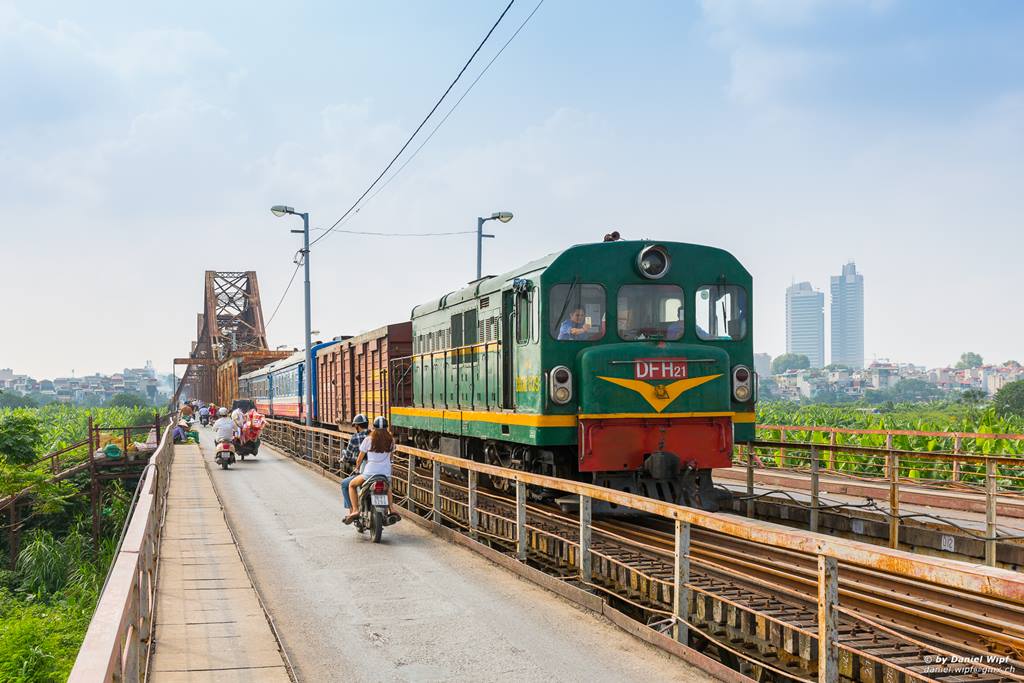
    Vietnam’s National Assembly has approved a $300 million budget for four railway upgrade projects on its transnational route.

    The four projects are to be implemented along the Hanoi-Ho Chi Minh City route. The funds will be sourced from the contingency budget of the Public Investment Plan 2016-2020 that the parliament approved in 2016.

    A total of VND1.95 trillion ($84 million) will be spent to reinforce over 100 weak bridges on the Hanoi-HCMC route. Propulsion systems on this route will also be improved.

    Another VND1.8 trillion ($77 million) will be spent on reinforcing 11 of over 22 tunnels on the route section between Vinh and Nha Trang provinces. New stations will also be opened along this route.

    The route section from Hanoi to Vinh will be upgraded at a cost of VND1.4 trillion ($60 million), which will be spent on reinforcing the current foundation, opening a third track in stations that currently have only two, and other upgrades.

    Similar upgrades will be applied on the route from Nha Trang to HCMC with a budget of VND1.85 trillion ($79 million).

    The Standing Committee of the National Assembly has also approved VND8 trillion ($343 million) for 10 road projects.

    The Vietnamese government has recently initiated efforts to upgrade the country’s outdated railway system. Many experts, including former senior railway officials, have said that the sector has suffered government neglect for a long time.

    Vietnam’s railway sector has not received any major investment in the last 140 years.

    Fifty-five percent of 7,200 coaches are equipped with an outdated brake system, while 72 percent of almost 400 locomotives are high on emissions and low on economic efficiency, according to the Vietnam Register.

    Vietnam currently has over 3,000 kilometers of railway tracks, none of them high-speed.

    All Vietnamese trains run on diesel, while Malaysia, Thailand, Korea, Japan and China have electric railway systems.

  • China says US disappoints the world by upping the ante in trade war

    China says US disappoints the world by upping the ante in trade war

    China warned the United States today that upping the ante in a tit-for-tat trade war will “only serve to disappoint” the world as Washington threatened to raise the tariff rate on the next US$200 billion (RM814 billion) of Chinese imports.

    Beijing said it would be forced to take countermeasures to defend Chinese interests, free trade and the international order.

    “The US has no regard for the world … playing both soft and hard ball with China will not have any effect, and only serve to disappoint the countries and territories opposed to a trade war,” China’s Ministry of Commerce said in a statement, adding that it still hopes to turn the situation around.

    Foreign ministry spokesman Geng Shuang called Washington’s actions “blackmail” and urged the US “to return to rationality and not act on impulse. It will only hurt themselves.”

    President Donald Trump asked the US Trade Representative to consider increasing the proposed tariffs to 25% from the planned 10%, USTR Robert Lighthizer said on Wednesday.

    “We have been very clear about the specific changes China should undertake. Regrettably, instead of changing its harmful behaviour, China has illegally retaliated against US workers, farmers, ranchers and businesses,” Lighthizer said in a statement.

    Officials, however, downplayed suggestions the move was intended to compensate for the recent decline in the value of the Chinese currency, which has threatened to take much of the sting out of Trump’s tariffs by making imports cheaper.

    The US dollar has been strengthening since April as the central bank has been raising lending rates, which draws investors looking for higher returns.

    “It’s important that countries refrain from devaluing currencies for competitive purposes,” a senior administration official said. “But I wouldn’t draw the conclusion that the announcement we’re making today is directly linked to any one practice.”

    Washington and Beijing are locked in battle over American accusations that China’s export economy benefits from unfair policies and subsidies, as well as theft of American technological know-how.

    Trump has threatened to slap tariffs on virtually all of China’s exports to the US.

    Officials said they remained in regular contact with their Chinese counterparts but could announce no new meeting.

    The US already imposed 25% tariffs on US$34 billion in Chinese goods, with another US$16 billion to be targeted in coming weeks.

    On July 10, Washington unveiled a list of another US$200 billion in Chinese goods, from areas as varied as electrical machinery, leather goods and seafood, that would be hit with 10% import duties.

    Increasing the rates to 25% could make them significantly more painful.

    The comment period on the proposed penalties, which includes public hearings where business can ask for exemptions, due to take place later this month, would be extended into September, the officials said.

    Much of American industry and many members of Trump’s own Republican Party have expressed outrage but have so far been unable to thwart Trump’s trade policies.

    The US Senate last week passed legislation which if enacted would lower trade barriers on hundreds of Chinese imports.

    Jake Colvin, vice-president of the National Foreign Trade Council, said the Trump administration could be boxing itself into a corner.

    “It’s hard to see how this action lends itself towards a resolution to what is increasingly a trade crisis,” he told AFP.

    Trump and senior administration officials believe the volume of US imports and vigorous health of the American economy give Washington an advantage in the current confrontation.

    But Fred Bergsten, founding director of the Peterson Institute for International Economics, told CNBC that China would be able to absorb blows more easily than Washington.

    “They can expand their stimulus, fiscal spending, bank lending,” he said.

    “They can compensate much better than we can. They come from a much higher base.”

    And Bergsten warned that the US economy is likely to slow and a trade war only makes that expected decline worse.