Category: Finance

Retail News Asia is committed to providing both local and global retailers with the latest Finance news throughout the Asian market. This on a daily base.

  • Foreign selling on Bursa Malaysia last week halves to RM247.1m

    The net amount sold by foreign investors last week shrank by more than half from RM531.8 million to RM247.1 million, the smallest weekly attrition so far this year.

    The pace at which international investors are disposing of stocks listed on Bursa Malaysia has been slowing down for the past four consecutive weeks, MIDF Research said in its weekly fund flow report.

    The research firm noted that global investors were net sellers on every single day except on Wednesday, which saw a foreign inflow worth RM71.7 million net, the first since June 29.

    The local bourse ended 0.91% higher at 1,753 points that day after Federal Reserve Board chairman Jerome Powell’s reaffirmation of his upbeat assessment on the US economy.

    Bursa Malaysia’s Asian peers, namely South Korea, Taiwan and the Philippines, also experienced a surge of inflows on the same day.

    MIDF Research said foreign net selling that occurred on other days remained well below RM100 million, a level deemed moderate, while Thursday recorded the highest foreign net selling during the week at US$95.6 million net.

    “Notwithstanding this, the FBM KLCI marked its nine-day winning streak on the same day supported by the rise in construction stocks following the announcement that the KL-Singapore HSR project will be deferred instead of being unilaterally cancelled,” it added.

    However, MIDF Research said the reduction of outflows to RM64.6 million net on Friday coincided with the 0.26% decline in the FBM KLCI amid profit-taking activity in telecommunication stocks as they led decliners.

    MIDF Research said Malaysia’s year-to-date foreign net outflow has reached RM8.31 billion or US$2.07 billion, offsetting approximately 80% of last year’s RM10.33 billion inflow.

    “Nevertheless, this figure is still the second lowest outflow amongst the four Asean markets we track, standing below the Philippines which has a year-to-date outflow of US$1.31 billion net.”

    The research house added that participation amongst foreign investors, retailers and local institutional funds remained upbeat as each of their average daily traded values stood above RM1 billion, RM800 million and RM2 billion, respectively.

  • Malaysia’s economy seen expanding at slower rate

    Malaysia’s economy seen expanding at slower rate

    Malaysian economy is anticipated to expand at a slower rate in the next four to six months ahead, based on the findings of Malaysian Economic Indicators: Leading, Coincident & Lagging Indexes for May 2018.

    The Leading Index (LI) indicators are designed to observe the economic performance in the short term.

    The Statistics Department said in a statement that the monthly change of LI showed a negative growth of 1.1% to 117.8 points in May 2018 from 119.1 points in April 2018, mainly due to the 0.5% decrease in the number of new companies registered.

    It said the annual change of LI also registered a decrease of 0.7% in the same month against 1.4% in April 2018.

    However, the Coincident Index (CI), which reflects the current economic activity, improved in May 2018, registering a growth of 0.3% in the reference month.

    “The annual change of CI rose 2.2% in May 2018. The Diffusion Index for CI remained at 66.7% since January 2018. Nevertheless, the level of Diffusion Index for LI was below 50% (14.3%),” it added.

  • SE Asia Stocks: Indonesia, Vietnam rise; others subdued

    SE Asia Stocks: Indonesia, Vietnam rise; others subdued

    Investors’ risk appetite soured on fears of more trade protectionist measures from the United States as U.S. President Donald Trump said on Friday he was ready to impose tariffs on all $500 billion of imported goods from China, threatening to escalate a clash over trade policy that has unnerved financial markets.

    The dollar declined against major currencies after Trump criticised the Federal Reserve’s monetary tightening policy.

    “Market players will likely closely monitor China’s policy reaction, especially on the RMB front in the interim. Asian markets are likely to also trade with a cautious tone today,” OCBC said in a note.

    Singapore shares were down after four straight sessions of gains ahead of June inflation data.

    The annual headline inflation rate is expected to have risen in June from the previous month, according to a Reuters poll.

    Financials were among the biggest drag with index heavyweights DBS Group Holdings, Oversea-Chinese Banking Corp and United Overseas Bank shedding between 0.9 percent and 1 percent.

    Indonesian shares rose 0.9 percent with all sectors but materials in positive territory.

    Financials led the charge, with Bank Central Asia Tbk PT rising 1.7 percent to its highest in more than three months, while Bank Mandiri (Persero) Tbk PT gained nearly 2 percent.

    The impact of U.S.-China trade tensions on Indonesia is “not a lot” as exports to these countries are not the biggest parts of Indonesia’s economy, said Nomura Indonesia analyst Elvira Tjandrawinata.

    “Indonesia is instead affected through the impact global events have on the local currency, which pours into general sentiment in the economy,” she said.

    Last week, the central bank kept its benchmark interest rate unchanged as expected, taking a pause in its monetary tightening cycle.

    Vietnam shares jumped 1.4 percent, driven by gains in real estate and financial stocks. Vingroup JSC and Petrovietnam Gas Joint Stock Corp were the top gainers.

  • China Probes Stainless Steel Imports From Indonesia, EU, Japan and Korea

    China Probes Stainless Steel Imports From Indonesia, EU, Japan and Korea

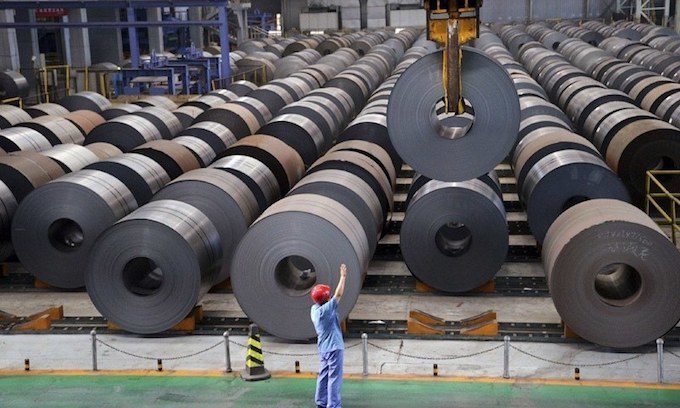
    China on Monday (23/07) launched an anti-dumping probe into stainless steel imports worth $1.3 billion, including from a privately owned Chinese mill with operations offshore, after complaints that a flood of product has damaged the local industry.

    The Commerce Ministry said on Monday the investigation will target imports of stainless steel billet and hot-rolled stainless steel sheet and plate from the European Union, Japan, South Korea and Indonesia, which nearly tripled last year.

    The move follows a complaint by Shanxi Taigang Stainless Steel, with backing from four other state-owned mills including Baosteel’s stainless steel division, which blamed cheap imports on falling prices, it said.

    China makes and consumes around half of the world’s stainless steel, which is used to protect against corrosion in buildings, transportation and packaging.

    While the complaint targets eight foreign producers, it also lists a number Chinese companies, including the Indonesian unit of one of the world’s top producers, Tsingshan Stainless Steel, and 19 traders who import product.

    Some private Chinese companies have opened or started building plants in Indonesia in recent years, drawing on its plentiful nickel resources and lower-cost of production.

    A significant portion of the new production has been sold in China, analysts say.

    The rapid increase in imports damaged the Chinese market, according to the complaint filed by Shanxi Taigang and released with the commerce ministry document.

    Almost two-thirds of China’s stainless imports came from Indonesia last year, up from 5 percent in 2016 and zero in 2015, the complaint said. That rose to as high as 86 percent in the first quarter, it said.

    Imported prices of the stainless steel products fell 23 percent to $1,867 a ton in 2017 from $2,436 a year earlier.

    “If we allow these products to continue to enter the Chinese market with low prices and take more market share, sales of China’s domestic products will continue to decrease,” the complaint said.

    Peter Peng, senior consultant at CRU in Beijing, said the investigation was “totally driven by an industrial dispute between SOEs [state-owned enterprises] and the fast-growing private mills.”

    “Due to their cheap production costs, it’s more competitive than Chinese products,” he said.

    Tsingshan opened a mill there last year with annual capacity of 3 million tons while Delong Holdings plans to start production there next year.

    Anti-dumping duties would force mills to find new markets for their product, adding to a global glut, Peng said.

    The European companies targeted by the probe include Spain’s Acerinox, Finland’s Outokumpu Oyj and Luxembourg-based Aperam.

    Among the Japanese companies are Nisshin Steel, Nippon Steel & Sumitomo Metal Corp and JFE Steel Corp. Indonesia’s Jindal Stainless and South Korean steelmaker Posco are also listed.

    China imported 703,000 tons of those products in 2017, up almost 200 percent from a year earlier, with 98 percent coming from the regions targeted by the investigation.

    Shanxi Taigang accounts for 25-35 percent of China’s stainless production.

  • Indonesia Scrambles to Mitigate Trade War With US

    Indonesia Scrambles to Mitigate Trade War With US

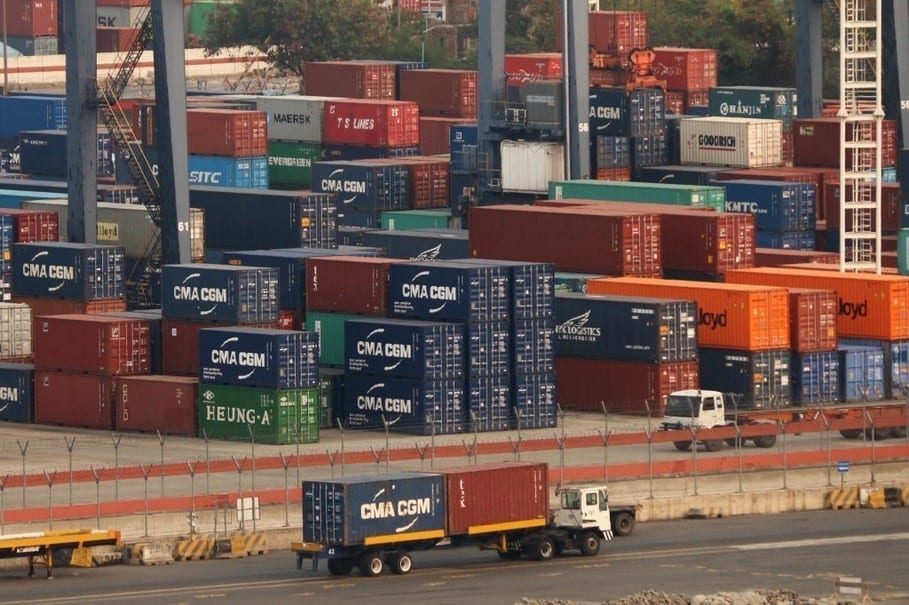
    While bracing for the fallout from a trade war between China and the United States, Indonesia is doing its best to avoid sparking a trade war of its own with the world’s largest economy.

    Indonesia found itself on the wrong end of a trade imbalance with the United States, amid President Donald Trump’s apparent dislike of trade deficits.

    Now the United States is planning to a revoke duty-free incentive for Indonesian goods under the Generalized System of Preferences (GSP), imposed in 1976 to increase poor and developing countries’ competitiveness in global trade. This could affect some $2 billion in Indonesian exports to the United States.

    If the plan passes, it could have serious repercussions for Indonesia’s manufacturing and agricultural sectors – key industries that provide most of the jobs in the archipelago.

    “I think the problem is the United States’ attitude towards trade and specifically towards surpluses and deficits. It’s a fundamental misunderstanding of the way trade works… It’s unfortunate that Indonesia has been singled out, simply for having a trade surplus,” Chris Clague, managing editor of the Economist Intelligence Unit’s thought leadership division in Asia said.

    Indonesia ranked in 16th place among countries with trade surpluses with the United States at $9.7 billion last year – nearly three times higher than in 2013.

    The United States has been demanding greater access for its goods, services and investments in Indonesia, in addition to several other issues, such as stronger intellectual property rights protection. But Indonesia does not have a comprehensive bilateral free-trade agreement with the United States and efforts to bring the countries in under multilateral deals such as the Regional Comprehensive Economic Partnership (RCEP) and Trans-Pacific Partnership (TPP) also fell through, leaving limited avenues for the United States to get what it wants.

    “[The GSP] is a unilateral agreement, so if [the United States] wants to evaluate it, we have no right to protest. We can only serve what they want,” Coordinating Economic Affairs Minister Darmin Nasution told reporters last week.

    “Because the government has an interest in maintaining the facility… we will do everything we can to keep it,” he said.

    Trade Minister Enggartiasto Lukita will lead a team to the United States on July 21-28 to try and persuade that country to keep its special tariff treatment for some Indonesian products, the ministry said in a statement.

    This will be the first official meeting between the Ministry of Trade and its US counterpart under Trump’s presidency.

    “Indonesia is ready to partner with the United States and address the issue of a trade deficit because the two countries have products and services that are not competing but complementary,” Enggartiasto said in the statement.

    While the United States is also evaluating special tariffs for India and Kazakhstan, Indonesia is the only country that has been given a chance to discuss the matter with the United States.

    “We can lobby the United States because we have a big market, an investment destination, a strategic region and good economic potential in the region. So our bargaining position is very strong to negotiate with the United States,” Indonesian Textile Association (API) chairman Ade Sudrajat said on Tuesday.

    He said Indonesia should establish a free-trade arrangement with the United States to ensure that country cannot withdraw its trade facilities as it wishes. That way, Indonesian exports can also easily enter the United States and be more competitive as it will not be subject to tariffs, he said.

    According to the Trade Ministry, there are plans to finalize six free-trade agreements or comprehensive economic partnership agreements this year. They include the RCEP, Indonesia-Australia Comprehensive Economic Partnership Agreement, Indonesia-European Free-Trade Association, Indonesia-EU Comprehensive Economic Partnership Agreement, Indonesia-Iran Preferential Trade Agreement and Indonesia-Malaysia Border-Trade Agreement.

    Steel Spillover

    The world’s two largest economies kicked off a trade war two weeks ago with the United States imposing punitive tariffs of 25 percent on $34 billion worth of Chinese imports, which prompted the latter to immediately retaliate. The United States wants to reduce its trade deficit with China after it hit a record high of $275.81 billion in 2017.

    The United States imposed import tariffs on several Chinese products, including steel and aluminum, which could spill over to other countries, such as Indonesia. The archipelago forms part of a free-trade arrangement between the Association of Southeast Asian Nations (Asean) and China, which commenced in 2010.

    Indonesian steel imports rose 33 percent to $4.7 billion in the first half of this year, compared with the same period a year ago.

    But Hidayat Triseputro, executive director of the Indonesian Iron and Steel Industry Association (IISIA), said between 25 percent and 30 percent of the steel imports are the result of dumping, making it very difficult for local producers to compete.

    Indonesia produced 4.8 million metric tons of the alloy last year, according to World Steel Association data. This is a tiny amount compared with the 831.7 million tons by China, the world’s largest steel producer.

    Still, domestic production should be enough to cover 90 percent of Indonesian steel demand.

    “Imports dominate up to 40 percent of our market… That’s why we want to tighten imports; there must be detailed data to screen them,” Hidayat said.

    However, what happens with the steel industry could soon befall other industries. The International Monetary Fund has warned that a trade war between the United States and other countries could cost the global economy $430 billion and risk lowering global growth by 0.5 percent by 2020.

    “This is potentially very, very bad, if not bordering on something catastrophic. The world economy has finally recovered from the impact of the 2008-09 global financial crisis … and now we’re running into a situation that could have a potentially devastating and deadening effect on global trade,” said Clague of the Economist Intelligence Unit.

  • CIMB Thai’s Q2 profit down 46.4% on higher bad debts, impairment losses

    CIMB Thai’s Q2 profit down 46.4% on higher bad debts, impairment losses

    CIMB Group Holdings Bhd’s 94.11%-owned indirect subsidiary CIMB Thai Bank PCL reported a 46.4% decline in net profit to THB191.2 million (RM23.2 million) for the second quarter ended June 30, 2018 against THB356.6 million (RM43.3 million) in the previous corresponding period, mainly dragged by bad and doubtful debts and impairment losses.

    Its operating income expanded 4.9% to THB3.4 billion from THB3.25 billion for the quarter under review.

    For the six-month period, CIMB Thai’s net profit went down 24.6% to THB 360.1 million, due to higher operating expenses coupled with a 1.0% increase in provisions. Meanwhile, its operating income rose 6.5% to THB6.8 billion.

    CIMB Thai’s net interest margin over earning assets stood at 3.87%, higher than the 3.81% a year ago, driven by more efficient management of funding costs.

    As at June 30, 2018, total gross loans (inclusive of loans guaranteed by other banks and loans to financial institutions) stood at THB215.2 billion, an increase of 1% from December 31, 2017.

    Loan loss coverage ratio decreased to 90.1% as at 30 June 2018 from 93.2% at the end of December 2017. As at 30 June 2018, total provisions stood at THB11.3 billion, translating to a THB4 billion excess over the Bank of Thailand’s reserve requirements.

    Total consolidated capital funds as at June 30, 2018 stood at THB43.9 billion. Bank of International Settlement (BIS) ratio stood at 17%, 12% of which comprised Tier-1-capital.

    At the noon break, CIMB Group’s share price fell 2 sen or 0.3% to RM5.83 on 7.55 million shares done.

  • Collecting back taxes from Uber tough, say authorities

    Collecting back taxes from Uber tough, say authorities

    Apart from the company contesting the department’s claims, the fact that it has sold its Southeast Asia business to its former competitor Grab adds to the difficult, department deputy director Tran Ngoc Tam said at a recent half-year review meeting.

    He said the department had sent documents to many local banks asking them to deduct the full amount of money transferred to Uber’s bank account as a form of tax enforcement, but it turned out that the firm had not opened any account in the country.

    After an inspection that it carried out in September 2017, the department had requested the Vietnamese branch of Uber International Services Holding B.V. based in the Netherlands to pay VND66.68 billion ($2.91 million) in back taxes and fines for violating tax laws.

    However, the company appealed that decision, telling the General Department of Taxation as well as the Ministry of Finance, that it is not subject to paying taxes according to Vietnam’s agreement on double taxation avoidance with the Netherlands, where it is based.

    The Ministry of Finance issued an official reply, which rejected Uber’s argument. In response, the company filed two lawsuits against the Ho Chi Minh City Tax Department.

    Tam said at the meeting that while the court was handling the lawsuit, there was no certain time frame within which the issue could be resolved. He said it would be difficult to collect taxes and fine from Uber even if the department were to win the lawsuit, because the company did not have a bank account in Vietnam.

    Furthermore, the company had sold its Southeast Asia operations to competitor Grab on April 8, which means it no longer had a presence in Vietnam.

  • Japan urges caution over Trump’s complaint on strong dollar

    Japan urges caution over Trump’s complaint on strong dollar

    Japan should be careful about recent remarks by US President Donald Trump on currencies and might need to convince Washington its monetary easing is not aimed at weakening the yen but beating deflation, a finance ministry official said on Saturday.

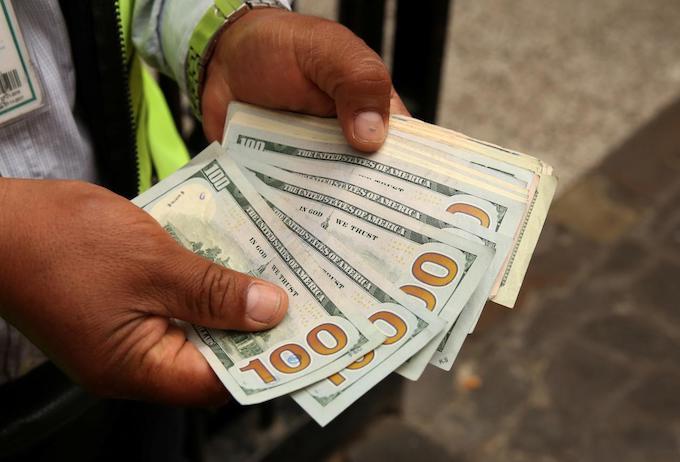
    The US dollar fell the most in three weeks on Friday against a basket of six major currencies after Trump complained again about the greenback’s strength and about Federal Reserve interest rate rises.

    The US president also lamented the strength of the dollar and accused the European Union and China of manipulating their currencies.

    Trump is not trying to influence currency markets, Treasury Secretary Steven Mnuchin has said, reiterating that a strong US dollar reflects a strong US economy and is in the United States’ long-term interest.

    “This time, the targets are China and the European Central Bank. But the content of criticism is the same so we need to be careful,” the Japanese official said in the Argentine capital.

    The Bank of Japan has pursued an aggressive monetary stimulus to achieve its elusive 2% inflation target.

    Despite five years of massive money printing, inflation has struggled to accelerate but the yen has steadily weakened.

    China is the primary target, however, as Beijing accounts for the “bulk of the US trade deficit”, Japanese Finance Minister Taro Aso said.

  • Standard Chartered Bank says Vietnam economy to grow faster than expected

    Standard Chartered Bank’s Global Focus report on the economy for the third quarter said manufacturing and construction will be the fastest growing sectors this year.

    FDI inflows will remain strong, with 50 percent coming into manufacturing, the report entitled “Fattening tail risks” said.

    Vietnam received an estimated $16.2 billion in FDI in the first half of this year, down 4.4 percent from the same period last year, according to the General Statistics Office (GSO).

    “We are positive on Vietnam’s growth medium-term on strong manufacturing activity as FDI inflows to manufacturing remain strong. We believe that Vietnam will remain one of the fastest growing economies in Asia in 2018,” Asia Economist for Standard Chartered Bank Chidu Narayanan said.

    The report said Vietnam would have a trade surplus this year due to high export growth and slowing imports.

    The country reaped export earnings of $113.9 billion between January and June, a year-on-year increase of 16 percent. Meanwhile, it spent $111.2 billion importing goods, up 10 percent.

    A World Bank report last month had said Vietnam’s economy might expand by 6.8 percent this year, revising upwards the bank’s previous forecast of 6.5 percent. It estimated growth of 6.6 percent in 2019 and 6.5 percent in 2020.

    Prime Minister Nguyen Xuan Phuc has said the target this year is to keep inflation below four percent and achieve economic growth of 6.7 percent. The consumer price index increased by 0.55 percent and 0.61 in May and June, pushing the inflation rate for the year-to-date to 3.29 percent.

  • Vietnamese dong caught between rising dollar, falling yuan

    Vietnamese dong caught between rising dollar, falling yuan

    As the trade war of duties and counter duties escalates, China has weakened its currency to boost exports making its goods even cheaper in Vietnam.

    Local economists have noted that while the yuan has lost 4.18 percent against the U.S. dollar over the last two weeks, the Vietnamese dong has only lost a little above one percent, making Chinese imports much cheaper.

    Vietnam has to balance between keeping the trade deficit control and being able to compete with cheaper Chinese goods in the market.

    In the past three months, the yuan has fallen 3 percent against the dollar while Vietnam only devalued dong around 1.1 percent.

    And Vietnam should take precautions because the yuan could fall even further, financial expert Nguyen Tri Hieu said.

    “China has set the yuan’s foreign exchange rate at 6.95 per dollar,” he said. “But around two years ago, that number was even lower at 6.69 per dollar. So there is a potential for the yuan to slip further.”

    Hieu said he believes that if the government decides to devalue the dollar, a three percent drop by the end of this year is reasonable.

    Economist Ngo Tri Long, former director of the Market Price Research Institute under the Ministry of Finance, cautioned that that the central bank should adjust the dong’s exchange rate based on the market and not the yuan.

    “In my opinion, adjusting the dong’s value at the moment is a risky move, especially, with a three percent drop.

    “It is going to be hard to achieve the nation’s target of keeping inflation below four percent by the end of this year. Not to mention other future-factors we should take into consideration other factors like higher oil prices and damage caused by natural disasters.”

    But if Vietnam decides to move forward with devaluing the dong decision, the adjustments should be based on market demand and not on the yuan’s value. Long felt that a two percent drop would better match current market.

    On the other hand, president of Vietnam Institute for Economic and Policy Research Nguyen Duc Thanh stated that Vietnam should reduce dong’s currency exchange rate against the dollar and the yuan.

    However, such a move it would greatly affect many businesses, Thanh said.

    “This is a risky step since it will have ripple effects on many sectors like stocks and real-estate.”

    Asked how businesses can protect themselves from future foreign exchange fluctuations, Hieu recommended that businesses follow set contracts with fixed exchange rate.

  • China’s central bank regulates forced cashless payment

    China’s central bank regulates forced cashless payment

    China’s central bank is taking measures to ban business practices of refusing or discriminating against cash payments to deal with over-hype of a cashless society.

    Some consumers have complained about being denied the ability to use cash in places like tourist areas, restaurants, and retail stores, which harms the legal status of the Chinese yuan as well as consumers’ rights to choose means of payment, according to a statement released Friday by the People’s Bank of China.

    Banking institutions and non-banking payment platforms should not require or induce business entities or individuals to refuse or take discriminatory measures against cash payments, and these practices should be rectified within one month, the statement pointed out.

    Mobile payments are popular across the country with a growing community of consumers using WeChat Pay, Alipay, and other mobile payment tools to pay for a wide range of products and services.

    A report from global market research firm Ipsos showed that China reached about 890 million mobile payment users in the first half of this year.

    For product sales or services from online or unstaffed stores, cashless payment only is allowed if cash payments are impossible.

    However, businesses and individuals should not hype up the “cashless” idea when promoting non-cash payment, the central bank said.

  • Vietnam stands to lose from trade war between big powers

    Vietnam stands to lose from trade war between big powers

    The Vietnam Institute for Economic and Policy Research (VEPR) has cautioned that the ongoing trade war between the U.S and China is changing the dynamics of trading in the world, and would eventurally hit Vietnam more than in its exports sector.

    Pham Sy Thanh, head of VEPR’s Chinese Economic Studies Program, said: “When a large economy decides to protect itself, other economies will start to imitate.”

    Global trade growth last year reached 4.7 percent, but this year’s estimate of 3.1 to 5.3 percent shows that even top economists are uncertain about how the trading picture will turn out after this trade war, he said.

    If this continues, multilateral relationships will be replaced by bilateral ones, which will be a disadvantage for a developing country like Vietnam, because stronger countries will have more resources and power to negotiate, he said.

    Another consequence of the trade war on Vietnam is that it will be profoundly affected as global production chains shift.

    As the lack of workforce is no longer a big problem thanks to the fourth industrial revolution, “smaller countries will lose their advantage in just a few years,” he said, adding that technology giants, such as Foxconn, are now investing more in manufacturing in its own country, the U.S.

    When large corporations no longer see the attractiveness of developing countries, their capital will flow back to the big countries, and the abundance of labor will no longer be perks for developing countries such as Vietnam, Thanh said.

    The U.S. has announced that it would slap a 10 percent tariff on $200 billion worth of Chinese export goods as soon as September. This announcement came after it slapped a 25 percent duty on about $34 billion worth of Chinese goods earlier this month.

    China had retaliated “immediately” with a similar action, the country’s foreign ministry had said in response to the first move by the U.S.

  • The Long Road to Reviving Indonesia’s Cacao Industry

    The Long Road to Reviving Indonesia’s Cacao Industry

    Indonesia had to import about 200,000 metric tons of cacao beans last year, but it was not supposed to happen.

    The tropical archipelago used to be a beacon of cacao bean production, with a record 850,000 tons of raw beans in 2009, or about six times more than two decades earlier, according to Central Statistics Agency (BPS) data.

    Until then, Indonesia was the third-largest cacao bean exporter in the world behind the Ivory Coast and Ghana. However, seeing that much more value could be added by processing beans domestically, the government slapped a tax on raw bean exports in 2010 and told global manufacturers to build cocoa processing plants in Indonesia.

    Switzerland-based cocoa and chocolate maker Barry Callebaut expanded its Indonesia operation by establishing a plant in Makassar, South Sulawesi, in 2013 and another in Gresik, Central Java, in 2016. United States-based agricultural giant Cargill also established a processing facility in Gresik in 2014.

    But then a deadly disease decimated many cacao trees, forcing farmers, most of them only using simple farming techniques, to switch to planting corn, coconut or oil palm. Indonesia had about 1.3 million hectares of cacao plantations in 2012, which have continued to decline to an estimated 1.1 million hectares last year. Yields also fell to around 660 kilograms per hectare last year from 1.1 tons just five years earlier.

    The Indonesia Cocoa Industry Association (AIKI) estimates that the country produced around 260,000 tons of beans last year, down 31 percent from a year earlier.

    Soetanto Abdoellah, chairman of the Indonesian Cocoa Board, said the country now has to import beans from Ghana, the Ivory Coast and Cameroon to meet local demand.

    The Fall

    According to Rudyanto Hady, sourcing sustainability manager at Barry Callebaut, the production decline can also be ascribed to farmers’ limited skills and a lack of funds to develop new plantations.

    “Most cocoa farmers in Indonesia are smallholders, which make up more than 95 percent of the total cocoa plantation area, with the remaining areas held by private firms and state-owned companies,” Rudyanto said.

    Farmers are meanwhile also struggling with aging cocoa trees, most of which were planted between the 1990s and 2000s, in addition to diseases that afflict trees.

    All these factors have created a negative perception of cocoa as a commodity among farmers, who deem it an unprofitable crop that cannot improve their livelihoods.

    Misnoto, a 49-year-old farmer from Lampung, said black pod disease infected half a hectare of his cocoa trees.

    Another farmer, Sutaji, said farmers in the province, including himself, are struggling to improve yields.

    “We are now still learning how to improve yields from our cocoa plantations,” said Sutaji, who has a 3-hectare cocoa plantation.

    Temptation of Palm Oil

    AIKI chairman Piter Jasman said farmers often lack technical assistance, which affects local cocoa production and makes other cash crops, such as oil palm, to be considered as more lucrative alternatives.

    “If the government does not push the national production then production from cocoa plantations will continue to decline and eventually subside over the next few years, like in Malaysia,” Piter said.

    The neighboring country produced around 247,000 tons of cocoa beans in 1990, which dropped to a mere 3,000 tons by 2014 as farmers switched crops amid a palm oil boom.

    Lampung farmer Sutaji noted that oil palm could be an attractive option for farmers like him, who can produce around 700 kilograms of cacao per year, earning him Rp 17.5 million ($1,220). On the other hand, the same area under oil palms can earn him up to Rp 31.5 million per year.

    Demand

    Still, both local and foreign chocolate companies are heavily invested in Indonesia’s downstream cocoa industry, with most having established processing facilities in the country.

    Indonesia’s average cocoa bean production capacity rose to 800,000 tons a year from 350,000 tons since the government started to impose an export duty on the commodity, said Piter of AIKI.

    The total export value of processed cacao – including cocoa cake, cocoa butter, cocoa powder and chocolate liquor – amounted to nearly $1 billion in 2016, close to 2010’s peak of $1.1 billion.

    Chocolate confectionery is an expanding business in Indonesia, projected to grow 42 percent to Rp 19.5 trillion by 2019, data from a research firm Mintel shows.

    While Singapore and Malaysia each currently consumes about 1 kilogram of chocolate per capita per year, it is only 600 grams for Indonesia, indicating more room for growth.

    Closing the Gap

    Mahendra Siregar, who was a deputy trade minister and instrumental in Indonesia’s tax policy on cacao bean exports in 2010, said the current government seems to have abandoned the initial plan to boost the country’s cocoa processing industry.

    “We want the cocoa processing industry to accelerate, just like palm oil. We want the raw material to be processed in the country,” Mahendra said.

    “We encouraged local investors and even invited foreign investors to develop their upstream businesses here. But now, with the declining cocoa production … it’s like we already invited them here, they already established here, but now we only have a small cocoa supply [for processing],” he said.

    Mahendra said the processing industry still has a future, but it depends on consistent government policy.

    The National Cocoa Movement (Gernas Kakao) was set up in 2009 to plant new cacao trees and intensify production in existing plantations. It distributed subsidized cocoa seeds and fertilizers to farmers and provided them with technical assistance.

    But the program was terminated in 2013 after efforts to expand the main cocoa producing areas from Lampung and Sulawesi to other provinces spread the government’s pool of instructors too thin.

    “We need to hurry to implement and revive Gernas Kakao, otherwise the processing industry business will soon melt away,” Mahendra said.

    Private-Sector Assistance

    Cocoa farmers in Lampung are also trying to boost bean quality and yields with assistance from Barry Callebaut, the world’s largest producer of chocolate and cocoa products. The company is helping them improve their farming techniques to boost the quality of the fruit.

    It works with thousands of smallholders in Lampung and Sulawesi to implement cocoa sustainability programs, allowing farmers to produce high-quality beans that can be sold under a sustainability scheme. The beans can also be certified as premium quality, which either improves farmers’ incomes or earn them incentives from the company, Rudyanto said.

    Cocoa can also be cultivated along with other trees and plants, such as coconuts and cloves, giving farmers additional income from the same land.

    Muksininin, a 33-year-old farmer from Bumi Mulyo village in Lampung, said he still prefers to grow cocoa because the trees do not need constant attention.

    “Cocoa trees are easier to manage compared with oil palms, rubber trees, or even vegetables,” Muksininin said.
  • Frost & Sullivan collaborates with Seoul Fintech Lab to support Fintech startups in Korea

    Frost & Sullivan collaborates with Seoul Fintech Lab to support Fintech startups in Korea

    Frost & Sullivan has signed a Memorandum of Understanding with the Seoul Metropolitan Government (SMG) to support activities such as commercialization, investment promotion, support for advancement of Fintech startups into the global market.

    The formal signing of the memorandum took place at Four Seasons Hotel, Hong Kong on Tuesday, July 10 witnessed by the representatives from the Seoul Metropolitan Government, and the Financial Hub Korea, Financial Supervisory Service (FSS). The agreement was signed by Kim, Dae Ho, Director, Seoul Metropolitan Government and Shivaji Das, Asia-Pacific Partner in Charge, Frost & Sullivan.

    Frost & Sullivan’s collaboration with SMG also aims to help startups accelerate the pace of their market commercialization. Under this agreement, Frost & Sullivan will also assist in uncovering potential overseas fintech startups and hold joint events of mutual interest with the Seoul Fintech Lab.

    Shivaji Das shared that Frost & Sullivan was well-placed to assist SMG, given the company’s strong track record and expertise in Fintech. With its global presence, broad industry coverage and strong business network, the company is able to actively work with other key partners in building a converged development platform that can accelerate new startups towards transformational growth.

    “We are honoured to be partnering with the Seoul Metropolitan Government to contribute towards the overall growth of the Fintech ecosystem in Korea. Through our combined efforts, we hope to help drive innovation and help startups develop amidst the rapidly evolving market environment,” said Shivaji Das.

    Frost & Sullivan works with their clients to execute Fintech projects and have also developed several Fintech-related reports under their global FinVision research subscription incorporating the relevant research from 4 different core groups; Digital Transformation, Banking & Financial Services, Visionary Innovation Group and TechVision.

    The Seoul Fintech Lab is an initiative by the Seoul Metropolitan Government to develop the Korean fintech ecosystem by equipping Korean fintech businesses with the necessary skills, knowledge and resources to succeed globally. The lab is also set to be an incubator for new startups.

  • Foreign inflows into Malaysia in second half if dollar weakens

    Foreign inflows into Malaysia in second half if dollar weakens

    Standard Chartered (StanChart), whose investment strategy is to stay bullish and diversified, said foreign inflows into Malaysia should be coming through in the second half of the year assuming the US dollar weakens.

    Its head investment strategist Manpreet Gill said outflows in the first half of the year had more to do with the US dollar strengthening, adding that the outflows are not unique to Malaysia.

    “We’ve seen it happening across Asia and emerging markets outside Malaysia and not because of the election in Malaysia. It’s a global picture where equity and bond flows have gone out of emerging markets to developed markets. That’s why we’re emphasising the US dollar so much because we think that’s what turning investment flows.

    “If we’re right about the US dollar weakening, foreign investments should come back to Malaysia in the second half of the year,” he said.

    Manpreet, who is based in Singapore, said a big part of this global context is particularly important for the Malaysian market, more so than in the past.

    StanChart has a bullish view on equities, given that global equities typically outperform in the late stages of an economic cycle, and this also translates to the Malaysian equity market. This period of late stage of the economic cycle is usually characterised by a gradual heating up of inflationary pressures, increase in policy rates and strong equity performance.

    “In the stage of economic cycle we’re in, it can be very expensive not to be invested in global equities. It will also be unusual for Malaysian equities not to do well when most regional equity and global markets are doing well,” said Manpreet.

    Within equities, the US remains its most preferred region, supported by strong earnings growth, though it expects most markets to perform well.

    Manpreet said late-cycle investing is one of the hardest points of the cycle to invest, hence a diverse approach makes the most sense, which is to have a counterbalance in one’s investment allocation. He said bonds remain a core holding, preferring emerging market US dollar bonds because of attractive yields.

    As it expects the dollar to weaken on US trade deficits and narrowing real interest rate differentials, Manpreet said, the ringgit can be a support, estimating it to come in at RM3.90 against the dollar over a 12-month period.

    On the implications of a US-China trade war, StanChart’s Global Market Brief said both bonds (at least initially) and equities would likely be hit. Given the heavy weight of equities and bonds in most portfolios, investors can allocate to areas that will do well in this scenario (such as gold), and ensuring sufficient “dry powder” to take advantage of market weakness. However, it believes a full-blown trade war is unlikely.