Category: Finance

Retail News Asia is committed to providing both local and global retailers with the latest Finance news throughout the Asian market. This on a daily base.

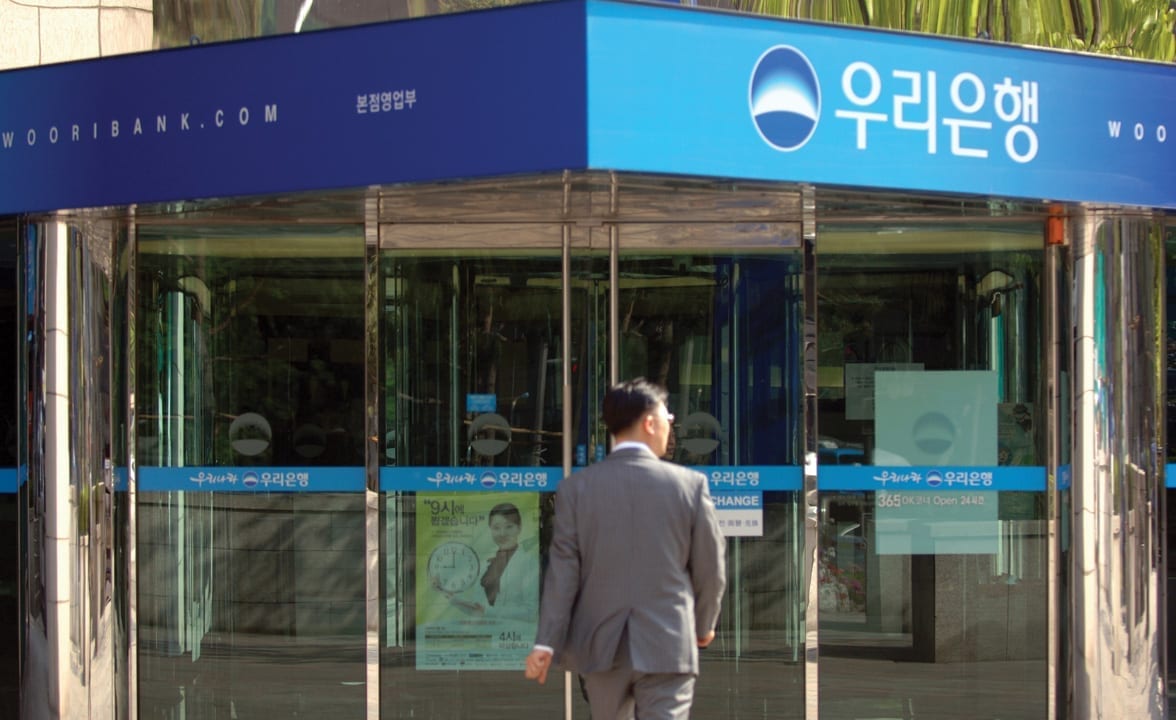
  • Woori Bank Korea changes its structure

    Woori Bank Korea changes its structure

    The board of Woori Bank approved a plan to convert the bank into a holding company, pushing up its shares on Wednesday.

    An announcement released late Tuesday said the country’s fourth largest bank would overhaul its structure to become an integrated financial service company with diverse non-banking affiliates.

    The holding company will have six affiliates: Woori Bank, Woori Credit Information, Woori Private Equity Asset Management, Woori FIS, Woori Finance Research Institute and Woori Fund Service.

    Woori Card and Woori Investment Bank will remain subsidiaries of the banking unit and may later be turned into separate affiliates under the new holding company, according to Woori Bank in a statement.

    A shareholder meeting will be held by the end of this year to approve the changes.

    “The plan will help boost competitiveness for Woori affiliates,” a source at Woori Bank said, “We will swiftly carry out the procedure.”

    Analysts said the change in corporate structure could increase the maximum amount of investment allowed by regulators to around 8 trillion won ($7.2 billion).

    Sohn Tae-seung, CEO of Woori Bank, has reiterated that the company is already looking to acquire non-banking companies like asset management and securities companies.

    Earlier this month, a local media outlet reported that Woori Bank plans to acquire Kyobo Securities, but Woori said that nothing has been decided.

    Samsung Securities was also among the potential targets cited by different reports, though Woori declined to confirm that.

    Investors welcomed the board’s decision on Wednesday, and shares of Woori Bank rose 5.88 percent to close at 17,100 won.

    “The decision to put the six Woori units under the holding company and keep Woori Card and Woori Investment Bank under Woori Bank will likely serve the interests of shareholders,” said Baek Doo-san, an analyst at Korea Investment & Securities.

    The plan to turn Woori Bank into a holding company accelerated after the Financial Services Commission, the country’s top financial regulator, said it would sell the government’s stake in the bank once the transformation is complete.

    The government holds 18.4 percent of Woori Bank through the state-owned Korea Deposit Insurance Corporation.


  • Korea’s first Internet bank struggling to raise capital

    Korea’s first Internet bank struggling to raise capital

    K-Bank, the country’s first Internet-only bank, is struggling to raise the capital it needs to expand as profits remain elusive amid increasing costs, sources directly involved with the issue said.

    “K-Bank recently asked local private equity funds (PEFs) to participate in an additional rights offer because it wants to raise its capital to 500 billion won ($455 million) by the end of the year. However, investors have concerns about the bank’s future profitability given its weak growth in consumer loans and growing policy threats,” a local PEF source said.

    “It’s highly unlikely the bank can achieve its goal. One reason is it has too many shareholders. This can create additional administrative costs, which I believe is not good for K-Bank as it has to address many challenges as quickly as possible,” said the source.

    After a delay of one month, K-Bank’s shareholders approved in June a plan to raise 150 billion won via a rights offer. The bank was in discussions with new investors and PEFs to raise up to 300 billion won in an additional shares sale.

    Korea Telecom (KT), the country’s dominant fixed-line operator, is the largest shareholder of K-Bank with 18.01 percent, followed by Woori Bank with 12.97 percent, NH Investment with 10.10 percent, Hanwha Life with 8.13 percent, GS Retail with 8 percent, KG Inicis with 6.57 percent, Danal with 6.57 percent and 13 others owning the rest, according to the bank.

    New “digital banks” are widely expected to have an impact on its performance particularly by poaching customers and eroding margins across its retail segments.

    Consumers and industry watchers see evidence of these trends and some say they are happening faster than expected. A key question is services differentiation that haven’t been extensively explored because Internet banks charge lending rates comparable to existing banks, which offer mobile banking services 24 hours a day.

    “My question is how well K-Bank is positioned in terms of product differentiation. Differentiation will make its services much more attractive by contrasting its uniqueness with other competing services and products. K-Bank made an impressive start, however, it has to respond to lots of questions from shareholders and investors if it wants to attract more,” said another PEF source.

    K-Bank reported an 83.8 billion won net loss last year, according to data from the Korea Federation of Banks. The bank, which began operating in April of last year, has extended about 1.95 trillion won in loans as of May this year. But it reported an 8.6 billion won loss by exempting customers from commission fees to win more users.

    The PEF sources have asked the financial regulators to ease rules that bar non-financial companies from owning more than 10 percent of a bank.

    “This regulation limits the growth of internet-only banks. If the rule is eased, then the bank’s largest shareholder KT has no legal issues in participating in a large-scale share sale,” said the second source, adding it will be tough for K-Bank to change the industry dynamics and resolve?the broader industry’s woes.

  • Aeon Wallet to be launched in August

    Aeon Wallet to be launched in August

    Aeon Credit Service (M) Bhd is targeting to launch its cashless payment service Aeon Wallet in August, which will become another core business segment for the group.

    Aeon Credit, a subsidiary of Aeon Financial Service Co Ltd Japan, is principally engaged in consumer finance operations through provision of easy payment and hire purchase schemes for purchase of consumer durables and motor vehicles, personal financing schemes and issuance of credit cards.

    Aeon Credit will be launching two new products in the current financial year ending Feb 28, 2019 (FY19), in line with the company’s digital initiatives, namely the Aeon Wallet and Aeon Member Plus Card that will provide customers with payment, privileges and benefit to complement the evolving customer lifestyle, attracting customers from all segments to go cashless.

    Chief financial officer (CFO) Lee Kit Seong said the e-wallet will be another payment settlement tool for consumers in the market as it looks to first tap into its 6 million member base in the group and to have 1 million users for the e-wallet in a year.

    “We’re also introducing the Aeon Member Plus Card to consolidate the loyalty programme of the Aeon group of companies in Malaysia. The e-wallet is one of the settlements like Touch ‘n Go, Alipay, and WeChat Pay. Our e-money will ultimately become mobile payment and Aeon Pay (a settlement medium like iPay88),” Lee said.

    “After we expand internally, we will go externally. From e-money, we’re going to put it into a mobile wallet. We want to integrate the Aeon companies (such as Aeon, Aeon Big, Aeon Credit) in Malaysia to have one member (system). Once comfortable, we will go to the region,” added Lee.

    Aeon Credit has doubled its capital expenditure (capex) to RM120 million for FY19, from RM60 million in FY18, to invest in its operations and business expansion. The capex will be utilised for its branch transformation and digital marketing initiatives, the upgrading of its system infrastructure and for the introduction of its e-money business.

    Lee expects the company to maintain its momentum for FY19, with strong domestic demand being the key driver for growth, along with its transformation business model and continuous improvement in asset quality under the new MFRS9 environment.

    Meanwhile, chairman Ng Eng Kiat has maintained that “it is not wrong” in relation to the additional assessments and penalties by the Inland Revenue Board totaling RM96.82 million.

    “It’s an issue not just in relation to having to pay the tax. We’re taking the grounds that we’re not liable for those tax. We’re now appealing to the Special Commissioners of Income Tax,” said Ng, adding that it is also in consultation with tax agents, auditors and solicitors.

    He said although IRB has raised an assessment and failure to pay by a certain time will result in penalties, winding up of the company or action against the board of directors, it has applied to the Court of Appeal against the High Court’s May decision to get a stay. The hearing has been deferred to July.

  • Australia’s IAG to sell Thai, Indonesia units to Tokio Marine for $390 million

    Australia’s IAG to sell Thai, Indonesia units to Tokio Marine for $390 million

    Insurance Australia Group (IAG) said on Tuesday it will sell its Thai and Indonesian operations to Japanese insurer Tokio Marine Holdings or A$525 million ($390 million).

    The Japanese company’s unit, Tokio Marine & Nichido Fire Insurance, will buy IAG’s 98.6 percent stake in Thailand’s Safety Insurance and 80 percent of PT Asuransi Parolamas in Indonesia.

    “We believe Tokio Marine is an ideal owner given its experience in the region, and that this is a good outcome for the associated employees, customers and other stakeholders,” IAG Chief Executive Peter Harmer said in a statement.

    IAG said in February it was reviewing its Asian operations as it faced a lack of buying opportunities to boost growth in a competitive region attractive for its low penetration rates.

    Separate to the Tokio Marine deal, IAG said it has also agreed to sell its 73.07 percent stake in Vietnam-based AAA Assurance Corp. It did not give more details on the deal.

    IAG said it would record an after-tax profit of at least A$200 million in its fiscal 2019 results from the combined transactions, after certain deductions.

  • Indonesian Stocks Slump 2.5% as Trade Resumes After Idul Fitri

    Indonesian Stocks Slump 2.5% as Trade Resumes After Idul Fitri

    Indonesian shares slumped 2.5 percent on Wednesday (20/06), their sharpest intraday fall in nearly two months, after trade resumed following a long holiday for Idul Fitri celebrations.

    Global equity markets saw a selloff during the Idul Fitri holiday and Indonesia is expected to play catch-up, driven by stocks with high foreign ownership such as Bank Central Asia and Bank Mandiri, according to a Trimegah Securities note. Indonesian financial markets were closed from June 11 to 19.

    Financials were the biggest losers with Bank Central Asia declining 3.8 percent and Bank Mandiri shedding 6.5 percent.

    An index of the country’s 45 most liquid stocks slid 3.6 percent to its lowest in nearly one month.

    Among other Southeast Asian stock markets, the Philippines was down for a fifth straight session while Thailand rose after five consecutive sessions of declines ahead of central bank policy meetings.

    The Bank of Thailand is expected is expected to leave its policy interest rate near a record low, while a slim majority of economist expect the Bangko Sentral ng Pilipinas to raise rates.

    Energy and financial stocks were among the biggest boost in Thailand with PTT climbing 0.5 percent and Bangkok Dusit Medical Services rising 3.3 percent.

    Malaysian shares were higher after seven straight sessions of falls with Axiata Group gaining 1 percent and Genting adding 1.8 percent. The consumer price index rose 1.8 percent last month from a year earlier, meeting market expectations, on stronger fuel and transport prices and rising demand for food, government data showed.

  • Vietnamese importers fret over dollar rate

    Vietnamese importers fret over dollar rate

    The dollar gained against the Vietnamese dong on Tuesday as the U.S. Federal Reserve raised interest rates last week.

    As of 3 p.m. Tuesday, dollar selling prices reached 22,810 at some currency exchange points in Ho Chi Minh City. At Vietcombank, BIDV and Eximbank, the dollar was being sold for VND22,880, 22,885, and 22,890, respectively.

    Buying prices also rose to VND22,800-22,815 per dollar at local banks by 3 p.m. Tuesday.

    The USD/VND exchange rate has increased by VND40-45 from June 13 when the Fed upped dollar interest rates for the second time this year to between 1.75 and 2.00 percent, ending the pledge to keep rates low enough to bolster the economy for “some time.” It signalled it would tolerate above-target inflation at least through 2020.

    High dollar prices will create difficulties for Vietnamese import businesses, economist Nguyen Tri Hieu said.

    Viet Steel is a company which imports 1.5 million tons of raw materials every year for steel production. “As 80 percent of our material is imported, the company will be affected by the dollar hike,” said chairman Do Thuy Thai.

    The company leaders are discussing increasing the prices of steel products to retain profit, Thai said.

    As a small import business, the Como Textile Company is also worried about the high rate of the U.S. dollar. “We often import 60 percent of our material, thus this will be a big challenge for the company in the future,” chairman Nguyen Huu Phuc said.

    However, the higher dollar rate is not a completely adverse development for Vietnam. Export businesses will enjoy the high rate as they often change U.S. dollars to Vietnamese dong, economist Nguyen Tri Hieu said. He added that they should push further in manufacturing and take foreign currency loans as interest rates are currently low.

    Hike continues

    As the U.S. economy “appears to be in a pretty good place” to U.S. Federal Reserve officials, they plan to increase the interest rate two more times this year.

    Vietnamese experts are not too worried. They are confident that these hikes won’t affect the country’s economy in any major way.

    Despite the hike in dollar prices, there is no sign of tension in the supply and demand of foreign currency, financial expert Ngo Xuan Hai said.

    Vietnam currently enjoys record-high foreign exchange reserves at $63 billion. It recorded a $3.39 billion export surplus in the first five months this year and there is abundant foreign currency supply, so “there is no need to worry,” Hai said.

    Echoing Hai, HSBC country head of global markets Ngo Dang Khoa said Vietnam currently has favorable conditions to keep the USD/VND rate from fluctuating too strongly, particularly with foreign direct investment disbursement reaching 13 to 14 billion USD each year and has been increasing.

    “As foreign investors usually look at the long term, temporary fluctuations in exchange rate won’t affect their investment decisions” Khoa said.

    The State Bank of Vietnam (SBV) can take monetary measures to stablize the economy, economist Hieu said. “With abundant foreign exchange reserves it may intervene into the market to maintain the rates,” he said, estimating that the exchange rate will increase by 1-3 percent this year.

    “SBV is closely monitoring the exchange rate to take timely decisions,” SBV deputy director Nguyen Hoang Minh said.

  • Malaysia’s inflation rate in May rises at fastest pace in four months

    Malaysia’s inflation rate in May rises at fastest pace in four months

    Malaysia’s consumer price index (CPI) increased 1.8% in May 2018 – the fastest pace in four months – to 121.1 compared with 119.0 in the corresponding month of the preceding year due to a strong recovery in transport prices.

    According to the Department of Statistics, among the major groups which recorded increases were transport (+3.8%); food & non-alcoholic beverages (+2.2%); housing, water, electricity, gas & other fuels (+2.1%); restaurants and hotels (+2.1%); health (+1.9%); and furnishings, household equipment & routine household maintenance (+1.5%).

    MIDF Research expects inflation to moderate in the upcoming months amid zero-rated GST, tax holiday period until the implementation of the Sales and Services Tax in September and stable retail fuel prices, which will reduce business costs.

    “At this juncture, we expect 2018’s fuel-related inflation to moderate amid higher base effects, re-subsidisation of domestic fuel price and high likelihood of a downward adjustment of global commodity prices in 2H18 from the current temporary factors, which pushed the prices up,” said MIDF Research.

    It expects headline inflation to average at 2.6% this year compared with 3.8% in 2017 amid higher base effects, supported by inflation rate for 1Q18 which stood at 1.8% compared with 4.2% in the same period last year.

    “As inflationary pressure remains steady, we anticipate Bank Negara Malaysia to maintain its current monetary policy with no more hikes in the overnight policy rate for the rest of 2018 barring any pleasant upward surprises in domestic economic growth,” it said.

    The research firm said that food inflation in Malaysia continued to fall from 2.6% year on year (yoy) in April 2018 to 2.2% yoy last month. Prices for fresh food products such as meat and seafood continued expanding however at a moderate pace of 1.6% yoy and 5.9% yoy respectively.

    In contrast, fruits inflation increased to 1.5% yoy while vegetables decreased further by 3.7% yoy. There is a potential for food inflation to rise in June due to higher demand for Ramadan and Hari Raya.

    On a monthly basis, the May CPI was up 0.2% compared with April 2018.

    Core inflation meanwhile, rose 1.5% in May 2018 compared with the same month of the previous year. Core inflation excludes most volatile items of fresh food as well as administered prices of goods and services.

    For the first five months of the year, the CPI registered an increase of 1.7% against the same period last year.

    In the overall CPI for May, inflation in three regions surpassed the national rate of 1.8%, namely Kuala Lumpur (+2.2%), Selangor & Putrajaya (+2.1%) and Johor (+2%).
    According to MIDF Research, the inflation rate increased in May across all states except Penang.

  • Most Southeast Asian markets fall as trade tensions escalate

    Most Southeast Asian markets fall as trade tensions escalate

    Most Southeast Asian stock markets declined on Tuesday, in line with broader Asia, as U.S. President Donald Trump threatened new tariffs on Chinese goods in an escalating trade war between the world’s top two economies.

    Trump warned on Monday that Washington would impose a further 10 percent tariff on $200 billion of Chinese goods after Beijing’s decision to raise tariffs on $50 billion in U.S. goods, which was in retaliation for U.S. tariffs announced on Friday.

    Trump said if China increases its tariffs again in response to the latest U.S. move, “we will meet that action by pursuing additional tariffs on another $200 billion of goods.”

    “This is causing a little bit of uncertainty in the market. It is very worrisome for investors and they are staying on the sidelines and avoiding risky assets such as equities,” said Lexter Azurin, a senior equity analyst at Manila-based AB Capital Securities.

    MSCI’s broadest index of Asia-Pacific shares outside Japan hit its lowest since February as safe-haven assets such as gold and the Japanese yen gained.

    Philippine shares fell as much as 2.2 percent to their lowest since March 27, 2017, weighed down by industrials and financials. SM Investments Corp declined 3.2 percent, while BDO Unibank Inc shed 2.9 percent.

    A slim majority of economists believe the Philippine central bank will raise interest rates on Wednesday, but opinions are sharply divided, with the weak peso likely to be the factor that will tilt the scale.

    Thai shares fell nearly 1 percent to their lowest since Sept. 28, 2017 and were on track for a fifth straight session of decline.

    On Wednesday, the central bank is expected to leave its policy interest rate near a record low to encourage more broadly-based economic growth at a time when inflation remains low, according to all 21 economists surveyed in a Reuters Poll.

    Vietnam shares fell 2.8 percent to their lowest in nearly three weeks, with Petrovietnam Gas Joint Stock Corp declining to its lowest in six months, while Vietnam Technological and Commercial Joint Stock Bank dropped 6.8 percent.

    Malaysian shares were down for a seventh straight session, while Singapore shares rose on the back of gains in financials.

    Indonesian financial markets are closed through Tuesday for Eid Al-Fitr.

  • Australian dollar slips another week

    Australian dollar slips another week

    The Australian dollar has slipped a little further against its US counterpart as the spat between the US and China over trade hurts commodities and commodity currencies, including the Aussie.

    At 0635 AEST on Monday, the Australian dollar was worth 74.46 US cents, down from 74.57 US cents on Friday.

    Westpac analysts say the tension over trade looks to have hit commodity currencies.

    “The trade spat between US and China appeared to hurt commodities and commodity currencies, with China threatening retaliatory tariffs on Friday,” they said in a morning note.

    “The US dollar index closed down 0.1 per cent on the day. …. (The) AUD extended a week-old decline to 0.7440 – the lowest since 9 May.”

    There are no obviously local event risks for the Australian dollar, leaving the currency vulnerable to trade-based tensions, along with continuing reactions to the US and European central banks’ recent decision on interest rates.

    “The combination of hawkish Federal Reserve and dovish European Central Bank surprises last week, plus US-China trade spat, could take AUD/USD lower towards 0.7410 (the May low) during the week ahead,” the Westpac analysts said.

  • Vietnam stock market in Free Fall

    Vietnam stock market in Free Fall

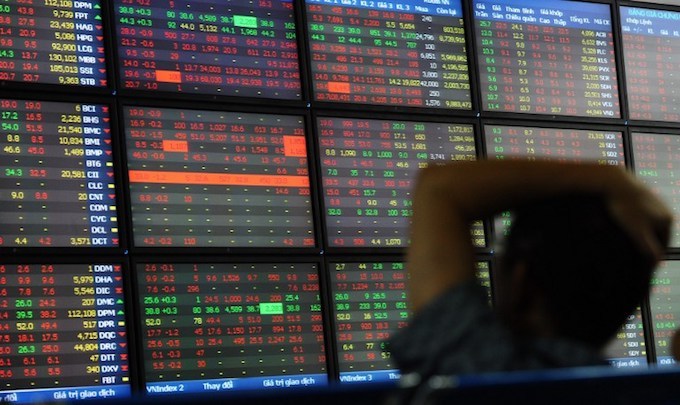
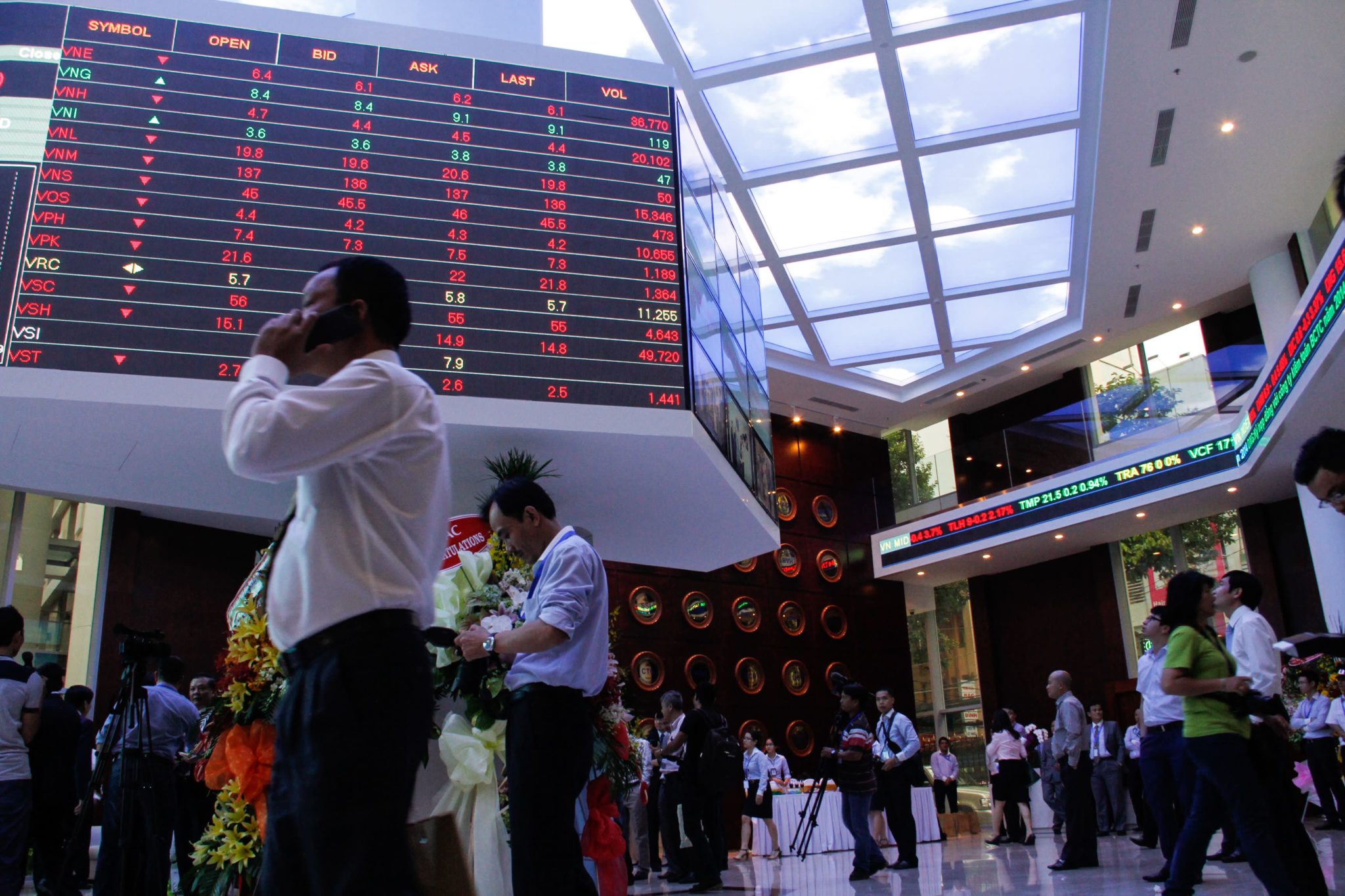
    Vietnam’s stock market dropped 2.87 percent to more than 987 points on Monday, the second time this year that it has dropped below the 1,000-point level.

    The benchmark VN-Index on the Ho Chi Minh Stock Exchange (HOSE) fell from 1,000 points for the first time this year on May 23 and did not bounce back to that level until June 4.

    As supply surpassed demand, sellers were pushed to sell their stocks at all costs, leading to falling prices.

    The VN-Index hit 984.24 on the last trading day of 2017, the highest ever since 2007, before reaching 1,000 points early in January.

    Since then, it has stayed at more than 1,000 points until the drop on May 23.

  • Bank Cards are the New King in Australia

    Bank Cards are the New King in Australia

    Australian consumers are accelerating their shift towards digital payments and away from cash and cheques, with new figures showing paying by card has surged while people make fewer trips to the ATM for cash.

    Consumers made more than 8.3 billion card payments in 2017 – equal to a rate of almost 23 million transactions a day, according to a report from electronic payments industry group AusPayNet.

    The bulk of those card payments – 5.6 billion – were made on debit cards, AusPayNet said, with credits tending to be used on more expensive purchases but still showing an increase in volume and value.

    At the same time the number of cheques used fell almost 20 per cent to 89.7 million for the year, and the number of ATM withdrawals made fell 5.9 per cent to 610.1 million.

    AusPayNet CEO Leila Fourie said the high uptake of technology and internet use in Australia, where almost 90 per cent of the population own a smartphone, was behind the increase in new ways of conducting transactions.

    “This is driving uptake in digital payments and laying down a powerful base for the next wave of payments innovation,” she said.

    AusPayNet said more 60 per cent of consumers with a smartphone used their device to make payments.

    Among the technological shifts aiding the uptake of digital payments is the New Payments Platform launched in February – a digital and near-real-time payments system allowing instant peer-to-peer payments.

    AusPayNet also found Australia has a relatively high number of EFTPOS terminals and low number of ATMs compared to other countries.

    Australia has 39,337 EFTPOS terminals per million inhabitants and 1,355 ATMs, while Canada has 38,892 EFTPOS terminals and 1,888 ATMS, the report said.

    Australia ranked above Canada, Italy, Singapore and the UK on EFTPOS point concentration, while it lagged Korea, Canada, Belgium and Russia on the ATM count.

  • Thailand on the Verge of Becoming a Cryptocurrency Heaven

    Thailand on the Verge of Becoming a Cryptocurrency Heaven

    Following the Royal Decree by Thailand’s regulatory authorities on May 14, 2018, that cryptocurrencies are formerly digital assets, the Asian nation is set to take its local blockchain-based digital currency industry to the next level by showing five Initial Coin Offering (ICO) projects the green light to operate in the area, out of the 50 startups that filed for approval.

    A Crypto Giant in the Making?

    The Thai Securities and Exchange Commission (SEC) is looking to register five ICO projects later in June when the cryptocurrency decree takes effect.

    According to the SEC director of equity finance Thawatchai Kiatkwankul, of the 50 firms that filed to launch their crypto-based fundraisers, only five meet the set standards of the SEC. As such they will fall under the regulatory watchdog’s approval.

    Amidst that backdrop, the SEC is looking to hire more staff and expand its operations to enable it to handle both Initial Public Offerings (IPOs) and ICOs.

    ICOs Must Have Real Use Cases

    While many startups have succeeded in developing products and services to solve real-life problems via the ICO route, the sad truth remains that there are a vast array of projects that have no real use cases but are merely interested in deceiving people with technical grammatical jargons and cart away with their funds.

    The regulator has also hinted on easing the rules governing crypto investments and transactions provided investors become more educated concerning the risks involved in the burgeoning industry.

    Bitcoin, Six Altcoins, 90-days Ultimatum, and Token Sale Information

    The Thai authority’s guidelines also entail that only seven established cryptocurrencies including bitcoinether, XRP, litecoin, stellar, ethereum classic and bitcoin cash could be used as trading pairs.

    With the latest development, the SEC has mandated all “stakehodlers” in its crypto space including exchanges, brokers, ICO organizers to endeavor to come under its umbrella within 90 days.

    Additionally, all market participants are required to seek approval from the Thai Finance Ministry before carrying out activities in the virtual currency industry. Interestingly the SEC has also made it clear that retail investors are not allowed to purchase ICO-generated tokens worth more than 300,000 baht ($9,000), while institutional investors and high net worth persons can pump in an unlimited amount of funds into any project. At a time when crypto-related businesses and digital currency exchanges are migrating to Malta due to the nation’s amenable regulation for cryptos, this latest move by the Thai authorities could also lure more blockchain startups to the region.

  • Diebold Nixdorf and Mastercard launch cardless ATMs

    Diebold Nixdorf and Mastercard launch cardless ATMs

    Diebold Nixdorf is teaming up with Mastercard to trial two services that provide cash banking users on the go – Mastercard Cash Pick-Up and Cardless ATM powered by Mastercard.

    The cash pick-up service allows banks to deliver cash more quickly, securely and easily to any authenticated consumer – banked or unbanked – through enabled ATMs, without the use of a card. This opens the ATM channel to even the under-banked consumers and allows financial institutions and ATM deployers to increase their revenue through new transaction volumes.

    Cardless ATM powered by Mastercard meanwhile allows account holders to withdraw cash from the nearest ATM using the convenience of their mobile banking app.

    Once consumers are at the ATM, they can quickly move through the authentication process to receive their cash. Since the majority of the transaction is handled through the banking app and the cloud, sensitive information is never exposed.

    “As a technology company, we are always considering what the future can bring, and today we have a great opportunity with Diebold Nixdorf to define the next wave of digital products to the ATM channel,” Mastercard SVP of ATM product management Daniel Goodman said.

    “By bringing together the Mastercard network and Diebold Nixdorf’s large global scale, we can help move the ATM industry towards a globally scalable standard for driving digital innovation in the ATM channel.”

    “This partnership with Mastercard is another way we are continuing to securely bridge the digital and physical worlds of cash by innovating the ATM experience for consumers through our Vynamic suite of software solutions,” Diebold Nixdorf SVP for software Alan Kerr said.

    “Many of our customers are looking to retain consumers and drive incremental transactions to their self-service channels, and this partnership with Mastercard delivers on both of these fronts.”

  • Vietnam bank loans up 6.16 pct in 5 months

    Vietnam bank loans up 6.16 pct in 5 months

    Bad debts accounted for 2.18 percent of total lending at the end of the first quarter of 2017.

    Vietnamese banks’ total loans at the end of May were 6.16 percent larger than at the end of 2017, the State Bank of Vietnam said on Monday.

    Bad debts accounted for 2.18 percent of total lending at the end of the first quarter, it said in a statement.

    Vietnam aims to keep toxic debts ratio under 3 percent of total loans, while the central bank has said it targets credit growth at 17 percent this year.

  • Vietnamese stocks fall after 8 sessions of gain, Thailand extends rise

    Vietnamese stocks fall after 8 sessions of gain, Thailand extends rise

    Vietnam shares fell on Tuesday after eight consecutive sessions of gains, while Thai shares rose for a second straight day on the back of energy and consumer staples stocks.

    Broader Asian markets were choppy as the historic U.S.-N.Korea summit started in Singapore amid hopes that it could pave the way to ending a nuclear stand-off on the Korean peninsula.

    The fixation with the summit is as much about whether the two sides will strike a deal as it is about what would comprise a deal, Mizuho Bank analysts said in a note.

    “It appears that the term ‘de-nuclearization’ must be thrown into the mix somewhere, but strictly with wiggle room for both parties… and in return, the United States may offer some conditional reprieve on sanctions with sunset clauses,” Mizuho Bank said.

    Vietnam shares fell as much as 3.3 percent, snapping eight sessions on gains, with Vietnam Technological and Commercial Joint Stock Bank (Techcombank) down 4.5 percent and Vingroup JSC 3.5 percent lower.

    Malaysian shares were down for a third straight session, declining as much as 0.4 percent. Malayan Banking Bhd declined up to 1.3 percent and was headed for a third straight session of fall.

    CIMB Group extended its fall into a third session with a drop of up to 1.8 percent.

    An analyst said there is no immediate catalyst for the local market to see an upward trend as investors are still evaluating the policies of the new government.

    Investors are taking profit on whatever strengths they can find, said the analyst, adding that: “If the (U.S.-N.Korea summit) goes well, it could lead to slight optimism in the local market.”

    Thai shares rose as much as 0.7 percent as convenience stores operator CP All PCL gained 2.2 percent, while PTT PCL rose nearly 2 percent and PTT Exploration and Production PCL added 1.9 percent as oil prices edged higher.

    Indonesian financial markets are closed until June 19 for Eid Al-Fitr, while the Philippines was closed on Tuesday for Independence Day.