Category: Finance

Retail News Asia is committed to providing both local and global retailers with the latest Finance news throughout the Asian market. This on a daily base.

  • Ant Financial to support Shanghai Pudong Development Bank’s digital transformation

    Ant Financial to support Shanghai Pudong Development Bank’s digital transformation

    Ant Financial Services Group (“Ant Financial”) has signed a strategic cooperation agreement with Shanghai Pudong Development Bank Co., Ltd. (“SPD Bank”) to support the bank’s digital transformation with Ant Financial’s technological capabilities. The agreement is the third of its kind announced this month between Ant Financial and established banks, following partnerships with Huaxia Bank and China Everbright Bank.

    Ant Financial and SPD Bank will partner in online risk management, including fraud prevention, with the former providing technological support to help the latter prevent loan, transaction and marketing fraud. The partnership will also leverage Ant’s financial-grade technologies in AI, supply chain finance, biometric identification and risk management.

    “Ant Financial and SPD Bank share the same vision for the future. With this partnership, we will explore how to improve efficiency in banking operations, as well as how to leverage technology to create greater value for our users,” said Eric Jing, Executive Chairman and CEO of Ant Financial.

    In addition to sharing technological capabilities, the partnership will allow Ant Financial and SPD Bank to strengthen collaboration on a broad range of inclusive finance initiatives, from improving user experience while using online and offline payment services, to providing secure, convenient and efficient financial services for small and micro businesses.

    Last year at the 2017 Ant Fortune Open Platform Conference, Mr. Jing indicated that Ant’s technologies would be opened up to current and potential partners, with the only criterion being whether the partnership is innovative enough to deliver value to users.

    The partnership with SPD Bank is just one example of how Ant Financial’s technologydriven solutions are enabling financial institutions to deliver inclusive services efficiently and at scale. In addition to the bank partnerships announced this month, also in May, Ant Financial’s consumer finance service Huabei announced that it would partner with financial institutions to provide consumer financing solutions, while Alipay added two new third-party money market funds to the Yu’e Bao spare cash management platform.

  • Indonesia Central Bank Raises Key Rate to Aid Rupiah, Flags Chance of More Hikes

    Indonesia Central Bank Raises Key Rate to Aid Rupiah, Flags Chance of More Hikes

    Indonesia’s central bank raised its benchmark interest rate for the second time in two weeks on Wednesday (30/05) and flagged more possible hikes as it escalated a battle to boost the fragile rupiah and contain capital outflows.

    Newly appointed Bank Indonesia Governor Perry Warjiyo pledged more action to promote financial and economic stability to bolster Indonesian assets amid an emerging market sell-off.

    The central bank “will continue to calibrate global and domestic market developments to utilize room for further rate hikes in a measured way,” Perry said after a meeting.

    On May 25, one day after being sworn in for a five-year term, Perry called Wednesday’s off-cycle meeting. On May 17, Bank Indonesia raised its key rate by 25 basis points to shore up the rupiah, then trading at its weakest since October 2015. Perry said the additional meeting was needed as a “pre-emptive, front-loading and ahead of the curve step” in response to expectations of higher US interest rates, which could push US Treasury yields higher.

    Rahul Bajoria, an economist for Barclays in Singapore, said the two hikes in two weeks “very forcefully signals to the market that the new governor is very serious about maintaining financial stability, and the institution is willing to be pre-emptive in managing risks that are emanating largely from external drivers.”

    Currency First

    Stephen Innes, head of Asia-Pacific currency trading at Oanda, said Wednesday’s decision showed “currency first and nothing else really matters.”

    The governor said Bank Indonesia will discuss loosening its “macroprudential” rules at its meeting in late June, and new ones should be released “soon.” He earlier said the central bank is looking at housing mortgages, but he did not give any details.

    In 2016 and 2017, Bank Indonesia cut its benchmark rate by a total of 200 bps in a bid to boost sluggish lending and economic growth.

    Perry said he expects loan growth to reach 12 percent at the end of 2018 compared with a year earlier. During much of 2017 and until April this year, annual loan growth was in single digits. April’s growth rate was 8.9 percent.

    With loan growth low and consumption weak, Indonesia’s annual economic growth has been stuck at about 5 percent.

    On Monday, Finance Minister Sri Mulyani Indrawati said: “We are ready to take any kind of policy to support Indonesia’s economy,” adding that if short-term measures mean slightly lower growth, “then that consequence has to be accepted.”

    The government has a 2018 growth target of 5.4 percent. Bank Indonesia said on Wednesday that it still expects expansion of 5.2 percent, better than last year’s 5.07 percent.

    Sound Key Indicators

    The rupiah, one of the worst performers among Asian currencies this year, barely moved following the rate announcement. It was trading at about 13,985 per dollar at the time it was made.

    Sri Mulyani and other senior officials on Monday sought to shore up confidence in Southeast Asia’s biggest economy at a time Indonesia, like other emerging markets, has seen an outflow of funds as US assets become more attractive due to rising interest rates.

    Key economic indicators are sound, Perry said, noting that the annual inflation rate is seen at 3.6 percent at the end of 2018, while the current-account deficit is expected to below 2.5 percent of gross domestic product, which Bank Indonesia considered “healthy.”

    Harry Su, managing director at financial research firm Samuel International, said the central bank “is now doing more proactive and forward-looking policy, particularly with regard to a possible higher current-account deficit, as well as inflationary pressure stemming from the current higher oil price environment.”

    All but one of 18 analysts in a Reuters poll expected Bank Indonesia to raise the key rate on Wednesday.

  • Canada initiates dumping inquiry into steel imports from China, Vietnam, South Korea

    Canada initiates dumping inquiry into steel imports from China, Vietnam, South Korea

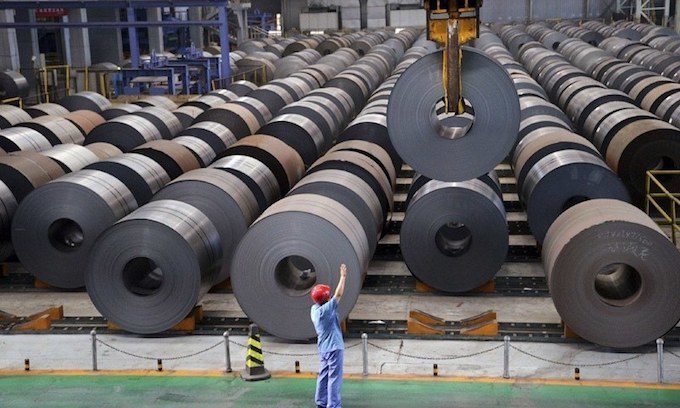
    The Canadian International Trade Tribunal (CITT) said on Monday it has initiated a preliminary dumping inquiry into steel imported from China, South Korea and Vietnam.

    The tribunal will investigate whether the alleged dumping and subsidizing of “cold-reduced flat-rolled sheet products of carbon steel” from these countries have harmed Canada’s steel industry.

    CITT, which operates in Canada’s trade remedy system and reports to parliament, said it will determine the results of the investigation on July 24 and will provide the reasons for the same on August 8.

    Canada’s steps follow U.S. actions from last week when the United States Commerce Department had slapped steep import duties on steel products from Vietnam that originated in China after a final finding they evaded U.S. anti-dumping and anti-subsidy orders.

    The global steel industry is struggling with a glut of excess production capacity, much of it located in China, that has pushed down prices.

  • Most SE Asian markets fall; Malaysia down for 5th session in six

    Most SE Asian markets fall; Malaysia down for 5th session in six

    Most Southeast Asian stock markets fell on Monday, with Malaysia declining for a fifth session in six, while Indonesia extended gains on the back of financial and infrastructure stocks.

    “There are lots of pitfalls that could sideswipe the markets,” said Stephen Innes, head of trading APAC at Oanda, referring to the U.S.-China trade issues, N.Korea-U.S. summit and strong U.S. dollar.

    U.S. oil futures hit six-week lows on expectations major producers may ease output curbs, while Asian stocks and U.S. share futures gained on signs the United States and North Korea were still working towards holding a summit.

    In Malaysia, trading services firms including IHH Healthcare and Sime Darby were among the top losers. IHH Healthcare fell as much as 4.8 percent and Sime Darby plunged 9 percent on disappointing quarterly results.

    Vietnam shares fell as much as 2.9 percent to a more than five-month low. Vinhomes JSC declined 5.5 percent and Vietnam Prosperity Joint Stock Commercial Bank fell 5 percent.

    Indonesian shares climbed as much as 1.4 percent and were headed for a fifth straight session of gains. Bank Mandiri (Persero) Tbk PT rose 5 percent and Bank Central Asia Tbk PT climbed 1.1 percent.

    The central bank said on Friday that it would hold an additional meeting of its board of governors on Wednesday to discuss economic and monetary conditions.

    “We suspect that the persistent selloff in the rupiah and upward pressures on local government bond yields (despite the recent 25bps rate hike) may prompt further action,” DBS said in a note.

    “Further BI rate hikes may be needed, with the next one possibly as early as this week.”

  • Allianz Malaysia Q1 earnings rise 30% to RM87m

    Allianz Malaysia Q1 earnings rise 30% to RM87m

    Allianz Malaysia Bhd’s net profit for the first quarter ended March 31, 2018 jumped 29.9% to RM87.23 million from RM67.17 million a year ago, due mainly to higher contribution from both general and life insurance segments.

    Its revenue grew 5.2% to RM1.27 billion compared with RM1.21 billion in the previous year’s first quarter, thanks to higher gross earned premiums and investment income.

    Allianz said the general insurance industry will likely see some volatility in a fully liberalised environment, which can be expected to remain for up to two to three years, as seen in other markets where detariffication has taken place.

    Competition is likely to intensify in the run up to the anticipated next phase of liberalisation in 2019. The general insurance segment aims to maintain its market leadership in 2018 and will continue to drive initiatives to ensure a profitable portfolio and create value for its customers and distribution partners. It will also leverage on digital assets to enhance its processes and service proposition to customers.

    Meanwhile, the life insurance industry grew at a softer pace with total industry new business recorded a growth of 1.9% in 2017 and 3.1% in first quarter of 2018. The segment will continue to strengthen its agency force with a focus on increasing productivity.

    Allianz said the group will remain focused on delivering sustainable results of its insurance businesses to its shareholders in 2018.

  • CIMB pledges RM75m to train talent to meet digital ambitions

    CIMB pledges RM75m to train talent to meet digital ambitions

    CIMB Group Holdings Berhad has pledged RM 75 million over the next three years to the CIMB 3D Academy, to enhance the digital quotient in all job roles; to enable the group’s digital transformation; and to build an agile, innovative, tech-savvy workforce across the board.

    The Academy – premised on digital, data and disruption – is aimed at helping CIMB embrace the Fourth Industrial Revolution (4IR) to propel its digital ambitions via a group-wide people development initiative.

    The group aims to equip its 36,000-strong workforce – across all levels and categories – with digital knowledge and skills appropriate to their jobs, by end-2019, through an estimated two million staff learning hours.

    The group-wide people development initiative’s competency framework will be anchored on various pillars including digital world awareness; agile & entrepreneurial thinking; and data science & analytics / data-driven decision making.

    CIMB Group CEO Tengku Datuk Seri Zafrul Aziz said in a statement today, “As a leading ASEAN universal bank, CIMB has always prioritised our most valuable asset, our people. With the 4IR fast eclipsing existing digital revolution, we want to make CIMB the most powerful incubator possible for the development of talent, to propel the Group’s next growth phase. In tandem with the digitisation of our core with a data-first principle, the CIMB 3D Academy is a crucial component to help us develop a workforce with the right skillset to help achieve our digital ambitions.

    Through the Academy, our staff will be trained for agility, adaptability, creativity and an open mind to, among others, think like an entrepreneur and disrupt conventional thinking, in order to identify and reap opportunities to improve the Group’s value proposition for our 13 million customers and stakeholders across Asean.”

    The Academy will spearhead digital training with the goal of enhancing the group’s business powered by improvements in competency, mindsets and relationships within the workforce. A core group of roles to be developed include emerging ones such as agile leader, agile coach, scrum master, scrum product owner, and tech geek. Other digital-centric roles include data
    scientist, data engineer, data analysts, design thinker, UI/UX designer, as well as digital marketer.

    The 3D modules, which will be conducted primarily through a digital and interactive platform, will be developed both in-house and by external curriculum developers.

  • MC Payment launches ‘Moonie’, a newtoken-based wallet app, at Artbox Singapore 2018

    MC Payment launches ‘Moonie’, a newtoken-based wallet app, at Artbox Singapore 2018

    Mobile Credit Payment Pte. Ltd (“MC Payment” or the “Company”), an established blockchain and unified payments enabler in Asia Pacific, announced that it launched token-based wallet app, Moonie, for use at Artbox Singapore 2018.

    Artbox Singapore, held from 25th to 27th May and 1st to 3rd June 2018, is Singapore’s largest pop-up creative market. Available for use on both iOS and Android devices, Moonie users will experience seamless transactions, enjoy discounts and earn additional Artbox tokens that can be redeemed at the stalls. Consumers are able to top up their Moonie accounts with Artbox tokens at the event via Artbox’s presenting sponsor.

    Commenting on the launch, Mr Anthony Koh, Founder and Chief Executive Officer of MC Payment said, “The launch of Moonie, especially in a high transaction volume environment such as Artbox Singapore 2018, underscores MC Payment’s technological expertise and initiative to build the foundation of a true cashless society in Singapore and the region.

    For the past 13 years, MC Payment has been driving efficiency in the Asian Pacific payments landscape. Our recent acquisition of iFashion Group and initiatives such as Moonie build on our core competencies of unifying payment platforms and developing proprietary technologies which provide retailers and consumers access to financial innovations that are being rapidly adopted globally.

    Millennials in particular represent a large group of consumers, both online and offline, and are reshaping retail transactions. They are astute, well-informed, technologically savvy and reaching their prime spending years. We are leading this transformation by building advanced payment options and presenting them in an easy-to-use and secure interface.”

    Mr. Jeremy Khoo, CEO of iFashion Group added, “We continue to push the boundaries of how technology can become an enabler in the retail industry and in the evolution of payments. With this year’s Artbox, we wanted to explore new and novel ways for consumers to transact with merchants, hence the creation of Moonie. This was our pilot and case study for this vision and we continue to explore more innovative solutions. It is a potentially game-changing mode of transaction, and we hope to rollout more of such innovations to improve the quality of experience for consumers and merchants in Asia.”

  • Indonesia Drops in IMD World Competitiveness Ranking

    Indonesia Drops in IMD World Competitiveness Ranking

    Indonesia’s competitiveness has dropped this year due to external pressures arising from trade, fluctuating exchange rates, and insufficient efforts to eradicate corruption, Switzerland-based International Institute for Management and Development, or IMD, revealed on Thursday (24/05).

    Indonesia now ranks 43rd among 63 countries assessed for the World Competitiveness Yearbook ranking, down one place from the previous year.

    Other countries showing signs of declining performance include Taiwan, Thailand, New Zealand and the Philippines, which fell seven places.

    Singapore remained on the third position, Malaysia on 22nd, while Thailand dropped to the 30th position, three ranking points lower than last year.

    Beside the problems with currency fluctuations, trade and corruption, IMD’s report also mentions other challenges faced by Indonesia, including low contribution of its industries in the global value chain, gaps in infrastructure funding, and stagnant economic growth.

    On the bright side, IMD noted several several improvements: expanded access to higher education, increased health care spending, business expenditure on R&D, value-added knowledge-and-technology intensive industries, lower youth unemployment, and a number of patents in force.

    IMD, one of the world’s top business schools, surveyed 6,371 respondents from 63 countries, based on 258 indicators and statistical data from local and international sources, as well as information from executives and experts.

    The report used four key indicators to determine weaknesses and strengths of a country: its economic performance, infrastructure development, business efficiency and government efficiency.

  • Indonesia, Peru to Enter a Free Trade Agreement

    Indonesia, Peru to Enter a Free Trade Agreement

    Indonesia and Peru agreed to step up economic cooperation during a meeting between their foreign ministers in Lima, Peru, on Wednesday (23/05).

    The cooperation is going to start with a trade in goods agreement (TIGA) to intensify trade engagement.

    “Indonesia proposed that the establishment of a comprehensive economic partnership agreement [CEPA] should be carried out step-by-step, beginning with the TIGA,” the Ministry of Foreign Affairs said in a statement.

    Peru is Indonesia’s fourth-largest trade partner in South America. Data from the Ministry of Trade showed an increase of around 5 percent between 2016 and 2017, with total trade valued at nearly $230 million last year.

    According to the statement, Foreign Minister Retno Marsudi said during the meeting with her Peruvian counterpart, Néstor Popolizio, that Peru is an important market for Indonesia, but the economic cooperation still needs to meet its potential.

    Retno also stressed the importance of increasing business interaction between the two countries and diversification of products in bilateral trade.

    At the meeting, Retno invited Peruvian businesses to participate in Trade Expo Indonesia (TEI) in October. Indonesia is also set to take part in Peru’s Expoalimentaria and Mistura Food Festival later this year.

    The ministers also discussed efforts to increase cooperation in other fields, including agriculture and fisheries.

    Indonesia’s economic diplomacy seeks to boost bilateral trade with the country’s non-traditional markets, especially in Africa and South America.

    In December, a CEPA with Chile made it the first South American country to have a free trade agreement with Indonesia.

  • Indonesia Improves in Getting Private Money for Infrastructure

    Indonesia Improves in Getting Private Money for Infrastructure

    President Joko “Jokowi” Widodo must have felt relieved and proud when the presidential airplane touched down at Kertajati International Airport in Majalengka, West Java, to inaugurate its service last week.

    The president can now showcase the airport as a successful and punctual public-private partnership (PPP) for infrastructure development.

    Initiated by the provincial government of West Java in 2009, the $800 million airport project was initially marred by land-clearing and financing problems. In 2015, Jokowi decided to step in with a state fund for the airport’s runway, taxiway and air navigation system.

    The move allowed Bandarudara Internasional Jawa Barat (BIJB), a state-owned enterprise, to concentrate on developing the terminals.

    Since then the project has become more attractive to investors, who saw a much lower risk. A syndicate of local Islamic banks injected $68 million into the airport last year. And soon BIJB will sell multimillion-dollar asset-backed mutual funds to investors.

    “The Kertajati airport is an example of successful cooperation between the central government, provincial government and the private sector. We will replicate this business model in other regions to accelerate development,” Jokowi said at the airport’s taxiway on Thursday (24/05).

    Second Best

    Indonesia was second after China in terms of attracting private funds to infrastructure projects last year, according to the World Bank’s Private Participation in Infrastructure (PPI) report released in April.

    It showed Indonesia attracted $15.4 billion to 11 projects. Of that amount, about $6 billion alone was used to build the Jakarta-Bandung high-speed railway, which is in 60 percent funded by a consortium of Indonesian state-owned companies and in 40 percent by Chinese enterprise China Railway Construction Corp.

    Among 304 projects considered in the report, 58 percent of the world’s PPI was in China, Indonesia, Mexico, Brazil and Pakistan, amounting to $93.3 billion, a 37 percent increase from 2016.

    Indonesia’s infrastructure push started under President Jokowi, who in 2015 said that more than $400 billion will be spent to accomplish 247 national strategic projects by 2019. Since 2014, when he took office, 30 of the projects, worth Rp 94.8 trillion ($6.7 billion) have been completed.

    Stronger Mechanism

    Since its implementation in the 1990s, private participation has been limited to the sectors of transportation and energy infrastructure. Having realized that the state budget simply cannot bear the costs of its infrastructure projects, the government has broadened the scope of public-private partnerships. Health care, telecommunications and water treatment projects have also been included.

    A 2015 presidential regulation, which expanded these financing possibilities, also set up a guarantee mechanism to fix the rate of return for investors in such projects. It also established Sarana Multi Infrastruktur (SMI) to help channel private funds into ready-to-built projects, and Penjaminan Infrastruktur Indonesia to provide guarantees for investors.

    “Over the past few years, the Indonesian government has considerably strengthened the legal and institutional frameworks for PPPs,” ADB country director for Indonesia, Winfried Wicklein, said last week.

    “By improving the quality of project preparation, ensuring competitive, fair and transparent procurement processes, and complying with obligations under existing long-term PPP contracts, Indonesia can deepen private sector interest in its PPP program,”  he said.

    There are 12 ongoing PPP infrastructure projects, including the Jakarta-Cikampek II Elevated Toll Road.

    The National Development Planning Agency (Bappenas) said that in 2018 there will be at least 15 new public-private projects, including the $1 billion, 71-kilometer Yogyakarta-Bawen Toll Road.

    Of these 15, only the $34-billion West Semarang Water Supply has been tendered, the rest are still being prepared.

    Benefits, Costs

    The most common form of public-private partnership is called “build, operate, transfer.” With this model, a public facility is built and operated by a private enterprise for a longer time, after which its ownership returns to the government.

    With this scheme, the government can refrain from taking in more loans or save the money for social programs.

    “However, when a toll road is built under a PPP scheme, it means the private operator would charge higher prices [to obtain profit]. When this happens, people may have to bear the higher price, which also means lower social benefits of the projects,” said Ahmad Mikail, an economist at Samuel Sekuritas Indonesia.

    The government should take this into consideration.

    “Whether a PPP has gone effectively is when people are satisfied with the facility built under the scheme,” Ferdinand Pecson, head of PPP Center of the Philippines, said earlier this month.

  • Malaysian economy to continue to grow in Q3

    Malaysian economy to continue to grow in Q3

    Malaysia’s economy is poised to continue to grow in the third quarter of the year, according to the Department of Statistics.

    The Leading Index (LI), which monitors the economic performance in average of four to six months ahead, saw an annual change of 0.3% against 1.8 % in the previous month.

    On a monthly basis, the LI contracted 0.5%, mainly attributable to the deceleration in the number of housing units approved by 0.7%.

    Meanwhile, the Coincident Index (CI), which examines the current economic activity, rose 0.6 % in March 2018 on the back of the increase in real contribution to EPF (0.4%), volume index of retail trade (0.3%), total employment in manufacturing sector (0.2%) and real salaries & wages in manufacturing sector (0.1%).

    The annual change of CI stepped up to 3.4% in the reference month as compared with 3.1% in February 2018.

    Meanwhile, the Diffusion Index for CI remained at 66.7% since January 2018, while the Diffusion Index for LI was below 50% for two consecutive months.

  • Vietnam’s Techcombank readies for market debut after raising $922 mln

    Vietnam’s Techcombank readies for market debut after raising $922 mln

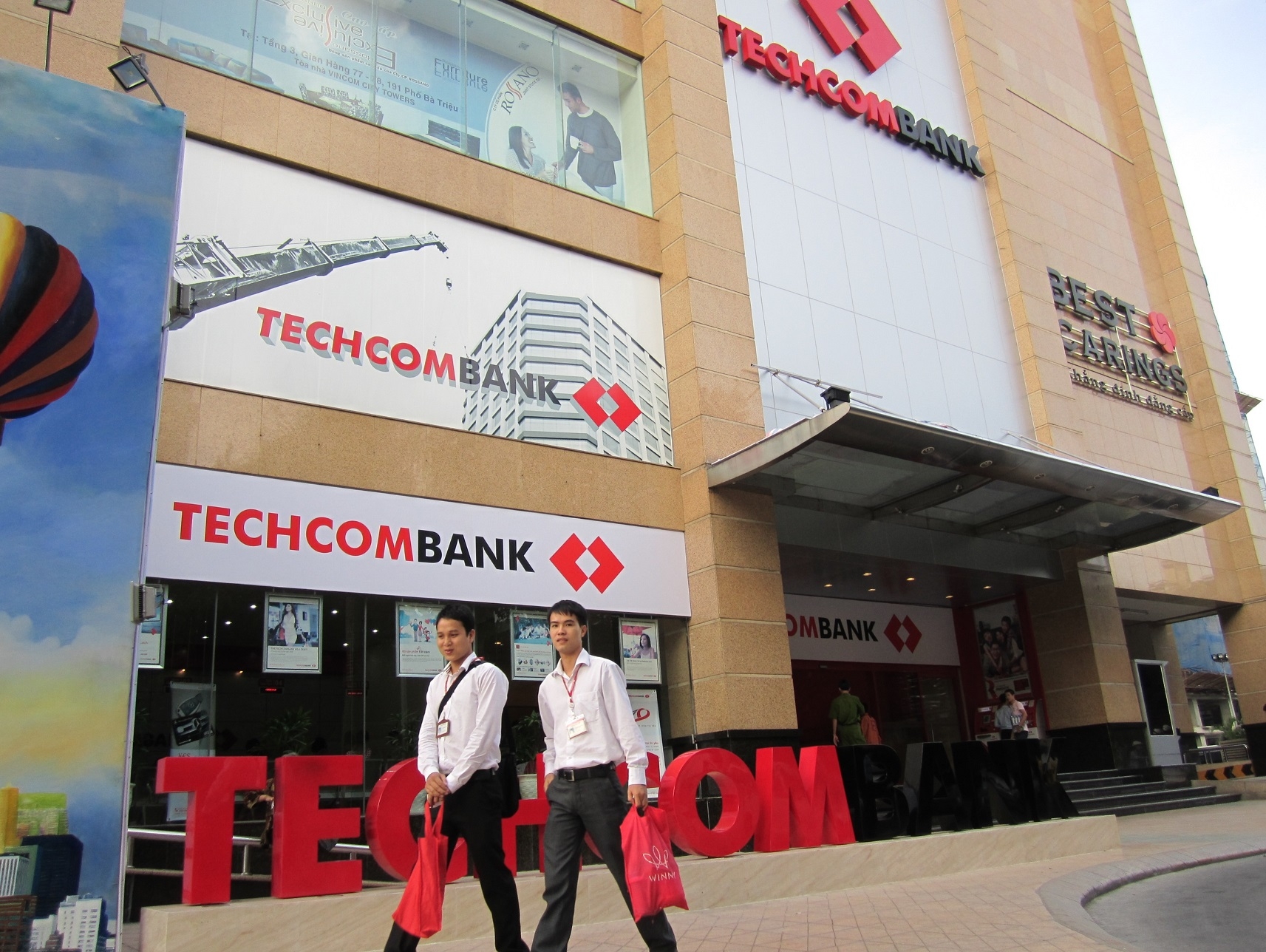
    Vietnamese lender Techcombank will list its shares on the Ho Chi Minh Stock Exchange next month, the bank said on Wednesday, making it the country’s seventh biggest firm by market value.

    Techcombank raised $922 million last month in one of the country’s biggest initial public offerings. Its cornerstone investors are Singapore sovereign wealth fund GIC, Fidelity Management and Research, and local fund Dragon Capital.

    The Hanoi-based lender said it would list on June 4 at a reference price of VND128,000 ($5.62), valuing the bank at $6.5 billion and making it Vietnam’s second-biggest listed bank after state-controlled Vietcombank.

    The shares will be allowed to move 20 percent higher or lower than the reference price on the first day of listing, according to exchange trading rules.

    Techcombank provides a broad range of banking products and services to more than 5.4 million customers in Vietnam through a network of 315 branches.

    The bank’s Chief Executive Officer Nguyen Le Quoc Anh said 2018 was a year of robust activity for Vietnam’s stock market as the economy showed strong growth momentum.

    “We believe this is a suitable time to list Techcombank after two years of preparation,” he said in a statement.

    Techcombank aimed to increase retail lending to 50-55 percent of total loans, up from 40 percent, in the coming years, while reducing the proportion of corporate loans, said Nguyen Xuan Minh, chairman of Techcombank Securities and head of Techcombank’s investment banking division.

    The bank aimed to increase its registered capital by nearly three times this year to better compete with regional rivals.

    “As the ASEAN Economic Community forms, our competitors are not only local banks but also banks from Thailand, Malaysia, Singapore. That’s our goal,” Quoc Anh said on Wednesday, referring to the group of Southeast Asian nations.

    Foreign investors own 22.5 percent of Techcombank. Vietnam limits foreign ownership in local banks to 30 percent.

  • CIMB Malaysia to recognise RM920m gain from disposal of stake in CIMB-Principal Asset Management

    CIMB Malaysia to recognise RM920m gain from disposal of stake in CIMB-Principal Asset Management

    CIMB Group Holdings Bhd is expected to recognise a gain of about RM920 million following the completion of the divestment of its 20% stake in CIMB-Principal Asset Management Bhd and 10% equity interest in CIMB-Principal Islamic Asset Management Sdn Bhd to Principal Financial Group for RM470.29 million today.

    This, however, is lower than the initial expectation of RM950 million.

    The banking group told Bursa Malaysia that its common equity tier 1 ratio will also see an increase of 15 basis points, subject to final adjustments.

    Following the corporate exercise, CIMB’s shareholding in CIMB-Principal Asset Management Group and CIMB-Principal Islamic Asset Management will be reduced to 40% with the balance 60% owned by Principal Financial Group.

    “Asset management continues to be an integral part of our regional banking business and this shareholding realignment enables CIMB-Principal to have more scale and improved global investment expertise. We expect this change to improve our ability to deliver better products to our clients, while creating sustainable long term value for CIMB group,” said CIMB group CEO Zafrul Aziz.

    CIMB and Principal Financial Group have partnered in the region since 2004 and have grown their operations across Malaysia, Singapore, Indonesia and Thailand.

    The CIMB-Principal Asset Management group of companies has more than RM80 billion in assets under management and is one of the largest asset managers in the region.

    At the noon break, CIMB shares gained 8 sen or 1.3% to RM6.13 on some 8.95 million shares done.

  • Singapore’s Economy Grows By 4.4 Pct In Q118

    Singapore’s Economy Grows By 4.4 Pct In Q118

    Singapore’s economy grew by 4.4 per cent on a year-on-year basis in the first quarter (Q118), higher than the 3.6 per cent recorded in the previous quarter.

    On a quarter-on-quarter seasonally-adjusted annualised basis, the economy expanded by 1.7 per cent, moderating from the 2.1 per cent growth in the preceding quarter.

    In releasing the latest economic figures, the Ministry of Trade and Industry (MTI)  expects the republic’s Gross Domestic Product (GDP) growth for 2018 to come in at “2.5 to 3.5 per cent”.

    This is after taking into account the strong performance of the Singapore economy in the first quarter and the slightly improved external demand outlook for the country.

    The manufacturing sector grew by 9.8 per cent year-on-year, extending the 4.8 per cent growth in the previous quarter.

    The sector’s growth was primarily driven by the electronics, precision engineering and chemicals clusters, which expanded 19.2 per cent, 14.0 per cent and 10.0 per cent respectively.

    The construction sector contracted by 5.0 per cent year-on-year – the same pace of decline as in the previous quarter.

    Construction output was weighed down by continued weakness in both the public and private sector construction activities, said the Ministry.

    The wholesale & retail trade sector expanded by 3.0 per cent year-on-year, unchanged from the growth recorded in the previous quarter.

    Growth was driven by the wholesale trade segment, which was in turn supported by an increase in the wholesale sales volume of petroleum products.

    On the other hand, the retail trade segment contracted, weighed down by a fall in the volume of motor vehicle sales.

    Growth in the transportation & storage sector came in at 2.8 per cent year-on-year,moderating from the 5.3 per cent in the previous quarter.

    According to the MTI, the water and air transport segments were the main drivers of the sector’s growth, given the healthy expansions in container throughput and air passengers handled respectively.

    The accommodation & food services sector grew by 2.0 per cent year-on-year, slowing from the 2.9 per cent growth in in the preceding quarter.

    Growth was driven by the accommodation segment, which expanded on the back of higher gross lettings at gazetted hotels in line with the rise in visitor arrivals.

    On the other hand, the food services segment contracted, weighed down by a fall in sales volume at restaurants, food caterers and other eating places.

    The MTI said the information & communications sector expanded by 5.7 per cent year-on-year, easing from the 6.0 per cent growth in the previous quarter.

    The sector’s growth was supported by the IT & information services and telecommunications segments.

    Growth in the finance & insurance sector accelerated to 9.1 per cent year-on-year, from 6.3 per cent in the previous quarter.

    The sector’s strong performance was due to robust growth in the fund management, financial intermediation and insurance segments.

    The business services sector grew by 2.8 per cent year-on-year, faster than the 0.4 per cent growth in the preceding quarter.

    Growth was supported by the professional services and “others” segments, even as the contraction in the real estate segment eased.

    The “other services industries” expanded by 1.9 per cent year-on-year, slower than the 2.7 per cent growth in the preceding quarter.

    The sector’s growth was primarily supported by the arts, entertainment & recreation and education, health & social services segments.

    On economic outlook for 2018, the MTI said the pace of growth in the Singapore economy is expected to remain firm in 2018, with growth supported primarily by outward-oriented sectors.

    In particular, the manufacturing sector is likely to continue to expand on the back of sustained growth in the electronics and precision engineering clusters, albeit at a more moderate pace as compared to 2017.

    Likewise, outward-oriented services sectors such as finance & insurance, transportation & storage and wholesale trade are projected to continue to benefit from healthy external demand.

  • SGX holds carnival at VivoCity this weekend for new investors

    SGX holds carnival at VivoCity this weekend for new investors

    The  Singapore Exchange (SGX) on Thursday said it will be holding its retail education event this weekend (May 26-27) at VivoCity’s Outdoor Plaza Atrium, as part of its ongoing efforts to educate new investors and encourage them to start investing.

    Targeted at NIBIs (not invested but interested) aged between 18 and 35 years old, the SGX “My First Stock Carnival” will take on a hands-on and interactive approach to educate investors on how to embark on their financial literacy journey, the Singapore bourse said.

    CGS-CIMB, iFAST Singapore, Lim & Tan, Maybank Kim Eng, PhillipCapital and RHB Securities will be setting up booths at the carnival to help participants open accounts, or answer any questions they may have about investing.

    An SGX “My First Stock Guidebook” will also be distributed along with a goodie bag at the carnival, and attendees will have the opportunity to interact with industry specialists and retail brokers, as well as familiarise themselves with SGX’s investing resources.

    Chan Kum Kong, SGX’s head of research and products, equities and fixed income, noted that there has been a trend of young investors becoming more active in investing.

    Added Mr Chan: “Our data shows that the traded value per month per investor aged 25 years old and younger saw an increase of 32 per cent in the first quarter of 2018 over the same quarter in 2016; the number of trades per month for the same group also saw an increase of 17 per cent over the same time period.”

    The carnival, which marks its fifth edition this weekend, will also be complemented by a week of investment workshops.

    The “My First Stock Carnival Investment Week” to be held at the SGX Auditorium, will feature speakers from SGX Academy and broking firms in a series of panel discussions held on May 28, May 30 and June 1.