Category: Finance

Retail News Asia is committed to providing both local and global retailers with the latest Finance news throughout the Asian market. This on a daily base.

  • Vietnam importing bitcoin diggers in large numbers

    Vietnam importing bitcoin diggers in large numbers

    It is illegal to use cryptocurrency in Vietnam, but that has not stopped the import of large numbers of bitcoin diggers.

    From the beginning of this year until June 10, 3,664 mining systems were shipped to Ho Chi Minh City, according to the municipal Customs Department.

    Of these, over 3,000 systems were purchased by four companies, with one of them, just eight months old, getting almost 2,300, the department said.

    A total of 6,400 cryptocurrency mining systems have been imported in the first four months of the year.

    The Ministry of Finance recently proposed that the government bans the import of these machines, saying that the rigs were being used to try and create new currencies and forms of payment that were difficult to regulate.

    It referred to an alleged fraud in April, when dozens of people descended on the headquarters of Vietnamese IT firm Modern Tech in Ho Chi Minh City demanding refunds from the company for the cryptocurrencies it claimed to represent.

    Investors said this company, which has only 9 staff members, scammed VND15 trillion ($650 million) from them in a cryptocurrency ponzi scheme.

    As legislators debated the legal framework of Bitcoin in a National Assembly session on June 6, deputy Prime Minister Vuong Dinh Hue called for more research on this new form of currency.

    “The Government is directing the Ministry of Justice and the State Bank of Vietnam to research the experience of other countries in handling Bitcoin so we can come up with an appropriate policy,” the deputy PM said.

    Vietnam imported over 9,300 cryptocurrency diggers last year, which were mostly distributed in Hanoi, Ho Chi Minh City and Da Nang.

  • HSBC targets wealthy Asians in $15-17bn cash injection

    HSBC targets wealthy Asians in $15-17bn cash injection

    HSBC has announced plans to invest between $15-17bn in improving its technology and businesses in Asia where it anticipates significant growth, particularly in the wealthy middle class and high-net worth sectors.

    The global financial and banking giant said on Monday that it targets a return on tangible equity (RoTE) of over 11% by 2020.

    Speaking to journalists in Hong Kong, recently appointed chief executive John Flint said that the growth of the Asian middle class sector has led the company to invest in the region to cope with what he believes with be an increased demand for financial services products.

    Flint, who took over from outgoing CEO Stuart Gulliver in February said that the group will target the fast-growing wealth in Asia, particularly China, in a bid to get back into “growth mode” and will invest in retail banking and wealth business, particularly in Hong Kong, he said via a conference call.

    Asia ex-Japan is predicted to account for 28% of the $223trn private financial wealth globally, according to a BCG Global Wealth 2017 report, with the middle class in Asia predicted to rise 2.5 times to 3.5bn by 2030 from 2015.

    Significant

    This latest move is a significant change of strategy as it follows on from years of restructuring and cost-cutting at the financial giant, but it is one that Flint believes will keep rewards.

    “In dollar terms, the biggest opportunity by customer group will come from retail banking and wealth management,” Flint said. “Wealth creation in Asia, particularly in Hong Kong through [China] is significant.” The biggest opportunity by customer group will come from retail banking and wealth management, he said.

    HSBC said that is is now targeting revenue growth of over $3bn from its Hong Kong business including retail banking, wealth management and others by 2020, and another U$1bn+ revenue growth from its wealth management business elsewhere in Asia.

    In Hong Kong, it will target investments in growing its millennial client base and non-resident Chinese customers.

    Technology

    Looking at technology, the majority of the group’s investment will be in new digital banking capabilities, such as those used in its wealth management and trade finance businesses. In the UK, HSBC will also invest in a mobile banking app that relies on artificial intelligence and data analytics.

    Flint also said on Monday that the group has been rebuilding its credit card business over the last 12 months. In October 2017 it launched its own branded credit card in the US, adding that the right model to operate in the country was one backed by universal banking.

    “[We] need to get all components of the business growing in the US. Without exposure in unsecured credit business, it is difficult to achieve the industry level of profitability if you just take deposits and [offer] mortgages using your balance sheet. So we need to build back unsecured, bank originated [consumer] credit business in the US,” Flint added.

  • Malaysian consumers expect economy to improve with zero GST

    Malaysian consumers expect economy to improve with zero GST

    Malaysian consumers are optimistic about the country’s economic outlook after the zero rating of the Goods and Services Tax (GST), with 82% of them opining that the economy will improve in the next 12 months, according to a survey conducted by Nielsen Malaysia.

    More than 1,000 Malaysians between the ages of 18 and 64 from Peninsular Malaysia, Sabah and Sarawak participated in the June survey.

    Nielsen said this latest survey follows similar research conducted in 2015, which found that attitudes toward the introduction of GST were less optimistic as only 58% believed the tax would be good for the economy.

    “While Malaysians were initially tentative toward the introduction of GST three years ago when the tax was first announced, having experienced the effects of the GST over the past three years, they appear to welcome the move to effectively eliminate the tax, perhaps due to the gradual increase in the cost of goods and services that has occurred since its implementation, as reflected in the Consumer Price Index (CPI),” said Nielsen Malaysia managing director Raphael Pereda.

    Some 57% of consumers expect price of goods and services to drop while 33% believe prices will stay at current levels.

    Pereda said the optimism level could mean good news for manufacturers and retailers, with consumer spending intentions likely to rise.

    “Many retailers have been providing consumers with discounts even before the zero-rated GST was officially implemented to encourage consumers not to postpone their festive spending to after June 1, 2018. If these value-for-money promotions continue, we can expect to see an increase in sales volume compared to previous years.”

    The survey showed that two out of three consumers (69%) expect their purchase habits to change following the reduction of GST, with 30% saying that they would spend more money on essential items such as apparel and clothing, perishable foods, non-perishable foods and baby products.

    Malaysians also showed a willingness to increase their spending on non-essential purchases such as holidays or leisure trips (33%), new property (27%) and out-of-home entertainment (26%). A quarter of them said they will be able to channel their money towards paying off debts once the GST is zero-rated.

    Meanwhile, 77% viewed the government’s initiative to fix the price of fuel as being “good for consumers”.

    When asked what they believed the government would do about road tolls in Malaysia, more than 90% believed tolls would either be removed or reduced.

    “It is clear the recent policy announcements made by the government have gained the approval of a vast majority of Malaysians. We are eager to see if this post-election optimism translates into actual consumer spending, which we will be able to determine over time through our retail data,” said Pereda.

  • Indonesia Tries to Get Companies to Hold More Rupiah to Stem Weakness

    Indonesia Tries to Get Companies to Hold More Rupiah to Stem Weakness

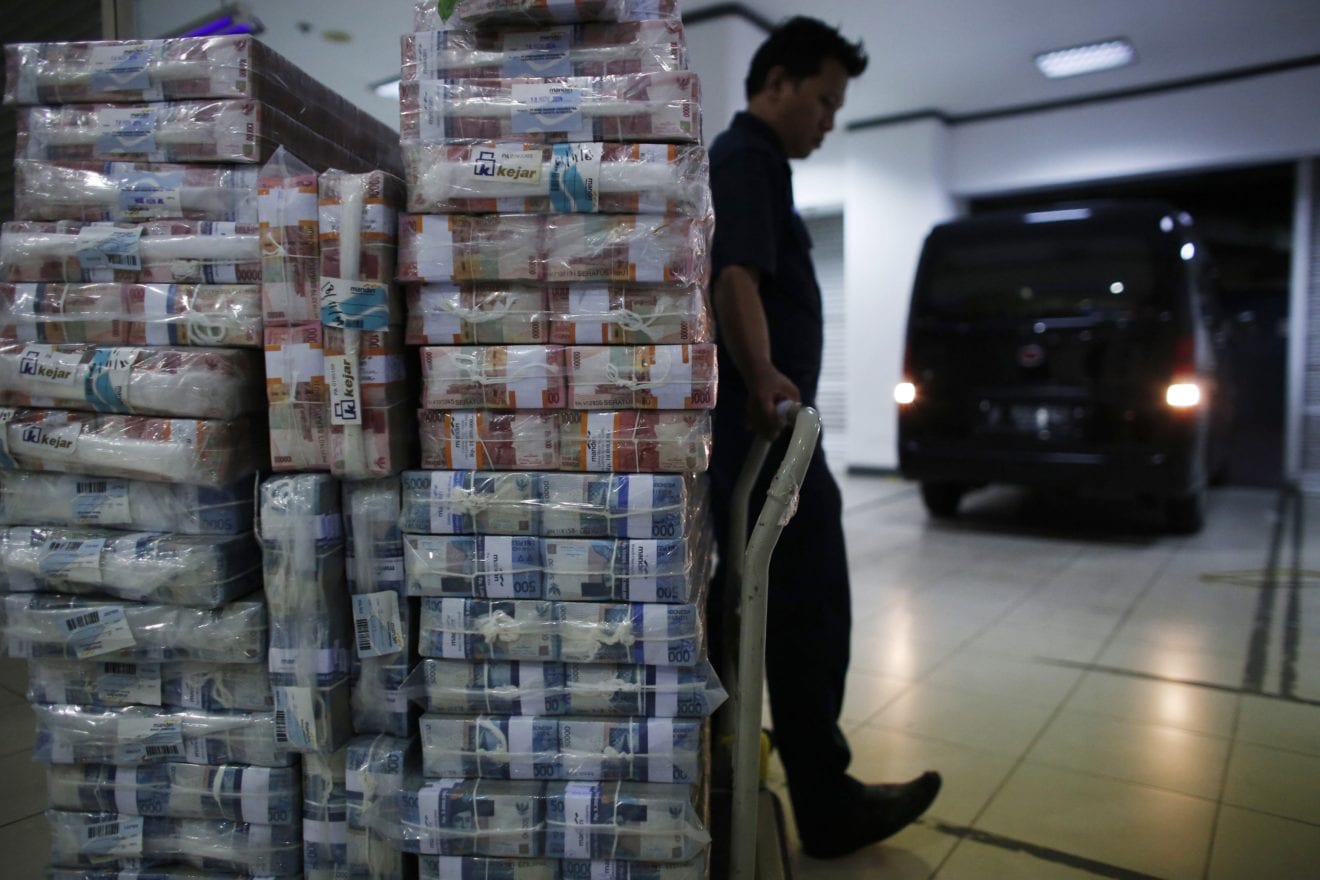
    Over the past couple of decades, Indonesian companies have developed a tried and tested strategy to cope with the periodic plunges in the rupiah: retain dollars to protect their profits.

    But their behavior can add to downward pressure on the currency, exacerbating problems for policymakers in southeast Asia’s biggest economy, especially given its relatively open nature compared to neighbors with more restrictive currency regimes.

    The rupiah has been one of Asia’s worst performing currencies this year and hit its lowest level since late 2015 at one point last week after being caught up in an emerging market selloff.

    Bank Indonesia (BI), the nation’s central bank, has taken various measures to try to boost rupiah use and it is once again prodding firms to sell dollars, but companies surveyed are maintaining US currency holdings and only meeting minimum hedging requirements.

    Many companies say that with a lot of their costs in dollars and their revenue largely in rupiah they can’t risk getting caught by a slide in the local currency. They also point out that hedging can be very expensive.

    Vidjongtius, the president director of Indonesia’s biggest pharmaceutical company, Kalbe Farma, said that every percentage of rupiah depreciation raised its production costs by 0.35 percent.

    Having “cash on hand” dollars has been a strategy for Kalbe for a long time because “hedging with a banking product is relatively more complex and sometimes hard to monitor, plus there is a cost for that,” he said.

    The pharmaceutical industry is particularly exposed to exchange rate risks as its raw materials are mostly imported and it only exports a small part of its production.

    Capital Outflows 

    New BI governor Perry Warjiyo told a media gathering last Wednesday that forcing exporters to keep earnings onshore for longer or making companies convert dollar holdings was not currently an option under Indonesia’s laws.

    That is in contrast to tougher foreign exchange systems in existence in places like Malaysia, which since 2016 has made exporters convert 75 percent of their earnings into ringgit.

    Indonesia is also vulnerable because unlike some countries in the region, it runs a current account deficit. In addition, foreigners own nearly 40 percent of the government’s bonds, so its currency can be hit by outflows from the bond market.

    Warjiyo said there was a misperception among some companies about the cost of hedging and some alarmism over how low the rupiah might go.

    He has pledged to communicate more on hedging and to provide “a rational expectation” of where the rupiah is heading after he cited market talk suggesting it could pass 16,000 per dollar. It currently trades around 13,900.

    Some market participants have began to urge policymakers to reconsider Indonesia’s liberal rules on capital movement.

    In a parliamentary hearing this week, Kartika Wirjoatmodjo, chief executive of Bank Mandiri, one of the largest banks in the country, suggested that after the period of volatility passes, the rules be changed to accommodate some sort of capital management.

    “A softer approach would be to give exporters an incentive. So if they convert [earnings in dollars] to rupiah, maybe the tax on their deposit can be reduced,” he said.

    If BI goes down that kind of road it would be the latest in a series of incremental steps it has taken in recent years to try to pressure companies into embracing the rupiah.

    In 2012, it ordered exporters to receive their payments through local banks, in the hope that some of the money would stay in the country and be converted into rupiah.

    Two years later, the central bank made it mandatory for companies with liabilities in foreign currencies to hedge a quarter of their short-term foreign currency exposure.

    And in 2015, BI moved to enforce rules that mean all domestic transactions should be in rupiah, outlawing, for example, landlords charging rents in dollars.

    But this all clearly isn’t enough to make a big difference.

    And company executives say that hedging doesn’t always make sense.

    Dendy Kurniawan, chief executive of Indonesia AirAsia, which gets about half its revenue in rupiah and half in dollars, said if, for example, the rupiah fell 5 percent and it cost 6 percent to hedge it was pointless to hedge. “It does make more sense if the rupiah falls really deeply,” he said.

    Jahja Setiaatmadja, president director of Indonesia’s Bank Central Asia, said banks typically only took 20 to 25 basis points of profit margin for a simple foreign exchange hedging product, but because it was priced off the rupiah interbank market it could carry a 5.95 percent rate for a one-year contract.

    It’s not only exporters, but also companies with little or no dollar earnings that hold onto the American currency.

    Animal feed company Charoen Pokphand Indonesia, which mainly sells domestically but imports some raw materials, has sought to limit its dollar exposure by buying local corn and limiting its foreign debt, director Ong Mei Sian said.

    The company holds dollar cash in addition to hedging short-term interest payments, though does not fully hedge principal debt and long-term dollar needs, he said.

  • Indonesia’s Annual Inflation Rate Slows in May

    Indonesia’s Annual Inflation Rate Slows in May

    Indonesia’s annual inflation rate slowed in May as the increase in food prices remained modest despite rising demand during the Muslim fasting month of Ramadan, data from the Central Statistics Agency showed on Monday (04/06).

    The headline consumer price index (CPI) in May rose 3.23 percent from a year ago, slightly below the median forecast in a Reuters poll, which had expected a rate of 3.28 percent. April’s annual rate was 3.41 percent.

    On a monthly basis, consumer price rose 0.21 percent.

    The annual and monthly rates were unusually low for inflation during Ramadan, which was a “delightful news” for authorities seeking to keep inflation under control, said Suhariyanto, the head of the statistics agency.

    However, the annual core inflation rate, which excludes government-controlled and volatile food prices and was more affected by the rupiah currency’s weakness, rose to 2.75 percent in May, from April’s 2.69 percent. The poll had expected a rate of 2.73 percent.

    Bank Indonesia targets inflation at 2.5-4.5 percent this year.

  • World Bank Cuts 2018 Growth Forecast for Indonesia

    World Bank Cuts 2018 Growth Forecast for Indonesia

    The World Bank has cut its growth forecast for the Indonesian economy for this year to 5.2 percent from the 5.3 percent projected in March, amid volatile global financial conditions that have forced the central bank to tighten monetary policy.

    The Central Statistics Agency (BPS) said the Indonesian economy grew 5.06 percent year-on-year in the first quarter, far lower than the 5.4 percent target in the 2018 state budget, mainly due to household consumption, which remained stagnant.

    The projection by the Washington-based lender is in line with that by the Asian Development Bank and International Monetary Fund, which predict that the country’s economy will likely expand by 5.2 percent.

    “There is elevation of volatility in the global market starting in February, which put a lot of pressure on emerging markets, including Indonesia. So the first quarter was not as strong as we had expected,” Frederico Gil Sander, World Bank lead country economist for Indonesia, said.

    The rupiah dropped to a low of 14,202 against the US dollar last month – the weakest level since 2015 – amid a massive selloff on the Indonesian Stock Exchange (IDX) as global investors moved their capital into higher-yielding assets in the United States. The 2018 state budget assumes a rupiah exchange rate of 13.400 to the dollar.

    Foreign investors, who largely hold the most liquid assets on the IDX, have sold Rp 38.5 trillion ($2.9 billion) worth of stocks between January and May, which is only Rp 2 trillion short of the total for all of last year.

    In its first since November 2014, Bank Indonesia hiked its benchmark interest rate twice in two weeks last month to support the currency and stem capital outflows.

    However, there are fears that an early rate hike may lower spending by consumers and businesses as it makes lending more expensive. Growth in private consumption, which accounts for half of Indonesia’s economy, remained stuck at 5 percent in the first quarter.

    “We think consumption has stabilized at around 5 percent, and while it is not slow, some efforts are needed by the government to accelerate consumption,” said Sander, who was previously based in India.

    However, Indonesia is benefiting from rising commodity prices, including coal, one of the country’s key exports, which rose 25.6 percent on average in the first quarter. Indonesia’s coal benchmark, or HBA, was set at a six-year high of $101.86 in March.

    Last month, oil prices also hit their highest levels since November 2014, reaching almost $78 a barrel for global benchmark Brent crude.

    The higher commodity prices saw more investment, especially in machinery, equipment and vehicles. According to the Investment Coordinating Board (BKPM), Indonesia attracted Rp 185.3 trillion in investment between January and March, which was 11.8 percent higher than the same period last year. Of this, Rp 108.9 trillion was foreign direct investment, excluding banking and the oil and gas sector.

    The BKPM has set a total investment target of Rp 765 trillion for this year, which represents a 10.4 percent increase from last year. Rp 477.4 of this is foreign direct investment.

    The rise in investment increased import growth to 19.5 percent in the first quarter, compared with exports, which increased by 10.2 percent.

    Total imports reached $44 billion between January and March, with raw materials amounting to $32 billion, followed by capital goods and consumer goods, BPS data shows.

    Indonesia recorded a trade deficit for three months in a row between December and February, which swung to a surplus in March before returning to a deficit in April.

    Government consumption rose 12.9 percent in the first quarter – the fastest pace since 2016 – due to increased spending on social assistance, such as the Family Hope Program (PKH), which is aimed at reducing poverty and inequality. The cash transfer program is targeting 10 million of the country’s poorest families this year.

    According to Sander, the government’s infrastructure push, aimed at closing the gap between urban and rural areas, must continue while it should also work to improve the quality of human capital, including raising skill levels in the labor force to increase productivity.

    President Joko “Jokowi” Widodo’s administration has spent around Rp 905 trillion on infrastructure projects across the archipelago between 2015 and 2017, while the government has allocated a fifth of its budget, or Rp 1,167 trillion, to education in the same period.

    Finance Minister Sri Mulyani Indrawati last month predicted that the Indonesian economy would grow between 5.17 percent and 5.4 percent this year, while, Bank Indonesia predicted a growth rate of between 5.1 percent and 5.5 percent.

  • Vietnam considers blanket ban on import of cryptocurrency mining rigs

    Vietnam considers blanket ban on import of cryptocurrency mining rigs

    Vietnam’s Finance Ministry wants a complete ban on the import of cryptocurrency mining rigs, saying many of them are being used to launch new virtual currencies and forms of payment.

    Such operations are very difficult to regulate, the ministry says.

    The proposal for a blanket ban was made on Monday, with the ministry saying that the rigs were being used to try and create new currencies and forms of payment that were difficult to regulate.

    It referred to the fraud that happened in Saigon in April, when 32,000 people lost VND1.5 trillion after investing in a company mining iFan and Pincoin coins.

    Prime Minister Nguyen Xuan Phuc had earlier called for strict management of all activities involving cryptocurrencies after many companies began trying to attract people into investing in new cryptocurrency ventures – Initial Coin Offerings (ICOs).

    As of April 2018, Vietnam had imported more than 6,300 crypto currency mining rigs, with 4,300 machines going to Hanoi and 2,009 to Saigon.

    In 2017, more than 9,300 cryptocurrency mining rigs were imported. Of these, 2,300 went to Hanoi, around 7,000 to Saigon, and the rest to Da Nang, the ministry said.

    Cryptocurrency is illegal in Vietnam.

  • Malaysia exports in April up 14% to RM84.2b from a year ago

    Malaysia exports in April up 14% to RM84.2b from a year ago

    Exports grew 14% to RM84.2 billion in April 2018 from a year ago, driven by electrical and electronic (E&E) products, refined petroleum, crude petroleum, timber and timber-based products, palm oil and palm oil-based products, while liquefied natural gas (LNG) and natural rubber recorded decreases in export volume and average unit value.

    This is the second highest monthly export value recorded for the year after March’s exports of RM84.5 billion.

    Imports expanded by 9.1% from a year ago to RM71.2 billion, supported mainly by capital goods, as intermediate goods and consumption goods imports fell.

    Malaysia’s total trade grew 11.7% from a year ago to RM155.4 billion in April, bringing the total trade balance to a surplus of RM13.1 billion (50.9%), according to the Statistics Department.

    FXTM global head of currency strategy & market research Jameel Ahmad said the annualised 14% growth in exports for April will certainly help provide positive momentum for the country’s second quarter gross domestic product (GDP), which is expected to continue growing above 5%.

    He noted that this will take away some concerns in the manufacturing sector which experienced the biggest decline in new orders since late 2016 and reduce risks, which could weigh down GDP prospects.

    Re-exports were valued at RM20.1 billion (+84.3%) in April and accounted for 23.9% of total exports. Domestic exports increased RM1.2 billion (1.8%) to RM64.1 billion.

    On a month-on-month (m-o-m) basis, Malaysia’s total trade in April saw an increase of RM1.2 billion or 0.8% from March, while the trade surplus stood 11% or RM1.6 billion, lower.

    Meanwhile, on a m-o-m basis, April exports decreased 0.3% or RM224.7 million from RM84.5 billion in March, mainly attributable to decreases in mineral fuels (1.3%) followed by animal and vegetable oils and fats (0.7%) and inedible crude materials (0.5%). However, in seasonally adjusted terms, exports registered an increase of 9.5%.

    Imports rose RM1.4 billion or 2.0% from RM69.8 billion contributed by consumption goods although on a seasonally adjusted terms, imports increased RM6 billion (8.8%) to RM74 billion.

  • Most SE Asian stocks gain; Singapore, Indonesia up nearly 1 percent

    Most SE Asian stocks gain; Singapore, Indonesia up nearly 1 percent

    Most Southeast Asian stock markets rose on Monday, with Singapore gaining nearly 1 percent as upbeat sentiment following positive U.S. jobs data pushed global equities higher.

    Asia ex-Japan shares rose 1 percent to their highest level since May 17.

    Data on Friday showed that U.S. job growth accelerated in May and unemployment rate dropped to an 18-year low.

    “We are following the bullish sentiment on Friday on U.S. after job data,” said Linus Loo, Head of research at Lim & Tan Securities.

    “Because we (South-east Asia) are export-driven, especially Singapore, we tend to track the U.S.,” he added.

    Singapore shares rose 0.9 percent in early trade. Financials drove gains, as heavyweights DBS Group Holdings and Oversea-Chinese Banking Corp gained 1.2 percent each.

    Indonesian shares rose 0.8 percent led by financials and telecommunication stocks.

    Indonesia’s annual inflation rate in May was 3.41 percent, slightly below the median forecast of 3.28 percent in a Reuters poll, data from the statistics bureau showed on Monday.

    An index of the country’s 45 most liquid stocks rose about 1.3 percent.

    Vietnam stocks rose as much as 0.9 percent, as materials and industrials extended gains from last week. Vietjet Aviation climbed nearly 7 percent while Vietcombank rose as much as 2.5 percent.

    Meanwhile, Philippine shares fell 0.9 percent, dragged lower by industrial on caution ahead of inflation data due on Tuesday.

    Philippine inflation likely accelerated for the fifth straight month in May, a Reuterspoll showed, but analysts were divided over when the central bank will again raise interest rates.

    Aboitiz Equity Ventures slumped 3.8 percent while SM Investments Corp fell 2.7 percent.

    Malaysian and Thai shares were largely unchanged in early trade.

  • Govt said to be looking to replace CEO of Bursa Malaysia

    Malaysia is looking to replace the chief executive officer of the national stock exchange, two sources said today, the latest in a series of top management changes initiated by the newly elected government.

    The sources gave no reason why the government was considering replacing Datuk Seri Tajuddin Atan at Bursa Malaysia. His term is due to end in March next year.

    A government adviser briefed by a minister said that the matter had been “one of the priorities” raised during a weekly Cabinet meeting today, but no conclusion was
    reached.

    “It was discussed … it’s just that they could not come to a decision,” said the source, who requested anonymity.

    Addressing a news conference after the Cabinet meeting, Prime Minister Tun Dr Mahathir Mohamad said the issue had not been tabled. “I did not see it on the table,” he said.

    Two sources have said among the names being considered as potential replacements for Tajuddin include an external candidate based in Hong Kong, and two internal candidates.

    Bursa Malaysia declined to comment. “We do not comment on speculative news,” a spokesman said.

  • Adyen First To Launch Real Time Mastercard Account Updater Service Globally

    Adyen First To Launch Real Time Mastercard Account Updater Service Globally

    Adyen, the payments platform of choice for many of the world’s leading companies, today announced its direct API integration with the Mastercard® Account Updater service. Qualified merchants processing with Adyen globally can now increase revenue from card-on-file payments by automatically updating Mastercard accounts in real time.

    The direct API connection helps to prevent card declines due to account changes caused by expiration dates or new replacement card numbers, among other reasons. Microsoft and Twitter are among Adyen’s merchants using the Mastercard Account Updater service.

    “The subscription economy is experiencing massive growth, with 100% increase year-over-year for the last five years. Beyond digital services, Adyen is seeing a strong uptake in physical products like cosmetics, fashion and bicycles now offered as a subscription service. Payments are a critical touchpoint for ensuring uninterrupted service for customers and sustained revenue for merchants,” said Roelant Prins, chief commercial officer at Adyen. “Adyen, together with Mastercard’s Account Updater, is focused on making the highest number of payments succeed by automatically updating card data at the point of transaction, preventing involuntary card declines due to expired or replaced cards.”

    “Today’s consumers have their card information stored at multiple online stores and in the event the card gets replaced, it is an inconvenience to remember and update the card details at all the stores,” said Johan Gerber, executive vice president of security and decision products at Mastercard. “As the first payments platform to use our Account Updater API, Adyen is giving merchants a powerful tool to provide a better, seamless consumer shopping experience by automatically updating the details.”

    Adyen’s use of the Mastercard Account Updater API can be activated instantly with no merchant integration required. Adyen also provides merchants extensive live performance data including authorization rate impact by issuing bank and decline code.

  • Easypaisa facilitates online payment of Zakat and Donations

    Easypaisa facilitates online payment of Zakat and Donations

    Easypaisa, country’s largest and most trusted branchless banking service this Ramadan is enabling you to donate to your preferred charitable organization through the ‘Easypaisa Donate Online’ portal.

    The portal – bringing together the country’s leading philanthropic organizations under its umbrella including Shaukat Khanum Memorial Cancer Hospital and Research Centre, Edhi Foundation, Pink Ribbon Pakistan, Sahara For Life Trust, Akhuwat, Zindagi Trust, Aman Foundation, Saylani Welfare, SOS Children’s Villages, Development in Literacy, Pakistan Children’s Heart Foundation (PCHF) – enables people to pay Zakat or Donation to their preferred charity reliably from the comfort of their homes.

    ‘Easypaisa Donate Online’ will give donors the convenience of making their contributions to any of the listed organizations by choosing to pay via Visa or MasterCard, Easypaisa Account, or through any of the Easypaisa agents across Pakistan.

    “Telenor Microfinance Bank is proud to bring leading charitable organizations on to a single, convenient platform to enable donors make easy contributions with complete trust,” said Shahid Mustafa, President & CEO – Telenor Microfinance Bank.  “As a nation, we give a lot of charity and donations to every cause that comes our way, and we are committed to digitizing these payment flows to make it easier for registered charitable organizations and customers to collect and donate funds respectively in a hassle-free, safe and transparent way.”

    Telenor Microfinance Bank has revolutionized the financial landscape of the country through groundbreaking digital financial services. The Bank’s mobile banking service Easypaisa has been instrumental in empowering the society by ensuring the inclusion of the underserved masses into the fold of mainstream banking and financial system.

  • OCBC BANK Is First Singapore Bank To Let You Open Account Digitally

    OCBC BANK Is First Singapore Bank To Let You Open Account Digitally

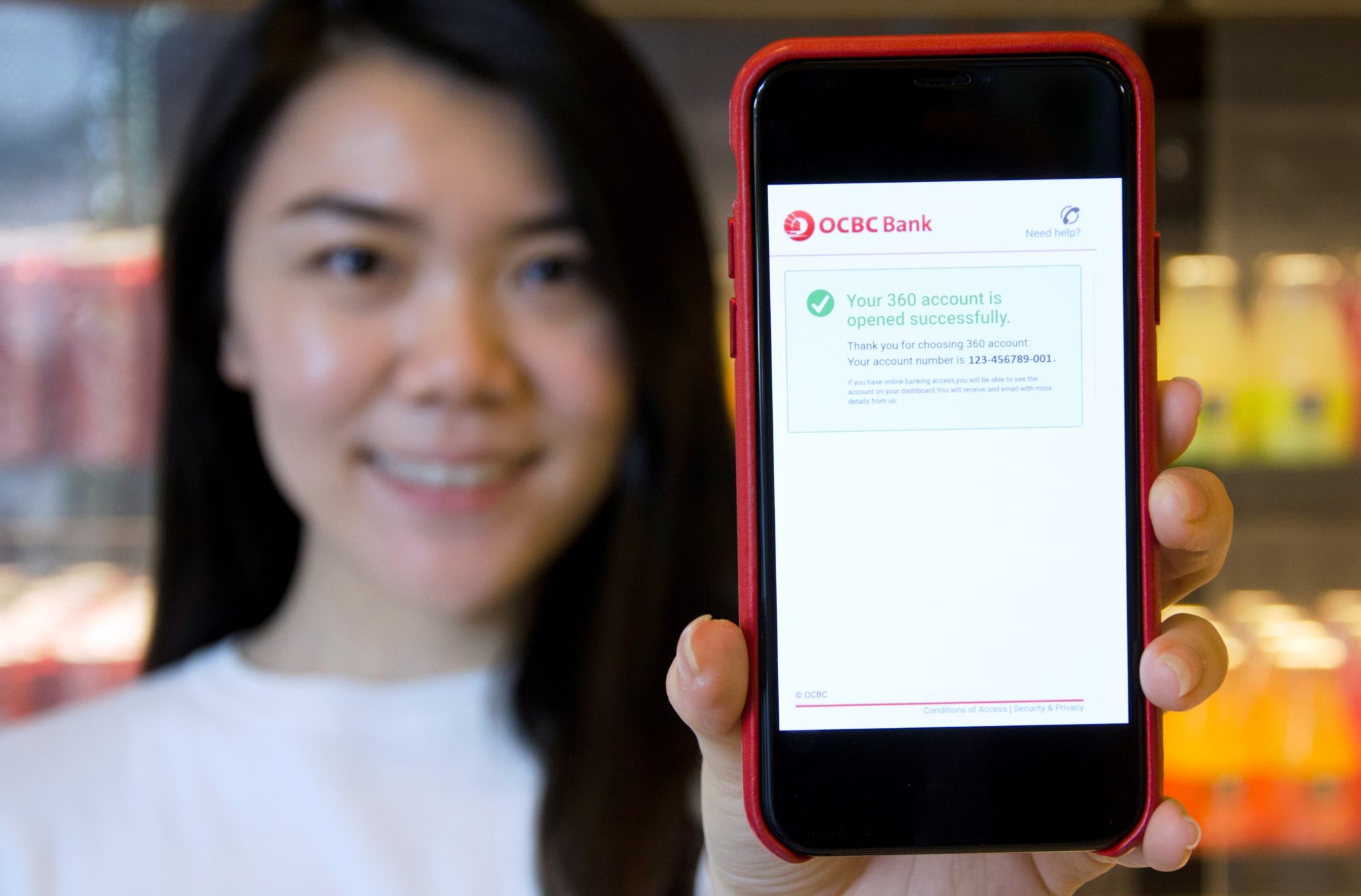
    OCBC Bank is the first Singapore bank to roll out a digital instant account-opening service for all customers who are Singaporeans or permanent residents. Even if you do not currently have any relationship with OCBC Bank, you can leverage national data repository MyInfo and – for the first time – OCBC Bank’s real-time, digital KYC process (e-KYC) to open an OCBC 360 Account using your mobile device or desktop. It all takes less than five minutes via the bank’s website, with no need to visit a bank branch or provide documents. Verification and authentication happens in real time; once this is completed, you get a new account number within seconds of a successful application. You can start using the account right away for functions like electronic transfers, rather than having to wait a few days for application approval.

    There are two main processes involved in OCBC Bank’s digital instant account opening. The first is submitting an application, which is made fussfree thanks to MyInfo, the digital vault of verified personal data designed by the Singapore government. Logging in using your SingPass, you simply consent to OCBC Bank using your MyInfo profile to set up a new account. An online OCBC 360 Account application form is then pre-filled with your personal details, so you do not need to key in details or submit any additional documentation.

    The second process is to verify that you are who you say you are, which is known as KYC or “know your customer”. Even after OCBC Bank successfully integrated its systems with Myinfo in May 2017 in a successful industry pilot – so you could pre-fill application forms with your government-verified personal particulars – you still had to wait for your account to be approved because KYC checks had to be conducted, typically using humans. Now, however, OCBC Bank has digitised the KYC process, and for the first time, is able to authenticate customers in real time using electronic means so that approval for successful account applications is granted instantly.

    Mr Aditya Gupta, OCBC Bank’s Head of E-Business Singapore, said: “Instant is the new black. I believe this instant, hassle-free and secure access to our core banking products will make it hugely compelling for people to initiate and deepen their primary banking relationship with OCBC Bank. Our ambition is to have one in every two customers on-boarded digitally with zero human intervention, and this launch is a significant milestone in that journey. We will be extending this service to a broader suite of our products shortly.”

    Driving digital with the OCBC 360 Account In 2014, OCBC Bank was the first bank in Singapore to enable customers to apply for a bank account online with the launch of the OCBC 360 Account, the first account in Singapore to reward customers with bonus interest for doing more banking transactions using their account, such as crediting their salary, making bill payments or spending on their credit cards. Since then, more than

    20 per cent of OCBC 360 Accounts have been applied for remotely on a mobile device or desktop, with account approvals taking up to three days.

    Now, with the MyInfo integration and the bank’s real time e-KYC process in the account opening journey, account approvals are instant for successful applications. Customers will be able to use the OCBC 360 Account opened online to immediately make funds transfers via PayNow or Fast, and start earning bonus interest from performing various transactions. This fast and seamless on-boarding proposition will sit well with time-strapped PMETs and young professionals who are highly digitally engaged and who make up twothirds of OCBC Bank’s existing OCBC 360 Account base. The OCBC 360 Account customer base has grown 30 per cent year-on-year and has captured a sizable base of PMETs’ salary crediting – over 40 per cent of deposits growth comes through OCBC 360 Accounts – while also driving day-to-day banking and the use of PayNow.

    More than 90 per cent of OCBC 360 Account customers are digitally active and have accessed OCBC Bank’s digital platforms at least once in the past three months. Digitally active customers are found to own twice as many banking products as those who are not digitally active, and the number of OCBC 360 Account customers who take up financial products has grown by more than 10 per cent since a wealth bonus interest was introduced in 2015.

  • American ATM provider bullish on Philippine expansion

    American ATM provider bullish on Philippine expansion

    The American company which has deployed more than half of all automated teller machines in the Philippines remains bullish on its expansion in the country despite the increase in cashless transactions made possible by electronic commerce.

    Diebold Nixdorf, the market leader of self-service banking technology in the Philippines that serves more than 40 banks with 11,500 ATMs or 58 percent of the total nationwide,  believes that it is well positioned to support the industry’s expansion.

    It has a team of over 400 associates around the Philippines, while its service call center team supports over 250 field techs through a dedicated helpdesk and an in-house depot repair center in Makati. It established its presence in the country in 2003 to take advantage of the growth potential in the banking sector where 70 percent of households did not have bank accounts.

    Diebold Nixdorf Philippines president and country manager Julius Servando says the Philippines is a growing market for the company. A study by consulting firm RBR predicts that the country will see a rise in ATM deployment by 48 percent to 29,400 terminals by 2022, from the current 19,851 terminals.

    “What sets us apart from other competitors is our ability to service ATMs and use terminals outside the metros because we do have engineers in those areas 7/24,” Servando says.

    Servando says the company is also instrumental in bringing the government aid closer to the country’s less unfortunate families who benefit from the conditional cash transfer program of the Social Welfare Department.

    Diebold Nixdorf is also one of the first companies to bring in financial solution to Tacloban City after the devastating typhoon Yolanda hit the Visayas in November 2013.

    “We were the first to set up an ATM terminal in the province when the Philippine government needed the support of a financial solutions provider like us. They believed in us and we delivered,” says. Servando says that in the retail sector, the Philippines is still far from closing the gap with other countries in the Asia Pacific in terms of e-commerce sales. Data show that of $140 billion in total retail sales in 2017, e-commerce sales accounted for only $3.9 billion or 2.1 percent.

    “We have seen mobile penetration contributing to an increase in the e-commerce transaction. We can expect Philippine e-commerce to grow though not as fast as in other markets in Asia. Growth will be measured by the limits of infrastructure on hand and some issues on online security,” Servando says.

    “Given this situation and the innate fear of Filipinos to shop on the net especially cashless buying, we see the potential of physical stores still growing. They will be needing support from solution providers like us. We continue to see growth in 30 years,” he says.

    Diebold Nixdorf will soon introduce the use of QR codes and biometrics in automated transactions as well as for retail.

    A local bank plans to adopt the technology to provide better security for its clients. Deibold is celebrating 15 years in the Philippines with a host of new solutions for both the banking and retail sectors.

    Globally, Diebold Nixdorf has the presence in over 130 countries, supported by 15,000 service members and 1,900 software experts.


  • Vietnam’s Techcombank shares drop 20 pct on debut

    Vietnam’s Techcombank shares drop 20 pct on debut

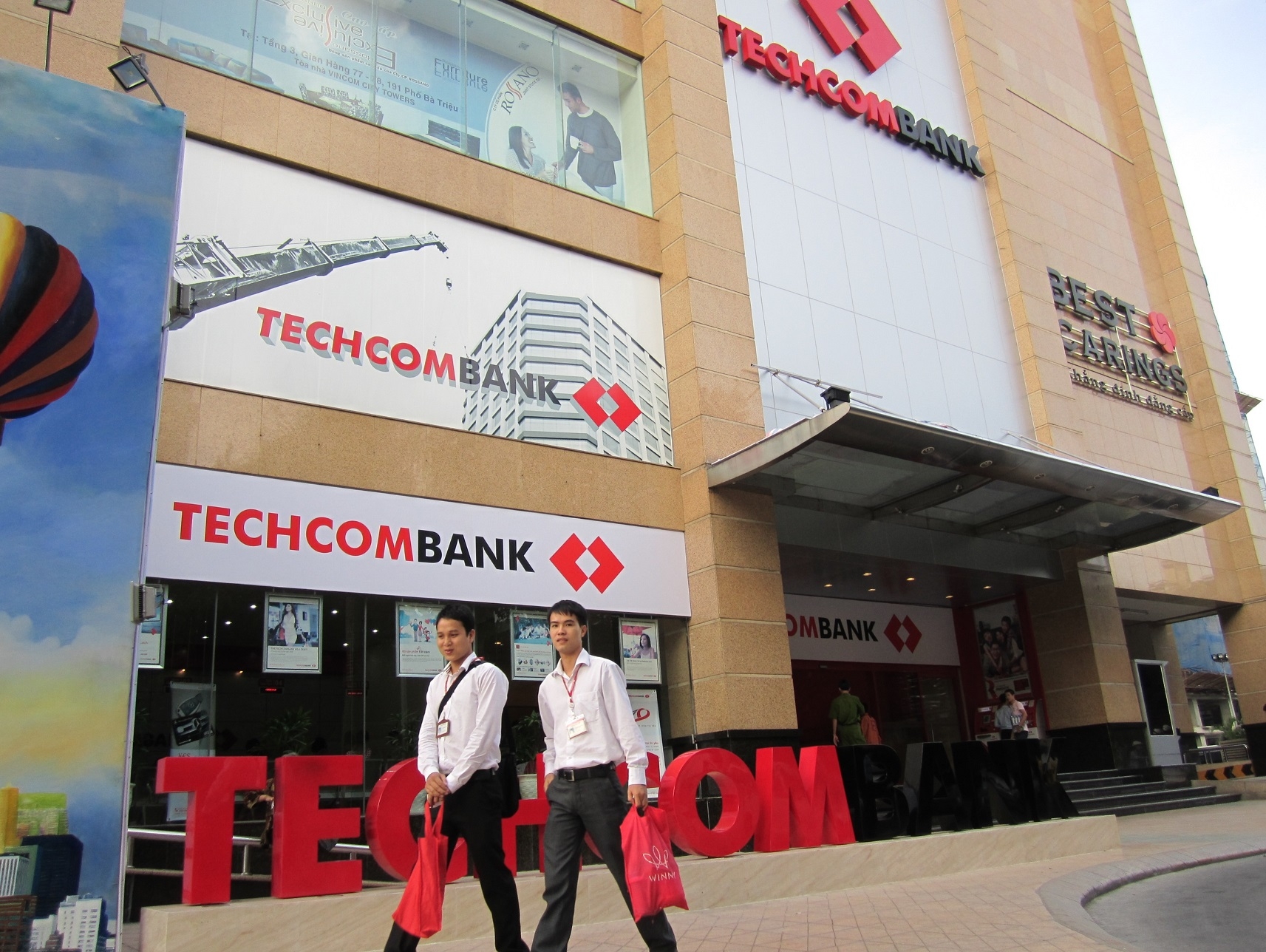
    Vietnam’s Techcombank saw its shares fall as much as 20 percent from their reference price on Monday, hitting the lowest trading limit allowed on a stock’s maiden day of trading.

    Techcombank, formally known as Vietnam Technological and Commercial Joint Stock Bank, raised $922 million in April in one of Vietnam’s biggest offerings, aiming to expand aggressively into retail banking to capitalise on booming demand for an array of financial services.

    The shares are allowed to move 20 percent higher or lower than the reference price on the first day of listing, according to exchange trading rules. In morning trade, Techcombank hit a low of 102,400 dong ($4.49), falling from its 128,000 dong reference price.

    Vietnam’s benchmark VN Index dropped 10 percent in April after touching a record high, prompting fund managers and strategists to warn valuations may have peaked. The index lost a further 7.5 percent in May.

    “We obviously can’t select what’s happening at the market when we come to listing,” Chief Financial Officer Trinh Bang said last week.

    The 25-year-old bank is seeing strong growth in services such as credit cards, auto loans and bancassurance. Its cornerstone investors included Singaporean sovereign wealth fund GIC Pte Ltd, Fidelity Management & Research and domestic fund Dragon Capital.

    Techcombank’s appeal stems from a boom in financial services while the economy expands at record rates.

    Vietnam reported annual credit expansion of about 18 percent for the past two years, with banks posting strong profit growth. A manufacturing boom spurred the export-dependent economy to grow 7.4 percent in January-March – the fastest first-quarter pace in a decade – after growing 6.8 percent in all of 2017.

    ($1 = 22,790 dong)