Category: Finance

Retail News Asia is committed to providing both local and global retailers with the latest Finance news throughout the Asian market. This on a daily base.

  • Maybank Indonesia’s Q1 top line rises 3.6 pct

    Maybank Indonesia’s Q1 top line rises 3.6 pct

    PT Bank Maybank Indonesia Tbk (Maybank Indonesia) today reported that its operating income after provisions increased to 682 billion rupiah for the first quarter ended March 31, 2018 compared with 633.9 billion rupiah recorded in the previous corresponding period.

    In a statement, Maybank Indonesia said its profit after tax and minority Interest (PATAMI) stood at 463.1 billion rupiah for Q1, slightly lower than the 490.1 billion rupiah recorded in the same quarter a year ago.

    Gross operating income rose 3.6 per cent to 2.5 trillion rupiah for the three months.

    Maybank Indonesia said its operating income after provisions increased by 7.6 per cent and the bank’s top line grew 3.6 per cent supported by continued improvement in operational efficiency in line with its Strategic Cost Management Programme, as well as fee based income expansion, improvement in provisioning levels, growth in Sharia business and improvement in subsidiaries.

    Sharia Banking continued to record strong performance in the first three months of 2018 with total assets increasing by 25.7 per cent to 27.1 trillion rupiah, making up 15.4 per cent of the itss total assets.

    Total financing rose 41.6 per cent from 14.3 trillion rupiah as of March 2017 to 20.2 trillion rupiah as of March 2018, while its total deposits grew 44.1 per cent to 17.5 trillion rupiah from 12.1 trillion rupiah.

    It said Non Performing Financing improved significantly to 3.2 per cent as of March 2018 compared with 4.6 per cent in the previous year.

    The bank recorded a moderate loans growth of 2.2 per cent to 122.5 trillion rupiah as at March 31, 2018 from 119.9 trillion rupiah the previous year.

    Global Banking loans recorded growth of 6.2 per cent to 27.6 trillion rupiah as of March 2018 from 26 trillion rupiah as of March 2017.

    Maybank Indonesia said its customer deposits grew by 2.7 percent year-on-year with current accounts growing strongly at 27.3 per cent year-on-year, lifting the CASA (current account savings account) ratio to 39.7 per cent.

    On March 15, 2018, the bank also issued Shelf Registered Bonds II Bank Maybank Indonesia Tranche II Year 2018 amounting to 645.5 billion rupiah to support its business expansion.

    Maybank Indonesia has maintained its robust liquidity profile with its loan-to-deposit ratio remaining at a healthy level of 85.6 per cent and liquidity coverage ratio at 176.4 per cent as of March 2018, far in excess of the mandatory minimum of 90 per cent.

    Maybank Indonesia president director Taswin Zakaria said the bank will continue to grow its assets selectively to ensure sound asset quality going forward.

    “Our Global Banking continues to be the leading contributor to our assets growth.

    “The Sharia First strategy adopted by the Bank since 2014 continues to deliver impressive results.

    “However, we expect our CFS (Community Financial Services) portfolio to gradually strengthen in the coming quarters as we see opportunities in the retail and small medium enterprise segments.

    “This will be further underpinned by our recent initiative in transforming our retail business model,” he said.

    Maybank Group president and chief executive officer Datuk Abdul Farid Alias said the first quarter results demonstrate Maybank Indonesia’s resilience in growing its revenue despite the increasingly competitive market in the country.

    “The bank has firmly embedded sustainable business development strategies which cover retail transformation, digital banking enhancement, culture transformation as well as asset quality selection which will ensure continued value creation for all our stakeholders.

    “The outlook for the medium term remains challenging; but we are optimistic that we can manage the risks and ensure steady growth of our business in the coming quarters,” said Farid.
  • Standard Chartered launches bold new brand campaign

    Standard Chartered launches bold new brand campaign

    Launched in 2010, StanChart’s ‘Here for good’ campaign showed how a bank could be a force for good by promoting economic activity that has a positive social impact. The new campaign retains the original brand promise but sharpens the bank’s focus on how banks can help tackle some of the problems that stand in the way of global prosperity and commerce.

    Behind the ‘Good enough will never change the world’ campaign is an 18 month deep-dive into the values underpinning Standard Chartered and ‘Here for good’. The project included hundreds of client interviews and collected inputs and values of our 85,000 staff.

    The campaign showcases a series of inspirational short films featuring people who accomplished extraordinary things because they wouldn’t settle for ‘good enough’. Directed by award-winning film-maker Asif Kapadia, the launch video stars Jamaican sprinter and Olympic champion Usain Bolt.

    “I always say ‘never think limits’ and ‘anything is possible’.  It is not enough to dream big – you need to push through barriers to realise your dreams,” said Usain Bolt. “When you have an end goal in mind and you’re passionate about it, you can find the will and the strength to break through boundaries and achieve that goal.”

    Follow-up videos will tell stories of how companies and clients overcame obstacles to deliver stronger performance or make a difference in emerging markets across Africa, Asia and the Middle East.

    “What is really exciting about the next chapter in ‘Here for good’ is that it’s deeply rooted in the Bank’s clients, employees and history” said Emma Sheller, Global Head, Brand and Marketing. “It’s also about being in tune with what’s happening in the world. We set the bar high with ‘Here for good’. Now we are setting it higher with ‘Good enough will never change the world’.”

    The campaign kicked off on 30 April in Hong Kong, Korea, Singapore, Taiwan and the United Kingdom. It will roll out in 2018 in phases across the rest of the Bank’s footprint.

  • Security Bank focuses on digitalization

    Security Bank focuses on digitalization

    During the annual stockholders’ meeting of Security Bank Corporation (PSE: SECB) on Tuesday, 24 April 2018, the following were elected to the Security Bank Board: incumbent directors Diana P. Aguilar, Philip T. Ang (independent), Anastasia Y. Dy, Frederick Y. Dy, Takayoshi Futae, Joseph R. Higdon (independent), James JK Hung (independent), Ramon R. Jimenez, Jr. (independent), Jikyeong Kang (independent), Napoleon L. Nazareno (independent), Takahiro Onishi, Alfonso L. Salcedo, Jr., Rafael F. Simpao, Jr. and Alberto S. Villarosa, and new director Cirilo P. Noel. During the organizational Board meeting, key appointments were for Frederick Y. Dy as Chairman Emeritus, Alberto S. Villarosa as Chairman, Anastasia Y. Dy as Vice Chairman, and Alfonso L. Salcedo, Jr. as President and Chief Executive Officer.

    In his report on 2017 operations, President and CEO Mr. Alfonso L. Salcedo, Jr. highlighted Security Bank’s 20% earnings growth that resulted in a record-high net income of Php 10.26 billion, versus industry’s 7% earnings growth. In the last five years, Security Bank’s net income grew by a compounded annual growth rate of 20% versus industry’s 3%. The Bank’s revenue growth in 2017 was 20% versus industry’s 11%. Net interest income growth was 22% versus industry’s 17%, while non-interest income growth was 15% versus industry’s 5% decrease. The Bank’s return on shareholders’ equity was 10.2% versus industry’s 9.96%. The Bank’s Core Equity Tier 1 and Total Capital Adequacy ratios of 15.5% and 17.7%, respectively, are among the highest in the industry and well above the minimum regulatory requirements. Total assets grew 9% to Php 757 billion. In the past five years, Security Bank’s total assets grew by a compounded annual growth rate of 21%, versus industry’s 11%.

    Also highlighted was Security Bank’s healthy loan portfolio growth of 28% versus industry’s 19%. The Bank’s loan growth was driven by corporate loans which increased 25%, middle market loans which grew 24%, and consumer loans which expanded 49%. In the past five years, Security Bank’s loan portfolio grew by a compounded annual growth rate of 22% versus industry’s 18%. The Bank’s three customer segments grew by compounded annual growth rates of 18% for corporate loans, 20% for middle market loans, and 63% for retail loans. Retail loans as a percent of total loans increased to 16% at year-end 2017 from 13% in 2016. Security Bank now has a full slate of consumer loan products consisting of home, auto, credit card, personal and small business loans. Asset quality remained healthy with net non-performing loan ratio at 0.02%, a decrease from 0.17% in 2016, and lower than industry’s 0.47%. NPL cover increased to 239%, versus industry’s 150%. Deposit growth was 19%, faster than industry’s 12%. In the last five years, Security Bank’s deposits grew by a compounded annual growth rate of 19% versus industry’s 12%. The Bank added 12 new branches in 2017, bringing its network to 302 branches. Its ATM network has grown from 622 to 713.

    Security Bank maintained its cost-to-income ratio at an efficient 49.8% compared to industry’s 63.3%, even as the Bank continued to invest heavily in information technology, digitalization, people and branches. Mr. Salcedo stated that these investments are designed to transform the Bank’s infrastructure and way of doing business, and ensure that the Bank stays relevant to shifting customer needs in a fast-changing banking and technology landscape. Security Bank continues to be focused on its medium-term strategic goals which are to regain industry-leading ROE, continue growth momentum to build its retail banking business as the third business pillar, and transform the Bank’s infrastructure to support its growth aspirations and deliver its BetterBanking promise. Key to this transformation is the digitalization of its customer acquisition and servicing channels and operational processes. In 2017, Security Bank increased cash dividends to Php 3.00 per share from Php 2.00 in prior years.

    Highlighted in the President’s report were the major awards that Security Bank received, most recently as The Best Retail Bank in the Philippines for 2018 by The Asian Banker and Best Bank in the Philippines by Global Finance. Mr. Salcedo stated that the execution and results of Security Bank’s retail banking strategy led to the major breakthrough award as The Best Retail Bank in the Philippines for 2018. In 2017, Security Bank was named Best Bank in the Philippines by Alpha Southeast Asia; Best Bank for SMEs in the Philippines by Asiamoney; and Best Digital Bank in the Philippines by Capital Finance International of London. The Bank also received awards for management excellence, industrial peace and harmony, corporate banking and treasury, brand marketing, product innovation, investor relations, and corporate social responsibility.

  • DBS shares shoot past S$30 on 21% surge in Q1 earnings

    DBS shares shoot past S$30 on 21% surge in Q1 earnings

    DBS shares crossed S$30 for the first time after it sparked a surge in bank stocks on Monday with sparkling Q1 results. South-east Asia’s biggest bank group announced before market hours that earnings for the first quarter rose 21 per cent to S$1.5 billion as it benefited from higher interest rates and loans growth as well as a property sale gain in Hong Kong.

    The first of the three local banks to report Q1 results, DBS exceeded expectations. Analysts polled by Bloomberg had forecast S$1.4 billion in net profit for the three months ended March 31. The stock surged 2.8 per cent to close at S$30.84.

    Chief executive Piyush Gupta, speaking at the bank’s results briefing, said he expects “a fairly strong year for DBS” as the global growth momentum is still robust and “the opportunities that we see are continuing to stay for us.”

    Loans expanded 13 per cent, or S$39 billion in constant-currency terms to S$328 billion from growth across trade, corporate and consumer loans, including S$9 billion from the consolidation of the retail and wealth management business of ANZ.

    Income and loans growth from small and medium enterprises (SME) has been strong but it was slow for the bank’s large corporate customers, he said.

    Corporate income in Q1 was flat while SME income rose 9 per cent.

    Full-year loan growth guidance maintained at 8 per cent, said Mr Gupta.

    Net interest margin (NIM) – defined as difference between interest income generated and the amount of interest paid to its lenders including depositors – rose nine basis points from a year ago to 1.83 per cent from higher Singapore dollar as well as US and Hong Kong dollar interest rates.

    DBS is on track for full year NIM of at least 1.85 per cent and may even exceed that by one to 2 basis points if there are three more US Federal Reserve rate hikes and there is pass through to local Sibor/SOR rates, said Mr Gupta. The 3-month Sibor or Singapore interbank offered rate which is the benchmark for housing loans has risen to 1.5 per cent from 1 per cent last June. Three-month SOR or swap offer rate – used to price commercial loans is even higher, at 1.6 per cent from last June’s low of 0.6 per cent.

    Mr Gupta said he wouldn’t be surprised if there are even four rate hikes by the US Fed this year.

    Net fee and commission income rose 12 per cent to S$744 million, led by higher bancassurance and unit trust sales. Card fees rose from higher credit card and debit card transactions as well as the consolidation of the retail and wealth management business acquired from ANZ.

    Consumer and wealth management income rose 17 per cent to S$1.4 billion. Wealth management income went up a strong 28 per cent while retail was up 8 per cent. Assets under management gained 22 per cent to S$208 billion, with S$22 billion from ANZ.

    Home loan market share remains at 31 per cent and SGD savings market share is 52 per cent. New home loan sales was S$2.5 billion in Q1.

    Other non-interest income swelled 25 per cent to S$488 million. There was a S$86 million gain from the sale of a Hong Kong property. Net trading income was also higher, partially offset by a fall in net income from investment securities.

    Expenses increased 12 per cent to S$1.4 billion. Excluding the consolidation of ANZ and a non-recurring item, underlying expenses were 6 per cent higher. Non performing assets (NPA) fell 4 per cent from the previous quarter while the non performing loan (NPL) rate eased to 1.6 per cent from 1.7 per cent. NPL ratio was 1.4 per cent in Q1 2017.

    Mr Gupta said asset quality is “looking very good” with new NPA formation of S$195 million at 4-year low. Return on equity (ROE) was 13.1 per cent, the highest in a decade. ROE was 11.1 per cent a year ago. Mr Gupta said he expects full year ROE to be at 12.5 per cent.

    Along with DBS, UOB, which is announcing its results on Thursday, rose S$0.70, or 2.38 per cent, to S$30.14, while OCBC went up S$0.15, or 1.1 per cent to S$13.80.

  • Octopus Card integrates with Samsung Pay

    Octopus Card integrates with Samsung Pay

    The ubiquitous Octopus Card has been digitally integrated into the Samsung Pay network, allowing consumers to securely pay and travel by simply tapping their smartphones against an Octopus acceptance reader for payment or even door access.

    Consumers will be able to easily register their credit card details with Samsung Pay, providing one more option to top up their digital Octopus cards when necessary.

    It’s a major leap forward for the Octopus Card which has previously worked purely as a  stored value system, and for online e-payments.

    Originally designed as a contactless smart card for using public transport, the card has grown into the most popular cashless payment system in Hong Kong, accepted by convenience stores and even Starbucks. There are now more than 80,000 touch-points in Hong Kong, including stores, recreational facilities, vending machines, and self-service kiosks and more than 34.5 million active Octopus Cards and O! ePay accounts in use. Some 14.5 million transactions amounting to more than HK$200 million are made every day.

    Smart Octopus in Samsung Pay uses Gemalto’s Trusted Service Hub technology to securely digitise Octopus Cards into Samsung Pay, including the transfer of the balance and any associated loyalty programs.

    Sunny Cheung, CEO of Octopus Holdings, said the partnership has enabled Octopus to be among the first contactless smart card payment system operators in the world to allow customers to pay via their smartphones.

    “We believe this service will resonate well with consumers seeking a payment method that is hassle-free and safe to use, providing them with more payment methods to choose from.”

    “Smart Octopus in Samsung Pay delivers a convenient yet secure payment option for consumers in Hong Kong, and helps the city realise its vision of transforming into a cashless society,” said Michael Au, senior VP banking and payment in Asia with Gemalto.

    Smart Octopus in Samsung Pay is currently compatible with Samsung Galaxy Note8, S8+, S8, S9, S9+, A8+ and C Pro series including C5 Pro, C7 Pro and C9 Pro models.

  • Customers can use Zippay to pay for Tigerair flights

    Customers can use Zippay to pay for Tigerair flights

    Jetsetters on a budget can now pay for their flights in installments using buy now, pay later schemes. Low-cost carrier Tigerair is the latest airline to join forces with a scheme allowing customers to book their flights, go on holiday and pay off their airfares at a later date.

    Partnering with alternative payments provider Zip, the airline will put the plan in place by the end of this month, giving travellers Zip interest-free payment options on all domestic and international fares, allowing them to pay off their flights in bite-sized instalments.

    Passengers can book multiple flights up to the value of $3000 and then have full flexibility to repay either in weekly, fortnightly or monthly instalments.

    Zip customers have up to 60 days to repay before they incur any charges.

    The move follows in the footsteps of rival airline Jetstar, who last year introduced the option to use Afterpay for flights booked at least four weeks in advance for fare reservations ranging anywhere between $200 and $1000.

    Tigerair spokeswoman Vanessa Regan said the move would make it more affordable and convenient for jetsetters wanting to ease the burden of paying for flights.

    “We are pleased to be providing our customers with better flexibility when it comes to booking and paying for travel with Tigerair,’’ she said.

    But consumer group Choice’s spokesman Tom Godfrey has warned customers if they can’t afford a flight in the first instance they could be “flying into a world of financial pain.”

    “Far from taking a relaxing holiday, you could end up staring down a debt collector,’’ he said.

    “We’d urge caution with these buy now, pay later financial products.”

     Zip co-founder Peter Gray said Zip does ID and credit checks for every applicant and there are no establishment fees.

    “You can make as many purchases as you like and you receive a statement on the first of the month with your balance,’’ he said.

    “You have until the end of the month to pay off your balance in full and we’ll waive the monthly fee, or if you choose to take longer, and choose to only pay the minimum, there’s a $6 monthly account fee.

  • bKash and Ant Financial in strategic partnership to promote financial inclusion for the unbanked in Bangladesh

    bKash and Ant Financial in strategic partnership to promote financial inclusion for the unbanked in Bangladesh

    The leading mobile financial services provider of Bangladesh, bKash Limited (“bKash”) and Ant Financial Services Group (“Ant Financial”), operator of Alipay, today announced a strategic partnership to promote financial inclusion for the unbanked and underbanked communities in Bangladesh. The partnership involves Ant Financial investing into bKash and increasing its technological capabilities, allowing it to provide greater convenience and security in mobile financial services throughout Bangladesh.

    Established in 2010 by founding shareholders, BRAC Bank Limited and Money in Motion LLC, bKash is running a network of more than 180,000 agents throughout urban and rural areas of Bangladesh with over 30 million registered accounts.

    “Along with its investment, Alipay brings the best payment technologies built by thousands of engineers and the knowledge of applying those technologies to economies like China which went through a massive transformation in recent years. Such track record makes Ant Financial a fitting partner for bKash since Bangladesh too has a large population of 160 million and an economy that is advancing rapidly. This investment opens many new opportunities for bKash and demonstrates the confidence a world-class player is placing in Bangladesh,”said Kamal Quadir, Chief Executive Officer of bKash.

    “Ant Financial and bKash share similar goals, in that we want to bring equal opportunities to everyone here in Bangladesh. bKash can tap on the experience Alipay has built over the last decade serving 800 million users together with our strategic partners worldwide. As part of Ant Financial’s global strategy, we are keen to share our technology know-how with partners like bKash, who has successfully brought financial services to the largely unbanked population in Bangladesh. bKash is managed by a strong team with deep local knowledge and execution capabilities. We are confident, together with bKash, we can bring highly secure and inclusive financial services to address the needs of local people and small businesses here,” said Eric Jing, Executive Chairman and Chief Executive Officer of Ant Financial.

    “bKash, a company taking financial services to the doorsteps of millions of unbanked people in Bangladesh, will benefit immensely from this landmark partnership with Ant Financial. It will help bKash significantly step up its activities in changing and positively impacting on the lives of millions,” said Selim R. F. Hussain, Managing Director and CEO of BRAC Bank.

    bKash and Ant Financial were both named in Fortune Change The World 2017 list, a recognition given to companies that have had a positive social impact through activities that are part of their core business strategy.

    International Finance Corporation (IFC) and the Bill & Melinda Gates Foundation have been shareholders in bKash, since 2013 and 2014 respectively.

  • Chinese visitors can now use Alipay in The Dubai Mall

    Chinese visitors can now use Alipay in The Dubai Mall

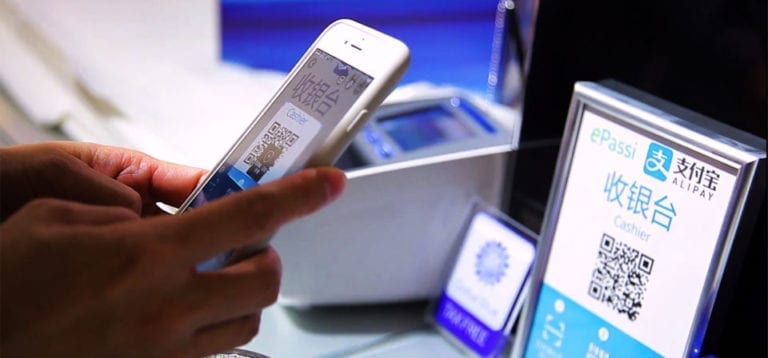
    Alipay, the world’s largest online and mobile payment platform operated by Ant Financial Services Group, and The Dubai Mall, the world’s largest and most-visited retail and entertainment destination, located in the heart of the prestigious Downtown Dubai, today jointly announced that Chinese mainland visitors can now use Alipay to pay for a wide range of shopping, dining and must-see leisure attractions.

    With the remarkable growth and importance of Chinese tourism to Dubai, The Dubai Mall is continuing to look at ways to accommodate their needs, which includes multilingual Guest Services staff and Chinese language Mall Guides.

    Chinese visitors can now look for stores across The Dubai Mall through Alipay’s in-app Discover platform, and pay for their orders in RMB via Alipay at the cashiers.

    Key destinations include The Souk, an elegantly designed precinct featuring jewellery shops, accessory outlets, traditional Arab clothing and handicraft stores; or The Village, which offers a rich collection of denim brands and brings an outdoor community feel with tree-lined walkways, cafés and restaurants; or the newly expanded Fashion Avenue, which provides a significant boost to Dubai’s premium shopping options, with over 150 luxury shopping and dining experiences including flagships and new concepts.

    In addition, Chinese visitors can use Alipay at all The Dubai Mall’s popular entertainment attractions including Dubai Aquarium & Underwater Zoo, the newly opened VR Park, Dubai Ice Rink and At the Top, Burj Khalifa, the world’s highest observation deck with an outdoor terrace.

    With a total internal floor area of 5.9 million sq ft, The Dubai Mall has 3.77 million sq ft of gross leasable space and over 1,300 retail outlets including two anchor department stores – Galeries Lafayette and Bloomingdale’s – and over 200 global food and beverage outlets. The Dubai Mall offers an unparalleled retail mix combined with world-class dining, entertainment and leisure attractions.

    The Dubai Mall, the world’s largest shopping and entertainment destination, is part of Downtown Dubai, Emaar Properties’ flagship mega-development.

    Alipay currently has over 520 million active users in China. According to a report from Alipay and Nielsen, ease of payments is also a leading factor when it comes to key purchase decisions for Chinese tourists. 91% of Chinese tourists claimed they would show greater willingness to spend and shop if overseas merchants accepted Chinese mobile payments.

    Statistics by The Department of Tourism and Commerce Marketing in Dubai show that over 764,000 Chinese tourists visited Dubai in the fiscal year of 2017, with a year-on-year growth of 41%, ranking China as the 5th largest source market of Dubai. Over 68,000 Chinese tourists visited Dubai this January*.

  • SWIFT explores Asia Pacific cross-border real-time payments

    SWIFT explores Asia Pacific cross-border real-time payments

    SWIFT has joined forces with a group of SWIFT gpi banks from Australia, China, Singapore and Thailand to develop a unique cross-border real-time payments service in the Asia Pacific region.

    SWIFT has held exploratory talks with banks from the Asia Pacific region, including ANZ, Bangkok Bank, Bank of China, China Construction Bank, China Guangfa Bank, Commonwealth Bank, DBS, ICBC, Kasikornbank, NAB, Siam Commercial Bank, UOB and Westpac about the development of an Asia Pacific cross-border real-time payments system based on gpi. At the workshops SWIFT and the participating banks determined that such a service would have significant benefits that would extend beyond gpi banks and their customers, deep into the domestic markets, eventually affording a complete real-time cross border payments experience for all bank customers in the region.

    The group agreed the service should be rolled out in three distinct phases:

    • Phase 1 will see the introduction of a new real-time gpi sub-scheme, to facilitate real-time cross-border payments between gpi banks in the region. Building on the significant success of SWIFT gpi payments, which already significantly reduce cross-border payment times to minutes, will ensure real-time settlement of cross-border payments between signatory gpi banks in the region.
    • Phase 2 will effectively extend the SWIFT gpi rails into existing real-time payment systems within each recipient country, thus ensuring that “inwards and onwards” payments can be settled in real-time in each of the four markets, irrespective of whether the final beneficiaries hold accounts at banks that are connected to SWIFT or that are using gpi.
    • A third phase would look to link domestic real-time payment systems via SWIFT gpi to facilitate full cross-border real-time payments between their respective customers. This aims to enable both sending and receiving account holders to benefit from a full real-time payments experience – again independently of whether they hold accounts at banks that are connected to SWIFT or using gpi.

    Eddie Haddad, Managing Director of SWIFT Asia Pacific said: “With the widespread adoption of domestic real-time payments systems in the region, a cross-border real-time service is both a natural extension for SWIFT gpi in Asia Pacific and a real game-changer for bank customers. SWIFT is uniquely positioned to help our customers leverage their existing investments in infrastructure, to standardise connectivity across multiple markets and to drive efficiencies in support of cross-border trade, facilitating further integration in the ASEAN region.”

    Following the initial workshops, SWIFT and participating gpi member banks have begun work on defining a common cross-border real-time scheme that banks can review and test. The design of the new service will build on existing SWIFT gpi service rules to help resolve additional business process frictions in the payments chain. SWIFT has also commenced discussions with the New Payments Platform (NPP) in Australia to enable SWIFT gpi payments to be processed onwards through their newly launched domestic real-time payments system. SWIFT has helped to design, build and deliver the NPP, and is playing a key role in operating the infrastructure for the NPP.

    Launched in 2017, gpi already accounts for nearly 10% of SWIFT cross-border payment traffic, and is enabling more than a hundred billion dollars to be transferred across the world rapidly and securely every day. More than 160 banks, including 48 out of the 50 top banks on SWIFT, have signed up to the service, sending hundreds of thousands of payments daily across 350 country corridors – including major corridors such as USA-China, where gpi already accounts for more than 30% of payment traffic.

    “SWIFT gpi already reduces cross-border payment times to minutes, even seconds and indeed nearly 50% of gpi payments are already being completed in less than 30 minutes”, said Haddad. “This new scheme will both further speed up those payments, and extend the reach of the gpi capability far deeper into domestic markets, driving radical change in the cross-border payments market across the region. We look forward to seeing this work in practice and to more countries, and banks joining the new service.”

  • Mastercard expands Indian research facility

    Mastercard expands Indian research facility

    Mastercard has opened its upgraded technology center in Vadodara, India as part of the company’s support of the government’s initiative to enhance India’s digital capabilities.

    Spread across 65,000 square feet, the state-of-the art facility will serve as a collaboration center for more than 700 employees.

    Mastercard’s Vadodara Centre is part of the company’s vision to build a world beyond cash in India and beyond. Over the past few years, it has contributed to the “Make in India” and “Digital India” campaigns.

    In 2017, Mastercard collaborated with the Indian government to launch Bharat QR, an application that provides local, small and medium enterprises with a low-cost way to accept digital payments from any type of mobile phone.

    Ari Sarker, co-president, Asia Pacific, Mastercard said, “With its incredible pool of talent and opportunities for digitization, India is a strategic market and innovation hub for Mastercard. The expansion of our Technology Centre in Vadodara is an extension of our undertaking to drive the next level of growth and support the government’s agenda to shape a digital future and less-cash society in the market.”

    “Every day, our teams are working relentlessly to deliver real-world technology that breaks down barriers and makes people’s everyday lives easier, more efficient and secure,” said Ed McLaughlin, president, Operations and Technology, Mastercard. “That’s what makes this office so important.  Our Vadodara team is crucial to the next generation digital services and solutions Mastercard will implement across the world.”

  • OCBC Bank is First in Singapore to Rollout AI-Powered Voice Banking Services

    OCBC Bank is First in Singapore to Rollout AI-Powered Voice Banking Services

    OCBC Bank is the first in Singapore to launch artificial intelligence (AI) powered voice banking in collaboration with Google. With Google Home and Google Home Mini launched in Singapore today, anyone can now speak to the Google Assistant – on a smartphone or a Google Home device – to initiate a conversation about OCBC Bank’s services. These services range from planning for retirement or a new home to saving for a child’s education, getting the latest financial market updates, and more.

    At the forefront of voice-powered banking

    The proliferation of digital voice assistants is tipped to impact the consumer technology market this year. A 2018 Digital Consumer Survey by Accenture of 21,000 online consumers in 19 countries, including Singapore, indicates year-on-year growth of stand-alone digital voice assistants will increase 50 per cent in 2018, suggesting consumers are increasingly comfortable talking to digital voice assistants and smart home devices.

    The Google Assistant will provide consumers with another self-service digital channel to interact with OCBC Bank that is convenient and embedded in consumers’ lives. Consumers can pose general banking questions to the Google Assistant at any time of the day to get instant responses. This complements other self-service digital channels such as AI-powered chatbot ‘Emma’, which was launched in 2017 and specialises in answering home and renovation loan queries on the OCBC Bank website in an intelligent, human-like way.

    OCBC Bank remains the only bank in Singapore to offer voice-based banking on digital voice assistants as a medium for customer interaction and engagement. OCBC Bank has been leading the financial industry in rolling out numerous voice and conversational banking innovations for the convenience of customers. Voice-powered technology has been deployed across the bank since October 2016, when OCBC Bank was the first in Singapore to enable customers to initiate e-payments using Apple’s Siri voice assistant. In October 2017, OCBC Bank was again first in Singapore to let business banking customers check their account balances and make funds transfers using just their voice via Siri. This was extended to retail banking customers in February 2018. OCBC Bank will continue to innovate and add more banking services – payments and account balance enquiries, which require more secure access and authentication – to expand OCBC Bank’s services via digital voice assistants, in partnership with technology companies.

    Mr Aditya Gupta, Head of E-Business Singapore said: “This is the new digital – conversational, smarter and simpler access to banking. For our customers to be able to interact with OCBC services by simply speaking to AI assistants on their smartphones and smart home devices is an exciting development, and an important one as we shape the bank of the future. We are the first bank in Singapore to collaborate with Google on this game-changing service, and will continue to embed ourselves in consumers’ lives using voice-powered AI tools, which will be able to answer more questions and perform more tasks for OCBC customers over time.”

    ‘Talk to OCBC’ via the Google Assistant

    By speaking to the Google Assistant, users will be able to:

    • Calculate the mortgage loan amount they can afford
    • Plan how much to save for their children’s education
    • Ascertain how much they would need to retire comfortably
    • Get the latest updates on the financial market
    • Check unit trust prices
    • Get foreign exchange rates
    • Search for nearby OCBC Bank branches or ATMs

    For retirement planning, a user can activate OCBC Bank’s service through the Google Assistant by saying: “Ok Google, talk to OCBC about retirement planning.” The Google Assistant will then reply to the user with leading questions to eventually calculate the retirement amount required.

    The Google Assistant: “Great! It’s never too late to plan for your retirement. Let’s start with your age, how old are you?”

    User: “I’m 25 years old.”

    The Google Assistant: “Cool, you are 25 years old. At what age do you expect to retire?”

    User: “65 years old.”

    The Google Assistant: “All right – this means you have another 40 years to build your retirement portfolio. Now, imagine

    you are 65 and have just retired. How much do you expect to spend on basic expenses such as utilities, transport, entertainment and food in a month based on today’s prices?” 

    User: “$2,000.”

    The Google Assistant: “All right, $2,000 a month for basic expenses sounds good. Finally, how much do you plan to spend on vacations and overseas travels every year after retirement?”

    User: “$2,000.”

    The Google Assistant: “$2,000 per year it is. In total, it sums up to approximately $2,200 per month. Let’s compare this to the expected income you will receive after retirement. During retirement, how much do you expect to receive from investments and rental per month?

    User: “$2,000.”

    The Google Assistant: “Okay, $2,000 every month from rentals and investments. Lastly, how much do you expect to receive from CPF or other allowances per month?”

    User: “$500”

    The Google Assistant: “Okay, $500 from CPF and allowances every month it is. So, in total, you should be receiving $2,500 a month during your retirement. If you start today, you will need to save approximately $751,000 for retirement. Don’t worry, OCBC can help you achieve your retirement planning goals. Would you like to chat with an OCBC expert about your retirement plans in detail? 

    User: “Yes.” 

    The Google Assistant: “That’s great, can you please provide a contact number so I can arrange for someone to call you?”

    User: “91234567”

    An OCBC Bank customer service representative will then follow up with the user on their retirement plans.

  • OCBC Bank first in Singapore to enable instant digital card issuance and provisioning on Apple Pay

    OCBC Bank first in Singapore to enable instant digital card issuance and provisioning on Apple Pay

    OCBC Bank customers have a new, speedy way of resolving a common issue when shopping or dining: Not having the right credit card to enjoy the best discount, rebate or reward.

    Since last month, OCBC Bank became the first bank to enable customers to transact at merchants that accept Apple Pay within minutes of applying for a new VISA credit or debit card. Any OCBC Bank customer – even if you do not yet own an OCBC Bank card – can apply for a card online and have your application approved almost immediately. There is no need to then wait for the physical plastic to arrive in your mailbox: The card can be accessed and provisioned (that is, added to) Apple Pay instantly via the OCBC Mobile Banking app.

    VISA cards make up almost 80 per cent of the OCBC Bank cards currently provisioned to Apple Pay. Instant provisioning of cards for use with Apple Pay has been enabled for OCBC Bank VISA credit cards – including the 365, FRANK, Voyage, Robinsons Group, Plus! VISA and NTUC Plus! cards – as well as the Yes! debit card.

    Mr Aditya Gupta, OCBC Bank’s Head of E-Business Singapore, said: “This is the new digital – instant, embedded and frictionless access to banking products and services. Our customers can now receive their new card digitally and provision it to their Apple Wallet to start paying with it straight away – all from within our mobile banking app and within a few minutes. We believe this is a huge level-up in customer experience and will further accelerate our digital card applications and cashless payments market leadership drive.”

    Leader in payments and digital banking

    OCBC Bank is one of the top credit card issuers in Singapore and the market leader in contactless payments; one in every two VISA contactless transactions, including Apple Pay, is made with an OCBC Bank card. Monthly mobile wallet payments have doubled since 2016, while the number of credit cards provisioned to mobile wallets has increased sevenfold. 60 per cent of OCBC Bank cards provisioned to mobile wallets are on Apple Pay. Mobile wallet usage is especially popular for lifestyle transactions including groceries, transport such as private hire cars, food deliveries and fast food.

    Mr Vincent Tan, OCBC Bank’s Head of Credit Cards, said: “When we first introduced mobile payments to our customers in 2016, the future of payments looked exciting then – and it has definitely proven itself to be so. One in every two VISA contactless transactions is made with an OCBC Bank card so we have clear leadership in the mobile and contactless payment space. More OCBC customers, even those who are not currently our cardholders, can now benefit from our suite of credit cards within minutes of applying for one. With our instant digital card issuance, they can immediately provision their new cards to Apple Pay via our mobile banking app, and start to enjoy our cards’ rewards and rebates.”

    OCBC Bank has constantly worked towards making banking seamless and embedded in our customers’ natural behaviour and interactions. OCBC Bank led the way in Singapore in launching voice-powered conversational banking for retail customers in February 2018, which allows customers to ask Siri to check their bank balances, credit card overview and make e-payments. It was the first bank in Singapore to introduce biometric authentication to access bank account details with OCBC OneTouch in March 2015, and OCBC OneLook in November 2017 on the OCBC Mobile Banking app, leveraging fingerprint and facial recognition technology. OCBC Bank then offered customers the convenience of banking on their wrist, launching its mobile banking app for Apple Watch in March 2016. In November 2016, OCBC Bank enhanced its OCBC Pay Anyone e-payments service by enabling customers to send money via OCBC Pay Anyone directly within Apple’s iMessage on iPhones, and via any app on Android devices using the OCBC Keyboard in August 2017.

  • TrueMoney Vietnam wins payment services license

    TrueMoney Vietnam wins payment services license

    TrueMoney Vietnam has obtained an Intermediary Payment Services License from the State Bank of Vietnam to operate digital financial services in the market.

    The company, part of Thailand-based True Corporation’s payment services subsidiary Ascend Money, has secured approval to operate e-money, e-payment, wireless transfers, and payment gateway services.

    With the approval, Vietnam will be the second country in the region to launch TrueMoney Wallet after Thailand.

    Consumers in Vietnam are expected to be able to use TrueMoney Wallet to make online purchases, pay bills and top up their pre-paid mobile and gaming cards, as well as to transfer money from their bank accounts to the digital wallet and from their wallet to other wallets.

    Offline and online merchants will be able to use TrueMoney’s system as a payment gateway and companies will soon be able to disburse payroll to their employees via TrueMoney Wallet.

    TrueMoney has a network of over 5,000 agents across 40 provinces in Vietnam. Agents are small business owners who conduct financial services for customers, enabling the Vietnamese population to access services such as top-up and bill payment near their location.

    TrueMoney Vietnam aims to soon offer additional financial services such as loans and insurance in the second quarter of 2018.

    “Winning the license to operate digital financial services cements our presence in Vietnam, an important market for Ascend in our expansion throughout Southeast Asia,” Ascend Money president Tanyapong Thamavaranukupt said.

    “This means TrueMoney is now able to deploy a broad range of safe, affordable and convenient digital money solutions to Vietnam’s population of 90 million. In particular we hope to provide equal access to financial services for the unbanked.”

    Vietnam has one of the lowest banking penetration rates in the region, with only one third of the population having an account with a formal financial provider, compared to the regional average of 69%.

    “While Vietnam has the potential to surpass China in GDP growth by 2020, the country urgently needs to connect its people and businesses to financial services, to reap the benefits of inclusive growth. As Southeast Asia’s fastest growing mobile commerce market, as well as one of its largest unbanked populations, Vietnam poses a key opportunity for TrueMoney to innovate and scale,” Tanyapong continued.

    TrueMoney has e-money licenses to operate financial services in Thailand, Myanmar, Indonesia, Cambodia, Philippines, and Vietnam.

    Vietnam, along with the Philippines, Indonesia, and Myanmar, has been identified by the World Bank as among the top 25 countries to focus strategic efforts on financial inclusion. According to the World Bank, in 2014 Vietnam had the lowest credit card usage in Southeast Asiaand only 50% of the debit cards in circulation were in use.

    The Asian Development Bank estimates that bringing digital financial services to Southeast Asia’s unbanked population can boost the GDP of economies by as much as 6%.

  • Payments and lending dominate Indonesia’s Fintech scene

    Payments and lending dominate Indonesia’s Fintech scene

    Payment and lending focused Fintech startup companies dominate the overall Indonesia Fintech landscape in terms of maturity level, according to IDC Financial Insights.

    This was followed by marketplace, wealth management, company solution and accounting based software providers.

    “The collaboration between Fintech and traditional institutions (banks) becomes mandatory for now and in the future. There are several Indonesia banks that have done collaboration actions either in [the] operation aspect or through investment funds. We believe that speed to dominate the market is the key to win for Fintech especially in payments category,” said Handojo Triyanto, Senior Research Manager, IDC Financial Insights.

    “In the future Indonesia Fintech market will have consolidations by collaboration, mergers and acquisitions between the players. It has already happened as Go Jek (Go Pay) acquired Midtrans, Kartuku, and Mapan. The driver is the need to penetrate consumer market as soon as possible… not only to grab higher market share, but also to attract more investors.”

  • Mobile wallets seeing strong adoption in SEA

    Mobile wallets seeing strong adoption in SEA

    A new study from Juniper Research predicts that 2.1 billion consumers worldwide will use a mobile wallet to make a payment or send money in 2019, up 30% from the 1.6 billion in 2017.

    The study claimed that while contactless card payments were far more prevalent than NFC mobile payments in many markets, leading wallets were seeking to redress the balance by enabling both online and offline options.

    The researcher cited a number of wallets have augmented payments offerings with banking services in a bid to deliver a holistic financial portfolio for consumers.

    Kenya’s M-PESA led the way in sub-Saharan Africa, focusing initially on P2P (Person-to-Person) money transfer services. China’s Alipay achieved critical mass as the de facto payment mechanism in the country’s burgeoning eCommerce market, although it continues to face strong challenge from Tencent’s Wexin Pay (known as WeChat Pay internationally).

    In India, the government’s demonetization initiative saw mobile wallets rapidly gain traction. However, this is now being threatened by new regulations on KYC checks imposed by the RBI (Reserve Bank of India), resulting in a sharp drop in transactions in March 2018.

    The Juniper report, Mobile Wallets: Service Provider Analysis, Market Opportunities & Forecasts 2018-2022, argued that while QR code-based in-store payments had seen quite astonishing levels of adoption in China, successful use cases in Europe and North America were likely to be limited to ‘closed loop’ wallets such as those deployed by Starbucks and WalMart.

    According to the research, the greater security offered by NFC-based wallets, which include tokenized credentials and, increasingly, biometric authentication, make them more attractive to both consumers and merchants.

    That said, technology deployment costs continued to limit adoption of such solutions at the point of sales counter.

    “QR code based payments are likely to have significant growth in markets such as India and sub-Saharan Africa, due to the negligible implementation costs. However, their greater susceptibility to alteration to include viruses and phishing scams is likely to act as a major deterrent elsewhere,” report author Dr. Windsor Holden observed.