Category: Finance

Retail News Asia is committed to providing both local and global retailers with the latest Finance news throughout the Asian market. This on a daily base.

  • HSBC launches Singapore-dollar income bond fund for local retail investors

    HSBC launches Singapore-dollar income bond fund for local retail investors

    The fund will primarily invest at least 50 per cent in SGD denominated bonds issued by governments, government agencies, supranational bodies or companies that are Singapore and non-Singapore based issuers. All other investments will be hedged to SGD. The fund also invests across various countries and sectors which tend to behave differently at different market cycles enabling diversification.

    Puneet Chaddha, CEO, Southeast Asia, HSBC Global Asset Management, said: “We launched the fund because our retail customers want to grow their capital faster than the average savings rate but in a way that’s risk weighted and diversified. This fund gives them access to growth with limited downside exposure.”

    “Being located in the heart of Asia, Singaporeans understand the underlying economic growth of the region. Moreover, the diverse nature of the fund’s investment allocation across a multitude of Asian countries and sectors will provide confidence in the growth potential but with the added assurance of minimizing currency risk.”

  • US stocks rally after strong jobs report; Nasdaq ends at record

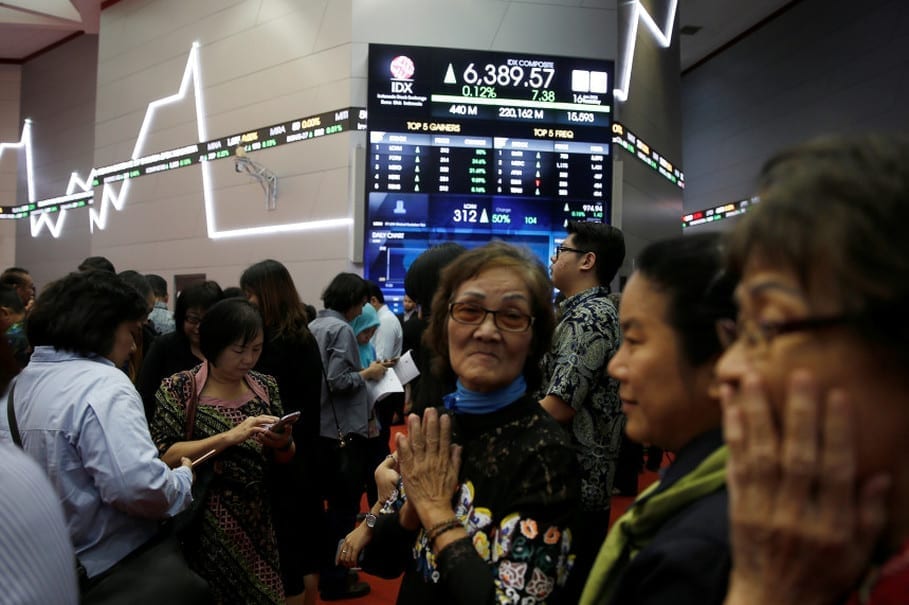
    US stocks rally after strong jobs report; Nasdaq ends at record

    Wall Street stocks surged Friday, with the Nasdaq ending at a record following a strong US jobs report and the announcement of a summit between the US and North Korea.

    However, uncertainty surrounding US President Trump’s tariffs plans and fears of a trade war kept a lid on gains in other markets, dealers said.

    The agreement by Trump and North Korean leader Kim to hold talks “boosted risk sentiment … encouraging investors to buy into riskier assets such as shares”, noted Fiona Cincotta, senior market analyst at traders City Index.

    The tech-rich Nasdaq Composite Index jumped 1.8% to 7,560.81, besting the prior record in late January by 55 points.

    The gains were similar for both the Dow and S&P 500, with analysts pointing to Labor Department data that showed employers added 313,000 jobs in February, far above analyst expectations.

    The closely-watched monthly US payrolls report also revealed moderating wage growth compared with the January report, mitigating concerns the Federal Reserve will speed its pace of interest rate hikes.

    The report was “a perfect combination for Wall Street,” said Jack Ablin, chief investment officer of Cresset Wealth Advisors.

    “It gives the Fed some room to not have to be too aggressive,” Ablin said. “That’s good for risk takers. Money will stay cheap.”

    Meanwhile, US officials vowed there would be no let-up on pressure on North Korea ahead of the summit on the nuclear program.

    South Korea, where the main stocks index closed up 1.1% Friday, said the two leaders would hold an unprecedented summit by the end of May, raising hopes they can broker an agreement on Pyongyang’s nuclear program that has fueled tensions on the peninsula.

    Hopes that the two could reach some sort of agreement also led to a plunge in the yen, which is considered a go-to safe currency in times of volatility and uncertainty. The dollar jumped to its highest level in a week against the Japanese unit.

    Lingering trade worries

    Analysts said investors were somewhat placated by Trump’s modified approach to tariffs, which exempted Mexico and Canada making them less severe than initially feared.

    However, some observers warned the issue could still blow up down the road and dealers remain on edge on concerns over a possible trade war, which sparked a global sell-off last week.

    The tariffs decision, coupled with the departure of market-friendly White House aide Gary Cohn, raises worries “that the nationalist and protectionist views within the White House will have a stronger influence on policy going forward,” said Oxford Economics in a note.

    “The steel and aluminium tariffs are symptomatic of this underlying drift. Further, the risks of increased trade tensions with major partners like the European Union, China, Canada and Mexico is real.”

    European bourses were mixed, with London rising 0.3% and Paris winning 0.4% and Frankfurt dipping 0.1%.

  • Japan regulator to punish several cryptocurrency exchanges, suspend some others

    Japan regulator to punish several cryptocurrency exchanges, suspend some others

    Japan’s financial regulator will this week slap several cryptocurrency exchanges with administrative punishment notices and is considering forcing some to suspend their business.

    The Financial Services Agency may also tell Coincheck Inc – the exchange targeted by hackers in a US$530 million (RM1.96 billion) theft of digital money in January – to raise its standards, in what would be the second such order to the exchange.

    The FSA will mete out the punishments after uncovering flaws in customer protection and anti-money laundering measures during on-site checks at the exchanges.

    It did not specify which exchanges would be targeted.

    The FSA was not available for comment outside business hours. Coincheck did not immediately respond to an emailed request for comment.

    The Coincheck heist, one of the largest of digital money ever, underscored the risks of trading an asset with which policymakers across the globe are grappling, and drew focus on Japan’s system of regulating the exchanges.

    Last year, Japan became the world’s first country to regulate cryptocurrency exchanges at the national level. Some 16 exchanges are registered with the authorities, while a further 16 – including Coincheck – were allowed to continue operating while regulators assessed their applications.

    The regulator will order some of the unregistered exchanges to suspend their business, and is looking closely at the sustainability of their operations.

    The FSA said after the Coincheck heist it would investigate all Japan’s cryptocurrency exchanges for security gaps, ordering them to submit reports on their system risk management and storage of cryptocurrencies. After the cyber heist the FSA ordered Coincheck to bolster its security systems.

    The second improvement order will focus on customer protection, with the FSA monitoring progress of compensating investors affected by the hack.

    The exchange has promised to repay about ¥46.3 billion (RM1.71 billion) of the cryptocurrency it lost in the theft. Last month it said it has sufficient funds to make the repayments, but declined to specify when it would repay investors affected. It has also declined to comment on whether the FSA had verified that Coincheck has enough funds for the repayments.

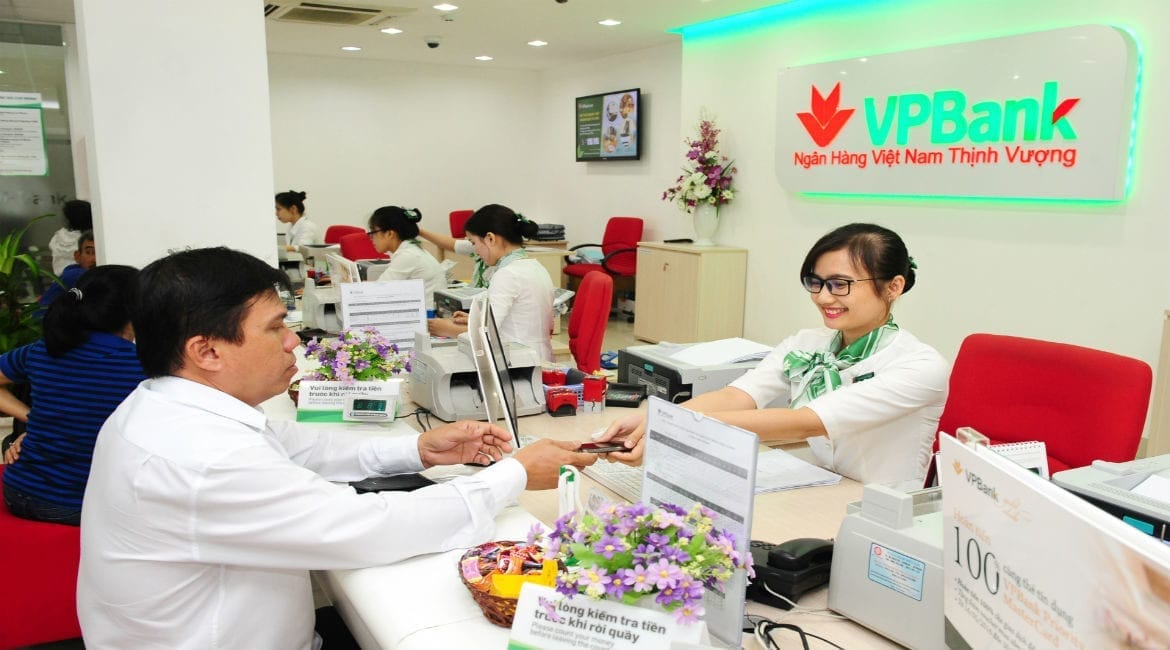
  • Asset quality, profitability of Vietnam banks improved: Moody’s

    Asset quality, profitability of Vietnam banks improved: Moody’s

    The asset quality and profitability of 14 Vietnamese banks rated by Moody’s improved moderately year-over-year, driven by robust macroeconomic conditions and growth in core income, Moody’s Investors Service said on Tuesday.

    However, the banks’ capitalisation deteriorated because of rapid asset growth and cash dividends, Moody’s said in the “Banks – Vietnam: 2017 results show widening divergence in asset quality and profitability performance” report, adding that the banks’ funding profiles weakened mildly, as they increased their reliance on market-sensitive liabilities — mainly borrowings from other banks — to fund loan growth with cheap short-term funding sources.

    “In 2018, we expect the banks will continue to improve their asset quality and profitability, while capitalisation will weaken,” said Eugene Tarzimanov, a vice president and senior credit officer at Moody’s.

    “However, the credit profiles of banks with stronger capital buffers and lower asset risks will be further distanced from the other banks,” said Rebaca Tan, a Moody’s analyst.

    On asset quality in particular, Moody’s said that the improvement in 2017 versus 2016 was helped by problem asset recoveries and write-offs, as well as credit growth. The asset weighted-average problem loans ratio at the 14 rated banks fell to 5.7 per cent at the end of 2017 from 6.7 per cent the year before.

    Notably, four banks fully wrote off the bonds of Việt Nam Asset Management Company that they had received in exchange for problem assets, and Moody’s expects more such write-offs in 2018.

    The problem loan coverage ratios also improved, although they are still at levels which are weak by international standards.

    Moody’s said the banks’ asset quality will improve further in 2018, due to recoveries, but rapid credit growth could mask asset risks.

    With profitability, Moody’s points out that the banks’ asset weighted-average return on assets rose to 0.9 per cent in 2017 from 0.7 per cent in 2016. Profitability will continue to improve in 2018, on the back of the same factors that drove up profitability in the prior year; in particular, robust macroeconomic conditions and growth in core income.

    As for capitalisation, the asset weighted-average ratio of tangible common equity to total assets for the banks slipped to 5.5 per cent in 2017 from 5.7 per cent in 2016, pressured by declines at Government-owned banks in particular.

    Nevertheless, some banks, such as Vietnam Prosperity JSC Bank (B2 stable, b3), Vietnam Technological and Commercial Joint Stock Bank (B2 stable, b2), and HCM City Development JSC Bank (B2 stable, b3), strengthened their capital bases through the sale of new shares.

    Moody’s expects that more Vietnamese banks will increase capital by issuing new shares in 2018. However, the overall capitalisation levels will remain under pressure over the next 12 months from credit growth and dividend payments.

    Moody’s explains that in terms of funding, the banks’ funding profiles weakened moderately, as seen by the system-wide asset weighted-average loans-to-deposits climbing to 86 per cent in 2017 from 85 per cent in 2016. This trend could continue in 2018, because loan growth remains rapid.

    Read more at https://vietnamnews.vn/economy/423887/asset-quality-profitability-of-vietnam-banks-improved-moodys.html#a6iJMG6IBeduJdR1.99

  • Fintech firms can soon offer currency-exchange services

    Fintech firms can soon offer currency-exchange services

    Non-bank institutions will be allowed to directly engage in currency exchange business starting next month as part of a broader deregulation drive to promote the local financial technology sector, the finance ministry said Tuesday.

    Under revised regulations on currency exchange, a qualified fintech firm will be able to offer a currency exchange service of up to $2,000 per person through their online platforms.

    Such fintech firms are required to make a reserve against potential claims from customers and set up a technical safety system, the ministry said.

    In 2016, a total of $5.26 billion was traded in currency exchanges.

    The government has been lifting regulations on foreign currency trading as part of a general effort to reduce the administrative regulations that have been cited for holding up market growth.

  • Blockchain experts imagine a new economy

    Blockchain experts imagine a new economy

    Tech-savvy Koreans in their 20s and 30s are increasingly turning to blockchain to bypass the privacy and financial restrictions they regularly encounter online.

    International blockchain pioneers now frequent the country to give presentations at conferences in Seoul.

    “Every time I come to Korea, I can sense there are more developers leaping into the world of blockchain,” remarked Loi Luu, CEO of Singaporean-based cryptocurrency exchange Kyber Network, who hosted one such seminar in Gangnam district on Jan. 20.

    “Sharing security information through collective intelligence and rewarding these activities with coins in a blockchain ecosystem is more efficient in facing digital security threats,” said Patrick Kim, co-founder of the Uppsala Foundation. Kim, who previously worked for a British security tech company, launched the start-up in Singapore to develop a security solution for cryptocurrency assets.

    Besides attending conferences, programmers interested in blockchain also try to form lasting connections with each other by participating in common-interest groups and researching the new technology together. Yonsei University engineering students got in the game early in February, when they formed YBL, or Yonsei Blockchain Lab.

    “Research [on blockchain] among university students is active in the United States and China, but we are just beginning now,” explained the group’s founder Lee Hyun-jae, a 23-year-old sophomore majoring in electrical engineering. “We plan to debate the future of blockchain by meeting up with world-famous founders of blockchain companies who visit Seoul.”

    Blockchain enthusiasts argue that blockchain-based cryptocurrencies are the way to overcome the limits of the digital economy. These young advocates bemoan how the openness that characterized the early Internet age is now gone, replaced by closed markets of information and technology monopolization by tech giants like Google, Facebook and Amazon.

    “Google and Naver have become so big that they monopolize each country’s market,” said CEO Charles Pyo of Chain Partners, a blockchain company builder that nurtures new start-ups. Pyo is skeptical of the current digital economy where institutional middlemen like banks and portals pocket large service charges.

    “There is a saying that even smart people become fools once they enter Google,” said Uppsala co-founder Park Hae-min. “A blockchain system where individuals are rewarded with cryptocurrency or crypto assets for their skills will last longer than the current digital economy.”

    They are counting on blockchain to succeed shareholder capitalism as the leading model of investment.

    “The current model does not reward consumers who used a business’ products and services in their early days,” explained Kim Seo-joon, who founded the blockchain investment fund Hashed last year. “The lives of Uber taxi drivers remain the same even if the value of Uber reaches trillions of won. Also, not a single CD is given to fans who cheered a K-pop singer in his or her obscurity, with most of the profits going to entertainment agencies.”

    He continued, “A fair model is one which gives early adopters the opportunity to become shareholders and rewards them for demonstrating confidence in new products.”

    Initial Coin Offerings, or ICOs, are the new form of fund procurement that aims to achieve just this.

    New cryptocurrency ventures use ICOs to raise capital by issuing their own coins instead of issuing stocks or obtaining seed money.

    ICOs are regarded as a refreshing method of crowdsourcing where companies can get financed by anyone in the world, as opposed to conventional forms of fund procurement which requires conducting protracted negotiations and giving up large shares to venture capitalists.

    To the frustration of Korean blockchain supporters, ICOs have been technically banned in Korea since September 2017, when the country’s Financial Services Commission prohibited all forms of blockchain funding “regardless of their technical terminology.” While the practice is not outlawed in the United States, some states heavily regulate the process by requiring ICO issuers to register with the Securities and Exchange Commission.

    To date, hundreds of millions of dollars have been procured through ICOs worldwide, showing great potential. Protocol Labs, an American blockchain company, put their self-developed cryptocurrency Filecoin up for sale and amassed $257 million last year, the most funds procured by a company via an IOC in 2017. Protocol Labs is pushing for a decentralized storage network project that allows users to trade leftover storage on their personal computers for legal tender or cryptocurrency.

    “Young people who don’t want to rely on the good will of data-monopolizing IT giants and the impartiality of the government as the middleman sympathize with blockchain,” explained Choi Bae-geun, an economics professor at Konkuk University.

    As ICOs gain more publicity, scams are on the rise as well. Tech-savvy swindlers only have to make websites to lure investors to fund their fictional projects, promising them that the coins and tokens they issue will jump in value a couple of months later.

    Given the high risks and potential of ICOs, industry experts are pushing for their legalization. Don Tapscott, the best-selling Canadian author of “Blockchain Revolution” and “Wikinomics,” visited Seoul for a blockchain conference at the start of the year.

    “ICOs are a great way to procure funds for start-ups,” Tapscott told the audience in Korea. “Though some ICOs may be scams and fail, companies that receive investments from venture capitalists can also fail.”

    Some critics are still concerned about ICOs given the volatility of cryptocurrencies. “If the value of funds amassed through ICOs fluctuate wildly,” assessed Kim Young-sik, an economics professor at Seoul National University, “it may not be a sustainable way of raising funds.”
  • Korea decides to partially support cryptocurrencies

    Korea decides to partially support cryptocurrencies

    Korea’s financial regulator said Tuesday the government will support “normal transactions” of cryptocurrencies, about three weeks after it banned their trading through anonymous bank accounts.

    The remarks by Choe Heung-sik, governor of the Financial Supervisory Service, were seen as being in stark contrast to the government’s previous stance that it could consider shutting down local virtual currency exchanges.

    Korea launched a real-name trading system for cryptocurrency transactions Jan. 30 to prevent virtual coins from being used for money laundering and other crimes.

    The system was also the government’s latest measures to curb speculative investment in virtual coins.

    Choe recently held a meeting with representatives from cryptocurrency exchanges during which he said the government “will support [cryptocurrency trading] if normal transactions are made.”

    Currently, local banks have been reportedly reluctant to open virtual accounts for cryptocurrency trading amid the government’s crackdown.

    Choe said the government will “encourage” banks to make transactions with cryptocurrency exchanges.

    Despite a boom in cryptocurrency transactions, the exchanges go largely unregulated in Korea as they are not recognized as financial products, with the country having no rules for protecting virtual currency investors.

  • Popular K-beauty Brand, Mamonde Arrives in US

    Popular K-beauty Brand, Mamonde Arrives in US

    South Korean beauty brand Mamonde has expanded into the US via the Ulta retail chain.

    This marks the brand’s first foray outside its home market and the company expects the exclusive retail partnership to be the first step of a broader international foray.

    “We’re delighted to be the exclusive US brick and mortar retailer for Mamonde, with many additional items especially developed for Ulta Beauty,” said Penny Coy, Ulta VP of merchandising, prestige skincare and fragrance.

    The new Mamonde K-beauty skincare collection ranges in price from US$7 to US$38, and is available in select Ulta stores nationwide from this week.

    The complete collection is also available online at Ulta.com.

    Owned by AmorePacific, Mamonde features a full range of nature-inspired, made from flowers cultivated in the Mamonde Garden just outside of Seoul, South Korea.

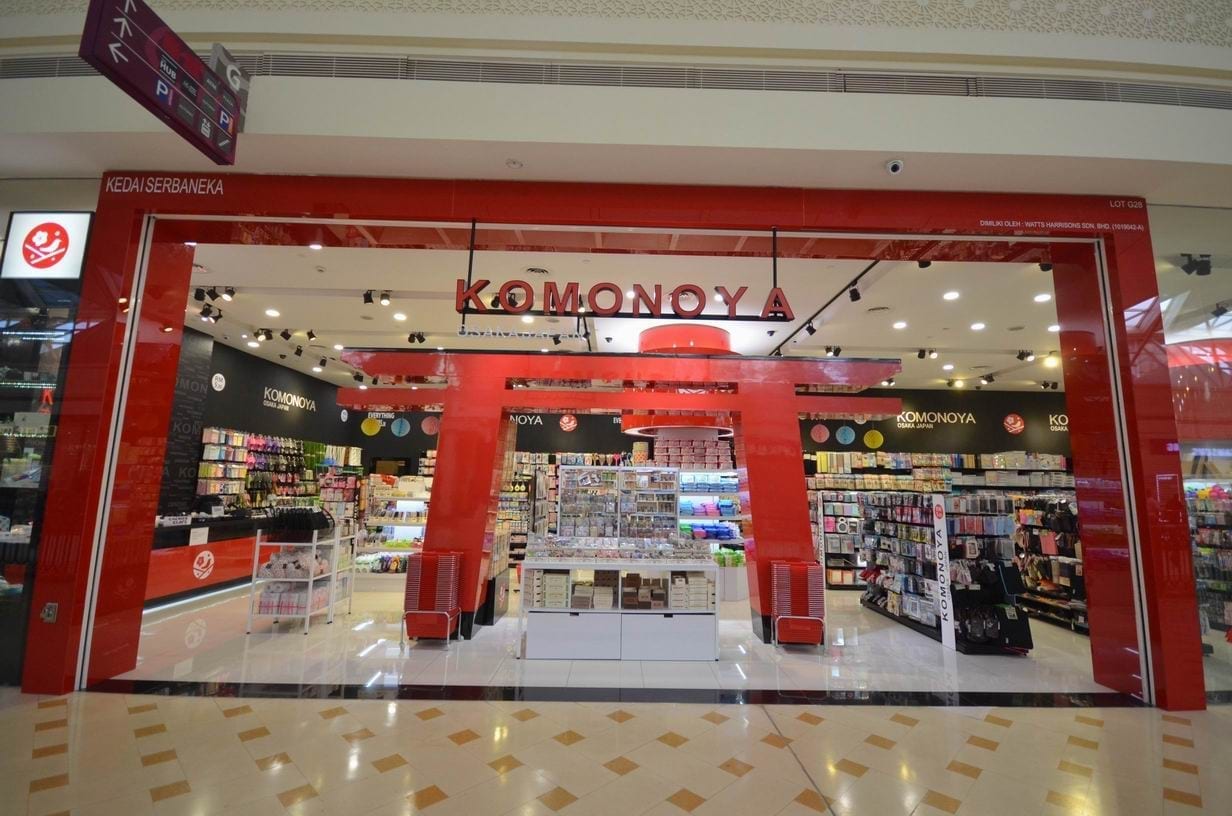
  • Harrisons to acquire entire stake in Komonoya Malaysia

    Harrisons to acquire entire stake in Komonoya Malaysia

    Harrisons Holdings (M) Bhd has entered into an agreement with Watts Co Ltd to acquire Komonoya products retailer Watts Harrisons Sdn Bhd (WHSB).

    Harrisons said it will pay a nominal sum of US$1 (RM3.91) for the 100% stake, and will also pay on behalf of WHSB the remaining balance of the outstanding debt owed to Watts Co Ltd if WHSB has insufficient cash to pay on the expected completion date of April 5.

    As at May 31, 2017, WHSB’s cash level stood at RM1.93 million, versus the outstanding debt of RM2.33 million.

    In a filing today, Harrisons said WHSB has entered into agreements with Watts Co to grant the former the exclusive right to use the Komonoya name and logo in Malaysia and Brunei as well as non-exclusive wholesale rights to sell products in Singapore, Indonesia, and Dalian, Shenyang and Harbin in China.

    WHSB also entered an agreement to grant itself exclusive franchise retail business and rights to sub-franchise to third parties in Malaysia and Brunei and non-exclusive franchise retail business and rights to third parties in Singapore and sales rights to Dalian, Shenyang and Harbin.

    “The proposed transaction will allow Harrisons to develop another distribution model that comes with the franchisor’s brand (Komonoya) and to embark in the retail sector.

    “With this acquisition and with the support of the Watts Co, Harrisons will be able to expand its distribution network beyond Malaysia to Singapore, Brunei, Indonesia and parts of China thus realising Harrisons’ strategy of expanding its business to overseas. WHSB is already operating in Singapore and Brunei,” said Harrisons.

    Harrisons’ share price closed unchanged at RM3.95, for a market capitalisation of RM270.48 million.

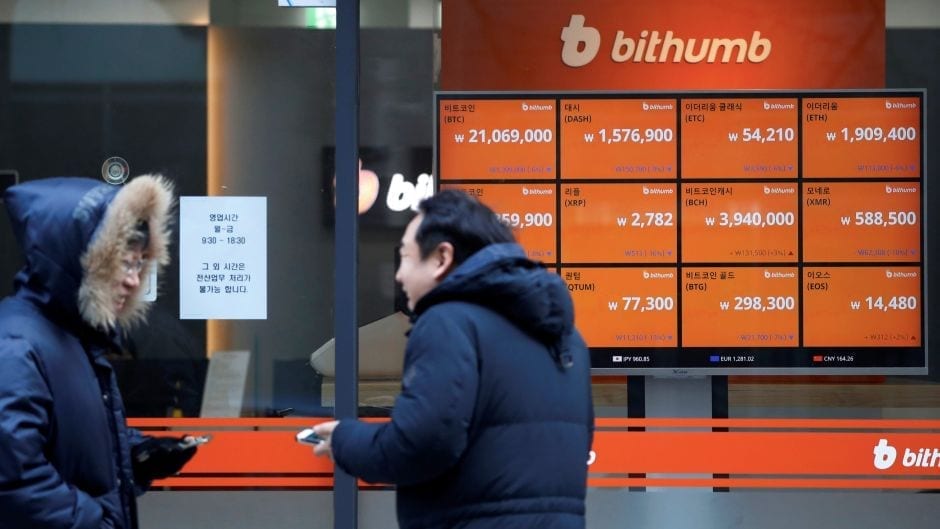
  • Bithumb Founder and Former CEO Daesik Kim Returns to Disrupt the Payment Industry

    Bithumb Founder and Former CEO Daesik Kim Returns to Disrupt the Payment Industry

    Daesik Kim, the founder and former CEO of Bithumb—the world’s largest cryptocurrency exchange—is returning to the payments industry as the Chief Cryptocurrency Officer of Bezant, a payment protocol and cryptocurrency for the digital entertainment and e-commerce sectors.

    Bezant has already raised US$6.28 million in its private token sale, and is targeting a total ICO of US$40 million. Kim, who oversaw the day-to-day operations of Bithumb, including an all-time high daily trading volume of over US$6 billion (as of January 13, 2018), will drive business, product, strategy, and partnerships at Bezant.

    Kim, COO of Bezant, said, “Digital entertainment and ecommerce are expanding faster in emerging markets such as Southeast Asia, more so than in the US and China over the next four years. Developed markets are dominated by a few incumbents that charge high commission fees, offering limited payment options, which are plagued by high exchange fees, bank charges, and payment delays.”

    Bezant utilizes a private blockchain network which enables fluid payments and makes microtransactions secure, reliable, transparent, and cost-efficient. This protocol avoids the common problems associated with cryptocurrencies leading to higher fees and slower transaction speeds.

    “With 600 million people in Southeast Asia, a large majority of which are unbanked, Bezant aims to disrupt digital payments and content distribution by applying blockchain and cryptocurrency to eliminate these barriers for buyers and sellers. Bezant’s protocol will minimize transaction fees, provide a decentralised rewards mechanism for sellers to build customer loyalty, establish a transparent rating system on sellers, and enable customers to make borderless payments using their local method,” Kim added.

    Bezant features an experienced development team with product and software engineers from well-known companies such as Ebay, Naver, and Kakao Corp. Bezant has also attracted high-profile advisors and global business development leaders who bring their expertise from the cryptocurrency, payments, digital content, and finance industries to the company.

  • Vietnam commercial banks boost retail banking segment

    Vietnam commercial banks boost retail banking segment

    Commercial banks have adjusted their service fees to individual customers since beginning of the year in order to focus on the retail segment.

    For money transfer services in the same banking system, some commercial banks, such as VIB, VietinBank and Techcombank, do not charge for individual customers when using electronic services.

    These banks charge VNĐ8,800 for the maintenance of their accounts. In addition, the fee for money transfer services among different banks is VNĐ9,900 or higher per transaction, or as a percentage of the transaction amount ranging from 0.1 to 0.3 per cent.

    The Joint Stock Commercial Bank for Foreign Trade of Việt Nam (Vietcombank) has increased its service fees since the beginning of this month.

    The monthly fee of its SMS banking service increased from VNĐ8,800 to VNĐ11,000, including VAT (value-added tax).

    Vietcombank has begun charging VNĐ2,200 per transaction from Vietcombank account holders via its mobile banking app from March 1.

    For internet banking service, Vietcombank’s customers will have to pay VNĐ2,200 for each transaction worth less than VNĐ50 million (US$2,196) and VNĐ5,500 for each transaction worth more than VNĐ50 million.

    The fee for an inter-bank transaction of below VNĐ10 million is VNĐ7,700, and when the amount is more than VNĐ10 million, it charges 0.02 per cent of the total amount per transaction.

    Financial expert Bùi Quang Tín said that the competition among bank service fees was quite fierce as some banks offered free of charge inter-bank money transfer services in order to attract more customers.

    “The recent increase in banking service fees at several commercial banks is understandable as the banks must invest more money to ensure security systems to meet stricter requirements from customers,” he said.

    According to the State Bank of Việt Nam, commercial banks issued 132 million cards as of the end of last year.

    Last year, the number of transactions, including withdrawals and transfers, via ATMs was over 206 million transactions valued at VNĐ563 trillion; while there were 43.5 million POS and EDC transactions with a total value of VNĐ95 trillion.

    As for domestic transactions for non-cash payments, bank cards ranked second in terms of the number of transactions.

    Individual deposit account balances increased by VNĐ42.6 trillion to VNĐ325 trillion in the fourth quarter of last year.

    With a population of more than 93 million and rising consumption, Việt Nam is considered a destination in the retail banking segment.


  • Bursa Malaysia downtrend likely to continue this week

    Bursa Malaysia is expected to continue its downtrend this week on gloomy investor sentiment as fears of a trade war was triggered by US President Donald Trump’s plan to impose steep tariffs on steel and aluminum imports.

    Affin Hwang Investment Bank Vice-President/Head of Retail Research Datuk Dr Nazri Khan Adam Khan said Trump’s Thursday decision of instituting tariffs of 25% on steel imports and 10% on inbound aluminium shipments had worsened the already cloudy sentiment in the market.

    “Therefore, investors believe the move would have a spillover effect on emerging markets like Malaysia and turn away from the equity market.

    “Trump’s announcement had sparked trade war worries that might involve countries like China, as well as European countries, and they are the major export destinations for Malaysia,” he said.

    Nazri Khan expects the wary sentiment would extend until this week, causing the benchmark FTSE Bursa Malaysia KLCI (FBM KLCI) to lower at around 1,850 points from Friday’s close of 1,856.07.

    For the week just-ended, Bursa Malaysia was traded mostly mixed to lower, despite touching a three-week high of 1,871.46 on Tuesday due to the encouraging corporate earning results.

    Moving in tandem with its regional peers, the local bourse was mostly affected by the new US Federal Reserve Chair’s hawkish remarks on the US monetary policy as fears emerged over the faster pace of interest rate hike.

    China’s sluggish manufacturing data in February and Trump’s tariff hike remarks also played a vital role in influencing the market barometer movement.

    On a Friday-to-Friday basis, the FBM KLCI finished 5.43 points easier at 1,856.07.

    The FBM Emas Index lost 139.83 points to 13,173.95, the FBMT100 Index depreciated 112.65 points to 12,892.74 and the FBM Emas Syariah Index dropped 229.04 points to 13,372.35.

    The FBM 70 dipped 394.07 points to 15,978.48 and the FBM Ace slumped 295.31 points to 6,154.67.

    On a sectoral basis, the Industrial Index decreased 36.68 points to 3,215.45, while the Plantation Index gained 18.50 points to 8,079.99 and the Finance Index surged 226.29 points to 18,228.07.

    Weekly turnover went up to 14.37 billion units worth RM14.20 billion from 12.80 billion units worth RM11.26 billion.

    Main market volume rose to 9.22 billion shares valued at RM13.30 billion from 7.81 billion shares valued at RM10.31 billion.

    Warrant turnover fell to 2.44 billion units worth RM439.50 million versus 2.96 billion units worth RM526.96 million last week.

    The ACE market advanced to 2.67 billion shares valued at RM441.25 million against 2.0 billion shares worth RM403.30 million.

    Gold futures contracts on Bursa Malaysia Derivatives are likely to remain uncertain this week, tracking the US Commodity Exchange’s (COMEX) gold market, said a dealer.

    Phillip Futures Sdn Bhd Dealer Tee Guy Eon said gold prices were expected to continue to be pressured by the expectation of the US Federal Reserve interest rate hike anytime soon.

    “The precious metal is vulnerable towards interest rates, as it could increase the opportunity cost of holding non-interest-bearing gold,” he said.

    For the week just ended, the overall local gold price traded slightly higher, lifted by positive sentiment following the uptrend on the COMEX gold futures as the US dollar eased on worries over US President Donald Trump’s plan to impose heavy tariffs on imported steel and aluminium.

    On a Friday-to-Friday basis, March 2018 and April 2018 decreased 33 ticks each to RM166.20 a gramme and RM166.95 a gramme, respectively, while May 2018 eased eight ticks to RM167.70 a gramme and June 2018 declined 17 ticks to RM167.70 a gramme.

    Weekly turnover rose to 20 lots worth RM334,400 from last week’s 14 lots worth RM236,260, while open interest fell to 70 contracts from 73 contracts.

  • RHB Bank’s five-year roadmap to strengthen presence in Malaysia

    RHB Bank’s five-year roadmap to strengthen presence in Malaysia

    RHB Bank Bhd, which registered a 16% net profit growth to RM1.95bil for the financial year ended Dec 31, 2017 (FY17), has outlined its strategies in a new five-year plan, FIT22.

    The roadmap entails the bank’s priorities to strengthen its presence in Malaysia and win in targeted segments, as well as to focus on its niche and strength in its overseas operations while exploring partnerships.

    Speaking at a media briefing held in conjunction with the bank’s FY17 results briefing, RHB group managing director Datuk Khairussaleh Ramli said digital enablement would be a core priority within FIT22, following the conclusion of the IGNITE 17 transformation programme last year.

    RHB intends to spend over RM200mil over the next three to five years on digital capabilities and technological investments. “We are now focusing on building scale through an agile way of doing things and believe that we still have room to grow in Malaysia to be able to gain market share and improve profitability,” he said, adding that RHB was now the fourth-largest bank in Malaysia in terms of assets.

    The core component of FIT22 will be the small and medium enterprise (SME) and retail segments to drive growth, as well as to build a connected ecosystem.

    Khairussaleh said that the retail and SME segments were expected to constitute an estimated 75% of RHB’s domestic loan portfolio from the current 69%, while the affluent customer segment will make up 25% of RHB’s retail business by 2022, from the current 18%.

    In addition, RHB aims to boost its return on equity to 11.5%, be the number three bank for SMEs as well as maintain a top-three position for investment banking.

    “We are already number one in the mid-cap segment, so if we can build our ecosystem around this segment, some day the mid-caps will grow to become large-caps for us.

    “That is something that we think can differentiate ourselves from the other banks as well,” Khairussaleh explained.

    Todate, RHB has established relationships with some 57% of mid-cap companies, of which one-third have a lending relationship with the bank.

    Meanwhile, RHB’s 2018 key performance indicator is to achieve an ROE of between 9% and 10%, a loan growth of 6%, as well as a cost-to-income ratio of below 50%.

    On mergers and acquisitions (M&As), Khairussaleh said the bank does not intend to look for any M&As overseas, and will instead focus on expanding its product portfolio across its overseas market.

    Noting RHB’s lacklustre performance in Singapore, Khairussaleh said the bank intends to move towards more secured lending and build a new private wealth business in the republic, targeting mid-tier customers with assets under management of S$1mil to S$2mil.

    In 2018, the Malaysian banking sector is expected to see a recovery in loan growth, primarily from stronger business loans, while capital market activities are also expected to pick up, which would help support the non-interest income of banks.

    RHB’s improved performance in FY17 was largely driven by higher net funding income, lower loan loss impairment and lower impairment losses on other assets.

    However, this was partially offset by higher overheads and lower non-fund-based income.

    The bank has announced a dividend of 10 sen per share, bringing its total dividend per share for FY17 to 15 sen, representing a 30.8% payout ratio.

  • Higher provisions push AmBank Group’s Q3 earnings down

    Higher provisions push AmBank Group’s Q3 earnings down

    AMMB Holdings Bhd’s net profit dropped 30.1 per cent in the third quarter ended December 2017 to RM218.97 million from RM313.16 million a year earlier partly due to rise in provisions toward bad loans.

    Revenue for the quarter under review grew 9.18 per cent to RM2.15 billion from RM1.97 billion in the previous year.

    For the nine-month period, net profit was down 11.1 per cent at RM878.72 million while revenue rose 3.6 per cent to RM6.36 billion.

    Group chief executive officer Datuk Sulaiman Mohd Tahir said its net interest income increased by RM149.0 million or 8.8 per cent in the nine-month period mainly from customer lending and interest on fixed income securities.

    The 5.4 per cent year-on-year growth in total income was underpinned by consistent growth momentum in net interest income.

    “Interest income from customer lending was boosted by several factors, primarily, robust growth recorded in residential mortgages as well as increased interest income from securities.

    “In addition, cost of funds was lower mainly as a result of the repayment of medium term debt and from diversifying our funding sources towards retail deposits,” he said in a statement.

    Moving forward, Sulaiman said the bank’s net interest income will continue to drive its top line growth with mortgage, small and medium enterprises, credit card loans maintaining their growth momentum.

    Non-interest income from investment banking and money market activities may still be lumpy but wealth management, corporate and commercial banking will continue to propel non-interest income growth,” he added.

    “We expect credit cost to continue to normalise for us with reduced recoveries relative to financial year 2017 as impairment allowances are expected to commensurate with our loans growth.

    “We will continue to manage our funding mix, grow current account savings account and diversify our portfolio for sustainable net interest margins. Our capital position is constantly being assessed and we continuously strive to improve its efficiency,” he said.

    Sulaiman added that a mutual separation scheme offered in January 2018 will allow them to further optimise the group’s organisational structure, which will in the long run, translate into greater savings and efficiency.

  • Visa expands global partner network in contactless payments push

    Visa expands global partner network in contactless payments push

    Visa Inc said this week that 14 technology partners have joined its Visa Ready for Transit programme, as part of a move to promote contactless payments on public transport around the world.

    Companies from ten different countries are included on the list, joining Vix and Worldline, the initial members of the scheme when it launched in November 2017.

    As part of the programme, Visa is looking to work with companies that have hardware and software “to support a more seamless commute for people around the world”. It is part of a wider Visa Ready initiative, which allows developers to ensure their biometrics, transit or internet-of-things solutions meets Visa’s security standards and specifications.

    The new technology company partners announced by Visa this week are, as follows:

    AS Ridangoa transit solutions and services provider from Estonia.

    BBPOS International: a mobile point-of-sale technology distributor from Hong Kong.

    Conduent Business Solutionsa business process services provider from France, offering capabilities in transaction processing, automation and analytics.

    Digicon: a Brazilian company specialising in the provision of turnstiles, traffic controllers, parking meters, electronic time clocks and automatic ticketing systems for urban transportation.

    FIMEa France-based organisation that works with transit operators to deliver interoperability of fare collection systems.

    Mennica Polska: a Polish ticketing operator and automatic fare collection solutions integrator.

    Paycraft: an Indian contactless, open-loop products provider with capabilities of processing online and offline transactions.

    Pertoa Brazilian technology products and services developer for banks and retailers.

    Planeta Informáticaanother Brazilian company which provides solution for secure online and offline payment systems and devices.

    Quadraca Japanese provider of ultra-high-speed payment servers and proximity communication devices.

    Schiedt&Bachmannan intelligent ticketing and information systems provider from Germany.

    Spire Paymentsa Luxembourg-based point-of-sale hardware and software provider.

    Smartrana smart business solutions provider in the UK, which utlises contactless EMV and NFC mobile applications.

    T-Systemsa UK-based information and communication technology systems operator for multinationals and public-sector institutions.

    Jason Blackhurst, senior vice president for innovation & strategic partnerships at Visa, commented: “We’re seeing renewed interest from transit-related companies around the world to learn how new innovations in payments can improve their customer experiences.

    “Since launching Visa Ready for Transit, we’ve welcomed 16 world-class technology partners to the programme, ranging from small tech companies to multinational organisations. Each of these partners are empowered to help extend the benefits of Visa’s digital payment technology to transit companies around the globe.”