Category: Finance

Retail News Asia is committed to providing both local and global retailers with the latest Finance news throughout the Asian market. This on a daily base.

  • Fees, retail services to be banks’ main income

    Fees, retail services to be banks’ main income

    Commercial banks are expecting the revenue from fees and retail banking services to become their main income sources this year, as a result of rising market demands.

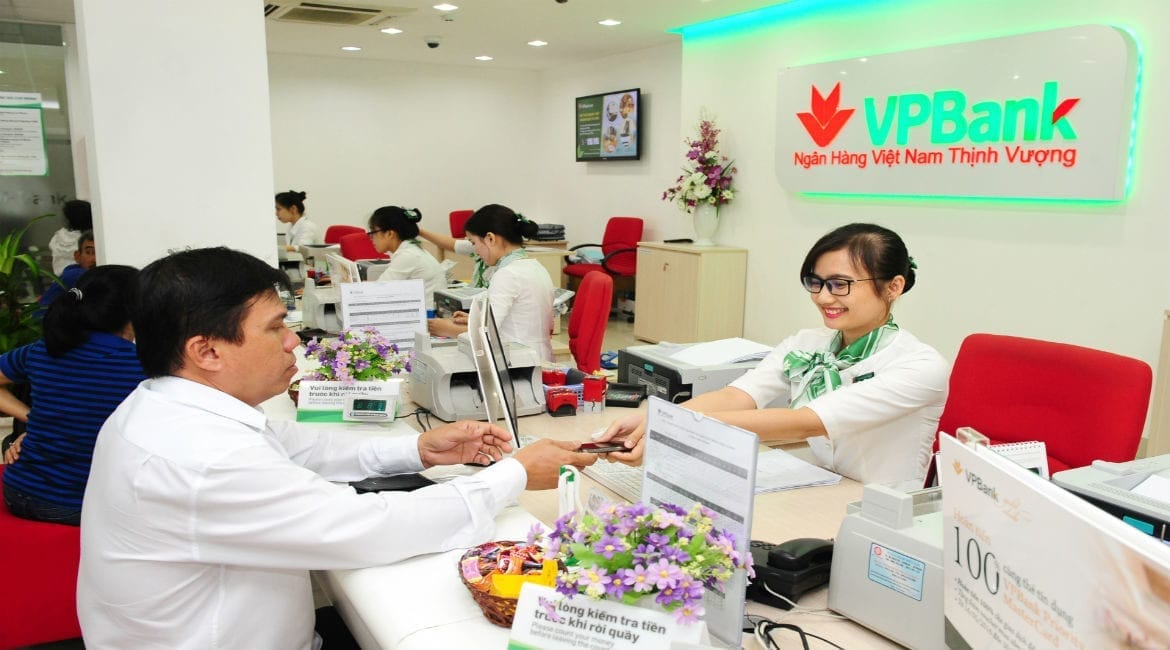
    According to Nguyễn Đức Vinh, general director of VP Bank, after years of investing in the financial company FE Credit, his bank was expecting to receive a large profit from the company in 2018.

    FE Credit started to gain profits from the retail banking segment in 2016, and the profit improved continuously last year. VP Bank’s financial reports showed that the bank’s profits last year hit a record high of more than VNĐ6.43 trillion (US$283.25 million), of which FE Credit made up some 51 per cent.

    Vietcombank also expects to better exploit the potential retail banking segment this year, as it recruited Thomas William Tobin, a Canadian foreign senior expert in retail banking, last year, to be its retail banking director. It was the first time the State-owned bank appointed a foreigner in its management board, showing its priority for the retail banking segment.

    Vietcombank’s chairman Nghiêm Xuân Thành hoped that the expert, who has expertise in global and Vietnamese finance, will help the bank make a leap in the retail banking segment.

    Vietcombank is targeting to become the country’s leading bank in retail segment in 2020, Thành said.

    According to Nguyễn Đình Tùng, general director of the Orient Commercial Joint Stock Bank, his bank is expected to earn a pre-tax profit of more than VNĐ1 trillion in 2018, thanks to specific strategies in the sales of financial products, especially in non-credit services.

    Some other banks have also planned to better exploit the potential business segment in 2018 through mergers and acquisitions last year. Typically, Shinhan Bank Vietnam acquired ANZ’s retail banking services or the Vietnam International Bank (VIB) acquired the HCM City’s branch of Commonwealth Bank of Australia.

    According to experts, banks are investing significantly in retail banking services, instead of only focusing on corporate lending in the hope of gaining higher profits from the potential segment this year.

    With more than 93 million people and sharply increasing consumption, Việt Nam is considered a hot destination for the retail banking segment, which is why banks have strategically planned to boost the segment.

    In fact, the in-cash habit of Vietnamese people is no longer an obstacle to the development of card network and non-credit services. Thus, several banks are aiming to give their customers a variety of non-traditional credit services, such as savings and transactional accounts, mortgages, personal loans, debit and credit cards.

    Notably from the beginning of this year, many banks have considerably improved the quality of their retail banking services to enhance competitiveness in the market. They are also focussing on other aspects such as marketing, technology and human resources to attract more individual customers to non-credit services.

    The move was decided after the retail banking segment contributed to a large amount of the total profits of many banks last year. BIDV and MB Bank, for example, gained high profits last year, thanks to a 34 per cent to 35 per cent rise in retail banking services.

    Nguyễn Thanh Nhung, general director of VietBank, said retail banking services would be a key to making a sustained and stable profit for the banking sector this year. The development of non-credit services contributes to diversifying bank’s services, thereby bringing more customers. This type of service will also disperse risks and create higher profits for commercial banks, said Nhung.

    According to Trần Du Lịch, a member of the National Financial and Monetary Policy Advisory Council, banks currently not only gain profits from lending but also from retail banking services, so the move to invest in retail services is inevitable in the future.

    Based on the results gained, leaders of commercial banks said they would continually apply this business strategy, with a focus on retail banking services next time.

     

  • Asian currencies rise as dollar off despite higher U.S. inflation

    Asian currencies rise as dollar off despite higher U.S. inflation

    Asian currencies firmed on Thursday, boosted by heftier global risk appetites as the dollar slipped despite stronger-than-anticipated U.S. inflation and a rise in Treasury yields.

    Tracking a rally in Wall Street, Asian stocks brushed aside U.S. inflation data that showed that January core CPI posted the
    largest gain in a year, raising pressure on the Federal Reserve to be more aggressive in raising U.S. interest rates this year.

    The dollar index weakened to a near 2-week low, after the rebound in equities, evoking the idea that the greenback might be in a period of persistent weakness.

    “The dollar advanced against other currencies when US CPI inflation was released but pared the gains and weakened later as
    U.S. equities proved more resilient, with the VIX index pulling back further below 20,” said Qi Gao, FX strategist (EM Asia) at
    Scotiabank.

    “Continued risk appetite sent Asian currencies higher this morning, I think risk appetite will likely continue as synchronized global growth is expected to boost the EUR and JPY, while bolstering EM Asian currencies as long as risk appetite sustains.”

    The Malaysian ringgit led gains among regional currencies as it firmed 0.6%, while the Indian rupee strengthened 0.3%.

    The Philippine peso, the worst performing Asian currency in 2018, also rode on the positive sentiment to strengthen 0.3%, on track to end five-consecutive sessions of losses.

    The Singapore dollar firmed 0.1% after data showed that the city–state’s annual exports in January surged despite another decline in electronics shipments, helped by a jump in sales of petrochemical products.

    The Korean won, Chinese yuan and Taiwan dollar did not trade on Thursday, because of the Lunar New Year holiday.

    The rupiah strengthened 0.5%, even though Indonesia’s statistics bureau on Thursday said the country in January had a US$670 million trade deficit, while a Reuters poll had forecast a US$190 million surplus.

    The baht firmed 0.5% on Thursday.

    Thailand’s central bank left its benchmark interest rate unchanged on Wednesday, near record lows, saying it expects inflation to stay largely subdued even as Southeast Asia’s second-largest economy gains further momentum.

    The central bank said the economic outlook had improved on the back of strong global demand for its exports, but recovering
    domestic demand and inflation developments should be monitored.

  • SWIFT revolutionises Australian banking with real-time payments

    SWIFT revolutionises Australian banking with real-time payments

    SWIFT welcomes the public launch of the New Payments Platform (NPP) in Australia, which is set to revolutionise the way payments are made domestically. SWIFT has helped to design, build and deliver the NPP and will play a key role in operating the infrastructure for the NPP.

    The NPP’s paradigm-shifting financial architecture has been designed and constructed to fundamentally improve how consumers, businesses and governments transact with one another. The key features of the NPP include:

    • 24/7 instant payments and real-time line-by-line settlement via the Reserve Bank of Australia
    • PayID, new and easy way to link a financial account with an easy-to-remember identifier such as a mobile phone number, email address or ABN for businesses
    • Open access infrastructure that truly empowers innovation through competition
    • Overlay services framework that will provide new value services to Australian consumers, businesses and government

    Alain Raes, Chief Executive of EMEA & APAC, SWIFT, said the rollout of the NPP and the enablement of real time payments is the most significant development in the Australian payments industry in decades, and could have a more revolutionary impact on the economy than any previous payments system innovation.

    “SWIFT has supported the evolution of payments systems around the world for more than 40 years and is delighted to have played an important role in the creation and roll out of real-time payments in Australia. The smooth delivery of the project is a measure of the great partnership that SWIFT and the Australian industry have developed throughout the collaboration,” said Mr Raes. “The NPP has also showcased the expertise and innovative approach of SWIFT’s global payments team and the value that we can deliver to other markets, including the European Union as it moves towards the goal of a harmonised instant payments service within the Eurozone.”

    NPPA CEO, Adrian Lovney said: “SWIFT, an international leader in the provision of secure financial services, has worked tirelessly to help design, build and deliver this world class system.”

    NPP is a key component within SWIFT’s broader global instant payments strategy, which also includes the provision of an instant payments messaging service for the euro area. Launching in November 2018, to coincide with the launch of TARGET Instant Payment Settlement (TIPS), the euro real-time payments service commissioned by the Eurosystem, SWIFT’s new messaging service will allow instant payments to be made in euros across Europe through both TIPS and EBA CLEARING’s RT-1 instant payments system.

    In the context of the Eurosystem’s 2020 vision, which envisages access to TARGET2, TARGET2 for Securities and TIPS through the Eurosystem Single Market Infrastructure Gateway (ESMIG), SWIFT’s instant payments strategy is committed to the future agenda of the Eurosystem, supporting customers as they move to meet this vision.

    The same SWIFT solution will provide customers with a single gateway to connect seamlessly to other instant payment systems in Europe and elsewhere.

    SWIFT, which currently connects 85 of the 149 High Value Payments systems in the world, including CHAPS in the UK, TARGET2 in Europe and the SWIFT India Domestic Services, also offers gateways to instant payments platforms in Hong Kong and in the US.

  • NEC’s facial recognition system elevates customer experience at OCBC Bank

    NEC’s facial recognition system elevates customer experience at OCBC Bank

    NEC Asia Pacific and NEC Corporation today announced the successful testing and roll-out of a facial recognition system at OCBC Bank’s Holland Village branch to identify Premier Banking customers. OCBC Bank is one of the first in Singapore’s banking sector to adopt such a system as part of its digital efforts to improve service excellence.

    Facial recognition is a growing form of biometrics used to identify and authenticate persons in a wide range of industries. With the widespread usage and acceptance in immigration systems, and secured identity card systems, biometrics is now expanding into commercial applications (e.g. banking, retail etc.).

    Implemented since 4 December 2017, the system instantly identifies OCBC Premier Banking customers in real-time as they approach the lounge in the branch without needing to stop to look at the camera.  This is a very unintrusive approach for the bank to identify them.

    Based on the VIP identification, the system allows the Premier Service Manager (PSM) to promptly identify and greet customers by their preferred name, offer them their preferred drinks and magazines, and, understanding their visit records to promptly deliver services, giving the client a more personalized and pleasant customer journey.

    The Bank can record the purpose of a customer’s visit, gather feedback to help improve services, and understand customer behavior patterns, such as the frequency of their visits.

    The system utilizes NeoFace, NEC’s AI engine for face recognition.

    NeoFace is recognized as the fastest and most accurate algorithm in the world by the National Institute of Standards and Technology in the United States*, greatly exceeding all other vendors in both accuracy and speed.

    The NeoFace engine can be used for a variety of applications and scenarios such as:

    -Access control and attendance tracking for staff and visitors in different areas

    -Workstation/console login for more secured access

    -Customer authentication for transactions as a 2nd factor on different channels of financial institutions

    – Seamless online transaction experience using facial recognition for payment authentication

    – For safety reasons; monitoring for individuals on watch lists or tracking people who loiter on the premises

    -Fraud prevention with NEC’s “liveness”** detection

    -Tailored advertising signage and marketing material using facial recognition to understand the age and gender of patrons

    “OCBC is committed to our service quality and implementing facial recognition to elevate the customer experience is one of the first steps that we are doing in the digital economy. Since introducing it, we received positive feedback from customers who were impressed by the personalized hospitality enabled by fast and accurate identification. Going forward, we will evaluate and consider the extension of the capability beyond customer service,” said Mr. Pranav Seth, SVP, Head of E-business, Business Transformation and Fintech & Innovation group, OCBC Bank.

    “We are pleased to work with OCBC Bank to provide this cutting-edge facial recognition solution to help improve the overall delivery of services to their valued clientele. We hope that through this co-creation we have helped OCBC Bank stay competitive in this fast-paced industry where customer experience is key. Moving ahead, we look forward to exploring more innovative and meaningful ideas to help customers digitally transform their businesses through artificial intelligence that includes biometrics and facial recognition,” said Lim Kok Quee, Managing Director and Deputy CEO (ASEAN Sub-Region) of NEC Asia Pacific.

    NEC has been engaged in the development of facial recognition technology for over 30 years. NeoFace® is currently implemented in more than 40 countries by a wide range of public and private organizations.

  • Indonesia Central Bank to Prepare Fintech Regulatory Roadmap

    Indonesia Central Bank to Prepare Fintech Regulatory Roadmap

    Bank Indonesia is currently preparing a roadmap of regulations for financial technology, or fintech, products in an effort to support the rapid change of the global financial system in the digital era, the central bank’s official said on Thursday (08/02).

    “This is a response to the shift from physical to virtual as it presents risks and challenges […] There will be a roadmap to regulate fintech to follow its dynamic development,” Sukarelawati Permana, director of the policy and payment department at the central bank, said at an economic forum.

    The central bank is collaborating with Financial Services Authority, or OJK, to create the regulatory roadmap.

    Sukarelawati, however, did not reveal the details of the framework or when it will be released.

    The regulations, according to her, will mitigate risks presented by the sector’s development, while still supporting the shift of traditional payment systems into the digital realm.

    “As we surely cannot block innovation, we as the authorities will try to balance the digital economy,” Sukarelawati said.

    The central bank previously issued a provision to support innovation in the fintech sector that benefits the economy while maintaining the principles of consumer protection, risk management and prudence, Sukarelawati said.

    A 2017 Bank Indonesia regulation regarding financial technology implementation dictates that fintech providers register with the central bank.

    The regulation excludes payment system service providers (PJSP) who have obtained a license from Bank Indonesia and providers who are under other authorities. But the providers must still inform the central bank regarding new products, services, technologies and business models.

    Bank Indonesia is currently also conducting a study on the feasibility of issuing digital currency.

  • DBS completes acquisition of ANZ’s wealth, retail units in five Asian markets

    DBS completes acquisition of ANZ’s wealth, retail units in five Asian markets

    Singapore-headquartered and listed lender DBS Bank Ltd (DBS) announced on Monday that it has completed the acquisition of Australia & New Zealand Banking Group Ltd (ANZ)’s wealth management and retail banking businesses in Singapore, Hong Kong, Mainland China, Taiwan, and Indonesia.

    In a statement, DBS said the last tranche of the migration was successfully conducted in Indonesia over the weekend, with ANZ transferring its portfolio of businesses to DBS. The migration of businesses from ANZ to DBS started in July 2017, with the target of working towards a full completion of the acquisition in all markets by early 2018.

    In October 2016, DBS said it will pay $79 million above the book value for the ANZ businesses. ANZ has been financially structuring its businesses through cutting both inefficient assets and investments into other institutions. “With the successful acquisition of ANZ’s wealth management and retail banking business, about 90 percent of deposits, assets under management, and loans from ANZ were transferred to DBS,” the Singapore lender said.

    DBS added that the acquisition has added a large customer franchise to DBS in Indonesia and Taiwan, which are key markets for the bank. In Indonesia, DBS gained about 370,000 customers. The cards portfolio being transferred over to DBS Indonesia is also significant, with around 600,000 cards in circulation. In Taiwan, DBS added close to 520,000 customers.

    “This acquisition takes our business to the next level and gives us access to a sizable number of new customers, especially in our key markets like Indonesia and Taiwan,” said Tan Shu Shan, Group Head of Consumer Banking & Wealth Management at DBS. It also gives ANZ’s wealth customers access to more tailored solutions and a full suite of universal banking products supported by Asian insights, research and investment advice, Tan added.

    DBS is competing with larger international wealth managers including UBS Group AG and Credit Suisse Group AG, which are also expanding in Asia.

  • Malaysian economic growth slowed in Q4

    Malaysian economic growth slowed in Q4

    Malaysia’s economy grew more slowly in the last quarter of 2017 than the blistering pace set in July-September, a Reuters poll showed, as exports increased at a slower rate.

    The median forecast in the poll of 12 economists was for annual growth of 5.7% in October-December, compared with the previous period’s 6.2% – the fastest rate since the second quarter of 2014.

    Forecasts for the fourth quarter ranged from 5.2% to 6.1%.

    “The best is behind us,” ING said in a note today about Malaysia’s growth pace, noting that a high base effect has been impacting growth rates in several Asian economies.

    Whatever Malaysia’s fourth quarter number, 2017 have brought Malaysia its fastest full-year growth since 2014’s 6%.

    Growth in each of 2017’s first three quarters topped 5.5%.

    Brian Tan, a Singapore-based economist with Nomura, said the fourth quarter brought a “slowdown in exports which looked quite sharp, but we suspect it was due to the ringgit appreciation during the period”.

    In October-December, exports rose 12.4% from a year earlier, down from increases of more than 20% in each of the first three quarters. The peak increase, in July-September, was 22.1%.

    Malaysia reports its trade figures in ringgit.

    During 2017, the currency strengthened more than 10% against the dollar.

    Industrial production rose 2.9% annually in December, down from 5% a month earlier.

    Growth in Southeast Asia’s third-largest economy beat expectations in the third quarter, helped by private sector spending.

    In October, the government revised up its 2017 full-year growth projection to 5.2-5.7%, up from 4.3% to 4.8%.

    Malaysia’s economy grew 4.2% in 2016.

    Robust private consumption is expected to have propped up fourth quarter growth, with higher motor vehicle and retail sales and strong consumer sentiment, HSBC said in a note.

    The volume index of wholesale and retail trade rose 6.8% in the fourth quarter, according to data released last week by Malaysia’s statistics department.

    Strong growth figures over the past three quarters and rising inflation rates prompted Bank Negara Malaysia in January to raise its key interest rate by 25 basis points to 3.25%. It was the first hike in three and a half years.

    ING, which forecasts 5.5% annual growth for 2017’s fourth quarter, has pencilled in one more 25 basis point rate hike, for the third quarter of this year.

  • Asia gold demand picks up as prices fall

    Asia gold demand picks up as prices fall

    Physical gold demand in Asia picked up towards the end of the week, as a pullback in prices spurred purchases ahead of the Lunar New Year in China and the wedding season in India.

    Spot gold has declined about 1% so far this week and was headed for a second straight weekly drop due to a recovery in the dollar. 

    “Retail buyers are comfortable with the current price range,” said Aditya Pethe, a director at Waman Hari Pethe Jewellers in Mumbai. Local gold prices have declined more than 2% since rising to Rs30,720 per 10 gram last week, the highest since November 9, 2016.

    Dealers were charging a premium of up to $1.5 an ounce yesterday over official domestic prices, down from $2 last week. The domestic price includes a 10% import tax.

    “Demand is not great but the market is still in premium due to limited supplies. Imports were lower last month,” said a Mumbai-based dealer with a private bank. India’s gold imports in January dropped 37% from a year earlier to their lowest in 17 months as buyers postponed purchases in expectation of a cut in the import tax.

    Gold demand in India is likely to remain below its 10-year average for a third year in 2018 as higher taxes and new transparency rules on purchases may cap last year’s rebound in buying, the World Gold Council said on Tuesday.

    In top consumer China, premiums rose to $9-$10 an ounce from $6-$8 last week as demand picked up after prices fell later in the week, traders said.

    In Hong Kong, premiums remained unchanged from last week at between 60 cents and $1 an ounce. Demand in Southeast Asia remained strong ahead of the Chinese New Year that starts from February 16, as dealers stocked up in anticipation of strained supply during the festival week when gold refineries and businesses will be on holidays.

    “Supply-wise, we see some issues… That’s why the market is getting squeezed a bit and premiums are a little higher now,” said Brian Lan, managing director at dealer GoldSilver Central in Singapore.

    “Dealers generally try to get in more inventory during this period to at least get through the one tight week during the Chinese New Year.”

    Premiums for the precious metal in Singapore were slightly higher this week at between 80 cents and $1 an ounce, compared with 60-80 cents last week.

    “There’s no shortage of gold or anything, but it’s because of the festival season and the production schedule,” said Lan.

    In Japan, gold was sold at par after being on discount for the past few weeks, according to a Tokyo-based trader.

    India’s gold imports in January dropped 37% from a year earlier to their lowest in 17 months as buyers postponed purchases in expectation of a cut in the
    import tax.

  • Vietcombank sign agreement to provide converting bank service

    Vietcombank sign agreement to provide converting bank service

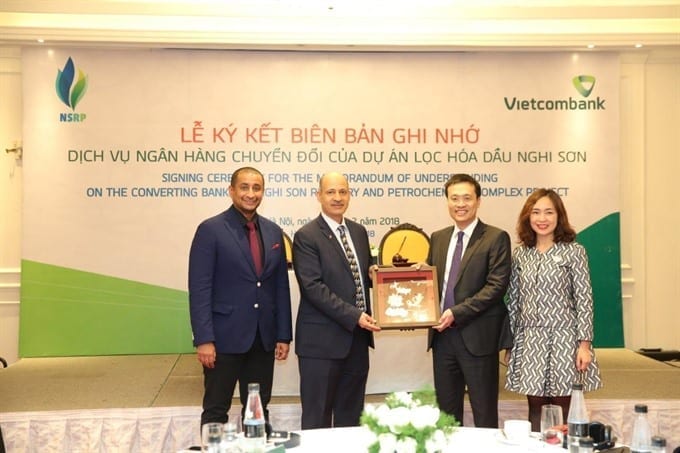
    Joint Stock Commercial Bank for Foreign Trade of Việt Nam (Vietcombank) and Nghi Sơn Petrochemical and Refinery LLC (NSRP) on Thursday signed a Memorandum of Understanding (MoU) on converting bank service.

    Under the MoU, Vietcombank will be the sole bank to provide the service of foreign currency converting bank for the Nghi Sơn Petrochemical and Refinery Project.

    Phạm Quang Dũng, CEO of Vietcombank, said the signing of the MoU would acceleratethe negotiation process towards agreeing on the official contents of agreements on foreign currency conversion.

    Ahmad Aljemaz, vice president of Kuwait Petroleum International Ltd, one of NSRP’s investors, said the provision of the converting bank service by Vietcombank is significant to the operation and success of NSRP.

    Turki Alajmi, acting CEO of NSRP,  expressed confidence in this cooperation with Vietcombank. “The converting bank is one of the elements which plays a vital role in the financial success of the project. NSRP is confident that Vietcombank, as the leading joint stock commercial bank in Việt Nam, with the highest support of the Government, will be able to perform this function successfully and most effectively,” he said.

    Nghi Sơn Petrochemical and Refinery Project is a key petrochemical and refinery project of national importance, which is being implemented in Nghi Sơn Economic Zone in Tĩnh Gia District, Thanh Hóa Province.

    The refinery has a total investment of over US$9 billion, intended capacity of 10 million tonnes a year in maximum operation and scope of producing 200,000 barrels of crude oil a day. Upon operation, it is expected to meet approximately 40 per cent demand of the domestic petroleum market and export millions of tonnes of petrochemical products.


  • With Fastest Growth in Four Years, Indonesia Enters Trillion Dollar Club

    With Fastest Growth in Four Years, Indonesia Enters Trillion Dollar Club

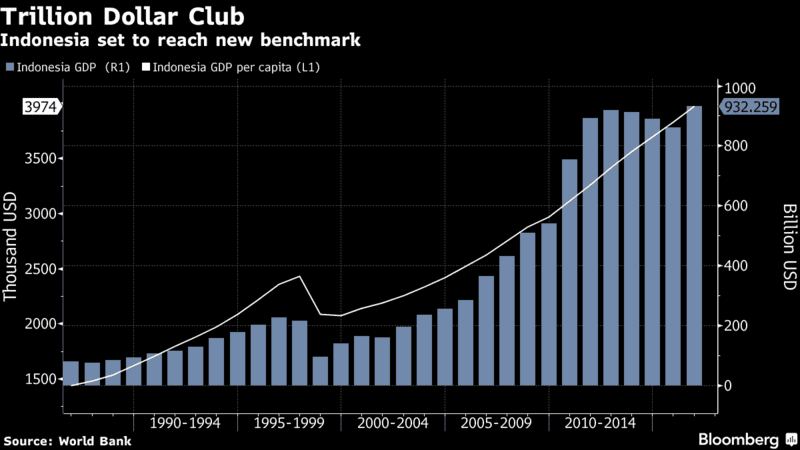
    Indonesia’s full-year gross domestic product growth last year accelerated at the fasted pace in four years, as robust exports and investment growth compensate for weak household consumption, the Central Statistics Agency, or BPS, revealed on Monday (05/02).

    The agency said the economic growth rate was 5.07 percent, the highest since 2014. In 2015, the economy grew only 4.88 percent, while in 2016 at a 5.03 percent rate.

    Indonesia’s nominal gross domestic product was Rp 13,558 trillion, or $1 trillion at the 2017 exchange rate. This places Indonesia in a group of countries with economies above $1 trillion, like Australia, South Korea and India.

    Coordinating Economics Minister Darmin Nasution said he is optimistic this year’s economic growth rate will meet the government’s target of 5.4 percent, as he expects domestic consumption to rise with the upcoming regional elections and the Asian Games in August.

    “[We are] still optimistic … As long as we maintain the investment and exports,” Darmin said.

    Darmin needed to put economic growth in a more positive light, as the 5.2 percent target from the revised 2017 state budget was missed, because consumers withheld spending.

    “The top 20 percent of consumers tended to postpone their spending. There were concerns about politics and aggressive tax policies. Meanwhile, the lowest 40 percent were hit by rising food prices,” said Bhima Yudhistira Adinegara, an economist at the Institute for Development of Economics and Finance (Indef).

    “The key now is in recovering the confidence of the upper class and ensuring timely disbursement of social aid,” Bhima said.

    Gundy Cahyadi, a Singapore-based economist at DBS, said infrastructure projects are expected to continue supporting economic growth in 2018.

    “And if commodity prices are to remain at current levels, we expect investment growth to be more broadly based this year, with possibly positive spillover impact to household consumption,” Gundy said, adding that he expects Indonesian economy to expand by 5.3 percent in 2018.

    In 2017, Indonesia posted a five-year high of $11.84 billion trade surplus, thanks to the recovering global economy and rising commodity prices, with an increase in exports and imports — 9.09 percent and 8.06 percent, respectively.

    Foreign direct investment grew 8.5 percent last year from the previous year.

    “Trade and investments increased, but [household] consumption was still at 4.95 percent. If we want the economy to grow above 6 percent, these three components have to go hand in hand,” BPS head Suhariyanto told reporters.g

  • Eight Firms Eye Q1 IPOs at Indonesia Stock Exchange

    Eight Firms Eye Q1 IPOs at Indonesia Stock Exchange

    Eight companies are currently preparing for initial public offerings in the first quarter this year, Samsul Hidayat, a director at Indonesia Stock Exchange said Monday (06/02).

    So far this year, only one company has completed an IPO at the exchange, which is aiming to list more than 35 new companies in 2018.

    Among the eight companies in the pipeline are power company Sky Energy Indonesia and BTPN Syariah, the Islamic banking unit of mid-size lender Bank Tabungan Pensiunan Nasional (BTPN), Hidayat said.

    He did not disclose the potential sizes of the new IPOs.

    In 2017, 37 companies launched IPOs, raising a combined 9.6 trillion rupiah ($710.06 million) in proceeds, according to data from Financial Service Regulator (OJK).

    That compared to 14 companies in 2016, which raised a combined 12.1 trillion rupiah.

  • Singapore cannot ban cryptocurrency trading, for now

    The central bank of Singapore has been studying the potential risks posed by cryptocurrencies, but there is as yet no strong case to ban trading of the digital coins in the city-state, Deputy Prime Minister Tharman Shanmugaratnam said.

    “Cryptocurrencies are an experiment. The number and different forms of cryptocurrencies is growing internationally. It is too early to say if they will succeed,” he said.

    “If some do succeed, their full implications will also not be known for some time,” the deputy prime minister said in a written answer to questions from members of parliament on banning the trading of bitcoin or cryptocurrency.

    “The Monetary Authority of Singapore has been closely studying these developments and the potential risks they pose. As of now, there is no strong case to ban cryptocurrency trading here.”

    In another development, the head of the Bank for International Settlements (BIS) said central banks must prepare to act against cryptocurrencies to ensure they do not become entrenched and undermine trust in central banks.

    Agustin Carstens, general manager of the BIS, an umbrella organisation for the world’s central banks, said in a speech that cryptocurrencies such as bitcoin were “probably not sustainable as money” and failed the “basic textbook definition” of being a currency.

    “There is a strong case for policy intervention,” he said, speaking at Frankfurt’s Goethe University today.

    “These assets can raise concerns related to consumer and investor protection. Appropriate authorities have a duty to educate and protect investors and consumers, and need to be prepared to act.”

    “Private digital tokens masquerading as currencies must not subvert this trust (in central banks)”, he warned, but stopped short of suggesting what concrete measures should be taken.

    Carstens described bitcoin as “a combination of a bubble, a Ponzi scheme and an environmental disaster”. The last refers to the energy-intensive process of “mining” the digital currency.

    To prevent cryptocurrencies from becoming “parasites” on existing financial infrastructure, Carstens said that only those exchanges and products which met accepted standards should be given access to banking and payment services.

    “This means same risk, same regulation. And no exceptions
    allowed,” he added.

  • Asian markets plunge as Wall Street rout spreads

    Asian markets plunge as Wall Street rout spreads

    Asian stocks plunged Tuesday after a record-breaking loss on Wall Street, extending a global rout as panicked investors fret over rising US borrowing costs and cash in profits after months of market euphoria.

    Tokyo led a collapse throughout the region in early trade, diving more than five percent, while Hong Kong was down almost four percent at one point and Sydney sank three percent.

    Dealers tracked their colleagues in New York, where the Dow suffered its worst points fall in history, wiping out all its 2018 gains, while the S&P 500 also took a beating to sit down for the year.

    The heavy selling comes after months of surges fuelled by optimism over the US economy, corporate earnings and the global outlook.

    While traders have been piling into equities, pushing many global indexes to record or multi-year highs, there has been growing concern on trading floors about elevated US Treasury bond yields — at four-year highs — and the likelihood of fresh Federal Reserve interest rate hikes.

    The so-called Vix “fear” index more than doubled in US trade on Monday.

    Among other Asian markets Singapore was 2.3% off, Seoul dived three percent, Taipei lost 3.7%, Manila plunged 2.7% and Shanghai gave up 2.1%.

  • Bursa Malaysia expects 2018 to have more IPOs than 2017

    Bursa Malaysia expects 2018 to have more IPOs than 2017

    Bursa Malaysia Bhd, which attracted 13 new listings in 2017, expects to see more companies listed on the Main and ACE Markets this year.

    “The IPO (initial public offering) pipeline seems to be tracking quite well. So we expect that it will probably be slightly higher than last year,” its CEO Datuk Seri Tajuddin Atan said at a media briefing today.

    “And we think some of the big ones is coming,” he added, noting currently there are four registered companies that are still waiting for approval to be listed on the stock exchange.

    Last month, Binasat Communications Bhd, which is involved in the provision of telecommunication supporting services for satellite as well as mobile and fibre optic telecommunications networks, became the first listing for the year.

    Meanwhile, Tajuddin said the stock exchange operator has no plans to increase or reduce the listing fee at the moment, as it looks to introduce incentive or rebate schemes.

    Additionally, he said, the local exchange plans to introduce more products and services this year to create a conducive capital market ecosystem for all market participants.

    “We are still in a process of getting approval and putting things in place. Not only in terms of product, we are also trying to have more players as well as selling agents,” Tajuddin said.

    Going forward, he said the securities market segment is expected to remain resilient, given recent encouraging economic data, the strengthening ringgit and expected positive corporate earnings.

    Trading, however, may be influenced by local and external factors, such as geopolitical developments and the tightening of monetary policies in major economies in 2018, he added.

    On the derivatives market, Tajuddin said volatility in commodity prices and the underlying equity market will continue to affect hedging and trading activities of the crude palm oil futures and FTSE Bursa Malaysia KLCI Futures contracts.

    The local bourse’s net profit rose 10.2% to RM55.27 million for the fourth quarter ended Dec 31, 2017 against RM50.17 million in the previous corresponding period, driven by higher contribution from the securities market.

    Revenue expanded 14.1% from RM123.74 million to RM141.2 million.
    Its full-year net profit rose 15.2% from RM193.62 million to RM223.04 million, with revenue rising 9.9% from RM506.78 million to RM556.83 million.

    For the year under review, securities market trading revenue increased 21.9% to RM259.6 million on the back of higher average daily trading value for securities market on-market trades which grew 27.7% to RM2.3 billion.

    It has declared a second interim dividend of 18.5 sen per share amounting to RM99.4 million for the quarter under review, which will be paid on March 5, 2018.With that, the total dividend (including special dividend) declared for the year amounts to 53.5 sen per share.

  • Mitsui Sumitomo Insurance Welfare Foundation awards grants for innovative research on senior citizen welfare and traffic safety

    Mitsui Sumitomo Insurance Welfare Foundation awards grants for innovative research on senior citizen welfare and traffic safety

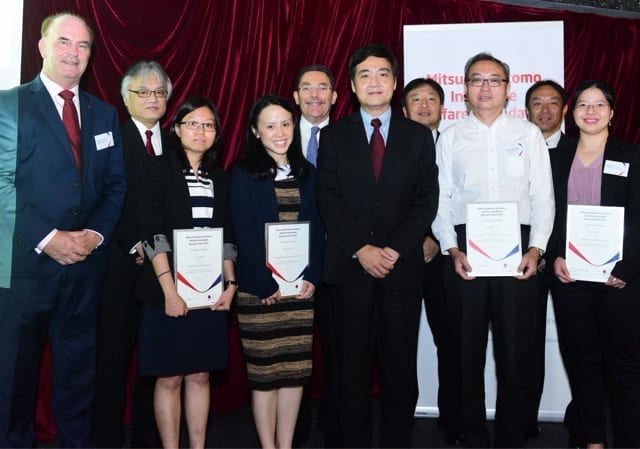
    The Mitsui Sumitomo Insurance Welfare Foundation (“MSIWF”) is pleased to announce today the award of four grants for innovative solutions focusing on senior citizen welfare and traffic safety at the 11th MSIWF Research Grant Awards 2017 ceremony held at Hotel Michael, Sentosa, Singapore.

    The research grants, amounting to SGD38,948 awarded to four researchers in Singapore, focus on impactful research that could support the diagnosis of elderly men with lower urinary tract symptoms; the development of a non-intrusive fall detection monitoring system for the elderly; the adoption of appropriate child car restraints; and improving the elderly’s adherence to their treatment regimen.

    In addition to the award of these grants, the Foundation has also made a commitment to donate 200 smart walking stick holders known as Qanemates to the elderly in Singapore and Japan. Designed by two young Singaporean inventors, Seng Ian Hao (aged 14) and Seng Ing Le (aged 12), Qanemate has won numerous national and international innovation awards, including the most recent 2017 Ageing Asia Innovation of the Year Award and the Singapore LTA Engineering Challenge Award.

    Founded in 1975 by the Mitsui Sumitomo Insurance Company in Japan, MSIWF advocates for budding and inter-disciplinary research focused on the growing ageing population and the rising concerns over traffic safety in Asia.
    This year marks the 11th year of this prestigious grant since its establishment in Singapore. To date, the Foundation has supported a total of 42 projects with a value of over SGD400,000. In total, it has awarded 2,022 grants with a value of over JPY2,339 million (approximately SGD28.2 million) in Japan, Singapore and Thailand since 1975.

    Following a rigorous selection process, the 2017 winners in Singapore are:
    • Dr Neo Shu Hui, Resident at Singapore General Hospital, for her research in determining the effectiveness of incorporating visual analogue uroflowmetry score (VAUS) in primary care physicians’ evaluation process of elderly men with lower urinary tract symptoms to achieve a cost effective, easily administered and non-invasive tool that could potentially reduce unnecessary referrals to specialists;
    • Dr Chong Shu-Ling, Staff Physician, Department of Emergency Medicine, at KK Women’s and Children’s Hospital, for her research on understanding parental knowledge and beliefs on the use (or the lack of use) of child car restraints, in order to create the right approach when communicating to parents on child car safety;
    • Professor Tan Kok Kiong at National University of Singapore, for the development of a wearable, non-intrusive, and location-based fall detection monitoring system for the elderly. The wearable device utilises an accelerometer and an additional level of sound-based detection to enhance the accuracy of fall detection;
    • Ms Lim Zhiying, Senior Medical Social Worker at Singapore General Hospital, for her research to better understand elderly patients’ perspectives of their illnesses and adherence (or non-adherence) to their treatment regimens, particularly those with multiple chronic illnesses and differing physical dependency who require multiple medications daily.

    Mr Alan J. Wilson, Regional CEO of MSIG Holdings (Asia) Pte Ltd, commented: “We are delighted to continue serving the communities we are immersed in, by protecting the things that matter to them. Through the Foundation, we hope to offer meaningful support to advance impactful research that can address the region’s growing concerns of caring for a rapidly ageing population, and road traffic fatalities that have put at risk or claimed many lives each year.”

    In 2017, a total of 193 applications were received in Japan, Singapore, and Thailand. Of these, 40 projects (including nine from Singapore and Thailand) were selected, and four from Singapore were awarded research grants worth SGD38,948.