Category: Finance

Retail News Asia is committed to providing both local and global retailers with the latest Finance news throughout the Asian market. This on a daily base.

  • South Korea is banning foreigners from trading cryptocurrency

    South Korea is banning foreigners from trading cryptocurrency

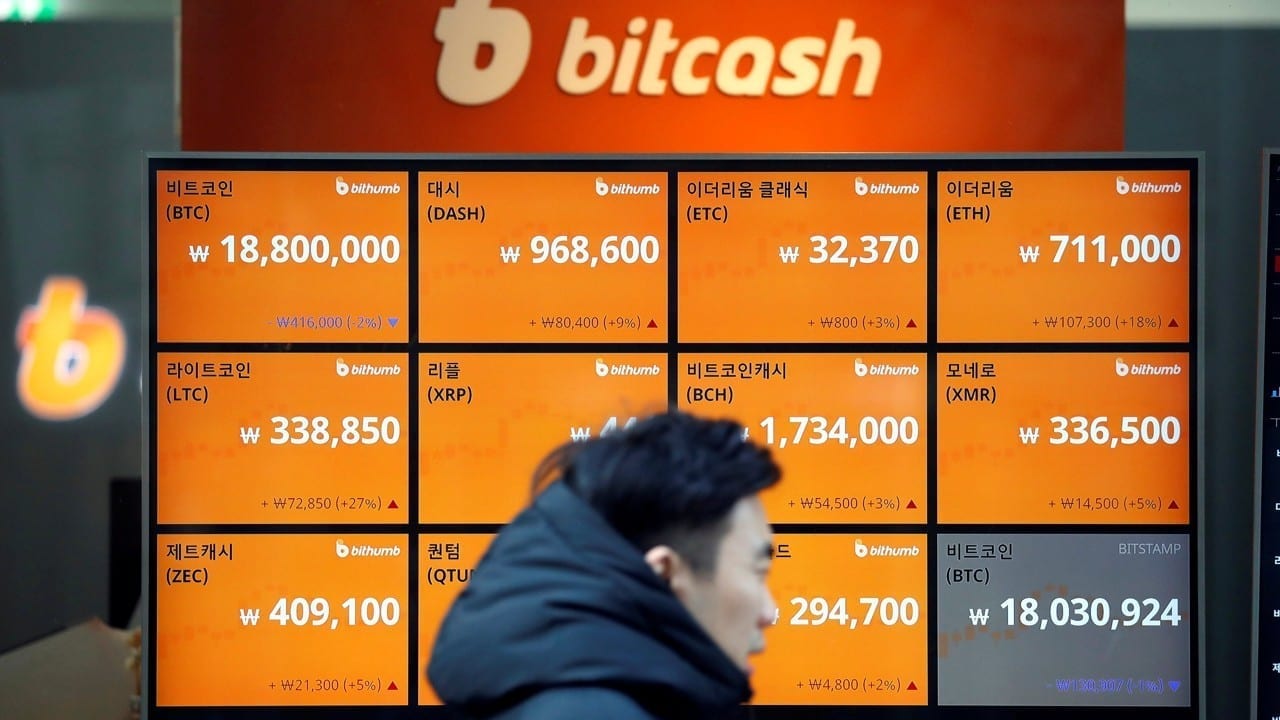
    South Korea’s financial regulators set the pace for sweeping cryptocurrency regulations to curb speculative overheating and illegal activity, including banning foreigners and minors from opening new cryptocurrency accounts.

    Financial Services Commission Vice Chairman Kim Yong-beom announced measures to ban anonymous trading on domestic exchanges, while foreigners and minors would be completely banned from trading through cryptocurrency accounts. Both measures go into effect 30 January.

    They are the first concrete measures to be implemented since the government began observing overheating in the market in September. The system aims to tackle money laundering and related crimes, along with speculation-driven overheating in the market, Kang Young-soo, head of the FSC’s cryptocurrency response team said after the announcement.

    “The government is concerned about manipulation of market conditions and injection of illegal funds while market funds are leaked into speculative investments,” he added. “We view that foreigners’ and minors’ investments contribute to our areas of concern.”

    All foreigners, including residents, nonresidents and “kyopo” ethnic Koreans with foreign citizenship, will be banned from trading cryptocurrencies in Korea, the FSC’s foreign media department said by email. Minors are banned after Prime Minister Lee Nak-yeon earlier claimed the cryptocurrency craze could lead the youth toward crime.

    “If they’re not Korean citizens, then they can invest in exchanges provided in their countries. Why do they have to invest in ours?” Kang quipped.

    The government has been under mounting pressure to deliver on impending regulations over the country’s cryptocurrency market, one of the world’s largest for Bitcoin, Ethereum and Ripple, as the uncertainties have thrown global prices into turmoil. Cryptocurrency trade has gone largely unregulated as South Korea neither recognizes digital coins as financial products or currency.

    But for the past few months, financial authorities and prosecutors have been mulling comprehensive regulations on anti-money laundering, tax evasion, fraud and other illegal activity, including a proposed ban on all initial coin offerings.

    Justice Minister Park Sang-ki threw fuel on the speculative market when he claimed all crypto exchanges would be shut down. The government later clarified that it was one option being considered, along with only shutting down exchanges that were acting illegally. Since then, citizens have railed against the government with over 220,000 signing a petition to demand a response from the presidential Blue House.

    “The government is creating boundaries for instances of foreigners injecting in coins into the country and a phenomenon of more Bitcoins and other cryptocurrency circulating within the Korean market,” says Kim Jin-hwa, corepresentative of the Korea Blockchain Association, which has about 30 member companies including several exchanges. “With the current conditions of our market, higher supply would equate to higher speculation.”

    The targets of the latest regulation, says blockchain startup BlockchainOS Choi Yong-kwan, are Chinese investors who have flooded the cryptocurrency market since their country banned cryptocurrency trade last year. Digital coins from China enter Korean exchanges, then are illegally changed into foreign currencies, which are sent back to China, he explained.

    Under the new rules, foreigners who have already have cryptocurrency trading accounts will be allowed to withdraw their assets, even after the new rules come into force, the FSC explained. But they will be banned from making new deposits through the accounts.

    Meanwhile, all cryptocurrency investors need to establish an account under their legal name at one of six banks rather than anonymous cryptocurrency accounts to trade on a domestic cryptocurrency exchange. The so-called real-name system is part of efforts to establish measures similar to the Know Your Customer (KYC) verification system in the U.S. The Korea Blockchain Association’s member exchanges had already self-imposed an ID verification system for users who create new accounts as of Jan. 1, but this will be replaced by the government’s regulation.

    Results of an investigation found that some companies handling cryptocurrency had been registered as “shopping malls,” but subject banks did not have customer verification procedures or internal systems to recognize this, the FSC said.

    Also, funds deposited into cryptocurrency-handling companies have been deposited to accounts of the company’s major shareholders or its employees, and there have also been cases of deposits to cryptocurrency handling companies from corporate names.

    These transactions are irregular managements of funds, the FSC said, as they can be identified as suspicious transactions because banks have not practiced faithful reporting of suspicious transactions.

    Financial regulators are struggling to keep their own in line, as an investigation found that at least one official, aware of upcoming government announcements, used internal information to profit off cryptocurrency sales. In response, Prime Minister Lee has called for stronger codes of conduct for public servants, while Hong Nam-ki, Minister of the Office for Government Policy Coordination, urged civil servants not to trade during work hours.

    Meanwhile, blockchain insiders say regulators still have little understanding of the technology behind cryptocurrency, even as other government agencies such as the Ministry of ICT are promoting blockchain as part of the country’s “fourth industrial revolution” push.

    The government must walk a fine line to foster the potential of blockchain technologies – which include cryptocurrency – while reining in dangerous behavior such as hacking and fraud. But uncertainty and strict regulations may risk an outflow of assets and innovation.
  • Bank of Indonesia Says Limited Room to Cut Interest Rates

    Bank of Indonesia Says Limited Room to Cut Interest Rates

    Bank Indonesia Governor Agus Martowardojo emphasized on Wednesday (24/01) that there is limited room for lowering interest rates due to the United States Federal Reserve’s plan to increase its benchmark rate, and the need to keep inflation in check.

    “[Room] to adjust the seven-day reverse repo rate is probably very narrow under the current conditions,” Agus told reporters. He added that the central bank will rely more on other monetary instruments to drive the economy.

    Agus said Bank Indonesia will relax reserve requirements by July. Lenders are currently required to keep a minimum reserve of 6.5 percent of their total rupiah deposits at the central bank at any time, comprising daily reserve of 5 percent and a two-week averaging reserve of 1.5 percent.

    Agus said Bank Indonesia will increase the averaging portion to 2 percent to allow lenders to be more flexible in managing their liquidity.

    It will also relax the averaging rules for foreign exchange deposits and sharia-compliant banks.

    The central bank will also allow larger bond purchases as a portion of banks’ loan to deposit ratios, and improve secondary reserve requirements for macroprudential liquidity buffers.

    Agus said the external risk stems especially from the Fed’s plan to increase its benchmark rate, while there are also fears that geopolitical conditions may increase pressure on financial market stability, including in Indonesia.

    Bank Indonesia will also pay more attention to inflationary pressures, especially on volatile goods. Prices of rice, chili peppers and other horticultural items are expected to greatly contribute to inflation this month, he said.

    “We welcome the government’s decision to import rice, and as rice harvest will also take place soon, the prices will be under control,” Agus said.

    Bank Indonesia has set an inflation target of between 2.5 percent and 4.5 percent this year.

    The central bank last cut its benchmark interest rate in October to 4.25 percent from 4.5 percent, as inflation continued to decline at the time. This also complemented the bank’s monetary easing, which saw it cut by 200 basis points from December 2015 until last year.

  • Ringgit marches higher against US dollar

    Ringgit marches higher against US dollar

    The ringgit marched higher against the US dollar today, appreciating by 59% since it was last seen in April 2016, said Oanda Head of Trading for Asia Pacific, Stephen Innes.

    At 6pm, the local note ended at 3.8840/8870 against the greenback from 3.9110/9140 on Wednesday.

    Innes said the ringgit touched the 3.8 level, rising 15% from its weakest point in early 2017.

    It strengthened against the US dollar as it continued its depreciation amid the increase on the overnight policy rate by 25 basis points to 3.25% by Bank Negara Malaysia today.

    He said the increase did not have much impact on the ringgit as the markets had fully priced in the move.

    “However, we think the market found itself a little oversold and with what amounted to be a dovish rate increase by BNM, traders booked profits.

    “If we consider that we could be entering extended cyclical downtrend on the US dollar, the ringgit could still rally below 3.80 level in near term,” he told Bernama.

    On another note, Innes also said that oil prices, which has come off their highs, would remain above the budget’s forecast and continue to support ringgit’s strength.

    The ringgit was traded mixed against a basket of major currencies.

    It rose against the Singapore dollar to 2.9746/9781 from Wednesday’s 2.9803/9832 and gained versus the yen to 3.5630/5661 from 3.5658/5695 yesterday.

    It declined against the euro to 4.8286/8327 from 4.8242/8295 on Wednesday and went down against the British pound to 5.5491/5537 from 5.5110/5168 yesterday.

  • Malaysia Inflation rises 3.5% in Dec 2017, full year 3.7%

    Malaysia Inflation rises 3.5% in Dec 2017, full year 3.7%

    Malaysia’s consumer price index (CPI) expanded 3.5% to 120.9 in December 2017 from 116.8 in the corresponding month of 2016, mainly driven by the transport segment, which was up 11.5%.

    For the full year of 2017, CPI rose 3.7% compared with the same period in 2016.

    According to the Department of Statistics, other major groups which recorded increases in December 2017 were food & non-alcoholic beverages (+4.1%), restaurants and hotels (+2.6%), furnishings, household equipment & routine household maintenance (+2.4%), health (+2.3%) and housing, water, electricity, gas & other fuels (+2.2%).

    On a month-on-month basis, CPI increased 0.1% in December 2017. Core inflation, which excludes most volatile items of fresh food, as well as administered prices of goods and services, rose 2.2% in December 2017 compared with the same month of the previous year.

    MIDF Research expects the headline inflation rate to average at 2.6% in 2018 amid unfavourable base effects.

  • South Korean group acquires Prudential Finance in Việt Nam

    South Korean group acquires Prudential Finance in Việt Nam

    Prudential on Tuesday announced that it had reached an agreement to sell 100 per cent of its Prudential Vietnam Finance Company (PVFC) to Shinhan Card Co Ltd, a subsidiary of the Shinhan Financial Group (Shinhan), at a cost of US$151 million.

    The United Kingdom-based financial services group’s PVFC was launched in 2006 as the first foreign non-bank financial institution licensed for consumer finance lending in Việt Nam. Today, it is the fourth-largest consumer finance company by outstanding loan balance.

    “Prudential and Shinhan will work closely to ensure a smooth transition of the business. PVFC remains committed to all of its customer obligations and operations will continue as normal until the transaction has been completed,” Prudential said in a statement.

    It remains fully committed to the Vietnamese market through its life insurance business, Prudential Vietnam Assurance Private Limited, and asset management business, Eastspring Investments Fund Management Company.

    “PVFC is a high-quality business, but it is not core to our strategy in Việt Nam. We are delighted that Shinhan will be able to lead this consumer finance business through to the next stage of its development. Việt Nam remains an attractive and important market to Prudential where we have high-quality and fast-growing life insurance and asset management operations,” Nic Nicandrou, Chief Executive of Prudential Corporation Asia, said.

    “As part of this transaction, we are further expanding our regional platform through the new long-term bancassurance partnership with Shinhan in both Việt Nam and Indonesia to continue serving the growing savings and protection needs of the Asian population,” he said.

    Shinhan is a financial institution in South Korea with a diversified business portfolio across banking, credit cards, securities brokerage, life insurance, asset management and leasing. It is one of the largest financial institutions by market capitalisation in Korea, and Shinhan Card is the largest credit card company in the country. Shinhan has had a presence in Việt Nam since 1993.

    Last year, Shinhan Bank Vietnam, a wholly owned unit of Shinhan Bank, also acquired the retail division of ANZ, a major Australian bank, in Việt Nam.

    Currently, Prudential Finance Vietnam, FE Credit, HomeCredit and HDSaigon are four companies ruling the Vietnamese consumer finance market. According to StoxPlus, the total outstanding loan of consumer finance companies was more than VNĐ56 trillion ($2.47 billion) at the end of 2016.


  • Vietcombank to sell 7.6 million Vietnam Airlines’ shares

    Vietcombank to sell 7.6 million Vietnam Airlines’ shares

    Joint Stock Commercial Bank for Foreign Trade of Việt Nam (Vietcombank) has registered to sell 7.6 million shares of Vietnam Airlines Corporation, which is listed as HVN on the stock market.

    The transaction is expected to take place from January 24-February 22.

    This is part of more than 22.4 million shares, equivalent to 1.8 per cent of charter capital of Vietnam Airlines that Vietcombank bought in the airline’s initial public offering in late 2014. The bank spent VNĐ544.12 billion (US$23.9 million) to buy the shares, or VNĐ22,300 for each share.

    At the current market price of Vietnam Airlines’ shares at some VNĐ63,700 each, Vietcombank can earn an estimated VNĐ484 billion from the sale of its 7.6 million shares after more than two years of holding. Compared to six months ago, the stock has nearly tripled in terms of market value.

    If successful, Vietcombank’s holdings at Vietnam Airlines will reduce to 1.2 per cent.

    The shares of Vietnam Airlines and VJC shares of budget carrier Vietjet Air are two aviation stocks that have grown fast in the past few months. The growth of share prices comes mainly from positive business results in late 2017 and early 2018 in the aviation industry.

    Last year, Vietnam Airlines Corporation, including Jetstar Pacific and Vietnam Air Services Company (VASCO), recorded a consolidated revenue of VNĐ88.4 trillion (US$3.88 billion) and pre-tax profit of more than VNĐ2.8 trillion, exceeding 72 per cent of its plan and up 8.3 per cent year on year, respectively. This is the highest level of revenue and profitability the firm has made in its history.

    According to stock investors, the increasing demand for air transportation during Tết (Lunar New Year) holiday is another reason for the acceleration in prices of aviation shares in recent times.

    Vietnam Airlines has traded more than 1.2 billion shares on UpCOM, making it a large-scale public company in the leading group of capitalisation value in the stock market. The airline plans to put all of its shares on HCM Stock Exchange (HOSE) in the second quarter of this year.

    Meanwhile, it will continue to issue additional shares to existing shareholders to increase charter capital and reduce State ownership. Accordingly, in the first quarter of this year, Vietnam Airlines plans to increase charter capital by issuing additional 191 million shares at VNĐ10,000 each to existing shareholders.

    Vietnam Airlines has a charter capital of nearly VNĐ12.28 trillion, of which the State holds 1.057 billion shares, equivalent to 86 per cent of charter capital. Of the remaining shareholders, ANA Holdings Inc., Japan’s largest aviation group, holds 107 million shares, representing nearly 8.8 per cent of charter capital.


  • Bitcoin Renews Sell-Off As South Korea Clamps Down

    Bitcoin Renews Sell-Off As South Korea Clamps Down

    Bitcoin’s descent continued on Monday, sliding 9% in late-morning trading after the cryptocurrency crumbled last week amid growing concerns from regulators in the U.S. and Asia.

    X Monday’s drop followed reports that South Korea, where cryptocurrency trading has boomed, might try to tax the market and make it share details of user transactions. Meanwhile, more research in recent days has raised fresh concerns about security and fraud in the crypto-space, on top of longstanding concerns of a bubble.

    Bitcoin sank 9% to $10,451.04, according to CoinDesk. Ethereum fell 8.7% to $957.48.

    As reported, South Korea said it would “collect up to 24.2 percent of corporate and local income taxes” on the nation’s cryptocurrency exchanges this year. The government will make those exchanges share data related to user transactions with banks late this month or early February.

    Last week, cryptocurrency traders also appeared to be spooked as the chorus of warnings from regulators grew louder. South Korea has been weighing whether to shutter local cryptocurrency exchanges, while a China central bank official said centralized trading of such digital assets and related businesses should be outlawed.

    The SEC also said “significant investor protection issues” needed to be looked at before sponsors begin offering cryptocurrency funds to retail investors.

    Research by Ernst & Young has also found that more than 10% of the funds generated by initial coin offerings are stolen by hackers. Research from Chainalysis found that at least $90 million of Bitcoin alone was stolen through scams, ransomware and hacking.

    Among Bitcoin-related stocks, Bitcoin Investment Trust , an investment vehicle that attempts to track Bitcoin, sank 5.4% in the stock market. Overstock.com, which has made a bigger push into blockchain — the record-keeping technology behind Bitcoin transactions — rose 4.9%.

  • US Gov’t Shutdown Unlikely to Impact Indonesian Economy

    US Gov’t Shutdown Unlikely to Impact Indonesian Economy

    The United States government shutdown will not have a significant impact on the Indonesian economy if it lasts for only a short time, because export markets rely on the private sector, a minister said on Monday (22/01).

    US senators were unable to reach an agreement on a bill to fund federal agencies through Feb. 16, which forced hundreds of thousands of employees in non-essential sectors to be on unpaid leave and more than a million people in essential sectors to work unpaid until a funding deal is renewed.

    Essential workers are those dealing with public safety and national security, such as the military and hospitals.

    “If it is only for the short term; it will not [impact Indonesia],” National Development Planning Minister Bambang Brodjonegoro said.

    Bambang added that in the short term, the shutdown will not disrupt Indonesia’s exports to the United States as they are mostly dealt with the private sector.

    Central Statistics Agency (BPS) data shows Indonesian exports to the United States accounted for 11.2 percent of the country’s total, amounting to $17.1 billion annually and dominated by a combination of commodities, such as rubber and shrimps; and non-high-tech manufacturing products, such as furniture, textiles and footwear.

    Mohammad Faisal, an economist at Jakarta-based research firm CORE Indonesia, predicts that the shutdown will unlikely last for more than a month, based on previous shutdowns.

    The United States has had 18 federal government shutdowns since 1976, with the longest having been for 21 days between December 1995 and January 1996.

    Mohammad said the last shutdown in 2013 during Barack Obama’s administration lasted for 16 days and did not have a significant impact on the global economy, including developing countries such as Indonesia.

    Getting Ready

    Bhima Yudhistira Adinegara, an economist at the Institute for Development of Economics and Finance (Indef), said the government must start preparing for risk mitigation as President Donald Trump’s term in office will only end in 2021.

    “This is Trump’s first year of arranging the government budget … if these keep repeating, Indonesia must have a way to mitigate the risk,” Bhima said.

    If the current shutdown lasts less than 20 days, Indonesia’s foreign exchange reserves of $130 billion are still sufficient to stabilize the rupiah exchange rate, according to the latest figures.

    However, Bhima said Indonesia has to increase its foreign exchange reserves as a “safety net” against external influences by promoting non-oil and gas exports and tourism.

    He added that Indonesia should decrease its dependence on the US market by accelerating trade agreements with nontraditional trading partners, such as Chile, Russia and countries in Eastern Europe and Africa, to diversify the country’s markets.

    For the time being, Bhima said the US dollar exchange rate will have a minimal impact on the rupiah over the next two weeks as it is still within the controlled range of Rp 13,350 to Rp 13,400.

  • Little movement forecast for Vietnamese stocks

    Little movement forecast for Vietnamese stocks

    Vietnamese shares are forecast to move marginally this week as investors could realise their earnings after having priced in the growth prospects of both the market and local stocks.

    The benchmark VN Index on the HCM Stock Exchange gained 1.13 per cent to close at 1,062.07 points. After the last two sessions, it has almost regained a loss of 2.66 per cent on Wednesday.

    The minor HNX Index on the Ha Noi Stock Exchange edged up 0.41 per cent to end at 122.39 points. The northern market index has increased a total 1.6 per cent in the last two days.

    Both stock indices posted weekly growth this week with the VN Index rising 1.1 per cent after the last five trading sessions. The figure for the HNX Index is 1.3 per cent.

    More than 387.4 million shares were traded in each session last week, worth VNĐ9.44 trillion (US$420 million).

    The trading figures fell 4.5 per cent in volume but increased by 1.9 per cent in value compared to the previous week.

    The stock market indices increased on a weekly basis as investors were optimistic about the companies’ quarterly and yearly earnings reports and the market outlook this year.

    Strong confidence kept market trading liquidity high as investors continued to look for opportunities in stocks that declined on Wednesday.

    According to analysts and securities firms, the stock market will continue to grow in the coming week but the growth will be narrow as investors try to lock in gains after the indices performed well in recent weeks.

    The benchmark VN Index has moved up a total 7.9 per cent since the beginning of the year and the HNX Index has increased by 4.7 per cent.

    Investors have made big profits as they purchased stocks when the benchmark index was rising in the first two weeks. “They tended to lock in profits when bad news appeared and threatened their profitability,” Ngô Thế Hiển, a lead analyst at Sài Gòn-Hà Nội Securities Company (SHS) said.

    Nguyễn Hồng Khanh, head of market analysis at Sacombank Securities Company (SBS) said investors had priced in local stocks on expectations that both the market and corporations would perform well.

    However, they remained defensive and were willing to offload their portfolios if they saw any news that could hurt the market, Khanh said.

    “It’s a normal market sentiment at the moment, especially when the stock market is recording strong gains recently,” he said.

    The stock market would need to settle at the range of 1,020-1,070 points before making a further improvement, Hiển at SHS said.

    “The benchmark VN Index is accumulating at the range of 1,020 and 1,070 points, which were also the lowest and highest levels of the benchmark last week,” he said.

    A positive signal for investors was high trading liquidity, which proved investors were still attracted to the prospects of the market and stocks and they were willing to bottom-fish stocks that decline, Hiển said.

    However, he warned that investors should stay calm and avoid making new investment decisions as the stock indices were near their resistant levels and the market would become volatile in the near future.

    Khanh at SBS said the growth momentum of the market had mainly come from investors’ confidence in corporate earnings and such expectations had priced in stocks.

    “When the companies are about to release their earnings reports, stocks will be mixed and the market will grow slowly,” he said.


  • China targets cryptocurrencies in online pyramid scheme crackdown

    China targets cryptocurrencies in online pyramid scheme crackdown

    China will crack down on online pyramid schemes, including speculation masked as cryptocurrencies and online games, the public security ministry said on Friday.

    The ministry will act jointly with the industrial and commercial department to stamp out pyramid-type schemes, besides punishing those who swindle students and vulnerable groups, the ministry said in a statement on its website.

    Chinese regulators have moved to rein in financial risks associated with virtual currency trades and pyramid schemes.

    A court this month sentenced two people to life imprisonment for fraud in a pyramid scheme involving 15.6 billion yuan ($2.44 billion) that sucked in more than 200,000 people.

  • Bursa Malaysia to continue upward momentum next week

    Bursa Malaysia to continue upward momentum next week

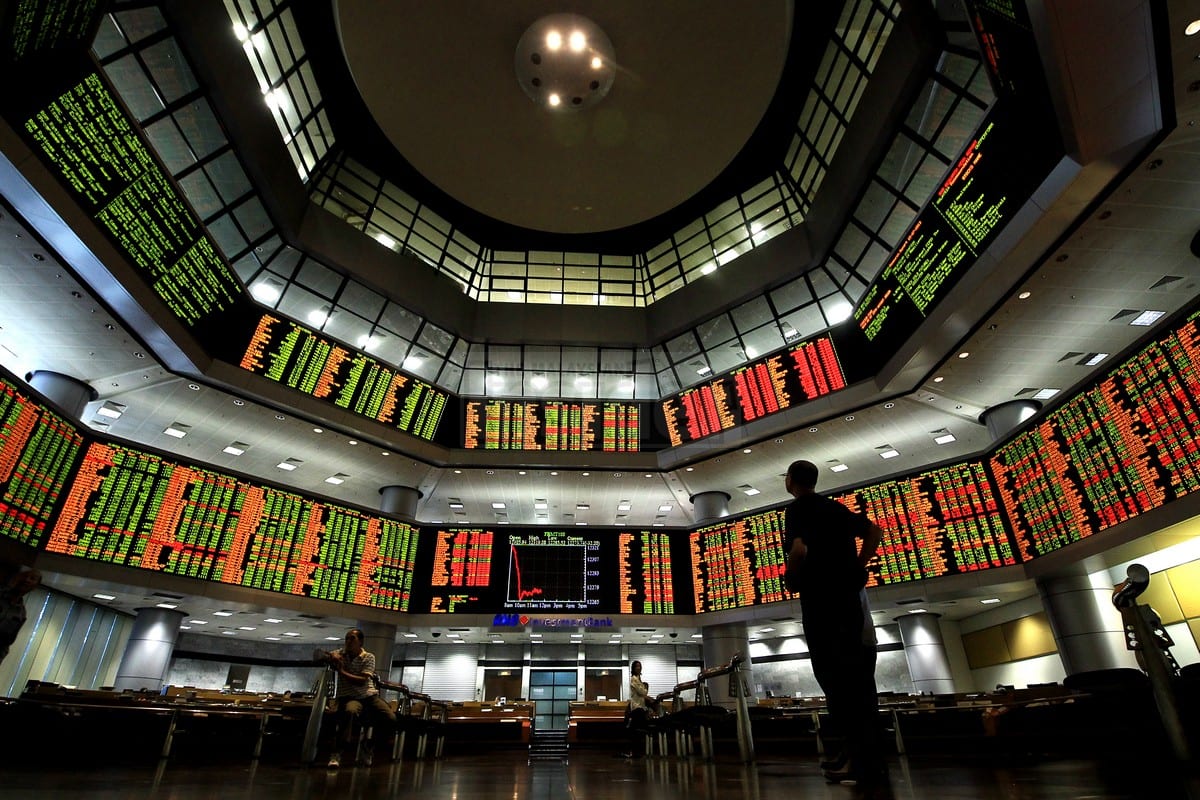
    Bursa Malaysia is expected to continue its positive momentum next week, driven by a stronger ringgit, firmer oil price, strong global economic outlook, and better corporate earnings, a dealer said.

    Affin Hwang Investment Bank Vice-President/Head of Retail Research Datuk Dr Nazri Khan Adam Khan said the global economic outlook is looking good so far this year, triggered by buying interest among local and foreign investors.

    “It has been a good start (for FBM KLCI) this year, with positive outlook on the local and global economy. The local benchmark index has experienced the highest fund inflows in three years, signalling investors’ confident towards our market,” he said.

    For next week, he said that the FBM KLCI would likely move between 1,800 and 1,850 points.

    “The strong oil prices have so far lent support to our market, of which about 30 per cent of companies in Bursa Malaysia are directly and indirectly involved in the oil and gas industry,” he said.

    He said that the benchmark index would also be affected by US President Donald Trump’s tax reform plan.

    As the week ended, the market was traded mostly higher, benefitting from gains in the Wall Street, as well as positive economic data from China.

    However, the European Union’s (EU) approval of draft measures to back a ban on the use of palm oil in biofuels from 2021 on Thursday has hurt the plantation and palm oil related counters as the commodity is a major export from Southeast Asia to the EU.

    On a Friday-to-Friday comparison, the FBM KLCI performed better, gaining 6.16 points to end the week at 1,828.83.

    On the scoreboard, the FBM Emas Index slipped 26.78 points to 13,195.82, the FBMT 100 Index decreased 2.06 points to 12,860.60, the FBM Emas Syariah Index dipped 79.87 points to 13,627.46, the FBM 70 shed 154.79 points to 16,472.37, and the FBM Ace fell 192.66 points to 6,713.12.

    On a sectoral basis, the Finance Index surged 26.07 points to 17,236.98, the Plantation Index fell 99.45 points to 8,037.87 and the Industrial Index erased 31.52 points to 3,368.02.

    Total turnover slipped to 25.35 billion units valued at RM15.97 billion from 27.14 billion units valued at RM19.11 billion in the previous week.

    Main Market volume decreased to 17.14 billion shares worth RM14.73 billion from the previous Friday’s 17.88 billion shares worth RM17.59 billion.

    Warrants turnover declined to 2.64 billion units worth RM448 million from 3.46 billion units worth at RM479.51 million previously.

    The ACE Market narrowed to 5.51 billion shares valued at RM778.77 million against the previous week’s 5.74 billion shares valued at RM1.02 billion.

  • Vietnam-China trade likely to reach $100 billion

    Vietnam-China trade likely to reach $100 billion

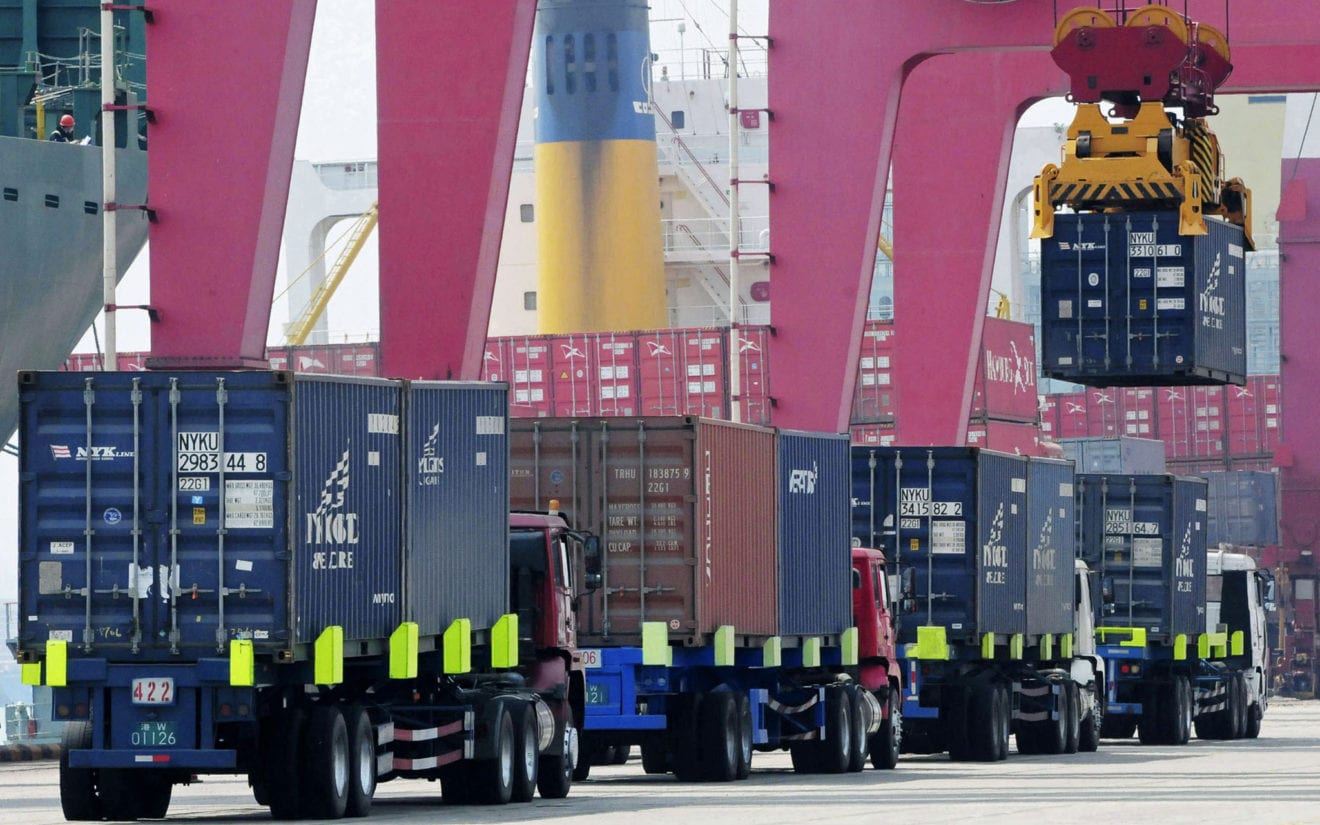
    Bilateral trade between Việt Nam and China will touch a record high of US$100 billion this year, after reaching $93.69 billion last year, experts predict.

    Last year’s two-way trade was $21.79 billion higher than in 2016 and accounted for 22 per cent of Việt Nam’s total import-export value, according to statistics from the General Department of Customs.

    Vietnamese exports to China experienced a significant yearly increase of 61.5 per cent to over $35.46 billion. That helped to reduce Việt Nam’s trade deficit with China to $22.76 billion last year from $28 billion in 2016.

    Telephones, a major item of export, recorded the highest turnover of $7.15 billion, up $6.35 billion compared to that of the previous year, according to the latest data.

    Last year also saw 13 staple products with export earnings of more than $1 billion, up by six staples against the previous year. The new items include seafood, with nearly $1.1 billion in export earnings, rice ($1.02 billion), rubber ($1.44 billion) and footwear ($1.14 billion).

    The Ministry of Industry and Trade says bilateral trade ties between the two countries have been growing in the past few years.

    China is one of Việt Nam’s largest trade partners and is also a key export market, the ministry said.

    Besides trade, China is currently one of the 10 biggest foreign investors in Việt Nam, with a total registered investment capital of more than $12.1 billion.

    During a visit to China last May, President Trần Đại Quang urged Vietnamese and Chinese firms to continue initiating innovative ideas to create a new momentum for bilateral economic partnership.

    He suggested Chinese companies invest in infrastructure, logistics and electronics and support industries while protecting the environment and engaging in social activities in Việt Nam.

    President Quang asked the two sides to facilitate access to each other’s markets.


  • Bitcoin Use Under Scrutiny in Indonesia

    Bitcoin Use Under Scrutiny in Indonesia

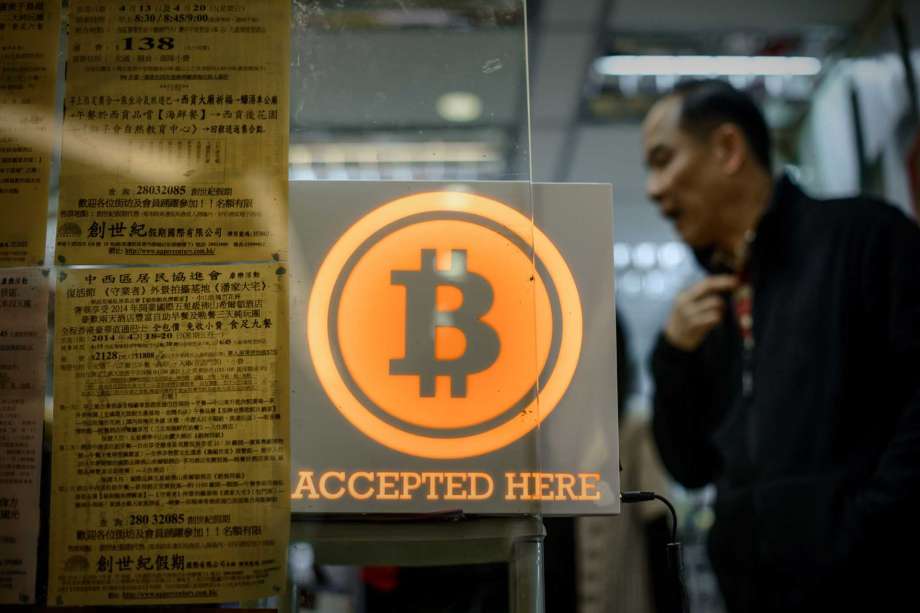
    Indonesian authorities are investigating the use of bitcoin in the holiday island of Bali, amid warnings by the central bank over the risks posed by virtual currencies, an official said.

    The probe started after the central bank on Dec. 7 issued a regulation banning the use of cryptocurrencies in payment systems, said Causa Iman Karana, head of Bank Indonesia’s representative office in Bali.

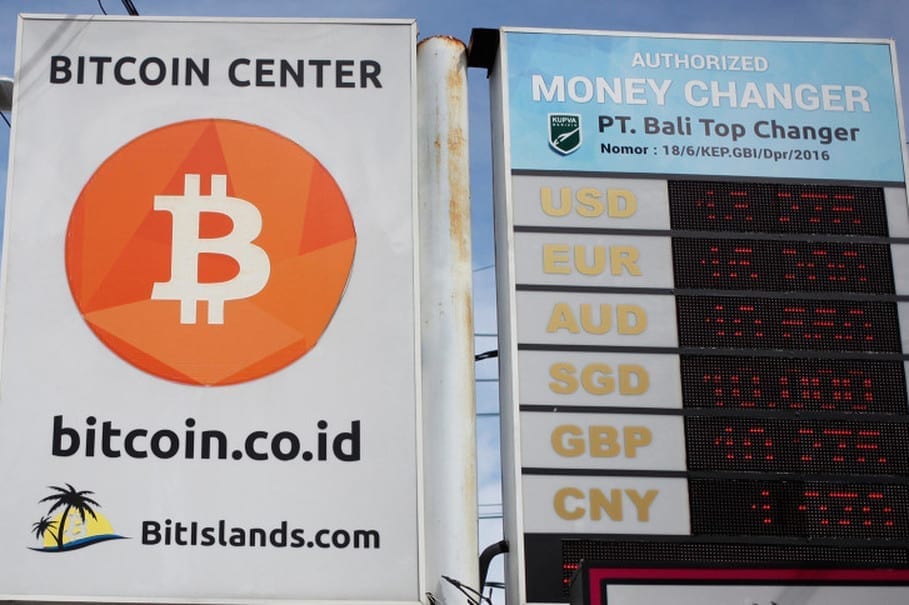
    “We found out from some postings on social media that Bali appeared to have become a haven for bitcoin transactions,” said Causa, adding that central bank officials and police went undercover at the end of 2017 to investigate scores of businesses in Bali advertising online that they offered bitcoin payment services.

    The team found two cafes still using bitcoin as a means of payment, but 44 businesses including car rental outlets, hotels, travel companies and jewelry stores, prevgiously offering the service, had now stopped, he said.

    A Bitcoin sign is seen in Kuta on the resort island of Bali, Indonesia January 18, 2018. Picture taken January 18, 2018. REUTERS/Nyimas Laula

    One of the cafes used bitcoin only for transactions of more than Rp 243,000 ($18), or about 0.001 bitcoin. A single transaction took about one and a half hours to be processed and included a fee of Rp 123,000 so this had discouraged its wider use for payments, Causa said.

    The official declined to name the businesses because he was still waiting for further instructions from Bank Indonesia in Jakarta.

    “The next step is we will ban them as mandated by the law. We ask them not to use it anymore. Along with the National Police’s Criminal Investigation Unit (Bareskrim), we will enforce the rule that all transactions in Indonesia must use rupiah.”

    Some locals in Bali said bitcoin was being used mainly by foreigners on the island, which is Indonesia’s tourism hub and has a large expatriate community.

    Bank Indonesia has called ownership of virtual currencies high risk and prone to speculation, because no authority takes responsibility or officially administers them and because there is no underlying asset to be the basis for the price.

    Virtual currencies could also be used in money laundering and terrorism funding, and could have an impact on the stability of the financial system and causes losses for society, it has said.

    While trading has not be regulated so far, the central bank has said it was looking into the issue.

    Regulators around the world have been grappling with how to address risks posed by cryptocurrencies, as bitcoin, the world’s most popular virtual currency, soared more than 1,700 percent last year.

    Prices have plummeted since South Korea said last week it may ban domestic cryptocurrency exchanges.

    Bitcoin.co.id, an Indonesian online cryptocurrency exchange, said on its website that bitcoin was trading at Rp 162.70 million per unit after losing around a quarter of it value this week.

  • Vietnam is world’s second largest shoes exporter

    Vietnam is world’s second largest shoes exporter

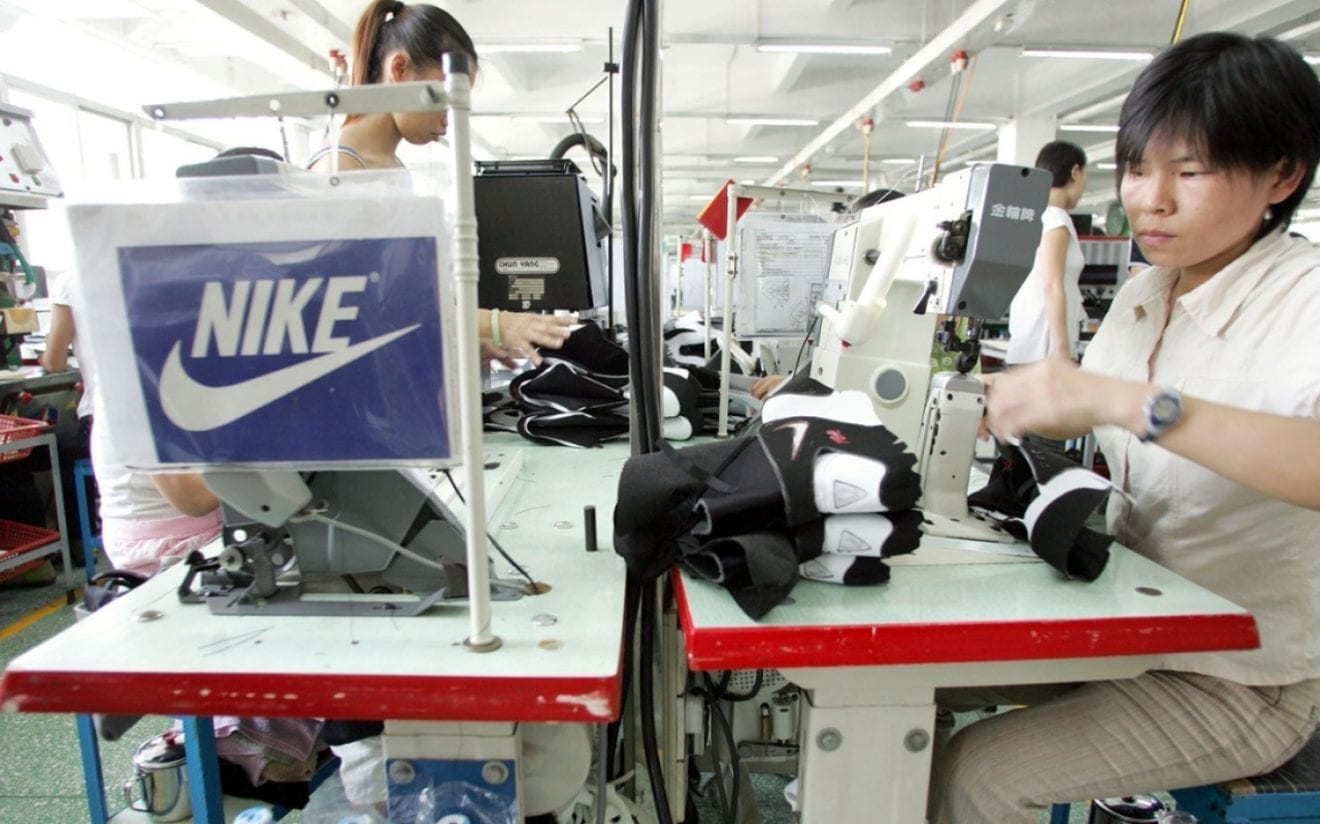
    Of 23 billion pairs of shoes sold worldwide in 2017, Việt Nam exported over one billion pairs, continuing to maintain the second position (after China) in shoes export.

    According to the latest statistics of the World Footwear Magazine in 2017, Việt Nam continued to rank second among the top 10 largest footwear exporters, with 1.02 billion pairs of shoes, equivalent to 7.4 per cent of the global footwear supply, said Diệp Thành Kiệt, vice chairman of the Việt Nam Leather, Footwear and Handbag Association (LEFASO).

    China still maintained the top position in exporting shoes, with 9.31 billion pairs, representing 67.3 per cent of the total 23 billion pairs of shoes the world consumed in 2017.

    Asia continued to be recognised as the world’s leading region in the production and consumption of footwear throughout the world.

    Meanwhile, the United States was the largest footwear importer; the country imported 2.34 billion pairs of shoes last year, accounting for 19.6 per cent of global footwear consumption.

    Export of Việt Nam’s backpacks and handbags continued to rise, to make it to the top five countries exporting these products in the world today.

    In 2017, the export turnover of backpacks and handbags in Việt Nam was estimated at US$3.3 billion, accounting for 5.5 per cent of global production, but only about one-seventh as compared to China’s supply.

    Kiệt said the biggest challenge for the domestic footwear-handbags industry was the low level of technology application in management and production, as compared to regional and foreign direct investment (FDI) enterprises.

    The labour productivity of domestic enterprises was only equal to 60-70 per cent of FDI enterprises. Most domestic firms have not joined the global supply chain; meanwhile, international brands usually tend to deeply control the global supply chain. In addition, labour costs in Việt Nam were rising significantly, Kiệt added.

    Not only interfering in the price of the goods, importers were now gradually intervening in the traceability of raw materials and factories supplying machinery for production.

    On the other hand, the time taken for supplying goods, product confidentiality, the level of technology used, and advantages of raw material supply are given priority to help consumers select where to place an order and process production, Kiệt said.


  • Indonesian Gov’t to Lower Income Tax for Conventional, Online SMEs

    Indonesian Gov’t to Lower Income Tax for Conventional, Online SMEs

    Indonesia will cut final income tax on small and medium enterprises by half and also impose taxes on e-commerce businesses to even the playing field between traditional brick and mortar and digital businesses, Finance Minister Sri Mulyani Indrawati said on Friday last week (19/01).

    Under a current regulation, businesses earning less than Rp 4.8 billion ($360,600) a year are exempted from paying income tax and value added tax. They only have to pay a final tax of 1 percent of their total sales. The current income tax rate stands at 25 percent of profit, while the VAT is at 10 percent of sales.

    “We are currently formulating [the rules] with the players […] The basic principle is to have the playing of field on the same level,” Sri Mulyani told reporters.

    The minister said the government is planning to lower the income tax for small and medium enterprises (SME) to 0.5 percent of their sales. SMEs or individuals selling exclusively on e-commerce marketplaces will also be required to pay the tax.

    Sri Mulyani said the sales threshold will also be lowered.

    In the e-commerce roadmap rolled out in 2016 as part of the 14th economic policy reform package, the government expects up to $130 billion in e-commerce transactions in 2020.

    “The majority of supplier merchants [for the e-commerce business] are SMEs. We are planning to revise the government regulation to lower the level,” Sri Mulyani said, adding that the regulation will not burden businesses.

    The government has also included an income tax reduction for SMEs to be implemented in this year’s state budget.

    Sri Mulyani said the process of collecting the tax has not been decided yet.

    The Ministry of Finance is currently formulating details on future tax regulations on e-commerce businesses. The government aims to issue the regulation by mid-year, as it is still coordinating with other related ministries and agencies.