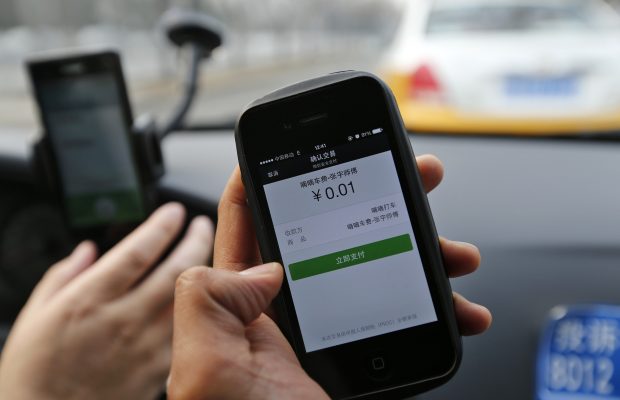
Category: Finance

Retail News Asia is committed to providing both local and global retailers with the latest Finance news throughout the Asian market. This on a daily base.

  • HSBC names new retail head

    HSBC names new retail head

    HSBC Holdings has named Charlie Nunn as chief executive of its retail banking and wealth management business to replace John Flint, who will take over as the British lender’s overall chief executive.

    Nunn joined the bank in 2011 and is already acting head of HSBC’s retail banking and wealth management business.

    In Hong Kong, Kerry Properties (0683) announced that Wong Siu Kong, 66, will relinquish his position as chief executive and will remain chairman and an executive director.

    Wong has been the chairman of the board since 2013 and chief executive since 2015.

    Ho Shut Kan, 69, who has been an executive director of the company since 1998, will be re-designated chief executive and will become a member of the remuneration committee and the nomination committee of the company. He is also a director of Kerry Holdings Limited, the controlling shareholder of the company, and a director of China World Trade Center Co.

    TV operator i-Cable Communications (1097) announced that Irene Leung Shuk-yee has been named chief operating officer with effect from tomorrow.

    The 48-year-old is an experienced senior manager in the telecommunications industry, having developed her expertise in fixed and mobile telecom services, i-Cable said in a filing to the Hong Kong stock exchange.

  • Kasikorn enhances the role of Thai-Myanmar Border Trade Business Center

    Kasikorn enhances the role of Thai-Myanmar Border Trade Business Center

    Kasikorn Bank (KBank) teams up with Kanbawza Bank (KBZ Bank), Myanmar’s largest bank, to implement a staff exchange program of Mae Sot-Myawaddy, aimed at boosting Thailand-Myanmar border businesses. Focus is made on import-export settlements via banking system and promotion of cross-border funds transfer via Mae Sot Border Trade Business Center, which is aimed to increase to about THB200 million.

    Mr. Kittichart Potithat, First Vice President for World Business Strategy and Marketing Management Department, KBank, said the bank has always placed importance on Myanmar market, given a large volume of border trade with Thailand. With an aim to facilitate investors and business operators in the border areas, KBank’s Border Trade Business Center was set up in Mae Sot, Tak. To date, the center has granted credits of more than THB150 million to businesses in Mae Sot for investment in Myanmar, completed 10 successful cases of business matching and organized various seminars to share knowledge on trade and investment, in order to promote trade and financial transactions between the two countries.

    Recently, KBank expanded the cooperation with KBZ Bank by sending KBank’s staff to work at Myawaddy branch of KBZ Bank and in turn accepted KBZ Bank’s staff to work at Mae Sot branch of KBank for one year. This cooperation should enable KBank to gain in-depth expertise about business operational format and banking regulations in Myanmar, as  well as consumer insight in using financial services of Myanmar consumers. Moreover, KBank staff under this staff exchange program can help advise Myanmar entrepreneurs on how to conduct financial transactions in Thailand, thus allowing both Thai and Myanmar entrepreneurs to conduct border trade transactions more smoothly.

    It has been found that Thai SMEs still need help to understand more about Myanmar’s banking system and reliable channels in seeking business partners in Myanmar, while Myanmar SMEs want to use financial products and services of Thai banks, but have been limited by communications barriers. Therefore, it is hoped that this cooperation will help enhance knowledge and understanding about financial and border trade transactions between the two countries. In 2018, KBank will offer financial facility to support border trade as always, focusing on cross-border money transfer service. KBank will also place a greater emphasis on cross-border funds transfer to promote import-export settlements via regulated banking system because nearly 100 percent of such transactions now are settled through non-regulated system. KBank is targeting an increase in Thai cross-border funds transfer transactions to Myanmar via KBank’s Border Trade Business Center at Mae Sot branch to about THB200 million in 2018.

    In addition to cross-border trade, KBank has always placed emphasis on businesses in Myanmar. KBank and KBZ Bank have also jointly developed cross-border payment services, namely funds transfer in local currency and Myanmar Worker Remittance service to enable Myanmar workers in Thailand holding KBZ Bank account to transfer money back to Myanmar more conveniently by simply scanning the barcode of their Myanmar Remit Card at KBank ATM machines.

    Moreover, KBank teams up with the Union of Myanmar Federation of Chambers of Commerce and Industry (UMFCCI) to host the annual “SME Capacity Building Program” seminar to enhance the capacity of SME entrepreneurs in Myanmar. The seminar is aimed at equipping them with knowledge about business operations and internal work processes to prepare for their business expansion, as well as preparation of financial statements in compliance with international standards for use in loan application. Since 2016, the seminar has been held in six main cities including Yangon, Myawaddy, Bago, Mawlamyine, Myeik and Taunggyi.  So far, over 600 Myanmar entrepreneurs have participated in the seminar. This year, the activity will also be held to fortify Myanmar entrepreneurs amid flourishing cross-border business and investment.

  • IMF Chief visits Indonesia with some advices

    IMF Chief visits Indonesia with some advices

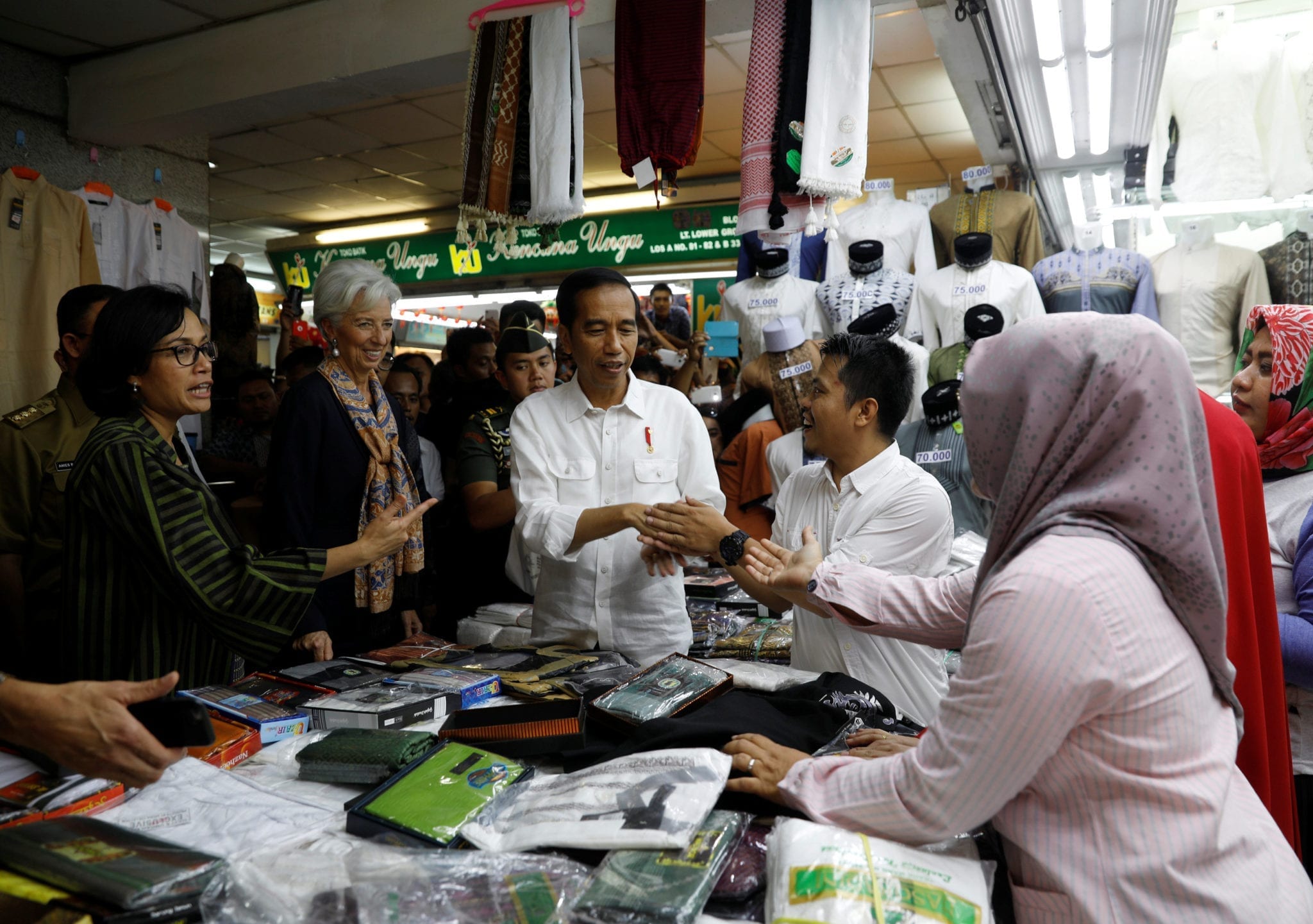
    Christine Lagarde, the managing director of the International Monetary Fund, said on Tuesday (27/02) the global economy was showing broad-based growth, but the landscape was shifting with heightened risks of trade disputes, monetary policy normalization and technological change.

    Lagarde, speaking to an IMF conference in Jakarta in preparation for the Fund’s annual meetings in Bali in October, said the IMF was expecting global growth to reach 3.9 percent in 2018 and 2019. This is unchanged from the IMF’s forecast in January and up from 3.7 percent in 2017.

    She said Asean countries were preparing for higher interest rates in advanced economies such as the United States and Europe, but cautioned that policymakers need to stay vigilant about its effect on financial stability and volatile capital flows.

    “We know this will have spillover effects across the world. We have known for some time that it’s coming,” Lagarde said. “It remains uncertain how this transition is going to affect other countries, companies, jobs, incomes.”

    Asean countries need to embrace new growth models that put a greater emphasis on domestic demand, regional trade and economic diversification and prepare for technological changes such as increased factory automation, artificial intelligence, biotechnology, new financial technologies and digital currencies.

    While these could eliminate some jobs, it was important for countries to boost efforts to educate workers to better prepare them to take advantage of new technologies.

    “Many jobs will be affected one way or another. Some of them will disappear, but many more will be affected because of automation. So we need to think about the future of work,” Lagarde said, adding that there was no single approach, and many countries will forge their own path.

    She highlighted Go-Jek, the fast-growing ride-hailing and delivery service in Indonesia, as an example of a country-specific technology innovation targeted to the country’s needs and workforce.

  • Arabesque eyes pension funds as it looks to expand in Asia

    Arabesque eyes pension funds as it looks to expand in Asia

    Arabesque Asset Management (Arabesque), a London-based boutique money manager, is looking to expand its presence in Asia, and is setting its sights on pension funds in the region.

    The company, which specialises in environmental, social and governance (ESG) investments, had assets under management (AUM) of US$150 million as at end-2017. Most of its customers are family offices.

    Arabesque Chairman Georg Kell says the company is looking at “securing mandates from Asian pension funds”.

    “As an asset management firm that is very focused on ESG, we are in good position to capture the growth and demand for ESG investment by institutional investors and pension funds,” Mr. Kell said on the sidelines of a recent capital market conference in Kuala Lumpur.

    He declined to disclose which Asian pension funds Arabesque is in discussions with.

    A growing number of pension funds in Asia have begun to take ESG investments more seriously in recent years.

    Japan’s Government Pension Investment Fund, which had AUM of $1.5 trillion at the end of 2017, said last year it plans to allocate 1 trillion yen ($9 billion) or 3% of its equities portfolio into companies that practice ESG.

    In Malaysia, Kumpulan Wang Persaraan, the country’s second largest pension fund, hopes to have 70% of its AUM be ESG-compliant by an undisclosed timeline, up from the current 50%. The fund had AUM of over 137 billion ringgit ($35.22 billion) as at end-September 2017.

    Mr. Kell says Arabesque, which was founded in 2013, needed a few years to build its track record before moving to expand aggressively.

    “In this industry, you are pretty much non-existent until the third or fourth year onwards,” he says.

    According to Mr. Kell, Arabesque will also be looking to grow its retail investor business. This will be done via partnerships with local players because it can be costly to set up a distribution network to reach out to retail investors.

    “In Malaysia, we have a partnership with BIMB Investment Management. We are looking for similar partnerships in the region,” he says.

    But he believes it’s important to educate retail investors about ESG products in order to boost demand.

    “In Asia, their (retail investors) mindset is not open enough… Of course, we know that building something new is never easy. It takes time,” Mr. Kell says. “Nevertheless, I am confident that sustainable investing is here to stay and will become a new normal.”

  • Cryptocurrency Market Stabilizes at $500 Billion, While Bitcoin Maintains at $11000 Level

    Cryptocurrency Market Stabilizes at $500 Billion, While Bitcoin Maintains at $11000 Level

    The price of the leading digital currency keeps growing in value, positively influencing the entire cryptocurrency market.

    Bitcoin continued to move higher on Monday, after surpassing the $11,000 mark over the weekend for the first time since January. The cryptocurrency reached its highest level since last month at over $11,200 on Sunday, before falling to $10,350 by the end of the day. However, it rebounded on Monday to $11,050, showing a 5% gain.

    Thus, bitcoin has managed to recover from its two-month low of $6,000 recorded earlier this month and is currently trading at $11,186. Other major digital currencies have escalated as well. The world’s second cryptocurrency, Ethereum, is getting closer to the $1,000 level and is now standing at $940. The third cryptocurrency, Ripple, is trading at $1,14.

    The surge had a positive impact on the overall cryptocurrency market, which recorded a valuation of $502 billion on Monday. The last time it broke the $500 billion mark was in mid-December. At the time of writing, the total market cap is worth more than $501 billion.

    Cryptocurrency prices declined at the start of 2018, which according to analysts was due to bans on virtual currencies imposed by different countries. Several major banks, including JP Morgan Chase, Citigroup, and Bank of America, prohibited the use of credit cards for purchasing digital currencies, while South Korea recently banned unknown cryptocurrency trading accounts. Meantime, the US authorities have begun an investigation of the Bitfinex exchange over its links to Tether, which is rumored to being used to artificially inflate bitcoin prices.

    Still, the regulators in South Korea, which is the key market for cryptocurrencies, confirmed last week that they will allow digital currencies to operate in the country, what has been positive news for traders who feared a complete ban. According to HanKyoReh, the demand for the cryptocurrency is surging now, for the first time since the middle of January.

    Besides, analysts predict that bitcoin will continue its upward momentum. Tom Lee, the Wall Street strategist covering bitcoin, said bitcoin will reach $25,000 this year, while Saxo Bank’s analyst Kay Van-Petersen believes the digital currency will cost $100,000.

    According to a new report by S&P Global Ratings, institutional investors should not fear a collapse of the cryptocurrency market, as it is unlikely to disrupt financial markets. Investors, researchers say, would be better protected in case of a huge drop, while retail investors would feel the impact of the collapse the most.

    “We expect rated banks to be largely insulated, given that their direct or indirect exposure to cryptocurrencies appears to remain limited,” said Mohamed Damak, financial institutions sector lead at S&P Global Ratings. “For now, a meaningful drop in cryptocurrencies’ market value would be just a ripple across the financial services industry, still too small to disturb stability or affect the creditworthiness of banks we rate.”

    “We believe that the future success of cryptocurrencies will largely depend on the coordinated approach of global regulators and policymakers to regulate and enhance market participants’ confidence in these instruments,” Damak added.

  • Rosy results picture for HSBC

    Rosy results picture for HSBC

    HSBC Holdings releases its annual results this week and many investment houses seem positive.

    Goldman Sachs expects the total amount of share buybacks of the banking group to hit US$3 billion (HK$23.4 billion) this year and the dividend payout to be maintained at 51 US cents per share.

    The conglomerate has had three public repurchases in the past, ranging from US$1 billion to US$2.5 billion.

    It will record a US$3.7 billion profit before tax for the fourth quarter of the last financial year while the average market expectation is US$3.9 billion, up 49 percent from its result last year, Goldman Sachs added.

    Investors will tend to focus on the company’s retail business performance in Hong Kong in the fourth quarter last year when the local stock market surged and the interest rate grew, both of which should have benefited the HSBC’s wealth management and insurance business, Goldman Sachs said.

    According to the prediction made by analysts from Bloomberg, the company should see approximately US$20.35 billion annual adjusted profit before tax, growing 5.4 percent year on year. Internal securities and analysts from HSBC are more positive, forecasting a 10.4 percent annual growth in adjusted profit before tax to US$21.31 billion and a 7.6 times year on year gain in net profit to US$11.33 billion.

    However, China Goldjoy Asset Management managing director Matthew Kwok is not expecting too many surprises.

    He said the banking group is unlikely to have a large growth in net profit, plus the switch of management should drag the public attention to new strategy developments, though he agreed that HSBC has sufficient capital for share buybacks.

    Stuart Gulliver, chief executive of HSBC, will leave the position this week after the results’ announcement.

    Recently, he reportedly said the banking giant is unlikely to exercise any spinoff after many years of business restructuring.

    For a long time English politicians have been critical of HSBC for its merger and acquisitions in earlier years “have led the company to the stage of being hard to manage,” but now Gulliver said such concerns have faded.

    With the hope of an excellent result, the banking group’s stock price rose in Hong Kong before the Lunar New Year holiday and surged to HK$83.55 on the last trading day.

    Last October, HSBC released its third quarter result and signaled its pivot to Asia was paying rich dividends as quarterly profits leaped fivefold, and that it will continue placing strong investments in the mainland over next few years.

    The bank makes more than half of its profits in Asia, and its regional pivot is centered around the Pearl River Delta with plans to bolster its retail and wealth management business.

    Back then, Gulliver said that the group expected sustainable profit efficiency from the region.

  • The Bitcoin Party is Over. The Blockchain Party has just Begun.

    The Bitcoin Party is Over. The Blockchain Party has just Begun.

    Confidence in cryptocurrency markets may have taken a major hit in recent weeks, but the same cannot be said of the value of the technology it relies on – the blockchain. Bitcoin’s price plunged this week to less than US$11,000, from almost US$20,000 in mid-December, after South Korea announced that all anonymous accounts, foreigners without local banking services and minors would be banned from trading on exchanges from January 30.

    But, particularly in Southeast Asia, much confidence remains that the blockchain technology underlying bitcoin can be adapted to drive development in everything from bank remittances to electoral rolls and health care records.

    Essentially, a blockchain is a digital ledger – a continuously growing list of records, called blocks, that are designed to be resistant to modification. Blockchains enable information to be shared in peer-to-peer networks, and because the data in any given block cannot be altered without altering all subsequent blocks, they are secure against fraud.

    It’s this quality that has raised hopes it can be adapted for a wide range of uses beyond the financial sector. In Singapore, the monetary authority has launched extensive blockchain research efforts, while its members have formed a blockchain-based trading network with Hong Kong, to be rolled out early next year.

    Indonesia’s Central Bank is following Singapore’s lead with its own research programmes, according to Eni Panggabean, head of payment system policy and the oversight department.

    “There is nothing wrong with the blockchain technology and it can be utilised in various sectors,” she said, adding that research was still in its early stages.

    Malaysia, meanwhile, is seeking to develop global blockchain standards with industry groups predicting the technology will be in widespread use by 2025. In Australia, the government has invested A$8.6 million (US$6.9 million) into a blockchain project by Perth company Power Ledger, in which energy is exchanged between households during periods of excess or shortage.

    And even in the midst of South Korea’s clampdown on bitcoin, the science and technology minister Yoo Young-min has gone on record as saying that blockchain should be considered quite separately from the volatile trading scene.

    Rob Hanson, senior research consultant at Australia’s Commonwealth Scientific and Industrial Research Organisation (CSIRO), said blockchain’s potential was “fundamentally as an anti-fraud tool”.

    “Blockchain is a term charged with excitement and confusion,” Hanson said. “It is a technology that lets anyone record transactions in a way everyone can see and trust … For governments, the obvious areas to focus blockchain research on are those where it would produce the greatest public good.”

    Southeast Asia is ripe for such innovations.

    “In Vietnam, health care records are a key area that blockchain could disrupt in public services,” said Nicole Nguyen, head of corporate marketing at Infinity Blockchain Labs in Ho Chi Minh City. “Regulation technology is also an area that government is very excited about.”

    Blockchain technology could also be used to host government registries, improve supply chain visibility and efficiency – especially in archipelago countries like Indonesia and the Philippines – and speed up international remittance payments, according to a CSIRO research paper.

    And Steven Suhadi, chief executive of Jakarta-based blockchain start-up Blocktech, said it could boost traceability and transparency across governmental agencies, potentially helping with anti-corruption efforts.

    Even so, multiple challenges remain before blockchain can achieve widespread adoption.

    On a government level, Hanson said more research was needed to develop adequate regulation that ensured the technology was efficient and did not “erode trust and confidence in the democratic process – which ironically is what a blockchain would be trying to strengthen”.

    “Blockchain uses a lot of computer power in order to create the trust we value. These costs are hidden in systems like bitcoin because of the cryptocurrency reward paid to the people who provide their computers for this purpose,” he said.

    Hanson said authorities needed to decide whether they were going to use a public network of computers to support their blockchains, or run all the computers themselves.

    He urged governments not to act too hastily to adopt the technology.

    “The problem with the amount of excitement around blockchain is that people are treating it like a silver bullet and are more interested in finding a use for blockchain than in finding the best way to solve the problems they face,” he said. “There should be a good reason for using a blockchain, and that reason should not be because other people are using it and you don’t want to miss out.”

    For Nguyen, blockchain’s supporters must also overcome the uncertainty generated by the recent cryptocurrency trading frenzy – and the heavy-handed reaction from countries such as South Korea.

    The adoption of cryptocurrency, that would affect the blockchain industry,” she said. “But on the other hand, it could make more people intrigued by the ecosystem itself and deploy this tech for other applications. That’s where the magic of blockchain would kick in.”

  • Hana Financial Group To Drive Its Global Loyalty Network With Oracle

    Hana Financial Group To Drive Its Global Loyalty Network With Oracle

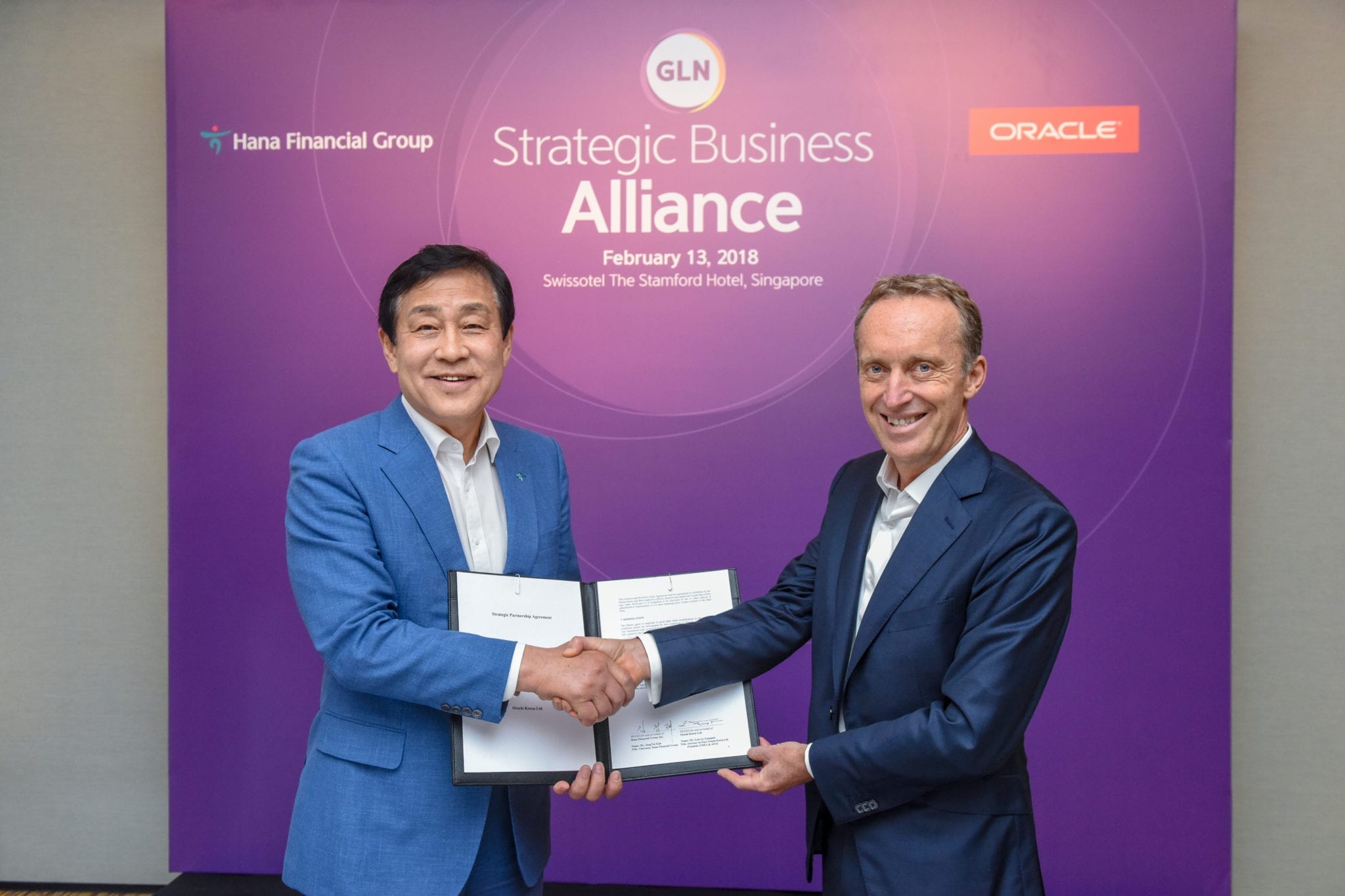
    Hana Financial Group (HFG) (Chairman Kim Jung-Tai, www.hanafn.com) announced it signed a memorandum of understanding (MOU) with Oracle in Singapore yesterday under which Oracle will work with HFG in the building and joint marketing of HFG’s Global Loyalty Network (GLN).

    Kim Jung-Tai, chairman of the Hana Financial Group, and Loïc Le Guisquet, president, International, Oracle Corporation, were in attendance at the signing ceremony. Both companies confirmed their mutual cooperation for GLN’s successful launch of services and global expansion, and agreed to collaborate on new technologies such as blockchain, membership, e-money and AI through HFG’s business know-how and Oracle’s technology capabilities. HFG will also modularize the results of the project, including digital asset exchange, and conduct consulting and sales.

    Kim Jung-Tai said, “Through this collaboration, we expect it will be easier for GLN to expand worldwide using Oracle’s leading and innovative cloud technologies that enable digital transformation. Building a global digital asset transfer network is a level of innovation that is rarely seen around the world and when the global integration platform is built, GLN’s customers will be able to enjoy locally offered deals and discounts around the world.”

    GLN is an innovative integrated platform network that enables digital institutions and retailers around the world to connect their digital platforms in one network to freely exchange digital assets and electronic money such as points and mileage. The GLN consortium was established in November 2017 with 36 companies in 11 countries. It is currently under contract with 24 companies and detailed discussions are underway with 15 banks and 20 retailers.

    Meanwhile, on Feb 2, it said that a ‘Coupon Mall Pyeongchang Edition’ in connection with GLN was opened to keep pace with the hosting of the PyeongChang Winter Olympics. This coupon mall is based on the global platform and is being provided in seven languages including English, Korean, Chinese and Japanese. This service will be also expanded globally through GLN’s consortium banks including SuMi TRUST Bank in Japan and Taiwan Taishin Bank, and it is currently offering over 1,000 free coupons. Han JunSeong, vice president of KEB Hana Bank said, “We provide foreign tourists visiting Korea during the PyeongChang Winter Olympics with information on sightseeing, restaurants and various free coupons for major domestic cities such as Pyeongchang, Seoul, Jeju and Busan.”

  • India bank hack ‘similar’ to US$81m Bangladesh central bank heist

    India bank hack ‘similar’ to US$81m Bangladesh central bank heist

    Hackers who tried to steal nearly US$2 million from India’s City Union Bank this month used tactics similar to those employed in the unsolved cyber heist of US$81 million from Bangladesh’s central bank in 2016, City’s CEO said on Monday (Feb 19).

    The unknown hackers disabled the City printer connected to global payments platform SWIFT on Feb 6, preventing the bank from receiving acknowledgement messages for three fraudulent payment instruction sent that evening until the next morning.

    “Nobody suspected that it was an attack and thought it was a systemic network failure,” N Kamakodi said on phone. “The system department people, everybody assembled, analysed the problem, rebooted, they closed shop only around 10.00pm to 10.30pm.”

    The next morning, bank officials managed to reconcile the previous day’s transactions and found out “three transactions which were not originated from our bank”.

    The bank had been able block only one of the transfers worth US$500,000, while attempts were under way to retrieve the rest, he said. It first disclosed the heist on Saturday.

    In the case of Bangladesh Bank, hackers infected the system with malware that disabled the SWIFT printer. Bank officials in Dhaka initially assumed there was simply a printer problem.

    The hackers stole the money from Bangladesh Bank’s account at the Federal Reserve Bank of New York using fraudulent orders on SWIFT. The money was sent to accounts at Manila-based Rizal Commercial Banking Corp and then disappeared into the casino industry in the Philippines.

    Nearly two years later, there is no word on who was responsible and Bangladesh Bank has been able to retrieve only about US$15 million, mostly from a Manila junket operator.

    “We definitely see similarities between the Bangladesh case, and the similarities are being factored into the investigation,” Kamakodi said.

    City Union, a small private lender based in south India, said the three money transfer instructions were sent via correspondent banks to accounts in Dubai, Turkey and China.

    He said SWIFT was helping it investigate the matter, and that the hack happened despite the bank adding new security measures days before.

    “It’s a cat and mouse game,” he said.

    SWIFT said it did not comment on individual customers or entities.

    Russia’s central bank said last week that unknown hackers stole 339.5 million roubles (US$6 million) in an attack via the SWIFT international payments messaging system in Russia last year.


  • Bitcoin broke through $11,000 for the first time since January

    Bitcoin broke through $11,000 for the first time since January

    Bitcoin broke through the $11,000 mark over the weekend for the first time since the end of January as its price continues to slowly rise following a violent sell-off at the start of the month.

    The price of the cryptocurrency went as high as $11,279.18 on Sunday, its most elevated level since January 30, according to CoinDesk’s bitcoin price index, which tracks prices from four major cryptocurrency exchanges.

    Bitcoin’s price has been slowly climbing higher after a massive sell-off in early February, which was triggered by fears over tighter regulation, rumors of price manipulation in the market, and a hack on cryptocurrency exchange Coincheck that saw over $500 million stolen.

    Bitcoin is up over 80 percent since it bottomed at $5.947.40 on February 6.

    In South Korea, a key market for bitcoin, there were fears that an outright ban on cryptocurrency trading could come into effect. But as new measures were implemented, they were less strict than investors thought, and many sounded a positive note.

    Earlier this month, chairman of the Commodity Futures Trading Commission (CFTC), Christopher Giancarlo, and the chairman of the Securities and Exchange Commission (SEC), Jay Clayton, gave a testimony in front of the Senate Banking Committee on cryptocurrencies. They struck a positive tone, with Giancarlo saying that regulators should have a “thoughtful and balance response, and not a dismissive one.”

    Bullishness appears to be returning to the cryptocurrency markets, with both ripple and ethereum also off their lows seen earlier this month.

    Tom Lee, the first major Wall Street strategist to cover bitcoin, said recently that bitcoin will likely rise to $25,000 this year. Kay Van-Petersen, an analyst at Saxo Bank who correctly predicted the cryptocurrency’s rally at the start of last year told in a recent interview that bitcoin could go to $100,000.

    Still, there are a number of major organizations and figures warning about the potential for cryptocurrencies to crash. Goldman Sachs said in a note this month that most digital coins are likely to fall to zero. And Ethereum founder Vitalik Buterin also warned Sunday that cryptocurrencies are a “hyper-volatile” asset class and “could drop to near-zero at any time.”

  • Singapore to impose tax on digital services from 2020

    Singapore to impose tax on digital services from 2020

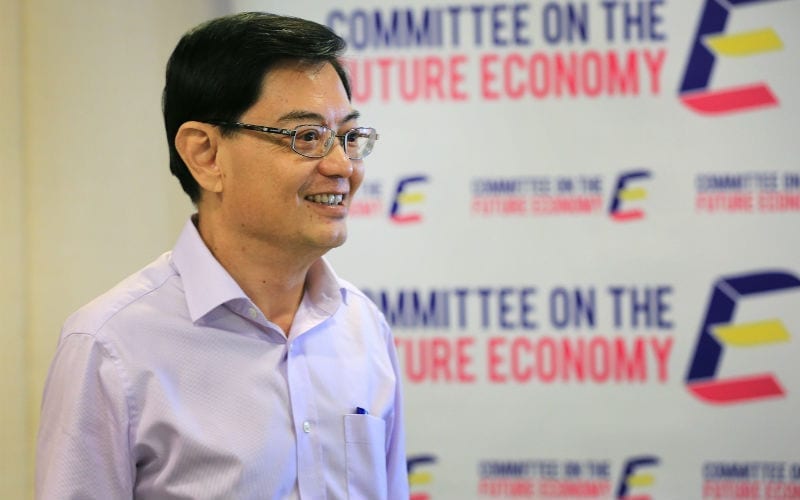
    Singapore’s Finance Minister Heng Swee Keat announced at the country’s Budget 2018 yesterday, Feb 19, that Goods and Services Tax (GST) will be imposed on businesses providing digital services from Jan 1, 2020.

    These services include mobile applications, and the streaming of music and shows. It is likely that firms affected by the measure to pass on the extra cost to consumers.

    The move is aimed at making tax system in Singapore “fair and resilient” in today’s digital economy, said Heng. “Today, services such as consultancy and marketing purchased from overseas suppliers are not subject to GST. Local consumers also do not pay GST when they download apps and music from overseas. This change will ensure that imported and local services are accorded the same treatment.”

    Measure will not apply to online sale of goods

    It is reported that according to a statement by the Ministry of Finance, this new measure will not affect online sale of goods.

    With regards to online retail, Mr Heng commented that international discussions are ongoing to see how taxes could be applied. There would also be a review before a decision is made.

  • Indonesia Posts 670m Trade Deficit January highest since april 2014

    Indonesia Posts 670m Trade Deficit January highest since april 2014

    Indonesia posted a $670 million trade deficit in January as increased exports were offset by higher imports of raw materials by manufacturers, the Central Statistics Agency, or BPS, reported on Thursday (15/02).

    The deficit is the highest since April 2014, having increased from December’s $220 million deficit, which was revised down from $270 million. Indonesia only posted trade deficits in July and December last year.

    Exports increased 7.86 percent year on year in January to $14.46 billion, compared with 6.93 percent year on year in December, thanks to mining and manufactured goods. This figure however, is down 2.81 percent from December.

    According to BPS head Suhariyanto, prices of some commodities, such as copra and palm kernel oil, have declined, undermining export gains from rising coal and nickel prices.

    Imports jumped 26.44 percent year on year in January to $15.13 billion, compared with 17.83 percent year on year in December, due to purchases of electrical and mechanical machinery. This figure is 0.26 percent higher than in December.

    The imports of raw materials increased 2.34 percent in January, compared with a month earlier, while imports of consumer and capital goods declined by 1.46 percent and 7.39 percent, respectively.

    However, the imports of consumer goods, capital goods and raw materials showed double-digit growth on an annual basis, at 32.98 percent, 30.9 percent and 24.76 percent, respectively.

    Indonesia had its biggest trade deficits with China ($1.83 billion), Thailand ($211.4 million) and Australia ($178.2 million).

  • Singapore’s economy jumps by 3.6% in 2017

    Singapore’s economy jumps by 3.6% in 2017

    Goods producing industries push the growth with 5.7% increase.

    Singapore economy grew by 3.6% for the whole year of 2017, faster than 2.4% growth in 2016.

    Goods producing industries, which include manufacturing and construction, posted the highest growth with 5.7%.

    The manufacturing sector expanded by 10.1%, which is pushed by growth in the electronics and precision engineering clusters.

    The construction sector, on the other hand, shrank by 8.4% from 1.9% growth in 2016. The output was pulled down by 29.1% decline in private residential and private industrial construction works.

    Meanwhile, service producing industries grew by 2.8% driven by increase in the finance & insurance (4.8%), transportation & storage (4.8%), and wholesale & retail trade (2.3%).

  • Bursa Malaysia to trade firmer this week

    Bursa Malaysia to trade firmer this week

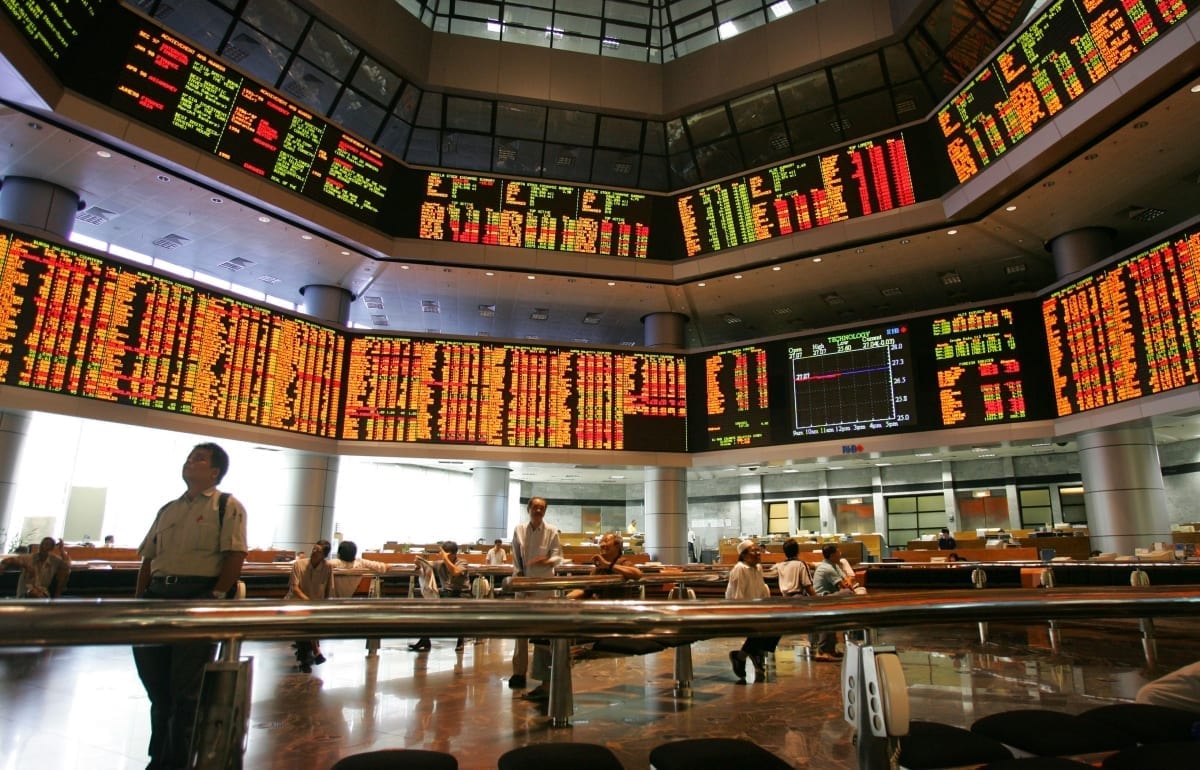
    Bursa Malaysia is expected to trade firmer next week, taking cue from the encouraging 2017 gross domestic product (GDP) data released on Wednesday.

    Affin Hwang Investment Bank Vice-President/Head of Retail Research, Datuk Dr Nazri Khan Adam Khan said the 5.9% GDP growth, deemed as positive and taking on the good momentum from last year, would improve investors’ appetite on the local bourse.

    “We can see that the volume has gone up too, which means we have the momentum to trend higher next week.

    “The benchmark FTSE Bursa Malaysia KLCI (FBM KLCI) is also likely to touch the 1,860 points level next week,” he said.

    Bank Negara Malaysia in a statement said Malaysia’s GDP expanded 5.9% in the fourth quarter of 2017 from a year earlier, driven mainly by private sector demand, with support from the external sector, while the 2017 full-year GDP grew 5.9% against the 4.2% expansion in 2016.

    The central bank said the outlook for 2018 remained favourable, supported by domestic demand.

    Nazri said that the ringgit is also expected to be higher next week amid a stronger current-account surplus of RM12.9 billion in the fourth quarter last year.

    “The rebound in the ringgit to currently quote at 3.8-level, recovery in oil prices as well as positive sentiment on global equity markets, will boost the FBM KLCI’s performance and increase investors’ confidence,” he added.

    Meanwhile, Maybank Investment Bank in a note said in the first half of 2018 (1H2018) Market Outlook session, it expects fiscal stimulus pre-GE14 (General Election-14) and Bank Negara’s overnight policy rate (OPR) hike to be the two main thematics driving investment.

    “But for the longer term play, the focus is on multi-year orderbook replenishment in infrastructure construction, tourism and Look East Malaysia.

    “Fiscal stimulus in the lead up to the general election will be those in the consumer sector as a boost to disposal income is expected to continue and will be front loaded in 1H2018.

    ‘While for the OPR, it will benefit banks and it is believed, contractors will have the highest potential of winning jobs for the upcoming megaworks,” it added.

    On a Thursday-to-Friday basis, the benchmark FTSE Bursa Malaysia KLCI (FBM KLCI) finished 18.46 points higher at 1,838.28.

    The FBM Emas Index jumped 142.43 points to 13,117.49, the FBMT100 Index appreciated 127.74 points to 12,829.58 and the FBM Emas Syariah Index fell 132.54 points to 13,145.10.

    On a sectoral basis, the Plantation Index gained 50.94 points to 7,996.97, the Industrial Index declined 18.70 points to 3,202.66, while the Finance Index increased 137.94 points to 17,594.41.

    Weekly turnover went down to 6.46 billion units worth RM7.76 billion from 15.68 billion units valued at RM16.43 billion.

    Main market volume fell to 4.08 billion shares valued at 7.30 billion from 10.01 billion units worth RM15.42 billion.

    Warrant turnover decreased to 1.24 billion units worth RM242.26 million from 2.79 billion units valued at RM566.26 million last week.

    The ACE market slipped to 1.10 billion shares worth RM205.73 million from 2.83 billion units worth RM432.96 million previously.

    The local market was closed on Friday for the Chinese New Year celebration.

    The gold futures contract on Bursa Malaysia Derivatives is likely to extend gains next week as investors remain cautious on global equity markets and a weaker US dollar, said an analyst.

    OANDA Corp Head of Trading for Asia Pacific, Stephen Innes said higher US inflation combined with the US dollar exhibiting zero correlation to higher interest rates amidst burdening dual deficits, should play out favourably for the gold markets.

    “Gold is in a perfect spot to extend gains. Higher US inflation as expressed through the higher consumer price index data is positive. We could see a more significant move into gold if equity prices start to lose traction,” he said.

    Another dealer said Bursa gold futures market might track closely the movement of COMEX gold’s Friday close to get direction of the week.

    The local gold market traded higher throughout the holiday shortened week in line with COMEX gold.

    The market was traded half-day on Thursday and closed on Friday for the Chinese New Year celebration.

    On a Thursday-to-Friday basis, February 2018 increased 46 ticks to RM169.40 a gramme, March 2018 rose 37 ticks to RM169.65 a grame, April 2018 jumped 49 ticks to RM170.45 a gramme and May 2018 went up 37 ticks to RM170.20 a gramme respectively.

    Weekly turnover eased to 15 lots worth RM286,365 from last week’s 26 lots valued at RM436,615, while open interest eased slightly to 72 contracts from 75 contracts.
  • Chinese tourists drive WeChat Pay growth in Philippines

    Chinese tourists drive WeChat Pay growth in Philippines

    Chinese tourists are helping drive the growth of cashless payments using Tencent’s WeChat in the Philippines, according to its Filipino partner, Asia United Bank.

    Chinese tourist arrivals are projected to hit 1 million. Staying in the country for 8 days on average, WeChat Pay in the Philippines can generate up to P48 billion in revenue, said AUB vice president and credit card business head Mags Vazquez Surtida.

    “The transaction counts are increasing. The transaction values are increasing. We can see more merchants. We see the growth happening on a daily basis,” Surtida said.

    WeChat Pay is accepted in 1,000 retail outlets in the Philippines, including hotels and restaurants, Surtida said. The number of daily transactions recently reached up to 2,500 in the run-up to the Chinese New Year, twice the average per day, she said.

    The value of single transactions were as high as P90,000, recorded in Boracay. Diners spend P6,000 to P12,000 while shoppers pay P4,000 to P7,000 using WeChat Pay, she said, Surtida said.

    Surtida said AUB hoped to grow the number of WeChat Pay merchants in the Philippines to 5,000 by March.