Category: Finance

Retail News Asia is committed to providing both local and global retailers with the latest Finance news throughout the Asian market. This on a daily base.

  • Saigon cafés, restaurants facing the heat for accepting Bitcoin payments

    Saigon cafés, restaurants facing the heat for accepting Bitcoin payments

    Authorities in Ho Chi Minh City will be working with the country’s central bank to “handle violations” at several restaurants and coffee shops in the city that have been accepting Bitcoin as payment, an official from the bank said on Tuesday.

    Nguyen Hoang Minh, deputy director of the State Bank of Vietnam’s Ho Chi Minh City branch, maintained that virtual currencies such as Bitcoin are illegal, and the issuance, provision and use of Bitcoin violates the rules.

    Several coffee shops and restaurants in the city have been accepting Bitcoin as payment so the municipal administration has agreed to cooperate with the central bank to deal with these violations, Minh told a meeting with the central bank’s deputy governor Dao Minh Tu.

    “We have also asked the city’s police department to work with us.”

    The heaviest punishment for using cryptocurrencies in Vietnam is a fine of VND200 million ($8,800).

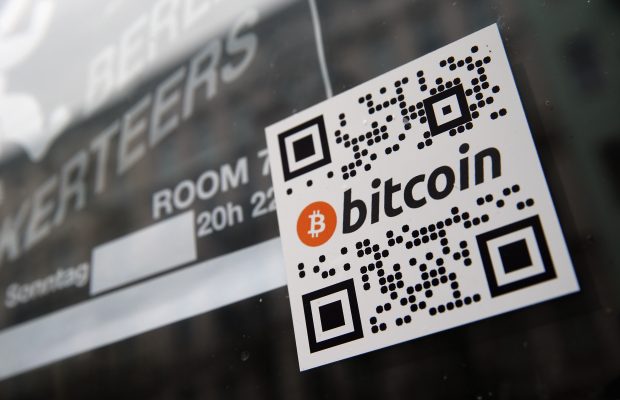
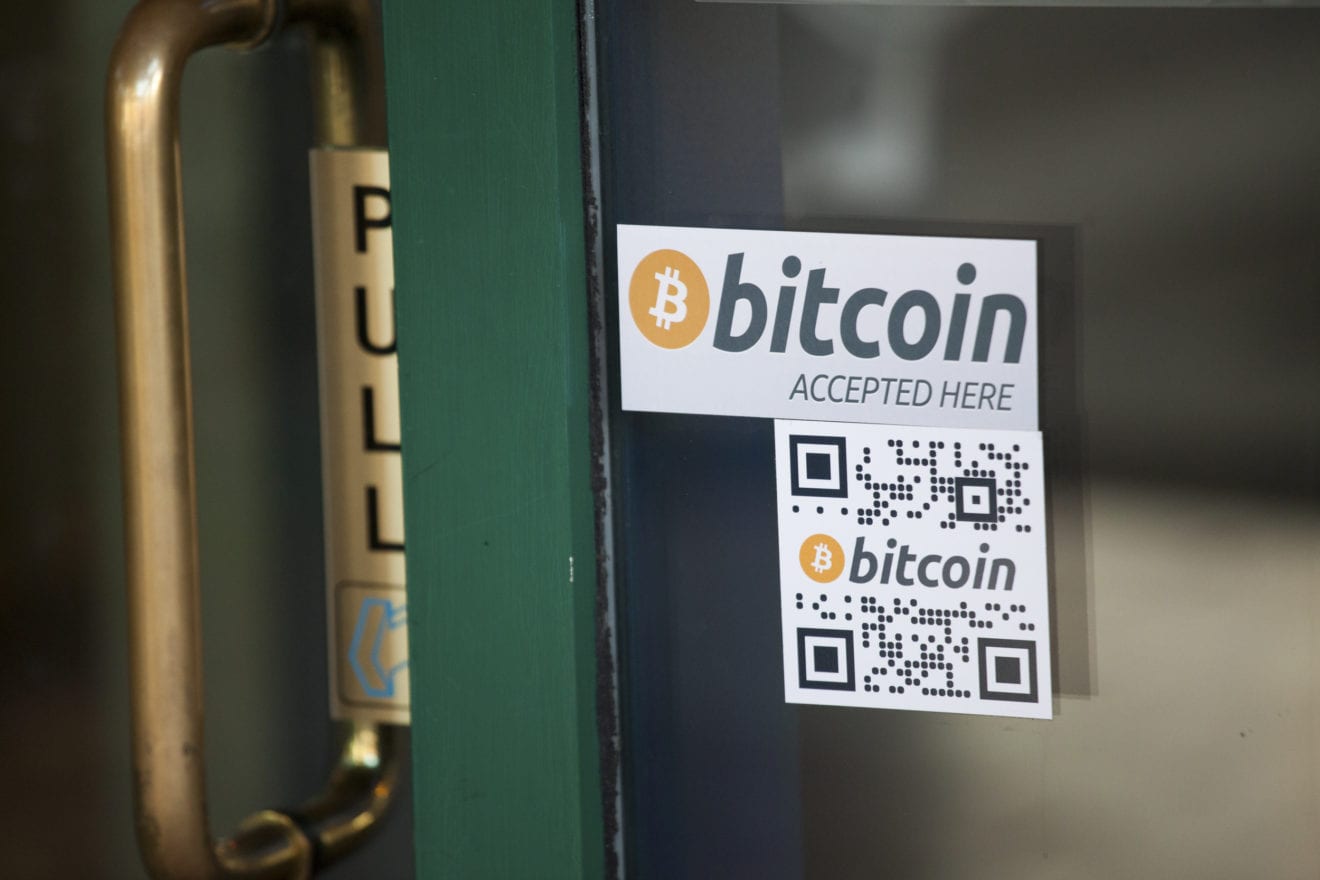
    However, we found a restaurant in District 1 that allows customers to pay for their drinks and pizzas using Bitcoin.

    A staff there said customers only need a Bitcoin code to pay for their meals, adding that this method is more beneficial for the restaurant because Bitcoin payments do not appear on tax declarations.

    Prices at the restaurant follow the current value of Bitcoin on the world market, which was $16,500 on Wednesday.

    The value of the cryptocurrency has been rising rapidly this year, reaching an all-time high of $19,783 on Sunday, an increase of 20 times compared to January.

    The heat that Bitcoin has created globally has been felt in Vietnam, and 1,478 pieces of hardware were imported into the country to “mine” for the currency in the first ten months of this year, according to official government data.

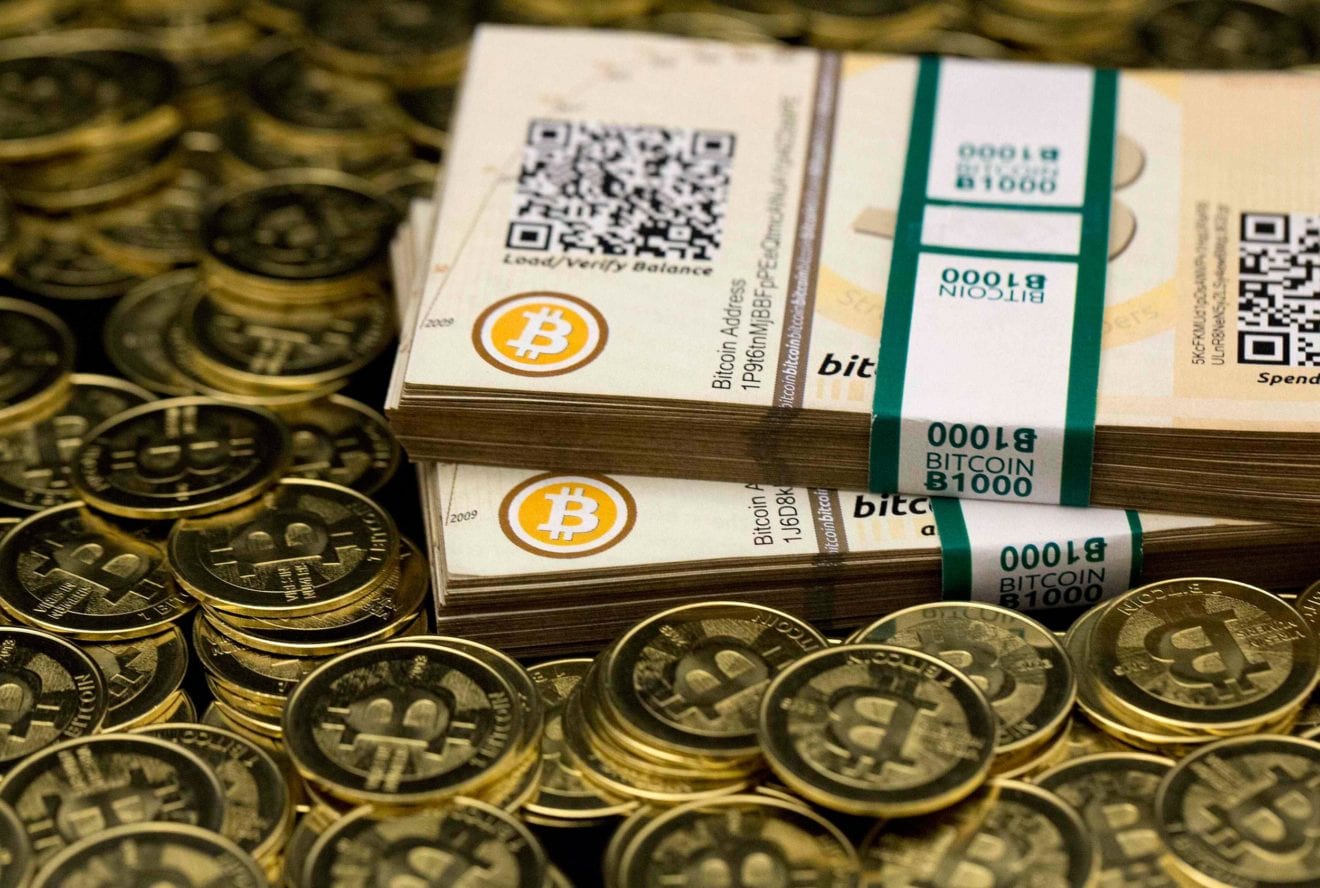
    As explained by Business Insider and Investopedia, the process of mining Bitcoins involves miners solving complex mathematical problems, and the reward is more Bitcoins generated and awarded to them.

    The participant who solves the puzzle first gets to place the next block on the block chain, a public ledger that records all Bitcoin transactions, eliminating the need for a third party to process payments, and claim the rewards.

    Miners verify transactions and prevent fraud, so more miners equals faster, more reliable and more secure transactions. According to current Bitcoin protocol, 21 million coins is the cap and no more will be mined after that number has been reached.

    Yet as currently regulated, the hardware imported into Vietnam for Bitcoin mining is not prohibited.

    In October, the central bank issued a statement saying that “from January 1, 2018, the act of issuing, supplying or using illegal means of payment may be subject to prosecution in accordance with the provisions of Article 206 of the Penal Code 2015.”

    The only payment methods allowed in the country are issued or controlled by the State Bank.

    The central bank has warned organizations and individuals in Vietnam not to invest in Bitcoins or conduct transactions in the currency, saying they would be taking a huge risk with no legal protection.

    “Bitcoin transactions are anonymous and can be used for money laundering, drug trafficking, tax evasion and illegal payments,” the bank said.

    Also in October, Vietnam’s top technology university FPT said it was looking at ways to let its students pay their tuition fees using Bitcoin.
  • Shinhan Bank completes acquisition of ANZ’s retail biz in Vietnam

    Shinhan Bank completes acquisition of ANZ’s retail biz in Vietnam

    South Korea’s Shinhan Bank said Monday it has completed the acquisition of Australia & New Zealand (ANZ) Banking Group’s retail business in Vietnam.

    The acquisition helps Shinhan Bank increase its assets in Vietnam to US$3.3 billion and its number of Vietnamese customers to about 900,000, the bank said.

    Financial terms of the acquisition were not disclosed.

    In April, ANZ, Australia’s third-largest bank, agreed to sell its retail business in Vietnam to Shinhan Bank as part of its strategy to streamline its businesses in Asia.


  • Japan firm says it will pay part of salaries in Bitcoin

    Japan firm says it will pay part of salaries in Bitcoin

    A Japanese company will start paying part of its employees’ salaries in Bitcoin, as it aims to get better understanding of the virtual currency, a spokeswoman said on Friday.

    GMO Internet, which operates a range of web-related businesses including finance, online advertising and internet infrastructure, will start paying up to 100,000 yen ($890) monthly by Bitcoin to its employees in Japan from February next year.

    “Employees can receive salaries by Bitcoin if they want to,” company spokeswoman Harumi Ishii said.

    “We hope to improve our own literacy of virtual currency by actually using it,” she said.

    The offer will be open to around 4,000 employees of the GMO group in Japan, she said.

    The company started a Bitcoin trading and exchange business in May.

    And next month, it will join the so-called “Bitcoin mining” business — gaining the right to receive new Bitcoins as a reward for helping keep the network secure by approving transactions.

    World Bitcoin prices have surged globally this year, soaring from less than $1,000 in January to $17,000 this week.

  • Bitcoin futures rocket past $18,000; Asian shares buoyant

    Bitcoin futures rocket past $18,000; Asian shares buoyant

    The craze for cryptocurrencies entered a new chapter on Monday as bitcoin futures rocketed by one-fifth of their value at a hotly anticipated launch, while Asian shares climbed amid optimism about global growth.

    The most-traded contract on the Chicago-based CBOE Global Markets exchange XBTc1 opened at $15,460 in New York on Sunday evening, before leaping to a high of $18,700 – a gain of 21 percent. They were last quoted at $18,100 a premium of more than$1,700 to the price on Gemini Exchange.

    The futures are cash-settled contracts based on the auction price of bitcoin in U.S. dollars on the Gemini Exchange, which is owned and operated by virtual currency entrepreneurs Cameron and Tyler Winklevoss.

    The cryptocurrency has boasted a gravity-defying 15-fold gain since the start of the year, attracting institutional interest and no small amount of question marks.

    The acting governor of the Reserve Bank of New Zealand on Sunday said bitcoin appeared to be a “classic case” of a bubble.

    “With a bubble you never know how far it is going to go before it comes around,” Grant Spencer told a local television program.

    Some market participants believe the fallout across other financial assets from a potential bursting of the bubble will be limited.

    “Bitcoin’s market capitalization is currently around $240 billion, which is much smaller, say, than the value of gold outstanding,” said Andrew Kenningham, economist at Capital Economics.

    “If the price of bitcoin fell to zero today, the paper losses would be equivalent to a 0.6 percent fall in U.S. equity prices. As most investors have bought bitcoin at much lower prices, the relevant losses would arguably be smaller.”

    Asian shares were buoyant with every single market but one in the black, following strong U.S payrolls data and better-than-expected Chinese trade figures on Friday.

    Spreadbetters pointed to a strong opening for European shares, while U.S. stock futures indicated a firm start for the S&P 500 which is seen up 0.1 percent ESc1.

    The MSCI’s broadest index of Asia-Pacific shares outside Japan .MIAPJ0000PUS added 0.5 percent to 552.38, well above a recent two-month trough of 542.27 points.

    Japan’s Nikkei .N225 climbed 0.6 percent while Chinese shares rallied, with the blue-chip CSI 300 index .CSI300 up 1.3 percent. Vietnam .VNI was the only Asian index in the red.

    Rate rises?

    Currency market investors were cautious ahead of a big week for policy meetings globally, with the Federal Reserve the only major central bank expected to raise interest rates. The Bank of England and the European Central Bank are likely to hold rates steady.

    The dollar steadied near a one-month top against the yen JPY=, after climbing 1.2 percent last week. The dollar index, which measures the greenback against a basket of currencies, eased 0.1 percent from close to a three-week high. .DXY

    Traders will keep their eyes peeled for the Fed’s future rate projections as U.S. wages growth and inflation crawl at a snail’s pace.

    Data out on Friday showed average hourly earnings in the United States nudged up 5 cents or 0.2 percent in November when economists had looked for a 0.3 percent gain.

    The weakness persisted despite stronger-than-expected non-farm payrolls, which rose by 228,000 in November.

    “We’ll be listening close for any signs of a dovish shift,” said Aerin Williams, New York-based forex strategist for Citi about the Dec. 12-13 Fed meeting.

    Elsewhere, oil prices slipped after the latest rise in the U.S rig count pointed to an increase in production there.

    U.S. crude CLc1 was down 15 cents at $57.21 a barrel and Brent crude LCOc1 inched 17 cents lower to $63.23, drifting away from a recent 2-1/2 year peak of $64.65.

  • Philippines rejects all bids for T-bills amid weak demand

    Philippines rejects all bids for T-bills amid weak demand

    The Philippines’ Bureau of the Treasury rejected all bids for T-bills at an auction on Monday amid weak demand.

    Tenders totalled 7.576 billion pesos ($150.6 million) against the government’s offer of 20 billion pesos worth of 91-day, 182-day and 364-day T-bills, the bureau said.

    It also rejected all bids at the Nov. 27 T-bill auction, while raising 255.4 billion pesos from its latest retail treasury bond offering. For previous auction results, click on ($1 = 50.3000 Philippine pesos)


  • Thailand’s Kasikorn Bank eyes B&R business boost

    Thailand’s Kasikorn Bank eyes B&R business boost

    Thailand’s Kasikorn Bank is setting up its China headquarters in Shenzhen, southern Guangdong province, to further strengthen its presence in the country and seize growing business opportunities brought about by the Belt and Road Initiative.

    The China headquarters is an important step for Kasikorn Bank to expand its business in the Chinese market, said Banthoon Lamsam, chairman and chief executive officer of the bank.

    Besides traditional financial business, the Thai bank will work with Chinese financial technology enterprises to build a digital banking platform to promote digital payments and set up a regional settlement center to carry out cross-border settlement of foreign currency in the Association of Southeast Asian Nations plus China, Japan and South Korea.

    It will also provide investment consultancy services for enterprises in the region.

    “The Chinese and Thai governments are making active efforts to synergize the Belt and Road Initiative and Thailand’s 4.0 strategy, especially between China’s pan-Pearl River Delta region and Thailand’s Eastern Economic Corridor. That will bring unprecedented opportunities for cross-border financial services,” Banthoon said.

    The bank will further integrate its resources in China, Thailand, ASEAN and Asia to offer more services to Chinese, Thai and ASEAN enterprises in order to promote cross-border trade and investment in the region, he said.

    Ai Xuefeng, deputy mayor of Shenzhen, said finance is one of the pillar industries of Shenzhen and the local government has introduced a number of policies to support the development of its finance industry, hoping to attract more foreign financial institutions to set up office in the city.

    “With the implementation of the Belt and Road Initiative, more and more Shenzhen enterprises are entering Thailand and, more broadly, ASEAN markets. They need support from local financial institutions,” Ai said.

    “As the only ASEAN bank with its China headquarters in Shenzhen, Kasikorn Bank will play an important role in supporting Shenzhen enterprises to go global and facilitate Thai and ASEAN enterprises to do business in Shenzhen.”

    Founded in 1945, Kasikorn Bank is one of the four commercial banks in Thailand.

  • Bangkok Bank provides Bt2-bn funding for VPI particle board plant

    Bangkok Bank provides Bt2-bn funding for VPI particle board plant

    Bangkok Bank has approved a credit line of Bt2 billion to Vanachai Panel Industries (VPI) for construction of a particle-board factory in Surat Thani, known as the PB-3 project.

    VPI needs the new plant in order to increase its capacity to produce high-quality and environmentally-friendly board that meets the needs of customers in its major markets in East Asia and Asean.

    Bangkok Bank senior executive vice president Chansak Fuangfu on Tuesday said the bank was pleased to support the success of Vanachai Group (VNG), a leader in the production and distribution of environmentally friendly panels, with a credit line of Bt2 billion to its subsidiary VPI for construction of the PB-3 factory.

    The funds will be used to increase annual production capacity by 450,000 cubic metres to meet demand from East Asia and Asean.

    Given the good growth of the company, its stable financial status, and long partnership with Bangkok Bank, the bank is ready to fully support VNG in its international expansion, Chansak said.

    VPI managing director Wanthana Jaroennawarat said that with the new Bt2-billion investment, the company aimed to complete construction of the PB-3 project and commence commercial production in the second quarter of 2019.

    The investment will enable the company to double its annual particle-board production capacity to 900,000 cubic metres using an efficient and environmentally friendly production process, he added.

  • Bitcoin surges above $16,000 as concerns mount

    Bitcoin surges above $16,000 as concerns mount

    Bitcoin flirted with $17,000 on Thursday, triggering a warning the cryptocurrency was like a “train with no brakes” and prompting fresh concern about its looming launch on mainstream markets.

    Still under $14,000 in Asian trading hours, it smashed through $15,000 in European trading and got as high as $16,777 before pulling back, according to Bloomberg data. Near 2145 GMT, bitcoin stood at $16,070.

    The rally came just a day after the virtual currency, which has been used to buy everything from an ice cream to a pint of beer, hit the $12,000 mark for the first time. The eye-popping rise has seen the currency’s value soar more than 50 percent in just one week, and from just $752 in mid-January.

    Bitcoin — which came into being in 2009 as a bit of encrypted software — has no central bank backing it and no legal exchange rate.

    It has surged dramatically in the past month, driven by growing acceptance among traditional investors of an innovation once considered the preserve of computer nerds and financial experts, and sometimes more shady users.

    But some, including the U.S. Federal Reserve, have warned against dabbling in bitcoin as it could threaten financial stability, and fears of a bubble have increased as the price has soared.

    “Bitcoin now seems like a charging train with no brakes,” said Shane Chanel, from Sydney-based ASR Wealth Advisers. “There is an unfathomable amount of new participants piling into the cryptocurrency market.”

    But he warned: “Once the hype slows down, we will most certainly see some sort of correction.”

    Financial industry concerns 

    There also are mounting concerns about its introduction into the mainstream financial system after a U.S. regulator last week cleared the way for bitcoin futures to trade on major exchanges, a decision which analysts say has helped spur the recent rally.

    The Commodity Futures Trading Commission decision allows bitcoin derivatives to be offered on the Cboe Futures Exchange starting this weekend and on the world’s biggest futures venue, the Chicago Mercantile Exchange (CME), from December 18.

    But the Futures Industry Association, which groups some of the world’s biggest derivatives brokerages, criticized the CFTC’s move in a letter to the regulator, saying contracts are being rushed through without properly weighing the risks.

    “A more thorough and considered process would have allowed for a robust public discussion among clearing member firms, exchanges and clearing houses,” the association said.

    Bitcoin transactions happen when heavily encrypted codes are passed across a computer network.

    Goldman Sachs, an FIA member, plans to clear bitcoin futures contracts for some clients, meaning it will serve as intermediary to enable transactions, a spokeswoman said.

    “Given that this is a new product, as expected we are evaluating the specifications and risk attributes for the bitcoin futures contracts as part of our standard due diligence process,” she said.

    The NiceHash marketplace was meanwhile on Thursday investigating a security breach resulting in the theft of bitcoin.

    “Clearly, this is a matter of deep concern and we are working hard to rectify the matter in the coming days,” NiceHash said in a statement.

    “In addition to undertaking our own investigation, the incident has been reported to the relevant authorities and law enforcement and we are co-operating with them as a matter of urgency.”

    Bitcoin and other virtual currencies use blockchain, which records transactions that are updated in real time on an online ledger and maintained by a network of computers.

    In 2014 major Tokyo-based bitcoin exchange MtGox collapsed after admitting that 850,000 coins — worth around $480 million at the time — had disappeared from its vaults.

    Bitcoin’s use on the underground Silk Road website, where users could use it to buy drugs and guns, also raised suspicions about the virtual money.

  • Vietnamese equities lead Asia-Pacific price gains in November

    Vietnamese equities lead Asia-Pacific price gains in November

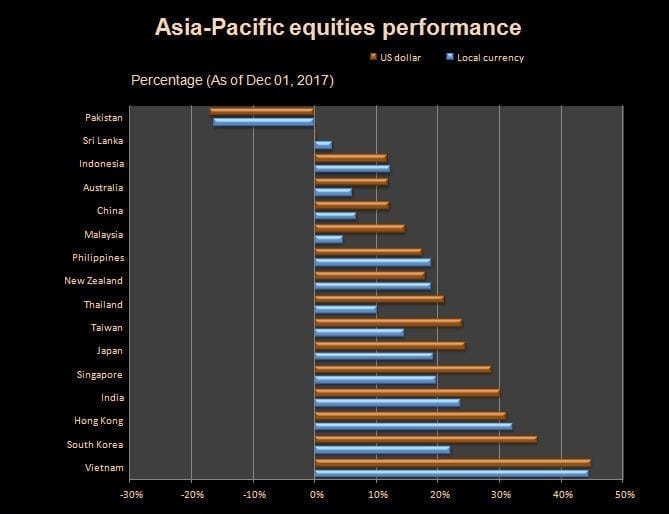
    Vietnamese shares reached decade-highs and topped Asia-Pacific with the highest price gains in November, bolstered by rising foreign interest during the month.

    Foreigners were net buyers of about $500 million of shares in the country’s stock market in November, the highest monthly purchases in at least seven years.


    Vietnam will also kick off the sale of a majority stake in Sabeco, the country’s biggest brewer, in December.Singapore-listed Jardine Cycle & Carriage Ltd’s purchases of about $900 million in Vinamilk’s shares was seen as a positive for Vietnamese markets, with government aiming to trim its stakes in more state-owned firms.

    The Vietnam index rose more than 13 percent in November.

    Hong Kong and Japanese shares rose more than 3 percent each in November.

    Sri Lankan stocks led the losers with a fall of 3.11 percent, followed by China and Taiwan shares with declines of more than 2 percent.

    South Korean, Malaysian, Thai, Philippine and Indian equities fell between 1 to 2 percent.

  • Thinking about investing in Bitcoin?

    Thinking about investing in Bitcoin?

    Investors who bought Bitcoin just ahead of Thanksgiving certainly have something to be thankful for. Bitcoin prices breached $11,300 for the first time, representing a rise of over $3,100 in a week.

    It is a stunning rise for the cryptocurrency, which only just broke the psychologically important milestone of $10,000 hours earlier—despite financial heavyweights voicing their concerns about an asset with limited regulatory clarity.

    But several major governments, including the U.S., have signaled a willingness to regulate the cryptocurrency space rather than outright ban it. Meanwhile, institutional investors have also been jumping onto the bandwagon, with the Chicago Mercantile Exchange saying that due to client demand, it would launch Bitcoin futures by the end of 2017.

    The Wall Street Journal reported that both Nasdaq and Cantor Fitzgerald are looking to launch bitcoin derivatives. A futures market for Bitcoin would likely usher in more institutional investors, adding more liquidity — and potentially stability — to the cryptocurrency market.

    “Demand pressure is essentially driven by two things. Firstly, the increasing awareness by both the public and investors that cryptocurrencies are here to stay, and secondly, the increasing professionalization of cryptocurrency trading,” said Daniele Bianchi, an Assistant Professor in the Finance Group at the Warwick Business School, in an email.

    Bitcoin’s price has risen dramatically over the past year. While it took nearly four months to climb from $1,000 to a closing price of over $2,000, it soared to $10,000 from $9,000 in the course of about three days.

    Bitcoin Cash’s price has also risen to $1,611, about 2.5% in the past day and about $300 in the past week. The price of Ethereum has risen about 5% in the same period to $496.31.

    While Bitcoin bulls hail its rise as a sign of increasing acceptance, other investors are warning of an increasingly volatile bubble. Investing legend Jack Bogle, who founded the Vanguard Group, cautioned investors to steer clear of Bitcoin because it does not provide a steady stream of income in the way that bonds or dividends might. Instead, its price is dependent on sentiment.

    “Bitcoin has no underlying rate of return,” said Bogle at a Council on Foreign Relations event on Tuesday, as reported by Bloomberg. “You know bonds have an interest coupon, stocks have earnings and dividends, gold has nothing. There is nothing to support Bitcoin except the hope that you will sell it to someone for more than you paid for it.”

  • Angry investors file police reports against fintech firm SixCapital

    Angry investors file police reports against fintech firm SixCapital

    Police reports have been filed by angry investors who fear they have lost millions of dollars invested in a local fintech currency trading firm that built a high profile by painting its name on an aircraft and wooing potential clients in Davos, Switzerland.

    SixCapital, or SixCap as the firm is called, promised returns as high as 18 per cent a year but stopped making payouts around June. Investors also had difficulties accessing their performance reports.

    Around 1,000 investors and employees put millions of dollars into the fintech firm that described itself as using “big data and powerful analytics” to make currency trades.

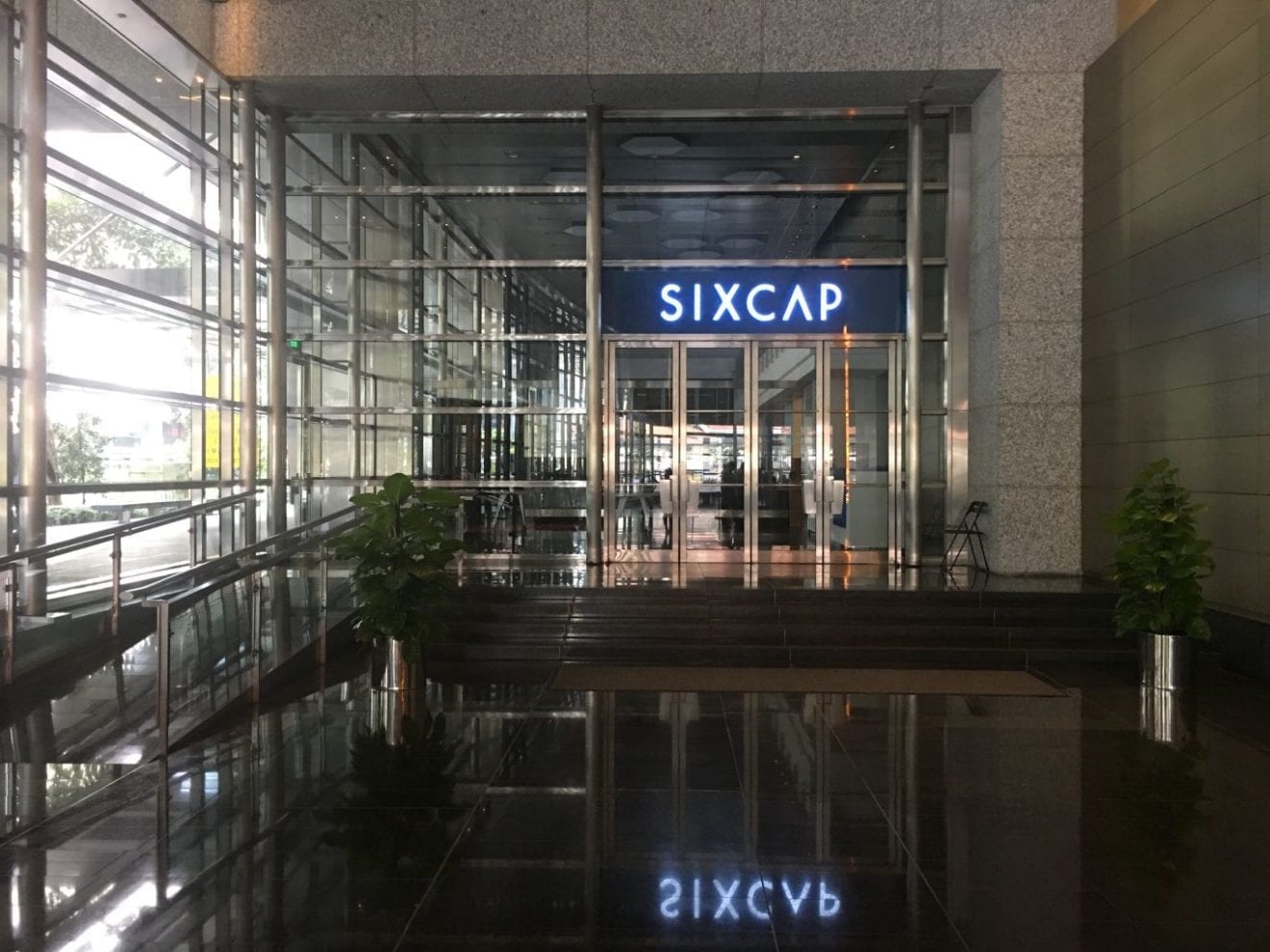
    The firm, which has an office on the ground floor of SGX Centre 1 in Shenton Way, appears to have hit trouble earlier this year.

    It e-mailed clients on June 8, saying that OCBC Bank told it in May that its banking accounts could no longer be supported.

    SixCap said it had been trying to open accounts with other banks since May 25, but “the KYC (Know-Your-Customer) processes these days are more stringent and take longer than before”.

    More recently, in a letter to investors dated Nov 10, SixCap said it had discontinued its two products, Tagg and B’Data, which earn yields for investors through foreign exchange trading.

    Investors were told they could expect their principal back “over a 24-month period beginning in the second half of February 2018”.

    The same letter detailed the abrupt resignation on Oct 9 of SixCap chief scientific officer Abdalla Kablan and 13 of his key IT staff.

    SixCap had acquired Malta-based data analysis start-up Hippo Data, founded by Dr Kablan, earlier this year.

    “By now, almost all the employees in Malta have resigned and left abruptly,” wrote SixCap boss and sole owner Patrick Teng Chee Wai.

    The exodus brought operations at SixCap’s tech firms to a halt, impacting the group’s “various Ricebowl business models”, he said.

    Ricebowl is a forex trading model offered by SixCap.

    Mr Teng said: “Ricebowl is a system being developed and refined with the help of Dr Kablan and he has in fact written academic papers on this system which were shared with the Monetary Authority of Singapore about one to two years ago.”

    The Straits Times could not find these papers, and Mr Teng declined to share them, citing confidential content.

    Dr Kablan said he could not comment and is seeking legal advice.

    Mr Teng’s son, Mr Paul Teng, who was SixCap’s chief investment officer, did not answer questions about Ricebowl.

    He told  last Monday : “I can’t comment because I’ve resigned since Nov 1. I’d rather not talk about it. Ricebowl was always looked after by my dad.”

    One of SixCap’s presentation materials states that FX B Share, the predecessor of B’Data, is governed by Singapore law and vetted by law firm Rajah & Tann.

    Rajah & Tann senior partner David Yeow told by e-mail: “The reference to my firm in the attachment was made without prior notice or approval from my firm.”

    Investors in Tagg and B’Data are now asking how they can recover their money.

    Some filed reports with the police and the Commercial Affairs Department last month as they want an investigation into its transactions.

    A police spokesman told The Straits Times: “It is inappropriate to comment on investigations, if any.”

    The Straits Times visited SixCap’s Shenton Way office before noon on Nov 24 but the lights were off and the door locked. A security guard said it had been closed since Nov 20.

    SixCap’s chief revenue officer, Ms Jaslyn Tan, told The Straits Times that Six Capital (FX Trading) had moved to Marina Bay Financial Centre Tower 3. She did not answer further queries.

    The address she gave was for a serviced office space shared with about 20 other companies. The Straits Times visited the place last Tuesday and was told by a staff member that neither Mr Patrick Teng nor Ms Tan was present.

    It marks a sharp turn of events for SixCap, which worked hard to raise its profile. The firm was a sponsor of some events hosted by The Wall Street Journal and CNBC, where Mr Patrick Teng would appear as a speaker.

    In December last year, SixCap had its livery painted on an AirAsia jet to promote Tagg’s launch in the Indonesian market.

    And in January, Mr Teng and son Paul went to Davos, Switzerland, to ink a memorandum of understanding with an Indonesian university – Universitas Gadjah Mada – on the sidelines of the World Economic Forum.

    SixCap’s most recent product is Thundr TV, a $99 device or app that allows access to TV channels.

    During Thundr’s Singapore roadshow in July, Miss Universe Indonesia 2015 Anindya Putri and Miss Universe Croatia 2015 Mirta Kustan were featured as channel personalities.

    For now, investors are split on what to do. Some believe SixCap will pay them back eventually, while others are not so sure.

    A semi-retired freelance consultant who wanted to be known only as Mr Rao sank $20,000 in Tagg and $80,000 in B’Data. He joined a small gathering of investors on Nov 20 to discuss their next steps.

    Mr Rao, 49, said: “A few retirees indicated that they had poured in significant retirement sums. One lady was the age of my mother. She said that she was going to the temple to pray.”

  • Indonesia Will Officially Ban Bitcoin and Other Cryptocurrencies

    Indonesia Will Officially Ban Bitcoin and Other Cryptocurrencies

    A lot of countries around the world are deliberating how they should treat Bitcoin and other cryptocurrencies. Taking action is a lot easier said than done, and such decisions need to be reached carefully. Over in Indonesia, it seems a complete ban on all cryptocurrencies is imminent. It is an unfortunate development, but it remains to be seen how effective such a ban can be.

    The past few years have been filled with adversity for any cryptocurrency trying to make a global impact. Whether it is Bitcoin or something else entirely, there is a lot of opposition from the financial sector and governments. Given the unregulated and uncontrollable nature of Bitcoin and other cryptocurrencies, it is evident there are a lot of risks associated with this new form of money. At the same time, there are a lot of new opportunities waiting to be explored by those brave enough to take the plunge.

    It doesn’t appear as if Indonesia will be among those countries giving cryptocurrencies a fighting chance. More specifically, the Bank of Indonesia plans to ban all Bitcoin-related activity in the country. It is unclear why the central bank decided to take this course of action, considering cryptocurrencies are not all that popular in the country. Many people will see this ban as reflecting the government’s fear of allowing consumers to control their own money at all times. Since no bank or government can effectively control Bitcoin, such opposition is not unexpected.

    While digital technology is of great interest to the Indonesian government, it sees cryptocurrencies in a completely different light. There is a high degree of uncertainty associated with this economic model, and investors need to be protected from financial harm. Bitcoin and altcoins represent a fundamental change in the financial sector which will have both advantages and drawbacks. Making an appropriate decision on this topic is not easy, yet introducing a full ban may not necessarily be the best course of action.

    The Indonesian Central Bank aims to preserve the sovereignty of the rupiah as legal tender in the country, which is something everyone will agree on and accept. However, Bitcoin can easily coexist with the rupiah without recognizing the former as official tender in Indonesia. Officially outlawing this new form of money will set an unfortunate precedent. The big question is whether or not such a measure will have success in the long run. People will find a way to access cryptocurrency with or without the approval of the government.

    One thing worth pointing out about this ban is that it will be as absolute as humanly possible. There will be no arbitrage opportunities, business controls, or unhealthy business practices on the part of anyone outside of the legal reach of the Indonesian government. This certainly sets the tone for cryptocurrency in the country, although it still remains an unfortunate decision. Indonesia is one of the places where Bitcoin could potentially do a lot of good if the government would just give it a chance. 

    Another question worth asking is whether or not existing Bitcoin holders in Indonesia will sell their currency or simply hold it. Converting it to the rupiah will become impossible soon, and there will be no way to spend it either. Rest assured there will be some entities that will come up with creative ways to circumvent this ban, assuming it gets implemented in the first place. For now, the country’s central bank has not stated when it will seek to impose this new directive, which creates further doubt and uncertainty.

  • Indonesia Bourse May Snap Losing Streak

    Indonesia Bourse May Snap Losing Streak

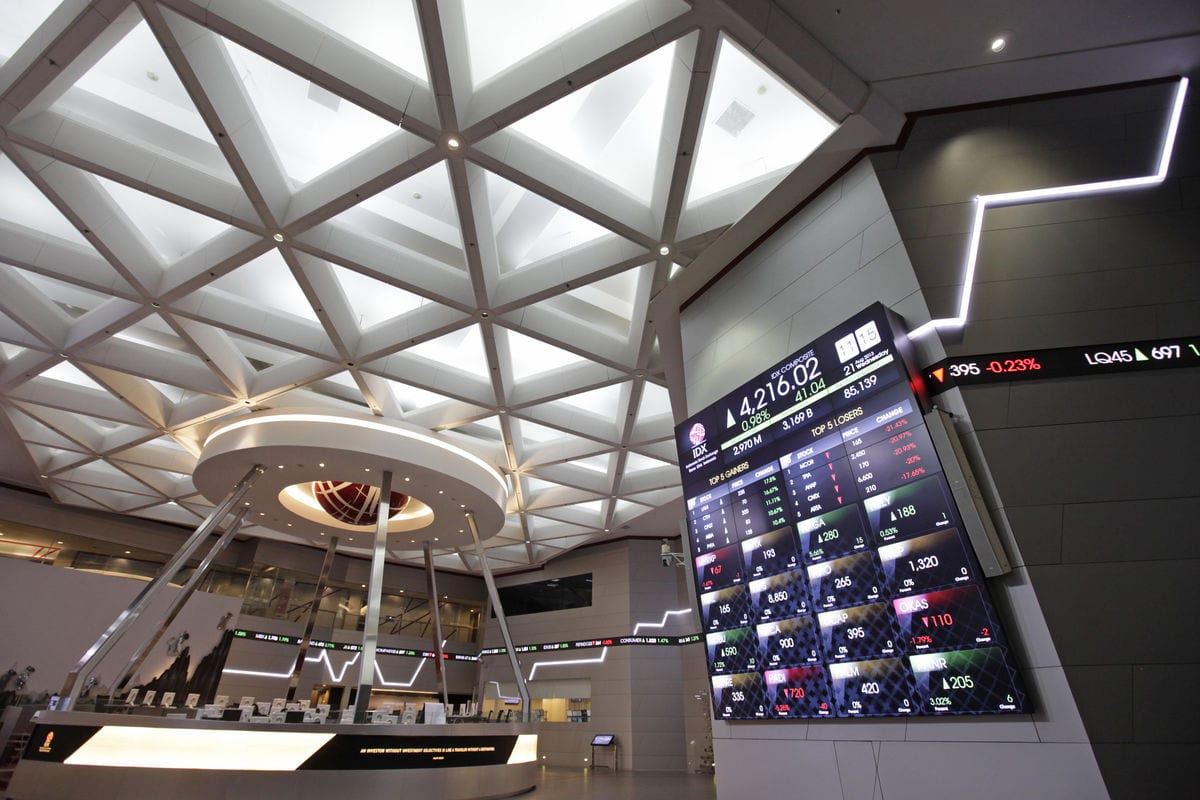
    Ahead of Friday’s holiday, the Indonesia stock market had tracked lower in back-to-back sessions – surrendering almost 120 points or 2 percent. The Jakarta Composite Index now rests just above the 5,950-point plateau, although it may tick higher on Monday as it catches up on missed positive sentiment.

    The global forecast for the Asian markets is soft thanks to political concerns in the United States, although a spike in crude oil prices should limit the downside. The European and U.S. markets were down and the Asian bourses figure to follow suit.

    The JCI finished sharply lower on Thursday following losses from the food and resource sectors.

    For the day, the index plummeted 109.23 points or 1.80 percent to finish at the daily low of 5,952.14 after peaking at 6,058.60. There were 215 decliners and 131 gainers, with 120 stocks finishing unchanged.

    Among the actives, Bank Pan Indonesia skyrocketed 13.68 percent, while Bank Danamon Indonesia plummeted 5.19 percent, Tiga Pilar Sejahtera Food plunged 5.19 percent, Jasa Marga tumbled 1.92 percent, Lotte Chemical skidded 1.62 percent, XL Axiata dropped 1.60 percent, Voksel Electric shed 0.68 percent, Bumi Resources retreated 1.96 percent, Vale Indonesia lost 0.72 percent, Indofood fell 3.62 percent and Bank MNC Internasional and Bank Mandiri were unchanged.

    The lead from Wall Street is negative as stocks opened sharply lower on Friday. They recovered in afternoon trade but still finished firmly in the red as they backed off recent record closing highs.

    The Dow slipped 40.76 points or 0.17 percent to 24,231.59, while the NASDAQ fell 26.39 points or 0.38 percent to 6,847.59 and the S&P 500 dipped 5.36 points or 0.20 percent to 2,642.22. For the week, the NASDAQ slid 0.6 percent, the Dow surged 2.9 percent and the S&P jumped 1.5 percent.

    The late-morning sell-off came on news that former National Security Adviser Michael Flynn has agreed to cooperate with prosecutors in the investigation of Russian meddling in last year’s election.

    However, stocks regained ground as Senate Majority Leader Mitch McConnell, R-Ken., declared that Republican leaders have won over enough reluctant lawmakers to pass their tax reform bill.

    In economic news, the Commerce Department reported a bigger than expected increase in construction spending in October, while the Institute for Supply Management noted a modest slowdown in the pace of growth in manufacturing activity in November.

    Crude oil futures rallied Friday after OPEC producers voted to extend supply cuts through 2018. January WTI oil climbed 96 cents or 1.7 percent to $58.36/bbl. Prices dropped 1 percent for the week.

    Closer to home, Indonesia will release November inflation data later today, with forecasts expected to show an increase of 0.3 percent on month and 3.45 percent on year following the 0.01 percent monthly increase and the 3.58 percent yearly gain in October.

  • Banks need to Issue New Cards in Indonesia

    Banks need to Issue New Cards in Indonesia

    With the establishment of the national payment gateway Gerbang Pembayaran Nasional (GPN), banks need to distribute new debit cards that work using the gateway to help their customers reduce inter-bank transaction costs.

    The debit cards with GPN’s red eagle logo will be available to the public in January, said BI Governor Agus Martowardojo on Monday, adding that the new cards were accepted by all merchants’ automated teller machines (ATMs) and electronic data capture systems in Indonesia.

    However, BI transformation program head Onny Widjanarko said the GPN cards could not to be used for international transactions such as withdrawing money from foreign ATMs or processing payments in international stores.

    Onny said old debit cards could still be used, but interbank transactions will result in higher costs.

    Agus said banks charged a 2 to 3 percent fee if customers used other bank’s debit cards, but with the new cards the rate would only be about 1 percent.

    He said currently there were 140 kinds of debit cards in Indonesia and 90 percent bear foreign switching network logos.

    Meanwhile, transactions using debit cards in Indonesia reached Rp 17 trillion (US$1.26 billion) per day.

  • Indonesia to Restrict Bitcoin Trading

    Indonesia to Restrict Bitcoin Trading

    The list of countries that are hawkish of Bitcoin or outright ban it has something in common: up and coming economies that have just emerged from decades with a large grey sector. Russia is a prominent example, where cryptocurrencies saw years of outright repression. Morocco is the most recent country to consider an outright ban. Ecuador and Bolivia have long-standing bans, as well as Bangladesh and Nepal. The reasons for the ban vary, but the biggest concerns are about money laundering.

    Macedonia and Kyrgyzstan have similar stories- long years of economic struggle, a large grey sector and skepticism of anything related to potential financial scams.

    But now, a new batch of countries is joining in attempts to curb the spread of Bitcoin. Indonesia, a nation with a conservative streak, plans to ban all cryptocurrency transactions. Local Indonesian media, cited by FinanceMagnates, has pointed to a possible blockage for providing money services to cryptocurrency users.

    The refusal to provide a bridge to cashing out is nothing new in Southeast Asian countries, where a booming cryptocurrency community of exchanges and projects clashes with local banks, who are reluctant to provide accounts and see cryptocurrencies as competitive.

    Agus Martowardojo, Governor of Bank Indonesia, said the sovereignty of the Indonesian Rupiah will not be undermined, and the regulator will curb ” arbitrage opportunities, unhealthy business practices and business controls”.

    “Level playing fields with formal financial institutions need to be maintained, we require all financial technology activists who move in the payment system to register with Bank Indonesia, report on activities, and conduct trials in the regulatory sandbox,” said Martowardojo.

    In effect, the language of the ban means Indonesians who own Bitcoin will not have access to exchanges any time soon. Such a move may do what has happened in the past to other countries with limits on legal exchanges- owners would resort to LocalBitcoins for even more speculative and risky trading.

    So far, very few countries have gone directly after the Bitcoin network, walling off nodes or banning local mining. And experience has shown that when it comes to Southeast Asia, neighboring countries keep offering options.