Category: Finance

Retail News Asia is committed to providing both local and global retailers with the latest Finance news throughout the Asian market. This on a daily base.

  • King Strengthens Candy Crush Licensing Categories, Adding New Jewelry lines to its Offering

    King Strengthens Candy Crush Licensing Categories, Adding New Jewelry lines to its Offering

    King Digital Entertainment, a leading interactive entertainment company for the mobile world, continues to expand its Candy Crush consumer products offering, with a new range of jewelry by leading Indian designer Mrinalini Chandra. Fans and candy-lovers around the world will be able to get their hands on a range of necklaces, bracelets, earrings, brooches and rings inspired by the deliciously sweet world of Candy Crush. The deal was facilitated and is being managed by Dream Theatre, King’s licensing agent in India and South Asia.

    The range comprises of two parts; the more competitively priced range features 2D colored candy shapes while the premium range is made from gold and features 3D versions of the candies. The premium range also offers a series of Kaleera.

    The collection comprises of Necklace, Choker necklace, Ring, Cuff bracelet, Earrings, Charm necklace, Charm bracelet, Brooch pin in couture range and Y necklace, Two finger ring, Single finger ring, Lariet necklace, Candy Unit brooch, Earring, Hoop earring, Open bangle, Bracelet in mass range.

    “We’re delighted to be able to offer an array of Candy Crush inspired jewellery to long-time fans of the game,” said Philippe Bost, VP International Consumer Products, Activision Blizzard. “Our colourful designs are really brought to life by this striking jewellery range and the Kaleera series will add extra sweetness to any bride’s special day.’’

    Commenting on the range, jewelry designer Mrinalini Chandra said: “We are very excited about our collaboration with Candy Crush.  Our jewelry will comprise of hand crafted pieces inspired by the game with a quirky but chic aesthetic that is emblematic of our label. It will incorporate traditional craft techniques of Meenakari and Jaali from India infused with modern design aesthetics. Launching in the festive season, the range has something to offer every candy-lover.”

    Founder and CEO of licensing company, Dream Theatre Pvt. Ltd, Jiggy George said “We are thrilled to have facilitated this partnership between Candy Crush and Mrinalini Chandra. The collection is stunning, making it ideal for Candy Crush fans and fashionistas alike.”

    The collection is launched on 29th November 2017, just in time for the Christmas season, and will be available on www.mrinalinichandra.com and leading ecommerce sites.

    Candy Crush Saga is one of the world’s most popular mobile games in the world and along with its sister titles, Candy Crush Soda Saga and Candy Crush Jelly Saga, is played by many millions of people every day. Candy Crush Saga and its sister title, Candy Crush Soda Saga, are two of the top 10 grossing mobile games in the U.S. Over one trillion game rounds have been played in Candy Crush Saga alone since its launch.

    King continues to grow its consumer products offering across the globe supported by its global network of 19 licensing agents. King has signed 145 licensees to date.


  • Vietnam’s Jan-Nov FDI rises 11.9 pct on-year

    Vietnam’s Jan-Nov FDI rises 11.9 pct on-year

    Vietnam received an estimated $16 billion in foreign direct investment (FDI) in the first 11 months of this year, up 11.9 percent from the same period in 2016, the government said on Monday.

    FDI pledges for new projects, increased capital and stake acquisitions jumped 82.8 percent from a year ago to $33.09 billion, the investment ministry said in a report published on its website.

    The manufacturing and processing industry received the most foreign funds as of November, followed by the electricity and air production and distribution sector.

    South Korea, Japan and Singapore were the biggest investors in Vietnam.

    Vietnam’s FDI inflows hit a record high of $15.8 billion in 2016.

  • Mainland Chinese names drive Hang Seng’s return to 30000

    Mainland Chinese names drive Hang Seng’s return to 30000

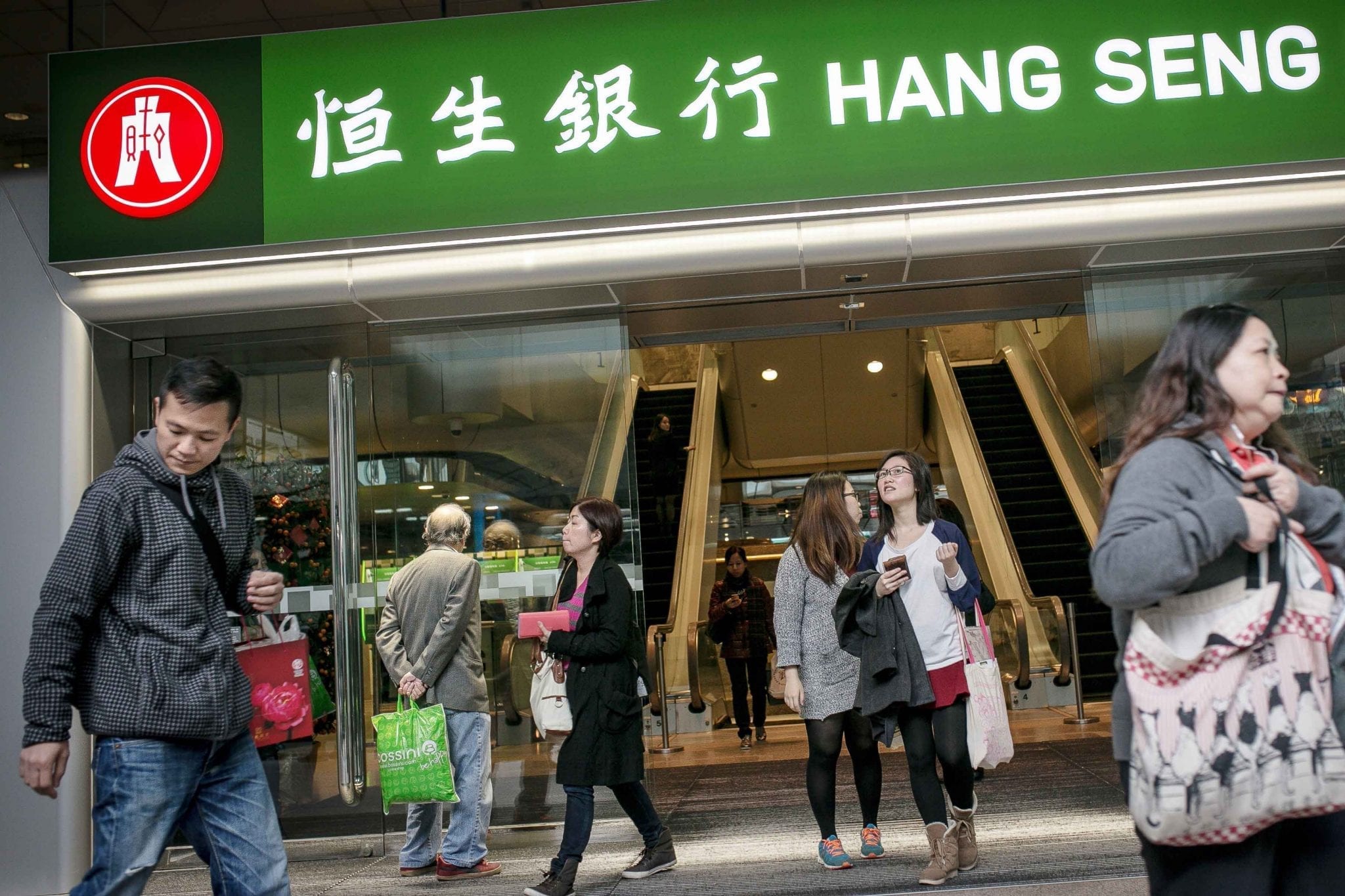
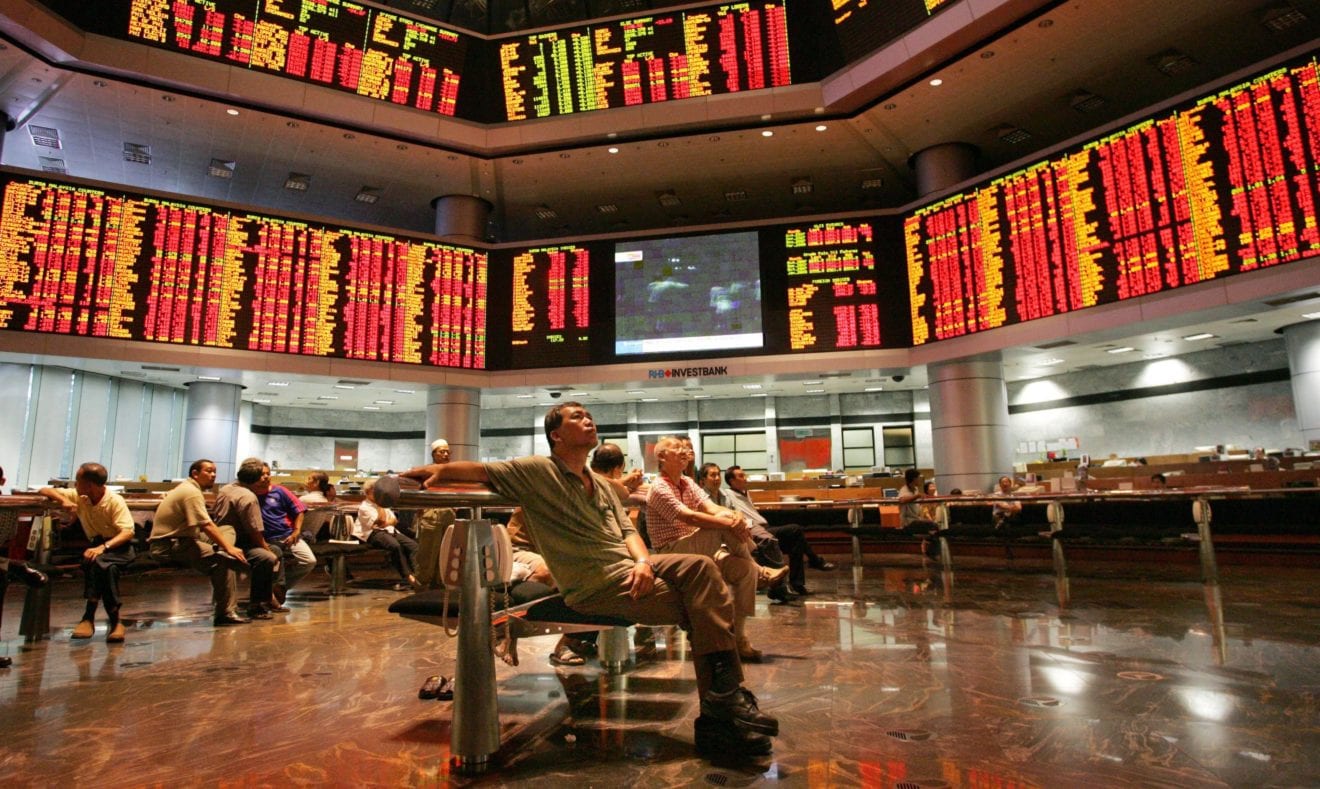
    The Hang Seng Index topped 30,000 for the first time in a decade on Nov. 22 amid a market sea change that is bringing mainland Chinese companies to the fore and leaving many big local names behind.

    The Hong Kong benchmark ended the day at 30,003.49, up 0.62%. It has gained 36% year to date, outpacing major indexes in Japan, South Korea, India and Singapore. The gains have been “driven first and foremost by Western investors,” said Sze Tung, asset manager at Victory Securities.

    Alex Wong Kwok-ying of Ample Capital additionally cites an influx of money from the mainland, where “investors have capital to spare.” Funds flow in via stock connect links established with Shanghai three years ago and with Shenzhen last December.

    Much has changed since the Hang Seng last topped 30,000 in November 2007, including an increase in the number of constituents from 40 to 50. Mainland companies now make up half the index, up from 38% a decade ago, and will become a majority in December when a reshuffle will add Sunny Optical Technology (Group) and Country Garden Holdings.

    The main engine powering the Hang Seng’s ascent also hails from the mainland: Tencent Holdings. The Shenzhen-based internet conglomerate listed in Hong Kong in 2004 and joined the benchmark index in June 2008. It tops the Hang Seng’s weighting list at 10.75%, beating such traditional Hong Kong powerhouses as HSBC Holdings and CK Hutchison Holdings.

    Tencent shares have more than doubled this year, buoyed by a number of positive factors, including China’s large internet user base, the release of mobile game “Glorious Mission” and news of the company taking a substantial stake in Snap, the American operator of photo- and video-sharing app Snapchat. Tencent’s market capitalization recently exceeded $500 billion, a first for an Asian enterprise. The milestone saw Tencent briefly surpass Facebook to become the world’s fifth-largest business by market cap.

    Tencent is not the Hang Seng’s only mainland-based standout. Geely Automobile Holdings’ shares have nearly quadrupled this year and those of Apple supplier AAC Technologies Holdings more than doubled.

    DROPPING OFF THE MAP

    Hong Kong-based companies, meanwhile, are fading into the background. Prominent names such as PCCW — the telecommunications company run by Richard Li Tzar-kai, younger son of tycoon Li Ka-shing — and Li & Fung, known for sourcing Chinese products for U.S. retail behemoth Wal-Mart Stores, have dropped off the benchmark index. Cathay Pacific Airways, Hong Kong’s de facto flag carrier, will lose its decades-old blue chip status in December.

    Mainland businesses, including both H-share companies based on the mainland and “red chips” incorporated in Hong Kong, are latecomers to the territory’s bourse. They gained a foothold in the early 1990s as China sought to work around diplomatic sanctions imposed by Western powers after the 1989 Tiananmen Square crackdown and to get its reform and opening-up policy back on track.

    The first H-share listing came in July 1993 with the Hong Kong debut of Tsingtao Brewery. A watershed followed in September 2006 with the inclusion of China Construction Bank (CCB) in the Hang Seng Index — the first H-shares to make it to the big leagues.

    Mainland companies increasingly favor Hong Kong as a listing destination for its better access to global investment capital and more predictable regulatory framework. These enterprises have a growing presence in the Hong Kong market as a whole. A total of 378 mainland Chinese businesses were listed there as of the end of October, including 226 H-share listings, accounting for almost 40% of the bourse’s total market cap.

  • Japan Industrial Production On Tap For Thursday

    Japan Industrial Production On Tap For Thursday

    Japan on Thursday released preliminary October data for industrial production, setting the pace for a busy day in Asia-Pacific economic activity. Industrial output is expected to rise 1.8% on month and 7.2% on year after falling 1.0% on month and gaining 2.6% on year in September.

    Japan also will see October figures for vehicle production, housing starts and construction orders. Housing starts are expected to fall 2.8% on year to 950,000 after sliding 2.9% in September to 952,000.

    Vehicle production was up 1.7% on year in September, while construction orders plummeted 11.6%.

    China will see November numbers for its manufacturing and non-manufacturing PMIs; in October, their scores were 51.6 and 54.3, respectively.

    The central bank in South Korea will wrap up its monetary policy meeting and then announce its decision on interest rates, with the bank widely expected to keep its benchmark lending rate unchanged at 1.25%.

    South Korea also will see October numbers for industrial production and retail sales. Output is expected to add 0.6% on month and 6.1% on year after gaining 0.1% on month and 8.4% on year in September. Retail sales were up 3.1% on month and 8.3% on year in September.

    Australia will provide October numbers for private sector credit and building approvals, plus Q3 data for private capital expenditure.

    Private sector credit is expected to add 0.4% on month and 5.3% on year after gaining 0.3% on month and 5.4% on year in September.

    Building approvals are expected to sink 1.0% on month and surge 14.1% on year after adding 1.5% on month and 0.2% on year in the previous month. Capex is expected to rise 1.0% on quarter after adding 0.8% in Q2.

    New Zealand will see November results of the activity outlook and business confidence indexes from ANZ; in October, their scores were 22.2 and -10.1, respectively.

    Hong Kong will provide October figures for retail sales – which are expected to rise 6.2% on year after gaining 5.5% in September.

    Thailand will release Q3 data for current account and October trade data. In the third quarter, the current account surplus was USD8.32 billion and the financial account deficit was USD6.89 billion. In September, imports were worth USD16.47 billion and exports were at USD21.87 billion for a trade surplus of USD5.40 billion.

    Malaysia will see October numbers for producer prices; in September producer prices were up 1.1% on month and 6.0% on year.

  • Bubble or brave new world? Bitcoin breaks USD 10000 barrier

    Bubble or brave new world? Bitcoin breaks USD 10000 barrier

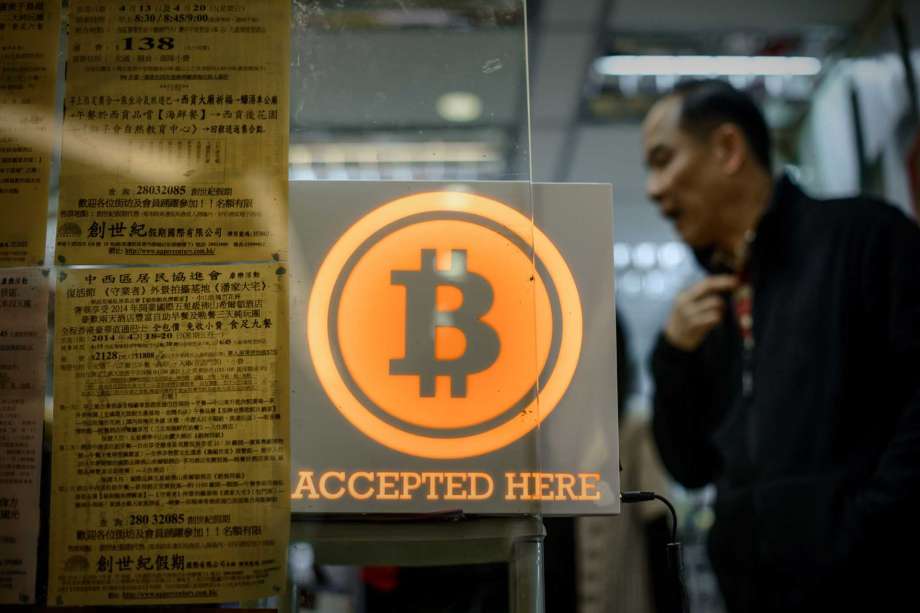
    Bitcoin broke through the USD 10,000 barrier for the first time today as it continues a stratospheric rise that has delighted investors but sparked fears of a bubble.

    The virtual currency hit a high of USD 10,379 in Asia, according to Bloomberg News, more than 10 times higher than its value at the start of the year.

    The breakthrough is the latest in a spectacular run for the online money dubbed “digital gold” by its advocates, which began life in 2009 as a bit of encrypted software supposedly written by an unknown coder with a Japanese-sounding name.

    Bitcoin, which was valued at just a few US cents when it was launched, has no legal exchange rate, no central bank backing it and is traded on specialist platforms.

    But it quickly gained popularity as an alternative to traditional investments, while it has been used to pay for items from a pint in a London pub to a manicure.

    The virtual currency has attracted as much anger as praise, however, with the boss of JP Morgan Chase labelling it a fraud and governments, while China and South Korea have expressed concerns.

    It got a major boost last month when exchange giant CME Group announced it would launch a futures marketplace for Bitcoin, which has not been listed on a major bourse before.

    The announcement sparked a surge in its value — it has risen 45 percent in the past two weeks alone.

    But the spectacular rate of growth, which has seen it increase in value from a 2017 low of USD 752 in mid-January, has also triggered concerns, and critics note the currency has suffered wild swings in the past.

    “This is a bubble and there is a lot of froth. This is going to be the biggest bubble of our lifetimes,” warned hedge fund manager Mike Novogratz at a cryptocurrency conference yesterday in New York, according to Bloomberg News.

    Other commentators were more positive about Bitcoin, saying its surging popularity will attract cash from traditional investors, such as hedge funds and asset managers.

    “I think the momentum is still very much to the upside,” Kay Van-Petersen, macro and crypto strategist with Saxo Bank in Singapore, told AFP.

    He said it could still suffer pullbacks, but predicted it would be worth USD 50,000 to USD 100,000 in the next six to 18 months.

    Transactions happen when heavily encrypted codes are passed across a computer network.

    Bitcoin and other virtual currencies use blockchain, which records transactions that are updated in real time on an online ledger and which are maintained by a network of computers.

    Hundreds of other digital currencies have been created since its launch, but Bitcoin remains by far the most popular.

    Bitcoin has suffered controversies.

    In one of the most high-profile, major Tokyo-based Bitcoin exchange MtGox collapsed in 2014 after admitting that 850,000 coins — worth around USD 480 million at the time — had disappeared from its vaults.

    Bitcoin’s use on the underground Silk Road website, where users could use it to buy drugs and guns, was also presented as proof it was a bad thing.

    While analysts expect the currency to suffer falls, they expect it will prosper in the long term and see the CME launch as the next big test.

    “If it survives the CME, there is no reason why it won’t continue to rise higher,” Greg McKenna, from Australia-based AxiTrader.

  • All about blockchain in 2018

    All about blockchain in 2018

    The potential for blockchain technology to bring about widespread change has been predicted since 2011 and the emergence of Bitcoin. But in 2017 when the concept really started to capture people’s attention.

    Blockchain-focused financial services startups raised $240 million in venture funding during the first half of the year. However, its potential was beginning to be recognized across other sectors and industries.

    2018 is likely to see a continuation of this trend of innovation and disruption. Here, are the five key ways this is likely to happen.

    1.More use outside of finance

    While it’s implications for the financial sector might seem most apparent, any industry or organization in which recording and oversight of transactions is necessary could benefit. Healthcare, HR, and legal work have already piloted few applications.

    Meanwhile in manufacturing and industry, the Blockchain Research Institute, the founders of which include IBM, Pepsi Co and FedEx, say it expects blockchain to become the “second generation” of the digital revolution following the development of the internet. It has highlighted work by electronics manufacturer Foxconn to use blockchain to track transactions in its supply chain.

    2. Blockchain meets the Internet of Things

    Security is one reason they are a good fit – blockchain’s encrypted and trustless nature makes it a viable option when it comes to keeping the ever-growing number of connected devices in our homes and offices safe. Research envisages that blockchain compute power that is used to “mine” Bitcoin could be put to use safeguarding our smart homes from a new generation of cyber-burglars looking to break in and steal our data.

    Another proposed use is that the cryptocurrencies built on blockchains would prove ideal for automated micro-transactions made between machines. As well as recording machine activity on the ledger for record-keeping and analytical purposes, machines could effectively “pay” each other when smart machines operated by one organization interact and transact with those owned by others. This is likely to be further down the road, but it is likely we will see research and breakthroughs in this area in 2018.

    3. Smart contracts will come into their own

    “Smart contracts” are another possibility brought about by blockchain – the idea is that contracts will execute automatically when conditions are filled, meaning payments will be made, or deliveries dispatched, or anything else in business which is typically defined by a contract.

    Blockchains make smart contracts possible because of their consensus-driven nature. Once agreed-on conditions are met, then the contract is filled. This could mean paying bonuses when targets are hit, or despatching an order once a payment has hit your account.

    4. State-Sanctioned Crypto Currencies?

    Putin was the first – with the recent announcement of the “Crypto Rouble” – but it was inevitable that politicians would at some point start to consider the advantages of blockchain-derived currencies. In the wake of Bitcoin, it has often seemed that nation states have been lacking in their enthusiasm for this particular application – and probably with good cause. Bitcoin was after all envisaged as a way of creating a tradeable currency which couldn’t be manipulated by governments.

    Some such as China have been outright hostile – refusing to allow exchanges to operate in their borders and issuing warnings about the high risk of investing in cryptocurrencies. 2018 however could be the year that governments finally get on board the blockchain bandwagon – as its potential for creating efficiencies in both financial and public services become more apparent.

    5. A large number of blockchain initiatives will fail.

    Blockchain undoubtedly has the potential to be revolutionary. But like anything revolutionary it can be dangerous – in this case, mainly because rushing in without clear expectations of what you want to achieve is likely to be a costly waste of time.

  • CIMB Group opens first retail branch in the Philippines

    CIMB Group opens first retail branch in the Philippines

    CIMB Group is opening up its first retail brands in the Republic of the Philippines. The branch is expected to be fully operational by the fourth quarter of 2018.

    CIMB Bank is the first Malaysian banking group to be granted BSP’s approval to operate under Republic Act No. 10641, an act that allows the entry of foreign banks into the Philippines through the establishment of wholly-owned operations with full banking authority.

    Tengku Dato’ Sri Zafrul Aziz, group chief executive, CIMB Group said, “We are delighted to have received the green light from the Bangko Sentral ng Pilipinas. The awaited missing link to complete CIMB’s ASEAN-10 footprint has now materialized. This will further propel CIMB into becoming the leading ASEAN universal bank, which will further strengthen our value proposition to customers.”

    “The Philippines offers tremendous opportunity with progressive regulation, attractive demographics, relatively lower banking penetration and good talent. Our strategy will see us applying the best of our digital assets from across the region as well as working with key strategic partners locally,” added Tengku Zafrul.

  • Tech leads Wall St higher, Amazon and retail stocks gain

    Tech leads Wall St higher, Amazon and retail stocks gain

    Technology stocks led the S&P 500 and Nasdaq to record high closes on Black Friday, while Amazon and retail stocks got a boost from signs of a strong start to the holiday shopping season.

    The benchmark S&P 500 and the blue-chip Dow Jones industrials posted weekly gains for the first time in three weeks while the Nasdaq Composite posted its best weekly performance since the week to Sept. 1.

    The stock markets closed early on Black Friday, a day after Thanksgiving, the start of the holiday shopping season that accounts for as much as 40 percent of retailers’ annual sales.

    Turnout at U.S. retailers was relatively subdued on Black Friday, with many shoppers flocking to stores to eye items in person while waiting to do their actual bargain hunting online.

    On Thanksgiving, U.S. shoppers spent more than $2.87 billion online, according to Adobe Analytics. Adobe said Black Friday online sales were up 18.4 percent at $640 million as of 10 a.m. ET and would rise to a record of $5 billion.

    The S&P retail index rose 0.63 percent and had hit a record high, led by Amazon’s 2.61 percent gain.

    The online retail giant touted its sales for Cyber Monday, one of the biggest days for online shopping, and said shoppers using its digital assistant Alexa could score deals as early as Sunday.

    “In the retail environment, Amazon is extremely important – the fact that Amazon continued to soar bodes well for the fourth-quarter holiday shopping season and it bodes well for Wall Street,” said Adam Sarhan, chief executive of 50 Park Investments.

    Brick-and-mortar stores, which have been boosting their online presence, also fared well.

    Macy’s closed up 2.1 percent. The department store operator’s chief executive told CNBC the company was better off this year than last and was seeing very robust online demand.

    Kohl’s, Gap and J.C. Penney were up between 1.6 percent and 1 percent.

    Target ended 2.8 percent lower, with analysts noting that it closed its stores for several hours overnight while rivals stayed open. Wal-Mart inched up 0.2 percent.

    The Dow rose 31.81 points, or 0.14 percent, to 23,557.99, while the S&P gained 5.34 points, or 0.21 percent, to 2,602.42. The Nasdaq added 21.80 points, or 0.32 percent, to 6,889.16.

    The CBOE Volatility index, known as Wall Street’s fear gauge, was down 0.21 points to 9.67. It had hit a record low of 8.56.

    Eight of the 11 major S&P sectors were higher, led by the technology sector’s 0.54 percent rise.

    The energy index and the materials index were boosted by rising commodities prices.

    U.S. oil prices jumped to a more than two-year high as North American markets tightened on the partial closure of a key pipeline linking Canada and the United States.

    About 2.68 billion shares changed hands in U.S. exchanges in the shortened session. The daily average over the last 20 full sessions is 6.48 billion shares. Last year, volume during the session after Thanksgiving was about 3 billion.

    Advancing issues outnumbered declining ones on the NYSE by a 1.61-to-1 ratio; on Nasdaq, a 1.31-to-1 ratio favored advancers.

    The S&P posted 35 new 52-week highs and 1 new low; the Nasdaq recorded 120 new highs and 21 new lows.

  • Robot employees take on human tasks at UOB Singapore

    Robot employees take on human tasks at UOB Singapore

    UNITED Overseas Bank (UOB) has introduced two robots, or ‘virtual employees’, that will support its wholesale banking and retail businesses.

    In a press statement to Human Resources, the bank said its first robot employees, named Amy and Eve, started working at UOB three weeks ago, and have since cut the time taken to process a transaction by more than half.

    Amy and Eve have been taking on tasks that UOB’s human employees have found repetitive and time-consuming, allowing their human teammates to focus on more stimulating and challenging work.

    Feedback from the robots’ human colleagues have been positive, with most noting that they have been helpful and productive.

    Lim Ann Liat, managing director and head of markets and enterprise technology, group technology and operations, UOB, said: “By introducing robots into our workforce, we can improve our process using technology yet maintain a human touch. This also lifts the load off our people which in turn makes their jobs more fulfilling.”

    UOB plans to take onboard more robots in the coming months for other processes such as card operations, cash management and trade and remittance.

    Separately, in a whitepaper published today (Nov 23) by The Economist Corporate Network (ECN), it was reported that business leaders recognise the need for their leadership on automation and AI both inside and outside the company.

    The paper, based on a survey and focus group interviews with CEOs and other C-suite executives based in the Asia-Pacific region, revealed that 81% of CEOs would lead by example and automate parts of their job.

    According to the findings, CEOs find it difficult to clearly communicate their company’s automation and AI strategy to their employees.

    Dr Florian Kohlbacher, ECN Director for North Asia, commented: “We are talking too much about the potential negative impact of AI and automation on the workplace. What is needed instead is a proactive discussion on how companies can harness technology in order to strategically manage the transformation and systematically shape the workplace of the future.”

  • Deutsche Bank to advice investors to avoid bitcoin

    Deutsche Bank to advice investors to avoid bitcoin

    Deutsche Bank has joined the ranks of those warning about the virtual currency bitcoin as an investment.

    “I would simply not recommend this to the everyday investor,” Ulrich Stephan, chief strategist at Germany’s largest lender, said on Wednesday.

    Stephan said that fluctuations are too great and regulation too scant. He noted that German investors were reluctant to invest in stocks, but were generating hype about bitcoin.

    Bitcoin smashed through the $8,000 level for the first time over the weekend and traded at $8,216 at 1523 GMT on Wednesday, with many experts saying $10,000 is possible.

    An eightfold increase in the value of the volatile cryptocurrency this year has led to multiple warnings of a bubble, and institutional investors are broadly staying away.

    Retail investors, however, as well as some hedge funds and family offices, are piling in despite JPMorgan Chase & Co Chief Executive Officer Jamie Dimon earlier this year calling bitcoin a “fraud”.

    Although UBS Chairman Axel Weber urged caution on bitcoin last week, he also said there was potential for the technology underpinning it.

    “At this point, I‘m very cautious about bitcoin as an entity. I‘m much more optimistic about the underlying technology,” Weber added.

    Sweden’s central bank is one organization which is investigating the potential for digital currencies.

    “An e-krona would have the potential to counteract some of the problems that could arise on the payment market in the future when the use of cash is rapidly declining,” the Riksbank said in a report in September.

  • KKR’s Emerald Media leads US$65 million funding in Bangkok startup

    KKR’s Emerald Media leads US$65 million funding in Bangkok startup

    KKR & Co-backed Emerald Media led a US$65mil funding round in aCommerce, a Bangkok-based startup that helps brands including Samsung, Unilever and L’Oreal sell their products online across South-East Asia.

    The four-year-old firm, which already operates in Singapore, Indonesia, Malaysia, Thailand and the Philippines, plans to use part of the proceeds to expand in markets such as Vietnam.

    The firm’s existing backers Blue Sky, MDI Ventures and DKSH also joined the series B round, the company said.

    aCommerce helps about 260 companies such as Samsung Electronics Co and Unilever NV with digital marketing, inventory and delivery for online sales in the region.

    “Brands are realising that in order to stay ahead of the retail game, they need to be omnipresent,’’ said aCommerce co-founder and group chief executive officer Paul Srivorakul.

    “Customers want to reach their favorite brands any time through any platform.”

    The deal marks Emerald Media’s first foray into e-commerce.

    Emerald Media was set up by New York-based private equity giant KKR in 2015 to invest in media, entertainment and consumer technology in Asia.

    KKR has committed US$300mil from its KKR Asia Fund II, and in June, the firm raised US$9.3bil for its third Asian fund to capitalize on the region’s growing consumption.

    “In e-commerce, we see a great deal of convergence in the future between demand generation, data analytics and consumer media and entertainment,’’ said Rajesh Kamat, managing director of Emerald Media.

    “aCommerce, an e-commerce enabler, fits our mandate perfectly.’’

    Emerald is the latest investor to bet on South-East Asia’s online retail industry, poised to surge from US$5.5bil in 2015 to US$88bil by 2025, according to a report by Google and Temasek Holdings Pte.

    Amazon.com Inc., Alibaba Group Holding Ltd, Tencent Holdings Ltd and JD.com Inc have made inroads in the region’s burgeoning industry in the past year.


  • Bursa Malaysia to push retail participation to 25%

    Bursa Malaysia to push retail participation to 25%

    Bursa Malaysia aims to boost retail investors’ participation to 25 per cent in the near term from the current 23.3 per cent with 80 programmes underway to increase financial literacy.

    Bursa Malaysia chief executive officer Datuk Seri Tajuddin Atan said only four percent out of the 853 respondents had chosen to invest in shares while the rest opted for less traditional investment tools.

    “The public should consider share investment as part of their investment portfolio and change the perception that share investments are too risky.

    “Investment in shares will help diversify portfolio with the opportunity to get higher returns compared to fixed deposit, current and savings account,” he said after launching the “What’s Your Goal” campaign to raise awareness on share investment opportunities today.

    “Besides shares, there are also other investmeny products on Bursa Malaysia like Exchange Trade Funds (ETFs), structured warrants and real estate investment trusts, which are attractive and can meet different risk appetite of investors,” he added.

    Tajuddin said ETFs did not have sales charge and have significantly lower management fee compared to other managed unit trust funds.

    “Stamp duty exemptions announced in Budget 2018 will further enhance the attractiveness of ETFs as a low cost investment product,” he added.

    As of September 27 this year, the trading average daily volume currently stands at RM572 million, 16 per cent higher that RM385 million last year.

    The campaign will run for three months from November 21 to February 2018.

  • Europe turns on Facebook, Google for digital tax revamp

    Europe turns on Facebook, Google for digital tax revamp

    With public coffers still strained years after the worst of the debt crisis, EU leaders have agreed to tackle the question, spurred on by French President Emmanuel Macron who has slammed the likes of Google, Facebook and Apple as the “freeloaders of the modern world”.

    As recently as March, five of the world’s top 10 valued companies were Silicon Valley behemoths: Apple, Google’s Alphabet, Microsoft, Amazon and Facebook. (Germany’s SAP was Europe’s biggest and 56th on the global list).

    But tax rules today are designed for yesterday’s economy when U.S. multinationals — such as General Motors, IBM or McDonald’s– entered countries loudly, with new factories, jobs and more taxes for the taking.

    These firms had what tax specialists call “permanent establishment”, when companies showed a clear physical presence measured and taxed through tangible, real world assets.

    But today in most EU nations, the U.S. tech titans exist almost exclusively in the virtual world, their services piped through apps to smart phones and tablets from designers and data servers oceans away.

    Ghost-like, Silicon Valley has turned Europe’s economies upside down, but often with just a skeleton staff and some office space in markets with millions of users or customers.

    Nation-less 

    According to EU law, to operate across Europe, multinationals have almost total liberty to choose a home country of their choosing. Not surprisingly, they choose small, low tax nations such as Ireland, the Netherlands or Luxembourg.

    Thus, it is through Ireland that Facebook draws its wealth from millions of accounts across Europe. There are 33 million accounts in France and 31 million in Germany, according to recent data.

    While users enjoy the platform, Facebook tracks likes, comments and page views and sells the data to companies who then target consumers.

    But unlike the economy of old, Facebook sells its data to French companies not from France but from a great, nation-less elsewhere, with no phone number, address or physical “presence” for a customer who probably cares little.

    It is in states like Ireland, whose official tax rate of 12.5 percent is the lowest in Europe, that the giants have parked their EU headquarters and book profits from revenues made across the bloc.

    Indeed, actual revenues from advertising are minimal in France and Germany, but at Facebook HQ Ireland they grew to 7.9 billion euros, even though the vast majority does not come from the tiny EU island-nation of a mere 2.5 million users.

    Google follows the same pattern: in Germany in 2015, it had a little over 71 million users, in France just over 55 million. But in both nations, revenues are minimal.

    Yet, in Ireland, where the number of search engine users is less than five million, revenues for Google-parent Alphabet reached 22.6 billion euros in 2015.

    According to an analysis by Paul Tang, a specialist on tax issues at the European Parliament, France lost 741 million euros in tax revenue and Germany 889 million euros between 2013 and 2015 due to so-called “tax planning” by Google and Facebook.

    ‘No transparency’

    The Organisation for Economic Cooperation and Development believes that such tax schemes cost governments around the world as much as $240 billion a year in lost revenue, according to a 2015 estimate.

    “The actual activity of each company, including U.S. tech giants, is not known,” said Manon Aubry, spokeswoman for the NGO Oxfam.

    “Beyond the number of accounts or users in each country, it would be necessary to know in the case of Google for example, the amount of advertising sales in each country. We do not have it.”

    For car-ride smartphone service Uber, “we need to know the number of rides, but we don’t have it,” she said.

    “One of the first issues, therefore, is that of transparency: to rule that large companies publish data on activities and taxes paid in all the countries where they are present.”

    To the European Commission, the digital shortfall on tax is clear. The effective tax rate on the profit of digital giants in the EU averages only nine percent, while that of traditional companies exceeds 20 percent, it said.

    ‘Political crap’ 

    Apple, also based in Ireland, became one of the EU’s most emblematic tax cases when Competition Commissioner Margarethe Vestager ordered the iconic iPhone maker to pay 13 billion euros in back-taxes.

    Vestager said the U.S. giant had benefitted from illegal state aid, a gift from Ireland in exchange for choosing Dublin as its headquarters, with thousands of jobs at stake in the deal.

    Brussels says Dublin’s red carpet treatment accorded Apple an effective corporate tax rate of one percent on its European profits in 2003 — a rate that decreased to a scant 0.005 percent in 2014 — just a fraction of the official rate.

    “It’s total political crap,” Apple chief executive Tim Cook barked at the time.

    Undeterred, Vestager has gone after similar arrangements, such as those revealed in the Luxleaks scandal that exposed deals struck between Luxembourg and a long list of multinationals, including online U.S. retail giant Amazon.

    Faced with this situation, several solutions are under study.

    Driven by Macron, France has proposed an unusual idea that has so far divided Europe: tax the U.S. tech giants on sales generated in each European country, rather than on the profits that are cycled through low-tax countries.

    France says this proposal, presented by French Finance Minister Bruno Le Maire in September, has received the support of some 20 countries, including Germany, Italy and Spain.

    But there is fierce opposition from states like Cyprus, Malta, Ireland or Luxembourg — countries that have linked their EU membership to low corporate tax and thus transformed their economies from rural backwaters to financial hubs in a globalised world.

    Global, not EU, solution 

    Member states now agree that the problem would be best addressed at the international level, in the G20 or by the OECD, in order to prevent a high-tech exodus from the EU.

    Caught by surprise by the French initiative, the European Commission announced at the end of September that it will also propose solutions in 2018.

    Ideally, Brussels agrees that there needs to be a major reform of international tax rules, which would establish a closer link between the way value is created and the place where it is taxed.

    Without rejecting the French proposal, the commission wants to dust off an old project from 2011 — for a long time deadlocked because of the differences among the 28.

    Relaunched in October 2016, the idea has one of the most cumbersome acronyms ever to come out of Brussels: the Common Consolidated Corporate Tax Base or CCCTB — an ambitious bid to consolidate a company’s tax base across the EU.

    This draft legislation is currently being examined by the 28 EU member states and taxation of the digital economy could easily be included in the scope of the rules that may be adopted.

    Under the plan, all multinationals operating in the EU with total sales of more than 750 million euros would be fixed at only one place of taxation, with one tax administration.

    However, this tax would be distributed in all the countries where the company operates, and not according to the level of booked profit in each of these states, but according to the level of activity.

    This level of activity in each member state would be measured using a combination of factors, including the number of employees, the importance of tangible assets (buildings, machinery, etc.) and sales.

    French MEP Alain Lamassoure, co-rapporteur of the project, proposes to add a fourth idea: the volume of personal data collected and used by a digital platform wherever its services are used.

    But in Europe, all is made infinitely more complicated since the adoption of new European legislation on tax matters requiring unanimity of the EU’s current 28 members.

    In addition to these European proposals, the OECD is working on a global solution, which it must present to the G20 finance ministers at their next meeting in April in Washington.

    This initiative would have the merit of including Europe as well as the United States, Japan and emerging countries.

    Until last October, the United States had dragged its feet in efforts to better tax its national champions, but changed attitude. Specifically, it agreed to set up a working group with France in the OECD.

    “The Americans are in the same situation as us: their own tax system is not adapted to the current economy and they too are experiencing very substantial revenue losses that must be compensated,” EU economics commissioner Pierre Moscovici said.

    “Taxation of the U.S. tech giants is a global problem and the answer should be as well.”

  • Seoul stocks inch down as retail investors sell

    Seoul stocks inch down as retail investors sell

    Korean stocks closed slightly lower Friday as institutions and retail investors dumped local stocks offsetting a buying spree by foreign traders. The South Korean won extended its rally against the U.S. dollar.

    The benchmark Kospi slipped 0.8 point, or 0.03 percent, to close at 2,533.99. Trade volume was moderate as 355.21 million shares worth 6.46 trillion won ($5.88 billion) changed hands, with gainers barely beating losers 404 to 394.

    The index started higher on an upbeat mood after a U.S. tax reform bill made some progress in Congress, but institutions expanded their selling as the strengthening local currency raised the concerns of major exporters.

    Oil prices also ended lower again on Thursday on increased concerns about rising U.S. supply despite major producers’ efforts to tighten the market.

    “If the Korean won continues to strengthen against the U.S. dollar, it could burden major exporters in the short term,” Kim Byung-yeon, an analyst at NH Investment & Securities, said.

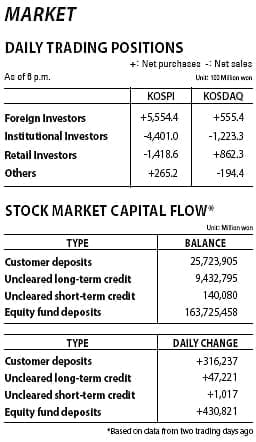
    Offshore traders bought a net 549 billion won worth of local stocks, while institutions and retail investors sold a net 442 billion and 127 billion won, respectively.

    Auto shares were down as the rising value of the local currency raised concern over their price competitiveness in overseas markets.

    Industry leader Hyundai Motor declined 1.57 percent to 157,000 won, and its auto-parts maker Hyundai Mobis dropped 3.04 percent to 255,000 won.

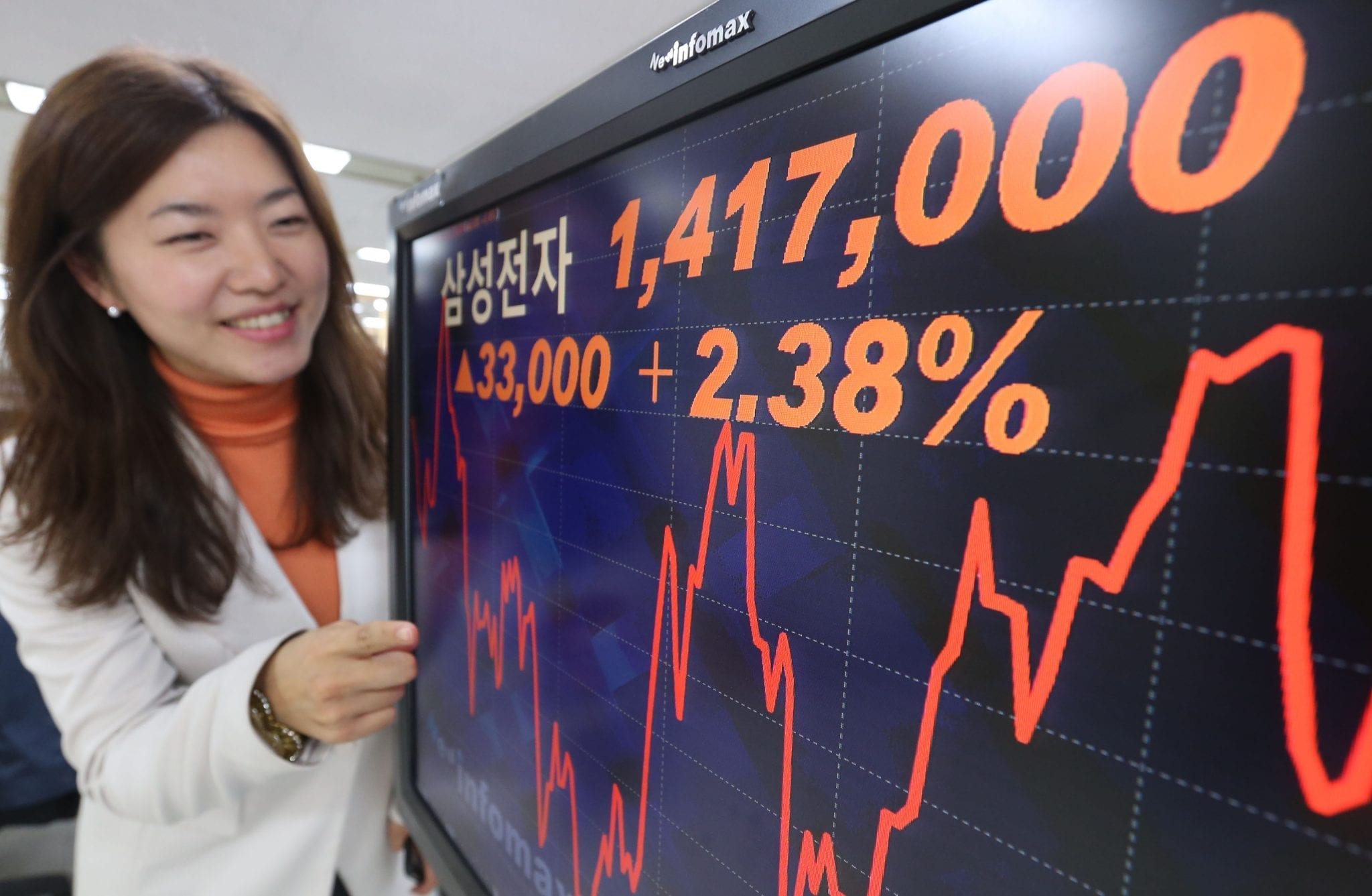
    Tech shares were in positive terrain. Market bellwether Samsung Electronics inched up 0.07 percent to 2,791,000 won, and SK Hynix, the world’s No. 2 chipmaker, edged up 0.61 percent to 83,000 won.

    Airlines were among best performing stocks as lower oil prices and the stronger local currency are expected to lower their financial burden and costs.

    Korean Air, Korea’s largest airline, jumped 5.48 percent to 32,750 won, and its smaller rival Asiana Airlines shot up 11.26 percent to 4,840 won.

    Secondary Kosdaq closed at 775.85, down 4.37 points or 0.56 percent from the previous trading day.

    Top-listed Celltrion lost slipped 0.09 percent to close at 218,800 won.

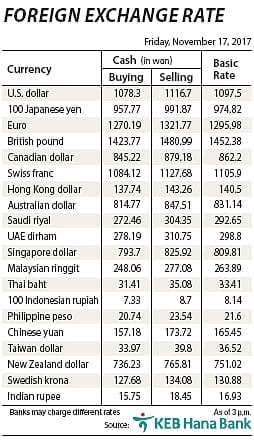
    The Korean won closed at 1,097.5 won against the U.S. dollar, up 3.9 won from the previous session’s close, which rose to the highest level since September 2016.

    Bond prices, which move inversely to yields, fell. The yield on three-year bonds gained 0.3 basis point to 2.174 percent, and the return on the benchmark five-year government bonds added 0.8 basis point to 2.383 percent.


  • MoneyMax Holding More Ground Malaysia

    MoneyMax Holding More Ground Malaysia

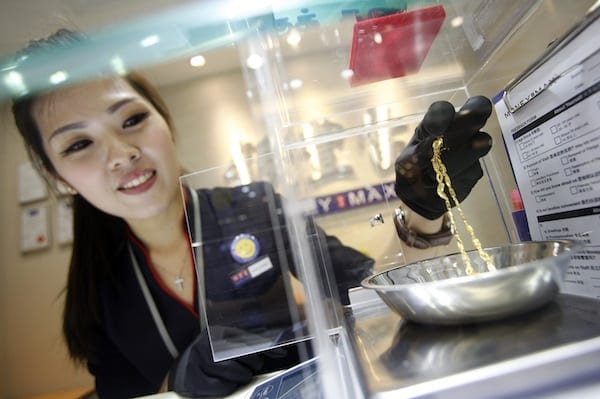
    Malaysian pawnbroker MoneyMax Financial Services – an offshoot of the Singapore group that specialises in pawnbroking, retail and trading in pre-owned jewellery, watches and branded goods – is buying into 13 pawnbrokers in Malaysia.

    It is acquiring interests in the traders from CMS Top Holdings for a consideration of RM56.6 million  (US$13.5 million) through its wholly owned subsidiary Cash Online. The transaction is being funded through internal resources and will underwrite expansion of its pawnbroking network in Malaysia.

    The target firms last year posted an aggregate net loss of about RM1.02 million, and have net tangible assets of about RM50.1 million.

    Separately, Chong Mei Sang, which established a JV with MoneyMax in 2014, will acquire about 1.96 million shares in the capital of each target company, including Pajak Gadai Bukit Gambir and Pajak Gadai Senai.