Category: Food

Retail News Asia is committed to providing both local and global retailers with the latest Food and Food & Beverage news throughout the Asian market. This on a daily base.

  • Hendrick’s super-premium premixed cocktail helps Covid-19 hit bar trade

    Hendrick’s super-premium premixed cocktail helps Covid-19 hit bar trade

    For the first year on the market, William Grant & Sons will donate $1 from each bottle sold to the company’s StandFast fund that supports the hospitality industry struggling through Covid-19 trading restrictions.

    The range comprises Monkey Shoulder Lazy Old Fashioned, Reyka Rhubarb Cosmopolitan, Glenfiddich Scotch Manhattan and the Gin Martini.

    Teams from each of the five participating bars developed three variations of Hendrick’s Martini using ingredients often unique to their location. Gracie, Hendrick’s master distiller together with global ambassador Ally Martin, drew from the best of the different flavour elements that were presented and developed the Batch & Bottle Hendrick’s Gin Martini, seeking feedback from the bars at every step.

    “I worked closely with some of the very best martini-making bars in the world, taking inspiration from what they do and translating it into something you can easily pour at home that’s fresh, floral, round and smooth like Hendrick’s,” said Gracie. “Each bar had a wildly different take on what made the perfect martini. It sent me down a rabbit hole of flavour discovery, experimenting endlessly with different ingredients and flavour combinations.”

    To create the final martini, each bar worked alongside Gracie and Martin to hone and develop the recipe with ingredients that inspired them.

  • Jollibee takes stake in Milkshop

    Jollibee takes stake in Milkshop

    Jollibee Foods Corp has acquired a majority stake of Milkshop International, operator of Taiwanese milk tea chain Milksha, through its subsidiary Jollibee Worldwide.

    The acquisition deal, equivalent to 51 per cent ownership, is valued at approximately US$12.8 million. Meanwhile, one of the co-founders of Milkshop will retain the remaining 49 per cent.

    “This gives JFC the opportunity to participate in this fast-growing beverage category and together with Milkshop’s Founder, grow the Milksha brand globally,” the Philippine multinational company said in a disclosure statement.

    Founded in 2008, Milkshop International is primarily involved in the development, operations and franchising of specialty tea shops under the trade names Milkshop and Milksha (for international markets). Currently, the company operates more than 250 outlets, with 231 stores in Taiwan, four in Hong Kong, two in Melbourne, two in Vancouver and 12 in Singapore.

    Despite the pandemic, the chain generated $47.7 million in system wide sales, higher than the year before when the sales amounted to $66.5 million.

    “Milkshop is generating modest net income and positive earnings before interest, taxes and depreciation,” the company said.

    JFC and its subsidiaries, Fresh N’ Famous Foods and Mang Inasal Philippines, now have the exclusive rights, through a licensing agreement with Milkshop, to sell and market products under the Milksha brand in their stores. Jollibee said Milksha products will be sold in Chowking stores soon.

  • Haidilao to close 300 restaurants as Covid curbs eating out

    Haidilao to close 300 restaurants as Covid curbs eating out

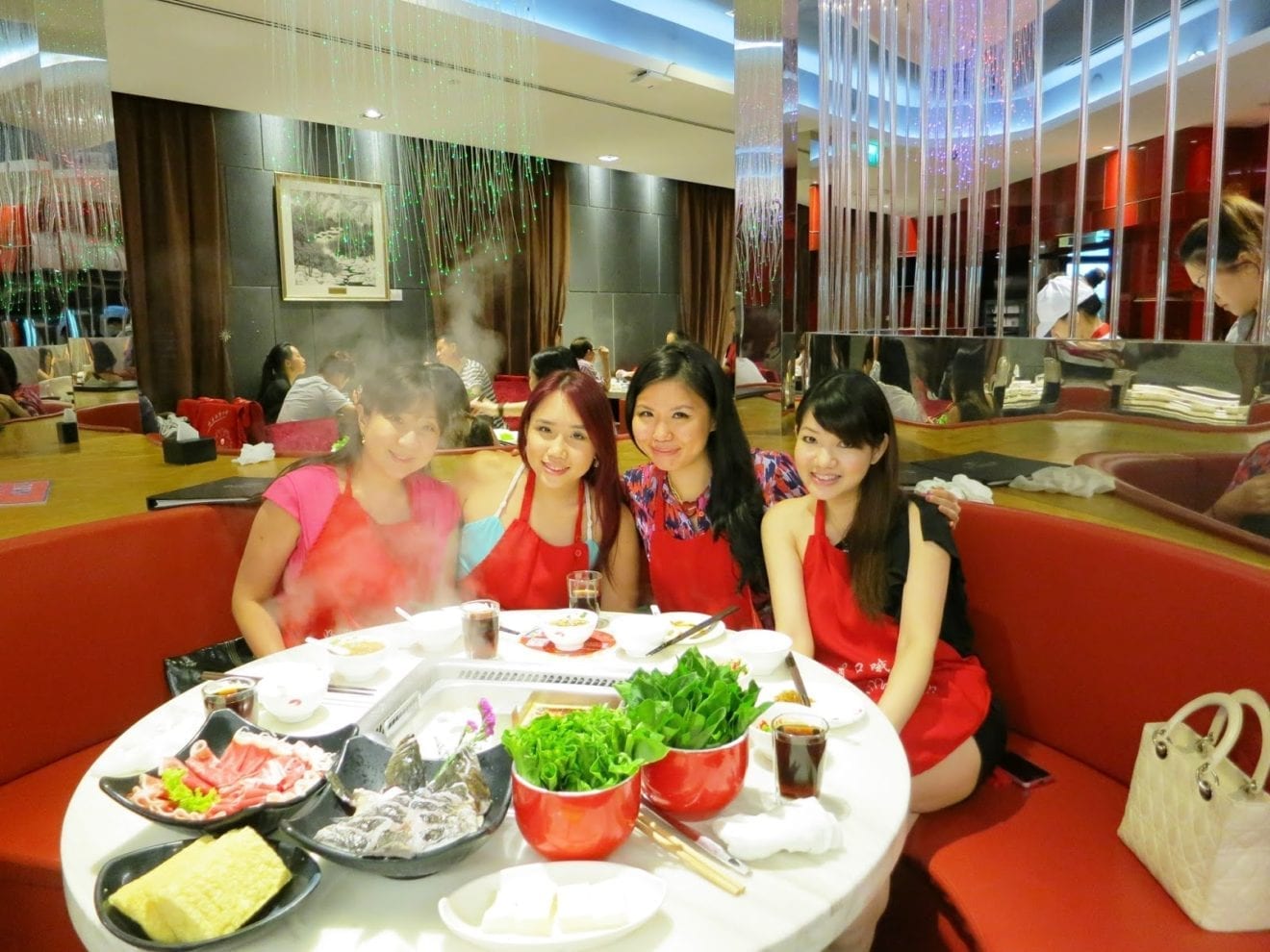
    China’s biggest hot pot chain Haidilao is slowing its rollout of new restaurants and increasing diversification of its fare, tempering its rapid expansion during the coronavirus pandemic to cope with a subsequent slump in consumer spending.

    Haidilao, which became so popular in recent years that it appeased customers in hours-long queues for its soups by providing free manicures, snacks and shoe shines, is at the forefront of reckoning in China’s restaurant industry post-pandemic.

    The chain has seen falling table turnover rates and profits as consumers dine out less and new stores cannibalize business at older locations.

    “We will open stores based on market demand, and compared to before, will appropriately slow down our opening pace,” the company said in a written response to Reuters’ questions about its strategy.

    China’s catering industry shrank 4.5% in August, before recovering for growth of 3.1% last month. Analysts said it will likely remain volatile for some time amid the country’s broader patchy economic recovery.

    “This year, fresh waves of the epidemic happened repeatedly, and passenger flow in commercial areas is volatile, affecting the recovery of core business indicators,” Tianfeng Securities wrote in a research note last month.

    Haidilao was initially undeterred by the pandemic, embarking on an expansion drive in early 2020 that has doubled its outlets since then to almost 1,600 currently. It did so by snapping up sites left behind by vacating weaker players, often helped by deep discounts offered by landlords.

    But that expansion pushed Haidilao’s table turnover rate down to 3.0 – or three sets of customers per day on average – in the first half of this year, from 4.8 in 2019.

    Xiabu Xiabu, another Hong Kong-listed Chinese hot pot chain, has said it plans to shut 200 of its 1,010 stores after losing 50 million yuan ($7.76 million) in the first half of 2021.

    Haidilao’s share price has fallen to around HK$30 from a record high of HK$86 in February.

    “The company will need to create demand going forward, which is more challenging than fulfilling demand,” China Renaissance analysts wrote in an August note.

    to turn its fortunes around, Haidilao has opened more than 10 outlets specialising in fast food such as noodles and dumplings, moving beyond the hot pot, the signature dish of southwestern Sichuan province where the company was founded 27 years ago.

    However, with a maximum of just five stores each and an average spending per guest of 10 to 20 yuan – versus 107.3 yuan for the Haidilao restaurants – the sub-brands contributed just 0.5% to first-half revenue.

    Haidilao last month closed a potato noodle restaurant less than a year after opening it in the central city of Zhengzhou, without publicly citing a reason.

    In other diversification attempts, the company has opened bars in three of its Beijing restaurants and is promoting its delivery service, a unit where revenue initially rose during the pandemic.

    However, delivery revenue dropped from 409.6 million yuan, or 4.2% of total revenue, in the first half of 2020 to 345.7 yuan, or 1.7% of total revenue, in the first half of 2021.

    “(Eating) hot pot has a strong social feature so people are less likely to order hot pot at home,” said Zhu Danpeng, an independent food industry analyst.

    Haidilao opened a store on Alibaba’s marketplace Tmall several months ago to sell items including lipsticks inspired by its soup bases with names such as “capsicum rouge” and “summer tomato”.

    Zhu said Haidilao’s multi-brands strategy was the right move but the company did not have a lot of room for growth: “Haidilao has reached a certain phase with its development, as a man has reached his middle age.”

  • Nestlé calls on FMCG companies to help end recycling confusion

    Nestlé calls on FMCG companies to help end recycling confusion

    The Flexible Plastic Fund is a UK industry first and is being led by producer compliance scheme, Ecosurety, with support from the environmental charity, Hubbub.

    In collaboration with manufacturers, retailers and recyclers, the fund intends to improve flexible plastic recycling and reduce plastic pollution by giving the material a stable value. This will in turn increase the supply of recycled plastic enabling the industry to become more ‘circular’ and meet the forthcoming UK plastic packaging tax obligations. The fund should motivate investment in much-needed jobs and infrastructure to make flexible plastic recycling a financially sustainable system in the UK.

    New research from the University of Sheffield suggests there is strong consumer demand for recycling flexible plastic with 95% of participants saying they would be willing to recycle their flexible plastics1. Sainsbury’s and Waitrose have already signed up to support the initiative by hosting flexible plastic collection points in selected stores across the UK. Several other major retailers are set to follow suit. As a result, recycling this material will become increasingly accessible to consumers, as they will be able to recycle all types of flexible plastic packaging with participating retailers.

    With just 16% of UK local authorities2 currently offering a household collection of flexible plastics, the amounts of this material collected for recycling are low. Flexible plastics include plastic bags, wrappers, films, pouches, packets and sachets and is described as ‘plastic bags and wrapping’, ‘soft plastics’ or ‘flexible plastics’. The fund will guarantee a minimum value of £100 per tonne of recycled product to incentivize recyclers to process flexible plastic.

    The long-term ambition of the fund is to drive progress towards creating a circular, UK-based flexible plastic recycling market that allows flexible plastic recycling via household collections. As part of the UK’s drive to boost recycling, WRAP recently announced new recommendations to support flexible plastic recycling.

    Flexible plastic represented 22% of all UK consumer plastic packaging in 2019 but only 6% was recycled. This type of plastic must be processed in a different way to other plastics due to its unique properties – it often contaminates rigid plastic recycling and clogs up machinery – something that could be overcome by creating a separate flexible plastic recycling stream.

    The initiative will provide fully audited transparency – at least 80% of the plastics collected will be recycled in the UK – rising to 100% by 2023. Until 2023, where there are currently limits in UK capacity and technology, up to 20% could be exported to qualifying facilities in Europe only. All material will be fully traceable and tracked from the collector through to new products. Unlike many other schemes, recyclers will only be paid if the plastic is definitely recycled. The manufacturers contributing to the Flexible Plastic Fund will then be able to access the Packaging Recovery Notes (“PRNs”) generated by this high-quality, tracked recycling scheme.

    The recycled plastic will be turned into a range of products including non-food-grade plastic, non-food-grade film and food-grade film. Through its graded payment hierarchy, the Flexible Plastic Fund is actively incentivizing the development of a circular model of production where flexible plastic packaging can be recycled into plastic packaging, including food-grade, again and again.

    The Flexible Plastic Fund is calling for recyclers, manufacturers and retailers to get in touch to play their role in this vital scheme that is driving solutions to flexible plastic waste in the UK.

  • Red China – up-and-coming wineries gain recognition

    Red China – up-and-coming wineries gain recognition

    Chinese winemaker Legacy Peak, which started producing grapes more or less by accident in 1997, symbolizes the rapid growth of an industry that now wins accolades in global markets, but it once came close to giving up.

    “We wanted to pull out all the vines and call it quits,” said Liu Hai, its second-generation owner, recalling early struggles to cultivate a barren plot received from a local government in payment for construction work.

    His family knew nothing about farming when they got the land in the arid north-central region of Ningxia on condition that it be devoted only to grapes, but they started making wine a decade ago, after wineries that used their fruit won several awards.

    Since then, Liu says the winery has won awards and found export markets in France, Germany, and Southeast Asia, despite the annual output of fewer than 100,000 bottles.

    From the rolling hills of coastal Shandong province to the desert heights of Ningxia and the deep valleys of southwestern Yunnan, Chinese vineyards and wineries are winning recognition.

    “China is an up-and-coming fine wine producer, and its best wines can compete on the world stage,” said wine educator Edward Ragg, who is a reviewer for the influential Robert Parker Wine Advocate.

    The products of wineries such as Chateau Nine Peaks in Shandong, Silver Heights and Grace Vineyard in Ningxia, and Ao Yun in Yunnan, are rated as “outstanding wine of exceptional complexity and character” by Parker’s newsletter.

    Some, such as Nine Peaks and Legacy Peak, are finding export markets in Asia and Europe.

    China’s wine market is the sixth-largest in the world, with event organizer Vinexpo saying it consumed $14.8 billion worth of wine in 2018, and forecasting sales of $18 billion by 2023.

    But domestic wineries must battle an image problem, as consumers at home can be suspicious of their quality and often put off by high prices.

    “It was always easier to sell to foreigners because they are more open-minded, but it has been a tough sell with Chinese customers,” said Liu.

    Other problems are high production costs and erratic weather that can hamper efficiency and quality, while a slowing economy and the COVID-19 pandemic have hit China’s wine consumption since 2018.

    Modern winemaking in China dates fromg the 1980s, when French firms, such as the precursor of Remy Cointreau, began investing after the door was opened to foreign businesses by then-leader Deng Xiaoping.

    While the French influence persisted in a market dominated by reds and a glut of Bordeaux imitations, quality began improving in the early 2000s.

    That was a time when vineyards focused on growing healthier grapes just as incomes grew sharply, with more people traveling abroad and drinking more wine.

    Now home-grown wineries can allay the suspicions of some consumers, such as Yang Lu, who owns a restaurant in the Chinese capital.

    “I was amazed by how the aroma was full of nice fruits and flowers,” said Yang, describing her experience last year of first sampling the Mountain Wave label produced in Ningxia.

    “It had a nice color and was smooth with a long finish.”

    Until then, Yang, who is in her 30s, educated overseas, and widely traveled, had almost always ignored domestic wines, uncorking only imports such as New Zealand wines made from pinot noir.

    Some winemakers, such as Ian Dai, 33, who is behind the Ningxia brand Xiaopu, priced in the range from 168 yuan ($26) to 300 yuan ($47), are turning away from industrial methods in the search for a Chinese signature variety.

    Dai said he was looking to more natural methods, such as fermenting without commercial yeast or leaving acidity and tannin levels unadjusted to “let grapes express themselves”.

    An independent with no vineyards or winemaking equipment of his own, Dai is in his fifth year of winemaking after dropping out of college in Sydney and spending a decade in wine sales.

    Dai hopes to find grape varieties for a wine that represents China.

    “As a winemaker I should have the ego to make the best wine in this climate with grapes grown here,” said Dai, who expected it would take two decades to produce such a wine in China.

    Chinese wineries are also experimenting with alternative grape varieties, such as marselan, aglianico and saperavi. Marselan, a cross between cabernet sauvignon and grenache embraced years ago by Legacy Peak and others, offers high yields and a fruitiness much needed by Chinese reds, experts say.

    “Marselan could one day become China’s signature wine grape, like malbec is to Argentina,” added Ragg, a holder of the Master of Wine qualification

  • HCMC restaurants reopen with caution

    HCMC restaurants reopen with caution

    HCMC restaurants and coffee shops are resuming on-site dining with caution due to concerns of staff contracting Covid-19 and post-social-distancing tightened spending. Starting Thursday, over 20 outlets of bubble tea chain Gong Cha started resuming on-site services after five months of suspension.

    As the city allows food and beverage facilities to serve 50 percent of their capacity and close before 9 p.m., the Cong Coffee chain is also testing the waters with five outlets reopening.

    aCoffee-Bike also reopened five stores on the same day. On Friday, Japanese-style hotpot chain Kichi Kichi will resume dining for customers who have made reservations.

    Some companies, however, choose to delay their reopening to be better prepared.

    Dau Homemade, which sells traditional Vietnamese food, needs another two or three days to get ready.

    Lagom Cafe won’t open for another two weeks, as its CEO Do Thi Ly Na said the store needs more time to observe market reactions and to complete a new look.

    The cautious decisions of food and beverage facilities in Ho Chi Minh City came as shop owners are concerned their staff might be infected with Covid-19 as the city still recorded over 1,000 new cases in the last seven days.

    It would be dangerous to immediately bring back business to pre-pandemic status as the coronavirus is still spreading, said Hoang Tien, founder of Coffee Bike.

    Dau Homemade, which is offering take-aways and deliveries, is still testing its employees once every three days even though the city does not require it.

    A spokesperson for the company said another concern is tightened spending as consumers have grown used to five months of staying mostly home.

    Sales are not likely to cover costs as the company will have to spend big on marketing to urge customers to return.

    Deliveries will continue to be the life source of the company, the spokesperson said.

    Tran Ngoc An, a spokesperson for Gong Cha, expressed optimism as the city has decided to live with Covid-19 and authorities vocalized not imposing another citywide social distancing campaign.

    This will give food and beverage businesses confidence to offer services amid the remaining months of the year.

    “We really want to see the city become vibrant again in the upcoming holidays.”

  • Seafood exports edges up to 2,4Bln

    Seafood exports edges up to 2,4Bln

    Seafood exports rose by 2.8 percent year-on-year in the first nine months of the year to US$2.4 billion, according to the Vietnam Association of Seafood Exporters and Producers.

    Tuna, squid and octopus accounted for the highest proportion of the exports.

    Bivalve mollusk exports soared 39 percent to $99.6 million.

    The five biggest markets for squid and octopus were Korea (accounting for 41 percent), 11 member countries of the CPTPP (24 percent), Thailand (11 percent), EU (10 percent), and China (7 percent).

    In September alone, exports fell by 24 percent year-on-year, after falling by 24 percent in August, due to social distancing restrictions.

    VASEP expects the figure to also decline in October.

  • Starbucks Korea faces probe over US$153 million in prepaid card takings

    Starbucks Korea faces probe over US$153 million in prepaid card takings

    Starbucks has been the subject of growing speculation as a number of Korean banks express their concerns over the US coffeehouse chain’s potential move into the competitive financial services industry.

    The global chain itself has not announced its plans to edge into financial services, but the booming success of the company’s prepaid gift card and mobile app – which Starbucks announced collectively had $1.56 billion in stored value by the end of 2019 – suggests there is a path emerging for the company to become a bank if it wanted to.

    Despite the enticing $1.56 billion figure, 3,900 US banks have less than $1 billion in total assets according to the Federal Deposit Insurance Corporation (FDIC).

    Starbucks revealed on a recent earnings call that its rewards program in the US had grown to 18.9 million active members at the end of 2019, up 16% year-over-year. “This is important because we know from experience that when customers join our rewards program, their total spend with Starbucks increases meaningfully,” he said on the call.

    South Korea’s Hana Financial Group is acutely aware of Starbucks’ competitive potential. Its chairman Kim Jung-tai said in his New Year address: “Technologies have allowed coffee companies like Starbucks to be our rivals. It will be fine to call Starbucks an unregulated bank, not a mere coffee company.”

    One year prior, South Korea’s KB Financial Group, KB Kookmin Bank and NongHyup Financial Group all mentioned Starbucks in their New Year’s addresses too. “The most-used mobile payment app in the US was the Starbucks app, not Google or Apple Pay,” KB Financial Group’s chairman Yoon Jong-kyoo said last year.

    “About 40% of its payments were made with the app, and the amount of cash loaded onto its prepaid cards and apps surpassed the amount of cash that some provincial banks had,” Jong-kyoo added. Industry experts believe Starbucks might move into asset management through its prepaid cards, as well as into the loan, insurance and currency exchange sectors.

    “Starbucks has been regarded as a fintech firm, not a coffee company, over the past few years,” an unnamed bank official said. “The removal of the word coffee from its signboard also proves this.”

    The coffeehouse partnered with cryptocurrency trading platform Bakkt at the end of last year. In the first half of 2020, Starbucks and Bakkt will test a consumer app “to make it easy for consumers to discover and unlock the value of digital assets”, Bakkt’s chief product officer Mike Blandina said in October.

    These recent movements by Starbucks against the backdrop of its prepaid card success have spurred the Korean financial industry to call for regulators to put controls on the coffeehouse. “Regulations are needed for prepaid service providers to maintain a certain level of capital adequacy ratio,” Hansung University’s economics professor Kim Sang-bong said.

    The global chain has plenty of capital to start up its own bank. According to Statista, its revenue in 2019 was roughly $26.51 billion. With Big Techs such as Amazon, Facbook, Uber and Grab all planting their flag in the space, it seems imaginable that a similarly well-known brand such as Starbucks might be able to do the same.

    But if regulators decide to clamp down on the company in certain regions, then its currently speculative appetites for a financial play could easily be curbed or at least put on hold.

  • Collins Foods strengthens foothold in the Netherlands with KFC

    Collins Foods strengthens foothold in the Netherlands with KFC

    Collins Foods Netherlands B.V. has entered into a share purchase agreement with RDK Holding B.V. and MDK Holding B.V. to acquire nine KFC restaurants in the Netherlands.

    The sellers are the second-largest KFC franchisee in the Netherlands after Collins Foods’ 35 restaurants.

    Once completed, this acquisition will increase the Collins Foods KFC network in the Netherlands to 44 restaurants, or 55% of this market.

    Last week, Collins Foods announced the signing of a Corporate Franchise Agreement (CFA), entered into with a subsidiary of Yum! Brands Inc. (Yum!) for KFC Netherlands. That agreement will allow Collins Foods to fully leverage its experience and operational capabilities for the benefit of both Collins Foods and the KFC brand in the Netherlands.

    This latest acquisition complements the overall direction of the CFA. As existing restaurants, the nine restaurants to be acquired will not count towards the CFA’s target of up to 130 net new KFC restaurants over the next 10 years.

    However, the acquisition provides further scale for Collins Foods in the Netherlands and supports the rollout of new restaurants under the CFA by streamlining the Netherlands’ franchisee structure and enabling access to additional development trade zones for Collins Foods.

    The acquisition consideration of €10.25 million is subject to various adjustments to be made at completion and will be funded from Collins Foods’ existing debt facilities. Completion is expected to be in or around December 2021, and is subject to satisfaction of various conditions precedent including obtaining all relevant government permits to operate the restaurants, and obtaining the consent of Yum! Restaurants International Ltd. and Co. KG as a franchisor of the KFC restaurants.

    The acquisition price was based on pre-COVID revenue of €15.9 million and EBITDA of €1.8 million during the calendar year 2019. Having successfully integrated the eight restaurants acquired in late second half of FY21, Collins Foods is confident of implementing a similar integration for the sellers’ restaurants.

    Commenting on the acquisition, Collins Foods’ Managing Director & CEO Drew O’Malley said: “Today’s acquisition marks another exciting step forward for Collins Foods’ European growth strategy.

    The restaurants we are acquiring are from one of Netherlands’ top KFC operators. It provides us with an opportunity to bring an additional quality network of restaurants into our European business and adds further capability to our team and increased scale to our operations in the Netherlands.

    The acquisition of these nine restaurants increases our presence to 44 KFC restaurants in the Netherlands and going forward, facilitates further growth opportunities.

  • Yum China opens Digital R&D Center to craft digital strategy

    Yum China opens Digital R&D Center to craft digital strategy

    Yum China Holdings announced the opening of its Digital R&D Center with three sites in Shanghai, Nanjing, and Xi’an. The inauguration of the Digital R&D Center represents an important milestone for the Company’s strategy to build a dynamic digital ecosystem comprised of 1) the Digital R&D Center, 2) joint venturing, and 3) third party collaboration, to provide a solid foundation for Yum China to further develop its brands and businesses, accelerate expansion and capture market opportunities.

    The Digital R&D Center will consolidate and expand dedicated resources to develop new solutions and services using technologies in big data, artificial intelligence (AI), middle office and digital SaaS to drive end-to-end digitalization. The Digital R&D Center will bolster Yum China’s in-house digital capabilities across various functions, such as:

    • Consumer-facing: to improve Super Apps, mini programs and membership programs to provide higher quality service and customer experience.
    • Store operations: to upgrade systems and tools for more efficient operations and decision making, such as our digital tools for restaurant general managers, “Pocket Manager” and “Super Brain.”
    • Smart delivery: to further optimize delivery order queuing, trade zones, and rider routing.
    • Supply chain management: to enhance food safety and streamline operations from farm to fork.

    “Digitalization is one of the key enablers behind Yum China’s resiliency and long-term development as we move toward our next milestone of 20,000 stores,” said Joey Wat, CEO of Yum China. “The Digital R&D Center is an important part of our investment strategy as we apply cutting-edge technologies to digitally transform stores and drive operational excellence.”

    “Evolving consumer behavior, such as increased off-premise dining, and the Company’s accelerated development, place more demand on our R&D capabilities,” said Leila Zhang, Chief Technology Officer of Yum China. “We believe the establishment of the Digital R&D Center will significantly strengthen Yum China’s internal digital capabilities and support sustainable business growth by using advanced technology for real life applications.”

    As a pioneer of digitalization in the restaurant industry in China, Yum China launched a digital program several years ago. With the establishment of the Digital R&D Center, the Company will have more dedicated resources in its restaurant operations for building topnotch digital infrastructure. The Company will continue to cooperate with external partners such as scientific research institutions and other industry leaders to implement leading edge technology.

    Yum China has earmarked $1-1.5 billion of investment over the next five years in digital and technology. As an integral part of this initiative, the Company plans to invest approximately $100-200 million and to employ up to 500 staff in the Digital R&D Center to support the company’s growth over the next five years. The Digital R&D Center in Shanghai, Xi’an and Nanjing will be able to tap into the large talent pool at the top universities in these cities. With additional resources, the Company will further enhance our digital capabilities, as well as accelerate innovations and implementation.

    This press release contains “forward-looking statements” within the meaning of Section 27A of the Securities Act of 1933 and Section 21E of the Securities Exchange Act of 1934. We intend all forward-looking statements to be covered by the safe harbor provisions of the Private Securities Litigation Reform Act of 1995. Forward-looking statements generally can be identified by the fact that they do not relate strictly to historical or current facts and by the use of forward-looking words such as “expect,” “expectation,” “believe,” “anticipate,” “may,” “could,” “intend,” “belief,” “aim,” “plan,” “estimate,” “target,” “predict,” “project,” “likely,” “will,” “continue,” “should,” “forecast,” “outlook,” “look forward to” or similar terminology.

    These statements are based on current estimates and assumptions made by us in light of our experience and perception of historical trends, current conditions and expected future developments, as well as other factors that we believe are appropriate and reasonable under the circumstances, but there can be no assurance that such estimates and assumptions will prove to be correct. Forward-looking statements are not guarantees of performance and are inherently subject to known and unknown risks and uncertainties that are difficult to predict and could cause our actual results or events to differ materially from those indicated by those statements. We cannot assure you that any of our expectations, estimates or assumptions will be achieved.

    The forward-looking statements included in this press release are only made as of the date of this press release, and we disclaim any obligation to publicly update any forward-looking statement to reflect subsequent events or circumstances, except as required by law. All forward-looking statements should be evaluated with the understanding of their inherent uncertainty. You should consult our filings with the Securities and Exchange Commission (including the information set forth under the captions “Risk Factors” and “Management’s Discussion and Analysis of Financial Condition and Results of Operations ” in our Annual Report on Form 10-K and subsequent Quarterly Reports on Form 10-Q) for additional detail about factors that could affect our financial and other results.

  • Haidilao slows rollout as Covid-19 curbs consumer appetite

    Haidilao slows rollout as Covid-19 curbs consumer appetite

    China’s biggest hot pot chain Haidilao is slowing its rollout of new restaurants and increasing diversification of its fare, tempering its rapid expansion during the coronavirus pandemic to cope with a subsequent slump in consumer spending.

    Haidilao, which became so popular in recent years that it appeased customers in hours-long queues for its soups by providing free manicures, snacks and shoe shines, is at the forefront of reckoning in China’s restaurant industry post-pandemic.

    The chain has seen falling table turnover rates and profits as consumers dine out less and new stores cannibalize business at older locations.

    “We will open stores based on market demand, and compared to before, will appropriately slow down our opening pace,” the company said in a written response’ questions about its strategy.

    China’s catering industry shrank 4.5% in August, before recovering for growth of 3.1% last month. Analysts said it will likely remain volatile for some time amid the country’s broader patchy economic recovery.

    “This year, fresh waves of the epidemic happened repeatedly, and passenger flow in commercial areas is volatile, affecting the recovery of core business indicators,” Tianfeng Securities wrote in a research note last month.

    Haidilao was initially undeterred by the pandemic, embarking on an expansion drive in early 2020 that has doubled its outlets since then to almost 1,600 currently. It did so by snapping up sites left behind by vacating weaker players, often helped by deep discounts offered by landlords.

    But that expansion pushed Haidilao’s table turnover rate down to 3.0 – or three sets of customers per day on average – in the first half of this year, from 4.8 in 2019.

    Xiabu Xiabu, another Hong Kong-listed Chinese hot pot chain, has said it plans to shut 200 of its 1,010 stores after losing 50 million yuan ($7.76 million) in the first half of 2021.

    Haidilao’s share price has fallen to around HK$30 from a record high of HK$86 in February.

    “The company will need to create demand going forward, which is more challenging than fulfilling demand,” China Renaissance analysts wrote in an August note.

    DELIVERY AND DRINKS

    To turn its fortunes around, Haidilao has opened more than 10 outlets specializing in fast food such as noodles and dumplings, moving beyond the hot pot, the signature dish of southwestern Sichuan province where the company was founded 27 years ago.

    However, with a maximum of just five stores each and an average spending per guest of 10 to 20 yuan – versus 107.3 yuan for the Haidilao restaurants – the sub-brands contributed just 0.5% to the first-half revenue.

    Haidilao last month closed a potato noodle restaurant less than a year after opening it in the central city of Zhengzhou, without publicly citing a reason.

    In other diversification attempts, the company has opened bars in three of its Beijing restaurants and is promoting its delivery service, a unit where revenue initially rose during the pandemic.

    However, delivery revenue dropped from 409.6 million yuan, or 4.2% of total revenue, in the first half of 2020 to 345.7 yuan, or 1.7% of total revenue, in the first half of 2021.

    “(Eating) hot pot has a strong social feature so people are less likely to order hot pot at home,” said Zhu Danpeng, an independent food industry analyst.

    Haidilao opened a store on Alibaba’s marketplace Tmall several months ago to sell items including lipsticks inspired by its soup bases with names such as “capsicum rouge” and “summer tomato”.

    Zhu said Haidilao’s multi-brands strategy was the right move but the company did not have a lot of room for growth: “Haidilao has reached a certain phase with its development, as a man has reached his middle age.”

  • Mekong Delta fruit prices surge as travel restrictions ease

    Mekong Delta fruit prices surge as travel restrictions ease

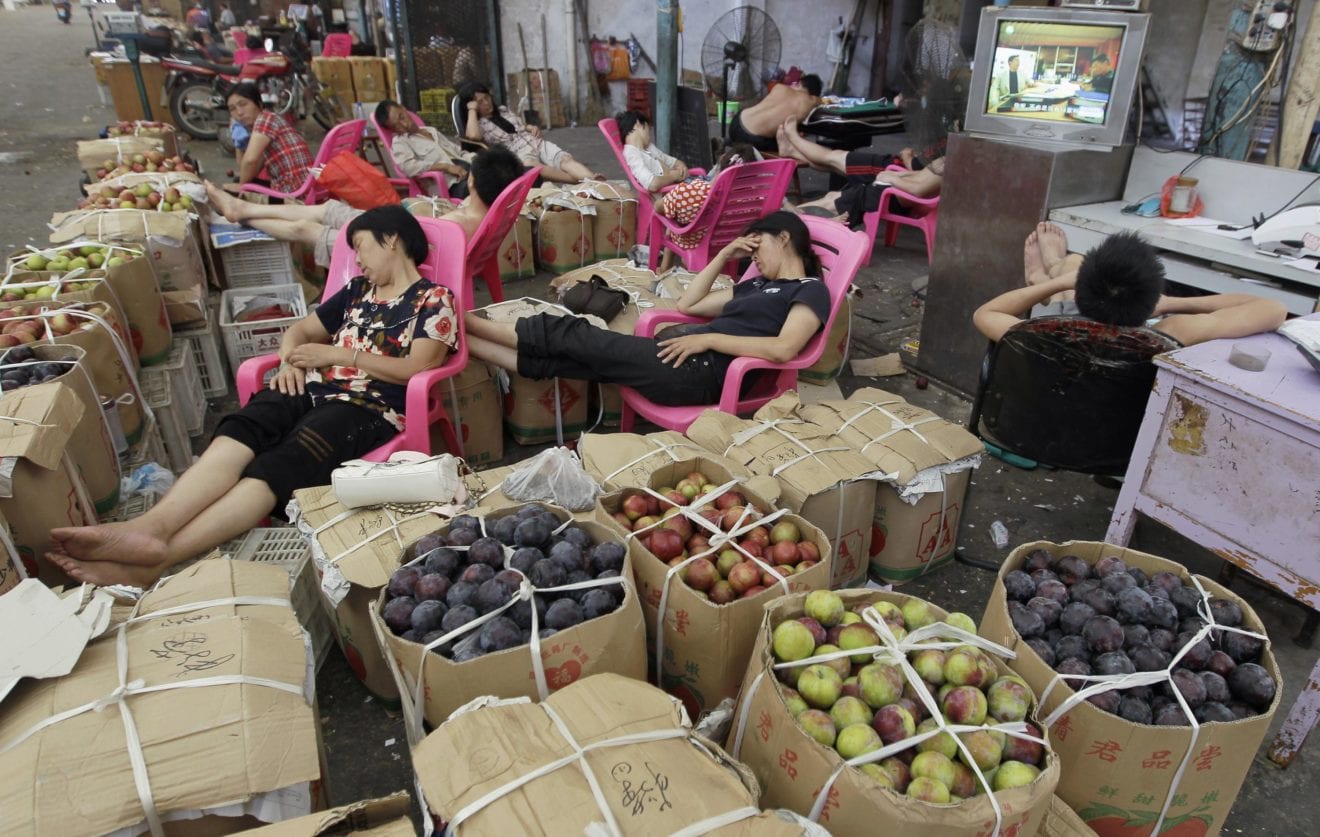
    Jackfruit, longan, and lemon cultivated in the Mekong Delta are fetching two to four times the prices that prevailed when Covid-19 related transport restrictions were in force before Oct. 1.

    Lemons bought directly at gardens are priced VND7,000-8,000 ($0.31-0.35) per kilogram these days, while they were selling for just VND2,000 per kilogram earlier.

    Prices of Thai jackfruit have also surged to VND19,000-30,000 per kilogram. These prices are four times more than the previous four months when travel was restricted.

    Similarly, longan prices have doubled to VND12,000-14,000 per kilogram.

    “Farmers hope to a lot of longan and make a profit when Chau Thanh District (Dong Thap Province) harvests the fruit in about a month,” said Nguyen Van Thuan, a farmer from the district.

    In July, fruit from the Mekong Delta, Vietnam’s agriculture hub, was sold poorly at lower prices as wholesales markets across HCMC close due to Covid-19.

    Mekong Delta contributes 90 percent of the country’s rice exports, 65 percent of seafood exports, and 70 percent of fruit exports.

  • Paris Baguette arrives in Indonesia

    Paris Baguette arrives in Indonesia

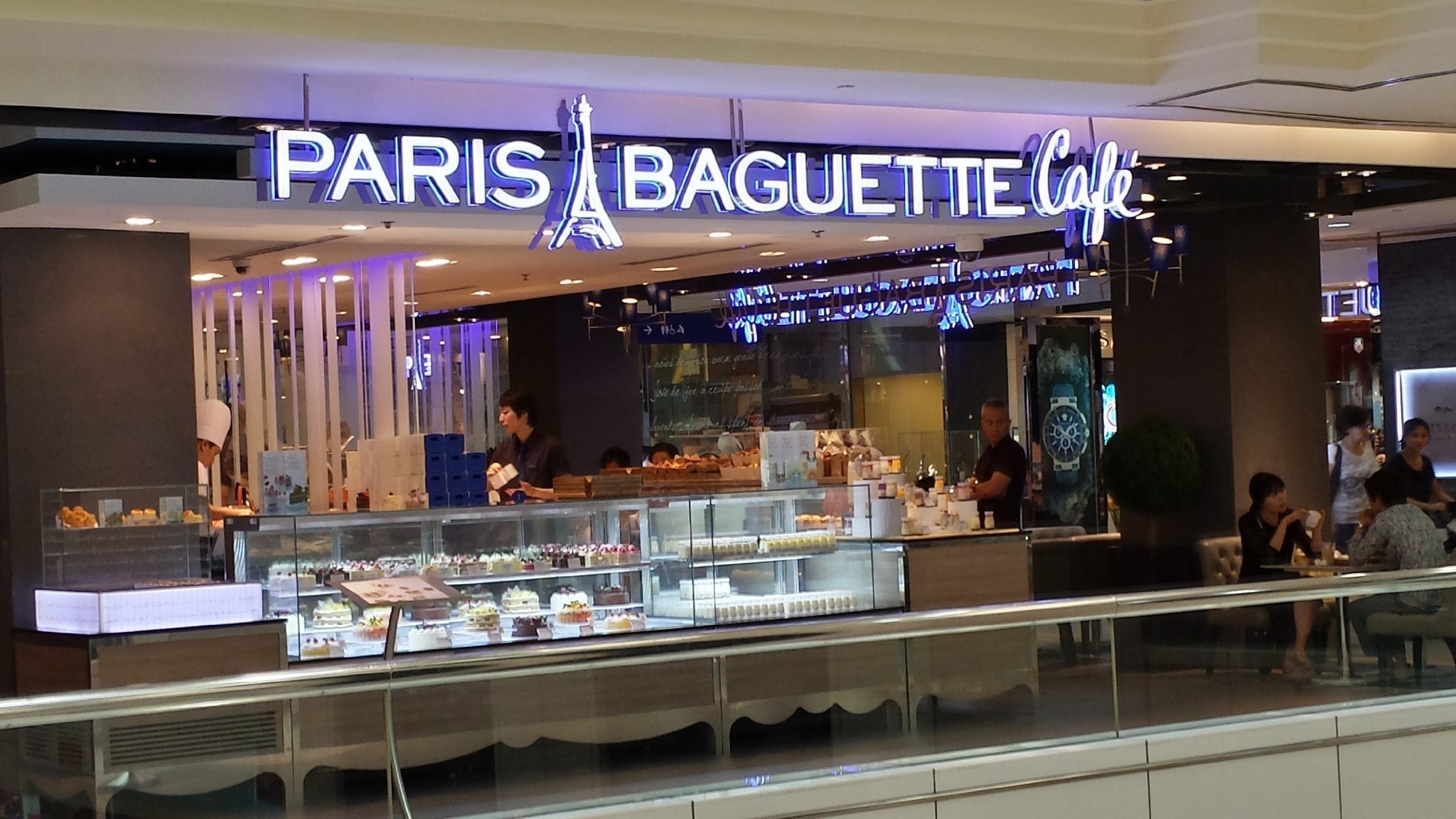
    Erajaya Food & Nourishment (“EFN”) and Paris Baguette of Singapore (“PB”), officially entered into a joint venture partnership through the signing of a Joint Venture Agreement represented by Ms. Gabrielle Halim from EFN and Mr. Jin-Soo Hur from PB.

    Through this partnership, Paris Baguette, the well-loved fast-casual bakery from South Korea, known for its quality, delicious and innovative array of pastries, breads and cakes, officially enters the Indonesian market. The highly-anticipated debut would make Indonesia the fourth country in South East Asia that Paris Baguette would call home.

    Paris Baguette’s entry into the Indonesian market promises to break through the country’s F&B clutter, by offering elevated culinary concepts and a plethora of delicacies, crafted using premium ingredients, guaranteed to satisfy the most discerning taste.

    Gabrielle Halim, CEO of Erajaya Food & Nourishment, stated, “We are honoured to partner with Paris Baguette to expand its footprint in Indonesia. Their commitment to innovation and quality is in line with our vision to become a leading F&B player in Indonesia. We are certain the food lovers in Indonesia will welcome and enjoy Paris Baguette’s fresh concept and unique offerings when we open our first stores shortly.”

    “We are delighted to partner with Erajaya Food & Nourishment, who shares our vision of making the world a happier place through innovative products and by leading with integrity. Together with our partner, we will bring the high-quality treats that we love from Paris Baguette to Indonesia. Our expansion into Indonesia is a part of our globalization strategy.” said Hana Lee, Vice President of Paris Baguette SEA, SPC Group.

  • Baileys launches Apple Pie liqueur in Australia

    Baileys launches Apple Pie liqueur in Australia

    Baileys Apple Pie Liqueur has finally dropped in Australia and it’s here for a good time, not a long time.

    We first heard about this incredible flavor over a year ago – but it was only available in the US. We’re delighted that it’s now hitting Aussie shores!

    From mid-October, you will be able to get your hands on a bottle of this limited-edition treat just in time for the festive months.

    Combining the best parts of the traditional apple pie that we know and love, this new drink offers the familiar velvety qualities of Baileys Original Irish cream and vanilla ice cream, plus a kick of Christmassy warmth with the hint of cinnamon and spices.

    Deliciously versatile, this liqueur can be paired with vanilla ice cream, mixed into your favorite apple-inspired baked goods or simply poured over ice for a festive fix. The possibilities are endless!

  • Noodle Shop Tamjai SamGor Mixian to launch in Japan

    Noodle Shop Tamjai SamGor Mixian to launch in Japan

    Hong Kong noodle chain Tamjai SamGor Mixian is to expand its international reach with its Japanese debut early next year.

    Marking the brand’s second overseas entry after Singapore, the Japan launch follows its IPO in Hong Kong last week, the proceeds of which will be used to fund its global expansion plan, including its launch in Japan and Australia. The noodle chain aims to double its store network to 330 by 2024, with 25 new Japanese stores and 15 restaurants in Australia.

    “With the support of its major shareholders, Tridor Holdings, Tam Jai International has laid a solid foundation for further overseas expansion,” said Darren Lau, CEO of Tam Jai International. “We will continue to deliver the taste of Tamjai and our unique food culture not only in Japan but all over the world.”

    Beside its signature dishes, the Japan restaurants will also feature toppings dedicated to Japanese customers.

    “We hope that many people in Japan will know the charm of Tamjai SamGor Mixian and develop it as a store that can be used on a daily basis,” said Takaya Awata, President and CEO of Toridoll Holdings Corporation, parent company of Tam Jai International.