Category: Food

Retail News Asia is committed to providing both local and global retailers with the latest Food and Food & Beverage news throughout the Asian market. This on a daily base.

  • Vietnam targets $10 bln worth of fruit, vegetable exports

    Vietnam targets $10 bln worth of fruit, vegetable exports

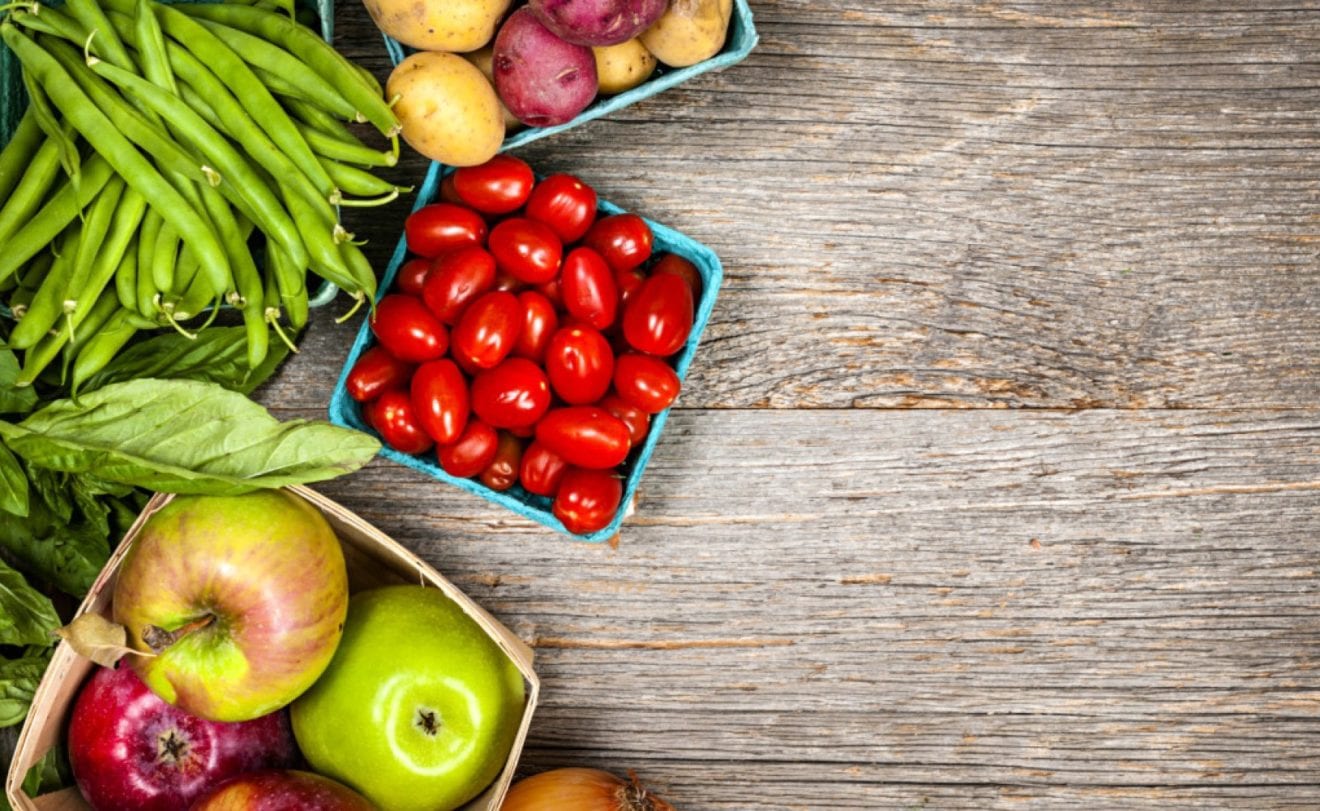
    A fruit and vegetable sector development plan approved by the government seeks to increase exports to $8-10 billion by 2030.

    Processed fruits and vegetables are expected to account for at least 30 percent of this, with two million tons expected to be shipped abroad, double the volume in 2020.
    The plan also seeks to attract investment to establish 50-60 medium and large-scale fruit and vegetable processing facilities with modern technologies that can compete in the international market.

    The government will offer incentives for such investment

    Existing fruit and vegetable warehouses and processing facilities will be upgraded, and farms, processing plants and distribution channels will be linked.

    Exports of fruits and vegetables fell by 13 porcent last year to $3.26 billion due to the impact of Covid-19, according to the Ministry of Agriculture and Rural Development.

    But exports to some countries with stringent quality standards, such as the U.S, South Korea and Japan, increased by 5-11 percent.

  • Popeyes takes aim at KFC’s hold on China

    Popeyes takes aim at KFC’s hold on China

    Popeyes has its sights set on China. On Monday, the American fried chicken chain officially announced that it would open its first China-based store right here in Shanghai sometime next year.

    But that’s just the beginning. Popeyes has big plans to become China’s most popular fried chicken joint. No easy feat considering KFC – the world’s most successful fried chicken brand – currently holds the top spot.

    “I think we can be the no.1 chicken brand here in China and all around Asia,” said Jose Cil, CEO of Restaurant Brands International (RBI).

    Popeyes aims to open 1,500 restaurants in China over the next 10 years. KFC currently has a whopping 6,300 branches in over 1,300 cities across the country.

    Popeyes is all the rage in the US right now, after its latest spicy fried chicken sandwich went viral. The sandwich proved to be so popular it sold out and was removed from the menu a few weeks later due to lack of supply.

    The good news is that the famous spicy chicken sandwich will be offered at the Shanghai branch. The bad news is you’ll just have to wait until 2020 to try it.

    Popeyes will be the last of RBI’s major brands to enter the Chinese market. Burger King and Tim Hortons have both proven to be immensely popular in China. Since 2012, Burger King has opened 1,100 stores in China and Tim Hortons has expanded to 28 stores in just one year.

    Hence, Popeyes lofty expectation to take on KFC here in China.

  • Shinsegae seeks to buy Starbucks US’ stake in Korean business

    Shinsegae seeks to buy Starbucks US’ stake in Korean business

    South Korea’s retail giant Shinsegae is reviewing ways to double its stake in Starbucks Korea from 50% to 100%, according to an industry source on Mar. 19. Shinsegae’s affiliate E-mart currently owns 50% of Starbucks Korea, while Starbucks Corporation headquartered in the US owns the other 50%.

    If the deal is successful, Starbucks Korea would become a wholly owned subsidiary of E-mart, which will receive double the dividends from the company. Starbucks Korea paid out annual dividends of 30 billion won ($26.6 million) each to E-mart and Starbucks Corporation last year.

    “While we are having thorough reviews on the topic internally, nothing has yet been confirmed,” said a Shinsegae spokesman.

    Starbucks Korea will still have to pay royalties at the current rate of 5% to Starbucks headquarters even if E-mart owns a 100% stake in the company.

    South Korea’s retail and franchise industry has been speculating for years regarding Starbucks Korea’s next steps.

    Many had projected that Starbucks headquarters would want to purchase E-mart’s shares to operate independently, as it did in China and Japan in the last five years.

    In case of a successful deal between Shinsegae and Starbucks Corporation, South Korea will mark the first country in Asia where Starbucks is 100%-owned by a local operator.

    Starbucks Korea was established as a 50:50 joint venture between E-mart and Starbucks Corporation in 1997, opened its first branch in 1999 and expanded to 1,503 branches as of December last year.

    Starbucks Korea’s revenue now exceeds 10% of Starbucks’ total revenue generated globally, but its operating margin falls behind the global average.

    Starbucks currently holds the highest coffee franchise market share in Korea, surpassing 1 trillion won ($885 million) revenue in 2016 and maintaining more than 20% year-over-year growth rates from 2017 to 2019, at 26%, 20.5% and 22.8%, respectively.

    Last year, Starbucks Korea generated 1.92 trillion won ($1.7 billion) in revenue, just 80 billion short of 2 trillion won ($1.77 billion).

  • Rice price surges 18 pct

    Rice price surges 18 pct

    Vietnam’s rice price in the first two months surged 18.2 percent year-on-year to $547.9 per ton, but with lower volume in most markets.

    Total volume fell 29.4 percent to over 656,000 tons, according to Vietnam Customs.

    The Philippines remained the largest importer but with volume down 28 percent year-on-year to 256,000 tons.

    Other markets that saw volumes drop by double-digits include Malaysia (–75 percent), the United Arab Emirates (–56 percent) and E.U. (–23 percent).

    China claimed second place with a 140-percent increase to 159,200 tons.

    Strong rises in volume were seen in Taiwan, up 80 percent, and France, up 47 percent.

    Vietnam’s rice exports grew by 9.3 percent last year to $3.07 billion, according to the Ministry of Industry and Trade.

  • Malaysian online grocery player Jocom lists in Singapore

    Malaysian online grocery player Jocom lists in Singapore

    Singapore’s first regulated private securities exchange and a member of leading integrated private market ecosystem CapBridge Financial, today announced the direct listing of Jocom International Holdings, operator of leading Malaysia-based M-commerce platform JOCOM. The JOCOM mobile app connects over 500 vendors providing over 15,000 products with about 3 million customers across the whole of Malaysia.

    About 26.7% of JOCOM total shares outstanding were listed on 1X at an aggregate value of S$5.6m. The 1X listing process was conducted entirely online and facilitated by the CapBridge platform.

    Mr Joshua Sew, CEO of JOCOM, said, “In the past year, the demand for our integrated M-commerce solution has grown exponentially across both consumers as well as merchants and vendors.

    JOCOM has enabled traditional businesses to tap on the power of digital technology to engage existing and new customers, connecting many rural farmers and traders with affluent consumers seeking quality products in a convenient way. With this listing on Singapore’s 1Exchange, we look forward to going further to serve our shareholders, customers, and partners with even more innovative mobile commerce solutions.

    Mr Choo Haiping, CEO of 1X, said, “We are pleased to welcome JOCOM, Malaysia’s fastest-growing mobile commerce platform. For many customers, JOCOM’s specialist mobile app has been a reliable, convenient, and efficient one-stop-shop for their groceries and lifestyle needs. JOCOM has also contributed greatly to the digital transformation of many traditional businesses in Malaysia, through its accessible mobile commerce solutions. JOCOM can count on the 1X platform as it continues on its growth journey.”

    Based in the global financial hub of Singapore, 1X is the first regulated private securities exchange with a Recognised Market Operator license granted by the Monetary Authority of Singapore (“MAS”). 1X is part of CapBridge Financial, backed by Singapore Exchange (“SGX”), SGInnovate, South Korea’s Hanwha Investment and Securities Co, Hong Kong’s Cyberport Macro Fund, and AMTD Digital.

    Mr Mohamed Nasser Ismail, Senior Vice President and Global Head Equity Capital Markets, SGX, witnessed the listing and added, “As a strategic partner and shareholder of 1X, SGX is pleased to witness the continued interest by many growth companies to seek a listing on the private exchange. I am heartened at the listing of JOCOM, which adds to the vibrancy of the broader capital markets and provides shareholders and other interested investors a market for tradeable private equities. We look forward to supporting JOCOM and other such companies to prepare for an eventual public listing when they are ready.

    The direct listing on 1X was marked by a virtual gong-striking ceremony this morning, attended by representatives from JOCOM, placement agent CapBridge Pte Ltd, trust administrator Equiom Singapore, as well as a strategic partner and shareholder SGX.

    On 1X, private companies and funds have the flexibility to list a portion of their shares in the form of tradeable private equities. A direct listing on 1X enables companies to simply convert their existing shares to tradeable shares, in a cost-effective and efficient manner. This regulated asset class traded on 1X provides investors additional portfolio diversification with higher-than-market returns potential while giving shareholders options for exits.

  • Chocolate retailer Thorntons to close all its UK stores

    Chocolate retailer Thorntons to close all its UK stores

    Chocolate retailer Thorntons is the latest well-known high street brand to fall victim to the Covid crisis, announcing the closure of all its 61 stores, with the likely loss of 600 jobs. The Thorntons brand will remain on offer in supermarkets and other retailers, while its factory in Alfreton, Derbyshire, will make more chocolate for international markets.

    The 600 staff whose jobs are at risk will receive relocation support if they apply successfully for vacancies at Thorntons’ sites in Alfreton or Greenford in west London, the company said.

    Coronavirus pandemic lockdowns have hit Thorntons particularly hard because they have occurred during its peak times, including Christmas and two consecutive Easters. The closures will represent the latest departure of a longstanding high-street name. Thorntons blamed the changing dynamics of the high street and the shift to online retail, as well as the pandemic, for its decision.

    Thorntons was already struggling before the pandemic. In the year to the end of August 2019 it reported a loss of £36m, only a slight improvement from the £38m loss the year before. Joseph Thornton founded the company in Sheffield, using the slogan “Chocolate heaven since 1911”. It floated on the stock market in 1987, but has since struggled with competition from international rivals.

    Thorntons was bought in 2015 by Ferrero, the Italian chocolate manufacturer, in a £112m deal. At the time of the buyout, Thorntons ran 242 stores in Britain and Ireland. The company has abandoned an earlier strategy of investing in new store formats and cafes in an attempt to stave off the structural forces hitting bricks-and-mortar retail.

    Online sales have continued to perform well, Thorntons said, with sales over the last year up by 71% compared with the year before.

    “Unfortunately like many other retailers, the obstacles we have faced and will continue to face on the high street are too severe,” said Adam Goddard, Thorntons’ retail director. “Despite our best efforts we have taken the difficult decision to go into full consultation to start the permanent closure of our retail store estate.

    “As customers continue to change the way they shop, we must change with them.”

  • Leverage for Vietnam agricultural products to take off

    Leverage for Vietnam agricultural products to take off

    International integration offers Vietnam agri-products opportunities to scale the value chain, though with strict requirements. Vietnam typically exports eight types of agricultural, forestry, and aquatic products with an annual turnover of over $1 billion, many of which have achieved high positions in the global market.

    However, experts say Vietnam’s agricultural sector has yet to develop modern production methods due to its small scale and lack of technological applications. As a result, agricultural production has low productivity, competitiveness, and added value.

    To optimize the stages of the agri-product value chain, one solution is to remove bottlenecks in production and preservation. Also, food loss needs to be reduced, transportation costs optimized, and stable output markets found for agri-products.

    Economic experts say to boost the sustainable development of Vietnam’s agri-products, priority policies are needed for Mekong Delta, the nation’s rice basket.

    Government’s resolution No. 120 on the sustainable development of the Mekong Delta in response to climate change has a hundred-year vision with several distinct investment phases. Accordingly, priority must be given to investment in logistics and transport infrastructure, seen as the lifeblood of the economy.

    The government has approved a five-year $2 billion allotment for infrastructural development in the area.

    Nguyen Phuong Lam, director of the Can Tho branch of Vietnam Chamber of Commerce and Industry, said Mekong Delta has recently made heavy investments in infrastructure and diversified transportation means to improve the trade flow of agri-products.

    Once opened for traffic, Trung Luong-My Thuan Expressway is expected to significantly speed up product delivery.

    With regards to logistics, Lam said that for a long time, localities across the Mekong Delta have only focused on stages from the field to factory but paid little attention to those from the factory to port, shipping, packaging, and inspection despite their decisive role in the competitiveness of agri-products.

    “That is the reason why it is very important to develop logistics centers that are capable of handling all stages of agri-production from Mekong Delta to ports and consumption markets. This would reduce waiting times and cumbersome procedures.”

    Logistics companies are urged to resolve this pressing problem. Most recently, the first phase of Hanh Nguyen Logistics Center, a self-contained logistics hub for all agricultural export procedures, entered operation in southern Hau Giang Province. Situated in a prime location, the logistics center provides convenient access to the Mekong Delta and southeast region.

    Pham Tien Hoai, Hanh Nguyen Logistics CEO and board chairman of Tien Thinh Group, said, “After many years of supporting farmers, we want to create a breakthrough for them so their work is less strenuous and they achieve greater results.”

    The opening of a logistics center will connect all stages in the agricultural supply chain and open more markets.

    “Customers and farmers need only bring their products to the center, we will take care of the rest, from cleaning to preserving and irradiating. We also handle the transportation, customs clearance, exports, and financial procedures to find suitable markets for products,” Hoai added.

    The workshop titled “Logistics Leverage for Mekong Delta Agri-products” will take place by the end of March, with the participation of economic and logistics experts, along with representatives of leading agricultural enterprises.

    The initiative will raise many issues that hinder the resilience of Mekong Delta agri-products, offering comprehensive solutions to reach foreign markets.
  • Starbucks opens giant Reserve store in Malaysia

    Starbucks opens giant Reserve store in Malaysia

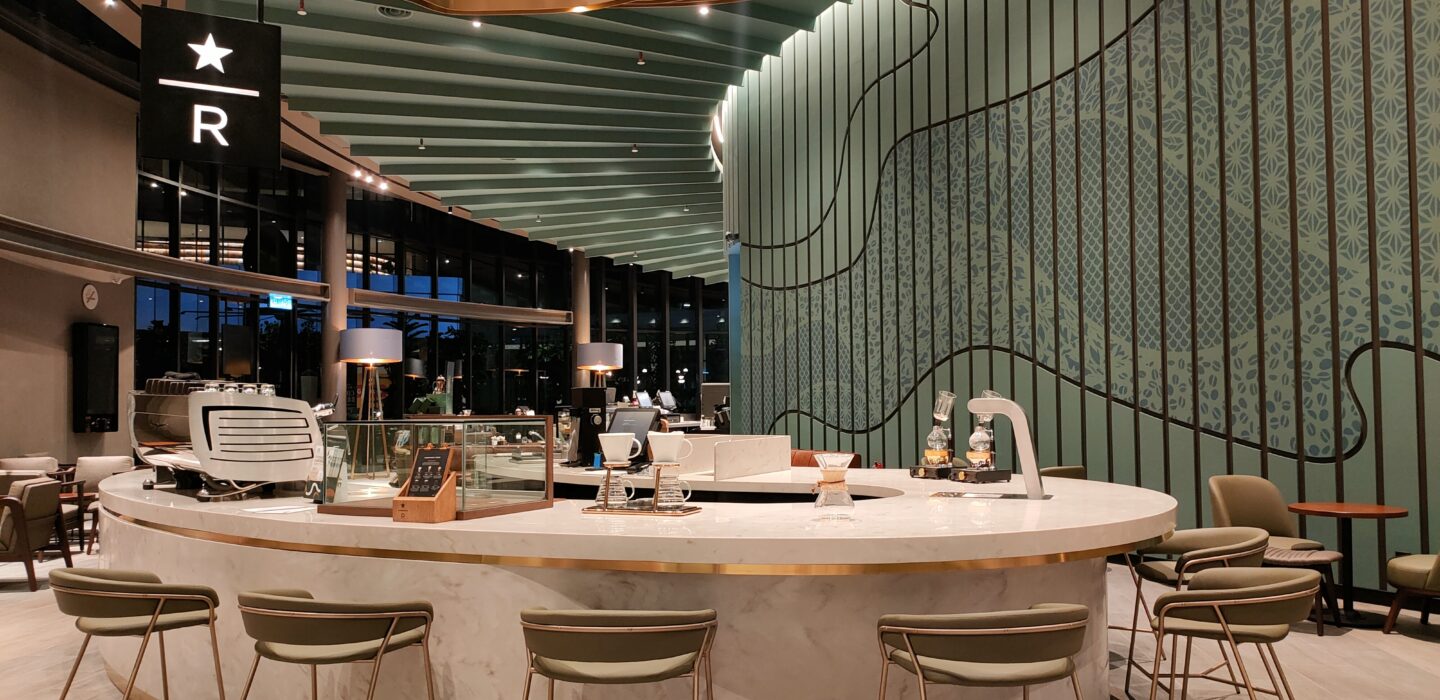
    Starbucks Malaysia today unveiled Starbucks Reserve Tropicana Gardens, the largest in the market. Located in the heart of the bustling community between Kota Damansara and Tropicana Indah, the store features two bars: the main bar offering all core and seasonal handcrafted Starbucks beverages, as well as a coffee bar that offers six different brewing methods, including pour-over, Chemex, siphon, Black Eagle espresso, and Nitro Cold Brew.

    The immersive coffee experience – spanning nearly 6,000 square-foot of retail space – celebrates all-things coffee. The layout of the store itself is similar to that of a coffee bean, with a large curvature and floor-to-ceiling windows that connect to a small garden and rapid transit station. The main highlight of the store is a 50-foot wide ‘Wall of Gratitude’, which features photos of more than 200 frontliners medical workers, and Starbucks baristas. The mural serves as both a way to pay tribute to the people who have been fighting together against the COIVD-19 pandemic and also as a physical reminder of the events of the past year that have made Malaysians stronger and more resilient than ever.

    “Over the past five years, the Starbucks Reserve concept has brought about a catalyst of growth in the industry focusing on customer experience and passion for coffee in Malaysia. With the opening of Starbucks Reserve Tropicana Gardens, customers can expect the same human connection and immersive coffee experience that will continue to inspire coffee passion to the community,” said Sydney Quays, Group CEO of Berjaya Food Berhad and managing director of Starbucks Malaysia & Brunei. “We are delighted to be able to open this store and celebrate the commitment, resiliency, and creativity of our partners and customers in these unique times.”

  • Starbucks opens online with a JD flagship store

    Starbucks opens online with a JD flagship store

    Starbucks, the world’s largest coffeehouse chain, launched a flagship store on JD.com on March 3.

    The online store is bringing Chinese consumers the brand’s new spring mugs, such as the Sakura Blossom Collection, together with its classic series, including the core classic series, and Starbucks Heritage. In addition to physical products such as mugs, the store also sells physical gift cards, seasonal foods (such as rice dumplings and mooncakes), and their corresponding gift certificates, bringing more quality choices to JD’s customers. A Super Brand Day will kick off on the store’s opening day to help promote sales for the newly opened Starbucks store.

    JD’s consumers are a strong match with Starbucks’ target consumers, and JD’s nationwide logistics network will ensure high efficiency and speed of deliveries for consumers who purchase Starbucks products on JD.

    “JD’s years of experience and good reputation in authentic products, logistics, and after-sales services will also

  • Hong Kong furniture retailer launches online food range

    Hong Kong furniture retailer launches online food range

    Hong Kong furniture retailer Pricerite has introduced its first online food range, Pricerite Food, fronted by Hong Kong rising star, actor Liu Junqian.

    According to the company, Pricerite Food’s philosophy is to promote a “slow living” lifestyle amid the influence of “fast-food culture”. The range is split into three categories: quality exclusive, traditional taste and Asian taste.

    “Our philosophy is to promote food culture and gradually change the life attitude of urban people,” the company said in a statement translated from Chinese.

    The range will be launched simultaneously in Pricerite’s online store and at nine physical outlets, including stores in Mong Kok Chong Hing, Kowloon Bay, North Point, and Yuen Long.

    As part of its launch campaign, Pricerite Food has introduced a video advertisement featuring actor Liu Junqian, who is also appointed as the brand spokesperson.

    The brand also rolled out ‘Pricerite Food Virtual Store’ at Hong Kong station, with selected ingredients printed on the top of the poster. Customers can shop directly by scanning the QR Code next to the product they want to order to enter the online store for self-service shopping.

  • Nathan’s Famous opening in Southeast Asia

    Nathan’s Famous opening in Southeast Asia

    Nathan’s Famous, Inc., the American tradition serving New York favorites for more than 100 years, today announces the expansion of their products to Mexico City, Brazil, Canada, Indonesia, Malaysia and Singapore. The brand will also introduce its new virtual kitchen concept, Wings of New York, in all locations, with the exception of Brazil. Nathan’s Famous and Wings of New York will be available in a multitude of ways, including brick and mortar locations, ghost kitchens or retail, depending on the market.

    “This is an exciting time for Nathan’s Famous and Wings of New York,” said James Walker, SVP, Restaurants. “We are embarking on a new chapter in our company as we continue to grow the brand’s presence all across the globe. In some areas, new locations will build upon a current customer base, while other locations will be the first time consumers can experience the true flavor of New York and we look forward to the opportunity to reach these new customers.”

    Nathan’s and Wings of New York expansion includes the following countries:

    • Mexico – Through its partnership with VIRKO, Nathan’s Famous will open two locations in Mexico City by the end of March. The brand has plans for a total of four locations, including Wings of New York.
    • Canada – Nathan’s Famous continues its partnership with Ghost Kitchen Brands to bring six locations in Toronto and Alberta by this Spring, with a total of 10 locations across both brands.
    • Indonesia, Malaysia and Singapore – Through a partnership with Intelligent Kitchens, Nathan’s Famous will bring both its flagship brand and Wings of New York to the three countries, with plans to open more than three locations starting in February.
    • Brazil – Nathan’s Famous Brazil will begin to offer Nathan’s Famous products through retail and foodservice in late April via three to five kiosks, with the possibility of Ghost Kitchens across San Paulo in 2021.

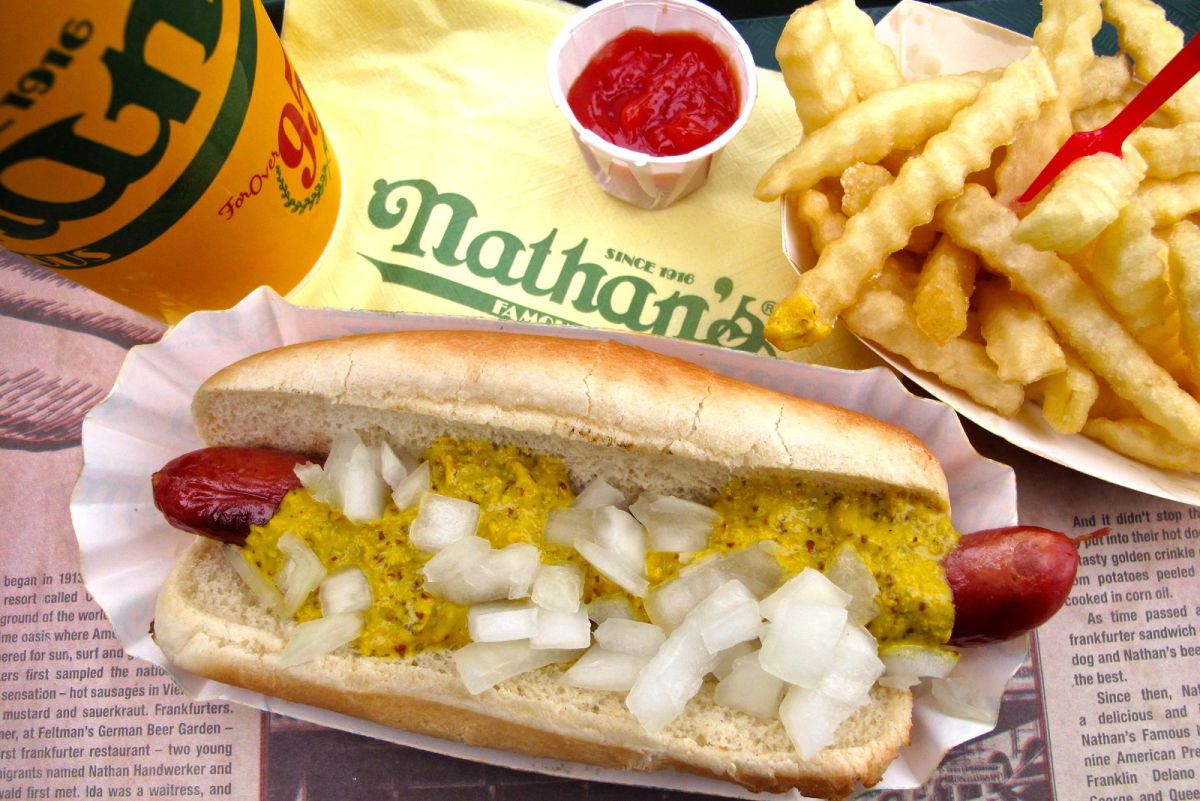
    This continued expansion through brick-and-mortar stores, ghost kitchens and retail makes Nathan’s Famous available in 16 countries around the world. The Nathan’s Famous menu will include the brand’s signature hot dogs and crinkle cut fries, as well as premium beef burgers, crispy and grilled chicken sandwiches, premium milkshakes and much more. The Wings of New York menu will include tenders a la carte, wings and French fry combos and Harlem-style chicken and waffles.

  • Eateries keen to go on board with AirAsia’s food delivery service

    Eateries keen to go on board with AirAsia’s food delivery service

    Eateries say they are keen to go onboard with airasia food because of its low commission and islandwide delivery. The newcomer is offering them free delivery within 8km for two weeks until March 16, and charging a 15 percent commission after that.

    Other food delivery platforms like Deliveroo and Foodpanda charge commissions of 30 percent to 35 percent and deliver within a restricted radius of 2km to 6km, while GrabFood delivers islandwide for only selected partners. Oddle charges 10 percent for islandwide service but uses Lalamove for deliveries, which can cost eateries another $12 to $20 for each order.

    Swee Choon Tim Sum Restaurant signed up with airasia food on Tuesday (March 2) because of its low rates and islandwide delivery. But owner Ernest Ting raised concern over the availability of riders.

    “We often face issues such as lack of riders and service reliability,” he said.

    Baoshi F&B Management goes on the platform today with five of its outlets, while the rest will go onboard three weeks later. It runs the Wee Nam Kee chicken rice, Monga Fried Chicken and Lai Bao Fish Head Steamboat eateries.

    The company’s co-founder, Mr Lem Cheong, said he, too, was attracted to airasia food’s attractive rates and islandwide delivery.

    Mr Douglas Ng, who runs Fishball Story in Circuit Road selling fishball noodles, said he messaged airasia food for more information last Thursday after learning about its launch, and will sign up due to the attractive rates.

    He currently uses GrabFood, which he finds efficient, and he considers the 20 percent commission fair. But he finds its delivery radius of 3km too small – which is why he also does his own deliveries.

    Mr Melvin Chew of Jin Ji Teochew Braised Duck & Kway Chap in Chinatown Complex said he heard about airasia food’s low commission and was keen to find out more, such as the availability of drivers or riders.

    The founder of Facebook group Hawkers United – Dabao 2020, which supports hawkers during the pandemic, said he will likely sign up so he can understand how airasia food’s system works and share the information with fellow hawkers.

    All the eateries agree that having more delivery platforms is good for them.

    Baoshi’s Mr Cheong said: “Being on more platforms makes our food more accessible. We are positive that as the competition increases, the rates and prices offered to us will be better.”

  • Seafood Exports Edge up in Vietnam

    Seafood Exports Edge up in Vietnam

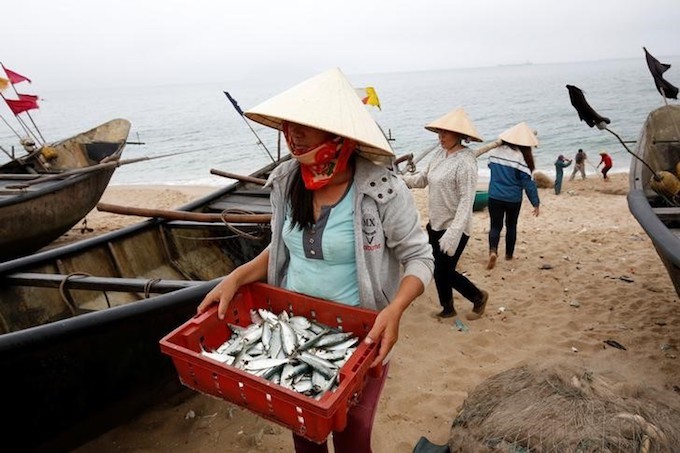
    Seafood exports in the first two months of 2021 rose by 2.2 percent year-on-year to over $1 billion, according to the Vietnam Association of Seafood Exporters and Producers.

    Pangasius fish accounted for 21 percent of the exports at $214 million, up 1.7 percent. Shrimp exports topped $380 million, a year-on-year decrease of 0.8 percent.

    VASEP explained that, due to the impact of Covid-19, global demand is high for products that could be preserved for long, are easy to cook at home and are reasonably priced such as frozen and processed white leg shrimp.

    Black tiger shrimp exports plunged due to high prices.

    VASEP estimated exports would be worth $640 million in March, with shipments to the U.S., E.U. and CPTTP trade deal member countries continuing to rise.

  • Vietnam, New Zealand to expand fruit trade this year

    Vietnam, New Zealand to expand fruit trade this year

    Vietnamese limes and pomelos could be exported to New Zealand soon, following a commitment made Wednesday during the first agricultural dialogue between the two countries.

    The virtual dialogue was co-chaired by Ray Smith, Chief Executive of the New Zealand Ministry for Primary Industries, and Dr Le Quoc Doanh, Vice Minister of Vietnam’s Ministry of Agriculture and Rural Development (MARD).

    A New Zealand embassy press release said the two leaders had confirmed their shared commitment to finalizing new fruit access for each other this year, so consumers can enjoy New Zealand strawberries and squash in Vietnam and Vietnam’s limes and pomelos in New Zealand.

    The two sides signed an Agriculture Cooperation Arrangement (ACA) after the dialogue.

    The ACA will enable both sides to advance their key agricultural interests in enhancing bilateral trade, reducing agricultural greenhouse gas emissions, promoting food safety, utilizing agriculture research and technology, and fostering rural development, the release said.

    The New Zealand Ministry for Primary Industries is already supporting agriculture cooperation with MARD through activities in plant health, veterinary epidemiology and electronic certification.

    These activities complement New Zealand’s ongoing development program in the country, which has a number of agriculture projects including one on premium fruit development in the southern province of Tien Giang, another on rural dam safety project in central Vietnam, and yet another on safe vegetables in central Binh Dinh Province.

    Smith and Doanh affirmed that the strategic partnership between the two countries has created a solid foundation for increasing bilateral agricultural cooperation and connections.

    Vietnam is New Zealand’s 14th largest trading partner, with two-way trade valued at over $1.4 billion as of September 2020.

    Vietnam has received licenses to export fresh mango, dragon fruit and rambutan to New Zealand so far. It imports apple, kiwi fruit, kiwi berry, blue berry, cherry and persimmons.

  • Chinese shopping app Xingsheng Youxuan raises US$2 billion in funding

    Chinese shopping app Xingsheng Youxuan raises US$2 billion in funding

    Chinese community grocery shopping app Xingsheng Youxuan has raised about US$2 billion in a new funding round that values the company at US$6 billion prior to the fresh capital injection, three people with knowledge of the matter said.

    Private equity firms FountainVest Partners, Primavera Capital Group and KKR & Co are among investors in this round, two sources said. Internet and gaming giant Tencent Holdings, which is an early backer of Xingsheng Youxuan, also invested in this round, one of them said.

    The fundraising signed just before the Lunar New Year, was led by Sequoia Capital China and has also attracted property developer China Evergrande Group and Singapore’s sovereign wealth fund Temasek, said a separate person with direct knowledge.

    Xingsheng Youxuan’s spokesman Li Hao declined to comment when contacted by Reuters. Representatives for Sequoia China, FountainVest, Tencent and Temasek declined to comment.