Category: Food

Retail News Asia is committed to providing both local and global retailers with the latest Food and Food & Beverage news throughout the Asian market. This on a daily base.

  • Japanese restaurant group Skylark to end 24-hour trading

    Japanese restaurant group Skylark to end 24-hour trading

    Japanese corporate restaurateur Skylark Holdings says it will discontinue 24-hour trading of 150 stores by April.

    Skylark, one of Japan’s largest family-owned restaurant operators, owns the Jonathan’s and Gusto chains, among other brands. It launched 24-hour trading in 1972 and according to the company about 10 percent of its daily revenue comes in between midnight and 6am.

    The company says while round-the-clock trading appeals to customers, the increasing costs of labour makes it less viable to trade all night. Instead, it will focus on peak meal times.

    In total, Skylark owns 560 eateries across the country. Many of the other stores will have trading hours trimmed by a couple of hours a day to reduce labour costs.

  • US sandwich chain Blimpie makes Asian debut

    US sandwich chain Blimpie makes Asian debut

    American ‘submarine sandwich’ chain Blimpie has opened its first store in Singapore, marking its debut in Asia.

    Located in Tampines, the Blimpie Singapore store offers a menu adapted for halal consumers.

    In a style similar to Subway, customers can choose a type of bread ranging from white, wheat, olive, or Parmesan and choose fillings they want. Price range between SGD6.50 (US$4.81) and SGD13.50 (US$9.99) for regular subs.

    Last year, American restaurant group Kahala Brands entered an agreement with Singapore’s Deelish Brands to launch Blimpie Singapore. The Singapore business is 100-per-cent Muslim owned and has the same owners as Fatburger Singapore, which is halal certified.

    “Although Blimpie Singapore is not yet certified, the supply chain is 100-per-cent halal and we will be applying for certification shortly”, the company said in a statement.

  • Japanese restaurant group Skylark to end 24-hour trading

    Japanese restaurant group Skylark to end 24-hour trading

    Japanese corporate restaurateur Skylark Holdings says it will discontinue 24-hour trading of 150 stores by April.

    Skylark, one of Japan’s largest family-owned restaurant operators, owns the Jonathan’s and Gusto chains, among other brands. It launched 24-hour trading in 1972 and according to the company, about 10 percent of its daily revenue comes in between midnight and 6 am.

    The company says while round-the-clock trading appeals to customers, the increasing costs of labor makes it less viable to trade all night. Instead, it will focus on peak meal times.

    In total, Skylark owns 560 eateries across the country. Many of the other stores will have trading hours trimmed by a couple of hours a day to reduce labor costs.

  • South Korea’s foodservice industry thriving despite rumours

    South Korea’s foodservice industry thriving despite rumours

    Rumors that South Korea’s foodservice industry is in a slump have been scotched by new data showing the sector is actually growing at a steady 9 percent annually

    And it’s the thriving coffee sector which is driving much of the growth.

    Analysts say the gap between business sentiment and the real economy is widening as the polarisation between sectors is deepening.

    According to a survey conducted by Kim Young-gap, a professor at Hanyang Cyber University, using a big data business analysis system from consulting firm Nice Genie Data, the size of the Korean foodservice industry was estimated to exceed US$155.2 billion last year.

    Unlike other sluggish industries, the coffee and beverage sectors grew at a fast pace of more than 20 percent, leaving other industries far behind.

    The growth rates of carb food, accounting for 15.2 percent, Chinese food, accounting for 14.3 percent, and bakeries, accounting for 11.7 percent, were also notable.

    On the other hand, bars saw a negative growth of -1.3 percent, buffets grew by 0.5 percent and Western food grew by 3.8 percent, which also illustrates poor growth.

    The total number of restaurants rose 3.2 percent annually from about 604,000 in 2016 to about 663,000 last year.

    In the number of restaurants, coffee and beverage companies also ranked first with a 19-per-cent increase, far ahead of the confectionery, baking, rice cake, and cake industries with an 8.7 percent increase.

    Major customers of South Korea’s foodservice industry are likely to be reorganized into those in their 20s and 50s and 60s.

    In terms of the rate of increase and decrease for consumers by gender and age at food service establishments, the number of people in their teens and 30s and 40s declined, while that of men in their 50s and 60s and 20s increased.

    This trend translated into an increase in the number of customers in their 20s, mainly at fast-food restaurants, as well as a growing number of customers in their 50s and 60s opting for Korean food, according to Kim.

  • Kellogg’s tests cereal refill concept in UK supermarket

    Kellogg’s tests cereal refill concept in UK supermarket

    UK supermarket Asda is undertaking a 12-month trial to test initiatives to reduce, remove and reuse plastic packaging at its Middleton store in Greater Manchester.

    Shoppers are invited to bring their own containers to stock up on products such own brand coffee, rice and pasta at designated refill stations. The grocery has partnered with FMCG giants Unilever and Kellogg’s to create refill points for cereals such as Rice Krispies and Coco Pops and PG Tips tea.

    “We’re getting ready to trial lots of new and innovative ways to reduce and remove plastic packaging in our first-ever sustainability store. Customers at our Middleton store in Leeds will be the first to try the new innovations starting in May this year. Before then we’ll be working hard in the store to install new refill solutions and recycling options, like in the artist’s impression above,” said Asda in a statement.

    “We know lots of our customers would like to see us remove packaging on loose produce so this is another thing we’ll be trialing at the store. We will be removing the plastic packaging from mushrooms and cucumbers on produce and we’ll also be selling “naked” flowers without any plastic packaging,” said Asda.

    The supermarket will also install new recycling facilities in store. It will have a reverse vending machine for plastic bottles and cans, hanger recycling and a deposit box for unwanted small plastic toys.

    Asda said it will monitor feedback from customers to see if the new program will affect consumer’s shopping habits.

  • Global exclusive Kiehl’s Lunar New Year store launched at Changi Airport

    Global exclusive Kiehl’s Lunar New Year store launched at Changi Airport

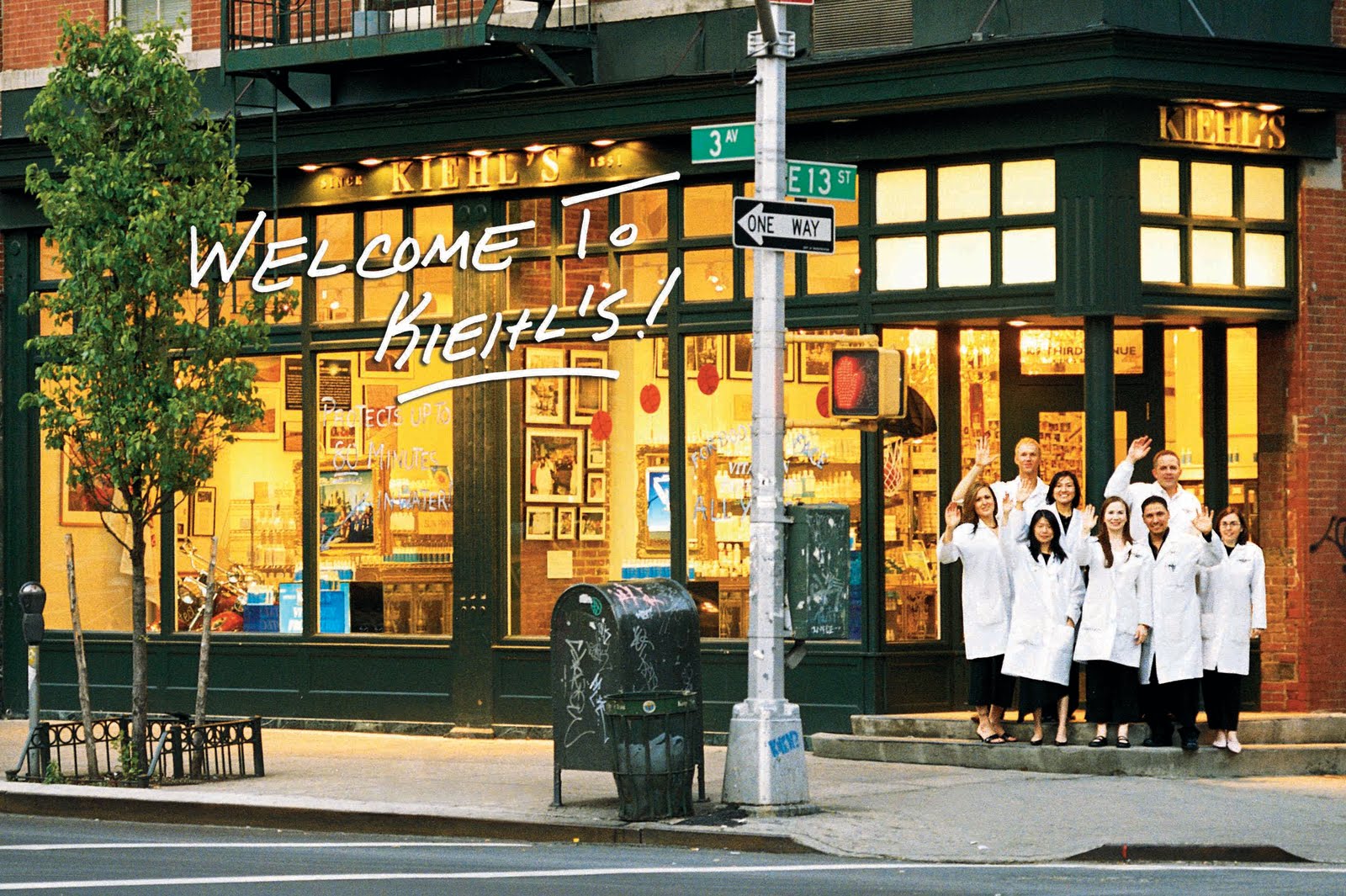
    New York skincare brand Kiehl’s has launched one of its largest-yet airport pop-up stores in the region, at Singapore’s Changi Airport.

    The global-exclusive Kiehl’s Lunar New Year store at Terminal 3 was formally opened in partnership with the airport’s beauty-products concessionaire The Shilla Duty-Free and will trade until February 9.

    At Friday’s launch, popular Chinese actor, singer and model, Dylan Wang, best known for his appearances in Chinese television series Meteor Garden, made a guest appearance, greeting 35 young fans from across Asia who had won a contest to attend the event and wowing KOLs from Mainland China.

    The pop-up store artwork was created by Australian artist Eirian Chapman and features a mascot Rock-it the Rat traveling through a cinematic New York to the garden city of Singapore. Chapman also designed Year-of-the-Rat labels for three of Kiehl’s’ most-popular products, the Ultra Facial Cream, Avocado Eye Cream, and Calendula Herbal Extract Alcohol-Free Toner, sold in a travel-exclusive boxed set. Playing on the theme of the mischievous rat lighting up the sky and the year, Chapman also illustrated a Rat on a firecracker she has ‘set alight’.

    More than a just a large, high-profile store, the Kiehl’s Lunar New Year pop up features an interactive game where visitors can win prizes for tapping the rat as it pops up on a digital screen, an onsite calligrapher drawing Chinese characters and customizable messages on souvenir fans, and Instagrammable spots, including a Singaporean rickshaw.

    On an interactive screen, visitors can write New Year blessings on a rocket graphic, then decorate it with their choice of colors and stickers, before virtually blasting it off into the sky, to be shared with friends via email.

    Cellophane-free packaging

    Sustainability issues and the Kiehl’s commitment to the environment were also highlighted at Friday’s event. Petrina Kho, GM of Kiehl’s Travel Retail Asia Pacific, revealed the brand has eliminated all cellophane wrapping of its products as part of a commitment to reducing its environmental footprint.

    The company also presented a cheque for US$30,000 to Singaporean charity the Jane Goodall Institute which supports student-initiated activities under its Roots & Shoots program, encouraging and empowers youth to help solve human, animal welfare, and environmental problems in their communities. The funds will allow local youngsters to plant 800 saplings and monitor their growth and wellbeing over three years.

    “I am very proud that we continue to successfully engage customers in an evolving retail landscape while supporting a meaningful cause that gives back to the community,” said Kho.

    Jeff Lee, MD of The Shilla Duty-Free Singapore, says the Kiehl’s pop up helps his company create unique shopping experiences to excite airport travelers. “Working closely together with Kiehl’s Travel Retail Asia Pacific and Changi Airport Group, we strive to push the boundaries in delivering exceptional customer-centric retail experiences.”

    Teo Chew Hoon, group senior VP of airside concessions at Changi Airport Group said the Kiehl’s pop up kicked off Lunar New Year festivities for Changi Airport Group. “Travellers can engage in fun and memorable experiences at the interactive space, while shopping for the perfect gifts for their friends and families.”
  • Hong Kong restaurants bounce back in final quarter of 2019

    Hong Kong restaurants bounce back in final quarter of 2019

    Hong Kong restaurants appear to have shrugged off the worst of the impact from the city’s social unrest in the final quarter of last year,

    According to food-delivery service Deliveroo’s second Restaurant Confidence Index, a quarterly survey of restaurant partners that details F&B trends in Hong Kong, eateries in the territory are seeing increased revenue turnover and profits, even as they continue to face a challenging business environment.

    During the final financial quarter of last year, 37 percent of restaurants saw an increase in revenue turnover quarter on quarter, when more than 71 percent of restaurants faced decreasing or unchanged turnover rates.

    However, only 20 percent of restaurant partners surveyed in the latest index saw an increase in profits due to the fact that many restaurant partners surveyed saw an increase in operations, ingredient and labor costs. One in three reported rising order-out revenue.

    On average, restaurants rank their satisfaction in overall business performance at 6.6 out of 10 for the fourth quarter of last year, a one-point jump from the average rating of 5.6 the previous three months.

    Many restaurants experienced year-on-year revenue decreases during the Christmas and New Year period, with 55 percent experiencing a holiday-period revenue fall from the previous year. The decrease in revenue was much more significant for dining in as compared to ordering out, with 61 percent of restaurants witnessing a decrease in dining in revenue as compared to 41 percent who said the same of delivery.

    Consumers appear to have spent less during the festive season this year as just 17 percent of restaurants increased their total turnover, however, 16 percent of restaurants did note an increase in delivery revenue during the period.

    “Last year was unique for Hong Kong‘s F&B industry, with restaurants facing a number of challenges in terms of operating costs, customer turnover and overall business environment,” said Deliveroo Hong Kong GM Brian Lo. “Still, it’s a positive sign that restaurants are more satisfied with their business performance as compared to the previous quarter.”

  • Yum China prepares to list in Hong Kong

    Yum China prepares to list in Hong Kong

    Pizza Hut and KFC restaurant operator Yum China is preparing for a second listing in Hong Kong.

    The US-listed firm is currently working on proceedings with China International Capital and Goldman Sachs to establish a footing closer to its base territory. The listing could take place as early as this year.

    Bloomberg revealed that the Hong Kong Stock Exchange is seeing a spike in inquiries about second listings from Chinese companies since Alibaba’s US$13 billion share sale two months ago.

    Yum China operates more than 8900 restaurants across the Chinese market and recently agreed to purchase a majority shareholding in simmer pot restaurant operator Huang Ji Huang.

    Meanwhile, shares in Chinese restaurant chain Jiumaojiu International soared by than 40 per cent when they debuted on the Hong Kong Stock Exchange yesterday. Jiumaojiu has 328 outlets trading under five brands in Mainland China, where it plans to focus its business for now, before expanding into Hong Kong, other Asian markets and North America in the longer term.

  • Tom n Toms Hong Kong closing all stores

    Tom n Toms Hong Kong closing all stores

    Tom n Toms Hong Kong has shuttered all five of its stores after the South Korean coffee chain’s local franchise went into liquidation.

    Following news of its Myanmar expansion plans, the popular South Korean cafe eventually could not withstand the pressures on Hong Kong’s depressed retail market.

    Tom n Toms Hong Kong launched in 2016 and had outlets at Tuen Muen Town Plaza, Tsim Tsa Tsui’s The One, Causeway Bay’s Time Square, Nam Cheong’s V Walk and Tsuen Wan’s Citywalk shopping malls. The Nam Cheong’s V Walk branch had opened only in August last year.

    The Tuen Muen branch was the first to close, a notice posted on its door announcing its liquidation.

    After taking into consideration a debt if HKD10 million (US$1.3 million) debt and its current financial situation, the Tom n Tom Hong Kong board admitted the business was inoperable. A search for buyers had proven fruitless, so all proceeds from the sale of assets will be distributed to creditors.

    The company will hold a creditors meeting at the end of this month. Most affected employees have been paid off and advised to approach the Labour Department to claim the remaining payments in lieu of notice and holidays.

  • Chinese fruit-vending machines driven by AI

    Chinese fruit-vending machines driven by AI

    AI-run fruit-vending machines are offering Chinese consumers a new way of buying fruit and vegetables.

    The machines, developed two years ago by Beijing Kuo’an Science and Technology, are providing an alternative channel for residents of China’s tier-one and tier-two cities, who traditionally rely on relatively distant large-scale supermarkets and community stores for fruit purchases.

    “Every unit of AI fruit vending machines has 24 smaller sections with different types of fruit or vegetables,” said Beijing Kuo’an Science and Technology chairman Guan Luanjun. “Every section has a built-in set of scales. When customers select their fruit, they can use WeChat or AliPay to scan the QR-code on the Chinese fruit-vending machines to open the relevant section. The section automatically slides out to present the customer with its content. The customer can select and take their fruit or vegetables, and then the section automatically calculates the weight that was removed. The customer can then pay for their fruit or vegetables with WeChat or Alipay.”

    The vending machines feature cameras on both sides, allowing them to monitor customers who operate them, minimising abuse of the service. In addition, WeChat and Alipay provide payment methods that both vendor and customer trust.

    “The main advantage of Convenient E-Fresh machines over traditional, large-scale supermarkets and community stores is the low cost,” said Guan, who adds that the model allows vendors to source fruit at low cost from wholesale markets. “In addition, our automated vending machines only occupy a small area, which means that we save on rent and labour cost in comparison with large-scale supermarkets and community stores that occupy large terrains and employ large numbers of people.”

    The firm currently operates 50 AI Chinese fruit-vending machines in Suzhou, and intends to expand operations across the entire Yangzi River Delta area within two years.

    “We hope to improve consumer knowledge and consumer recognition of the Convenient E-Fresh brand,” adds Guan. “And we plan to scale our operations within two years with AI vending machine units in 500–1000 districts. Furthermore, we are in negotiations with a number of domestic and overseas suppliers to make sure consumers have a broad choice of beautiful and delicious fruits for low prices. We sincerely hope that our efforts help to improve the entire supply chain.”

  • Heineken Vietnam pays $39.7 mln in back taxes and fines

    Heineken Vietnam pays $39.7 mln in back taxes and fines

    Heineken Vietnam Brewery has paid VND917.2 billion ($39.7 million) in back taxes and fines for a 2018 transaction.

    Singapore-based Heineken Asia Pacific Pte. Ltd. had, at the end of 2018, struck a deal valued at over VND4.8 trillion ($207.7 million) with the Heineken Vietnam Brewery. Under the deal, the Singaporean firm transferred its entire stake in its Vietnamese subsidiary to the latter.

    The tax payable on the deal was VND823 billion ($35.6 million), but Heineken Asia Pacific claimed it was exempt from paying it under the double taxation agreement signed by the governments of Vietnam and Singapore.

    However, the General Department of Taxation ruled that the tax had to be paid because the real estate value in the deal was over 50 percent of the assets involved in the deal.

    The department confirmed that it has received in full the payment of back taxes and fines.

    Another major FDI corporation, Coca-Cola Vietnam, has been ordered to pay VND821.4 billion ($35.4 million) in back taxes and penalties stretching back over nine years.

    The company, which has been suspected of engaging in transfer pricing fraud to evade taxes, has paid VND471 billion ($20.4 million), or 57.3 percent of the amount, at the time of writing.

    Vietnam collected VND18.8 trillion ($813 million) last year in back taxes and fines, according to the General Department of Taxation.

  • Starbucks Vietnam opens new concept outlet at Ecopark

    Starbucks Vietnam opens new concept outlet at Ecopark

    Starbucks Vietnam has opened a concept store at a new urban development called Ecopark in Hung Yen, near Hanoi, its 63rd store in the country.

    Located at the heart of Summer Park, Starbucks Ecopark features a mixture of rural and modern aesthetics, creating “a space that seeks a sense of harmony with its natural surroundings and the buildings bold structure,” the company said in a statement

    “Starbucks Ecopark is our first store opening for 2020, when we set our seventh anniversary of Starbucks Vietnam,” said Patricia Marques, GM of Starbucks Vietnam. “I believe it will be a great gathering place for family and friends.”

    Designed by local company Vietnambuilding and built by Ecotech, the new Starbucks cafe’s exterior features wooden louvers across the entire ceiling. Inside, further linear forms can be found in a low island serving counter which gives unobstructed views to an angled bar behind.

    Nguyen Duc Hiep, chief architect at Vietnambuilding, said the designers incorporated the exterior brick into space and used natural materials such as wood finishes to amplify the atmospheric mood.

    “Respecting the present landscape and green trees is our first thought when visiting the site,” he said.

    “It is also a challenge for us when we want to propose an impressive construction without interfering with the landscape or removing any tree in the garden.”

    Starbucks did not explain why it defines the new outlet as a concept store. however, it does appear to take the third-place concept into a more natural, landscaped garden environment not possible in a mall or high-street location.

  • Coca-Cola Vietnam fined for tax evasion

    Coca-Cola Vietnam fined for tax evasion

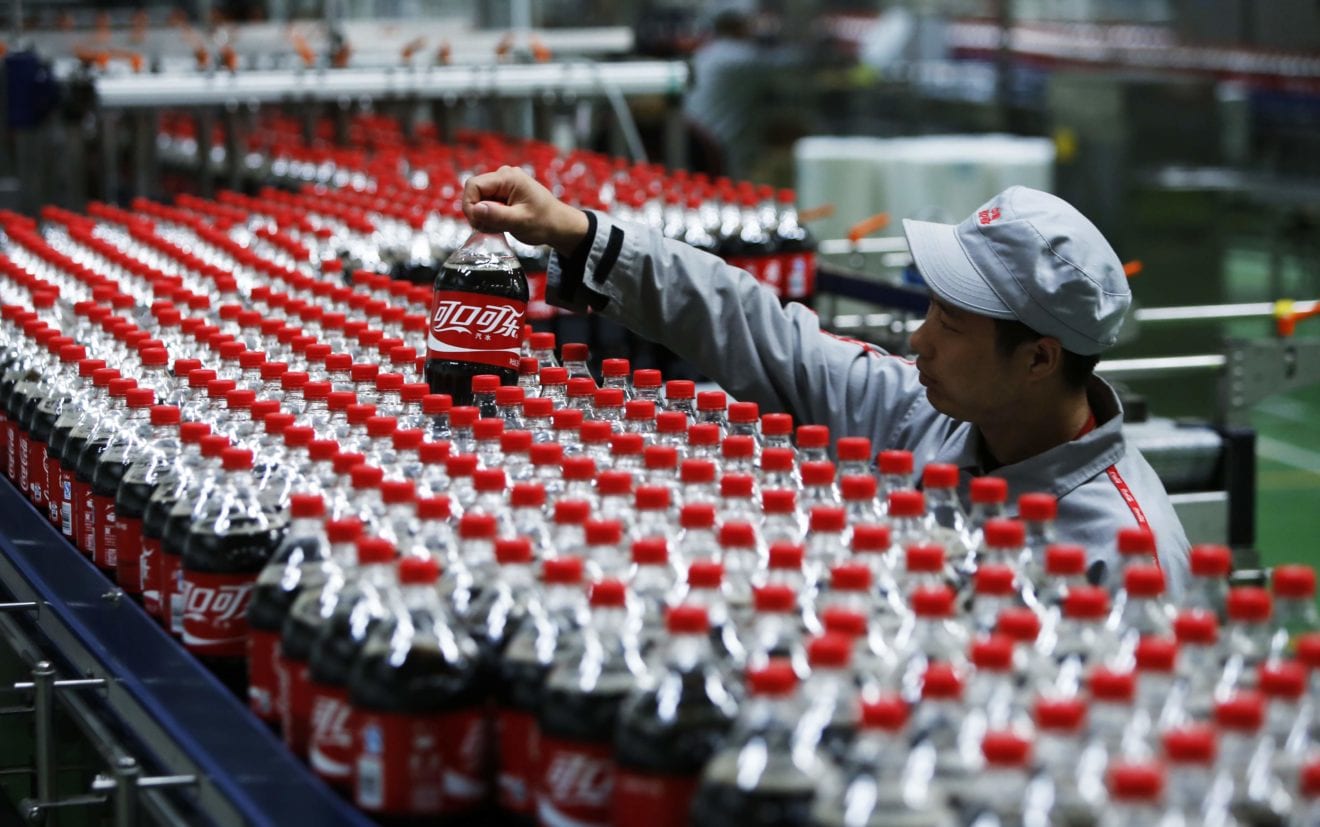
    Coca-Cola Vietnam has been ordered to pay VND821.4 billion ($35.4 million) in back taxes and penalties stretching back over nine years.

    Dang Ngoc Minh, deputy head of the General Department of Taxation, said 57.3 percent of the amount is the back tax, 35.2 percent is a penalty for delayed payment and the remaining 7.5 percent is a penalty for incorrect filing.

    “The company can request a review or file a lawsuit.”

    A Coca-Cola spokesperson said tax authorities had recently concluded an investigation of the 2007-15 business period, and found the company had made “minor errors” in describing its business operations which had led to a failure to file for taxes.

    Though it disagrees with some of the tax authorities’ conclusions, the company would nevertheless comply with the laws, he said.

    But an official from the Ho Chi Minh City Tax Department said Coca-Cola has only paid VND38.2 billion ($1.6 million) as of Thursday.

    Coca-Cola entered Vietnam in 1994, and broke even only in 2013 despite double-digit revenue growth, according to the department.

    Since the company reported accumulated losses of VND3.77 trillion ($162.5 million) as of 2011, it was exempt from corporate income tax.

    HCMC has named Coca-Cola among businesses it suspects of transfer pricing fraud to evade tax.

  • First Grab Kitchen in Singapore opens

    First Grab Kitchen in Singapore opens

    Grab has launched its first Grab Kitchen in Singapore, which takes its cloud kitchen network in Southeast Asia to 50.

    Located at 63 Hillview Avenue, the shared kitchen is operated for 10 restaurants including PlayMade, Wolf Burgers and Thai Dynasty. Occupying a 6000sqft area, Grab Kitchen also has a dine-in area for small lunch groups.

    “Together with our merchant partners, we hope to bridge cuisine demand and supply gaps, complement and expand the variety of food options at different price points in the area,” said Dilip Roussenaly, head of GrabFood Singapore, at the opening of the Grab Kitchen in Singapore.

    As operations in cloud kitchens cost less than setting up physical outlets, the concept has become popular among food and beverage merchants.

    “Partnering with GrabFood has enabled us to have an expanded reach to more consumers while minimizing the hassle for them to travel to a location for food,” said Ian Lin, founder of Thai Dynasty.

    Grab’s food-delivery business has become a major pillar for growth as it expands beyond its taxi-hailing roots into other areas, including financial services. Grab’s food delivery business witnessed 5.2 times growth in gross merchandise value last year, and nearly tripled its number of active users.

    Rivals Deliveroo and Foodpanda already operate their own shared kitchen spaces, also known as ghost or cloud kitchens, in Singapore. The firm’s regional rival Go-Jek has also been testing cloud kitchens in Indonesia.

  • Singapore’s Voids Cafe takes up just 28sqm, carved out of a concrete block

    Singapore’s Voids Cafe takes up just 28sqm, carved out of a concrete block

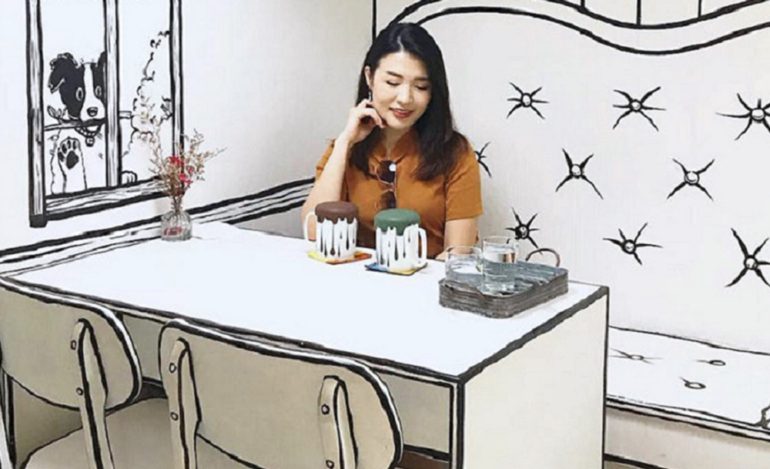
    Singapore’s tiny Voids Cafe is carved out of a monolithic concrete block, reshaped to produce an operational space in just 28sqm.

    The design, by Studio SKLim’s and featured by online architectural magazine Designboom, was inspired by the “empty space in a coffee cup or matcha bowl” with negative spaces and circular geometries “consistently carried throughout the rest of the built form, carving out seating booths, countertops, display shelves, and overhanging canopies”.

    “In this condensed space, it was essential that we balanced the numerous kitchen inventory with the customer zones, utilizing every nook to add to that experience,” said a representative of the studio.

    The block features several working and customer zones, such as an experience corner, a takeaway counter, booths, and a counter for conducting workshops and making drinks.