Category: Food

Retail News Asia is committed to providing both local and global retailers with the latest Food and Food & Beverage news throughout the Asian market. This on a daily base.

  • Shake Shack Singapore opens second store

    Shake Shack Singapore opens second store

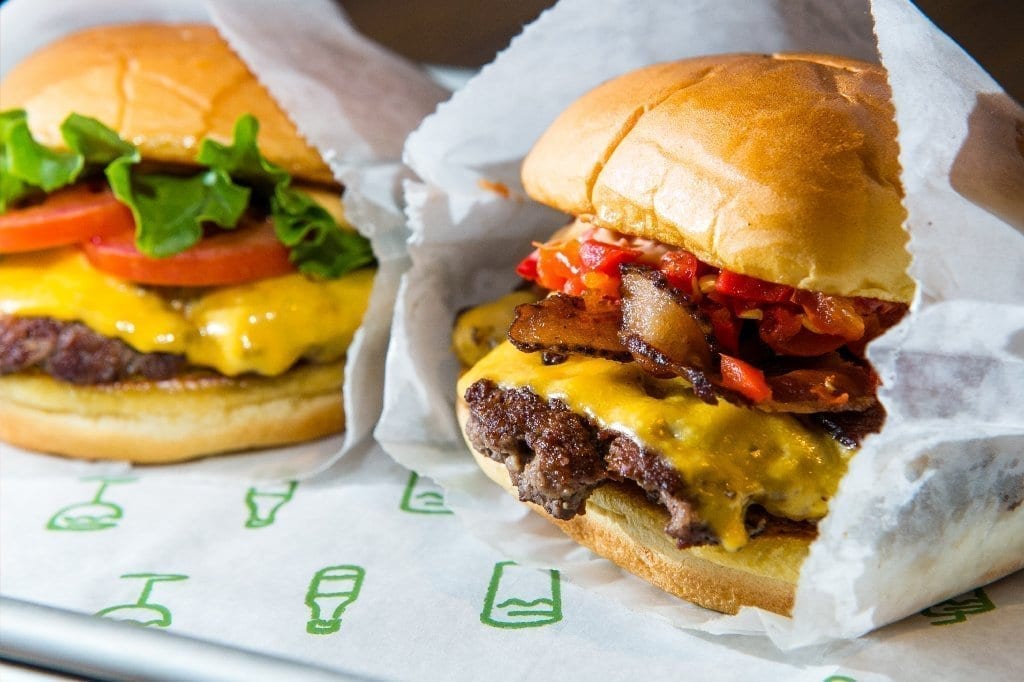
    Burger chain Shake Shack has opened its second store in Singapore, in the city’s CBD.

    Taking over the Tiger Balm factory on Neil Road, the new Shake Shack Singapore store design was inspired by its vibrant Chinatown neighborhood and colorful Peranakan architecture.

    Designed by Singaporean artist Sam Lo, the store’s interior features a tiger mural inspired by the history of Tiger Balm factory.

    To mark the opening, Shake Shack has launched The Chick’n Shack, an antibiotic-free slow-cooked chicken breast crisp fried.

    “The Chick’n Shack embodies our modern approach to fine-casual American cooking,” said Mark Rosati, culinary director at Shake Shack. “It’s about providing a simple, pleasurable, uncomplicated experience, but with high-quality, responsibly sourced ingredients.”

    The burger chain also introduces two new local dishes, Eye of the Tiger and Open Sesame, based on local flavors.

    To support the local art community, 5 percent from sales of the local products will be contributed to Very Special Arts Singapore (VSA), a non-profit organization providing opportunities for the disabled through arts.

  • Cinnabon Hong Kong opens first outlet in Hong Kong

    Cinnabon Hong Kong opens first outlet in Hong Kong

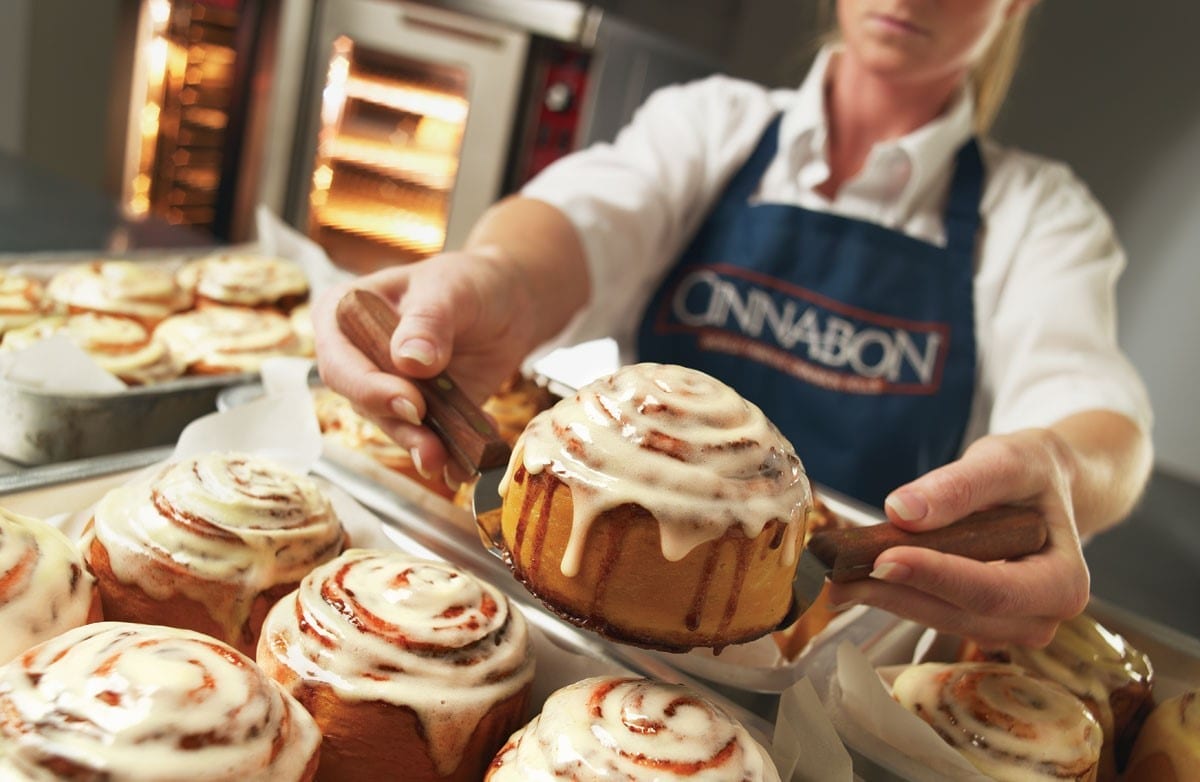
    Cinnabon Hong Kong opened its first outlet last week, brought to the territory by franchisee Reach Out Philosophy Limited.

    Famous for its Classic Rolls and Bon Bites, the first Cinnabon Hong Kong store is located in Olympian City mall at Tai Kok Tsui. It joins more than 1200 franchise locations in the world.

    “We see a wonderful opportunity for Cinnabon in this city,” said Steven Yang, director of Reach Out Philosophy.

    “Local foodies crave high-quality, fresh cinnamon products and we have the perfect answer for them. We are looking forward to bringing the sweet pleasure of our products to Hong Kong and creating many joyful moments of Cinnabon contentment.”

    The bakery has been operating in other Asia-Pacific markets, including Japan, South Korea, and the Philippines.

    Its franchises in China, along with those of sister chain Auntie Anne’s, are owned by Focus Brands.

  • LG robotic waiter serves food in Seoul restaurant

    LG robotic waiter serves food in Seoul restaurant

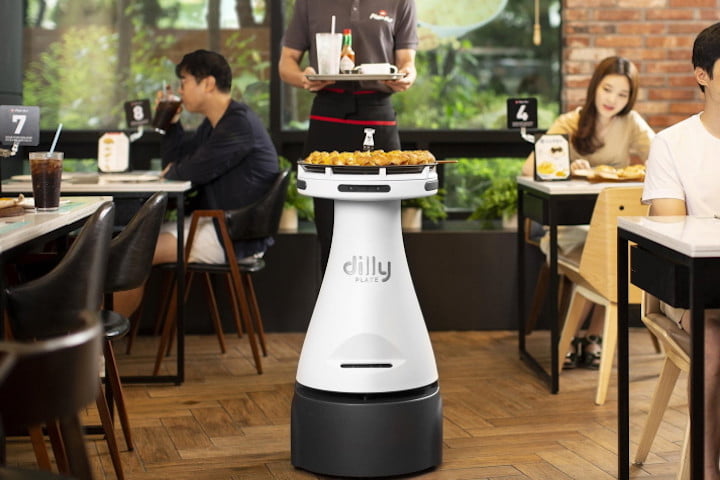
    An LG robotic waiter has made its debut at a local restaurant in Seoul.

    The LG CLOi ServeBot comes with indoor autonomous driving technology and an obstacle avoidance system so it doesn’t crash into furniture, customers or colleagues.

    The robot is capable of delivering food to the table where customers are seated as well as returning the dishes after the customers finish their meal.

    The robot has been put to work at CJ Foodville’s Cheiljemyunso restaurant in Seoul Station.

    The LG robotic waiter – called CLOi ServeBot – avoids obstacles with a voice message saying, “I’m sorry, may I please go through?”

    It also plays a song while moving to help prevent collisions with customers by making them aware of its presence.

  • South Korean convenience stores in delivery-service battle

    South Korean convenience stores in delivery-service battle

    Competition among South Korean convenience stores over delivery services is heating up.

    One chain, GS25, recently launched delivery services from seven stores in Seoul in partnership with food-delivery service Coupang Eats operated by e-commerce giant Coupang.

    First of all, the South Korean convenience store company plans to implement delivery services through Coupang Eats at seven stores in Seoul before expanding the scope of the service to franchise stores nationwide.

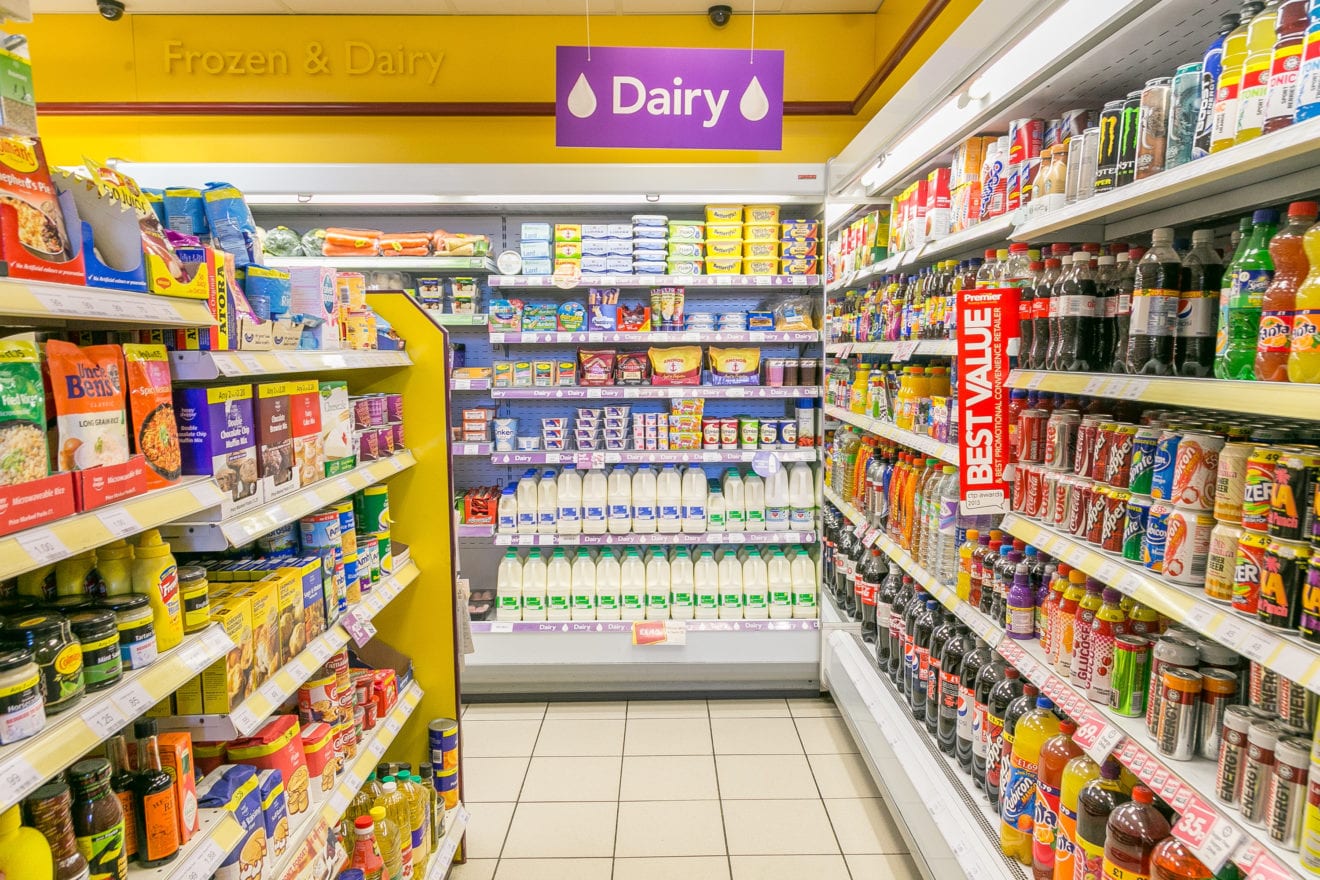
    Through the service, customers can receive about 200 products at home, including prepared lunches, sandwiches and beverages that are being sold at convenience stores.

    Meanwhile, GS25 had already launched a delivery service for store products in cooperation with another delivery company, Yogiyo, in April of last year.

    It is running a pilot project at 10 direct management stores, and the service has been especially popular with workers during lunch and dinner time. In the nine months since the service was introduced, the monthly average number of orders reached 3000.

    Furthermore, CU, another convenience store chain, is also working with Yogiyo to provide delivery services at 3000 stores across the country.

    CU plans to increase the number of delivery service stores to 5000 within the first quarter and introduce around-the-clock delivery at some stores centered in the Gangnam area.

    Emart24, a convenience store chain run by large discount store chain E-Mart, on the other hand, has also joined the market by offering delivery services at 35 stores since earlier this year.

    South Korean convenience stores are scrambling to expand its delivery service area due to a growing number of customers accustomed to online orders and deliveries.

    The delivery service also serves as a growth engine in increasing sales at convenience stores. Additional sales are generated from deliveries, and the service is quite popular especially in rainy or cloudy weather.

    “We are planning to expand the number of stores that offer delivery services through various delivery platforms and partnerships to increase sales and secure customers,” a GS25 official said.

  • Applebee’s to enter India

    Applebee’s to enter India

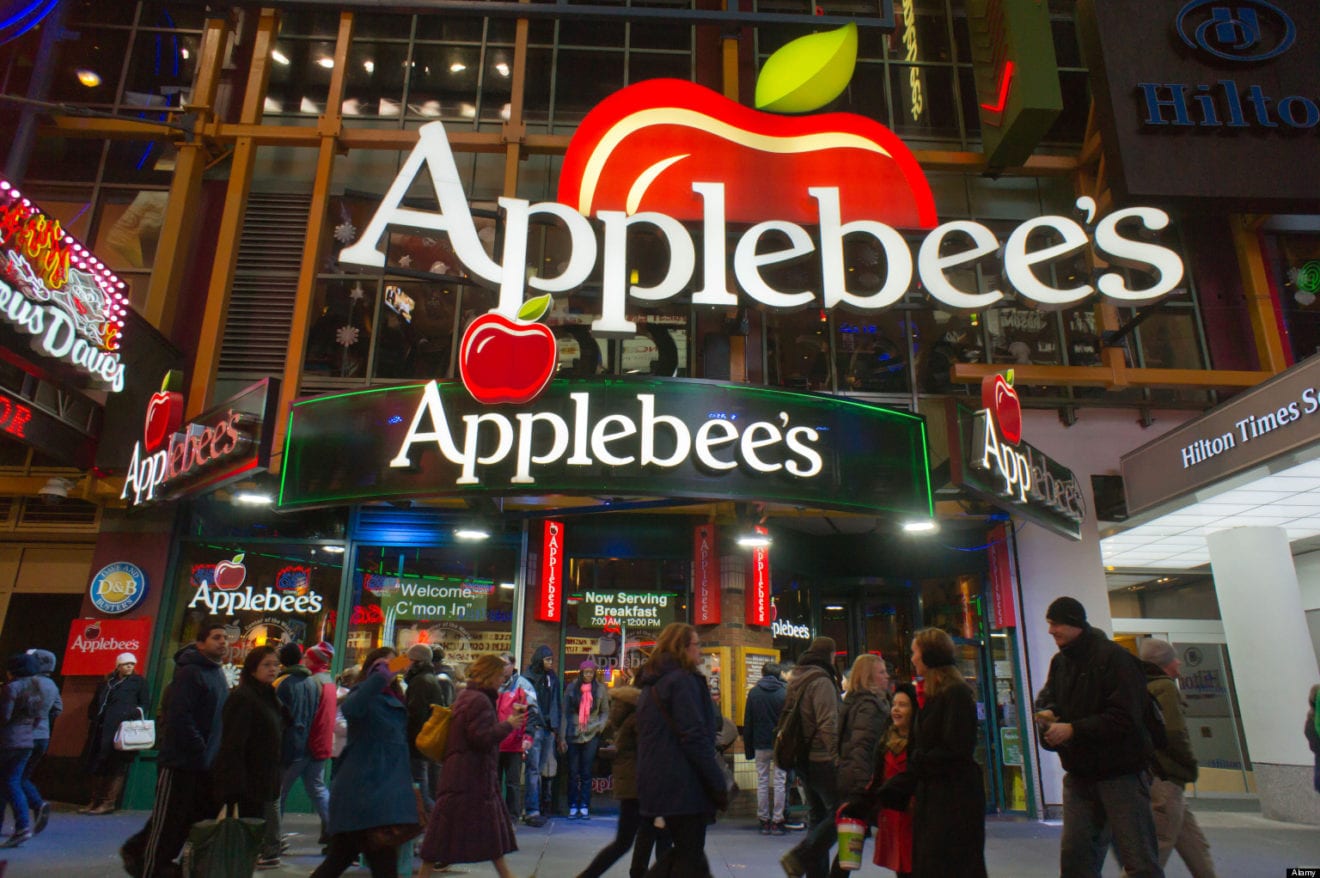
    American grill bar & pancake chain Applebee’s will launch its first Indian location in Bengaluru this year.

    The brand will be established in the territory via a partnership with local operator Dine Brands International.

    “India is an important growth market for us,” said Dine Brands president – international Steve Joyce. “As one of the world’s fastest-growing economies, India represents an opportunity for Applebee’s and we think Indian guests will love our local as well as Western tastes, hand-made to order menu items and signature cocktail bar.”

    “We are the newest Applebee’s international franchisee and will introduce their food and beverage to India,” said Dine Brands international franchisees CEO Rohit Malhotra.

    The firm is expected to open another nine Applebee’s restaurants over a seven-year period.

  • Yum China launches contactless delivery services

    Yum China launches contactless delivery services

    Yum China, which operates Chinese KFC and Pizza Hut networks, has launched a contactless food-delivery service.

    The move is a response to concerns about transmission of coronavirus between customers and delivery staff – but will also give confidence to consumers who are increasingly buying from food-delivery services to avoid public contact in supermarkets, shopping centers, and restaurants.

    “The health and wellbeing of our employees and customers is our top priority,” said the firm in a written statement to Business Insider, “and the innovative new services will help reduce the risk of person-to-person transmission of the coronavirus and protect our employees and customers”.

    Customers who elect for the contactless service will be instructed to remain at least 10 feet from the masked delivery personnel, who will remove the boxed food from its thermal pouch and place it on an agreed pick-up surface only after visually confirming the receiving party.

    Delivery staff is expected to disinfect their hands before and after every transaction.

    Food may also be picked up in-store in hygienically sealed packages.

  • Fruit containers stuck as China border gate closes

    Fruit containers stuck as China border gate closes

    Over 200 container trucks full of fruit stand idle near a northern border gate as the new coronavirus outbreak halts cross-border trade.

  • % Arabica expands in Indonesia

    % Arabica expands in Indonesia

    Japanese coffee chain % Arabica is launching four locations in Indonesia.

    The stores, scheduled to open in Jakarta and Bali next month, are the result of three years’ planning and were designed by German architect Alexis Dornier.

    According to an Instagram post by the company’s Indonesia partner, the first store to open will be at District 8, a mixed-use development in SCBD, South Jakarta, followed by one in Central Park, West Jakarta and one in Bali’s Seminyak Village the following month. The last of the first four stores, which is set to open in Ubud in May, will be % Arabica’s Indonesian flagship.

    % Arabica now operates 56 outlets in 13 countries since first opening in Kyoto in 2014. The chain has two stores in the Philippines, three in Singapore, and one in Cambodia, with a Bangkok store expected to launch shortly as well as new outlets in Malaysia and Vietnam on the horizon.

  • Hennessy partners with Chinese artist Zhang Huan

    Hennessy partners with Chinese artist Zhang Huan

    Hennessy has collaborated with contemporary Chinese artist Zhang Huan in a Chinese New Year promotion running at Singapore’s Changi Airport until February 9.

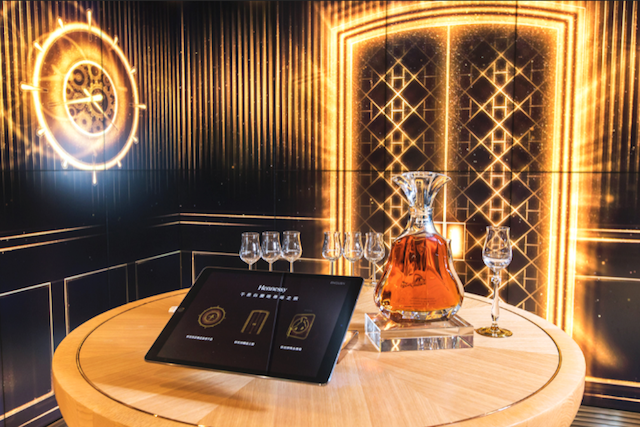
    The cognac brand has adapted its successful space in Terminal 1, one of the longest-running pop-ups for both the brand and Changi Airport, into an experiential zone offering special New Year-packaged products and interactive features with souvenir photos and personally engraved products.

    “At Hennessy, we recognize that travel retail is an amazing platform to build brand desirability in front of affluent and sophisticated consumers,” said Laurent Boidevezi, Moet Hennessy’s global travel retail president.

    “Crafting experiences is at the heart of Moet Hennessy’s DNA. This Chinese New Year, along with DFS Group and Changi Airport Group, we wanted to combine the traditional with the modernity by presenting customers with a revolutionary molecular tasting experience using Hennessy VSOP. We want to inspire them to re-create a classic cocktail for their own experiences during this festive season,” he said.

    At the heart of the promotion was the commissioning of a work of art from Zhnag Huan, called Eaux-de-vie. The artwork features throughout the pop-up space, including on packaging, as a backdrop to photos in a selfie booth and on red packets. The limited-edition VSOP bottle is an Apac travel retail exclusive, available only at Changi Airport.

    At the Terminal 1 pop-up store, a ‘molecular tasting bar’ allows travelers to immerse themselves “in the spirit of Eaux-de-vie”. Travelers can discover two different Hennessy VSOP cocktails encapsulated in molecular pearls that explode in one’s mouth.

    Airport partnership

    Teo Chew Hoon, group senior VP of airside concessions at Changi Airport Group, said the Changi endeavors to work with partners to create experiential installations to interest travelers passing through the airport.

    “Changi Airport Group continues to work with Hennessy and DFS Group to create unique and one-of-a-kind activations. Located next to the Social Tree at Terminal 1, the walk-through Chinese New Year pop-up concept ingeniously combines art and retail to bring novel experiences for our travelers this festive season,” he said.

    Open daily from 7am to midnight, the Hennessy pop-up at Changi Airport’s Terminal 1 remains open until February 9.

    Activations were also set up at Terminals 3 and 4 to showcase Zhang Huan’s artwork for the tripartite partnership between Hennessy, DFS Group and Changi Airport.

  • Sustainable wines gaining popularity in SEA

    Sustainable wines gaining popularity in SEA

    As Chinese wine consumers – and those across Southeast Asia – are growing a taste for wine, so too they are embracing sustainable wines.

    Although global wine consumption continues to rise, disruption to the wine industry is resulting in changes to production methods, packaging, and marketing techniques. Discerning wine consumers are increasingly looking for good quality wine that is produced with minimal impact on the environment. As a result, new innovations are improving sustainability which is helping winemakers connect to a wider audience.

    Analysis of wine drinking by The International Wine and Spirit Research predicts that within the next three years, the global consumption of organic wine will reach 1 billion bottles. China’s demand for wine, increasingly being met through online sales, is still growing, and research undertaken by the University of Adelaide predicts a continuing rise in Southeast Asia’s consumption of fine wine. Meeting these consumer demands responsibly, but without compromising on taste and quality, is now a priority for wine producers.

    Accessing high-quality, sustainable wine

    As wine consumption continues to rise in Asia, China has recently overtaken the US to become the world’s number one buyer of online wine, creating great opportunities for internet wine retailers. Through ordering a wine subscription box online, consumers can enjoy carefully selected, high-quality wine that is chosen to match personal preferences and taste profiles.

    More wine producers are using sustainable farming techniques such as natural pest control, composting and crop rotation, that are not only ecologically beneficial but economically and socially responsible too. By bottling their own wine produced using these techniques, a company that fulfills subscription orders itself can ensure the delivery of quality wine that is produced in an efficient and environmentally friendly manner.

    Reading wine labeling now goes beyond understanding and recognizing the basic appellation credentials. Increasingly, consumers are also looking for signs that a glass of wine is naturally produced or organically grown, reflecting the efforts made to reduce the environmental impact of wine production. Natural wines are made without chemical additives, and organic wines are grown from grapes untouched by pesticides or synthetic fertilizers.

    As well as being more environmentally friendly, a recent paper looking at the reasons behind Chinese consumers’ organic wine purchase found that the health benefits of increased natural production methods were also highly appealing. Although wine manufacturers are not required to ingredients on wine labels, on wine that is produced naturally in the US, the Department of Agriculture’s organic label reassures consumers that the wine contains no added preservatives, sulfites, or sugar.

    Reducing the impact of transportation

    Discerning taste in fine wine is increasingly being coupled with a desire to minimize environmental impact. Another way for consumers to reduce the environmental impact of wine drinking is to purchase more wine from local sources.

    Although connections with French wine producers are strong, already 80 percent of all the wine that is enjoyed in China is domestically produced. Half of this wine is produced in The Yantai-Penglai region alone, where over 140 different wineries can be found.

    Through supporting local wine producers in the Yamanashi wine region in Tokyo, or buying from wineries based in the Asoke Valley near Bangkok, Japanese and Thai consumers can enjoy distinctive local wines while minimizing the financial and environmental costs of transportation. However, with the introduction of biodegradable and plastic-free bottles made from innovative, sustainable materials, in the future, these costs could be drastically reduced even when importing wine from abroad.

    As global wine consumption continues to grow, discerning drinkers are increasingly looking to look for evidence of organic production and sustainable manufacturing methods. Wine producers are responding by producing high-quality wines grown without chemicals and unnecessary additives and made easily available to both local and wider markets worldwide.
  • First Starbucks Reserve store in Penang opens at Gurney Plaza

    First Starbucks Reserve store in Penang opens at Gurney Plaza

    Starbucks has opened its first Reserve store in Penang, Malaysia.

    The new store, located in Gurney Plaza, is the 12th Starbucks Reserve Store in Malaysia and features an interactive coffee bar equipped with a variety of brewing equipment.

    Starbucks Reserve Gurney Plaza has two bars, the main one serving core Starbucks products as well as a coffee bar that highlights rare, small-lot coffees from around the world.

    “The opening of Penang’s first Starbucks Reserve further reinforces our coffee leadership here in Malaysia,” said Starbucks Malaysia & Brunei MD Sydney Quays, “while also committing to fostering coffee education and moments of connections between our Starbucks partners [employees] and our customers.”

    The materials and patterns used in designing the store highlights the main stage where the Reserve bar sits, and is a nod to locally sourced textiles. The store’s ceiling element is inspired by the patterns and textures of the mountains where many Arabica coffee cherries are grown, and is featured throughout the store.

    Customers can enjoy the classic Starbucks menu in addition to specialty beverages inspired by the six Starbucks Reserve Roasteries around the world, including Shanghai, Milan and Tokyo.

  • South Korean restaurants remain empty as coronavirus fears spread

    South Korean restaurants remain empty as coronavirus fears spread

    South Korean consumers are opting to avoid crowded places, causing restaurant bookings to plunge by as much as half as fears grow of the spreading coronavirus.

    “Lunar New Year, followed by graduation and enrollment ceremonies, should have been a chance to boost our sales,” said the owner of one Seoul Chinese restaurant. “This year, though, reservations have dropped by more than half.”

    Group dinners, accounting for a significant portion of all sales at this time of the year, have dwindled, and schools are canceling graduation and enrollment ceremonies.

    “It’s important that I don’t get infected, but it is also important not to take any chance of spreading the disease to other people. It doesn’t hurt to stay careful,” said a local office worker.

    Some companies have chosen to axe group dinners.

  • Alibaba’s Freshippo sales soar during virus outbreak

    Alibaba’s Freshippo sales soar during virus outbreak

    Sales are soaring for Alibaba’s fresh-food chain Freshippo in the wake of the coronavirus outbreak.

    With many Chinese nationals being advised to stay at home during the course of the epidemic, demand for fresh food and household items has soared. Buyers are purchasing more items in bulk so as to reduce contact with home-delivery personnel.

    A spokesperson for Freshippo revealed that it has prepared 250 tons of packaged vegetables and 80 tons of bulk vegetables for around 50 Shanghai stores, six times above its normal volume.

    Freshippo’s head of vegetable procurement Huang Yifan said that the group is planning to ship an extra 100 tons of fresh vegetables from its supplier farm regions every day.

    Similar increases have been reported by Walmart’s delivery business in the region, JD Daojia, with reports of a five-fold increase in sales volume.

  • Reliance to open Armani Cafe in India

    Reliance to open Armani Cafe in India

    Indian conglomerate Reliance Industries is launching a Michelin-star restaurant in Mumbai in partnership with Italian luxury firm Emporio Armani.

    The first Armani Cafe venue is set to open in the firm’s upcoming luxury Bandra Kurla mall, the Jio World Centre.

    Armani restaurants have opened in several major cities among 20 international locations.

    Reliance is the luxury brand’s master franchisee in the Indian territory, and already operates Emporio Armani, Giorgio Armani and Armani Exchange outlets nationwide. It is expected to roll out Armani’s sportswear brand EA7 in March.

  • Japanese chocolatier Royce closing South Korea stores

    Japanese chocolatier Royce closing South Korea stores

    Japanese chocolatier Royce is shuttering its operations in South Korea.

    The brand’s local retailer Royce’ Confect Korea said in an announcement last Wednesday that it will close all nine of its locations in the territory, including five shops in Seoul.

    The closures will be completed by the end of next month.

    Sales for the brand’s chocolates have sharply declined in recent months and were strongly affected by a recent general boycott of Japanese products in the country.

    A company statement read: “Thank you very much for loving Royce’ chocolate. We will try our best to the very end with the best possible services”.