Category: Food

Retail News Asia is committed to providing both local and global retailers with the latest Food and Food & Beverage news throughout the Asian market. This on a daily base.

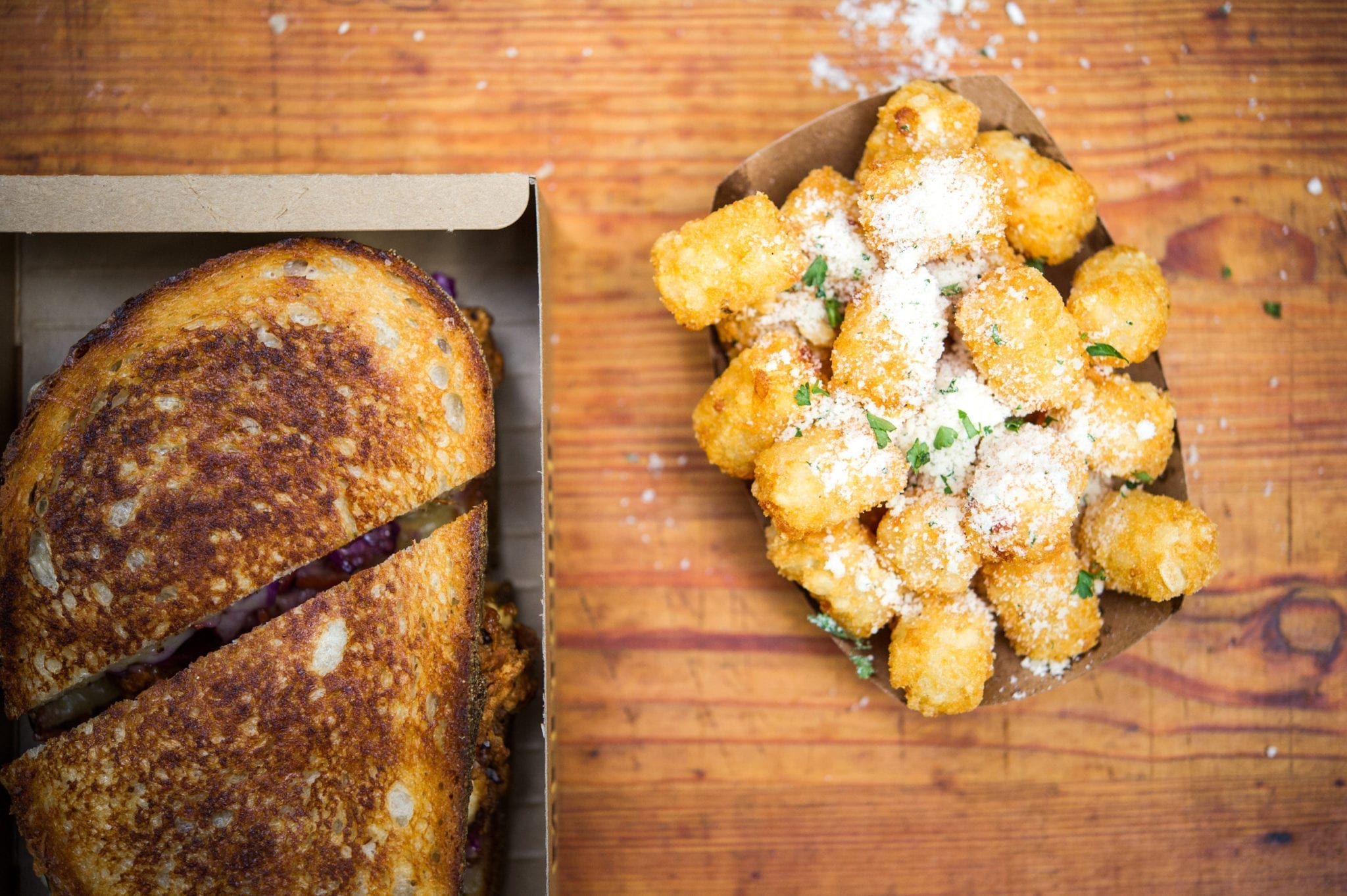
  • Melt Shop has plans to open shops in Southeast Asia

    Melt Shop has plans to open shops in Southeast Asia

    Melted sandwiches are about to take on the world, including Southeast Asia, according to the directors of US franchise chain Melt Shop.

    Founder/managing partner Spencer Rubin believes the company is perfectly positioned to begin franchising internationally after expanding into the Middle East.

    Melt was established in 2011 and now has eight corporate locations in New York, Philadelphia, and Minneapolis. Parent company Aurify Brands is a hospitality-focused business founded by multi-unit franchisees, and its plans for the Melt Shop include a global target of more than 100 locations over the next five years.

    “Melt Shop has spent the past six years perfecting our brand and business model,” says Rubin. “The timing is right to take our New York-born fast-casual concept to the world.”

    He says the company sees immense potential to grow through franchising, and is targeting experienced multi-unit franchisees who have restaurant and hospitality experience.

    “Keeping the integrity of the Melt Shop brand is important to us. We will have dedicated operators overseeing the day-to-day running of our international locations. An intense and all-encompassing training program will also ensure no steps are overlooked.

    “We strongly believe in compliance, and it is important we find partners who are dedicated and passionate about the Melt Shop brand. All locations will follow the same processes and quality standards, and we’ll do everything to make sure it is consistent across every location.”

  • Pizza Maru opens at Northpoint City

    Pizza Maru opens at Northpoint City

    Korean chain Pizza Maru soft launches in Singapore today with its debut store at Northpoint City in Yishun.

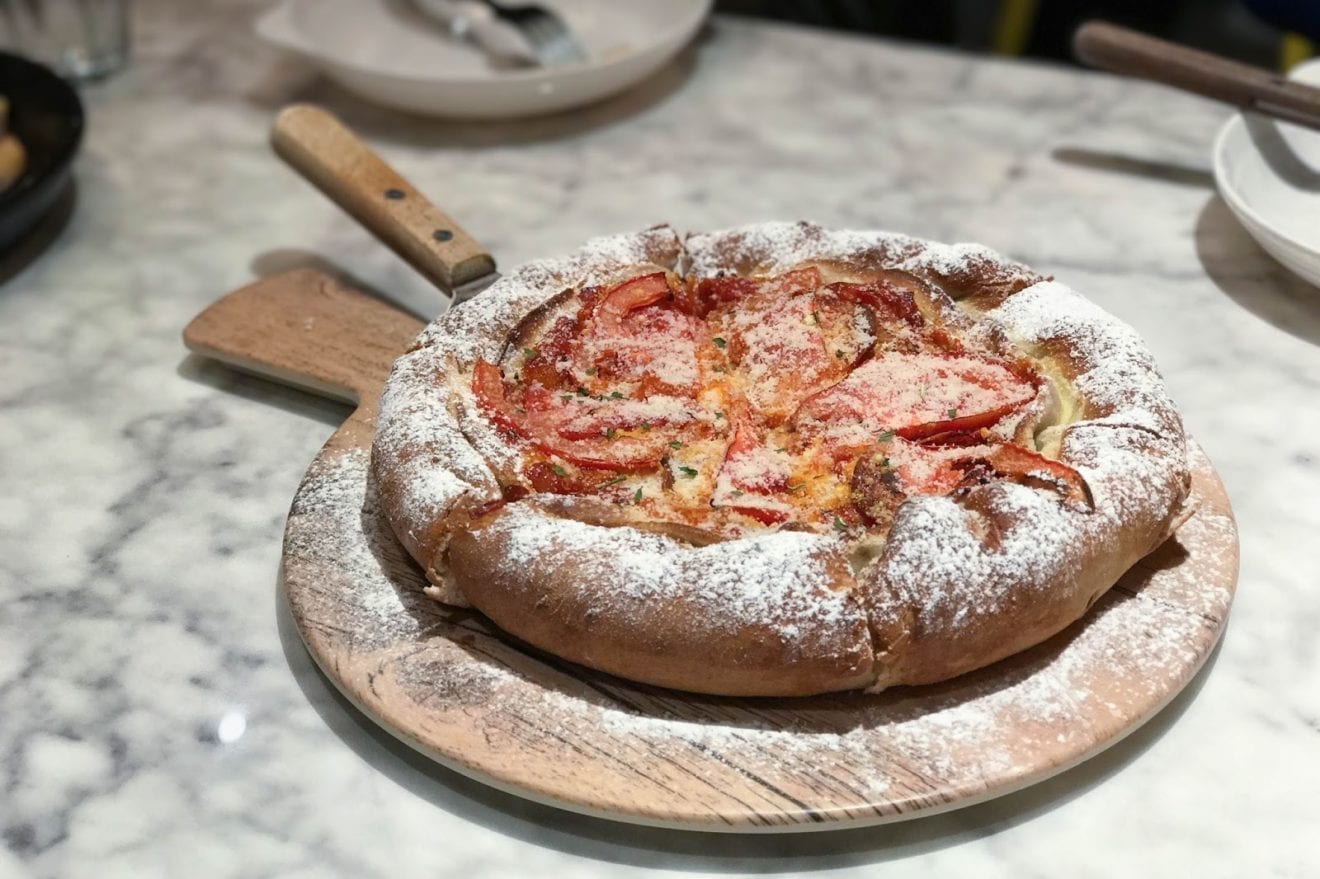
    Pizza Maru is known for its patented green-tea wellbeing pizza dough, which is fermented for more than 48 hours with micro-algae chlorella as well as natural grains such as barley and flaxseed.

    One of its feature dishes is Real BBQ Chicago, a deep-dish pizza combining chicken leg pieces, potato cubes, roasted onions, tomatoes, mushrooms and cheeses blended with honey and barbecue sauce. The puffy crust is made from fibre-rich, antioxidant-packed black-rice dough.

    Korean fried chicken is also a staple of Pizza Maru, the star dish being the Supa Hot Tak Gangjeong with a choice of two levels of spiciness.

    Seating 80 diners, the restaurant will have its official grand opening on January 15.

  • Hawaii’s Eggs ’n Things first opening at Plaza Singapura

    Hawaii’s Eggs ’n Things first opening at Plaza Singapura

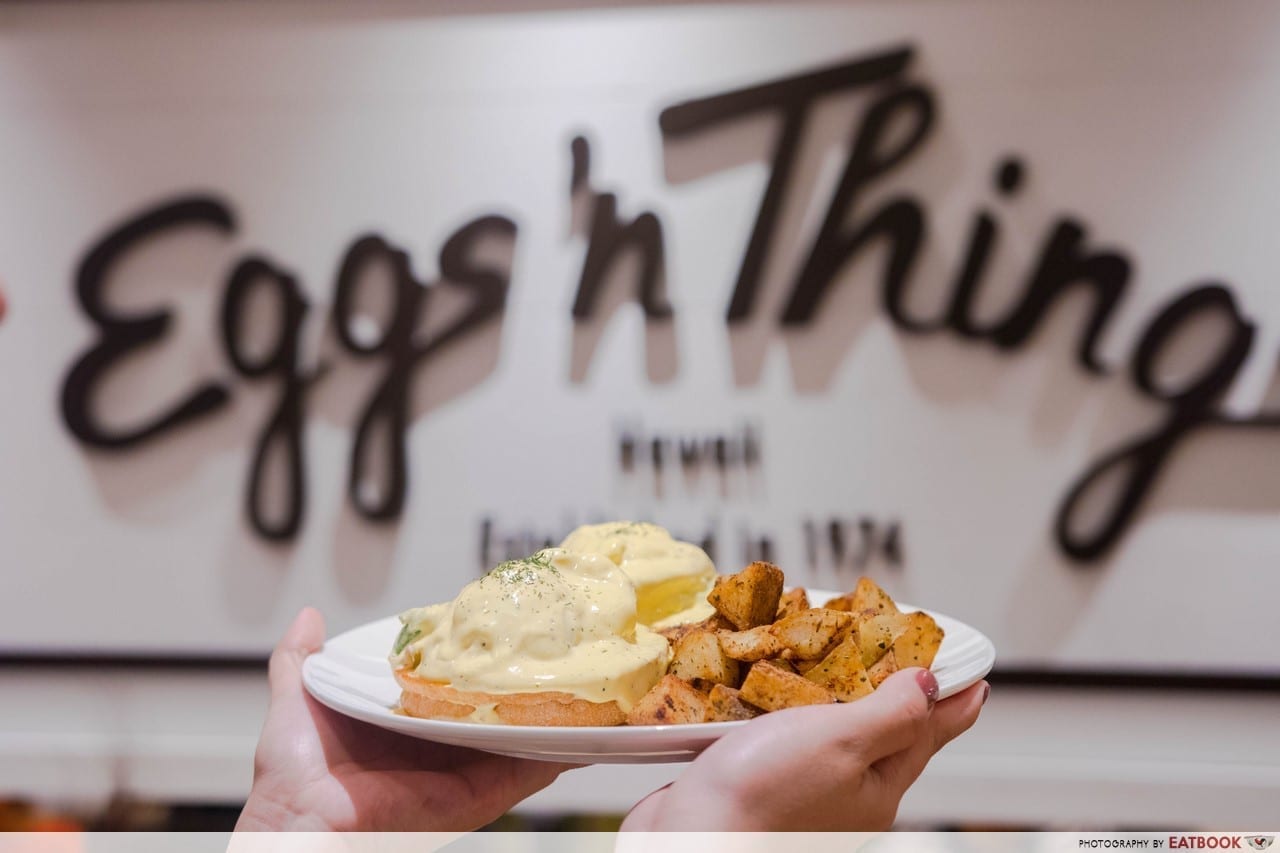
    Hawaiian cafe brand Eggs ’n Things has introduced its breakfast-style menu to Singapore with an outlet at Plaza Singapura.

    As well egg dishes, the casual eatery offers pancakes, crepes and waffles.

    Singapore is the second stop for the brand, launched in Waikiki in 1974. It has 19 outlets in Japan, where its Harajuku store in Tokyo still attracts queues.

    The Singapore cafe emphasises its use of freshly baked bread, organic and locally sourced beef and chicken, and house-made sauces without added flavouring or preservatives.

    Pancakes and waffles are served with an optional tower of whipped cream, the cheese omelette comes with spinach, bacon and roasted potatoes, while the Hawaiian Loco Moco dish comprises rice, a hamburger patty doused in gravy, and two fried eggs.

    Drinks include milkshakes, organic cold-pressed fruit juices, smoothies, free-trade organic tea, and coffee made from a blend of Brazilian, Indonesian and Mexican beans.

  • Kushikatsu introduces new skewer options

    Kushikatsu introduces new skewer options

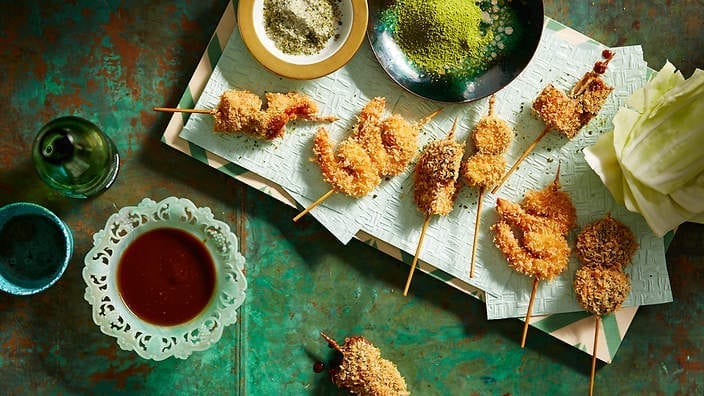
    A Japanese chain known for its fried food skewers, Kushikatsu Tanaka, has launched a Singapore outpost at Clarke Quay.

    It sprang from the Lehman Brothers collapse in 2008, when Hiroe Tanaka and her business partner Keiji Nuki decided to end their food business ventures in Tokyo. While packing to return to Osaka, Tanaka stumbled upon her late father’s kushikatsu recipe, and convinced Nuki they should open a kushikatsu outlet.

    Nine years later the business, which became a listed company last year, is valued at US$82 million (S$110.6 million). It has 167 outlets across Japan, with four more opening this month. It also has a branch in Hawaii.

    Tanaka and Nuki were both in Singapore for the opening of Kushikatsu Tanaka, a franchise outlet managed by Suntory Food & Beverage International, a subsidiary of the Suntory Group, which runs eateries such as Japanese restaurant Sun with Moon at Wheelock Place and the Pepper Lunch chain.

    Secret sauce

    A speciality street food from Osaka, kushikatsu features skewered items battered in fine panko crumbs and fried in a blend of oil and beef fat. Diners dip the skewers into a “secret recipe” sauce. There is even a dessert version.

    Other dishes on the menu include chiritori hotpan (beef or pork). To finish the broth, diners can cook curry cheese risotto on the pan. Other hands-on dishes include DIY (do-it-yourself) onigiri and DIY potato salad.

    While kushikatsu goes well with Jim Beam highballs, the alcohol menu also includes sake, shochu and wine. Diners can also play a variation of the Japanese drinking game Chinchirorin by throwing two dice into a bowl. If they roll doubles, they score a free highball; an even number earns a half-priced highball, while an odd number means they pay double the price (but for a double-sized highball).

    Meanwhile, other skewered foods have arrived in Singapore including Ginza Rokukakutei at Odeon Towers and Panko in Haji Lane.

  • Starbucks opens largest store yet in Korea

    Starbucks opens largest store yet in Korea

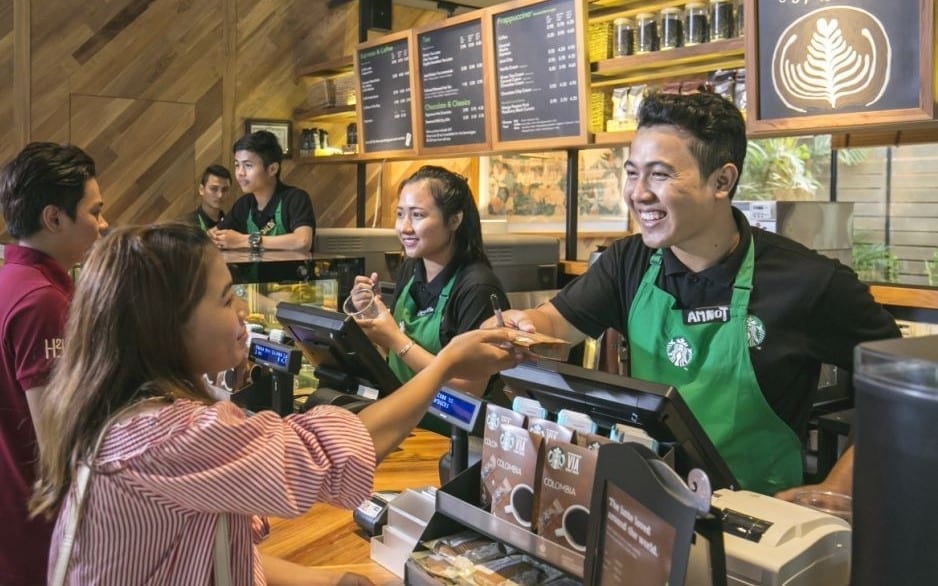
    Starbucks Korea opened its largest store yet in Seoul’s Jongno district today, in a move to solidify the brand’s already strong presence in an increasingly competitive market.

    The coffee shop, at Jongno Tower, covers 1097sqm on the first and second floors of the building – making it four times bigger than the chain’s typical 264sqm store size.

    The latest move by the US coffeehouse chain comes on the heels of low-cost coffeehouse Ediya Coffee’s decision to open a flagship store of a similar size last year in Gangnam District.

    A wide range of menu items and premium services to differentiate from other locations will be on offer, such as herbal teas ‘Teavana Blueberry Bliss’ and ‘Teavana Citrus Lavender Sage’, which will be available at four of the Teavana-inspired stores across the country including the Jongno location.

    Some 100 beverages and 60 bakery products will be available at the new location, 30 per cent more than the average number of items available at other stores.

    Siphon coffee makers will be used to brew some of the drinks at the new coffee shop, while an exclusive trial program available at the store’s community room will introduce some completely new offerings such as Origin Flight and Brew Comparison.

    In addition, seven types of rice products made in South Korea using Starbucks coffee grounds as a fertiliser will also be on sale, including beans & sweet potato rice chips.

    A large-scale artwork installed on one side of the store uses traditional Korean fabric to recreate the coffee chain’s signature Siren logo with a Korean touch, a fitting addition for Jongno District, a neighborhood boasting traditional venues such as Gyeongbokgung Palace and Insadong.

    Starbucks currently operates about 1100 stores across South Korea.

    Earlier this month, the American coffeehouse opened its largest store in the world in Shanghai, China

  • Major International Bubble Tea Restaurant Opening in Mississauga

    Major International Bubble Tea Restaurant Opening in Mississauga

    Have you always wished for more bubble tea options in Mississauga? Of course you have—and now it looks like your wish is about to come true.

    If you’ve recently driven down Hurontario Street in the Cooksville area, you might have noticed some stylish signage indicating the upcoming arrival of Ding Tea. For those who are unaware, Taiwanese franchise Ding Tea was founded in 2004 and quickly spread throughout Asia and beyond.

    As of now, there are Ding Tea locations in Taiwan, China, Japan, Malaysia, Indonesia, Vietnam, the U.S.A. and Hong Kong. The only other Canadian location listed on the brand’s website is one in Victoria, B.C.—meaning Mississauga will be home to the brand’s first Ontario store.

    As far as the menu goes, the resto offers oolong milk tea, brown sugar milk tea, jasmine green milk tea, bubble milk tea, coconut jelly milk tea, pudding milk tea, taro milk tea and more.

    An exact opening date has not been revealed.

    We’ll keep you updated as more details emerge.

  • Jollibee is Hiring For its Upcoming Mississauga Location

    Jollibee is Hiring For its Upcoming Mississauga Location

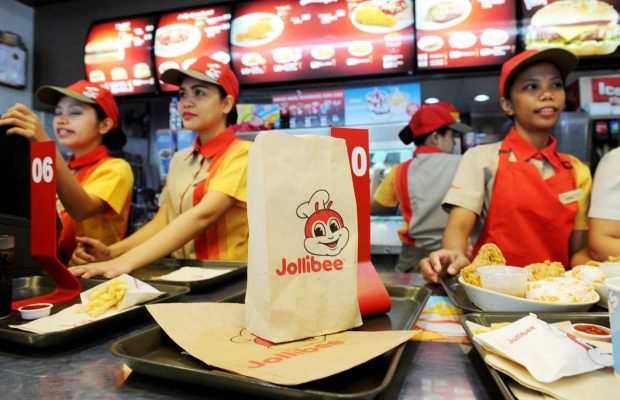
    You’ve waited so patiently for Mississauga’s very first Jollibee location and while you will have to wait a little longer to chow down on its extremely popular offerings, you can apply to work there now.

    The soon-to-open Jollibee restaurant, a popular fast food brand from The Philippines, will take shape inside the recently opened Seafood City Supermarket in Heartland Town Centre. But while the resto isn’t slated to open until 2018, the brand is already hiring.

    According to Jollibee’s website, it’s currently looking for a restaurant manager for the Mississauga location (it’s also looking to hire for the same position in Scarborough, so let your east end friends know if they’re in the market for a foodservice position).

    The brand is also looking for a store supervisor and general “crew members” to help with the day to day work of running a bustling quick-service joint.

    Note that restaurant managers and store supervisors must have some academic and professional credentials.

    Part-time and full-time positions are available and all applicants must present proof that they are eligible to work in Canada.

    As for exactly when the resto will open, Heartland Town Centre and Seafood City representatives say that Jollibee is slated to open early in the New Year, which means you’ll get to warm up with a burger this coming January or February.

    The brand offers a range of Asian and North American staples, boasting traditional fast-food hamburgers, spaghetti (which is definitely an unusual find at quick-service chains), fried chicken, garlic pepper beef, spring rolls, corned beef breakfast dishes and more.

    As for Seafood City, that was exciting opening in and of itself.

    For those who don’t know, Seafood City is a Filipino supermarket with over 20 locations in the U.S. The brand specializes in Filipino food and products and Mississauga is now home to the chain’s first Canadian location. The store officially opened its doors in September.

    Jollibee will joint a host of other quick-service spots inside the supermarket, including Grill City, Noodle Street, Crispy Town and Valerio’s Bake Shop (which just opened this month).

  • Vinomofo launches click and collect for Christmas

    Vinomofo launches click and collect for Christmas

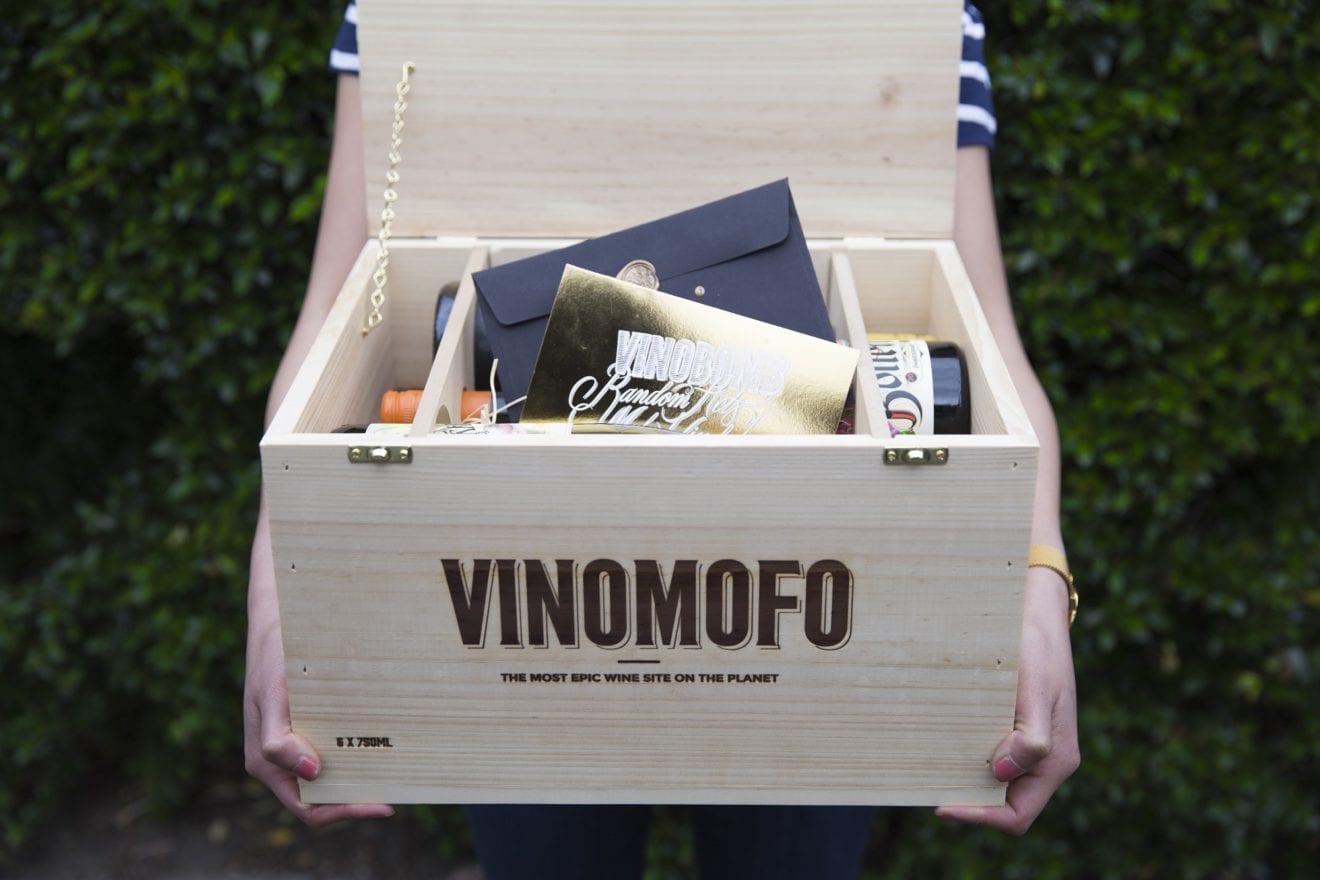
    Online wine retailer Vinomofo will launch a click and collect service tomorrow in the lead up to Christmas.

    The service will operate from the company’s Bridge Street warehouse in Port Melbourne and will be open 9-5 Monday to Friday for customers to collect their online orders, with a 2-hour processing time.

    Vinomofo co-founder and joint CEO Andre Eikmeier said the service has enabled it to bridge the gap between online and offline.

    “Click N Collect enables us to not only provide our mofos with exceptional service, but also helps to bridge the gap between online and offline,” he said.

    “We now have a great mechanism to share our love, passion and ethos with our tribe personally when they come to collect from us.

    “We’ll be engaging with our tribe personally, talking about their wine choices and welcoming them into everything we’re proud of as they walk through the doors of our warehouse.”

    Vinomofo has set up a specific customer pick-up point at its warehouse, which will be manned by a dedicated customer service representative.

    Click and collect has become a popular online delivery option among Australian booze buyers in recent years, with both Coles and Woolworths’ Dan Murphies brand also capitalising on demand for fast-turnaround online ordering.

    Earlier this year Woolworths launched one-hour click and collect through its BWS brand, while Wesfarmers has also rolled out a similar offer under First Choice Liquor.

    Vinomofo’s head of culture Michael Ellis said the service will be limited to its Port Melbourne warehouse in the immediate term, with no plans to roll-out the service into other states with depots or through a partnership with another retailer.

    “What’s most important for us is having consistency across the whole transaction and user experience and delivery is one of those things we’ve never been able to control once the wine has shipped, so what we’re excited about now is coming in and having that more personal interaction with us…as for partnerships, not something we are looking at right now,” he said.

  • Bubble tea franchise set to expand throughout New Zealand

    Bubble tea franchise set to expand throughout New Zealand

    New Zealanders have a growing thirst for the popular Asian drink “bubble tea,” with more stores expanding around the country next year.

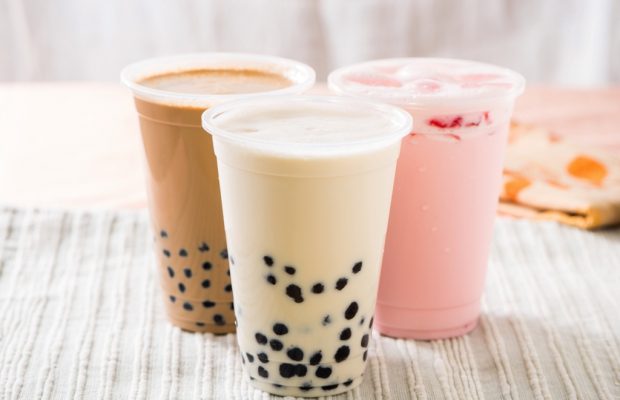
    Bubble tea or boba tea is made with soft tapioca balls called pearls and originated in Taiwan in the 1980.

    The drink has become popular around the world with global sales of tapioca pearls growing at 4 per cent a year.

    Bubble tea sales in New Zealand are growing around 20 per cent a year, according to Marcus Teh, New Zealand manager of Gong Cha, an international chain of bubble teahouses.

    Auckland’s large Asian student population initially drove its popularity, he said, but this year around 30 per cent of customers were Kiwis.

    The black balls at the bottom of the glass are tapioca pearls.

    “Marketing plays a part but the bubble tea culture and drinks are slowly being loved by Kiwis,” Teh said.

    “We already know our brand is loved by Asians so we are trying to attract more New Zealanders.”

    Retail licensing expert Katrina Hammon said bubble tea bars were the new juice bars.

    “It’s new, different and on trend globally. McDonald’s Germany even added bubble tea to the menu in 2012, so New Zealand is well behind this trend,” she said.

    One of the pull factors of tea was the experience, she said.

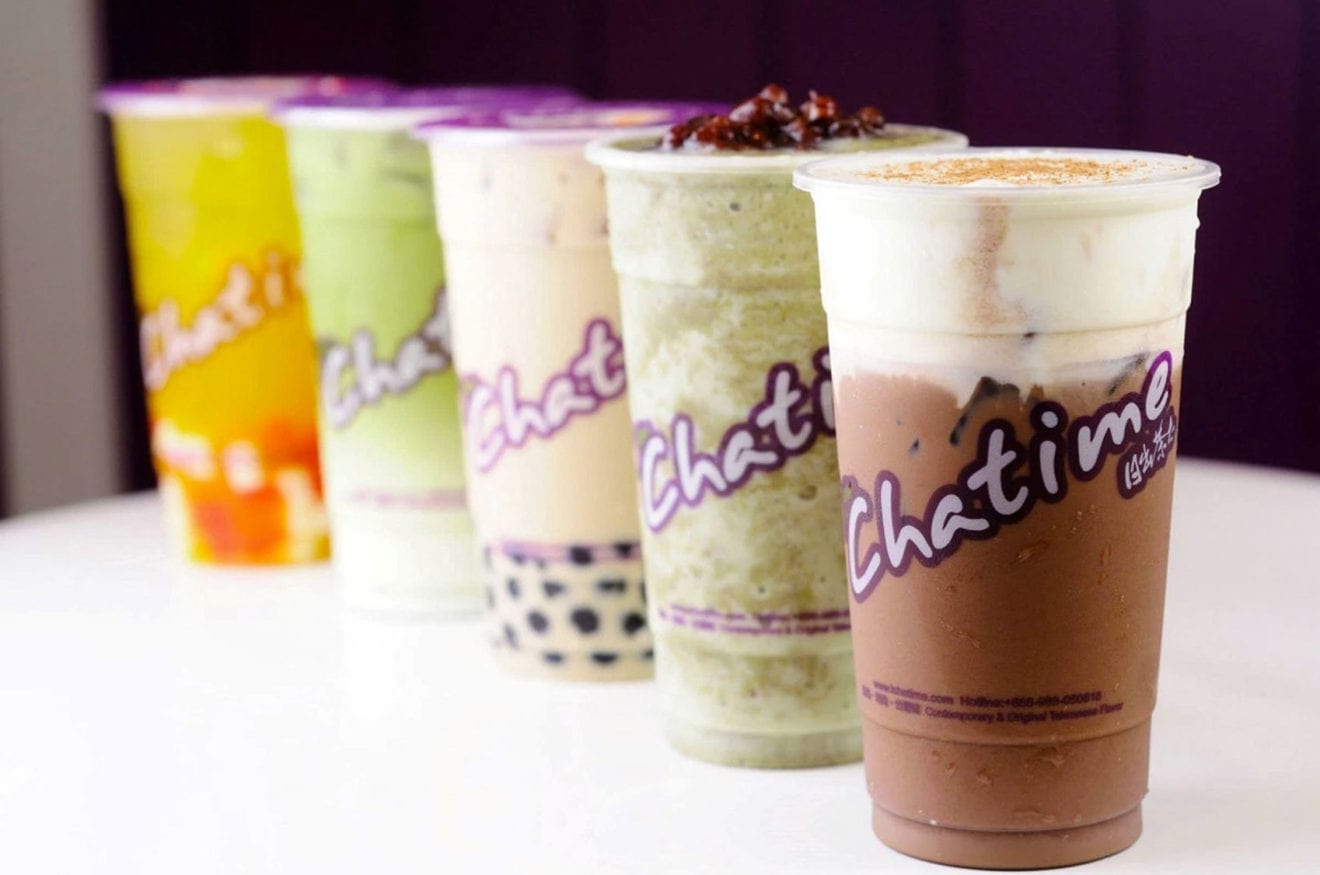
    “The Chatime Tea brand, another chain of teahouses has an unique fit out, consumers can see the product being made and add in pearls. There are also healthy options like sugar free options, chia seeds, aloe vera.”

    Gong Cha and Chatime each have more than 1000 stores worldwide and three stores in Auckland.

    A fourth Gong Cha is set to open at Sylvia Park in November.

    Teh said potential franchisees had been in contact asking him to open stores in the South Island. He plans on opening three more stores next year, including in Wellington and Christchurch.

    Gong Cha will hire 20 staff in addition to the team of 30 already working for the company.

    The company was recently voted the most popular food and beverage brand in Singapore, and was also named the most popular tea brand in Korea.

  • The McDonald’s rendang burger lands in Indonesia

    The McDonald’s rendang burger lands in Indonesia

    McDonald’s Indonesia has introduced the rendang burger to celebrate the country’s 72nd anniversary of independence and being the burger and fast-food lovers that we are, we just had to try it.

    After all, what better way to honor Indonesian culture than bring one of its top dishes—which has even been regarded as the world’s most delicious food—in fast-food burger form to the masses? While the fast-food giant has released similar short-term specials, this rendang burger in its latest iteration, is sold as part of a special menu titled “Ini Rasa Kita” (this is our flavor). The menu is available from July 28 til September 10, 2017.

    The special menu includes three rendang burger options: your classic rendang burger with a single patty, the double rendang burger, and the rendang burger special, which has one patty and a fried egg on top. There’s also a limited edition soda belimbing (starfruit) you can order as a part of a meal package if you’re feeling particularly adventurous. 

    We’ve comprehensively tasted and reviewed Bali’s best burgers so we feel pretty confident about our ability to give you the 411 on McDonald’s ‘culturally adapted’ new number. Just sayin.

    Going in to Bali’s Jimbaran Ngurah Rai By Pass McDonald’s with a ‘go big or go home’ mentality, we ordered ourselves the rendang burger special, which set us back Rp 40k (USD2.99) a person since we went for the meal combo. Gotta get those salty McD fries, after all. 

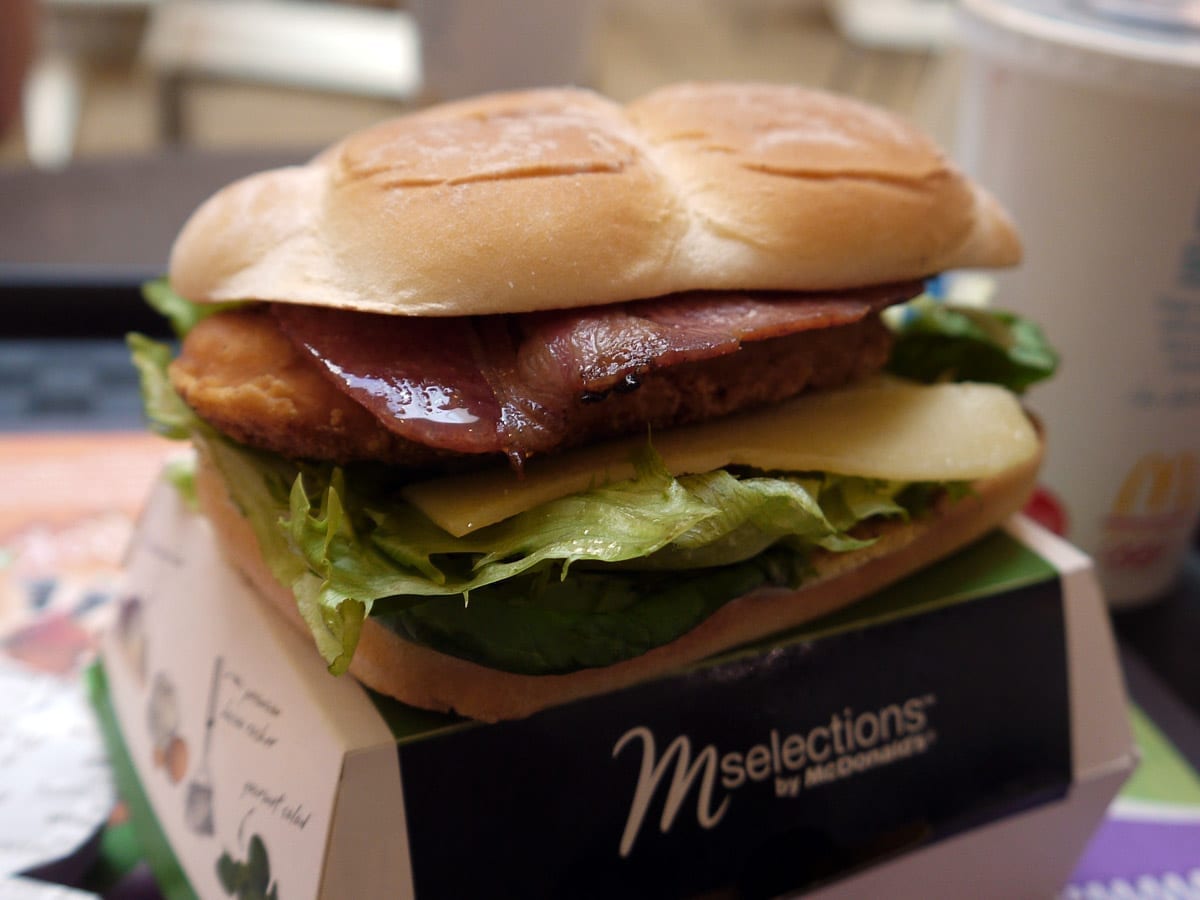
    Upon unboxing the special rendang burger, we’ve got to tell you it’s a bit smaller than we expected since McD’s promotional photos make it look like a juiced up burger compared to their standard menu—but it turns out the rendang burger is just your classic McD cheeseburger with special toppings. Same nice greasy, cheesy taste, just nothing amped up quality-wise. Another thing we immediately noticed were the giant slices of onion on top. While those appeared a bit off-putting at first, they’re a nice textural addition to the greasy fried egg and thin standard beef patty.

    As far as the actual rendang seasoning goes, please don’t expect the tastiest slow cooked rendang from your favorite padang kitchen. Have you had Indomie rendang before? Because the spice packaging that comes with the instant noodles is exactly what the McDonald’s rendang sauce recipe tastes like. MSG-filled and a bit too ‘instant mix’ on the tongue to be that slow-cooked, creamy and rich coconut-milk spiced sauce that’s earned rendang world fame.

    That said, we loved the rendang special burger as a quick bite and anticipate some late night McDonald’s visits in the next couple of weeks to get our MSG and fast food fix.

  • McDonald’s Singapore launches locally-inspired ‘nasi lemak’ burger

    McDonald’s Singapore launches locally-inspired ‘nasi lemak’ burger

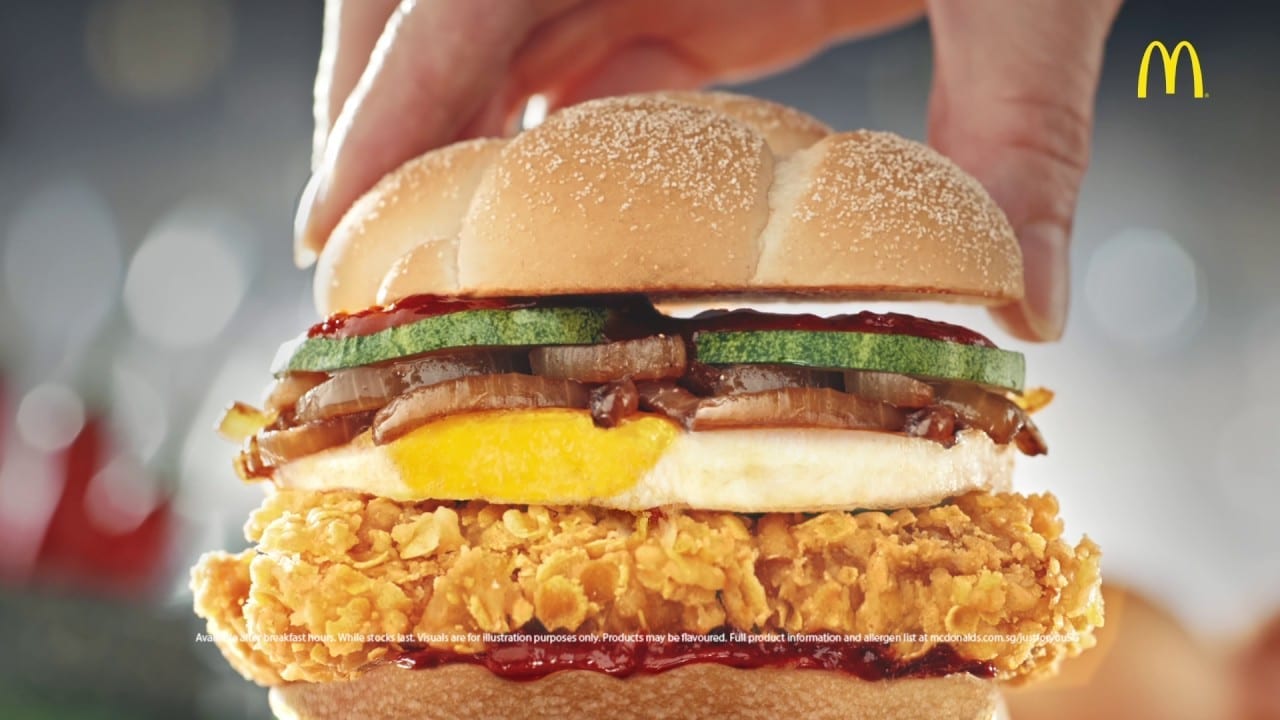
    For Singaporeans and Malaysians, nasi lemak (rice cooked with pandan leaves and served with sambal) is a breakfast staple. Realizing the Singaporeans’ non-stop craving for the fragrant rice, McDonald’s Singapore introduced nasi lemakburger on Thursday.

    The unique dish, which consists of semolina buns, coconut-flavored chicken thigh patty, egg, caramelized onions, sliced cucumbers and sambal, was launched in conjunction with Singapore Food Festival 2017 and the upcoming Singapore National Day.

    In addition to the nasi lemak burger, the fast food chain also launched locally-inspired beverages and desserts, namely the Chendol McFlurry (ice cream with worm-like green rice flour jelly), chendol ice cream cones, the Bandung McFizz (condensed milk beverage flavored with rose cordial syrup), Pandan Coco Frappe (pandan flavor drink served with coconut and grass jelly), coconut pie and kueh salat (a pandan sponge cake with a glutinous rice layer).

    Sure enough, Singaporeans have flooded McDonald’s outlets to devour the high-carbs meal and sweet treats.

    On Twitter, they posted mixed reviews about the fusion burger. Though not all were fond of the East-meets-West dishes, some gave positive feedback, saying the burger was beyond their expectation, tasting exactly like nasi lemak.

    Seeing the positive response, maybe it is time for McDonald’s Indonesia to consider some locally-inspired menus for Independence Day — sate ayam (chicken skewers) or lontong sayur (rice cakes with vegetables) burgers, perhaps?

  • Vietnamese fruits struggle to gain foothold in international markets

    Vietnamese fruits struggle to gain foothold in international markets

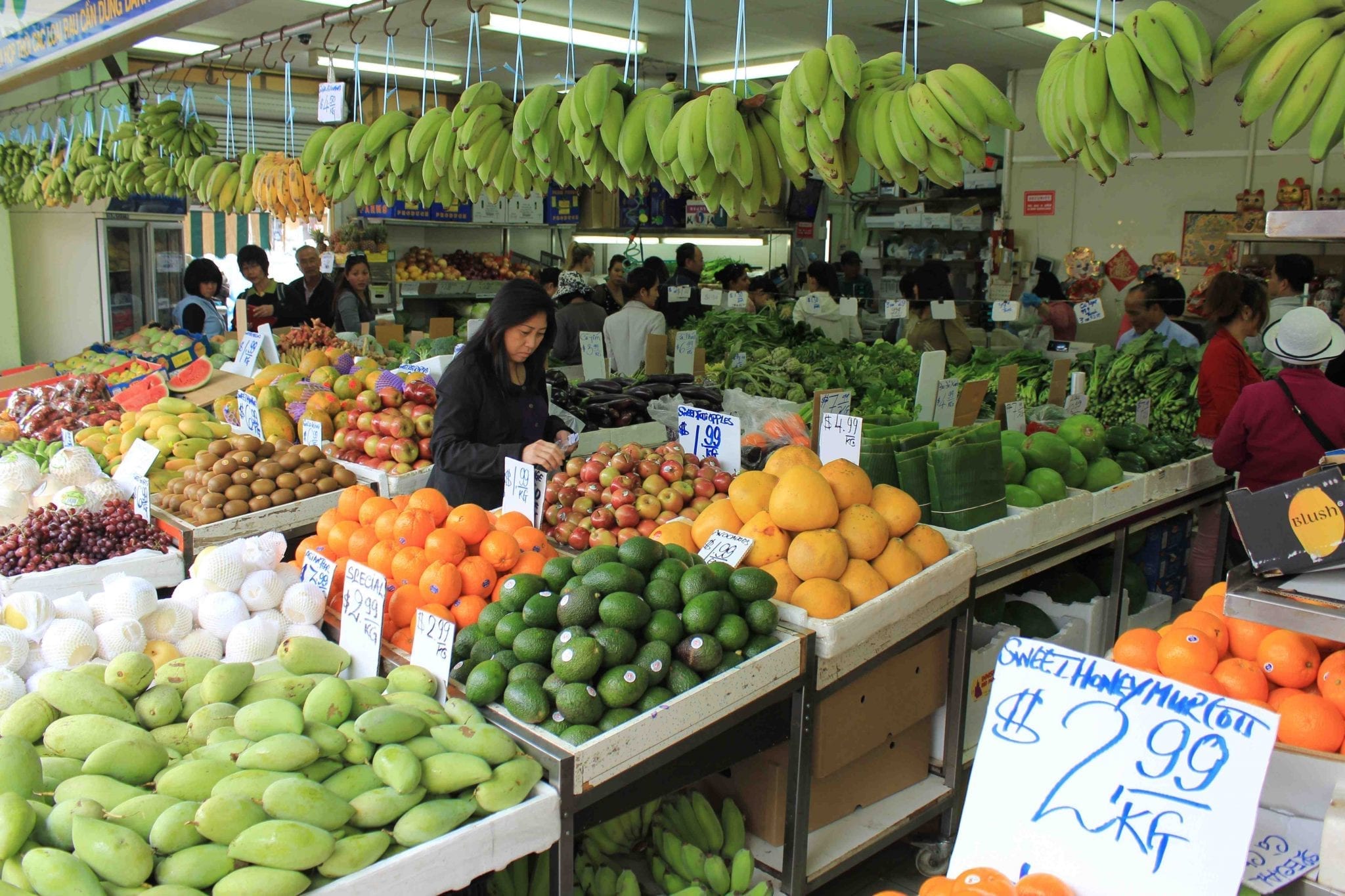
    Vietnam is struggling to find international buyers for its tropical fruit, despite having been licensed to export by demanding markets such as the U.S, Australia, Canada and Japan.

    Starting December 29, the U.S. Department of Agriculture will allow imports of fresh mangoes from Vietnam, following in the footsteps of dragon fruit, rambutan, lychees, longan and star apple.

    Earlier this year, Australia also opened its doors to fresh dragon fruit imports from Vietnam after nine years of negotiations. Vietnam delivered its first dragon fruit shipment to the market in September, becoming the sole country allowed to ship the fruit to Australia to date.

    But despite these breakthroughs, strict requirements still make it difficult for fresh fruit to enter these markets.

    Mango exports to the U.S. are a prime example. Fresh mangoes from Vietnam will be subject to regulations that include orchard requirements, irradiation treatment and port of entry inspections.

    The fruit must also be imported in commercial consignments accompanied by a phytosanitary certificate issued by Vietnam’s Plant Protection Department.

    Even if these requirements are met, sales of Vietnamese mangoes are not guaranteed as they depend on consumer tastes and distribution, said Dam Quang Thang, CEO of fruit exporter Agricare Vietnam.

    In addition, local mangoes may find it hard to compete with those from Mexico, which has the biggest mango output in the Americas at over 1.5 million tons each year. Mexican mangoes are good quality and meet U.S. import requirements, he added.

    It’s too early to say if Vietnam will be able to export 3,000 tons of fresh mangoes to the U.S. each year as planned, equivalent to one percent of U.S. import volume and its total domestic output, Thang said.

    Another obstacle to fruit exports is high transport fees that raise retail costs in overseas markets.

    For example, Vietnamese dragon fruit is sold for $8 per kilogram in the U.S., 10 times higher than prices in the local market, while Vietnamese lychees are sold for $16 per kilogram in Australia, 16 times higher than at home, according to some fruit exporters.

    Vuong Dinh Khoat, director of local fruit exporter Hugo, said aviation fees often account for more than half of Vietnamese fruit export prices.

    A representative from a fruit exporter in the southern province of Binh Duong said her firm had to temporarily halt shipments of mangoes to Japan because of high transport fees that made the product uncompetitive.

    She said her firm had to pay an aviation transport fee of $1.8 per kilogram of mangoes shipped to Japan, 50 percent higher than that paid by Thai exporters despite the shorter distance.

    Explaining the issue, she said many countries like Australia and Thailand offer transport subsidies to domestic traders to boost exports.

    Together with high aviation fees, poor trade promotions have limited Vietnam’s fruit export expansion. Despite infiltrating the U.S., local fruits are only sold in a limited number of places, such as California and New York, due to inefficient promotional activities, according to the Vietnam Fruit and Vegetable Association.

    To boost exports, the Vietnamese government should subsidize transport fees for local fruit exporters without violating its international commitments, according to industry insiders.

    Meanwhile, producers should try to apply new cultivation models and set global food safety standards as their top priority, they added.

    Major foreign currency earner

    Vietnam’s total fruit and vegetable exports hit $3.2 billion in the first 11 months of this year, marking a jump of 43.1 percent on-year and leaving other key agricultural exports far behind.

    A growing appetite among foreign consumers for Vietnamese fruit is expected to reduce the country’s reliance on China, which accounted for 70 percent of Vietnam’s fruit and vegetable exports in 2016. Local fruits are now exported to 60 countries and territories.

    At a recent session of the legislative National Assembly, Nguyen Thien Nhan, the chief of Ho Chi Minh City’s Communist Party, called for the government to focus on helping farmers grow fruit and vegetables for export to combat rural poverty.

    Last year, total export revenue from fruit and vegetables surpassed that of crude oil, Vietnam’s key export, for the first time, he said, citing that Vietnam earned $2.4 billion from shipping crude oil and $2.45 billion from fruit and vegetable exports.

    The growth of crude oil exports has slowed over the past five years, while fruit and vegetable export revenue has increased 30 percent each year, he added.

    “Fruit and vegetable export value will reach an estimated $9-10 billion by 2020, higher than crude oil even at its peak,” Nhan told legislators.

    Minister of Agriculture and Rural Development Nguyen Xuan Cuong said his ministry is reviewing farming production to help rural areas make the most of their local conditions.

    Each commune should focus on certain products for export, he said.

    “We have nearly 9,000 communes nationwide with different climate conditions and the potential to grow specialty fruit and vegetables that would create huge export earnings,” he added.
  • Thai beer magnate extends SE Asia push with $4.8 billion Sabeco deal

    Thai beer magnate extends SE Asia push with $4.8 billion Sabeco deal

    Thai Beverage has won an auction to buy a majority stake worth $4.84 billion in Vietnam’s top brewer Sabeco SAB.HM, a lofty deal that adds a major asset to the beer-to-property empire of Thai magnate Charoen Sirivadhanabhakdi.

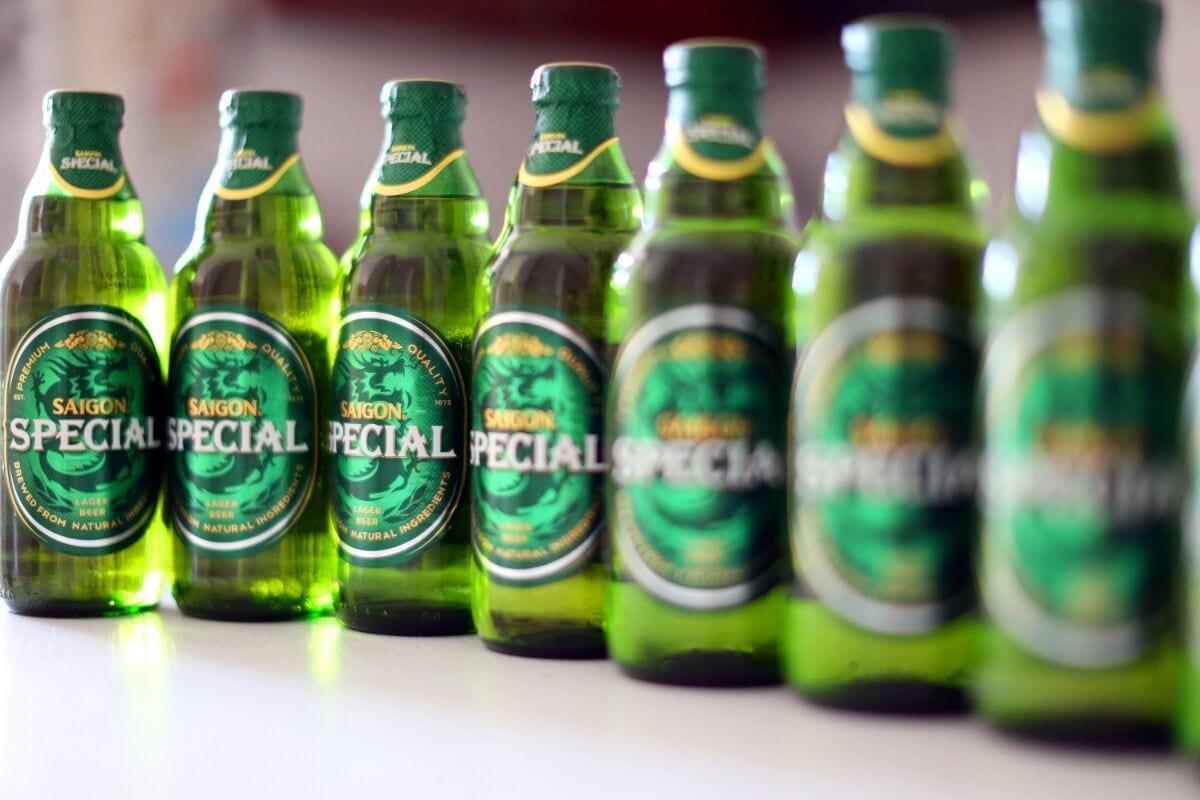
    The deal is a big step for Charoen, the son of a Bangkok street vendor, who is emerging as one of Asia’s biggest power players in brewing. He dominates his home market with Chang beer and owns Singapore’s Fraser and Neave Ltd. The Sabeco stake will give him control of brands like Saigon Beer and 333.

    The Sabeco deal will also help Thai Beverage (Thai Bev) tap into Vietnam’s beer market, worth about $6.48 billion last year, where a young population and booming economy are an attractive lure, despite political resistance, a high minimum bid price and a cap on foreign ownership.

    Thai Bev’s local unit, Vietnam Beverage Co Ltd, was named winner of the 54 percent Sabeco stake on offer at the auction on Monday after global brewing groups stayed away. It barely had any competition as the other investor, a Vietnamese individual, bid for only 0.003 percent.

    Late on Sunday, Singapore-listed Thai Bev had said that the Vietnamese unit had submitted the registration form to participate in the bidding.

    Vietnam Beverage is owned by Vietnam F&B Alliance Investment Company, which is 49-percent owned by BeerCo Limited – an indirect but wholly-owned unit of Thai Bev, official documents about the companies showed.

    “We are very grateful for the opportunity to participate in the future of Sabeco,” a legal representative for Vietnam Beverage told reporters after the auction.The government had set a minimum sale price of 320,000 dong or $14.1 per share for Sabeco, formally known as Saigon Beer Alcohol Beverage Corp, whose shares have jumped almost three fold to 309,200 dong since its listing a year ago.

    That priced the target at about 36 times core earnings, more than double the trading multiples for global peers, indicating Charoen had to pay a hefty premium to secure the prize.

    “We see this as an example of a successful equitization process,” said Fiachra Mac Cana, head of research at Ho Chi Minh City Securities. “The sums involved are huge and this is also good news for government coffers at the end of the year.”

    Thai Bev, controlled by Charoen, was keen to buy Sabeco in a bid to expand outside its home market.

    Sabeco’s foreign ownership is capped at 49 percent. With 10 percent already in foreign hands, only 39 percent was on the table for overseas buyers at Monday’s auction. Local bidders could bid for a majority stake of up to 54 percent. Heineken holds a 5 percent stake.

    ‘Disconnect’

    It was previously reported the auction was drawing interest from brewing groups such as Anheuser-Busch InBev, Kirin Holdings, Asahi Group Holdings and San Miguel, but in the end they all stayed away.

    “There’s a disconnect between what the government wants to achieve and how international brewers view this auction,” said one person familiar with the matter.

    “In a normal auction, bidders are fully aware of what stake they’ll end up owning and bid for it accordingly,” said the person, who was not authorized to speak to the media.

    Unlike similar sales in developed markets, where investors are whittled down over several rounds and offers can be adjusted, Sabeco bidders needed to submit a single offer for a specific number of shares in a sealed envelope in one round.

    Truong Thanh Hoai, an official at Vietnam’s trade ministry, said there was a level playing field for bidders in the auction, but added the price on offer was not attractive for everyone.

    “Some investors see Sabeco fitting with their business philosophy and they can exploit its potential, while some others don’t see it as a fit and feel they can’t make a profit from the amount of capital they’re paying, so they don’t participate. ”

    Charoen, who has shown an adept hand at cultivating ties with governments, started trading and supplying distilleries in the 1960s and was able obtain concessions to produce liquor at a time when production was under strict state control.

    The Thai King bestowed a royal name on the family in 1988, recognizing service to the country.

    In Vietnam, Charoen already owns nearly 20 percent of the country’s biggest-listed firm Vinamilk VNM.HM through Fraser & Neave. He has also acquired the Metro supermarket chain as well as other consumer goods and convenient stores in the country.

    The current deal, however, looks expensive, a Singapore-based financial source said, but could bear fruit if Thai Bev had come to certain agreements with its Vietnamese partners.

    “These multiples only make sense if there is a concession available,” said the source, adding there would likely be job cuts and re-allocation of employees from Sabeco to other state firms, helping Thai Bev improve efficiencies.

    Still, getting the firm in line with rivals’ valuations would be tough, said the person, who did not want to be named due to rules on talking to media.

    “He would have to double EBITDA to get the multiple below 20 times. That’s where the highest global peers are trading.”

  • First Manga cafe opened in Bangkok

    First Manga cafe opened in Bangkok

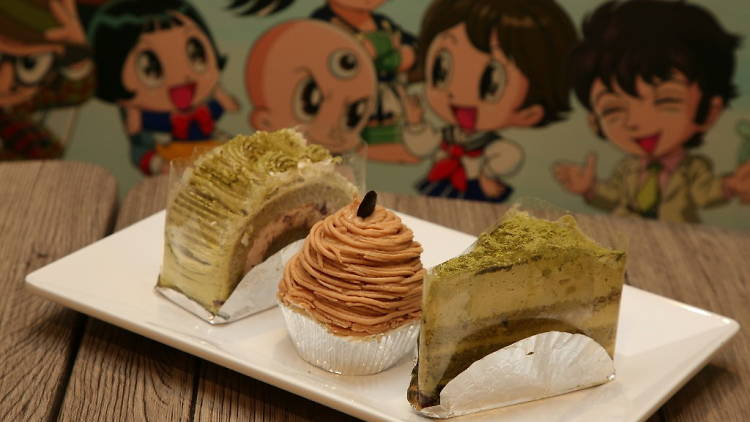
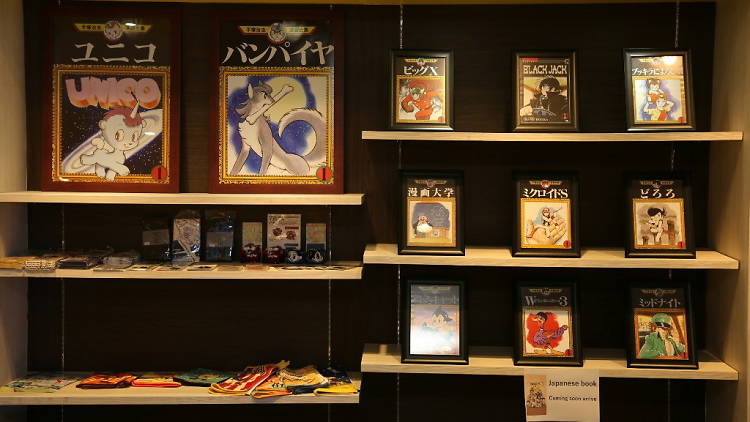
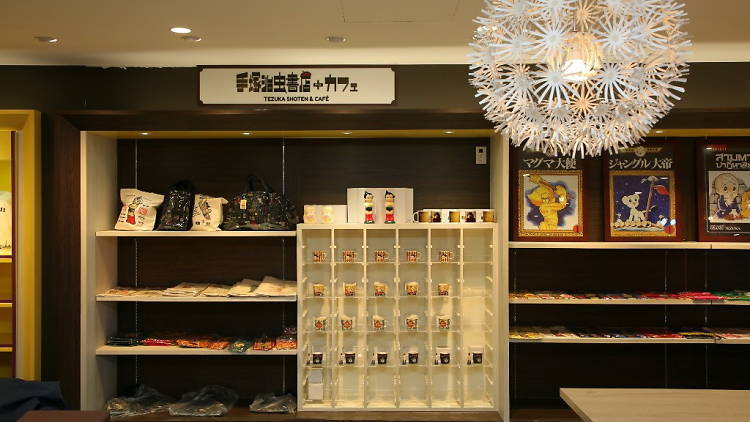
    Thailand’s first Japanese manga bookstore/cafe, Tezuka Shoten & Cafe, has just opened in Bangkok’s Paradise Park shopping centre.

    It has been brought to Thailand by MJ Service (Thailand), a company that helps Japanese companies set up in Thailand. MD Toru Sasaki co-presided at the store’s opening ceremony, which was attended by three Thai actresses.

    Tezuka Shoten & Cafe - Paradise Park Thailand 1


    It has two zones: a bookstore featuring works by manga artist Tezuka Osamu, and a cafe serving snacks and drinks inspired by the artist’s work. There is also the Tezuka Spot where all his works can be read free in Thai on smart devices.

    The store plans family activities based on manga comic books.

  • McDonald’s Japan to bring some French home

    McDonald’s Japan to bring some French home

    For a short time only, McDonald’s Japan has added limited-edition French macarons to its menu.

    Imported from France, the macarons are in four flavours and have special takeout boxes.

    Available at McCafe by Barista outlets, the new treats come in lemon, raspberry, vanilla and chocolate variants. The takeout “box set” contains the customer’s choice of three macarons and is available only in limited quantities.