Retail News Asia is committed to providing both local and global retailers with the latest Food and Food & Beverage news throughout the Asian market. This on a daily base.
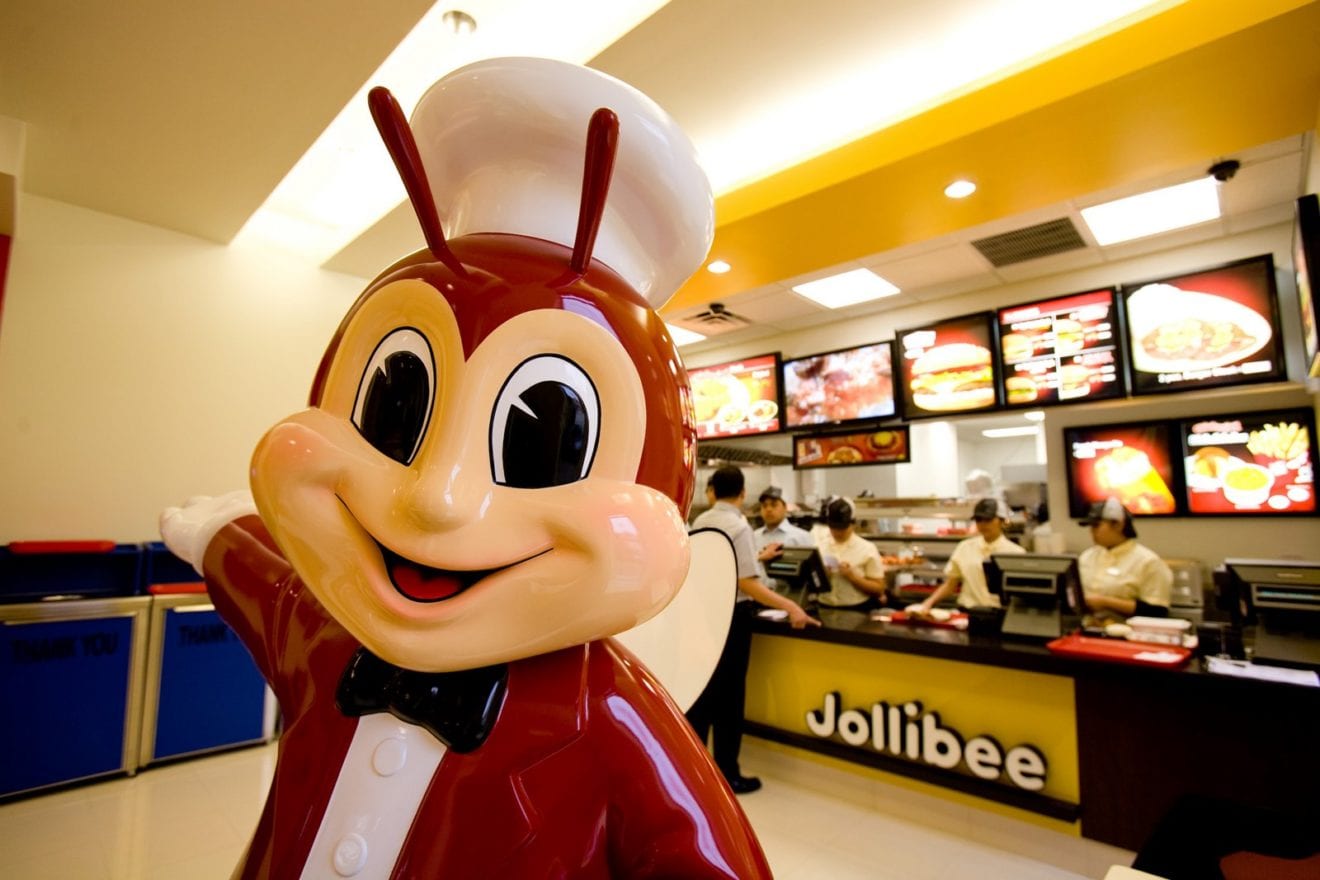
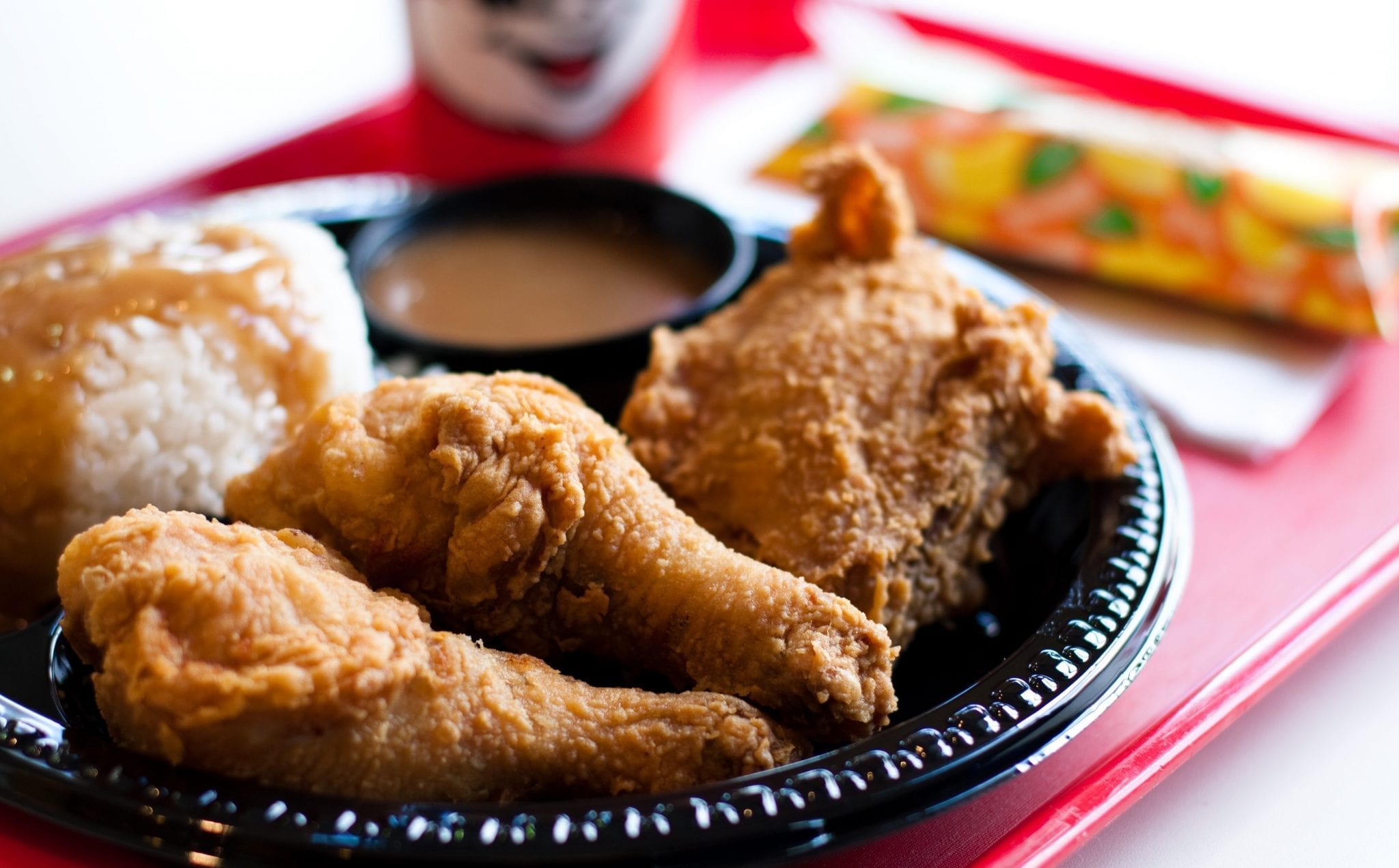
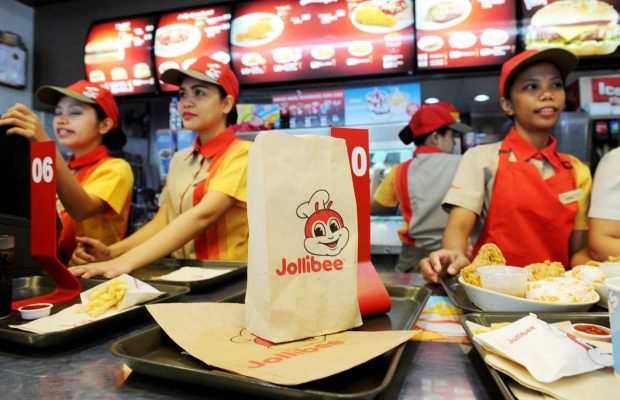
The famous Philippine chicken joy is spreading its wings across Asia as home-grown fast-food chain Jollibee announced Friday its plans for expansion in Singapore and Indonesia.
Dennis Flores, Jollibee president and head of international business in Europe, Middle East, Asia and Australia, confirmed that 15 more outlets will be opened in Singapore in the next five years.
He also revealed the company’s long-term expansion plans in Indonesia.
“We’re looking at putting up no less than 150 stores in Indonesia over the next 10 years,” Flores told ABC-CBN News.
Jollibee opened its first outlet in Singapore in 2013 located at Lucky Plaza, a known hub for overseas Filipino workers. Flores said, a 6th outlet will open at Jurong East in April 2018.
He said the growing number of Singaporean patrons is proof that “Jollibee’s offerings have greatly appealed to the taste buds of the locals.”
Aside from Indonesia and Singapore, Jollibee is looking into growing its international store network in Malaysia and Macau.
Blue Bottle Coffee has opened its latest flagship café in Tokyo, the sixth one to open in the Japanese capital, as the American coffee outfit expands its retail footprint in Japan.
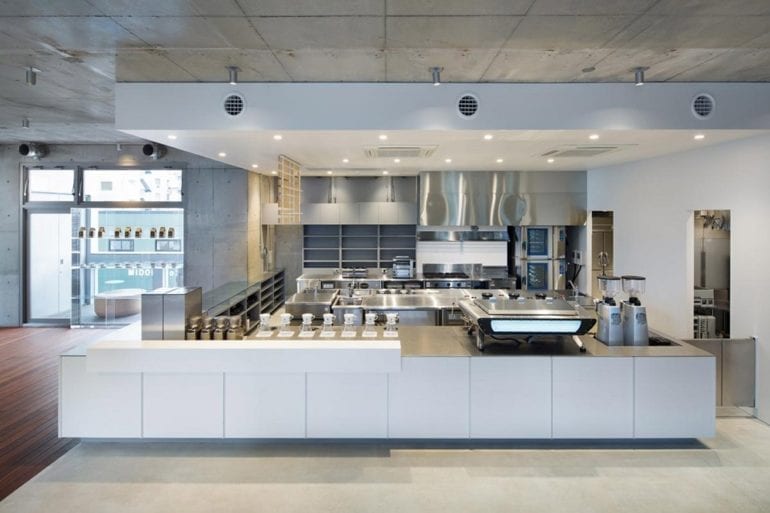
Located in Sangenjaya, the San Francisco-based café is situated in a 50-year old low-rise building, which stands at the end of a no-through road between two buildings; located just a 3-minute walking distance from Sangenjaya station.
Blue Bottle Café enlisted Schemata Architects once again to design the complete space layout. Working with the building’s current fittings, Schemata – the firm behind stores for 3.1 Phillip Lim and Loewe – took inspiration from the designs used with the previous space ownership, resulting in industrial concrete texture mixed with Japanese cedar wood.
However, the 100-square-metre space does reflect Blue Bottle’s bright and open feel, an aesthetic witnessed in the other five Tokyo outlets. There is specific area for workshops and barista training, along with a “soulful public space” for the local community, in a bid to give the company a strong connection to its most recent Japanese locale.
Offering more than just coffee and related products, customers can go to the register at the far end of the dead-end road, or stop by the drip-bar and walk around the seating area, before venturing outside to the garden in the backyard area. Walking along the building guest will find an entrance to a gallery also.
“This building is designed in such a way that customers will experience the continuation of this deep spatial sequence,” said Schemata Architects’ Jo Nagasaka, who is the architect in charge of the store.
James Freeman founded Blue Bottle Coffee Company in San Francisco in 2002. Still headquartered in Oakland, California, consumer goods giant Nestle acquired a majority stake in the new wave coffee firm earlier this year.
In 2017, Nestlé acquired a 68 percent stake in the company for some $500 million. The firm has plans to have 55 locations by the end of the year. Blue Bottle stores are located in the Bay Area, Los Angeles, New York City, Washington, DC, and Tokyo.
Burger King AsiaPac has signed a master franchise agreement with Nexus Point Management to further develop the fast-food brand in Taiwan.
Terms of the transaction have not been disclosed.
Burger King president Jose Cil says Taiwan is one of the largest quick-service restaurant markets in Asia Pacific.
Nexus Point managing partner Kuo Chuan Kung says it will accelerate the expansion of Burger King restaurants in the market and make further investments in technology and infrastructure.
The burger chain also has outlets in China, India, South Korea and Vietnam. Founded in 1954, i has more than 16,000 locations in more than 100 countries. It is owned by Restaurant Brands International.
Nexus Point is an Asian private equity fund with a focus on greater China.
Home-grown fast food chain Jollibee rolled out its fleet of eco-friendly delivery bicycles in key cities in the metro.
Fat bikes were spotted bringing bestseller chickenjoy to consumers, in a bid to lessen pollution in central business districts (CBDs), a company official said Tuesday.
The ‘Jollibee Bike Delivery Service,’ launched last November, serviced selected stores in Makati, Ortigas, BGC and Metro Cebu. It was also available in Laguna and Cavite, Arline Adeva, Jollibee’s AVP for Brand Communications and PR told ABS CBN News.
“We are the first to launch the Jollibee Bike Delivery Service in the Philippines and so far, we are the only one exploring the service,” Adeva said.
“The primary advantage of using bikes is really to lessen carbon emission especially in CBDs where it’s highly congested,” she added.
There are 40 fat bikes traversing the streets to deliver orders in areas near selected branches. Adeva said the bikes were customized for stable travel and are equipped with waterproof and dust-proof thermal bags to ensure superior food quality.
Riders’ safety will also be a priority, with road safety trainings and helmets provided for the delivery staff.
“We also conduct trainings for our riders to ensure they understand speed limits, making use of the bike lanes, and also to use their blinkers at night time,” she added.
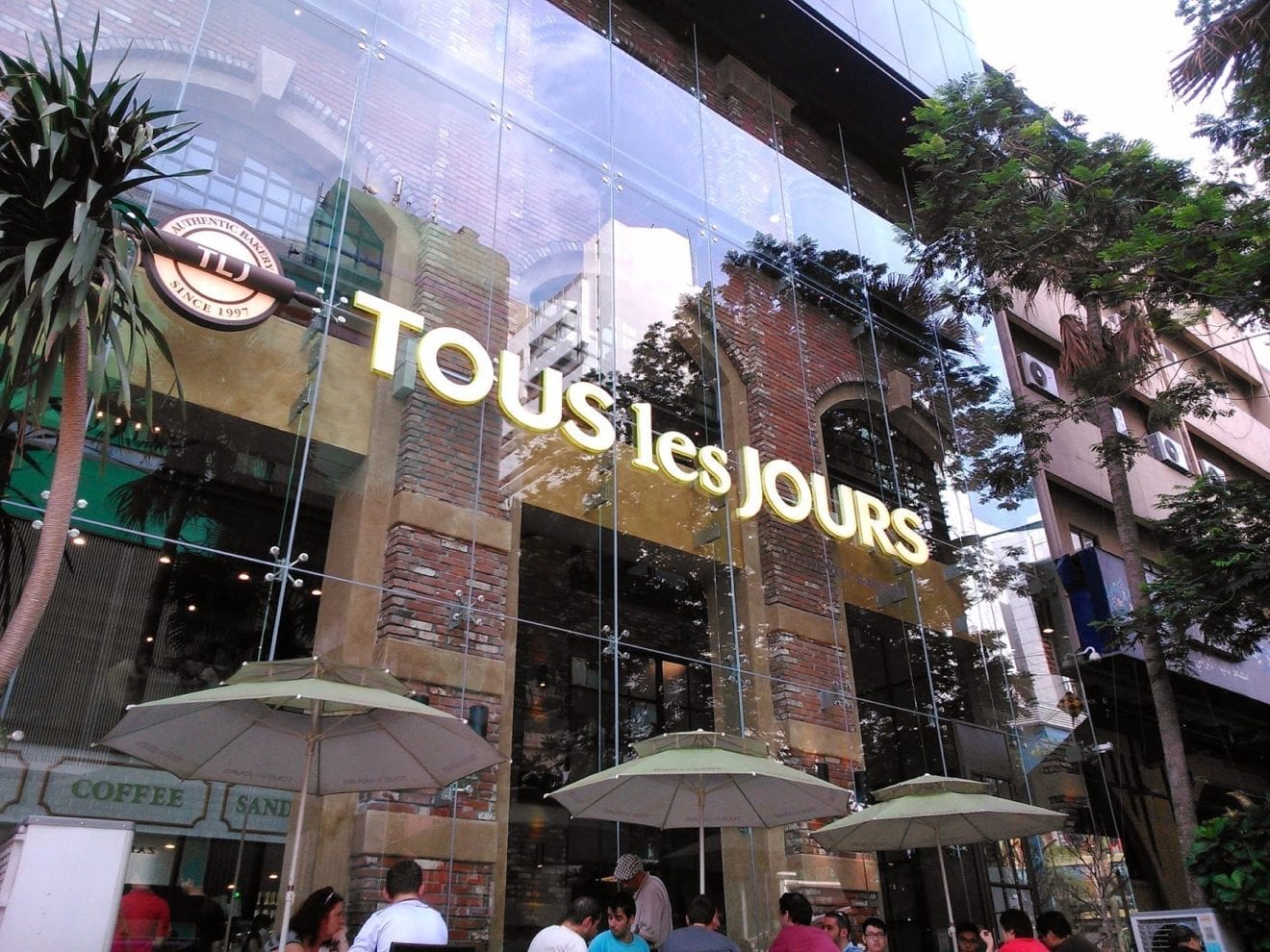
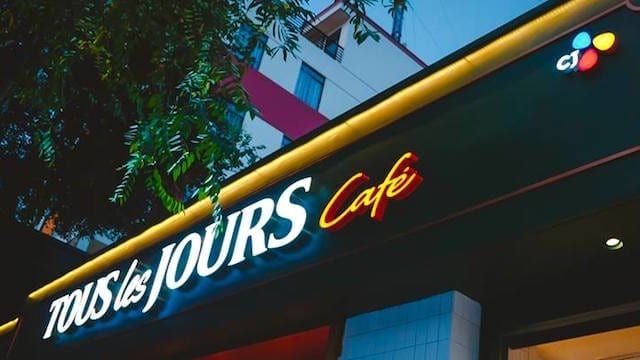
Bakery cafe Tous Les Jours Vietnam has launched a new brand identity at its Hai Ba Trung outlet in Ho Chi Minh City’s District 1.
Months in preparation, the refreshed store features a cafe-inspired interior and takes its inspiration from the “just baked” concept, reports the Vietnam Economic Times.
Tous Les Jours (every day) is a South Korean bakery franchise owned by CJ Foodville Corporation in the US. CJ Foodville Vietnam CEO Kim Gun Pyo says more new outlets are planned “in the near future”.
He says the company is committed to ethical business practices that strengthen its partnership with local businesses and contribute to the community. He says Tous Les Jours uses Fairtrade-certified coffee beans grown in Vietnam.
With 36 outlets in Vietnam, the company plans to reach 100 by 2020 and double that by 2025.
Tous Les Jours is a French-Asian bakery that serves baked goods and beverages. The brand was launched in the US in 2004 and also has stores in Cambodia, China, Indonesia, Malaysia and the Philippines, with plans to enter Singapore as well.
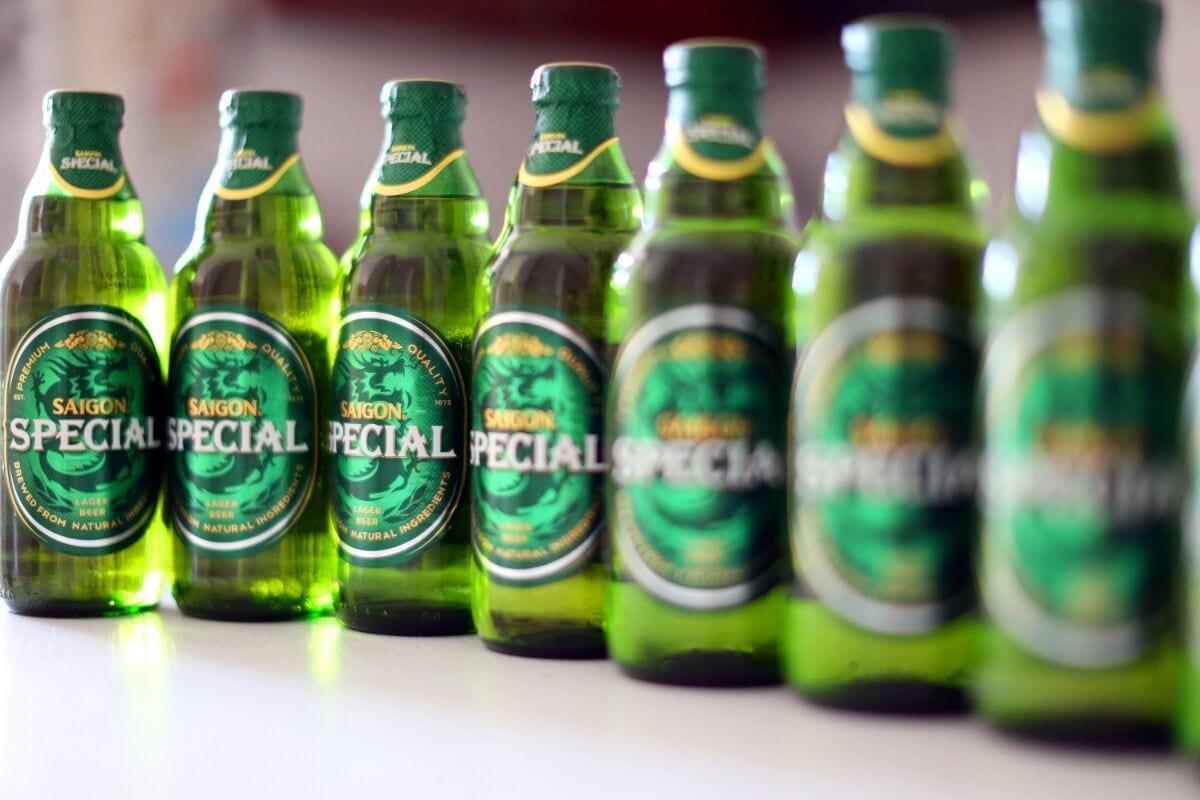
A unit of Thai Beverage (TBEV.SI) has emerged as the only prospective bidder for state-owned shares in Sabeco (SAB.HM) that has declared that it could lead to it owning 25 percent or more of Vietnam’s biggest brewer, the Trade Ministry said on Monday.
The auction of up to 54 percent of Sabeco worth at least $5 billion, in what is set to be Vietnam’s biggest privatization, offers brewers access to a fast-growing market with a youthful population and beer drinking culture.
Investors who want shares that would lead to an ownership of 25 percent or more in Sabeco have to inform the local authorities and publicize the information a week before the auction date, which is set for December 18, according to the rules of the offer.
Other brewing groups including Anheuser-Busch InBev and Kirin Holdings have been preparing to bid for a stake, people familiar with the matter have said.
But the trade ministry said in a statement on its website that as of 1100 GMT on Monday the one prospective investor which has registered an interest in buying 25 percent or more of Sabeco that has publicized the information is Vietnam Beverage Company Limited.
Vietnam Beverage Company Limited is owned by Vietnam F&B Alliance Investment Company, which is 49-percent owned by BeerCo Limited, an indirect but wholly-owned subsidiary of Thai Beverage, official documents about the companies showed.
Foreign ownership in Sabeco is limited to 49 percent. That means overseas bidders can only bid for a minority stake of as much as 39 percent as foreign entities already own 10 percent.
Lack of control and the unorthodox way in which the Sabeco stake is being sold could put off some possible bidders, bankers, investors and lawyers familiar with the matter said.
The Vietnam trade ministry, which represents state shares in Sabeco, said foreign investors can link up with Vietnamese firms to buy shares in Sabeco, but have to comply with local laws and regulations.
Cargill Joy Poultry Meat Production Inc. opened on Tuesday, giving chicken farmers in Batangas and nearby provinces new income opportunities, Jollibee Foods said Wednesday.
A joint venture between Jollibee Foods and Minneapolis, USA-based Cargill , the largest poultry processing plant in the country has a yearly capacity of 45 million chickens.
“The plant increases income opportunities for local poultry farmers in Batangas and nearby provinces as they will supply the chickens to be processed at the JFC facility,” according to Jollibee Foods.
The poultry plant in Santo Tomas, Batangas will supply the demand of JFC bands with dressed and marinated chicken.
“C-Joy is partnering with local poultry farmers in Batangas and nearby provinces to supply the new facility with chicken,” according to Cargill.
“We are looking forward to producing the chickens that will be supplied to the C-Joy plant to meet the poultry meat requirements of Jollibee,” said Vic Lao, president of Highcrest Corp., a partner-grower of the C-Joy.
Cargill and Jollibee Foods revealed the partnership in May last year, saying the processing plant will create an estimated 1,000 new full-time jobs in Batangas.
They said the plant will be 70-percent owned by Cargill Philippines which will oversee the setting up, management, and operations, with Jollibee Foods owning 30 percent.
JFC invested P244.9 million in the processing plant, and P15.2 million in Cargill Joy Poultry Realty Inc. from which C-Joy leased the land to build the facility.
The poultry processing plant is industry positive, according to the United Broilers Raisers Association.
“This is positive for the industry as this will promote competition among big market players like San Miguel and Bounty fresh,” UBRA president Bong Inciong told GMA News Online.
“Maganda rin ‘yan kasi kaunti lang ‘yung big players. So, healthy for the industry na may competition sila. Also, ‘yung mga small farmers will be given opportunity to grow kasi meron silang bagong malaking client,” he added.
Summit Securities Inc. president Harry Liu said the development will have an impact on the financial condition of Jollibee Foods.
“I think it will help the bottom line. I am sure they are doing this investment for future requirement and steady supply for the business now and in the future,” he said in a separate text message.
JFC closed the third quarter with a net profit of P1.62 billion, up 21.1 percent from a year earlier.
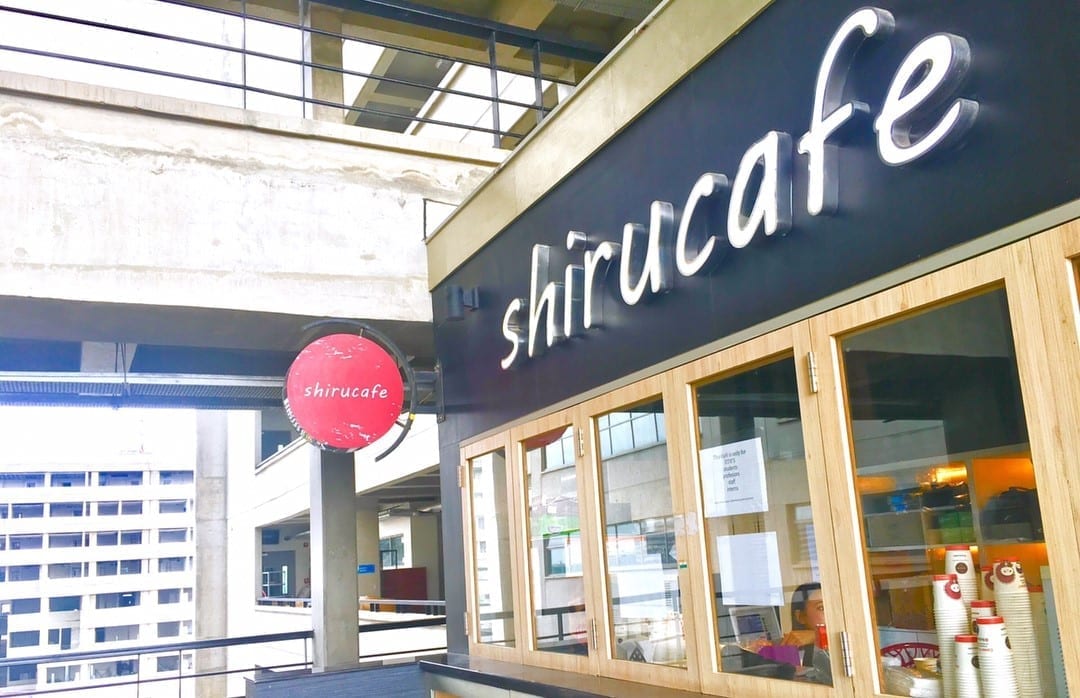
Japan’s Shiru Cafe concept is about to launch in the US, on a university campus in Providence.
It is being introduced by Enrission America, a cafe company that specialises in free coffee for university students.
Following the opening on the Brown campus, other branches will be launched at Harvard University, Yale University, Princeton University and Amherst College.
Especially for university students, Shiru Cafes are financed primarily through the sponsorship of companies that aim to improve student life. Students and staff members all receive free coffee, tea and juice while being provided with sponsors’ promotional materials. The cafes provide study spaces equipped with electrical outlets and free Wi-Fi internet access.
Sponsorship allows companies to advertise on paper coffee cups, on digital displays in the cafes and on the cafe’s website. Company representatives can also meet and interact with students in the cafes, as well as run recruitment activities.
Enrission America has opened more than 20 Shiru Cafes around the world. “It is an essential part of our vision,” says CEO Yusuke Kakimoto.
Enrission, based in Kyoto, was founded in 2013 and is firmly established in India and Japan with support from 130 companies including Microsoft JP and PWC JP.
PTT Philippines expects to spend PHP500 million (US$9.9 million) on beefing up its retail network, including a foray into the Japanese market.
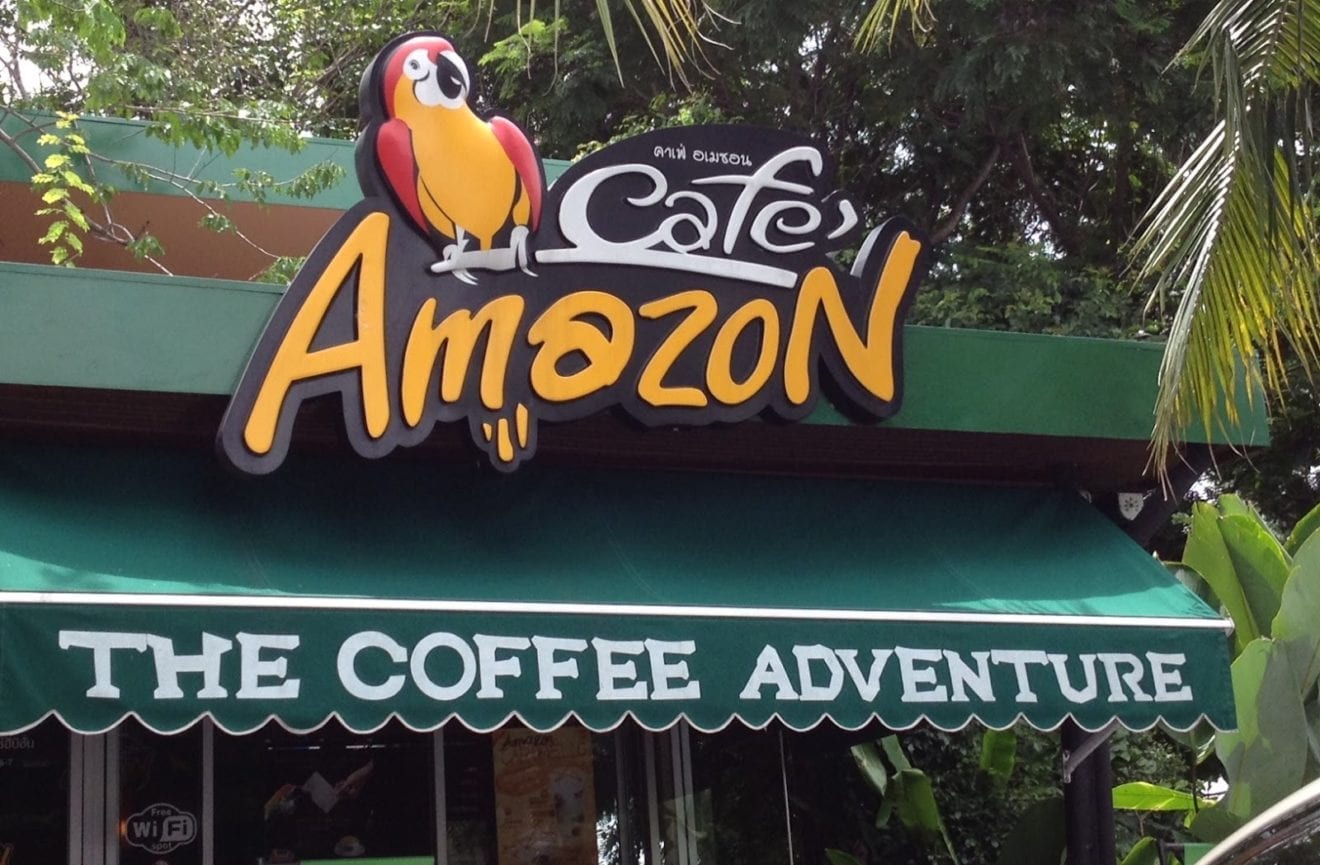
President/CEO Sukanya Seriyothin says that while the bulk of the expansion for the Thai oil and gas giant PTT subsidiary will be gasoline stations, it includes about 12 Cafe Amazon outlets, mainly in Luzon.
Following its diversification into the coffee business, PTT has started investing in the Philippines to complement its more than 1850 stores in Thailand and other parts of Asia, including one in Japan, says the company.
With a “notable landscape change” in its investment plan, the company aims to open 100 cafes in the near term, with six to be up and running by year end.
Following a holiday in Singapore last year, a restaurateur couple has returned to open a casual gourmet burger restaurant, Hans Im Gluck, in Orchard Road.
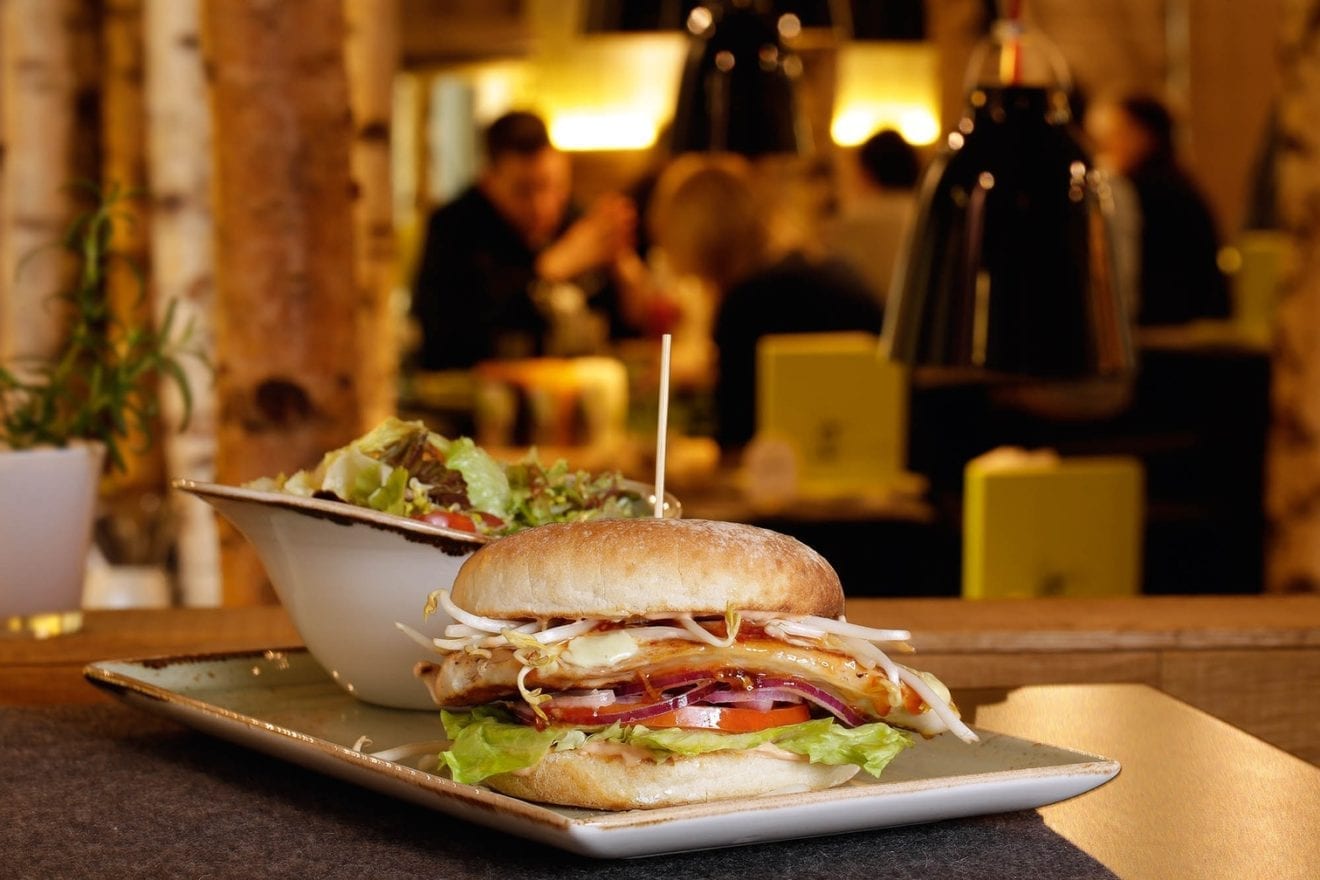
The brand’s 50th outlet and first outpost in Asia, it specialises in vegan, vegetarian, beef and chicken burgers served alongside salads, tea infusions and cocktails.
Hans Im Gluck was launched seven years ago by Gunilla Hirschberger, a vegan, who set herself the goal of shaking up Germany’s meat-focused dining scene. The 53-year-old Munich-based Swede saw a gap in the market for vegan-friendly offerings at burger restaurants, and with her German husband Thomas Hirschberger opened the first Hans Im Gluck in 2010, named after a German fairytale by the Brothers Grimm.
They now run 49 outlets in Germany and Austria, with more coming up in Italy and Switzerland.
Meanwhile, the Singapore restaurant is in a purpose-built outlet between International Building and the Royal Thai Embassy. Next year, the couple will open two more outlets – at Boat Quay and at Republic Plaza, Raffles Place.
For 15 years, the Hirschbergers ran a Californian-Mexican restaurant chain with 40 outlets across Germany, which they have since sold. When they visited Singapore they say they felt an instant connection to the city.
“Singapore has a good spirit and is full of different kinds of cultures. People here are open-minded and happy to see new things,” says Gunilla. “The city is innovative and has a good flow.”
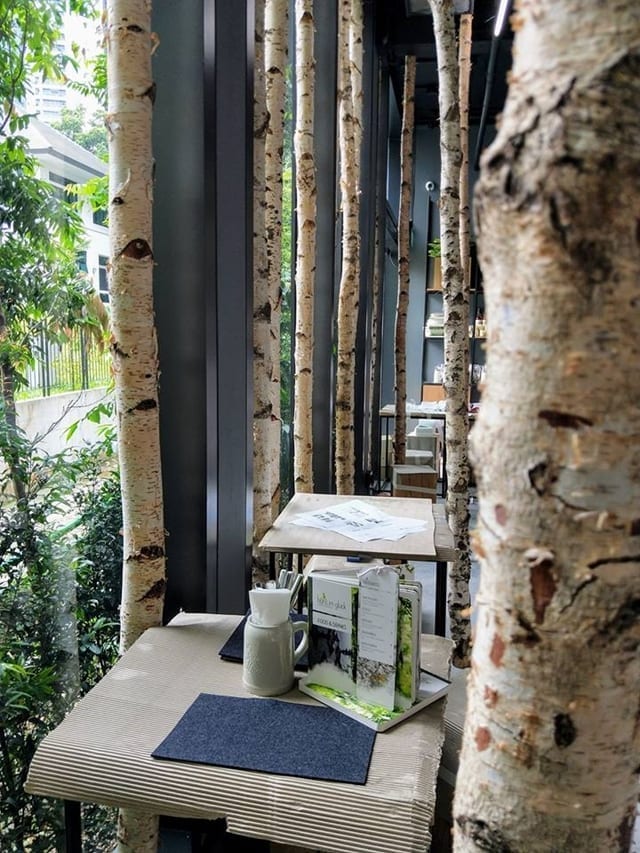
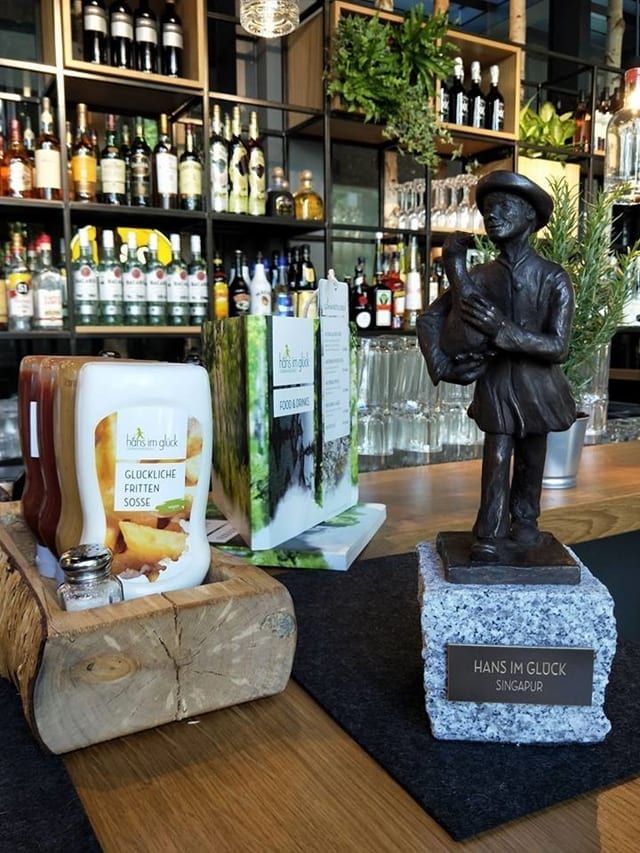
Their Singapore store features imported German-made oak furniture and 180 birch logs, installed throughout the restaurant to resemble a German forest. The menu, which looks like a children’s storybook, features 30 burgers.
It has its own sauces including vegan mayonnaise and orange mustard, as well as multigrain and sourdough buns made exclusively for the chain and sent frozen from Germany.
At 4000sqft (370sqm) and seating 180 diners, the restaurant is small compared with the German outlets, of which 23 are family-owned. Those restaurants are usually about 10,000sqft with about 400 seats, excluding the terrace.
The Singapore restaurants are wholly owned by the Hirschbergers, and the chain is looking to expand into other parts of Asia, including Hong Kong and Taipei.
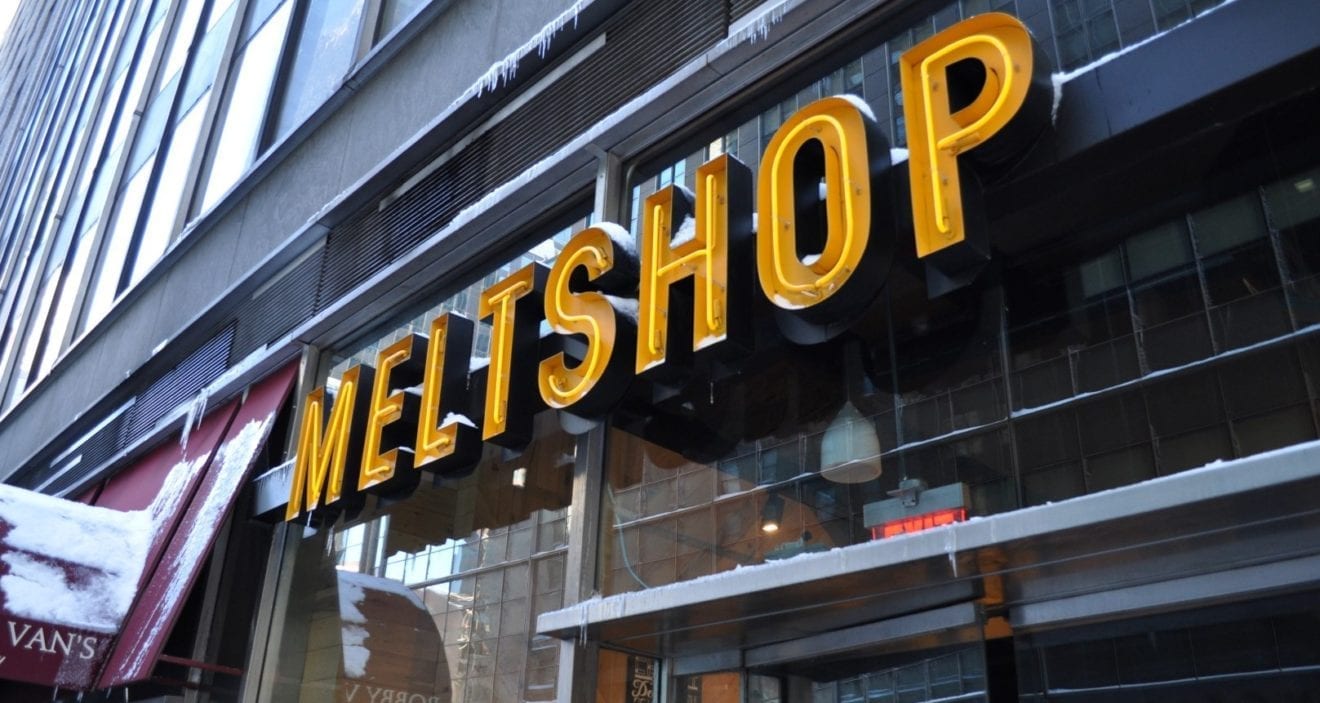
Melted sandwiches are about to take on the world, including Southeast Asia, according to the directors of US franchise chain Melt Shop.
Founder/managing partner Spencer Rubin believes the company is perfectly positioned to begin franchising internationally after expanding into the Middle East.
Melt was established in 2011 and now has eight corporate locations in New York, Philadelphia, and Minneapolis. Parent company Aurify Brands is a hospitality-focused business founded by multi-unit franchisees, and its plans for the Melt Shop include a global target of more than 100 locations over the next five years.
“Melt Shop has spent the past six years perfecting our brand and business model,” says Rubin. “The timing is right to take our New York-born fast-casual concept to the world.”
He says the company sees immense potential to grow through franchising, and is targeting experienced multi-unit franchisees who have restaurant and hospitality experience.
“Keeping the integrity of the Melt Shop brand is important to us. We will have dedicated operators overseeing the day-to-day running of our international locations. An intense and all-encompassing training program will also ensure no steps are overlooked.
“We strongly believe in compliance, and it is important we find partners who are dedicated and passionate about the Melt Shop brand. All locations will follow the same processes and quality standards, and we’ll do everything to make sure it is consistent across every location.”
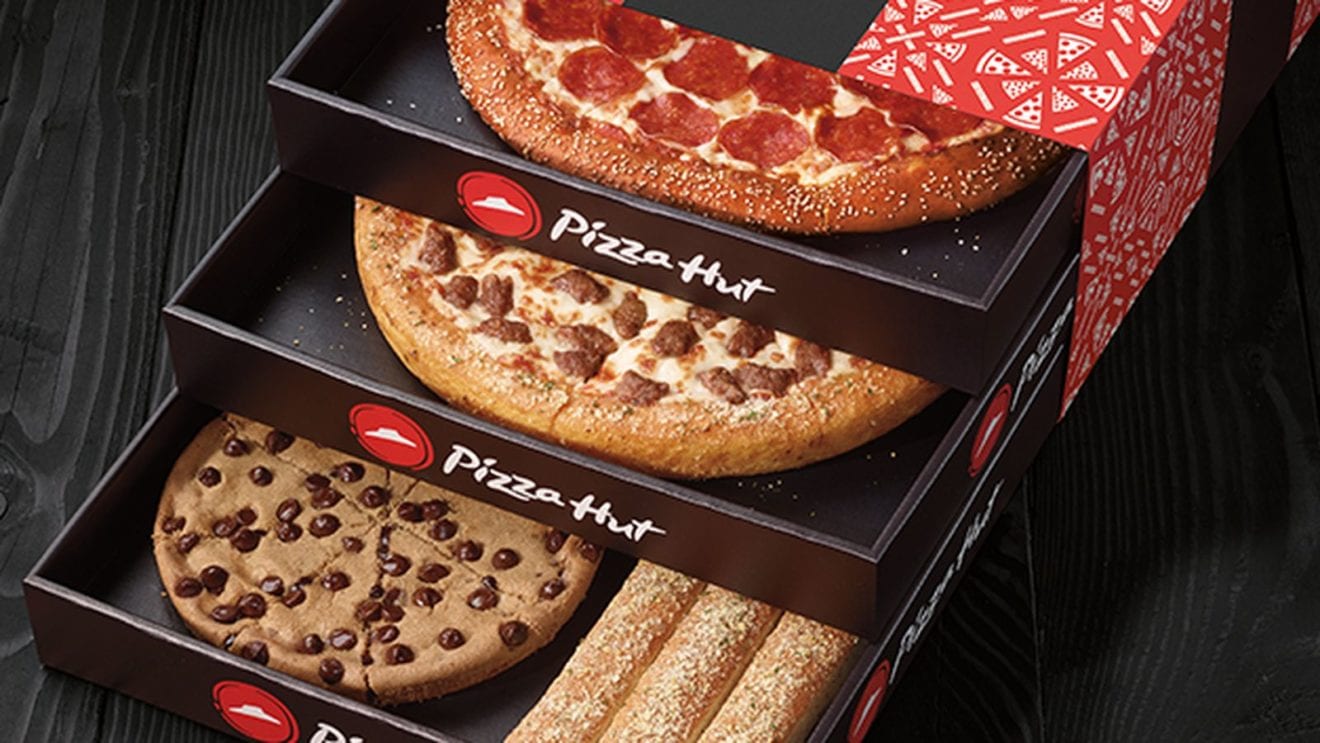
The company that runs Pizza Hut Indonesia plans an IPO that could raise as much as US$150 million.
Sriboga Raturaya has taken on advisers for a listing of its foodservice and restaurant franchising unit, which also runs the Japanese noodle chain Marugame Udon.
Shares could go on sale in Jakarta in the first half of next year, insiders say.
Indonesia’s pizza market is forecast to expand to IDR8.81 trillion ($650 million) by 2021, up from IDR5.76 trillion last year, according to Euromonitor International. Pizza Hut had more than 70 per cent of the market last year, followed by Domino’s with 6.1 per cent.
First-time stock sales in Southeast Asia’s largest economy raised $683 million this year, down from $1.03 billion for the same period last year, according to Bloomberg.
Sriboga Raturaya, which started as a producer of wheat flour in 1995, also has interests in education, logistics and making food ingredients.
That would be the company’s new Shanghai Roastery, a 30,000 square-foot “coffee wonderland,” which opened Tuesday and is Starbucks’ largest store to date.
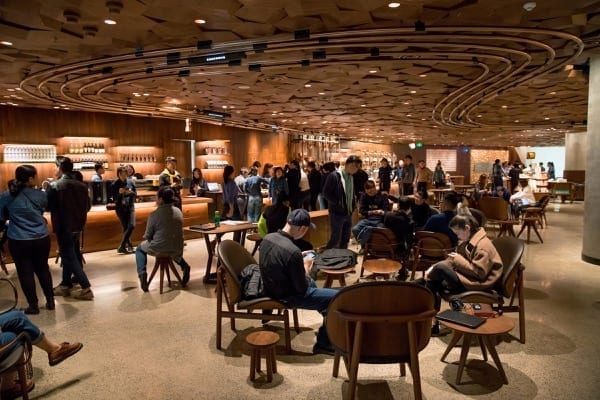
Located in the company’s fastest-growing country, the new Roastery is double the size of the original in Seattle that opened in 2014. It features three coffee bars offering multiple brewing methods; a 3D-printed tea bar; an Italian bakery, Princi; and a ceiling built with 10,000 handmade wooden hexagon-shaped tiles. There’s also a two-story, 40-ton copper cask with more than 1,000 hand-engraved Chinese stamps that tell the story of Starbucks and coffee.
Technology is weaved into the store, including Starbucks’ first-ever in-store augmented reality experience, built in partnership with Chinese tech giant Alibaba, which is also selling Roastery coffee and merchandise on its Tmall online marketplace. Yahoo noted that sales on Tmall reached $1 million in the 48 hours before the Roastery opened.
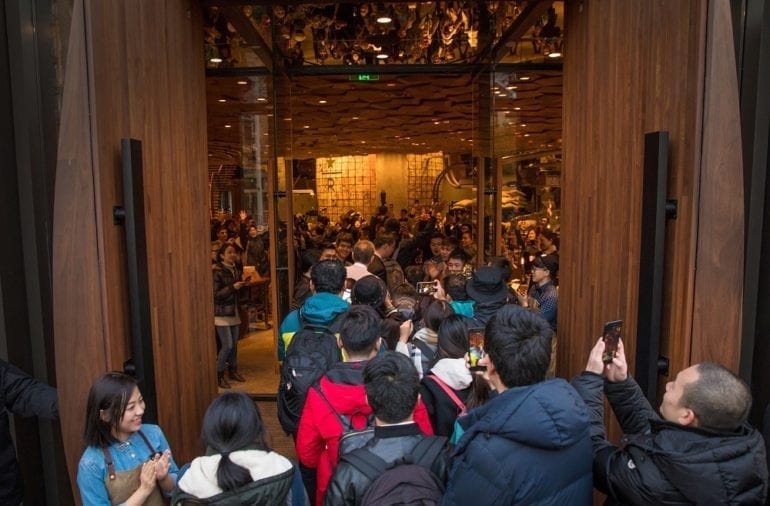
People gather in the new Starbucks Roastery in Shanghai, China. Photographed on Friday, December 1, 2017.
An augmented reality app is used in the new Starbucks Roastery in Shanghai, China. Photographed on Friday, December 1, 2017.
Starbucks plans to open more Roastery locations next year in Milan and New York City; and in Chicago and Tokyo in 2019. Speaking at the GeekWire Summit in October, Starbucks CEO Kevin Johnson explained that the Roastery stores act as “a center of innovation” for the company, which now has 27,000 stores in 75 countries and serves 90 million customers per week.
“You’ll see us invest in taking the innovation we get from the Roasteries and propagate it throughout all our Starbucks stores around the world,” Johnson said.
China represents Starbucks’ fastest-growing market with more than 3,000 stores across 136 cities, and 600 alone in Shanghai. The company posted same-store sales growth of 8 percent in the most recent quarter for China, compared to a 2 percent global average growth for stores worldwide. In July, Starbucks paid $1.3 billion to acquire the remaining shares in its East China business as it unified mainland China as a company-operated market.
At a press event in Shanghai this week, Johnson said that China will become Starbucks’ fastest-growing market within a decade, according to the South China Morning Post.
“If you look at the growing middle class in China and the opportunity for more and more people to frequent Starbucks, we can build stores in China for decades and still have runway to build more,” Johnson said at the GeekWire Summit.
Starbucks CEO Kevin Johnson speaks at the 2017 GeekWire Summit.
China can also act as a testbed for the company’s new digital products and services, given that there are nearly 700 million smartphone users. In July, Starbucks Chairman Howard Schultz hinted that Starbucks would partner with more Chinese tech companies “based on the fact that the consumer in China is well more advanced than the U.S. consumer in terms of being a digital native.” It previously partnered with another Chinese tech giant, Tencent, for social gifting integration on WeChat.
At the GeekWire Summit, Johnson noted that Starbucks is working to create a “unified commerce platform” that enables its rewards program to work seamlessly across international markets.
“The key factor is some software that our teams are writing that is rolling out country by country around the world, and it might take us another two years to touch every country,” he noted.
Asked how Starbucks creates a consistent customer experience at its stores around the world while staying true to local culture, Johnson said it’s about creating a welcoming store environment, providing top quality coffee, and most importantly, human connection — the “one thing that every single one of us on this planet has in common.”
“We’ve all experienced joy and sorrow; we’ve all experienced the struggle and the success,” Johnson explained. “So just anchoring on the fact that human beings, we are tribal people — we get energy from one another. If you create an environment where people are connecting with other people in our stores, it works everywhere.”
Johnson also talked about how Starbucks ties together a physical store experience with digital innovation.
“One, you must be focused on experiential retail that creates an experience in your store that becomes a destination for the customer,” Johnson explained when asked about what physical retailers must consider in 2017. “And number two, you have to extend that experience from brick-and-mortar to a digital-mobile relationship. So our approach to this is investing in elevating the experience we create in our stores, and investing in the digital-mobile connection we have with our customers.”
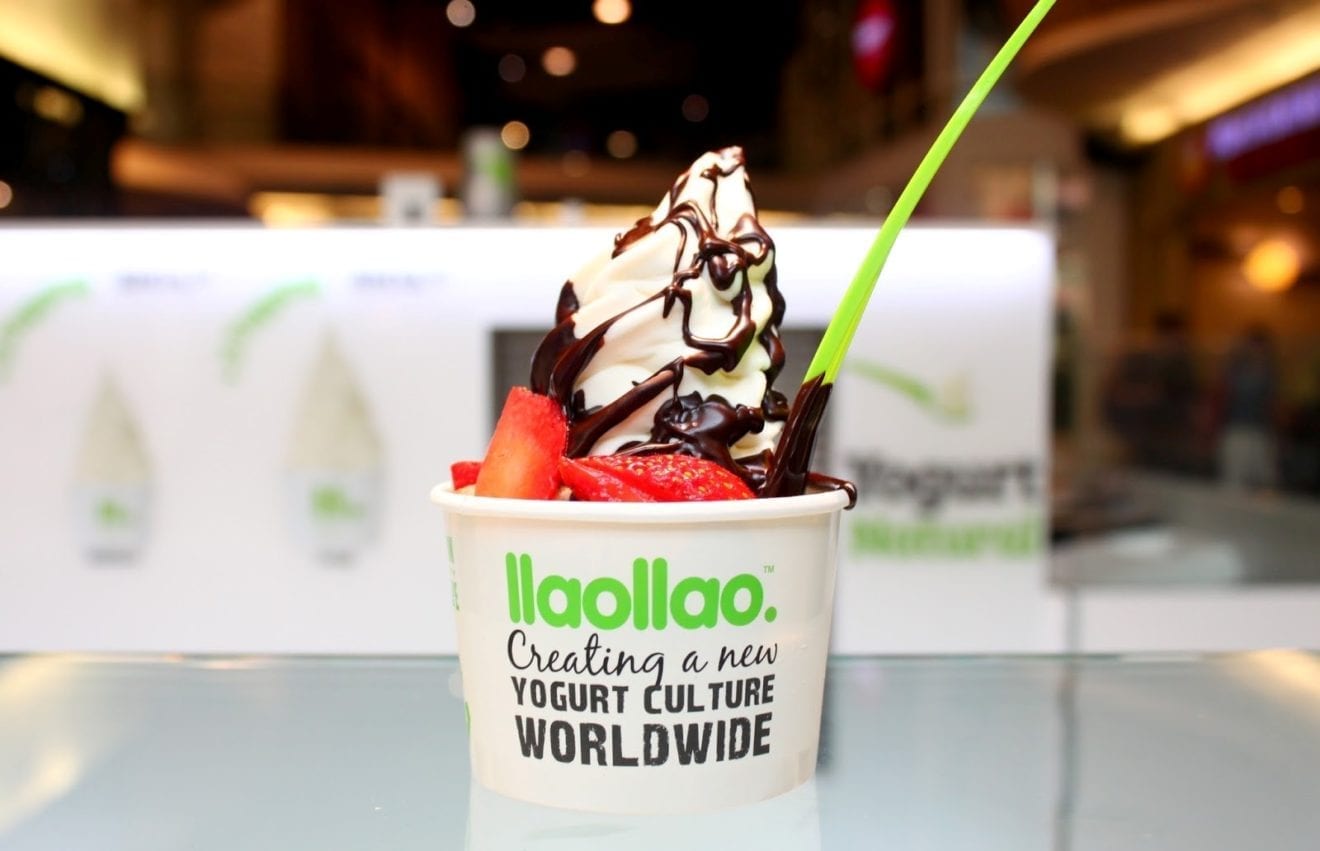
Spanish frozen yogurt chain Llaollao closed yesterday, being replaced by another European brand, Yole.
D+1 Holding, the master franchisee of Ilaollao in Singapore, has not revealed why it has discontinued with the brand.
However, the company has acquired the rights to European frozen-yogurt chain Yole and will be converting all 29 Llaollao outlets throughout Singapore to the new brand by tomorrow, Channel NewsAsia reports.
Arriving in Singapore four years ago, Llaollao attracted queues outside its flagship store at Marina Square and other branches. The brand also opened its largest outlet internationally at Suntec City in August 2015.
Yole will also serve natural frozen yogurt as well as a coconut soft-serve ice cream. Toppings and different flavours, made with ingredients from Italy and Spain, will be introduced regularly.
The world’s largest, most beautiful Starbucks yet opened its doors yesterday in Shanghai at 30,000 square feet.
Featuring everything from Starbucks longest coffee bar, to the world’s only 3-D printed tea bar, and Starbucks first Augmented Reality experience, the roastery takes coffee lovers through a one-of-a-kind coffee journey that is sure to impress.
The Roastery in Shanghai is the epitome of coffee and retail innovation for Starbucks. As China is at the forefront of Starbucks vision for global growth and innovation, it was the perfect place for the largest Starbucks to open. China is the company’s fastest growing market with more than 3,000 stores across more than 130 cities.
On Dec 5, two of the world’s most innovative retail titans – Howard Schultz and Jack Ma – came together to celebrate the opening of Starbucks Reserve Roastery Shanghai.
Officially the largest, most beautiful Starbucks® location in the world at nearly 30,000 square feet (2,700 square meters). FUN FACT: The Starbucks Reserve Roastery Shanghai is twice the size of the flagship Reserve® Roastery in Seattle and the equivalent of 40 average NYC apartments.
Home to three coffee experience bars, one of which is 88 feet (26.9 meters) long, making for the longest Starbucks coffee bar in the world. FUN FACT: Known as the main engine of the Roastery, the coffee bar was handcrafted by premiere Chinese artisans and references the unique roasting curve of individual coffee beans.
Mirroring the signature copper cask at the inaugural Reserve Roastery in Seattle, at entry, customers will be greeted by the stunning site of a two-story, 40-ton copper cask adorned with over 1,000 traditional Chinese chops, or stamps, hand-engraved to narrate the story of Starbucks and our Reserve coffee. FUN FACT: The iconic cask connects to the three coffee bars with pneumatic copper piping, replenishing all the roasted Starbucks Reserve® coffee silos.
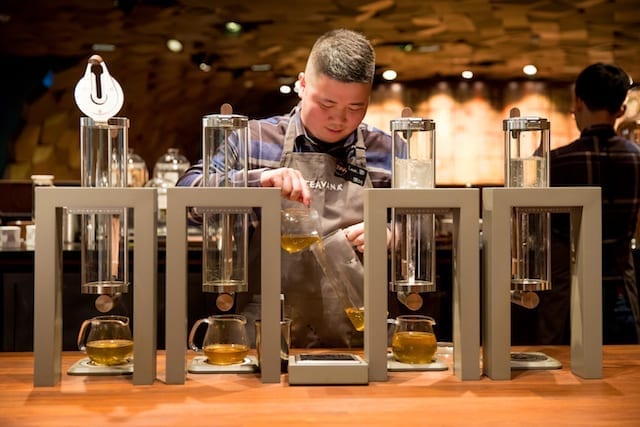
Unique beverage menu items that cannot be found at any other Starbucks in China. FUN FACT: Over 100 beverages are on the Roastery menu including Teavana tea infused with nitrogen as well as a new take on tea brewing with the Steampunk, which uses steam to extract unique flavors from each tea leaf.
Overall design of the space inspired by coffee and created exclusively in China for China – it will never be repeated. FUN FACTS: Some of the key design features include a ceiling consisting of 10,000 handmade wooden hexagon-shaped tiles inspired by the locking of an espresso shot on an espresso machine.
First PrinciTM bakery and café location in Asia, with more than 30 skilled Chinese bakers and chefs. FUN FACT: More than 80 menu items will be baked fresh onsite daily, bringing acclaimed Italian baker Rocco Princi’s artisanal Italian recipes to customers in China for the first time.
The new Shanghai Roastery features China’s first Starbucks® Teavana Bar, a reimagined tea experience supported by the world’s only tea bar made entirely from 3-D printed recycled materials. FUN FACT: The light jade coloring of the Teavana Bar was inspired by ancient green clay teapots and the stains formed by brewing over time. Starbucks will continue China’s rich brewing tradition alongside tea curators as they practice mixology with the help of the Steampunk system’s nitrogen flavor extraction.
First Starbucks Reserve Roastery outside the U.S., and only second Reserve Roastery to date. FUN FACT: Additional Roasteries are slated to open in Milan and New York in 2018, and Tokyo and Chicago in 2019.
Starbucks first-ever in-store Augmented Reality Experience. FUN FACT: Designed by Starbucks, and powered by Alibaba, the Shanghai Roastery will become the first Starbucks location, and the first-of-its kind in China, to seamlessly integrate a real-time, in-store and online customer experience. Roastery customers are invited to immerse themselves in the first Starbucks augmented reality (AR) experience by simply pointing their phones at key features around the Roastery to bring to life information about the Starbucks bean-to-cup story. Guided through the space by a custom-designed AR “tour-guide,” customers can unlock virtual badges and a unique Roastery filter to commemorate their visit.
China is Starbucks fastest growing market with a new store opening every 15 hours. FUN FACT: Starbucks has had a presence in China for more than 18 years, now with more than 3,000 stores across 136 cities, over 600 of which are in Shanghai, the largest number of stores globally of any city where Starbucks has a presence.





 Starbucks CEO Kevin Johnson speaks at the 2017 GeekWire Summit.