Category: Food

Retail News Asia is committed to providing both local and global retailers with the latest Food and Food & Beverage news throughout the Asian market. This on a daily base.

  • Hong Kong’s fresh retail chicken shops may make a comeback

    Hong Kong’s fresh retail chicken shops may make a comeback

    Chicken rules the roost when it comes to Cantonese cuisine, and the fresher the better. But past government efforts to discourage retail sales of live chickens had almost put the once ubiquitous chicken shop on the endangered list.

    In the not so distant past, people in Hong Kong would visit their neighborhood chicken shop — easily identified by the cages of squawking chickens out front — where they had the butcher ‘process’ their chosen bird on the spot.

    “Live poultry is much tastier than frozen meat, especially when steamed,” says a local woman in her 60s, presumably reflecting the sentiments of the territory’s residents, who like their chicken steamed, boiled or as a base for soups.

    But having so many live chickens around increases the possibility of an avian flu epidemic, which can be devastating to both birds and people. Since the late 1990s, with each outbreak of the bird-born disease that resulted in human deaths, government officials have ordered the wholesale slaughter of chicken stocks.

    Because of this, the government had stepped up measures over the years to restrict the live poultry business, including encouraging poultry farms and chicken retailers to relinquish their live poultry licenses. At the same time, safety measures, such as vaccinations and inspections, were implemented to halt the spread of the disease at production and distribution centers.

    As a result, there have been no recent outbreaks of bird flu in the territories, prompting the Hong Kong Food and Health Bureau earlier this month to change its stance and let the live poultry trade flourish again.

    Meanwhile, the number of chicken retailers — once numbering more than 800 shops — has fallen to about 130 as of the end of 2016, putting a premium on live poultry, which has been trading at the high range of 200 Hong Kong dollars ($25.72) per chicken. This price surge has forced Hong Kong shoppers to turn to cheaper frozen birds available in supermarkets.

    But with the government’s new recommendations, there may soon come a time when Hong Kong’s chicken lovers can buy their birds fresh without putting a dent in their wallets.

  • Appetite in Europe, Philippines may boost Vietnam’s 2017 rice exports

    Appetite in Europe, Philippines may boost Vietnam’s 2017 rice exports

    Vietnam’s global rice export ranking this year is expected to remain unchanged, trailing behind Thailand and India. Preferential import taxes in Eastern European countries and an extended rice supply agreement with the Philippines may help boost Vietnam’s rice exports this year by around 9 percent to 6 million tons, a U.S. Department of Agriculture attache said.

    The 2017 forecast, up from the 5.5 million tons shipped last year, leaves Vietnam’s global rice export ranking unchanged in third place, trailing Thailand and India, according to USDA projections.

    Vietnam can benefit from preferential import duties in Russia, Belarus, Kazakhstan, Armenia and Kyrgyzstan after the Vietnam-Eurasia Economic Union Free Trade Agreement came into effect in October 2016, the USDA attache said in a report released on Tuesday.

    It also cited a rice trade agreement renewed in January, under which Vietnam can supply up to 1.5 million tons annually to the Philippines from 2017-2018.

    Rice exports to China, the biggest buyer of Vietnamese rice, are also expected to stay strong, now that China has approved 22 Vietnamese export firms, the report said.

    In a separate report released on Wednesday, the U.N. Food and Agriculture Organization also forecast Vietnam’s rice exports this year to jump 11 percent from 2016 to 6.9 million tons, citing demand from the Philippines and China.

    Exports slow

    Despite a positive outlook, Vietnamese export businesses said rice sales to eastern European countries have not been made easier because countries such as Russia often require high-quality grain.

    “There may be preferential import duties, but the cost to process rice and keep it pest-free would be higher than paying the import tariffs,” a Ho Chi Minh City-based exporter told VnExpress International.

    Asked about the Philippines, he said there were mixed reports, with some saying Manila was going to buy soon, while others said the National Food Authority, the country’s logistics agency in charge of importing rice, has not finalized any purchasing plans.

    Vietnam’s first-quarter rice exports fell 17.5 percent from a year ago to 1.29 million tons, extending a decline seen since May 2016, even though demand from China, Singapore and the Ivory Coast pushed March shipments alone to 550,700 tons, the highest monthly figure in a year, Vietnam Customs data shows.

    China is projected to import 5 million tons of rice in the 2016/2017 marketing year ending June 2017, up 4 percent from the previous year, a USDA report said in January.

    China bought 1.74 million tons of Vietnamese rice in 2016, down 17.5 percent from the previous year, based on customs data. The statistics did not include an estimated 1.5 million tons sold across the land border, according to a Vietnamese industry analyst.

    Shipments to the Philippines last year plunged 65 percent from 2015 to 396,000 tons, based on customs data.

    Vietnam is projected to export around 5 million tons this year, the Vietnam Food Association has said. Last year, the Southeast Asian nation shipped 4.8 million tons, the lowest since 2008, due to rising competition and growing production in key regional buyers, as well as higher stocks in Africa.

    In 2016, rice slipped to the third-biggest earner among Vietnam’s agro-exports, after seafood and fruit.

    Thinner stocks

    With rising exports expected in 2017, Vietnam’s stocks could drop to 1 million tons at the year-end from 1.42 million tons last year, the USDA report said, adding that output and domestic consumption would remain steady.

    Vietnam’s 2017 milled rice output is projected at 28.1 million tons, 0.7 percent up from last year due to higher yields, and domestic consumption and residual would edge up 0.4 percent to a combined 22.8 million tons.

    While per capita consumption has been easing thanks to rising incomes, there is “higher use of rice in home-made animal and aquaculture-feeds, and growth in the food processing sector, especially in the beer and rice wine industries,” the report said.

  • Major Vietnamese sugar firms in merger talks

    Major Vietnamese sugar firms in merger talks

    Once established, the new company, will be the biggest sugar firm on Vietnam’s stock market. Thanh Thanh Cong Tay Ninh Joint Stock Company, a subsidiary of Thanh Thanh Cong Group, and Bien Hoa Sugar Joint Stock Company are planning to merge.

    Thanh Thanh Cong Tay Ninh’s board of directors will submit the plan for approval at a snap company general meeting set for late May or early June.

    The board plans to ask shareholders to agree to issue new shares to replace all of Bien Hoa Sugar’s shares on the stock market.

    Following the merger, the new company’s market capitalization will be an estimated VND10 trillion ($440 million).

    Thanh Thanh Cong Tay Ninh and Bien Hoa are currently among the largest listed sugar companies in Vietnam.

    At the end of 2016, Thanh Thanh Cong Tay Ninh had total assets of more than VND7.3 trillion ($321.2 million) and equity of nearly VND3 trillion ($132 million), while Bien Hoa had over VND6 trillion and roughly VND2.28 trillion.

    The current market capitalization of Thanh Thanh Cong Tay Ninh is VND6.2 trillion, while Bien Hoa’s is estimated at VND3.7 trillion.

    Bien Hoa Sugar shares were up 4.58 percent to VND13,700 at the end of Thursday’s trading session, while Thanh Thanh Cong Tay Ninh’s were down 0.2 percent at VND24,450.

  • Jamies’s Italian Siam Discover Joins With Food Panda

    Jamies’s Italian Siam Discover Joins With Food Panda

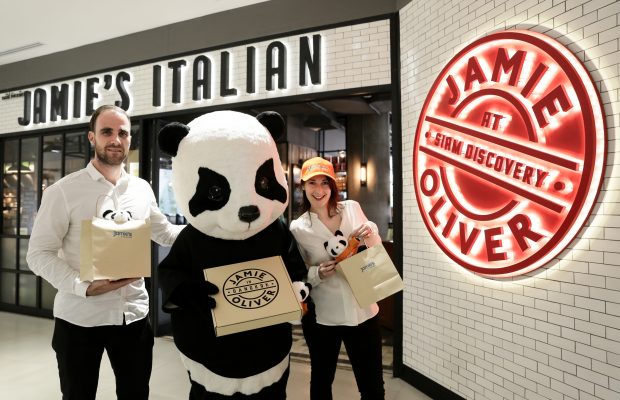
    Jamie’s Italian Siam Discovery is proud to announce that it will launch a food delivery service alongside foodpanda – a popular and reliable food delivery team. Simply place your orders at www.foodpanda.co.th or on “foodpanda” mobile application and enjoy delicious Italian food delivered directly to you! A 40-baht delivery fee will be charged per order.

    Sarah Smith, General Manager of Jamie’s Italian Siam Discovery, says, “Jamie’s Italian Siam Discovery proudly presents our food delivery service, directly delivered to customers in Bangkok. We have joined forces with “foodpanda”, who are renowned for their food delivery service in Bangkok. We are going to launch our delivery service , allowing those who want to keep dry to enjoy Jamie’s Italian food at home. This is a great opportunity for those who haven’t been able to visit the restaurant to try our delicious Italian comfort food, without leaving their home or office.”

    Jamie’s Italian Siam Discovery strives to source only the best free-range, higher-welfare meat and sustainable and ethically produced ingredients. All the recipes are Italian classics with a Jamie twist. The restaurant will also work closely with Thai farmers and suppliers to showcase local produce.

    Menu recommendation

    The menu available on foodpanda has been chosen by the Jamie’s Italian team to give you a taste of Italian home cooking wherever you are. Enjoy antipasti and appetisers, including Ultimate garlic bread, Tomato bruschetta, Primavera bruschetta, Roasted carrot & avocado salad, and Porcini arancini .

    Customers can also choose from a delicious selection of pasta and pizzas – think Sausage casarecce, Tagliatelle Bolognese, Prawn linguine, Penne arrabbiata, Margherita pizza, Gennaro’s Italian sausage pizza, Funghi pizza, Italian hot pizza, and The Parma pizza.

    For mains or sides, customers can enjoy Chicken al mattone, Classic super food salad and the Jamie’s Italian Caesar salad. Plus, you can add delicious sides to your meal, from Crispy polenta chips to Spicy fries, Rainbow slaw, and Rocket salad.

    To finish, you can even order something sweet – try the Epic chocolate brownie, Raspberry rippled pavlova and Tiramisù. Don’t forget to try special drink like Italian lemonade and Italian sodas.

    Jamie’s Italian Siam Discovery and foodpanda are ready to serve you incredible Italian food made with the best ingredients – visit the website www.foodpanda.co.th or the foodpanda mobile application. A 40-baht additional delivery charge will be required per one-time order.

    Those who want to enjoy a full-option dining experience are invited to Jamie’s Italian Siam Discovery on G floor, Siam Discovery. The restaurant opens every day from 12.00 to 22.00 hrs. Bookings are available at www.jamiesitalian.co.th or call 0 2255 5222

  • Sales of Indonesian Coffee in Italy Expected to Rise

    Sales of Indonesian Coffee in Italy Expected to Rise

    Indonesian Ambassador to Italy Esti Andayani targets economic growth of Indonesia-Italy investment and trade to rise 25 percent during her term of office in Rome.

    “25 percent is the overall figure, yes, both in investment trade,” Esti said in Jakarta (15/4).

    In 2015, the total of Italy investment realization reached US$ 97,99 million that made it the tenth largest investor in Indonesia. Based the data of Foreign Affair Ministry, the trade volume of both countries was US$ 3,82 billion with Indonesia’s surplus as much as US$ 433 million.

    Esti said that coffee is the main commodity promoted in Italy. Its export is worth US$ 58,8 million or the third largest export after palm (US$ 975 million), and resin (US$ 93 million).

    Esti claimed to have prepared a number of strategies to draw the attention of Indonesian coffee exporters to Italian market, one of which is by means of integrated promotion through participating in annual “World Tourism Expo” in Italy.

    “Well, tourism here not only promotes the place, but also everything, including coffee,” she added.

  • Strong first quarter for Yum China

    Strong first quarter for Yum China

    Sales, profits and margins all grew, along with store expansion, for Yum China Holdings in its unaudited results for its first quarter to the end of February.

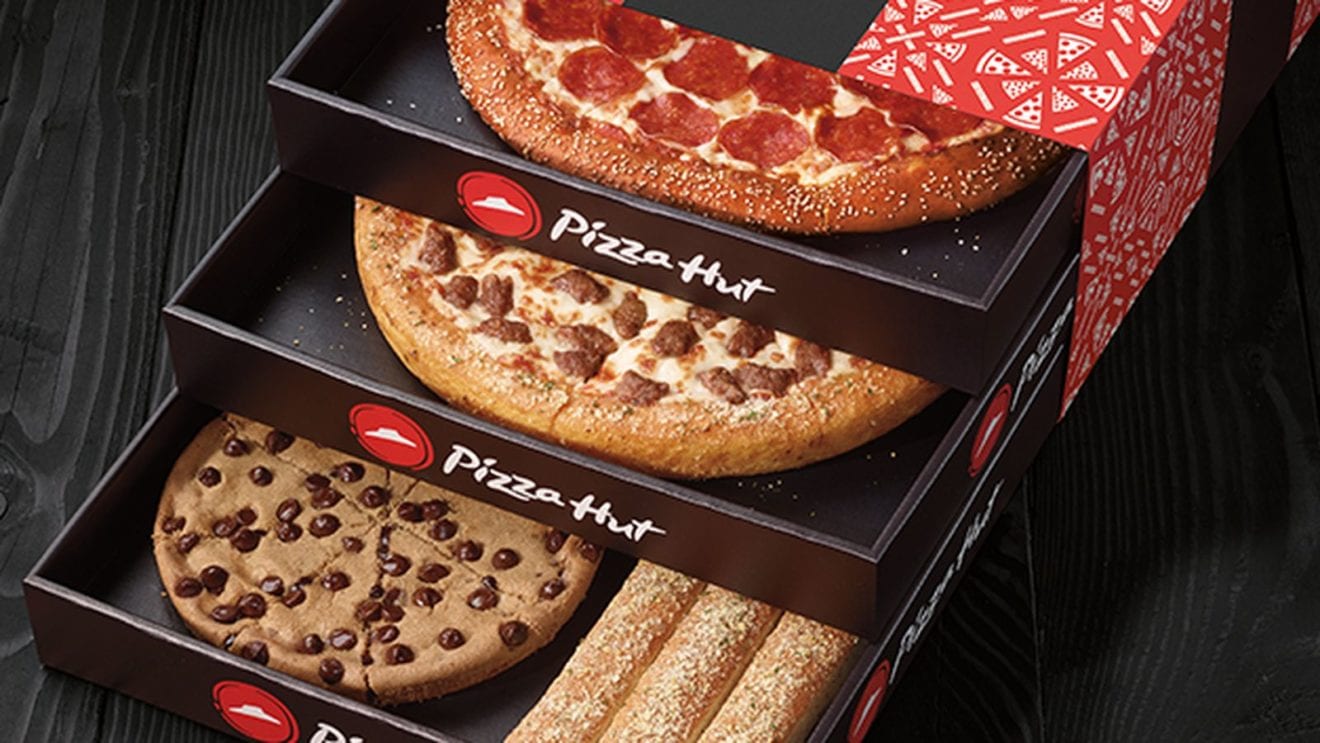
    Same-store sales grew 1 per cent, including growth of 1 per cent at KFC and 2 per cent at Pizza Hut Casual Dining. Total system sales grew 4 per cent (3 per cent at KFC and 9 per cent at Pizza Hut).

    The group opened 133 restaurants during the quarter.

    Total restaurant margin increased 3.7 points to 23 per cent, mainly helped by retail tax structure reform implemented on May 1.

    Operating profit grew 22 per cent and 27 per cent excluding foreign exchange, which negatively impacted operating profit by $12 million.

    Net income increased 21 per cent to $175 million, while adjusted pre-tax earnings rose 14 per cent to $320 million.
    Yum China has more than 7600 restaurants, with a two-to-one lead over the nearest Western quick-service restaurant competitor and an approximate six-to-one lead over the nearest Western casual-dining restaurant competitor in China, says CEO Micky Pant.

    “We are especially gratified with the progress made on two key drivers of growth – digital and delivery,” he says. “More than 4400 restaurants in our system offer deliveries, and we believe we have established an infrastructure for continued growth.

    “In the first quarter, delivery represented about 12 per cent of our company sales. With about 93 million loyalty program members between KFC and Pizza Hut Casual Dining, we believe we have unprecedented insights into consumer behaviour and have been engaging with them across the digital eco-system: from pre-order to payment.

    “We remain confident in our ability to deliver 550 to 600 new builds while delivering double-digit growth in operating profit, excluding foreign exchange, this year.”

    Members in the loyalty programs increased to about 70 million for KFC and 23 million for Pizza Hut.
    Mobile payments reached about 30 per cent of company sales, with more than $500 million in sales paid via cashless payment methods.

  • Domino’s Poised for Global Expansion, Opens 14000th Store

    Domino’s Poised for Global Expansion, Opens 14000th Store

    Domino’s Pizza, the recognized world leader in pizza delivery, is celebrating the grand opening of its 14,000th store in in Cyberjaya, Malaysia, outside of the nation’s capital of Kuala Lumpur.

    “It was just eight months ago that we cut the ribbon on our 13,000th store and here we are already celebrating another milestone – our 14,000th store,” said Patrick Doyle, Domino’s president and CEO. “Last year we were opening, on average, a new Domino’s store every seven hours. Our global growth has been tremendous. The story of our brand is clearly one of incredible momentum and brand resonance worldwide.”

    The new store is also a milestone for the Malaysian market, as it marks their 200th store opening. It is also the 3,500th Domino’s store in the Asia-Pacific region. The master franchisee for the market, Dommal Food Services Sdn. Bhd., opened the first store in Malaysia in 1997 and has successfully made Domino’s one of the most recognized brands in the country.

    Domino’s 14,000th store features the pizza theater store design, which is open concept and brings the art and fun of pizza making to the forefront. It features indoor seating and allows customers to watch their pizzas being made, each step of the way. The milestone store is in the innovation hub of Malaysia, Cyberjaya, as technology is a central focus of the brand in Malaysia.

    “We have been building beautiful new stores around world at an impressive pace, thanks to the hard work, commitment and passion of our franchisees worldwide,” said Richard Allison, president of Domino’s International. “Our goal to become the No. 1 pizza company in the world – with the best customer service, serving high quality food, with inviting stores and leading technology – is being executed every day in countries like Malaysia and around world.”

    Domino’s operates in over 85 markets worldwide. Domino’s had global retail sales of nearly $10.9 billion in 2016, with more than $5.3 billion in the U.S. and more than $5.5 billion internationally.

  • Diageo rolls out small Johnnie Walker Black Label

    Diageo rolls out small Johnnie Walker Black Label

    Diageo has launched a 20cl bottle of its Johnnie Walker Black Label as it looks to make whisky more accessible to consumers in South Korea.

    The new pack, which rolled out yesterday, follows a launch for a 20cl Johnnie Walker Red Label last October, the firm said. The 20cl bottle comes with lemon syrup and a recipe for a ‘Johnnie Lemon’ cocktail.

    “Diageo Korea has worked to promote a new drinking culture that makes whisky more accessible to local consumers in various ways,” said Diageo Korea CEO Cho Kilsoo. “Following a small format of Johnnie Walker Red launched last year, the new Johnnie Walker Black Label 20cl is expected to contribute to building a new whisky culture that enables people to enjoy whisky more casually.”

    The new product will be available through convenience stores and hypermarkets, nation-wide. Diageo said the packs will be priced at about KRW16,000 (US$13.99). Red Label packs retail at around KRW8,500.

  • Failed Pepsi, Nivea ads show industry’s diversity problem

    Failed Pepsi, Nivea ads show industry’s diversity problem

    ‘Between Nivea’s ‘white is purity’ ad and Pepsi’s ‘Black soda matters’ ad, I think it’s time to open my ‘Ask a Black person’ consulting firm.’ Recent high-profile advertising missteps by Pepsi and skin-care company Nivea underscored anew Madison Avenue’s awkward relationship with racial diversity at a time when the United States is becoming less white.

    PepsiCo’s ill-fated “Moments” spot, featuring model Kendall Jenner, was quickly pulled with an apology after being vilified for trivializing the “Black Lives Matter” movement.

    Nivea also apologized and withdrew an ad for a deodorant after its “White is Purity” pitch was embraced by white supremacists.

    Social media had a field day with the botched campaigns, which seemed to suggest scant progress from the white male bubble of the 1960s depicted in the popular television series “Mad Men.”

    “Between Nivea’s ‘white is purity’ ad and Pepsi’s ‘Black soda matters’ ad, I think it’s time to open my ‘Ask a Black person’ consulting firm,” comedian Travon Free said on Twitter.

    In fact, data shows a diversity deficit in a sector that both reflects and molds public sentiment.

    Only 4.1 percent of advertising industry employees in the country are African Americans, well below their 13.3 percent of the overall population. Latinos account for 12.3 percent of the industry, compared with 17.6 percent of the population.

    Nearly half of respondents among advertising employees said the industry was “terrible” or “not great” at hiring diverse professionals, with another 25 percent describing it as “mediocre,” according to a survey released last September by the American Association of Advertising Agencies.

    The trade group’s outgoing president Nancy Hill made publicly calling out “racist and misogynistic behavior” her New Years resolution for 2017.

    “I have realized given the current climate in our country and our industry, that doing that privately is tantamount to condoning the behavior,” Hill said in a column on a marketing industry website.

    “Others involved need to know that this industry does not tolerate this kind of thinking and its resulting behavior any longer.”

    Some major advertisers, such as Verizon, General Mills and Hewlett-Packard have threatened to fire firms that aren’t diverse enough.

    Pepsi misfires

    The demise of the Pepsi spot has especially provoked intense discussion throughout the industry. The company is led by Indian-born chief executive Indra Nooyi, a vocal proponent of diversity.

    A poll showed 40 percent on respondents blamed the debacle on lack of diversity or diversity of thought, while 25 percent said it reflected an overzealous approach to attracting millennials and 13 percent blaming the fact that it was made by Pepsi’s in-house creative team and did not involve an outside firm.

    The spot follows Jenner as she is stirred from a fashion shoot by a handsome Asian cellist to join an unspecified but peaceful street protest with people of all ethnicities, including African American street dancers.

    The two-and-a-half minute short film culminates with Jenner handing a Pepsi to a handsome grinning police officer, a move that draws wild applause from the crowd, including from a hijab-wearing photographer who nods in agreement as she records the moment.

    The spot spurred instant ridicule, most witheringly from Bernice King, who posted a picture of her father, Martin Luther King, being apprehended at a civil rights march by police.

    “If only Daddy would have known about the power of #Pepsi,” King wrote on Twitter.

    History repeating?

    Kelly O’Keefe, a professor of brand strategy at Virginia Commonwealth University, said the spot was shockingly heavyhanded in its constant hawking of cola.

    It reflected a “cloistered view of the world and distorted view of diversity,” he said, adding that the spot has dominated discussion in class this week.

    Jake Beniflah, executive director of the Center for Multicultural Science, thought the ad was a spoof when he first saw it because of the omnipresence of the product and in its creation of “utopian” world where every race is shown.

    “Perhaps they thought diversity on camera was enough, but obviously it wasn’t,” Beniflah said. “In fact, it backfired.”

    For Judy Davis, a marketing professor at Eastern Michigan University, the controversy stirred memories of Barbara Gardner Proctor, one of the women she profiled in her book, “Pioneering African American Women in the Advertising Business: Biographies of MAD Black WOMEN.”

    Proctor was fired in the 1960s from a large firm when she refused to work on a campaign that showed black women clamoring in the street for a hair product. The ad was a tasteless allusion to the civil rights movement, she said.

    “It was the same kind of trivialization of a serious social movement and taking that to promote some brand,” Davis said.

    “You would think in 2017 things would be different. But here we are seeing some of the same problems that were present 50 years ago, and I think that’s pretty amazing.”

  • Vietnam moves ceiling price mechanism for dairy products

    Vietnam moves ceiling price mechanism for dairy products

    The Government removed price ceilings on dairy products for children under six from April 1, 2017 according to the Ministry of Industry and Trade’s proposal.

    The Government has direct the ministry, other ministries and related agencies to manage prices of dairy products for children under six according to the Law on Price and other legal documents. They were also told to enhance State management in price control, anti-speculation and monopoly controls.

    After three years of use, the mechanism had many limitations so abolishing the mechanism was necessary and suitable with price management measures in a market economy.

    Experts said after removing the ceiling price mechanism, the State should encourage competition and a healthy business environment. They also suggested the State regulate the price if a firm gains a monopoly of dairy products or if dairy firms violate the Law on Competition.

    The most important task of the price management agency should be to follow the development of factors used to calculate the selling price. The agency should manage the prices of dairy products according to market rules, the experts said.

    Price ceilings were put in place in May 2014 by the Ministry of Finance. At the end of the second quarter of 2015, the ministry extended the price ceiling to March 1, 2017.

    The Ministry of Finance’s Pricing Management Department said after stabilising milk prices, the prices dropped by between 0.1 per cent and 34 per cent for milk products for under six year-olds.

    Experts said in the short term, buyers have enjoyed lower prices thanks to the price ceiling. But in the mid and long term, the mechanism would hinder the development of milk firms and reduce competition.

    They said the price ceiling for dairy products of children under six would not be for the long term because Việt Nam signed free trade agreements that forbade it from using price ceilings to manage the market.

    At present, 877 milk products for children under six have their prices listed on the websites of the Finance Ministry and local finance departments across the nation.

  • Coffee industry in Vietnam turns bitter

    Coffee industry in Vietnam turns bitter

    The Ministry of Agriculture and Rural Development in turn estimated the export volume in the first quarter when compared against the same three months last year to have dipped 5.4% to 449,000 tons with revenue jumping 25.6% to US$1 billion.

    Average prices in the first quarter ticked up 32% on year to US$2,262 a ton, said MARD, adding that Germany and the US were the two largest buyers with market shares of 17% and 16%, respectively.

    Markets witnessing sharp growth over the same period last year were Belgium (230%), the Republic of Korea (79%), the US (60%), Algeria (50%), Spain (34%), Germany (29%), the UK (27%), Japan (21%) and Italy (20%).

    Compared to the end of February 2017, the price of coffee Robusta in the Central Highlands at the end of March rose by US$.09-US$.10 (US$ VND2,000-VND2,200) to US$2.03- US$2.07 (VND46,000-VND46,900) per kilogram.

    Coffee prices in Dak Lak, the largest coffee bean-growing province in the country, stood at US$2.08-US$2.11 (VND47,300-VND48,000) per kilogram as stockpiles remain low.

    According to Nam, coffee prices look to continue to increase in the near term as farmers are holding back waiting to see if prices will rise even further.

    Despite the higher coffee prices, the profits per hectare remain lower than other alternative crops such as fruit trees and pepper— resulting in many farmers getting out of the coffee business entirely.

    Solutions to boost coffee exports

    The small production scale and lack of sophisticated skills of farmers have stopped them from becoming major players in the global market, said Nam, noting the lack of access to credit has prevented them from replanting with the latest varieties and newest technology.

    Meanwhile, farmers collectively have processed 10% of the total coffee output for the year but instant, roasted and ground coffee products, have not achieved a high volume, strong brand or the quality reputation to compete with top global brands.

    Huynh Quoc Thich, deputy director of Dak Lak Agriculture and Rural Development Department, notes that most actors in the coffee segment in the province have not paid sufficient attention to quality.

    He added that the existing sales prices have not incentivized coffee growers to produce high quality coffee.

    Meanwhile, he looks for exports to drop 25-30% this year. That won’t turn around until actors in the segment comprehensively collaborate to promote brand recognition, food safety and boost added value, he concluded.

  • Jollibee Foods JV to open door to Europe

    Jollibee Foods JV to open door to Europe

    Philippine foodservice giant Jollibee Foods (JFC) has entered into a JV agreement with Singapore-based Blackbird Holdings to take the Jollibee brand to the European market.

    JFC’s wholly owned subsidiary Golden Plate has signed the deal with Blackbird to own and run the first Jollibee store in Italy. Golden Plate and Blackbird will incorporate a Singapore company, a 75:25 JV, with Golden Plate holding the controlling stake. The two companies are looking at investing more than US$1 million in the JV.

    Established in 2014, Blackbird has investments both in Singapore and the Philippines in the F&B and other sectors.
    Jollibee says Golden Plate will have full management control of the JV and the first store. Jollibee’s strategy is still to find a territorial franchisee for Italy with the capability to develop and expand the brand there.

    Jollibee has the largest foodservice network in the Philippines and has more than 3290 stores worldwide including such brands as Burger King, Chowking and Red Ribbon. In China it has Dunkin Donuts, Hong Zhuang Yuan, Jollibee and Yonghe King.

    JFC has Jollibee stores in Vietnam (86), Brunei (14), Singapore (4), Hong Kong (3).

  • China’s healthy snack trend creates opportunities

    China’s healthy snack trend creates opportunities

    China’s healthy snack trend is creating massive opportunities for FMCG companies and retailers according to a new report from research house Mintel.

    While snacking is often thought of as an indulgent and convenient alternative to traditional meal times, many Chinese consumers are now focusing on their health. Mintel’s report reveals that four in 10 urban Chinese consumers eat more nuts and seeds today compared to six months ago. Pointing to the rise in popularity of these healthy snacks, 58 per cent of consumers say that nuts and seeds taste good and 44 per cent say they are convenient to eat, while only 9 per cent say nuts and seeds are unhealthy.

    It seems that nuts are high in demand in China as product launch activity is also on the rise. Mintel Global New Products Database (GNPD) reveals that 17.5 per cent of snack products launched in China between 2014 and 2016 were nuts, compared to 15.3 per cent of those launched globally.

    The healthy snacking trend is contributing to the growing popularity of nuts and seeds in retail channels as well. In China’s retail snack market, nuts and seeds is the largest category, with a retail value of RMB263.7 billion (US$38.3 billion). Mintel forecasts the segment will grow at a CAGR of 10.7 per cent in value between 2015 and 2020, reaching RMB345.6 billion.

    Ching Yang, senior food and drink analyst at Mintel, said Chinese consumers have become more aware of the health benefits of nuts and seeds.

    “Now, it seems that  eating nuts and seeds is no longer something to do to kill time while chatting with friends, but part of the overall pursuit of a healthy and trendy lifestyle. Therefore, companies should consider packing up the traditional nuts and seeds bulk products in favour of branded products that are positioned as a healthy snack. We’re seeing a number of the nuts brands thriving when leveraging this consumer trend.”

    Mintel research reveals that six in 10 consumers associate a healthy snack with ‘all-natural’, while 42 per cent associate it with ‘fortified with additional nutrients’. One third of Chinese consumers associate healthy snacks with ‘high in protein’, and the demographic skews towards male consumers aged 25-29 (42 per cent). What’s more, 41 per cent of Chinese consumers aged 40-49 associate healthy snacks with ‘low in salt’.

    According to Mintel GNPD, one quarter of snack products launched in China between 2014 and 2016 were meat- or seafood-based snacks. In line with this, Mintel research reveals that 48 per cent of consumers think meat/seafood-based snacks taste good and 46 per cent think they are filling.

    On the other hand, the growth rates of traditional sweet snacks, such as sugar confectionery, ice cream and biscuits, are relatively slow. Mintel research indicates that 26 per cent of urban Chinese consumers are eating less chocolate confectionery today compared to six months ago, while 23 per cent are eating more. However, 63 per cent of Chinese consumers are eating more fresh fruits and vegetables as snacks, and 42 per cent are eating more dairy-based snacks.

    Yang added: “Chinese consumers have rising awareness of their sugar and fat intake. Therefore, more consumers are switching to fresh fruits and vegetables or dairy-based foods for snacking. This suggests a growing opportunity for food and drinks brands that enjoy a healthy perception (e.g. dietary supplements, cereals and yogurt) to tap into the snacking occasion by developing snack format products. Our research shows that Chinese females are concerned with calories, while Chinese males care about protein. With this in mind – and the fact that  the average sodium level in China’s meat snacks is lower than the global average and the level is decreasing over time – the ‘reduced sodium’ claim is still rarely seen on meat snacks and, therefore, could be leveraged to meet consumer needs.”

    Imports gain favour

    Finally, imported snacks are gaining popularity among urban Chinese consumers. According to Mintel research, as many as four in 10 urban Chinese consumers are interested in buying imported products they’ve never tried before across a variety of purchase channels that specialise in selling imported snacks. Of these same urban consumers, while 34 per cent have bought snacks from imported food stores, 28 per cent have bought at local stores when travelling and 19 per cent have bought from foreign shopping websites. In addition, though 75 per cent of consumers have bought snacks from any e-commerce site, physical retail channels are still the most popular purchase destination (96 per cent).

    “As consumers continue to look for new and different flavour experiences, international snacks have become a sector that many consumers are gravitating towards,” said Yang. “E-commerce is an especially important channel for international snacks. It not only allows consumers to easily access foreign products, but also provides a less costly channel for international players to enter the Chinese market.

    “However, one of the challenges for consumers is deciding what products are good and worth the higher cost, especially for consumers living in tier-one cities as they are more likely to shop online. A product targeting mainstream consumers could use regular retail channels in order to reach more consumers, especially in the lower tier cities,” Yang concluded.

  • Hooters Southeast Asia opens two more outlets

    Hooters Southeast Asia opens two more outlets

    Hooters has opened two outlets in Southeast Asia, Hooters of Singapore – Fusionopolis and Hooters of Jakarta.

    Both locations are run by international franchisee Destination Group of Singapore, a Hooters 2015 Developer of the Year.

    Hooters of Singapore – Fusionopolis is in the One-North Business Park in Buona Vista. The 240 sqm restaurant accommodates 103 guests and has more than 20 large-screen televisions. Fusionopolis is an integrated work-life-play-learn development comprising retail outlets, a fitness club, R&D businesses and apartments.

    Hooters restaurant

    Hooters of Jakarta is in the Kemang Square shopping area, known for its upscale shopping centres, residences and nightlife. The 228 sqm Hooters restaurant seats 105 guests and has more than 16 large-screen televisions.

    “We are continuing our steady progression of opening locations across Southeast Asia,” says Destination Group CEO Gary Murray. The company has a 35-location Southeast Asia development agreement with Hooters of America, with plans to open more outlets soon in Phnom Penh, Koh Samui in Thailand, Taipei and Manila (multiple locations).

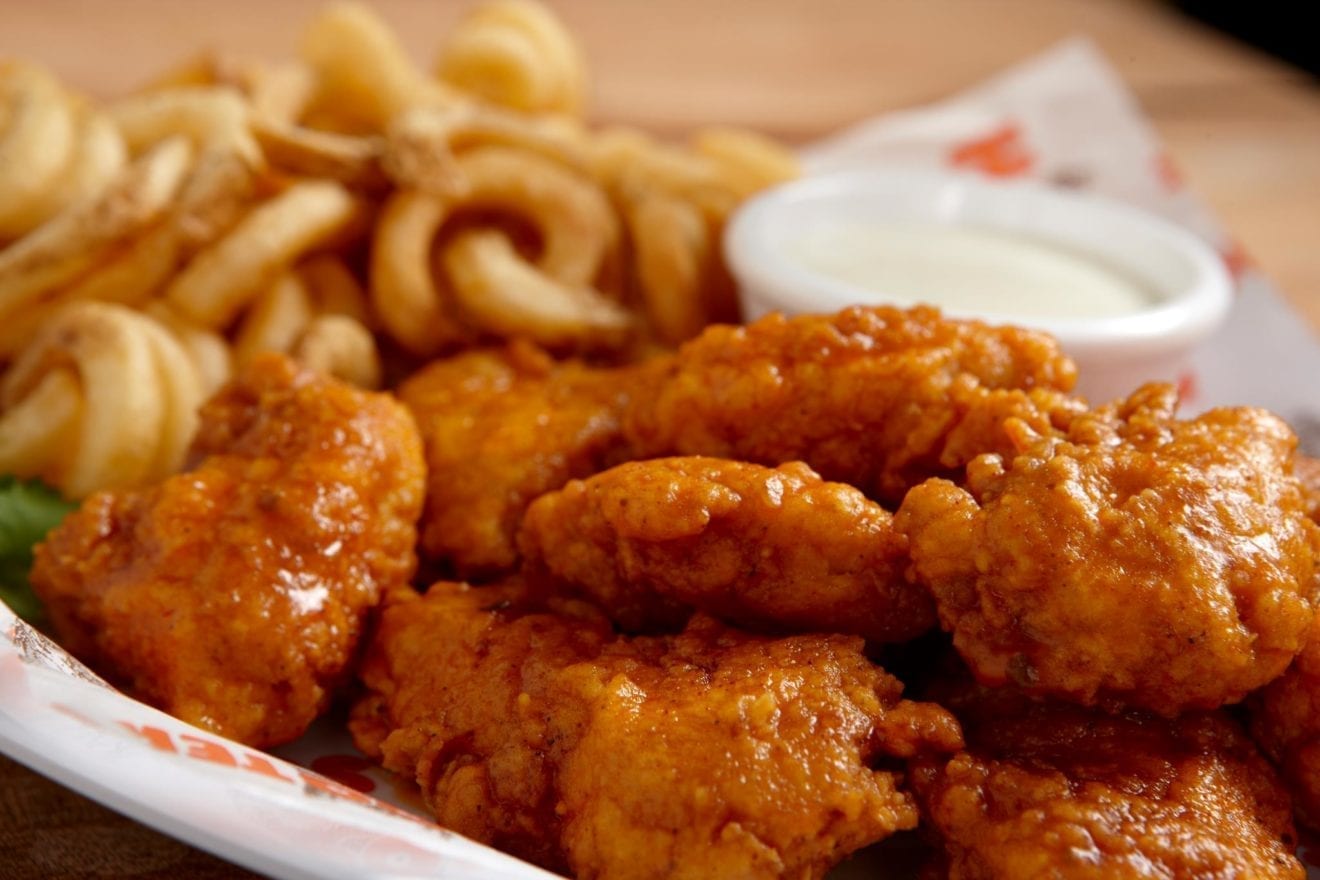
    While guests in SouthEast Asia are offered the Hooters standards of burgers, wings, appetisers and salads, they can expect menu additions that suit local tastebuds such as sauces, Indonesian sambal and Singaporean chili crab.

    Hooters of America chief development officer Mark Whittle says more sites are being sought for the group’s restaurants in Bali, Bangkok, Cebu, Davao, Ho Chi Minh City, Hong Kong, Jakarta, Kowloon, Krabi, Kuala Lumpur, Macau, Manila, Siem Reap, Singapore, Taipei and Yangon.

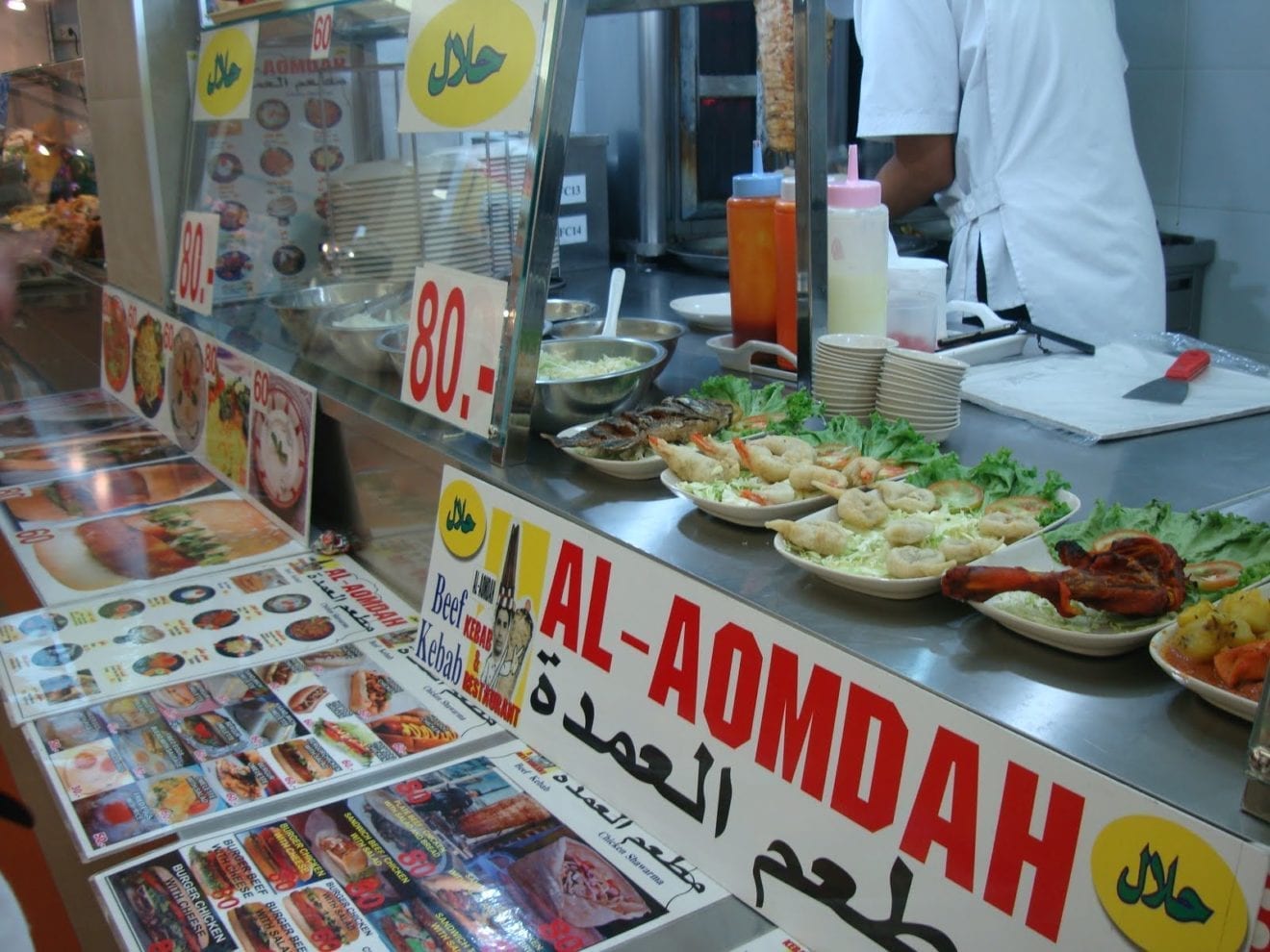
  • Malaysia puts high hopes on one halal certification with Indonesia

    Malaysia puts high hopes on one halal certification with Indonesia

    Malaysia is putting high hopes on the planned unified halal certification with Indonesia, the country with the world’s largest Muslim population, in a bid to strengthen halal trade relations between the two countries.

    At present, Indonesia only directly accepts Malaysian halal certificates for industrial goods, such as palm oil.

    However, Malaysian end-user products must undergo various tests to obtain another halal certificate from the Indonesian Ulema Council (MUI) and halal logo from the Food and Drug Monitoring Agency (BPOM) before being marketed in Indonesia.

    To address the issue, Malaysian and Indonesian authorities are reviewing their halal certifications to avoid inefficient imports and exports in the long run.

    “We have been collaborating very closely because we want to sell more products to Indonesia and, of course, we also welcome Indonesian products in Malaysia,” Malaysian International Trade and Industry Minister Mustapa Mohamed told reporters on the sidelines of the 2017 Malaysia International Halal Showcase (Mihas) in Kuala Lumpur on Wednesday.

    “Some challenges have not been resolved. Indonesian authorities recognize our halal certification, but there are some additional tests that our people have to go through.”

    The MUI’s Food and Drug Analysis Agency (LPPOM) deputy director, Muti Arintawati , said her side had planned to simplify halal certification for Malaysian end-user products imported into Indonesia.

    “We may not need to conduct an audit at the production location. Instead, we can just audit the documents of those products. Nonetheless, this plan has yet to be officially agreed to,” Muti told The Jakarta Post over the phone on Friday.

    In August last year, Malaysian Prime Minister Najib Razak said he was committed to boosting trade between the two neighboring countries to US$30 billion in the near future.

    Total trade between Malaysia and Indonesia has seen a declining trend to $14.31 billion in 2016 from $24 billion in 2013 amid the global economic crisis, as shown by data from Indonesia’s Trade Ministry.

    “Indonesia is huge, of course. It’s a very big market. […] The issue here is that there are some technical issues in regard to the acceptance of halal,” Abu Bakar Koyakutty, senior director of the market access and international partnership division at the Malaysia External Trade Development Corporation (Matrade), told The Jakarta Post on Tuesday.

    “There are different standards on halal. If we can resolve the issue, we see there’s a huge potential.”

    According to a 2016 study published by Salaam Gateway, a business intelligence platform that is a joint effort between the Dubai Islamic Economy Development Center and intelligence and research agency Thomson Reuters, one of problems facing halal regulatory standards globally is that there is no unified standard.

    For instance, it states there is a significant variance between the standards of the Department of Standards Malaysia (DSM) applied in Malaysia and the standards of the Emirates Authority for Standardization and Metrology (ESMA) applied in the United Arab Emirates.

    “The cost of gaining multiple certifications to satisfy the needs of different markets adds complexity and could prohibit entry, resulting in unmet demand for halal food among Muslim consumers,” said the report.

    The report also notes the slow and limited uptake of halal accreditation programs, the process in which a third neutral party validates the certification.

    Compounding that problem, halal accreditation bodies have yet to sign specific mutual recognition agreements for halal certification and there is no forum or framework to ensure peer review.

    Halal accreditors operate independently of each other at present and, often times, there is limited clarity on the jurisdiction of the accreditors.

    Meanwhile, the State of Global Islamic Economy Report 2016/2017 — by Thomson Reuters and research and advisory firm DinarStandard puts the size of Islamic economy at an estimated $3 trillion by 2021, rising from $1.9 trillion in 2015.

    In 2015, Muslims’ spending on food and beverages stood at $1.1 trillion and there was $415 billion estimated revenues from halal-certified food and beverage products.