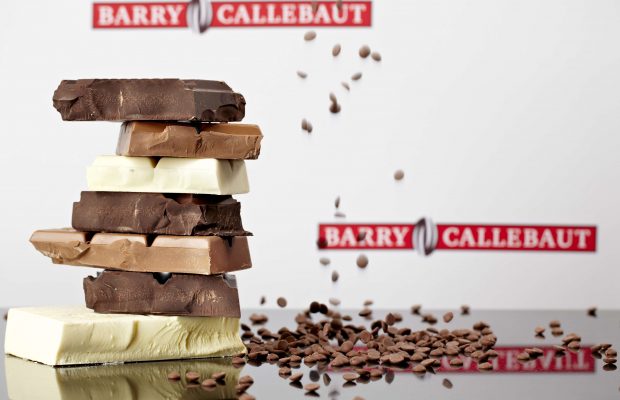
Category: Food

Retail News Asia is committed to providing both local and global retailers with the latest Food and Food & Beverage news throughout the Asian market. This on a daily base.

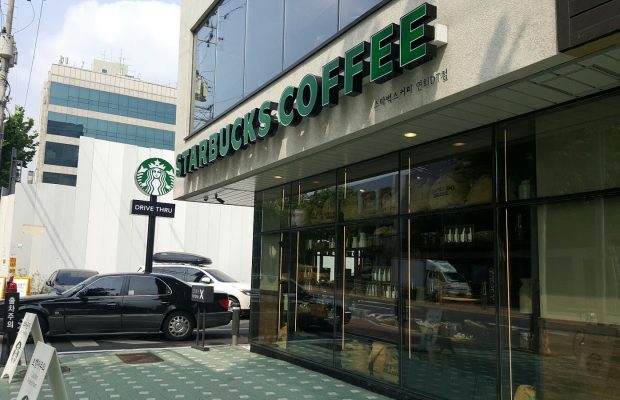
  • Korea ranks world No. 4 for most Starbucks stores per capita: data

    Korea ranks world No. 4 for most Starbucks stores per capita: data

    South Korea has the world’s fourth largest number of Starbucks Coffee stores in relation to its population, industry data showed Thursday.

    Starbucks Coffee Korea, the local unit of the U.S. coffee giant, said it has 1,008 stores across the country as of the end of February, meaning one outlet for every 50,000 South Koreans. South Korea’s population is 50.5 million as of the end of July last year.

    Canada topped the list with 1,035 shops for a population of 36.2 million, translating into one shop for every 35,000 Canadians.

    The United States came in second with 7,880 stores or one outlet for every 41,000 Americans, trailed by Singapore with 126 shops which translates into one store for every 45,000 Singaporeans.

    Japan has 1,140 shops or one shop for every 110,000 people.

    Industry sources attributed the popularity of Starbucks in South Korea to the growing loyalty of women in their 20s and 30s to the U.S. coffee brand.

    “Starbucks Coffee Korea has succeeded in promoting its image as a luxury brand in South Korea where the luxury coffee market has yet to mature,” a source said.

    Starbucks Coffee Korea’s annual sales topped the 1 trillion won (US$884.17 million) mark for the first time last year since it opened its first branch near Ewha Womans University in Seoul in 1999. Starbucks Coffee Korea is a joint venture between retail conglomerate Shinsegae and the U.S. coffee giant.

    Industry data showed annual sales of its local competitors Twosome Place and Angel-in-us Coffee averaged between 100 and 200 billion won last year.

  • Katrina Group plans So Pho restaurants for Hong Kong

    Katrina Group plans So Pho restaurants for Hong Kong

    Singapore’s Katrina Group, an F&B business specialising in multi-cuisine concepts, has taken a step toward opening So Pho restaurants in China and Hong Kong.

    It has signed a non-binding memorandum of understanding with fast-casual restaurant group Ajisen (China) Holdings regarding collaboration on the restaurants. The parties will negotiate and determine if this will be through a franchise or JV, with a definitive agreement expected to be finalised within the next few months.

    Ajisen China, which is listed on the mainboard of Hong Kong Stock Exchange, has a chain of restaurants under different brands in China and Hong Kong.

    Katrina founder/CEO/executive chairman Alan Goh says the collaboration is a step toward the company’s aim of growing its overseas presence and diversifying its revenue stream.

    Katrina Group owns and runs 33 restaurants in Singapore under nine different brands, including Bali Thai and Streats, which services streetfood-style dishes. It also has two restaurants in China.

  • Harajuku’s Anywhere Door offers Coneshots

    Harajuku’s Anywhere Door offers Coneshots

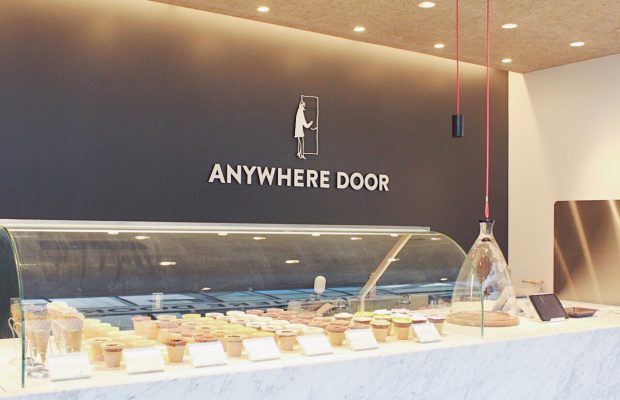
    Japanese accessories retailer Dot Co has branched into cafes, launching Anywhere Door, taking the name from the fictional transportation device in the Doraemon cartoon series.

    But this is not a transportation portal – it is a concept built around the Coneshot, an ice-cream cone cup with chocolate frosting and containing coffee, tea or orange juice with extras and toppings.

    According to the website, fillings can also include ice cream and whisky.

    Cone Shot shop Tokyo 2

    If comes from the waffle shot – espresso coffee in a chocolate-coated waffle cone – pioneered by such Los Angeles coffee shops as Alfred Coffee & Kitchen and Zia Valentina a few years ago.

    In Tokyo’s Harajuku district, Anywhere Door takes a sweeter approach involving chocolate cream, marshmallows and mascarpone. A creamy tiramisu cone filling is also offered with matcha or roasted tea.

    As well as coffee variations, Coneshot options include matcha and fruit combinations.

  • Yangon food court a first for Myanmar

    Yangon food court a first for Myanmar

    Myanmar has its first Japanese-style food court, thanks to a joint venture between City Mart Holdings and Japanese trading company Sojitz Corp.

    Tokyo Dining City, home to six restaurants, opened on Wednesday inside a new commercial building in Yangon’s CBD. The Yangon food court can seat 200 diners and primarily targets office workers.

    Tokyo Dining City Myanmar

    “Japanese food has gained great popularity in Myanmar and there are many Japanese restaurants here,” Zar Ni Kyaw, operations manager of Tokyo Dining City, said in an interview with local media.

    “What makes us different from the others is that we aim to present genuine Japanese dining and Japan’s culture of hospitality to our customers in Myanmar.”

    The two companies say they plan to open more such food courts elsewhere in Myanmar in the future.

  • Umami Burger Japan launches in Tokyo

    Umami Burger Japan launches in Tokyo

    American-style dining has again crossed the Pacific, with the latest offering, Umami Burger Japan, having a distinct local slant.

    While conceived in the US, the fast-food chain takes its names from the Japanese concept of umami, one of the basic tastes as distinct from sweet, salty, bitter and sour.

    It follows such brands as Carl’s Jr, Shake Shack and Taco Bell to Japan, and on its opening day in Tokyo drew a queue of more than 100 people. It is just a few minutes’ walk from Omotesando Station.

    Umami Burger Japan - Aoyama Tokyo

    Rocket News 24 sent in writer PK to check out the store on opening day. Umami Burger dates back to 2009 has has been included in Time Magazine’s list of 17 “most influential” burgers. While he arrived an hour before the 11am opening time, already more than 50 people were lined up. By the time the doors opened, the queue had doubled in size.

    Umami Burger Japan - Aoyama Tokyo.1

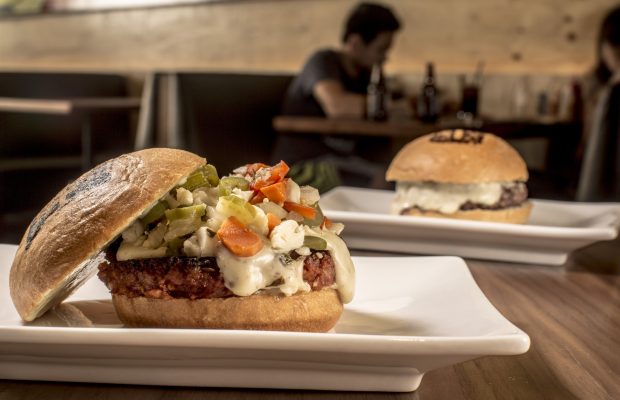
    PK says he was finally seated around noon, and to gain a more rounded perspective, ordered two burgers – the namesake umami burger and the Japan-original teriyaki burger at ¥1380 (US$12.50) each, and a side order of truffle fries for ¥800.

    With its house ketchup, roasted tomatoes, shiitake mushrooms and crispy Parmesan cheese chip, plus a medium-rare beef patty, PK writes that the umami burger tickled his taste buds. “Each flavour complemented the others for an overall perfect combination.”

    The teriyaki burger came topped with red onions, perilla leaves, fried lotus root, cabbage and a wasabi aioli sauce.

  • Online retailers feed craving for fresh food on demand

    Online retailers feed craving for fresh food on demand

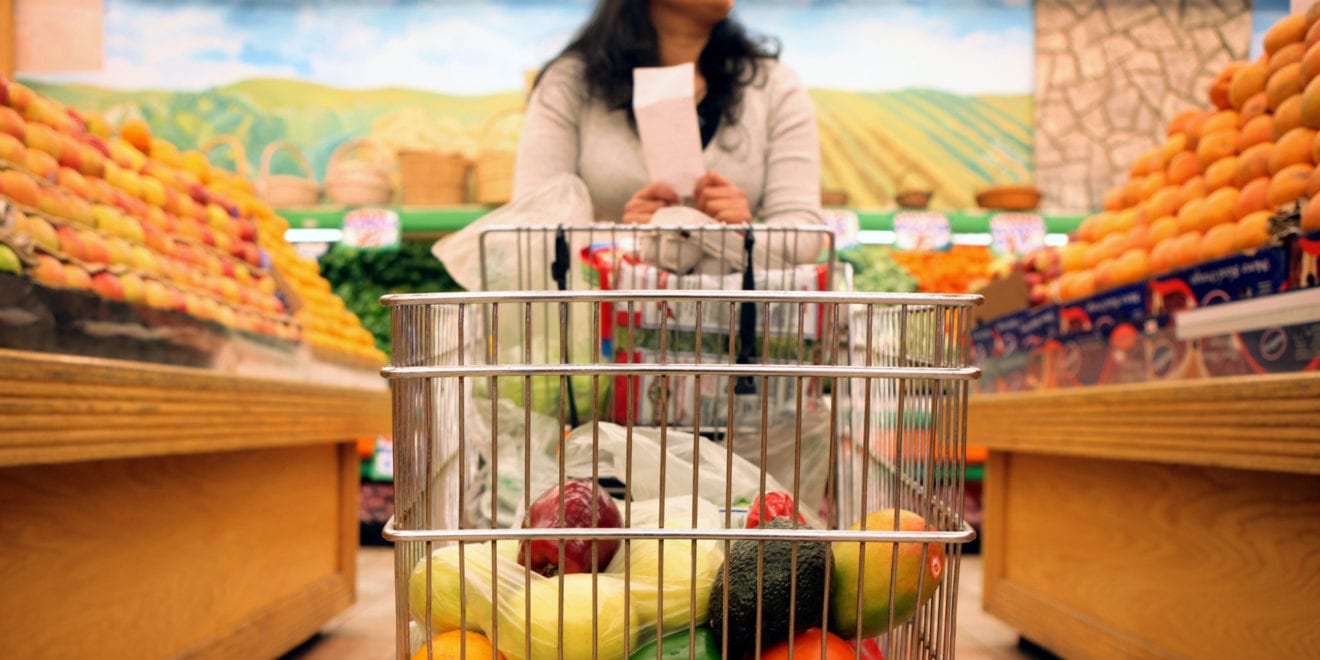
    Gmarket launched a service on Monday called Gtable that provides seasonal fresh food from farms around Korea. The online retailer will oversee the entire process, including selection of fruits and vegetables, washing and packing them, and delivery.

    For Gmarket, whose main business model is providing an online sales channel to individual merchants, the launch of an in-house service with such high degree of direct management is rare.

    “We noticed that more consumers were purchasing fresh food online,” said Park Young-geun, head of the fresh food team at Gmarket. “The service aim is not just delivery but to suggest a more healthy lifestyle to our users.”

    The service is starting with nine products including salads, oranges, nut mixes and vegetable sets, mainly priced between 10,000 won ($9) and 30,000 won.

    For the past decade, the dominant retail channel for fresh food has been brick-and-mortar discount chains. Buying groceries online, though, is becoming a more popular option, especially among young people living alone who don’t need to buy in bulk and childless couples who don’t consume as much as families with children. Both demographic groups are growing in Korea.

    As a result, many online retailers with fresh food services are packaging their groceries in small sets. Lotte.com’s Garak Store, for example, which delivers vegetables and fruit purchased from daily wholesale auctions at Garak Market, a traditional Korean marketplace in Garak-dong, southeastern Seoul, lets consumers buy in small quantities, even by the gram.

    The market for online groceries is a promising one. Last year, 1.73 million won worth of fruits, vegetables seafood and meat were bought online, according to Statistics Korea, a 20 percent increase from 2015.

    Among its peers, Auction was the first to spot an opportunity in selling fresh food online. In 2014, it launched the service Farmer Story, which directly connected producers and consumers. Farmer Story posted six-fold sales growth during last year’s second half compared to 2014.

    WeMakePrice was the next online retailer to enter the market, in October last year, with Sinseonsaeng, a portmanteau of “fresh” and “mister” in Korean. The company is targeting single-person households with its small packaged groceries and fast delivery. During the first nine weeks, the number of orders jumped almost fivefold and sales volume increased fourfold.

    Ticket Monster jumped on the bandwagon in January with Tmon Fresh. Apart from the small packaging that rival services offer, Tmon Fresh also gives customers the option of choosing when to receive deliveries. The company reported a 240 percent increase in grocery sales after Tmon Fresh’s launch.

    SK Planet, operator of online retail platform 11st, in December acquired the start-up Hello Nature, which runs a service that sends groceries to consumers within 24 hours.

    For a long time, fresh food has been considered an exception in an age when people can buy clothing, electronics and even daily necessities like diapers and toilet paper online. One concern is that something could go wrong with the produce during transportation. Another is prevailing convention that fresh food ought to be bought in person, where customers can thoroughly examine the produce themselves and ask vendors questions.

    This hesitance means credibility has become an essential differentiating factor for competing e-commerce grocers. On top of fast delivery, companies are making sure consumers know that their food teams are putting in extra effort to ensure product quality. WeMakePrice, for instance, touts its more than 2,000-square-meter (21,000-square-foot) refrigeration facility in Gwangju, Gyeonggi.

    “We believe online shopping platforms have a chance in the groceries market if they can prove that they can provide products of freshness and quality equal to the level of discount chains,” said Ha Song, head of the direct buying team at WeMakePrice.

  • Booths grocery products head to Malaysia

    Booths grocery products head to Malaysia

    Rather than head south in its home market, the upmarket northern England Booths grocery chain has opted instead for a JV in Malaysia.

    The family-owned retailer, which launched in Blackpool in 1847, has partnered with Hong Kong-listed retailer Dairy Farm, owned by Jardine Matheson, to sell 40 of its best-selling products, including chutneys, jams and puddings, in 19 shops across Malaysia.

    Chairman Edwin Booth, part of the fifth generation of the family to be involved in the firm, says Booths’ heritage gives people “a great deal of reassurance”.

    Booths has 34 stores across England’s north, mainly medium-sized supermarkets. Each store has its own identity, reflecting its location. Its JV in Malaysia is its first overseas foray.

    Staff members are given extensive product training to help them deliver a “friendly and informed” shopping experience, says the company.

  • Chinese supermarkets pull Brazil meat from shelves as food safety fears grow

    Chinese supermarkets pull Brazil meat from shelves as food safety fears grow

    Some of China’s largest food suppliers have pulled Brazilian beef and poultry from their shelves in the first concrete sign that a deepening scandal over Brazil’s meat processing industry is hitting business in its top export market.

    The moves by Sun Art Retail Group, China’s biggest hypermarket chain, and the Chinese arms of global retail giants Wal-Mart Stores and Metro AG come days after China temporarily suspended Brazilian meat imports. Safety fears over Brazilian meat have grown since police accused inspectors in the world’s biggest exporter of beef and poultry of taking bribes to allow sales of rotten and salmonella-tainted meats.

    A spokeswoman for Sun Art Retail, which operates 400 Chinese hypermarkets, said on Wednesday the chain had removed beef supplied by top Brazilian exporters BRF SA and JBS SA from its shelves from Monday. Brazilian beef accounts for less than 10% of Sun Art’s beef supply, she said. Wal-Mart has also removed Brazilian meat products from its stores, a person familiar with the matter said. He declined to be quoted because of the sensitivity of the matter.

    Germany’s Metro has withdrawn Brazilian chicken legs and wings from its Chinese stores, said a manager, who declined to be named as he was not allowed to speak to media. The retailer, with 84 stores in China, does not sell Brazilian beef. JD.com, one of China’s biggest online retailers, said in an emailed statement it had also removed all listings for imported Brazilian meat and is reviewing orders in process.

    While Brazilian officials sought late on Tuesday to reassure consumers that the investigation had revealed only isolated incidents of sanitary problems, the reaction by Chinese retailers suggests that the probe could have far-reaching repercussions for the world’s top meat exporter. Chinese consumers appeared largely unconcerned or unaware of the scandal in Brazil, with few people commenting on the issue on the country’s vibrant social media networks.

    But the country has been hit by its own safety scandals in the past, making retailers sensitive to any potential risks.

    “We removed the product already on March 20,” said Sun Art’s spokeswoman, noting it was ahead of the Chinese government’s first official comment on the issue. Brazil is the top supplier of beef to China, accounting for about 31 percent of its imports in the first half of 2016. Much of it is used in canteens and foodservice and branded Brazilian beef is less prominent in supermarkets than Australian beef.

    Importers are expected to wait a few more days before seeking out alternative supplies, which will likely be more costly than Brazil’s. “It’s a 45-day lead-time to get any product here. What if they lift the ban by the end of the week?” said an industry source who declined to be identified. Hong Kong, the second-biggest buyer of Brazilian meat in 2016, has also issued a ban on imports, following similar steps by Japan, Canada, Mexico and Switzerland.

    Major Hong Kong supermarket chain PARKnSHOP said it had removed Brazilian pork, beef and chicken from shelves. “To cater for the needs of customers, we will increase the supply of meat and poultry products from other countries,” it said in a statement, without elaborating.

  • Vietnam confectionery booming

    Vietnam confectionery booming

    Market observers see a positive outlook in the long term for Vietnamese confectionery exports.

    Their optimism is based on a steady double-digit growth in export value for several years and an upward tick in investment and production expansion by local firms.

    According to the Business Monitor International (BMI), the nation’s confectionery sector has experienced a relatively high and stable growth rate and it is forecast to earn revenues of VNĐ40 trillion (US$1.8 billion) in 2018.

    China, the United States and Cambodia were the top three importers of Vietnamese confectionery last year, followed by Japan and South Korea. China is set to maintain its leading position this year, with import growth estimated at over 40 per cent.

    Confectionery exports went up 15 per cent year-on-year in 2016 with an export value of $532 million, the Ministry of Industry and Trade (MoIT) estimates. The export value in 2015 was $463 million.

    The growth in exports and better prospects seen have spurred investment in the industry, the MoIT has said.

    To promote co-operation between Vietnamese enterprises and experienced international confectioners, the German Bakers’ Confederation and the organising committee of the international trade fair for bakery, confectionery and snacks (IBA 2018) are treating Vietnamese enterprises as significant partners, according to the Đầu Tư (Investment) newspaper.

    The IBA has been a rendezvous for experts in the bakery, pastries, and snack industries since 1949. It is a platform for innovation and provides a complete overview of all novelties in the market. IBA 2018 will take place from September 15-20 in Munich, Germany.

    Nguyễn Trung Chính, representative of the GHM Company in Việt Nam, an affiliate of Munich-based GHM Gesellschaft für Handwerksmessen mbH, said Vietnamese confectionery products are capturing the attention of foreign investors.

    “In early April, GHM General Director Diether Dohr will come to Việt Nam to meet with local confectionery companies, and introduce them to German manufacturers and importers,” Chính said.

    Foreign rivals

    With improved quality, modern packaging and a more diverse range of products, the Vietnamese confectionery industry is developing strongly, especially in the premium segment.

    Statistics compiled by the MoIT show that imported confectionery now accounts for 30 per cent of the market share. In 2016, Việt Nam’s confectionery imports reached over $250 million, up 20 per cent year-on-year.

    A representative of the Phú Hưng Securities Corporation told Đầu Tư that the confectionery industry is not just looking at huge export potential, but also a surge in import earnings.

    “With a large and young population, Việt Nam’s average confectionery consumption is currently about 2 kilogrammes per person per year (lower than the world average of 3 kilogrammes per person per year). Confectionery consumption among the 65 per cent of the population that live in rural areas, which means that that there are plenty of market opportunities for both confectionery makers and traders, ” he said.

    Confectioners like Bibica Corporation, which has popular brands like Hura, Choco Bella, Orienko, Zoo, are trying to maintain and strengthen their market position.

    Besides building a new plant in Hưng Yên province, Bibica is preparing to operate its $12 million cupcake production line.

    The company has also implemented a $3.3 million project to produce the Hifat soft candy and has another project worth over $670,000 to produce round cakes.

    The Hải Hà Confectionery Joint Stock Company, another well-known firm, is building a new factory with a daily capacity of about 62 tonnes a day in Bắc Ninh Province.

    Vũ Quốc Tuấn, deputy manager of external relations and internal communications department with confectioner Mondelez Kinh Đô Việt Nam, said that imported candy has triggered fierce competition in the country’s confectionery market.

    He said: “This is the necessary motivation for local manufacturers to invest more in new production technology, improve product variety and enhance product quality, serving the diverse demands of demand of domestic and international consumers.”
  • Noodle firm earnings plunge

    Noodle firm earnings plunge

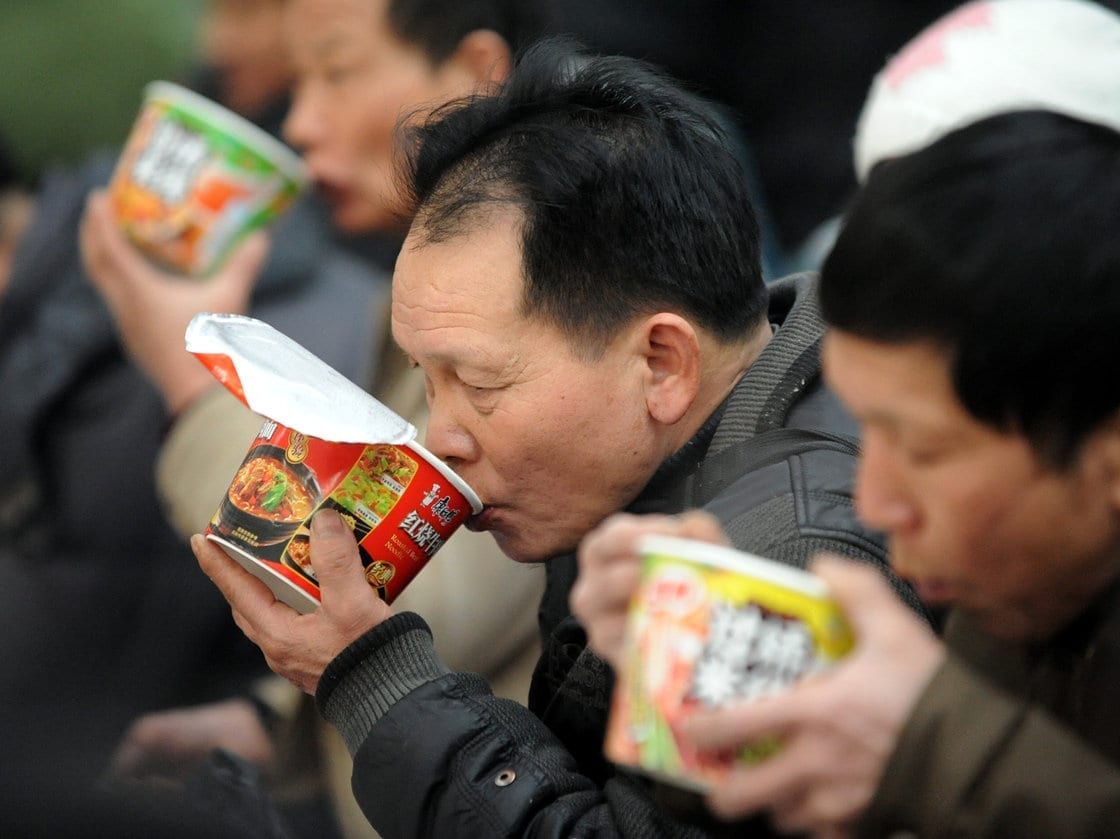
    Colusa-Miliket Foodstuff Joint Stock Company’s (Miliket) audited financial report for 2016 showed a 40 per cent drop in pre-tax earnings compared with the previous year, indicating a loss of market share.

    The report showed revenue of VNĐ461 billion (US$20.7 million) and pre-tax earnings of VNĐ25 billion ($1.12 million), declining by 3.5 per cent and 39 per cent, respectively, from 2015, and currently the lowest since 2012.

    The noodle company’s market share reduced to only 2-4 per cent in total.

    In 2016, despite the company’s effort to introduce a new line of products with better packaging and another line with flavour diversity, it failed to attract customers and accumulated 15 per cent more inactive stock compared with 2015.

    The stock of VNĐ23.3 billion ($1.04 million) caused the company’s liabilities to increase from VNĐ61.1 billion ($2.74 million) to VNĐ72.8 billion ($3.27 million).

    In total, Miliket’s total capital in 2016 was VNĐ196 billion ($8.8 million), with cash flow of VNĐ122.3 billion ($5.5 million).

    According to financial experts, the company will soon be depleted of cash if it fails to increase quantity consumed.

    At present, Miliket’s instant noodles is in the lowest price bracket on the market, at VNĐ3,000 ($0.13) per package. This allows the company to focus on low income customers and cheap restaurant chains, both market segments neglected by larger companies.

    Miliket is one among several large noodle producers on the scene in Việt Nam today facing challenges. Other brands such as Acecook, Masan and Asia Food are also facing problems generating revenue.

    Although Acecook holds nearly 50 per cent of domestic market share, it experienced continuous drop in earnings between 2013 and 2015, whereas Masan’s 2016 revenue dropped by 20 per cent from the previous year.

    According to the World Instant Noodles Association, the amount of instant noodles consumed annually in Việt Nam has gradually declined since 2013, from 5.2 billion packages to 4.8 billion in 2015. The country has the fourth largest quantity of instant noodles consumed per annum.
    Read more at https://vietnamnews.vn/economy/373605/noodle-firm-earnings-plunge.html#ZMULl4oFsddSQVRI.99

  • Thai street-food apps help tourists

    Thai street-food apps help tourists

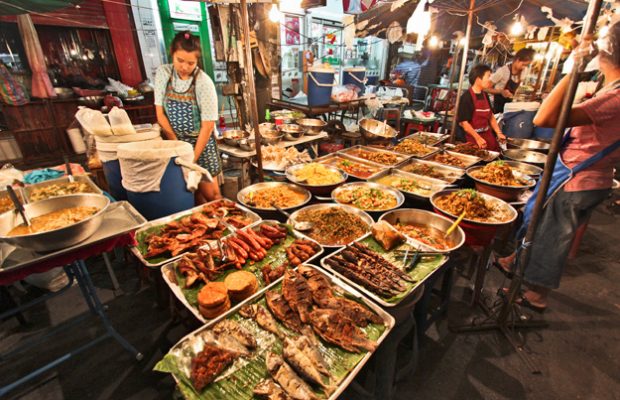
    Three Thai street-food apps have been launched offering tourists details of the nation’s top roadside eateries.

    Street Food Bangkok, Street Food Chiang Mai-Chiang Rai and Street Food Phuket have been launched simultaneously to promote Thai food to foreign visitors as well as enhance Thailand’s tourism image. It is a venture of the Ministry of Foreign Affairs in co-operation with the Thailand Foundation, an independent agency founded in 2007 to promote better understanding of Thailand.

    The Thai street-food apps, both Android and iOS, are free for foreign visitors to download and all information is available in English or Chinese.

    The Bangkok Street Food App includes information on street food from 120 shops and stalls, covering 25 types of dishes.

    Street Food can be searched by dish or by location, and users can save favourite stalls to a quick-access menu. The descriptions usually include information on the restaurant’s history and owners, as well as their particular take on their speciality dish.

    The apps link with Google Maps to help users find their preferred outlet. The name and directions to each restaurant are given also in Thai script so visitors can show it to their taxi driver.

    The database may be expanded in the future under the second phase of the program.

  • Vietnam tables Brazilian meat imports

    Vietnam tables Brazilian meat imports

    Vietnam is considering whether to ban imports of livestock and poultry products from Brazil as the Latin American country investigates the quality of its meat exports.

    The animal health department said on Wednesday meat imports from Brazil have been low so far this year, but it has asked the agriculture ministry to halt imports if any low-quality products are found.

    Following a two-year investigation, Brazil’s federal police last week accused more than 100 people, mostly health inspectors, of taking bribes and allowing the sale of rancid products, falsifying export documents and failing to inspect meat packing plants, as reported. Brazil is the world’s top producer of beef and poultry.

    BRF and JBS, the world’s biggest meat producers, are among dozens of firms targeted in the police investigation into what would be the biggest scandal to hit Brazil’s agricultural sector. Both companies have denied any wrongdoing.

    The trade office at the Vietnamese Embassy in Brazil has called on agencies in Vietnam to tighten inspections of livestock and poultry products from Brazil.

    Hong Kong, Japan, Canada, Mexico and Switzerland all announced partial or all-out bans on Brazilian meat imports on Tuesday, following steps taken a day earlier by China, the European Union, South Korea and Chile, Reuters reported.

    But South Korea said on Tuesday it will lift the ban on poultry imports from BRF, the world’s largest exporter of the meat.

    Vietnam has imported around 3,000 tons of meat and meat products from Brazil so far this year, the animal health department said.

    “The amount is very small compared to the 6 million tons that Brazil exports every year to countries around the world,” said an official from the department.

    Brazil, recognized by the World Organization for Animal Health for doing a good job in controlling animal diseases, exports livestock and poultry products to 150 markets around the world.

    Last year, it took the lead in beef and chicken exports with outbound sales of the two products hitting 1.8 million tons and 4 million tons, respectively. Its major buyers are the E.U., Russia, Japan, China and Singapore.

    Two-way trade between Vietnam and Brazil stood at $2.29 billion in the first nine months of last year, down 15.7 percent against the same period in 2015, with Vietnam’s imports totaling $1.35 billion, Vietnam Customs data showed.

  • Jumbo Group China to open Beijing restaurant

    Jumbo Group China to open Beijing restaurant

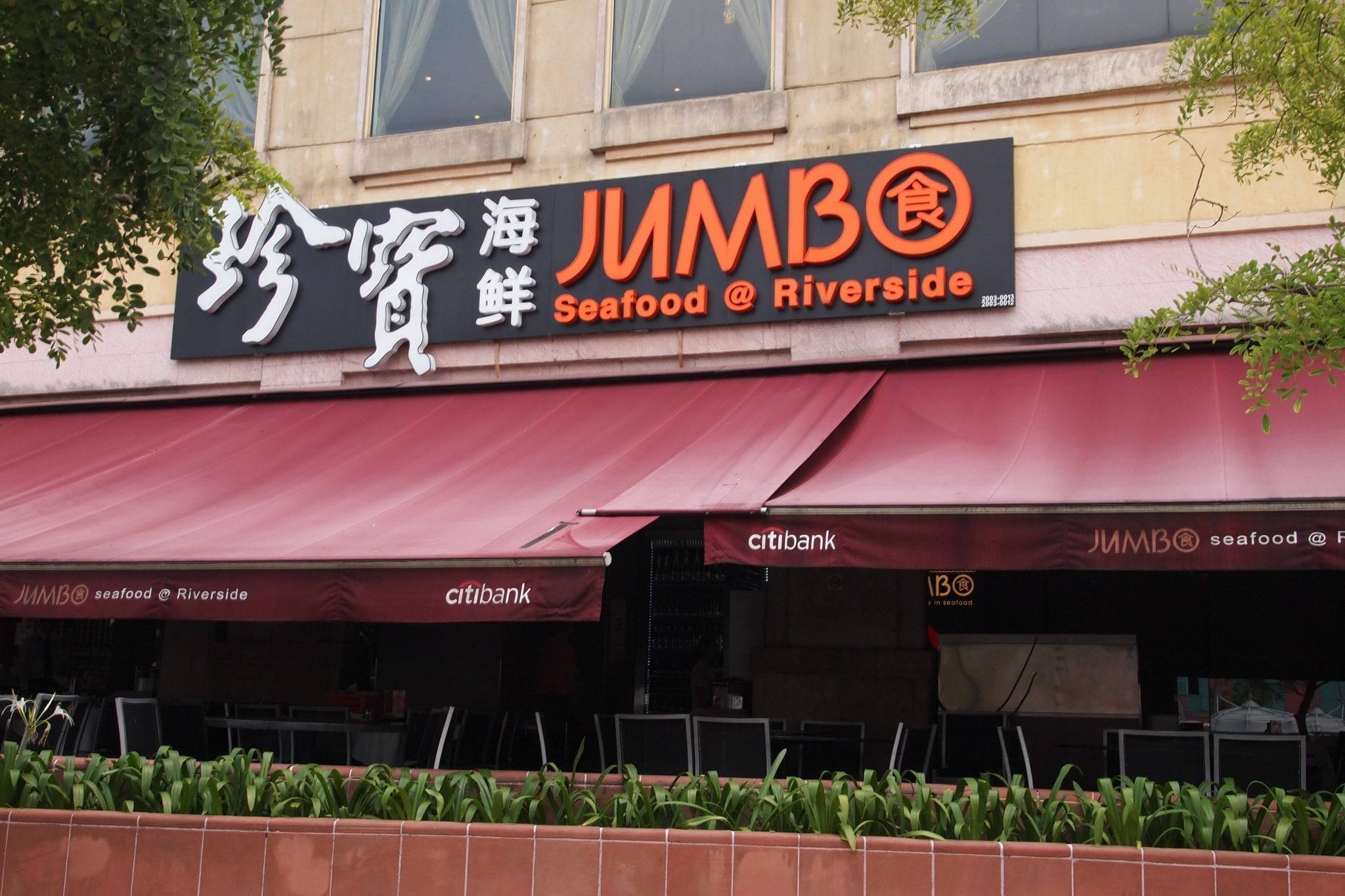
    Singapore-owned seafood restaurant Jumbo Group China has signed a JV agreement to open its first outlet in Beijing.

    The agreement is between the Singapore group’s indirect wholly owned subsidiary Jumbo F&B Services (Shanghai) and Beijing Hualian (SKP) Departmental Store, a member of the Beijing Hualian Group. JFB Shanghai will hold a 51 per cent stake in the JV, while Beijing Hualian holds the 49 per cent balance.

    The JV will have a registered capital of RMB10 million (US$1.4 million).

    Slated to open by the third quarter of this year, the Beijing restaurant joins the group’s three outlets in Shanghai.
    Jumbo CEO/executive director Ang Kiam Meng says the JV agreement comes shortly after the group inked a franchise agreement in Vietnam. “We are heartened our overseas expansion plans are shaping up well.”

    For the Chinese capital, the Jumbo Seafood restaurant will be in the upmarket Beijing SKP mall.

    “The restaurant’s privileged location enables us to reach out to the more affluent segment of the market, which is cosmopolitan in outlook and more adventurous in their culinary pursuits,” says Ang.

    In December, Jumbo signed a franchise agreement with Nova Bac Nam 79 joint-stock company to grant rights to run Jumbo Seafood restaurants in Ho Chi Minh City and Danang, Vietnam. There are plans to open three Jumbo Seafood outlets in the two cities over the next two years.

    Jumbo Group has a central kitchen in Singapore to maintain quality standards and consistency as well as increase productivity and lower costs. It also has a research and development kitchen where it creates new dishes and improves food-preparation processes.

  • Barry Callebaut Expands Cocoa Nurseries Program in Indonesia

    Barry Callebaut Expands Cocoa Nurseries Program in Indonesia

    One of Barry Callebaut’s primary goals in Forever Chocolate is to lift more than 500,000 farmers out of poverty. To get there, we can improve farm productivity and increase the yield of high-quality cocoa. Doing this will enable farmers to sell their cocoa at higher prices and gain access to a better quality of life.

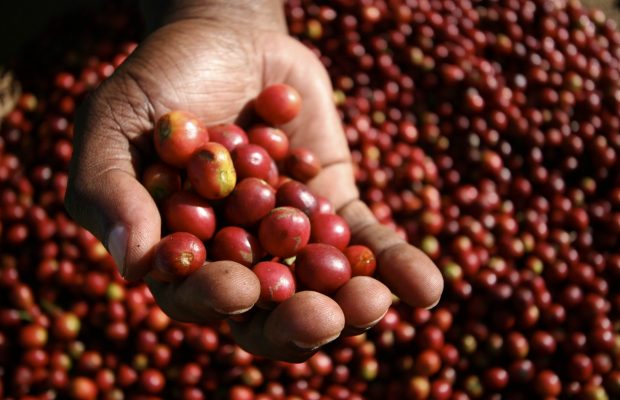
    But how can farmers grow more high-quality cocoa on the same amount of land? With better trees. Barry Callebaut aims to deliver 500,000 seedlings from its cocoa nurseries to farmers in Indonesia in 2017 and is in the midst of trialing a range of interventions to produce the best trees.

    Richard Fahey, Barry Callebaut’s Vice President for Cocoa in Asia says: “Indonesia has been struggling to increase cocoa production because of ageing cocoa trees. Most of them were planted in the 1980s, are vulnerable to diseases and are well past their peak production years. Cocoa trees are strong, and will produce pods for a long time. However, the high-productive years of a cocoa tree are finite, and usually after 25 years, the trees are less productive. Indonesia desperately needs new trees in order to get back to a productivity level of around 1 mt of beans per hectare.”

    “Most Indonesian farmers are willing to invest in their farms, and they understand that new trees will be more productive.  But they simply have not had access to good planting materials and therefore prefer to stick with their old trees rather than risk planting new trees that may or may not be effective. High-quality nurseries are therefore are essential to provide the supply of seedlings the farmers need and give them the confidence that the seedlings they purchase will turn into high-yielding, disease resistant trees,” he notes.

    Indonesia-based Sustainability Manager Ani Setiyoningrum says: “The purpose of cocoa nurseries is to provide a conducive environment in which young cocoa plants can grow a good number of leaves and fully develop its root system to a certain stage that will give cocoa plants a better chance of survival at the cocoa farm. These nurseries will require shade, water and protection from wind, and whenever necessary, protection from stray animals.”

    But there are already cocoa nurseries in Indonesia, but as Fahey notes, plantations in Indonesia typically have 400-600 cocoa trees growing per hectare. “Let’s do the math. If we are to estimate that there is 500,000 hectare of cocoa farms in Indonesia, we are basically looking at replacing at least 200 million trees. This nationwide replanting initiative is massive and would take a lot of effort not just from Barry Callebaut but across various organizations.”

    Setiyoningrum says: “These are community-run nurseries that we help to kick-start by providing them with a start-up investment and best-practice models. These nurseries are also a form of income for these nurseries owners, some of whom are cocoa farmers themselves. Our field experts work closely with these nurseries owners to teach them to produce high quality seedlings with a high survival rate. They are given proper planting material, high-quality seeds, and the right potting mix, and are guided to develop good nursery management skills and standard operating procedures. These nursery owners then work as a professional service provider for other farmers which is becoming an avenue for additional income. The project model we are testing with around 50 nurseries across Sulawesi is suitable for nurseries producing at a large scale. Our intention is that the nurseries we start-up will eventually become totally self-sufficient businesses in their own right.”
    Also in Indonesia, the company is piloting a new way of setting-up these nurseries and distributing these seedlings to the farmers. “The challenge is how we can escalate the seedling propagation program while also try to reduce the production cost of each seedling. We have learned a lot from our colleagues in Brazil and we are borrowing some of their best practices, including using elevated tables and space efficient planting tubes. While setting up these improved nurseries and distribution networks, we continue to support farmers to establish nurseries in their own communities because it helps to increase the overall supply of new trees,” Fahey concludes.

  • Harvest rain takes the flavor out of Vietnamese coffee crop

    Harvest rain takes the flavor out of Vietnamese coffee crop

    Heavy rain that hit swamped Vietnam’s 2016/2017 coffee harvest has raised the ratio of low-quality beans and defects, traders said on Wednesday, with one major exporter saying quality is at its worst in nine years.

    Unseasonal rain that fell from October-December last year in Vietnam’s Central Highlands coffee belt delayed the 2016/2017 crop harvest, resulting in more black and broken beans. The rainy season normally ends in early October.

    The harvest was completed in January as usual, but a higher ratio of black and broken beans – counted as defects in export standards – has emerged.

    These defects, coupled with India’s ban on Vietnamese coffee imports from March 7, have made it more difficult for the world’s top robusta exporter to find buyers for the low-quality commodity this year.

    “The ratio of defects this year has risen by 50 percent from 2016,” said Le Duc Huy, deputy general director of Simexco, a major export firm based in the Central Highlands province of Dak Lak. “The quality is the worst since 2008.”

    Downpours cut Vietnam’s 2007/2008 coffee output by 15 percent to 1.08 million tons.

    Traders say India often buys Vietnam’s low-quality robusta grade 3, with 25 percent black and broken beans and 3 percent foreign matter, to produce instant coffee. Vietnam’s benchmark coffee for export is robusta grade 2 (5 percent black and broken), which is priced at a premium of $120-$180 a ton compared to the grade 3 beans.

    The harvest usually starts in late October and ends in January. Rain during the blossoming period reduces yields, while the wet weather disrupts the outdoor drying process, necessitating the use of electric dryers that turn the beans black and worsen the taste. The exportable volume is therefore lowered.

    Two traders at foreign firms in Ho Chi Minh City, Vietnam’s largest coffee trading market, estimated that low-quality beans made up 10-20 percent of the country’s output this year, which is projected to ease 8 percent from last year to 26.7 million bags, or 1.6 million tons, the U.S. Department of Agriculture has said.

    Vietnamese trade experts say India’s ban is a tit-for-tat action after Hanoi announced it was going to suspend the import of five Indian commodities from late April to prevent peanut beetle from spreading.

    Officials at the Indian Embassy in Hanoi did not immediately comment on the matter.

    The impact of the ban on Vietnam’s overall coffee exports is minimal, Vietnam Coffee and Cocoa Association Chairman Luong Van Tu said.

    India imported 6,900 tons of Vietnamese coffee from January-February this year, down 17 percent from the same period in 2016, based on Vietnam Customs data.

    Last year it spent $79.4 million to import 46,000 tons of coffee from Vietnam, a tiny fraction of the Southeast Asian nation’s total shipments of 1.78 million tons.

    India has the world’s third fastest growing retail coffee market behind Indonesia and Turkey, global market intelligence agency Mintel said in its latest report earlier this month.

    Robusta with high ratios of black and broken beans has also been sold to Vietnamese firms to produce instant coffee, traders said.

    But the ban has affected Indian roasters who had been sourcing their raw material from Vietnam, traders said.

    “Since the ban has been in place, several shipments have been held up and importers do not know how to solve the situation,” said a Vietnamese dealer at a Ho Chi Minh City-based firm which ships coffee to India.

    The ban has also made it difficult for Indian roasters after back-to-back droughts in the past two years damaged various crops, including coffee.

    “Indian roasters may have to switch to other sources, such as the Ivory Coast and other African nations,” a second trader at a European firm in Ho Chi Minh City said.