Category: Food

Retail News Asia is committed to providing both local and global retailers with the latest Food and Food & Beverage news throughout the Asian market. This on a daily base.

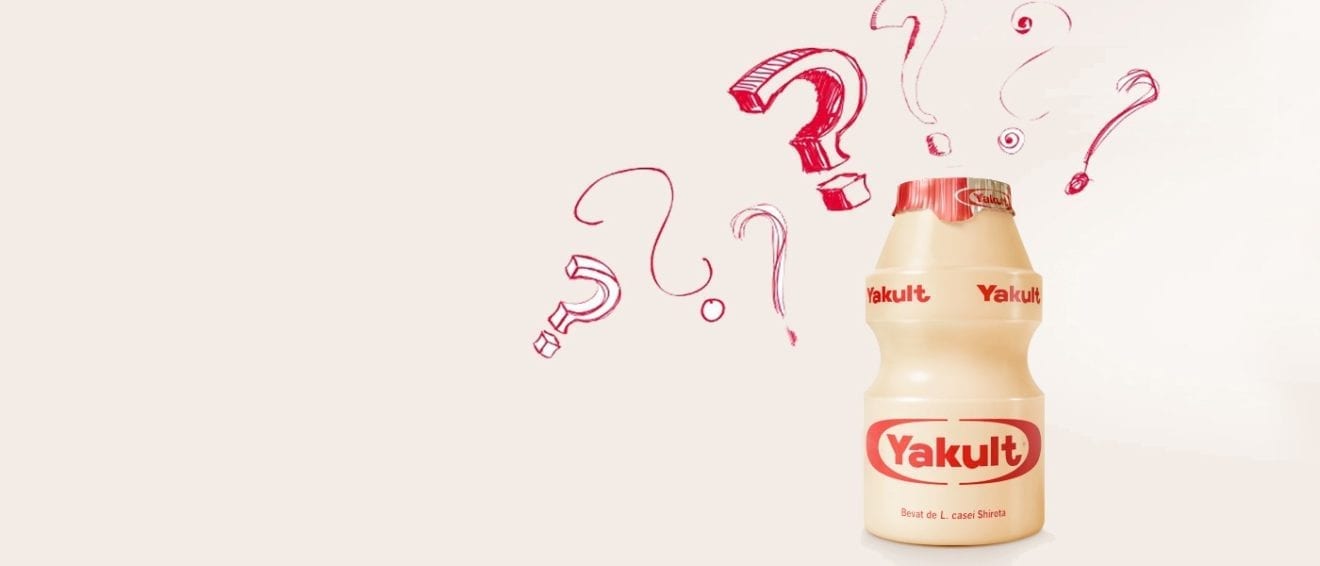
  • Yakult Indonesia still relies on imported milk for dairy drinks

    Yakult Indonesia still relies on imported milk for dairy drinks

    Yakult Indonesia Persada, one of the major producers of fermented milk products, still relies on imported raw materials for its production in Indonesia.

    Yakult Indonesia vice president and director Hiroyuki Kawada said the company had to import ingredients because local milk had yet to meet the standards for the company’s fermented milk |production.

    “We mostly import the skimmed milk from Australia, and the rest is from Belgium,” he said.

    Yakult Indonesia Persada, a subsidiary of Japan-based Yakult Honsha, was established in1990. The company operates a factory in Sukabumi, West Java, and another in Mojokerto, East Java.

    The factories can produce 6.6 million 65-millilitre bottles of cultured dairy drink a day. The company sells its fermented milk through supermarkets and through “Yakult Lady”, a sales force of women who sell the product door-to-door in many parts of the country.

    “There are 7,600 Yakult Ladies now, and they can reach 30 houses per day each,” said Antonius Nababan, the companies marketing communication and commercial (MCC) director. Zulkarnain, the MCC’s senior assistant manager, said sales averaged 5 million bottles a day.

    Indonesia was the second-biggest market for Yakult products after Japan, which has 10.18 million consumers.

  • Burger King announces Valentine’s Day ‘adults meal,’ complete with ‘adults toy’

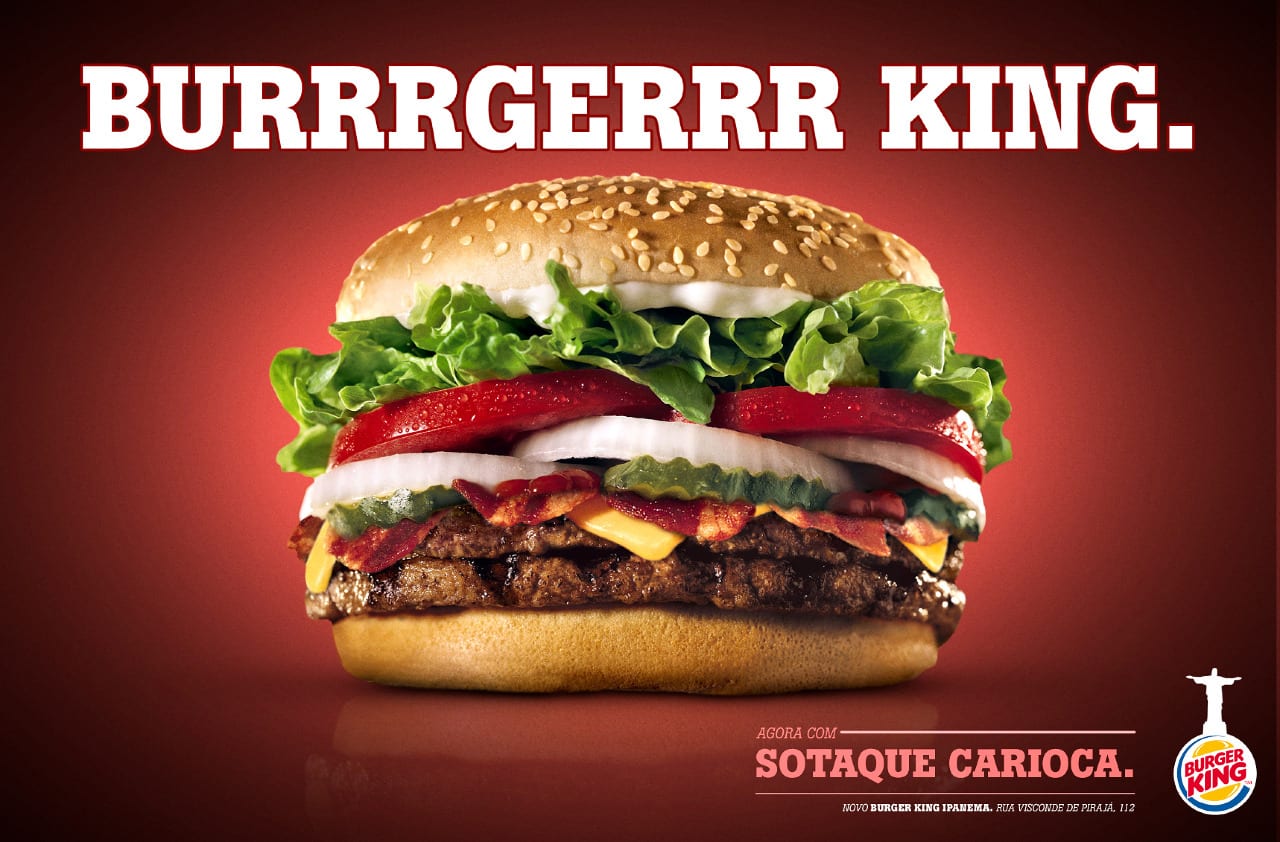
    Burger King announces Valentine’s Day ‘adults meal,’ complete with ‘adults toy’

    When making plans for Valentine’s Day, most couples wouldn’t consider Burger King an option for a romantic night out.

    The fast food chain is trying to change that in Israel, where they’re offering a special “adults meal” just in time for Valentine’s Day.

    The adult meal comes with two Whoppers, two orders of french fries, two beers, and one romantic adult toy.

    No word on what that toy might be exactly, though Burger King Israel’s promotional video gives us a few hints. It shows a takeaway box with an eye mask, a feather duster, and a scalp massager.

    The “adults meal” will only be available on Valentine’s Day after 6 p.m. to customers who are 18 years or older at Burger King’s Israel locations.

  • Carlsberg may not be Habeco’s only option

    Carlsberg may not be Habeco’s only option

    Carlsberg will bid for the State-controlled Hanoi Beer Alcohol and Beverage Joint Stock Corporation (Habeco) in March or April, but the Vietnamese Government may have more than one option to choose from when it comes to buyers.

    The government is seeking to equitize Habeco, the country’s second-largest brewer, by selling its 82 per cent stake. Carlsberg, which already owns 17 per cent of the company, holds priority purchase rights for a 60 per cent stake.

    In October, the government said it would announce the results of negotiations on its priority purchase rights with Carlsberg by the end of that month. It is not clear why the process has been drawn out.

    “We have not been able to make a bid,” the Danish brewer’s CEO, Mr. Cees ‘t Hart, told Reuters, adding that he expects to submit a bid in March or April. There was also uncertainty over whether the Vietnamese Government will abide by Carlsberg’s first right of refusal, he said.

    So what might have actually gone wrong in the negotiation between Carlsberg and the Ministry of Industry and Trade over additional Habeco’s shares?

    A price disagreement almost certainly exists. The government announced in August it wants to sell its 82 per cent stake for $404 million, or about VND48,000 ($2.11) a share, which according to CEO of Carlsberg Vietnam, Mr. Tayfun Uner, is a reasonable valuation, or VND50,000 ($2.2) per share; the same price it paid in the 2008 IPO.

    The government is now keen to take the market price as a reference for the deal. After switching from the Unlisted Public Company Market (UPCoM) to the Ho Chi Minh Stock Exchange (HoSE) on January 19, shares in Habeco rose 15 per cent in their first day of trading to VND147,000 ($6.51) from a starting price of VND127,600 ($5.63), valuing the Vietnamese brewer at $1.5 billion.

    But a 21.1 per cent year-on-year decline in Habeco 2016 net profit to VND740.1 billion ($32.7 million) saw its share price head down. After the February 9 trading session, its shares closed at VND114,000 ($5.03). While price is driven by market demand and supply, the surge in the company’s share price did not accurately reflect the underlying value of the business and is mainly due to speculative buying on very thin volumes, Mr. Uner said.

    Another reason why negotiations could fall apart is that the Vietnamese Government may have more than just one potential buyer. “We have first right of refusal, but if they neglect that for any reason, and we do not have any signal that they will, then we may not be able to buy it,” Mr. Hart said.

    While the partnership agreement signed in 2008 is still legally binding, some of the terms are no longer appropriate under current law. According to a lawyer with knowledge of the agreement, the selection of a single foreign strategic investor for the majority of the stake may be in conflict with regulations in the Competition Law and the Trade Law or the criteria for State divestment from joint stock companies.

    Still, the government has no choice but to sell Habeco as soon as possible. “Letting incapable people continue on the brewer’s management board will eventually destroy the brand and the company, while a fast sale does not necessarily mean Habeco will be let go at a cheap price,” Mr. Nguyen Hoang Hai, Vice Chairman of the Vietnam Association of Financial Investors (VAFI), told VET by phone on February 9.

    With a young, beer-loving population, Vietnam is among Asia’s largest consumer of beer, putting it on the radar of international brewers. The country’s beer market grew at an average compound annual rate of 7 per cent from 1999 to 2015 and touched 4 billion liters in 2016. Growth is anticipated at around 4 per cent to 2021, data from researchers Canadean, quoted by investment bank Liberum, showed.

    Kirin Holdings, Asahi Group Holdings, Thai Beverage, Heineken, and Anheuser Busch Inbev SA are among some 20 investors that have expressed interest in the sale.

    Habeco’s share price soared when a limited number of shares were listed in October, as investors raced to snap them up before the planned sale. The brewer has a market share of about 20 per cent in Vietnam.

  • Max’s Group taking Yellow Cab Pizza to Vietnam

    Max’s Group taking Yellow Cab Pizza to Vietnam

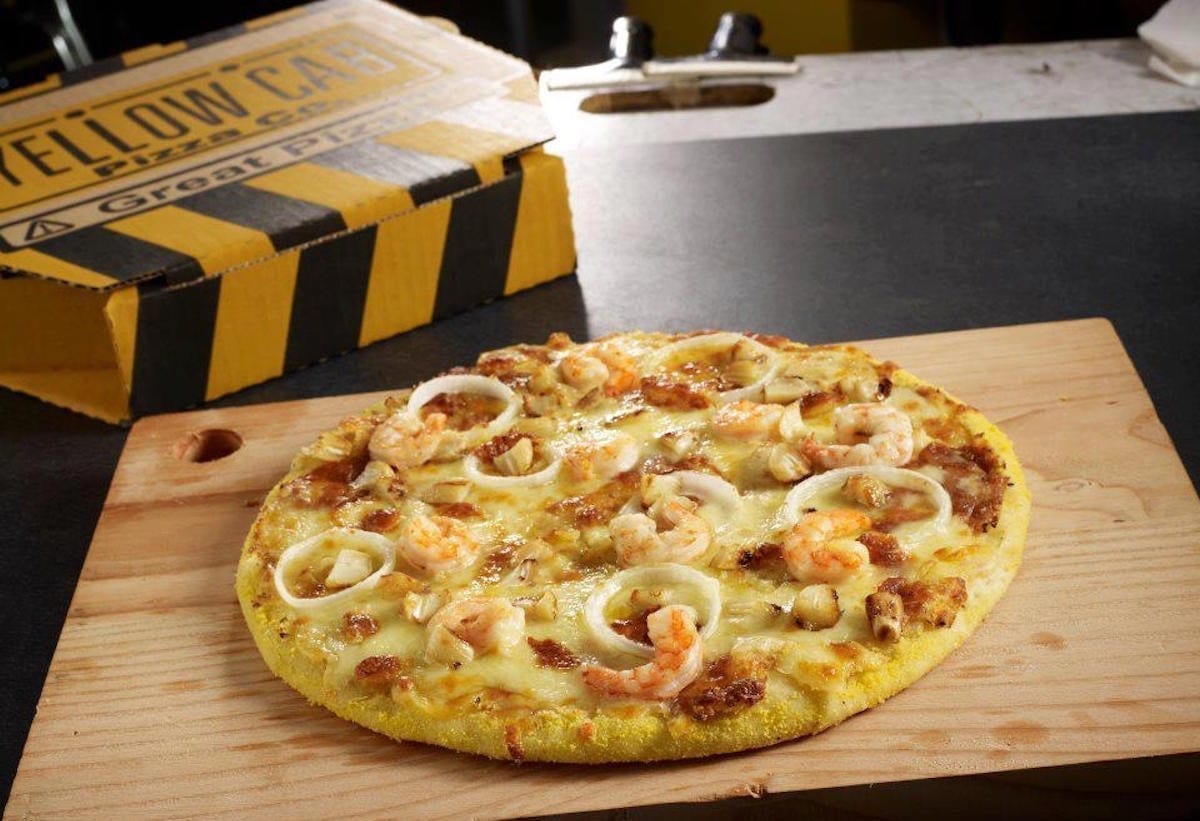
    Filipino casual-dining company Max’s Group is taking its pizza chain Yellow Cab Pizza to Vietnam.

    Max’s Group says it has signed a development agreement with Blue Star Food in Ho Chi Minh City to roll out at least 12 Yellow Cab Pizza stores in Vietnam within five years, says president/CEO Robert Trota.

    The timing and locations of the Vietnam restaurants have not been revealed, but the plan will raise Yellow Cab’s international network to 165 outlets.

    Blue Star Food CEO Nguyen Thanh Nam says Vietnam’s young and affluent population has been targeted by significant developments in the F&B industry.
    “A lot of Western and casual-dining restaurants are flourishing in Vietnam,” he says, including McDonald’s and Starbucks.

    Blue Star Food oversees 45 ice-cream parlours for US brand Baskin Robbins.
    Western food represents 7 per cent of dining-out visits in Vietnam, according a survey by UK market research company Decision Lab.

  • Doutor Coffee arrives in Malaysia

    Doutor Coffee arrives in Malaysia

    Japan’s Doutor Coffee has opened three outlets in Malaysia – in Aeon Tebrau (Johor Baru), Sunway Velocity Mall in Kuala Lumpur and Aeon Bukit Tinggi.

    This follows other international expansion in Singapore, South Korea and Taiwan.

    Doutor Coffee was founded in 1980 by Toriba Hiromichi with a 9 sqm outlet in Tokyo’s Harajuku district. There are now more than 900 outlets in Japan.
    MD Yasuhiro Yamamoto says Doutor decided to open in Malaysia because it had found a good partner in the Texchem Group, which owns 106 Sushi King outlets in Malaysia. More outlets are being planned, with some to open next year.
    All will follow the Doutor Japan formula with a strong focus on coffee and freshly made food.

    “We have good-quality black coffee, espresso and cappuccino, and the food will be a Japanese fusion concept,” says Yamamoto.
    He says the secret to the brand’s success lies in the quality of its beans and the roasting.

    Doutor Coffee master roaster Masahiro Kanno says the beans are sourced from more than 10,000 plantations all over the world, including its own two plantations in Kona, Hawaii.
    Kanno personally goes to select the beans, sometimes buying in bulk and sometimes buying just a few, depending on whether they will be featured as single-origin roasts or blends. The beans are flame-roasted.

  • First-half 2017 GTR sales improve at Pernod Ricard

    First-half 2017 GTR sales improve at Pernod Ricard

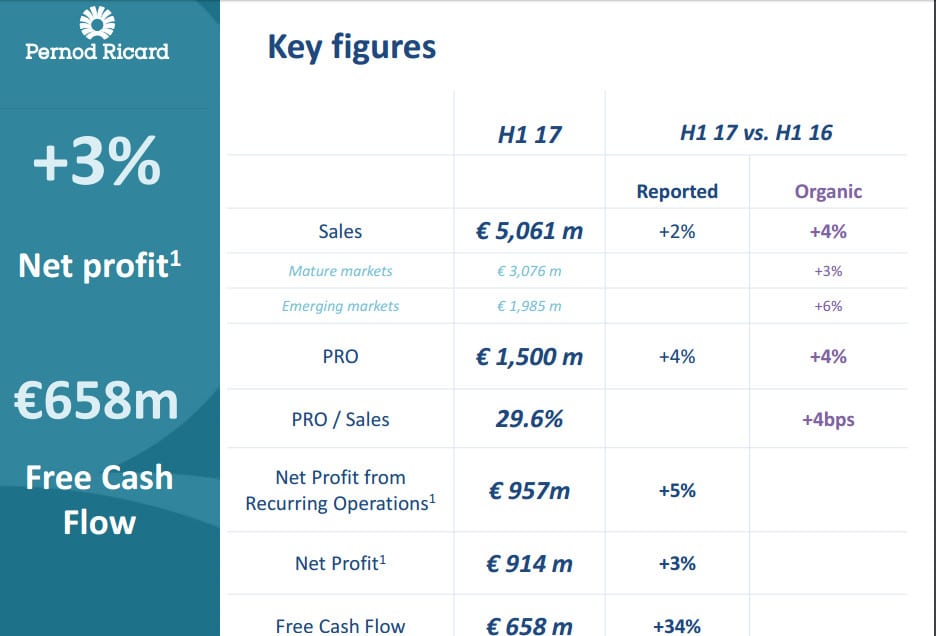
    Pernod Ricard saw improved performance in the global travel-retail (GTR) channel, helping sales and recurring operations to grow 4% organically in the first half of 2017 to €1.5bn ($1.6bn). Total group sales reached €5.061bn.


    The positive numbers in the travel-retail channel were as a result of new organisations getting up to speed. Improvement was also seen in the Americas region, where achieved +7% organic sales growth during H1 2017, more so than in the +4% growth recorded in the same period last year. Sales in the region’s travel-retail channel reached +14%, sparking a return to growth, which has been driven by Martell expanding its distribution channels and increasing its visibility across airports in the US.

    Martell saw sales grow +7%, with a return to strong growth in China, shaped by new product releases such as the Cordon Bleu Intense Heat Cask Finish, although all segments also seemed to see a positive lift. Ballantine’s also managed to see a sales lift in the Asia travel-retail market.

    Travel-retail Asia saw sales in modest decline, albeit an improvement on H1 2016. However, the scotch category is still faced with a tough market in the region and a competitive environment. Difficulties were also experienced in the European channel.

    Pernod Ricard Group chairman and CEO Alexandre Ricard declared: “Our half-year results are strong, delivering a continued performance improvement.  Our strategy remains consistent and is driving results.

    “For full-year FY17, in an uncertain environment, we plan to continue improving our business performance year-on-year vs. FY16. We will continue to support priority markets, brands and innovations while focusing on operational excellence. We expect to deliver organic growth in Profit from Recurring Operations in line with the guidance of +2% to +4%.”

    Photo of Pernod Ricard H1 2017 1

  • Lao Dairy Farm carves out healthy market niche

    Lao Dairy Farm carves out healthy market niche

    The farm is located in Naxineua village, Naxaithong district. It keeps a variety of animals, including goats, pigs, ducks, chicken, and fish, but its mainstay is ists herd of dairy cows.

    Farm Director Sengmany Yathotou told last week that they began in 2014 with 16 cows which they kept for the family’s use and tended to after work because the family enjoyed agricultural activities.

    To start with, they never thought about how much milk they obtained from the cows each day and didn’t think about selling it. They used it only for their own consumption, sometimes giving some to their neighbours, friends or relatives.

    After a year, people in the neighbourhood and nearby shops started asking them to provide milk for sale because they had tried it and liked the taste.

    They started to sell the milk in markets and shops in Vientiane such as M-Point Mart, and coffee and cake shops, and have since expanded their distribution from four to eight minimarts.

    Their 16 original cows were bred in Australia but were imported from Thailand. The family now has 110 cows including some calves that were born on the farm.

    Sengmany says the farm is equipped with modern technology that ensures all the milk is hygienically produced and the milk-based products are made on the premises.

    The farm is now promoting its “Crysta” brand and hopes it will become widely recognised and be able to compete with overseas milk brands.

    The cows are milked twice a day, with each giving 10 to 15 litres, making a daily total of about 450 litres.

    Sengmany plans to expand her milk market in the provinces of Luang Prabang, Xieng Khuang and Attapeu, and is currently looking at transport costs.

    “Keeping a dairy herd is still something new for us, especially getting the cows pregnant so that they produce calves. It’s very difficult as we’re not very familiar with this and run the risk of the newborn being a male rather than a female, and of course we would prefer females,” she says.

    “The second challenge is that we have to get more people interested in eating and drinking food produced in Laos. But we’re sure that if they try our products they will find that the taste and quality is the same as international brands.”

    The farm covers more than 10 hectares, including fields of Napier grass and sweetcorn for the cows to eat.

    The family makes pasteurised milk, yogurt, and yogurt drinks.

    The milk is popular with expatriates and is also used to make cheese, which is sold to shops.

    The Lao Dairy Farm employs 40 people including two specialists from Thailand and Vietnam who studied milk production in Denmark.

    “Some of our cows are pregnant and there are three or four births each month, so that means we will have more cows and we’re sure to get at least 700 litres of milk a day in the next three months and then we will expand our market to the provinces,” Sengmany says.

    The cows’ pregnancy lasts for nine months after which they produce milk. The calves can become pregnant when they are one year old.

    Some of her customers ask Sengmany why her products are not cheaper since they are made in Laos. But she explains that everything on the farm is new and imported, especially the medicines and vitamins that are given to the cows. They use high quality materials but she points out that their retail prices are no higher than anyone else’s.

    The Lao Dairy Farm plans to open a cafe on the first floor of Lao-ITECC, which will feature milk and yogurt, as part of its market expansion plans.

  • Starbucks’ social gifting feature launches in China

    Starbucks’ social gifting feature launches in China

    Starbucks has extended its social gifting promotions into China, where it has launched a major expansion program to double its stores within the next five years.
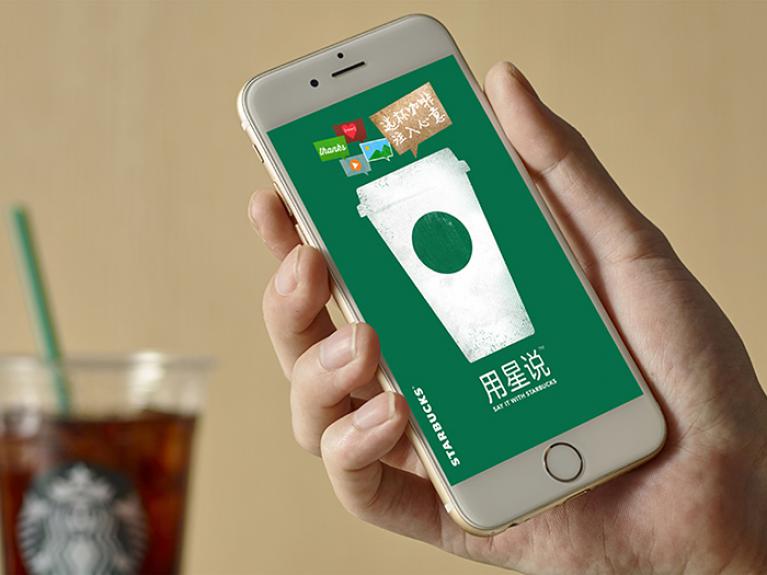
    The coffee giant’s new “Say It With Starbucks” program, created by Starbucks and Weixin, China’s leading mobile social communications app, enables users to gift a Starbucks beverage or digital gift card via a social gifting platform.
    A sister product of WeChat, China’s leading mobile social messaging app, Weixin’s platform has 846 million global monthly active users, as of third quarter 2016. The launch comes on the heels of a strategic partnership between Starbucks and Tencent, WeChat’s developer, in December 2016.
    Users will be able to select from a curated selection of Starbucks-branded gifts and add a personalized message in the form of text, images or video to uplift the day of a loved one, Starbucks explained. Once a gift is received, it will be saved in the recipient’s Weixin app and can be redeemed at any Starbucks store in Mainland China.
    During the initial launch period, Weixin added access to ‘Say it with Starbucks’ users in its Weixin Wallet-function. This partnership makes Starbucks the first retail brand to bring a locally-relevant social gifting experience in China, the coffee giant said.
    Starbucks launched a trial phase two weeks ago among employees and Starbucks customers.
  • Lotte looks to US to boost sales of 3 drinks

    Lotte looks to US to boost sales of 3 drinks

    The Korean energy drink Hot 6 will take on Red Bull and Monster in the American market from this month.

    Lotte Chilsung Beverage said Thursday, it will start selling the caffeinated drink from this month in the U.S., starting in on the West Coast.

    The company said it has already shipped 2,000 boxes of 30 units each.

    Korea’s energy drink industry saw a boom in the early part of this decade and became a 100 billion won ($87.3 million) market. Pioneers Red Bull from Austria and California-based Monster were followed by the launch of Hot 6, which sells for a cheaper price.

    But growth has stalled in recent years with the number of health-conscious consumers rising in Korea. Health authorities have also warned the public not to drink too many caffeinated drinks.

    According to industry sources, the energy drink market in Korea has slipped to 70 billion won and Hot 6 has a 60 percent market share.

    Its U.S. marketing will begin at the Genesis Open 2017 PGA golf tournament in California, which will be held from Feb. 13 to 19.

    Lotte Chilsung Beverage said it will introduce the drink with the slogan “Brand New No. 1 Korean Energy Drink” and emphasize its natural caffeine extracted from guarana.

    Lotte’s global ambition will continue by expanding U.S. retail sales of its Milkis and Chilsung Cider soft drinks. Milkis was introduced in 1989 and has loyal customers fond of its unique, yogurt-like flavor. Chilsung Cider was a pioneer in Korea’s soft drink industry when it was launched in 1950.

    Until now, Milkis, a white opaque fizzy drink, and Chilsung Cider, a Korean version of Sprite, have been only available online or in small retailers and Korean markets in the United States.

    “There are five flavors of Milkis being sold in Korea, including strawberry and melon. If the local response is good, the possibility of launching different flavors in the U.S. also exists,” the company spokesman said.

    The company said two of its drinks will be retailed at 2,000 branches of Kroger, the No. 1 supermarket chain in the U.S., from March.

    “Lotte Chilsung Beverage aims to create a ‘Hallyu beverage’ in the U.S. by expanding retail channels to appeal not only Koreans but Americans as well. Hot 6, Chilsung Cider and Milkis will be at the forefront,” the beverage subsidiary said in a statement.

    Lotte Chilsung Beverage’s foray into the U.S. is part of the group’s effort to expand beyond Asia. To become more global, Lotte Group has been holding the LPGA Tour Lotte Championship in Hawaii since 2012 and acquired the New York Palace Hotel located in Manhattan in 2015, renaming it the Lotte New York Palace Hotel.

  • Dak Lak to shift coffee strategy

    Dak Lak to shift coffee strategy

    The Central Highlands province of Dak Lak plans to increase the proportion of processed coffee such as instant coffee and powdered coffee from less than 10 per cent to 15 per cent in total coffee output by 2020 and up to 30 per cent by 2030.

    Pham Ngoc Nghi, chairman of the province’s People’s Committee, said the province’s policies were being adjusted to attract more domestic and foreign enterprises to invest in coffee processing.

    He said that most locally based processing companies were private firms whose market access and product advertising capacity were modest.

    Dak Lak, which has the largest coffee area and output in Viet Nam, has more than 200,000ha and an annual coffee bean output of 450,000 tonnes.

    However, the province only has 145 coffee processing facilities with a total capacity of 32,100 tonnes, accounting for 5.55 per cent of the province’s total coffee bean output.

    To achieve the targets, the province has created a more favourable investment environment for both domestic and foreign enterprises, particularly those specialising in roasting and grinding, to invest in processing factories.

    The province has also helped coffee enterprises improve their corporate governance, promoted the use of advanced post-harvest and processing techniques and expanded market access for local companies.

    Coffee farmers, producers and businesses are being encouraged to produce beans that can be certified by the coffee global certification programme (UTZ), the fair-trade labelling organisation (FLO), Rainforest Alliance (RFA) and 4C (Common Code for the Coffee Community).

    The province, which has helped organisations, enterprises and co-operatives build brands, has offered assistance to companies to acquire rights to the geographical indication for processed coffee products.

    Last year, Dak Lak produced 28,000 tonnes of processed coffee, including 23,000 tonnes of powdered coffee and 5,000 tonnes of instant coffee.

    It exported 4,520 tonnes of instant coffee worth nearly US$ 27 million, accounting for 7.5 per cent of the province’s coffee export revenue.

    In the 2016-17 coffee season, Dak Lak estimates it will export 230,000 tonnes of coffee to 75 countries and territories.

    Export potential

    Viet Nam’s processed coffee exports are predicted to increase in the coming years due to more investment from domestic and foreign enterprises, according to experts.

    Many coffee companies, including Trung Nguyen, Me Trang and Vinacafe, for instance, are expanding the scale of their production.

    In addition, Viet Nam’s free trade agreements with the EU, Europe-Asian Economic Union and the Republic of Korea will create opportunities to boost Viet Nam’s processed coffee exports.

    Under free trade agreements, exports of Viet Nam’s processed coffee are taxed at only 0-5 per cent compared to 15 -20 per cent in the past.

    The country’s coffee industry is raising the value of coffee beans by speeding up the processing of powdered and instant coffee and other products.

    Processed coffee products from Viet Nam are sold in many international markets.

    The G7 instant coffee of Trung Nguyen, for example, has passed the requirements of Walmart Stores, Inc and is now sold at Walmart stores in many countries such as Chile, Brazil, Mexico and China.

    Luong Van Tu, chairman of the Viet Nam Coffee and Cocoa Association, said China was one of the most important markets for Viet Nam’s processed coffee.

    Coffee consumption in China is rising rapidly, particularly among younger consumers exposed to Western coffee drinking habits, he said.
  • Hooters of Singapore leads Asia expansion

    Hooters of Singapore leads Asia expansion

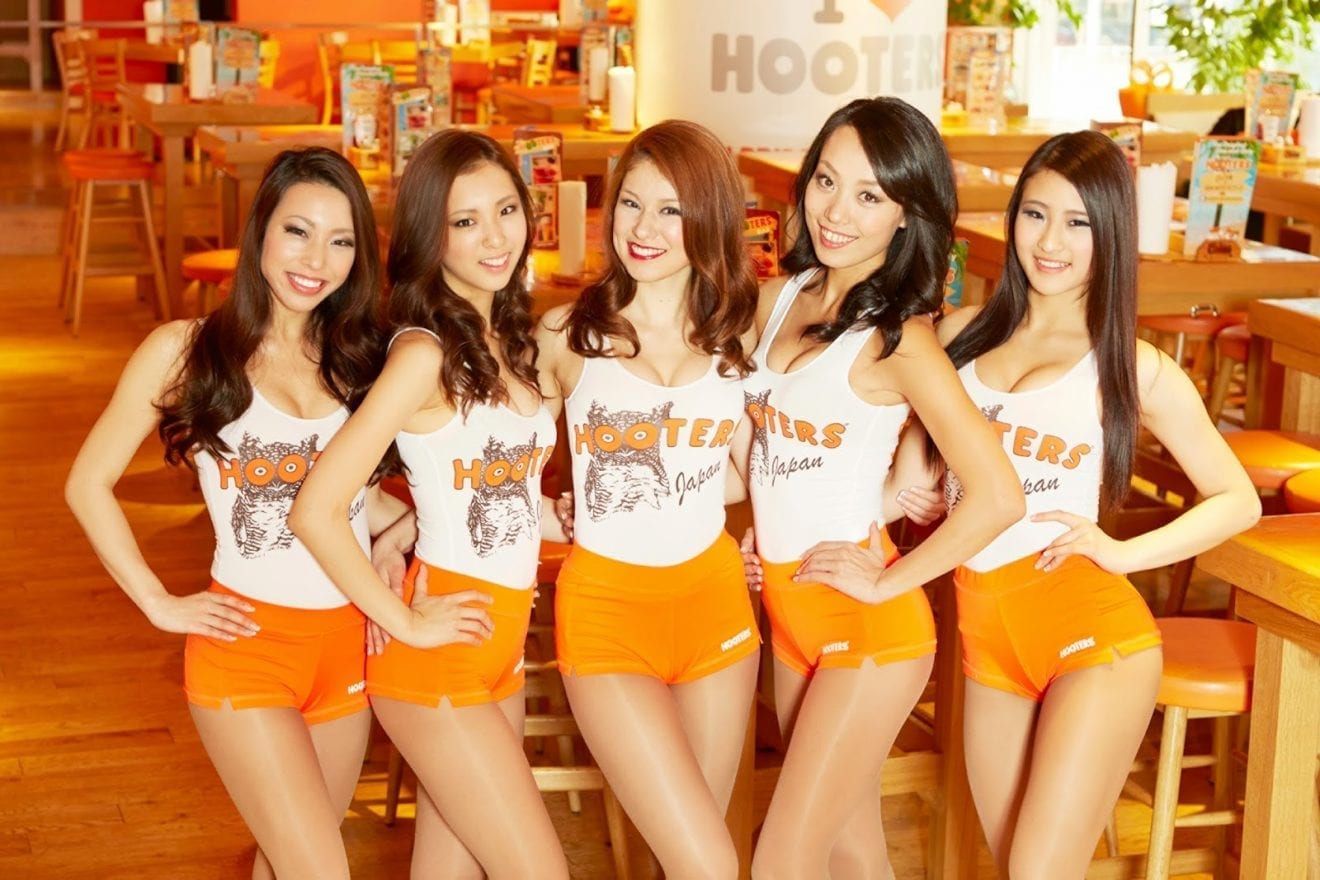
    Hooters of Singapore – Marina Bay has opened in Marina Boulevard, led by franchisee Destination Properties Group.

    Hooters Marina Bay - Singapore 3

    Covering 2336 sqft (217 sqm) and close to Marina Bay Sands and Marina Bay Financial Center, the restaurant features more than 22 large-screen televisions. The US chain is known for its hostesses, wings and live televised sports.

    “The growth of Hooters locations in Asia is continuing its momentum,” says Destination Properties Group CEO Gary Murray.

    Hooters Marina Bay - Singapore 4

    Hooters Marina Bay - Singapore 5

    Hooters Marina Bay - Singapore 6

    Hooters Marina Bay - Singapore 7


    Hooters Marina Bay - Singapore 9

    Hooters Marina Bay - Singapore 8

    The new venue is part of a 35-location Southeast Asia development agreement between Hooters and the Singapore-based international franchisee. There are now 24 outlets in Asia, with plans to open more this year in Phnom Penh, Samui, Jakarta, Singapore (Fusionopolis), Taipei and multiple locations in Manila.

    Meanwhile, the brand is seeking further restaurant sites in Bali, Bangkok, Ho Chi Minh City, Hong Kong and Kowloon, Jakarta, Krabi, Kuala Lumpur, Macau, Manila, Cebu and Davao, Siem Reap, Singapore, Taipei and Yangon.

    Hooters plans to open more than 30 restaurants globally this year.

    Hooters Marina Bay - Singapore 1

  • Big opportunities for F&B, says JLL China report

    Big opportunities for F&B, says JLL China report

    China offers “enormous room for growth” for foreign F&B brands, according to a new whitepaper from JLL China and retail data specialist LocalGravity.

    The Foreign F&B Expansion in China report explores the trends behind foreign F&B operators expanding in China and the lessons these hold for upcoming market entrants.

    With China’s middle class embracing foreign dining, Asian and Western F&B brands have expanded aggressively and become fixtures in China’s malls and shopping streets, says the report, which takes an in-depth look at the roll-out strategies of 32 international brands.

    Key insights from the report:

    ·  Overall expansion rates were high at more than 20 per cent year-on-year in 2015
    ·  Foreign brands remain active in coastal and tier-one cities, and are also expanding with increased confidence in lower-tier cities and remote regions
    ·  There is some risk in the less-wealthy provincial capitals, where many brands have over-expanded
    ·  Cafe-format shops selling coffee, tea and ice cream were the most active category, expanding 30 per cent year-on-year in 2015.

    •  Regional bias is strong among most chains, especially in the south, and there is room to catch up in wealthy east China cities.

    Closure rates

    The JLL China report has also explored closure rates by format. Analysis has revealed higher closure rates in the fast-food segment relative to other formats.

    Expansion potential has been explored to understand how store presence varies across city tiers. Of the 32 brands studied, many were found to have a strong presence in China’s top cities. However, “white spaces” across cities down to the third tier show there is an ample room for growth.

    Furthermore, many of the foreign F&B brands appear to be concentrated in south China, with other parts of the country offering untapped potential.

    “Many foreign F&B brands view the China market with understandable enthusiasm—after all, capturing even a small slice of the market translates into huge, absolute sales volumes,” says JLL head of retail research for Asia Steven McCord. “Yet the road to successfully taking advantage of the China opportunity is difficult, as some restaurant chains have discovered too late.”

    “The China F&B market is now one of the world’s largest and fastest moving, but it is still quite fragmented with enormous room for growth,” says JLL China head of retail James Hawkey.

  • Amazon India proposes $500m food venture

    Amazon India proposes $500m food venture

    Amazon India has applied to the government to invest US$500 million in a wholly owned venture that will allow the US eCommerce giant to stock locally produced food items and sell them online.

    If successful, it would become the first foreign retailer to enter the segment.

    Amazon already has an eCommerce marketplace in India, but while 100 per cent overseas capital is permitted for such platforms, they cannot sell products of their own. Last year, the government allowed for 100 per cent foreign investment in the retailing of processed foods made in India.

    Amazon has filed its application with the Department of Industrial Policy & Promotion (DIPP), which handles foreign investment in retailing and e­Commerce. The company plans to invest $500 million over five years and could start selling locally produced food items within six months of obtaining approval, says an insider.

    “We are excited by the government’s continued efforts to encourage foreign direct investment in India for a stronger food-supply chain,” says an Amazon spokesperson. “We have sought an approval to invest and partner with the government in achieving this vision.”

    Only Indian grocery delivery companies Big­Basket and Grofers have applied under
    the category, prompting the government to invite companies including CP Foods (Thailand), Heinz, Nestle and Walmart to provide feedback and investment plans.

    This followed the minister for food-processing industries Harsimrat Kaur Badal visiting London with a team of officials last year to meet representatives of such companies as Cobra Beer, Harrods, Marks & Spencer, Sainsbury’s and Tesco to drum up support for the policy.

    Amazon’s current online platform is open to Indian-­owned entities, and similar platforms are run by Flipkart, the country’s largest eCommerce company, and Snapdeal.

  • Heavy rain damages rice crops in southern Vietnam

    Heavy rain damages rice crops in southern Vietnam

    Mekong Delta provinces, which just recovered from a historic drought a year ago, is bracing for more unfavorable weather. Vietnamese farmers in the Mekong Delta are seeing their rice crops being damaged after heavy downpours hit the region in recent days.

    Nguyen Van Cung from Can Tho City said that his family is trying to dig ditches to save nearly 1,000 hectares (247 acres) of rice submerged under water.

    “We can’t harvest now because the crops are not ready,” he said.

    Latest statistics showed that more than 7,000 hectares of rice in the two Mekong Delta provinces of Ca Mau anh Hau Giang have been ravaged by rain. Many shrimp farms are also threatened by flooding.

    They said the Mekong Delta should expect to see more unusual weather patterns, with more rain likely coming until the end of February.Experts said the heavy rains were caused by the weather phenomenon La Nina, which came after the devastating El Nino last year.

    Last year, a historic drought and saltwater intrusion damaged more than 400,000 hectares of crops and resulted in severe water shortages for 1.5 million people.

    The region, Vietnam’s main rice and fruit grower, is among those most vulnerable to the impacts of climate change, various studies have suggested.

  • Yum China tramples expectations; profit up 31%

    Yum China tramples expectations; profit up 31%

    Yum China’s first earnings report as an independent company proves that sometimes breaking up can be a very beautiful thing. In fact, its first report since the October spin-off from Louisville-based Yum Brands not only surpassed estimated sales projections for the company but showed its full-year operating profit was up 31 percent year over year to $640 million, according to a news release.

    For the year and fourth quarter that ended Dec. 31, Yum China reported a profit of 17 cents a share, up from the average estimate of 10 cents. The company also attributed much of the financial success of the last year to expansion and new openings, as well as same-store sales growth at KFC. 

    The only clouds inside this silver-lined report came from the direction of the performance of Pizza Hut, which was worse than expected, according to the news release.

    Yum China’s board of directors also authorized the repurchase of up to $300 million of common stock.

    “This was a momentous year for Yum China,” CEO Micky Pant said in the news release. “We successfully became an independent, publicly traded company while simultaneously improving our business performance and investing for future growth. At year end 2016 with over 7,500 restaurants nationwide, we extended our market-leading position in China.” 

    Full-Year Highlights
    •    Total system sales grew 5 percent, including growth of 6 percent at KFC and 3 percent at Pizza Hut Casual Dining, excluding foreign currency translation.
    •    Opened 575 new restaurants for the full year, or 5 percent net growth, surpassing 7,500 restaurants in China.
    •    Same-store sales were flat, with an increase of 3 percent at KFC, offset by a decline of 7 percent at Pizza Hut Casual Dining.
    •    Total restaurant margin increased 2.7 percentage points to 15.3 percent, primarily aided by the impact of retail tax structure reform implemented on May 1, 2016.
    •    Reported operating profit grew 31 percent, primarily aided by the impact of retail tax structure reform. Foreign currency translation negatively impacted operating profit by $36 million. Excluding foreign currency translation and special items, and Special Items, operating profit grew 37 percent.

    Fourth-Quarter Highlights
    •    Total system sales grew 4 percent, including growth of 4 percent at KFC and 6 percent at Pizza Hut Casual Dining, excluding foreign currency translation.
    •    Opened 302 new restaurants during the quarter.
    •    Same-store sales were flat, with an increase of 1 percent at KFC, offset by a decline of 3 percent at Pizza Hut Casual Dining.
    •    Foreign currency translation negatively impacted operating profit by $5 million.

    “For our shareholders, we exceeded our 2016 financial targets in operating profit, restaurant margin and adjusted EBITDA,” Pant said. “We continue to focus on our long-term growth formula: new unit development, same-store sales growth, and continued restaurant margin improvement. Right now, our top priority is consistently delivering positive same-store sales growth. During 2016, we continued to build a foundation for long-term growth with emphasis on product innovation, investments in refurbishing our restaurants, and focus on digital engagement with our customers.”

    New leaders named

    Yum China also announced Tuesday afternoon that it has appointed Joey Wat as president and COO of Yum China and Johnson Huang as KFC business general manager. Wat was previously CEO of the company’s KFC business and Huang was previously chief information and marketing support officer