Category: Food

Retail News Asia is committed to providing both local and global retailers with the latest Food and Food & Beverage news throughout the Asian market. This on a daily base.

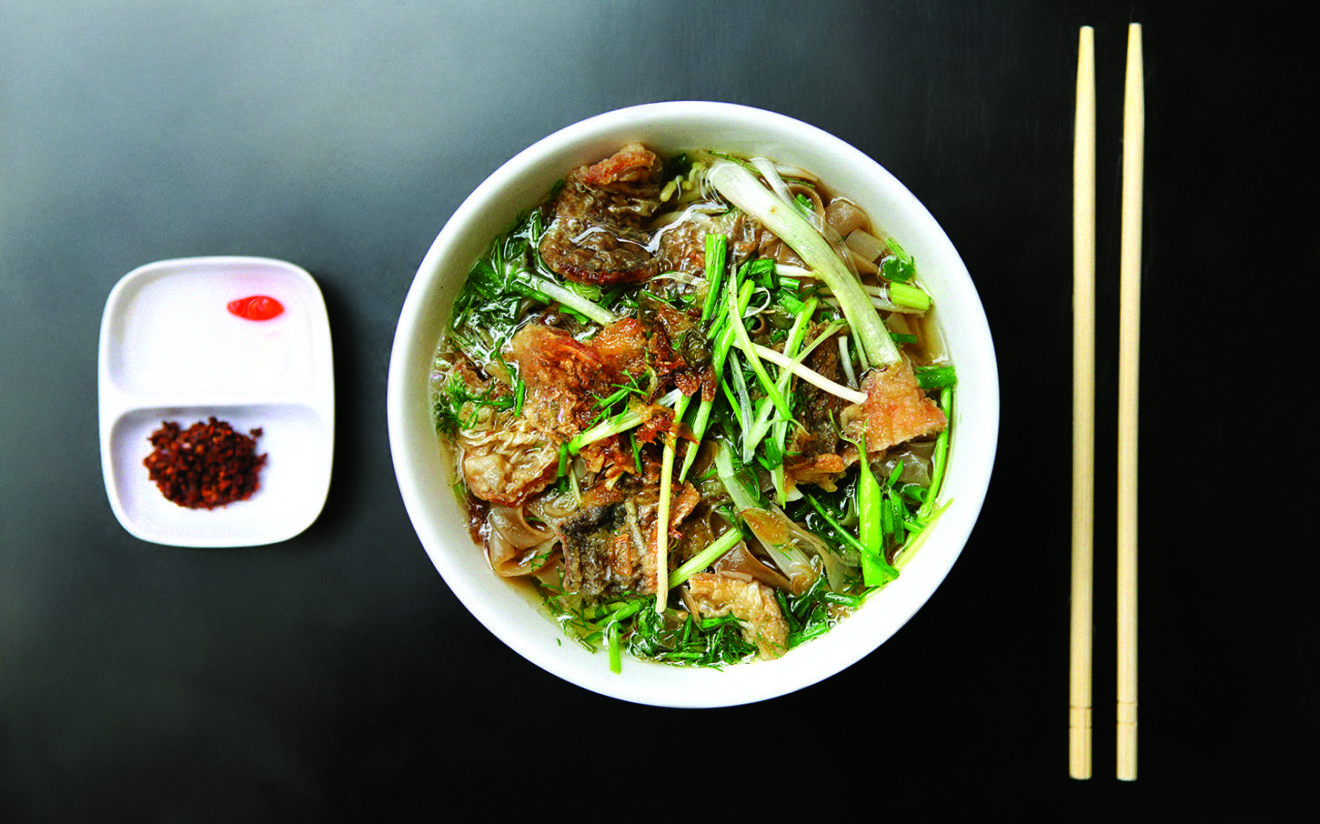
  • New food truck dishes out noodles at Hong Kong Disneyland’s doorstep

    New food truck dishes out noodles at Hong Kong Disneyland’s doorstep

    Hong Kong’s latest food truck may have found its sweet spot on Disneyland’s doorstep after its first location was deemed too remote.

    Mein by Maureen, which offers lo mein (noodles in seafood sauce), has made its new home on Park Promenade, the only thoroughfare between the public transport drop-off points and the theme park’s entrance.

    Although existing rules prohibit visitors from bringing in outside food, the new food truck effectively competes with more expensive restaurants inside the park. It is a stone’s throw away from the MTR station and next to the luggage valet counter.

    Some food truck operators had complained that the original site, near the parking lot for coaches, was too remote, prompting the park to designate a new location last month.

    Mein by Maureen started taking orders from hungry customers at 10.40am on Tuesday, after a 40-minute delay.

    Operator Maureen Loh Mo-lin explained that her staff were still experimenting with the operation.

    Traffic heading into Sunny Bay on Lantau Island was also an unexpected hiccup.

    “Last week it was smooth and perfect … but this morning there was a big traffic jam crossing the harbour,” she said, referring to her commute from Wan Chai at about 7.30am.

    “Maybe people were heading back for work.”

    One of Loh’s first customers was Mika Shimizu, a Japanese expatriate and Disney fan who visits the park once a week.

    She and her friend forked out HK$48 each for a serving of lo mein. They both felt the price was reasonable.

    “It was tasty, and the portion was right. I think I would visit again,” she said.

  • Pakistan boosts orange exports to Indonesia

    Pakistan boosts orange exports to Indonesia

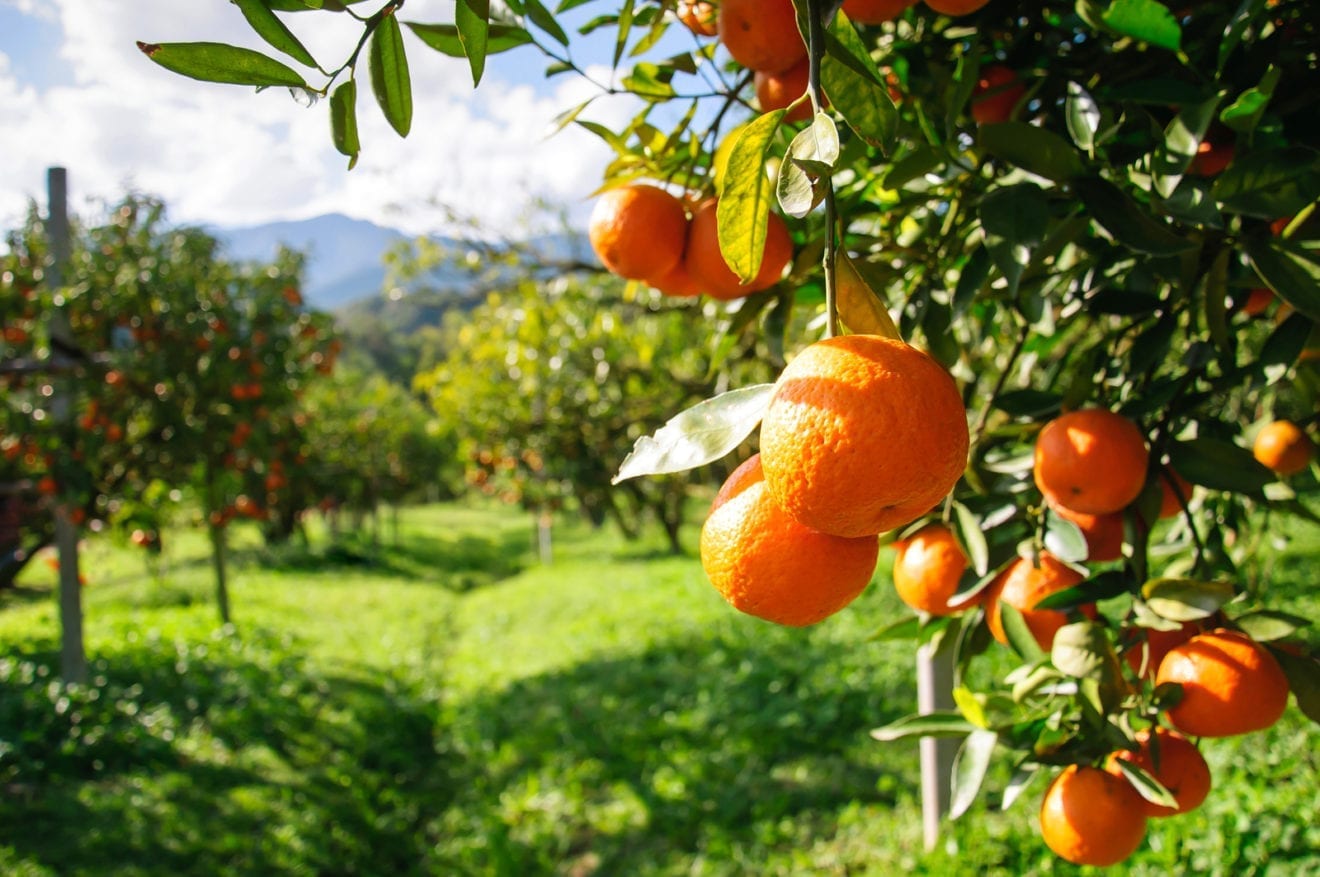
    Indonesian fresh fruit importers say Pakistan will face tough rivalry from China. Pakistan hopes to see an increase in exports of its famous Kinnow oranges to Indonesia, as it has started to infiltrate the market through giant retailers.

    A press statement from the Pakistani Embassy made available to The Jakarta Post states that consignments of the Pakistani Kinnow have started arriving in Jakarta, and are currently being sold in many major grocery chains, including Carrefour, Ranch Market, Hypermart and Giant.

    The Kinnow is a larger orange, touted to be extremely easy to peel and is cited as having a unique flavor as a result of the soil and climate in which they are grown.

    “The Pakistani Kinnow made its entry into the Indonesian market at New Year and the Chinese New Year, to make them more joyous occasions. Last year, Pakistan’s exports of Kinnow oranges to Indonesia amounted to US$23 million and this figure is expected to grow significantly in 2017,” the press statement read.

    Indonesia has a preferential trade agreement (PTA) with Pakistan, which began in 2013, and Pakistan’s Kinnow oranges are allowed access through the country’s main port in Tanjung Priok, North Jakarta.

    In exchange, Pakistan exempts Indonesia, the world’s largest crude palm oil (CPO) producer, from paying 10 percent import duty on that commodity.

    Following the PTA, imports of Kinnow oranges from Pakistan reached $19.3 million in 2014, from $3 million in 2013.

    However, Indonesian Fresh Fruit and Vegetables Exporters and Importers Association chairman, Kafi Kurnia, said that it was unlikely Pakistan could significantly boosts its exports of Kinnow oranges because of fierce competition from similar oranges from China.

    Kafi noted that since existing regulations limited the size of imports of certain fruits, importers tended to be choosier.

    “The Kinnow imports arrived during a very good time, at around Chinese New Year. However, they have a lot of fierce competition, mostly from Chinese exporters. If my importing quota was limited, especially during this time, I would definitely prioritize oranges from China,” he told on Monday.

    Even so, the Kinnow orange will remain a major competitor for locally produced oranges, as there was a lack of research and development that could help raise the quality of local fruit and vegetables.

    Indonesia is also home to many other tropical fruits such as mangosteen, rambutan, snake fruit, jackfruit, soursop, breadfruit, guava and starfruit, but they are not exported in great quantities or even consumed heavily at home.

    The government aims to boost tropical fruit production by expanding land for fruit plantations while also improving infrastructure and transportation systems to reduce high distribution costs, as part of efforts to become the biggest tropical fruit producer in Southeast Asia by 2025 and in the world by 2045.

    Meanwhile, National Agriculture Council chairman Benny Kusbini concurred that a lack of uniform quality among locally produced fruit was an obstacle when it came to competing with imported fruit sold in Indonesia.

    He also noted that poor infrastructure remained a problem as some fruits were cheaper to import than to transport from regions in Indonesia.

    “The Kinnow, for example, can be very cheap to import from Pakistan to Indonesia. Sometimes 10 kilograms of Kinnows can be imported for only $5 to $6. Compared to oranges from Medan, for example, it is difficult to compete with those prices,” he told the Post.

    Indonesia imported $666.37 million worth of fruit and $558.08 million worth of vegetables in 2015, according to data from Trade Map.

  • Vietnam’s top brewer Sabeco posts record profit in 2016

    Vietnam’s top brewer Sabeco posts record profit in 2016

    Together Sabeco and Habeco, both controlled by the state, account for about 60 percent of the domestic market. The country’s biggest brewer Sabeco has reported a profit of VND4.6 trillion ($205 million) for last year, a 33 percent jump from 2015 and 27 percent higher than its target, according to a statement filed at the Ho Chi Minh Stock Exchange.

    Saigon Beer Alcohol Beverage, as the company is officially known, just listed its shares on the country’s main bourse in December, eight years after its initial public offering. It reported VND30.66 trillion in revenue last year, up 13 percent from a year ago.

    Sabeco, one of a few state-owned companies which have performed relatively well, currently remains 89.59 percent owned by the government.

    With a share of nearly 41 percent of the domestic beer market, Sabeco is among the most sought-after companies by foreign investors, with suitors including Japan’s Kirin Holdings, Thai Beverage and Dutch beverage giant Heineken, according to an official from the trade ministry.

    In an attempt to accelerate the privatization of state-owned enterprises, the Vietnamese government said it would sell its entire stake in Sabeco this year.

    Meanwhile, Hanoi Beer Alcohol Beverage, or Habeco, posted a net profit of VND740 billion, down 20 percent from 2015.

    Habeco, with a 19.8 percent market share, is the third largest brewer in Vietnam, behind Sabeco with a market share of 41 percent and Heineken with 21.6 percent, according to the Vietnam Beverage Association.

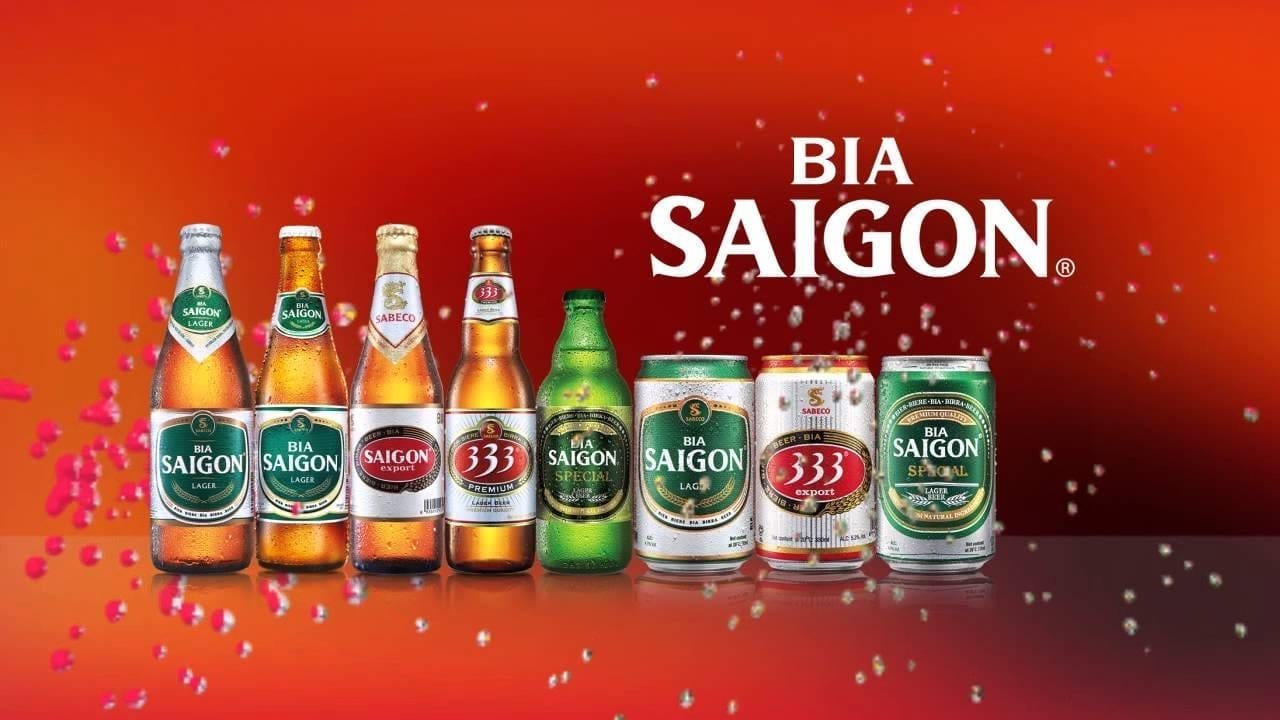
    That means as combined, Sabeco, known for Bia Saigon and 333 brands, and Habeco account for about 60 percent of the domestic market.

    According to market research company Nielsen, while Sabeco has managed to raise its market share in northern provinces to 15.5 percent in the first half of last year from 10 percent in 2014, Habeco has failed to strengthen its dominant position in the north. The latter controlled 50 percent of the northern market in the first six months of last year, down from 55 percent in 2014.

    Beer consumption in Vietnam rose 12 percent year-on-year to reach 3.8 billion liters last year, according to the trade ministry.

    Vietnam is Asia’s third largest beer consumer by volume after China and Japan.

    Industry expects annual growth of 4 percent to 5 percent for the next five years. The country’s annual beer output is forecast to hit 4.1 billion liters by 2020, according to  government projections.

    The stock market debuts of both Sabeco and Habeco have been sped up in the government’s latest attempt to boost investment and increase transparency.

  • Top 5 yogurt brands in Singapore

    Top 5 yogurt brands in Singapore

    A recent study by Kadence International, in Singapore, found that Meiji is the number 1 yogurt brand, in terms of number of consumers using it, followed closely by Marigold.

    In addition, nearly all Singaporeans are aware of Meiji (96%) and Marigold (97%). Just under half of consumers (49%) currently eat Meiji yogurt, and in second place is Margiold (46%).

    Top 5 brands:

    1. Meiji
    2. Marigold
    3. F&N Magnolia
    4. F&N Magnolia 0% fat
    5. Nestlé Natural

    These two brands dominate the yogurt market in Singapore, with F&N Magnolia and F&N Magnolia 0% Fat significantly behind, taking up the third (33%) and fourth spots (20%) respectively.

    Nestlé Natural rounds off the top five, with 14% of Singaporeans currently consuming it.

    The online study conducted by Kadence included 1,555 respondents in Singapore to understand their perceptions of different yogurt brands and the influence of health trends upon this.

    When asked what imagery comes to mind about the brand, Meiji was seen to represent great taste, a great choice of flavors and was most likely to be considered a brand consumers trust. In contrast, consumers were much less able to associate other yogurt brands with particularly imagery or perceptions.

    The strong association between taste and trust helps explain the success of Meiji, as these are the main factors consumers look for when they shop the category.

    Taste is the most important driver of consumption for yogurt, and an area where Meiji dominates. The strong brand awareness of 96% and 97% respectively also means that Meiji and Marigold get chosen from the retail shelves.

    Healthy lifestyles

    The study also looked into current healthy eating perceptions in Singapore. It is of no surprise that many consumers pursue a healthier lifestyle, which includes food consumption.

    Two-thirds of Singaporeans (66%) said they try to eat healthily, but sometimes fall short. Whereas a fifth (17%) said they always eat healthily. In contrast, 17% of Singaporeans responded that they do not endorse a healthy eating lifestyle.

    The fortunes of yogurt brands change dramatically when looking only at those healthiest 17% of Singaporean consumers. For those following a healthy diet and lifestyle, Meiji and Marigold are replaced as the most consumed brands of yogurt by Fage (68%) and Chobani (60%).

    In contrast, both brands had very low levels of consumption when it comes to all Singaporeans in general, only 1% and 3% respectively, suggesting both brands represent a niche yogurt territory targeted towards healthy consumers.

    Both brands focus on their health credentials, promoting their all-natural Greek strained yogurt and very low fat content.

    These messages give them clear brand differentiation and resonate with the healthiest segment of consumers, as perceptions of Chobani as a brand that helps maintain a healthy diet jumps by 30% between all consumers and the healthy focused.

    Consumers also felt strongly that Chobani is a good choice of yogurt for the whole family, although relatively lacking on having a wide range of taste and exciting flavors. Fage enjoys a similarly strong shift in perceptions when it comes to the health-conscious segment. However Fage shows more positive numbers in having exciting flavors and formats as well as a brand with a ‘buzz.’

    The importance of trust in a brand’s health credentials become more important when choosing a yogurt for the health focused consumer group, rising from eighth place for all consumers to second place for the health focused.

    Health priorities for professionals

    When looking into who makes up the healthiest consumers in Singapore, we find that there are few differences in terms of age and gender.

    However, there is one group that does stand out. Doctors, lawyers, accountants, bankers and engineers are all more likely to say they always eat healthily.

    In contrast, students are more likely to identify with an unhealthy lifestyle.

    Arguably, those in the professions are more aware of the importance and role of diet in maintaining a healthy lifestyle and general health benefits; especially compared to students. Similarly, students have a tendency to focus on price, and so put a lower emphasis on health versus value for money, in contrast to those who can afford to maintain a healthy lifestyle.

    Taste vs. health

    Looking at the study results, it seems that there is a perception taste and healthy ingredients do not coexist in most yogurt products out in the market today – and this would be an area for yogurt brands to develop their products further.

    Currently, however, each brand and products are positioned to target different consumer segments – consumers looking for rich flavor, health-conscious consumers, children and teens, and the elderly, to name a few.

    Chobani, Farmer’s Union and F&N Marigold 0% are all perceived as healthy product choices endorsed by health-conscious consumer groups, but they lack in the diversity of flavors available on the shelves.

    Meiji, Marigold and F&N Marigold all provide a wide selection for consumers, but are perceived as not being produced with the finest ingredients.

    Of course larger dairy producers such as F&N or Yoplait already have a range of products within their portfolio to meet different consumer demands. However, knowing both the general and niche demands and the latest consumer trends according to different target groups helps when it comes to brand positioning, regardless of whether a brand is big or relatively small.
  • New look for Pierre Herme Japan flagship

    New look for Pierre Herme Japan flagship

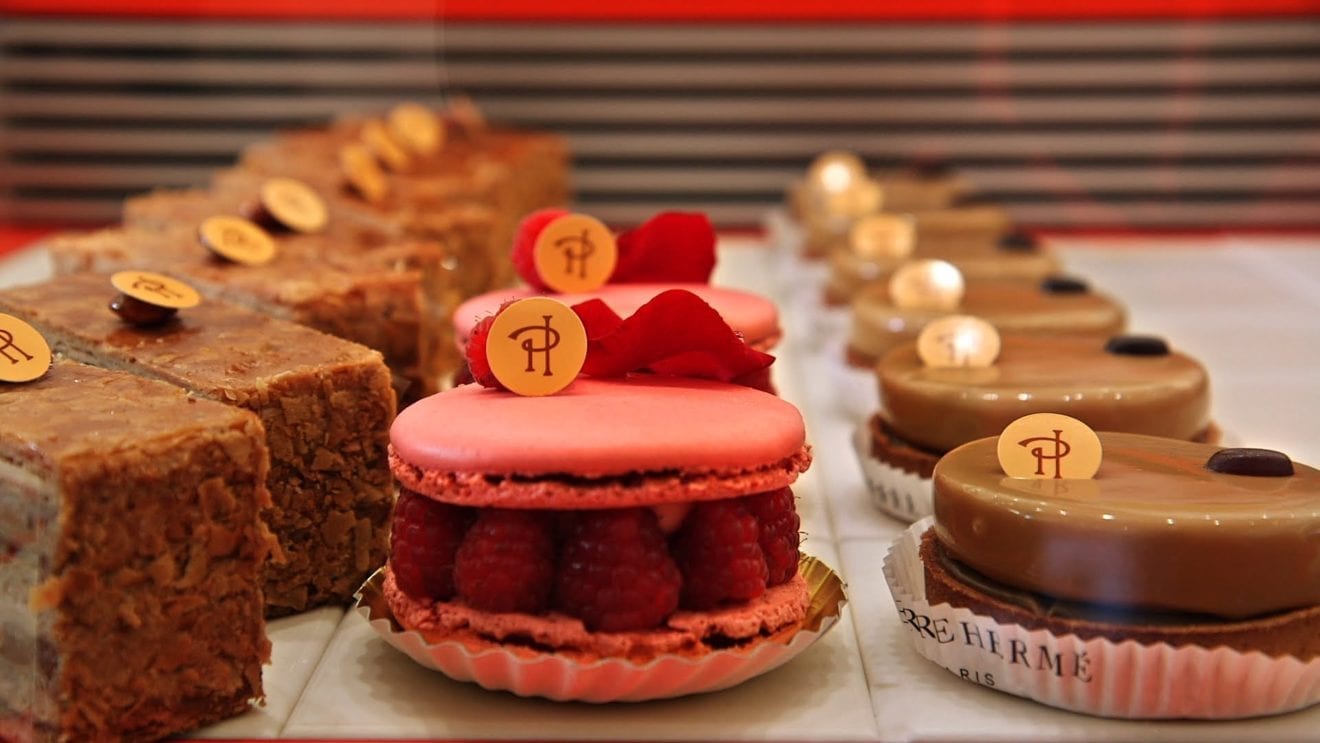
    A decade after opening, French chocolatier Pierre Herme Japan has renovated its flagship store at Aoyama in Tokyo.

    Behind the new look is interior designer Masamichi Katayama, whose Wonderwall firm has worked on projects in Australia, Europe, the US and other parts of Asia. The renewed space reflects on the notion that every day is a whole new day presenting an opportunity to discover new tastes, sensations and pleasures.

    pierre-herme-renovated-flagship-store-tokyo-4

    Right from the store’s entrance, visitors are presented with a spread of products, from macarons to viennoiseries.

    pierre-herme-renovated-flagship-store-tokyo-2

    By the staircase is a new area, the “Crossover”, where original items are displayed including more than 40 recipe books written by Pierre Herme.

    pierre-herme-renovated-flagship-store-tokyo-1

    Called “Heaven”, the upper level features an aerial kitchen where the chefs can be seen at work.
    Throughout, the store features eclectic art such as a neon sign created by artist Makiko Tanaka, as well as a service counter that seamlessly doubles as a DJ booth for private events.

  • Vietnamese beer market big enough for all brewers

    Vietnamese beer market big enough for all brewers

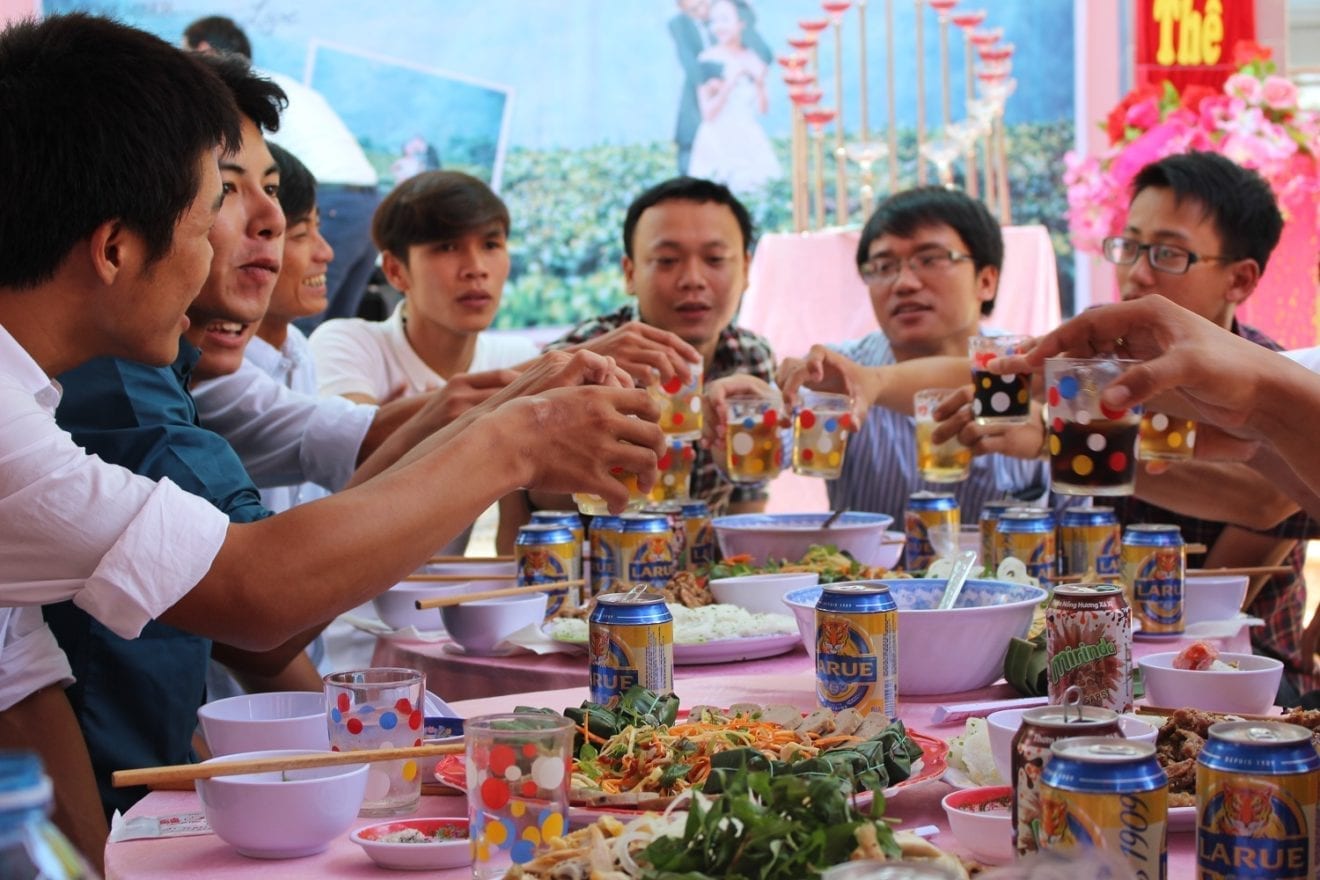
    Analysts repeatedly warned that the competition in Vietnam would be fiercer as more and more big players, including foreign ones such as Asahi (Japan), Singha (Thailand), Corona (Mexico) and Royal (the Netherlands), have joined the market. However, surprisingly, all of brewers can make big money in Vietnam.

    A representative of Heineken Vietnam said that purchasing power was 20 percent higher than the same period of the previous year.

    At Big C, beer sales have increased by 30-40 percent compared with the end of 2016 as people rush to buy beer to prepare for Tet. The demand is so high that the retailer sells no less than two boxes of beer to one client every day.

    On January 7, at a conference reviewing its operation in 2016, Sabeco, the largest brewer, said 1.584 billion liters of beer were sold in the year, an increase of 8 percent over 2015.

    In fact, beer sales not only have increased on pre-Tet days, but have been increasing steadily over the last 15 years.

    A survey by Sabeco showed that the consumed beer volume increased from 2.33 billion liters in 2010 to 3.6 billion liters in 2015. Every Vietnamese adult drinks 35.5 liters of beer a year, with which Vietnam ranks the second in the world in terms of beer consumption per capita.

    A report by Euromonitor International released in June 2016 showed that the beer sales increased from VND82.376 trillion in 2010 to VND153.943 trillion in 2015, which means a sharp increase of 86.1 percent. The figure was VND166.388 trillion in 2016 and is expected to reach VND218.292 trillion by 2020.

    With an average population increase of 1 percent per annum and a popular beer culture, beer sales are expected to increase in the coming years.

    It is expected that 4.84 billion liters of beer would be consumed by 2020, including 492.9 million liters of high-end products, 3 billion liters of mid-range and 1.34 billion liters of low-cost products.

    Sales are predicted to see an average growth rate of 7.2 percent in the 2015-2020 period.

    Brewers continue to expand production and run marketing campaigns to retain their market share.

    Sapporo Vietnam, which has succeeded with Sapporo Premium Beer, has launched Blue Cap, another brand.

    In late December 2016, Saigon-Binh Tay JSC, belonging to Sabeco, marketed the first products bearing the Sagota brand. Meanwhile, Heineken Vietnam has launched Strongbow, a fermented fruit juice.

    Leo Evers, general director of Heineken Vietnam, said the company was planning to increase production capacity in Vietnam by 2025.

    Sapporo announced that its production capacity would increase from 40 million to 100 million liters.

  • Time International introduces Sweet Monster

    Time International introduces Sweet Monster

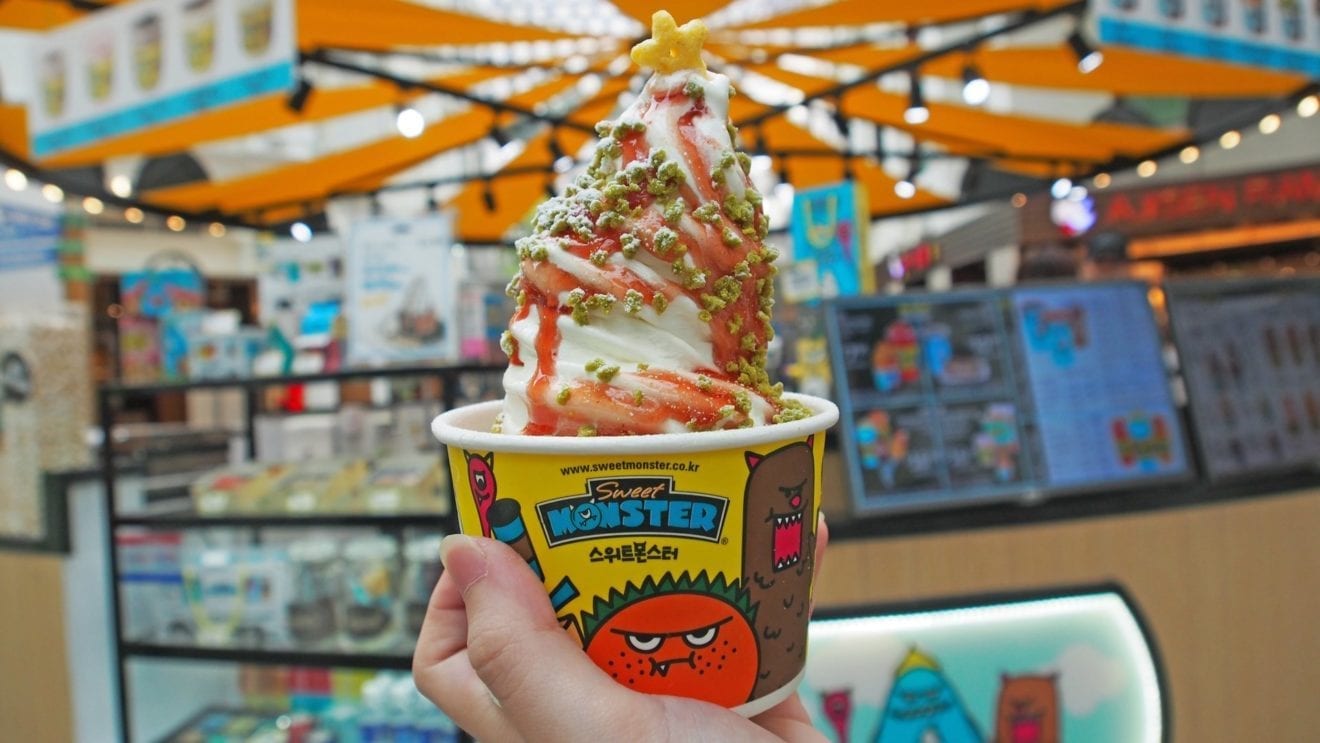
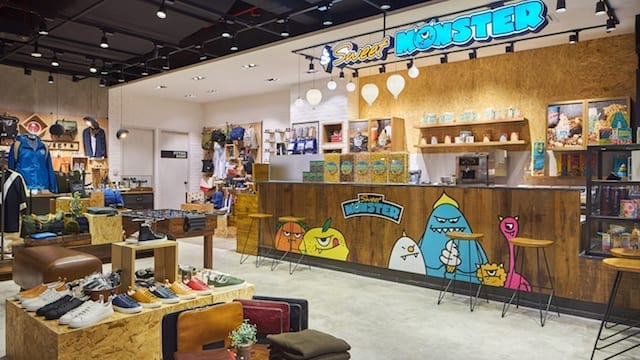
    Korea’s popcorn soft-serve ice cream brand Sweet Monster has arrived in Indonesia as the first F&B retail venture of Indonesian brand group Time International.

    It has launched stalls in Project X Plaza Indonesia and Pondok Indah Mall 2 in Jakarta, featuring its range of characters, EggMon, CookieMon, BlueMon, LeMon, PinkMon, OrangMon, ChocoMon and PopMon.

    SM_IG_Photo Product

    Inspired by confectionery sold at American carnivals and festivals, the brand attracted queues when it opened outlets in China, Hong Kong, Singapore and Thailand.

    Sweet Monster’s offerings are based on its ice cream, made fresh daily at each store from its own formula of milk powder. The flavour line-up includes Popcorn Ice Cream and Signature Ice Cream in Real Deep Milk, Original Tiramisu, Peanut Butter Pretzel, Caramel Macchiato, Cookie Mountain and Green Tea Mountain.

    There is also the full-cream Monster Shake, inspired by American milkshakes made only from ice cream and milk. Flavour options include Pure Milk, Cookie & Milk, Caramel Cafe au Lait, Strawberry Cake and Ferrero Nutella.

    Using only non-GMO corn, Sweet Monster’s popcorn is popped by air. It does not contain trans or saturated fats or artificial colouring, but does have dietary fibre.

    The PopMon characters represent the flavours of the popcorn: salt caramel, combination, strawberry, chocolate or tangerine.

    sweet-monster-project-x-2

  • Koreans consume more foreign beef over expensive local hanwoo

    Koreans consume more foreign beef over expensive local hanwoo

    South Koreans consumed more American and other foreign beef than expensive local beef last year, a move that has lowered the country’s self-sufficiency rate for beef to below 40 percent over 13 years, a state-run think tank said Thursday.

    Last year, South Koreans consumed 362,000 tons of foreign beef, accounting for 62.3 percent of the total beef consumption in the country, according to the Korea Rural Economic Institute.

    South Korea halted imports of U.S. beef in 2003 following the outbreak of a mad cow disease. Seoul lifted the ban in late 2008, which led to mass demonstrations among people in fear of their safety.Australian beef came to 178,000 tons, making up 49 percent of total beef imports. American and New Zealand beef stood at 42 percent and 6 percent, respectively.

    Still, the market share of American beef in South Korea has gradually been on the rise in recent years.

    In comparison, South Koreans consumed 219,000 tons of domestic beef, known as hanwoo last year, accounting for 37.7 percent of the total beef consumption in the country, according to the institute.

    It marked the first time that South Korea’s self-sufficiency rate for beef fell below 40 percent since 2003 when it stood at 36.3 percent.

    The decline came as South Korean consumers shunned expensive local beef.

    The wholesale prices of local beef once hit nearly 20,000 won ($17) per kilogram last year.

    Retail prices of the best quality local beef for bulgogi, a grilled marinated beef dish, came to 4,578 won per 100 grams last year, compared to 2,464 won for American beef for bulgogi, according to the institute.

    The prices of local beef have been on the rise since late 2015 as the number of cattle is continuing to fall.

    Domestic farms cut the number of cattle as the prices of local beef went down and the government helped some farms shut down to stem the decline of local beef following a free trade deal with the United States.

    South Korea’s anti-graft law — which took effect in September — is also adding to the woes of the local beef industry.

    Local beef was one of the favorite gifts during major holidays, but was overtaken by health products, according to major retailers.

    The law imposes tight limits on free meals and gifts that can be accepted by government officials, journalists and private school teachers to try to curb the deep-rooted tradition of excessive hospitality. The maximum value of a gift that a person subject to the law can receive has been set at 50,000 won.

  • Sushi Kit Kats for new Nestle Japan store

    Sushi Kit Kats for new Nestle Japan store

    Nestle Japan will open its first stand-alone Kit Kat Chocolatory store in Tokyo’s Ginza district on February 2 – and marking the occasion with gifts of special sushi Kit Kats.

    Since the first Kit Kat Chocolatory opened in January 2014 as a specialty store offering premium and exclusive Kit Kats, the franchise has expanded to eight outlets across Japan, all within major department stores.

    sushi-kit-kats


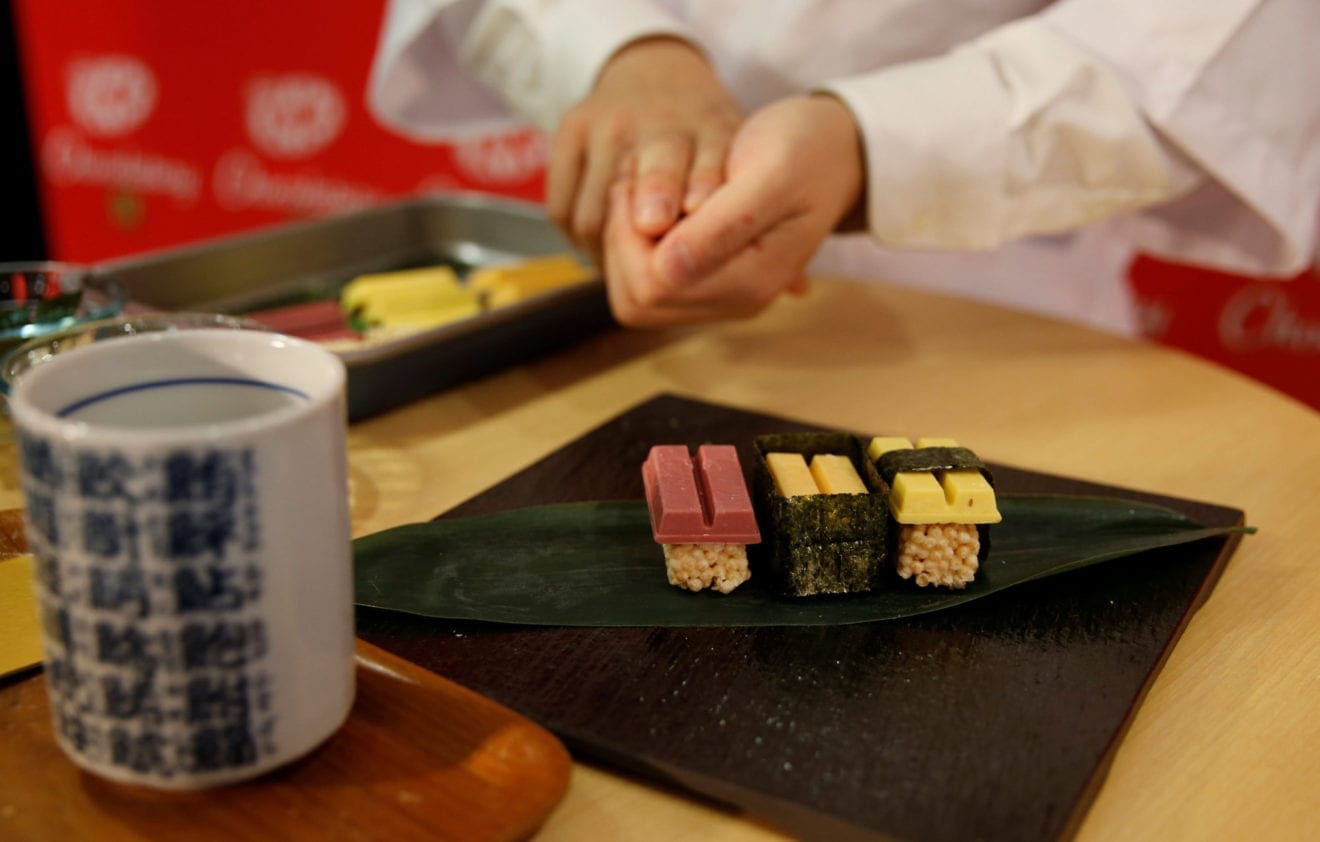
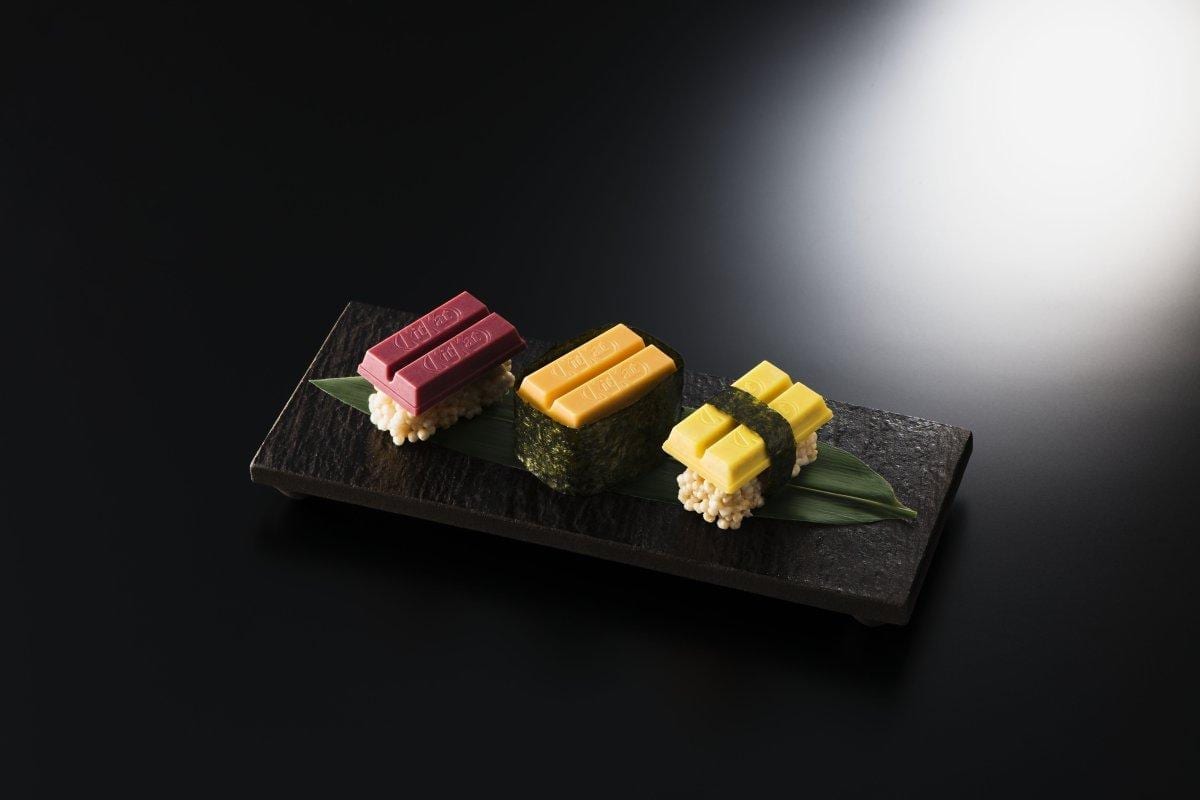
    For the grand opening of its stand-alone store, the company has created a set of three Kit Kats shaped like sushi – a combination of Kit Kats and rice puffs coated with white couverture chocolate. The maguro (tuna) version is topped with a raspberry-flavoured Kit Kat, the uni (sea urchin) version is made with a Kit Kat with the flavour of Hokkaido melon with mascarpone cheese, while the tamago (egg) version features a pumpkin pudding flavoured Kit Kat.

    kit-kats-chocolatory-japan

    Actually, the idea of a sushi Kit Kat was shared on social media by Nestle Japan as an April Fool’s Day joke last year, but the response was so huge the company decided to make it a reality. There will be 500 sets of the three sushi Kit Kats, with a limited number being offered each day to customers spending more than 3000 yen (US$26.50) or more at the new Ginza store.

    There are also plans to open a cafe on the second floor of the store in the next several months where customers will be able to try special items such as baked madeleines made with Kit Kats, or even make their own Kit Kat creations using toppings of their choice.

  • Starbucks future strategy applauded

    Starbucks future strategy applauded

    While Starbucks has kicked off its new fiscal year with the lowest same-store sales growth since 2009, there is no reason to be overly discouraged by these results.

    Certainly, there are a few areas of softness, but the uplift of 3 per cent in the Americas comes off the back of a 9 per cent rise in the prior year. For a mature, fairly saturated company operating in a competitive segment of the market, the numbers show resilience.

    In any case, the overall revenue numbers are somewhat more robust – both within the Americas and on a global basis – thanks to a healthy program of store expansion. Starbucks may be reaching its peak in some localities, but it has demonstrated that even in its more mature markets it can still find headroom for new openings.

    Starbucks has done a reasonable job of managing its profitability at a time when margins are being squeezed by higher staffing costs. During this period, overall operating income increased by 7 per cent on a global basis and by 3 per cent within the Americas – partly thanks to the price increases of last year.

    All of that noted, there is no doubt that Starbucks is now firmly in middle age: it is finding growth more difficult to come by and, in financial terms, the business is not moving upwards at the pace it once did. In our view this is not demonstrative of a company in trouble, or even a company doing the wrong things, it is simply a reflection that Starbucks is a more mature business.

    Given that this dynamic is only likely to intensify over the next few years, it is incumbent on Starbucks to find new avenues for growth. The company is managing this well and has already set out its stall in terms of the innovations it intends to pursue to drive both the top and bottom lines.

    Some of these future plans lie outside the existing business model. Starbucks should be applauded for having the courage to look beyond its existing core operation, and to indicate its commitment to these ventures by putting Howard Schultz in charge of the new division. In truth, the push into premium through the development of the Princi chain and the Roastery and Reserve-only stores are not going to deliver sales volumes anywhere near those of the main business. However, their contribution will take the edge off the more subdued growth coming from core markets.

    As much as new initiatives will help, it is also important for Starbucks to look for ways to improve productivity at existing stores. This includes improvements to the food offer, which remains fairly low key and lacklustre.

    The year ahead will be both exciting and challenging in equal measure. However, Starbucks is a solid operator that will deliver single digit comparable sales growth, with total revenue uplifts just nudging into double digits.

  • Chatime Malaysia outlets to rebrand

    Chatime Malaysia outlets to rebrand

    Chatime Malaysia bubble-tea outlets will be rebranded following a dispute between franchisor La Kaffa International of Taiwan and Malaysia’s Loob Holdings.

    The move follows a termination of the franchise contract because of irreconcilable differences. Loob Holdings, which runs 165 Chatime outlets in Malaysia, contributes more than half of the turnover for the franchise company’s 800 outlets internationally.

    “We will surely come up with something better,” says CEO Bryan Loo, noting his company has nine other brands. He says it built the Taiwanese brand from scratch in Malaysia — “from zero to hero, and from no outlet to the current 165”.

    Loo says disagreements and disputes over business and operational matters had all been dealt with in accordance with the terms of the franchise agreement.

    “In 2011, there were a few dozen bubble-tea brands, and now there are only three. We are by far the market leader in our segment, and we are confident of holding this leadership with our own brand, which will be revealed when the time comes.”

    The dispute came to light when La Kaffa announced on January 6 that it had terminated the franchise and would immediately take over all the 165 Chatime outlets in Malaysia. However, Loo has clarified that Loob Holding and its sub-franchisees are still running all 165 outlets. According to the franchise agreement, the outlets will stop using the Chatime branding after 45 days.

  • Hong Kong food trucks finally hit the streets

    Hong Kong food trucks finally hit the streets

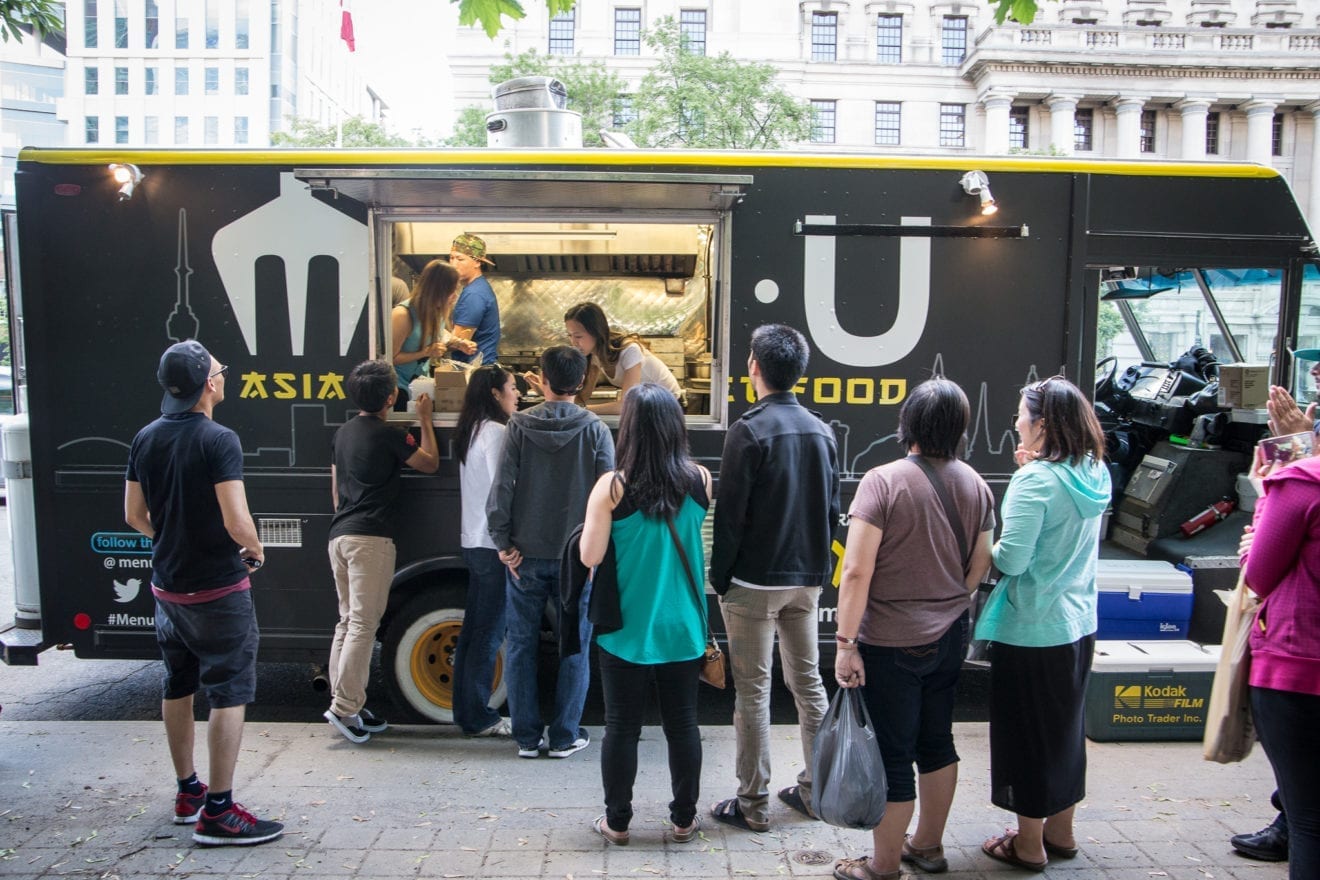
    The first Hong Kong food trucks have hit the streets – 16 in all will be operational tomorrow.

    Stationed at eight locations, they will offer a range of dishes as diverse as dumplings, dragonfruit smoothies and American-style steamed bread.

    It is the launch of a two-year pilot scheme to diversify the city’s tourism offerings, announced two years ago by former financial secretary John Tsang Chun-wah.

    Among the 16 chosen pioneers is Stanford graduate Angela Huang, an heiress of catering group Chee Kei, a restaurant chain known for its wonton noodles. The 25-year-old left her dream job in the US to return to Hong Kong to run the 5.5-tonne food truck Princess Kitchen.

    Seeing the project as “a good learning opportunity”, she says she feels that the word “princess” has a negative connotation in Hong Kong. “I want to use Princess Kitchen to send a message about what I feel about princess. It is not meant to be a girly and traditional type of princess. People should be able to define their own kind of beauty, happiness and health.”

    Huang learned about the pilot scheme while working as a consultant in San Francisco. “I want to come back for something I am excited about. This is something I really want to do.”

    To learn about running a mobile food business, the heiress started by taking orders in a food truck in San Francisco, and visited different ones in Los Angeles.

    Her food truck, which she painted herself including cartoon portraits of her friends and family, will offer dragonfruit smoothie bowls, which she would make at home and which are rarely available in the city.
    Huang, who says she feels lucky to be part of the pilot scheme, has hired two full-time staff members to help run the venture.

    Incentives

    The government offered incentives to start-ups and micro-enterprises to kickstart the scheme.. In the end, seven of the 16 winners were smaller firms.

    Part-time hawker and small restaurant owner Liu Chun-ho says he has so far spent HK$1 million (US$128,875) on his truck, Mama’s Dumpling. He had to obtain a bank loan and raise money from relatives.

    “I was planning to spend from $600,000 to $700,000 originally, but when I started preparing it realised the actual costs are much higher.”

    Almost $180,000 was spent to fit out the truck in accordance with the government’s safety and hygiene requirements. “It’s stressful to bear a cost that big,” he says. “It scares me when I think about it.”

    Liu has been selling dumplings for almost seven years during traditional celebrations. Four generations of the Liu family have been dedicated to making dumplings, and even his nine-year-old daughter has mastered the skill. Liu says the food truck will be run entirely by relatives.

    His signature dumplings will have wrappers in five colours. He plans to sell a box of six dumplings for $40. Pig knuckles, fried dumplings and soybean milk will also be on offer.

    Not all locals

    Not all the food trucks are local enterprises, such as Los Angeles-based Book Brothers Food Truck.
    “Hong Kong is a much better place to promote the brand compared with mainland cities,” says Raymond Wong, who was assigned by the US firm to manage its first food truck outside the US. The firm, which has seven food trucks and one restaurant in the US, won over the judges last year with its American-style barbecue steamed bun, which integrates Chinese and Western elements.

    Wong says a food truck is a cheaper way to establish brand reputation, given the city’s high running costs. The company has invested about $1 million on the project so far, Wong says, while opening a small cafe could easily cost up to $3 million.

    It needs to pay only about $20,000 a month for the site at Hong Kong Disneyland – the most expensive location – while monthly rents for a restaurant in a prime location could climb to hundreds of thousands of dollars.

    However, the American firm has found Hong Kong’s requirements more stringent, such as using new vehicles plus installing back-up batteries. Wong also says it is not easy to make a profit with only one truck.
    Some arranged locations, such as Energizing Kowloon East harbourfront, have few pedestrians during weekdays, says Wong, which makes things even harder.

  • Does your fish burger contain mercury-tainted shark meat?

    Does your fish burger contain mercury-tainted shark meat?

    A study of shark meat in Indonesia – the world’s largest shark fishery – has found dangerously high levels of mercury build-up in catches bound for overseas fish markets.

    Research conducted at the Seafood Inspection Laboratory in Bali found that mercury concentrations in processed, export-ready shark tissue exceeded twice the commonly accepted safe consumption limit.

    This is the first time that mercury levels have been tested in Indonesia-caught sharks bound for markets overseas, where importers and consumers are unaware that the fish that goes into fish burgers and fish and chips meals is shark.

    Bull shark meat tested on 26 January 2017 was found to contain 2.431 parts per million (PPM) of mercury. The consumption limit for predatory fish species in key Indonesian export markets such as Australia, Singapore and New Zealand, and also Indonesia, is 1.0 PPM.

    Bronze whaler meat – commonly sold as “flake” in Australia and cooked in batter for fish and chips dish- tested a week earlier was found to have a mercury concentration of 1.829 PPM.

    Bull shark meat sourced from the same location just a year ago was found to contain a significantly lower concentration – 1.368 PPM.

    Green School of Bali taking shark samples at Jimbaran fish market, Bali, Indonesia. Image: Bali Shark Rescue Center

    “Consumers are being deceived and are unaware of the type of fish being sold and ultimately ingested,” commented Paul Friese, founder of Bali Shark Rescue Center, whose non-government organisation partnered with sustainability college Green School of Bali to conduct the study.

    In Indonesia, most sharks are harvested for their valuable fins and liver first, and those parts sold to specialist buyers. The animal is then skinned, beheaded and the meat is filleted and moved back into the fish market unmarked.

    Shark fin can fetch up to IDR 2,500,000 (US$200) for a set, but locally sold shark meat sells for as little as IDR 25,000 (US$2) per kilo, and is used in street foods such as sate, fish cakes and meat balls. Overseas, shark meat is typically breaded and deep fried as fish burgers or used in the classic fish and chips dish.

    The sale of shark meat is also masked by transshipping, the process of transferring fish caught at sea from ship to ship, which makes the source harder to trace.

    Shark is particularly risky to eat because mercury bioaccumulates – the concentration of the heavy metal increases as it passes along the food chain, from plankton to shellfish, to small fish and onto larger predatory species.

    Mercury has entered marine ecosystems as a result of discharge from coal-fired power stations, residential heating systems, waste incinerators and mining, and also from volcanic activity.

    The main health risk from mercury consumption is damage to the nervous system. Unborn babies are particularly at risk from mercury pollution and, if exposed, may suffer impaired cognitive thinking, memory, attention, language, and fine motor and visual spatial skills in childhood.

    Meanwhile, shark populations in Indonesia have been under increasing pressure, as more than three million sharks are killed every year for their fins alone. Sharks are a tempting target for fishermen, particularly in remote island areas where the fins of the predators can bring lucrative returns.

  • Indonesia`s Rice Production Experiences Surplus after 9 Years

    Indonesia`s Rice Production Experiences Surplus after 9 Years

    Agriculture Minister, Andi Amran Sulaiman, claims that Indonesia has experienced a rice production surplus in 2016 after nine years past. “After nine years, 2016 was the moment when Central Java, East Java, and West Java, sent rice supplies to Kalimantan,” he said on Thursday, February 2, 2017.

    Minister Amran explained that rice supply warehouses in Central Java and West Java are currently in full-stock. “Warehouses in Central Java and West Java are full. The supplies keep increasing while the warehouses are full, last year it was empty. This is great progress,” he said.

    Other than rice supplies, according to Amran, garlic prices have also declined due to over stock. Therefore, the government plans to export garlic. “We’ll prepare the export earlier.”

    Based on the report from farmer’s association dubbed Kelompok Kontak Tani Nelayan Andalan, prices of rice in seven districts are below Rp3,700 per kilogram. “We had a coordination meeting until late at night, we’ll move quicker for the farmers. We won’t let them experience a loss,” the Minister said.

    In May, the Agriculture Ministry will hold a National Week (Penas) for Farmers and Fishermen in Aceh for six days; on May 6-11, 2017. President Joko “Jokowi” Widodo will inaugurate the event and it will be participated by 35,000 participants consisting of farmers, researchers, instructors representatives, and other stakeholders.

    A number of events will enliven the National Week which opens the opportunity to develop partnerships and open an agricultural product trade among ASEAN farmers.

  • Give yourself a break with Japan’s limited-edition Kit Kat sushi

    Give yourself a break with Japan’s limited-edition Kit Kat sushi

    Kit Kat, trusty purveyor of cocoa-coated wafer bars, has swooped in with the break you never knew you craved: chocolate sushi.

    The unimaginable “sushi cut kits” debut Thursday at Tokyo’s first-ever street-facing Kit Kat specialty store, according to former Gawker property Kotaku and Japanese media. The treats reportedly come in three flavors: “Maguro” (tuna), “Uni” (sea urchin) and “Tamago” (egg).

    https://www.flickr.com/photos/nestlejapan/sets/72157677570905932

    Maguro consists of raspberry flavor Kit Kat on puffed rice.

    If those sound unpalatable, take heart: There’s no real fish involved. The “tuna” variety is actually raspberry-flavored Kit Kat on top of a white chocolate rice puff; “sea urchin” is Hokkaido melon and mascarpone cheese-flavored Kit Kat encased in seaweed; and “egg” is a pumpkin pudding-flavored delicacy, also wrapped in a thin band of seaweed.

    https://www.flickr.com/photos/nestlejapan/sets/72157677570905932

    Tamago is pumpkin pudding-flavored.

    The sushi kit sets will retail for 3,000 yen (just over $26) at the so-called Japanese “Ginza shop” from Thursday to Saturday.

    Japan, evidently, has a thing for the shareable Nestle-produced confections: The country has sold more than 300 flavor varieties since the brand first went on sale there in 1973, per a 2015 report. And the candy’s name sounds fortuitously similar to the Japanese phrase “kitto katsu” — meaning “you will surely win.”

    https://www.flickr.com/photos/nestlejapan/sets/72157677570905932

    Uni features Hokkaido melon and mascarpone cheese-flavored Kit Kats.

    Chef Yasumasa Takagi, who whips up gourmet delectables for the Kit Kat Chocolatory in Tokyo, says, “The challenge is how to make something handmade out of an industrial brand.”

    “The KitKat has three perimeters: the chocolate, the wafer and the cream. The chocolate and cream are where we can be most creative,” he told the Telegraph. “For me, my goals are the same as in my work as a patissier. I want to surprise people, I want to make them happy and I want to somehow create an emotional reaction.”