Category: Food

Retail News Asia is committed to providing both local and global retailers with the latest Food and Food & Beverage news throughout the Asian market. This on a daily base.

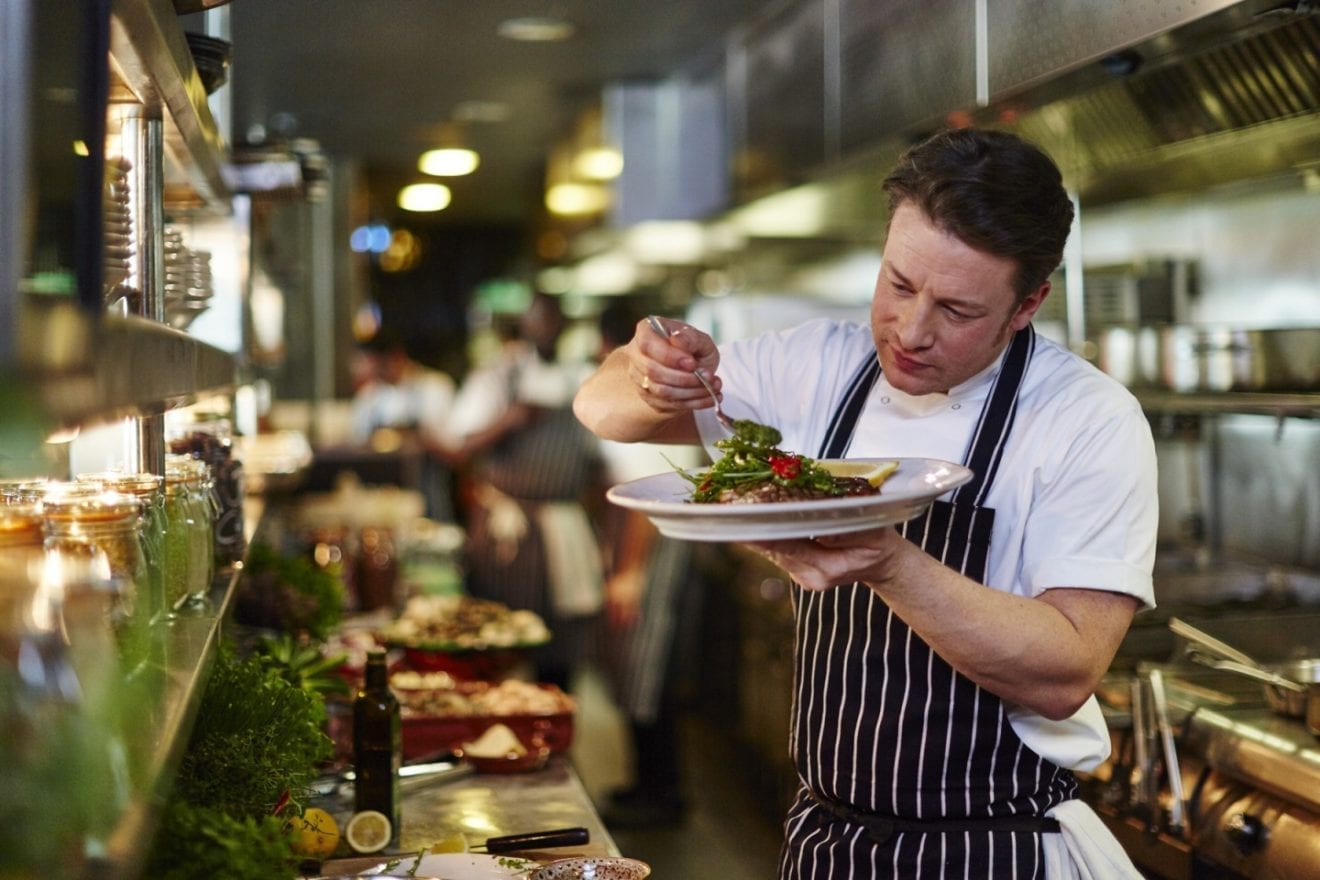
  • Jamie’s Italian opens its first restaurant in Thailand at the ­renovated Siam Discovery

    Jamie’s Italian opens its first restaurant in Thailand at the ­renovated Siam Discovery

    Jamie’s Italian opens its first restaurant in Thailand at the newly ­renovated Siam Discovery, situated in the heart of Bangkok. This rustic Italian restaurant, serving delicious food at an affordable price, is proudly brought to you by Hotel Properties Limited and Siam Piwat.

    Jamie’s Italian began as a partnership between Jamie Oliver and his mentor, Gennaro Contaldo. The first restaurant opened in 2008 in Oxford and there are now 42 Jamie’s Italian outlets in the UK and over 25 internationally, including Australia, Dubai, Brazil and Singapore.

    As with all Jamie’s Italian outlets, the Siam Discovery restaurant will remain committed to sourcing only the best free-range, higher welfare meat and sustainable and ethically produced ingredients. All the recipes are Italian classics with a Jamie twist, including fresh pasta made on site every day. The restaurant will also work closely with fantastic Thai farmers and suppliers to showcase local produce.

    MENU HIGHLIGHTS

    Menu highlights at Jamie’s Italian Siam Discovery will include the famous antipasti planks, perfect for sharing. Placed on large wooden boards supported by tins of tomatoes, the impressive platter allows guests to pick from a wide selection of meats, cheeses, vegetables and pickles.

    All Jamie’s Italian restaurants serve fresh pasta made in the restaurant, every day. The Siam Discovery restaurant will feature a range of popular pasta dishes, including Gennaro’s Tagliatelle Bolognese, made to his recipe, Silky spaghetti carbonara and Fresh crab spaghetti. The prawn linguine is a Jamie’s Italian classic, loved worldwide.

    Also on offer will be beautiful artisan pizza dough, made by hand, and proved for hours before being hand ­stretched to create an irresistibly crisp base. The simple but classic Margherita, and Funghi, with seasonal mushrooms, are just a few of the pizzas on offer.

    A selection of Italian-inspired main courses is also on offer, including the Tuscan-style Chicken al mattone– chicken is cooked under a brick, ensuring that the chicken is pushed further against the grates of the grill, producing a smoky flavour, with an addictively crisp skin. The Jamie’s Italian burger, a signature main dish, and the Grilled pork chop served with crispy crackling, are also must-try dishes. For those looking for a lighter meal, the Classic super food salad is a super-fresh combination of avocado, roasted beets, mixed pulses & grains, broccolini, fennel, pomegranate & spicy seeds with harissa dressing & artisan ricotta.

    A favourite among families, Jamie’s Italian will also be bringing its award-winning kids’ menu to Thailand. Awarded the best kids’ menu in the UK by The SOIL Association in 2013, there’s a choice of 2 two sizes for different age groups, with all the meals nutritionally balanced. It comes with a viewfinder menu and colouring sheets to keep the kids entertained.

    If you love your Jamie’s Italian experience, don’t forget to take a bit home with you. Jamie’s Italian Siam Discovery will also stock a wide range of Jamie’s cook books and the restaurant’s signature napkins, as well as gifts, allowing you to recreate your Jamie’s Italian experience at home.

    THE INTERIOR

    Every Jamie’s Italian restaurant is designed to be easily accessible with a warm and comfortable feel and incorporates the personality of the city it’s in. Siam Discovery’s design takes inspiration from its location to create a friendly, neighborhood restaurant that the whole family can enjoy.

    With 184 covers, the restaurant will boast a tasteful mix of rustic, reclaimed timber refectory tables, industrial ­chic zinc tables and vintage upholstered lounge chairs, with monochromatic and hand­-painted floral tile flooring. To add warmth, the dining area will be illuminated with brass spotlights, vintage enamel shades and a textured glass chandelier.

    The creative use of space allows guests to view the open kitchen,  watch their antipasti planks being made before their eyes at the antipasti counter in the main dining room, or hang out for a pre or post- meal tipple at Jamie’s Bar.

    READY TO WELCOME YOU

    Welcoming you to the first Jamie’s Italian restaurant in Thailand is General Manager Sarah Smith, winner of the Jamie’s Italian International Rising Star award for 2015/2016. She has worked closely with Head Chef, Alex Barman and local staff to make sure that the new restaurant is ready to receive guests.

    Jamie Oliver said: “Taking Jamie’s Italian to Thailand is incredibly exciting for me. Bangkok is a vibrant and buzzing city with a great food scene and we can’t wait to be a part of it. We’ll be sourcing lots of beautiful, top-quality produce from fantastic local suppliers, and making food that we just know you’re going to love. Come down and visit soon!”

    For more information please visit our website www.jamiesitalian.co.th
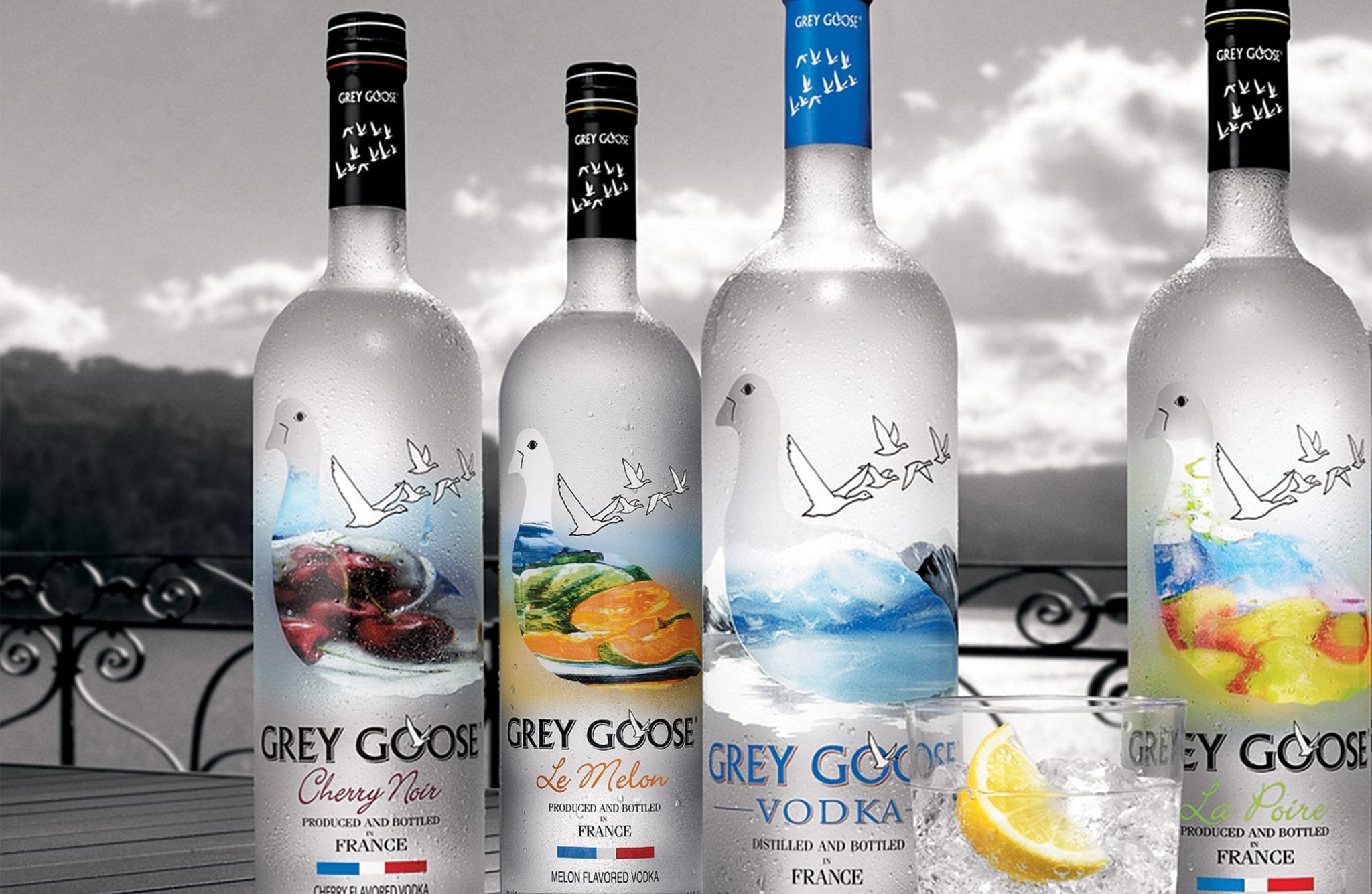
     

  • Grey Goose limited edition lands at Bangkok

    Grey Goose limited edition lands at Bangkok

    Bacardi Global Travel Retail has entered into a two-month promotion with the King Power International Group Thailand, where the partners are selling a new GTR exclusive Bangkok Limited Edition gift-pack at Bangkok Suvarnabhumi Airport in the run up to Christmas.

    In a statement, Bacardi said: “Running in two prominent in-store locations from 1 November to 31 December 2016 with dedicated branded space and a strong focus on gifting, the shopper campaign will have high visibility to the large volume of passengers expected to depart through the airport in November and December.

    FULL RANGE IS BEING FEATURED

    “A specialist team of Grey Goose retail ambassadors will lead the interaction with shoppers to encourage conversion across the full range of Grey Goose vodka, including Grey Goose Interpreted by Ducasse and Grey Goose VX.”

    Grey Goose Bangkok KPIG2 Nov 2016This is the first promotion of its kind between Bacardi and KPIG at Bangkok.

    APPEALING TO THE SOUTH EAST ASIAN COCKTAIL TREND

    This represents Bacardi’s first major campaign at Suvarnabhumi Airport, with the company adding that Grey Goose is currently the best selling vodka brand and the fastest growing top five spirit brand in travel retail according to respected analysts, IWSR.

    “It’s very likely that our more discerning shoppers will have seen Grey Goose on the shelves of Bangkok’s finest cocktail bars and so there’s an instant synergy with this in-store promotion. Equally, there’s huge appeal to present this global brand to the growing number of Asian shoppers embracing the new trend of home cocktail-making.”Commenting on the event, Pichai Pitakchaisuk, Executive Vice President at King Power said: “We are very excited to bring Grey Goose to life in-store at a time when super-premium vodka is enjoying enormous popularity thanks in particular to the growing appeal of cocktails and white spirits in South East Asia.

    Adding his comments, Vinay Golikeri, Regional Director Asia Pacific and Middle East Africa, Bacardi Global Travel Retail said: “The bespoke Grey Goose Bangkok Limited Edition gift-pack is a GTR exclusive which we are proud to launch in partnership with King Power Thailand.

    “Based on past experience, Grey Goose is proven to drive sales where it is given the optimal space, range and activation and we are very excited about what this campaign will deliver with King Power in Bangkok.”

  • Hard Liquor Helps E-Commerce Titans Take China’s Consumer Pulse

    Hard Liquor Helps E-Commerce Titans Take China’s Consumer Pulse

    Predicting the changing tastes of China’s consumers is becoming easier thanks to the country’s e-commerce giants, who monitor sales that can exceed US$17 billion in a single day.

    The country’s second-biggest web-based retail platform, JD.com Inc, already has dozens of new indexes tracking sales of products from liquor to appliances. Larger rival Alibaba Group Holding Ltd plans to publish its own spending gauges in coming months.

    Their data is vital to large global companies like Starbucks Corp and Wal-Mart Stores Inc that are looking for insights into what’s hot among China’s billion-plus consumers. Online shopping indexes reflect millions of transactions daily, whereas traditional consumer surveys can only test a tiny sample.

    “The ability to analyse and understand trends in online consumption has never been more important or more valuable,” said James Huang, big-data analytics director for the finance unit of Beijing-based JD.

  • Cafe de Coral grows revenue, profit, outlets

    Cafe de Coral grows revenue, profit, outlets

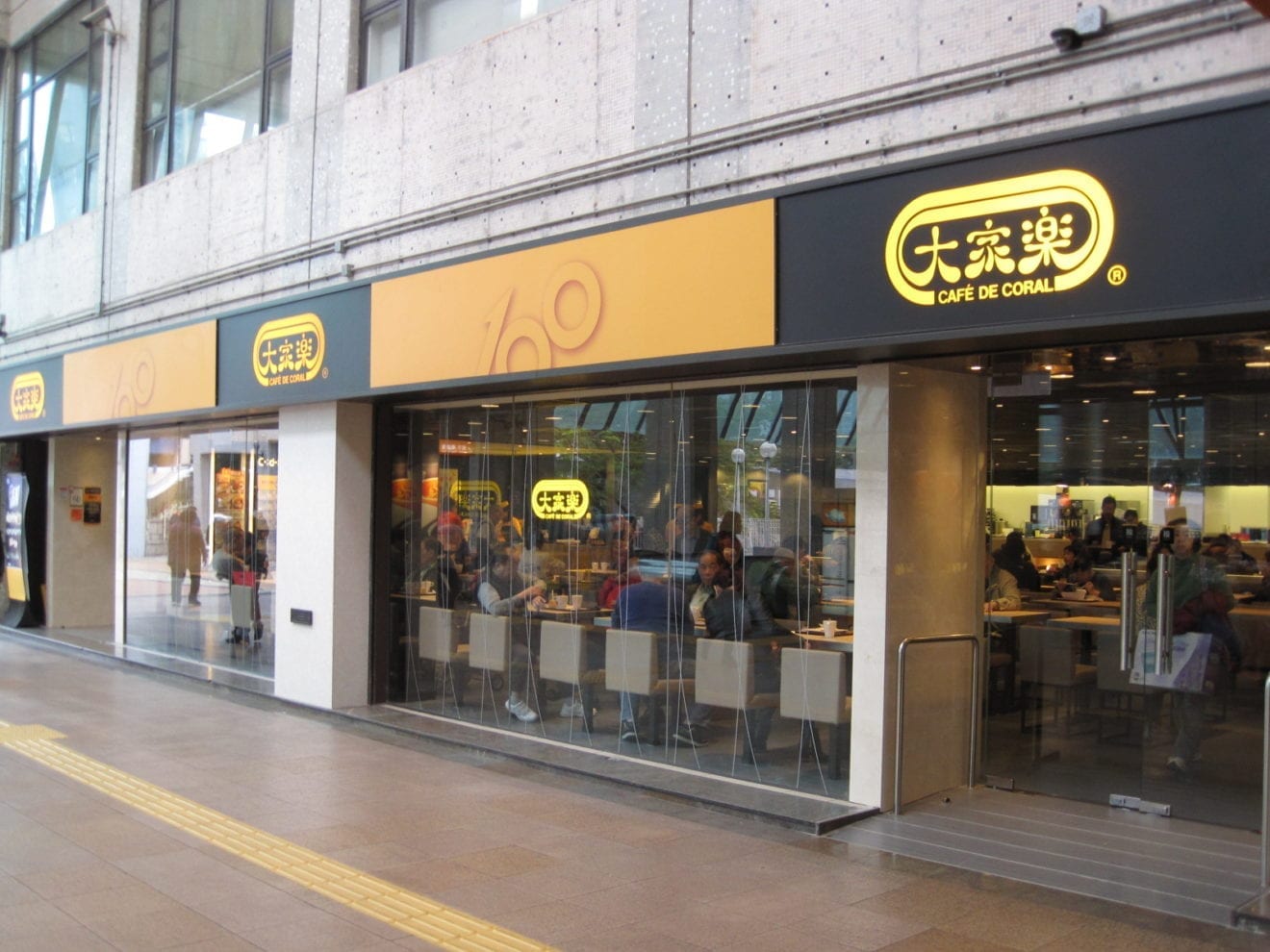
    Total revenue for the half-year to the end of September rose by 4.3 per cent to HK$3.89 billion (US$501.5 million) for restaurant and catering group Cafe de Coral Holdings.

    Net profit, at HK$232 million, was up 11.8 per cent, while profit attributable to shareholders rose similarly to HK$3.89 billion, according to its interim results.

    With stronger momentum in the fast-casual and casual-dining sector, the group says its quick-service restaurant (QSR) and institutional catering business continued to achieve encouraging results and steer further expansion.
    “Mainland China business persistently improves its profit margin with a lower break-even point, which has laid a solid platform for expansion,” says the group. “The positive results demonstrate not only the capable stewardship of our new management team, but also the successful completion of the group’s succession plan.”

    “Encouraging” revenue and same-store sales growth resulted in a robust and stable performance for the group’s (QSR) and institutional catering business.

    In China, revenue stabilised for its fast-food business, thanks to updated menus.

    Overall, the group’s QSR and institutional catering business in Hong Kong reported solid revenue gains, up 7.7 per cent. Same-store sales under the Cafe de Coral fast-food and Super Super Congee & Noodles grew 5 and 4 per cent respectively. As of September 30 the group had 288 QSR and institutional catering outlets, including 160 Cafe de Corals, 47 Super Super Congee & Noodles shops and 79 Asia Pacific Catering outlets.

    Strategic tenancies

    To speed up its expansion of the Cafe de Coral network, the group took advantage of the softer leasing market to take up tenancies at strategic and prime locations. Four outlets were added, with 11 more set to open. Seven more Super Super Congee & Noodles shops were added, with eight openings scheduled.

    Asia Pacific Catering renewed all major contracts while Luncheon Star continues to be the leading provider for schools.

    For its fast-casual and casual-dining sectors, the group saw 14.4 per cent revenue growth. Its catering-inspired Shanghai Lao Lao brand has evolved into a popular chain with eight outlets, says the group. Two of the outlets opened during the six months, with four more scheduled.

    Encouraged, the group says it will aim to scale up Mixian Sense to provide another lucrative revenue stream.

    Meanwhile, it is rejuvenating its Western-style brands, The Spaghetti House and Oliver’s Super Sandwiches. Decors and menus are being revamped.

    Launched last year, its Japanese and Korean-style franchise restaurants are still in the investment stage.

    Non-performing outlets in eastern and southern China have been closed, plus the management team has been localised as well as menus being revamped.

    Same-store sales from the fast-food business grew by 1.2 per cent with “remarkable profit improvement” on the mainland even after excluding the effect of new VAT rules and despite the segment revenue falling by 16.3 per cent. This was mainly a result of the strategic closure of non-performing stores.

    “While the imminent outlook is less than promising, the group remains confident its businesses will continue to fare reasonably well. Fortunately, our core QSR and institutional-catering segments, in particular, are relatively resilient to downturns.”

  • Jumbo Seafood grows profit 17.9pc

    Jumbo Seafood grows profit 17.9pc

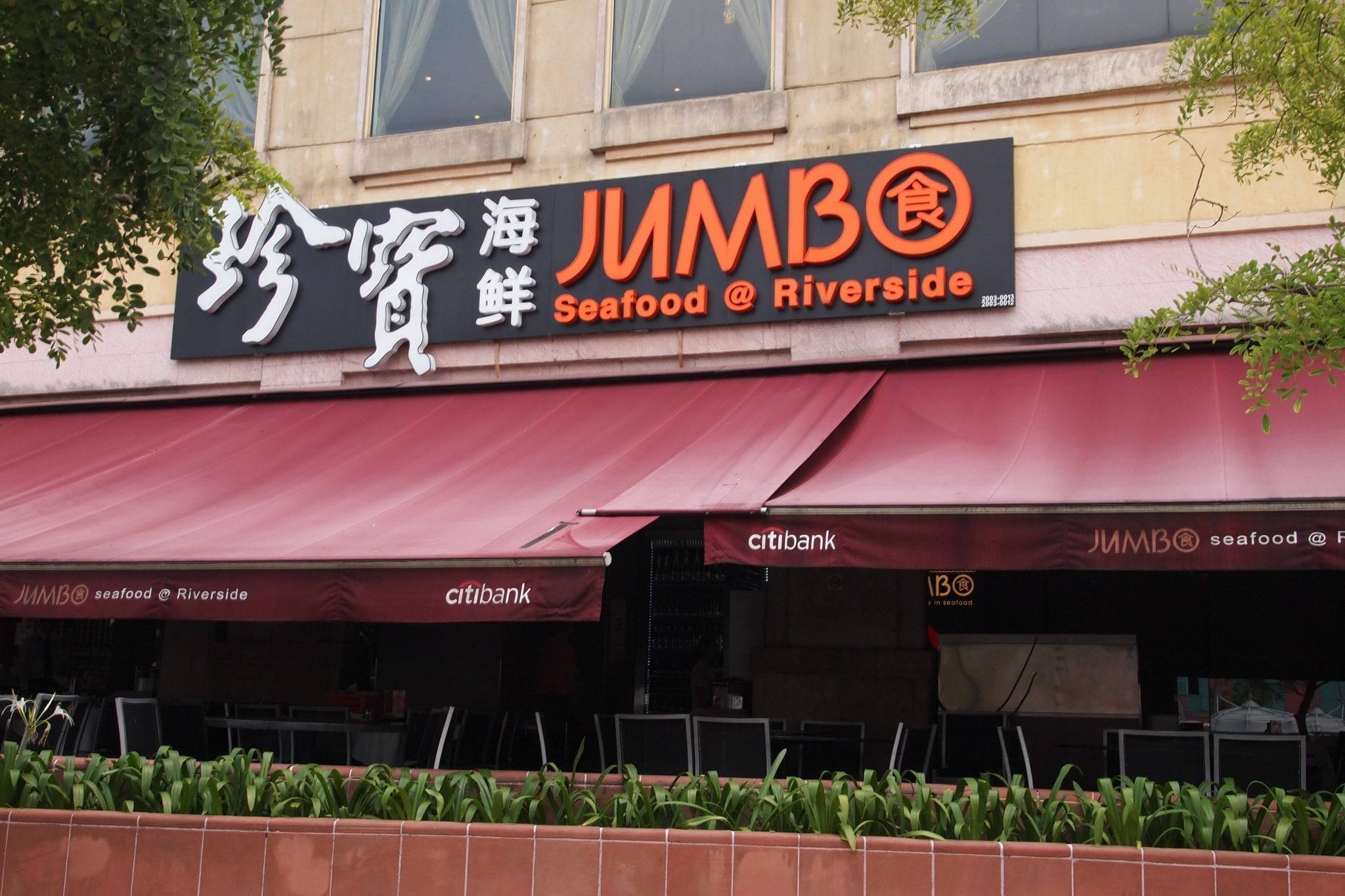
    Restaurant group Jumbo Seafood has reported a full-year net profit of S$15.7 million (US$11 million) – up 17.9 per cent from the previous year.

    Overall group revenue grew 11.4 per cent to S$136.8 million, attributed mainly to revenue contributions from its new seafood outlets in Shanghai as well as an overall increase in revenue from its other restaurants.

    Jumbo Seafood executive chairperson/CEO Ang Kiam Meng says the group managed to increase yields despite the ongoing challenges of the industry.

    “We look forward to further improving our financial performance by streamlining our operations to raise productivity and efficiency while lowering operating costs.”

    In October, Jumbo opened its fifth Ng Ah Sio Bak Kut Teh (pork ribs soup) outlet in Singapore.

    Jumbo is a multi-concept dining and F&B group with a network spanning Singapore, China and Japan. It also provides catering services, and in Singapore sells packaged sauces and spice mixes.

  • Yum China seeking delivery deal

    Yum China seeking delivery deal

    Fast-food giant Yum China Holdings is looking at buying food-delivery services firm Daojia.com.

    Discussions are at an early stage, but a deal could be worth up to US$200 million, as reported.

    Established in 2010, Daojia.com focusses on online food orders and delivery services targeting the middle class urbanites in 10 Chinese cities. With a 3000-strong logistics team, it works with more than 6000 restaurants.

    Food-delivery apps are becoming more popular in China with services being offered by Baidu Inc’s Waimai, Alibaba Group Holding’s Meituan and Tencent Holdings’ Ele.me.

    China’s second-largest eCommerce fim JD.com and Macquarie Capital were investors in a $50 million round of fundraising by Daojia two years ago.

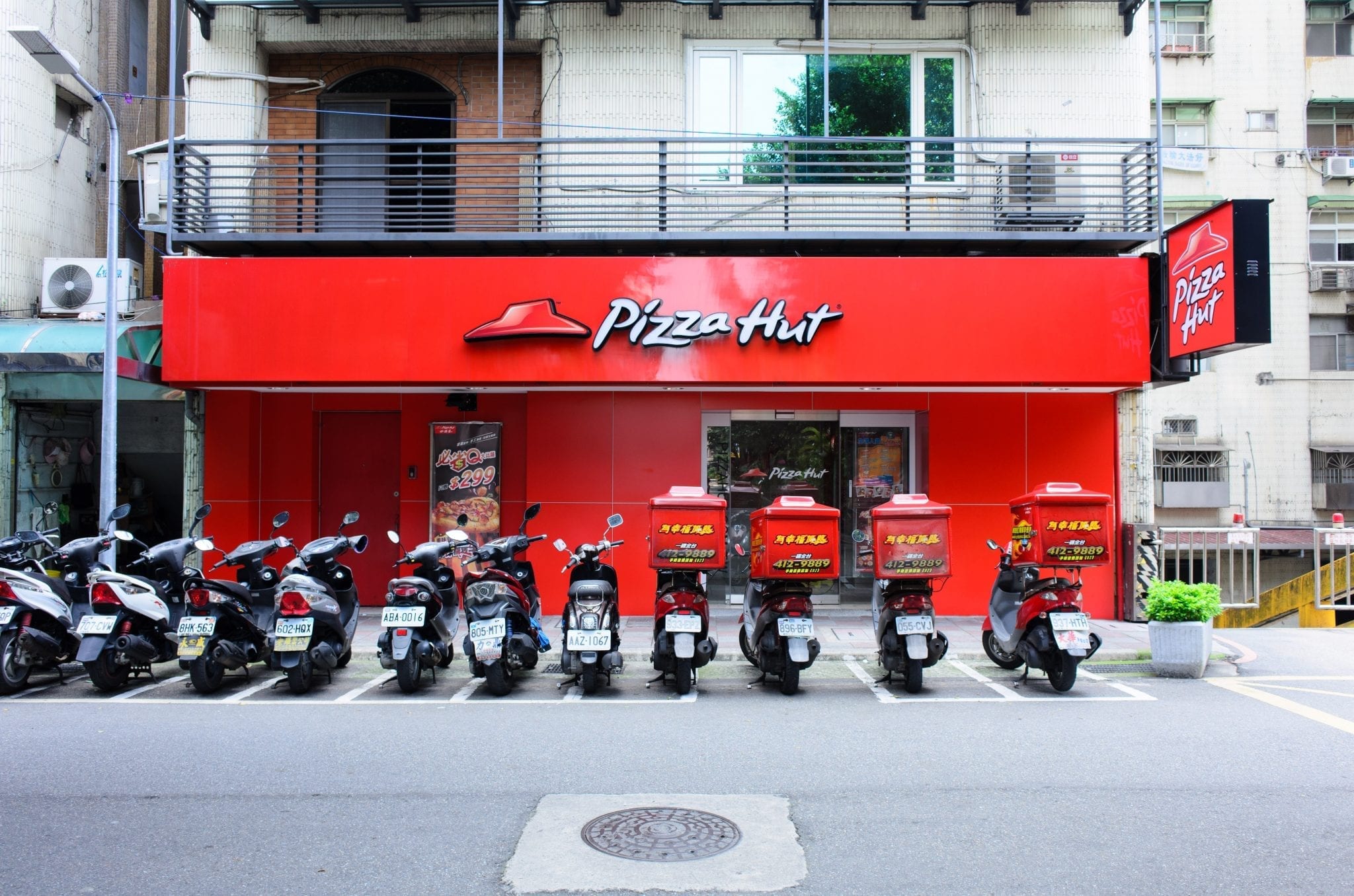
    Yum China was spun off from US-based fast Yum Brands Inc 12 months ago. The company’s brands include KFC and Pizza Hut.

    CEO Micky Pant says that while only 10 per cent of the company’s sales are delivered, deliveries are growing at double digits and will be an important driver of growth.

    Yum China secured a $460 million investment from Primavera Capital and Alibaba affiliate Ant Financial before its spin-off. Yum China already is the biggest user of Ant’s Alipay mobile payments service. The restaurant company is also investing in its mobile ordering system and loyalty programs.

  • Fast food industry in Singapore braves slump

    Fast food industry in Singapore braves slump

    The food and beverage industry is in a pickle with the slowing economy, but the fast-food industry appears to be staying ahead.

    The latest official figures show that sales at fast food outlets were better than those at restaurants this year until September, except for June.

    Fast food sales in September are estimated to have risen 2.6% over the same period last year.

    But sales at restaurants rose more modestly at 0.9%.

    Still, sales in both the restaurant and fast food categories have slowed down compared with five years ago. The fast-food industry grew just 1% last year, a significant drop from the 10% growth in 2011.

    High rental rates and a manpower crunch have contributed to the sector’s misery, as has a slowing economy. The fast food industry is doing better because of lower prices and promotions. The industry is also a lot more nimble in responding to food trends, said observers.

    “It has speed and convenience, and even the ambience is getting better at the outlets. They keep having new products, which people get on to social media and talk about,” said Singapore Polytechnic senior retail lecturer Sarah Lim.

    Fast food is also more attractive when times are bad, said Associate Professor Prem Shamdasani, from the National University of Singapore Business School.

    Texas Chicken, which opened two new outlets in Singapore in the second half of this year, said it has seen a 6% growth in same-store sales in the first nine months this year, compared with the same period last year.

    Popeyes, also a fried-chicken chain, reported the same amount of growth in sales.

    Besides the introduction of new products, the chains said sales are up because of higher productivity, which leads to lower costs, and more efficiency.

    International chains like McDonald’s and Popeyes as well as local chain BurgerUp have invested in technology such as self-ordering food kiosks that help streamline services and reduce the dependence on staff.

    “We offer burger customisation, so it is essential to have the ordering kiosk for diners to do it without hogging the order counter,” said Charlie Tan, BurgerUp’s director of strategic planning and marketing.

    He said this has led to 20% savings in manpower.

    Burger King is expected to adopt a similar system next year, said a spokesman. Texas Chicken is exploring the option.

    The use of such technology has translated into better sales.

    Dickson Low, chief operating officer of Revenue Valley Group, which runs the Popeyes chain in Singapore, said staff have noticed more customers ordering side dishes and getting bigger portions of food.

    He said this may be because the self-ordering kiosks allow them to view the images of all items on the menu.

    “For restaurants that use self-ordering kiosks, the orders for add-on and top-up items are higher by 15% (than at restaurants) without kiosks.”

    The firm has invested S$150,000 to S$200,000 (RM465,975 to RM621,632) on these kiosks for each of its five outlets.

    Prof Shamdasani said fast-food outlets find it more cost-efficient to invest because of the number of outlets they operate.

    On the other hand, restaurants outside the industry may operate fewer branches and struggle to afford the technology.

    Besides technology, the fast-food industry has also turned to the local palate to attract customers.

    McDonald’s, for example, introduced salted egg burgers in June this year. Texas Chicken introduced flavours such as sambal chicken, as well as herb and garlic chicken.

    “Singapore is the hotbed of innovation and creativity when it comes to flavour profiles. It is a trend leader,” said Amarpal S. Sandhu, Texas Chicken’s general manager for the Asia-Pacific region.

  • Le Pain Quotidien Hong Kong on par with New York City

    Le Pain Quotidien Hong Kong on par with New York City

    Belgian-founded bakery Le Pain Quotidien’s Hong Kong outlet is trading as well as the chain’s best stores, surprising the founder.

    “We knew we would make it [in Hong Kong] but we did not expect sales to be so high, comparable to our best stores in New York,” the bakery’s founder Alain Coumont divulged in an interview with the ‘Hungry Lawyer’ Marc Rubinstein.

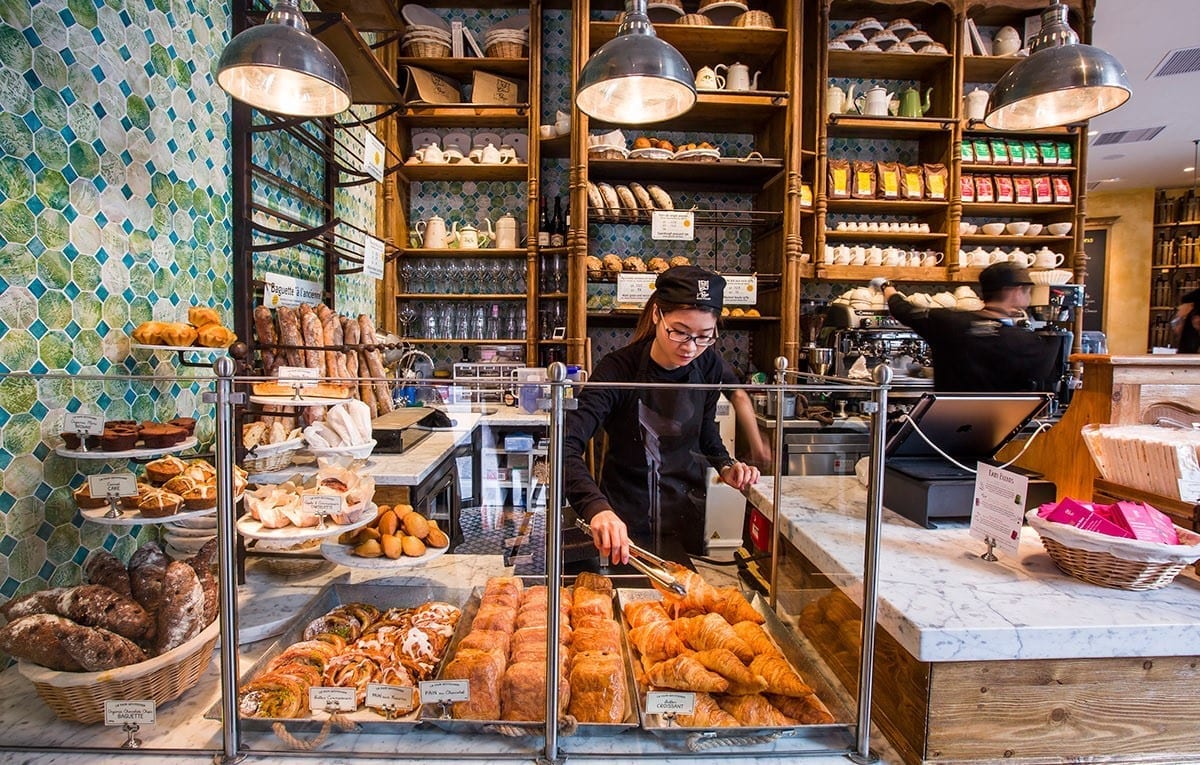
    Le Pain Quotidien Hong Kong  was brought to the city by Dining Concepts, and recently opened its second store at Pacific Place. The city is the 18th market for the brand which now numbers 235 stores globally.

    “There are plans for a third store in Central but I can’t say where because it’s still a secret,” Coumont said. “The idea is to have at least four or five shops in Hong Kong by the end of 2017. We are also thinking of expanding to other parts of the Asia Pacific region with Dining Concepts like Singapore or Malaysia, as well as China. We are expanding naturally as we make money, not because we must.”

    He said the core of the menu was the same in Hong Kong as elsewhere in the world.

    “We have some local dishes on the menu. Originally, we had congee on the breakfast menu. We update the menu seasonally so now we have a tofu scramble instead, but the basic structure of the menu is the same as in other markets.”

    Le Pain Quotidien, which means “daily bread”, was founded in 1990 when Coumont, working as a chef, was dissatisfied  with the bread served before meals.

    le-pain-quotidien-pacific-palace-hk

    “So I decided to start making it myself as a hobby. I didn’t have space for the equipment so I rented 36 sqm next to the stock exchange in Belgium, bought a big table at a flea market, started baking two kinds of bread, and added coffee and sandwiches to help pay the rent. With the big communal table leaving nowhere for customers to hide and our two kilo sourdough loafs, the shop looked like the dining room of a monastery. Then the magic happened.”

    He had no idea his ‘hobby’ would evolve into a global brand.

    “There was no business plan. It was a hobby. I started with US$10,000 that I didn’t have, but it was an overnight success.”

    Coumont said rent was key in Hong Kong, as in New York and London – “and you need a great location”.

    “High rent creates opportunity for expensive mistakes if you pick the wrong location. But, like London and New York, Hong Kong is also a diverse city which means our staff and our customers are diverse and include cosmopolitan travellers and business people. We could just as easily be in Dubai or New York except that Hong Kong is less hot than Dubai and warmer than New York.”

    In the interview, Coumont also talks about his experiences launching the brand in New York, his passion for Chinese food and his thoughts on Hong Kong as a city.

  • 7-Eleven Malaysia committed to store expansion

    7-Eleven Malaysia committed to store expansion

    7-Eleven Malaysia is committed to further store network expansion despite the economic headwinds in the nation.

    Releasing the company’s third quarter results, CEO Gary Brown said the network now numbering 2057 stores achieved sales growth of 5.5 per cent in the three months to September 30, despite a sluggish retail market.

    However there was a “significant negative impact” from the increase in the minimum wage from July 1 on third-quarter profit.

    “The third quarter of 2016 highlights the tough retail market in which we have operated since the introduction of GST coupled with low consumer sentiment and spending.

    “[However] we remain confident that continuous store expansion, refurbishment, promotional activity, improved merchandise mix and expanded in-store services will continue to deliver positive results despite the challenging headwinds.”

    Brown noted that average spend per customer increased by about 4 per cent during the third quarter, compared with the same period last year.

    Group revenue for the quarter totalled RM547.8 million (US$23.31 million) driven by new stores, improved merchandise mix and consumer promotion activity.

    Gross profit of RM169 million improved by 5.8 per cent, mainly attributed to the 5.5 per cent revenue growth.

    Selling and distribution expenses for the quarter increased by RM14.8 million or 10.4 per cent, mainly caused by new store expansion resulting in higher staff cost, rental cost, store depreciation expense and utility costs. The increase in the minimum wage caused store staff costs to rise by approximately 10 per cent in the current quarter.

    The pre-tax profit of RM15.5 million decreased by RM7.0 million or 31.2 per cent, despite positive sales growth – and due to higher selling and distribution expenses caused by new store expansion and the impact of minimum wage increase.

    For the nine months to September 30, the group’s revenue grew by 4.9 per cent against the corresponding nine months’ revenue.

  • Jollibee to list Highlands Coffee in Vietnam

    Jollibee to list Highlands Coffee in Vietnam

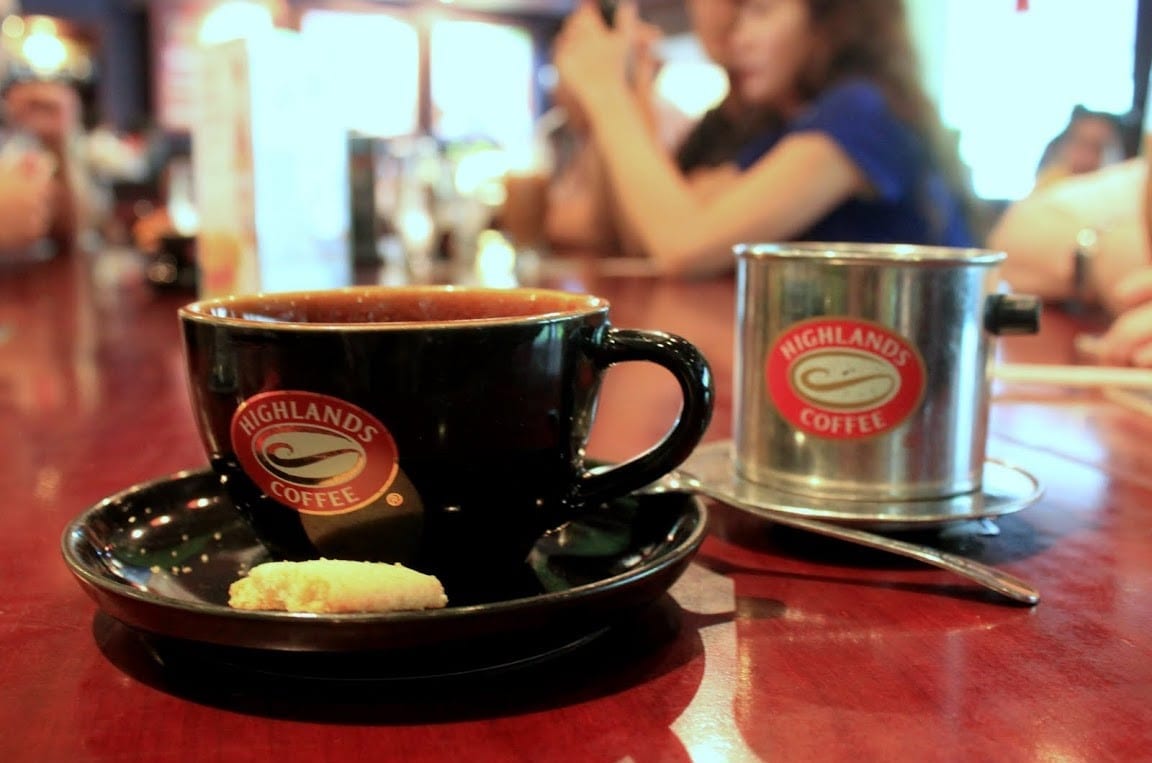
    Jollibee Foods Corp’s subsidiary JSF Investment and its partner Viet Thai International plan to list the Highlands Coffee business on the Vietnam stock exchange.

    According to the announcement, Super Foods, the company owns 51 per cent of Highlands Coffee brand, will be listed publicly by July, 2019.

    The exact stake of the IPO has yet to be disclosed.

    Besides Highlands, Superfoods also owns and operates Pho 24 and the Hard Rock Cafe stores in Vietnam.

    After being acquired by Jollibee Food Corp in 2012 with a $25 million deal, Super Foods has rapidly expanded its Highlands chain throughout Vietnam up to 130 outlets in July.

  • Korean food companies move into direct retail

    Korean food companies move into direct retail

    Korean food companies are reaching out to consumers through face-to-face encounters at their own branded cafes and restaurants.

    And they are reaping the rewards: upgrading their company image, testing new products and increasing sales.

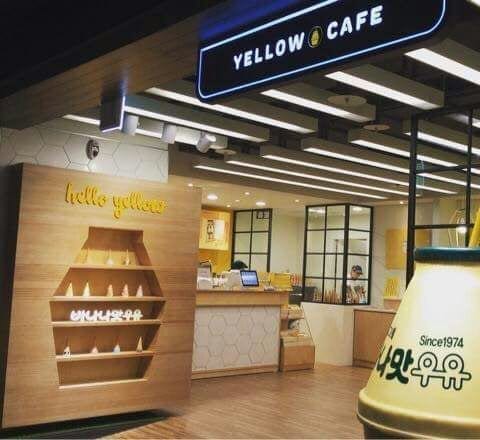
    Binggrae gave its Banana-flavored milk, a product that has survived for 40 years, a new twist in March by opening a cafe in downtown Seoul that sells beverages and ice cream based on the milk. Opened in collaboration with Hyundai Department Store that hosts the cafe at its downtown outlet, Yellow Cafe is making monthly sales of some 100 million won (US$85,178), company officials said.

    yellow-cafe

    Binggrae also worked with Olive Young, a health and beauty store chain, to sell body care products based on its milk brands. Last month, it opened a soft ice cream shop at a Lotte Department Store branch in southern Seoul.

    Company insiders say the moves are market tests for Binggrae, which is interested in starting a restaurant business.

    Orion, synonymous with its most popular snack Choco Pie, is operating a dessert cafe, Lab O, in southern Seoul. As its name suggests, the store serves as the company’s research center for dessert products, getting consumer reactions to different flavors and foods tweaked from its mainstream brands.

    Haitai Confectionery & Foods, which recently landed a smash hit with its honey-flavored potato chips, Honey Butter Chips, runs cafe Haitai Ro at two locations in Seoul. The stores sell desserts, as well as character figurines and stuffed animals that enjoy the company’s snacks. Officials at the firm say the cafes are more like “antennae shops” that catch consumers’ preferences.

    Lotte Confectionery has Guylian Cafe at the Lotte Department Store’s Lotte World branch that sells desserts made with the Belgian chocolate. Lotte took over the brand in 2008. Lotte separately operates exhibition booths for its own products in southern Seoul.

    Food companies likewise are working their way directly to consumers through restaurant-style shops.

    SPC Samlip has adopted “grocerant” as its concept store, mixing a grocery store with a restaurant. Its Glucks Schwein, which sells premium processed meats, has German sausages and beer on its menu. The company’s noodle line Hi-myon, launched in 1974, is being marketed at its noodle specialty restaurant Hi-myon Udon. Company officials say they are planning to open 20 Glucks Schwein franchises by 2018 on top of 10 noodle restaurants by the end of next year.

  • Now you can book a cook on Singapore Airlines

    Now you can book a cook on Singapore Airlines

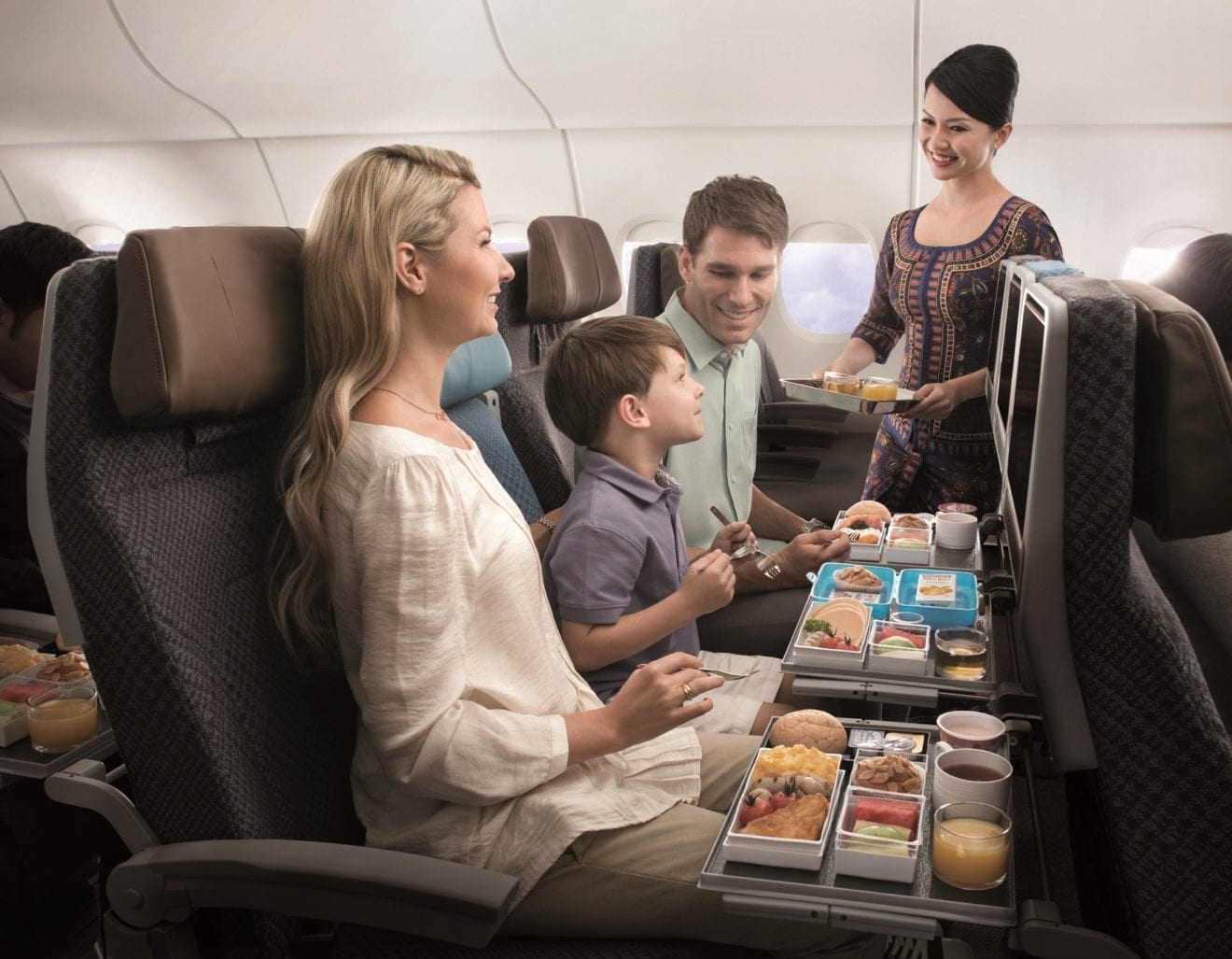
    It’s like dining a la carte 34,000 feet above sea level. That’s the “Book the Cook” experience that you get when you fly Singapore Airlines. It’s an exclusive advance inflight meal-ordering service that allows passengers in Suites, First Class, Business Class and Premium Economy Class to pre-select a gourmet dish of their choice before their flight.

    “It’s a departure from our regular meal service,” says Hermann Freidanck, food and beverage, inflight services manager. “You get to order your main course from a wide selection in a specially prepared menu up to 24 hours before your flight. Now you won’t have to settle for a dish that is not your choice.”

    At the exclusive meal presentation before local media recently at Singapore Airline’s new-concept Silver Kris Lounge in NAIA3, we got to experience firsthand what this was like. A couple of days before the event, we were sent a special menu to choose from, which included beef tenderloin steak, roasted rack of lamb, slow-cooked marinated duck leg with mushroom risotto, marinated free-range chicken, and baked herb-marinated salmon.

    The sit-down meal included an appetizer of marinated lobster with Mediterranean vegetable salad and balsamic dressing, as well as roasted pumpkin soup or snow fungus chicken soup with Chinese mushroom and quail egg. The salad was spinach and green frisée garnished with cherry tomatoes and olives with a choice of balsamic vinegar and extra-virgin olive oil or honey-mustard dressing, while dessert was a choice of  either chocolate and banana cake with vanilla ice cream and raspberry coulis or fresh mango tiramisu with verbena mango compote and biscotti by three-Michelin-starred chef Georges Blanc.

    As part of the Book the Cook service, passengers can choose from a menu of ICP dishes. “These are dishes created by Singapore Airline’s esteemed International Culinary Panel (ICP), which is a team of celebrated Michelin chefs who have restaurants or groups of restaurants in our main destinations in Europe, America and Asia,” Freidanck explains. “They work closely with our own chefs to develop unique dishes that we serve on board.” The panel includes Alfred Portale (United States), Carlo Cracco (Italy), Goerges Blanc (France), Matt Moran (Australia), Sanjeev Kapoor (India), Suzanne Goin (United States), Yoshihiro Murata (Japan), and Zhu Jun (China).

    “Our menus are planned four to five months ahead of time, on a four-month cycle. First Class and Business Class have four different main courses, while Premium Economy Class has a third choice in addition to the usual two choices,” Freidanck shares. “The way we do our menus is what we call ‘destination-specific.’ If you are going to Frankfurt, for example, you’ll have a German dish. In First Class and Business Class, you will always have  an ICP dish. Seasonal ingredients would also affect which dishes would be available.  The Japanese, as well as the Chinese dishes, go by the seasons. A bestseller is the Maine lobster, but not every country has it. It is difficult to get lamb, for instance, but because you can order in advance, you are guaranteed your main course.”

    “And then we have the Asian dishes. We look at the passenger profile, and if it’s predominantly Singaporean, for example, we try to put a Singaporean dish. We emphasize that we must represent the cuisine properly. It always has to be authentic. It must be traditional,” Freidanck adds. ‘There are also what we call the special meals which address certain conditions of the passenger, either due to religious beliefs, dietary or allergy restrictions. You can order them and we will serve you according to what you order. It’s not like other airlines where one menu fits all.”

    Singapore Airlines also launched a new “Deliciously Wholesome” program catering to the needs of an increasing number of health-conscious travelers.

    Preservation of freshness is an important consideration. Dishes are cooked with the reheating process in mind. “There is a fine line because we have to follow the hygiene regulations,” Freidanck explains. “Steak, for instance, has to be seared from the outside, so when it’s reheated on board, it’s just right. Sushi has to either be grilled or pickled or smoked. Nothing is raw. Oysters have to be cooked, following hygiene regulations.” Certain dishes can be a challenge. “Not impossible, but difficult,” Freidanck says. Dim sum, like pasta, does not reheat very well. The texture of risotto can be less appealing when overdone.

    The dishes are cooked in the kitchen, then kept in the chiller below 10 degrees so no bacteria can thrive, until it goes on board. The dishes are deconstructed and put into different containers. On board, it goes in the oven where the heat is calibrated to a certain temperature. “There is a training center in Singapore where the crew learn to do this. It’s very specific. There’s a lot of details which they have to go through,” Freidanck says. The crew gets a plating guide, which they must follow when they assemble the dishes.  First Class passengers get their meals served on real plates with fine cutlery.

    “Complementing Singapore Airline’s World Gourmet Cuisine is a selection of the finest wines from the very best vineyards, selected by some of the world’s most educated and sought-after palates. These wines are handpicked by world-renowned wine experts and blind-tasted under simulated cabin pressure, since our taste buds are affected by the cabin pressure,” notes Carol Ong, Singapore Airlines general manager for the Philippines, Guam and USTT. The Singapore Airlines Wine consultants include three Masters of Wine: Michael Hill-Smith, Jeannie Cho-Lee, and Oz Clarke.

    “So, you have just flown First Class, basically,” Freidanck says, addressing the intimate media group of happy diners at the end of the meal. The only thing missing was the altitude.

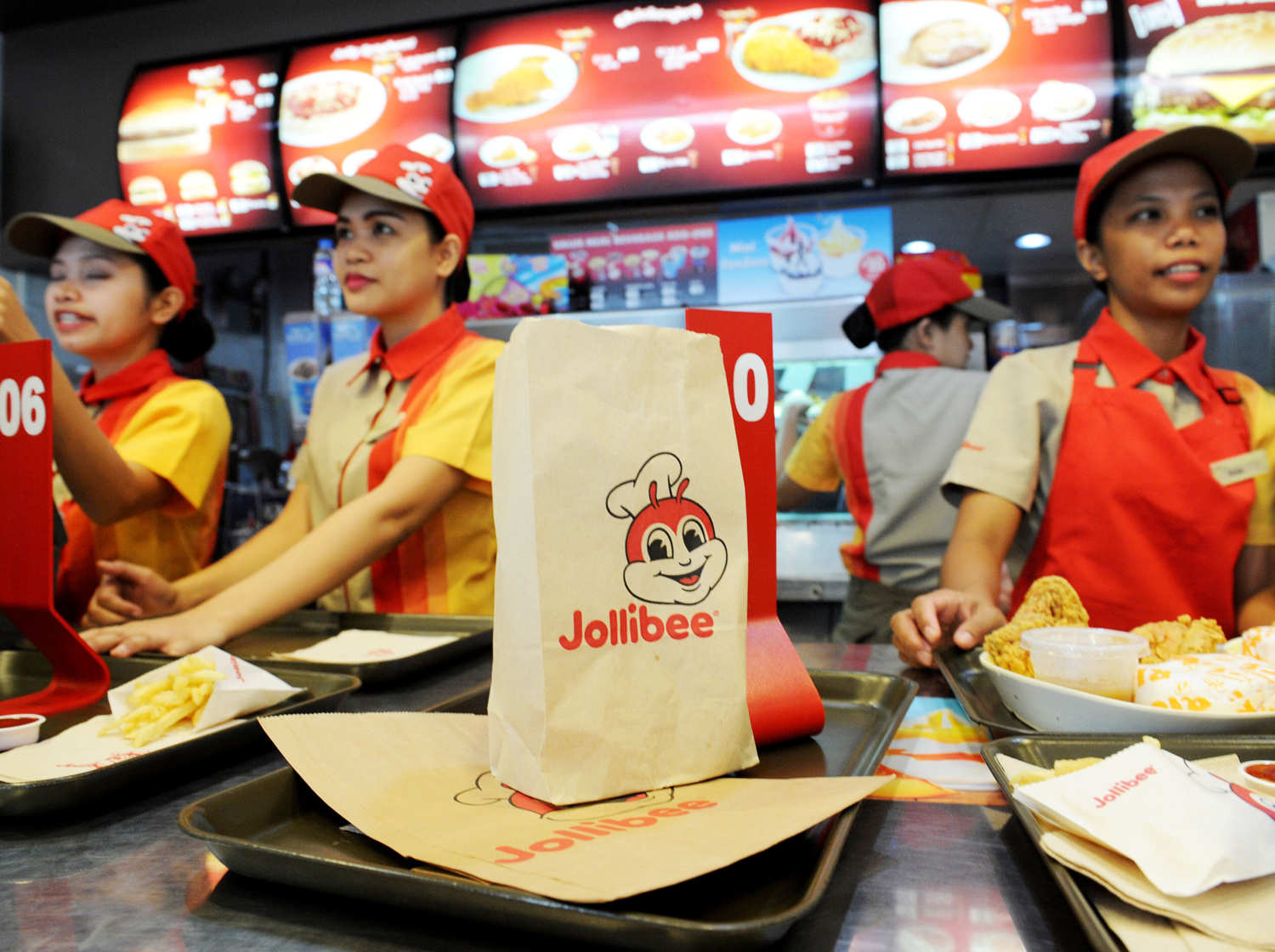
  • Jollibee profit soars as Filipinos order more

    Jollibee profit soars as Filipinos order more

    Jollibee Foods has reported  13.8 per cent global sales growth in its nine-month net profit as sales soared to P4.39 billion (US$88.2 million).

    Most of the Jollibee profit growth came from the domestic market where sales rose 16 per cent year-on-year, with the expanding offshore business returning 6.4 per cent growth.

    During the third quarter, net profit rose 6.1 per cent to P1.33 billion.

    “Sales of our businesses continued to be strong. We expect to end the year 2016 with the highest system-wide sales growth in five years and the highest organic growth in at least a decade driven by strong same store sales growth and the highest store network expansion,” said Jollibee CEO Ernesto Tanmantiong in an earnings statement.

    Jollibee, Asia’s largest food company, grew systemwide sales in the third quarter by 12.4 per cent to P36.32 billion, taking nine-month sales to P107.76 billion or 14.1 per cent higher.

    On a global basis, sales from the same-store network grew by 6 per cent year-on-year while new stores contributed a growth of 6.4 per cent.

    Tanmantiong said the company was encouraged by improvements in China, which helped its international business return to growth.

    “We look forward to continued recovery of our China business in the months ahead with the introduction of new products. Our plans for 2017 and the years ahead call for continued strong same store sales growth and store network expansion in the Philippines and abroad with the aim of surpassing our historical performance,” he said.

    JFC opened 201 new stores between January and September – 133 in the Philippines and 68 abroad. That’s a higher number than for the whole of 2015, when 186 opened.

    Jollibee’s CFO Ysmael Baysa said gross profit margins on the company’s products improved in the third quarter as raw material prices stabilised.

    At the end of September Jollibee had 3221 stores worldwide, 2547 of them in the Philippines. It also has a stake in Highlands Coffee in Vietnam and the Philippines, Pho 24 in Vietnam, Indonesia, Cambodia, Korea and Australia, Hotpot in China Smashburger in the US.

  • BreadTalk to take Din Tai Fung into UK

    BreadTalk to take Din Tai Fung into UK

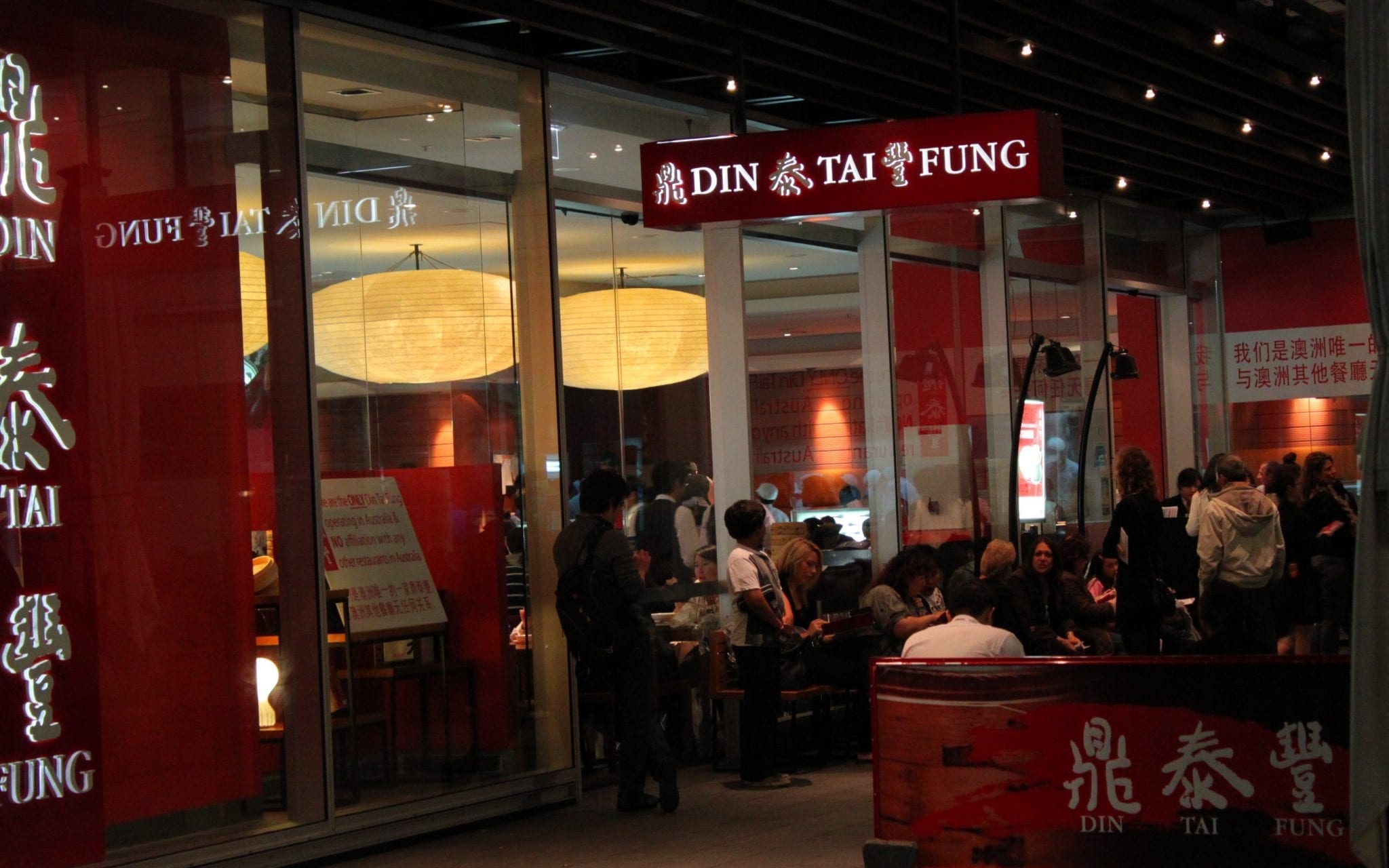
    BreadTalk Group has signed a franchise agreement with the parent of the Din Tai Fung brand of restaurants to take the Taiwanese concept into the UK.

    BreadTalk Group says the deal with Fairy Rise Development, the owner of Din Tai Fung, will see the first restaurant opened in London next year, followed by outlets in England, Ireland and Northern Ireland.  They will be run by a joint venture company TFUK, comprising BreadTalk subsidiary Together Inc as majority shareholder, Din Tai Fung Taiwan, Fairy Rise, a UK partner and Taiwanese investors.

    Cheng William, divisional CEO (restaurant) of BreadTalk Group says the deal will see the concept enter Europe for the first time.

    “With our experience in operating the brand for the last 13 years in both Singapore and Thailand, we hope to bring the much loved Din Tai Fung to new consumers who will appreciate this authentic Taiwanese cuisine,” he said.

    Din Tai Fung’s owner,  Chi-Hwa Yang, says the international recognition Din Tai Fung enjoys today “is in no small part attributable to our long-standing partnership with the BreadTalk Group. BreadTalk Group has played an integral role in our success by growing and exposing our Taiwanese brand to an international audience.”

    BreadTalk Group operates 21 Din Tai Fung restaurants in Singapore and three restaurants in Thailand with more planned.

    Globally, Din Tai Fung’s stores have won multiple awards, including a Michelin star in Hong Kong, and are favoured by celebrities and food critics alike with a total of 135 restaurants in 13 territories.

    BreadTalk Group won the franchise rights to operate Din Tai Fung in Singapore and Thailand, in 2003 and 2011 respectively. The Taiwanese brand also has branches in Australia, China, Hong Kong, Indonesia, Japan, Malaysia, the Philippines, South Korea, the UAE and the US.

    BreadTalk Group has nearly 1000 stores spread across 17 markets, its brand portfolio comprises BreadTalk, Toast Box, Food Republic, Din Tai Fung, Thye Moh Chan, Bread Society, The Icing Room and RamenPlay.

    BreadTalk Group has a network of owned bakery outlets in Singapore, China, Malaysia, Hong Kong, and Thailand, as well as franchised bakery outlets across Asia and the Middle East. It also owns the Food Republic food atria in Singapore, China, Taiwan, Hong Kong, and Malaysia.

  • Smith & Wollensky restaurants going global

    Smith & Wollensky restaurants going global

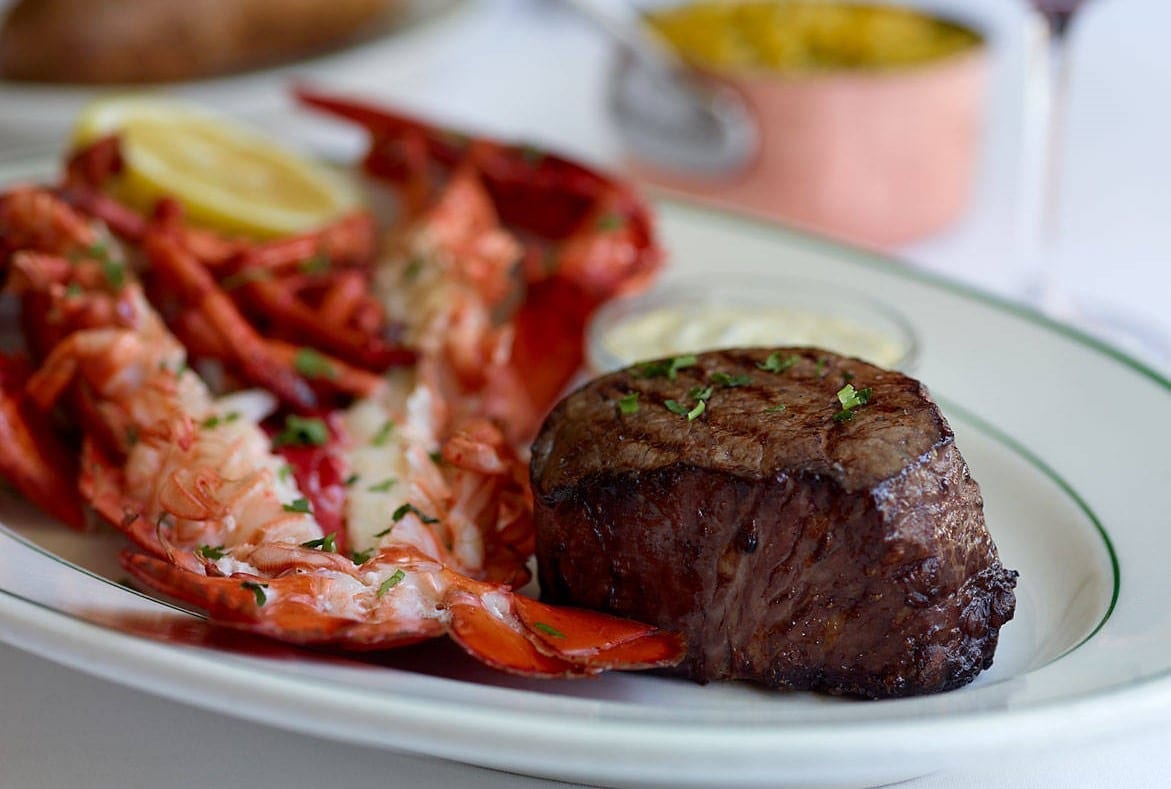
    US steakhouse Smith & Wollensky, famously described by the New York Times as “the steakhouse to end all arguments”, is expanding its global presence, setting its sights initially on such cities as Bangkok, Hong Kong, Seoul, Singapore, Taipei and Tokyo, as well as Dubai and Mexico City.

    This follows Irish investment company Danu Partners acquiring Smith & Wollensky Restaurant Group (SWRG) from Bunker Hill Capital this year. Its first overseas restaurant was opened in London.

    “Our teams in the US and London have worked closely together to build a robust infrastructure, and this is a perfect platform on which to build a global business,” says Leonard Ryan of Danu Partners. Joining the team will be international development executive Oliver Munday, who in the past 20 years has worked at growing US restaurant brands internationally.

    “Having completed transactions in more than 30 countries with multiple restaurant brands including Hard Rock, Margaritaville and Planet Hollywood, Oliver brings the contacts and expertise needed to allow us to reach our full potential on the international stage,” says SWRG president/CEO Michael Feighery .

    “Smith & Wollensky occupies a special place among the great US fine-dining restaurant brands, and there is global demand for such a classic American steakhouse experience,” says Munday. “We will be entertaining only a handful of select markets … but interest is already strong.”

    Since Danu Partners bought Smith & Wollensky it has embarked upon a program of reinvestment, which as well as expansion includes upgrades of its restaurants in the US.

    Established in 1977 with its headquarters in Boston, Smith & Wollensky Restaurant Group has seven locations in the US. The restaurant has received such accolades as the Grand Award of Excellence from Wine Spectator and an Award of Excellence from Distinguished Restaurants of North America.

    An investment holding company based in Dublin, Danu Investment Partners was founded in 2009 and covers a range of business sectors, with a focus on the hospitality sector.