Category: Food

Retail News Asia is committed to providing both local and global retailers with the latest Food and Food & Beverage news throughout the Asian market. This on a daily base.

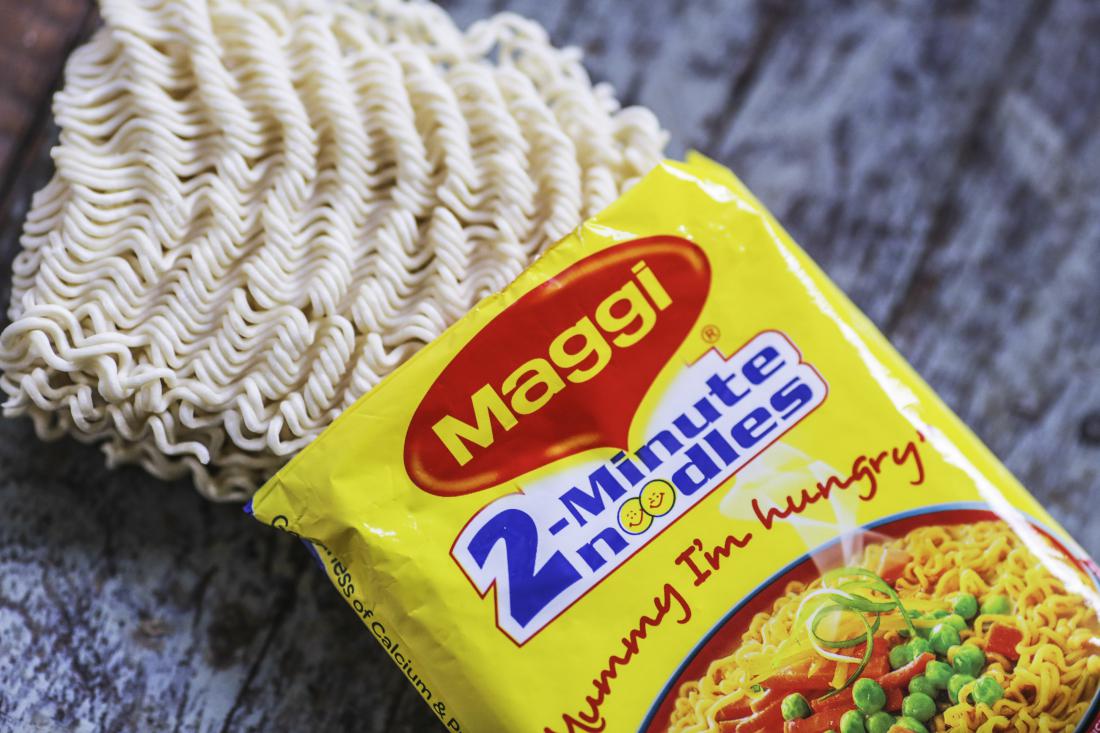
  • EU considers loosening controls on Vietnamese noodles

    EU considers loosening controls on Vietnamese noodles

    According to the Vietnam Trade Office in Belgium, the European Union (EU) is considering a proposal to reduce food safety control measures on instant noodles imported from Vietnam.

    Since February last year, 20% of Vietnamese instant noodle shipments exported to the EU have been subject ethylene oxide level inspections. All shipments have been required to come with health certificates issued by Vietnamese regulatory agencies.

    According to the Vietnamese Ministry of Industry and Trade, in the second half of 2022, the EU found no ethylene oxide, an organic compound with various applications (including disinfection and sterilization), in Vietnamese instant noodles.

    Therefore, the EU has proposed not requiring health certificates for instant noodles imported from Vietnam, reported the office.

    According to the office, the proposal is expected to be approved by the block’s member states at a meeting in April.

    By the end of February, the Ministry of Industry and Trade had issued 3,170 health certificates to exporters of instant noodles to the EU market through 21 ports.

    Germany is the largest import of instant noodles from Vietnam, accounting for over half of the certificates issued.

    In August 2021, a number of batches of Vietnamese instant noodles exported to the EU market were returned or destroyed due to residues of ethylene oxide exceeding the permissible level stipulated by the EU.

    Currently, each country and region has different regulations on ethylene oxide.

    Ethylene oxide is commonly used as a highly effective disinfectant and fumigation agent in a number of agricultural products, especially spices and herbs.

    Consumption of products containing ethylene oxide does not pose an acute health hazard but can cause cancer if taken regularly for a long time.

    In many European countries, 2-chloroethanol, a metabolite of ethylene oxide, is considered ethylene oxide when they calculate the ethylene oxide content in foods.

  • Durian prices plunge by half

    Durian prices plunge by half

    Durian prices have plunged by half in nearly two months as harvest season approaches and supply is abundant.

    Farmers in the southern provinces of Tien Giang, Long An, Binh Phuoc, and Dong Thap sell their Ri6 durian for VND75,000-VND85,000 per kilogram ($3.19-$3.62), down from VND190,000 in earlier February.

    Lanh, a farmer in Tien Giang, said he sold seven tons of durian for VND75,000.

    “I sold quickly due to a fear of a steeper plunge,” Lanh said.

    In Can Tho City, Hanh is selling the lower quality durian for VND45,000 per kilogram, down by half from last month.

    Prices are set to fall further as harvest season in Binh Phuoc and Dong Nai provinces approaches, she added.

    Van Hoa Investment and Development, which buys durian from farmers for export, is offering VND95,000 per kilogram for the highest quality and VND75,000 for the medium segment. The company buys 20-30 tons a day from suppliers.

    Traders say that the increase in supply as the harvest season approaches has pulled down durian prices. Furthermore, other fruits, such as rambutan and plums, will be harvested soon, which will make durian less attractive.

    Prices could fall even further in May when durian farms in the central highlands begin to harvest.

    Vietnamese durian will also have to face competition in the summer with durian from Thailand and the Philippines.

    Vietnam’s durian farming area reached 110,000 hectares by the end of last year after the country was allowed to export the fruit officially to China. This exceeded the government’s plan by nearly 47%.

    In the first two months this year some farmers in the southern and central highlands regions even chopped down coffee, pepper and rice to grow durian as prices surged.

    China is also growing its own durian to meet domestic needs. The country has 93.3 hectares of the fruit on Hainan Island.

    The Laos government has agreed to set aside 30,000 hectares of agriculture land to grow durian specifically for the Chinese market. This is equivalent to around 27% of Vietnam’s durian farming area.

    The Philippines, which earlier this year received permits from China for fresh durian exports, plans to send 54,000 tons of the fruit to the market of 1.4 billion people this year.

    The Vietnamese Ministry of Agriculture and Rural Development has advised farmers to stop switching en masse to durian farming to prevent an oversupply.

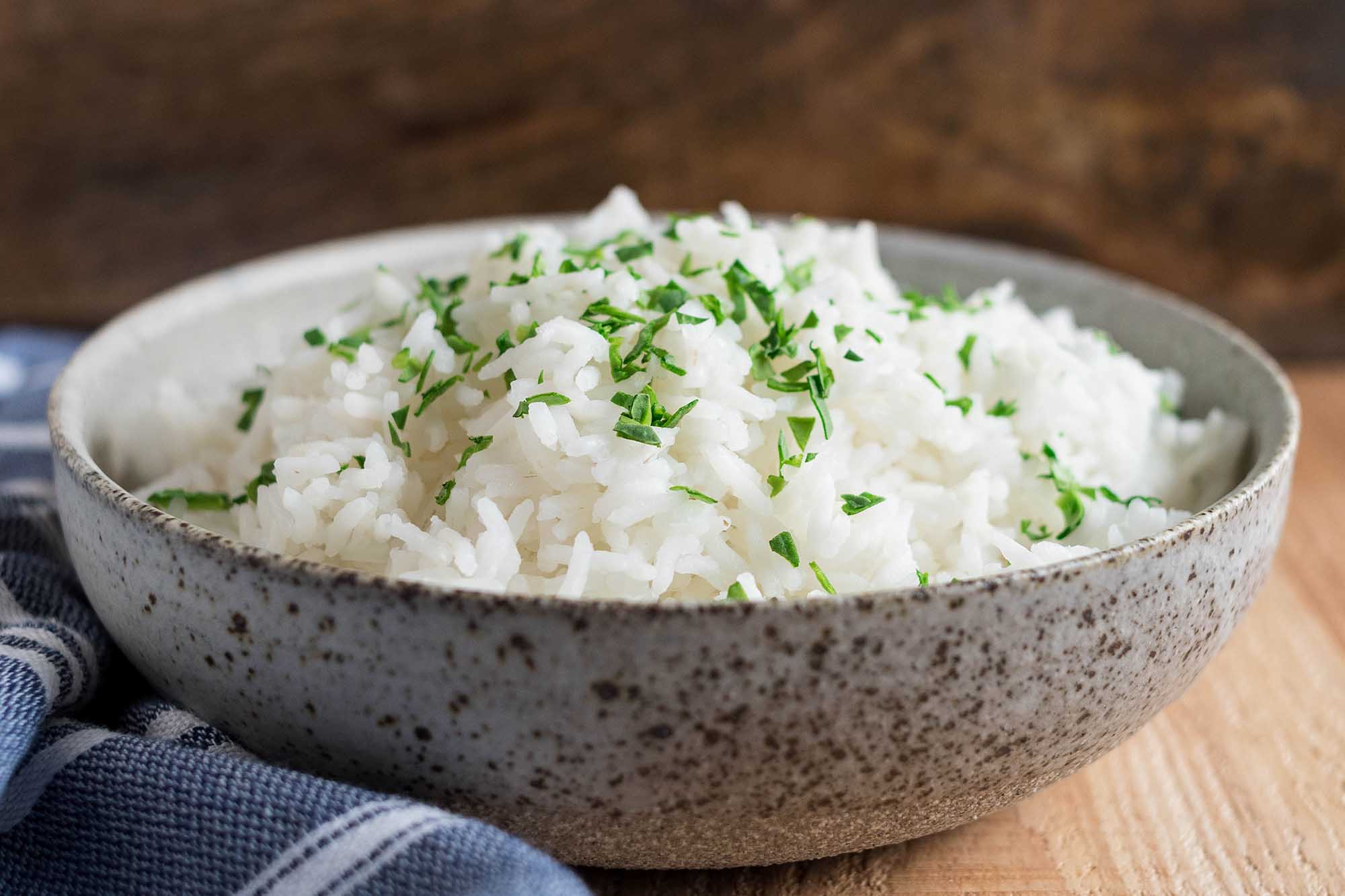
  • Vietnam rice price on top of the world

    Vietnam rice price on top of the world

    Vietnamese 5% broken rice has been the most expensive in the world since August last year, surpassing rivals Thailand and India, according to the Ministry of Industry and Trade.

    In the first two months of this year Vietnam’s average rice price was over $519 per ton. Since August last year, it has exceeded Thai prices by $15-27 and prices from India by $40-50.

    Although Vietnamese export volumes dropped 20.9% year-on-year to $400,000 tons in January, prices rose 7%.

    Last year rice exports from Vietnam reached a 10-year high of 7.1 million tons.

    The country plans to export 6.6 million tons of rice this year, with 4.12 million tons in total scheduled to be delivered by the end of the first six months.

    Favorable export conditions are expected to return this year thanks to a resumption in demand from Indonesia and Bangladesh.

    Buyers will increasingly turn to Vietnam for rice as India has banned the export of broken rice and put a 20% tax on white rice.

    But the Ministry of Industry and Trade is concerned that the need for more diversification in export markets and dependence on China and the Philippines (the latter being the largest buyer of Vietnamese rice, accounting for 45% of exports) will be a challenge to the industry.

    Low-priced rice from Pakistan may also present a challenge to holding market shares.

    Input prices have been rising and logistics costs have remained high since the beginning of the Russia-Ukraine conflict.

    The trade ministry is working with the E.U. to better introduce the import of Vietnam fragrant rice on the continent.

  • Jollibee Foods Corporation gears up to open 600 stores this year

    Jollibee Foods Corporation gears up to open 600 stores this year

    Home-grown fast food giant Jollibee Foods Corp. (JFC) is planning to expand its global presence by opening up to 600 new stores this year.

    In a Thursday disclosure to the Philippine Stock Exchange, JFC said it plans to open 550 to 600 owned and franchised stores in 2023.

    With this, the company expects its capital expenditures to range from P17 billion to P19 billion this year.

    This year, the quick-service restaurant chain’s expansion plan could be the biggest in its history, exceeding the record 542 stores openings in 2022.

    At the end of 2022, JFC operated 6,480 stores worldwide —3,285 in the Philippines and 3,195 internationally.

    The company booked a net income of P7.338 billion in 2022, up 33.4% from P5.502 billion in 2021 driven by P211.9 billion in revenues, which grew by 38% year-on-year.

    “Looking ahead, while we expect macroeconomic challenges to persist in 2023, we are confident that the JFC Group is resilient and well-positioned to drive near-term growth. We have clear priorities on profitability while we continue to invest strategically to deliver long-term growth and value for our shareholders,” said JFC CEO Ernesto Tanmantiong.

  • Luckin Coffee to make Southeast Asia debut in Singapore this month

    Luckin Coffee to make Southeast Asia debut in Singapore this month

    Luckin Coffee, the once-troubled Chinese coffee chain, is slated to open up locations in Singapore as early as this month.

    The development follows the coffee chain’s job postings earlier this year looking for store managers in the city-state. It also aims to fill marketing, project management, and engineering roles.

    The firm also previously told Chinese media that it was conducting preliminary testing in Singapore and reiterated its core focus in its home country.

    Luckin Coffee was once considered China’s answer to Starbucks. However the US Securities and Exchange Commission slapped the company with a US$180 million fine after it was revealed that the firm had misreported financial statements. It went into restructuring and emerged in April last year.

    In its most recent financial report, Luckin Coffee said it logged US$1.9 billion in total net revenue for its 2022 financial year. It has over 8,200 stores in China.

  • Beverage industry lobbies against taxing sweetened drinks

    Beverage industry lobbies against taxing sweetened drinks

    Drink makers are lobbying against levying a special consumption tax on sweetened beverages, arguing that they do not contribute to health problems such as obesity.

    At a Wednesday workshop to discuss draft amendments to the Law on Special Consumption Tax, Nguyen Thi Lam, former deputy director of the National Institute of Nutrition, cited data showing that obesity is related to an imbalance between energy intake and outtake, and the frequency of physical activity.

    “Fat in food causes overweightness and obesity more than drinking soft drinks. There is no link between sweetened beverages and obesity,” she said.

    The Ministry of Finance is again considering imposing a tax on sweetened beverages eight years after failing to get other ministries to back it. The ministry said that a “reasonable” special consumption tax on sugary drinks would help protect people’s health in line with World Health Organization recommendations and international practices.

    Chris Vanloon, Chairman of the American Chamber of Commerce (Amcham) in Da Nang, said there is currently no definition of “sugary drinks,” so on the basis that the Ministry of Finance provides, the special consumption tax could be imposed on milk, dairy products, special foods for children and women, as well as sports drinks with electrolytes.

    Do Thai Vuong at the Vietnam Beer-Alcohol-Beverage Association said the beverage industry is still recovering from the Covid pandemic, facing global economic uncertainties and increased production costs.

    Beverage businesses need a stable tax policy environment to return to the numbers they were putting up pre-pandemic, Vuong said.

    He added that imposing the tax would be discriminatory without solving any public health problems.
    The proposed policy would also cause unwanted consequences for related industries, such as sugar, retail, and packaging, he said.

    A manager of Heineken Vietnam stated that the Ministry of Finance’s introduction of barley and non-alcoholic beverages into the taxable category was unreasonable.

    According to him, similar factors in terms of materials, processing, forms and flavors are not a legal basis for imposing a special consumption tax.

    “It is also inconsistent with the purpose of this tax — restricting or discouraging the consumption of products that are harmful to health,” he said.

    Businesses say they want to give regulators more time to analyze and evaluate relevant factors comprehensively and thus develop a suitable tax schedule to avoid negative impacts on consumers and businesses.

    However, Dinh Trong Thinh, an expert from the Vietnam Academy of Finance, said the tax rate could be 10%, similar to what Cambodia now applies.

    In 2014 the Ministry of Finance had formerly proposed a similar 10% special consumption tax on sweetened beverages, but other ministries opposed it.

    It is also considering hikes in the special consumption tax on beer, other alcoholic beverages and cigarettes.

    Between 2016 and 2019 it had increased the rate on beer and certain alcoholic beverages from 55% to 65% and on cigarettes and cigars from 70% to 75%.

    At the workshop, businesses suggested delaying the hikes, at least until 2025.

  • Fonterra profits increase despite volatile market conditions

    Fonterra profits increase despite volatile market conditions

    Fonterra Co-operative Group Ltd today released its 2023 Interim Results which show the Co-op has delivered a half year Profit After Tax of $546 million, an earnings per share of 33 cents, and a decision to pay an interim dividend of 10 cents per share alongside a forecast Farmgate Milk Price range of $8.20 – $8.80 per kgMS.

    The Co-op also upgraded its full-year forecast normalized earnings from 50-70 cents per share to 55-75 cents per share and announced a proposed tax-free capital return to farmer-owners and unit holders of around 50 cents per share, subject to completion of the sale of its Chilean Soprole business.

    Fonterra CEO Miles Hurrell says the results for the year’s first half show the Co-op is performing well, with profit up 50 per cent, against a backdrop of ongoing market volatility.

    “Our Co-op’s scale and diversification across channels and markets has enabled us to navigate through disruption and make the most of favorable market conditions in a number of areas.

    “While milk powder prices have softened recently, impacting our forecast Farmgate Milk Price range, protein prices have been high, and this is reflected in the lift in earnings we’re reporting today.

    “Our improved earnings and strong balance sheet have enabled us to pay an interim dividend of 10 cents per share which is positive news for our farmer owners and unit holders. We also expect to be able to pay a strong full year dividend, in addition to our proposed capital return.

    “The outlook for high quality sustainable New Zealand dairy remains positive. We have a clear strategy and are well-positioned to take advantage of this demand,” says Mr Hurrell.

    The Co-op has delivered a Profit After Tax of $546 million, up $182 million compared to the same time last year, and a Return on Capital for the last 12 months of 8.6%, up from 6.1% in the comparable period.

    “This lift in earnings is thanks to our Co-op’s scale and ability to move our farmer owners’ milk into products and markets with favorable prices.

    “With whole milk powder prices down, we moved more milk into skim milk powder and cream products to optimize our Farmgate Milk Price.

    “We also made the most of favorable margins in our cheese and protein portfolios by moving a higher proportion of current season milk into these products which has benefited our earnings.

    “Our ability to capture these higher margins is reflected in our Ingredients channel performance, with normalized EBIT up $494 million, or 118%, on the same time last year to $911 million.

    “Our Consumer and Foodservice channels benefited from improved in-market prices, with Foodservice normalized EBIT up $81 million, or 95%, to $166 million. However, higher input costs and ongoing pressure on margins have impacted overall Consumer channel performance.

    “Our domestic consumer business, Fonterra Brands New Zealand (FBNZ), has been under margin pressure for some time and is not improving as fast as planned. Performance of our Asia consumer brands has been impacted by weakening currency in the markets they operate, higher interest rates and a declining economic environment in some South East Asian markets.

    “For these reasons, we have revised down the valuation of FBNZ by $92 million and our Asia consumer brands Anlene, Chesdale and Anmum by $70 million.

    “As a result of market conditions and the impact of impairments, our overall Consumer channel normalised EBIT is down $177 million to a loss of $94 million.

    “This year our reportable segments have been updated to reflect an organisational change to better support our strategy. Group Operations is shown as a separate segment and the previous results of the AMENA and Asia Pacific segments are now combined into the new Global Markets segment.

    “Group Operations represents the business activities that collect and process New Zealand milk through to selling the products to our customer-facing regional business units, Global Markets and Greater China.

    “Group Operations normalised EBIT increased $412 million to $501 million, due to higher Ingredient prices, in particular proteins and cheese, relative to the products portfolio that informs the Farmgate Milk Price.

    “Looking at our customer-facing regional business units, Global Markets normalised EBIT was down 4% to $267 million. Global Markets’ Ingredients channel in-market earnings increased by $145 million, mainly due to higher sales volumes and improved pricing. However, this was offset by the impairments and increased operating costs in its Consumer channel.

    “Greater China normalised EBIT decreased 1% to $215 million, with the Foodservice channel showing resilience to market disruption from COVID-19. However, this was offset by the Consumer channel, which included a proportion of the Anlene brand impairment.

    “We continue to exercise financial discipline with a focus on delivering returns, while managing higher costs and ongoing market disruption.

    “Our Total Group normalised operating expenses are up from $1.1 billion to $1.4 billion due to the New Zealand consumer business and Asia brands impairments, increased costs including inflation and foreign exchange, and last year having a one-off favourable item.

    “Since year end we have improved our net debt and working capital position through improved earnings and clearing the higher year-end inventory.

    “Severe storms and flooding across the North Island in January and February temporarily delayed some product getting onto ships. We remain focussed on inventory management, which seasonally peaks through February and March.

    “Our improved earnings and strong balance sheet put us in a position to pay an interim dividend of 10 cents per share,” says Mr Hurrell.
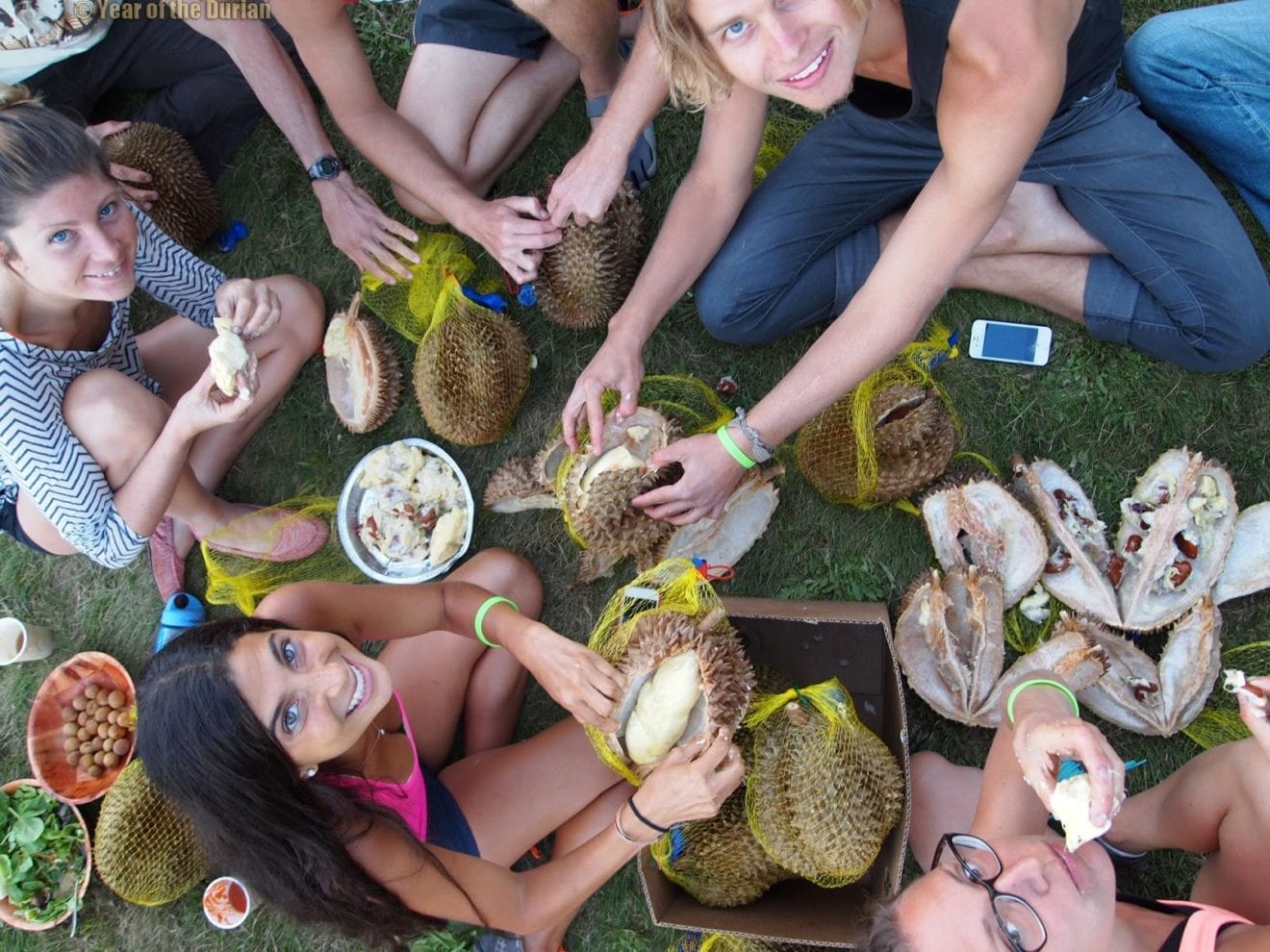
  • Chinese growers put Vietnamese durian, dragon fruit in risky oversupply

    Chinese growers put Vietnamese durian, dragon fruit in risky oversupply

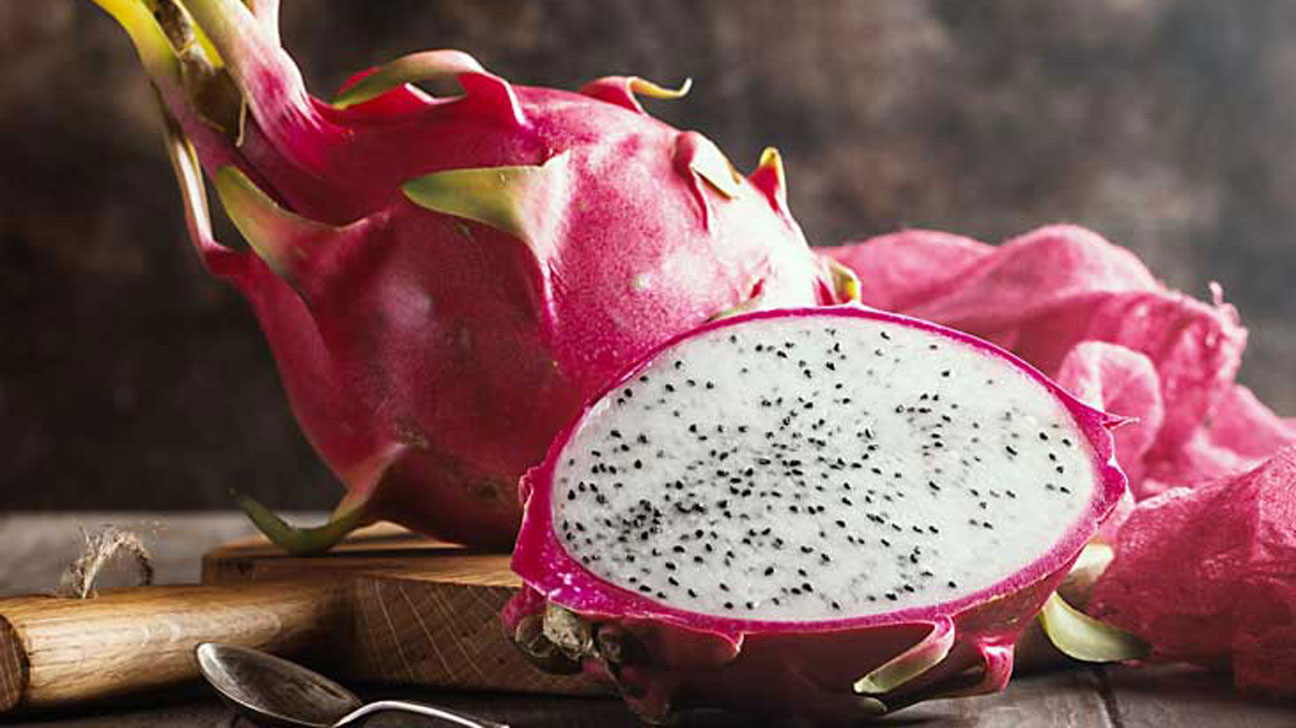
    Vietnamese dragon fruit is at risk of oversupply, while durian prices will likely plummet as China, the local fruits’ largest importer, continues growing an increasing amount of the two trees.

    Late last month, China announced its dragon fruit output reached 1.6 million tons a year, 200,000 tons higher than Vietnam’s output.

    According to Chinese customs’ statistics, Chinese demand for dragon fruit is two million tons a year.

    Regarding durian, China imported over 800,000 tons of fruit worth some US$4 billion last year.

    But the giant economy it is likely to import less this year because after years of failed experiments, the country’s farmers are finally growing the fruit successfully in China’s southern regions, according to experts.

    The Chinese Academy of Tropical Agricultural Sciences in Hainan Province reported that China’s southern provinces are growing over 2,000 hectares of durian, amounting to 45,000-75,000 tons of the fruit expected to be sold in 2024.

    Durian cultivation will also be expanded to the North, according to the academy.

    About 90% of Vietnam’s major agricultural products are exported to China.

    So the northern neighbor’s plan to ensure its own local supply of agricultural products puts key Vietnamese farm items exported to the Chinese market at risk of oversupply.

    According to statistics from the General Department of Vietnam Customs, 90% of Vietnamese dragon fruit is exported to China.

    Tran Ngoc Hiep, director of Hoang Hau Dragon Fruit Company in Binh Thuan Province said that Vietnam’s dragon fruit exports to China in the first months of this year have are already slowing under the weight of increasing supply to the north.

    In previous years, China imported more than 300 containers of Vietnamese dragon fruit every day through Vietnam’s northern border gates, Hiep said.

    But he added that the figure is now already less than 100 containers.

    Currently, Vietnamese dragon fruit prices remain high because local farmers can grow off-season fruit.

    But when Chinese dragon fruit in season, from March to September, Vietnamese dragon fruit will face the risk of oversupply and dropping prices.

    Ngo Tuong Vy, vice director of Chanh Thu Export and Import Fruit Company in Ben Tre Province, said if the quality of Vietnamese fruits could improve, they will retain the Chinese market to Chinese rivals.

    Vietnamese durian must also compete with Thai and Malaysian fruit in the Chinese market.

    Phan Thi Tra My, president of the Provisional Vietnamese Business Association in China, said Chinese demand for durian is still high, but if Vietnamese exporters continuing paying more attention to quantity than quality, they will soon find it hard to compete with Thai, Malaysian and Chinese durian.

    Vietnam currently has 246 durian growing regions that export China totaling 12,000 hectares. And 97 Vietnamese durian packing establishments are certified for official export to China.

    According to the Department of Crop Production at the Ministry of Agriculture and Rural Development, by the end of last year, Vietnam’s total durian-growing area had reached 110,000 hectares, some 35,000 hectares higher than the initial plan.

    In the first two months of this year, ass durian prices surged dramatically, many farmers in the Mekong Delta and the Central Highlands region replaced their coffee, pepper, and rice fields with durian trees.

    The department warned that the uncontrolled increase in durian acreage would lead to oversupply.

    To overcome the challenges, Dang Phuc Nguyen, general secretary of the Vietnam Fruit and Vegetable Association, asked the State to help with better planning of growing areas. He also asked the State for help in building a brand for Vietnamese durian.

    According to Nguyen, farmers should strengthen their off-season fruit production because Thailand and China cannot.

    In China, prolonged cold winters make it difficult for durian trees to bear fruit.

    “The Chinese acreage of banana, mango and dragon fruit is increasing sharply, but China still has to import large quantities of fruits when they are not in season,” he said.

    Fruit farms and traders should also further tap the domestic market, he added.

    Vietnam’s total fruit and vegetable exports in the first two months of this year increased by 17.8% year-on-year to $592 million.

    China accounted for 57.5% of all Vietnamese fruit exports, according to the Ministry of Agriculture and Rural Development’s department of agricultural products processing and market development.

  • Australian Hass avocadoes to be exported to India

    Australian Hass avocadoes to be exported to India

    The national peak avocado body has welcomed a “game changer” deal giving Australian Hass growers access to the Indian market.

    The Australian and Indian governments issued a joint statement welcoming the finalization of market access for Hass avocados.  It’s a significant boost to an industry experiencing a massive supply glut and poor returns, making it unviable for many growers.

    Avocados Australia chief executive John Tyas said the deal, alongside December’s free-trade agreement that would bring tariffs from 30 percent to zero by 2029, was monumental.

    “Having access to India along with the tariff reductions is a game changer,” Mr Tyas said.

    “We think India is going to be a great market for us to build and a great market for us to really dominate.”

    He described the deal as “massively significant”, chief executive of Avolution — Australia’s largest exporter of Australian avocados — Anthony Allen says a new market is needed.

    “It’s perfect timing in terms of the ability for the industry to move forward out of what is increased production,” he said.

    “The industry has been working on a number of export markets and this is probably one of the key ones for it actually to eventuate.”

    Avocados Australia hopes the deal will end over-supply and “glut” issues in the market, with India poised to become the world’s most populous country this year.

    “There’s a lot of people in India — nearly 1.5 billion people,” Mr Tyas said.

    “If we can get 1 per cent of people to buy Australian avocados, that’s a market of 15 million people.”

    Unlike current export markets in Singapore, Malaysia and Hong Kong, the enormous population in India means the Australian avocado industry only needs an incredibly small amount of Indians to purchase a single avocado to make a difference.

    Mr Allen said it could save Australian avocado growers from a “very dire-looking outlook”.

  • Carlsberg CEO Cees ‘t Hart to retire

    Carlsberg CEO Cees ‘t Hart to retire

    After eight years as CEO of the Carlsberg Group, Cees ’t Hart has informed the supervisory board of his intention to leave the Group by the end of Q3 2023.

    Since beginning his position at the beer giant, the company has been “significantly strengthened,” with 2022 seeing Carlsberg deliver an all-time high revenue and operating profit of DKK 70.3bn and DKK 11.5bn (approx. $1.65bn), respectively.

    In 2017, Carlsberg became one of the first ten companies – and the first brewer – in the world to introduce science-based targets aligned with the 1.5°C goal in the Paris Agreement. The company has achieved relevant progress on its sustainability targets, including a 57% reduction in carbon emissions.

    Chair of Carlsberg’s supervisory board, Henrik Poulsen, said: “Cees ’t Hart has delivered remarkable results during his time at Carlsberg…Under his leadership, the Group has navigated significant challenges, including the difficult Covid-19 years, the war in Ukraine, and the ongoing sale of Russian business. Cees leaves behind a purpose-led and performance-driven company with solid strategic, financial, organizational, and societal health.”

    Cees ‘t Hart said: “It has been a privilege leading Carlsberg the past eight years. I’m immensely proud of the organization and the results we as a team, have achieved. I’m confident the successful journey of Carlsberg will continue well into the future.”

    He continued: “Staying on board for another half a year will allow me and the team to continue delivering on our challenging plans for 2023 and accomplishing the sale of the Russian business before the summer. Thereafter, I’ll focus on some interesting non-executive roles.”

  • Krispy Kreme creates Lotus Biscoff biscuit-inspired doughnuts

    Krispy Kreme creates Lotus Biscoff biscuit-inspired doughnuts

    Airline travel might be a little unpredictable right now, but there’s one thing you can always count on: Krispy Kreme to serve up delicious doughnuts. Even if you’re not flying this month, you can still enjoy one of your favorite airplane treats at your local doughnut shop.

    We’re not talking about stale pretzels or a bag of peanuts, we’re talking about sweet and caramelly Biscoff cookies. Starting January 9, Krispy Kreme is adding three new Biscoff-flavored doughnuts.

    Krispy Kreme and Lotus Biscoff are partnering to create the first-of-its-kind cookie butter-flavored doughnut collection, which will be available for a limited time at participating Krispy Kremes nationwide. The collection includes a Biscoff Iced Dougnut, Biscoff Cookie Butter Cheesecake Doughnut, and Biscoff Cookie Butter Kreme Filled Doughnut.

    The Biscoff Iced Doughnut is an Original Glazed doughnut dunked in Biscoff Cookie Butter icing. The Biscoff Cookie Butter Cheesecake Doughnut is an Original Glazed doughnut dunked in Biscoff Cookie Butter icing and finished with a swirl of cream cheese buttercream and Biscoff crumble. The Biscoff Cookie Butter Kreme Filled Doughnut is a doughnut filled with Biscoff Cookie Butter Kreme, dunked in Biscoff Cookie Butter icing, and finished with dark chocolate icing and Biscoff crumble.

    To add to this first-class experience, any customer who purchases a Krispy Kreme Biscoff doughnut will receive a free package of Biscoff cookies just like you would on a flight, while supplies last.

    Most of the time these limited-run menus are only available at Krispy Kreme stores, but the Biscoff collection will also hit retailer shelves. If you don’t have a Krispy Kreme near you, you can find the six-pack Biscoff collection at Walmart, Kroger, Food Lion, Publix, Stater Brothers, Wakefern, and more stores. To see if the collection is available at your local grocery store, you can visit Krispy Kreme’s site.

  • Pepper export value down 7.4% in two months

    Pepper export value down 7.4% in two months

    Vietnam exported over 41,000 tonnes of pepper worth $129 million in the first two months of this year, up 35% in volume, but down 7.4% in value over the same period from 2022

    The average export price of the Vietnamese spice in February 2023 was $3,059 per tonne, a downturn of 11.1% compared to the previous month and 32.8% year-on-year, according to the Import-Export Department under the Ministry of Industry and Trade.

    During the reviewed period, its average export price stood at $3,177 per tonne, a fall of 31.4% compared to last year’s corresponding period.

    The ministry has said the global pepper market is forecast to recover due to increasing demand from importers.

  • South Korea’s first Five Guys store to open at the end of June in Gangnam

    South Korea’s first Five Guys store to open at the end of June in Gangnam

    South Korea’s first Five Guys burger restaurant is set to open in Gangnam, southern Seoul, by late June, its operator said Monday.

    The store, set to open in the bustling commercial district near Gangnam Station, will have up to 150 seats, according to Galleria Department Store owned by Hanwha Solutions.

    Established in 1986 as a Virginia-based family business, Five Guys is famous for large quantities, free peanuts and flexible options that give customers more than 250,000 possible ways to order.

    The operator said it plans to additionally open more than 15 Five Guys stores in South Korea in the next five years.

  • Fruit, vegetable exports rise 17.8%

    Fruit, vegetable exports rise 17.8%

    Vietnam’s fruit and vegetable exports in the first two months of this year increased by 17.8% year-on-year to US$592 million.

    China accounted for 57.5% of the exports, according to the Ministry of Agriculture and Rural Development’s department of agricultural products processing and market development.

    Since early February when it reopened after Covid, China has been importing large volumes of Vietnamese agricultural products like durian, jackfruit, watermelon, and sweet potato.

    Exports to Laos have tripled.

    The U.S. and Europe have also imported large volumes of Vietnamese fruits and vegetables.

    A Tien Giang Province-based company told VnExpress that its exports of durian and pomelo to the U.S. and China have been increasing steadily this year. Freight rates have decreased to pre-Covid levels, creating favorable conditions for exporters.

    Surveys in the Mekong Delta show that the prices of durian, dragon fruit, jackfruit, and sweet potato have all doubled or tripled from 12 months ago, with the durian price surging to a record high of VND190,000 ($8) per kilogram at the farm gate.

    Last year exports were worth $3.34 billion, down 5.9% from 2021, according to the agriculture ministry.

    Vietnam imported fruits and vegetables for $289 million in the first two months of this year, a 12% increase, the department said.

  • Shrimp exports set for difficult year

    Shrimp exports set for difficult year

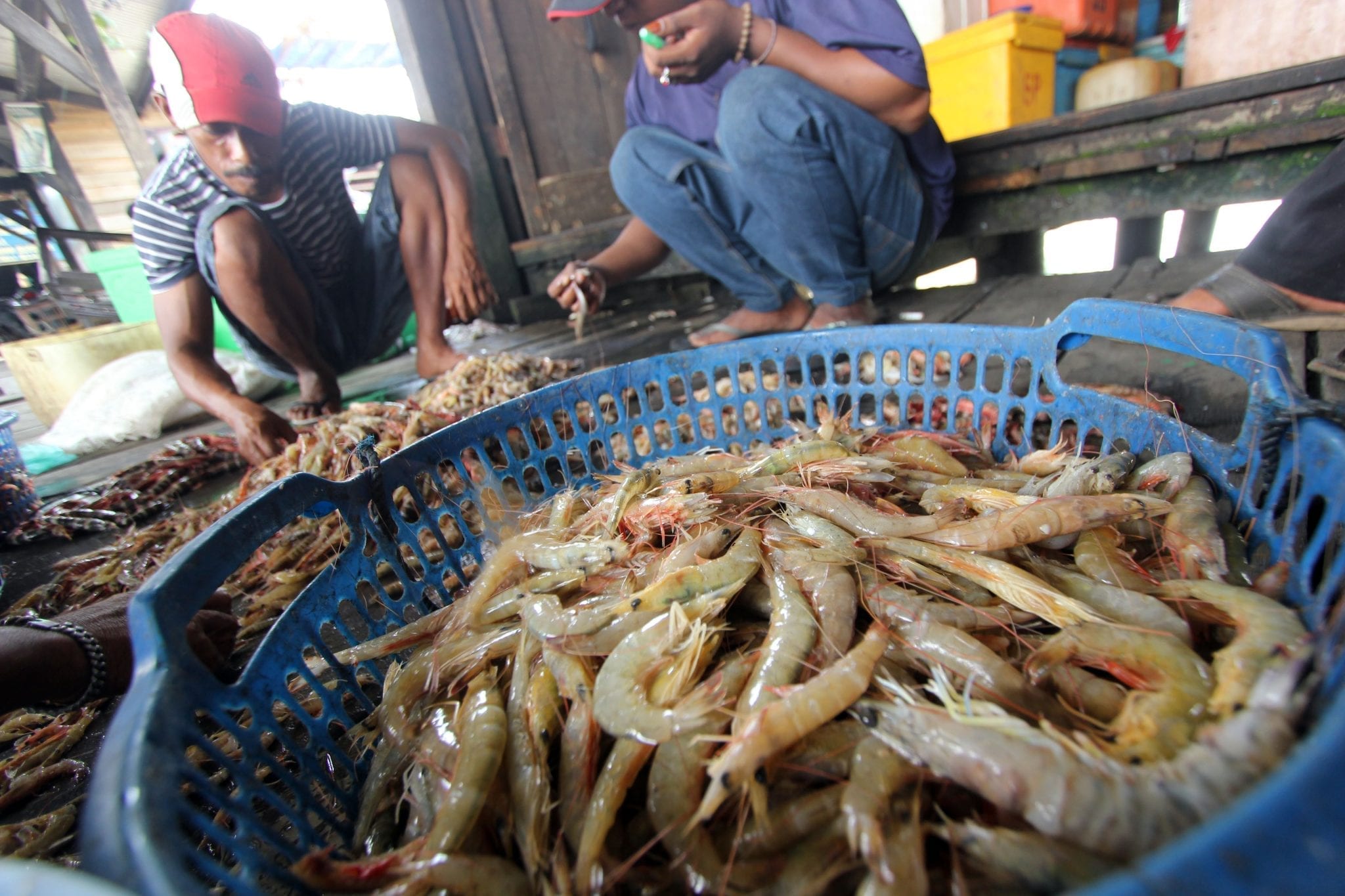
    Vietnam’s shrimp exports face challenges with prices decreasing and competition from Ecuador and India intensifying, according to the Vietnam Association of Seafood Exporters.

    Global prices have decreased since the second half of last year and are expected to fall further this year as supply rises sharply to six million tons, VASEP general secretary Truong Dinh Hoe said Friday at a shrimp industry conference.

    VASEP general secretary Truong Dinh Hoe says shrimp exporters face fierce competition from Ecuador and India this year. Photo by Anh Minh

    The U.S. has extensive shrimp inventories, and so is sure to reduce imports in the first half of this year.

    When it increases imports in the second half, it will likely opt for small shrimp from Ecuador because of its abundant supply and geographical proximity.

    Vietnamese exports to European markets will be affected by the economic turmoil there.

    Le Van Quang, chairman of Minh Phu Seafood Corp., said Vietnamese shrimp costs are too high due to low aquaculture productivity, making it difficult to compete with Ecuador and India.

    “Our shrimp farming success rate is less than 40%. It is over 90% in Ecuador and more than 60% in India.”

    According to the Directorate of Fisheries, the shrimp output this year is likely to be 1.08 million tons, and exports will fetch US$4.3 billion.

    But VASEP forecast exports to be worth only $4 billion out of total seafood exports of $10 billion.

    Last year shrimp exports had risen by 11% to $4.3 billion.