Category: General

Retail News Asia is committed to providing both local and global retailers with the latest General Retail news throughout the Asian market. This on a daily base.

  • TikTok says it is close to announcing its sale following the departure of its CEO

    TikTok says it is close to announcing its sale following the departure of its CEO

    When TikTok hired Kevin Mayer to be CEO in May, some viewed it as a ploy, a stunt if you will. That was due to the fact that the short-form video app was being attacked by the U.S. government for having a parent corporation based in China and Mayer had been working for Disney’s streaming service, Disney+. Yes, nothing screams Americana more than Disney and its iconic cartoon characters like Mickey M-O-U-S-E, Donald Duck, and Goofy.

    But as the great Robert Zimmerman (you probably know him as Bob Dylan) once sang, “you don’t need a weatherman to know which way the wind blows.” Mayer knew that his days at TikTok were probably numbered since U.S. President Donald Trump was forcing ByteDance, the Chinese firm that owns TikTok, to divest the latter’s U.S. operations by September 15th or face a nationwide ban. Mayer composed a letter to his staff before departing in which he said that the CEO’s role at TikTok was expected to change dramatically. The Wall Street Journal saw a copy of the note which said, “I understand that the role that I signed up for—including running TikTok globally—will look very different as a result of the U.S. administration’s action to push for a selloff of the U.S. business. I’ve always been globally focused in my work, and leading a global team that includes TikTok U.S. was a big draw for me.”

    The plan was for Mayer to announce his departure at the same time TikTok announced a sale. However, word of Mayer’s intentions leaked overnight forcing him to come clean about his intentions earlier than he had hoped. Several ByteDance staffers said that they were stunned by Mayer’s move and said that they didn’t see it coming.

    As with many Chinese tech companies trying to operate in the U.S., the current administration accuses TikTok of being a national security threat because it might pass along to Beijing data obtained about U.S. consumers and corporations. ByteDance says that TikTok uses only two servers to store personal data with the main one in the U.S. and a backup server housed in Singapore.

    But Mayer’s departure isn’t even the top story involving TikTok this morning. That’s because CNBC reports that a deal to sell the app’s operations in the U.S., Canada, Australia, and New Zealand could be announced as soon as next week. Those in the know say that Microsoft and Oracle are the leading contenders to close on a deal and that a final decision has yet to be made. Earlier, Twitter had explored making a bid as did a partnership made up of Walmart and SoftBank. The value of any deal could be in the range of $20 billion to $30 billion, but sources say that a final price has not been agreed on.

    In an update to its story, CNBC quoted Walmart as saying that it might partner with Microsoft on a deal for TikTok. W Walmart spokesman said, “The way TikTok has integrated e-commerce and advertising capabilities in other markets is a clear benefit to creators and users in those markets. We believe a potential relationship with TikTok U.S. in partnership with Microsoft could add this key functionality and provide Walmart with an important way for us to reach and serve omnichannel customers as well as grow our third-party marketplace and advertising businesses. We are confident that a Walmart and Microsoft partnership would meet both the expectations of U.S. TikTok users while satisfying the concerns of US government regulators.”

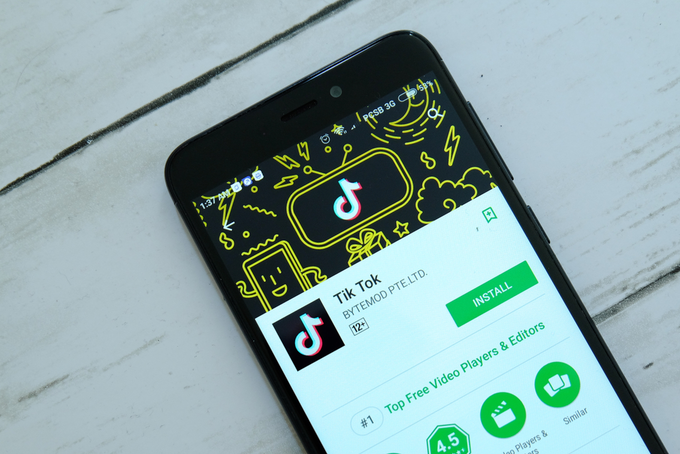
    TikTok has become very popular and was one of the top apps on the App Store and the Google Play Store even before the global pandemic helped pump up its numbers even more. With a large number of teens and pre-teens stuck inside during the peak of the summer, many turned to the app to pass the time. Users can record videos of 15 seconds or 60 seconds in length and content includes lip-syncs, dances, pranks, comedy, and more. In the states, TikTok has 100 million users with 800 million using the app worldwide. It has been installed more than 2 billion times from the App Store and the Google Play Store.

    If no deal is reached and the U.S. government bans TikTok, 1,500 Americans will lose their jobs. TikTok also noted that as many as 10,000 Americans would lose the opportunity to be considered for new job opportunities working for the app.
  • 7-Eleven Malaysia keeps profit levels as before Covid-19 outbreak

    7-Eleven Malaysia keeps profit levels as before Covid-19 outbreak

    Convenience-store chain 7-Eleven Malaysia has maintained its profitability despite the impact of the coronavirus pandemic.

    Profit for the first half of the current financial year from the brand’s convenience-store and pharmaceutical businesses hit US$5.8 million and $1.4 million respectively. The group’s consolidated profit after tax for the half-year was $3.35 million.

    The business remained healthy despite the Covid-19 restrictions that enforced restricted hours and the temporary closure of some stores. Stores are still unable to trade 24 hours.

    While the business remained profitable, most product categories recorded lower revenues, with the exception of tobacco, which grew 22.7 percent during the reporting period.

    The group expects to explore further opportunities for growth in the second half of its financial year as trading conditions gradually recover.

  • Cebu Pacific strengthens contact info database

    Cebu Pacific strengthens contact info database

    The Philippines’ leading carrier, Cebu Pacific has enhanced its Manage Booking portal to allow passengers to easily update their contact information after booking has been finalized.  This is available for both passengers who booked online or through a travel agency.

    “Now more than ever, we have seen how important it is for airlines to have the accurate passenger contact information – not only to keep passengers updated on flight changes but also to support contact tracing efforts,” said Candice Iyog, CEB VP for Marketing & Customer Experience.

    This enhancement will provide support to local government units who require passenger details prior to the flight.

    “We believe with this multi-layer approach to safety and convenience, we will be able to restore trust and confidence in air travel for everyone”, added Iyog.

    Beginning today, passengers may already conveniently update their contact information anytime, from post-booking until check-in, through CEB’s Manage Booking portal on the website.

    Fill out necessary details on the manage booking page, then select which flight you’d want to modify. Click on “Update Guest Details” and click continue until done.

  • AirAsia X to implement further payroll cut next month as losses swell

    AirAsia X to implement further payroll cut next month as losses swell

    AirAsia X Bhd’s net loss for the second quarter ended June 30, 2020 (2QFY20) widened to RM305.24 million, 47.4% more than the RM207.11 million it recorded a year ago as the airline bore the full brunt of travel restrictions implemented to curb the Covid-19 pandemic.

    AAX sees more turbulence ahead due to uncertainties surrounding the lifting of travel restrictions, which have grounded most of its aircraft fleet.

    The low-cost carrier revealed that its severe liquidity constraints persisted. “In the short term the company will need to seek agreement with major creditors to restructure outstanding liabilities, which have accrued during the period since the start of the Covid-19 pandemic, in order to continue as a going concern,” AAX said in its quarterly financial result announcement.

    Meanwhile, the carrier continues to seek payment deferrals and concessions from its suppliers, lessors, and lenders. “Further payroll reductions will be implemented in the next month to reflect the significantly lower level of operations both at the current time and also when the company is able to start operating again,” it added.

    However, the quarter’s performance was an improvement over the preceding quarter’s in which the long-haul low-cost carrier posted its largest-ever net loss of RM549.7 million due to large foreign exchange losses and losses from the hedges against higher crude oil prices.

    Quarterly revenue shrank to barely RM91.44 million compared with the RM1.01 billion reported a year ago as AAX operated only 16 scheduled flights throughout the three months versus 4,824 a year ago.

    Its total cash balance contracted almost 30% to RM252.04 million from RM357.96 million at the end of last year. Deducting pledged deposits, its cash pile stood at RM211.94 million, a drop from RM307.85 million previously.

    The airline’s current liabilities ballooned by nearly 31% to RM3.38 billion from RM2.58 billion as at end-2019. The spike in its current liabilities was mainly attributed to trade and other payables, which rose to RM1.31 billion from RM823.81 million.

    “AAX will not be able to restart scheduled operations until international borders reopen and, in recognition of the current degree of uncertainty and the timing of the lifting of restrictions, the company has stopped selling tickets for future travel dates,” said the carrier.

    Shares in AAX closed unchanged at 6.5 sen today, giving the airline a market capitalization of RM269.63 million. Year-to-date, the counter has plummeted by more than half from 15.5 sen.

  • Vietnam suffers most phishing attacks on small businesses in Southeast Asia

    Vietnam suffers most phishing attacks on small businesses in Southeast Asia

    Vietnam led Southeast Asia in the number of phishing attacks targeting small enterprises in the first half of this year. There were more than 1.6 million attacks on small and medium-sized enterprises with 50-250 employees in the region, up 39 percent from the same period last year, Russian cybersecurity firm Kaspersky Lab said a report it released on Tuesday.

    Vietnam accounted for 464,300, followed by Indonesia (406,200) and Malaysia (269,500). Singapore had the least number of attacks, but the number of cases was up 60.5 percent. On a global scale, Brazil topped followed by Russia, France, Columbia, and the U.S.

    The most common scams included using information about the novel coronavirus as bait, swindling people by offering to sell masks, seeking donations for vaccine research, and offering relief payments.

    The report also mentioned several other common phishing tricks such as evaluating job performance, important announcements from administrators, requesting emergency password checks, and urgent press releases.

    Yeo Siang Tiong, Kaspersky’s general manager for Southeast Asia, said the surge in attacks in Southeast Asia was due to the fact many companies let employees work from home since the end of March, resulting in a large number of users clicking on an infected link or attachment.

    Vietnam recorded 2,017 cyber attacks on its information systems in the first half of 2020, down 27.1 percent year-on-year, according to the Ministry of Information and Communications’ Department of Information Security.

  • Vietnam suffers most phishing attacks on small businesses in Southeast Asia

    Vietnam suffers most phishing attacks on small businesses in Southeast Asia

    Vietnam led Southeast Asia in the number of phishing attacks targeting small enterprises in the first half of this year.

    There were more than 1.6 million attacks on small and medium-sized enterprises with 50-250 employees in the region, up 39 percent from the same period last year, Russian cybersecurity firm Kaspersky Lab said a report it released on Tuesday.

    Vietnam accounted for 464,300, followed by Indonesia (406,200) and Malaysia (269,500). Singapore had the least number of attacks, but the number of cases was up 60.5 percent. On a global scale, Brazil topped followed by Russia, France, Columbia, and the U.S.

    The most common scams included using information about the novel coronavirus as bait, swindling people by offering to sell masks, seeking donations for vaccine research, and offering relief payments.

    The report also mentioned several other common phishing tricks such as evaluating job performance, important announcements from administrators, requesting emergency password checks, and urgent press releases.

    Many companies let employees work from home since the end of March, resulting in a large number of users clicking on an infected link or attachment.

    Vietnam recorded 2,017 cyber attacks on its information systems in the first half of 2020, down 27.1 percent year-on-year, according to the Ministry of Information and Communications’ Department of Information Security.

  • Thai retailers downsizing, refocusing e-commerce

    Thai retailers downsizing, refocusing e-commerce

    Thai F&B and experiential retailers are likely to open fewer stores or downsize in scale for the remainder of the year following an unprecedented hit to the industry brought on by the coronavirus pandemic.

    The sobering view of Thai retail’s prospects for the remaining months of this year came out of a new CBRE research report conducted in May, finding a high degree of uncertainty for the foreseeable future.

    “What we have been seeing in the past three months are brand-new challenges that took everyone by surprise,” said CBRE Thailand head of advisory & transaction services – retail Jariya Thumtrongkitkul.

    “For around two years, we have been saying that those who cannot adapt quickly enough to the shifting retail landscape will not survive, but this is on another level. Retailers have to change their business operations not only to match the drastic drop in footfall but to accommodate a new way of shopping.”

    According to the Bank of Thailand, figures from the May retail sales index show a year on year drop of 34 percent, much of which is attributable to a decline in the sale of vehicles and fuel. While final figures are as yet unavailable, a general drop is expected in the sales number for both food and non-food retailers in the territory for the period in question.

    Adaptive strategies from both landlords and retailers have attempted to restore a healthy business outlook, including flexible rental terms and various sales and marketing strategies such as longer grand sales events and frequent mall activities.

    The CBRE report suggests that eventually, resizing existing rental space will emerge as an increasingly important approach for tenants to become more cost-effective. It expects that e-commerce penetration will no longer be optional but a must for Thai businesses to survive.

  • Apple Korea makes US$84 million offer to ease anti-competitive concerns

    Apple Korea makes US$84 million offer to ease anti-competitive concerns

    Apple’s South Korean unit has offered 100 billion won (US$84 million) worth of programs for consumers and mobile phone carriers, in an effort to address concerns about the company’s alleged violation of competition law.

    Apple Korea has been under probe by the Korea Fair Trade Commission (KFTC) over allegations that it had required the country’s three mobile operators — SK Telecom Co, KT Corp and LG Uplus Corp — to pay the cost of television advertisements and warranty service for its iPhones.

    The KFTC has said Apple Korea holds a clear advantage over local mobile carriers and that handing over the cost of advertisements is only another means to squeeze their profits.

    Under the programs, Apple Korea promised to spend $33.7 million to build a research-and-development center for local small and medium-sized firms in the smartphone-manufacturing sector.

    Another $21 million will be spent to give consumers 10-per-cent discounts on repairs and a smartphone insurance service, the KFTC said.

    Apple Korea will spend another $21 million to set up an education center to train professionals in the sector of information, communication, and technology, the KFTC said, and give mobile carriers more say in sharing their advertising costs and approving their ads.

    Song Sang-min, director-general handling the issue at the KFTC, said such measures are expected to help reduce the advertising burden on mobile carriers.

    Apple Korea had unilaterally ordered mobile carriers to set ad costs, but the measure will help Apple Korea and mobile carriers discuss how to share such costs, Song said.

    The KFTC said relevant parties will discuss whether to accept Apple Korea’s proposal by October 3.

    If relevant parties decide to accept the measures by Apple Korea, the KFTC will finally endorse them.

    South Korean law allows a company accused of anti-competitive practices to state a correction scheme without deliberating whether those practices violate the country’s competition law.

    In a statement, Apple pledged to step up cooperation with its business partners and consumers in South Korea.

    “We are looking forward to deepening our relationships in Korea by enhancing support for education, small businesses and facilitating future generations with new skill sets,” the statement said.

  • AirAsia’s 1Q e-commerce sales leap 118%

    AirAsia’s 1Q e-commerce sales leap 118%

    Budget airline AirAsia Group Bhd saw revenue from its e-commerce platform, AirAsia.com, rose 118% year-on-year in the first quarter of this year as it rolled out new offers, promotions, flights and hotel bundle packages.

    “As travel continues to gradually resume, more activities are authorized… which in turn will support the growth of our non-airline business divisions, particularly in the lifestyle, e-commerce and media verticals,” said AirAsia.com chief executive officer Karen Chan in a statement today.

    AirAsia anticipates that its airline and ancillary revenues will gradually stabilize as non-airline revenues become a key driver of growth and business priority.

    “In the future, we foresee our non-airline revenues will outperform our airline performance which is why our focus is on offering innovative products that encompass travel, lifestyle, e-commerce and media verticals, in both the B2B and B2C segments,” said Chan.

    “While Asean is our home and domestic travel is our short-term focus, we look forward to the reopening of international borders to realize the potential of AirAsia.com,” she added.

    In anticipation of international borders reopening soon, Chan said AirAsia is in final stages of discussions with key international airlines to connect their European and MEA networks directly with AirAsia’s vast Asean network.

    “These strategic partnerships will complement our existing partnership with Kiwi.com, which provides a virtual interlining and connectivity optimization engine to offer a one-stop-shop, best-price-guaranteed service for our customers.”

    The airline wants to position AirAsia.com as a leading one-stop travel and lifestyle e-commerce platform in Asean, offering products from flights, hotels, travel activities, shopping and more.

    Chan said AirAsia has always regarded Asean as its playground, connecting its 640 million people to 160 destinations across Asia and the Pacific. “But with the pandemic still at large and continued restrictions to cross-border travel, we are looking at creative ways to overcome these limitations.”

    For now, the focus for AirAsia.com is to promote domestic travel until international borders reopen and travel restrictions are relaxed.

    “Given AirAsia’s dominant market position (with over 73% market share in capacity in Malaysia), we are using our position of strength to stimulate domestic air travel where there is demand.

    “Going back to our DNA which is all about making travel affordable for everyone, we will continue to innovate with more exciting products, leveraging on our one-stop travel shop ecosystem and focusing on our business divisions which are most relevant given current market conditions,” said Chan.

    “Based on our recent market survey, close to 45% of travelers want to travel immediately post lockdown. Flight searches on our website have increased by more than 150% post-hibernation period and as of June 2020, AirAsia.com receives 1 million daily active users.

    “Our domestic travel promotions have been very well-received. We sold over a million seats group-wide in July and we continue to ramp up capacity. With restrictions on activities being lifted, we hope to achieve a load factor of 70%-80% by the third quarter of 2020,” she said.

    Chan noted that the aviation industry, being one of the heaviest impacted by the Covid-19 pandemic, is undergoing a period of consolidation — fare rationalization will be a natural outcome.

    “We continually review our products and innovate to best meet our customer’s needs, at unbeatable prices. We survived for 18 years in a hyper-competitive industry and became the leader of the low-cost carrier segment by providing the best prices, best Asean connectivity and best customer experience.”

    Under its recently-launched Unlimited Flight Pass in Malaysia and Thailand, AirAsia sold more than 200,000 passes and has received many requests for the product to be introduced in other markets.

    “We are closely monitoring the domestic travel situation in all of our markets (that AirAsia operates) and are looking forward to extending the Unlimited Flight Pass to other markets such as Indonesia and the Philippines when flight restrictions have eased,” said Chan.

    To date, AirAsia.com partners close to 400 hotel chain properties and over 100 independent hotels across Malaysia, Thailand and Indonesia.

    In Malaysia, AirAsia.com is working closely with the Malaysian Association of Hotels to collaborate with more hotels, and hopes to increase its partnerships with independent hotels in Kuala Lumpur, Langkawi, Penang, as well as Sabah and Sarawak.

    AirAsia shares closed up one sen or 1.52% at 67 sen today, bringing a market capitalization of RM2.24 billion. A total of 11.91 million shares were traded.

  • Microsoft says that Apple’s punishments against Epic will hurt game developers and players

    Microsoft says that Apple’s punishments against Epic will hurt game developers and players

    Microsoft is taking sides in the court battle between Epic Games and Apple. As you might recall, Epic added a screen to its hit game Fortnite that allows players, even those who installed the game from the App Store, to pay for in-app purchases from the developer’s own in-app payment system. Payments made through Epic’s own payment system bypass Apple’s system from which the tech giant takes a cut of 30%. The so-called 30% Apple Tax is being investigated by regulatory agencies in the U.S. and Europe who will determine whether it is anticompetitive.

    For now though, the battle between Apple and Epic is solely over whether Apple has the right to punish Epic by removing Fortnite from the App Store and closing Epic’s developer account. That will leave it unable to provide updates to iOS and Mac users although those who have already installed the game on their iPhone can continue to play. Apple says that it will allow the game to return and give the developer its account back, but only if Epic shuts its in-app payment portal. Epic has sued and seeks a temporary restraining order (TRO) that would block Apple from removing Fortnite and closing Epic’s developer accounts until the issue can be adjudicated.

    Microsoft filed a declaration with the court on Sunday in which a Microsoft senior engineer said that closing Epic’s developer account would prevent it from offering its Unreal Engine. The latter is a game engine for developers and is a framework for the creation of 3D graphics. It is licensed to game developers in return for 5% of sales although that fee is waived if a game is published in the Epic Game Store. Starting last May, Epic waived its portion of the fees for games developed in Unreal Engine until a developer earns his first million dollars. A declaration is a written statement sworn to be true under penalty of perjury by any person who has knowledge about the issues in a court case.

    Kevin Gammill, Microsoft’s general manager for Gaming Developer Experiences, said in the declaration that “If Unreal Engine cannot support games for iOS or macOS, Microsoft would be required to choose between abandoning its customers and potential customers on the iOS and macOS platforms or choosing a different game engine when preparing to develop new games. Gammill went on to say that, “Apple’s discontinuation of Epic’s ability to develop and support Unreal Engine for iOS or macOS will harm game creators and gamers.” And the Microsoft GM points out that there are very few alternative gaming engines with the same functionality and a large number of features.

    Epic says that the punishments imposed by Apple will produce an impact affecting more than the Unreal Engine. Epic’s vice president of engineering, Nicholas Penwarden, says that the developer has received “numerous inquiries and expressions of concern” from companies that have licensed the Unreal Engine.

    Besides filing the suit against Apple, Epic has filed a similar suit against Google. The latter’s Android app storefront, the Google Play Store, also takes a 30% cut of in-app payments for Google. The difference is that while iOS users are locked into using the App Store to find and install apps, Android users are allowed to sideload apps from third-party app stores.

    Apple’s strategy in court is to show that Epic has created this problem by itself and that it can be easily fixed by following the agreement that Apple has all developers sign. Apple has threatened to close Epic’s development account on August 28th. On the same date, the developer will lose access to iOS and Mac developer tools.

  • Top Chinese retailtech enterprises revealed

    Top Chinese retailtech enterprises revealed

    Notable Chinese retailtech firms are small in size, heavy on IT personnel, and largely located around the Beijing-Tianjin-Hebei and Yangtse Delta region, according to a new report.

    The study was released by international audit, tax, and advisory firm KPMG in partnership with the China Chain Store & Franchise Association to identify the top 50 high-growth retail tech enterprises in China. It recognizes firms that work to bring forward digitalization, intelligence and integration.

    The findings showed that consumer technology applications are more concentrated on front-end interaction with consumers, marketing and transactions, consumer operation, and smart technology companies.

    Most of the companies shortlisted for the report had no more than 300 employees.

    Technical personnel accounts for more than 60 percent of human resources in more than half of these firms, and about half of the companies have been operating for less than five years.

    “The association and KPMG have worked together to release the list of China’s leading 50 retailtech enterprises, after spending six months studying the founding team of candidate enterprises on a one-by-one basis over six criteria, namely: technology and business model innovation; empowering reform of the traditional retail sectors; financial health; valuation and capital market recognition; target market acceptance and potentials under market segmentation; team capabilities and corporate innovation mechanism; and business model innovation and sustainability,” said China Chain Store & Franchise Association secretary-general Kevin Peng.

    At the end, 64 representative Chinese retailtech firms were shortlisted, including 50 leading enterprises and 14 emerging enterprises.

    “We hope this list can offer some references to chain stores and retail brands so that their digital transformation journey can be smoother and more successful.”

    “The retailtech industry is treading the same path of evolution as China’s commerce, the two have formed a synergy for mutual growth,” said KPMG China partner and head of consumer retail Jessie Qian.

    “Enterprises in technological innovation and retail industries have worked hard to accumulate a wealth of technological applications and real-life cases, which can serve as a role model for enterprises building their own digital capabilities.”

    “The retail industry is innovating and reforming in the face of digitalization as consumers are changing their lifestyle,” said KPMG China partner and advisory head of consumer and retail sector, Michael Mao. “New retail technologies and the retail businesses are increasingly integrated, as new consumption needs are being explored and new operational models are emerging.

    “During the transformation, retailtech enterprises, especially start-ups, have played an indispensable role and they are upgrading themselves when engaging with their end-users. Many technological enterprises have evolved from software vendors of a single solution to business partners working with their end-users to develop solutions tailored for specific scenarios, others not only provide technical support for hardware and software but also assist retail enterprises in integrating technological transformation at the IT level with internal reform and optimization of organizational structure.”

  • AirAsia.com, Agoda announce strategic partnership

    AirAsia.com, Agoda announce strategic partnership

    AirAsia.com, Asean’s fastest-growing travel and lifestyle e-commerce platform, and Agoda, the world’s leading digital travel platform, have announced a strategic partnership to spur travel activity in Southeast Asia and strengthen AirAsia’s super app offering.

    The partnership between the two major online travel service providers in the region harnesses the synergistic strengths of both digital platforms, it said in a statement here, today.

    Through the sharing of flight and hotel inventories, travelers will gain access to a more extensive multi-product selection, enjoy greater convenience and benefit from superior value.

    Initiatives from the collaboration include travel bundles, membership privileges, as well as joint product marketing. Customers of AirAsia.com can now enjoy more variety with over 600,000 Agoda properties, combined with AirAsia’s great value fares by booking through SNAP — offering flight and hotel packages with the best price guaranteed.

    The partnership with Agoda is part of AirAsia group-wide strategy to revitalize travel in anticipation of the reopening of borders in Southeast Asia in the near future, AirAsia Group group chief executive officer (CEO) Tan Sri Tony Fernandes said today.

    “We are taking the opportunity during this downtime to work innovatively with strategic partners like Agoda, so that we can better serve our guests’ travel and lifestyle needs. There are more strategic ventures in development, which we look forward to announcing when the time is right.”

    Agoda CEO John Brown said: “The public’s appetite for travel is still strong, and we believe that our collaboration with AirAsia will help take the hassle out of travel by helping travelers easily find great value deals as they venture out again.”

  • Fancl Asia sale could fetch US$1bn for Hong Kong owner

    Fancl Asia sale could fetch US$1bn for Hong Kong owner

    Fancl Asia distributor CMC Holdings is reportedly looking to sell the business in a deal that could be worth as much as US$1 billion.

    According to a Reuters report, Hong Kong-based CMC, owned by Chris Chan, has engaged Morgan Stanley to approach private-equity investors and other prospective buyers for the business, which operates more than 200 stores in Greater China and Southeast Asia. The company effectively accounts for the majority of the Japanese cosmetics company’s brick-and-mortar business outside its home market.

    Fancl Asia achieved pretax earnings of about US$65 million in 2018 and last year, on turnover of between $250 million and $300 million. Asia represents a significant growth opportunity for cosmetics companies, accounting for 53 percent of the world’s skincare market and is projected to achieve 5 percent annual growth in the coming years.

    According to a Reuters source, Fancl Asia will be sold via a two-part auction process, with initial bids scheduled to be received by the end of September.

    Morgan Stanley, CMC, Fancl and Chan all declined to comment to Reuters which did not identify its source due to confidentiality reasons.

    About 80 percent of the sales by Fancl Asia are in Greater China, where retailing has been seriously affected this year due to Covid-19-related lockdowns.

    Sources have confirmed any sale of the business would not affect the distributorship contract with the Japanese skincare specialist brand, which has six years to run in China and 10 in the rest of Asia.

  • TikTok to battle executive order banning U.S. firms from having transactions with the app

    TikTok to battle executive order banning U.S. firms from having transactions with the app

    Short-form video app TikTok will begin a legal challenge to President Donald Trump’s campaign to ban the popular app in the states. TikTok has over 100 million users in the U.S. and has been installed over 2 billion times worldwide from the App Store and the Google Play Store. Favored by teens, TikTok has given bored kids something to do while stuck at home during the pandemic. Content on TikTok lasts 15 or 60 seconds and includes members lip-syncing to hit songs, dancing, doing comedy bits, and protesting hot button issues.

    An executive order signed by Trump on August 14th ordered TikTok’s Chinese based parent DanceByte to sell off its U.S. operations in 90 days. In his order, Trump said that there is “credible evidence that leads me to believe that ByteDance … might take action that threatens to impair the national security of the United States.” Some U.S. companies that have announced an interest in buying the app’s U.S. operations include Microsoft, Oracle, and Twitter. Apple was rumored to have an interest in TikTik but later denied it. Trump has hinted that any purchase of TikTok by a U.S. company might need to include a payment to the U.S. government adding up to a “substantial portion” of the transaction amount. Considering that TikTok’s value has been estimated at a figure as high as $150 billion, the U.S. portion of the business alone might generate a large sum for the U.S. government.

    TikTok plans on challenging an earlier executive order signed by the president on August 6th that requires Commerce Secretary Wilbur Ross to draw up a list of transactions involving ByteDance that should be banned after 45 days. The order relied on the International Emergency Economic Powers Act and thus deprived it of due process. TikTok also will challenge the White House’s defining TikTok as a national security threat.

    However, even if ByteDance is able to challenge the August 6th order, it will still have to divest itself of TikTok’s U.S. operations or face a ban. That’s because the August 14th order does not face a judicial review. Under the earlier order, U.S. companies could be blocked from advertising on the site, TikTok employees in the states might not be allowed to get paid, and landlords might even be forced to evict TikTok workers from any property they leased or rented to them. Additionally, the U.S. could force TikTok to be defended by attorneys from outside of the country.

    Earlier this month, TikTok said that it might fight back against the Trump administration by arguing that the executive order was rushed out, blindsiding the company. Normally, a company being targeted by the Feds receives a subpoena and has a confidential meeting with the DOJ. Where TikTok plans on filing its lawsuit as soon as Monday is unknown. While the company previously said that it would explore its legal options, employees were said to be considering their own separate lawsuit.

    If TikTok is banned in the U.S., there could be some backlash by users of voting age who might feel compelled to vote this November. Meanwhile, other apps have already started to debut features similar to TikTok. For example, Instagram has already launched Reels, and a new app similar to TikTok called Clash was released months ahead of expectations.

    For those wondering whether the president has the authority to issue the executive orders, White House press secretary Kayleigh McEnany said that a 1977 law allows the president to regulate interstate commerce to safeguard the country from unusual events. McEnany said, “The administration is committed to protecting the American people from all cyber threats.” She noted that apps like TikTok “collect significant amounts of private data on users.”

  • The Rolling Stones planning retail store opening on Carnaby St

    The Rolling Stones planning retail store opening on Carnaby St

    Legendary British rock band The Rolling Stones are opening their first flagship store in London next month.

    The RS No. 9 Carnaby exclusive fashion and merchandise store is launching in Soho, a destination famous for its association with 60s-era rock music culture. The shop will open in partnership with music & fashion merchandising label Bravado and jointly curated by the two parties.

    “Soho has always encapsulated Rock ’n’ Roll so Carnaby Street was the perfect spot for our own store,” said the Rolling Stones.

    “We are confident this exciting project that our friends at Bravado have created will be an unrivaled experience for everyone to come to London and enjoy.”

    “With this innovative partnership, the Rolling Stones add yet another cultural touchpoint to their rich legacy,” said Bravado CEO Mat Vlasic.

    “RS No. 9 Carnaby is the result of years of planning and decades of building one of the world’s most recognized brands. It creates a destination where fans can connect and immerse themselves in the music, style and spirit of one of the world’s most iconic and beloved bands.”