Category: General

Retail News Asia is committed to providing both local and global retailers with the latest General Retail news throughout the Asian market. This on a daily base.

  • TikTok could be forced to stop operating in the U.S. following a hearing scheduled for next month

    TikTok could be forced to stop operating in the U.S. following a hearing scheduled for next month

    a U.S. judge said today that he will hold a hearing on November 4th-the day after election day-to decide whether the U.S. government can ban transactions with TikTok. The popular short-form video app is owned by ByteDance, a Chinese manufacturer that the Trump administration fears is passing on personal and corporate data to Beijing. An executive order signed by the president in August ordered ByteDance to divest itself of TikTok’s U.S. operations or have it removed from app stores in the states.

    At first, the president gave a thumbs up to a deal that would create a new company called TikTok Global that would be 80% owned by ByteDance and 20% owned by U.S. firms Oracle and Walmart. The plan was for TikTok Global to go public via an IPO. Since the president had earlier mused about the U.S. Treasury getting paid for the country’s participation in a TikTok deal, we wonder how the distribution of the shares would be handled with millions of dollars of possible profits at stake. Talks between all of the parties involved continuing.

    Meanwhile, a preliminary injunction issued by U.S. District Judge Carl Nichols on September 27th prevented the U.S. government from forcing the Apple App Store and Google Play Store from removing their listings for TikTok. The latter is not even close to being out of the woods in the states. First of all, the current injunction is temporary and another Trump-signed executive order against TikTok and ByteDance takes effect on November 12th. This order will shut down TikTok in the U.S. if there is no deal to divest the popular app by then. According to a schedule released by the court, no ruling on any legal matter before the court in relation to TikTok will be issued until late next month at the earliest.

    What’s holding up the deal are questions about majority ownership of the new company; additionally, China needs to approve the transaction and the country now bans the export of Chinese-made algorithms to other countries. TikTok uses such an algorithm to determine what video subscribers can see. This technology reportedly would not be included in any deal between ByteDance, Oracle, and Walmart.

    TikTok is beloved by many teens who use the app to create 15-second and 60-second videos of lip-synchs, dances, pranks, and more. During the pandemic, teens stuck inside their homes turned to the app to give them something to do. In the states, TikTok has 50 million active daily users and 100 million active monthly users; the latest data from app analytical firm Sensor Tower reveals that TikTok was the top-grossing app worldwide during the third quarter. It also was the most downloaded app on iOS and Android during the three months that ended in September. Consumer spending on the app rose 800% on an annual basis from July through September.

    As with most Chinese tech firms that operate some sort of business in the states, the U.S. government considers TikTok and it’s parent company to be national security threats because of their perceived close ties with the Communist Chinese government. There never has been any proof that these firms (such as Huawei and ZTE) have backdoors built into their products in order to obtain personal data. In the case of TikTok specifically, the fear is that 100 million Americans could be at risk of having this information sent to a server owned by the Communist Chinese government.


  • AirAsia Said to Stop Funding Indian Venture as Cash Dwindles

    AirAsia Said to Stop Funding Indian Venture as Cash Dwindles

    AirAsia Group Bhd has stopped funding its Indian affiliate as the global travel slump leaves the Malaysian group struggling to support a sprawling empire of no-frills airlines, people familiar with the matter said.

    AirAsia India Ltd’s future may now depend on Indian conglomerate Tata Group, its majority shareholder, which has provided emergency funding but has yet to commit to a full rescue, according to the people, who asked not to be named discussing a confidential matter.

    The airline isn’t at any immediate risk of folding, the people said. India’s aviation minister said over the weekend that AirAsia was shutting up shop in the South Asian nation, though his office later suggested the comment was taken out of context.

    AirAsia India declined to comment, as did a representative for Tata Group. AirAsia Group didn’t respond to requests for comment after usual office hours.

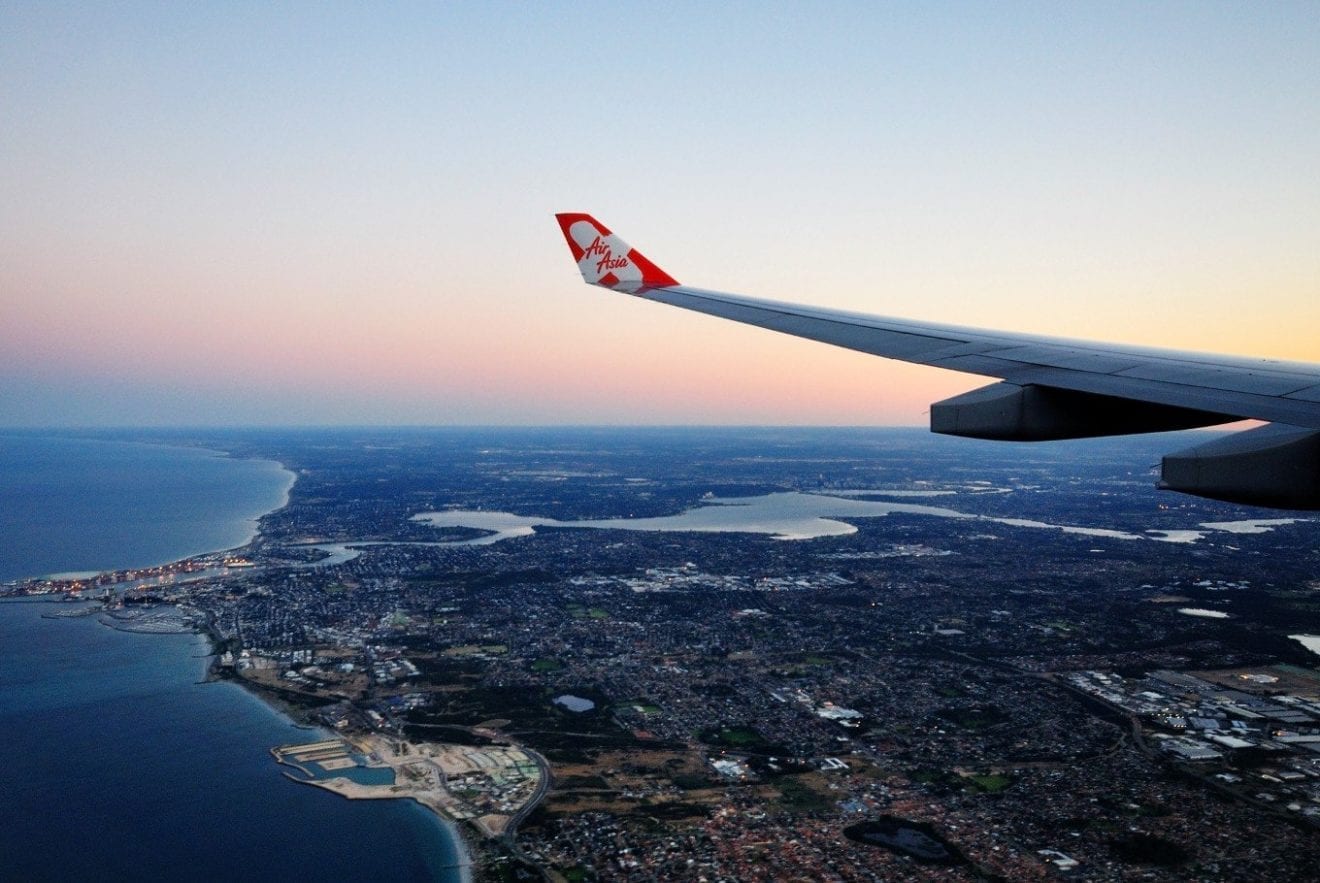
    AirAsia said earlier Monday that its Japanese arm will cease flying immediately as the coronavirus outbreak continues to roil the airline industry. Once the poster child of the region’s revolution in low-cost travel, the group is seeking as much as RM2.5 billion to steer its way through the crisis.

    Long-haul arm AirAsia X Bhd has meanwhile said it needs to reach deals with major creditors to restructure debt amid “severe liquidity constraints” that threaten its ability to resume services and continue as a going concern.

    AirAsia India has survived on 3 billion rupees (US$41 million) in funding from Tata, which owns a 51% stake, with another round of financing expected soon, one of the people said.

    Tata is weighing its options and how much it would cost to buy out AirAsia and save the carrier, another person said. The industrial group also has a 51% holding in the Vistara full-service airline venture with Singapore Airlines Ltd.

    AirAsia India predicted it would break even in four months when it began flying in 2014. In reality, it has yet to make money in a market where high fuel taxes and cut-throat fares can make even dominant players unprofitable. The carrier has a market share of 6.8% and employs more than 3,000 people.

  • Singapore retail sales slip further down in August

    Singapore retail sales slip further down in August

    SINGAPORE retail sales dropped 5.7 percent on the year in August, an improvement from the 8.5 percent year-on-year decline recorded in July, according to the Singapore Department of Statistics (SingStat) on Monday.

  • AirAsia Japan may be closed down

    AirAsia Japan may be closed down

    Low-cost airline Air Asia is exploring all options over its dwindling operations in Japan, including closing it down.

    There have been reports that the group is planning to discontinue the operations of its affiliate, AirAsia Japan, due to the weak demand following the Covid-19 pandemic.

    Chief executive officer Tan Sri Tony Fernandes did not deny the reports. “We have to look at every option, including closing down the operation. We haven’t reached a decision yet, ” he said when asked to comment on the recent reports.

    On the termination of AirAsia’s flights from Malaysia to Japan, he said that was merely speculative and the board had not made a decision.

    Currently, he said, the airline is unable to fly to Japan due to the international border shutdown, and since its presence in Japan is relatively small, the board was currently evaluating possibilities, including the cessation of its flights there,

    Fernandes, who was speaking to reporters after the launch of the Redbeard Academy, said the academy was initially established in the belief that the digitalization of its airline operations may lead to many of its staff being left redundant.

    “We have to look at every option, including closing down the operation. We haven’t reached a decision yet, ” Fernandes said.

    “Hence, we have Redbeat Academy. But now, of course, we are in a position where the airline has to make retrenchments, and it’s unavoidable. Many of them, hopefully, will come here (Redbeat) and reskill themselves as well, ” he added.

    AirAsia Group’s digital arm, AirAsia Digital, has partnered with Google to launch Redbeat Academy as part of its continuous digital transformation journey.

    AirAsia Digital president Aireen Omar said admissions to the academy, which was previously open only to AirAsia’s staff, is now available to the public and businesses.

    The academy offers a series of tech workshops in areas such as Artificial Intelligence, Machine Learning, Software Engineering, Cybersecurity, Big Data and Infrastructure. Aireen said the course period ranged from two months to a year.

    “For those who have no technology background, they might have to go for a fundamental course, which takes about a couple of months or so, ” she told reporters at the launch.

    The academy was launched by Science, Technology and Innovation Minister, Khairy Jamaluddin.

    Also present were AirAsia Group executive chairman Datuk Kamarudin Meranun and Google Malaysia country head Marc Woo.

    Aireen said the tuition fee was affordable and the curriculum suited to market needs.

    “This is all based on our own experience on the kind of talent we need. The classes will be both online and physical; some classes need to be instructor-led because it’s too difficult to teach online, ” she said.

    During the event, Redbeat Academy also signed a partnership with Malaysian Industry-Government Group of High Technology to reskill a pool of talents in software engineering and high-tech projects.

    The academy also inked a partnership agreement with Universiti Teknologi Malaysia, Universiti Malaya and Asia School of Business, in collaboration with MIT Sloan Management, in awarding a micro-credential to Redbeat Academy’s courses and acknowledging it as part of the Accreditation of Prior Experiential Learning.

  • Google Maps’ coolest new feature becomes more useful to Android and iOS users

    Google Maps’ coolest new feature becomes more useful to Android and iOS users

    Last year, Google Maps tested a beta version of what it calls AR Live Mode that uses augmented reality to layer the Maps UI over a real-time image from your phone’s front-facing camera. The result is the navigation for those-perhaps yourself-who enjoy getting around by walking around a city. The mode points out landmarks, how far they are from you, and how to get there. For example, if you’re walking through the Big Apple and happen to find yourself in Midtown Manhattan, you might see some information in AR Live Mode directing you to the Empire State Building.

    Google posted a blog today in which it says that the landmarks highlighted in Live View include well-known places, like local parks and tourist attractions. Besides the Empire State Building in New York, other noteworthy places include the Pantheon in Rome. 25 cities worldwide will soon have their Landmarks available to be viewed using Live View. Those cities include Amsterdam, Bangkok, Barcelona, Berlin, Budapest, Dubai, Florence, Istanbul, Kuala Lumpur, Kyoto, London, Los Angeles, Madrid, Milan, Munich, New York, Osaka, Paris, Prague, Rome, San Francisco, Sydney, Tokyo, and Vienna.

    Live View can be accessed by tapping on the button of the same name when looking up a place on Google Maps. It now can be used on the transit tab if part of your journey includes walking. Google points out that this is useful when you exit a transit station but don’t know which way to go once out of the station.

    Google also announced today that the Live View feature that previously was added to Location Sharing for Pixel users will soon be available to all Android and iOS users worldwide. Google explained this in today’s blog by noting that if a friend has chosen to share their location, you can tap on his icon and then on Live View to see where and how far away he is. Overlaid arrows and other directions make it easy to figure out how to get to where your friend is.

    Lastly, in Live View, using Machine Learning and Google’s understanding of the world’s topography, Google can more accurately place a destination pin. In the accompanying images, you can see how much closer Lombard Street in San Francisco appears when using Live View.

  • Google Meet will get Q&A and polling features for more engaging online meetings

    Google Meet will get Q&A and polling features for more engaging online meetings

    Next week Google’s popular Google Meet platform for video calls and conferences is going to receive some useful features to further improve the video conferencing experience. The two features that will be coming starting next week are the ability to create polls and a Q&A feature.

    The Q&A feature would be particularly useful for students, attending online lectures or classes. With the new Q&A feature, students or meeting participants can ask questions without disturbing the flow of the presentation. After a question has been submitted, other participants can upvote it as well.

    The second collaboration-oriented Google Meet feature that is going to come soon is Polls. Polls allow meeting organizers to get feedback from their audience in a real-time manner, which should make a meeting more engaging for all participants. Meeting moderators will have the possibility to launch multiple polls even during a video call, while results and data from the poll will be mailed to them. Moderators will also receive the results from the poll right away.

    These two new features are expected to start deploying on October 8. Google expects deployment to all users to be completed in 15 days. These features will be available for subscribers of G Suite Essentials, G Suite Business, G Suite Enterprise, and G Suite Enterprise for Education.

  • Apple set to add Vietnamese to Siri

    Apple set to add Vietnamese to Siri

    Apple has placed an advertisement for a Vietnamese language specialist for its virtual assistant Siri team.

    According to the LinkedIn job post, the person will be based at Ang Mo Kio in Singapore. The 15 key qualifications applicants require include reading, writing, and comprehension skills in both English and Vietnamese, understanding verbal nuances in Vietnamese, and having an understanding of the Asia-Pacific region and cultural variations where the language is spoken.

    Analysts said the company might be seeking to develop Siri in the Vietnamese market. It currently supports 37 languages, but not Vietnamese.

    According to MacRumors forum, an aggregator of Apple-related rumors and reports on the web, Apple is also looking for Ukrainian, Hungarian, Slovak, Czech, Croatian, Greek, Flemish, Romanian, Polish, and Indonesian language specialists.

    If successful, it is possible these languages will be added to Siri in the iOS 15 update. Apple has gone on a hiring spree in Vietnam since the beginning of this year including from senior roles like regional operations.

  • Traditional matches producer to delist

    Traditional matches producer to delist

    Matches producer Thong Nhat Match Jsc will delist its shares this month since the number of its shareholders has fallen below the minimum requirement of 100.

    They will be delisted on October 21, the Hanoi Stock Exchange announced. It had only 45 shareholders as of the end of last year, according to the company’s annual report.

    The 64-year old company ceased matches production after sales slumped this year and instead switched to importing from India. It had said last year the popularity of lighters was largely to blame for falling demand for matches. Besides, the cost of wood was rising and its outdated equipment could no longer make matches cost-efficiently, it said.

    The company now focuses on producing lighters. Its profit fell 58 percent last year to VND920 million ($39,600). Thong Nhat Match was established in 1956 as a state-owned company with a factory in northern Vietnam. It was equitized in 2002, and has charter capital of VND22 trillion ($950 million).

    Like other traditional companies Thuy Ta Ice-cream and Thuong Dinh Footwear, all over 60 years old, it too has been struggling to grow in the modern competitive market.

  • Google Photos update makes photo editing on Android a breeze

    Google Photos update makes photo editing on Android a breeze

    The Pixel 5 and Pixel 4a 5G are not the only new products revealed today by Google. A couple of newsworthy information regarding Google-made software was announced as well, so if you’re using an Android smartphone, this is certainly for you.

    One of the most important software-related announcements made by Google today involves its Photos app. A new update is now rolling to Google Photos on Android, which makes the app’s photo editing features easier to use than ever before.

    All that is possible thanks to the new, more helpful editor that features smart suggestions and easy-to-use granular adjustments. The latest update adds a new tab in the editor that uses Google’s machine learning algorithm to offer users suggestions suitable to the specific photo they’re editing.

    Suggestions offered to users involve various photo editing features like Enhance, Color Pop, brightness, contrast, and portrait effects. However, in the coming months, Google plans to add even more suggestions to Pixel devices.

    Besides the smart suggestions, the update adds a new layout for the editor that makes it easier to take advantage of granular edits, including brightness, contrast, saturation, warmth, and more.

    A new Portrait Light editing feature will also be coming to Pixel 4a 5G and Pixel 5. This specific feature uses the same machine learning algorithms to further enhance the lighting on faces in portraits. Portrait Light can be added to regular photos too, not just to those captured in Portrait mode. Although it will first be available only on Pixel 4a (5G) and Pixel 5, Google plans to add the feature to more Pixel devices soon.

    As far as the new editor goes, Google Photos users can expect to get it as early as today. The new update is now rolling out to the app on Android, so make sure to download it via the Google Play Store.

  • Facebook merges Messenger and Instagram experiences

    Facebook merges Messenger and Instagram experiences

    We can’t say that this wasn’t bound to happen at some point, but Facebook’s announcement remains a big surprise for Instagram and Messenger users. The social media giant confirmed earlier today that it merged Messenger and Instagram and enabled cross-app messaging.

    According to Facebook, its research revealed that four out of five people who use messaging apps in the United States say that spending more time connecting with friends and family on these apps is important to them. However, one out of three people finds it difficult to remember what app their friends are using.

    In other words, Facebook merged the two messaging experiences to avoid confusion among users, but that’s hardly the main reason. In any case, it’s important to mention that if you’re using Instagram, you can decide whether or not to update your app to benefit from the new messaging experience.

    In addition, Facebook announced that it will roll out more than 10 new features to its Instagram and Messenger users. A new vanish mode has been introduced, which allows users to set messages to automatically disappear after they’re seen.

    To make it clear for those who use one of the two apps or both, the main change is that people using the Messenger app can now reach those on Instagram without needing to download a new app, and vice versa. Furthermore, you can choose where you want to receive messages and calls, like in your chats, in your message requests, or not at all.

    Several Messenger features have been confirmed for Instagram, but they might not be available starting today: Watch Together, Selfie Stickers, Chat Colors, Custom Emoji Reactions, Forwarding, Animated Message Effects, Message Controls, Replies, and Vanish Mode.

  • 2nd airport proposed for Hanoi as air travel boom looms

    2nd airport proposed for Hanoi as air travel boom looms

    The Hanoi Department of Planning and Architecture has recommended the construction of a second airport in the city to cope with the rising demand for air travel. The new airport should be built in the southern district of Ung Hoa, 40 kilometers from the downtown, while the existing Noi Bai International Airport should be upgraded and have its capacity doubled to 100 million passengers a year, it said.

    Ung Hoa has several advantages such as good transport links with the city center since it is served by roads, rail, and waterway, and a large area of 1,300 hectares available for the airport, it explained.

    It could become a satellite town with an industrial zone and a logistics complex in the future, it said. Consultancy Transport Engineering Design Inc (TEDI) has said the number of air passengers could reach 150 million a year in the future, and a second airport should be built starting in 2035.

    The number of passengers and cargo passing through Noi Bai Airport has been growing by 10 percent a year reaching 29 million in 2019.

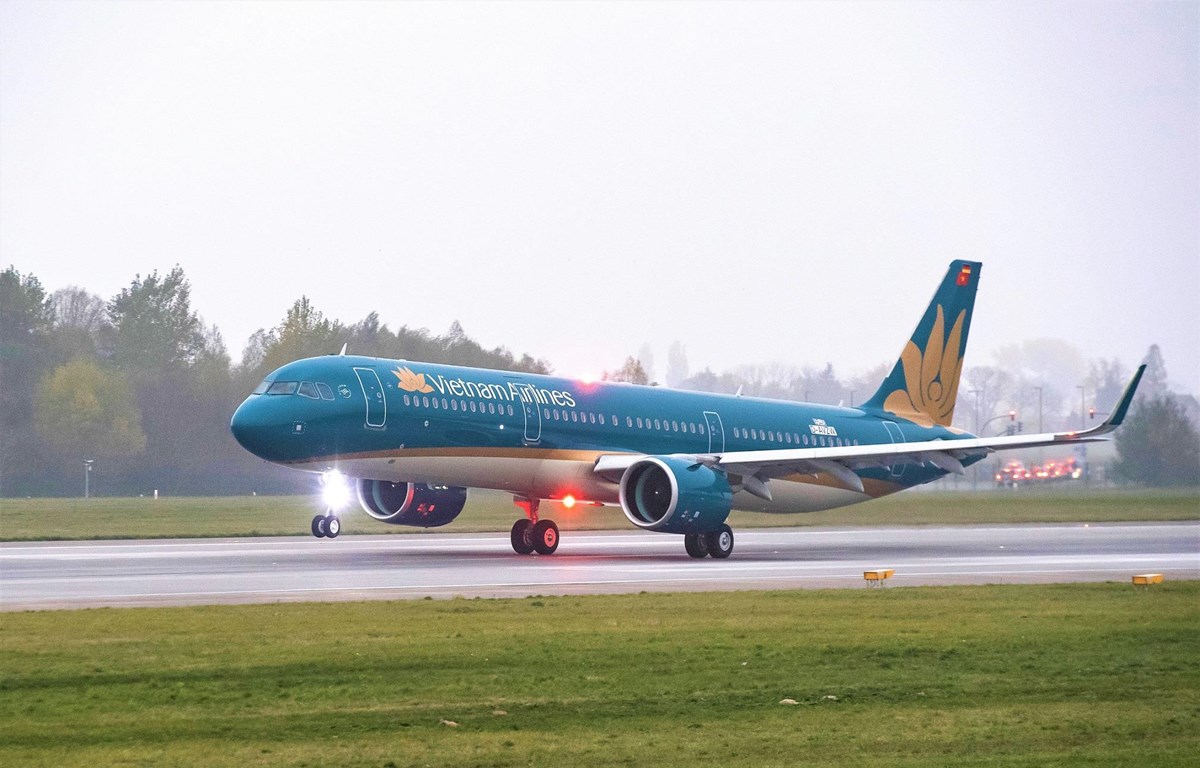
    Its designed capacity is for 25 million passengers. Vietnam generally saw demand for air travel rise before the Covid-19 outbreak, with its airports handling 116 million passengers last year, up 12 percent from 2018, according to the Airports Corporation of Vietnam (ACV).

  • Hong Kong retail sales fall again in August

    Hong Kong retail sales fall again in August

    Hong Kong retail sales plunged 13.1 percent year on year in August, as the coronavirus pandemic continued to batter the struggling sector, marking a 19th consecutive month of contraction. Consumer spending dropped to HK$25.6 billion (US$3.2 billion) in August, contributing to sales for the first eight months of the year falling 30 percent from the same stretch in 2019, according to provisional figures released by the Census and Statistics Department on Wednesday.

    The monthly year-on-year decline was not as steep as recorded recently, but that was mainly attributed to the data comparison with last August when the city was gripped by anti-government protests.

    “I hope everyone can understand that and won’t be misled by the figure,” said Annie Tse Yau On-yee, chairwoman of the Hong Kong Retail Management Association, adding this August’s slump reflected a serious situation for the industry.

    The total value of retail sales in the city between January and August this year was HK$213 billion, compared with HK$305 billion for the same period last year.

    Most retailers continued to suffer a contraction in sales in August, with supermarkets once again among the exceptions, a trend Tse linked with residents staying in to cook during the city’s third wave of Covid-19.

    All eyes are on how retail businesses perform between October 1 and October 4, which is traditionally a peak period for sales because of the National Day holidays, popularly known as “golden week”.

    Previously, millions of mainland Chinese would travel domestically and overseas during the break but would be kept away from Hong Kong this year by the city’s travel restrictions for the pandemic.

    Tse noted that sales might improve for those selling goods relating to people’s daily lives, such as furniture and food, due to the long weekend in Hong Kong overlapping with the Mid-Autumn Festival.

    “But everyone predicts it will help boost the footfall rather than sales. Maybe due to the ease of pandemic, then the foot traffic, in general, will be better… the sales will still remain weak,” she said.

    “The help for sectors which had continued to record a decline in sales would be minimal.”

    A government spokesman said as economic conditions remained under pressure and inbound tourism was unlikely to recover in the short term, the business environment would continue to be difficult.

    “Nonetheless, local consumption sentiment may further improve if the recent stabilization of the local epidemic situation sustains,” he said.

    After the third wave of infections intensified in July, evening dine-in services were banned in Hong Kong restaurants for nearly 1½ months, only reopening in late August. Most entertainment premises such as bars and karaoke lounges also remained closed in August, dampening consumer sentiment across the city.

    The ongoing global lockdown also played a role in subdued consumption, as tourist arrivals to the city collapsed 99.9 percent, with fewer than 4,500 people in August.

  • South Korean retail sales surged in August

    South Korean retail sales surged in August

    South Korea’s non-store retailers including online shopping and delivery operators raised a record 46.2 trillion won ($39.1 billion) in sales in the first six months of the year as consumers relied much on non-face-to-face businesses amid coronavirus fears.

    According to data from Korea Small Business Institute and Statistics Korea on Monday, non-store retail sales jumped 19.4 percent year over year to an all-time high of 46.2 trillion won in the January-June period. The amount was 13 percent more than the second half of last year and more than doubling 22.6 trillion won in the first half of 2015.

    It was the first time for the bi-annual amount of non-store sales to jump more than 7 trillion won on year from the previous six-month period. The previous record increase was 4.8 trillion won in the first half of last year.

    The rapid increase was largely attributed to the outbreak of COVID-19 as non-store retailers gained huge popularity for its convenience of being able to allow consumers to purchase goods without having to visit offline stores amid social-distancing measures to contain coronavirus. Many companies also advised employees to work from home.

    According to Woowa Brothers, the operator of the country’s largest food delivery app Baedal Minjok, the number of mobile orders jumped 176 percent on year in the January-June period. The surge has further accelerated during the coronavirus outbreak.

    Amid growing demand for non-store shopping due to the virus scare, retailers have turned aggressive in selling products via online and home shopping channels.

    As more people opt for non-store shopping, sales at department stores fell 13.4 percent on-year to 12.9 trillion won in the first six months of the year and those of specialty retailers 10.3 percent to 61.1 trillion won. Sales of duty-free stores especially plunged 37.1 percent during the cited period as board-crossing traveling was virtually impossible.

    Sales at large discount stores, supermarkets, and convenience stores increased in the first half of the year from a year ago but growth was smaller than those of non-store retailers.

    Large discount stores raised 16.2 trillion won in sales in the January-June period, up 1.1 percent from a year ago. Sales at convenience stores increased 2.8 percent to 12.7 trillion won and supermarkets 6.8 percent to 23.2 trillion won.

  • Google reveals one change coming to Android 12

    Google reveals one change coming to Android 12

    We’ve been asked this question multiple times. If both Apple and Google take a 30% cut of in-app purchases, why is Apple and the App Store considered a monopoly while Google and the Play Store are not? It comes down to this: Apple does not allow iOS users to install apps from third-party stores. Thus, the infamous walled garden forces iPhone users to install apps from the App Store even if it means paying more for an app. Google allows Android users to sideload apps from third-party app stores such as the Amazon Appstore or Samsung’s Galaxy App Store thus giving Android users the opportunity to install an app from another store rather than the Google Play Store.

    Thanks to the Epic v. Apple suit, the question about whether Apple is a monopoly because it demands that developers use its In-App Payment system (and only this system) to list its app in the App Store is highly relevant. Epic Games wanted to give iOS users who downloaded Fortnite from the App Store the opportunity to subscribe to the game at a cheaper price directly from Epic. Apple emphatically said “No!” and removed the popular game from its iOS App storefront.

    Google says that it will respond to feedback from developers with next year’s Android 12. The 2021 release, Google announced, will “make it even easier for people to use other app stores on their devices while being careful not to compromise the safety measures Android has in place.” However, Google is going to continue to demand that developers selling digital items in their apps use the Google Play billing system. Just to make this clear, it is changing the language of its payment policy. Any app not using the Google Play system for in-app payments must add it by September 30th, 2021.

    Pointing out its differences with the App Store, Google notes that even with Epic Games’ Fortnite kicked out of the Play Store for supporting alternative payment methods, the game can be downloaded on an Android device via a third-party store. Google states that “even if a developer and Google do not agree on business terms the developer can still distribute on the Android platform.”

    Certainly, Android 12 will bring plenty of new features that we will probably hear about next May during Google I/O 2021. But for now, Google promises to make the use of third-party app stores easier with Android 12.

  • Microsoft’s OneDrive updated with several new features for iOS 13 and 14 users

    Microsoft’s OneDrive updated with several new features for iOS 13 and 14 users

    The last time OneDrive for iOS was updated, the app received a couple of new features specifically designed for iOS 14. This time Microsoft is rolling out a slew of new features aimed at both iOS 13 and 14 users.

    First off, we have a brand new OneDrive widget available only for iOS 14 users. Then, there’s a new Home tab that should make it easier for OneDrive users to pick up where they left off. The new Home tab features a user’s Recent view for easy access to files, as well as an Offline Files section that lets you access and manages files already downloaded for offline access. The new Home tab is available now for all iOS users.

    Microsoft also revealed that OneDrive personal users will get On This Day featured at the top of the new Home tab. Finally, the update makes it easier for users of OneDrive at work or school to get their Shared Libraries from the Home tab.

    Besides the new features related to the Home tab, Microsoft made two improvements to OneDrive for iOS. Firstly, it fixed an issue with an unexpected dialog showing up when users would tap the widget to sign into a personal account. Secondly, it improved the widget to make it look even better.

    The new OneDrive for iOS 12.0.2 is already available for download via the App Store, so you might want to update your app to benefit from all these nifty improvements.