Category: General

Retail News Asia is committed to providing both local and global retailers with the latest General Retail news throughout the Asian market. This on a daily base.

  • Digital transformation driving demand for Asia’s IT vendors

    Digital transformation driving demand for Asia’s IT vendors

    The demand for digital transformation is presenting Asia-Pacific IT retailers with a substantial revenue growth opportunity in the medium to long-term, according to new research.

    The findings, released by GlobalData, analyse the importance of digital adoption amongst enterprises against the backdrop of the continuing coronavirus outbreak. According to the firm, growth in the sector is reigniting concerns regarding business continuity, data security, collaboration and seamless customer experience.

    “The Covid-19 outbreak will definitely lead to increased uptake of digital adoption amongst enterprises over the next few years,” said GlobalData’s lead ICT analyst Sunil Kumar Verma. “During this period, vendors should leverage government framework and policies along with inorganic/organic growth strategies to create a digitized environment and develop digital capabilities.

    “IT providers that can leverage capabilities around technologies such as AI, blockchain, cloud, and big data, and rethink their future business models by evaluating digital transformation will have a competitive edge.”

    The firm’s data shows that spending on IoT technology is relatively smaller in Apac than in other regions. Apac enterprises have however shown interest in embracing digitalization across multiple verticals such as manufacturing (Industry 4.0), telecommunications (BSS/OSS overhaul), retail (visual search and deep tagging), professional security services (AI-based security surveillance CCTV), and banking (virtual assistants/chatbots).

    A review of multiple IT providers in the region showed that digital capabilities have continued to boost revenues and have become increasingly important to the industry.

    “The pandemic will only accelerate the demand for digital transformation, and IT vendors in Apac will do well to prepare for the impending explosion in opportunities around digital transformation,” said Sunil. “Vendors need to continue to fill gaps for the new age digital experiences by leveraging partner capabilities and pursuing selective acquisitions to have an extensive digital portfolio for these impending opportunities.”


  • Google Assistant update adds more ways to improve accuracy

    Google Assistant update adds more ways to improve accuracy

    Google is making it easier for users to set up their personal digital assistants using Voice Match, a feature that teaches Googles Assistant to recognize a voice. With the latest update, you’ll be able to set up Voice Match to let Google Assistant prompt you to say full phrases rather than the usual hot word “Hey Google.”

    It will allow Google Assistant to identify your voice with more accuracy than before. In order for that to happen, Voice Match will now ask you to say phrases like “Hey Google, play my workout playlist,” which will allow it to better identify the speaker.

    Moreover, Voice Match now allows you to link up to six people to a single Google Assistant account, each receiving personalized results when using the device. That’s just one new feature that will allow Google Assistant users to fine-tune their personal digital assistant.

    Another one would be the option to adjust how sensitive Google Assistant is to the environment because that can affect its responsiveness to the hot word. This is especially important since Google Assistant can accidentally be enabled if it hears something similar to “Hey Google” in a noisy environment.

    In the coming weeks, Google will roll out a new option that will allow users to adjust the sensitivity of smart speakers and smart displays to the hot word. The new option should appear in the Google Home app as well, but it will only support the English language with more to follow.

  • Fifth Hong Kong Lego shop opens despite absence of mainland tourists

    Fifth Hong Kong Lego shop opens despite absence of mainland tourists

    Chinese toy retailer Kidsland International is opening its fifth Hong Kong Lego store, despite the economic downturn and the continuing coronavirus pandemic.

    “We see resilient demand for Lego products for kids and for those who are spending more time at home,” Kidsland executive director Sherman Hung told the South China Morning Post. “We believe a highly integrated offline and online operation will thrive in the redefined retail landscape post Covid-19.”

    The new 2400sqm Hong Kong Lego store in Tuen Mun is targeting consumers in the New Territories West area and positioned as a base for home delivery of online purchases, according to a report in the SCMP. The store will also launch an appointment service for customers who book visits via an online app.

    “Although the Covid-19 pandemic currently presents substantial challenges to the operating environment, the group’s Hong Kong business performance remains robust,” said Kidsland’s chairman and CEO Lee Ching Yiu, “and we remain cautiously optimistic about the group’s prospects and will continue to reform our operations.”

  • Seoul department store to host online fashion show to help small brands

    Seoul department store to host online fashion show to help small brands

    Hyundai Department Store will hold the industry’s first no-guest fashion show to help small and medium-sized fashion brands suffering from the aftermath of the novel coronavirus pandemic.

    The fashion show will feature 25 Korean small and mid-sized fashion brands and be broadcast live on Hyundai Department Store’s official YouTube channel for three hours from 7 pm on Saturday.

    In partnership with the Global Video Commerce Association, the fashion show will also be broadcast on live channels of overseas online malls such as Taobao, an online mall in China, and Shopee, an online mall in Southeast Asia.

    In addition, 30 influencers will participate in the event and broadcast the fashion show live on their respective social media accounts.

  • Indian retailers urge landlords to adopt revenue-sharing rent model

    Indian retailers urge landlords to adopt revenue-sharing rent model

    High-profile Indian retailers are lobbying mall owners to transition to a revenue-sharing rent model in the wake of the coronavirus pandemic.

    Times of India reports that the companies, including Future Group, Aditya Birla, Arvind, Raymond and Litebite Foods, believe moving to a revenue-share model from fixed or minimum guaranteed rentals is critical to the survival of the industry. The retailers are seeking for the revenue model to be calculated from March 1.

    A letter to mall owners signed by around 75 retails firms operating 200 brands proposed a flat revenue share percentage based on tenant categories. The letter suggests regular brands could contribute 10–12 percent of takings, including common area maintenance, while fast-food brands could contribute 7–8 percent.

    “Our objective is to ensure that all businesses in the retail industry are able to survive this pandemic and its aftermath and thereby sustain 6 million jobs that this industry generates,” read the letter. “For that it is critical that mall owners and tenants (brands and retailers) are able to arrive at a mutually agreeable arrangement on rentals, not only for the period of the shutdown but also thereafter till normalcy returns.”

    The report suggests large mall owners remain undecided on the issue of whether rent waivers or revenue sharing models are the more appropriate response to the impact on the business of the coronavirus pandemic.

  • ‘Revenge spending’ fuels luxury goods rebound

    ‘Revenge spending’ fuels luxury goods rebound

    So-called ‘revenge spending’ has been credited with a significant upturn in sales of high-priced retail goods in South Korea which has tentatively emerged in recent days from a lockdown during the Covid-19 pandemic.

    Industry analysts say that the pent-up desire for consumption is leading to an increase in purchases of luxury goods to display wealth.

    Revenge spending refers to the outpouring of pent-up desire for consumption at once. Another factor cited by South Korea’s fashion industry experts is the ‘Veblen effect’ which refers to a phenomenon in which products sell better as prices rise – a form of conspicuous consumption.

    Although low- and mid-priced brands in South Korea are struggling with the effects of the Covid-19 outbreak, expensive brands are doing well.

    At the height of the spread of COVID-19, sales at Lanvin Collection and Time have increased significantly, Handsome Corp, an affiliate of Hyundai Department Store, and the top player in the women’s fashion industry.

    Lanvin Collection, which is one of the most exclusive offerings among the Handsome brands, is a license brand introduced jointly by Handsome and French luxury brand Lanvin Paris. It saw sales rising 35 percent year on year during the first quarter.

    Time, the flagship brand of Handsome, also saw its online sales jump 58 percent in the first quarter.

    Meanwhile, Isabel Marant, a French luxury brand imported by LF Corp., saw its sales rise 10 percent year on year.

    A similar phenomenon is emerging in the men’s clothing market. Thom Browne, imported and sold by Samsung C&T Corp, saw its sales rise 20 percent thus far this year.

    Thom Browne is a semi-luxury brand known for its men’s suits, and has recently enjoyed explosive popularity among young people with the release of Samsung Electronics’ Galaxy Z Flip Thom Browne edition.

    With the coronavirus crisis reshaping the online market, some commentators say these brands are benefitting from quickly establishing online sales systems.

    All of the brands whose sales have increased tout their wares via online portals — Handsome.com, LF Mall, and SSF Shop.

    The fact that there is no difference between offline and online prices also contributed to the increase in sales.

    “Covid-19 is intensifying the gap between the rich and the poor in the fashion industry,” an official from the fashion industry told Korea Bizwire.

    “A growing number of young and middle-aged people are now purchasing products from expensive brands online that they would never have considered in the past.”

    Meanwhile, according to a McKinsey study, luxury sales by South Korean department stores dipped in the double digits in March when social-distancing measures became widespread. But during the first week of April, sales rebounded. Overseas luxury brand sales rose by 5.4 percent and overseas watch and jewelry sales were up 27.4 percent at Lotte.

    McKinsey suggests that as other regions continue to struggle during the Covid-19 crisis, South Korea could emerge as a fast-rebounding market for luxury sales and one brands should keep their eyes on to understand future consumer trends and behavior across Asia-Pacific.

  • Online retail the ‘silver lining’ in Singapore retail space

    Online retail the ‘silver lining’ in Singapore retail space

    The Singapore retail real estate market has weakened amidst the coronavirus pandemic, according to a quarterly market report released by Edmund Tie.

    Transactions fell across all real estate sectors despite significant support measures passed by the government under its Unity Budget, Resilience and Solidarity Packages.

    In retail, an industry already battling a recession throughout last year, with weak signs of recovery reversed by the outbreak, travel restrictions and social-distancing measures are thought to have largely contributed to a downturn in sales.

    Turnover by retailers in prominent Singapore retail districts such as Chinatown plummeted by as much as 80 percent. Sales at Jewel Changi Airport contracted by as much as 70 percent in the same month.

    “A silver lining in this otherwise gloomy scenario is that the demand for online shopping has surged, as people turned to e-commerce in lieu of physical stores,” said Edmund Tie’s paper. In February, online retail sales accounted for 7.4 percent of total retail transactions, up from 5.5 percent in January.

    “The pandemic will fast-track the adoption of technology, from omnichannel retailing to greater use of data analytics to better understand consumers and their preferences,” said Edmund Tie CEO Ong Choon Fah.

    “New and creative ideas will emerge when the situation stabilizes and we enter a new normal. The diversification of revenue streams arising from adopting an omnichannel approach will make retailers more resilient over the long term.

  • Central Pattana improves Covid-19 communication to reassure shoppers

    Central Pattana improves Covid-19 communication to reassure shoppers

    Thai shopping center operator Central Pattana is promoting new hygiene and preventive measures to reassure customers their centers are safe during the coronavirus pandemic.

    Central Pattana’s ‘Central’s Hygiene and Safety’ plan is designed to reassure customers that the highest standards of hygiene and safety are being observed in shopping centers should they need to visit for buying essential products.

    The new plan covers five key core ideas with more than 75 measures, including extra screening, social distancing, safety tracking, extra cleaning and a touchless experience.

    “Despite some uncertainty around the current Covid-19 situation, the company is deeply concerned and has been proactively pioneering a master plan … to implement in our shopping centers, stores and with employees to help curb the spread of the pandemic and to ensure everyone’s highest safety at our shopping centers,” said Central Pattana deputy CEO Wallaya Chirathivat.

    “In response to this ‘new normal’ of changing consumer behavior facing the pandemic, this master plan is open as a guideline for general use for the best interest of the nation to hereafter set a new retail and social norm.”

    Central Pattana’s properties include CentralWorld, CentralPlaza, CentralFestival, Central Phuket and Central Village malls.

    “Central Pattana has been fully cooperating with the government’s mandates as well as encouraging social distancing,” added Wallaya, “… in the midst of this uncertainty, the re-opening of our shopping centers will be strictly in compliance with government’s mandate.”

  • FairPrice launches mobile supermarket in Singapore

    FairPrice launches mobile supermarket in Singapore

    Singapore supermarket chain FairPrice has launched a mobile grocery service dubbed ‘FairPrice on Wheels’, delivering essential groceries closer to customers’ homes.

    With FairPrice on Wheels, customers living far away from supermarkets can now buy products from FairPrice’s vans parked near their home. Essential products include rice, milk, eggs, canned products, vegetables and toiletries. FairPrice has imposed purchase limits on these products as per below:

    “While we encourage everyone to stay home during the circuit breaker period, we also understand that there may be people who do not have the option to have their groceries purchased on their behalf,” said FairPrice Group CEO Seah Kian Peng.

    “Therefore, we aim to bring daily essentials closer to their homes, especially for seniors, so that they do not have to spend too much time away from home.”

    FairPrice on Wheels is available in five locations: Commonwealth Link, Telok Blangah Crescent, Telok Blangah Rise, Kampong Glam Community Club and Jalan Kukoh. More locations will be added soon.

  • Meitu lets retailers test online makeup service during Covid-19

    Meitu lets retailers test online makeup service during Covid-19

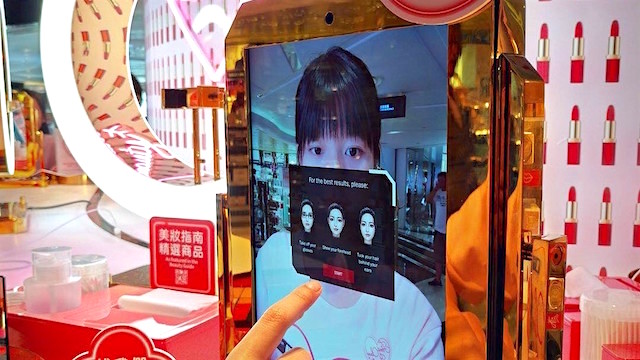
    Chinese imaging app Meitu has offered its AR online makeup trial system to global beauty enterprises and retailers for free to help them overcome difficulties caused by the coronavirus pandemic.

    The firm’s Beauty Industry Support Plan was extended from limited-time free use in specific regions to apply universally. The plan was rolled out as a three-month free trial service in the wake of the outbreak for 10,000 beauty enterprises and retailers, with a three-month extension given to existing users – including Givenchy, Shiseido, Clarins, Bausch + Lomb, DFS, and other partners.

    The software, called the Cosmetic Promotion Assistant, is based on Meitu’s facial-recognition and image-processing technologies and is. The system can also recommend suitable colors and styles based on the user’s facial features. It generates a virtual makeup effect within one minute, and also supports sharing and purchase functions, with multiple payment methods allowed.

    In providing free trials to potential customers, users of the service have seen increased sales of makeup products such as lip gloss, blush, eye shadow, and foundation.

    Enterprises and their beauty assistants are able to configure makeup effects on their own branded websites, which can then be shared to social platforms such as Facebook and Twitter. Purchase links provided on the trial page can redirect users to the vendor’s official website, or marketplaces like Amazon or eBay.

  • Food, gaming and business app downloads soar during crisis

    Food, gaming and business app downloads soar during crisis

    App downloads have soared during the coronavirus crisis, with the business, food & beverage and gaming categories showing the highest growth.

    SaaS company Adjust has published in its App Trends 2020 report, in which it compares app downloads data from the first quarter of this year with the same period in 2019.

    Adjust says business app sessions have undergone a huge rise (an increase of 105 percent over last year), with app downloads surging 70 percent. Revenue events have risen 75 percent, as users select premium app versions to assist the transition to work from home.

    With many restaurants forced to offer takeout-only meals, F&B apps also saw a major increase in sessions (up 73 percent on this time last year). Installs of these apps have gone up by 21 percent.

    But the fastest-growing category for app downloads was Gaming, with a 132-per-cent increase during the last week of March alone. There was a 47-per-cent year-on-year increase in gaming sessions and a 75 percent increase in installs in the first quarter of this year compared to last year.

    “Beyond these increases in installs and sessions, the report shows little evidence to suggest that there’s been a fundamental shift in user behavior post-install,” said Adjust co-founder and CTO Paul H. Muller.

    “Users are still taking the same actions in-app, such as averaging a little above two sessions a day, to churning at predictable points in the customer journey.”

  • Singapore locks down until June

    Singapore locks down until June

    The Singapore government has reduced the list of “essential services” as part of a tougher clampdown on social distancing as it tries to arrest the spread of Covid-19 in the city-state.

    The Ministry of Trade and Industry (MTI) on last night announced a trimmed list essential services applied during the “circuit breaker” period which has been extended for another four weeks and will likely not now end until June 1. Subsequently, more retailers including food and beverage outlets have to temporarily shut down its business – although this is initially going to be enforced only until May 4, subject to extension.

    Here are types of food and beverage retailers that must suspend their operations from today (April 22):

    • All food-and-beverage vending machines located in parks, regardless of what they sell, must be shut. Takeaway and delivery services located in parks are to close.
    • Stores predominantly selling beverages including bubble tea, fruit juice, alcoholic drinks and coffee.
    • Stores predominantly selling packaged snacks and loose snacks including nuts, potato chips, popcorn, bak kwa and cheese.
    • Stores predominantly selling desserts including ice cream, cakes, sweet pastries, grass jelly and red/green bean soup. However, these rules do not apply to hawker centres and food courts. Online retailing of these products is allowed, provided that they are from a licensed central kitchen, manufacturing facility or warehouse of the food-and-beverage company.
    • Optical shops can operate by appointment only, with walk-in customers banned.
    • Pet supplies stores and retail laundry services must close their physical stores, but are permitted to provide online sales and delivery.

    Other food-and-beverage outlets, including those selling hot or cooked snacks, bread or meals, are allowed to continue to sell, but only via takeaway or delivery services during the “circuit breaker” period. Dining-in is not permitted.

    However, the MTI contradicts itself in documentation explaining the new restrictions, possibly due to the rushed pace with which they were prepared. In an appendix, it says that “specialized stores and outlets that predominantly retail” coffee and tea must close. Immediately below that declaration, the MTI says “Only hawker centers, coffee shops and food courts are excluded”.

    So it remains unclear whether coffee chains such as Starbucks are allowed to continue to trade from today. Starbucks had not responded on its Singapore operations before deadline.

    Meanwhile, stores continue to serve hot meals (as well as coffee) may continue to trade – ostensibly selling coffee and meals, but not cakes or sweets (once existing stock runs out). But other media is reporting that stores will be classified by the predominant product they sell, which suggests coffee shops may not continue to trade, as they sell more coffee than meals.

    Inside Retail Asia is awaiting further clarification of this and other points and will update this story as further details come to light.

    Supermarkets and wet markets can continue trading as normal, however social-distancing practices must be observed.

  • Four ways the Covid-19 pandemic will reshape shopping behaviour in Asia

    Four ways the Covid-19 pandemic will reshape shopping behaviour in Asia

    Shopping behavior in Asia will be redefined by the Covid-19 crisis: here are four key trends to expect in the post-pandemic world.

    Retail solutions provider Tofugear has just published the Digital Consumer in Asia 2020 report, based on a survey of 6000 consumers across 12 markets in Asia in February, including markets where the coronavirus pandemic had already impacted retail.

    Due to the timing of the research, the report offers a fascinating glimpse of what online and offline shopping behavior might look like in the region once the recovery sets in. With that in mind, here are some key retail trends we predict will come to define the post-Covid-19 world.

    Shift in spending towards essentials and ‘affordable luxuries’

    Consumer confidence in Asia is currently at an all-time low, with only 27 percent of all shoppers having a positive view about their personal finances over the year ahead. Unsurprisingly, the majority of consumers intend to cut back on big-ticket items such as luxury fashion and furniture.

    While demand for essentials such as groceries and household goods will remain firm, four in five Asian consumers also state that they will not be cutting back their expenditure on beauty and personal care items. Many fashion retailers have expanded into the beauty space in recent years, but this is certainly an area that others might want to follow. During times of economic crisis, beauty and cosmetics are seen as affordable luxuries that provide a form of escape from the doom and gloom.

    It has been mentioned many times now, but the pandemic is indeed resulting in a surge in e-commerce activity. Nearly half of all shoppers in Asia intend to increase their online spending versus physical retail over the coming year, while 38 percent will keep it at the same level. With so much spending set to shift to digital commerce, retailers will need to stand out from the competition by sharpening their fulfillment proposition.

    While consumers in Asia value a free shipping service the most (86 percent), in terms of costs this might not be feasible for all retailers. However, offering transparency in the fulfillment process – such as being able to track deliveries (83 percent) and picking a delivery time slot (76 percent) – trumps speedy fulfillment services such as same-day deliveries and delivery within two hours.

    Broader acceptance of retail formats that support the circular economy

    The notion that Asia is behind the curve when it comes to supporting for sustainability initiatives can be put to rest. Two-thirds of all consumers in Asia state that they will consider a brand’s sustainability credentials when making a purchasing decision.

    At the same time, nearly half of all respondents say that they shop for pre-owned and second-hand merchandise – perhaps a noticeably high percentage given the stigma of ‘bad energy’ that surrounds second-hand goods in some markets such as China.

    The report also finds that the acceptance of rental services – such as those offered by Style Theory and Covetella – are gaining traction.  With personal finances expected to remain under pressure, demand for circular business models like these look set to increase further in the next year.

    Technologies that aid social distancing in a physical retail

    Once lockdowns are lifted across Asia, it stands to reason that there will be renewed enthusiasm for simply going out to visit the shops. However, retailers need to take note that the consumer psyche has changed and shoppers will naturally be more hesitant about physical contact in a store setting.

    Brick-and-mortar retailers need to latch on to this sentiment and invest in the appropriate technologies to make shoppers feel more comfortable. Scan-and-go technology, whereby consumers’ mobile phones are used to scan products and pay at the end, would be a great way to achieve this as four in five Asian shoppers (79 percent) state that they are open to using this technology if available. Similarly, 71 percent would make use of automated check-outs – such as those seen in unmanned retail concepts.

  • Facebook invest $5.7 billion in Reliance Industries to capitalise on India’s booming tech sector

    Facebook invest $5.7 billion in Reliance Industries to capitalise on India’s booming tech sector

    Facebook has committed to a multi-billion investment in Mukesh Ambani’s Reliance Industries, ensuring that Facebook has an increased presence in India at a time when digital technology is booming. That investment takes the form of a US$5.7 billion outlay by Facebook to acquire a 9.99% stake in Jio Platforms, the digital technology branch of Reliance.

    This will give Mark Zuckerberg’s company access to Reliance Jio, the network that commands around 57% of the Indian broadband market, while providing a stronger platform to launch a new WhatsApp payment venture in a country where around 400 million people use the messaging service.

    This gives Facebook a foothold in India at a time when government regulations are making foreign investment increasingly difficult. This deal also benefits Reliance; Ambani may be India’s richest person, but the Facebook investment will deliver vital capital in his quest to eliminate all debt by March 2021.

    Possible effects of Facebook’s investment

    Amazon and Walmart have both cornered a significant share of India’s e-commerce trade, while Netflix committed to a $400 million investment on Indian content in 2019 and 2020. These companies have altered the retail and streaming landscapes respectively, with Facebook’s partnership with Reliance Industries likely to have a similar effect on technology and finance in India.

    https://www.facebook.com/Jio/posts/1949554658502959

    A rise in digital payments

    Financial digitization is something that the Indian government has striven for in recent years. One objective of the 2016 banknote demonetization was to reduce the prevalence of cash payments, although this strategy was poorly executed and poorly received. Facebook’s ability to integrate seamlessly into everyday consumer life may prove more successful than the government-driven push for digitization.

    Ambani has stated his intention for his commerce platform Jio Mart to combine with WhatsApp technology in order to assist with digital transactions for ‘mom and pop’ stores. The Reliance owner spoke of a desire to connect with 30 million of these shops to give them a platform to better cater to their clientele. Combining Facebook tech with the established interface of Jio will help small vendors to set up online stores with minimal fuss to facilitate deliveries and increase trade.

    More confidence with online financial services

    A corollary of digital payments becoming commonplace will be that an even larger proportion of the population will feel comfortable with using technology for financial purposes. This could manifest in a greater acceptance for a digital coin in India; this is something that the National Institute for Smart Government (NISG) proposed at the start of 2020, with a digital rupee driven by blockchain tech more likely to be accepted by consumers familiar with virtual payments.

    Online trading could also benefit alongside cryptocurrencies. Digitized payments destroy the notion that transactions have to incorporate money changing hands, illustrating the appeal of online foreign exchange platforms where users can purchase and sell currencies at the click of a button. With many of the best forex bonuses geared towards beginners, an indirect result of Facebook’s investment could be inspiring a new wave of traders to further explore the links between finance and technology.

    More connectivity

    With a population of 1.38 billion, India is a massive market that warrants significant investments from global brands. Over 1 billion of those people own a mobile device, while around 615 million people have access to broadband. India boasts the lowest mobile data costs in the world; 1GB of mobile data can be purchased for just $0.26, whereas the same acquisition can cost over $12 in the United States.

    Consultancy firm PwC estimates that there may be 800 million internet users in India by 2022, so Facebook are gaining access to the market at a timely moment. Facebook will not just be collaborating with Jio to take advantage of low data costs and high internet access, but the two will also seek to expand and enhance the ways that the country is connected.

    In a Facebook post, Zuckerberg stated his intention to deliver reliable digital tools to help India’s 60 million small business provide for their customers. Digital payments may become more popular thanks to the WhatsApp Pay service, while Facebook’s involvement will support the vast tech services that Jio is already providing.


  • WhatsApp doubles the limit of participants in group audio and video calls

    WhatsApp doubles the limit of participants in group audio and video calls

    We told you less than a week ago that WhatsApp plans to increase the limit of participants in group audio and video calls, but we didn’t know by how many and when exactly it will happen. If you’re using the beta version of WhatsApp, we’re happy to tell you that group audio and video calls feature has been upgraded to accommodate more participants.

    As the title says, WhatsApp has decided to double the number of users who can participate in a group audio and video call. WABetaInfo reports that the latest beta version of WhatsApp increases the limit of participants to 8, whereas the app would only accept a maximum of 4 participants previously.

    To start using the new feature, all your contacts must use the same version of WhatsApp. Then, you must tap the New Group Call option in the Call tab and choose up to 7 more contacts from your list who you wish to invite in a group audio or video call.

    Apart from increasing the number of participants that can join audio and video call groups, WhatsApp implemented some other small, but helpful changes. For example, the call button that you use in groups will now allow users to directly start a call with group members if the group has 4 or fewer participants.

    If the group has more than 4 participants, you will be able to choose the contacts you want to add to the group call immediately after tapping the call button. Once again, these improvements are only available in the WhatsApp beta for Android (v.2.2.128), but we suspect they will be rolled out to the general public very soon.