Category: General

Retail News Asia is committed to providing both local and global retailers with the latest General Retail news throughout the Asian market. This on a daily base.

  • Instagram will now shame you before you post something offensive

    Instagram will now shame you before you post something offensive

    Instagram prides itself on actively fighting against bullying through numerous features that prevent people from trolling and/or shaming users of the social network. Instagram announced yet another feature that’s meant to prevent users from posting messages that could be considered offensive.

    Several months ago, Instagram launched a tool that notifies people when their comments may be considered offensive before they’re posted. The most recent feature expands on that tool by using the social network’s AI to detect a potentially offensive caption.

    Those who write such messages will receive a prompt informing them that their caption is similar to those reported for bullying and that they might want to reconsider their message. Instagram will let users edit messages before they are posted if they’re flagged as potentially offensive.

    The new feature is meant to educate Instagram users and prevent them from breaking the social network rules and potentially lose their accounts. According to Instagram, the new caption-warning feature will be rolled out in select countries, then expand across the world in the coming months.


  • Update to Google Maps solves issue with gesture navigation

    Update to Google Maps solves issue with gesture navigation

    One thing that Android users are appreciative of is Google’s desire to keep tinkering with its apps. And once again, it is Google Maps that is the beneficiary of the latest update to come from Mountain View. The new Maps UI eliminates the side menu. Swiping to the right from the left edge will also no longer bring up the side menu, which is a boon to those who use gesture navigation on Android 10. That’s because opening the side menu can accidentally trigger the “back” gesture on the latest Android build. And the three-bar hamburger menu no longer appears on the left side of the search bar.
    The three tabs found on the bottom of Google Maps (Explore, Commute, For you) now number five and include Map, Commute, Saved, Post and Latest. Once your Google Maps app has been updated to the new UI (and it hasn’t yet on our Pixel 2 XL running Android 10), you can find the settings and some of the other options that were on the side menu by tapping on your avatar. A box will open that allows you to switch the account linked with the app, enable incognito mode (so that your travels and location searches won’t be recorded by Google), view the app’s settings and more.
    The latest version of the Google Maps app is 10.31.2, but even if you have just updated the app (as we did right as we started writing this article), there is no guarantee that the new UI will appear. Nope, you are going to have to wait since this is a server-side update that cannot be triggered by Android users.
  • Skype’s latest new feature lets you invite non-Skype users to meetings

    Skype’s latest new feature lets you invite non-Skype users to meetings

    Skype is clearly not the best messaging apps out there, but Microsoft is adding more features and improvements with every update. The mobile and desktop versions of Skype usually receive different updates, but many times they share some features.

    The latest Skype update brings one feature that’s common to both mobile and desktop versions – Meet Now. Up until now, you could only invite fellow Skype users to meetings created with the messaging app, but there are a lot of people who don’t have a Skype account.

    Meet Now allows Skype users to create a meeting and invite anyone just by sharing a link, including non-Skype users. Microsoft is rolling out the new feature to all users on Android, iPhone, and iPad since last week, so if it’s not yet available for you, then give it a few more days.

    Apart from the new Meet Now feature, the most recent Skype update adds a few camera improvements for Android users, such as the ability to scan and send documents. Also, Microsoft mentions the update includes some photo and video personalization enhancements, along with many bug fixes and stability improvements.

  • Bonjour Holdings warns of substantial loss

    Bonjour Holdings warns of substantial loss

    Beauty retailer Bonjour Holdings has warned shareholders of a “substantially increased loss” for the current year as the social unrest and falling Mainland Chinese visitor numbers take their toll.

    Last year, Bonjour Holdings reported a net loss of HK$39.6 million (US$5 million). In a letter to shareholders, chairman Wilson Ip did not put a figure on the loss anticipated in the year to December, but his words were ominous.

    “The group’s turnover has deteriorated severely and is expected to record a double-digit year-on-year decline for the year,” he said. “The average gross profit margin also decreases mainly due to the change in sales mix, consumer’s spending patterns and the increase in the promotion to attract customers.”

    He said Hong Kong’s economy suffered “an abrupt deterioration” in the second half of the year when consumption and tourism-related sectors were hit hard by local social incidents.

    “Moreover, the global economic slowdown and escalated US-Mainland trade tensions weighed further on the Hong Kong economic outlook.

    “Facing such an economic downturn, in a view to ease the difficult situation, the group now has key focuses on cost optimization and value creation by streamlining operational efficiency and better business planning to build or sustain our competitive advantage.”

  • Philippines’ Cebu Pacific stops flights to Siem Reap

    Philippines’ Cebu Pacific stops flights to Siem Reap

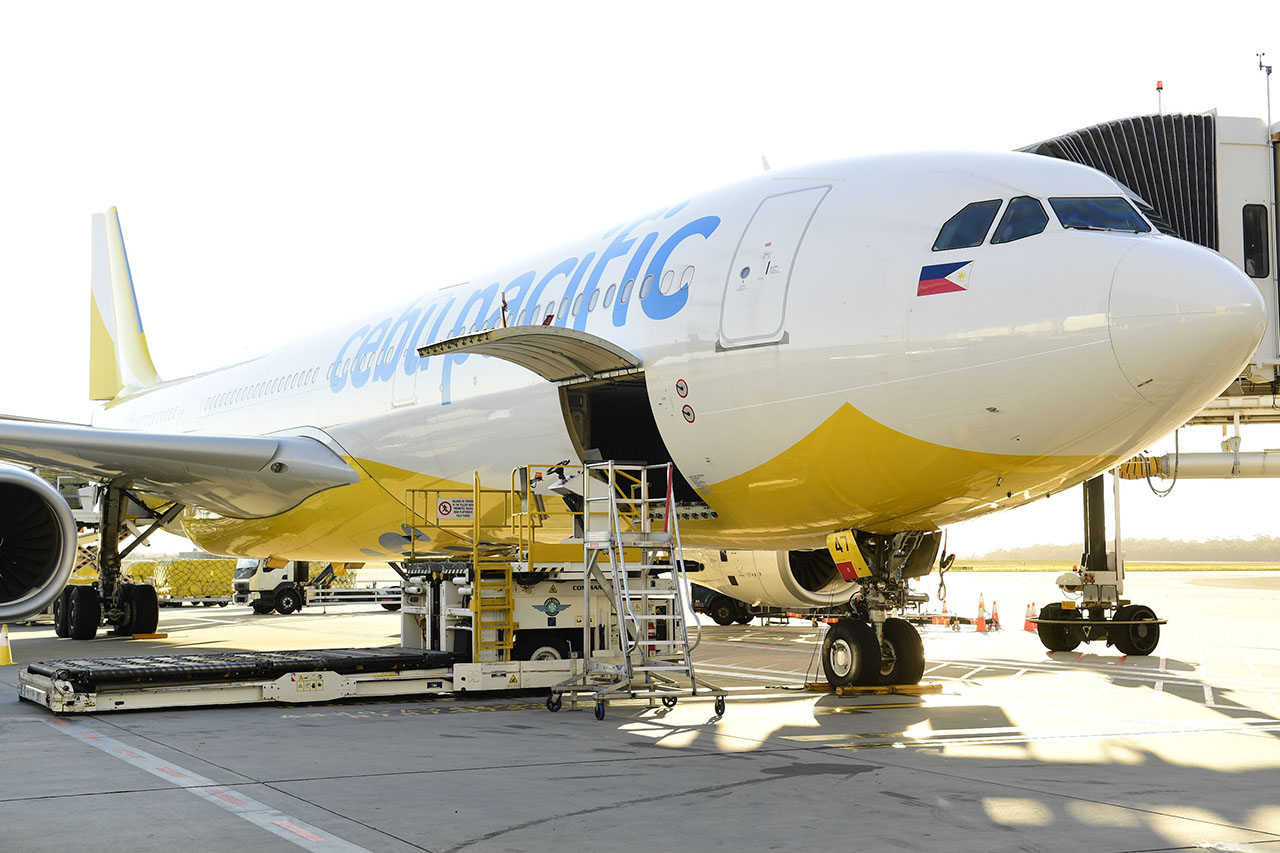
    Budget carrier Cebu Pacific has stopped its flights to and from Siem Reap, leaving only one Philippine carrier servicing the Cambodia-Philippines air route.

    Difficulties in turning out a profit was the main reason for Cebu Pacific’s departure from the Kingdom, according to Philippine media reports last week. Cebu Pacific ended its Siem Reap flights yesterday.

    Cebu Pacific spokesperson Charo Logarta-Lagamon was quoted as saying by Philippine Star that “route viability became a concern” for its Siem Reap service.

    The reports confirmed rumors that have been circulating as far as back last year that the Gokongwei-owned airline was contemplating such a move.

    The difficulties faced by Cebu Pacific were also a topic of discussion among Filipinos who attended the 3rd Cambodia Travel Mart.

    Then last week, Dirk Salcedo, an aviation blogger based out of the Philippines, reported that closure of the route was imminent, citing its online booking platform and data from FlightRadar24.com that show no Cebu Pacific flights beyond Dec 7.

    The news saddened many Filipinos in Cambodia. The Kingdom is host to more than 6,000 Filipino nationals.

    Cebu Pacific started flying to Siem Reap in 2012 amidst a growing number of Filipinos visiting Angkor Wat, the Kingdom’s leading tourist destination.

    The thousands of Filipinos working and residing in Cambodia also factored in Cebu Pacific’s decision to establish a direct flight to Siem Reap, becoming the first such carrier from the Philippines to do so.

    Since then, the airline has been flying three times a week from Manila to Siem Reap and vice versa using an Airbus A-320 aircraft.

    Cebu Pacific’s decision to close the Siem Reap route means that Philippine Airlines (PAL) will be the sole Philippine carrier with direct flight to Cambodia.  PAL re-opened the Phnom Penh-Manila air route last year and now flies five times a week to Cambodia.

    A few other Philippine carriers like Royal Air Philippines operate charter flights servicing the Cambodia route.

    The Siem Reap service was not the sole casualty of Cebu Pacific’s decision to focus on more profitable air routes. The budget airline also ended its flights to Guam, a United States territory in the Western Pacific.

  • Cebu Pacific announces Chinese New Year seat sale

    Cebu Pacific announces Chinese New Year seat sale

    Cebu Pacific is offering promotional fares for the Chinese New Year, the airline said Sunday.

    The country’s largest carrier is offering P99 base fare for flights originating from Cagayan de Oro, Cebu, Clark, and Davao, while passengers can book a Manila to Kota Kinabalu flight for as low as P149.

    For the complete list of promotional fares, click here.

    Promotional fares are available from Dec. 14 to 16. Travel period for domestic flights is from January 15 to March 31, 2020, while travel period for international flights is from January 1 to March 31.

  • Japanese used goods seller Bookoff to double outlets in Malaysia

    Japanese used goods seller Bookoff to double outlets in Malaysia

    Japanese second-hand retailer Bookoff is planning to double its outlets to 10 locations in Malaysia.

    It’s fifth Jalan Jalan Japan store is due to open in Vandal Baru Bangui near Kuala Lumpur at the end of the month.

    “Local people have a preference for new and used products made in Japan,” said Bookoff Group spokesman Takaharu Kominato in an NNA Business News report. “Japanese products have a reputation for reliability.”

    The 1875sqm KiP Mall store will sell roughly 200,000 SKUs from apparel and household sundries through to baby supplies and sporting goods.

    The firm is considering further outlets beyond Malaysia in other Asean territories within the next few years.

  • Vietjet CEO among world’s 100 most powerful women

    Vietjet CEO among world’s 100 most powerful women

    Vietjet Air CEO Nguyen Thi Phuong Thao is one of 100 most powerful women in the world this year, according to a Forbes listing. The only Vietnamese woman on the list, Thao was placed 52nd, down eight places from last year. This is the third year in a row she has been included in Forbes magazine’s list of 100 most powerful women in the world.

    The list was compiled based on assets, impact, spheres of influence and media presence, the magazine said.

    It estimated that the budget carrier CEO and the richest woman in Vietnam to have a net worth of around $2.7 billion as of December 13.

    Thao, 49, has done business in Vietnam and abroad in many fields, including finance, banking, aviation, real estate, and retail.

    She launched Vietjet in 2011. The airline now leads the domestic market with a 45 percent share. It operates 385 flights daily within Vietnam and to Japan, Hong Kong, South Korea, Taiwan, Singapore, mainland China, Thailand, Myanmar, and Malaysia.

    The carrier launched its IPO on the Ho Chi Minh City Stock Exchange in February 2017, becoming the first airline in Vietnam to list publicly.

    Vietjet has now surpassed national flag carrier Vietnam Airlines in terms of passengers carried. It has a fleet of 80 aircraft flying to 120 destinations.

    German Chancellor Angela Merkel was adjudged the most powerful woman in the world for the ninth consecutive year. She was followed by French politician Christine Lagarde, who serves as the President of European Central Bank, and Speaker of the U.S. House of Representatives Nancy Pelosi.

  • Ankur Garg appointed as chief commercial officer at AirAsia India

    Ankur Garg appointed as chief commercial officer at AirAsia India

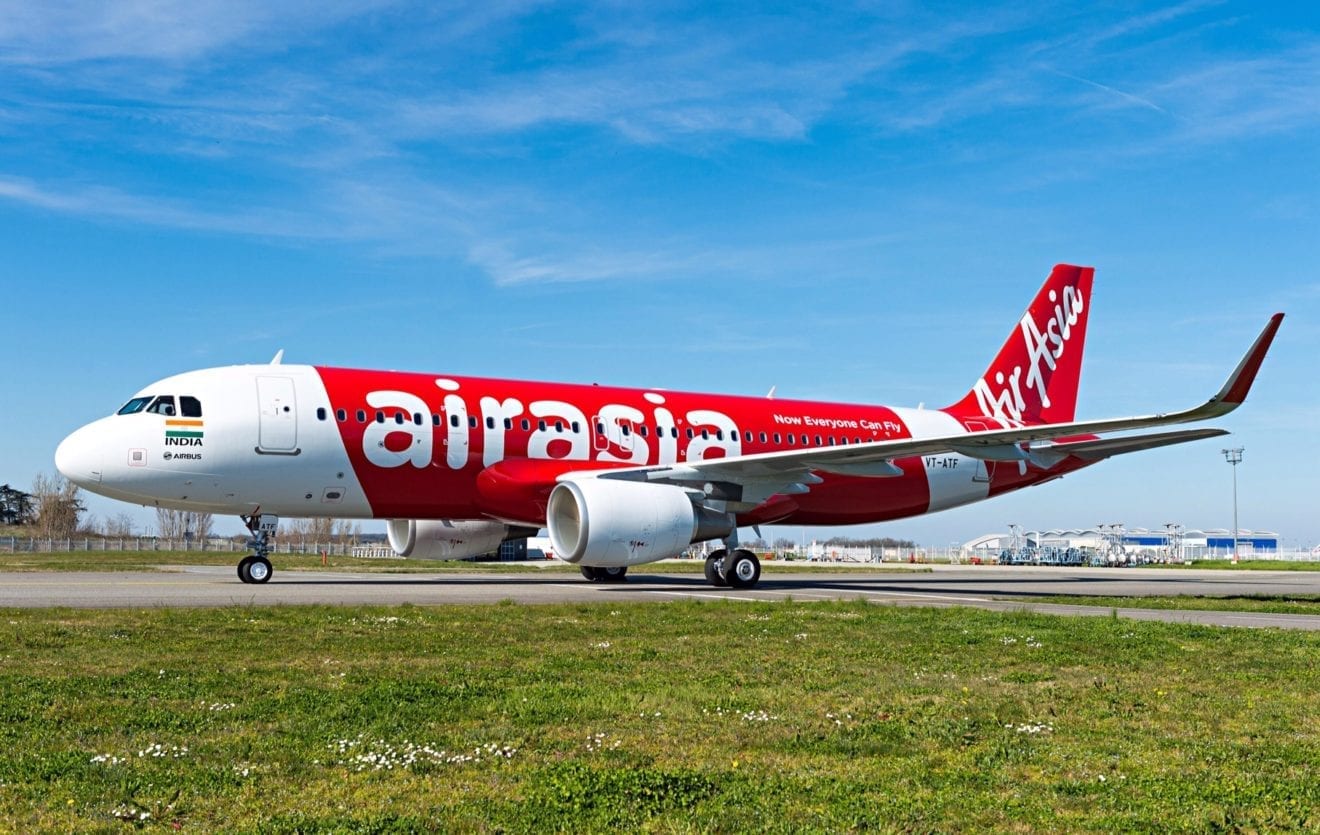
    AirAsia India on Sunday announced the appointment of Ankur Garg as its chief commercial officer (CCO), a role in which he will be in-charge of areas such as network and revenue management, marketing and sales, and cargo.

    Garg had quit as the vice-president of revenue management at IndiGoNSE -1.82 % a few weeks back. “Ankur Garg takes over from Mr Sanjay Kumar, AirAsia India’s Chief Operation Officer (COO)…Garg will report to Sunil Bhaskaran, MD and CEO, AirAsia India,” the airline said in a statement.

  • Japanese airline ANA uses avatar robots to let customers shop remotely

    Japanese airline ANA uses avatar robots to let customers shop remotely

    Japanese airline ANA has opened a pop-up shop equipped with avatar robots that enable customers to shop remotely.

    ANA said it’s pop-up at Coredo Muromachi 3 shopping mall in Nihonbashi which will remain open until December 24, is fitted with stick-shaped robots called ‘Newme’. Through the robots, shoppers will be able to browse and buy products as if they were physically at the shop.

    Online registration is required to be able to use the avatar in-store and all purchases will be shipped and delivered to the address provided at registration.

    “With its potential to increase connectivity and help people forge long-lasting bonds no matter the distance between them, avatar technology is well-aligned with ANA HD’s core values,” said Kevin Kajitani, ANA avatar division co-director.

    “Avatar technology is a significant component in our plans to help create ‘Society 5.0’, a world where interactions with technology and other humans are seamless and intuitive. Instead of supplanting the human connection, avatars will make it deeper and create a whole new range of experiences that were never possible before,” he added.

    Once the pop-up shop ends, shoppers will be able to continue to use the avatar technology as ANA plans to deploy 100 Newme avatar robots across Nihonbashi including department store Isetan Mitsukoshi and Mitsui Fudosan ́s retail properties next year.

    The use of avatar technology across Nihonbashi is part of the district’s broader ‘Nihonbashi Revitalisation Plan Stage 3’ project, a joint public-private-community initiative aiming to preserve its unique heritage while promoting modernization through technology and urban development.

    ANA will also deploy avatar robots to workplaces such as at X-Nihonbashi, which provides multipurpose venues and workspaces. The robots will allow for full-remote participation that goes beyond traditional teleconferencing, the company says.

  • Singapore’s Home-Fix hardware chain shutters its last stores

    Singapore’s Home-Fix hardware chain shutters its last stores

    Singapore hardware chain Home-Fix is closing its last physical stores this week as it restructures under interim judicial management.

    The home-grown chain was founded in 1993 and once had 20 stores across the city-state, but by the end of this weekend will have only an e-commerce site left, a victim of changing retail environment and price-focused rivals on and offline.

    Home-Fix has debts of almost S$20 million (US$14.8 million), however, local media report that the managers are endeavoring to refinance debts.

    The Straits Times newspaper observed that Home-Fix has had to deal with “high mall rentals, competition from e-commerce and neighborhood stores that sell the same wares at lower prices and a sluggish economy”.

    The retailer’s last two stores are at Tanglin Mall and Tampines One. Stores in Novena Square and Compass One have repossessed earlier this year and stores at Great World City and Thomson Plaza – once its two best-performers – were forced to close when renovations decimated foot traffic.

    Home-Fix creditors told Business Times that the owners, brothers Low Cheong Kee and Low Cheong Yew, plan to revive the company by focusing on services such as training courses and home repairs instead of retailing.

  • LightInTheBox sees strong third-quarter growth

    LightInTheBox sees strong third-quarter growth

    Beijing-based e-commerce retailer LightInTheBox achieved US$59.9 million sales in its third quarter to September, up 35 percent year on year.

    LightInTheBox said third-quarter net income was US$10 million, in contrast to a loss of US$17.8 million in the same quarter a year ago.

    Taking into account the change in fair value of the convertible promissory notes associated with the acquisition of Singapore-based e-commerce platform Ezbuy, net income stood at US$10.3 million.

    “Our results this quarter are a strong reflection of the significant progress we have made since we began implementing our strategy to turn the business around last year,” said CEO Jian He.

    The company attributed the strong growth to its focus on improving product optimization, driving customer engagement and expanding market scale.

    “We remain focused on executing our strategy to generate sustainable long-term growth and are very encouraged by our improvements to date. We will continue to implement our strategies in order to maintain the trend of improvement,” he added.

    The third quarter results have made the company’s outlook for the fourth quarter more bullish, expecting net revenue to rise up to US$75 million.

    LightInTheBox operates e-commerce sites including Light in the box, Mini in the box and Ezbuy.

  • Singapore retail sales down, but car market exaggerates the decline

    Singapore retail sales down, but car market exaggerates the decline

    Singapore retail sales – excluding motor vehicles – slipped by 0.6 percent year-on-year in October. Including vehicles, the headline figure was down 4.3 percent.

    Month-on-month, sales declined by 1.5 percent, excluding motor vehicles.

    Statistics Singapore estimated the city-state’s retail sales were worth about S$3.6 billion (US$2.7 billion) in October, of which about 6.1 percent were conducted online.

    The impact of car sales on the overall figure is clear: that sector declined by 22.7 percent in October, due to reduced government quotas for new vehicle registrations, while the second-worst performing category was furniture and homewares, down by 10.6 percent.

    Sales of optical goods and books fell by 2.4 percent, and of recreational goods by 6.9 percent.

    Conversely, sales of watches and jewelry industry increased 7.2 percent, largely attributed to higher demand for jewelry. Apparel and footwear sales, and trade at supermarkets, hypermarkets, mini-marts and convenience stores improved by between 1 percent and 4.7 percent.

    Food and beverage services

    Meanwhile, sales of food and beverage services grew by 4.5 percent year on year.

    The total sales value of food & beverage services in October 2019 was estimated at $893 million, compared to $854 million in October last year.

    Turnover by fast-food outlets, restaurants and cafes, food courts and ‘other eating places’ increased by between 3.3 percent and 7.9 percent.

    In contrast, sales by food caterers decreased by 1.5 percent during the period.

  • Muji loses Chinese trademark infringement case

    Muji loses Chinese trademark infringement case

    A Chinese court has ruled Japanese retailer Muji must pay RMB626,000 (US$89,000) and apologize to a local firm after losing a trademark-infringement case, according to the South China Morning Post

    Muji had appealed a 2017 ruling finding against its use of a trademark currently held by Beijing Cottonfield Textile Corp, which was registered four years before Muji entered China, its largest market outside Japan. The Chinese characters in the trademark translate as “Unbranded, quality goods”.

    The phrase was owned by Cottonfield subsidiary Natural Mill. Muji was sued by Beijing Cottonfield and the trademark’s original owner Hainan Nanhua in 2015.

    China’s appeals court ruled against Muji this week saying “Beijing Cottonfield Textile Corp has the exclusive rights to the trademark… others may not infringe on that right without permission,” according to the South China Morning Post report.

  • 7-Eleven India plans 1000+ stores in Mumbai

    7-Eleven India plans 1000+ stores in Mumbai

    7-Eleven India is poised to launch in Mumbai, marking the first major international convenience-store chain to take on local players.

    Master franchisee Future Group’s founder and CEO Kishore Biyani said the firm will concentrate on development in Mumbai only for the initial few years of business, with the first outlets launching in March.

    “There will be a cluster of stores in Mumbai,” said Briyani in a Livemint report. “Only in Mumbai we can set up over 1000 stores… I don’t think we would be able to do anything beyond Mumbai for another two-three years.”

    Future has also recently partnered with a Japanese logistics expert Nippon Express who will help 7-Eleven develop a distribution network for perishable foods and groceries.

    “We will keep a lot of ready-to-eat Indian meals like dal-chawal, khichdi, poha, idli etc but it’s going to be fast eating,” Biyani told Livemint.

    “What 7-Eleven will bring in is technology and how to keep it fresh..there are going to be lot of in-house cooking as well, ” Biyani said

    7-Eleven operates more than 67,000 stores around the globe. Future Group operates 1440 stores in more than 400 cities under brands including Easy Day, Central, Big Bazaar and Nilgiri’s.

    In India, the chain will compete with local operators In&Out, Twenty Four Seven and J-Mart.