Category: General

Retail News Asia is committed to providing both local and global retailers with the latest General Retail news throughout the Asian market. This on a daily base.

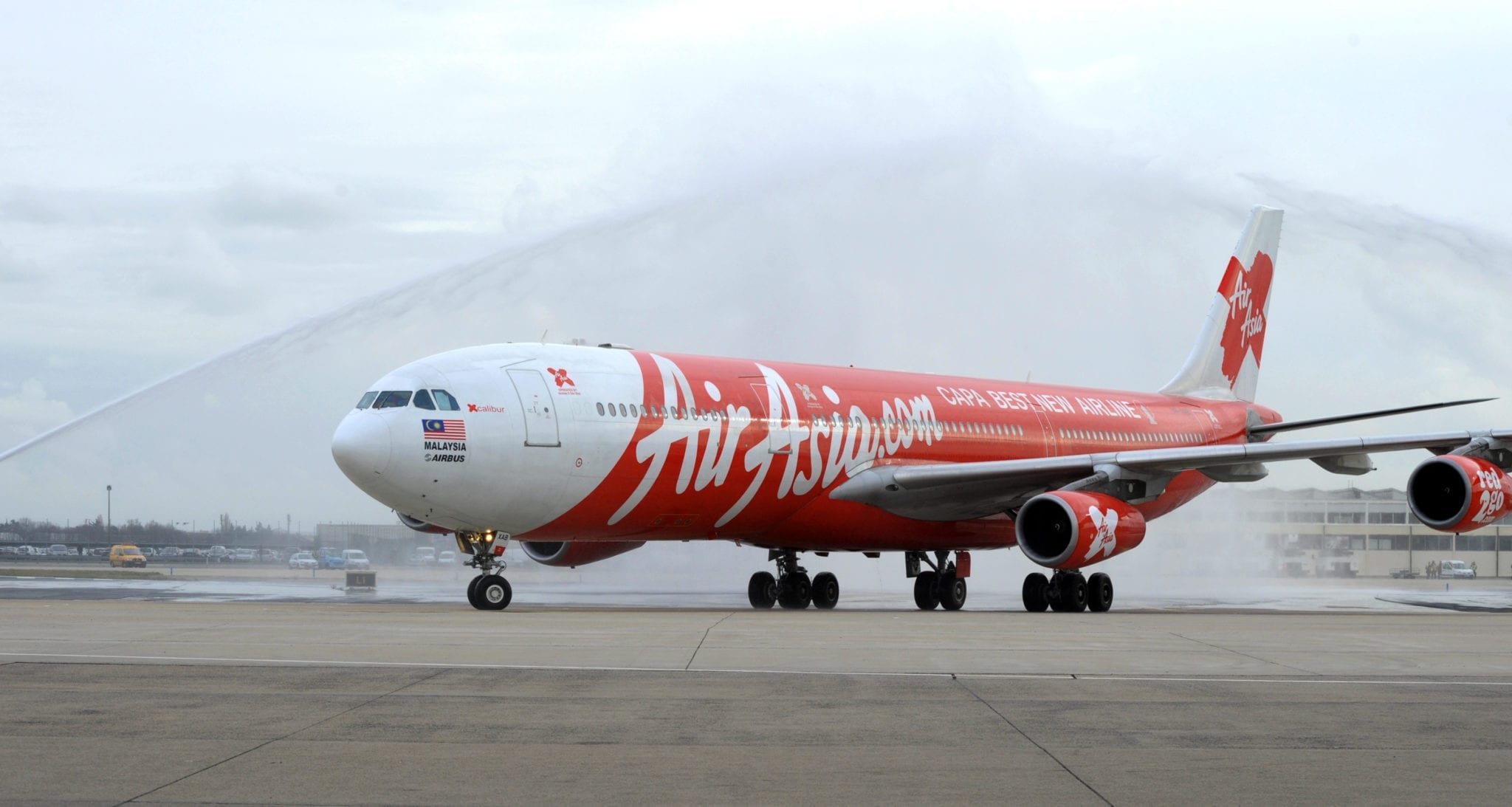
  • Bali gears up for the holiday season with extra AirAsia seats

    Bali gears up for the holiday season with extra AirAsia seats

    The Christmas and New Year holidays always see a spike in both local and foreign visitor arrivals to Bali. And this year is expected to be no different.

    In anticipation of more traffic, local news wires are reporting AirAsia Indonesia would be adding an additional 65,000 seats from December 1 to January 5, 2020.

    Speaking to reporters in Jakarta, Head of Communications at Indonesia’s Transportation Ministry, Baskoro Adiwiyono, said AirAsia Indonesia would also be bringing in an additional fleet of Airbus A320s and adding extra flights for several domestic routes to and from Jakarta.

    The Ministry is expecting a significant increase in seat occupancy rates for flights in mid-December 2019 to early 2020, especially to favorite holiday destinations such as Singapore, Lombok, Bali, and Surabaya. The Jakarta to Bali route, for example, will have an additional two flights per day until December 14.

    “Towards the Christmas and New Year holiday period we plan to increase the frequency of flights from the Jakarta to Denpasar to 13-times per day for the period December 15 to January 5,” said Baskoro.

    Prices tend to increase significantly as the major holidays approach and the Transportation Ministry is encouraging prospective passengers to book early to get the best prices while tickets are still available.

    AirAsia is also suggesting customers check the company’s social media accounts to take advantage of any holiday promotions.

  • Carrefour Taiwan launches Asia’s first private-label cage-free eggs

    Carrefour Taiwan launches Asia’s first private-label cage-free eggs

    Carrefour Taiwan has launched its first line of private label cage-free eggs, responding to growing consumer demands for sustainable products.

    The range, originating from an Asian retailer at its Neihu Store in Taipei’s north, marks another step in the brand’s local Act For Food initiative, which is intended to project Carrefour as a leader in food transition.

    As part of the launch, one Taiwanese dollar from every box sold will be donated to promote the welfare of farm animals, with proceeds going to the Environment & Animal Society of Taiwan.

    “When I saw firsthand the rich and active lives of hens on cage-free farms,” said Carrefour Taiwan director of CSR and communications Marilyn Su, “it was clear to me the role retailers must play in the food transition.

    “As a large international retailer, Carrefour is constantly thinking about how it can exercise corporate social responsibility to make Taiwan a better, more beautiful place because of our presence.”

    Carrefour Taiwan announced its four-step commitment to going cage-free in May last year. The chain currently stocks 24 cage-free egg SKUs in Taiwan, and the market share has already risen to 17 percent.

    Last month the firm conducted a survey of almost 1000 consumers, with results showing that nearly 80 percent of Taiwanese consumers care about the production system of the eggs they buy, and almost nine in 10 are concerned about antibiotics use, antibiotic residues, and unhygienic rearing environments.

  • Malaysia retail sales forecast remains gloomy

    Malaysia retail sales forecast remains gloomy

    Malaysian retail sales are expected to fall for the third consecutive quarter.

    Retail Group Malaysia, which prepares quarterly reports for the Malaysia Retailers Association, is now projecting total sales of RM107.5 billion (US$25.75 billion) for the financial year to March 31, a 3.7-per-cent growth over last year. However, early projections suggest a more positive performance next year with an expected growth of 4.6 percent.

    “The coming New Year will remain a challenge for the Malaysian retail industry,” said RGM MD Tan Hai Hsin. “Externally, trade disputes among countries are not expected to end soon. Internally, economic policies that can stimulate consumer spending are limited in the near term.”

    Particularly worrisome figures for the supermarket and hypermarket sector predict a contraction of around 9 percent for this year’s final quarter.

  • Vingroup, Masan to form Vietnam’s biggest retail group

    Vingroup, Masan to form Vietnam’s biggest retail group

    Vietnamese business giant Vingroup has agreed to merge its retail and agriculture unit with Masan Consumer Holdings, aiming to form Vietnam’s biggest retailer.

    The deal has the effect of spinning off Vingroup’s retail assets into a new company in which it will hold a minority stake, freeing Vietnam’s largest privately-owned to focus on its industrial businesses, including car manufacturing, smartphones and a new flatscreen television brand it is launching.

    Under the agreement, Vingroup will convert shares in VinCommerce JSC (retail) and VinEco (agriculture) into shares of the post-merger company in which Masan Group will take control while Vingroup will be a minority shareholder.

    The new company will take over VinCommerce’s retail network including 2600 VinMart and VinMart+ outlets across the country together with 14 high-tech farms of VinEco.

    The new venture will merge the country’s largest retail group with its leading FMCG player, creating a farm- or factory-to-store business entity.

    Vice-chairman and general director of VinGroup, Viet Quang Nguyen, said the main reason for the merger is that the group has changed its development strategy to focus on the technology industry, especially its new VinFast car company and VinSmart phone business.

    “Vingroup has completed its mission to create the pioneering and most effective clean agriculture and retail system in Vietnam,” says Cong Thang Truong, chairman of Masan Consumer. “And now we will carry this flag to continue our mission to serve consumers while ensuring a fair retail market for Vietnamese manufacturers.”

    VinCommerce has strengthened its retail presence by a combination of organic growth and by acquiring rival retail groups including 23 Fivimart supermarkets, 87 Shop&Go convenience stores, and the smaller Queensland convenience-store chain.

    Masan Consumer is one of Vietnam’s largest FMCG companies, manufacturing and distributing food-and-beverage products, including sauces, instant noodles and bottled beverages.

  • Airplane mode might get more intelligent in Android 11

    Airplane mode might get more intelligent in Android 11

    When your phone is set on Airplane mode, all radios inside the device are disabled. This prevents radio signals from possibly interfering with the equipment that pilots rely on while flying an airplane. Also known as Flight mode, or even offline mode, passengers on a plane can use this setting to access content already downloaded on a phone such as a movie, music, or a mobile video game.

    While Bluetooth and Wi-Fi are currently disabled when Airplane mode is turned on, both can be used by enabling them separately. Google plans on making this feature more intelligent in Android 11. The report says that on phones running the next Android build, turning on Airplane mode will not automatically disable Bluetooth by default. Instead, if you are using Bluetooth and then turn on Airplane mode, Android will be smart enough to figure out that you still want this connection enabled even when activating Airplane mode.

    The new feature was spotted on the Android Open Source Project Gerrit under a new commit titled “Context-aware Bluetooth airplane mode.” It states that Bluetooth should not be automatically turned off when Airplane mode is turned on under one of two conditions. One, Bluetooth A2DP is connected, or two, the Bluetooth Hearing Aid profile is connected. A2DP stands for Advanced Audio Distribution Profile and is used to allow a device to send high-quality audio from a Bluetooth device to a handset. Both devices have to have A2DP or else the Bluetooth connection will be limited to passing along voice calls. Most phones do support A2DP these days. The Bluetooth Hearing Aid profile allows those with hearing aids to wirelessly connect to smartphones and other devices.

    With this new feature, a passenger in a plane won’t have to do anything to keep his wireless Bluetooth earpods connected to his Android phone once forced to turn on Airplane mode. Otherwise, the user’s wireless earpods will stop working until Bluetooth is separately enabled. It saves the user a little time and aggravation.

    Back in 2017 with iOS 11, Apple gave iPhone users the ability to keep Bluetooth and Wi-Fi enabled even when Airplane mode was turned on. This allows an iPhone user to keep his Apple Watch connected to his iPhone via Bluetooth even with the handset’s internal radios shut down. And it also allows an iPhone user to stay connected to his AirPods when Airplane mode is enabled.

  • Founders of Google announce a major corporate restructuring

    Founders of Google announce a major corporate restructuring

    Today, Larry Page and Sergey Brin, the co-founders of Google, announced that they would step down from their respective roles in Alphabet Inc., the parent company of the world’s largest search engine. Continuing forward, current Google CEO Sundar Pichai will take the chief executive officer position at Alphabet while retaining his role at Google.

    This change comes after four years after Google first announced the new public holding company Alphabet, as well as its own transition from a standalone to a subsidiary of that company. When the change occurred, Page and Brin took the positions of CEO and president at Alphabet, Inc, respectively, while Pichai took the reins at Google.

    This new transition reflects Google’s growth in the scale and variety of its ventures and offered services. Page and Brin write, “Today, in 2019, if [Google] was a person, it would be a young adult of 21 and it would be time to leave the roost. While it has been a tremendous privilege to be deeply involved in the day-to-day management of the company for so long, we believe it’s time to assume the role of proud parents,” in a founder’s letter posted.

    This doesn’t mean the co-founders are leaving the company entirely, however. They continue to write, “We are deeply committed to Google and Alphabet for the long term, and will remain actively involved as Board members, shareholders and co-founders. In addition, we plan to continue talking with Sundar regularly, especially on topics we’re passionate about!”

    With this change taking place, newly-appointed Alphabet CEO Sundar Pichai’s responsibilities will now include managing Nest, Waymo, Wing, and other subsidiaries that were related to but not directly affiliated with Google.

  • Canada Goose sees Asia revenue go up despite Hong Kong protests

    Canada Goose sees Asia revenue go up despite Hong Kong protests

    The Hong Kong market has been a tough topic for a lot of retailers, especially those who have the mains consumer base in China. This was one of the reasons behind the fall in stock prices for Tiffany that got acquired by LVMH. Tiffany while not as prominent in the US anymore, relied heavily on its Asian consumer base but amidst the protests, its consumption fell flat. But this doesn’t seem to be the case with the Canada Goose.

    While the shares still sank, the revenues are more than 25% in its most recent quarter in Asia, despite the complicated situation in Hong Kong. Canada Goose shares lost 4.96% on the Toronto Stock Exchange but the consumers seem to be loving the infamous coats still.

    Canada has been going through a crisis of its own. With 71 thousand people losing their jobs, the worst month for job losses in decades. Some industries are struggling while others are still thriving. IGaming hasn’t really taken a hit by all of this and you can still enjoy the best Canadian online casino or real-life gambling venues. But the overall economy while resilient is still not in a great place. Canadian Goose, a luxury parka retailer that has always been popular in Asia also seems to be resilient. Before the value dropped the company warned about this possibility, saying that the wholesale revenues were expected to decrease in the third quarter because orders were advanced leaving fewer remaining winter orders to come.

    Despite this, the Canada Goose reported $60.6 million second-quarter revenues. While the Asian share of their revenue nearly doubled.

    Asian Market Loyal to the Canadian luxury parkas

    The Asian market still loves this product and the decrease of tourists doesn’t seem to be affecting the company all that much since its customer base in the continent is still there.

    The company was founded back in 1957 and since then has been a renowned manufacturer of winter clothes that were always loved in Asia and this new statistic proves just that.

    But still, the Canadian Goose had way higher expectations with the aiming at 43 % profit per share and $267.3 million in revenue. Canada Goose is one of the businesses that more or less survived the major drop caused by the protests and is still staying afloat, and surprisingly largely thanks to the Asian market. It managed to score $48.9 million this year, compared to the 2018 number that got the company $26.2 million in the second quarter of 2018.

    While the numbers are definitely impressive according to the company representative, this does not paint a full picture. According to them the company’s store in Shanghai and Hong Kong have been impacted significantly by the reduction of tourism but luckily real-life stores are not their only viable source of income.

    The company is watching the local events very closely and tries to evaluate the action to streamline its costs base on the grounds. This includes negotiating accommodations from landlords as well. Canadian Goose seems to be in the Asian market for a long haul since according to the representative they have plans to stick around for years, as they have done in the past and even if they don’t perform all that well during one quarter it doesn’t mean that they will give up on the market that has been so loyal to them.

    This attitude definitely makes them stand out in the Asian Market, which has seen far too many companies distressed over one unsuccessful quarter. This is part of the reason why the customer has stayed so loyal to these luxury parkas and have managed to turn their market into one of the key markets for the Canadian Brand.

    Tough times for Canadian brands

    When it comes to Canada and its economic struggle of the moment the situation is a little unstable. Whether or not it will affect the company is yet unclear but the officials are stating that they can bounce back from the biggest cuts in jobs in decades and get their “resilient” economy back on track. With the home market struggling along with its major consumer group also staying back, Canada Goose is in for an interesting quarter, to say the least.

    But since the locals have remained loyal to the Canada goose products company will now probably put even more effort and attention towards the Asian market. The prediction on whether or not the situation in Hong Kong will last much longer are not very reliable. So the Companies must be ready for the worst-case scenarios.

    It seems like even with that setup Canadian Goose is bound to have a better chance of surviving compared to other similar brands. Their main selling point has always been the quality that has stayed consistent throughout the years so it is expected that the customers will keep relying on the Canadian brand despite the economic hardship both in their hometowns of home countries and from the company’s part as well.

    Some even predict a 40% chance of a recession in Canada among two rate cuts but the government officials are staying more positive, at least in the public eye.

  • Macau’s biggest industry and its various marketing practices

    Macau’s biggest industry and its various marketing practices

    Macau is facing one of the toughest years ever in its presence in China. The enterprise is facing the first time a decline in annual gaming revenues during the last 3 years. Macau first came to  China 20 years ago. Macau has managed to revolutionize the gambling scene and has long been hailed as the world’s biggest gambling hub. But this seems to be changing with the economic slowdown in China, and the migrations of high-rollers towards Vietnam.

    Some of the experts are saying that Macau has now reached its peak and the downfall is inevitable. The gambling hub will have to put in a lot more work than it previously had to promote itself and to secure its existing status in China. The analysts at Bloomberg are saying that Macau’s growth will swing from 14% growth in 2018 to 3% in 2019. According to them, things might turn around in the following year but it’s unlikely that the casino will see the same revenue it saw in the year 2010-2013.

    Macau will probably need to upgrade or better since their various marketing techniques that are quite unique across the industry. When it comes to gambling the marketing has its own perks and little details that you usually don’t have to think about when advertising other services and there are some upsides to this as well.

    Gambling venues often use very modern and less adopted ways of marketing their services and with the growing popularity of online casinos, there’s a whole new realm of advertising technologies that online casinos can use that get very impressive results. Here we’ll break down some of the basic marketing strategies that Macau has used in the past that can help the gambling hub get back to the equilibrium.

    Affiliate marketing

    In this day and age, affiliate marketing is one of the most modern and easy to manage ways to advertise your products. Casinos that usually have a harder time collaborating with traditional advertising agencies or getting their ads on all sorts of content across the web affiliate marketing can be one of the most efficient ways to market.

    You can rely on the best casino affiliate programs to deliver outstanding results. Macau has used this technique as well and it might consider going in more heavily of affiliate marketing since it proves to have a high response rate, it is less over the top and the users are less likely to ignore it and considering some of the past challenges that Macau has faced it is easy to see why this would be a perfect way to go about promoting their service in the time of decline. There is a lot to dissect when we talk about the situation in Macau and why it is now having the worst time it has had as a company in probably decades. As mentioned above some of it has to do with the fact that Macau has been around long enough for it to start feeling a little less exciting and innovative. Introducing affiliate marketing more heavily into the routine could greatly boost the image of the casino and possible even unfold a whole new, yet untapped demographics of users that could help bring the gambling hub back to its prime.

    Promoting the experience rather than a single service

    Macau got used to being the only gambling venue but now the landscape is changing with the regional gaming hub attracting more and more of Macau’s previous clientele. But the inherent advantage that Macau has is that it is more than just a gambling hut.

    It has a rich history of being the top destination for successful Asian people looking to entertain themselves with gambling and they could get the prime experience exclusively in Macau. Macau is no just gambling, it’s nice dinners expensive shops and overall luxurious experience. If Macau only focuses on gambling it’s selling point won’t really strike a chord with the users because they can get gambling in other places too.

    What they cant get is the exclusivity, the high quality of the hotel experience and the luxury of experience Macau fully. If this gambling hub wants to recover from a bad year it is obvious that it needs a different approach so it can still rival the emerging local casinos by offering users something these fresh venues can not, which is the rich history, the idea behind it and the luxurious experience of it all.

    It’s important to consider other factors as well as the Chinese economic slowdown and the reemergence of other, similar experience-based gambling venues for high-rollers. But Macau might be able to recover even easier from this than anticipated because the newness of these other venues will wear off sooner than it did for Macay because the gambling landscape and the customer standards and expectations were completely different then.


    Macau needs to ride out this wave of decline through improved marketing techniques and showing resilience to the newcomers with is unique history, glamorous resorts and the luxurious dinners that have seen the gambling hub through a variety of challenges before. The Gambling industry isn’t going anywhere so if Macau manages to get back on its feet it will then fully secure its spot as the leader and innovator in the field.

  • Vietnam Airlines asked to spell out details of plan to buy 50 jets

    Vietnam Airlines asked to spell out details of plan to buy 50 jets

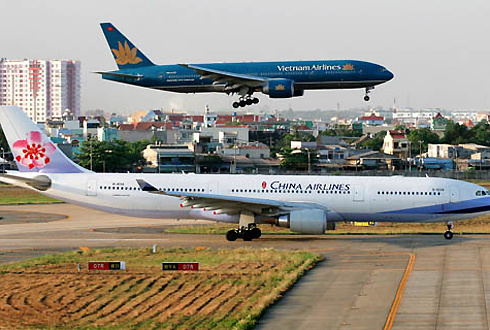
    The Ministry of Transport has asked Vietnam Airlines for details about its plan to acquire 50 narrow-body aircraft by 2025.

    The national flag wants to buy 50 Airbus A3210/321 or Boeing 737 MAX 8/9/10 aircraft in 2021-2025 at a cost of VND88.13 trillion ($3.83 billion).

    It seeks to replace its 26 existing aircraft and expand the fleet by 24, with four or five airplanes delivered every year.

    But the ministry said the airline needs to furnish information about the routes it plans to use the new aircraft on and detailed plans about hiring more staff to operate them.

    It warned against the purchase of Boeing 737 MAX 8 saying it is still unclear whether the grounding of the model would be reversed.

    The carrier also needs to consider that technical issues have been reported in some Pratt Whitney engines used in Airbus A320/321 NEO by some airlines, the ministry said.

    Vietnam’s surging travel demand has caused airlines to expand their fleets. Bamboo Airways has inked a deal with Airbus to buy 50 aircraft, while Vietjet last month signed a $140 million loan with foreign banks to finance its Airbus order for 20 aircraft.

    Last year the country’s 21 state-run airports handled 103.5 million passengers, according to the Airports Corporation of Vietnam, and the number is set to rise to 112 million this year.

  • 7-Eleven Malaysia plans to take control of Caring Pharmacy

    7-Eleven Malaysia plans to take control of Caring Pharmacy

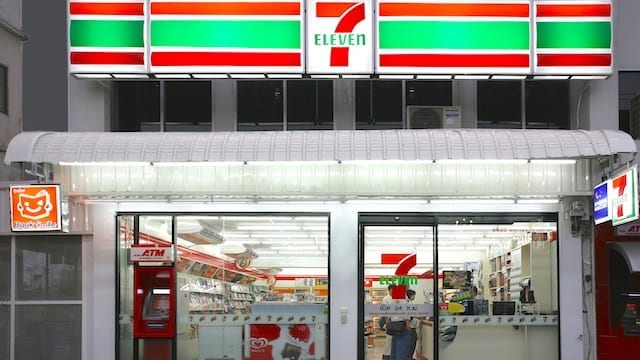
    Convenience store operator 7-Eleven Malaysia Holdings is to boost its stake in Caring Pharmacy Group and take control of the chain.

    7-Eleven Malaysia says it plans to buy a further 25.35 percent of the Caring Pharmacy business, taking the total shareholding under control of its related parties and itself to 38.57 percent. That would require a mandatory general takeover offer under Malaysian stock exchange regulations as it takes the combined stake over the 33-per-cent threshold.

    The founder of Berjaya Group, Tan Sri Vincent Tan, is a major shareholder of 7-Eleven Malaysia Holdings and has shares in Caring Pharmacy Group.

    Caring Pharmacy was established in 1994 by five pharmacists, who were course-mates in the School of Pharmacy, Universiti Sains Malaysia. The first outlet opened in Taman Muda, Cheras and the chain has now grown to 121 stores.

    In a stock-exchange filing, 7-Eleven Malaysia said it wants to take its shareholding above 50 per cent, but will maintain Caring Pharmacy’s independent listing.

    Caring is a profitable player in the retail-pharmacy category and has a successful online business. Acquiring a majority stake in the pharmacy retailer would allow 7-Eleven Malaysia to expand its e-commerce operations using Caring’s expertise, as well as generally add to its product offer, networks and customer base.

    The process will be completed in the first half of next year.

  • Retailers in Singapore Driving Efficiencies to Free Up More Time for Customers

    Retailers in Singapore Driving Efficiencies to Free Up More Time for Customers

    In today’s fast-paced and constantly changing retail sector, where consumer activity is always evolving, there is much conjecture about the state of the Singapore market.

    While there has been talk of slumping retails sales, a Department of Statistics Singapore Retail Sales Index report in September 2019 showed that total sales value was up 1.9 percent month-on-month, and some retail categories had grown year-on-year, including apparel & footwear by 4.2 percent, computer & telecommunications equipment by 8.7 percent and medical goods & toiletries by 3.2 percent.

    In the current market, a number of retailers in Singapore are reporting success in a challenging operating environment. And a key focus for these retailers is optimising a number of areas of their operations to reduce costs and deliver an enhanced consumer experience.

    Freeing up more time for customers

    Behind the scenes, retailers spend a large amount of time and budget on administration tasks and optimising their staff – hiring and onboarding staff, training staff, rostering, covering shifts due to sickness or holiday leave, diverting staff to tasks such as stocktake, as well as payroll.

    Time spent on administration tasks takes away from the time that managers have available to concentrate on enhancing the customer experience. And in an ever-shifting retail environment, managers need to be investing as much time as possible on understanding and meeting the desires of consumer if they are to achieve success into the future.

    Additionally, with the rising popularity of online shopping, retailers need to focus a lot of time and effort on enhancing the in-store experience of customers, to ensure they still get foot traffic through the doors.

    In order to free up more time to prioritise the customer experience, many retailers are moving from manual or outsourced methods of managing their staff, to automating and handling it all in house on one single automated digital platform.

    Optimising operations

    Given the complexity of the modern retail environment, managers need to have full visibility of staff across multiple stores so they can optimise their operations. Solutions, such as automated workforce management, helps to reduce costs, cuts time spent on admin and provides a better service to employees, all of which allows retail managers to spend more time and budget on meeting the needs of their end customer.

    By accessing a central solution, retailers can also respond quickly and effectively to staffing needs for a few, a few hundred, or thousands of staff, across every store and department, during every retail season. This ensures retailers have the right level of staff rostered so they can have peace of mind that their customers are always being looked after.

    With automated rostering, staff can access their roster anytime online, which reduces errors and confusion that might lead to understaffing. And, with a POS integration, a manager can make staffing changes on the go, such as moving workers from stocktake to the shop floor, or increasing worker numbers during a lunch-time rush and then reducing them during quieter periods.

    Retailers finding success

    Many retailers are working hard to find success in the current Singapore market, and a big focus for them is becoming more efficient and cost effective in many areas of their businesses. Improving the way in which the workforce is managed is one way in which many retailers are reducing costs and finding more time to concentrate on enhancing the retail experience to ensure customers continue visiting their stores.

    Humanforce is a global provider of workforce management solutions for companies who need a flexible solution to manage complex workforces. For more information: www.humanforce.com



  • Hong Kong International Airport launches online concierge shopping service

    Hong Kong International Airport launches online concierge shopping service

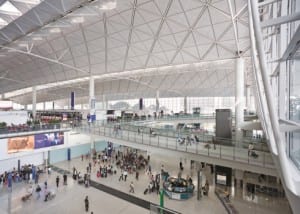
    Hong Kong International Airport has launched an online concierge service called Luxury Reserve.

    The concierge concept allows customers to choose duty-free purchases at home via HKIA’s e-Shop Luxury Reserve and collect it the items at the airport.

    Luxury Reserve features exclusive items and limited editions from more than 40 luxury brands including Alexander McQueen, Breitling, Chloe, Roger Vivier, Saint Laurent, and Stuart Weitzman.

    According to a statement, reservations can be made from two weeks to 48 hours before the customer’s flight departs.

  • Vietnam needs more qualified workers

    Vietnam needs more qualified workers

    Vietnam should improve its workforce quality and create better jobs if it’s to escape the middle-income trap, experts say.

    As of 2018, only 12 percent of jobs in Vietnam were high-skilled, while 54 percent were medium-skilled jobs and the remaining 34 percent were low skilled ones, Valentina Barcucci, an economist with the International Labour Organization (ILO), said at the Vietnam Labour Forum 2019 on Wednesday.

    The percentage of high-skilled jobs was low compared to the global average for upper-middle-income countries, who have 20 percent of their jobs in this category, she said.

    “Vietnam does not need more jobs but needs better jobs. Although its unemployment rate is very low, job quality is still a challenge,” Barcucci said.

    The unemployment rate stood at 1.99 percent in the first nine months of the year, according to the General Statistics Office.

    With the rise of Industry 4.0, a large amount of low-quality, low-cost labor in Vietnam would stop being an advantage. As such, developing high-quality labor is an inevitable requirement to ensure Vietnam can develop strongly, said Vo Tan Thanh, Vice President of the Vietnam Chamber of Commerce and Industry (VCCI).

    “To become a high-middle-income country by 2030, Vietnam needs social improvements in parallel with economic development. Fortunately, Vietnam is taking the right steps such as improving the skills for the workforce, expanding social security coverage, and modernizing labor institutions,” said Chang-Hee Lee, ILO Vietnam Director.

    The Ministry of Labour, Invalids and Social Affairs estimates Vietnam’s current workforce at 56 million people.

  • Ministry proposes major upgrade to airport in central Vietnam

    Ministry proposes major upgrade to airport in central Vietnam

    The Dong Hoi Airport’s capacity should be increased four-fold to 2 million passengers a year, the Transport Ministry says. Le Dinh Tho, Deputy Minister of Transport, said at a meeting Thursday, adding that the airport’s current capacity of 500,000 was too low, given Quang Binh Province’s strong tourism potentials.

    The domestic Dong Hoi Airport, rebuilt in 2008, is located on a 173-hectare plot. Last year, it exceeded its capacity by 200,000 passengers, according to official figures.

    The Airports Corporation of Vietnam (ACV) had proposed to Quang Binh authorities in July that the airport be upgraded at a cost of VND2 trillion ($86.3 million), making it capable of receiving international flights and up to 3 million passengers a year.

    Quang Binh is home to Son Doong Cave, the world’s largest, and other spectacular cave systems. The province welcomed over 4 million visitors in the first nine months, up 28 percent year-on-year.

    ACV last year proposed a VND56.7 trillion ($2.4 billion) upgrade to 16 of the 21 state-owned airports in the country to meet rising air travel demand.

  • Cebu Pacific profit surges by 143%

    Cebu Pacific profit surges by 143%

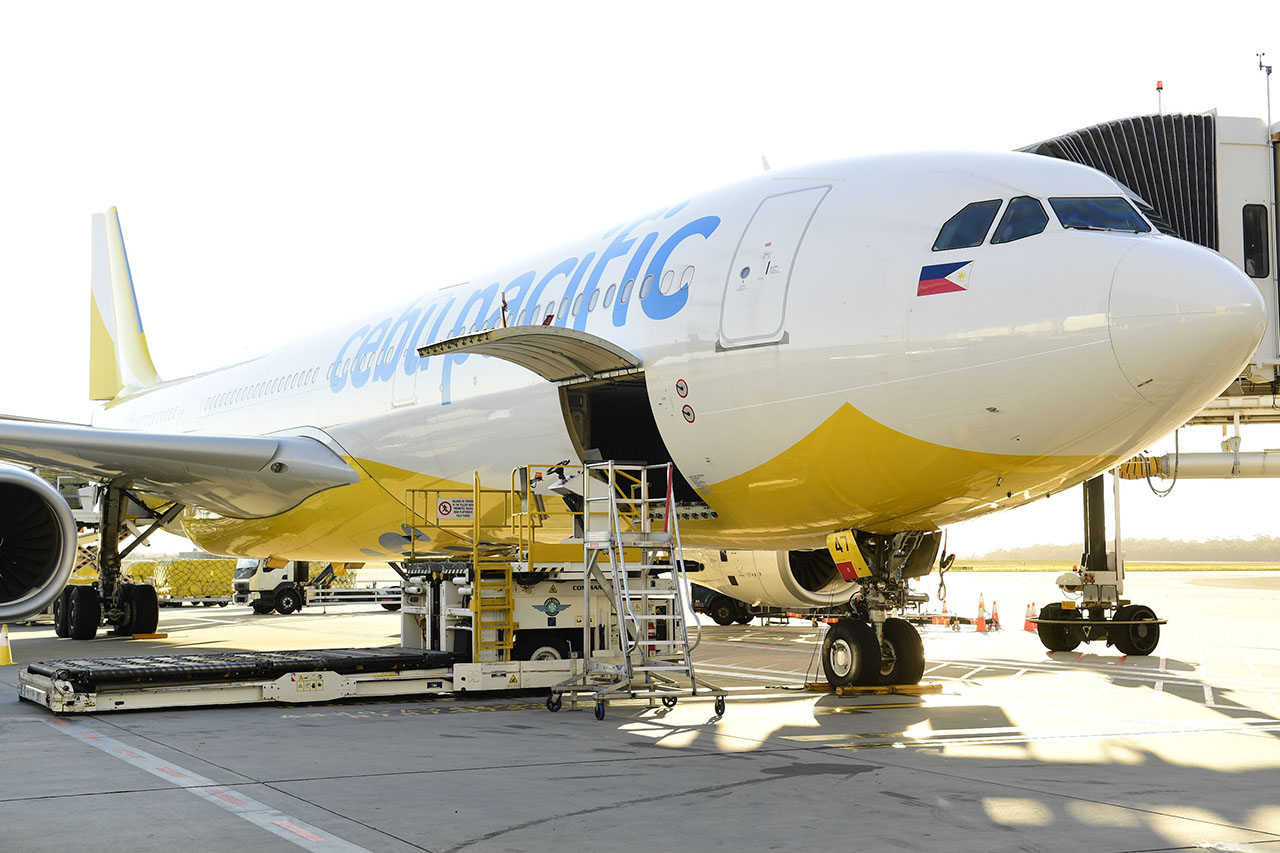
    The operator of budget airline Cebu Pacific saw its net income surge by 143 percent in the first nine months of the year as earnings were lifted by strong passenger bookings and stable costs.

    Cebu Air Inc., a subsidiary of the Gokongwei family’s JG Summit Holdings, said on Tuesday that net income from January to September hit P6.75 billion versus P2.78 billion during the same period last year.

    Cebu Air has been ramping up capacity to meet the rising demand for air travel. Passenger revenue during the nine-month period went up 17.9 percent to P46.6 billion. Some 16.7 million flyers used Cebu Air during the period, representing a growth of 10.4 percent.

    Moreover, average fares went up 6.7 percent to P2,794, the budget airline said. Other revenue sources such as cargo and ancillary also went up 5.3 percent and 22.2 percent, respectively.

    Overall, Cebu Air’s revenue increased by 17.7 percent to P63.62 billion.

    Cebu Air said expenses were mostly kept in check during the period. Operating expenses increased 7.8 percent to P53.81 billion, in line with expanded operations.

    Flying operations alone went up 2.5 percent to P22.56 billion. Cebu Air said this was mainly due to pilot training costs as it took delivery of new planes. Fuel expenses also dropped 1.4 percent or P260.67 million during the period.

    For the third quarter alone, Cebu Air posted a net loss of P384.3 million, narrower than the previous year’s loss of P518.43 million. Revenue of P18.92 billion, up 16.7 percent, alongside stable operating costs helped lower losses during the third quarter of 2019.

    Cebu Air ended September with 72 planes. Its fleet was comprised of 31 Airbus A320, seven Airbus A321 CEO, three Airbus A320 NEO, two Airbus A321 NEO, eight Airbus A330, eight ATR 72-500 and 13 ATR 72-600.

    Its network spanned 80 domestic routes and 41 international routes with a total of 2,727 scheduled weekly flights.