Category: General

Retail News Asia is committed to providing both local and global retailers with the latest General Retail news throughout the Asian market. This on a daily base.

  • Five things to watch for as AirAsia reveals earnings

    Five things to watch for as AirAsia reveals earnings

    Budget airline pioneer Tony Fernandes has built AirAsia Group into a benchmark for aviation in Southeast Asia in the 17 years since he founded the company.

    No longer satisfied with just flying passengers from A to B, Fernandes wants to use the data collected from the 100 million passengers he transports each year to transform the group into the “Amazon of travel.”

    Buffeted in recent months by the global trade war, high fuel costs, increased competition and other hurdles such as a failure to crack the lucrative Vietnamese market, the company’s shares are down nearly two-thirds from the all-time high of 4.6 ringgit ($0.53) in February last year.

    As AirAsia Group reveals its financial results for the second quarter on Wednesday in Kuala Lumpur, here are five things investors will be watching.

    One of the aviation industry’s most important metrics that measures the average fare per passenger per kilometre, Maybank Investment Bank’s Mohshin Aziz, is expecting lower yields to dampen profits.

    Mohshin is forecasting a second-quarter net profit of 111 million ringgit ($13 million), that’s 65% lower than for the same period last year, but up 9% on the first quarter.

    “Load factor declined by 0.4 percentage points year-on-year to 85.1% in second-quarter 2019 on the back of 16.8% year-on-year capacity growth,” Mohshin said. ” This is a very respectable load but it likely came at the expense of lower yields, in our view.”

    Mohshin said in terms of yields, AirAsia’s published fares look relatively weak in the second quarter of 2019 when compared to the same period last year.

    In the first quarter of 2019, yield declined by 4.1% year-on-year. “We expect more of this in the reported second quarter of 2019.”

    Fuel Prices

    Rising fuel prices have hit other regional carriers such as Virgin Australia hard, with the airline reporting a loss of AU$315.4 ($212.5 million) on Wednesday for the 12 months to June 30.

    But MIDF Amanah Investment Bank’s Adam Mohamed Rahim believes AirAsia’s prudent hedging policy could help the bottom line this quarter.

    “Our positive outlook on the group stays intact on its more prudent hedging policy, stable operations with added capacity and continuous improvement to derive higher values per kilometre flown,” said Adam.

    Adam will also be watching out for any estimate from AirAsia on whether a new departure tax to levied from September 1 of 8 Ringgit per passenger for destinations within the Association of Southeast Asian Nations, and 20 Ringgit for non-ASEAN destinations will cause a dip will impact on passenger growth.

    Geographic Segment

    AirAsia carried 42.2 million passengers in Malaysia last year, making it one of the group’s most profitable markets, but operations in Indonesia, Thailand and elsewhere have struggled, with net income slipping 92% in the three months to the end of March from the same period a year ago.

    Second quarter earnings could tell a different story though, said Ahmad Maghfur Usman of Nomura Securities, who believes AirAsia’s short-haul operations, especially to Indonesia and Japan, will show significant improvement.

    Ahmad added that improving supply and demand dynamics were in the carrier’s favor, with lower fuel costs going forward also expected to help boost profitability.

    ‘Amazon of Travel’

    After announcing a leadership reshuffle earlier this month, Fernandes’ ambitious plans to morph AirAsia into something other than a budget carrier is starting to take shape.

    “We are now the 13th largest airline flying about 100 million passengers annually and collecting piles of data in the process,” Fernandes said in June. “It is not a huge leap to say we are becoming a digital power.”

    Any further light that Wednesday’s results can shed on exactly how Fernandes plans to expand online, and fend off established rivals such as Expedia and Booking.com, will also be keenly anticipated.

    Philippines AirAsia

    When Philippine business mogul Michael Romero revealed in June that he had upped his stake in Philippines AirAsia to 45%, as well as announcing a $350 million capital infusion, it seemed like the long-awaited initial public offering of the AirAsia Group affiliate would finally get off the ground.

    That was until last weekend when Fernandes told reporters in Bangkok that he was still in wait-and-see mode regarding the Philippine unit’s bid to go public.

    “It’s there, but with no particular rush to be honest,” Fernandes said. “We want to maximise the valuation, so you know after a very tough start our earnings are very strong, the fuel price is going down, tourism is going up.”


  • Hulu launches new iOS app, Android version coming later on

    Hulu launches new iOS app, Android version coming later on

    After surpassing Netflix when it comes to the number of subscribers in the United States, Hulu revealed plans to rehash its user interface in an attempt to make it less confusing for users. Well, it looks like that time has come, as Hulu is now rolling out a new version of its app to iOS users.

    Although the company hasn’t made any announcements yet, TechCrunch reports Hulu confirmed a major update is now pushed out to mobile devices. Hulu also mentions that the update is coming to Android as well, but at the moment it’s only tested internally.

    As far as the changes go, the most important tweak is the complete removal of the Lineup landing page, which is replaced with Hulu Picks. The latter features content that’s curated by Hulu staff, and it’s not populated based on the algorithms derived by user viewing habits.

    If you swipe down, there’s more content available at first glance, as you’ll be able to see two items at a time. For example, on the iPad, you’ll be able to see two rows totaling 6 cards on the app’s main screen when in landscape mode.

    Every page in the app takes advantage of this format, including Live Now, Unwatched in My Stuff, My Channels, as well as genre-based sections like Sports, News, TV, Movies, Kids, and Hulu Originals.

    These seem to be the only visible changes in the new Hulu app for iOS devices, which is a bit surprising considering the company revealed plans for more improvements like expanded metadata next to content and the ability to mark content as “unwatched.”

  • Decathlon moving into old Metro store at Singapore’s The Centrepoint

    Decathlon moving into old Metro store at Singapore’s The Centrepoint

    After five years at The Centrepoint, Metro Department Store will shutter its flagship next month.

    The announcement heralds the latest in a series of closures at the 36-year-old mall, which has close to 10 vacant units with more already expected to come.

    However, Frasers Property has since confirmed that sports-goods retailer Decathlon will take over at least part of the Metro space, scheduled to open in the first part of next year once fitout is complete.

    Metro’s September 15 withdrawal from the mall will leave only two of its Singapore outlets open, at Paragon and Causeway Point respectively. Staff of the store have yet to be briefed as to whether or not they can expect to be employed at the other outlets.

    “In recent years, Metro has been rationalising its retail business in response to changing market conditions,” said a spokesperson for the firm. “Metro continues to focus on its core businesses of retail in Singapore and Indonesia, together with property investment and development.”

    Adding Decathlon to the tenant mix will provide a significant drawcard to the troubled mall which is seeking to morph into a lifestyle destination with experiential retail concepts targeting younger consumers.

  • 7-Eleven Malaysia store sales rise with new stores openings

    7-Eleven Malaysia store sales rise with new stores openings

    7-Eleven Malaysia has boosted sales by 7.2 per cent in the first half of this year, aided by new store openings, increased promotions and a higher average spend per customer.

    The company now has 2323 stores trading and plans further openings in the second half of this year.

    For the six months to June 30, 7-Eleven Malaysia group revenue reached RM1.17 billion (US$277.9 million) Revenue from its food-service business surpassed 3.5 per cent of the group’s total, an increase of more than 30 per cent year on year.

    Gross profit improved by RM33.7 million or 8.5 per cent year on year, despite expenses related to store openings. The adoption of MFRS 16 accounting standards relating to leases reduced post-tax profit by RM4.6 million. Excluding that factor, the group would have achieved a profit after tax of RM30.3 million, which would have been 37.4 per cent ahead of the same period last year.

    CEO Colin Harvey said the company was pleased with its overall results, especially given the impact of MFRS 16.

    “We are confident that continuous implementation and improvement of our strategy roadmap in strengthening the key areas of assortment, supply chain, operational excellence, store base and digitally enabling the organisation will continue to deliver positive results despite challenging headwinds as we look forward to ensuring that 7-Eleven remains Malaysian consumers’ preferred convenience store brand.”

    The 7-Eleven Malaysia board believes trading conditions for the next quarter are expected to remain challenging

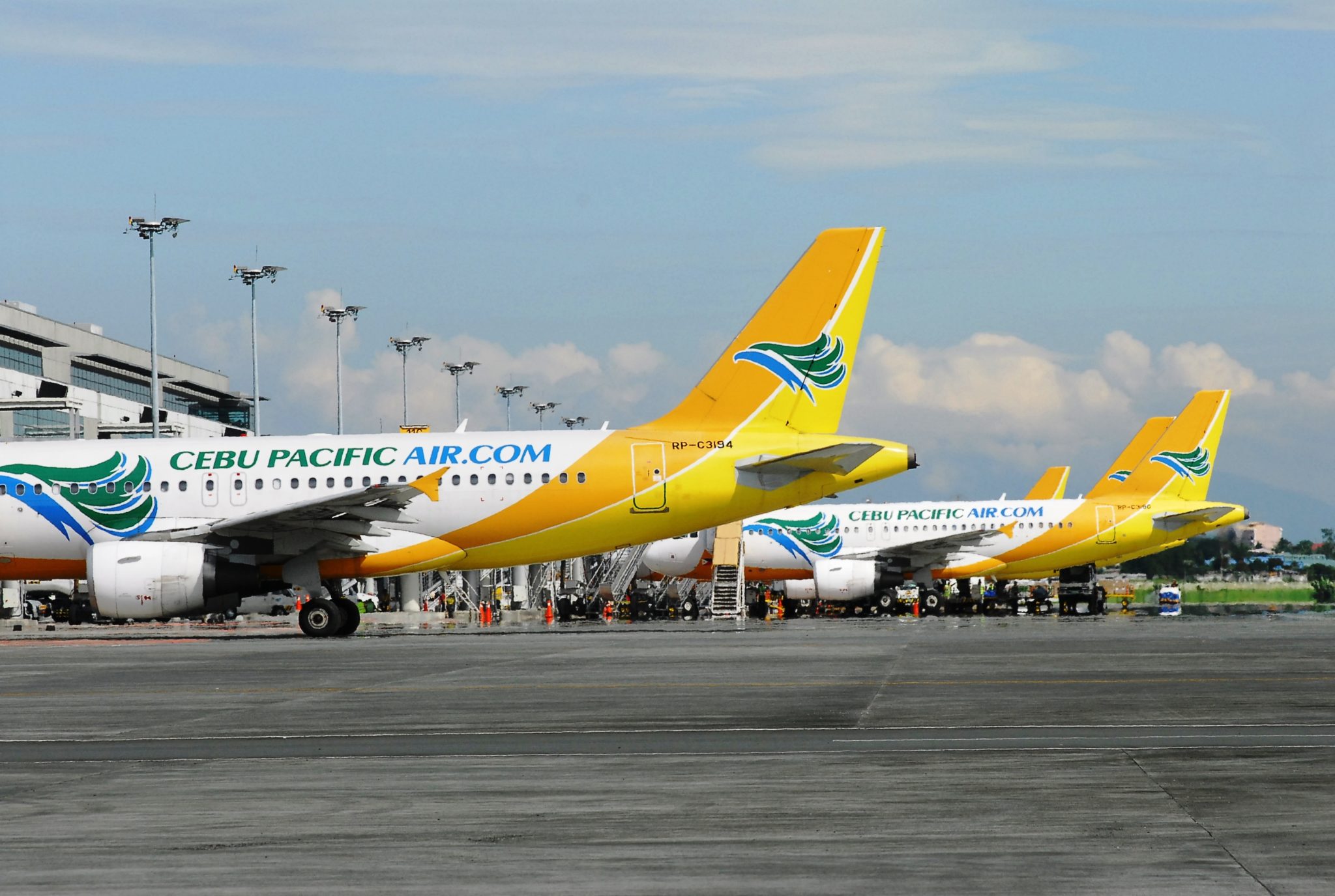
  • Cebu Pacific wants more flights to tense Hong Kong

    Cebu Pacific wants more flights to tense Hong Kong

    The Philippines’ largest budget airline is seeking additional flights to Hong Kong despite ongoing anti-government demonstrations.

    In a filing before the Civil Aeronautics Board, Cebu Pacific said it was seeking added flight entitlements to Hong Kong-based on a provision under the Philippines-Hong Kong Air Services agreement that covers flights from Manila. The CAB has set a hearing on Sept. 16.

    Cebu Pacific has 24 weekly flights between Manila and Hong Kong. It also operates 14 weekly flights from Clark International Airport, two weekly flights from Iloilo and nine weekly flights via Mactan Cebu International Airport.

    This comes despite protests that have, at times, grounded all operations at the Hong Kong International Airport, which the Airports Council International said was the 8th busiest in the world in terms of passenger volume.

    The protests were initially aimed at a bill, eventually shelved by the Hong Kong government, that would have allowed the extradition of fugitives to mainland China. Massive demonstrations, which began in June, show no signs of dissipating.

    Cebu Pacific is ramping up expansion as it takes delivery of new planes.

  • Giant Malaysia opens seven stores as it accelerates upgrade program

    Giant Malaysia opens seven stores as it accelerates upgrade program

    Giant Malaysia opened seven new-generation stores on a single day last week as Dairy Farm International-owned GCH Retail upgrades the retail-grocery brand.

    Since May of this year, the company has upgraded 21 Giant stores in Malaysia, including 14 in the Klang Valley region of greater Kuala Lumpur. Friday’s openings were all in Johor.

    “The new concept was designed to create a modern shopping environment in our stores and more product diversity to better serve the needs and wants of the customers,” a spokesperson told Inside Retail Asia.

    “Showcasing an attractive systematic layout, shoppers will now find it easier to navigate their way through the hypermarket.”

    “The focus is on freshening up and lifting the brand, while the team works at improving the offer according to customer needs and preferences.”

    The seven Johor stores consist of Giant Hypermarket Plentong, Giant Hypermarket Leisure Mall, Giant Hypermarket Southern City, Giant Hypermarket Tampoi, Giant Superstore Kulai IOI, Giant Superstore Ulu Tiram and Giant Supermarket Perling Mall.

    The newly refurbished stores dispel the myth being propagated by some mainstream media in Malaysia that Giant is shrinking its store network or even preparing to exit the market. Giant has been in the country for more than 70 years and last year GCH Retail opened a RM116 million (US$27.6 million) fresh distribution centre to serve its Giant, Cold Storage, Jason’s Food Hall and Mercato banners.

    “The fresh new look of these stores are a testament to Giant’s commitment to constantly reinvent to provide communities with greater variety of fresh and quality products at the best value and cultivate a more sustainable society,” the spokesperson said.

    The new-format stores feature a bright and light environment, with vibrant colour schemes and bold category signage.

    The product range has been streamlined in each store to expand the fresh food offer and improve its quality.

    A Flat Price Zone features products set at a fixed price points of RM1, RM3, RM5, RM10 and RM15. An expanded Kids Zone features a wide variety of toys and stationery for children.

    The relaunched Giant stores will also feature an expanded range of electrical products comprising reputable brands and Giant Malaysia’s own-brand cookware and gadgets.

    ShopSmart! fills a gap

    Dairy Farm has also been rolling out its new minimarket format, ShopSmart! since March, which has a focus on fresh food and household essentials

    Six stores have already opened, with a seventh due to come online during the next few weeks.

    The format has been designed in response to changing customer preferences in Malaysia identified by GCH Retail, such as more frequent ‘everyday shopping’, smaller basket sizes and a desire for stores to be located in residential areas for consumer conveniences.

  • Costco China opens first store in Shanghai

    Costco China opens first store in Shanghai

    US warehouse retailer Costco opened its first store in China today, against a background of an escalating trade war between the US and China and at a time the local economy is showing signs of slowing.

    The giant store will open in a suburb of Shanghai boasting a catchment of 2 million consumers and follows a four-year program by Costco to build brand awareness among local consumers through a presence on Alibaba’s Tmall Global.

    The company has a target of signing up at least 100,000 members to make the venture viable.

    Costco’s business model relies largely on the sale of memberships giving consumers the right to shop there, with tight margins on products and large pack sizes giving the brand a cost advantage over traditional supermarkets.

    Richard Zhang, Costco’s senior vice president for Asia, said the membership model was not foreign to locals.

    “Chinese consumers are ready to pay for a membership card that grants them an exclusive privilege to buy at a warehouse store, it’s not a new concept in the country,”

    Costco also takes encouragement in that – despite the failures of European hypermarket chains Carrefour, Tesco and Metro in the Chinese market – its US rival Sam’s Club, operated by Wal-Mart on a similar business model, has been trading there for 20 years.

    “A mature market saves us efforts in educating customers.”

    However Jason Yu, GM of Kantar Worldpanel China, is less bullish about Costco’s prospects there.

    “The Chinese market is very complicated and requires retailers to innovate and localise,” he said.

    Local retailers like Hema, Alibaba’s tech-enhanced food store network, are proving popular with consumers and can adapt quickly to changing consumer preferences.

    “Local retailers are reaching out to customers via all distribution channels while foreign retailers are not so flexible to adapt to new situations,” he said. “The old way of a large and all-inclusive hypermarket doesn’t work in China.”


  • Android 10 release date confirmed: Here’s when Google will release it to Pixel phones

    Android 10 release date confirmed: Here’s when Google will release it to Pixel phones

    It seems that Android 10 will be officially released for Pixel phones on September 3, 2019. This will be the official debut of Android 10 on phones, but of course, it will take a bit longer for all the other Android manufacturers to update their devices.

    This piece of saucy info comes straight from the horse’s mouth – two independent Google Support agents have confirmed with us and a reader of ours that, yes, the next major software update will be released to Pixel devices in eight days’ time. Who knew that you could learn so much by simply asking…

    The update will most certainly arrive to all Pixel devices, including the Pixel 3/3XL, 3a/3a XL, as well as older troopers like the Pixel 2/2 XL. As a pleasant surprise, the original Pixel and Pixel XL, which were released all the way back in 2016, will also get Android 10 despite being outside of their two-year support window. That’s a neat bonus for the early adopters of Google smartphone lineup, which were promised two years of software updates and three years of security support.

    A change of heart at Mountain View

    It’s been merely a few days since we willy-nilly parted ways with Android’s sweet naming scheme of old. Forever gone are the dessert names that became a signature feature of the operating system. As a reminder, there have been a total of 14 dessert-theme Android releases. These are Android 1.5 Cupcake, Android 1.6 Donut, Android 2.0-2.1 Eclair, Android 2.2 Froyo, Android 2.3 Gingerbread, Android 3.0-3.2 Honeycomb, Android 4.0 Ice Cream Sandwich, Android 4.1-4.3 Jelly Bean, Android 4.4 KitKat, Android 5.0-5.1 Lollipop, Android 6.0 Marshmallow, Android 7.0-7.1 Nougat, Android 8.0-8.1 Oreo, and Android 9 Pie. Speculation about Android 10’s dessert name hit a wall as just few compatible sweets started with “Q”, the letter that was slated to grace 2019’s Android release.

    All we know about Android 10 so far

    Among the new features that will grace Android with the arrival of its next version are native support for foldable phones, 5G, Live Captions, Smart Reply, Suggested Actions, as well as improved security and privacy features. Other features that are worth mentioning are seamless background updates, improved suite of digital well-being and parental controls functionalities, and finally, the coveted dark mode.

    But when will my phone receive Android 10?

    As usual, it takes Android manufacturers some time to prepare the major Android software updates for their devices. Samsung, for example, usually takes three to four months to develop, test, and distribute the goods to its userbase. In case you’re using one of Samsung’s current or former flagships, then you’re in for a patient wait. Here’s when we expect some of the more popular Samsung phones to receive Android 10 with One UI 2.0:

    Galaxy S10+, S10, S10e Galaxy Note 10
    International Late December 2019 / Early January 2020 Mid-late January 2020
    US Unlocked February 2020 February-March 2020
    Verizon Late January 2020 February-March 2020
    T-Mobile Late January 2020 February-March 2020
    AT&T Late January 2020 February-March 2020
    Sprint Late January 2020 February-March 2020
  • Android users can now silence Google Assistant

    Android users can now silence Google Assistant

    Do you cringe when Google Assistant starts verbally running off at the mouth with an answer to your question? While it might be information that you need to know, it also might be a good time for a silent response. Thankfully, Google has come up with a solution.  A new section has been added to the support page for the Google Assistant that tells users how to turn off its speech output.

    Turning off the speech output will not affect the answers that you get from Google Assistant. You will see the responses on your phone, but they won’t be read out loud. To turn off the speech output of Google Assistant, touch and hold the home button on your Android device or say “OK Google” or “Hey Google.” When the Assistant box comes up from the bottom, tap on the compass icon on the bottom right of the screen. After that, tap on your profile picture or initial in the upper right corner of the display. Go to Settings > Assistant. From there, go to “Phone” and then “Voice and speech.” Tap Speech Output and a box will appear with two options. To shut Google Assistant up, select “Hands-free only.” To get the digital assistant’s voice to return, follow the above instructions again and when you get to the last box, select “On.”

    Apparently, many Android users are not able to find the “Voice and speech” section on Assistant. Well, first of all, the support page was just updated today so we assume that the update is only now rolling out. We were able to find it on our Pixel 2 XL running Android 10 beta 6. We should point out that Google did not note in the support page that this is a feature limited to Android 10, so if you’re running Android 9 or even Android 8, there is no harm checking to see if you can silence Google Assistant.

    Since typing in a question for the Google Assistant always results in a non-verbal response, the new feature comes into play only on inquiries that are spoken to the virtual digital helper.

  • Facebook reportedly working on a new app called Threads

    Facebook reportedly working on a new app called Threads

    In an attempt to catch up with Snapchat, Facebook is reportedly working on a new app called Threads, which will allow users to share their status, location, and other information with closest friends.

    The app will be designed as a companion app to Instagram is meant to let users share information with their “close friends” list on Instagram. The app is already being tested internally at Facebook, but the company declined to comment for the time being.

    Illustrated screenshots from Threads, the new messaging app from Facebook and Instagram have already been obtained by the media. Although they’re not captured in-app, some of the features are visible such as automatic sharing between users and the people on their “close friends” list on Instagram.

    Users will be able to opt in to automatic sharing, while the app will update the status of the user sharing information with their friends such as location, speed and more. Apparently, Facebook chose no to let the app share your actual real-time location, instead, it will notify your friends that you’re “on the move.”

    There’s also an option that will allow Threads users to update their status manually. However, sharing information is just a secondary focus, as the app’s core remains messaging. All messages from friends will appear in a central feed and there will be green dots showing which of your friends are active.

    Whenever one of your friends posts a story on Instagram, you’ll be able to see that within Threads. Also, the app has a camera that lets users capture photos and videos, which can be sent to close friends.

    Unfortunately, it’s unclear when and if Facebook will actually release Threads to the general public. The internal testing is meant to determine whether or not the app might be useful, so it will take some time before we’ll hear about it again; or not.

  • AirAsia Good hub opens in Kuala Lumpur

    AirAsia Good hub opens in Kuala Lumpur

    AirAsia Foundation opened its first social enterprise hub, Destination: GOOD, at the weekend, marking a new milestone in its social entrepreneurship advocacy.

    Located downtown Kuala Lumpur in the former Rex Cinema premises now called REXKL, Destination: GOOD retails more than 400 responsibly and ethically produced goods sourced from over 30 social enterprises from around ASEAN.

    More than a shop, it aims to be an exchange that fosters collaboration between ASEAN social entrepreneurs and community-based enterprises.

    “In the last seven years, we have awarded 24 grants to innovative ASEAN social enterprises to help them grow. We realised that to expand our reach, we needed to create broad-based platforms to speak to new markets and audiences. Through Destination: GOOD, we hope to do just that and make social enterprise goods and services accessible to anyone seeking sustainable travel and lifestyle solutions,” said AirAsia Foundation executive director Yap Mun Ching.

    Malaysia’s Minister of Finance, YB Lim Guan Eng, joined AirAsia Group executive chairman Datuk Kamarudin Meranun and AirAsia Group CEO Tony Fernandes at the opening ceremony.

    Also present to share their stories were 10 of AirAsia Foundation’s Malaysian social enterprise partners, including The Basikal, Langit Collective and The Picha Project.

    On the sidelines of the shop opening, AirAsia Foundation signed a Memoranda of Understanding (MoU) with Kraftangan Malaysia to bring Malaysian crafts to a new audience and with Minconsult Sdn Bhd, the AirAsia philanthropic arm’s first corporate partner, to jointly fund social enterprise outreach activities in Kuala Lumpur. Over the past two years, AirAsia Foundation has operated Destination: GOOD as a pop-up store in various locations, including Kuala Lumpur International Airport (klia2). This is the first time the shop will have a permanent address in the city centre.

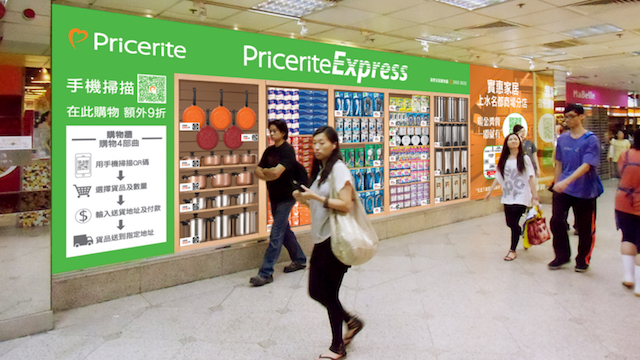
  • New Pricerite at MegaBox embraces omnichannel, accepts cryptocurrencies

    New Pricerite at MegaBox embraces omnichannel, accepts cryptocurrencies

    Pricerite has opened its third new New Retail concept store, at MegaBox in Kowloon Bay.

    The 36,000sqft Pricerite at MegaBox has been designed to seamlessly merge the furniture retailer’s physical store offer with its omnichannel approach.

    And it claims to be the first retail chain store in Hong Kong to accept cryptocurrencies.  All Pricerite stores are now accepting Bitcoin (BTC), Ethereum (ETH) and Litecoin (LTC) as payment method. The store’s cash registers will instantly convert the cryptocurrencies into Hong Kong dollars according to the real-time exchange rate. Customers with a Lightning Network-supported cryptocurrency wallet can finish the BTC transaction in several seconds.

    “Following the immense success brought by the opening of Pricerite’s first-of-its-kind New Retail concept store last year, we are making another big leap forward,” said CEO James Leung. “Continuing with our commitment to the integration of advanced technologies with human talent, we … adopted a wide range of state-of-the-art retail technologies, providing customers with an all-rounded shopping experience.”

    One of the technologies the company has employed is a Virtual Store online, which simulates the actual environment of the Pricerite at MegaBox store. Customers can browse the aisles and click on a product on the shelf to read its details and price, before adding it to their cart should they wish to buy it.

    Leung says the online shopping experience runs 24 hours a day and offers an almost totally true-to-real-life experience.

    Another technical highlight is a smart kiosk in the new store which provides information such as inventory levels in the store and the availability of products in nearby stores if they are out of stock at MegaBox.

    Pricerite’s Pepper the robot, has been updated, offering far more information than the loyalty program advice the first generation Pepper in Nathan Road was known for. Pricerite says the new-generation Pepper is the first retail robot in Hong Kong developed to provide and search the information of more than 10,000 products.

    And the company’s 3D mobile app has been upgraded to provide a more fluid customer experience when customers are measuring if a furniture item will fit inside their home. The app merges the simulated apartment with the actual environment captured via the phone camera before it shows a 1:1 display of all furniture pieces in the real home environment. Users can ‘browse’ the apartment at his or her own pace in a first-person view. This app then offers typical apartment templates and a wide range of furniture options.

    The Pricerite at MegaBox offers delivery services in as little as four hours.

    During launch phase, the service will be available only for Kowloon customers who buy products with the ‘Pricerite Speed Delivery’ tag online or at the MegaBox outlet.

  • Flagship Razer store in Las Vegas opens next month

    Flagship Razer store in Las Vegas opens next month

    A flagship Razer store in Las Vegas is set to open next month’s, the gaming brand’s largest outlet anywhere in the world and its second in the US after San Francisco.

    The 2400sqft Linq Promenade outlet will open to gamers and the general public on September 7 in a location that sees nearly 22 million global visitors annually.

    “It was totally natural for us to build our next retail presence in Las Vegas, where so many of our fans would be able to experience and enjoy our entire gaming ecosystem,” said RazerStores global director Christine Cherel. “Together with Caesars Entertainment, we have been scouting for the perfect spot for over a year – and now we have found it, right at the heart of one of the best places for entertainment in the world.”

    Dubbed RazerStore LV, the Razer store in Las Vegas will aim to encourage and foster an avid gaming community, with esports and gaming events organised weekly.

    “The introduction of Razer to The Linq Promenade will create an immersive destination for gamers at the heart of the Strip,” said Caesars Entertainment’s senior VP of attractions, retail and leasing, Shaun Swanger. “With the addition of Razer, The Linq Promenade and Las Vegas continue to thrive as the global epicenter of tourism, technology and entertainment.”

    The new two-level brand gallery and retail store features a massive 16-HD-panel-display wall broadcasting interactive live streams and tournaments in full surround sound to onlookers inside and outside.

    PC gamers can set new records playing blockbuster titles on Razer Blade gaming laptops, while console gamers can compete head-to-head in fighting games on Panthera Evo arcade sticks or Wolverine controllers. Mobile gamers can also compete on the 120-Hz display-powered Razer Phone 2.

    Razer, which is co-headquartered between San Francisco and Singapore, opened its first US RazerStore at the Westfield Mall in Downtown San Francisco in May 2016. Two more stores are located in Hong Kong and Taiwan.

  • Toddler dies at Urban Revivo store in Jewel Changi

    Toddler dies at Urban Revivo store in Jewel Changi

    An 18-month-old girl has died following an accident at Urban Revivo fashion store at Jewel Changi Airport, according to reporting in The Straits Times.

    The toddler suffered fatal injuries after a standing mirror fell on top of her. She died in hospital after staff at the store administered first aid while paramedics were en route. Police stated that the child was unconscious while being transported to Changi General Hospital, where she was pronounced dead.

    “We are working closely with the tenant to ascertain the details of the incident,” said an airport spokesperson. “Out of respect for the privacy of the family, we are unable to comment further.”

    Urban Revivo stated that it was “deeply saddened by the tragic accident”. It is currently assisting police in investigating the incident.

    Media reports say the parents of the child are visitors from Mainland China.

  • Just google Amazon fire

    Just google Amazon fire

    The rainforest is burning. So much so, that it can be seen from space and people are starting to get worried over the unprecedented forest fire spread, just like in Siberia or Alaska this year, which is shaping up to be the hottest on record.

    The thing with Brazil’s rainforest, however, is that it not only gobbles vast amounts of greenhouse gases, but also serves as a vast cloud highway that helps maintain the global climate balance. You’ll hear varying opinions on the level of disaster in our divided society – either that July and August are the typical forest fire months and the intensity is actually below average, or that the scale is unprecedented, and 85% higher than last year.

    In any case, we are not here to argue about climate change but to note one amusing fact that happened around South America’s fires. The most famous natural wonder there is undoubtedly the amazonian rainforest, so, naturally, people who were interested to read more on the matter keyed into Google the words “Amazon fire” as one does.

    With Google, Facebook and Amazon occupying nearly 80% of the online advertising space and budgets, however, the first and subsequent search results were about the Amazon Fire tablet. The law of unintended consequences kicked in for Amazon, and it must have sold a boatload more of its budget slates than usual in this back-to-school month.

    Google quickly fixed that wrong, and when you search for Amazon fire now, that’s exactly what comes up as the first result – information about the flames running through the rainforest, as well as various musings whether they are caused by climate change.

    The Amazon Fire tablet and various Bezos-endorsed gadgets, however, are still strong in the news search as you can see from this current snippet below – oh, the world we live in!