Category: General

Retail News Asia is committed to providing both local and global retailers with the latest General Retail news throughout the Asian market. This on a daily base.

  • AirAsia, beyond 1Q19 and headline numbers

    AirAsia, beyond 1Q19 and headline numbers

    Tan Sri Tony Fernandes tweeted two months ago that AirAsia Group Bhd will have its “best year” in 2019, and so far headline numbers look okay, if not promising, at least for the first quarter ended March 30, 2019 (1QFY19). Jet fuel prices are at around its hedging price — 52% of its fuel needs in FY19 has been hedged at an effective exercise price of around US$78 (RM326.82) of jet fuel — while passenger load factor is expected to stay solid at 87.9%. The group chief executive officer (CEO) has also hinted that its Asean joint ventures would “perform well”.

    Notwithstanding that, AirAsia’s share price has been underweight so far this year ahead of the release of its 1QFY19 results, scheduled on Wednesday, probably because investors remain wary after the airline’s biggest loss-making quarter last year.

    MFRS16 on pricier sale-leaseback model

    AirAsia made two sale-leaseback deals with BBAM Ltd Partnership for US$1.185 billion (RM4.62 billion) in 2018 and Castlelake LP worth US$768 million (RM3.17 billion) in 2019 to lease back a combination of 108 planes to free up cash, pare debt and fund its digital venture.

    The higher operating lease expenses partly caused AirAsia’s RM394.97 million loss in 4QFY18, despite its 6.2% year-on-year (y-o-y) rise in revenue to RM2.82 billion on the back of a 16% jump in passenger count. Other main factors were higher fuel costs and a stronger US dollar against the ringgit in the period — both of which retreated temporarily in 1Q this year.

    But in 1QFY19, AirAsia will adopt the Malaysian Financial Reporting Standards 16 (MFRS16). This accounting practice recognises all lease assets and liabilities, including planes that are currently treated as off balance sheet operating leases.

    With the change, AirAsia’s operating lease expenses — which rose 73% y-o-y to RM1.13 billion in FY18 because of the sale-leaseback model — will be removed from the calculation.

    On the flip side, estimates show that MFRS16 will result in AirAsia’s profit before tax retreating by around RM400 million y-o-y for the whole of FY19. It may also front-load the lease expense of these planes at a depreciation of around RM3.5 billion and interest expense of RM1.1 billion in the same period.

    Fernandes, in his Twitter account, said the adoption of MFRS16 has no impact on the airliner’s cash position, arguing that the non-cash impact is “not very material” at around RM35 million a year.

    CGSCIMB Research, in an April 8 note, estimated that the group would book a net gain of RM174.3 million from the Castlelake deal in its profit and loss statement, with net cash proceeds of around RM891 million.

    Still, AirAsia is set to expand its fleet size from 226 planes in 2018 to 399 units in 2024, as it fully adopts the sale-leaseback structure from this year onwards. With 244 planes this year, AirAsia will book over RM11 billion of lease assets and liabilities on its balance sheet, while net gearing is expected to jump to 1.5 times. Analysts, meanwhile, confirmed that AirAsia management has guided there will be another special dividend this year, although the quantum has yet to be determined.

    AirAsia is committed to pay special dividends every two years. Recall its bumper FY18, which declared total dividends of 64 sen, inclusive of a 40 sen special dividend in 3QFY18, for a total of over RM2.14 billion.

    As at end of last year, AirAsia held cash equivalents of RM3.35 billion. TA Research in a note dated May 9 published its in-house estimate of AirAsia’s FY19 total dividend at 70 sen per share, ahead of the conclusion of the Castlelake deal.

    Others are more conservative until 1QFY19’s results are out. Full-year dividend estimates among analysts covering the stock, according to Bloomberg, average at 15.5 sen. CGSCIMB’s special dividend assumption was trimmed to 13 sen per share, from 19 sen per share previously, after lowering expectations on net cash proceeds from the Castlelake deal.

    Of 17 analyst calls on Bloomberg, AirAsia has seven “buy”, six “hold” and four “sell”. Twelve-month target prices (TPs), which range from RM1.50 to RM5.20, average at RM2.84. Of the total TPs, 35% were below its last close of RM2.45.

    The group, meanwhile, announced on April 26 that it is seeking shareholders’ approval for the proposed share buy-back of up to 10% of its total issued share. The last time it did so was in 2015.

    As in the past, AirAsia’s minority shareholders may approve both the special payout and the share buy-back.

    Beyond 1QFY19, the strengthening of the greenback against the ringgit and rising fuel costs are some of the things to watch out for. Amid strong load factors across its subsidiaries, market competition continues to put pressure on yields.

    In the horizon is the group’s digital venture, which Fernandes appears to be quite stoked about, given the number of his tweets referring to it of late. Come Wednesday, AirAsia could provide a breakdown of its digital businesses, which includes mobile payment app BigPay and one-stop travel platform, AirAsia.com.

    Fernandes told investors as early as March 1 to “look out” for AirAsia’s 1QFY19 results, which will provide a gauge on its operational changes. With its digital venture and changing market movements thrown into the mix, it remains to be seen if the stock will stay a darling among investors in the long run.


  • China is experiencing a convenience-store Expansion

    China is experiencing a convenience-store Expansion

    China is experiencing a convenience-store boom.

    Nearly 12,000 new convenience stores were opened on the mainland last year, according to the China Urban Convenience Store Index, an increase of 18 percent.

    The index, released by the China Chain Store and Franchise Association, showed that new convenience stores took up 62 percent of all new openings in the territory. Around two-thirds of these were opened under a franchise arrangement.

    Typically, franchised convenience stores in China show a return on investment at the two-year mark.

    While first-tier cities are thought to have reached saturation point in terms of convenience-store market penetration, the field remains open for second and third-tier cities.

    “There is a big potential for more regional players to deepen their market penetration,” said secretary general of the China Chain Store & Franchise Association Peipei Liang, adding that hypermarket operators are now turning to smaller-scale and community stores for a new growth point.

    Association figures show that the top 100 chain stores reached sales of CNY240 billion (US$34.9 billion), and an increase of 7.7 percent on the previous year’s results. These players also benefited from a 55.5 percent increase in online revenue.

  • Privacy browser Tor is now available on Android

    Privacy browser Tor is now available on Android

    With online privacy becoming an increasingly rare luxury these days, most all browsers offer some sort of “incognito” mode that’s supposed to help bypass various “surveillance” methods employed on the web. The demand for online anonymity has spawned a whole new breed of privacy-focused browsers that promise to offer better security and cover your traces in a more efficient manner than incognito modes. Among those, the Tor browser is the most popular (and infamous) choice for people looking to really erase their online presence.

    Connecting to the Tor network was possible in the past on Android, by using apps like Orbot and Orfox, but the release of the Tor browser on the Google Play Store eliminates the need of such workarounds. The browser has been in beta for close to a year now, but it’s finally ready for prime time.

    If you’re not familiar with Tor, here’s a simplified explanation. Instead of connecting directly to a website, like a regular browser would, Tor channels your request through a network of encrypted computers all around the globe, called “nodes,” before reaching your desired destination. This way, your identity and IP address remain hidden. Not to mention that this can also help when trying to view content that is blocked on a per-region basis, like music videos on YouTube for example.

    The Tor browser is based on Firefox, so its interface should be immediately recognizable to Firefox users. The browser is now available on Android, but an iOS may never see the light of day, according to the Tor Project. This is due to “restrictions by Apple,” though the blog post doesn’t go over any of them in detail.

  • VinMart Vietnam opens first virtual store

    VinMart Vietnam opens first virtual store

    Vietnamese supermarket chain VinMart claims to have opened Vietnam’s first virtual store.

    Run by VinGroup’s subsidiary VinCommerce, the new concept is being tested in 20 locations, including apartments, office buildings, schools and at bus stops, both in Hanoi and Ho Chi Minh City.

    Each store provides images and QR codes of more than 100 product groups for customers to scan and order via VinID app. The products will be delivered within two to four hours.

    VinMart launched the Scan&Go function in its app in March, applying it in 73 supermarkets across the country.

    Customers can also shop via VinMart’s printed shopping manual or online.

  • Waze is getting a new celebrity voice for driving directions

    Waze is getting a new celebrity voice for driving directions

    If you’re a long time Waze user, then you’re probably familiar with the app’s habit to bring in celebrities to give you driving directions. Of course, if you haven’t tried out the popular navigation app yet, this is a great chance to give it a go since the hip hop musician DJ Khaled is going to give you all the warnings about hazards and advises while you’re driving.

    Starting May 22 and until June 30, Waze users will be able to set DJ Khaled as the new navigation voice for the app. Aside from lending his voice to Waze, DJ Khaled will also provide drivers with precious advises like “Stay focused,” “Don’t play yourself,” and “The top’s off the Mayback!”

    We are beyond excited to launch the DJ Khaled voice in partnership with our friends at Deezer. DJ Khaled has one of the most recognizable voices in the industry and is beloved by many of our 115+ million users around the world, so we can’t think of anyone better to safely and entertainingly guide Waze drivers on their journeys.

    Obviously, you’ll be getting DJ Khaled’s voice on both Android and iOS versions of the app, so regardless of what smartphone you’re using, make sure to head to Settings / Voice Directions, and select DJ Khaled to be blown away.

  • Apple agrees to notify users when iOS updates impacts performance

    Apple agrees to notify users when iOS updates impacts performance

    Following the last year debate about whether or not Apple should have informed consumers that some of its updates will slow down their iPhones, the UK Competition and Markets Authority kicked off an investigation to learn more about the matter.

    The investigation only started after Apple admitted that the iOS update it pushed in late 2017 throttled down the performance of older iPhones. Fast forward more than one year and it looks like the UK government and Apple have found common ground. Apple has officially agreed to notify consumers when an iOS update will affect the performance of their iPhones.

    To ensure compliance with consumer law Apple has formally agreed to improve the information it provides to people about the battery health of their phones and the impact performance management software may have on their phones.

    The official statement on UK government’s website also mentions that Apple has agreed to provide easily accessible information about battery health and unexpected shutdowns, which the company has already done, along with guidance on how iPhone users can optimize the health of their phone’s battery.

    Everything that Apple agreed to applies both for current and future iPhones. In case any of the commitments made by Apple will be breached at any time in the future, the company could be sanctioned by the CMA (Competition and Markets Authority).

  • Google Drive users on a discontinued plan

    Google Drive users on a discontinued plan

    It’s getting harder and harder to complain about running out of storage space on today’s high-end and even mid-range smartphones, especially if you also add in an ultra-affordable or insanely hefty microSD card. At the same time, it’s generally a good idea to back up some of your most precious stuff in the cloud, where storage has gotten cheaper and cheaper in recent years as well.

    For instance, the 2018-released Google One subscription service provides two whole terabytes of digital hoarding room at a monthly fee of only $9.99 or an even more reasonable price of $99.99 per year. A couple of lower-cost options can hook you up with a 100 or 200 gig cache for $1.99 and $2.99 a month respectively (or $19.99 and $29.99 a year), while every free Google account gets a 15GB storage allotment to use across Google Drive, Gmail, and Google Photos platforms.

    This is all extremely well and good, but you know what can be better? Even more free cloud storage, which is exactly what subscribers on a discontinued Google Drive plan are reportedly receiving. Basically, instead of forcing users to upgrade from a $5 a year subscription that’s no longer a thing to one of the aforementioned $20, $30, or $100 plans, Google is letting people keep their digital depositories without ever needing to pay a dime.

    We’re obviously not talking about a great deal of storage space, but 20 gigs for free is certainly nothing to sneeze at, especially when you combine that number with the entry-level 15GB allotment. That’s right, these lucky Google Drive users will get a grand total of 35 GB of space in the cloud at no monthly charge whatsoever going forward. Unfortunately, if you weren’t subscribed to the grandfathered $5/year plan, there’s nothing you can do to take advantage of a similar special offer.

  • Google faces a huge fine for violating privacy rules

    Google faces a huge fine for violating privacy rules

    Last year, the European Union adopted the General Data Protection Regulation (GDPR) designed to boost privacy rights in the union. Under this regulation, companies in the EU cannot use a consumer’s personal data without informed, explicit consent. A company found to have violated the GDPR can be socked with a fine as large as 4% of the company’s prior year global revenue.

    With Google’s European headquarters based in Ireland, the company is now being investigated for GDPR violations by the Irish Data Protection Commissioner (DPC). The genesis of the complaint is interesting. The developers of an app called Brave Browser were among those claiming that Google is not playing by GDPR rules when it collects personal data for advertisers. When someone using the Browser visits a website, the app’s developers state that personal information belonging to the user is sent out to hundreds of companies without the user’s knowledge. These companies use this data in order to place bids to place targeted ads.

    “We will engage fully with the DPC’s investigation and welcome the opportunity for further clarification of Europe’s data protection rules for real-time bidding. Authorized buyers using our systems are subject to stringent policies and standards.”-Google

    If Google is found to have violated the GDPR, it could be fined as much as $5.52 billion based on the company’s 2018 global revenue of $138 billion. And Google is not the only tech firm under investigation by the DPC. As it turns out, Ireland is where many tech giants hang their hats in Europe and 17 tech firms are under investigation there for possible GDPR violations. Among them are Apple, Twitter, LinkedIn, Facebook and some of its units including WhatsApp.

  • Incheon Airport duty-free tenders to be Launched soon

    Incheon Airport duty-free tenders to be Launched soon

    Incheon Airport duty-free tenders will be released in the fourth quarter of this year.

    The airport, thought to be the world’s most lucrative for retail, has committed to a fair-tender process for both international and local retailers seeking spots in its Terminal 1 building. Almost all Terminal 1 duty-free concessions are scheduled to expire in August next year.

    The 12 duty-free concessions at the terminal are now run by seven Korean firms, including general duty-free retailers Lotte, The Shilla, and Shinsegae, although the airport’s management is encouraging foreign participation in the upcoming tender.

    “The door is always open,” said Incheon Airport’s director of concessions planning Dong-ik Shin. “There is no discrimination against any foreign duty-free operators. Our bidding process is very fair and transparent; the whole bidding process is done in public.”

    Incheon Airport is offering a new arrangement for the duty-free concessions that doubles the previous contract length to ten years and adopts a concession fee based on passenger growth rather than the current minimum annual guarantee model (MAG).

    According to Shin, the new 10-year contract makes it “a very significant and nice opportunity” considering the lucrative sales revenues available at IIA.

  • Inclusive design could help retailers o make more Profits

    Inclusive design could help retailers o make more Profits

    Businesses could generate an extra $4 billion in revenue and reach more consumers if they built products and services with an inclusive design in mind.

    That is according to new research from Adobe, Microsoft, PwC and Australia’s Centre for Inclusive Design released this week in PwC’s report, The Benefit of Designing for Everyone.

    The report reveals that five million Australians are unable to access products and services because of poor design, and yet they possess over $40 billion in annual disposable income.

    This number includes people living with a disability and seniors, however, there are millions of Australians who are also vulnerable to exclusion due to location, gender, ethnicity or financial status.

    Within the retail products sector, up to 20 percent of Australians are unable to access and use goods appropriately, the PwC report states. Retailers could promote accessibility and improve the user experience for more consumers by using inclusive design.

    This means keeping in mind the needs of people who have disabilities when designing products. Last year, for instance, Coles introduced an autism spectrum-friendly low-sensory “Quiet Hour” experience in 173 of its stores.

    “The initiative has not only impacted shoppers with autism but also shoppers who want peace and quiet while they shop,” the report states.

    The benefit of inclusive design is that the products ultimately cater to a wide audience, not simply those with special needs. As the report noted, various retail products that were originally designed with edge users in mind are now used by a wide majority of consumers.

    “Electric toothbrushes were created for patients with limited motor skills but have also become popular with consumers who don’t have this issue,” PwC said.

    “Design that considers the full range of human diversity with respect to ability, language, culture, gender, age and other forms of human difference means more people are included,” said Dr Manisha Amin, CEO of the Centre for Inclusive Design.

    “We commissioned the research to identify and determine the necessary means by which Australia can act to reduce these gaps.”

  • The Reject Shop downgrades guidance

    The Reject Shop downgrades guidance

    The Reject Shop on Thursday announced that chief executive Ross Sudano will depart the business in the near term. The news came as the discount retailer downgraded its profit guidance for the year from $3.1 million in the black to a loss of between $1 million and $2 million.

    Sudano has led the business through a period of rapid change since he was appointed CEO in 2014.

    “After a period of consolidation of the significant growth undertaken by the company, the board, in conjunction with Ross, has determined that this is an appropriate juncture to seek a new chief executive to guide the company through the next phase of its growth and bring renewed energy and vigor to the role,” The Reject Shop chairman Bill Stevens said.

    “Notwithstanding the current challenges facing the business, we continue to have confidence in the company’s long-term prospects and the opportunities for a new CEO to deliver a refreshed product range that will appeal to a broader customer base.”

    In the short term, Sudano will be temporarily replaced by the general manager of the supply chain, strategy, and innovation Dani Aquilina, who will lead the company as acting chief executive.

    Aquilina has been with the business for 12 years and has overseen a number of key supply chain transformations, including optimizing its international network, and the construction of new distribution centers.

    In addition to Sudano’s departure, The Reject Shop’s board has also appointed two new directors to its board.

    Zac Midalia will represent the company’s largest shareholder, Allensford Pty Ltd, which failed to acquire the struggling discount chain but gained an 18.99 percent voting power as a result of its takeover attempt, while Steven Fisher will act as an independent board member.

    Both will join the board on June 14, which will see a significant board renewal completed – with four out of six members having joined in the last nine months.

    The reduced guidance is a result of a difficult trading environment, the retailer said in a statement to the Australian Securities Exchange, in which low consumer confidence, flat wages, increases in the cost of living and a rapidly falling housing sector have driven sales well below expectations.

    As a result, comparable sales are down 2.7 percent – slightly above the year to date figure, which is down 2.9 percent.

    Gross margins in the second half are “well below expectations”, exacerbated by the competitive pricing pressure being placed on the business from both supermarket and department store rivals – forcing price roll-backs across a number of key lines as the business seeks to maintain its price gap in the market.

  • Countdown stores more accessible for New Zealanders

    Countdown stores more accessible for New Zealanders

    Countdown is taking steps to make the supermarket chain more accessible to people with different needs, opening the doors to the country’s first accredited ‘Be. Accessible’ supermarket in Hawera, and testing a new car park monitoring app to ensure mobility car parks are kept free for the people who need them most.

    Reopening earlier this month after a significant refurbishment, Countdown’s Hawera store has a number of new features that make it more comfortable and accessible for people.

    They include a visual alarm system for emergencies, and an EVAC chair for wheelchairs at the emergency exit, contrasting colors for doors and reduced natural light in the entry area to avoid glare for visually impaired customers, wider aisles for wheelchairs, mobility scooters and prams and team areas that have been designed for people with a range of mobility needs, to name just a few.

    “Sometimes the smallest changes can make a huge difference, like light switches that aren’t too high to reach if you’re in a wheelchair or mobility scooter, or a fire alarm that flashes lights instead of just a siren so that hearing impaired customers know they need to exit,” Kiri Hannifin, Countdown’s general manager of corporate affairs, safety and sustainability, said in a statement at the time of the launch.

    “It’s really important to us that all New Zealanders feel welcome when they shop with us, and we’re proud to have worked alongside Be. Accessible to help guide us to make our Hawera store more user-friendly. We’ll now be taking these learnings to our future store designs.”

    Countdown is also planning to offer Quiet Hours in its Hawera store future, which will support a low-sensory shopping experience, beneficial to people with Autism in particular.

    The supermarket chain this month has also started trialing a new app at its Dunedin stores, which enables users to upload photos of cars parked in mobility car parks that don’t display a valid permit.

    The Access Aware app, from CCS Disability Action, alerts the relevant store team, which enables them to relay a message over the store’s PA to ask the car owner to move their vehicle to another spot.

    “Having mobility car parks as close to our store entrance as possible is incredibly important for any of our customers with mobility needs,” Hannifin said.

    “While the vast majority of New Zealanders are respectful of ensuring mobility parks are available for customers with the right permits, introducing the Access Aware app is an opportunity to reiterate that these car parks are there for a purpose, to help someone get in and out of our stores more easily,” says Kiri Hannifin.

    Countdown is trialing the app for three months in its four Dunedin stores – Dunedin Central, Dunedin South, Mailer Street and Andersons Bay – and will look at the customer and team feedback, as well as the number of reports,  received before it considers rolling out the technology across other stores.

    Countdown is also making its mobility car parks across the country wider, and revamping them with new blue, non-slip paint to make it easier for the customers who need them to use them.

    “Together with improving signage and road markings for mobility car parks across our network, we want to make it clear for any customer with mobility needs that these car parks are here for you,” Hannifin said.

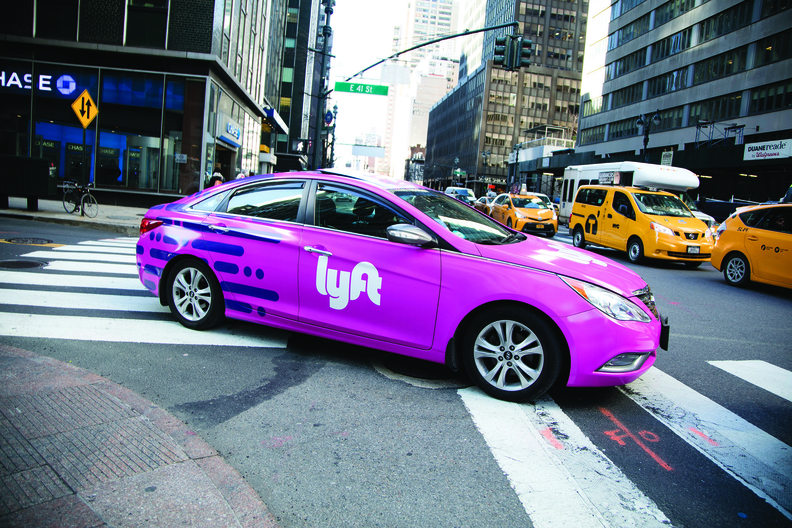
  • Lyft is vastly improving rider safety with in-app emergency assistance

    Lyft is vastly improving rider safety with in-app emergency assistance

    Ridesharing apps like Uber and Lyft can be incredibly convenient in this day and age, but unfortunately, using these services is not always 100 percent safe, as proven by multiple reports of sexual abuse in the past few years committed by improperly vetted drivers and even the shocking recent murder of a college student who got into the wrong car.

    Fortunately, both Uber and Lyft are ramping up their efforts to improve rider safety and peace of mind, at least when they’re not busy making it easy for people to tell drivers to keep their mouth shut. Lyft’s latest “investment in safety” includes several new features and programs designed to educate all members of this ridesharing “community”, as well as prevent vehicle mix-ups, and most importantly, help users in danger get quick emergency assistance.

    The latter goal will be achieved (hopefully) with an in-app option providing direct 911 access without actually having to type the numbers or exit Lyft. This emergency assistance, or panic, button should have long been a thing for riders, rolling out to the drivers app first last year. Uber has had the safety-enhancing feature for about a year too, so Lyft is a little late to the party with today’s announcement of a public launch in the “coming weeks.”

    Meanwhile, license plate visibility has already been increased in the Lyft app for “many riders”, with availability set to expand in the “coming months” to ensure that gruesome recent incident that indirectly brought Uber loads of negative publicity will not repeat itself on the rival platform.

    Aside from paying more attention to the license plate of your Lyft, you should really provide additional information and context for your bad driver ratings. To make sure that will be the case going forward, the company is implementing mandatory secondary feedback. In other words, you will no longer be allowed to rate your ride under 4 stars without also leaving a comment explaining your grade.

    Lastly, Lyft is planning to make sexual harassment prevention education available to all users sometime “this year” with an aim of ensuring a “welcoming, inclusive, comfortable, and safe” environment for everyone. That’s certainly a noble goal… unlikely to be achieved anytime soon.

  • Gameloft reveals new LEGO-themed team-battle RPG for Phones

    Gameloft reveals new LEGO-themed team-battle RPG for Phones

    LEGO fans rejoice, as Gameloft has just announced a brand new RPG for Android and iOS set in the LEGO universe. Originally teased back in December, LEGO Legacy: Heroes Unboxed will be released this fall, but it will be regularly shown to fans until then at various events.

    According to the French studio, this is the first ever LEGO game of this genre and it’s meant to bring to life 40 years of LEGO Minifigure history and universes in a fun and epic way. Apparently, LEGO Legacy: Heroes Unboxed is set in a completely new LEGO world, as players will have to collect classic and modern LEGO minifigures and sets with which to create new parties and engage in team battles and adventures.

    LEGO Legacy: Heroes Unboxed is built to bring the enjoyment and fun that you once had, or still have, with LEGO toys. We are excited to see these authentic and original LEGO characters from all eras come to life. We have been putting all our efforts, art and craft into this game as we want to delight all LEGO fans, whether their mini-figures are tucked away in the attic or proudly shown in the living room.

    Naturally, the game will include iconic, fan favorite universes, recreated with stunning detail to cater to players of all ages. The developers also promise to keep everything included in the game faithful to the LEGO franchise. In order to do that, the folks at Gameloft studied vintage instruction manuals to try to recreate every detail that makes the LEGO experience so memorable.

    LEGO Legacy: Heroes Unboxed will probably be available for free, but we expect it to be heavy on the in-app purchases. Gameloft’s new LEGO mobile game shapes up to be quite interesting, so let’s hope their monetization system won’t be too intrusive.

  • Valve launches Steam Chat app for Smartphones

    Valve launches Steam Chat app for Smartphones

    After bringing Steam Link app to gamers and the option play all games from their Steam library on mobile phones, Valve releases another app that’s meant to modernized Steam chat experience. The new Steam Chat mobile app is now available for free on both Android and iOS platforms via Google Play Store and App Store.

    Among the many features it offers, it’s worth mentioning the customizable notifications, which will prevent users from missing a message or game invite. These notifications can be customized per friend, group chat, and chat channel.

    Obviously, you’ll be able to see who’s in game or online before you start chatting with your Steam friends. Furthermore, Valve promises a rich experience thanks to higher fidelity links, videos, tweets, GIFs, Giphy, Steam emoticons, and more.

    The Steam Chat mobile app will also allow users to add new friends on Steam with a link. You’ll just need to generate an invite link to send via text or email. Last but not least, the app features support for group chats.