Category: General

Retail News Asia is committed to providing both local and global retailers with the latest General Retail news throughout the Asian market. This on a daily base.

  • Vietnamese consumers among world’s most positive

    Vietnamese consumers among world’s most positive

    Vietnamese consumer confidence index achieved its highest score in the last decade, placing it as the fourth most optimistic country in the world, according to market research firm Nielsen.

    The index reached 124 points in the first quarter of 2018, up 9 points over the same period last year.

    “The great economic growth across industries, combined with strong foreign investment flows, increasing household incomes and proper government policies have resulted in optimism among consumers,” said Nguyen Huong Quynh, Managing Director of Nielsen Vietnam.

    “However, positive sentiments did not lead to strong fast moving consumer goods (FMCG) sales in Vietnam, with the market up just 1.8 percent in Q1. The growth was slower than expected and reflected the characteristic of FMCG industry in Vietnam, possibly due to changing consumer behaviors,” Quynh added.

    Having a stable job and good health remains key concerns of Vietnamese consumers. In this quarter, the top five concerns of Vietnamese consumers remained the same as last year. Job security topped the list with 43 percent, followed by health and wellness (41 percent). Other concerns included work-life balance and economic status with both at 23 percent.

    The Nielsen report said Southeast Asia and North America showed the highest level of consumer confidence. The confidence score of consumers in Southeast Asia increased 2 points from 119 in fourth quarter of 2017 to 121 in first quarter of this year.

  • Jokowi Opens Indonesia’s First Wind Power Plant

    Jokowi Opens Indonesia’s First Wind Power Plant

    As President Joko “Jokowi” Widodo inaugurated Indonesia’s first wind power plant in Sidenreng Rappang, South Sulawesi, on Monday (02/07), the government is getting closer to its ambitious target of obtaining more than a fifth of the country’s energy from renewable sources.

    The plant, also known as PLTB Sidrap, consists of 30 wind turbines which can produce up to 75 megawatts and electrify 80,000 households. The turbines in 40 percent consist of locally produced components.

    “This puts Indonesia among the few Asian countries that posses wind power plants, like Japan, China and Korea,” Jokowi said in a statement.

    Sidrap started its development in 2015 with $150 million borne by a consortium comprising of UPC Renewables Asia I, UPC Renewables Asia III, Sunedison and Binatek Energi Terbarukan.

    A similar project in Bantul, Yogyakarta, also developed  by UPC Renewables, was shelved in 2017 due to land clearance problems.

    Jokowi seeks to connect 99 percent of Indonesians to the country’s grid by 2019, when his first presidential term ends. Currently, the electrification rate is 96 percent.

    Indonesia aims to have 23 percent of its total power coming from renewable resources by 2025, also to fulfill its climate change mitigation commitment, in accordance with the Paris Agreement.

    Today, only 14 percent of the country’s energy is clean. More than half of it still comes from coal-powered plants.

  • Lulu opens new hypermarket concept in Abu Dhabi

    Lulu opens new hypermarket concept in Abu Dhabi

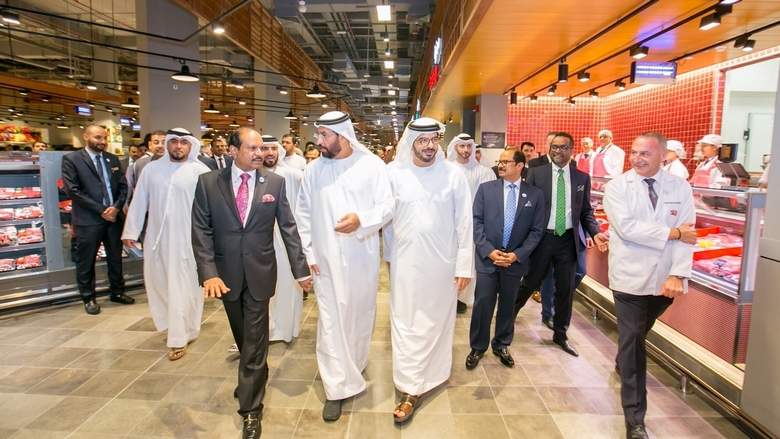
    LuLu Group launched a new hypermarket concept and revamped store design at The Mall in World Trade Center Abu Dhabi on Monday.

    LuLu’s 148th store was inaugurated by Aldar Properties chief executive officer Talal Al Dhiyebi along with LuLu Group chairman and managing director Yusuff Ali M.A., executive director Ashraf Ali M.A. and CEO Saifee Rupawala.

    Situated within Abu Dhabi’s central business district, the store has more than 100,000 square feet area.

    Yusuff Ali said the newly launched hypermarket significantly adds to the portfolio of LuLu Hypermarket chains. “LuLu has been the shopping partner of different nationalities and we will continue to preserve this identity with our new store. This new hypermarket introduces a newly improved design and space, which will further strengthen the world-class shopping experience.”

    Talal Al Dhiyebi welcomed the opening of LuLu Hypermarket. “Aldar has an enviable portfolio of retail assets including malls and retail community centres throughout Abu Dhabi and Al Ain. We constantly review our retail mix to ensure we provide residents and visitors alike with the right balance of brands. This hypermarket, along with the nine other new brands that have opened at The Mall so far this year, expands the existing mix of retailers and will drive further footfall while responding to local resident demand.”

    10 new hypermarkets, China expansion plans

    Yusuff Ali said the group saw tremendous growth opportunities in Abu Dhabi where 10 new hypermarkets are in the construction stage.

    “It will be operational within the next 18 to 24 months. This includes Al Falaha, Reem, Khalifa City, Sadiyat, Beda Zayed etc.”

    Two more hypermarkets will be opened in the coming weeks  – one in Umm Al Quwain and Saudi Arabia  – that will make total number of outlets to 150.

    LuLu also plans to enter the retail scenario in China where it has sourcing and logistics facility since 2000. A memorandum of understanding on co-operation on various areas of mutual interest was signed recently between Lin Yi, Party Secretary of Communist Party of China, Yiwu, in Zhejiang province and Yusuff Ali.  As per the MoU, LuLu will increase its yearly exports from China which stands currently at $220 million to $300 million. 

    Apart from this, LuLu will also look into the possibility of investment to set up Hypermarkets in Yiwu and other major cities at an investment of $200 million. 

  • Emart’s take on Don Quijote opens in COEX

    Emart’s take on Don Quijote opens in COEX

    Emart’s Pierrot Shopping store has opened inside Coex mall, in southern Seoul.

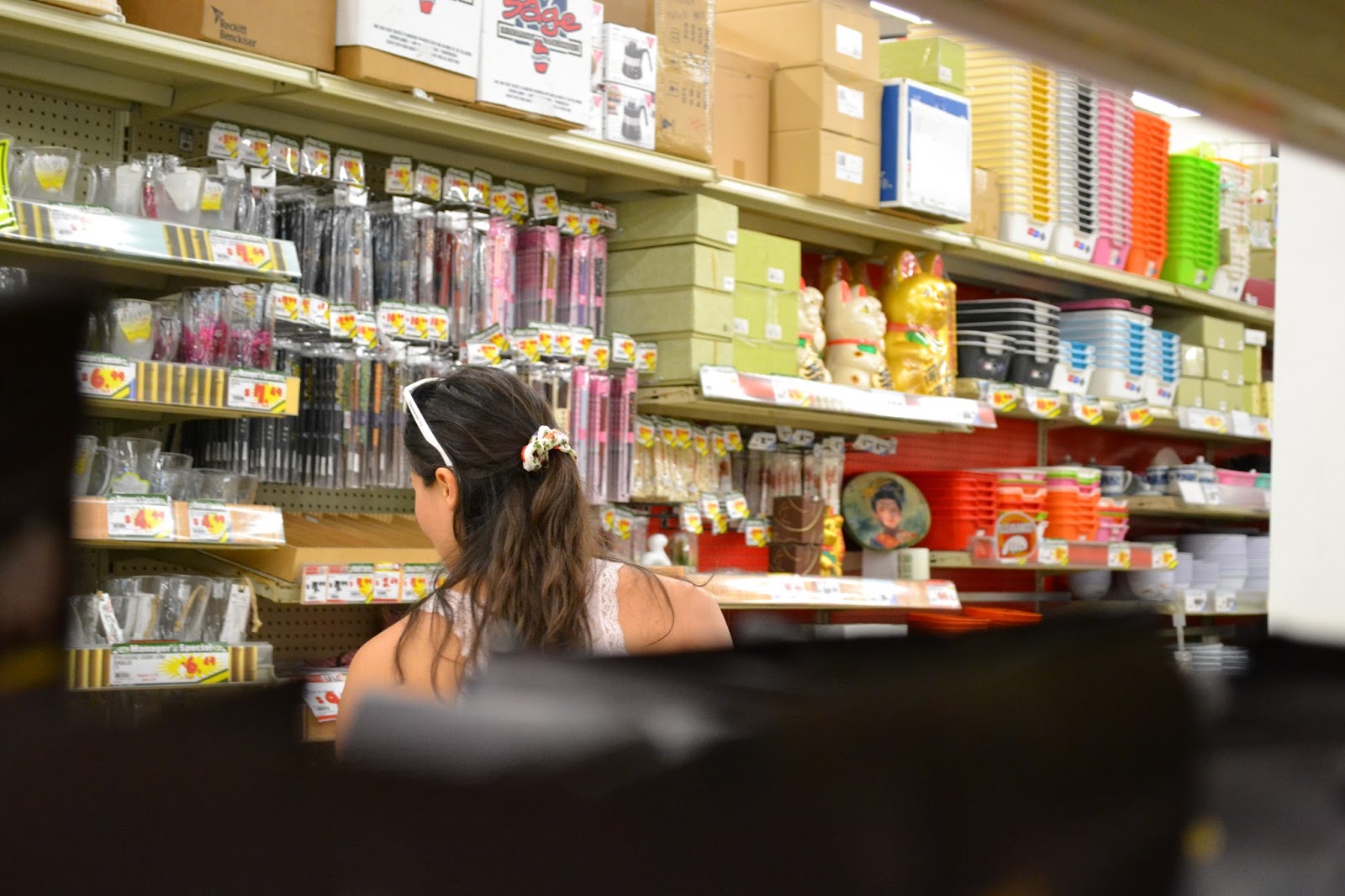
    Aiming to be a “Fun and Crazy” destination, the 2513sqm two-storey store targets consumers in their 20s and 30s with a diverse range of 40,000 products.

    On basement floor, there is a large collection of alcohol and snacks from Korean and foreign brands, along with wigs, costumes and a discreet space for ‘adult toys’.

    On the first floor, customers will find goods as diverse as leather bags from brands such as Prada and Fendi, fresh food, cordless vacuum cleaners, smoking pipes, fake eyelashes and pet food.

    One curious feature in the store is a smoking room which resembles the interior of a subway train. An information desk and electronic kiosks offer tax refunds for foreign customers.

    A Korean version of Japanese Don Quijote chain, Pierrot Shopping store is designed “to be a place where young people can come to play and look around without a clear shopping purpose”.

    “You can come here to find relief from everyday stress, casually pick up things that look intriguing and buy them just because they’re affordable,” said Pierrot Shopping’s brand manager, Yoo Jin-cheol.

    While other large-scale retailers prioritise space and neatly arranged products so that consumers can easily find what they are looking for, at Pierrot Shopping the aisles are narrow and in some places it’s difficult for two people to pass.

    The staff wear uniforms with “I don’t know where that is either” printed on the back.

    Emart explained the intention was to make consumers venture more around the aisles, make unexpected discoveries and have a“fun experience”.

    Emart will open two more branches of Pierrot Shopping this year with smaller footprints than at Coex; at the Doota Mall and in Nonhyeon, in Gangnam District.

  • Air Asia introduces two new international routes from Hanoi and Phuket to Penang

    Air Asia introduces two new international routes from Hanoi and Phuket to Penang

    Expanding its wings even further, AirAsia marked another milestone by celebrating its new international inaugural flights from Hanoi in Vietnam and Phuket in Thailand, into its Penang hub at the Penang International Airport (PIA) here today.

    Its three-hour flight from Hanoi touched down at PIA at 12.50pm, carrying passengers up to 80 per cent load, while the Phuket flight will land later tonight at 11.05pm.

    The inaugural flight from Hanoi was received by state Tourism Development, Heritage, Culture and Arts committee chairman Yeoh Soon Hin, AirAsia Malaysia Head of Commercial Spencer Lee and Penang Global Tourism chief executive officer Ooi Chok Yan.

    Lee said AirAsia was pleased to strengthen its Penang hub further with the two new routes. He said the AirAsia Group had flown over 11 million guests in and out of Penang since 2015.

    “In 2017 alone, we had 3.5 million passengers, and for this year until June, we already have two million guests.

    “We are happy to share that we are leading the market in Penang with 68 per cent of direct routes as of this April.

    “We look forward to further boosting tourist arrivals, while at the same time, connecting Penangites and the northern community to more destinations internationally with the AirAsia network,” he said in his speech.

    Yeoh said that the two new direct routes from Hanoi and Phuket would further boost the number of tourists arriving from these two cities.

    “This upward trend in Penang tourism is a good indicator for a robust economy in the immediate foreseeable future,” he added.

    The four-times weekly direct flight from Hanoi and daily direct flights from Phuket are the seventh and eighth new routes launched by the airline into Penang as a group, thus further strengthening the Asean footprint through connectivity aside from the Kuala Lumpur hub.

    The flights heading to Hanoi will take off at 6.15am every Monday, Wednesday, Friday and Sunday. The return flights from Hanoi will take off at 8.50am Vietnam time on the same four days every week.

    The one-hour flight to Phuket will depart at 8.25pm daily while the return flight will take off at 11pm Thailand time.

    In conjunction with the momentous occasion, AirAsia is offering celebratory promotional all-in-fares from RM119 flight to Hanoi and RM79 flight to Phuket, both flights from Penang.

    The special promotion is available for booking from July 2 to July 8 for the travel period between July 2, 2018, to Jan 31 next year.

    Guests can visit airasia.com or use the AirAsia mobile app on the iPhone or Android devices to enjoy the special promotional fares.

  • Lotte Japan votes to keep imprisoned Shin on board

    Lotte Japan votes to keep imprisoned Shin on board

    Shareholders of Lotte’s Japanese holding company voted to retain imprisoned Lotte Group Chairman Shin Dong-bin as director, dashing his estranged older brother Shin Dong-joo’s hopes to take over the position.

    At the meeting held at Lotte Holdings’ headquarters in Tokyo, shareholders voted against ousting Shin Dong-bin from the board and replacing him with his older brother. Shin Dong-joo has been trying to overthrow his brother since all of his titles, including vice chairman of Lotte Japan, were stripped from him in 2015. This was his fifth unsuccessful attempt to win over Lotte Holdings’ shareholders.

    His younger brother Shin Dong-bin, who has been in jail since February on charges of bribery related to President Park Geun-hye’s abuse of power scandal, requested bail earlier this month in order to make his case to the shareholders in the latest meeting. However, his request went unanswered until late Thursday. A team of Lotte Group executives in Korea, including Vice Chairman Hwang Gak-gyu, had to deliver Shin’s letter to Lotte Holdings’ top management.

    “We’re relieved that the shareholders of Lotte’s Japanese unit expressed their support for Chairman Shin despite his vacancy,” said Lotte Corporation, Lotte’s Korean holding company, in a statement issued immediately after the results came out.

    The statement also condemned Shin Dong-joo. It requested that he “stop evoking needless controversies that create an uneasy sentiment among [Lotte] employees and degrade the company’s value.”

    Shin Dong-joo issued a statement through his SDJ Corporation that the older Shin will “continue pushing efforts to normalize Lotte Group,” implying that he may continue to campaign to take over his younger brother’s position at the retail conglomerate.

    A few days after his imprisonment, Shin resigned as co-CEO of Lotte Holdings. The chairman’s detainment raised concerns at the group’s Korean unit, as Shin Dong-joo reignited his efforts to regain control over Lotte.

    Friday’s vote, however, indicates that Lotte’s Japanese unit still has faith in Shin Dong-bin’s leadership, despite a tendency for Japanese shareholders to be harsher on top brass accused of bribery charges.

    Lotte Holdings and its other Japanese affiliates currently own a large stake in the group’s core Korean businesses, like Hotel Lotte and Lotte Property & Development. Their approval is crucial for Lotte Group’s Korean affiliates’ plan to reduce the stakes that Japanese affiliates hold in them.

    “The restructuring is not a one-shot deal – we’re doing what we can, like acquiring shares little by little,” said a Lotte Group spokesman.

  • Homeplus Special to open first store in Daegu

    Homeplus Special to open first store in Daegu

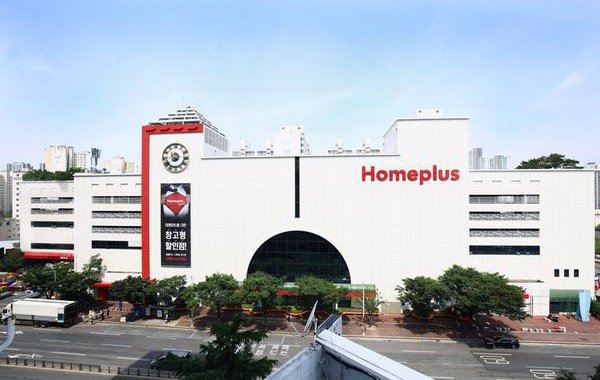
    Korean discount store chain Homeplus has opened a bulk products and grocery store hybrid called Homeplus Special in Daegu.

    The new concept store is housed in the original Homeplus outlet that opened 20 years ago, now converted to operate the new big-box-plus-retail model following underwhelming sales figures and strong rivalry from industry competitors.

    The new hybrid-store concept will allow the brand to target both individual shoppers and businesses that buy in bulk, and aims to eliminate seasonal price differences with blanket, year-round discounts.

    A Homeplus spokesperson said the business plans to convert 15 branches into Homeplus Special stores this year. Another outlet opened yesterday in Busan.

  • Thai investors acquiring more retail market share in Vietnam

    Thai investors acquiring more retail market share in Vietnam

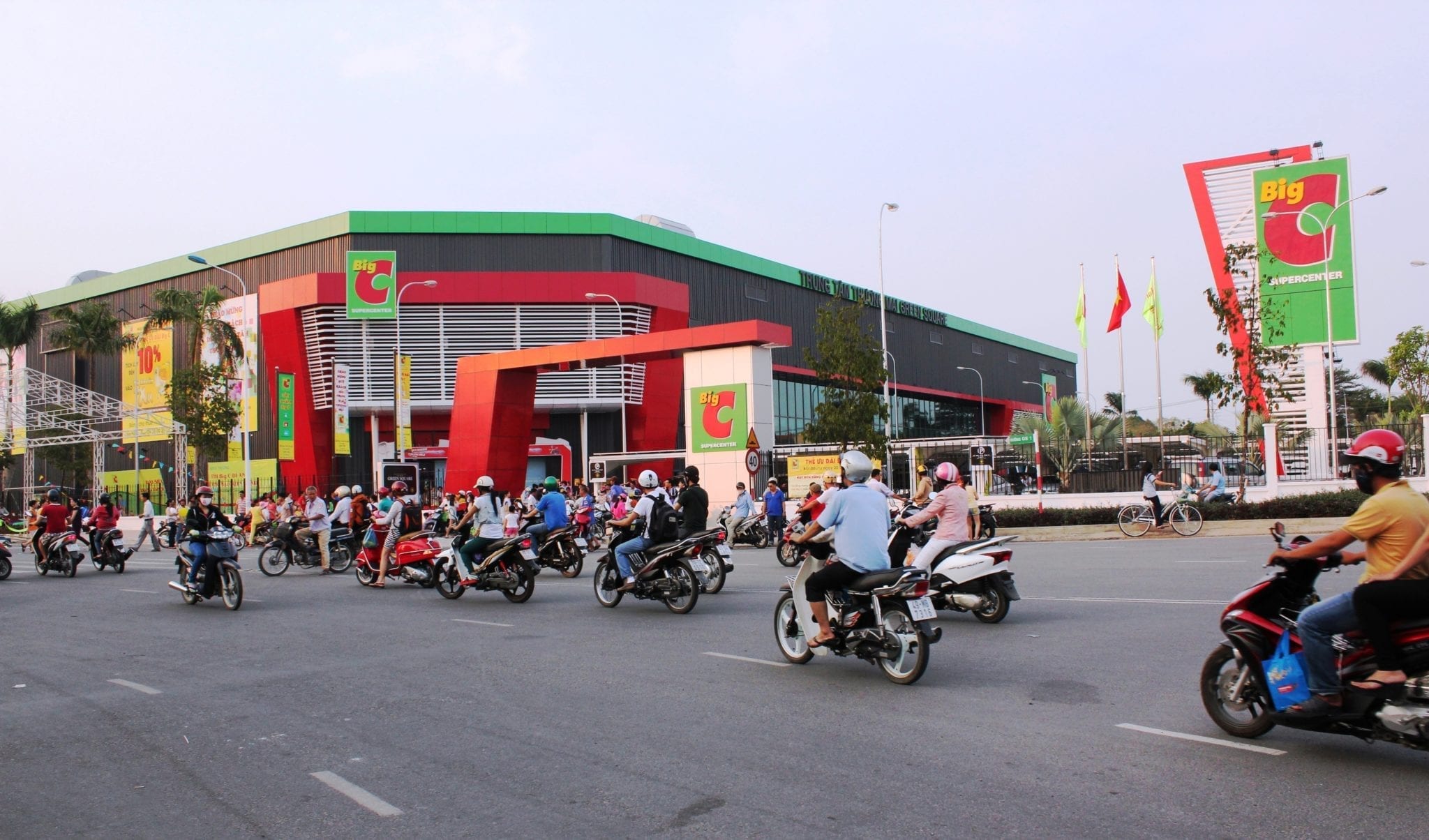
    In 2015, just after four years of establishment, Central Group Vietnam (CGV), acquired 49 percent of stake of Nguyen Kim. In 2016 alone, CGV acquired two big brands – Big C Vietnam and Lan Chi Mart. Through M&A deals, CGV has also brought other brands from Thailand and other countries to Vietnam.

    BJC, a subsidiary of TCC Holdings, has also been expanding in Vietnam. With MM Mega Market alone, BJC has 19 shopping centers, 3 entrepots in Da Lat (fresh vegetables and fruits), Dong Nai (fresh pork), Can Tho (seafood) and two general storehouses that provide fresh food. Besides, it also has B’s Mart with the network covering large cities.

    In 2016, after wrapping up the deal of taking over Metro Cash & Carry, BJC renamed the supermarket chain as MM Mega Market Vietnam, and since then, it has been following the business strategy with B2B (70 percent) and B2C (30 percent) Investment modes.

    Phidsanu Pongwatana, managing director of MM Mega Market, said the company is building the first pork entrepot in the north. It plans to open one to three distribution centers in the north next year, which will create 700 jobs.

    In 2017, CGV announced investment of $30 million to increase retail premises in Vietnam to 470,000 square meters.

    Meanwhile, the holding company in Thailand plans to invest $6.4 billion more in the next five years to expand the domestic and overseas markets, especially Vietnam, which is a key part in its plan to expand operation in the retail and hotel fields.

    Vietnam is considered a potential market, expected to bring to the group turnover four times higher in the next five years. It strives for revenue of $13 billion this year, an increase of 14 percent over 2017. Tos Chirathivat, CEO of Central Group, said the group would open 500 more shops in Vietnam by 2022.

    An analyst said Thai investors are now eyeing Vietnam because the market is witnessing development like Thailand did some decades ago with the rapid increase of the middle class and high economic growth rates.

    He also said the young population, increased consumption level, and the tariff cut to zero percent all have turned Vietnam into a vast market in ASEAN.

    According to the Foreign Investment Agency, the accumulative capital registered by Thai investors in Vietnam by March 2018 had reached $9.3 billion.

    With 490 projects, Thailand now ranks 10th among 126 countries and territories having FDI in Vietnam.

  • YouTube hires Derek Blasberg

    YouTube hires Derek Blasberg

    YouTube is forming a new division dedicated to fashion and beauty content partnerships, led by Derek Blasberg.

    The appointment comes less than a week after Instagram launched its long-form video app, IGTV, in a clear bid to compete with the Google-owned platform.

    Blasberg will be based in New York and report to a team led by YouTube’s Kelly Merryman, vice president of content partnerships. He is tasked with cultivating relationships with brands and high-profile people in the industry so that they will use the platform more often, more effectively and build audiences there.

    Merryman’s team has similar divisions dedicated to news, sports, television, gaming and other categories and had been looking for the right person to lead its fashion and beauty industry relationships. A different division at YouTube will continue to focus on fashion and beauty influencers who built their followings on the platform.

    Instagram hired Eva Chen, the former editor-in-chief of Lucky Magazine, in 2015 to play a similar role as head of fashion partnerships at Instagram. Since then, the platform has deepened its connection with the fashion and beauty sectors by working with designers, brands, stylists, makeup artists and influencers to ensure they get the most out of Instagram. Chen’s team assists in creating content and helps these industry players engage with their audiences.

    With Blasberg, YouTube has found a popular, well-connected frontman to court fashion and beauty leaders. A former columnist and editor for Style.com, Harper’s Bazaar and other fashion and lifestyle publications for over a decade, Blasberg is leaving his role as the host of CNN Style on CNN International after two years and heading to YouTube full time. He will retain a role as a contributing editor at Condé Nast’s Vanity Fair, where he was appointed the title of Our Man on the Street in 2015.

    “I am looking forward to bridging the world of YouTube creators with the global style and beauty industries in this newly created role and department,” said Blasberg in a statement.

    Blasberg is a smart hire, but he has his work cut out for him. Instagram has an outsized influence in the highly visual fashion world. The platform and its fashion partnerships team have become an active part of the industry scene, most recently sponsoring a table at the Met Gala and supporting tentpole events like the CFDA Awards by installing and running Instagram-friendly photo sets. With the launch of IGTV, brands and influencers have a new outlet for vertically aligned videos for up to one hour in length, edging closer to something more typically found on YouTube.

    “Vertical video is ideal for fashion and it’s a format that younger audiences are really comfortable with,” said Jim O’Neill, principal analyst at Ooyala, a video and analytics technology company. “The whole idea of up to an hour-long option is potentially really big for Instagram influencers, more so than even brands.”

    YouTube has some advantages, including a larger user base — 1.8 billion unique monthly visitors to Instagram’s 1 billion — who are already trained to search for videos on the platform. On YouTube, Chanel has 1.1 million subscribers; a recent campaign video for its Bleu de Chanel Parfum was seen 3.8 million times. On Instagram, where the house has 28.5 million followers, the same commercial was viewed 250,000 times in the feed post format.

    “In this newly created role, Derek will collaborate with our incredible creators and diverse portfolio of brands to achieve even more success,” said Merryman in a statement.

    YouTube already has some fashion trailblazers: model Karlie Kloss launched her own channel, Klossy, in 2015 and now has over 700,000 subscribers. She recently released a series sponsored by Ford as part of a partnership with her nonprofit Kode with Klossy, that features her interviewing trailblazers in science and technology.

  • Indonesia Gov’t Cuts Tax for Small and Medium Enterprises

    Indonesia Gov’t Cuts Tax for Small and Medium Enterprises

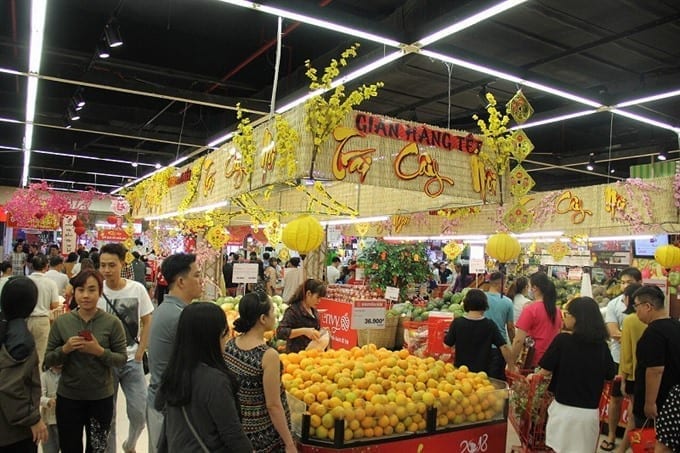
    Indonesia will cut the final income tax rate for small and medium-sized enterprises by half, to 0.5 percent of their annual sales, in a move to help businesses manage their cash flow and expansion.

    President Joko “Jokowi” Widodo announced the cut at the East Java Expo in Surabaya, East Java, on Friday.

    The new regulation will be effective on July 1.

    Today, businesses with annual revenue of less than Rp 4.8 billion ($340,000) pay a 1 percent tax on their total sales. Other businesses pay 25 percent of their profit as income tax and set aside 10 percent of sales for value added tax.

    While the current arrangement only demands simple accounting, small and medium-sized enterprises say it also means they have to pay income tax when they are at loss, which disrupts their cash flow.

    “The new regulation is intended to encourage SMEs to be more active in economic activities by providing a fairer taxpaying scheme,” Directorate General of Taxation spokesman Hestu Yoga Saksama said in a statement.

    To lower their tax bill, SMEs must file an application to the tax office. Individual taxpayers can enjoy the lower tax rate for seven years, corporate taxpayers for four years and limited liability companies for three years.

    “The cut from 1 percent to 0.5 percent is expected to facilitate SMEs in maintaining their cash flow, which can then be used as additional capital for their businesses,” said Yustinus Prastowo, executive director at think tank Center for Indonesia Taxation Analysis.

    The cut will cost the government around Rp 2.5 trillion a year, which according to Yustinus should be seen as an investment, as the policy is expected to increase the tax base.

    Tax office data show that tax revenue from SMEs last year amounted to Rp 106.3 trillion — only 60 percent of the government’s target. It was also nearly Rp 12 trillion lower than in the previous year.

  • Walmart to try new Sam’s Club concept

    Walmart to try new Sam’s Club concept

    Walmart is to test a new Sam’s Club concept which is less than a quarter the size of the current model.

    Stewart Samuel, program director at IGD Canada, says a typical Sam’s Club outlet in North America is 134,000sqft. But the new store opening in Dallas is just 32,000sqft.

    “This will be a new test format for Sam’s Club which will help it to further innovate and improve the member experience,” says Samuel, who shapes IGD’s research program across North America.

    “Offering a convenient shopping experience will be a key driver underpinning the format’s development. The retailer will focus on delivering a more digital-led experience, including fast membership sign-up, easy returns, checkout using Scan & Go and digital signage.”

    The new Sam’s Club concept will offer a tailored, locally-relevant assortment of between 1000 and 2000 items, including grocery and fresh foods, grab-and-go meals and frequently purchased consumable goods.

    While the test format will be radically different to the core Sam’s Club offer, it could provide Walmart with a new route to future club growth, particularly as e-commerce continues to become a larger part of the club model.

    “This has been a priority focus for the retailer, with its established Club Pickup model augmented by the launch of home delivery via Instacart earlier this year. In January, the retailer announced that it was closing 63 clubs, with around 10 of them earmarked for conversion into e-commerce fulfillment centres,” said Samuel.

    The format could also provide Walmart with new ideas to enhance its hypermarket model.

    “While the retailer has launched several initiatives as part of its ‘Supercenter of the future’ project, these have been within its existing store footprint. Sam’s Club has been an important incubator for new ideas at Walmart over recent years, so success with this new format could lead to a similar test for its core hypermarket format.”

  • Indonesia to host franchise event next month

    Indonesia to host franchise event next month

    Prospective franchisees and investors will have the opportunity to meet with international franchisors at a VF Franchise Consulting event in Jakarta from July 18–19.

    VF’s CEO Sean T Ngo said foreign brands are eying the Indonesia franchise market because of its size and potential.

    “Not only is food & beverage fast-growing, it is also a market that is very high potential for education and services franchises,” he said.

    The invitation-only event, co-hosted by local partner IFBM, includes personal meetings with senior franchise executives of seven participating brands, which include F&B franchises Little Caesars, Texas Roadhouse, Brotzeit and Pronto; Hong Kong-based educational businesses The Edge Learning Centre and First Code Academy; and hygiene/disinfection firm Sureclean.

    According to Ngo, there are already more than 1200 active Indonesia franchise companies operating, including both local and international groups. He noted that Indonesia continues to have one of the fastest-growing franchise industries in Southeast Asia.

  • ‘Content marketing’ is definitely a game changer

    ‘Content marketing’ is definitely a game changer

    In a Red Bull video on the company’s YouTube channel, you don’t often see the drink itself. In a video entitled “Shaun White’s Private Pipe – Red Bull Project X,” American snowboarder Shaun White is transported to a half-pipe on snowy mountain via a helicopter. The helicopter has the Red Bull logo on its side, and as White does tricks on the half-pipe, a Red Bull flag waves in the background.

    The video, targeting extreme sports enthusiasts, promotes the Red Bull brand without actually showing a person sip out of a can.

    In marketing, that’s called content marketing. An advertiser must offer an advertisement that is essentially content attractive to a target audience. The brand gets its message across by offering something valuable – not just promoting itself.

    This has become a powerful type of marketing with the spread of smartphones and the rise of social media.

    According to a case study by Weidert Group, a marketing agency, Fisher Tank Company, which produces storage tanks, was able to expand its sales through what it described as an “inbound marketing” strategy: getting more people to visit its website by offering different types of content related to the company’s business.

    Robert Rose, chief strategist at Content Marketing Institute (CMI), whose list of consulting clients includes big names such as Dell, Microsoft and NASA, says that such a “disruptive” form of marketing is shifting the way companies around the globe do business, providing customers with new value and experiences – while also promoting a brand.

    Korean companies are not strangers to this model, Rose says.

    Viva Republica, developer of a P2P mobile payment platform Toss, is an example of a local company shaking up its industries, according to Ross, by providing experiences that customers have not seen before.

    Rose is visiting Korea to attend the Content Marketing Asia Forum, the first content marketing forum in the region, as the keynote speaker. The event, organized by CMI, will take place from June 27 to 29 under theme “Content Marking, the Game Changer of Business.”

  • Malaysia retailers see higher sales growth in 2018

    Malaysia retailers see higher sales growth in 2018

    The Malaysia Retailers Association (MRA) forecasts retail sales to be 5.3% for 2018, an improvement from the 4.7% growth in its March survey, boosted temporarily by the zero Goods and Sales Tax in June.

    The MRA said for the first quarter of 2018, the Malaysia retail industry recorded a below-than-expected growth rate of 2.6% in retail sales versus the 3.1% in October to December last year and 1.2% growth a year ago.

    “Despite poor performance recorded a year ago (-1.2% in Q12017), the Malaysia retail market remained subdued early this year. Shoppers were still careful in their spending on festive goods during the Chinese New Year period”.

    The MRA said except the supermarket and hypermarket sub-sector, all retail sub-sectors recorded improvement in their retail businesses during the first quarter of 2018.

    It said its members are hopeful that their businesses will recover by the second quarter of 2018. They projected an average growth rate of 6.0%. The change in ruling party after the general election on May 9, 2018 is expected to boost consumers’ confidence level and increase their willingness to spend.

    At the same time, the largest festival in Malaysia, Hari Raya, will be celebrated in June this year.

    “The department store cum supermarket operators are expecting a better performance with a growth of 4.6% for the second quarter of this year.

    “The department store operators are expecting to sustain their businesses with a growth rate of 4.7% for the second three-month period of this year,” it said.

    On the other hand, supermarket and hypermarket operators will not see improvement in their business in the coming months. They expect to remain in the red zone with a -4.4% growth rate for the second quarter of 2018.

    The Retail Group Malaysia adjusted the Q2 retail growth rate from 3.7% (estimated in March 2018) to 6.3%.

    This revision is also higher than the latest projection made by MRA members. This new estimate took into consideration the tax holiday during the last month (June) of second quarter as well as Hari Raya celebration at the middle of June 2018.

    The retail sale growth rate for third quarter has also been revised from 5.2% (estimated in March 2018) to 6.8%. This revision took into consideration the remaining two months of tax break before Sales and Services Tax (SST) is to be re-introduced from 1 September 2018.

    “For the last quarter of this year, the retail growth rate has been revised downwards from 5.0% (estimated in March 2018) to 3.5%.

    “This lower adjustment is needed to reflect higher consumers’ spending during the three-month period with zero-rated GST. Major purchases are expected to have been made from June to August of this year,” it said.

  • Higher oil prices boost profits for Vietnam’s PV Gas

    Higher oil prices boost profits for Vietnam’s PV Gas

    PetroVietnam Gas Corporation, Vietnam’s biggest listed energy firm, posted first half net revenues of VND37.5 trillion ($1.65 billion), equal to 66 percent of its annual target.

    Its pre-tax profit jumped to VND6.6 trillion ($290 million), representing 82 percent of the year’s target.

    The booming results were driven by higher global oil prices which traded around $71 per barrel in the first six months of the year, exceeding the company’s expectations by 42 percent, and increased production of light oil, LPG and condensate.

    Le Nhu Linh, Chairman of the Ho Chi Minh-based company, also known as PV Gas, said the company is undertaking 24 projects this year, including pipelines that transport natural gas directly to consumers.

    “To ensure gas supply, our company is negotiating with international partners to import gas from Indonesia and Malaysia through pipelines,” he said.

    The company is also building infrastructure for liquefied natural gas (LNG) imports and seeking contractors for an LNG storage facility that can hold 1 million tons per annum.

    Furthermore, PV Gas is looking to raise its stakes in two associate companies – PetroVietnam Southern Gas JSC and PetroVietnam Northern Gas JSC – to 51 percent in the second half of the year. It is also working on a plan for PetroVietnam, its parent company, to cut its ownership in PV Gas.

    The company targets VND55.7 trillion ($2.4 billion) in total revenue in 2018 and VND6.4 trillion ($281 million) in post-tax profit, down 3.5 and 33.5 percent respectively from last year. These figures are based on expectations of crude priced at $50 a barrel and lower output this year.

    PV GAS stock closed up 5.75 percent at VND92,000 per share on the southern stock exchange last week.