Category: General

Retail News Asia is committed to providing both local and global retailers with the latest General Retail news throughout the Asian market. This on a daily base.

  • As plastic sector booms, Vietnamese firms are easy prey

    As plastic sector booms, Vietnamese firms are easy prey

    Major Vietnamese plastics firms are being taken over in a big way by foreign firms from Thailand, Japan and South Korea.

    In April, Thai business conglomerate Siam Cement Group (SCG) acquired over 50 percent of shares in Binh Minh Plastics (BMP), a big player in Vietnam’s plastics industry. Previously, SCG had already poured in $121 million to acquire seven other Vietnamese plastics firms, according to a report.

    Japan is also gearing up to conquer Vietnam’s plastics sector. Japan-based Sekisui Chemical has become a strategic partner in Tien Phong Plastics, acquiring 25 percent of the company’s shares last year, and Japan’s Meiwa Pax Group has paid $16.5 million to buy HCMC-based packaging firm Sapaco.

    South Korea firms have also jumped into the fray, with packaging firm Dongwon Systems acquiring over 97 percent of Tan Tien Plastics in 2016. Tan Tien is a frontrunner in Vietnam’s packaging industry, and a major partner for several big companies operating in Vietnam, such as Unilever, Ajinomoto, Trung Nguyen or Vinamilk.

    Vietnam has become a ripe destination for foreign firms because the plastics industry has been booming. For the last 3 years, it has grown by 15-17 percent each year.

    In 2016, Vietnam housed over 2,000 firms in the country. The annual per capita consumption of plastics in Vietnam is around 41 kilograms, according to Vietnamese securities firm Vietcombank Securities. That number is projected to increase to 45 kilograms per person in 2020, according to the Vietnam Plastics Association.

    “Vietnam’s plastics sector has great potential to grow,” said Kubo Hajime, a management board member of Sekisui Chemicals.

    Vietnam’s cheap labor and material costs is also an advantage, economist Dinh The Hien said. He said the fact that Vietnam is part of several trade agreements, most notably the Comprehensive and Progressive Agreement for Trans-Pacific Partnership, helps.

    Vietnamese plastics firms lack the necessary capital, technology and high-skilled labor required to compete in an increasingly tougher market, said Ho Duc Lam, President of Vietnam Plastics Association.

    “Another problem for Vietnamese plastics firms would be high production costs, which leads to high prices,” he said.

    Vietnam needs to focus more on targeting the right customers with the right products to compete, an unnamed representative of a Vietnamese plastics firm said.

    “We would also need to invest more in technology and machinery to upgrade our assembly chains, thus increase our product quality and reduce production costs,” he said.

    Last year, the plastic sector recorded an export value of over $3 billion, a year-on-year increase of 17.6 percent.

  • AirAsia dares Singaporeans to dream with new campaign

    AirAsia dares Singaporeans to dream with new campaign

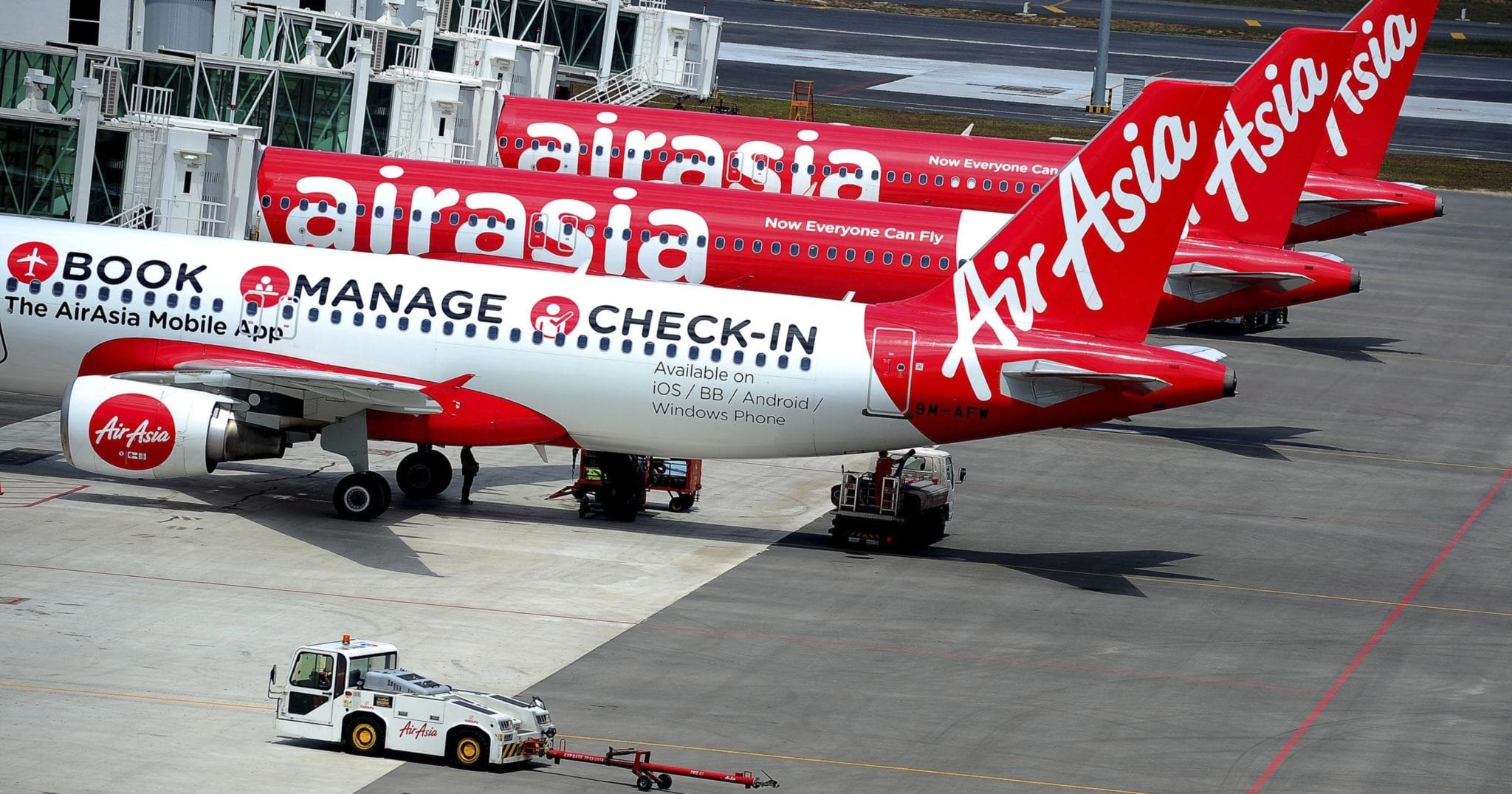
    AirAsia’s new #DareToDream campaign, which is currently running in Singapore with the tagline “We Dare to Dream, So You Can Too”, aims to inspire by sharing personal stories, to encourage individuals to dream big, push limits and seize the day.

    The campaign was motivated by AirAsia’s own success story, and credits its employees who have propelled AirAsia to where it is today. It runs until August 2018 on YouTube, Facebook and Channels 5 and 8. AirAsia will also seed its #DareToDream message on various other digital platforms through InSkin and S4M, and also run ad images on buses to further reinforce the brand messaging. The Smalls and Carat Singapore were involved in the campaign.

    #DareToDream also shares the achievement of one of the airline’s All-Stars, Captain Suwapich Wongwiriyawanich, who dared to dream and made it come true. She is the first female A330 pilot in AirAsia Thailand.

    “At AirAsia, one of our core values is to dare to dream and we want to inspire our employees and guests to do so too. No dream is too big,” AirAsia Singapore, head of marketing, Sharon Cheong, said.

  • Maxis, AirAsia put up RM30 mil for World Cup airing on RTM

    Maxis Bhd (Maxis) was announced as the main sponsor for the live telecast of 41 World Cup 2018 matches through Radio Televisyen Malaysia (RTM).

    Information and Communications Minister, Gobind Singh Deo, said meanwhile, AirAsia Bhd (AirAsia) had agreed to a RM12 million sponsorship in the gold category, sealing the deal for the games’ telecast here, which costs an overall RM30 million.

    He said there were other corporate bodies who had expressed interest to sponsor the telecast.

    “RTM is still in a negotiation process with the interested parties. We encourage those interested to come forward. The RM30million is meant for the 41 World Cup matches, so other sponsorships could be used for promotional activities and even additional telecast for the remaining matches,” he said in a Press conference to launch FIFA World Cup 2018 the free live telecast today.

    He said the government thrived in providing the platform for the people for different fields including patriotism, recreational and entertainment.

    “We can’t deny the fact that football is a very popular sport among the people. Thus, the telecast agenda was given priority so that the message could be channeled effectively.

    “The sponsorship is not only important in making that the World Cup telecast a success, but also a boost to RTM’s reputation,” said Gobind, who is a fan of Brazil football team.

    Out of the 64 matches, RTM will show 41 matches, out of which 28 will be live and 13 delayed.

    RTM allocates a total of 400 hours of telecast through TV1 and TV2 in the 21st FIFA World Cup, which will be held in Russia starting from June 14.

    TV viewers also stand a chance to win flight tickets in a contest by AirAsia held throughout the tournament.

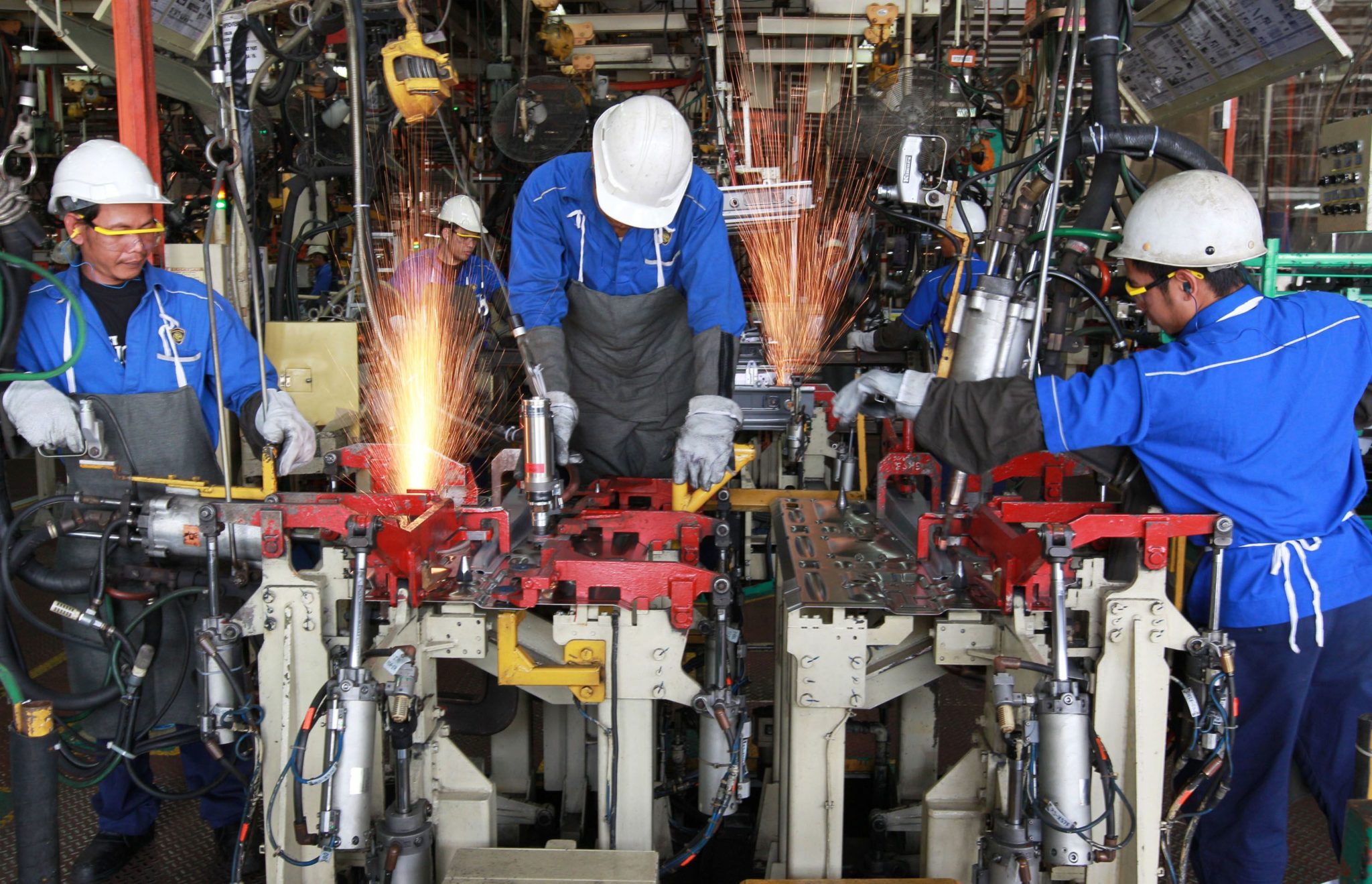
  • Manufacturing sector Malaysia posts RM65.5b sales in April 2018

    Manufacturing sector Malaysia posts RM65.5b sales in April 2018

    Malaysia’s April manufacturing sales recorded a growth of 8.2% to RM65.5 billion compared with RM60.5 billion reported a year ago, according to the Statistics Department.

    The significant increase in sales value in April was due to the increase in electrical and electronics products (13.9%), petroleum, chemical, rubber and plastic products (6.3%) and food, beverages and tobacco products (6.4%).

    Total employees engaged in the manufacturing sector in April 2018 was 1.07 million persons, an increase of 2.1% or 22,100 persons against 1.05 million persons in April 2017.

    Salaries & wages paid rose 10.2% (RM353.5 million) to record RM3.83 billion, thus registering an average salaries & wages per employee of RM3,577 in April 2018.

    Sales value per employee gain 6.0% to RM61,226 compared with the same month the previous year.

    MIDF Research is of the view that the continuous uptrend in both wages and employment in the manufacturing sector provides a bright outlook for the economic activities and contribute positively towards domestic consumption in 2018.

  • Vietnam retailers bristle at coercive rules

    Vietnam retailers bristle at coercive rules

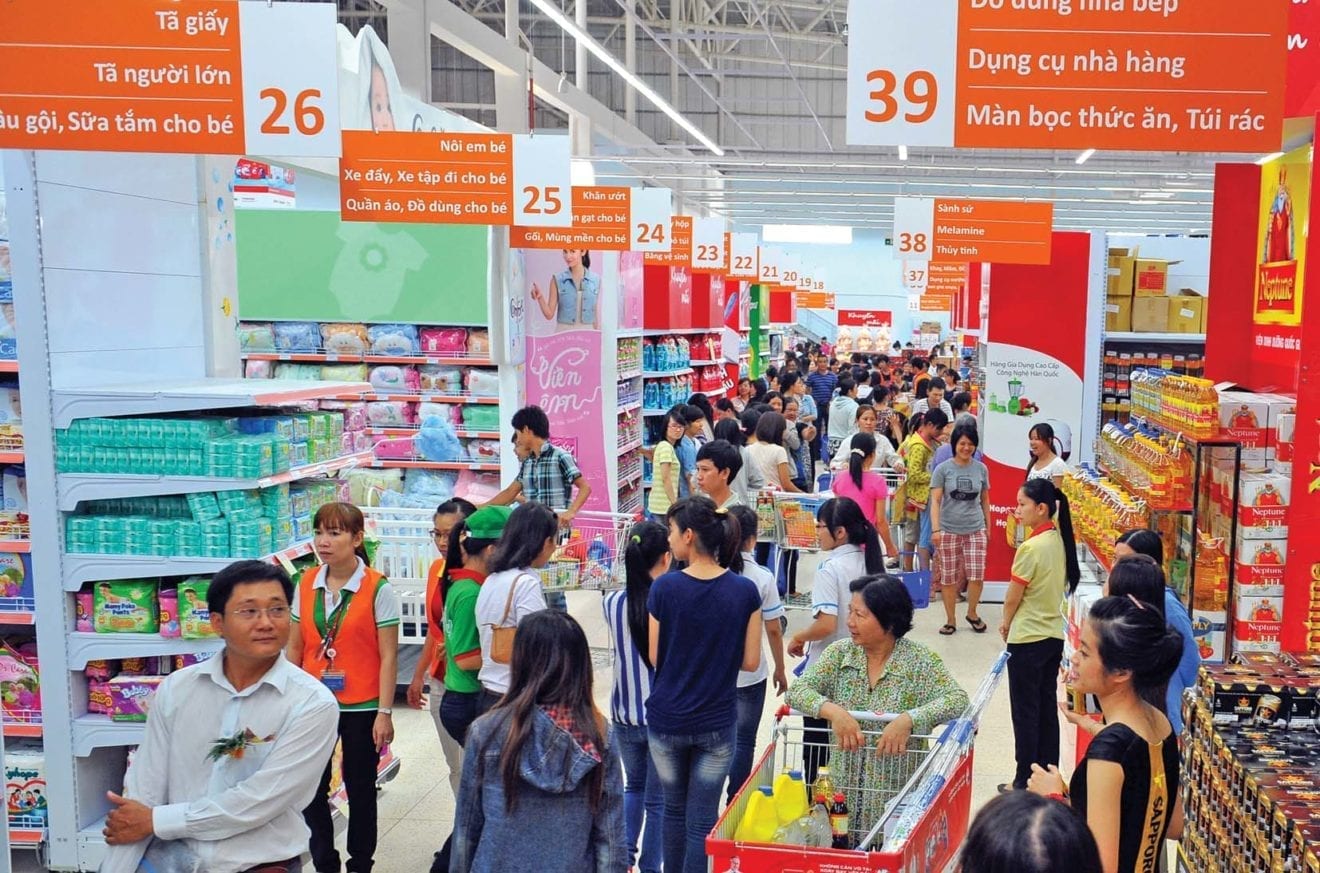
    A draft law requiring all supermarkets in Vietnam to open through holidays and provide online sales and delivery services has angered retailers.

    They say rules cannot set for marketing strategies that are decided by businesses based on their own assessment of market conditions.

    The provision in the Decree of Development and Distribution Management, proposed by the Ministry of Industry and Trade, will apply to retail outlets that have an area of at least 250 square meters (2,690 square feet), and malls with more than 10,000 square meters (over 107,600 square feet).

    The new rules also say supermarkets and malls can only have a maximum of three discount events a year, with 30 days at the most for each event, and 70 percent of all items must be discounted at such events.

    Supermarkets and malls also need to open from 10 a.m. to 10 p.m. every day, including holidays. They must offer delivery service and online shopping to customers, the bill says.

    Whether a supermarket offers delivery service and online sales or not depends on the strategy that a business chooses to employ, said Dinh Thi My Loan, president of the Association of Vietnamese Retailers (AVR).

    The number of discount events and their nature should be for the retailers to decide, she stressed, adding that the regulation should be removed from the bill, she said.

    Experience from other countries in the region shows it is not practical for the government to pack too many goals into a draft law, she said, adding: “The stated goals are too broad and unconvincing.”

    Previously, the Vietnam Chamber of Commerce and Industry (VCCI) also called this provision “coercive” in a letter sent to the Ministry of Industry and Trade.

    The bill intervenes too deeply in the right of businesses to operate the way they want, and does not engage with the larger picture of the distribution system in the country, the letter said.

    VCCI suggested that existing problems and potentials for the national distribution system should be studied in more detail before drafting new rules.

    The Ministry of Industry and Trade has said that it will continue to research and listen to suggestions while completing the draft law.

    As of last year, Vietnam had 800 supermarkets, 150 malls and 9,000 traditional markets, apart from 2.2 million or so convenient stores.

    Vietnam is considered an emerging market for retail expansion and was ranked 6th last year in the Global Retail Development Index by consulting firm A.T. Kearney.

  • AirAsia to fly from KK to Bangkok from Aug 16

    AirAsia to fly from KK to Bangkok from Aug 16

    AirAsia Group Bhd will fly from Kota Kinabalu (KK) to Bangkok, Thailand from Aug 16, 2018, marking the airline’s ninth route connecting Malaysia and Thailand.

    In a statement today, the low-cost airline said the thrice-weekly KK-Bangkok direct flights would be operated by AirAsia Thailand, with promotional all-in-fares starting from RM99 one way for travels between Aug 16, 2018, and Aug 13, 2019.

    Bookings for the promotional flight tickets are available from today until June 17, 2018.

    Currently, the Malaysia-Thailand routes operated by AirAsia includes Kuala Lumpur (KL)-Bangkok (84 times weekly), Penang-Bangkok (14 times weekly), Johor Baru-Bangkok (11 times weekly), KL-Hat Yai (11 times weekly), KL-Hua Hin (four times weekly), KL-Chiang Mai (seven times weekly), KL-Phuket (seven times weekly) and KL-Krabi (21 times weekly)

  • World Bank raises 2018 growth forecast for Vietnam

    World Bank raises 2018 growth forecast for Vietnam

    Vietnam’s economy might expand by 6.8 percent this year, the World Bank (WB) says in a new report, revising upwards its previous forecast of 6.5 percent in April.

    It estimates GDP at 6.6 percent in 2019 and 6.5 percent in 2020.

    The bank explained its upward revision on better prospects for the expansion of agriculture and production for exports, continued inflow of foreign direct investment thanks to bright economic prospects.

    If the actual growth rate matches projection, it will be the same as last year, which was the highest in a decade.

    In the first quarter this year, the economy expanded 7.38 percent, also a 10-year record, thanks to the strong growth in agriculture, industry-construction and service sectors.

    In an interview in April, Prime Minister Nguyen Xuan Phuc had said Vietnam will maintain its current economic growth until 2020 by giving private firms more room to grow and driving positive change in rural areas.

    He said Vietnam will facilitate an economic environment conducive for private firms to thrive, noting that they account for 43 percent of the nation’s GDP.

    The Vietnamese government will help by developing new policies, distributing resources, encouraging the creation of new enterprises and giving firms more opportunities to use modern technologies, said Phuc.

    “We will try to put in place the most favorable policies and create the most favorable environment so that by 2020, we will have in operation over one million businesses, accounting for 50 percent of Vietnam’s GDP, up from 43 percent at present,” he’d said.

  • Australia retail sales return to growth in April 2018

    Australia retail sales return to growth in April 2018

    The Australian retail industry returned to growth in April with a 0.4% rise in sales after stalling in March, according to the Australian Bureau of Statistics (ABS), surpassing expectations of a 0.2% gain.

    “Retail turnover rose by 0.4% in April, seasonally adjusted, which is an improvement on the March figures which showed no increase,” said National Retail Association CEO, Dominique Lamb, adding it was positive news following the sluggish start to 2018 for the sector.

    All seven Australian states, except for South Australia, recorded growth for the month period, with the Northern Territory lifting the most in value terms, up 2.6% in April.

    The ABS recorded strong sales for cafes, restaurants and takeaways, kicked on by unseasonably warm weather, which many states experienced throughout autumn.

    On the fashion front, the results were not as good with both department stores, and clothing, footwear and personal accessories categories recording turnover falls of 0.9% and 0.8%, respectively.”

    Looking forward, the NRA pointed out that one of Australia’s biggest annual discount seasons — to mark the End of Financial Year (EOFY) — began last week, meaning fashion and department store sales should improve in June.

    It is forecast that Australian shoppers will splurge close to $26 billion during the EOFY sales period in June.

    “With several department stores and fashion outlets slashing their prices between now and July 1, we are optimistic that sales in this area will pick up markedly in the month ahead,” said Lamb.

    “We urge shoppers across the country to take advantage of many of the great bargains on offer as retailers attempt to clear stock before the end of the financial year.”

    Annual retail sales of more than A$315 billion accounts for almost 18% of Australia’s GDP.

  • FamilyMart Uny and Don Quijote agree to capital tie-up

    FamilyMart Uny and Don Quijote agree to capital tie-up

    Convenience store group FamilyMart Uny Holdings has stepped up co-operation with Japan’s largest discounter, Don Quijote Holdings, to open a joint store.

    Like other Japanese convenience stores, which are open 24 hours and sell everything from underwear to freshly brewed coffee, FamilyMart has struggled with falling customer numbers in the past two years amid competition from discount drugstores and problems with labour shortages.

    It merged with Uny in 2016, and last year sold a 40 per cent stake in its general merchandise unit to Don Quijote. The company is hoping the joint convenience store, which has opened in Tachikawa, Tokyo, will help rekindle consumer interest. Two other stores are also opening this month.

    Don Quijote, also open around the clock, is known for stocking its stores floor-to-ceiling with an eclectic mix of products such as leopard-print rugs to designer goods. Popularly known as Donki, it has delivered 28 years of unbroken sales growth.

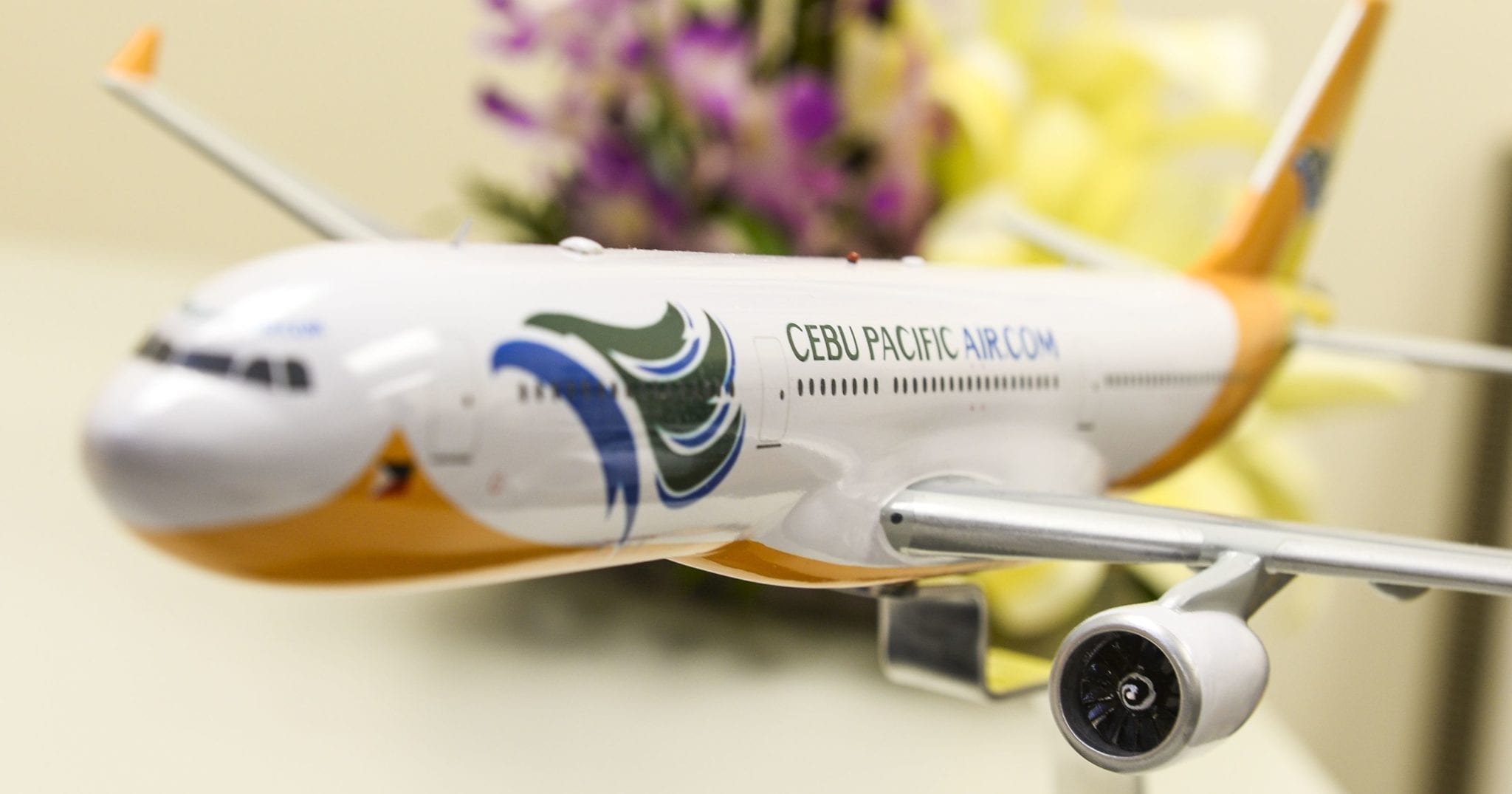
  • Cebu Pacific adding flights to Cebu’s new ‘resort-airport’ terminal

    Cebu Pacific adding flights to Cebu’s new ‘resort-airport’ terminal

    Cebu Pacific will increase flights to Cebu by 20 percent next year, the airline’s chief Lance Gokongwei said Thursday as the Queen City of the South inaugurated its new “resort-airport” terminal.

    The new 65,500-square meter Mactan-Cebu International Airport Terminal 2 is expected to cater to 12.5 million passengers annually, airport officials said in a statement.

    “Cebu Pacific will be adding aircraft here so we can serve the growing tourism industry, probably 20 percent at the minimum next year,” Gokongwei told ABS-CBN News.

    The country’s largest carrier will also come up with special packages “to celebrate” the opening of the new airport and to entice passengers to choose Cebu as the point of entry to the Philippines, Gokongwei said.

    Cebu Pacific will also “add more routes to North Asia to serve the big market in China, Korea, and Japan,” he said.

    Gokongwei said the budget carrier also intends to reach 22 million passengers by the end of 2018, 3 million seats higher than the 19.4 million seats Cebu Pacific sold last year.

    Cebu Pacific is also eyeing more flights to Panglao in Bohol and San Vicente in Palawan in 2019, Gokongwei said.

  • Don Don Donki opening second outlet in Singapore on June 14

    Don Don Donki opening second outlet in Singapore on June 14

    Japanese discount retailer Don Don Donki will open its second Singapore store next week at Tanjong Pagar’s 100AM mall.

    Don Don Donki’s product range of about 30,000 items was curated for Singapore and spans fresh and processed foods, vegetables, meat, sushi, groceries, beverages, costumes, clothing, cosmetics, novelty goods and household items. A third of the product selection is from Hokkaido.

    The first store opened in the Orchard Central shopping centre last December and the company plans at least 10 stores in Singapore within five years.

    The new store is spread over two levels of the 100AM mall.

    Better known by its nickname Donki, the retailer was founded by Japanese businessman Takao Yasuda in 1978 and is owned by the Don Quijote Group. Its stores in Singapore are run by Pan Pacific International Holdings, its holding company for overseas business.

    While the stores in Japan are called Don Quijote, its Singapore branch name has been changed to avoid confusion with a local Spanish restaurant of the same name. The term “Don Don Donki” was taken from the store’s theme song.

    “The idea to have Don Don Donki in Singapore was suggested by Hokkaido Marche,” said Yasuda, 68, who “semi-retired” a couple of years ago and moved to Singapore. “When I came here, I realised products in Singapore are very expensive, and in Japan I’m known as the king of discounts.

    “What costs one dollar in Japan is sometimes two or three dollars here.”

    So when he was approached by Hokkaido Marche to partner and open its concepts in Singapore, he agreed immediately.

    With 368 stores in Japan, Hawaii and the US, the brand achieved nearly ¥828.8 billion (US$7.3 billion) in sales last fiscal year.

  • China’s import tariffs cut and how it affects Hong Kong retail

    China’s import tariffs cut and how it affects Hong Kong retail

    China will cut import tariffs on nearly 1500 consumer products from July 1 – a move likely to have a modest impact Hong Kong retail sales.

    According to Reuters, China’s import tariffs for apparel, footwear and headgear, kitchen supplies and fitness products will be more than halved to 7.1 per cent from 15.9 percent.

    Cosmetics, such as skin and hair products, and some undefined “medical and health products”, will also benefit from a tariff cut to 2.9 per cent from 8.4 per cent.

    Some tariffs on luxury goods have been trimmed as well, although the effect of that on retail prices appears to be marginal. Other goods which Chinese consumers would not source from Hong Kong, including household appliances and packaged foods, will also become cheaper.

    Pascal Martin, partner at OC&C Strategy Consultants, says that by definition, whenever price differences between Hong Kong and China shrink, Hong Kong retail faces a negative impact.

    “However, given the relatively small scale of the drop relative to the goods retail price (a 7 per cent average drop in duty on imported wholesale price may only enable a 2-3 per cent drop in retail price), Hong Kong retailers may not find it that difficult to reduce their operating costs to maintain their comparative price attractiveness versus China – for now. Therefore, we believe the impact will be more psychological than tangible.”

    Encouraging domestic consumption

    Martin says the reduction of import tariffs is an indication of the Chinese government’s effort to attract and retain more domestic consumption.

    “It may displace some sales from domestic brands to international brands, and secondly it may shift sales from cross-border purchases (online or during travel, such as in Hong Kong) to domestic purchases of international brands. Some global players have launched global price harmonisation already, even before the tariff change, so the trend should point to more domestic consumption.

    “However, lower prices may also grow the total pie by making these brands somewhat more accessible to a broader population of shoppers.”

    Martin describes the reduction of import tariffs as “helpful” but cautions that the total price from landing goods in China to their retail price includes both VAT and consumption taxes.

    “Based on OC&C consumer research, consumers start hesitating to buy international brands in China when the difference between these brands’ China price and their home market price is more than 15 per cent of the home price. This means that the impact of the cut in import tariffs will be highest for brands that were just above this 15 per cent price difference threshold and they will likely see their China price get into the “non-hesitation” zone below 15 per cent.

    “The impact of a lower tariff will vary by categories. For some categories like high-end watches where the import tariff is 50 per cent of additional tax and tariffs, the impact will be high. On the other hand, for jewellery, 7-15 per cent out of 50-60 per cent tax and tariffs is not a lot.”

  • Tug-of-War: Will Blockchain Bring Data Ownership Back to Users?

    Tug-of-War: Will Blockchain Bring Data Ownership Back to Users?

    Since the advent of the internet, users have marvelled at the ability to create a persona of themselves online – be it in the first virtual communities, social networks, retail sites and multi-player games. Increasingly, a greater proportion of our personal lives and information can now be found on digital platforms.

    Coupled with a plethora of emerging technologies such as the Internet of Things (IoT), 5G and Artificial Intelligence (AI), we can only expect that generated data, particularly of the individual, will increase exponentially. In fact, the global datasphere is projected to hit a staggering 163 Zettabytes (163 trillion GB) in 2025, according to a recent IDC-Seagate study.

    Even as data continues its exponential increase, recent cyber breaches and incidents around the misuse of user data have also cast the spotlight on the ownership of user data and how blockchain is disrupting this.

    Growing concern over data ownership

    The notion of one’s identity in the online world has evolved over time – once solely defined by a username and password, the increased integration of social media profiles, shopping history and other personal data has meant that our digital identity is fast becoming a reflection of our physical lives.

    Such data can be beneficial for businesses to better understand their customers and provide tailored services and offerings for an improved overall customer experience, particularly in e-commerce.

    However, the issue arises when individuals no longer have control over how their data is used and collected, particularly in the scenarios where organisations monetise user data without the user’s knowledge or request for more personal information than required.

    It’s unsurprising that consumers are increasingly becoming concerned about how their data is used and shared, and policies such as the European Union’s recent General Data Protection Regulation (GDPR) are also a reflection of the growing demand for greater ownership over personal data.

    Gaining a foothold on one’s data

    Blockchain, a technology that has seen success in cryptocurrency and beyond through its security, efficiency and non-centralised control, has been seen as a way of democratising data and putting ownership back into the hands of users.

    As compared to the current practices where ownership of user data is held by the enterprise, blockchain would enable the creation of a self-sovereign identity, where individuals control their own identities and personal data and are able to decide who to share it with, and to what extent.

    In addition, blockchain offers the possibility of micro-incentivising people to share data at their own will, which can significantly disrupt current ways of working for industries such as advertising and content.

    Organisations will need to come to terms with this new reality and be aligned with the changing mindsets and desires of their users when it comes to management of personal data. While a selfsovereign identity that is enabled by blockchain could revolutionise how personal data is managed, it does not come about without hurdles.

    For starters, the burden of managing and allocating access would have to be borne by the individual. Education would be crucial to familiarise users themselves with treating and managing data as assets that they now control and use to their benefit. Additionally, users themselves should be aware of the pros and cons of self-managing their data, rather than having organisations manage these on their behalf.

    At the broader level, this new approach also requires organisations to evaluate and adapt existing systems to ensure compatibility and that they continue to deliver the same user-friendly experience for their users.

    Despite the hurdles, blockchain will undoubtedly bring about changes with regard to personal data and digital identities as barriers to adoption gradually decrease for both enterprises and individual consumers. Given the rallying call for organisations to be more open about the data they collect about their users and how it is used, organisations will need to be prepared for the possibility of a future of acquiring data on the conditions of their users.

    Blockchain may pave the road to a future where large scale cyber breaches involving millions of stolen personal identities could be a thing of the past. Organisations too will need to evolve accordingly and bear responsibility for the just use and management of user data. After all, personal data belongs solely to the individual, and blockchain might well enable users to regain that control.


  • VN urged to focus on local branding

    VN urged to focus on local branding

    Speaking at a seminar on connecting businesses in ASEAN member countries organised by the High Quality Vietnamese Goods Business Association on the sidelines of the Thaifex expo in Bangkok last week, Pascal Billaud, CEO of Thailand’s Central Food Retail Group and Asian GI ambassador to the UN, said Thailand has educated people about the impacts and benefits of GI.

    They are regularly updated on GI, ways to protect GI products and preserving and sustaining local eco-systems so that GI products can continue to be produced in that particular area or region, he said.

    He said GI is very important to farmers and they need to register their produce for GI protection with relevant agencies.

    Origin-linked registration also substantially increases the price of the final product, he said.

    A kilogramme of Cambodia’s Kampot black pepper fetches 15 USD against 6 USD for Thai pepper and only $5.04 for Vietnamese pepper, he said.

    This means Vietnam has not done well in exploiting GI and other benefits, he said.

    According to experts, GI provides consumers with information about the origin of a product and its unique characteristics such as taste, colour, texture, and quality, and so they are willing to pay higher prices.

    Thirty leading Vietnamese food and beverage companies, who are members of the High Quality Vietnamese Goods Business Association, showcased organic and other food meeting global standards and GI-protected products at the expo in Bangkok from May 29 to June 2.

    At a business matching event, Huynh Nguyen Khang Duy, import-export director at Pham Nghia Food JSC of Can Tho, said: “This is the first time we showcase our products (clown knife-fish-based products) abroad.”

    Vietnam mainly exports tra and basa and clown-knife fish costs more than them.

    Many customers from Australia, Japan, Thailand and Malaysia were interested in his company’s products, Duy said.

    “We hope to take our boneless clown-knife fish and clown-knife fish paste products to Hong Kong and Japan.

    “We are also working to obtain Halal certification for export to the Middle East.”

    CP (Thailand) wants to distribute his products in the Thai market, he said.

    “I think if we want to take our products to the world or region, we also need to have capable and prestigious partners.”

    Le Thanh Diem, head of Tan Sang Food Powder Company’s sales division, said: “Before the business matching event, I surveyed the prices of products and found that our prices are appropriate.”

    Thai companies sought assurances her company could supply large volumes, she said.

    Norachai Ratanabanchuen, assistant to the deputy general director of CP Foods, said he had held discussions with four Vietnamese firms.

    While Vietnamese goods are of rather good quality, to be able to enter the CP distribution system, products must meet many quality standards, including HACCP and ISO.

    Vietnam and Thailand have many similar products, but Vietnamese suppliers can still compete, he said, citing the example of basa fish, which his company imports from Vietnam.

    If Vietnamese firms continue to maintain good quality, comply with standards, and have reasonable prices, they can compete with their Thai counterparts, he said.

  • These Chinese giants make Facebook and Google look tame

    These Chinese giants make Facebook and Google look tame

    The technology world’s most bruising battle for supremacy is taking place in China. And it could point to Big Tech’s future everywhere else, too.

    Tencent Holdings and the Alibaba Group are ratcheting up their no-holds-barred contest to dominate the ways 770 million internet users communicate, shop, get around, entertain themselves and even invest their savings and visit the doctor.

    The two titans long ago branched out from their core businesses — games and social media for Tencent, e-commerce for Alibaba — to duke it out in ever more realms of Chinese life. They have competed in messaging, microblogging and delivering takeaway food. They go head-to-head in video streaming and cloud computing.

    Today, their fiercest fight is over digital money kept on smartphones. Mobile payments have transformed the Chinese economy. Both giants, plus Ant Financial, an Alibaba sister firm, are spending big to gobble up pieces of the action.

    China’s internet powerhouses stand at the forefront of the nation’s galloping high-tech progress — a surge that has been brought into sharp focus by the Trump administration’s efforts to counter it. On one hand, the standoff over the Chinese telecom equipment-maker ZTE has exposed, to many in China, the degree to which the country still lags in core technologies such as microchips.

    But in the internet realm, China still offers a spooky potential vision of the future, one in which online behemoths like Tencent and Alibaba become the gatekeepers to the entire economy, wielding immense power over traditional industries and becoming very, very rich in the process.

    At a conference in December in the Chinese city of Guangzhou, Tencent’s chief executive Pony Ma said he felt the two companies were competing in “too many” areas.

    “Sometimes I think, ‘Ah, we’re competing in this now, too? All right then,’” Ma said, chuckling. “It’s a little frustrating.”

    A duopoly this broad could not be easily replicated in other countries,  for example the United States. Entrenched competitors and the threat of government intervention generally keep the likes of Apple, Amazon, Google and Facebook from expanding pell-mell into adjacent businesses. All of them have sprawled and overlapped mightily, but Amazon, with its forays into groceries, pharmacies, health care and more, might be the furthest along towards creating an inescapable commercial universe.

    Still, with the European Union enacting tough new privacy laws, and some in the United States eager to follow, Google and Facebook could soon be forced to find ways to make money beyond selling users’ personal information to advertisers, said Raj Rajgopal, president of digital business strategy at Virtusa Corp, a consulting firm.

    “As profitability reduces, they’ll say, ‘Now I need to monetise my customer base,’” Rajgopal said. “The innovation we’re seeing in China could be seen in the US in the next three to five years,” he added. “Customers are demanding that.”

    China’s internet titans have a powerful ally found nowhere else, though: the Chinese government. Tencent and Alibaba have avoided anti-monopoly clampdowns by staying in Beijing’s good graces, said Hu Wenyou, a partner at the Beijing law firm Yingke. Their sheer size also makes them easier for authorities to control. They simply have too much to lose.

    “If you can become so big, and so successful in so many areas, this in itself shows that you must have maintained very good, very friendly relations with the government,” Hu said.

    Neither giant is done getting bigger.

    Each has a market capitalisation of close to $US500 billion ($663 billion), making them among the most highly valued technology firms on the planet. Google and Facebook still claim more users, but the Chinese heavyweights arguably do more — and more, and more — for theirs.

    The latest battleground? Brick-and-mortar stores. Alibaba has spent great sums — $US2.9 billion on a supermarket chain, $US2.6 billion on a department store and mall operator — to conquer the real world. Tencent has followed suit with its own retail partnerships and investments.

    Once the companies have locked people into their payment systems, they can become the enablers of commerce and financial services of even more kinds. In a sign of investors’ excitement about the possibilities, Ant Financial is making plans to go public, in a blockbuster stock offering that could give the company a market value larger than Goldman Sachs.

    China has become a model for tech’s world-swallowing tendencies partly out of circumstance.

    With the country’s high-speed churn of well-funded startups, planting flags on new turf is often the only way for large players not to be constantly losing ground.

    Also, both Alibaba and Tencent have struggled to make much money outside their home market. That means their surest way to keep growing is to get more deeply involved in more areas of their Chinese users’ lives.

    Those lives are riper for tech disruption than lives in the West. In China, small stores dominate retail. Hospitals are crowded and doctors overworked. Most people do not have credit cards. These are easier business opportunities for Alibaba and Tencent than they would be for Amazon or Facebook.

    In a report this week, Morgan Stanley predicted that by 2027, the total market in China in which Alibaba could be making money will be worth $US19 trillion — more than Amazon’s potential market worldwide.