Category: General

Retail News Asia is committed to providing both local and global retailers with the latest General Retail news throughout the Asian market. This on a daily base.

  • AirAsia to take wing in Japan after long layover

    AirAsia to take wing in Japan after long layover

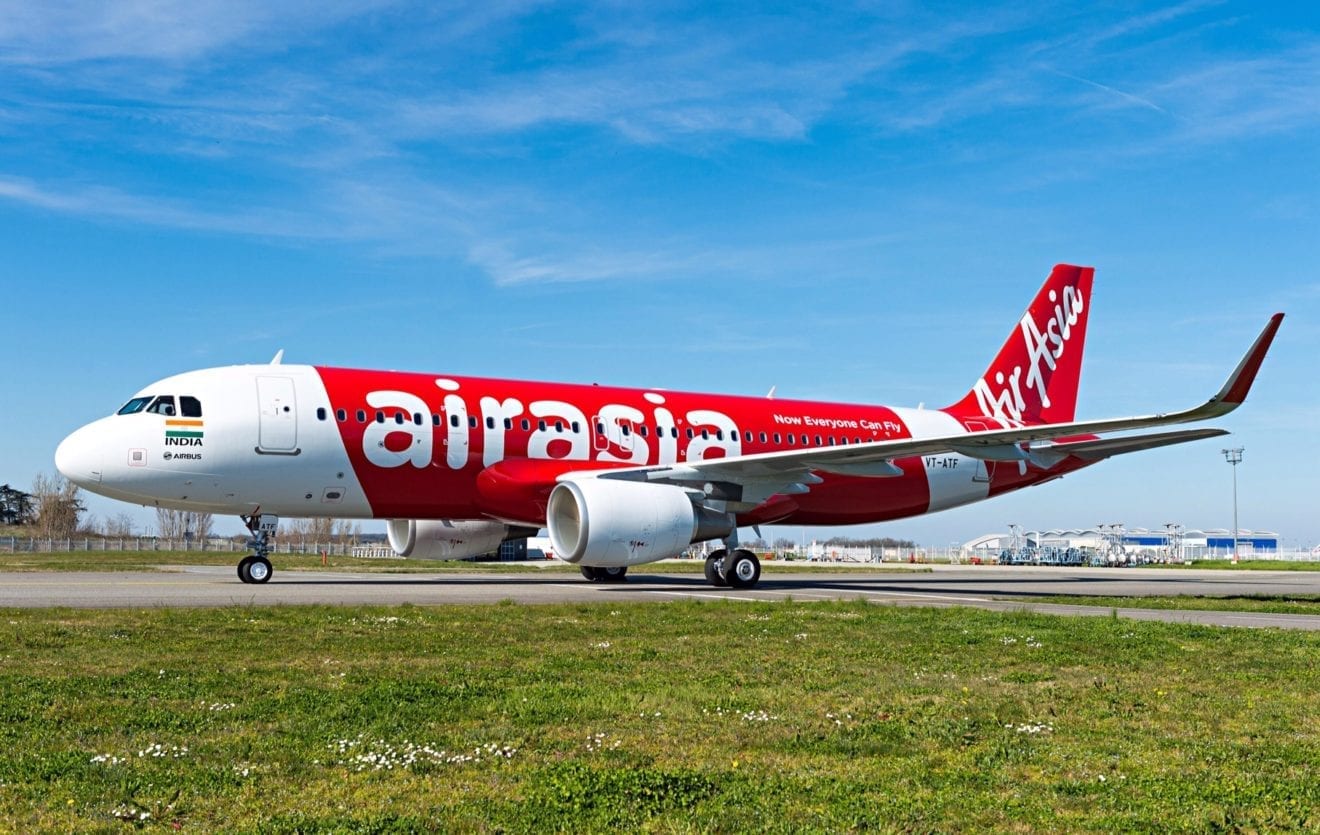
    Low-cost carrier AirAsia Japan will ply this country’s skies again as early as September, flying a domestic route from its home base of Chubu Airport near Nagoya, in a move likely to shake up the budget air travel market here.

    The unit of Malaysia-based AirAsia, Southeast Asia’s biggest low-cost carrier, will fly between Chubu and the city of Sapporo on Japan’s northern island of Hokkaido. It plans to later offer flights from Chubu to Taipei as well, it had told affiliates by Friday.

    Chubu Airport aims to open a terminal dedicated to low-cost carriers in the first half of fiscal 2019 in response to a spike in activity. A number of budget carriers operate through the airport, but AirAsia Japan will be the first to make it a base where planes are parked overnight and maintained.

    Five airlines currently offer flights between Chubu and Sapporo, including Japan Airlines and low-cost carrier affiliate Jetstar Japan. Adding AirAsia to the mix may froth up price competition.

    Low-cost carriers offer lower fares than traditional carriers by cutting costs and onboard services.

    A turbulent history

    AirAsia previously offered domestic Japanese flights via an earlier incarnation of its Japan arm, set up in 2011 through a joint investment with All Nippon Airways, which has since become a unit of ANA Holdings. But it withdrew from those routes in 2013 amid a disagreement with its partner. The joint venture became a fully owned unit of ANA Holdings that took to the clouds again under the moniker Vanilla Air.

    Aiming to re-enter Japan’s skyways, AirAsia partnered in 2014 with companies including e-commerce powerhouse Rakuten and sporting goods retailer Alpen to form the new AirAsia Japan, taking a 49% stake including nonvoting shares.

    In 2015, that company moved its headquarters to Chubu Airport. At first, the carrier intended to start offering flights that year, but such issues as shortcomings in its safety management system forced a series of delays. A planned route between Chubu and the northeastern city of Sendai was nixed as well. A fourth, indefinite delay was announced in January.

    AirAsia Japan’s management also shifted during the delays. The company’s first CEO, All Nippon Airways alum Yoshinori Odagiri, stepped down at the end of 2015. Thereafter, the unit courted Takashi Ide — former chairman of low-cost carrier Skymark — for a top management position, while Odagiri’s seat was filled by Osamu Hata.

  • 18th​ ​APRCE 2017 to address new retail trends and issues in Asia-Pacific’s largest retail event

    18th​ ​APRCE 2017 to address new retail trends and issues in Asia-Pacific’s largest retail event

    The 18th Asia-Pacific Retailers Convention and Exhibition (APRCE) will take place at the Kuala Lumpur Convention Centre from October 25 to 27, 2017. About 3,000 delegates from 18 countries are expected at Asia Pacific’s largest retail event which is held once every two years.
    Organised by the Malaysia Retailers Association (MRA) and endorsed by Federation of AsiaPacific Retailers Associations (FAPRA), the theme of the 18th APRCE 2017 is “Transformation, Creativity and Beyond”.
    Key global retailers are expected at this event which will spearhead a re-think on retail and how to drive change through innovation, transformation and staying ahead of the pack for business success. It will explore opportunities to capture the next decade of discerning digitised customers.
    World-class speakers, retail leaders and solution providers from the US, UK, Japan, China, Korea and, of course, Malaysia will share their business success stories, new retail trends, ways to retail excellence and e-commerce trends and challenges in retailing, among others.
    Among the 22 speakers at the 18th APRCE2017 are: Mr Howard Saunders, Retail Futurist, Twenty Second and Fifth Ltd, US; Mr Christopher Sanderson, Co-Founder, Future Lab United Kingdom; Mr Motoya Okada, President and CEO, AEON Co. Ltd; Mr Benjamin Yong, Founder and Group Chief Eating Officer of the BIG Group, Malaysia; Mr Hoseok Kim, CEO of Celcom Planet Sdn Bhd (11Street), Malaysia; Ms Michelle Grant, Head of Retailing at Euromonitor International, US; Mr Chan Kok Long, Co-Founder & Executive Director of IPay88 Sdn Bhd, Malaysia; Mr Roger Wang, Chairman of Golden Eagle International Group, China and Mr Chen Xiaodong, CEO of Intime Retail Group, China.
    The delegates attending 
    According to APRCE 2017 Organising Chairman, Mr James Loke, about 1,300 foreign delegates have confirmed their attendance. They include those from Japan, China, Korea, Indonesia, the Philippines and other FAPRA-recognised national retail trade organisations such as in Malaysia, Singapore, Thailand, Vietnam, Myanmar, Australia, New Zealand, Taiwan, Hong Kong, India, Mongolia, Turkey and Fiji.
    The event is the perfect focal point for international networking, and Malaysia, as the host, is the ideal location to mix business with leisure. Representatives from Asia-Pacific will be converging here to exchange ideas, connect with suppliers, seek business opportunities and network.
    The 18th APRCE 2017 is supported by the Ministry of Tourism and Culture, and the Malaysia Convention and Exhibition Bureau (MyCEB).
    How APRCE started 
    Since 1983, APRCE has been the main activity of the Federation of Asia-Pacific Retailers Associations (FAPRA), which has 18 association members from 18 countries. It is the longest running biennial retail conference in Asia-Pacific. The host country is selected by FAPRA members through a bidding process held every 2 years.
    For the record, the 17th APRCE 2015 was held in Manila, Philippines while the 16 th APRCE 2013 took place in Istanbul, Turkey. The 18th APRCE 2017 will bring together participants to learn, discover and network, and make meaningful connections with other industry professionals. It will also highlight innovative solutions to help retailers differentiate themselves from their competitors.
  • Urban Chinese consumers are more selective spenders in 2017

    Urban Chinese consumers are more selective spenders in 2017

    While China’s economy continues to grow at a moderate pace, consumers have become more selective spenders in 2017 as a result of increased pressures both at work and with their personal finances. New research from global market intelligence agency Mintel reveals that, today, urban Chinese consumers* are more conservative with regard to increasing their spending than they were in 2016, as 36% of surveyed consumers report spending more in 2017 compared to 43% who said the same in 2016. Meanwhile, consumers are more likely to control their spending this year, with nearly half (49%) reporting that they are spending “about the same” as they did in 2016.

    However, while consumers in general have a positive outlook for their financial status, they are aware of potential future risks in life, and want to make sure that every purchase they make can be justified, and that what they buy is worth the price.

    Mintel research indicates that overall consumer expenditure increased by 10.5% to reach RMB 33,511 billion in 2016. The categories that experienced the most growth in 2016 include transportation, holiday, leisure and entertainment, and OTC (Over-the-Counter) and pharmaceuticals. Mintel forecasts that consumer expenditure will increase 8.4% year-on-year through 2021, while holidays will surpass clothing and accessories to become the third largest spending sector. Meanwhile, transportation and leisure and entertainment, as well as beauty and personal care, will also see an increase in consumer spending .

    Laurel Gu, Research Director at Mintel, said,

    “Demand for upgraded consumption for new options, better quality and greater convenience will be the major driving factor in 2017. The development of the consumer products and services market is expected to remain active over the next five years to 2021, with health and experience being the two major themes. When it comes to Chinese consumers in tier one to three cities, perceived trends in spending are similar with holidays being the most popular and alcoholic drinks the least popular. However, although in-home food, clothing and accessories, as well as eating out, are enjoying moderate increases in total spending, they are among the top sectors where consumers claim to be spending more this year. This suggests potential gaps that consumers living in towns or rural areas are not yet picking up as a part of upgrading their living quality.”

    Achieving a healthy lifestyle continues to be Chinese consumers’ top priority, with “have a healthier diet” (80% of consumers say they will definitely do this in 2017) and “exercise more” (75% report they will definitely do this in 2017) the top two goals that consumers are determined to achieve in 2017, as was the case in 2014. “Travelling to new places” is a goal that has become increasingly important to consumers over the last four years, rising from ninth place in 2014 to third place in 2017. Meanwhile, “spend more time with family” – which 73% of consumers say they will do this year – dropped from third position in 2014 to sixth position in 2017.

    “While living a healthy lifestyle continues to be a focus area for consumers, over the last few years we see that spending time with family and having a better work-life balance are being deprioritised for other goals like traveling and getting household finances in order. The reason for these changes in life priorities is likely because consumers, Mintropolitans in particular, tend to associate a healthy lifestyle with not just exercising and watching what they eat, but also a variety of meaningful leisure and social experiences.” Laurel continued.

    When it comes to the quality of their life, one quarter (24%) of Chinese consumers say spending on holidays is what makes them feel their quality of living has improved. Other top areas include spending on technology (eg. mobile phones) (9%), clothes and accessories (eg. apparel) (9%) and leisure (eg. working out) (4%), which is largely in line with consumers’ spending priorities.

    Mintel’s annual Chinese Consumer 2017 report tracks spending across 15 major consumer markets, revealing the categories that present areas of opportunity, disruption and innovation in the years ahead. Highlights from the 2017 report include:

    Better-for-you foods drive further growth

    Mintel forecasts that the in-home food market will reach RMB 7,001 billion in value by 2021, driven by the demand for more trading-up options in the form of better-for-you versions and higher quality ingredients. Looking forward, yogurt products positioned as an indulgent pleasure and cheese for snacking occasions will see the greatest potential. On the other end, both ready meals and instant noodles are in jeopardy due to the thriving food delivery service.

    Healthy drinks take leading positions in non-alcoholic drink market

    Thanks to a nourishing and healthy image, plant protein drinks (PPDs), functional beverages (eg. sports drinks, energy drinks), as well as some light flavoured beverages, are all growing in popularity. Overall, the Chinese non-alcoholic drink market is likely to retain its positive growth with a CAGR of 7.2% in the next five years. Besides consumers’ ongoing interests in pursuing healthy food and drinks, their knowledge of nutrition and ingredients is also growing. As such, the premium soft drinks market is expecting products featuring a clean and natural ingredient list that create associations with functional health benefits.

    Beauty products designed for special occasion have room to grow

    Consumer spending in the beauty and personal care (BPC) sector is estimated to have reached RMB 566 billion by the end of 2016 – increasing by 8.1% from 2015. Mintel forecasts that the sector will grow, driven by innovations from local brands, imported products and consumers trading up to premium products for better quality. In 2017, there will be increasing demand for safety products and segments that are designed to cater to special occasions, including the athbeauty trend and consumers in need of time-saving routines.

    Technology and communication market on a slow incline over the next five years

    Smart phones and more niche technology gadgets like smart wristbands or VR (virtual reality) headsets will enjoy strong growth in 2017, while computers and games consoles face challenges. Upgrading technology products, especially those consumers use daily (like smartphones), may help consumers improve their quality of living. High product quality, such as high processing speed for smartphones or reliable health-monitor function of smart wristbands, are essential for technology brands to win fans in the years ahead.

    More demands on social and leisure activities drive transportation spending

    The fact that the segment is closely related to two other strong sectors – holiday, and leisure and entertainment – together with accelerating new car sales, growing car usage spending, as well as increasing public transport cost, are all key drivers of spending in transportation. In the five years to 2021, Chinese consumer expenditure on transport is projected to see a 12.7% CAGR and reach RMB 3,605 billion. Opportunities exist for market players tackling daily commute issues, including those in the ridesharing and bike-sharing industries.

    Urban Chinese consumers seek more experimental activities

    Chinese consumers are becoming more sophisticated and selective in terms of where they spend their time and money for entertainment and relaxation. Mintel forecasts that the leisure and entertainment sector will reach RMB 2,823 billion in value by 2021. This is largely driven by the shift from products to lifestyle services and experiences, and the trend of trading up from mass to premium offerings; both are reflecting the change in life priority from wealth accumulation to a more balanced life. In 2017, there will be increased demand for virtual entertainment products, health and fitness services and family-focused recreations.
  • Facebook shares hit record high as mobile ad sales soar

    Facebook shares hit record high as mobile ad sales soar

    And within weeks, Facebook is expected to start a video service that will include scripted shows, a sharp change for a business built on user-generated content.

    Facebook Inc’s mobile advertising business grew by more than 50 percent in the second quarter, the company said in its earnings report on Wednesday, as the social network continued to establish itself as the venue of choice for an ever-growing array of online advertisers.

    Shares in Facebook, owner of four of the most popular mobile services in the world, rose more than 4 percent to about $173 in after-hours trading. Through Wednesday’s close, the stock price had climbed nearly 44 percent this year.

    Facebook, which now has more than 2 billion regular users, has been squeezing more ads into its Facebook News Feed while adding more ads to its photo-sharing app Instagram, which has more than 700 million users.

    With money cascading from those two services, Chief Executive Mark Zuckerberg said the company was turning attention to monetizing its two messaging services, Messenger and WhatsApp, which have more than 1 billion users each.

    “I want to see us move a little faster here but I’m confident that we’re going to get this right over the long term,” Zuckerberg said in a conference call with analysts.

    The company also is accelerating its push into video, an effort aimed at taking advertising dollars from the television industry and increasing the time people spend on Facebook.

    Within weeks, Facebook is expected to start a video service that will include scripted shows, a sharp change for a business built on user-generated content.

    Zuckerberg said video would be a significant driver of Facebook’s business in the next two to three years.

    With those possibilities still on the horizon, Facebook said total revenue rose 44.8 percent to $9.32 billion in the second quarter of the year. That beat the average forecast of $9.20 billion among analysts tracked by Thomson Reuters I/B/E/S.

    Growth was even steeper in mobile advertising, which increased to nearly $8 billion.

    “In mobile we’re continuing to see great strengths,” Facebook Chief Financial Officer David Wehner said in a phone interview with Reuters. “We’re seeing more and more ad dollars getting allocated to mobile, and we think that trend will continue.”

    “KILLING IT ON MOBILE”

    Mobile ad revenue accounted for 87 percent of the company’s total advertising revenue of $9.16 billion in the latest quarter, up from 84 percent a year earlier.

    “They’re killing it on mobile,” Needham & Co analyst Laura Martin said, referring to Facebook’s suite of apps. “They are the de facto mobile advertising monopolies and that’s a really big deal.”

    Martin said she sees no weaknesses in Facebook’s business.

    Facebook and Alphabet Inc own half of the online advertising market worldwide, and Facebook’s revenue growth this quarter outshone Alphabet, the owner of YouTube and Google.

    Alphabet on Monday reported a 21 percent increase in quarterly revenue, although it started the quarter from a larger base than Facebook did.

    Facebook has not said how much of its revenue is attributable to its Instagram unit, although the photo-sharing app has become a greater focus of its business.

    “Clearly, the biggest driver of growth is, overall, Facebook News Feed,” Wehner said. “Instagram is making a contribution and an increasing contribution.”

    But investors want Facebook to find additional revenue streams because the company has warned it is hitting maximum ad load in the News Feed, potentially slowing its overall growth.

    So far that has not happened.

    “They kept warning about ad load, but the ad load continues to be strong,” said Ivan Feinseth, research director at Tigress Financial Partners. “I still think ad revenue will grow, because more advertisers are adapting to this platform because there are so many people out there.”

    The popularity of Instagram also has put pressure on Snapchat, the app owned by Snap Inc. Instagram has added features similar to Snapchat’s and Snap’s stock on Wednesday closed at an all-time low of $13.40.

    Facebook said about 2.01 billion people were using its service monthly as of June 30, up 17 percent from a year earlier.

  • Vietnam-Australia rice cooperation in fine shape

    Vietnam-Australia rice cooperation in fine shape

    Deputy Prime Minister Vuong Dinh Hue, during his visit to the Australia, told a meeting with Australian businesses on July 24 that Vietnam can supply all types of rice in bulk to the country.

    Vietnam’s rice exports to Australia reached 220,000 tonnes last year, an increase of 50 per cent compared to 2015 and accounting for 4.5 per cent of all trade with the country.

    Mr. Rob Gordon, CEO of Sunrice, the world’s largest rice and food processor, said that some Vietnamese enterprises have exported micronutrient rice to islands in the Pacific Ocean under orders from Sunrice.

    He also suggested the Vietnam Government permit Sunrice to expand its business in Vietnam, transfer technology, and share its experience in rice production in a closed process with Vietnamese enterprises.

    Deputy PM Hue appreciated Sunrice’s goodwill and affirmed that the Vietnamese Government would direct the Ministry of Industry and Trade and the Ministry of Agriculture and Rural Development to cooperate with the company to support Vietnamese rice producers.

    Besides rice, Australian enterprises are also keen on other sectors in Vietnam such as tourism. Vietnam is becoming a popular holiday destination for many Australians, with 50,000 expected each year in the near future.

    Vietnam is now Australia’s 15th largest trade partner, with two-way trade of over $10 billion, while Australian investment in Vietnam has boomed over recent years. In the first six months of this year, Australian investors invested over $95.7 million in 27 projects in Vietnam (both new projects and additional capital in existing projects).

    The United Nations’ Food and Agriculture Organization (FAO) predicted in June that Vietnam would be among the Top 5 countries in terms of rice volumes this year. The five are China (with more than 142 million tons), India (over 110 million tons), Indonesia, Bangladesh, and Vietnam.

    Global rice volumes are likely to increase by 0.7 per cent this year compared to last year, to more than 502 million tons, according to the Food Potential report published by the FAO, due to policies promoting production in Asia and the recovery of production in South America and Australia.

    Vietnam exported nearly 4.9 million tons of rice last year worth $2.1 billion, a decline of 25.5 per cent and 20.5 per cent, respectively, against 2015.

  • Cebu Pacific Air adds new domestic link from Cebu

    Cebu Pacific Air adds new domestic link from Cebu

    Cebu Pacific Air has launched its latest domestic route from Cebu. On 26 July the carrier began a three times weekly service on the 232-kilometre link to Masbate (MBT). Operated by CebGo using its ATR 72-500s, flights will operate on Mondays, Wednesdays and Fridays.

    Cebu Pacific now serves 22 domestic destinations from Cebu which range in sector length from 105 to 467 kilometres. This is now the carrier’s second route to Masbate as it already offers daily flights from Manila.

  • SuperAnt helps businesses to go digital

    SuperAnt helps businesses to go digital

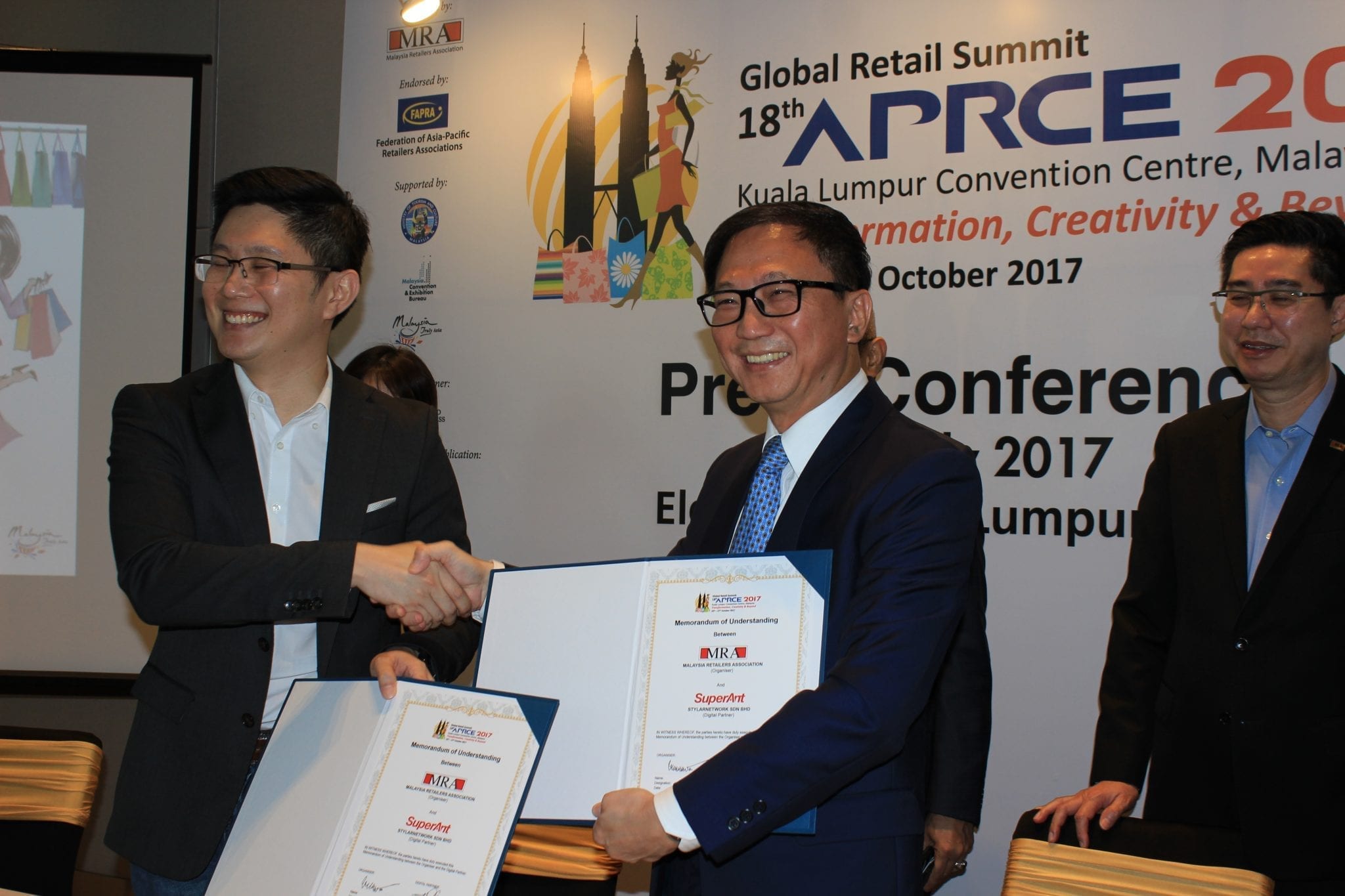
    Malaysian company SuperAnt has been appointed as the Official Digital Partner for the 18th APRCE 2017 Kuala Lumpur. The longest running biennial regional retail conference in Asia-Pacific that debuted in 1983 in Ikebukuro, Tokyo, Japan. APRCE is organised by the Federation of Asia-Pacific Retailers Associations (FAPRA) that has 18 association members from 18 countries, of which will all come together to discover the newest approaches to the latest issues faced by the region’s retailers.

    Malaysia Retailers Association (MRA) have signed a memorandum of understanding with SuperAnt that appoints the latter as the Official Digital Partner for the 18th Asia-Pacific Retailers Convention & Exhibition (APRCE). Hosted by MRA, APRCE will welcome 3,000 APAC delegates in Kuala Lumpur, Malaysia from October 25 till 27.

    The ticket for APAC retailers to enter the era of Big Data and Digital Marketing

    APRCE highlights innovative solutions to help the retail industry embrace technology advancements and deliver greater value to the Asia-Pacific region’s consumers. This event will be the perfect focal point for international networking as renowned retail practitioners and speakers will be speaking about core retail topics and exciting new retail concepts, calling forth to discover compelling new ways of retail marketing of both the traditional and digital spectrums.

    SuperAnt will be gracing the event by providing seamless digital check-in procedures, engaging mobile application, digital media solutions and Internet of Things (IoT) utilization throughout the event.

    Intra-ASEAN business opportunities

    SuperAnt allows businesses to expand to other countries via digital marketing and B2B2C. SuperAnt is a Southeast Asia-focused technology company that has presence in Indonesia, Malaysia, Singapore and Thailand. Specializing in key areas including Big Data, Internet of Things(IoT), digital marketing services and B2B2C.

    Experienced in localisation, SuperAnt can provide digital insights and customised solutions that are catered for business expansions abroad. Localisation is key to penetrate any market today.

    Providing a fundamental technology ecosystem that optimizes the accessibility of technology to everyone, SuperAnt aspires to make it easy and affordable for businesses to Go Digital.

  • Hong Kong International Airport retail spaces available

    Hong Kong International Airport retail spaces available

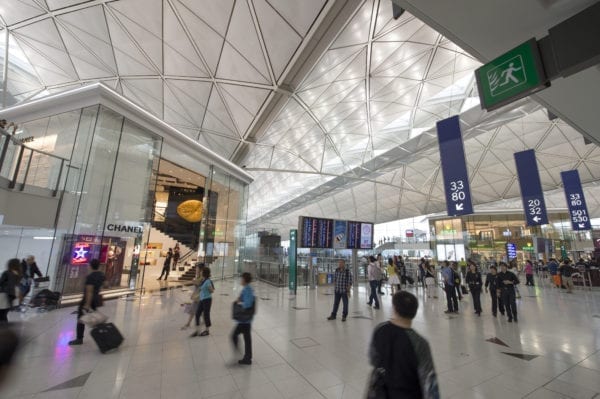
    Three Hong Kong International Airport retail spaces are available for tender for a smart-living and audio/visual/electronic products concession.

    All spaces are in Terminal 1 restricted areas – 102 sqm on Level 7 of Departures East Hall, South; 164 sqm on Level 7 of Departures East Hall, North; and 40 sqm on Level 6 of Departures South Concourse.

    With air, sea and land links, Hong Kong International Airport is open round the clock, serving more than 100 airlines and 70.5 million passengers annually.

    Tender requests must be accompanied with a non-refundable cashier’s order of HK$500 (US$64). Tender submissions must be in by August 31.

  • AirAsia X Malaysia passengers up to 1.39 million

    AirAsia X Malaysia passengers up to 1.39 million

    AirAsia X  carried slightly more than a third more passengers in the second quarter (Q2) ended June 30 compared with a year earlier, with the total distance travelled by these passengers expanding by about the same percentage.

    Announcing its preliminary operating statistics yesterday, the long-haul budget carrier said operating performance in the period trended slightly above expectations despite Q2 historically being the leanest quarter.

    The number of passengers who flew with AAX Malaysia grew 34.4% to 1.39 million compared to a year earlier, while revenue passenger kilometres grew 35.0% to 6.79 billion.

    “The company continues to stimulate demand to fill up additional capacity injected in Q2 by achieving a marked improvement in passenger load factor of 80%, up five percentage points (ppts) year-on-year (y-o-y), in line with the 26% y-o-y growth in available seat kilometres to 8.45 billion in the quarter,” AAX said.

    During the quarter under review, AAX Malaysia added frequency to two routes: Kuala Lumpur–Shanghai and Osaka.

    AAX Malaysia also added Honolulu to its network during the quarter under review, the airline’s maiden service to the United States.

    No new aircraft was added in the period, so the fleet size stood at 22 A330s.

    On the associates, it said AAX Thailand recorded a strong passenger load factor of 92%, an increase of three ppts from 89% a year ago.

    AAX Thailand carried 387,959 passengers in Q2, 26% higher than the same period last year. There is no new route or frequency for AAX Thailand’s network in the quarter.

  • Japan’s department stores see June uplift

    Japan’s department stores see June uplift

    Japan department stores saw higher sales in June, which was welcome news after they had fallen in the previous month, the sector’s industry body has said.

    Japanese department stores saw a welcome sales rise last month.

    Sales rose 1.4% year-on-year on a comparable basis at the 229 stores operated by the 80 companies that are part of The Japan Department Stores Association.

    Those 80 firms accounted for turnover of ¥472 billion last month.

    Department stores have faced major challenges in recent years but June’s figures offered some cause for hope, especially as sales had fallen 0.4% in May after rising 0.7% in April. April’s increase  had been the first for 14 months.

    The June rise also helped the three-month average to a 0.7% increase, the first growth in 18 straight quarters.

    The Japan Department Stores Association cited a number of reasons for the increase, from the start of the summer clearance sales (which had been switched from July to June) to high-spending foreign tourists and a return of confidence among more affluent local shoppers.

    In fact, sales to foreign visitors rose a massive 41.4% to ¥18.4 billion.

    It was the second consecutive month that such sales rose more than 40%.

    The Association said cosmetics was one of the key categories to benefit and Chinese tourists were out in force.

    However, there was bad news for the fashion sector as clothing sales fell year-on-year, despite the added impetus of lower prices.

    That said, the clothing that did do well was warm weather fashion as high temperatures and a relatively dry rainy season boosted demand and expensive items such as watches and jewellery were popular too.

  • Changi Airport to open Terminal 4, AirAsia to shift there

    Changi Airport is on track to open its new Terminal 4 (T4) later this year with nine airlines, including AirAsia Group, moving their operations there. Besides AirAsia Group, Cathay Pacific, Cebu Pacific, Korean Air, Spring Airlines and Vietnam Airlines will also move to T4.

    Together, they serve an estimated eight million passengers at Changi Airport each year and collectively operate close to 800 flights a week to over 20 regional destinations.

    Changi Airport Group (CAG) on Tuesday organised a special media preview of T4 with the session conducted by its director (corporate  and  marketing communications) Dennis Yim.

    Yim said CAG would decide on the starting date for T4 operations when operational readiness trials – currently in the final stage – had been completed.

    “These trials will involve commercial flights operated by airlines moving to the terminal,” he said.

    He said with T4, the total handling capacity of Changi Airport would be raised to 82 million passengers per annum.

    “There will thus be more capacity at Changi’s terminals to support the growth plans of all airlines,” he said.

    T4 project, which was completed after three years of construction, has a total floor area of 225,000 sq  metres, including the two-storey terminal, car parks and taxi deck.

    According to Yim, although just half the size of Terminal 3 (T3), the planners and designers of T4 have managed to deliver a terminal that will have a capacity of 16 million passenger movements a year, two-thirds that of T3.

    Yim noted that T4 would be the first terminal at Changi Airport to offer end-to-end Fast and Seamless Travel (FAST) for departing passengers.

    “With the extensive use of technology, including facial recognition software, FAST redefines the passenger’s travel experience, enhances operational efficiency and raises productivity.

    “Passengers will enjoy the flexibility of checking in at their own convenience, without having to wait for counters to open,” he said. FAST will also yield productivity gains with manpower savings of about 20% expected in the longer term, when operations have stabilised, said Yim.

    T4 houses two lounges — Cathay Pacific’s First and Business Class Lounge and SATS PPG Blossom Lounge. Changi Airport is the world’s sixth busiest airport for international traffic, serving 58.7 million passengers from around the globe in 2016.

    Including the soon-to-be-opened T4, Changi Airport will have 400 retail and service stores, as well as 140 food and beverages (F and B) outlets. Yim said T4 alone would be home to over 80 retail and F & B outlets.

    With over 100 airlines providing connectivity to 380 cities worldwide, Changi Airport handles about 7,000 flights every week, or about one every 90 seconds.

  • Thailand, China tie-up for Japan’s FamilyMart UNY?

    Thailand, China tie-up for Japan’s FamilyMart UNY?

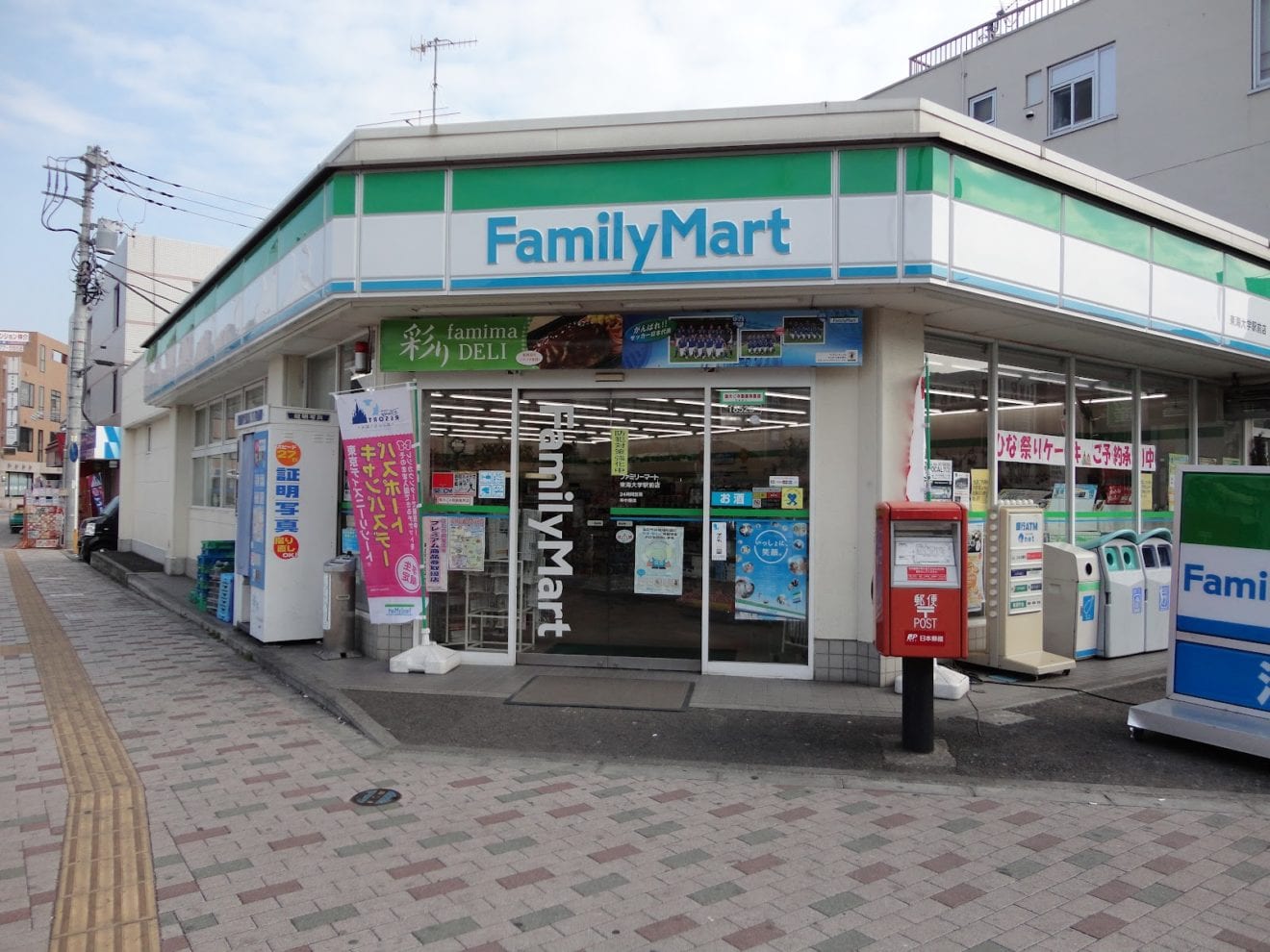
    FamilyMart UNY Holdings, Japan’s second-largest convenience store chain, is considering partnering with China’s Citic and Thailand’s Charoen Pokphand Group.

    The companies are looking at opportunities beyond convenience stores, says FamilyMart UNY president Koji Takayanagi.

    FamilyMart UNY has forecast it will more than double its profit to ¥100 billion (US$901 million) in four years from ¥41.2 billion in the current fiscal year. This will be driven by converting its Circle K and Sunkus stores into more profitable FamilyMart outlets, says Takayanagi.

    “There is plenty of room for growth,” he says of the company, which also runs supermarkets and general stores. While FamilyMart is profitable in China and Taiwan, it is reviewing its loss-making businesses in Indonesia, Thailand and Vietnam. “If we can get them to rally we will, but we cannot continue to pour in resources,” Takayanagi says.

    While rival Seven & I Holdings, which owns Japan’s largest convenience store chain 7-Eleven, expands overseas, FamilyMart will stay focussed on the domestic market. “It is easier to achieve results domestically and we know what we need to do,” says Takayanagi.

    Japan’s worsening labour shortage, which is leaving convenience stores scrambling to find workers, will force companies to adapt and innovate, he says. Even the country’s declining birthrate and aging population does not phase him. “Even if the amount an individual eats declines, if we offer items with added value people will buy them.”

  • Japan Airlines and Vietjet Launch Comprehensive Partnership

    Japan Airlines and Vietjet Launch Comprehensive Partnership

    Japan Airlines (JAL) and Vietjet today reached a formal partnership agreement that offers greater customer convenience and better quality of operations and services while enhancing the corporate value of both companies.

    The two airlines have held a series of discussions on expanding their networks in response to the travel needs of people in neighboring Asian countries next to Vietnam, in addition to meeting the growing demand for air travel between Japan and destinations in Vietnam. With the rapid economic growth in Vietnam, demand for air travel between the two countries has been growing strongly. JAL is already operating daily non-stop services between Tokyo (Narita) and Ho Chi Minh City and Hanoi respectively, as well as between Tokyo (Haneda) and Ho Chi Minh City.

    Vietjet, the first privately owned airline in Vietnam, began its flight services in 2011. It now operates an expanding network that covers all Vietnam and most parts of Asia. Offering convenient and friendly services with reasonable fares, Vietjet has succeeded in creating new travel demands in Vietnam. And as a new-age carrier, it has evolved to offer higher-class service “SkyBoss”, which has been very well received among passengers expecting quality service.

    As a first step, JAL and Vietjet have agreed to start a code-share cooperation for all flight services between Japan and Vietnam as well as the domestic flights of both airlines. Vietjet’s domestic flights, as well as flights between Vietnam and the other Asian countries will also be included. These   add-ons are expected to create more customer convenience. The two airlines will further explore opportunities to develop partnerships in various areas, including a frequent flyer partnership, aircraft operations and maintenance as well as ground handling services and training.

    “The launch of this partnership with Vietjet represents a significant milestone for the two airlines to provide customers with better access to destinations between Japan and Vietnam and beyond, and we believe it will contribute to generate more passenger and cargo traffic between the two countries and open up commercial opportunities on the two airlines’ international networks,” said Tadashi Fujita, JAL Executive Vice President.

    Luu Duc Khanh, Managing Director of Vietjet, said: “Through the agreement signed with JAL today, Vietjet once again affirms the airline’s commitment to innovation, leading market trends, and offering new services following the global integration and international standards. Japan is our key market as we expand the airline’s flight network in the Asia-Pacific region. The partnership between Vietjet and JAL will diversify our air transportation products and the market segment while stimulating the movement of people between the two countries as well as developing the two airlines’ relationship in line with our international commercial operation capabilities in the coming time.”

    More details will be announced at a later date on both airlines’ websites.

    Together with Vietjet, JAL will be striving to deliver greater conveniences and variety of choices to customers with a more comprehensive network in Asia.

  • South Korea tips fastest growth in three years in 2017

    South Korea tips fastest growth in three years in 2017

    The forecast for 2017 marks the strongest projected growth of the South Korean economy since GDP expanded by 3.3 percent in 2014. South Korea said Tuesday its economy is set to grow at its fastest rate in three years in 2017, on the back of strong exports and a $10 billion stimulus package aimed at creating jobs and bolstering welfare.

    South Korea has enjoyed a decades-long boom, but expansion has slowed more recently and economic and social frustrations were among the drivers of left-leaning President Moon Jae-In’s election in May.

    The finance ministry raised its forecast for Asia’s fourth-largest economy, saying gross domestic product was expected to expand by 3.0 percent — up 0.4 percentage points from an earlier projection in December.

    The forecast for 2017 marks the strongest projected growth of the South Korean economy since GDP expanded by 3.3 percent in 2014.

    Authorities also cited a recovery in the country’s exports for the improved outlook as the global economy rebounds.

    “We believe the 3.0 percent growth will be possible if the economy continues to undertake reforms for consumption-led growth,” deputy finance minister Lee Chan-Woo told reporters.

    The tweaked forecast comes after the government passed a giant stimulus package over the weekend promising 110,000 new jobs in response to record-high youth unemployment.

    Unemployment among under-30s hit 11.2 percent in April, more than double the rate for the entire working population.

    Economic frustrations were among the factors that fuelled mass anti-corruption protests that saw former president Park Geun-Hye impeached and arrested over corruption.

    Among the new jobs being targeted are firefighters, police, assistant teachers and social workers, while young job seekers, small businesses and tech startups will also be helped.

    Financial assistance will be increased for women on maternity leave, more daycare centers and nursing homes for the elderly are to be opened, and businesses hiring more full-time workers are to be given extra funding.

  • Tesco same day delivery plan ‘a defensive measure’

    Tesco same day delivery plan ‘a defensive measure’

    The Tesco same day delivery plan announced this week is partly a logical improvement to its existing online services and partly a defensive measure against the potential rise of Amazon in the UK.

    In a cutthroat market where grocers are vying for share, Tesco’s move will likely be followed by other players and will, ultimately, give shoppers much more flexibility.

    While the barriers for Amazon will be higher in the UK, they will not deter the behemoth from its grocery ambitions. Amazon typically takes a long-term view and will continue to invest in growing its UK grocery business. It will be assured by its systems and logistics capability, which will prove to be an advantage as it scales up.

    However, today’s announcement by Tesco makes it even more likely that Amazon will, over the medium term, look to make an acquisition in the UK grocery market. While this is unlikely to be one of the larger players, an operator like Ocado would give Amazon the scale and flexibility it needs to offer a sustainable UK wide online grocery service.

    Although Tesco now has first-mover advantage on same-day grocery delivery, the long-term implications are not necessarily so rosy. Margins in online grocery remain wafer thin, and while consumers will pay a premium for same-day service, they will not bear the full cost. As such, as other players increase flexibility in deliveries and as delivery prices come under further pressure, the move could ultimately be dilutive to profits.