Category: General

Retail News Asia is committed to providing both local and global retailers with the latest General Retail news throughout the Asian market. This on a daily base.

  • Thai AirAsia funds mechanic courses

    Thai AirAsia funds mechanic courses

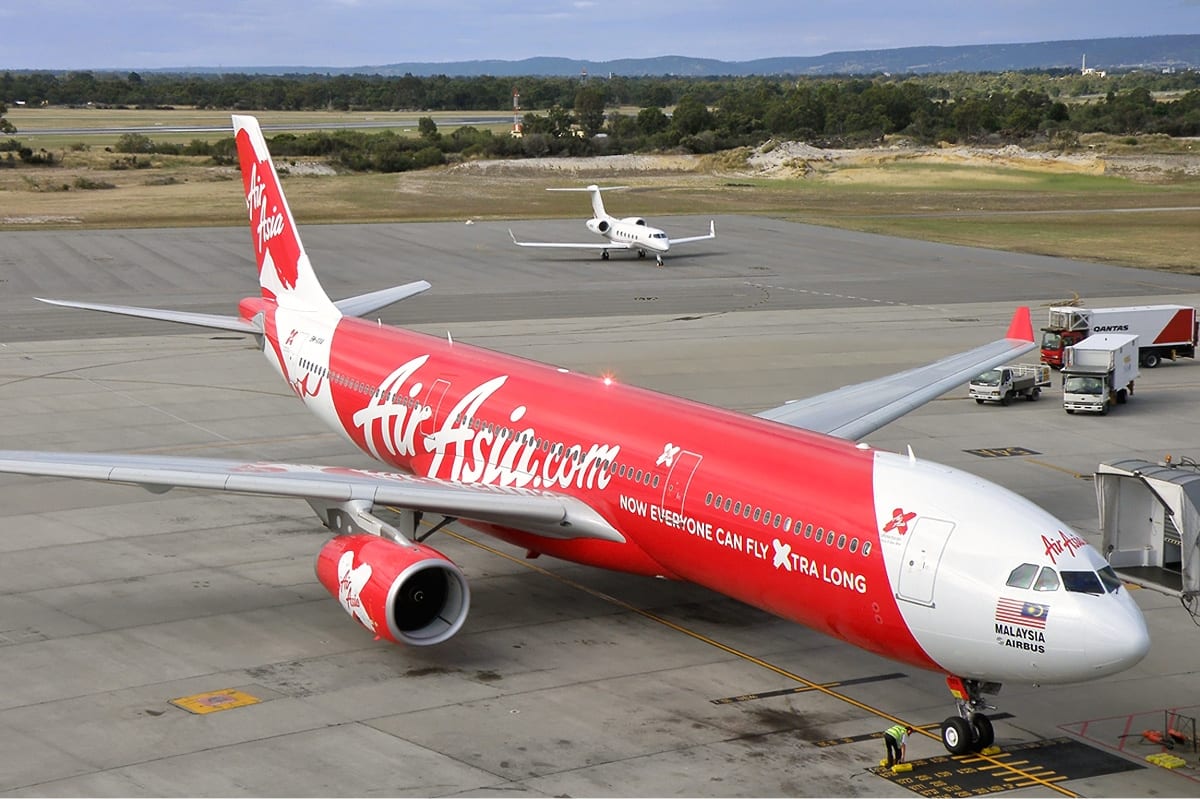
    Thai AirAsia has signed an agreement with Rajamangala University of Technology Krungthep and Bangkok Aviation Centre (BAC) to provide an aircraft mechanic development course through an intensive one-year course.

    Graduates will have an opportunity to be employed by Thai AirAsia.

    The airline’s CEO, Tassapon Bijleveld, said the aviation industry is experiencing rapid growth, especially in the low-cost carrier segment.

    “The expansion has created high demand for experts in the sector, including aircraft mechanics to support operations,” he said.

    Thai AirAsia currently employs 321 aircraft mechanics, 105 are aircraft engineers while the other 216 are maintenance personnel, all managing the airline’s 54 (to be 58 by the end of 2017) Airbus A320s.

    The company is targeting to hire 100 more mechanics over the next three years, he said.

    Rajamangala University of Technology Krungthep provides European Aviation Safety Agency (EASA) standard aircraft mechanic courses, while BAC, is a leading aviation training provider.

    The Civil Aviation Authority of Thailand has indicated Asia will require over 40,000 employees in aviation including mechanics.

    The 12-month course is specifically designed to meet the needs of Thai AirAsia and students will receive a salary from the airline like other employees during their training.

    Interested individuals can find information and download an application form at www.airasia.com/recruitment until 31 July. The course begins 16 October this year.
  • Macau retailers still cautious, despite better sales

    Macau retailers still cautious, despite better sales

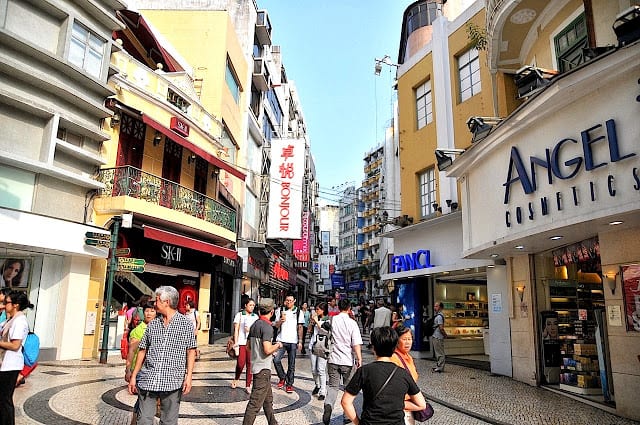
    While retail outlets and dining establishments had better year-on-year sales in May, Macau retailers are still cautious about their business prospects, says the Macau Statistics and Census Service (DSEC).

    For its monthly business climate survey, the DSEC interviewed 167 dining enterprises that account for 53 per cent of the industry’s receipts, and 135 retailers that account for 70 per cent of trade.

    Despite their caution, 26 per cent of retailers expect a year-on-year increase in sales, up three points from May, while 38 per cent are less optimistic. During May, 36 per cent of the retail respondents indicated a year-on-year sales decline, a drop of two points.

    Experiencing better-than-expected results were adults’ clothing retailers and supermarkets, which exceeded forecasts by 40 and 33 points respectively.

    For June, 80 per cent of the respondents in the leather-goods area expect improved sales with all respondents having year-on-year increases in May.

    Watches, clocks and jewellery retailers had a 24-point rise in expectations for June, hitting 50 per cent, while department stores predict a 22-point increase to 56 per cent.

    Restaurants had a six-point drop from the previous month in the percentage of respondents reporting year-on-year growth, while those who had a year-on-year decline rose 10 points to 33 per cent.

    DSEC says the results were better than expected, as the April survey indicated only 18 per cent of respondents expected better sales figures.

    Expectations for last month are mainly pessimistic with 41 per cent of respondents expecting receipts to dip while while only 22 per cent expect a rise. Predicting increases are 27 per cent of Chinese restaurants, 25 per cent of Western restaurants and 18.8 per cent of Japanese and Korean restaurants.

    On the other hand, 60 per cent of Western restaurants foresee a drop.

  • AirAsia looks to consolidate units under “One AirAsia” plan

    AirAsia looks to consolidate units under “One AirAsia” plan

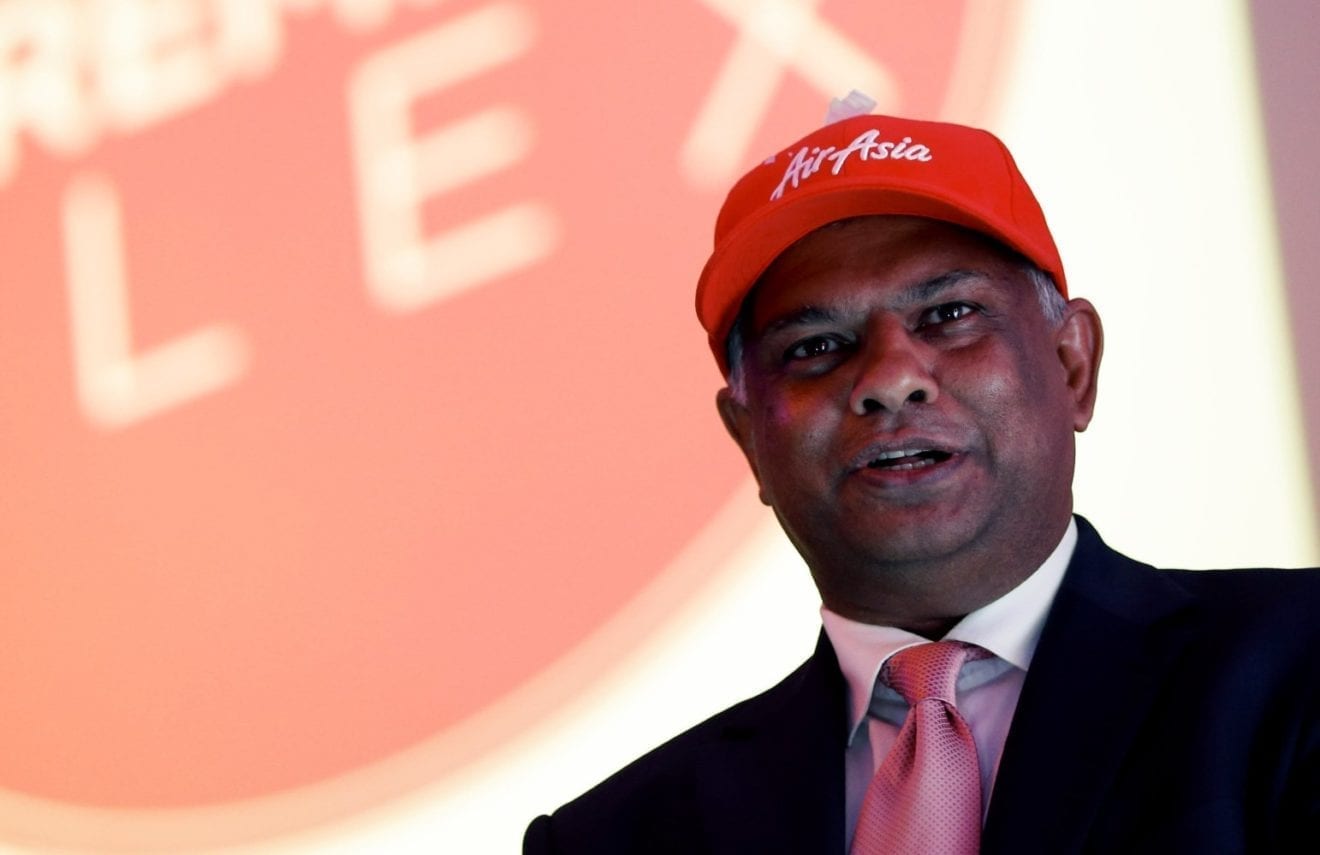
    AirAsia’s group CEO, Tony Fernandes, has announced his intention to consolidate the airline’s Southeast Asian units under one list holding company.

    Known as the “One AirAsia” plan, AirAsia plans to unify its units in Malaysia, Indonesia, the Philippines and Thailand, as well as go public in two years’ time, according to Bernama. Fernandes said the airline’s group deputy CEO Rozman Omar, is “working hard” to create the group company and that the corporate structure exercise requires plenty of effort.

    This is due to the fact that AirAsia has to persuade the Malaysian, Indonesian, Philippine and Thai governments to change ownership rules. He added that having a listed holding company within AirAsia is “working really well” as the airline is reducing costs, combining its services and standardising its products.

    AirAsia’s recent launch of direct flights from Kuala Lumpur to Davao showed the airline’s commitment in expanding in the Philippine market, said Fernandes. AirAsia also plans to grow its fleet to aid its expansion plan, as well as the increasing demand for affordable air travel.

    Earlier this year, AirAsia said its current focus will be on “digitalisation”, as it recognises that travellers of today want a personalised and seamless travelling experience. It also launched MyCorporate, a suite of products exclusively made with its business traveller in mind. Companies that sign up to MyCorporate will have access to a convenient, easy-to-use online booking system and comprehensive reporting to keep track of corporate travelling expenses.

    Recently, the airline found itself in a quandary due to the existence of a doppelganger. Going by the name of Azeri Asia TV, the media channel is owned by Azeri Asia Holdings (M) Sdn. Bhd. The loyalty programme of the channel too bears resemblance to that of AirAsia’s, flaunting the name “Azeri Asia TV BIG Loyalty Programme”. AirAsia in a press statement cautioned the public and said that this infringes on its intellectual property rights. It added that it had “never authorised Azeri Asia to use AirAsia’s corporate identity”.

  • Cebu Pacific to start daily flights to Sydney on Dec. 1

    Cebu Pacific to start daily flights to Sydney on Dec. 1

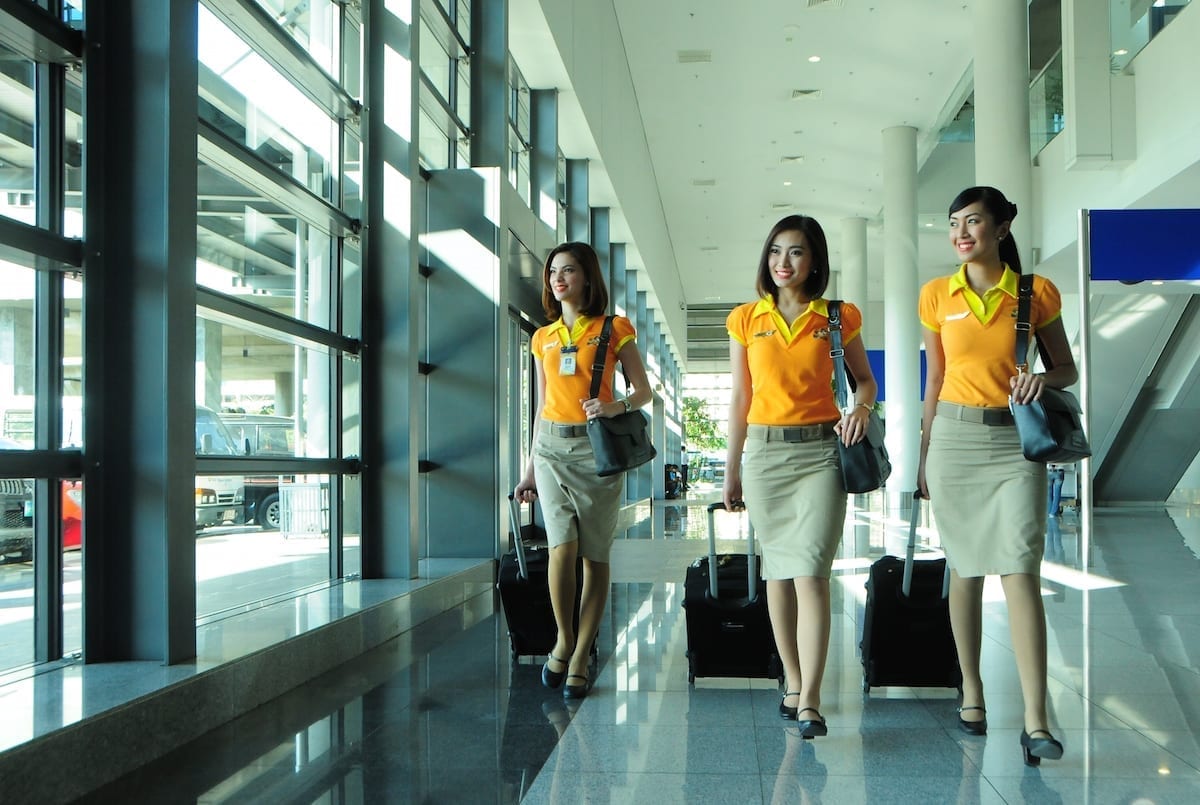
    Cebu Pacific Air, the country’s biggest budget airline, will start daily flights between Manila and Sydney in Australia on Dec. 1 this year. The carrier said it was increasing frequencies given robust demand on its current five weekly flights.

    “Cebu Pacific continues to remain bullish over prospects in the Australia market,” Candice Iyog, vice president for marketing and distribution of Cebu Pacific, said in a statement.

    “The additional frequency between Manila and Australia reflects our commitment to reinforce the Cebu Pacific effect across one of our strongest international markets. We want to continue to offer our year-round low-fares that are affordable, accessible and available to a greater number of travelers,” she added.

    Cebu Pacific is already the biggest air carrier operating between Manila and Sydney. It bested two other rivals in the first quarter of 2017.

    Citing data from Australia’s Bureau of Infrastructure, Transport and Regional Economics (BITRE), Cebu Pacific said it had a market share of 42 percent and continued to see gains in passenger volume. During this period, it carried 43,512 passengers, up 16 percent.

    The same report noted that overall passenger traffic between Manila and Sydney had gone up 7 percent year-on-year.

    Cebu Pacific noted that its load factor, a measure of flight utilization, in this route stood at 78 percent during the first three months of the year.

    Cebu Pacific said it was also a leading player in the Manila-Sydney airline cargo service.

    The airline flew 1,131 tons of cargo between Manila and Sydney in the first three months of 2017, about 49 percent of the total 2,325 tons carried by the three carriers.

    Cebu Pacific already offers the most number of seats between Manila and Sydney, covering close to 40 percent of the route’s total capacity.


  • 60,000 Tourists Visit Bali by Cruise Ship

    60,000 Tourists Visit Bali by Cruise Ship

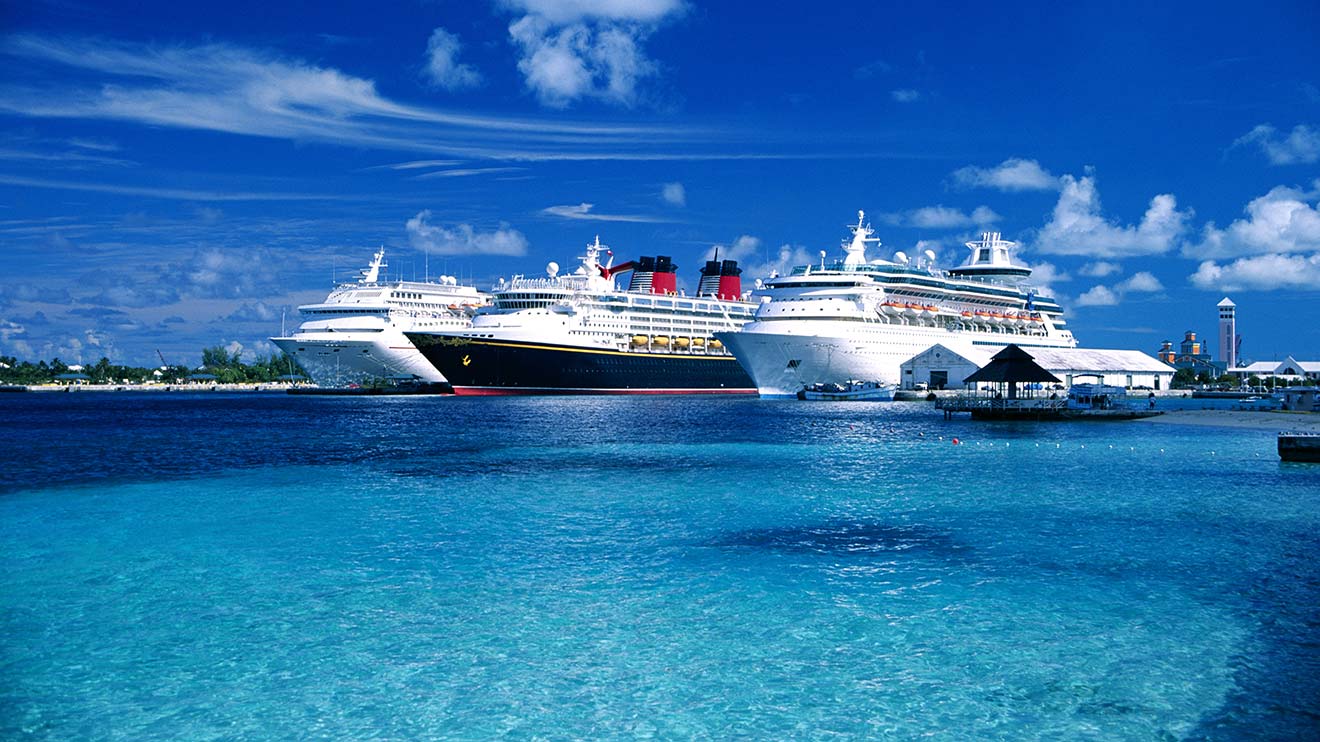
    A luxury cruise ship line Princess Cruises will bring more than 60,000 foreign tourists to experience the natural charm and culture of Indonesia.

    During the 2017-2018 holiday season, Princess Cruises will offer exciting travel plans to Bali, Lombok, Komodo Island, Makassar, Semarang, and Probolinggo. Bali is a favorite destination out of the 20 total destinations.

    “Princess Cruises continues to enhance tourism in Indonesia by dedicating five cruise ships that will have 26 trips to Indonesia.”

    The five cruise ships that have trips to Indonesia are Sapphire Princess, Diamond Princess, Golden Princess, Sun Princess, and Sea Princess.

    According to data from the Cruise Line INternational Assistance Association (CLIA), more than 2 million people were on the Continent of Asia cruise in 2015. This number is expected to double to 4 million by 2020.

    In 2014, CLIA also noted there were more than 18,000 yacht tourists coming from Indonesia, and that number doubled to 40,000 by 2015.

  • Jakarta shopping mall business ‘still promising’

    Jakarta shopping mall business ‘still promising’

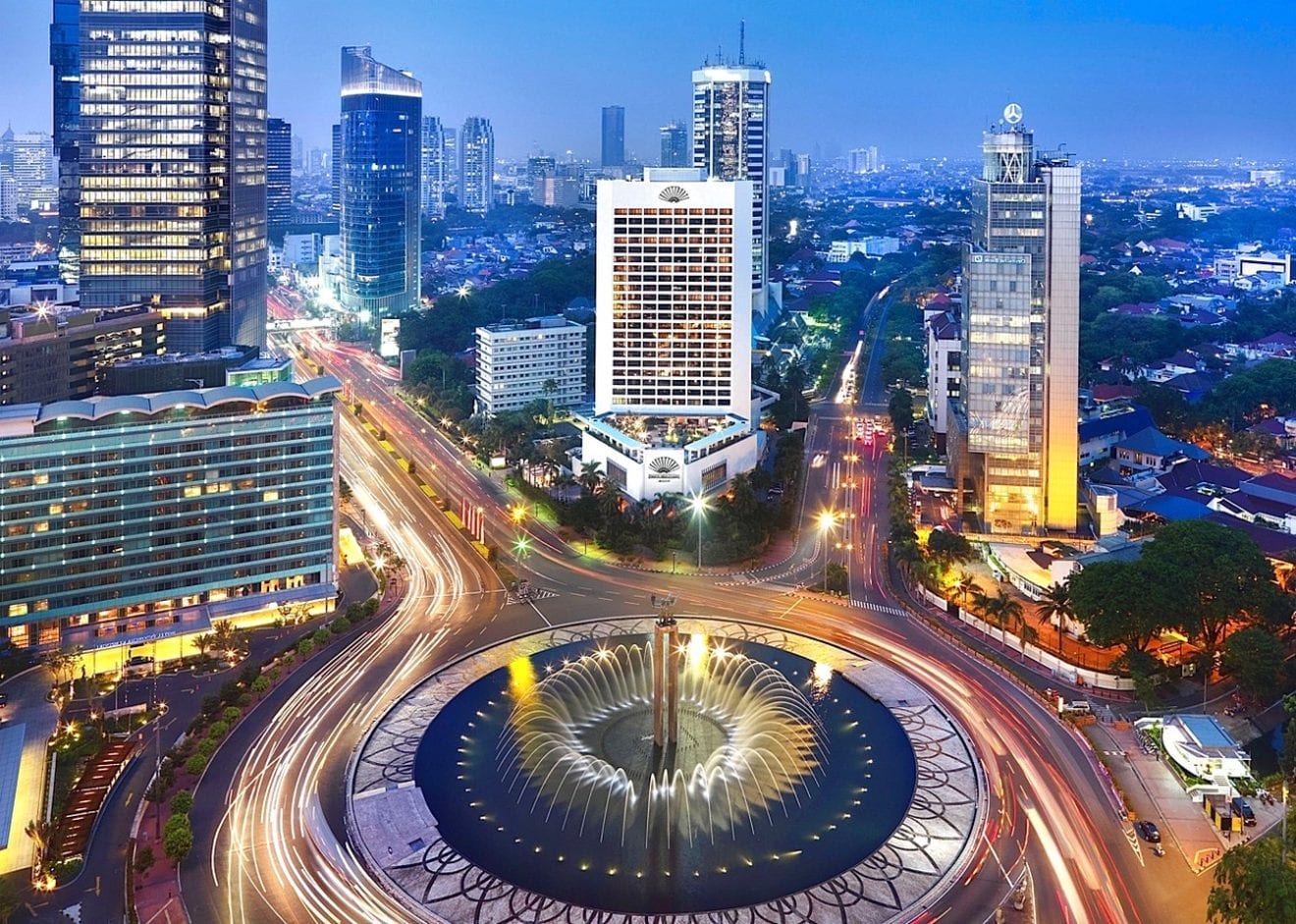
    Jakarta shopping malls are still a promising business despite online retailing becoming more popular, says US real-estate service company Colliers International Group.

    It says the reason for this is a lack of entertainment options for family holidaymakers in the Indonesian capital.

    Twelve shopping centres with a total floor space of about 600,000 sqm are expected to be completed by 2020, with 38 per cent now under construction, Colliers Indonesia says in its latest retail property outlook report.

    With little choice for family entertainment, malls still appeal to locals as family destinations,” says senior associate for retail service Steve Subadi Sudijanto.

    Aeon Mall Indonesia is planning to open four more stores, three of which are being built, in Jakarta and its suburbs through 2020. The Japanese brand’s first shopping mall opened in Tangerang in Banten on the capital’s outskirts in May 2015.

    Colliers says F&B continues to be the main attraction. More new brands from Asian countries are arriving and expanding in Indonesia.

    “Tough competition requires developers to be more dynamic in attracting locals through renovation and tenant reshuffles on the back of a government measure to curb the number of new store openings in Jakarta,” says Colliers senior associate director of research Ferry Salanto.

    “In fact, hunting for new brands, particularly in fashion and food, is continuing to become a common habit for shoppers in Jakarta.”

  • 3,000 stores to open in India, world’s most promising retail market

    3,000 stores to open in India, world’s most promising retail market

    The recent implementation of the GST along with the rise of e-commerce has caused over 50 brands to announce that they will launch in India in the next six months.

    Data compiled by Franchise India states that a large number of brands, including 14 from the US and 11 from Singapore, are set to start business in India. The main sectors they will be doing business in are the food and beverage industry where 18 new brands will be launching and the apparel and lifestyle industry where 13 brands will be launching.

    Just some of these international fashion, cosmetic, and lifestyle brands launching at present in India are Greece’s bag manufacturer Migato and Lush Addiction, a jewellery company from Singapore using Swarovski crystals in its designs. Others include Korres, Monnalisa, Evisu, and Melting Pot. Education-focused brands will also be coming to India from abroad.

    An AT Kearney report stated that this month India overtook China as the most promising retail market in the world. Many international companies are experiencing troubles in their home countries due to the economic downturn and so are hoping that launching in India will help to boost their finances.

    India is currently an attractive market to launch in due to its growing middle class as well as increasing urbanisation. Moreover, e-commerce is blossoming as more and more labels are experiencing success through online retail portals.

    The government has now allowed 100% foreign ownership in business to business e-commerce ventures and has made efforts to boost cashless payments which is making the online market easier to break into for foreign firms.

  • Fast-Growing Philippine Airlines Emerging as Regional Power

    Fast-Growing Philippine Airlines Emerging as Regional Power

    Once debt-ridden, Philippine Airlines (PAL) has emerged as one of the fastest growing carriers in its region.

    On June 8 it launched a daily Manila-Kuala Lumpur flight using Airbus A321 aircraft after a lapse of four years. Despite the presence of Malaysia Airlines, AirAsia, Cebu Pacific and AirAsia Philippines with seven daily services on the route, PAL is confident of making an impression. Last month PAL also introduced a daily Tagbilaran-Incheon service, making it the sixth Filipino city to connect with South Korea, joining Manila, Cebu, Clark, Kalibo and Puerto Princesa.

    PAL has begun reconfiguring its fleet of 15 Airbus A330-300s from an all-economy-class layout that seats 414 passengers to a three-class, business, premium economy and economy class arrangement designed to seat 309.

    PAL placed the first reconfigured aircraft on international routes last month, starting with Dubai and Honolulu. This month it inducts more on its Melbourne and Doha routes, followed by Sydney and Riyadh in August, Singapore, Kuwait and Jeddah in September, Tokyo Haneda in October, Tokyo Narita in November and Osaka in December.

    Now serving eight destinations in China, its biggest market, the airline hopes to penetrate the country still further, adding to Beijing, Shanghai, Jinjiang, Macau, Xiamen, Guangzhou, Chengdu and Hong Kong.

    PAL plans to deploy two Boeing 777-300ERs leased from Intrepid Aviation on a long-term basis starting in December on the London route, replacing its Airbus A340-300.

    Six Airbus A350-900s it ordered will arrive on a staggered basis starting mid-2018. PAL expects to decide either late this year or early next year on the possibility of launching flights to Frankfurt and Rome with the delivery of the aircraft.

    Domestically, PAL recently boosted operations at Clark International Airport (CIA) as part of its plans to develop its third hub. On June 22 it launched three-times-weekly  flights to Bacolod and a daily service to Tagbilaran. Four-times-weekly service to Cagayan de Oro started the following day. The carrier currently operates to Caticlan, Busuanga, Cebu, Davao and Puerto Princesa from Clark.

    Incheon remains the only international route operated by PAL from CIA, the former U.S. military base located some 43 nautical miles outside Manila. Manila and Cebu account for PAL’s other two hubs.

    The carrier currently operates a fleet of 81 aircraft consisting of 777-300ERs, A340-300s, A330-300s, A321s and A320s.

  • Philippines convenience-store market among the least mature in Asia

    Philippines convenience-store market among the least mature in Asia

    The Philippines convenience-store market is one of the most unsaturated in Asia.

    The country had one store for every 35,000 people last year – a ratio similar to China – whereas in Indonesia, Malaysia and Thailand that figure ranges between 5500 and 10,000 people. In developed Asia, Japan and South Korea have around 1700 people to each store.

    With per-capita income growing about 5 per cent a year in the Philippines, the number of convenience stores has risen by 21.5 per cent a year over the past five years.

    Convenience-store sales have risen 20 per cent each of the past five years, double the rate of normal retail sales.

    With the nation’s historic ties to the US, 7-Eleven leads the way in the Philippines. The chain is licensed by Philippine Seven, which owns 45 per cent of the 1995 stores and franchises out the rest.

    Japan’s Nomura works through Robinsons Retail Holdings, which has exclusive rights to the Ministop chain for the Philippines.

    Only 7-Eleven has anything of an e-commerce presence in the Philippines, says the report, delivering goods from the country’s largest online-sales platform, Zalora Philippines.

  • Facebook Seems To Open Local Unit in Indonesia

    Facebook Seems To Open Local Unit in Indonesia

    Facebook has received an in-principle approval to set up a domestic unit in Indonesia, said a senior government source from the Southeast Asian nation, home to the social networking giant’s fourth-largest user base.

    Indonesia has been pushing multinational technology firms to be locally incorporated, arguing that companies such as Alphabet Inc’s Google set up small business entities to provide “auxiliary” services and get away with minimal taxation, while booking most of their revenue from the country elsewhere.

    In fact, Google has been locked in a months-long dispute over allegations by Indonesia’s government that the search giant had not made enough annual payments. The outcome of this is expected to indicate how the government may pursue others such as Facebook and Twitter Inc for taxes.

    Facebook is now in the process of establishing a local unit in the country, said the senior government source, who has direct knowledge of the matter but declined to be identified as the information was not public. The social media giant currently operates in Indonesia through an office in central Jakarta.

    Facebook accidentally ‘leaks’ moderators’ identities to suspected terrorists

    Indonesia had 69 million monthly active Facebook users as of the first quarter of 2014, placing the country fourth globally after the United States, India and Brazil, according to data from the company.

    Facebook did not respond to requests for comment and has not provided an update on the number of its users in Indonesia.

    The office that Facebook opened in Indonesia three years ago allows it to work with advertisers as well as small and medium businesses “that need an education on how to market their products”, a Facebook executive told local media at the time.

    But according to an official at Indonesia’s communications ministry, “Facebook only appoints people in Jakarta when the need arises, no more than that. Whether they have a permanent office here or not, we don’t even know.”

  • Mall offers bored partners ‘husband rest hatches’

    Mall offers bored partners ‘husband rest hatches’

    Global Harbour, Shanghai’s largest mall, has launched four “husband rest hatches” where men can put up their feet and play computer games while their significant others shop.

    However, the idea has had a mixed reception from couples, reports ThePaper.cn.

    “Such a machine is just the best of both worlds: the girlfriend can take her time shopping while I have some fun without disturbing others,” one man told the news site, while one woman complained that it was impossible to ask a man to stop playing games. “I may now have to wait for him when I finish shopping but he’s still playing games.”

    Another woman said a man was supposed to accompany his girlfriend while shopping. “I’ll be the bored one if he plays games and has fun by himself.”

  • AI to be in almost all new software by 2020

    AI to be in almost all new software by 2020

    Market hype and rising interest in artificial intelligence (AI) are compelling established software vendors to introduce AI into their product strategy, creating significant confusion in the process, according to Gartner.

    Analysts predict that by 2020, AI technologies will be virtually pervasive in almost every new software product and service. Gartner believes that by 2020, AI will be a top five investment priority for more than 30% of CIOs.

    “As AI accelerates up the Hype Cycle, many software providers are looking to stake their claim in the biggest gold rush in recent years,” said Jim Hare, research VP at Gartner.

    “AI offers exciting possibilities, but unfortunately, most vendors are focused on the goal of simply building and marketing an AI-based product rather than first identifying needs, potential uses and the business value to customers,” said Hare.

    To successfully exploit the AI opportunity, technology providers need to understand how to respond to three key issues.

    First is the lack of differentiation is creating confusion and delaying purchase decisions. More than 1,000 vendors with applications and platforms describe themselves as AI vendors, or say they employ AI in their products.

    This widespread use of “AI washing” — using the term indiscriminately — is already having real consequences for investment in the technology.

    A second key issue is that proven, less complex machine learning capabilities can address many end-user needs.

    Advancements in AI, such as deep learning, are getting a lot of buzz but are obfuscating the value of more straightforward, proven approaches. Gartner recommends that vendors use the simplest approach that can do the job over cutting-edge AI techniques.

    Third is that organizations lack the skills to evaluate, build and deploy AI solutions. More than half the respondents to Gartner’s 2017 AI development strategies survey indicated that the lack of necessary staff skills was the top challenge to adopting AI in their organization.

    The survey found organizations are currently seeking AI solutions that can improve decision making and process automation. If they had a choice, most organizations would prefer to buy embedded or packaged AI solutions rather than trying to build a custom solution.

  • China’s retail sales grow 10.4 per cent

    China’s retail sales grow 10.4 per cent

    China’s retail sales of consumer goods grew 10.4 per cent year-on-year in the first half of this year to RMB17.24 trillion (US$2.55 trillion), new official data shows.

    The pace was slightly faster than the 10 per cent for the first quarter, the National Bureau of Statistics (NBS) says.

    Retail sales last month grew by 11 per cent year-on-year, the fastest rate since December 2015.

    The NBS attributes the pick-up in growth partly to online sales, which surged 33.4 per cent year-on-year in the first half, 1.3 points higher than in the first quarter.

    Online sales of goods rose 28.6 per cent to RMB2.37 trillion, accounting for 13.8 per cent of China’s total retail sales, up from a share of 11.6 per cent for the first half of last year.

    NBS spokesman Xing Zhihong says the larger share proves new growth sources in the economy are rising.

    Retail sales in rural areas rose 12.3 per cent in the first half, outpacing the 10.1 per cent expansion for urban areas.

    Booming retail sales are behind China’s stabilising economy, which grew 6.9 per cent in the first half.

    The contribution of final consumption to GDP growth stood at 63.4 per cent, slightly down from last year’s 64.6 per cent.

    “Consumption demand is the most important engine of our economic growth,” says Xing.

  • AirAsia gives free baggage allowance, meals to soldiers

    AirAsia gives free baggage allowance, meals to soldiers

    AirAsia announced on Wednesday that it is giving soldiers and officers of the Armed Forces of the Philippines, who are on a peace-keeping mission, extra baggage allowance and free inflight meals.

    “We recognize the incredible sacrifices of our military heroes and Bayanihan spirit among Filipinos,” AirAsia CEO Capt. Dexter Comendador said in a photo posted on the airline’s Facebook page.

    The budget airline said AFP military personnel can avail of free baggage allowance of up to 40 kgs after presenting their ID and mission order.

    Facebook user Inday Rakel earlier narrated how passengers of an AirAsia flight helped three Mindanao-bound soldiers — two of whom were headed for strife-torn Marawi City and another for Cotabato — with their excess baggage.

  • Cebu Pacific sees strong demand for Japan flights

    Cebu Pacific sees strong demand for Japan flights

    Cebu Pacific Vice-President for Corporate Affairs Paterno S. Mantaring, Jr. said there is strong demand to operate the Manila-Haneda flight given the proximity of the airport to Tokyo, compared to Narita airport.

    “We want to expand our operations to Japan and we want to operate to Haneda but right now we can’t get any allocation entitlements from the government,” Mr. Mantaring told reporters in a recent media briefing.

    “We’re asking for holding of air talks between the Republic of the Philippines and Japan so that we can add entitlements,” he added.

    The Gokongwei-led airline has been asking for air talks between the two countries since two years ago, and recently renewed its request during the latest air panel meeting.

    “We’re waiting for the government of Japan to respond to that request… hopefully in the coming months,” Mr. Mantaring said.

    Currently, Cebu Pacific — which has 400 flight entitlements between Manila and Tokyo — offers flights to Tokyo via Narita as well as services to Fukuoka, Nagoya and Osaka in Japan.

    Among the domestic airlines, only Philippine Airlines offer direct flights to Haneda.

    “I think there is demand [for the Manila-Haneda flights]. It’s near the city so it’s easier for the traveling public, unlike Narita [Airport] which is 60-70 kilometers (kms.) away from the city,” Mr. Mantaring said.

    Haneda Airport is the closest airport to Tokyo City, with a distance of only around 15 kms.

    Last year, Japanese tourists were the top four market for the Philippines recording 535,238 arrivals, next only to Korea (1.48 million), United States (869,463) and China (675,663).

    Aside from Japan, Cebu Pacific earlier said it is also interested to increase the frequency of its Manila and Sydney flights, noting sustained demand for this route.

    Cebu Pacific offers flights to over 60 destinations including Dubai, Tokyo, Beijing, Bali and Australia, among others.

    The Gokongwei airline is targeting to ferry 20 million passengers this year. In 2016, it carried 19.1 million passengers, up 4% from the 18.4 million passengers flown in 2015. On average, Cebu Pacific flights were 86% full during the year.