Category: General

Retail News Asia is committed to providing both local and global retailers with the latest General Retail news throughout the Asian market. This on a daily base.

  • AirAsia to launch daily flights between Bhubaneswar and Kuala Lumpur soon

    After the successful launch of first direct international flight operation between Bhubaneswar and Kuala Lumpur, AirAsia on Thursday announced to start daily flights between the two destinations soon. The Malaysia-based low-cost airlines will also start flights to enhance domestic connectivity between Bhubaneswar and other Indian cities, said CEO of the airlines, Aireen Omar.

    “We are really overwhelmed with the response we got for launching operations in this latest exclusive direct route between Bhubaneswar and Kuala Lumpur. If the response will continue then we may soon enhance the frequency from four times in a week to daily,” Omar said media persons here. The direct flight will facilitate business and leisure trips not only to Malaysia, but seamlessly connect Odisha with 21 destinations in Asia and over 120 destinations in 24 countries across South East Asia.

    “As a group, India is an important market for us and with the launch of this new route, we show our commitment towards enhancing our connectivity in the country. AirAsia India will soon start domestic flights to increase connectivity between Bhubaneswar with other Indian cities,” she said.

    The airline has also plans to start operation between Bhubaneswar and Bangkok soon, official sources said. “Since we started booking passengers have booked tickets from countries including Singapore, Thailand, Philippines, Indonesia, Vietnam, Australia and New Zealand. In view of the trend we may start direct flights to more destinations from Bhubaneswar,” she said. Describing the tie-up with Odisha government as the beginning of a strategic partnership, she said “Odisha has so much to offer as a tourist destination.

    Our aim is to showcase the unique state to the world and we are committed to build Odisha as a top holiday destination. With AirAsia group’s everyday low fares will be the catalyst in realizing the local market here further enhancing socio-economic developments in the region.”
     Earlier in the day a team of delegates including Malaysia High Commissioner in Malaysia Dato’ Hidayat Abdul Hamid, senior director Tourism Malaysia Datuk Zainuddin had visited the chief minister Naveen Patnaik. “The flight service will certainly enhance the ties between the two countries. We have a long history of cultural and trade ties and th ese relations will go stronger by the day,” said Dato’ Hidayat Abdul Hamid. her tourism minister Ashok Chandra Panda, tourism secretary Arti Ahuja, tourism director Nitin Jawale and other dignitaries were present on the occasion.
  • Vietjet launches new routes in service extension program

    Vietjet launches new routes in service extension program

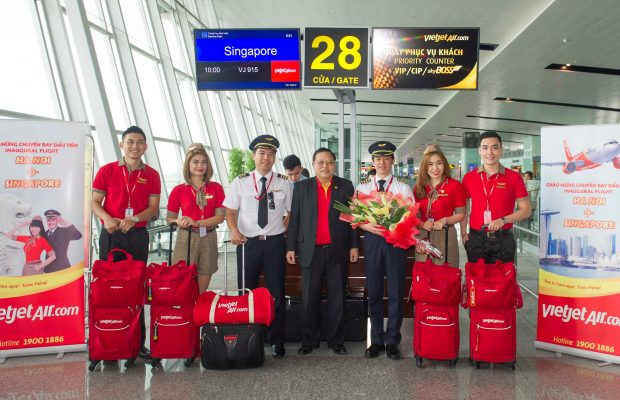
    Vietjet has just launched two new routes on both the international and domestic fronts in its continued service extension program. The new routes are expected to meet the increasing travel demand of individuals, travelers and businessmen, looking to boost trade and integration in the region. At the Changi Airport in Singapore on April 27, 2017, Vietjet celebrated the inaugural of the Singapore-Hanoi route amid fanfare with an exciting flash-mob dance. The ceremony was witnessed by leaders from the new-age carrier and the airport. The first passengers were also presented with gifts from the Vietjet crew. The Hanoi-Singapore flight is operated with 2 hours 55 minutes per leg. The flight from Hanoi takes off at 10:00 (local time) and arrives in Singapore at 13:55 (local time). The return flight departs at 14:55 (local time) and lands in Hanoi at 16:50 (local time). The new route’s tickets are now available for booking within the golden hours from 13:00 to 15:00 at www.vietjetair.com (also compatible with smartphones at https://m.vietjetair.com) or at https://www.facebook.com/VietjetHongKong. Payment can be easily made with debit and credit cards of Visa, MasterCard, JCB, KCP and American Express.

    Singapore is one of the world’s major finance and trade centers. The island-country, also known as Singapura – the lion city, attracts visitors thanks to not only its crowded streets and modern traffic system but also its unique cuisine and diversified cultures. There is a series of entertainment destinations in Singapore such as Universal Studios, Wild Wild Wet, Merlion, Esplanade, Orchard Road and Vivo City, which makes the island a dream land for travellers.

    On the domestic front, Vietjet announced the launch of its route from Hanoi to the capital city of Quang Bing Province, Dong Hoi on June 1, 2017. With tickets priced at VDN99,000 (HKD34), the Hanoi-Dong Hoi flight is operated daily with a flight time of one hour per leg. The flight from Hanoi takes off at 0640 and arrives at 0735 (local time). The return flight departs at 0805 and lands in Hanoi at 0900 (local time).

    There is a series of tourist attractions at Quang Binh’s Phong Nha – Ke Bang national park, which attracts more and more visitors and is also one of the main filming destinations for Hollywood blockbuster “Kong: Skull Islands”. Many tourists have been mesmerized by its magnificent sceneries and well-known sites such as Hang Tien, Cha Noi valley, Hang Chuot, Tu Lan caves, and Son Doong cave. Hanoi is also a must-see destination for tourists thanks to its thousand years of culture and history.

    With its high-quality services, special low-fare tickets and diverse ticket classes, Vietjet offers its passengers enjoyable flights with dynamic and friendly flight crew, comfy seats, amazing hot meals and special surprises from the airline’s inflight activities.

  • Malaysia Airlines offers to lease A330s from Alitalia

    Malaysia Airlines offers to lease A330s from Alitalia

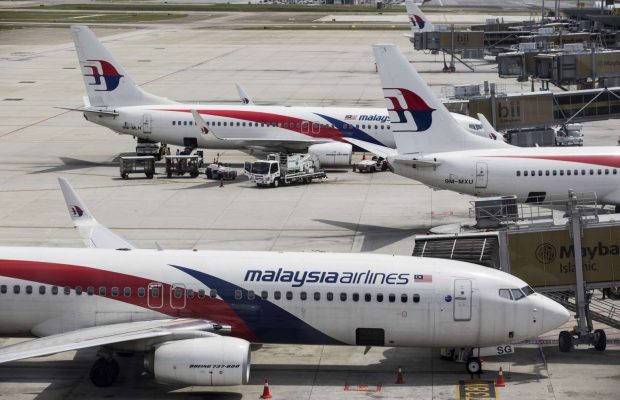
    Malaysia Airlines has offered to lease Airbus A330 jets from Alitalia if the struggling Italian airline is wound up, the Asian carrier’s chief executive told on Wednesday.

    Alitalia is preparing for special administration proceedings after workers rejected its latest rescue plan, making it impossible for the loss-making airline to secure funds to keep its aircraft flying. Workers are hoping the Italian government will step in with an alternative rescue deal.

    Malaysia Airlines could take between six and eight Airbus A330s from Alitalia, CEO Peter Bellew told in Dubai.

    An Alitalia spokesman declined to comment.

    Malaysia Airlines is emerging from a turnaround after twin tragedies since 2014, when flight MH370 disappeared in what remains a mystery, and flight MH17 was shot down over eastern Ukraine.

    Its load factors – or how full its planes are – averaged around 80% in the three months to March 31, Bellew said.

    Malaysia Airlines wants to lease between six and eight A330s or Boeing 777s for use from 2018 and a further seven to nine for 2019, he said.

    This is an increase on the six for 2018 and six for 2019 he told last month he was interested in.

    “The world really is awash right now” with large aircraft, Bellew said. “There are really good deals out there at the moment. It’s a buyer’s market right now.”

    Bellew also said he planned to make a decision on an order for 30-35 new Airbus A330neo or Boeing 787-9 widebody planes in the next four to six months to replace its A330s from the end of 2019.

    “If the prices are good … we will do an order,” he said. “But if the price isn’t right, we won’t do it.”

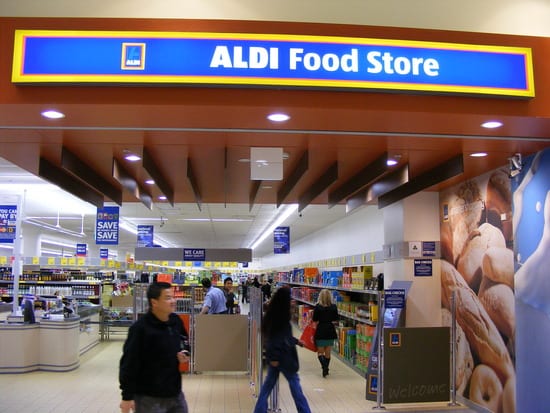
  • Aldi enters Chinese retail market

    Aldi enters Chinese retail market

    The German retailer has a unique retail model that has captured market share around the globe, but it’s entry in China will be a little bit different.  On April 25 the company announced it had launched its Chinese presence through a collaboration with online retailer TMall Global.

    The collaboration was announced at a fashion show organized by the two companies, where models were wearing clothes from the retailer.

    “In recent years, retailers from different countries have put Tmall Global as a top choice when considering entering the Chinese market, and have achieved astounding sales,” Tmall Global general manager Alvin Liu was quoted as saying on Kejilie.com.

    “Tmall Global is very honored that we can collaborate with Aldi this time to explore new retailing opportunities together, and we believe that Aldi, known for its top-quality products, will be able to better meet the demand of Chinese consumers.

    The story reported Aldi China CEO Christoph Schwaiger as describing the collaboration as the start of Aldi’s journey in China.

    “We will try our very best to fulfil the promise to provide Chinese consumers with premium lifestyle products, and will proactively boost the growth of China’s retail scene and consumer spend,” he was quoted as saying.

    Since March 20 when Aldi did its first trial on the Tmall platform, hundreds of SKUs (stock keeping units) have already been put online to complement the usual spending habits of consumers in China’s first and second tier cities.

    During the trial period, products such as milk powder (for adults), honey and mixed nuts were bestsellers, and even ran out of stock. To solve the problem, Aldi was forced to ship in new stocks from Australia.

  • Online retail growth reflects changing consumption

    Online retail growth reflects changing consumption

    China’s online retail sales posted robust growth in the first quarter of the year, reflecting a changing consumption pattern, official data showed. Online retail volumes reached over 1.4 trillion yuan ($203 billion) in the first three months, up 32.1 percent year-on-year and more than double the pace of total retail sales, the Ministry of Commerce said on Wednesday.

    Online consumption of services such as tourism, dining and entertainment continued to rise, with sales of travel and take-away food rising by 64 percent and 163 percent, respectively.

    Central and western regions posted stronger growth in online spending and online shoppers in third- and fourth-tier cities.

    “Ten years ago, people said e-commerce would not take off in China. But as soon as you overcome the payment barrier, consumers here are so much more ready than in other countries to take it on,” said Richard McKenzie, a partner at consultancy Oliver Wyman.

    With the advent of better logistics, it is no wonder that online marketing is bringing more sales growth, said Vishal Bali, managing director of Nielsen China.

    “Physical and online stores don’t have to be against each other. That means more connection and integration, which is not simply for retailers but also affects consumer behaviour, manufacturers and other areas of industry,” he said.

    According to research firm Mintel, the cross-border shopping market is expected to post an annual growth rate of 15 percent from 2016 to reach 1.3 trillion yuan by 2021.

    “Haitao, or shopping directly from overseas sites, is likely to be more relevant to brands looking at initial market entry. Retailers and brands should therefore play to their different national specialties when attempting to differentiate themselves from their competitors,” said Matthew Crabbe, Mintel’s Asia-Pacific director of research.

    Another trend the Ministry of Commerce observed is that online players such as Alibaba Group Holding Ltd and JD.com Inc are expanding offline to improve the consumer experience with convenience stores as an emerging market.

    For instance, Alibaba and Shanghai-based retail conglomerate Bailian Group Co announced a partnership in February to jointly design bricks-and-mortar stores to deliver enhanced customer services through technologies such as geo-location, facial recognition and big-data driven customer management systems.

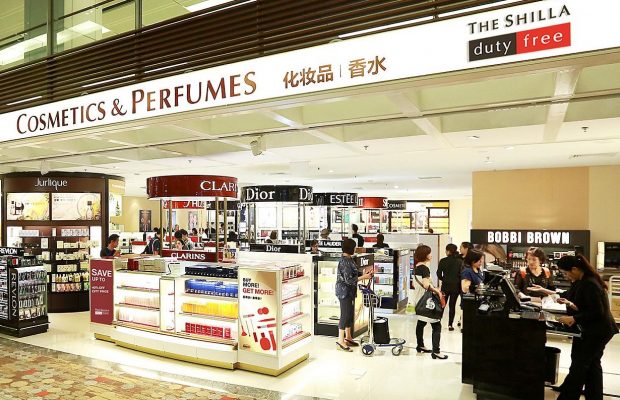
  • Malaysia’s DFI generates near 25% profit in FY2017

    Malaysia’s DFI generates near 25% profit in FY2017

    Duty Free International Limited (DFI), the largest multi-channel duty-free and duty-paid retail group in Malaysia, in which Gebr Heinemann holds a 10% stake, has announced net profit after tax increased 24.8% to RM77m ($17.7m) from RM61.7m for the financial year ended February 28 2017 (FY2017).


    DFI’s parent company DFZ Capital Berhard entered into a joint-venture with Heinemann Asia Pacific in June 2016 with two seats on the board of directors – Max Heinemann and Marvin von Plato. DFI operates more than 40 retail outlets in Malaysia, on the border to Thailand and Singapore as well as duty-free shops in airports.

    DFI ended the fourth quarter (Q4) of FY2017 with revenue down slightly by 7.4% to RM150m compared to RM162m the previous year.

    The decrease was mainly due to a slowdown in tourism traffic to and from Thailand following the flood in Southern Thailand during the quarter and the after effects of the demise of Thai King Bhumibol in October 2016, as well as the imposition of a Goods and Services Tax at border outlets and duty-free zones with effect from 1 January 2017. On a full year basis, the Group reported an increase of 4.6% in revenue to RM632.6m for FY2017, from RM604.5m in FY2016.

    The profit before income tax in Q4, RM25.1m, was RM3.6m lower compared to RM28.7m in the same period in 2016 due to a decrease in revenue as mentioned above, coupled with an increase in management fee and lower reversal of inventories written down in the current quarter.

    On a full year basis, the Group reported an increase of 15.7% in profit before income tax to RM97.8m for FY2017, from RM84.5m in FY2016. The increase was mainly due to the overall increase in revenue and an increase in net foreign exchange gain of RM9.9m compared to the net foreign exchange loss of RM7m in FY2016. There was a recognition of gain arising from changes in the fair value of options amounting to RM4m, as well as lower professional fees incurred by RM1.6m in FY2017 when compared to FY2016.

    The above mentioned however, was partially offset by higher rental expenses and higher employee benefits expenses for FY2017.

    DFI executive director Lee Sze Siang commented on the FY2017 results: “We continue to face the challenges of the current economy and the volatility of the USD-Ringgit exchange rate, as well as the impact of unforeseen occurrences of the flood in Southern Thailand and effects of the demise of Thai King Bhumibol. Nevertheless, we have already started the process of improving our business operations, enhancing our merchandise mix and revamping our outlets. As we continue to focus on improving our operational efficiency and better managing our costs, we are confident of overcoming the challenging and competitive business environment.”

  • Korea’s economic growth accelerates in Q1: BOK

    Korea’s economic growth accelerates in Q1: BOK

    South Korea’s economy grew at a faster pace in the first quarter than three months earlier due to increased construction investment and exports, central bank data showed Thursday.

    In the January-March period, the country’s gross domestic product increased 0.9 percent from the previous quarter, improving from a 0.5 percent on-quarter expansion three months earlier, according to preliminary data from the Bank of Korea.

    The on-quarter growth is the fastest since the second quarter of last year.

    The data also showed the services sector expanded 0.1 percent from the previous quarter, compared with a 0.2 percent on-quarter expansion three months earlier.
    The central bank data showed construction investment grew 5.3 percent in the first quarter from the previous quarter, and facility investments rose 4.3 percent on-quarter in the first quarter.

    Chung Kyu-il, director general of the Economic Statistics Department at the BOK, blamed the slower growth in the services sector on a decline in the number of Chinese tourists, poor consumer sentiment and people putting off buying smartphones ahead of the release of Samsung Electronics Co.’s Galaxy S8.

    Samsung started official sales of the Galaxy S8 and the Galaxy S8 Plus smartphones in South Korea last Friday.

    The service sector includes wholesale and retail trade, restaurants, and hotels.

    Local tourism-related businesses have taken the brunt of China’s ban on trip sales to South Korea in an apparent retaliation against Seoul over a US missile defense system.

    Seoul and Washington began to deploy the US missile shield in South Korea to counter North Korea’s evolving nuclear and missile threats.

    Still, China has repeatedly pressed South Korea and the US to cancel the deployment and withdraw the missile defense system, claiming the US missile defense system could hurt China’s security interests.

    Exports — one of the major pillars for the South Korean economy — grew 1.9 percent from the previous quarter, while imports increased 4.3 percent.

    Gross domestic income rose 2.3 percent in the first quarter from the previous quarter, compared with a 0.8 percent expansion three months earlier, the BOK said.

  • Indonesia, Singapore partner to develop startups

    Indonesia, Singapore partner to develop startups

    Local co-working space EV Hive is collaborating with Singapore’s working space BASH to provide places for startups from both countries to develop and thrive. These spaces with assist startups with business development and funding.

    “Regional companies based in Singapore can use EV Hive as a launch pad to the Indonesia market. Indonesia companies can use BASH as a stepping stone to access the regional stage,” said Willson Cuaca, managing partner of Singapore-based venture capital firm East Ventures, during the launch of the collaborative project on Tuesday. East Ventures manages EV Hive.

    Startups at the later stage (series B and above) of development can leverage support from EDBI, the global investment arm of the Singapore Economic Development Board.

    East Ventures, BASH management or SGInnovate, a development body wholly owned by the Singapore government, will work on more programs to expand talent, markets and knowledge-sharing for the customers of both co-working spaces.

    EV Hive currently manages two co-working spaces in South Jakarta and one in the Breeze mall in Banten. It plans to reach seven offices by the end of the year.

    EV Hive has facilitated the development of 36 startups, six of which are Singaporean.

    BASH, meanwhile, manages an integrated startup space in Singapore.

  • 7-Eleven sold as business declines

    7-Eleven sold as business declines

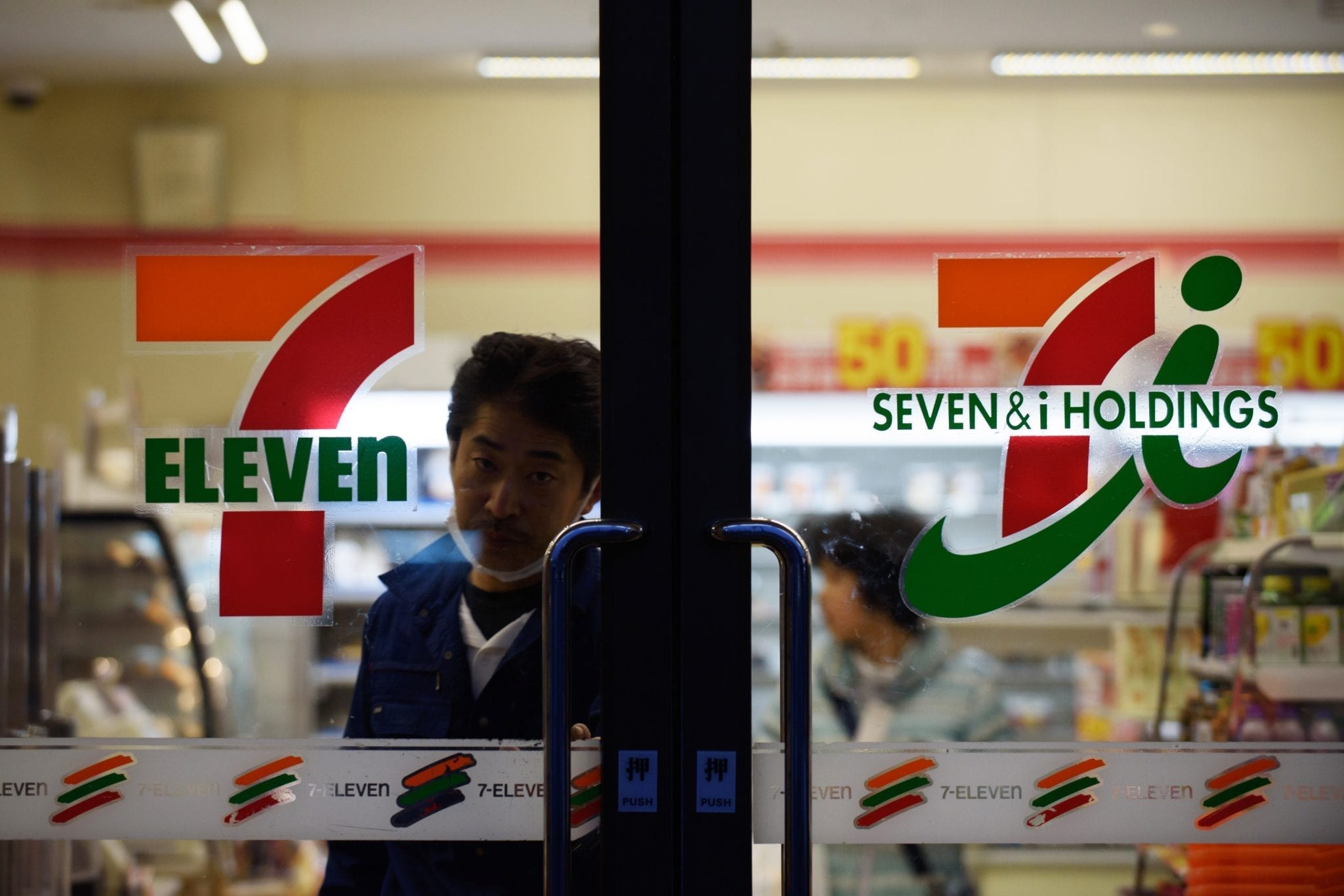
    Retail operator PT Modern Sevel Indonesia (MSI) plans to sell its 7-Eleven convenience stores for Rp 1 trillion (US$75.24 million) to PT Charoen Pokphand Restu Indonesia (CPRI), a business entity of PT Charoen Pokphand Indonesia (CPI).

    According to information from the Indonesian Stocks Exchange (IDX) published on April 21, the transaction agreement was made on April 19.

    Under the deal, CPRI agrees to take over the business activities of MSI – mini-restaurants (resto) and convenience stores – as well as assets that use the franchise system.

    The transaction, which is scheduled for June 30, is worth Rp 1 trillion, pending approval from various parties including the Trade Ministry and Financial Service Authority (OJK), shareholders, board of commissioners and 7-Eleven Inc., the owner of the brand, CPI president director Tjiu Thomas Effendy wrote in his letter to IDX’s registration director.

    “MSI and CPRI have settled various issues related to the planned transaction,” said Tjiu.

    The 7-Eleven chain of convenience stores and mini restaurants are popular among young people as most of the outlets remain open for 24 hours. However, sales have been on the decline as most customer come to enjoy the store’s free Internet and chat with their friends.

    Other local retailers like Alfa Mart and Indomart have also opened mini resto in their outlets in recent months.

  • Workplace by Facebook changes how enterprises communicate

    Workplace by Facebook changes how enterprises communicate

    Many companies in Viet Nam, such as FPT Group, BIDV, Bao Viet Life Insurance or Hoc mai online education portal, are using Facebook Workplace. Participants heard this at a workshop to share success stories of Workplace, an enterprise social network for daily work and internal communication, across Vietnamese companies in Ha Noi on Wednesday.

    They all said Workplace helped in improving communication, business exchange and interaction between members, and subsequently helped boost productivity and save time and money for companies.

    FPT CEO Hoang Viet Ha said most FPT employees were young and did not like to use email for work. Workplace was easy to use, fast to deploy and had a friendly interface.

    “It brings employees closer because it creates a friendly working environment. It helps increase communication between members, build internal culture and reduce email costs,” Ha said.

    Following six months of operation, Workplace has become an essential part of the FPT Group. Several employees and working teams rely on Workplace to solve their problems. Some 22,600 users and 3,000 active groups create between 7,000 and 8,000 posts daily and there are some 7,400 active users per week, according to Ha.

    Nguyen Thi Thu Hoa, Bao Viet Life Insurance Company’s head of MIS Department, said her company used to send up to 5,000 SMSes daily to insurance consultants. By using Workplace, the number of SMSes was reduced to 50 daily.

    “Workplace is a dedicated and secure space for companies to connect, communicate and collaborate. Organisations of all sizes can use familiar Facebook features such as newsfeed, groups, messages and events to get work done,” Ramesh Gopalkrishna, head of Workplace, APAC at Facebook, said.

    “More than 14,000 businesses are using Workplace on every continent, including Antarctica. We are excited to see more Vietnamese businesses incorporate Workplace into their organisations to transform internal culture and communications, which will help drive greater efficiency and productivity among their employees,” Gopalkrishna added.

    The Viet Nam Government Portal recently agreed to trial Facebook Workplace for their 200-strong workforce.

    Workplace by Facebook is a dedicated and secured communication platform helping companies internally connect, communicate and collaborate at work. This platform utilises familiar Facebook features such as newsfeed, groups and messages to help teams get things done.

  • AirAsia joins WFA’s global leadership team

    AirAsia joins WFA’s global leadership team

    The World Federation of Advertisers (WFA) has appointed new members to the global leadership team. These appointments include senior marketers from AirAsia, Coty, Emirates, L’Oréal and RB.

    The new members of the team include Margaret Au Yong, director of media at AirAsia; Lubomira Rochet, chief digital officer at L’Oréal; Alison Keith, vice-president, global media at Coty; Boutros Boutros, divisional senior vice-president, corporate communications, marketing and brand at Emirates, and Andrea Bernhardt, global media director at RB. Phil Smith, newly appointed CEO of the British Advertisers Association (ISBA) and Ander Ericson, CEO of Sveriges Annonsörer, the Swedish Advertiser Association have also joined WFA Executive Committee.

    Ericson has been appointed as the treasurer. Meanwhile, David Wheldon, CMO of RBS and Matthias Berninger, vice-president of public affairs at Mars, have been both elected for another term as president and deputy president respectively.

    The committee brings together senior marketers and public affairs executives to reflect the dual mission of the WFA: to help marketers be more effective and efficient in terms of their marketing spend. It also helps brand owners protect and future-proof their license to operate through advocacy and effective advertising self-regulation.

    As such, the committee includes representatives from multi-national brand owners as well as heads of national advertiser associations.  “One of the many strengths of this organisation is the way that so many senior, knowledgeable executives are willing to share their time and insights to help identify and tackle the many common challenges brand marketers face,” said Stephan Loerke, CEO, WFA.

  • Vietnamese consumers the most socially-conscious in Asia-Pacific

    Vietnamese consumers the most socially-conscious in Asia-Pacific

    Vietnamese consumers are the most socially-conscious in Asia-Pacific according to the Corporate Sustainability Report from Nielsen released on April 26. The report indicates that up to 86 per cent of consumers in Vietnam are willing to pay higher prices for products and services that come from companies that are committed to positive social and environmental impacts, compared to 76 per cent of consumers in Asia-Pacific.

    After Vietnamese, Filipino, Indonesian and Chinese consumers are the most socially-conscious in Asia-Pacific, with 85 per cent, 83 per cent, and 80 per cent of respondents, respectively, stating a willingness to pay extra for products and services that come from companies who demonstrate their commitment to having a positive impact on society and the environment.

    According to Mr. Rakesh Dayal, Head of Consumer Insight at Nielsen Vietnam, in the last couple of years, people have witnessed some of the negative impacts of adverse weather conditions and pollution on Vietnam’s living and business environments.

    Therefore, it would be difficult to find consumers who do not show concern for environmental and societal issues nowadays.

    In small and big ways, consumers are trying to be responsible citizens, and they expect the same from corporations.

    “Committing to sustainability might just pay off for consumer brands,” he said. “Integrating sustainability into their business models and objectives helps society and, at the same time, raises goodwill toward their brands.”

    He added that companies with strong reputations can outperform others when it comes to attracting top talent, investors, community partners, and, importantly, consumers.

    The survey indicates that the top sustainability factors influencing the purchasing intentions of Vietnamese consumers are high-quality products (79 per cent), products known for their health and wellness benefits (77 per cent), and products made with fresh, natural and/or organic ingredients (77 per cent).

    Moreover, products known for their high standards of safety carry quite similar weight with consumers in Vietnam (76 per cent).

    “Finding opportunities to bridge health benefits and the ingredients that support the claim is a powerful and impactful way to connect with consumers,” Mr. Dayal advised.

    Equally important among consumers in Vietnam is brand trust. Seventy-five per cent of Vietnamese consumers indicate they would buy products from a brand or company that they trust.

    When it comes to purchasing intentions, a commitment to the environment has the power to sway product purchases for 62 per cent of consumers in Vietnam.

    Commitments to either social values or the consumer’s community are also important, influencing 61 per cent and 62 per cent of respondents, respectively.

    “We are seeing a change in the hierarchy among drivers of consumer loyalty and brand performance,” Mr. Dayal observed.

    “Commitments to social and environmental responsibility are surpassing some of the more traditional influences for many consumers. Consumer-goods brands that fail to consider this run the risk of falling behind.”

  • President makes three pleas to creative industry entrepreneurs

    President makes three pleas to creative industry entrepreneurs

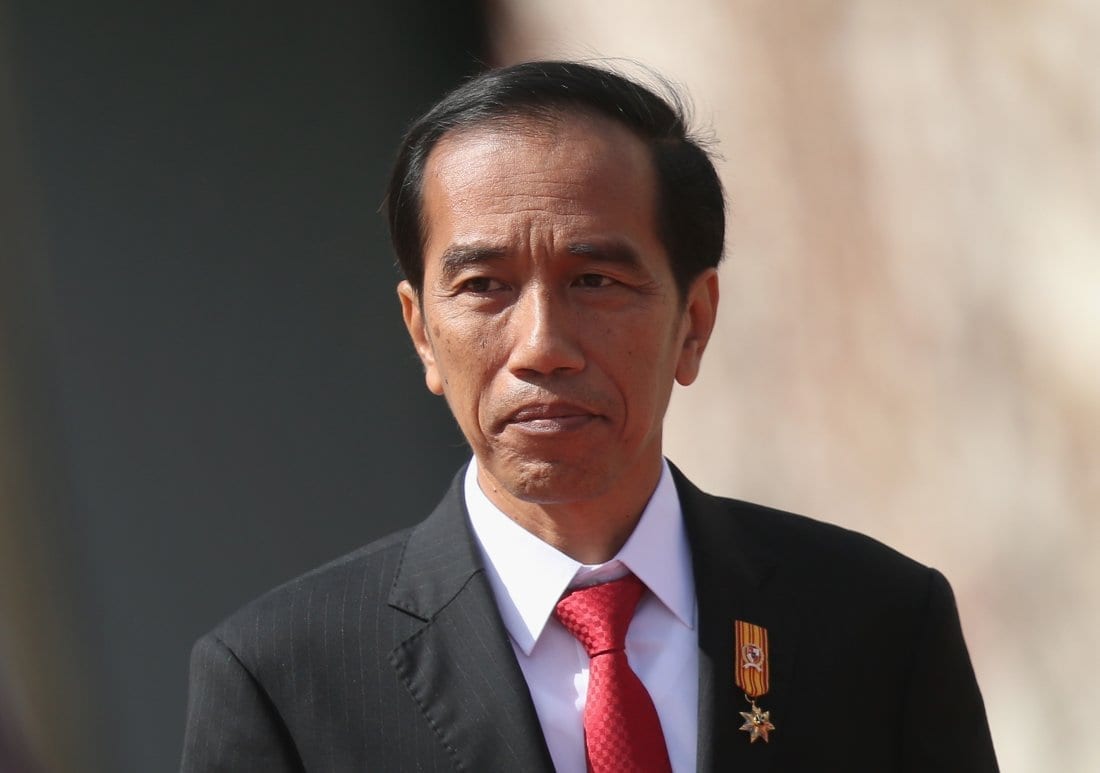
    Indonesian President Joko Widodo (Jokowi) has made three pleas to the industry entrepreneurs while inaugurating the Inacraft Exhibition 2017.

    “I have made three pleas to craft and creative industry entrepreneurs in Indonesia to keep their products on spec or meet the buyers specifications, keep the budget or price at a reasonable rate, and timely delivery of the products,” he stated at the Jakarta Convention Center on Wednesday.

    Inacraft exhibition, which will be held from April 26 to April 30, will exhibit products from 1,392 local and foreign participants. This year, Inacraft has taken Yogyakarta as the icon, under the concept “Magnificent of Yogyakarta” and the theme “From Smart Village to Global Market.”

    The second plea from the president was regarding the packaging of the products.

    “Do not forget the packaging. Make the best you can and make it interesting. This is important because most of time, the packaging is what attracts the buyers,” he added.

    His third plea was to deliver the goods on time.

    “The delivery to the consumers could be made easier with various logistics infrastructures that we already have,” he stated.

    Jokowi also pushed the entrepreneurs to make use of the governments people credits program (KUR).

    “I understand the entrepreneurs problems regarding capital. Therefore, I remind the people of the KUR program, which has an interest rate of nine percent only. Hence, the products should be made better to make the investment bigger. I think our credit programs have a competitive interest rate too,” he reiterated.

    Indonesian Exporter and Handicraft Producers (ASEPHI) data, the committee of the exhibition, remarked that the Inacraft 2017 attendees included 65.95 percent of independent individuals, 24.5 percent from the Tourism Department, 8.7 percent from BUMN, and the rest 6.07 percent from other countries such as Myanmar, Japan, Pakistan, Poland, and India.

    This year, Inacraft has set a target of retail business increase of 10 percent, which reaches Rp142 billion, commercial contract of US$12 million, and around 200 thousand buyers from various countries.

    Some of the products exhibited include batik, fashion apparels, accessories, jewelries, and other crafts.

  • Jokowi Strengthen Economic Ties with Hong Kong

    Jokowi Strengthen Economic Ties with Hong Kong

    President Joko Widodo, also known as Jokowi, has planned to strengthen bilateral cooperation between Indonesia and Hong Kong during a working visit to Hong Kong scheduled on April 30, 2017, after attending the ASEAN Summit in the Philippines on April 28 and 29, 2017.

    “We want to encourage Hong Kong business owners to invest in Indonesia, particularly in the field of infrastructure and creative industry,” Foreign Ministry spokesperson Arrmanatha Christiawan Nasir said during a press conference in Jakarta on Tuesday, April 25, 2017.

    As one of the largest economy in the region, Indonesia aims to strengthen economic ties with Hong Kong. Delegations of both countries will sign two memorandums of understanding on business collaborations and partnerships in the culture sector.

    Indonesia will also push an agenda to expedite negotiations related to the ASEAN-Hong Kong Free Trade Agreement, which is expected to increase the intensity of trades between ASEAN and Hong Kong.

    In 2016, the realization of Hong Kong’s investment in Indonesia reached USD 2.25 billion, significantly increasing from those realized in previous years that stood at around USD 691 million. The trade value between the two countries climbed to USD 3.9 billion in 2016 from USD 3.8 billion in 2015.

    President Jokowi will also discuss protections for Indonesian citizens in Hong Kong.

    “The President also pays attention to protections for our migrant workers. There are 172,000 Indonesian migrant workers in Hong Kong,” Armanatha revealed.

  • Cebu Pacific joins Davao tourism program

    Cebu Pacific joins Davao tourism program

    The Cebu Pacific (CEB) has announced its participation in the largest travel event and tourism campaign in Davao region, the Visit Davao Fun Sale (VDFS). The carrier’s move is in support of the VDFS, which was launched four years ago, to promote Davao and peripheral areas in southern Mindanao as safe, enjoyable and exhilarating travel and adventure destinations for both local and foreign tourists.

    As part of the seven-week activities, CEB is flying-in top adventure travel bloggers and digital influencers from Singapore, Japan and South Korea to visit Davao and check out attractions such as the beaches in Mati City, Aliwagwag Falls and Eden Eco Adventure Park, go dolphin-watching off the coast of Mati, white-water rafting in the Davao River, pub-crawling in Davao’s city center, or shopping at the Aldevinco Center. “CEB takes pride in having the most flights to and from Davao. But more than the flights, we need to do our part to help entice tourists to fly to Davao and experience what the region has to offer.

    Davao and adjacent provinces have so much to offer tourists from all walks of life — from thrill-seekers to laidback travelers, families on vacation, barkadas on a getaway and even solo backpackers,” said JR Mantaring, CEB’s vice president for Corporate Affairs.

    Cebu Pacific has the most extensive domestic route network among Philippine carriers, with direct, inter-island connections to major tourist destinations. The carrier operates flights out of six strategically placed hubs in the country in Manila, Cebu, Davao, Clark, Kalibo, and Iloilo. Operating a hub in Davao, CEB has 141 flights to and from Davao, with six direct domestic routes (Cebu, Bacolod, Cagayan de Oro, Iloilo, Zamboanga and Manila) and a direct flight to Singapore. The airline’s extensive network covers over 100 routes and 66 destinations, spanning Asia, Australia, the Middle East, and United States of America.

    Launched in 2014, the Visit Davao Fun Sale is a partnership between local governments in the region, the Department of Tourism, other national government agencies and private enterprises to promote tour packages and unique experiences to tourists such as food and delicacy must-tries, as well as leisure and wellness activities. This year’s tours include special packages for Davao City, Island Garden City of Samal, Sta. Cruz in Davao del Sur where one of the trails to Mt. Apo is located, and the Hamiguitan Range and Wildlife Sanctuary. Since its launch, VDFS has helped push tourism growth in the region to double-digit levels, capping 2016 with 100,000 tourist arrivals. VDFS 2017 runs from April 16 to May 31.