Category: General

Retail News Asia is committed to providing both local and global retailers with the latest General Retail news throughout the Asian market. This on a daily base.

  • China retail sales rise with a 10.9 per cent in March

    China retail sales rise with a 10.9 per cent in March

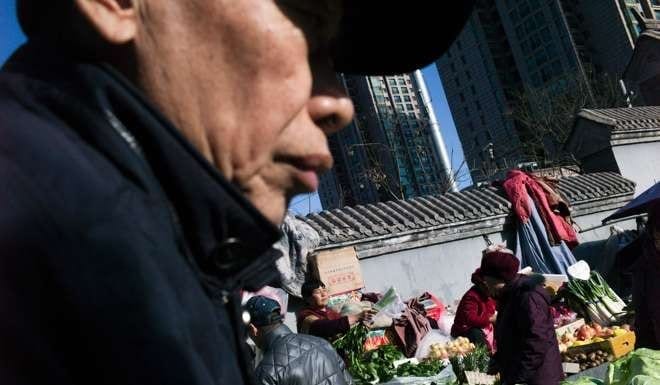
    China’s retail sales rose 10.9 per cent in March – the best month of the year to date.

    However the quarterly rise was just shy of 10 per cent – the first time the official figure has dropped below 10 per cent in 11 years according to the National Bureau of Statistics. IN January and February, China retail sales rose 9.5 per cent each month.

    Retail sales of consumer goods totalled 8.5823 trillion yuan (US$1.25 trillion) from January to March.

    There was strong consumption potential in rural areas, the data shows, with retail sales climbing 11.9 per cent during the quarter, outpacing urban areas where sales rose 9.7 per cent year-on-year.

    Online sales continued their run of strong growth, surging 32.1 per cent in the first two months to 1.405 trillion yuan.

    As a main driver of economic growth, consumption contributed to 64.6 per cent of China’s GDP growth last year. The nation is aiming for a steady increase in consumer spending this year.

  • Cebu Pacific passenger volume drops in February

    Cebu Pacific passenger volume drops in February

    The Gokongwei-led carrier ferried a total of 1.45 million passengers in the second month of 2017, 6.3% less than the 1.55 million recorded during the same month last year, according to the latest operating statistics uploaded on its Web site.

    The latest tally was also down 16% from the 1.72 million passengers it ferried in January, which was up from the 1.64 million noted in January 2016.

    The data showed airline capacity dipped 1.5% to 1.74 million from 1.76 million during the comparable period, while the number of flights also decreased 2.8% to 10,237 from 10,535 previously.

    Seat load factor in February also went down to 83.6% compared to the 88% recorded in February 2016, even as the number of aircraft increased to 59 from 57.

    For the January to February period, Cebu Pacific and Cebgo already carried 3.17 million people, slightly lower than the 3.19 million seen during the comparable period last year. Capacity was up 2.7% to 3.76 million from 3.66 million, while flights during the first two months were 84.4% full on the average.

    Based on its latest operating statistics, the number of flights went up to 21,975 from 21,873.

    The Gokongwei airline is targeting to ferry 20 million passengers this year, as the company expects the delivery of 48 additional planes up to 2021.

    In 2016, it carried 19.1 million passengers, up 4% from the 18.4 million passengers flown in 2015. On average, Cebu Pacific flights were 86% full during the year.

  • 7th Lego Store opens in Davao City

    7th Lego Store opens in Davao City

    The seventh Lego-certified store in the Philippines opened on April 22, 2017 at the Abreeza Ayala Mall offering more and exclusive merchandise of the famous toy brand to Dabawenyos. The Lego Store in Davao City is the second store in Mindanao, the first being in Cagayan de Oro City, which opened last April 1. “We know that Lego is a very popular brand and we want to bring it closer to all our fans, collectors, families, and kids.

    We want to also give them the full Lego experience,” said Sharlene Ortiga, LAJ Marketing Retail Manager, at the sidelines of the store’s opening. LAJ Marketing Philippines is the exclusive distributor for Lego merchandise in the Philippines. Ortiga said Lego Store Abreeza features exclusive items that are not available in other stores. “This store is fully designed and authorized by Lego for us to operate with their complete package and guidelines,” Ortiga said.

    The store features the Pick-a-Brick Wall, a custom-built fixture filled with Lego bricks and elements where shoppers can hand-pick and select pieces they need. It also offers exclusive Lego sets available like the Doctor Who and Big Bang Theory sets. At present there are seven Lego-certified stores in country, Park Triangle in Taguig, which is also the first Lego-certified store in the Philippines; Alabang Town Center in Muntinlupa; Trinoma and UP Town Center in Quezon City; The 30th in Pasig City; Abreeza Ayala Mall in Davao City; and Centrio in Cagayan de Oro City.

    At present, Ortiga said they are just looking into having two stores in Mindanao. However, she said they are eyeing to have another provincial store by the end of this year but she did not disclose yet where this store will be. She also said they are still studying the possibility of putting up a Lego-certified store in the Visayas. “For the Visayas we already have other channels where we are distributing Lego but here in Mindanao there are only a few so we decided to open a complete Lego Store here to serve the needs of our Lego customers,” Ortiga said.

  • Maritime industries need to gear-up for digital transformation

    Maritime industries need to gear-up for digital transformation

    Singapore’s port and maritime industries need to gear up to deal with digitalization and disruption of global transport supply chains – that was the message of Khaw Boon Wan, Coordinating Minister for Infrastructure and Minister of Transport at the official opening of Sea Asia 2017.

    The role of hub ports such as Singapore, the world’s largest container transhipment hub, are set to change as digitalization takes a hold.

    “The landscape is changing rapidly digitalization is disrupting and transforming the global transport supply chains,” Khaw said.

    “The lines between e-commerce, shipping and supply chains are blurring, for example Amazon is looking at having its own shipping and logistics operations. Freight forwarders will also have noticed Maersk and CMA CGM partnerships with Alibaba to allow shippers to book space on containerships online.”

    The downside to disruption is that there would be winners and losers, and Singapore would have to “gear up” to be on the right side of that dividing line.

    Painting a picture of the new landscape Khaw said: “Nearer to home we are seeing the rise of multi-modal logistics infrastructure and the growth of other hubs in Asia fuelled by e-commerce. These trends have also sparked talk about the emergence of new trade routes and even a multi-hub network in the longer term where no single hub will enjoy superior connectivity.”

    Exactly how these developments will pan out no-one knows but the Minister said Singapore had ensure it was ready for transformation.

    “Superior connectivity will be measured in multi-modal terms and maybe as much digital as physical,” he stated.

    While digital disruption has loomed large over many sectors such as taxis, hotels and retail, Singapore Maritime Foundation chairman Andreas Sohmen-Pao highlighted that goods and commodities will still require ocean shipping.

    “I know there has recently been plenty of talk about the challenges facing the maritime industry buts lets remember this industry is a cornerstone of the modern global economy even as we advance into an era of modern technology the vehicles that provide our Uber rides, the steel that holds up our Air B&B houses, and the goods that arrive in our Amazon boxes have typically spent some of their life on a ship,” Sohmen-Pao said in his opening speech.

  • Vietjet offers millions of promotional tickets for “Free Summer, Fly for FREE”

    Vietjet offers millions of promotional tickets for “Free Summer, Fly for FREE”

    To celebrate the coming summer, Vietjet launches its most outstanding campaign ever – “Free summer, Fly for FREE” from April 25 to June 15, 2017, offering one million promotional tickets priced from only HKD0 within the golden hours 13:00 – 15:00 at www.vietjetair.com together with some very interesting activities.

    During the campaign’s first week, Vietjet will run a three-golden-day promotion from April 25 to 27, 2017. This applies for all Vietnam domestic and international routes from Vietnam to Hong Kong, Seoul and Busan (South Korea), Kaohsiung, Taipei, Taichung and Tainan (Taiwan), Singapore, Bangkok (Thailand), Kuala Lumpur (Malaysia), Yangon (Myanmar) and Siem Reap (Cambodia) with travel period between May 15, 2017 and December 31, 2017 (excluding national holidays).

    The promotional tickets are available for booking within the golden hours from 13:00 to 15:00 at www.vietjetair.com or at www.facebook.com/vietjethongkong (just click the “Booking” tab). Payment can be easily made with debit and credit cards of Visa, MasterCard, JCB, KCP and American Express.

    Especially from May 8, 2017 to June 4, 2017, participants of the “Free Summer – Fly for FREE” game at Vietjet’s microsite: freesummer.vietjetair.com will have the chances of winning a weekly award of 5 free return flights, each flight with 5 free tickets for a five-person group and a grand award of a free package tour to an optional destination.

    Also, all customers successfully booking tickets at www.vietjetair.com with instant payment within the golden hours (13:00-15:00) from May 8, 2017 to June 15, 2017 will also have the chances to join the lucky draw for the gifts of mobile phone top-up cards and air ticket promotion codes (*) at www.summerwin.vietjetair.com. Besides, the summer campaign will feature a series of activities including interactive games, amazing performances by Vietnamese and international celebrities, “Vietjet Bikini” challenge at some domestic airports and onboard Vietjet flights, which are expected to “heat up” the coming summer.

  • Air Asia: Cebu is a priority

    Air Asia: Cebu is a priority

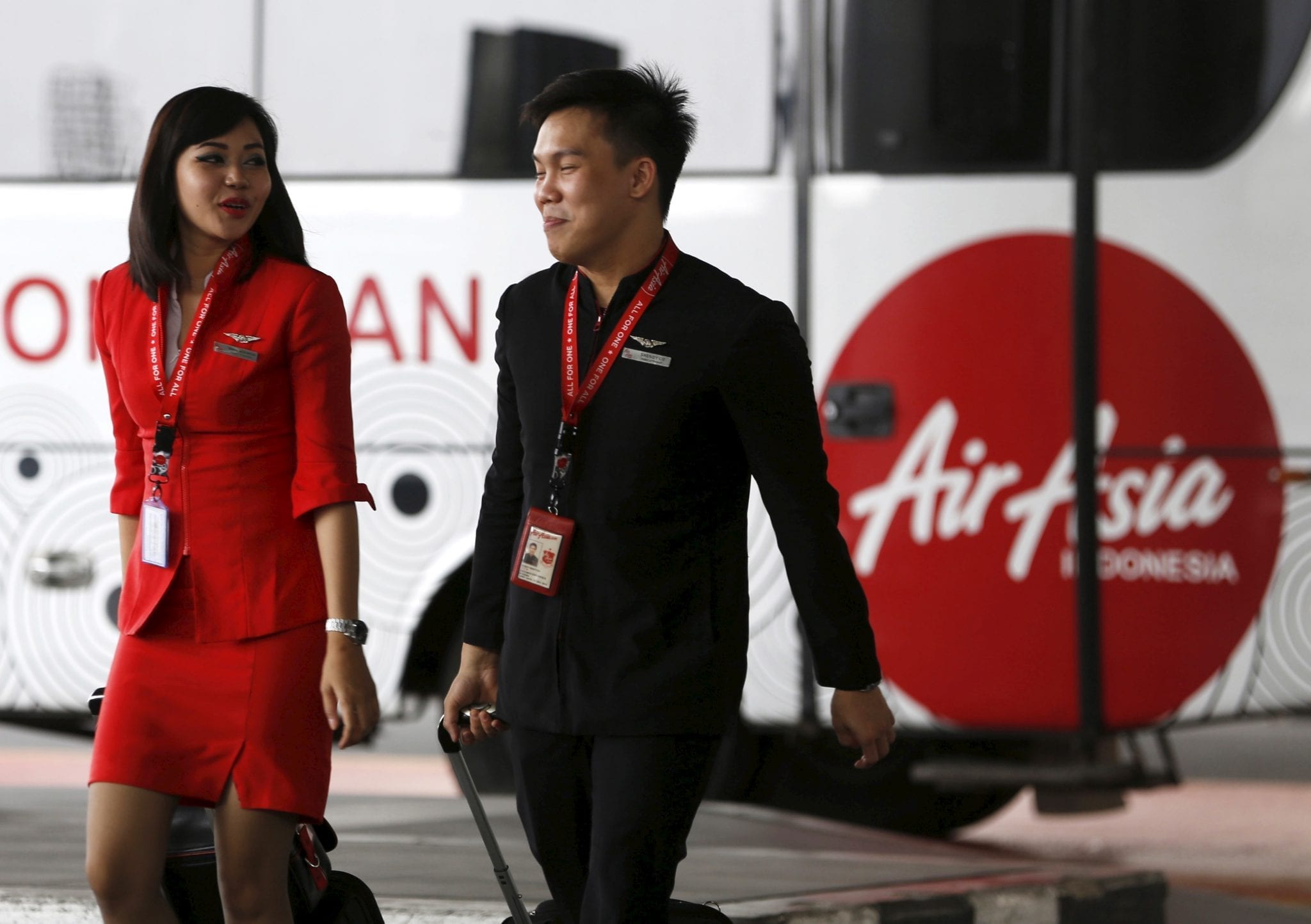
    TO aid in the decongestion of the Manila airport, an airline executive disclosed that Cebu will be his company’s priority as it expands its fleet and increases the number of flights to various domestic and international destinations. “Cebu is a priority of AirAsia…We are looking at expanding our routes in Cebu,” said Philippines AirAsia director of flight operations captain Gomer Monreal in a press conference last Saturday.

    The airline company launched on Saturday new routes connecting Cebu to three domestic destinations, namely Davao, Boracay via Caticlan airport, and Puerto Princesa. AirAsia has added two new daily flights from Cebu to Davao, and to Puerto Princesa and Caticlan. This is on top of its existing routes Cebu-Singapore, Cebu-Taipei, Cebu-Kuala Lumpur, and Cebu-Incheon/Seoul. Aside from Cebu, AirAsia has also expanded its Davao routes to Cebu twice daily, added daily flights to Boracay, three times weekly to Palawan, and four times weekly to Clark.

    “The plans are on the table but these are variable. We already have a hub here. All we have to do is expand the frequency,” said Monreal. With AirAsia’s interest for expansion in Cebu, GMR-Megawide Cebu Airport Corp. (GMCAC) chief commercial adviser Ravishankar Saravu said this will make Cebu a more popular destination. “With more Cebu routes, this will reduce the congestion in Manila. (In Cebu airport) we are trying to improve the transfer of domestic and international flights,” said Saravu. Presently, MCIA is connected to 27 domestic destinations and 16 international destinations.

  • Budget airliner cuts fares to Rs 1,099 in new summer scheme

    Budget airliner cuts fares to Rs 1,099 in new summer scheme

    AirAsia offer: Summer holidays are here and airlines are looking to lure with their low-fare schemes. Budget airliner AirAsia India has slashed ticket prices for travelers on flights to Bengaluru, Chandigarh, Goa, Hyderabad, Jaipur, Pune and Visakhapatnam, to as low as Rs 1,099 in its summer scheme. However, the offer is available for the limited period and fares are not available during the embargo period. The offers are available for the period between September 5, 2017 to February 8, 2018. Bookings will stop on April 30.

    The fares for New Delhi-Srinagar and New Delhi-Bagodogra routes have been reduced to a starting Rs 1,699 and Rs 2, 499 respectively. Similarly, the airliner has reduced fares from Bengaluru to Kochi and to Rs 1,299. The ticket prices from Bengaluru to Pune and Visakhapatnam will start at Rs 1,499. It has also kept fares from Bengaluru to New Delhi at Rs 2,999 during the given period.

    The airliner has slashed fares of its international flights too. If a passenger plans to take a flight from Bengaluru to Kuala Lumpur, then he has to pay a fare starting from Rs 2,399. For connecting flights from Bengaluru to Kuala Lumpur and from there to Jakarta, the fare is starting from Rs 4,352.

    Similarly, air fares of connecting flights from Kolkata to Bangkok, and then to Phuket will start from Rs 5,949 during the given period. Air tickets for flights connecting Kolkata to Bangkok and after that to Singapore are starting from as low as Rs 6,061.

    During the period, fares of AirAsia flights departing from Chennai to Singapore via Kuala Lumpur will start from Rs 7,137. For those passengers who are planning to go to Yangon from Chennai during the period, airfares will begin from Rs 7,371. They will have to change from Kuala Lumpur.

  • Cebu Pacific expected to mount more China flights

    Cebu Pacific expected to mount more China flights

    Cebu Pacific is expected to expand operations to China with the delivery of its ordered A321neo aircrafts that allow the budget carrier to open new routes and grow its capacity, the Center for Asia Pacific Aviation (CAPA) said in a recent report.

    The aviation think tank said the budget carrier has 47 aircraft on order, of which 32 are A321neos.

    “Cebu Pacific is particularly keen to use the A321neo to open new routes deeper into China,” CAPA said in its report, noting that the aircrafts will also support plans for its North Asia expansion.

    It said Cebu Pacific currently has a “small China operation,” consisting of only 17 weekly flights to four destinations.

    “However, it is keen to add new flights to China, both scheduled and charters, in line with expected further rapid growth in the China-Philippines market,” it added.

    CAPA said visitor numbers from China grew by approximately 20% in 2016, as China overtook Japan to become the country’s third largest source market for the Philippines.

    The think tank added that aside from China, Cebu Pacific is also considering opening a branch office in Japan to help support future capacity growth in both markets.

    “Cebu Pacific has expanded in Japan in recent years, adding three destinations for a total of four, and will likely use the A321neo to add capacity and new destinations,” it said in its report.

    CAPA said Japan is now Cebu Pacific’s third largest international market after Hong Kong and Singapore, while South Korea is its fourth largest international market.

    “It’s presence in Korea is surprisingly small given that South Korea is the Philippines largest source market for visitors,” the aviation think tank added.

    Cebu Pacific is looking to improve market share in South Korea with the A321neos adding to the expected capacity growth, CAPA said. The budget carrier already opened a branch office in Seoul in late 2016.

    CAPA noted that branch offices, which are “unusual,” for low cost carriers, should improve Cebu Pacific’s local distribution in international markets that consist mainly of inbound passengers.

    For this year, the think tank said Cebu Pacific “does not have the capacity to pursue significant growth in any of its international markets in 2017, but is putting in place the building blocks to support faster international growth once the A321neo arrives.”

    European plane-maker Airbus has committed to delivering three A321neos to the budget carrier in the fourth quarter, although some delays may push back the schedule.

    Cebu Pacific ended 2016 with a fleet of 57 aircraft — up only two from the beginning of the year. Cebu Pacific’s fleet was flat at 47 aircraft, while its turboprop subsidiary Cebgo expanded its fleet from eight to 10 aircraft.

    “The Cebu Pacific Group is planning once again to add only two aircraft in 2017, for a total of 59. The group plans to maintain the size of its narrowbody jet fleet at 39 aircraft as three more A319s are phased out and the first three A321neos are delivered. At the same time, an eighth A330 is being delivered and the turboprop fleet is expanding by one more aircraft for a total of 11,” CAPA said in its report.

    Cebu Pacific currently offers flights to nine destinations in China — Beijing, Guangzhou, Haikou, Lijiang, Ningbo, Shanghai, Shenzhen, Xiamen, Xian; four in Japan — Fukuoka, Nagoya, Osaka, and Tokyo; and flights to Incheon and Busan in South Korea, according to its Web site.

    Cebu Air, the listed operator of Cebu Pacific and Cebgo, saw its net income last year surge by 122% annually to P9.8 billion propelled by higher passenger, cargo and ancillary revenues.

    It flew 19.1 million passengers, up 4.1% from the 18.4 million passengers ferried in 2015.

  • AEON Offers Free Thai Airways Tickets To Japan,  Along With Other Promotions

    AEON Offers Free Thai Airways Tickets To Japan, Along With Other Promotions

    AEON Thana Sinsap (Thailand) Public Company Limited is set to offer its Bangkok customers a variety of promotions at the 17th Money Expo Bangkok, on May 11-14 at Impact Muang Thong Thani, 2-3 Challenger Hall, Booth B1. Aeon will be on hand to provide products and information on a variety of financial services, including loans; Your Cash loans; cash advance via Aeon credit card; Honda motorcycle installment plans, with 0% interest rate for 6 months or 0.89% interest for 48 months; gold installment loan with 0% interest rate for 6 months, or 0.89% interest for 9, 12 months; redeem AEON Happy Rewards from accumulated points, AEON member applications; and AEON insurance service.

    In addition, AEON customers who has the financial transaction that meet AEON’s conditions will also be in for a chance to win two premium Thai Airways tickets from Bangkok to Japan (Narita), economy class valued at 50,000 baht; a 1 baht gold necklace valued at 20,770 baht; Big C gift voucher valued at 2,000 baht, and much more.

    There will also be performances from famous singers on all three days during May 12-14, including Tom Room 39 (Durian Mask), Rit Rueangrit (The Star), and Kong Saharath.

  • Tumi announces travel retail exclusives to mark Singapore Airline’s 70th anniversary

    Tumi announces travel retail exclusives to mark Singapore Airline’s 70th anniversary

    Travel, business and lifestyle accessories brand Tumi is offering two travel exclusive ranges on Singapore Airlines flights.

    Passengers can purchase the Alpha 2 International Expandable 4 Wheeled Carry-On case and a Just In Case Travel Duffel bag onboard the carrier, for home delivery. Tumi created the new designs especially for the airline’s 70th anniversary.

    The wheeled case comes with an Atlantic Blue embossed luggage tag as well as a matching blue zipper with a monogram patch. A unique insert card and story patch are also integrated to share the heritage of the limited edition item, according to the brand.

    “The Just In Case is truly versatile, whether it’s accompanying you on a shopping trip, a day out exploring your destination or wherever your journey may take you”

    Describing the duffel bag’s features, Tumi added: “This fashionable, practical and ultra-lightweight duffel bag features lightweight nylon with leather trim and a top zip closure while folding flat in an instant to be completely packable.

    “Often used with an adjustable removable Add-a-Bag sleeve, the Just In Case is truly versatile, whether it’s accompanying you on a shopping trip, a day out exploring your destination or wherever your journey may take you.”

    The bag’s features are displayed in the image to the right. Along with the wheeled case, the item has been available on Singapore Airlines flights since the end of March.

  • Month-long Orchard fiesta to woo shoppers

    Month-long Orchard fiesta to woo shoppers

    Visitors to Orchard Road can get a street-side taste of Keng Eng Kee Seafood’s coffee ribs or salted egg chicken burger and tempura kimchi popiah from Good Chance Popiah this weekend as part of a month-long event which was launched yesterday.

    Called Fiesta on a Great Street, it features pop-up events, shopping promotions and lucky draws.

    For example, shoppers who spend $300 or more can redeem shopping vouchers at any of seven participating malls.

    Kicking off the event is the Local Gourmet Fiesta outside Shaw House, which ends tomorrow.

    Six food and beverage establishments, including Baker’s Oven Patiseries, are taking part in the event and 20 per cent of sales proceeds will go to the Singapore Red Cross. Chefs will also hold master classes.

    Patient service officer Rina Cheo, 61, bought popiah at the fiesta during her lunch break yesterday. “Good, traditional food is sometimes difficult to find. It’s good that they brought it here,” she said.

    There will also be pop-ups at Takashimaya Shopping Centre and Hotel Jen Orchardgateway.

    Organised by the Orchard Road Business Association (Orba), the fiesta aims to draw more people to the shopping district.

    The association also previously organised pedestrian nights, where a 660m stretch of the shopping strip was closed to traffic on the first Saturday evening of each month.

    The pilot initiative had its last run in February last year.

    Orchard Road has been in the spotlight recently, following Minister for Trade and Industry (Industry) S. Iswaran’s announcement on April 13 that the shopping belt could become fully pedestrianised as part of bold plans to transform the precinct into a distinctive shopping and lifestyle destination.

    Speaking at a tourism industry conference then, he said reclaiming the road would create “a multipurpose space where diverse and larger-scale experiential concepts can be introduced”. This comes amid a tepid retail scene, despite efforts like having car-free weekends and cash grants for malls to build underground linkways.

    Last year, retail sales excluding motor vehicles fell 2.6 per cent from the year before, according to figures from the Department of Statistics. In 2015, retail sales had slipped 1.2 per cent from the year before.

    Orba chairman Mark Shaw said events such as Fiesta on a Great Street fit in well with such rejuvenation plans for Orchard Road.

    “The semi-pedestrianisation would mean a lot more event space on Orchard Road so we could do this on a larger scale,” he said.

    “If it works out well, we’d love to expand it to other locations,” he added. “Hopefully this can make it onto our calendar.”

  • Swine sector in the Philippines set to grow

    Swine sector in the Philippines set to grow

    The Philippines is undeniably one of the more interesting countries in Asia. With over a 100 million souls and a rapidly developing economy, there is a constant demand for pig meat and pork. What are the opportunities for the Philippines?

    The swine industry of the Philippines is one where jobs and economic opportunity seem guaranteed for the next decade for those who want to commit to a career or investment in modern pig production and processing. Demand is growing, in line with population and income (and tourism), and meat consumption is expected to grow in parallel. And, on the supply side, there is a deficit in pork and pig meat for the processing industry at the moment. The industry is a ‘hot zone’ for an expanding and growing supply chain from farm to fork (genetics, AI, feed, animal health, and equipment) and for foreign suppliers and importers/processors of pork.

    Second largest economic activity

    The swine sector is the second largest economic activity in the Philippines’ agricultural sector. Domestic pig production has been rising in both backyard and modern commercial farms. In 2016 (July 1), the total hog inventory in the Philippines was reported to be almost 12.5 million head – an increase of 1.4% compared with 2015.

    Backyard farms accounted for 64% of these animals and commercial farms made up 36% of the total hog population. Approximately 35% of the total breeding herd (1.68 million sows or 560,000 head) were on commercial farms (July 1 census 2016).

    The total breeding herd increased by 2.6% in 2016 and by 5.3% in 2015. The key regions for pig production are Central Luzon and Calabarzon which, together, account for almost two thirds of all commercial pig production. This proportion falls to around 30% of all pigs when backyard pig production is considered since these smaller units are spread more evenly around the Philippines. Although a lot of domestic pig meat is sold through wet markets there is a growing and vibrant meat processing sector which serves foodservice, retail and export customers. The Philippines’ Association of Meat Processors (Pampi) has around 50 company-members and claims that they account for more than P300 billion in revenues (US$ 6 billion) and provide jobs to more than 300,000 Filipinos.

    Investments are evident

    Investment in new production and processing capacity is evident. A recent example of this is the announcements by PIC of a new sire and dam line nucleus facility on the main island of Luzon, Hormel/San Miguel’s US$ 1.2 billion investment in doubling its meat processing capacity (to 120,000 tonnes) at General Trias, Cavite and the Charoen Pokphand Group’s (CP Group) plan to invest around US$ 2 billion on swine and poultry production in the Philippines in the next 5 years.

    However, it’s not all plain sailing since the domestic swine industry has a record of low productivity and has only recently begun expanding albeit the majority of local producers (mainly backyard and small farmers) are unlikely to be part of ‘commercialisation’. A particular challenge for the Philippines is the high feed and energy prices that are prevalent: these affect all producers and contribute to a relatively high cost of production for the domestic industry (estimated at US$ 1.80 per kg).

    San Miguel is one of the country’s largest conglomerates and meatpackers. The company aims to double its processing capacity in General Trias province. Photo: Vincent ter Beek

    Although the Philippines has some significant export markets (mainly Middle East) pig meat imports have grown to meet these export customers’ needs (up by circa 12% from the EU in 2016) and this may put some parts of the local supply chain under significant cost pressure in the future. The meat processing sector complains that locally produced raw pig meat does not meet its quality or presentation requirements and those imports of suitable pig meat are the only way that it can satisfy its export and domestic customers and this may be the main reason why new investments in integrated production and processing capacity are being seen.

    Reports of corruption and irregularities in customs processing are not uncommon as are complaints about unwieldy and bureaucratic SPS procedures and this may also be encouraging domestic investment. Lastly, the ever present threat of typhoons can seriously disrupt local production and this aspect of the weather’s behaviour affects decisions on location for new capacity.

    Hog Industry Roadmap

    Under the auspices of the Bureau of Animal Industry (BAI) the swine industry’s supply chain has signed up to a ‘Hog Industry Roadmap’ which describes the major challenges facing the domestic industry and the way to meet them over the next decade.

    This 26 page ‘action plan’ is most interesting and has been put together after consultations with commercial businesses and, if carried through, signals significant changes for local producers, their supply chain, and the value chain for pig meat in the Philippines. This plan envisages a growth of per capita consumption of pork in the Philippines from 14.9 kg/capita in 2015 to 16.4 kg/capita in 2017. This is relatively modest but still implies a growth of +30% in the domestic herd. The technical KPIs for production are also targets for improvement in the roadmap.

    The number of pigs sold/sow/year is required to increase from 18.8 in 2015 to 30 in 2027, and the FCR needs to shrink from 3.7 to 2.27 in the next decade. A final, ambitious, target worth mentioning is to get carcass meat production per sow per year up from 1.7578 tonnes to 3.5445 tonnes in ten years. That’s an improvement of just over 100%. It’s easy to see why these target figures imply that the Philippines is a ‘hot zone’ for investments in modern pig production.

    The Philippines at a glance

    The Philippine archipelago is made up of 7,107 islands. Together, the total area is 298,170 km2, which makes the country slightly smaller than Poland or Italy. The country’s capital Manila has about 13 million inhabitants; the economy’s growth rate is around 6% per year (2011-2015). The Philippines has a tropical marine climate with a northeast monsoon from November to April and a southwest monsoon between May and October. The country is usually affected by 15 typhoons and directly struck by five to six cyclonic storms each year. About 41% of the country is used for agriculture. Currently, the Philippines has a population of roughly 101 million, which grows 1.6% per year.

    Big challenges

    In conclusion, the Philippines is, classically, facing some big challenges if it wants to supply itself with more pig meat but it’s also clear that this is a country where opportunities beckon – and where the local industry has ambitions.

    These challenges and the potential to grow have not gone unnoticed by the local supply chain. The investment decisions of the CP Group and others noted earlier are a sign that moves are afoot to develop the pig and pig meat industry but there are other straws in the wind.

    A recent announcement of new power supply agreements between Aboitz Power Corporation and four of the largest members of Pampi; Foodsphere (CDO), Virginia Food, LIIP Food Processors (Century Pacific) and GenOSI (McDonald’s) is more evidence that wheels are turning and investments are being made. These major businesses need reliable and competitive power supplies to support their growing meat processing operations.

    That Hog Industry Roadmap for 2017-2027 has an ambitious vision – a sustainable and globally-competitive hog industry by the year 2027. The Philippines is one country where we can expect plenty of action for the swine industry in the years ahead.

  • Retail brands from China defying stereotype

    Retail brands from China defying stereotype

    When Chinese sportswear brand Li Ning set up shop in Singapore in 2009, it took one month to sell its first badminton racket.

    Former world No.1 shuttler Lin Dan may have endorsed the brand, but in the eyes of Singaporeans, one detail stood out: that it is a brand from China.

    “Initially, they doubted the quality of the product. My own kids told me they prefer Nike and Adidas as these brands were better,” said Mr Mahendar Kapoor, managing director of Sunlight Group, the sole distributor for Li Ning in Asia.

    Its retail shop at Ion Orchard, Li Ning’s first store outside of China, closed in 2014.

    But today, the firm distributes Li Ning products to close to 70 retailers here, and sells 3,000 to 4,000 rackets a month.

    6,500 China firms in Singapore

    Last year, there were some 6,500 firms from China in Singapore, almost twice the number in 2011. They are involved in various sectors, from construction and insurance to transport and food and beverage.

    Chinese construction firms started building up a presence here in the 1990s. Some of the notable contracts landed by them include a $100 million project to expand Nanyang Technological University’s teaching facilities, and a $705 million job to build the Universal Studios theme park on Sentosa.

    In recent years, a crop of restaurant chains from China have sprouted here, including the popular Sichuan hotpot chain Hai Di Lao. At least three opened last year: hotpot chain Spicy House in Riverside Point, Shi Miao Dao Yunnan Rice Noodles in VivoCity and Riverside Grilled Fish in Raffles City.

    Chinese firms have also made their presence felt on the road, with Mobike and Ofo bike-sharing firms entering the market early this year.

    In shopping malls, streetwear brand Hotwind and fashion label Urban Revivo set up stores in the past six months. Retail analysts expect more Chinese retailers to join the fray this year.

    Melissa Lin

    “Once people started using our products, they realised the quality is comparable with those from other parts of the world,” said Mr Kapoor.

    As more retail brands from China make their way here, they find themselves having to fight the perception that their products are of poorer quality – never mind that China has long been the factory of the world where products from iPhones to Uniqlo clothing are made. Some consumers worry, for instance, that Chinese brands lack a rigorous supervisory process.

    But Chinese retailers interviewed by The Sunday Times said they have quality control checks in place.

    Streetwear brand Hotwind opened at 313@Somerset last November, while fashion label Urban Revivo opened in Raffles City in January this year. These are their first stores outside of China.

    Hotwind vice-president White Wang recalled how a business associate from Singapore told him not to include Chinese characters in the shop’s signboard. But Mr Wang did, placing Hotwind’s English and Chinese names side by side.

    “He told me Singaporeans don’t think highly of Chinese brands,” said Mr Wang, who is from Shanghai. “But we are a Chinese brand, we can’t run away from this.”

    It is a prejudice that Hotwind, which sells clothing, shoes and accessories, aims to change by ensuring its products are of a high quality, said Mr Wang.

    “In China, we didn’t do much advertising but we now have over 900 stores. People find out about us mainly via word-of-mouth so it’s a testament to our quality,” he said. “I’m confident Hotwind will take off here once we open more shops.”

    He aims to have three to five stores here by the end of the year.

    Urban Revivo, which has more than 150 stores in China, said China-based production has changed “quite a lot” over the past 10 years. “People are surprised when they realise how the quality (of Chinese brands) has improved,” said its international marketing manager Federica Rubeo.

    “We’re proud of our Chinese heritage,” she added.

    Meanwhile, Chinese fashion retailer Yishion, which entered the Singapore market in 2013, now has nine outlets here. It has more than 8,000 outlets globally, including more than 7,000 in China.

    It sends all its manufactured garments to quality control laboratories in China to ensure they meet the required standard, before they are shipped to distributors worldwide.

    “Our quality is good, that’s why our prices are not low-end, but more of the mid-range,” said its general manager Raymond Shen, 33.

    Its clothing designs vary from market to market. In China, its customers are in their teens or 20s, but in Singapore, they tend to be middle-aged women, so the designs here tend to be more conservative, he said.

    Then there is lifestyle brand Miniso. Its founders are a Japanese and a Chinese, but it markets itself as a Japanese brand. “We consider ourselves to be more of a Japanese brand as our product design and product concept is from Japan while manufacturing is carried out in China,” said its assistant marketing manager June Ng.

    Miniso has more than 2,000 outlets globally, including more than 1,000 in China, 26 in Singapore and four in Japan.

    Student Jamaine Loo, 23, feels that China-made items are “inferior in terms of quality”. “Unless I’m buying something to use once and then throw away, I won’t buy something China-made, especially if the price isn’t cheap,” she said.

    But procurement executive Eileen Tan, 27, who bought a $15 pair of sunglasses from Hotwind, said it did not matter to her where a brand is from. “Nowadays, a lot of things are made in China anyway. As long as the quality of the item doesn’t look very cheap to me, it’s okay,” she said.

    Cushman & Wakefield Singapore research head Christine Li expects more Chinese brands to open here in the next 12 months.

    These brands are looking to expand overseas, as many are shunned by consumers in China who typically prefer Western brands, she said. And Singapore is an obvious choice, given its status as a gateway to the region.

    “Their brand presence in prime shopping centres here could be seen as an indicator of quality and prestige, which will make it easier for Chinese brands to expand in domestic and international markets in future,” said Ms Li.

    Both Hotwind and Urban Revivo said they intend to use Singapore as a springboard to other South-east Asian nations such as Malaysia, Thailand and Indonesia. Hotwind is opening a store in Kuala Lumpur next month.

    Hotwind’s Mr Wang said: “Having a shop in Singapore increases our brand value in the eyes of consumers.”
  • AirAsia announces Maldives and Macau promo flights

    AirAsia announces Maldives and Macau promo flights

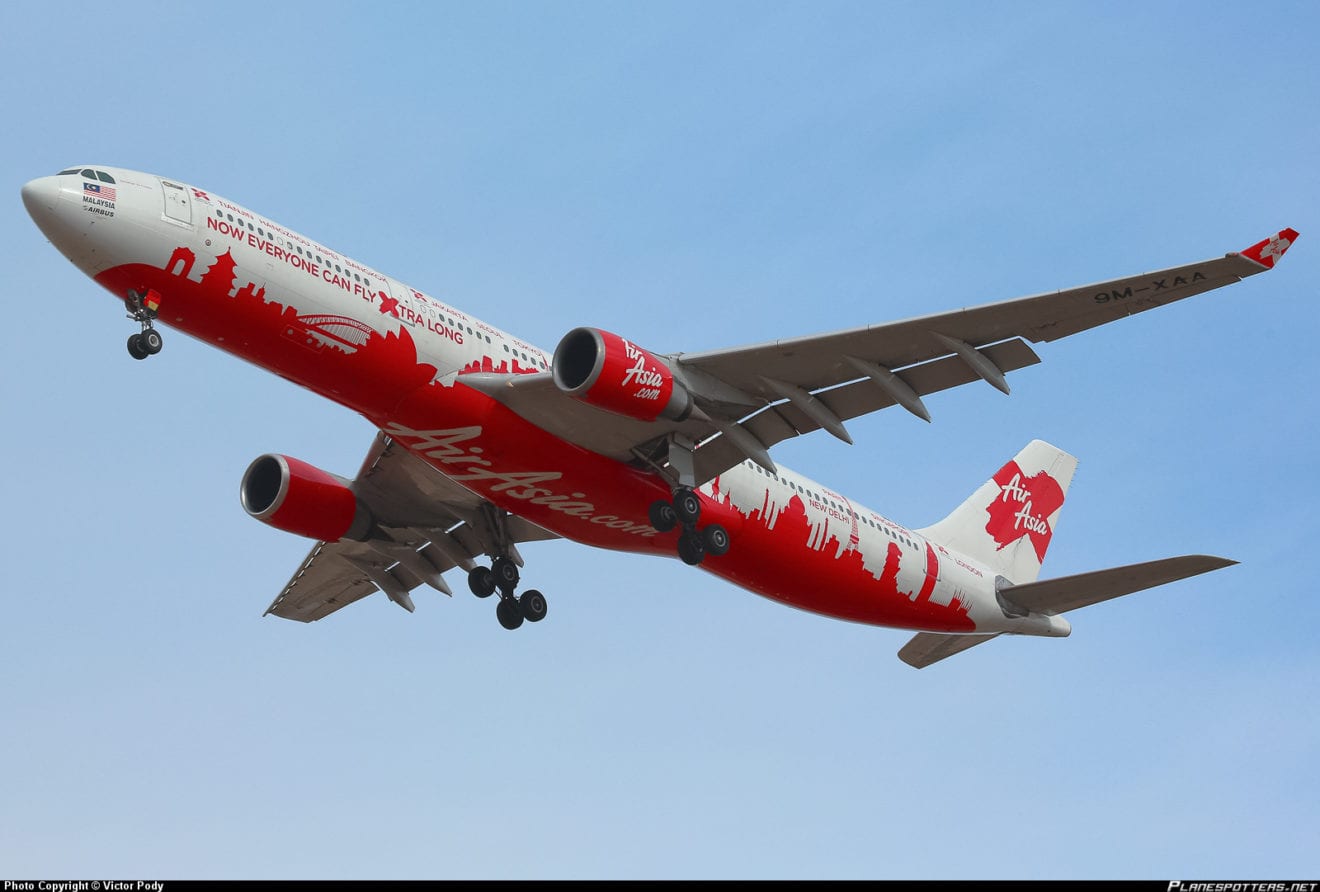
    Low-cost carrier AirAsia will offer promotional, all-in-one way flights, to Maldives and Macau for one month, from as low as RM169 and RM129 respectively.

    In a statement today, AirAsia Bhd said the Airbus A330 would fly directly to both destinations from tomorrow until May 18, 2017.

    Bookings can be made from today until April 23, 2017.

    Head of Commercial Spencer Lee said the promotion to increase the capacity by deploying its Airbus A330 for one month was to improve the travel options for guests heading to these two destinations.

    “This Airbus A330 will provide an increase of 197 seats per flight. We urge guests to use this opportunity and grab the hot deals.

    “We are also pleased to increase our connectivity with additional flight frequencies to various destinations such as Kaohsiung, Siem Reap, Da Nang, Hanoi, Pontianak and Semarang,” he added.

    AirAsia would gradually increase its flight frequency from Kuala Lumpur to Kaohsiung (seven times weekly), Siem Reap (14 times weekly), Da Nang (10 times weekly), Hanoi (11 times weekly), Pontianak (seven times weekly) and Semarang (seven times weekly).

    AirAsia’s new routes from Kuala Lumpur-Bhubaneswar, Johor Baru-Tawau, Johor Baru-Langkawi and Kuching to Pontianak are also open for sale now.

  • ICONSIAM together with the Chaipattana Foundation and Allied Organizations

    ICONSIAM together with the Chaipattana Foundation and Allied Organizations

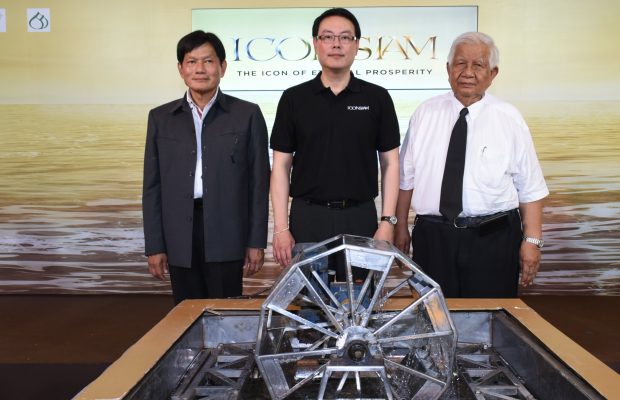
    ICONSIAM together with the Chaipattana Foundation and Allied Organizations kicked off “Preserving and Improving Chao Phraya River with a Sustainable Water Management” Project. The objectives of the project are to proceed on the late King’s Philosophy related to wastewater management, and to engage and raise awareness of local people living along the Chao Phraya River for reviving and conserving natural resources and the environment, leading to sustainable living.

    Supoj Chaiwatsirikul, Managing Director of ICONSIAM Company Limited, stated that “ICONSIAM’s policy is stressed on taking corporate responsibility and being one driving force towards the positive impact on the society, environment and culture.
    We also focus on the sustainable socio-economic development, assuring the local communities along the Chao Phraya River can live harmoniously and proudly with nature. Constantly, we are committed to carry on our three key pillars: to support the communities nearby, to inherit Thai cultures and traditions, and to take care of the environment of the waterfront communities along the Chao Phraya River.

    Recently, ICONSIAM, the Chaipattana Foundation and our alliances have launched the “Preserving and Improving Chao Phraya River with a Sustainable Water Management” project with an aim to preserve natural resources and environment of the Chao Phraya River by targeting on seven canals in three Bangkok districts – Klong San, Taling Chan and Bangkok

    Prof. Dr. Kasem Chankaew, an Environmental Specialist of the Chaipattana Foundation and Director of the Royally-initiated Laem Phak Bia Environmental Research and Development Project, explained that the Chaipattana Foundation has carried on the Late King Bhumibol Adulyadej’s initiative on wastewater treatment as said on his royal speech that “…the nature-supporting-nature process,  the simple, affordable & practical technology that people can easily adapt, low-cost mechanical devices..” in  every project the Chaipattana Foundation has developed including this one. There are 2 types of natural and simple wastewater treatment techniques which are 1) Oxidation Pond Treatment System; the digestion of organic matter through the use of microorganisms and 2) Grass Filtration System; contaminants are trapped through the grass that  absorbs toxins back into the system.

    The aforementioned project has already commenced its first initiative in Klong San district from early March 2017 at Wat Thong Phleng canal and Somdej Chao Phraya canal as the 2nd one. Following the role model project are the other 5 canals which are Wat Suwan canal and San canal in Klong San district, Wat Thong canal in Bangkok Noi district, Lad Mayom canal and Mahasawat canal in Taling Chan district to explore the physical characteristics of each area in order to properly plan for the most suitable wastewater treatment method of those areas. All of these projects are expected to be completed by 2017 with the objectives to improve the water quality, conserve and enhance the balance of the ecosystem. Additionally, the project focuses on engaging local people living along the Chao Phraya River’s awareness of reviving and conserving natural resources and the environment as well as serves as a pioneering role model aiming at developing sustainable environment in the Chao Phraya River communities in other areas.