Category: General

Retail News Asia is committed to providing both local and global retailers with the latest General Retail news throughout the Asian market. This on a daily base.

  • China’s personal shoppers are cashing in

    China’s personal shoppers are cashing in

    Julie Li is laden with Harrods carrier bags full of cosmetics, but they are not hers; the 30-year-old finance graduate from Beijing is a fulltime freelance retail consultant, something known in China as a daigou.

    “I worked as a daigou alongside my day job for about three years, but six months ago, I decided to quit my job to fully concentrate on the business because the profit margin is lucrative and the hours are more flexible,” said Li, who asked to be known by a pseudonym.

    Dressed in a fashionable white Reiss dress and holding a light color Chanel leather handbag, Li is glued to her smartphone. She is using the messaging app Wechat to communicate with clients in China who are willing to pay a premium for authentic luxury goods that are usually relatively cheaper than they are in China.

    Having developed three major wholesale clients, each with around 300 customers, Li buys 10,000 pounds’ worth of top-end lipsticks on behalf of clients every day.

    “The weak pound after Brexit is also giving a boost to my business and sales have doubled in recent months,” Li said.

    Charging 5 percent of the retail price and handling large quantities on a daily basis, she is able to pocket as much as 20,000 pounds in commission during a good month.

    “My clients are usually middle-incomers in China who have a strong appetite for high-quality products,” she said. “I believe the quality standards, the product ranges and the cheaper prices are the main reasons why Chinese consumers look to the West.”

    Li said a high-end daigou has to know about products, prices, colors, range, and availability.

    Experts say the agents have challenges because customers need to be convinced the goods they receive are genuine and that suppliers are reliable.

    “An important issue is the uncertainty faced by consumers who wonder whether products are genuine because, the higher the demand for a product, the more there is a chance it will be a fake or an adulterated product,” said Pervez Ghauri, professor of international business at Birmingham Business School.

    The buyers are mainly from the Chinese mainland and specialize in helping customers in China buy luxury products, including bags and cosmetics, as well as health supplements, such as baby milk formula.

    Business has boomed in recent years, accounting for RMB 34 billion to RMB 50 billion ($5 billion to $7.4 billion) in global sales last year, according to a report from consultants Bain & Company.

    In 2008, the baby milk scandal, in which Chinese milk and infant formula was contaminated with melamine, led to many Chinese parents shopping overseas for milk formula. At the height of the boom in demand for milk formula, retailers in the UK rationed the sale of powdered baby milk to ensure availability for domestic parents.

    Observers note that safety standards are one of the reasons why some Chinese consumers buy Western products.

    Geoffrey Wood, dean of the Essex Business School, said many Chinese consumers believe Western countries have more rigorous production standards, and the will to enforce rules ensuring quality.

    Seizing the opportunity presented by the baby milk scandal, 29-year-old Jimmy Zhen-not his real name-began buying milk powder for his Chinese customers in 2009 while working a fulltime job.

    “In the beginning, I only shopped for family and friends who knew I was abroad and felt the authenticity of the products was assured. Through word of mouth, I developed a large customer base, and built trust with my clients,” he said. After demand rose, he became a fulltime shopper in 2011.

    A restriction brought in by the UK government in 2013 to cap the sales of milk formula at two cans per customer stacked the deck against Zhen’s business, but he managed to find a way out by paying students 50 pence above the retail price for every can they sold him. He currently ships more than 8,000 tins each month.

    Earlier this year, the Chinese authorities tightened regulations around cross-border online shopping. Commentators say the changes, to Chinese customs regulations and ecommerce has dented the daigou’s trade, but Zhen has adjusted by shipping four cans at a time instead of six. It ensures he avoids paying import tax.

    Daigou shoppers admit their industry exists in a grey zone legally and is likely to be short-lived, but Li is cashing in for as long as she is able.

  • Changi Airport Group issues tenders for T3 Fashion & Jewellery

    Changi Airport Group issues tenders for T3 Fashion & Jewellery

    Changi Airport Group (CAG) has issued retail tenders across fashion and jewellery categories, as well as for a short-term tenancy shop.

    CAG has opened two individual commercial opportunities in fashion, in search for established mid-price fashion names to operate at the terminal three North departure/transit lounge, spanning 94sq m and 41sq m respectively. The operators will run the units for three years between July 9 2017 to July 8 2020.

    One retail unit will be designated for a jewellery name to operate a 35sq m store concession at T3’s South departure/transit lounge. The three-year tenancy contract will also begin from July 9 2017 to July 8 2020.

    The airport operator stated it was searching for “unique and exciting mid-price fashion brands and concepts as well as unique and exciting jewellery brands that are currently not represented at terminal three of Singapore Changi airport that will inject buzz to and differentiate the retail offerings at Singapore Changi.”

    This is in twine with a short-term tenancy shop totalling 21sq m at T2 North departure/transit lounge, with a tenancy period of one year from May 20 2017 or upon the date of physical handover of the premises to the successful operator. The airport said all product categories may be considered, with the exception of liquor and tobacco and perfumes and cosmetics concepts.


  • Thailand takes a long-term gamble on Isaan region

    Thailand takes a long-term gamble on Isaan region

    If all goes according to plan, Thai Prime Minister Prayuth Chan-ocha will make a media splash next year with the launch of a 60 kilometer stretch of dual-track train line between Nakhon Ratchasima and Khon Kaen provinces in northeast Thailand.

    Work on the short spur — part of a larger project to upgrade the region’s freight transport to Thailand’s main deep sea port — is being speeded up to be completed before the next election. But whether the planned publicity stunt will win Prayuth’s coup-installed government popularity in the country’s poor northeast region remains to be seen.

    Prayuth’s government is banking on heavy investments in infrastructure to both stimulate growth during the current economic doldrums and strengthen Thailand’s competitiveness in the future. While most economists concur that the expenditure on infrastructure is long overdue, some say a lot more could be done to help the country’s rural poor in the short term. And most of Thailand’s rural poor live in the country’s northeastern region, known locally as Isaan.

    Isaan was the only region to reject the draft of a military-guided constitution in the Aug. 7 referendum, with 51.4% of the people voting against it compared with a nationwide 61.40% endorsement. Isaan, accounting for one third of Thailand’s 67 million population but only 10% of its gross domestic product, is also the power base of the Pheu Thai Party, whose de facto leader is Thaksin Shinawatra, the populist politician and the present regime’s number one enemy. Prayuth and his officers originally came to power after a May 2014 coup, toppling Thaksin’s sister, former Premier Yingluck Shinawatra.

    Prayuth, using his sweeping powers under an interim constitution, has fast-tracked at least 20 megaprojects that will cost the country an estimated 2 trillion baht ($57 billion) over the next six years. Of that amount about 10% will be spent in Isaan — primarily on a new motorway linking Bangkok to Nakhon Ratchasima, Isaan’s largest city, and an expanded dual-track train link connecting Khon Kaen, Isaan’s second largest city, to Nakhon Ratchasima and on to the port of Laem Chabang on the eastern seaboard southeast of Bangkok. A single track already exists, but is too congested to serve as an efficient freight link for the Isaan region to transport its main crops to markets abroad. A third megaproject, a so-called Sino-Thai high speed train between Bangkok and Nakhon Ratchasima, has yet to receive cabinet approval.

    “The fact that the government is seriously interested in infrastructure is something, anyway, because if you trace the history we haven’t been investing enough in infrastructure here,” said Somchai Lertlarpwasin, director of the Bank of Thailand’s North Eastern Regional Office. “If the government puts 200 billion baht in the region over six years, it’s over 2% of the gross regional product in the northeast, so it means that you’ve lifted up GRP by 2% already, not even accounting for the crowd-in effects.”

    Retail boom

    There have been some “crowd-in” effects already. Nakhon Ratchasima, also called Korat, is fast becoming a shopping paradise for people in the region and from farther afield in neighboring Cambodia and Laos. All three of Thailand’s largest Bangkok-based department store chains have invested in massive outlets in the city, which will boast 1 million sq. meters of retail space by late next year.


    The Mall has had an outlet in the city since 1996, and recently invested 100 million baht to build an extension that includes a “Snow Zone,” treating Issan customers to a winter wonderland of ice skating, sledding and snowball-throwing. The Mall’s expansion was driven by increased competition, the advent of the ASEAN Economic Community earlier this year and the government’s approval of the new motorway to the capital which will halve travel time to Korat to around 2.15 hours.

    “Korat’s prospects are bright. If the government had not committed to investing in infrastructure it might have been harder to persuade the board to invest in the expansion,” said Preecha Limoua, general manager of The Mall’s Nakhon Ratchasima Branch. The department store’s Snow and Ice Planet is proving a new tourist attraction for the city. “Cambodian families are already coming here to see the snow. It is the only snow in Isaan.”

    Terminal 21, owned by Siam Retail Development, will open a 250,000 sq. meter outlet in December, boasting the city’s first observation tower on the outside and a replica of the Eiffel Tower on the inside. Central Group plans to open a Central Grand Plaza outlet with 320,000 sq. meters of retail space in September 2017. The Mall Korat, with its snow zone extension launched in October, now occupies 360,000 sq. meters. There is also a Makro, eight Tesco-Lotus convenience stores and several Big C locations, while Sweden’s Ikea and Japan’s Aeon are both reportedly looking for locations in the city.

    Klang Plaza, a local department store chain that opened its first outlet in Korat 50 years ago, has three outlets already and is investing in a fourth near the city’s railway station. The local chain, which operates under the motto “The Korat Department Store,” is not afraid of the upmarket competition from Bangkok, given its strategy of concentrating on supermarkets and stationery supplies and keeping its outlets within walking distance from Korat’s city communities. “Korat can handle 10 department stores,” said Pairat Manasilp, vice president of Klang Plaza Company.

    Korat grows, Issan flounders

    Korat province has a population of 2.7 million people, and a GDP of about 250 billion baht, the highest in Isaan. Only 250 kilometers northeast of Bangkok, Korat is an obvious gateway to the northeast and a logistical hub. It is already an industrial hub. U.S.-based Seagate Technology Company has a huge HRD disk drive factory in Korat, employing more than 12,000 people. The province is best known, however, as a hub for food processing using Isaan’s main commercial crops — rice, tapioca and sugar. Isaan accounts for half of Thailand’s exports of the three crops, which employ more than 700,000 Isaan families.

    In the long run, the dual track rail line running from Khon Kaen to Laem Chambang will provide a vital and cheaper transport link for these commodities that could make them more price competitive abroad.

    “The problem with Thailand is transportation costs. We don’t have efficient transport like trains,” said Hassadin Suwattanapongchet, president of the Nakhon Ratchasima Chamber of Commerce. Rail currently accounts for only 2% of Thailand’s goods transport, although freight is about half the cost of road transport per ton and is less polluting.

    Work has commenced on the dual track line, but it will take four to five years before the connection to Laem Chabang port is completed. “That’s a long time. People cannot imagine what it will be like in five years, so if the government can last for five years some people will be grateful,” Hassadin said. Villagers to be displaced by the new motorway have long opposed the project, but their opposition has been silenced by Prayuth’s edict.

    While Korat’s prospects look bright, the rest of Isaan is still suffering. Since last year, the region’s farmers have been hit by a triple whammy of declining demand for their commodities in China, low commodity prices worldwide and drought.

    All commodity prices except sugar are down, while sugar cane has also suffered in the aftermath of the 2015-16 drought. The price of tapioca, which is exported mainly to China, has dropped from 2.30 baht per kilogram last year to 1.40 baht now. Other than short-term measures, such as paying cash to farmers to compensate for low prices, the government has seemed stumped by the challenges facing regional agriculture. For instance, the Federation of Thai Tapioca Growers has been urging the government to strengthen efforts to promote of the use of tapioca in ethanol fuel and plastics, but so far, the official response has been slow.

    The region’s rice, tapioca and sugar cane farmers were the target of populist measures under the previous two elected governments designed to boost their incomes. A controversial rice pledging scheme under Yingluck’s government, promising to buy rice at 40% above market prices, was particularly popular but crashed down in scandals over corruption allegations. It seems unlikely that Prayuth’s transport projects, due for completion years from now, will win him similar kudos. The former Army Commander-in-Chief has made it clear he would be willing to become prime minister after the next election, albeit as an appointed one.

    “The government can invest in the motorway, or a high-speed train, or whatever, but the fact remains that most of the people here are farmers and the price of their crops — rice, tapioca and sugar — are low, so the people will have no money to drive cars on the motorway, or ride the high speed train, or shop in department stores,” said Pornchai Amnuaysap, senior adviser to the tapioca growers’ federation. “They will just stay at home and try to survive.”

  • Guardian to open 30 new stores next year

    Guardian to open 30 new stores next year

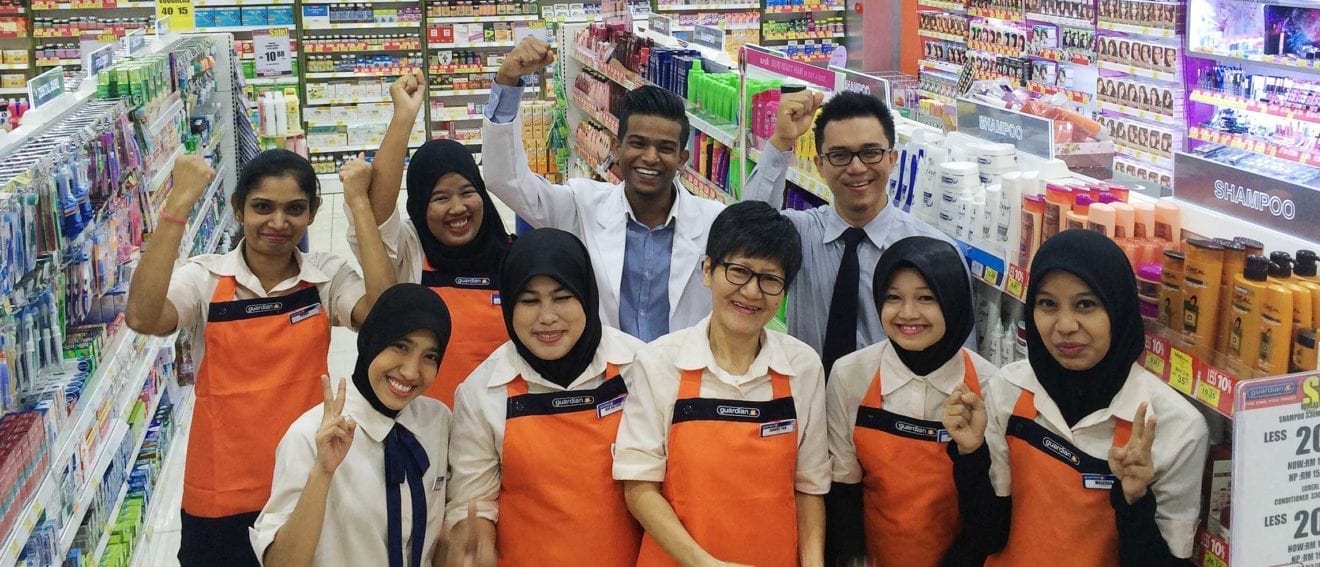
    Guardian Health and Beauty (Guardian Malaysia) plans to open between 25 and 30 new stores next year as it embarks on an aggressive expansion plan to further strengthen its position in the domestic health and beauty retail market.

    Chief Executive Officer Peter J Dove said besides the new stores opening, the company would also refurbish 70 stores, as well as, close 15 existing stores which are less performing.

    At present, Guardian Malaysia has 430 outlets nationwide and commands a 30 per cent market share in the health and beauty segment.

    “Domestically, the current retail market is tough and demand is soft, so we have conducted a research and come out with a new concept, which is aligning products with shoppers’ demand, and then see the customers’ response,” Dove told Bernama after launching Guardian’s concept store in Kuala Lumpur City Centre Sunday.

    The retailers in the pharmacy and personal care sub-sector are expecting to record an 11.4 per cent growth in the third quarter of 2016.

    Guardian Malaysia also plans to implement the same concept store idea for 10 out of its 40 top stores nationwide.

    “We will also introduce and aggressively go into e-commerce next year to reach more customers,” he said, but declined to disclose the investment allocation to develop the new e-commerce platform and new concept stores.

    Meanwhile, the new concept store incorporates shopper-friendly features including a “Make Me Up” corner, which focuses on addressing the needs of shoppers, highlight the latest cosmetics products and trend, as well as, offer a semi-private area for product trials.

    Guardian Malaysia has also expanded its range of new international and local brands, as well as, spearhead the first modern trade pharmacy initiative with the listing of traditional Chinese herbal health products.

  • SSP wins contract to operate eight F&B concessions at Phuket International Airport

    SSP wins contract to operate eight F&B concessions at Phuket International Airport

    SSP Group, a leading operator of food and beverage outlets in travel locations worldwide, has consolidated its position in the Thai market with a number of new contract wins.

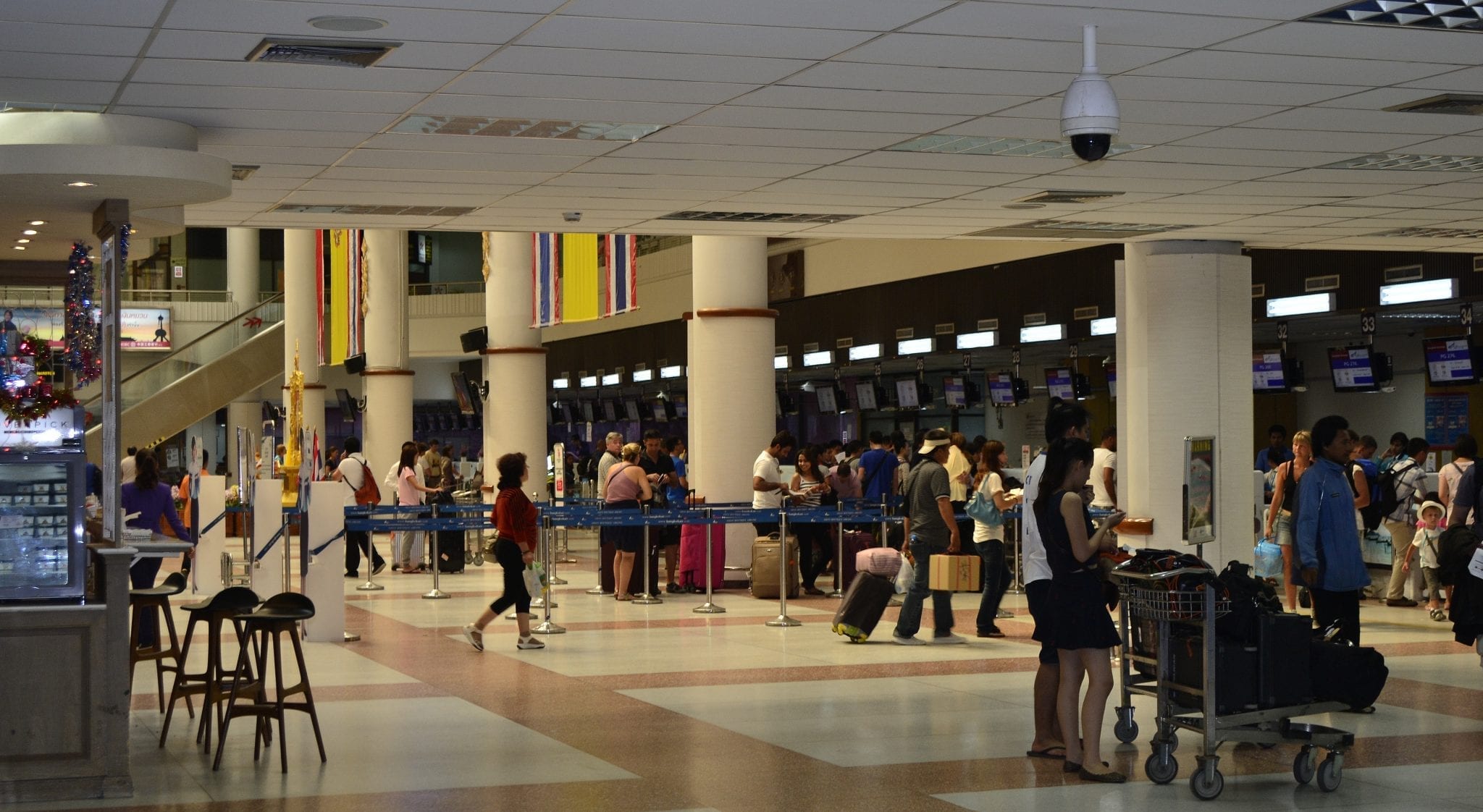
    At Phuket International Airport, SSP has been awarded a four-year contract to operate eight concepts in the new international Terminal 2. Valued at approximately 1.5 billion THB (£33 million*) the new deal will make SSP the leading concessionaire at the airport.

    Landside, SSP will run all food and beverage operations on the mezzanine floor. Its offer will include Burger King, Bill Bentleyn Pub, Ajisen Ramen, Thai Express, Airport Kopitiam, Dairy Queen and The Coffee Club. Airside, passengers will be able to choose from Burger King and Bill Bentley Pub.

    Commenting on the win, Chris Rayner, CEO SSP Asia Pacific said; “We have been running food and beverage concessions in Thai airports, where we are the clear market leader, since 1995 in cooperation with our Thai partner Minor Food Group. SSP Thailand’s strong track record in delivering great brands, great customer service and great sales all contributed to us being awarded the contracts in Phuket, and we are delighted to be building on our success in this strategically important region.”

    Separately, at Suvarnabhumi Airport, SSP has extended all its existing contracts by four years. It has also extended its contracts at Chiang Mai International Airport by two years until July 2018.

    Phuket brand line-up:

    Thai Express is the world’s largest chain of modern Thai restaurants. Serving traditional Thai cuisine in a relaxed and yet contemporary environment, today the brand can be found at over 30 locations from China and Malaysia to Vietnam and Singapore.

    Japanese brand Ajisen Ramen is the country’s leading ramen restaurant and can now be found across the Asian continent. It serves a range of Asian dishes in a format that is simple, tasty and healthy as well as convenient.

    Founded in 1954, the Burger King brand is the second largest fast food hamburger chain in the world. The original home of the Whopper, the Burger King system operates more than 14,000 locations in approximately 100 countries and U.S. territories.

    Bill Bentley Pub is a classic English pub, styled to create the warm welcome of the traditional local.

    Airport Kopitiam, is a bespoke SSP concept which draws inspiration from the ever popular café culture of Malaysia. Its menu features simple meals, including kaya toast and white coffees.

    Founded in the 1940s in Illinois, USA Dairy Queen is famous for its dessert treats and much more. Today it is hugely popular across Asia.

    The Coffee Club, which originated in Australia, is a growing coffee chain in Asia Pacific with over 400 stores across nine countries including Thailand.

  • South Korea Q3 GDP slows slightly, but better than forecast

    South Korea Q3 GDP slows slightly, but better than forecast

    The seasonally adjusted reading, down from a 0.8 percent gain in the second quarter, compared with a median 0.6 percent rise tipped in a Reuters survey.

    It also showed that facility investments fell 0.1 percent on-quarter in the July-September period, compared with a 2.8 percent on-quarter expansion three months earlier. On a sequential basis, the real GDP expanded 0.7 percent, slightly slower than the 0.8 percent growth recorded in the prior quarter.

    Despite the beat on both quarterly and year-on-year GDP, the Bank of Korea suggests growth could have been even better, citing troubles atelectronics giant Samsung following the release, then recall, of the Galaxy Note 7, along with industrial action at Hyundai.

    Services rose 1.0 percent in the September quarter from the previous three-month period, also better than a 0.6 percent gain in the second quarter, most likely thanks to government efforts to launch nationwide retail sale events to pry open wallets. On the other hand, exports grew 0.8 percent with rises in exports of chemical products and semiconductors. Capital investment slipped 0.1 percent, down from 2.8 percent growth in the previous quarter.

    Government consumption grew by 1.4%, in part due to an increase in health insurance benefits.

    It left the year-on-year expansion at 2.7%, down on the 3.3% rate reported in the previous quarter.

    A BOK official remained hopeful about Korea’s outlook, saying it could achieve 2.7 percent annual growth this year, as long as the economy does not contract any further.

    Both Chung and the ministry official agreed that fourth quarter growth would also be affected by Samsung’s decision to discontinue production of its fire-prone Galaxy Note 7 smartphone, although the economic impact from lost manufacturing was almost all reflected in the third quarter.

    Construction rose 4.4 percent sequentially, driven by a growth in building construction. LGERI projects 2.2 percent growth next year.

    “With China and European Union also likely to slow, Korea faces hard external conditions”, he said.

  • Japan factory output and retail sales flat in September

    Japan factory output and retail sales flat in September

    Japan’s factory output and retail sales were flat last month, data showed Monday, painting a bleak picture for the world’s number three economy as the central bank kicks off a policy meeting.

    The lukewarm readings come on the heels of disappointing inflation figures last week and point to a tepid expansion in July-September economic growth, analysts said.

    Japan’s third-quarter growth figures are due later this month.

    The government data on Monday showed Japan’s industrial output for September was unchanged from the previous month, weighed by slower production of certain electronic components, according to the ministry of economy, trade and industry.

    That was well short of a market forecast for a 0.9-percent rise after an on-month expansion in August.

    Retail sales were also unchanged, missing forecasts of a 0.2-percent rise.

    The Bank of Japan kicked off a two-day meeting with a policy announcement expected on Tuesday.

    The BOJ has repeatedly pledged to continue monetary easing as needed until inflation reaches a two percent target, a cornerstone of Prime Minister Shinzo Abe’s economic revival policy.

    More than three years on, however, doubts are growing over Abe’s faltering bid to kickstart growth and conquer a long battle against deflation.

    Japan’s economy contracted in the last three months of 2015, before bouncing back in January-March with a 0.5 percent rise on-quarter and then a 0.2 percent expansion in April-June.

  • MPPA opens its new Hypermart G7 store at Citimall Baturaja in South Sumatera

    MPPA opens its new Hypermart G7 store at Citimall Baturaja in South Sumatera

    PT Matahari Putra Prima Tbk (MPPA), a multi-format modern retailer in Indonesia, which operates Hypermart, SmartClub, Foodmart, Boston Health & Beauty and FMX, today (October 27, 2016) proudly opens its new Hypermart G7 store at Citimall Baturaja in South Sumatera.

    MPPA keeps continuing to execute and deliver its expansion strategy throughout the country with a series of new store openings across its business formats. The Hypermart Baturaja Citimall is 20th store within Sumatra Island.

    The new store is strategically located within the growing province of South Sumatera along with other existing Hypermart stores already operating in the city of Palembang and other areas within the province. The store has adopted the latest G7 concept with gross selling area of ± 6,500 m². This format features a new and improved store design. The new retail offering from Hypermart G7 will certainly add the MPPA’s strength as the dominant modern retail player in Sumatera.

    MPPA’s Director of Public Relations and Communications, Danny Kojongian stated, “We are delighted to open our latest new Hypermart G7 store at Baturaja, South Sumatera. We would ensure that our quality product assortments and unparalleled retail services would bring a positive impact of modern retail offerings in Baturaja and South Sumatera, support the positive impact toward regional economy as well as provide the best services for the modern lifestyle in the region.”

  • India looks to cut tariff concessions on Chinese goods

    India looks to cut tariff concessions on Chinese goods

    India is expected to push for a new approach to tariff cuts at the 16-country trade bloc to prevent China from flooding its market with cheap goods. The commerce department is working on ways to give minimum tariff concessions to Chinese goods and delay the concessions by a long number of years even as it allows imports from other member countries at lower duties.

    As part of the Regional Comprehensive Economic Partnership (RCEP) trade negotiations, India is looking to treat Chinese products differently due to the burgeoning trade deficit it has with Beijing. In 2015-16, India’s exports to China were $9 billion while the imports were a staggering $61.7 billion leaving a trade deficit of $52.7 billion.
    India hopes this longer phasing out of tariff concessions and differential treatment, called “deviations”, will become the basis for RCEP negotiations. The new approach comes ahead of the next ministerial meeting on November 3-4 in the Philippines.

    Moreover, since India had to do away with a three-tier structure of differential duty cuts as part of the negotiations, deviations are the last ray of hope to contain the trade deficit with China under a formal trade agreement. In the earlier tiered structure, India had proposed to remove duties on 42.5% of the items traded with China, something that Beijing had termed as low.

    “We hope the tiers come back from the backdoor through deviations,” said a commerce department official, adding that the difference in tariff cuts may not be as much as in the earlier structure of three tiers.

    “We can look at longer staging periods for China by delaying the concessions by some years or not offer key products for tariff cuts to them at all,” the official said. Despite agreeing to a common concession, India is insisting on a single undertaking for the RCEP which means nothing is agreed until everything is agreed. “With single undertaking, we can be sure other members will not lose interest in India’s demands once we accept their demands for tariff concessions on goods,” the official said.

    Trade Openness

    Our problem with China seems to be a lack of trade access. And to better manage our trade deficit with China, we need to call for better trade access rather than opt to keep tariff barriers high. The latter option would only raise transactions costs and lead to thoroughly suboptimal policy going forward. are definite gains from trade and openness

  • Sheng Siong’s net profit expands 8.2% to $15.7m in Q3

    Sheng Siong’s net profit expands 8.2% to $15.7m in Q3

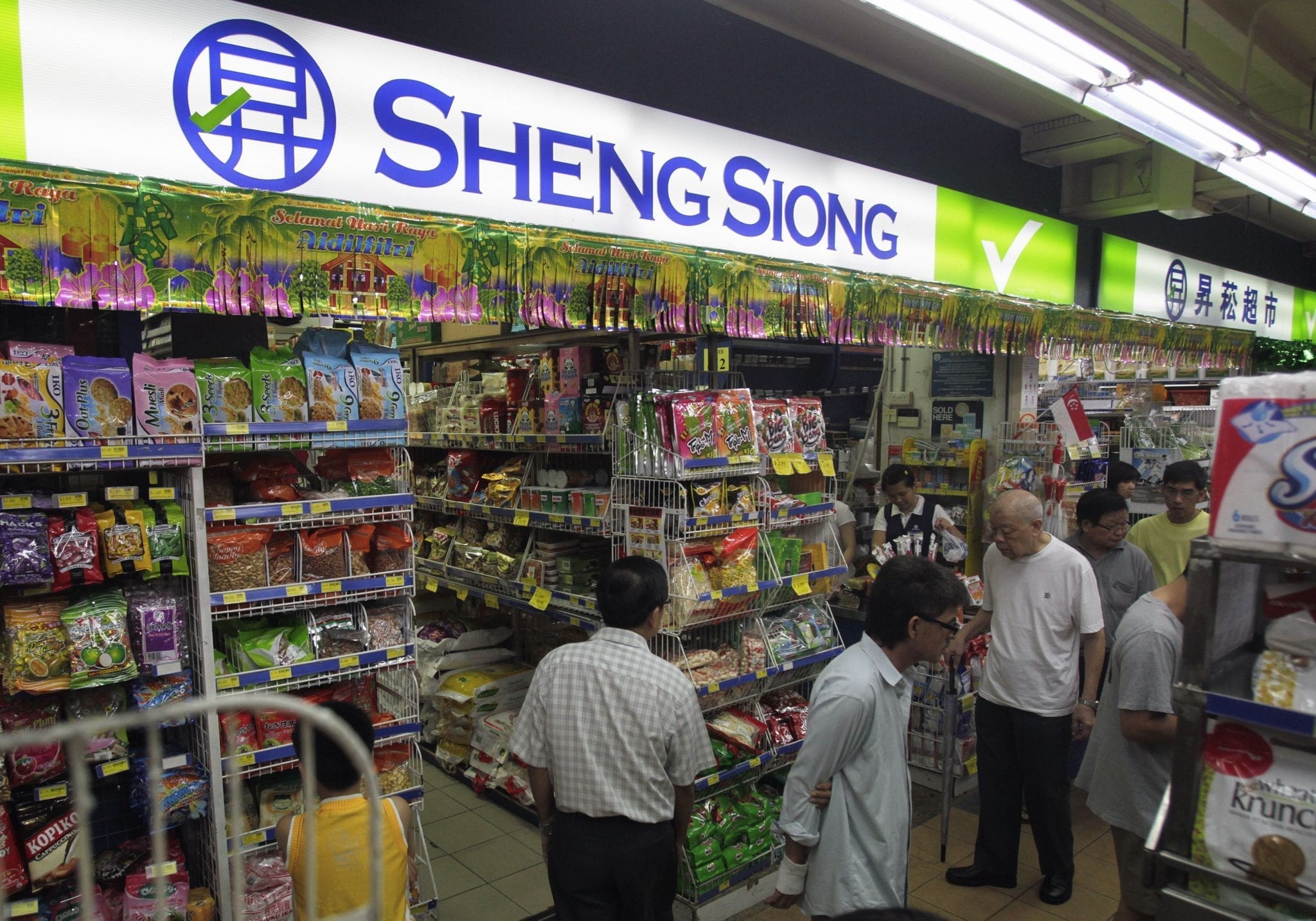
    Even with the sluggish retail sales numbers published by the Department of Statistics, Singapore’s supermarket giant Sheng Siong reported a considerable improvement in earnings for 3Q16.

    According to the group’s announcement, its net earnings jumped $15.6m, from $14.5m recorded last year.

    This came after its headline increased marginally by 1.2% to $202m mainly driven by new stores.

    “But (this) was offset by the temporary closure of the Loyang Point store and a contraction in comparable same store sales of 1.15% caused mainly by poor festive sales during the Chinese Seventh month and sluggish sales in September,” Sheng Siong noted.

    Excluding the closure of the said store, revenue would have grown by 4.2%.

    Looking forward, the group expects the supermarket industry to remain competitive, as consumers continue to be even more cost conscious.

    “The Group is still looking for suitable retail space particularly in areas where the Group does not have a presence. However, competition for retail space, particularly for new HDB shops is expected to remain keen, which have escalated bidding prices,” the group said.

  • Across China, Walmart Faces Labor Unrest as Authorities Stand Aside

    Across China, Walmart Faces Labor Unrest as Authorities Stand Aside

    In a one-man war room in his apartment, a laid-off Walmart employee named Wang Shishu was tapping out a message on his phone to a group of workers and plotting his next move.

    Over the past few months, Mr. Wang, 56, has helped organize a national movement in China against Walmart. Labor strikes have hit stores in the south simultaneously. There have been boycotts in the northeast. And here in Shenzhen, where Walmart opened its first outlet in China two decades ago, employees have filed a lawsuit demanding back pay.

    “We want a snowball effect,” he said in the booming baritone of a street preacher. “We want everybody to know what to do next.”

    As the Chinese economy has slowed, strikes and labor protests have broken out across the country, mostly scattered episodes targeting a single factory or business. The government has responded aggressively, detaining activists and increasing censorship to keep unrest from spreading.

    But activism against Walmart’s more than 400 stores in China in recent months has followed a different pattern: workers in several cities agitating against the same company, bypassing official unions controlled by the Communist Party and using social media to coordinate their actions — while the authorities largely stand aside.

    Across China, Walmart employees have raised their fists at protests, chanting, “Workers, stand up!” They have appealed to local officials with patriotic fervor, invoking the struggles of Mao Zedong against foreign imperialists. They have posted screeds online against unkind bosses and “union puppets.”

    In doing so, the Chinese work force of the world’s largest retail chain has put the ruling Communist Party in an uncomfortable position, publicly testing its Marxist commitment to defend the working class and pitting that against its fear of independent labor activism.

    Ever since the Solidarity trade union helped topple Communist rule in Poland, Beijing has sought to prevent the emergence of a nationwide labor movement, suppressing efforts by workers to organize across industries or localities.

    But the authorities appear to be hesitating in the case of Walmart, whose workers have complained of low wages and a new scheduling system they say has left them poorer and exhausted.

    In recent months, as many as 20,000 people, about a fifth of the company’s work force in China, have joined messaging groups set up by Mr. Wang and other activists on WeChat, a popular app. In these forums, they vent about company policies, share protest slogans and discuss plans to coordinate demonstrations for maximum effect.

    Mr. Wang, a former customer service representative whom Walmart has fired twice, spends his days babysitting his granddaughter and trading messages with workers across the country, often as late as 2 a.m.

    “What they’re doing is inhumane,” he said. “I want Walmart to return to the sympathetic company it used to be.”

    Eli Friedman, a labor scholar at Cornell University, said the Walmart movement was “probably the most substantive example of sustained, cross-workplace, independent worker organizing we’ve ever seen in China’s private sector.”

    The government appears to be keeping a distance because it is worried about provoking a backlash, or about acting on behalf of a prominent American company against Chinese workers at a time when nationalism in China is rising.

    But by doing little or nothing, it risks encouraging disaffected workers elsewhere, especially at the growing number of national chain businesses with operations across China. Already, workers at Neutrogena stores and China Unicom, a state-owned telecom operator, have used similar tactics, while avoiding serious punishment.

    “We can only expect that online organizing will continue to break down local barriers,” said Keegan Elmer, a researcher for China Labour Bulletin, an advocacy group based in Hong Kong.

    The retail sector in particular has become a hotbed of worker activism. The government wants to shift growth from manufacturing to service industries, but many new jobs at restaurants, hotels and stores are low-paying or part-time.

    From July through September, there were 124 strikes and protests at service-sector firms, about double the number last year, outpacing episodes in manufacturing for the first time since at least 2011, according to China Labour Bulletin.

    Chinese law requires businesses to establish labor unions, but they are almost always controlled by management, and companies generally use the unions to contain worker activism. In the face of labor strife, some businesses have offered back pay, bonuses and other benefits to workers.

    But others, concerned that labor activism could force costly concessions, have resorted to tougher tactics, retaliating against those who help organize protests. At Walmart, some of the most vocal workers have been deprived of raises, reassigned, or in some cases fired, according to interviews with more than a dozen employees.

    At one store in Zhongshan, west of Shenzhen, a labor activist said a supervisor photographed her in the bathroom as retribution for speaking out. She asked not to be identified for fear of further antagonizing her bosses.

    Much of the discontent stems from a new scheduling system that Walmart put in place this summer as a way, the company said, of giving workers more flexibility. Workers have argued that it has resulted in cuts to overtime pay and excessively long shifts, and some say they were coerced into signing new contracts agreeing to the system.

    Walmart denied that it had treated its employees unfairly or had pressured them to accept the new schedules. Rebecca Lui, a spokeswoman, said that the vast majority of its work force supported the new system, and that employees were free to keep their old schedules.

    “Our associates are our most valuable asset,” she said in a statement.

    Zhai Xiuhua, a former greeter at a Walmart store in Shenzhen, said she was fired in September after leading a fight against the new scheduling system.

    “I told them, ‘Even if you put a knife to my neck, I’ll never agree,’” she recalled at her home, where her uniform and identification badge — No. 14470 — still hang on the wall. Ms. Zhai, worried about medical bills, says she now hopes to find work in her hometown in the southwestern province of Sichuan.

    Walmart, which has resisted unionization at its thousands of stores across the world, was forced by the government in 2006 to establish branches of the Communist Party-controlled All-China Federation of Trade Unions for its roughly 100,000 Chinese employees, part of a broader push by the party to unionize foreign businesses.

    But union branches at many Walmart stores are under the thumb of store managers, and higher-level union officials appear torn about how to respond to complaints from workers like Ms. Zhai.

    While union officials here in Guangdong Province have criticized Walmart for not seeking governmental approval for the new scheduling system, they have not taken more forceful action or helped mobilize workers.

    Labor activists at Walmart have cited the ideals of President Xi Jinping and the Communist Party’s history of protecting workers, and experts said they appeared to be benefiting from a belief among some officials that the influence of foreign companies such as Walmart should be curtailed.

    “If the Chinese authorities try to suppress the workers on behalf of Walmart,” said Wang Jiangsong, a Chinese labor scholar, “it will hurt the country’s image.”

    When Walmart opened its first store in China in 1996, workers rushed to snap up jobs that paid more than those at Chinese competitors.

    Now, some employees say, a Walmart job does not pay enough to comfortably support a family, with wages hovering around minimum wage, or about $300 a month. While Walmart has led a high-profile campaign in the United States to raise pay, salaries in China have remained largely stagnant, workers said, barely keeping pace with inflation.

    Walmart has struggled to keep up with the fast-changing tastes of Chinese consumers and tried to re-energize its business by making investments in online retailers.

    But the continuing labor unrest poses a potential hurdle.

    You Tianyu, 45, a customer service employee at a Walmart store in Shenzhen, caught the attention of her supervisors in August when she wrote a letter to the president of Walmart, Doug McMillon, to complain about the company’s efforts to silence aggrieved workers.

    Ms. You said her bosses now harassed her daily because she spoke out, and she has received a diagnosis of anxiety and depression.

    She spends most of her nonworking hours rummaging through a mess of worker manifestoes, union laws and pay slips in her tiny apartment, hoping to find a new line of attack against Walmart.

    “I’m on the verge of collapsing,” she said. “I don’t know how much longer I’ll last.”

  • Consumer credit seen to grow in Philippines

    Consumer credit seen to grow in Philippines

    Consumer credit demand in the Philippines remains strong, supported by President Rodrigo Duterte’s push to sustain economic growth, a loan provider said Friday.

    Home Credit Philippines expects to hit its target 500,000 clients this year and double its client base to one million in 2017, according to its chief executive, Annica Witschard.

    “Obviously, there’s going to be some ups and downs in the global economy but the Philippines has a strong track record of growth and I don’t seen anything that’s going to stop that in the coming years,” she told ANC’s “Market Edge with Cathy Yang.”

    Companies like Home Credit thrive with only three out of every 10 Filipinos having access to banks and only five percent with credit cards, she said.

    Home Credit Philippines, the local unit of Home Credit Group, plans to expand to more retail stores in 17 provinces nationwide to offer non-cash, no-collateral in-store financing.

  • Real Singapore retail sales ease up in September

    Real Singapore retail sales ease up in September

    Real Singapore retail sales recovered marginally month-on-month in September after a series of declines.

    Real retail sales, are the figures excluding motor vehicles. They rose 0.7 per cent against August but fell 1.9 per cent on September 2015. Sales including motor vehicles, sales fell 0.7 per cent month-on-month and rose 2 per cent.

    Total retail sales value in September 2016 was estimated at $3.5 billion, higher than the $3.4 billion in September 2015.

    Retail sales index September

    Month-on-month, retail sales of motor vehicles, watches & jewellery, medical goods & toiletries, optical goods & books, department stores and supermarkets decreased between 0.1 per cent and 6.3 per cent in September 2016 over August.

    Sales of recreational goods and computer & telecommunications equipment grew by 12.4 per cent and 11.1 per cent respectively. Sales of petrol service stations, furniture & household equipment, mini-marts & convenience stores, food & beverages and wearing apparel & footwear also increased between 1 per cent and 9.7 per cent.

    Compared to September 2015, sales of recreational goods, mini-marts & convenience stores, medical goods & toiletries, petrol service stations and furniture & household equipment increased between 0.1 per cent and 6.7 per cent. Sales of computer & telecommunications equipment, food & beverages, watches & jewellery, department stores, supermarkets, optical goods & books and wearing apparel & footwear declined between 2.9 per cent and 9.6 per cent.

    Food & Beverage results

    Sales of food & beverage services (seasonally adjusted) increased 3.6 per cent in September 2016 over the previous month and 3.5 per cent compared with September 2015.

    The total sales value of food & beverage services in September 2016 was estimated at $687 million, higher than the $664 million in September 2015.

    FB index September

    Turnover of restaurants and other eating places (such as cafes) increased 6.6 per cent and 6.2 per cent respectively in September over August. Sales by food caterers and fast food outlets decreased 6.6 per cent and 2.2 per cent.

    Year-on-year, sales by other eating places, fast food outlets and restaurants increased between 0.9 per cent and 7.9 per cent. Food caterers’ sales fell 1.4 per cent.

  • 7-Eleven Singapore ups its game

    7-Eleven Singapore ups its game

    7-Eleven Singapore convenience stores are about to have a makeover, with some of them being enlarged by 30 per cent to offer freshly prepared meals and seating.

    COO Steven Lye says the chain will stock premium products, introduce seating areas and create a range of fresh-chilled, ready-to-eat meals delivered to the store daily.

    7-eleven-singapore

    “We want to convey the message that we are no longer just a place for small needs. We want to be at the top of our customers’ minds,” says Lye.

    As well as the ready-to-eat meals, the expanded and elevated product range includes lifestyle items and even IT gadgets. The stores are also adding 7-Connect lockers, self-collection stations where parcels from online shopping can be picked up, and cash-withdrawal machines.

    In July, 7-Eleven invested S$350,000 (US$247,384) in a branding campaign with the tagline “There’s Always 7-Eleven”, seeking to shift customer perception of its outlets from that of a stop for basic needs to a one-stop shop for groceries, toiletries, bill payments, cash withdrawals and more.
    “To accommodate the extensive additions, future 7-Eleven stores will have an area of about 800 sqft [74 sqm] where possible.”

    Vary by location

    He says the items sold at each store will depend on its location. Those in tourist areas such as Marina Bay and Orchard Road will stock backpacks, suitcases and souvenirs while its Marine Parade outlet near East Coast Park will sell kites.

    Tech developments are also in the pipeline, says Lye. One is a loyalty app, 7-Rewards, set to roll out next year. Another new service is the 7-Connect Kiosk, a self-help machine for quicker bill payments. Also, 7-Eleven counters will accept wave-payment methods such as Android Pay, Apple Pay and Visa Paywave.

    “As a brand, we understand the importance of keeping up with the times and constantly evaluating the needs of customers, hence we have made a conscious effort to innovate,” says Lye.
    He says the new range of meals, prepped and delivered upon order to ensure freshness, will replace the store’s frozen-thaw meals by the first quarter of next year.

    “The tech behind the fresh-chilled meals is a strong value proposition we are introducing to the market,” says Lye. “Over the past 18 months we have embarked on a strategy to take these ready-to-eat meals to a whole new level.”

    Flavours will include Hainanese chicken rice, braised duck rice, butter chicken biryani as well as three flavours of Japanese pastas. By next year there will be more than 40 choices.

    Run by Dairy Farm Group, 7-Eleven Singapore has a network of more than 430 outlets.

  • Indonesia ships first containers of timber under EU legality scheme

    Indonesia ships first containers of timber under EU legality scheme

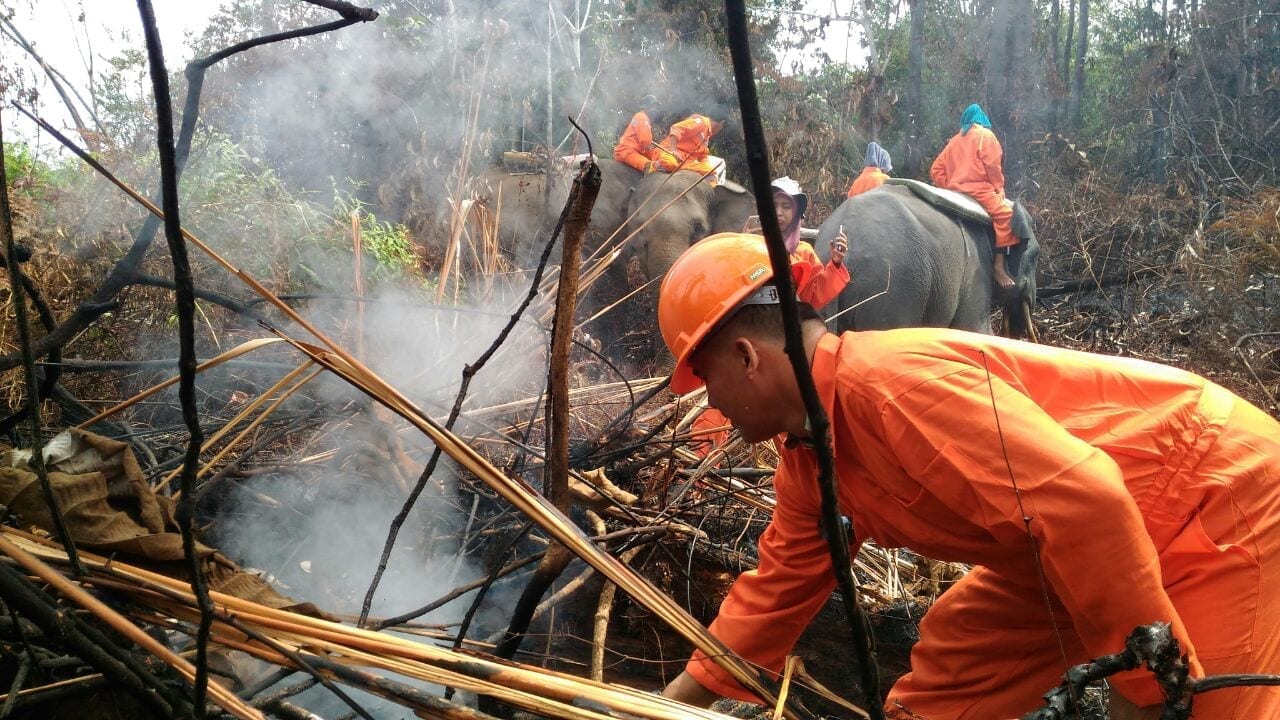
    Tesso Nilo National Park, Riau Province, Indonesia. This patch of forest is supposed to provide a habitat for tigers and elephants, but is constantly under threat of fire, illegal logging and encroachment. Image:

    The first containers of plywood certified as legal under the EU’s anti-illegal-logging action plan were shipped out of the Indonesian capital on Tuesday, a milestone in the fight against blackmarket timber in one of the world’s most heavily forested countries.

    Of the 15 nations that have agreed to take part in the scheme, Indonesia is first to succeed in establishing a national system for verifying the legality of its timber — a considerable achievement for a country where unscrupulous loggers pocketed a presumed $60.7-81.4 billion from illicit sales between 2003 and 2014, according to the nation’s antigraft agency. Indonesia lost nearly $9 billion in state revenue from unreported timber sales during the same period.

    “This signifies Indonesia’s commitment to combat illegal logging and the illicit timber trade,” said Rufi’ie, a director at the Ministry of Environment and Forestry.

    Rufi’ie, who like many Indonesians goes by one name, added that 36 certifications had already been issued under the scheme, known as Forest Law Enforcement, Governance and Trade (FLEGT). He said he hoped Indonesia’s compliance with the program would increase the value of its exports.

    With the adoption of the scheme, EU timber importers will not have to perform their own due dilligence on certified shipments from the archipelago country, increasing the competitiveness of Indoensian timber vis-a-vis other producers.

    Vietnam appears likely to be the second country receive the EU’s blessing to issue FLEGT licenses.

    A board member of the Indoesian Wood Panel Association (Apkindo), Gunawan Lim, said he expected plywood exports to jump 20 percent next year on the strength of the new certification, largely because not just Europe but other developed countries were also concerned with legality.

    Aida Greenbury, the head of sustainability at Asia Pulp & Paper, Indonesia’s largest pulp and paper company, agreed: “As nations around the world from Japan to Australia look to tackle illegal logging, Indonesia will benefit from major first-mover advantage for buyers looking for legal products.”

    The focus now shifts to maintaining the credibility of Indonesia’s Timber Legality Assurance System (SVLK), on which the issuance of FLEGT licenses is based.

    Indonesia is home to hundreds of thousands of forestry enterprises, many of which operate informally and on a small scale, and which can be difficult to monitor.

    Large companies break the law, too. On Wednesday, the Supreme Court convicted PT Merbau Pelalawan Lestari of logging outside the boundaries of its permit area on Indonesia’s main western island of Sumatra.

    NGOs called on the Indonesian government to make sure the scheme was properly enforced and monitored.

    Faith Doherty, forest campaign leader at London-based the Environment Investigation Agency, urged the EU to “swiftly [follow] up information on illegal timber trade entering the EU, including information submitted by independent investigators.”

    The WWF urged greater transparency, calling on the Indonesian government to ensure that civil society groups “will be granted full access to information including relevant data and planning documents,” Aditya Bayunanda said. “Holding up such information would greatly decrease the credibility and transparency of the system.”