Category: General

Retail News Asia is committed to providing both local and global retailers with the latest General Retail news throughout the Asian market. This on a daily base.

  • China retail sales grow 10% on-year in October

    China retail sales grow 10% on-year in October

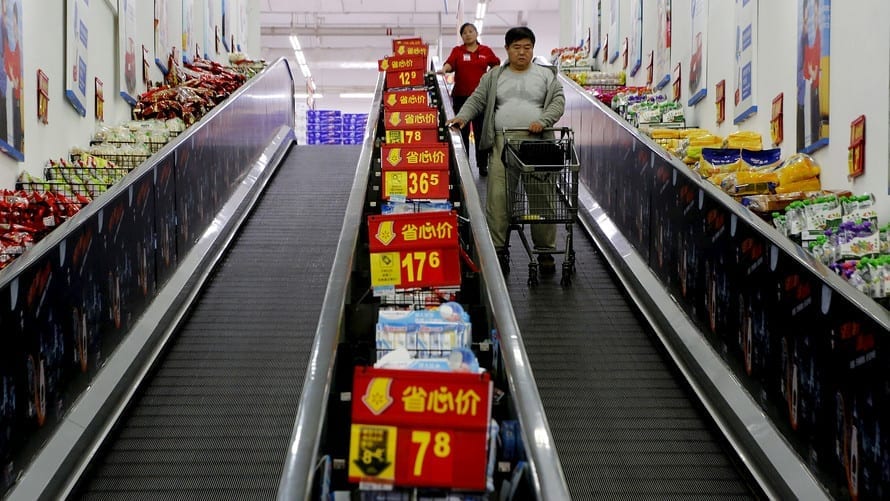
    China’s retail sales growth rose to 10.0 per cent on-year in October, missing analysts’ forecasts of 10.7 per cent growth — the rate sales grew at the previous month. Thus there was a slowdown in retail sales despite the growth.

    Industrial output rose 6.1 per cent in October from a year earlier, the National Bureau of Statistics said, again below analysts’ estimates of 6.2 per cent.

    The world’s second largest economy has been facing slowing growth of late.

    China is predominantly an export-led economy but with global demand falling, the country needs to re-work its growth strategy. The country has been trying to move towards consumption-led growth but the transition has been bumpy.

    Recent data points to the fact that China’s growth is increasingly dependent on government spending and ballooning debt as private investment hovers around record lows.

    Last week, Alibaba’s Singles’ Day festival posted record sales of $17.73 billion.

    While sales were good, the day-long shopping gala saw slow growth as Chinese shoppers searched for heavier discounts and lower price tags.

    China’s fixed asset investment rose by 8.3 per cent in the first ten months of the year, slightly higher than market expectations.

  • Korean anti-corruption law impacts on retail sales

    Korean anti-corruption law impacts on retail sales

    The Korean anti-corruption law may be showing its desired extra effect of creating more time for family and home cooking if sales record at a leading retailer is any indication.

    October sales figures from E-mart released show an 11.5 per cent increase for the month to 1.14 trillion won (US$987.3 billion) compared to a year ago. Discount chain E-mart marked a 7.6 per cent jump while the retailer’s warehouse outlet Traders made a 43.7 percent leap. The online store E-mart Mall showed a 28.3 percent increase.

    The retailer had recorded a 6.1 per cent sales increase for the third quarter.

    Company officials said the Korean anti-corruption law that took effect on September 28 likely boosted the sales. The law sets limit to the price of gifts and paid meals that can be provided to public employees, school teachers and journalists. People who may serve one’s interests are also restricted by the price limit.

    Advocates of the law, still under controversy for restricting even gifts of good will and intent, had argued that the law will free individuals from business-related dinners and engagements, giving them personal evening time.

    “People leaving office on time and shopping for groceries, all due to the anti-corruption law, appear to have contributed largely to the double-digit growth in E-mart’s sales,” Lee Joon-ki of Mirae Asset Daewoo said.

    Food sales at E-mart rose 13.1 per cent in the month from a year ago, outdoing the average sales increase. In a breakdown, sales of fresh foods jumped 14.1 per cent while ready-made meals increased 14.5 per cent. Sales of processed foods were up 11.2 per cent.

    The number of customers coming in from 6pm had also increased, according to E-mart. The retailer had 3.5 per cent more shoppers since the day of the law’s enactment to November 8. The number of customers in the 6-9 pm period was up 5.3 percent.

    “We are focusing our marketing on foods section for our 23rd anniversary event since food sales are improving,” Choi Hoon-hak, marketing team chief at E-mart, said. “We intend to continue to introduce a variety of products that fit into the lifestyle changes of the customers.”

  • Indonesia, Singapore launch Kendal Industrial Park

    Indonesia, Singapore launch Kendal Industrial Park

    President Joko Widodo, along with Singapores Prime Minister Lee Hsien Long, launched the Kendal Industrial Park in Central Java Province as a new model of bilateral economic relationship.

    “Prime Minister Lee and I agreed that the investment cooperation in Kendal Industrial Park marks a new milsestone in our bilateral relationship, particularly in the investment sector,” Jokowi said in a joint press statement here on Monday.

    Both heads of state also discussed the potential for more such bilateral investments, as Jokowi believed there was a big opportunity to further develop this economic cooperation.

    The president also stated that Indonesia was committed to improve its competitiveness to become an investment destination country.

    “During discussions, I explained that we are continuously reforming the economic and legal sector to improve Indonesias economic competitiveness,” Jokowi added.

    Jokowi reminded that both Indonesia and Singapore are also enhancing cooperation in the tourism sector by developing new tourism destinations in Indonesia.

    Indonesia hopes that a range of Memorandums of Understanding (MoU) that have been signed would lead to more effective cooperation in the tourism sector.

    Jokowi noted that Singapore also supports Indonesia on several regional and international issues such as counter terrorism measures as well as in the South China Sea dispute.

    “Singapore is an important partner of Indonesia in many sectors. Indonesia and Singapore will also celebrate the 50th year of their diplomatic relationship,” Jokowi noted.

    A project being built in Central Java through bilateral cooperation will create about 4,000 jobs.

    Prime minister Lee underlined that many Singapore companies have been investing in Indonesia, not only in the free trade areas of Batam-Bintan-Karimun (BBK) in Riau Islands, but also in other areas in the country.

  • OpenHydro eyes 300 MW of tidal power projects in Indonesia

    OpenHydro eyes 300 MW of tidal power projects in Indonesia

    OpenHydro, the tidal turbines business of French naval defence group DCNS, will seek to deploy 300 MW of tidal energy capacity in Indonesia by 2023 under a new partnership with local sector player PT AIR.

    OpenHydro said this week it has entered into a memorandum of understanding (MoU) with PT AIR to create an alliance aimed at driving forward the development of a tidal energy industry in Indonesia. The two companies have been working together over the past 18 months and during that time have identified at least 10 locations suitable for commercial-scale projects.

    The pair expect to start with a tidal energy array of up to 10 MW, for which a site will be selected over the coming months. The pilot system is planned for deployment in 2019. It will use European equipment provided by DCNS and its unit, plus locally manufactured content.

    OpenHydro noted that local industrial facility options have been identified and will be assessed by the partners.

    “The nature of the equipment involved in tidal energy projects results in a high level of local manufacturing content,” commented Thierry Kalanquin, chairman of OpenHydro and vice president of energy at DCNS.

  • 2 Reasons Why Indonesia’s Economy Could Grow Much Faster Than Singapore’s

    2 Reasons Why Indonesia’s Economy Could Grow Much Faster Than Singapore’s

    The World Bank had recently released its October 2016 edition of the Indonesia Economic Quarterly (IEQ), titled, Pressures Easing. In the report, which goes through the state of Indonesia’s economy, the World Bank shared a few pillars that are supporting the growth of the country’s economy.

    The World Bank’s latest projections are for Indonesia’s economy to expand at 5.1% in 2016. This compares favourably to Singapore’s expected economic growth rate of 1% to 2% this year.

    Here are some of the pillars the World Bank shared in its report:

    1. Higher tax revenue from tax amnesty

    Indonesia’s government had rolled out a tax amnesty program in June this year that is scheduled to run till next March. The tax amnesty program has been highly successful so far and has already gathered IDR 93.4 trillion (around US$7 billion) in revenue for the Indonesian government in the first phase alone.

    The revenue was higher than estimated. The World Bank thinks that the additional revenue is “expected to raise capital spending and hence have a positive impact on Indonesia’s growth.”

    2. Effective social policies and plans for tourism growth

    The better fiscal position of the Indonesia government is not the only pillar supporting growth for Indonesia.

    The World Bank thinks it is possible that the Indonesian government’s policies that stabilised rice prices and expanded social assistance programs over the past few years have helped reduced Indonesia’s poverty rate by 0.4 percentage points in the first-quarter of 2016.

    Indonesia is also looking to boost the appeal of its tourism sector by attracting US$10 billion in private investments for tourism by 2019. Data from the World Travel and Tourism council show that every US$1 million spent on tourism in Indonesia helps support 200 jobs and US$1.7 million in GDP (gross domestic product).

    There are a number of stocks in Singapore’s market with heavy exposure to Indonesia’s economy and one of them is Lippo Malls Indonesia Retail Trust, a real estate investment trust that owns retail malls and spaces in Indonesia. Since the start of the year, Lippo Malls Indonesia Retail Trust’s unit price has climbed by 22%.

  • Indonesia-Singapore partnership to open 4,000 jobs in Central Java

    Indonesia-Singapore partnership to open 4,000 jobs in Central Java

    Singapore Prime Minister Lee Hsien Loong and President Joko Widodo (Jokowi) have issued a joint statement, that a cooperation project being built in Central Java is estimated to create 4,000 jobs.

    Prime Minister Lee and President Jokowi issued the joint statement at Wisma Perdamaian here on Monday.

    The visiting prime minister said there were many Singapore companies investing in Indonesia not only in the free trade areas of Batam-Bintan-Karimun (BBK) in Riau Islands, but also in other areas in the country.

    “Including in the Kendal Industrial Park to be officially commissioned today,” he said.

    According to Lee, the project in Kendal is an important cooperation project with big scale that could create 4,000 new jobs in Semarang especially in Kendal.

    He said the cooperation project constitutes a step of win win outcome between the two countries.

    “We also discussed development of cooperation in other sectors including tourism and we agree to increase tourist traffics mutually beneficial to the two countries,” he said.

    The two countries are designing joint destinations enabling tourists to visit to Singapore and Indonesia in a one trip.

    Lee hopes that the signing of the cooperation agreement on the tourism sector between Indonesia and Singapore, would lead to opening the route of tourist boats to boost development of cruise industry.

    “We encourage capacity building of Indonesia in hospitality and tourism sector,” he said.

    Both sides also discussed investment cooperation between the two countries, such as in the energy sector like energy that could be contributed to Indonesias 35,000 megawatt power generating program.

    Lee suggested to Jokowi, who agreed, the forming of Indonesia-Singapore Business Council to give added value to the partnership of the two countries.

  • GMR Hyderabad Duty Free launches its first ever ‘Duty Free Utsav’

    GMR Hyderabad Duty Free launches its first ever ‘Duty Free Utsav’

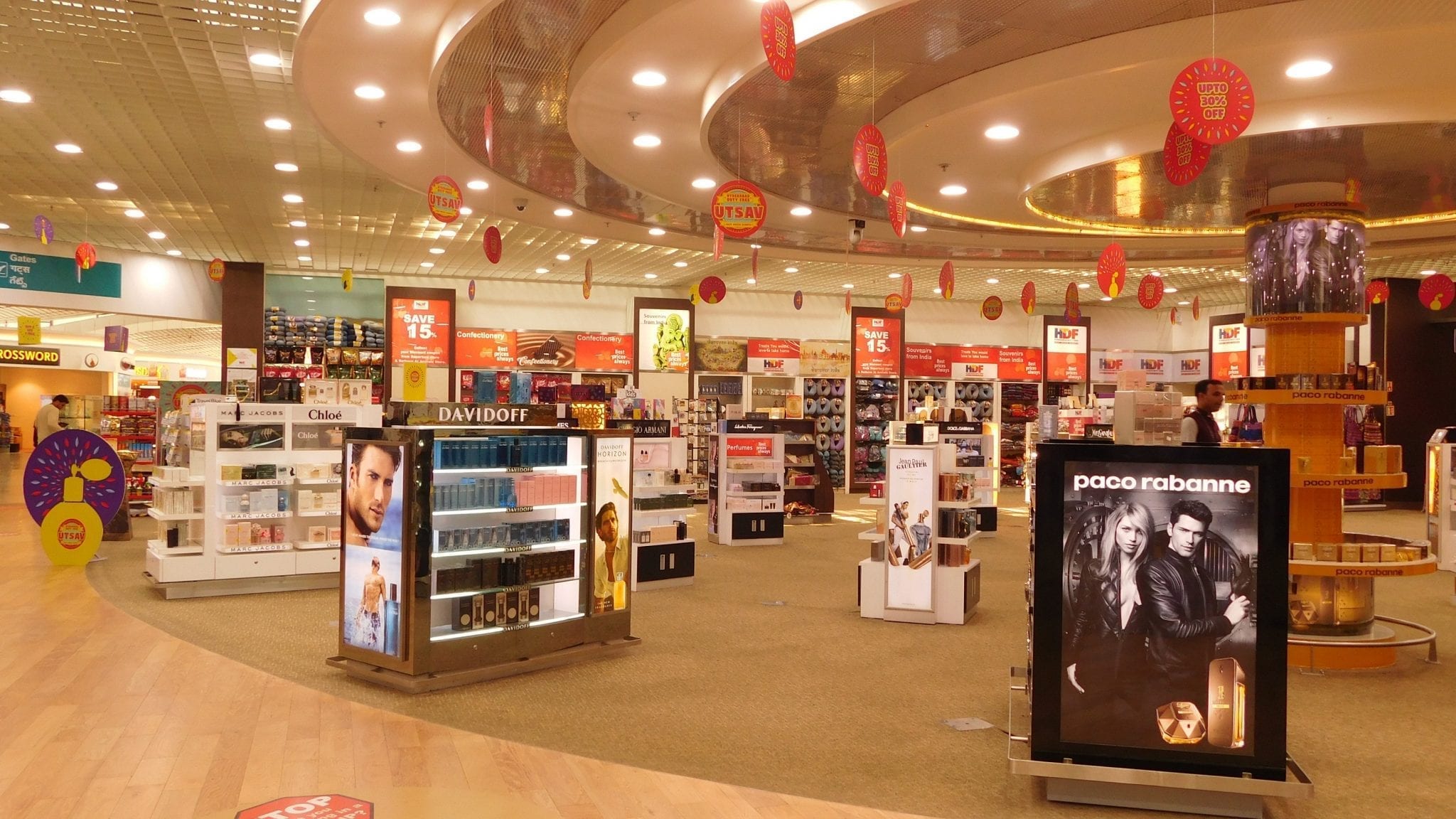
    Hyderabad Duty Free (HDF) has launched its first ever “Duty Free Utsav” as it joins the festive celebrations at Hyderabad Airport.  In continuation with the enthusiastic response from customers to its previous promotions, HDF has come up with its ‘Duty Free UTSAV’ celebrations, which is one of the biggest mega promotions done by Duty Free stores in the region.  The biggest attraction for the passengers during this offer season is the chance to win Nissan Terrano SUV on display at the arrivals store.

    During this Utsav, customers can avail discounts of up to 15% on various products, along with gifts and attractive offers on their purchases at Hyderabad Duty Free outlets. Further, Hyderabad Duty Free is also issuing special discount coupons that can be collected at the Departures store and redeemed at the Arrivals store to avail an additional discount of up to 15%.

    Another key feature of Hyderabad Duty Free Utsav is the surprise Dollar offs being given to the passengers of select flights on their arrival.  This surprise voucher can be redeemed with purchases above a certain threshold at Hyderabad Duty Free arrivals store.  

    Speaking on the occasion, Mr. SGK Kishore, Chairman-Hyderabad Duty Free Retail said, “The brand ‘Hyderabad Duty Free’ is growing stronger by the day and we owe this to the patronage to our valued customers. The thought process behind coming-up with the ‘Duty Free Utsav’ is to reach out to our customers and strengthen our position as one of the best travel retail destinations. Towards this, we have also undertaken several new initiatives such as coming out with customized offerings, tie-up with Telugu NRI Associations, improve our price competitiveness, Store upgradation etc.  I am happy to see our customers are shopping with us more and making the most of these unique benefits”

    With its range of product offerings at highly competitive prices along with the improved store ambience, Hyderabad Duty Free is now providing a whole new shopping experience and fast emerging as a preferred shopping destination for duty free shoppers in the region. 

  • Hong Kong’s economic growth to ease in third-quarter on China slowdown

    Hong Kong’s economic growth to ease in third-quarter on China slowdown

    Hong Kong’s economic growth is expected to slow in the third quarter from the second, with weak exports, sluggish retail sales and falling tourist arrivals, continuing to take a toll on the Asian financial centre.

    The once vibrant city is also grappling with a slowdown in China, while its outlook has been hurt by rising tensions with Beijing that could threaten stability and impede policymaking.

    The economy was expected to grow 0.3 percent for the third quarter from the second, according to the median estimate of economists in a Reuters poll. From a year earlier, growth was forecast at 1.6 percent.

    The government is due to release gross domestic product data on Friday at 0830 GMT.

    Gross domestic product grew a seasonally-adjusted 1.6 percent in the second quarter from the first, and 1.7 percent from a year earlier, the government said in August.

    Hong Kong’s retail sales fell for the 19th straight month in September as China’s economic slowdown and a strong local currency crimped business activity and tourism.

    “We think retail sales and tourism have not yet recovered. There are still downside risks,” said Young Sun Kwon, a Hong Kong-based economist at Nomura.

    Another potential risk is the impact of cooling measures imposed by the government this month to rein in property prices, which are among the most expensive in the world.

    The government said it would raise stamp duties on home purchases to 15 percent, across the board, effective Nov. 5.

    Economists said it was still too early to tell how effective the measures would be as there were other factors involved, such as the U.S. presidential election and China’s economic performance.

    Hong Kong, once the busiest port in the world, is also heavily dependent on trade, and its exports and imports are predominantly re-exports to and from mainland China.

    The Trade Development Council has cut its forecast for the city’s exports this year from flat to a 4 percent decline.

    Slower economic growth could pile further pressure on Hong Kong leader Leung Chun-ying ahead of an election next year and amid rising tensions with the central government in China over concerns of increased meddling by Beijing in the city’s affairs.

    The former British colony’s economy is now more vulnerable as it struggles with weaker retail sales and a slump in cash-rich mainland Chinese streaming across the border on shopping sprees.

  • Indonesia moves away from TPP because of Trump triumph

    Indonesia moves away from TPP because of Trump triumph

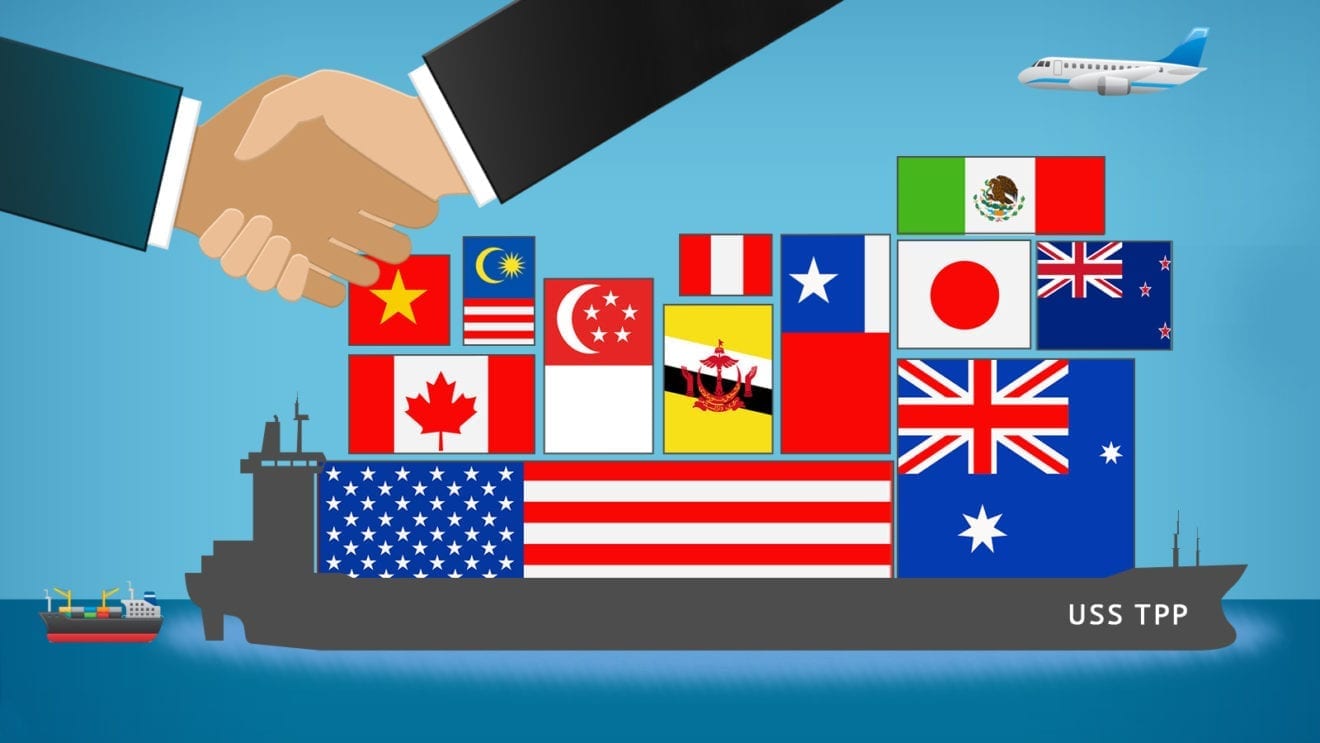
    The Indonesian government has said it will not be in a hurry to seek membership of the US-led Trans-Pacific Partnership (TPP) trade deal following the election of Republican Donald Trump as the country’s president.

    The decision was made considering Trump’s promise on the campaign trail to scrap the TPP, a multinational trade deal between the US and countries in the Asia-Pacific.

    “We are still calculating the costs and benefits of the TPP. This kind of agreement requires thorough negotiation and recently the discussion was getting stressful,” Trade Minister Enggartiasto “Enggar” Lukita said on Friday during a media briefing in Jakarta.

    He explained that problems persisted because each country had its own “ego” in expressing its needs through the mega trade deal.

    President Joko “Jokowi” Widodo expressed his intention to join the 12-member trade bloc last year.

    The TPP, which covers 40 percent of global gross domestic product (GDP), was signed by Brunei Darussalam, Canada, Australia, Chile, Japan, Malaysia, Mexico, New Zealand, Peru, Singapore the US and Vietnam.

    The trade deal has not been ratified by the US Congress.

  • Indonesian government to give preference to Japan for semi-high speed train

    Indonesian government to give preference to Japan for semi-high speed train

    The Indonesian government will give preference to Japan to build a Jakarta-Surabaya semi-high speed train project, Transportation Minister Budi Karya Sumadi said.

    “Japan will receive preference,” he said after a coordination meeting at the Coordinating Ministry for Maritime Affairs here Friday.

    Despite receiving preference, Japan must continue to meet the qualifications set by the Indonesian government, Sumadi, one-time president director of state airport operator Angkasa Pura II, said.

    He made it clear that at the coordination meeting with Coordinating Minister for Maritime Affairs Luhut Binsar Panjaitan, National Development Planning Minister/National Development Planning Agency (Bappenas) Head Bambang Brodjonegoro and Finance Minister Sri Mulyani the government decided to expedite the construction of the semi-high speed train project.

    The government will soon complete a plan for the construction of semi-high speed train line and will discuss it with Japan in the next few months, he said.

    Meanwhile, Bambang said at the meeting the government still had to assess the semi-high speed train project.

    “We are still discussing and whether the project will use an ordinary loan scheme, government project, or private sector participation scheme,” he said.

  • Silvers reject ‘outmoded stereotypes’ on ageing

    Silvers reject ‘outmoded stereotypes’ on ageing

    Retailers and brands need to change the way they market to older consumers if they want to engage them, says a new report by consumer insight firm Canadean.

    Traditional techniques used to market products to older consumers – also called the ‘silver segment’ – are not necessarily relevant or effective today, as the demographic has started to reject outmoded stereotypes associated with aging, according to the report, Speaking to the new Silver: Seniors today vs. tomorrow.

    The report finds that 77 per cent of consumers aged over 55 agree that they feel younger than they are.

    “As the Asia-Pacific region is home to some of the oldest populations worldwide, it is becoming increasingly essential to understand the diverse needs of this growing and dynamic consumer group,” observes Jamie Mills, analyst with Canadean.

    “Often stereotyped and perceived as having a homogenous series of preferences, seniors have historically been categorised and targeted solely by age. However, consumers in this age group are seeking to convey their own identity, style, and personality through the products they buy, and brands should not overlook this.”

    Canadean, which just presented their report yesterday (November 10) at InCosmetics Asia, will explain how the silver segment is evolving through their behavior, preferences, and attitudes, and in doing so identify key innovation opportunities to explore to meet the needs of this redefined consumer.

    The majority of consumers aged over 55 in Asia-Pacific say that they are unconcerned about the age they look or want their looks to reflect their age.

    Mills continues: “One of the most pervasive stereotypes takes a highly youth-centric view towards attitudes towards aging in assuming that older consumers have a universal desire to look younger.

    “However, our research contradicts this view, highlighting a common misconception of this consumer group. It will be essential for brands to challenge these stereotypes in order to unlock the potential of this segment both now and in the future.”

    Canadean provides in-depth market research across the fast-moving consumer goods (FMCG) sector, including food, packaging, ingredients, soft drinks, beer, retail, wines & spirits, cosmetics & toiletries, foodservice, baby food, tobacco and travel & tourism, specialising in conducting online survey panels, producing in-depth market insight country reports through qualitative and quantitative research.
  • Trump Victory Effect Only Temporary Visible in Asia

    Trump Victory Effect Only Temporary Visible in Asia

    Coordinating Economic Minister Darmin Nasution believes that the impact of the US presidential election on Indonesia’s economy is only temporary. Darmin said that the government would anticipate changes in the market after Republican presidential candidate Donald Trump won the election.

    “We shouldn’t be worried about the election. There will be an impact on the economy, but it’s only for a short term,” Darmin said at his office on Wednesday.

    The election results announced today showed that Donald Trump gained 288 votes, exceeding the minimum winning threshold of 270 votes. His rival from the Democratic Party Hillary Clinton obtain 215 votes.

    Industry Minister Airlangga Hartarto echoed Darmin’s comment saying that the US presidential election would not have direct impact on the national industry. Instead, Airlangga suggested that the US presidential election would have a significant impact on the capital market.

    However, Airlangga warned that the election results could affect the Fed rate revision in December. In addition, Airlangga said that he would revisit the plan to join the Trans Pacific Partnership.

    During his campaign, Trump revealed his plan to cancel all trading agreements that could cause losses to the US. Trump also criticized the TPP as a danger for the US. Trump further called for cancellation of the North America Free Trade, since it would have negative impacts on job opportunities in the country.

  • Government Push Google to Pay Tax

    Government Push Google to Pay Tax

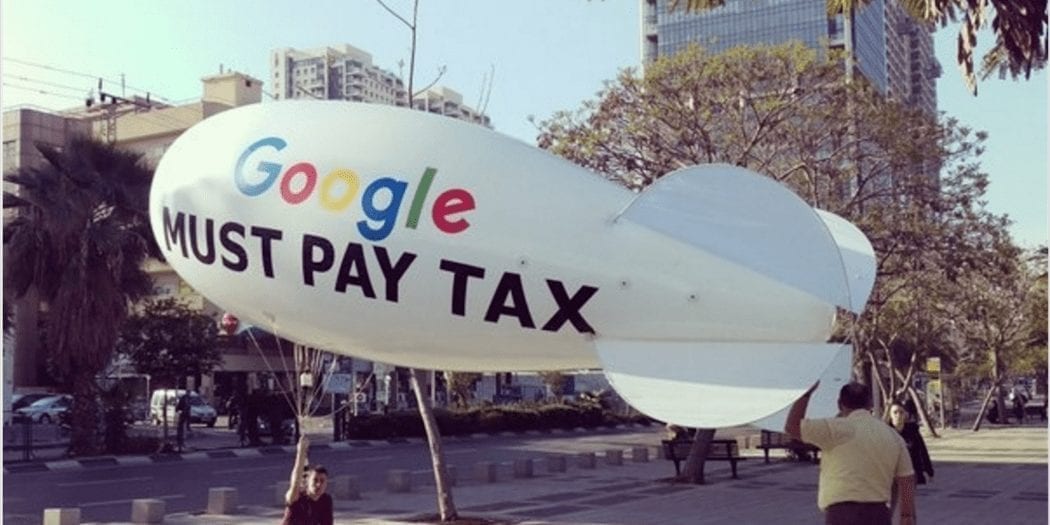
    Director General of Tax Ken Dwijugiasteadi confirmed that Google Asia Pasific Pte Ltd will settle their tax debts by the end of 2016. The government has decided to negotiate with the company instead of filing a report to the police. “Google must pay their tax debts this year, the company and the government will release a statement after the investigation,” Ken said on Monday.

    Ken had met with Google representatives last week. According to the Director General, Google has the right to file their objection towards the tax investigation results as long as an agreement has not been made. The company however, will be required to pay off their debts based on the investigation’s closing conference.

    In response to the issue, Google spokesman Jason Tedjakusuma refused to provide any comment. Jason also refused to respond to questions related to the results on last week’s meeting. “No comment,” Jason said briefly.

    The government estimated that Google Asia Pacific’s revenue, based on service and product sales in Indonesia, had reached Rp 5.5 trillion. On the other hand, Google representative office in Indonesia only generates revenues from advertising services.

    Google Indonesia had been registered at the Tanah Abang Tax Office as a foreign investment company since September 15, 2011. However, state officials cannot collect the company’s taxes because Google is not registered as an Indonesian legal entity.

    Yustinus Prastowo, Executive Director of Center for Indonesia Taxation Analysis doubted the government’s ability to force Google to pay their taxes by the end of 2016. “Even if there is a payment, it wouldn’t be as large as it was expected,” Yustinus said.

  • Airline Sriwijaya Air offering Initial Public Offerings (IPO) in Indonesia

    Airline Sriwijaya Air offering Initial Public Offerings (IPO) in Indonesia

    Currently, Sriwijaya Air serves 46 domestic routes as well as seven international routes in the Asia Pacific with 51 narrow-body Boeing jets. With the larger fleet (after additional airplanes are purchased), the airline wants to add several domestic and regional routes as well as one to Jeddah (Saudi Arabia).

    Chandra Lie did not inform how much the company expects to raise from the initial public offering on the Indonesia Stock Exchange (IDX). In February 2011 Indonesia’s national flagship carrier Garuda Indonesia conducted an IPO on the IDX in which it raised IDR 3.3 trillion (approx. USD $252 million) by selling a 28 percent stake.

    Sriwijaya Air, founded by the brothers Chandra Lie and Hendry Lie in 2003, is Indonesia’s third-largest airline, controlling about ten percent of the domestic air passenger market. It currently carries about 800,000 passengers per month. The airline will move its administration and operational activities to the Cengkareng Business City complex from its current base at the Soekarno Hatta International Airport.

    The aviation industry in the Asia-Pacific region remains among the world’s fastest growing regions in terms of air passengers. Recently, the Indonesia National Air Carriers Association (INACA) says, whereas worldwide the number of air passengers is growing at a pace of nearly 7 percent (y/y), Indonesia’s air passenger growth is estimated at around 15 percent (y/y) in 2016.

    Number of Air Passengers in Indonesia 2011 – 2015:

    2011 2012 2013 2014 2015
    Air Passengers
    (in million)
    62.4 66.4 68.6 72.6 82.4

    Source: BPS

  • Husein airport expected to serve international flights

    Husein airport expected to serve international flights

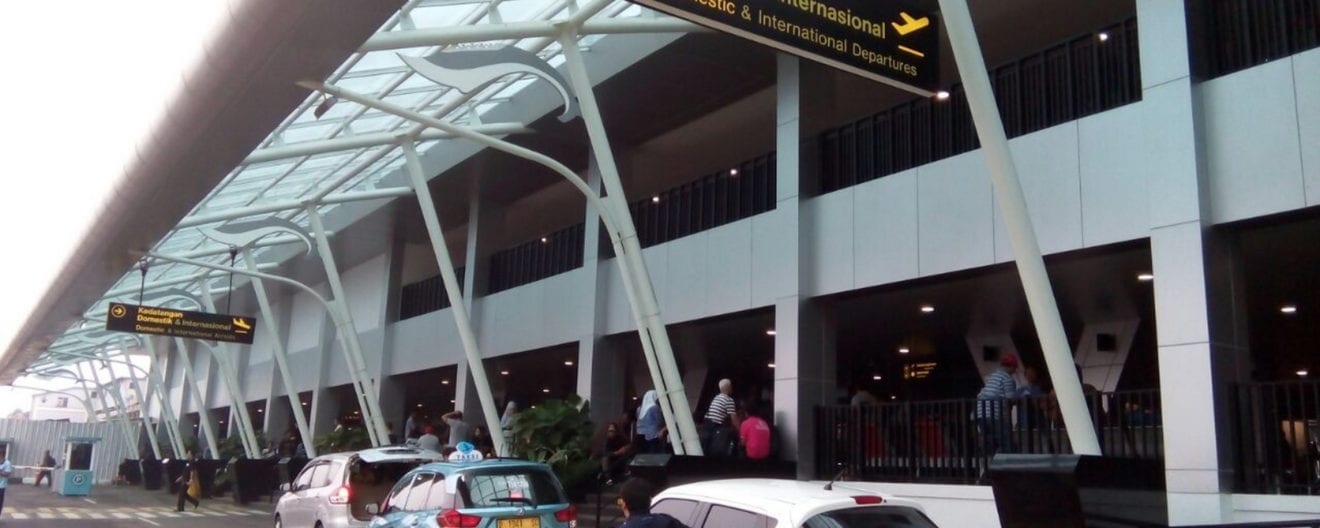
    Bandung, West Java – Indonesia’s state-owned airport services company, PT Angkasa Pura II, expects the Husein Sastranegara airport in Bandung, West Java, to start handling international flights from Bandung to cities in China or Bandung to Bangkok (Thailand) in 2017.

    “The airport expansion project will be completed by the end of 2016. The new terminal will handle international flights. Among the potential markets is Bangkok or Phuket,” Angkasa Pura II”s general manager Dorma Manalu said here on Wednesday.

    He added that the number of international direct flights from Bangkok and China to Indonesia has been increasing.

    “Currently, the international flights from China are mostly to Manado, North Sulawesi and Pontianak, West Kalimantan,” Dorma noted.

    According to him, nearly a 100 million Chinese tourists are visiting Indonesia every year, reflecting a good opportunity for Angkasa Pura II to start direct flights from Bandung to China or Thailand.

    So far, direct international flights from Husein Sastranegara airport are for Bandung-Singapore, Bandung-Kuala Lumpur and Bandung-Johor Baharu (Malaysia).

    “These are far fewer as of now, considering that the airport is now being expanded. Also, the airport is not too far from Bandung downtown,” Dorma explained.

    Earlier, the management representatives of the Commercial Aircraft Corporation of China (COMAC) visited Kertajati international airport in Majalengka, West Java.

    The President Director of the airport, Virda Dimas, explained that the Chinese corporation management was interested in Indonesia’s aviation industry and wants to confirm its plans to open international flights from the country to Kertajati since there is a fairly large Chinese market.