Category: General

Retail News Asia is committed to providing both local and global retailers with the latest General Retail news throughout the Asian market. This on a daily base.

  • Trade Expo lures visitors with prime Indonesian products

    Trade Expo lures visitors with prime Indonesian products

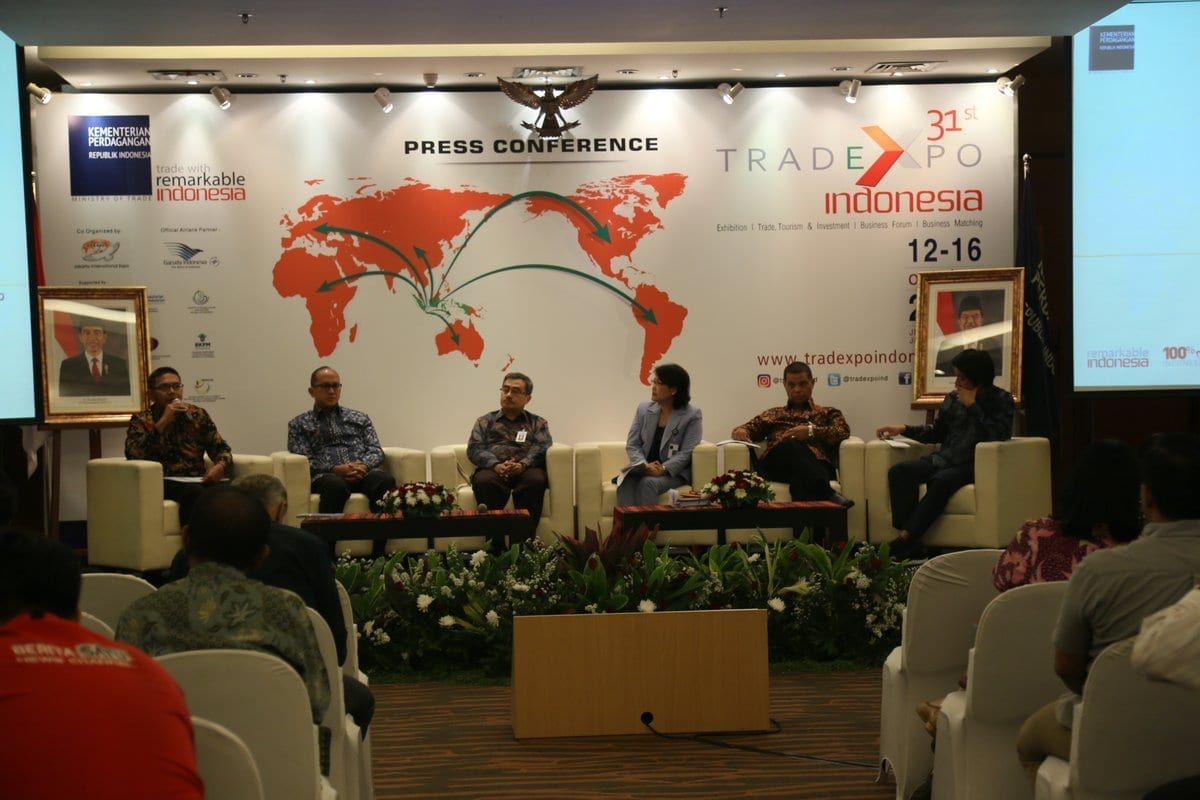
    Visitors to the 31st Indonesia Trade Expo are sounding out the possibility of buying Indonesian products they consider to be of good quality.

    Visiting the Trade Expo on Wednesday, Syrian Mohammed Khair Hadiaf said he was looking for Indonesia-manufactured pharmaceuticals.

    “I work in the medical sector and my specialty is cancer. I came here to seek more information about Indonesia’s medical technology and products,” he told us through a translator application on Wednesday when he visited a booth at the expo, held at the Jakarta International Expo (JIExpo) venue in Kemayoran, Central Jakarta, from Oct.12 to Oct.16 . It was the first time Hadiaf had come to Indonesia.

    In another booth, Palestinian Shokri Zahedah and an Iranian calling himself only Amir were looking for snacks and sweets they could sell in their respective countries. Shokri and Amir frequently visit Southeast Asia to buy products from countries in the region, including Malaysia, but it was the first time they had looked at Indonesian products.

    “You have good products. In Iran, snacks mainly come from Malaysia. Indonesian products need more promotion,” Amir said. He said if he found interesting products he would return on Thursday to make a deal.

    The Foreign Ministry through its diplomatic missions invited 1,200 potential buyers from 70 countries to the expo, including those from small countries.

    Foreign Minister Retno LP Marsudi said 225 buyers from Middle Eastern countries attended the expo, followed by African and South Asian countries, which sent 49 buyers each, Eastern Europe ( 48 ), Afghanistan ( 42 ), Palestine ( 42 ), Latin America ( 35 ) and Fiji ( 22 ).

    Poor communication skills appeared to be the biggest obstacle for buyers from small countries to make deals at the Trade Expo. Most of them could not speak English well while the expo lacked liaison officers who can speak foreign languages besides English, especially Arabic.

  • Indonesia, Romania strengthen economic ties

    Indonesia, Romania strengthen economic ties

    Indonesia and Romania have agreed to boost economic ties through the signing of a cooperation agreement between the chambers of commerce and industry of the two countries during the visit of Romanian Foreign Minister Lazăr Comănescu to Jakarta.

    “The fact is, last night, upon my arrival to Indonesia, the chambers of commerce and industry from both Indonesia and Romania have signed a memorandum of understanding on their cooperation. The agreement has opened up the path for both chambers to diversify contact between business players from both countries,” Comănescu said following a bilateral meeting with his Indonesian counterpart, Foreign Minister Retno LP Marsudi, in Jakarta on Wednesday.

    Comănescu brought a team of business delegates from various industries, including energy, construction, customer goods and agriculture. While in Indonesia he is also participating in the Trade Expo Indonesia 2016. Trade between Indonesia and Romania reached US$117.64 million in 2015.

    Comănescu’s visit to Indonesia is the first from a Romanian foreign minister since relations between the two countries were established 66 years ago.

    Both Retno and Comănescu highlighted the potential for strengthening cooperation in infrastructure development.

    “There is a possibility for our two countries to strengthen bilateral relations in infrastructure because it is one of the priorities of the Indonesian government,” Retno said.

    Comănescu is set to meet with Transportation Minister Budi Karya Sumadi to discuss possible forms of cooperation.

    The two countries have expressed mutual support for a non-permanent seat on the UN Security Council. Indonesia hopes to secure a seat for the 2019-2020 term, while Romania is eyeing a seat for the 2020-2021 term.

  • Indonesian President Inaugurates Trade Expo Indonesia (TEI) 2016

    Indonesian President Inaugurates Trade Expo Indonesia (TEI) 2016

    President Joko Widodo inaugurated Trade Expo Indonesia (TEI) 2016, which opened today at the Jakarta International Expo Kemayoran. Accompanied by Enggartiasto Lukito, Minister of Trade, and Djarot Saiful Hidayat, Vice Governor of Jakarta, the President also awarded the Primaduta Award and Primaniyarta to the best 30 Indonesian exporters.

    Widodo also urged Indonesian exporters to expand to new markets, such as African countries and India, despite the unpredictable global economic conditions. “We have to start to turn our heads to the markets we used to overlook, the markets like India and Africa that offer a huge business opportunities from populations that reach over 60 million people,” stated the President at the opening ceremony.

    Not only Africa and India, which provide lucrative opportunities for Indonesian products, the President also noted that other developing markets like South Asia and Latin America hold great potential for Indonesian exporters to expand markets and distribution of their products. “I urge Indonesian exporters to make moves toward the markets we have previously overlooked,” added President Widodo.

    The President also mentioned that design and packaging play an important role in grabbing the consumer’s attention. “I highly appreciate the Ministry of Trade and the Creative Economy Agency’s initiatives in helping our SMEs to design attractive packaging for their products,” stated Jokowi.

    In addition to showcasing the quality Indonesian export products, TEI 2016 also serves as a trade making platform for businesses, both local and foreign. Trade Minister Enggartiasto said that the event would see approximately 1,100 exhibitors, including SMEs, and expects 15,562 potential buyers from 152 countries. He added that business commitments already sealed totaled Rp 2.6 trillion from 14 countries.

  • Hang Nadim Airport to serve flights to China, Korea

    Hang Nadim Airport to serve flights to China, Korea

    The Citilink airline company will soon serve flights from Hang Nadim International Airport here to China and South Korea, according to the airports general manager, Suwarso.

    “Two international flights from Batam to China and South Korea have been approved and will soon be launched early next year, probably in February 2017,” Suwarso remarked here on Tuesday.

    According to him, the opening of two routes is part of an effort by the Riau Islands provincial government to increase the number of tourist visits, especially from East Asia.

    With the two new international flights, the Riau Islands provincial government hopes tourist arrivals will increase to enjoy the great tourism potential in the province.

    He said Citilink will operate Airbus A320 aircraft, with the capacity to accommodate 180 passengers, to transport tourists from China and South Korea to Riau Islands Province.

    “The Riau Islands province has formed a partnership with the tour and travel associations in China and Korea. So, with this partnership, these Batam-China and Korea routes could run smoothly,” stated Suwarso.

    He added that Indonesias free visa policy is also applicable to China and South Korea, so tourists from these countries will not need visas when visiting Indonesia.

    “Hang Nadim International Airport is open 24 hours and ready to serve international flights, so there is no problem anymore,” Suwarso noted.

    He said the airport had an international flights lounge area, with a capacity of up to 600 seats.

    International flights from this airport are currently served only by Malindo Air, travelling to Malaysia once per day.

    “If the international flights area becomes crowded, we are ready to increase the capacity of the international waiting room,” remarked Suwarso.

  • Jakarta-Surabaya rapid train to use existing track

    Jakarta-Surabaya rapid train to use existing track

    Coordinating Minister for Maritime Affairs and Acting Minister of Energy and Mineral Resources Luhut Binsar Panjaitan has said the development of the Jakarta-Surabaya rapid train will use the existing track.

    “For the rapid train, we will use the existing network. We will strengthen the bearing pads and make the crossings run over or under, so there will not be any gates that can harm anyone,” stated the minister at the State Palace complex in Jakarta, Tuesday.

    He mentioned that there are a thousand crossing points on the Jakarta-Surabaya railway network.

    The minister hoped the project survey, due to be conducted in partnership with Japanese representatives, could be done in the first quarter of 2017.

    “The Jakarta-Surabaya rapid train, which runs up to 200 kilometers per hour, will have an immense impact on the nations economy,” he remarked.

    The projects investment value is considerably large, reaching US$2.5 to 3 million.

    Minister Panjaitan explained that the agenda of his meeting with President Joko Widodo today includes reporting the results of his trip to Japan, which was a follow-up to the presidents agreement with Japans Prime Minister Shinzo Abe.

    “I met the prime minister along with his ministers and other officials,” he reiterated.

    He pointed out that the notions agreed upon by both country leaders included the Maritime Economic Cooperation, which was initiated last year.

    “We are now pursuing cooperation in a number of locations, including oil explorations in Natuna, economic development in Sabang, Patimbang harbor development in West Java, and farming advances in Merauke, Papua,” he remarked.

    He also mentioned cooperation in the education sector, where Japan will help with vocational training, while sending their professors to a number of technology corporations in Indonesia.

    “Partnerships in strategic industries are also included, which covers the rapid train project to be discussed with the minister of state-owned enterprises,” he continued.

    He added that from the string of agreements, those that will potentially be carried out during the first quarter of 2017 include the development of Patimbang Harbor.

    “Then, we will proceed with a joint survey for the Jakarta-Surabaya rapid train,” he concluded.

  • Bitung ready to play role of Asia Pacific gate

    Bitung ready to play role of Asia Pacific gate

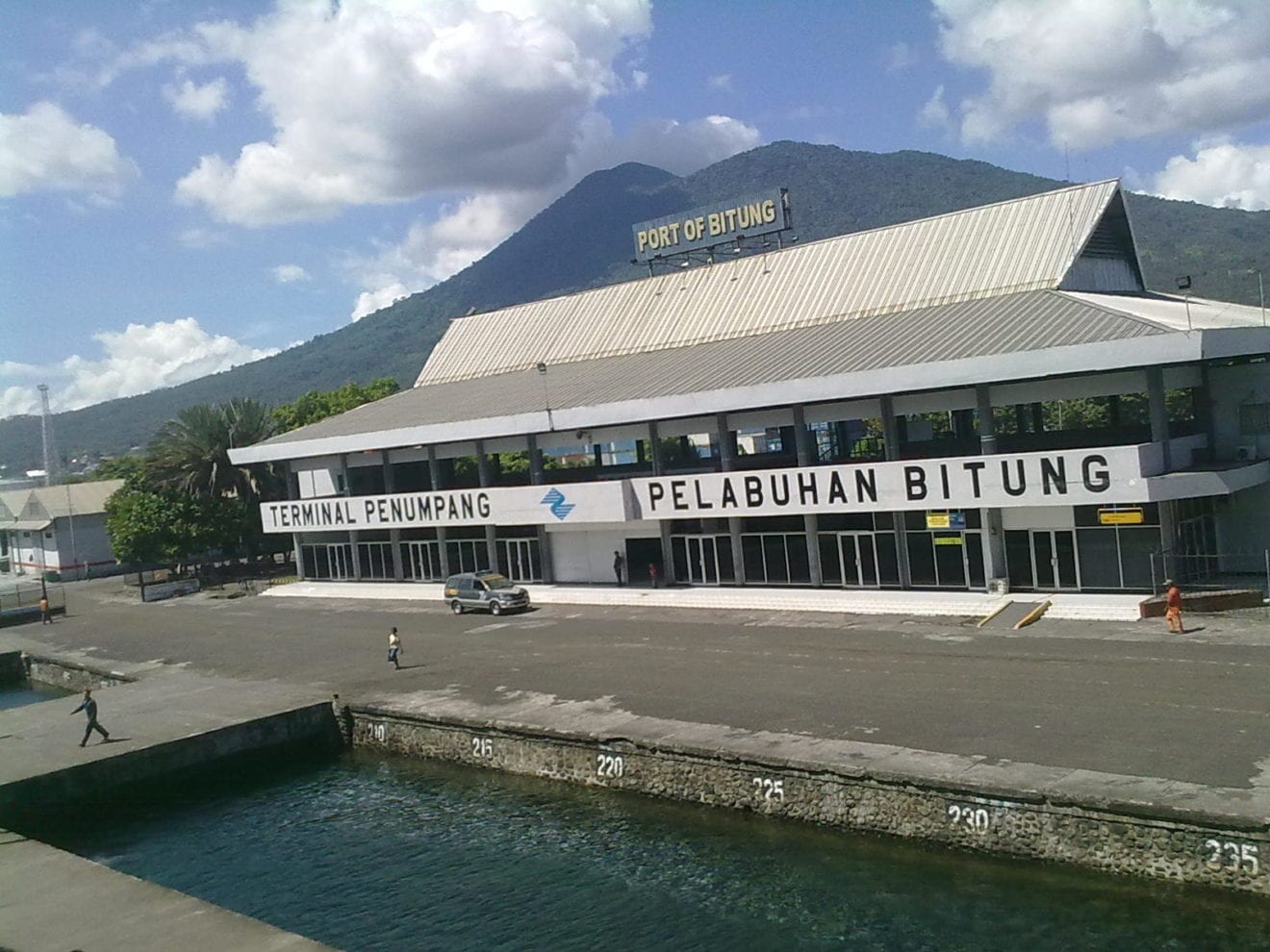
    Bitung Mayor Maximilian Jonas Lomban said he had a vision to make the city into a modern city serving as an Asian Pacific gate for Indonesia.

    The city could play the role of Asian Pacific gate for Indonesia, Lomban said at a meeting on the occasion of the 26th anniversary of the port city here on Tuesday.

    The port city is strategically located on the Pacific rim in North Sulawesi, he said at the meeting attended by the city leaders.

    “The position of the city would be more potential with the governments plan to provide it with facilities and supporting infrastructure that would make it competitive in the Asia Pacific region,” he said.

    He said Bitung would be a knot of various national strategic projects and there would be many national and international investors want to utilize the citys facilities and infrastructure.

    The mayor said among big projects being built and to be built in that area around and in the city include Special Economic Zone (KEK), Manado-Bitung toll road, Bitung International Ocean Going Ship Port and rail track Makasar-Bitung, which will automatically make the city the gate to the Pacific region.

    “The idea of Bitung as a Pacific gate for Indonesia would come to reality especially if Bitung is promoted into one of Indonesia tourist destinations,” Max said.

    Chairman of the Bitung City Council Laurents Supit, Bitung has been awarded a number of tokens of appreciation including from the finance ministry for good financial report and from the Transport Ministry for good service by its container terminal.

    Supit attributed the achievement to the ambition of the city people to transform Bitung into modern marine city.

  • China’s National Day holiday retail sales growth slows slightly

    China’s National Day holiday retail sales growth slows slightly

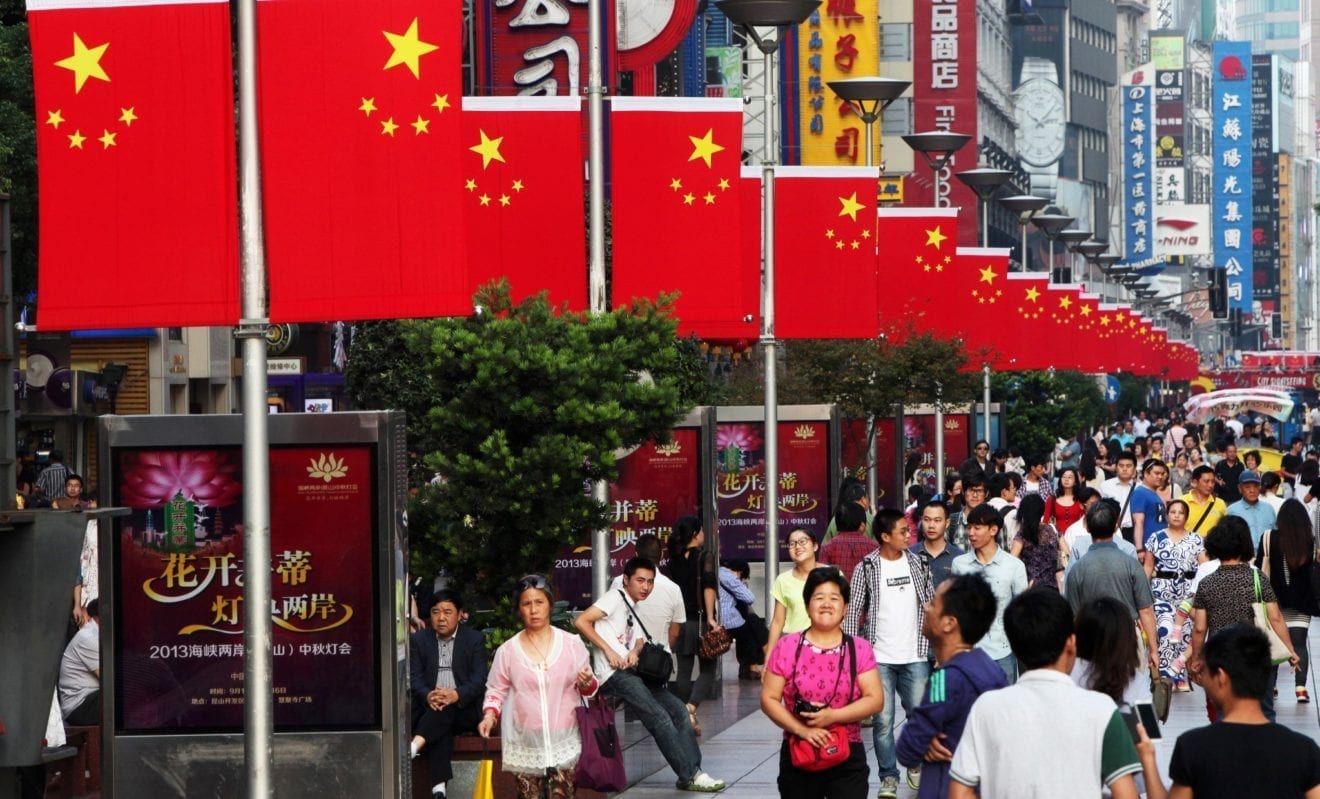
    China’s retail sales rose at a double-digit pace during the week-long National Day holiday in October, data from the Ministry of Commerce showed, but growth slowed slightly compared with last year.

    Sales of retailers and catering firms increased 10.7 percent to 1.2 trillion yuan ($180 billion) during the Oct. 1-7 “Golden Week” holiday, the ministry said in a statement posted on its website late Friday. Revenues grew 11 percent a year earlier.

    In revenue terms, the holiday is more important for retailers than Chinese New Year as they vie for customers with promotions and discounts.

    During the National Day holiday, millions take time off work to travel, get married, and generally spend more money than usual on consumer products such as household appliances, mobile phones, jewellery, clothing and cars.

    Economists are closely watching China’s consumption data as the country’s leaders try to bolster the economy, which expanded at its slowest rate in a quarter of a century last year.

  • Indonesia to Extend Ban on Shark Fin Exports

    Indonesia to Extend Ban on Shark Fin Exports

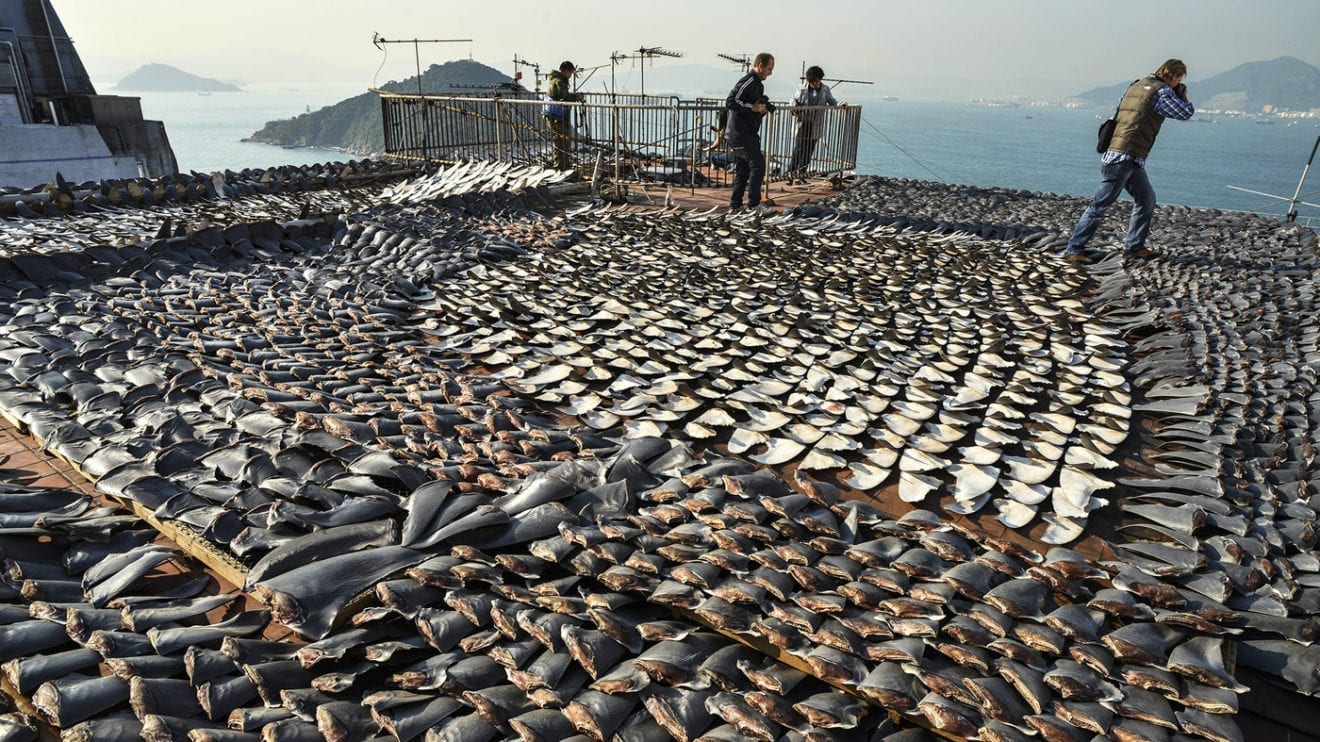
    Marine Affairs and Fishery Ministry will extend the ban on shark fin exports, said the ministry’s directorate general secretary of marine space management Agus Dermawan. “It may be extended, but I don’t know when,” he said Saturday.

    Shark fin export has officially been suspended after Marine Affairs and Fishery Minister Susi Pudjiastuti issued on December 10, 2014, Regulation No. 59/2014 regarding a ban on hammerhead and oceanic whitetip sharks until November 2015. It had since been extended with Marine Affairs and Fishery Ministry Regulation No. 34/2015, which is effective until December 31, 2016.

    According to Agus, Indonesia was the world’s largest shark fin exporter. In 2012, for example, Indonesia exported 434 tons of shark fin worth over US$6 million, the Central Statistics Agency (BPS) recorded.

    He said that the ministry has joined hands with researchers to count the number of endangered shark species left in Indonesia. The regulation about the ban on export and hunting will be based on the outcome of the research. Despite the export ban, hunting and trade of certain shark species for domestic consumption are still allowed.

    Agus said since 2013 five shark species have been listed as endangered, four of which hailed from Indonesia, including hammerhead and oceanic whitetip sharks. Hammerhead sharks include Sphyrna lewini, Sphyrna zygaena, dan Sphyrna mokarran, whereas oceanic whitetip sharks include Carcharhinus longimanus.

    Despite the official export ban, rare shark fin smuggling continues to happen. In February, Directorate of Customs and Excise of Finance Ministry Tanjung Perak office, Surabaya, foiled an attempt to smuggle 20 tons of shark fins and jellyfish to Hong Kong.

    Therefore, Marine Affairs and Fishery Minister Susi Pudjiastuti vows to enhance the Task Force 115, who are tasked with eradicating illegal fishing practices. “We will deploy Custom & Excise and the Task Force personnel to monitor smuggling,” Minister Susi Pudjiastuti said.

    Meanwhile, Oceans Campaigner of Greenpeace Indonesia Sumardi Ariansyah has urged the government to do more than just banning shark imports. According to him, shark fin consumption in Chinese restaurants has also contributed to the declining population of the species, although not as high as foreign demand. “The government must set up and establish better and more comprehensive policies,” he said.

  • North Sumatra`s rubber exports down 20 percent

    North Sumatra`s rubber exports down 20 percent

    North Sumatras rubber exports in the year to August 2016 plunged 20.84 percent compared to the same period last year.

    “By August 2016, North Sumatras rubber and rubber product exports fell to US$633.996 million from US$800.864 million in the same period last year,” chief of the production statistic section at the Central Statistics Agency (BPS) office in North Sumatra, Bismark SP Sitinjak said here on Saturday.

    The shortfall in foreign exchange earnings was the result of lingering global crisis, leading to low demand for the commodity in the global market. he said.

    With the decline, the provinces rubber exports will most likely drop throughout this year compared to a year earlier, he said.

  • Importing gas will not help deal with rising prices

    Importing gas will not help deal with rising prices

    The Energy and Mineral Resources Ministry has stated that the proposal of the Indonesian Petroleum Association (IPA) to import gas will not help the governments effort to curb gas prices applicable to the industry.

    The proposal is one of the many options to cut gas prices for industries, Director General of Oil and Gas at the Energy and Mineral Resources Ministry, IGN Wiratmaja Puja, said here on Monday.

    “There are many options to bring down the gas prices, from upstream, midstream to downstream levels. But we have to look at the data in detail,” he noted.

    Purchasing gas from other countries will not significantly affect the global gas prices, he added.

    If Indonesia intends to import gas, it must be far cheaper than the locally produced gas. In addition, the nation must also consider additional charges accrued in transporting gas from abroad and the cost to change it into liquefied natural gas (LNG), he reminded.

    “Admittedly, when bought from Qatar, gas will be slightly cheaper, but if the cost of transportation is added to the price, then it will not be much different from that of local gas. The US gas is currently being sold at US$2.5 per mmbtu but we need to study the cost to change it into LNG to facilitate its shipment to the rest of the country. Clearly, it will not be able to help us very much,” he pointed out.

    He underlined that the policy to import gas must consider the situation on the domestic production front. The concept of supply and demand will prevail. Besides, the policy gas import will not be allowed in case of overproduction.

  • Japan to possibly take part in East Natuna gas exploitation

    Japan to possibly take part in East Natuna gas exploitation

    Indonesias state-owned energy company, PT Pertamina, has hailed a senior minister for proposing to invite Japan to participate in the East Natuna Block gas project in the province of Riau Islands.

    Pertamina, ExxonMobil and PTT Thailand have formed a consortium to develop the gas field in the border region.

    “This is a big investment. The consortium is still to discuss it. I think in view of the big investment needed, it will be good if a number of parties participated. Certainly, the issue will be discussed by the consortium,” Pertaminas President Director Dwi Soetjipto said at the office of the Coordinating Minister for Maritime Affairs here on Monday.

    Coordinating Minister for Maritime Affairs Luhut Binsar Pandjaitan has invited Japan to participate in the project to exploit the East Natuna block in the Sumatran province.

    Dwi pointed out that the profit sharing concept was the crucial point to discuss.

    “What is important now is the formula to share the profits so that the project’s economic value can be realized,” he added.

    The Director General of Oil and Gas of the Ministry of Energy and Mineral Resources, IGN Wiratmaja Puja, underlined that the consortium was still discussing the production sharing contract.

    He admitted that Japan and Malaysia (Petronas) have also been invited to develop the block.

    “Japan has been invited and also Malaysia, and we hope they will be interested,” he noted.

    Malaysias Petroleum Nasional Berhad (Petronas) had indeed been a member of the consortium but later withdrew.

    Petronas joined the East Natuna consortium when the Principle of Agreement for the exploration and exploitation of East Natuna was signed on August 19, 2011.

    At the meeting with Malaysias Deputy Prime Minister Ahmad Zahid Hamidi in Malaysia early in September, Minister Luhut had invited Petronas to participate in the oil and gas exploitation in East Natuna.

    The East Natuna Block plans to first produce oil while gas production will be undertaken after a study in view of the fact that its carbon dioxide (CO2) content can reach up to 72 percent.

    The production sharing contract of the East Natuna Block could be signed even though it was expected to happen in September last year since no agreement was reached regarding the profit sharing formula.

  • TravelersBox rolling out in Asia

    TravelersBox rolling out in Asia

    TravelersBox kiosks are being launched in Asian airports allowing travellers to deposit their leftover foreign coins into their preferred online accounts.

    More than 40 are expected to be service by the end of the year.

    TravelersBox is the first service allowing travellers to convert foreign currency into usable digital currency at airports. First rolled out at Manila airport in the Philippines, the latest kiosks have just come online in Narita International Airport in Japan.

    In parallel to the expansion, the company is also launching additional products and services in the kiosks tailored to the Asian market.

    Baidu wallet is the first offering, specifically aimed at the Chinese market, the largest travelling population in the world.

    “For the Asian market we’ve given specific attention to each traveller’s nationality,” says TravelersBox co-founder/CEO Tomer Zussman. “Services such as Nets FlashPlay Card for Singaporeans, Lazada for Southeast Asian travellers and more will soon be available in the TravelersBox around the world.”

    TravelersBox has more than 75 kiosks internationally where travellers can convert their leftover foreign change into digital money with options including iTunes, PayPal, Skype and gift cards such as Gap or Starbucks. There is also a donation button.

  • Lotte, Shinsegae address Korean gender employment issues

    Lotte, Shinsegae address Korean gender employment issues

    Korean retail giants Lotte and Shinsegae are competing to improve employment conditions for women.

    The two companies are pushing forward with efforts to provide more opportunities for women to move up in their corporate hierarchies and implementing women-friendly systems as part of their company policies. Korean gender employment issues are of growing concern in a traditionally male-dominated business culture.

    According to industry watchers, Shinsegae’s discount store franchise E-Mart instituted a shortened work-hour system for all of its pregnant employees starting in April, with employees eligible regardless of whether they apply for the benefits or not, and offering them 100 per cent of their wages. Under the arrangement, pregnant employees have their work day shortened by two hours.

    The system had been difficult for female workers to take advantage of given both the company atmosphere which tended to discourage the practice, as well as reduced wages, said a company official.

    In addition, E-Mart announced in March a new leave of absence policy for employees having difficulties with pregnancy, and it also plans to implement its own maternity leave system that allows employees to take up to a year of maternity leave, on top of the legally-guaranteed period of 20 months (eight months for maternity, 12 for childcare). The latter has already been implemented by another Shinsegae franchise, Shinsegae Department Store.

    In contrast, Lotte’s women-friendly policies focus more on employing a greater number of women as new recruits.

    Since 2006, Lotte has been increasing the number of female employees at its affiliate enterprises by hiring more women through its recruiting process. In 2015, 35 per cent of new recruits were women, a rate that the group plans to increase to 40 per cent this year.

    Furthermore, Lotte also operates a special recruiting platform specific to retired female officers from the military, an endeavor which took off in 2011 with cooperation from the defense ministry.

    As a result, the number of women at Lotte with positions as section chiefs or higher now stands at 870, an increase from 95 in 2008, and 19 of the group’s board members are also female.

    Meanwhile, Lotte established eight additional daycare centers for its employees in the first half of 2016 for working mothers, while allowing women to automatically take their year-long childcare leave right after their maternity leave, so they won’t have to face unnecessary guilt or unwelcome comments from colleagues or bosses.

    “Chairman Shin Dong-bin seems to be taking extra attention to nurture female employees and their talent,” said a Lotte official. “Our goal is to create a work environment where women can work without facing gender discrimination.”

  • Is it necessary to chase Google income?

    Is it necessary to chase Google income?

    Internet commercials are starting to take over the advertisement business from print and electronic media, especially television. Wide accessibility and ease of use are the internet’s main points of attraction. However, this poses new problems, as online advertisers are not bound by physical presence.

    Google’s business in Indonesia is a case in point, highlighting problems that accompany the advance of the digital economy, where the concept of space itself is being distorted. People can conduct business in places without having any physical presence there. The law of the land is failing to catch up to this new trend, with tax rules being one prominent example.

    Google’s business model allows such phenomena to arise. Payments for advertisements from Indonesia are sent to Google Asia Pacific Pte. Ltd. (GAP), a Singaporean company.

    Because of the tax treaty between Indonesia and Singapore, Indonesia must refrain from taxing the company’s income. Unless GAP has a permanent establishment (BUT) in Indonesia, such income cannot be taxed.

    The Directorate General of Taxation (DJP) claims that GAP’s business activities constitute a dependent agent BUT through the presence of PT Google Indonesia (GI). This view is contested by GI, which says GAP has no BUT in Indonesia. Moreover it refuses to cooperate with the DJP and resists investigation.

    The existence of a BUT as claimed by the DJP is doubtful. A dependent agent BUT exists when the agent (i.e. GI) basically conducts the non-resident taxpayer’s (GAP’s) business activities. The fact that there is an associated company in Indonesia and income sourced from Indonesia is not enough for the DJP to claim there is a BUT as a tax subject. The DJP needs to study the relationship between GAP and GI carefully. Is GI doing its own business or is it doing GAP’s business?

    Furthermore, even if the DJP makes the case that Google has a BUT in Indonesia, that does not mean that all of Google’s income can be attributed to that BUT. The next question is the functions performed by such a BUT. Are significant functions performed in order to generate all of the income?

    Profits attributed to the BUT are based on those significant functions performed there or the contributions of the BUT performed in GAP’s business. The DJP cannot tax profits that cannot be attributed to the BUT if functions related to those profits are not performed there.

    This approach is more or less the same as if the DJP accepted GI’s claim. If the DJP accepts the claim, then GI’s transactions with other members of the Google group will be treated as transactions between independent entities.

    Therefore, such transactions need to be priced properly by transfer pricing analysis. Such analysis will delineate GI’s role and responsibilities in the whole Google business model. From there, its contribution to the profits will be described, and on that basis we can calculate how much profit is attributable to GI.

    At the end of the day, both approaches look at the activities performed in Indonesia by GI. To be more precise, it depends on the company profiles and their roles and responsibilities in the whole business model of Google.

    Those factors determine the share/contribution in creating the value of the products of the group and thus the profit allocation. Creating a new BUT concept alone is not enough, because it does not solve the problem of attributing profits to the BUT.

    If the DJP really wants to capture the income, it should pay more attention to linking GI’s activities to Google’s income and maybe pursue GI through an audit, rather than trying to establish a BUT and attributing the profits later.

  • Manila Fame Welcomes Exhibitors, Int`l Buyers To Bigger Show

    Manila Fame Welcomes Exhibitors, Int`l Buyers To Bigger Show

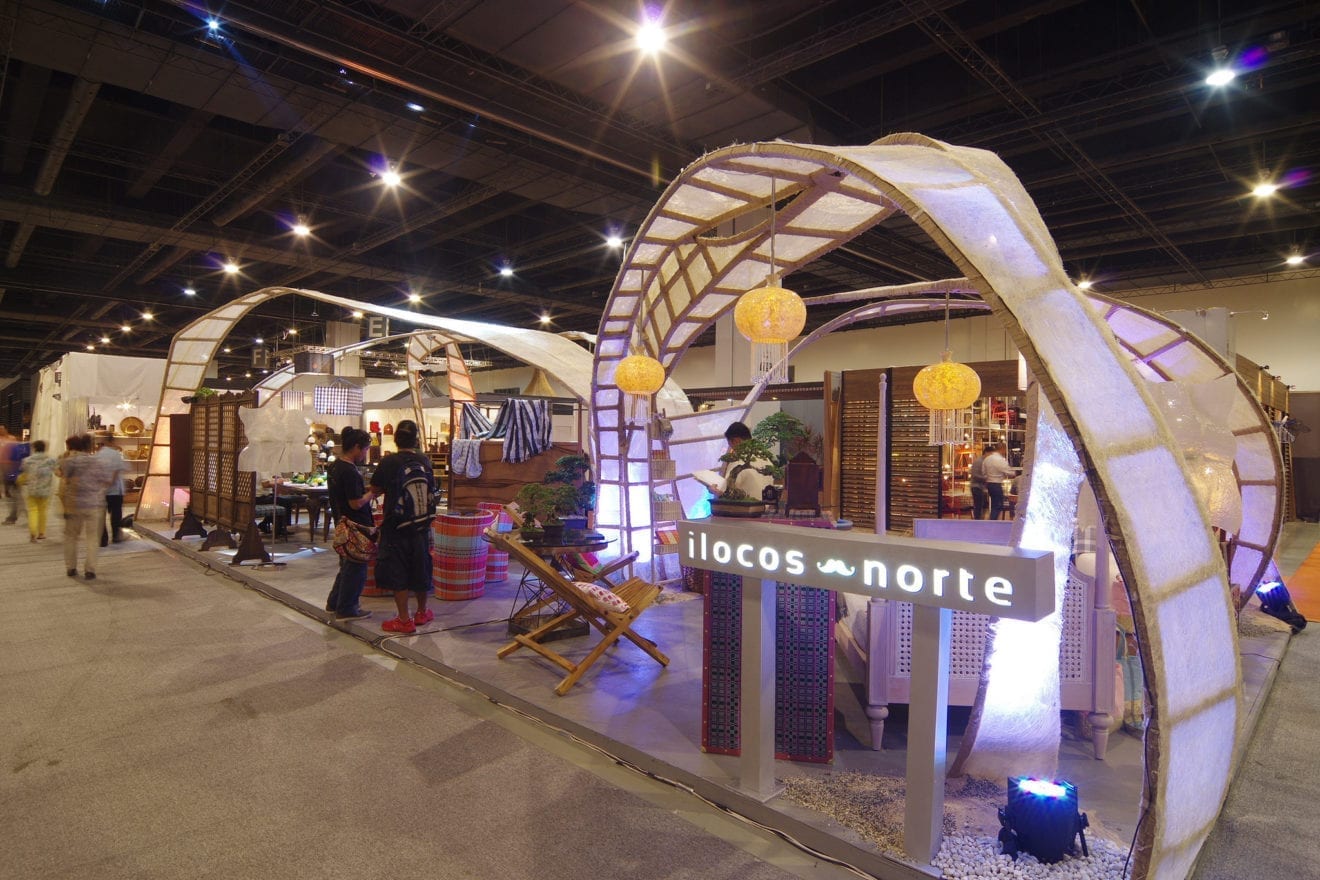
    The Philippines premier design and lifestyle event, Manila FAME 2016, is expanding the show with more venues, extended hours, and more SME exporters, while showcasing new artisans, designers, and products.

    The 64th edition of Asia-Pacifics second-longest running trade exhibition, from October 20 to 22, 2016, will be held in four large venues to accommodate the growing number of participating SME exporters and the deluge of international trade buyers joining every edition to source unique products of the Philippines’ artisans, its embassy said in a statement, here, Saturday.

    The upcoming show will be held at the World Trade Center (WTC) Main Hall, which will house the holiday and home exporters, and the WTC Tent, which will feature fashion, textile, and apparel brands. The Philippine Trade Training Center (PTTC) will exhibit arts and crafts, and start-up and retail companies, while HallONE will be the venue for the Design Week Philippines – (DWP) Creative Marketplace.

    Design Week Philippines, held concurrently with Manila FAME, is a multifaceted fete of arts and design aimed at fostering creativity and spurring innovations. It is overflowing with activities that speak of Filipino ingenuity and design breakthroughs that strengthen the Philippines position as Asias design capital.

    In addition to the special DWP events to be held in HallONE, more activities initiated by the Design Center of the Philippines will take place in Manilas historic center, Intramuros.

    Extended exhibit hours for more buyers, visitors

    Manila FAME will extend its operating hours by an hour to 7.00pm from the original 9:00am to 6:00pm. The change was made in response to requests from trade buyers for longer business hours that would allow them to meet with all their target suppliers, examine new products at the show, and maximize their visit in Asia, which will have other trade events scattered across the region.

    New special showcases and daily events on whats hot

    Exciting showcases to look forward to at the October show include New Generation Weaves, Bamboo and Coconut Special Setting, Lamps and Lighting, and Icon Setting: Peacock Redux.

    Lively daily events to update trade buyers on on-trend designs and products as well as inspiring and creative workshops and business fora will be staged for a multi-sensory, comprehensive, and diverse trade show experience.

    Furthermore, the 64th Manila FAME will be made even more momentous with the celebration of the ASEAN Master Craft Design Festival and the participation of the ASEAN master craftsmen who will present their creations in a special pavilion called ASEAN Crafts to the World.

    The first group of the ASEAN master craftsmen, coming from Indonesia, Malaysia, the Philippines, Thailand, and Viet Nam, will unveil new designs and progressive applications of native materials and traditional techniques in home furnishings, gifts and housewares, garden accessories, and fashion apparels.

    “CITEM is continuously shaping Manila FAME, not just to meet the demands of the changing industry with its new generation of buyers, entrepreneurs, consumers, designers, and artisans, but to exceed expectations, bring new ideas to the table, and most of all to showcase what the Philippine SMEs can do with training and assistance,” CITEM Executive Director Rosvi C. Gaetos said.

    Manila FAME is a bi-annual showcase of craftsmanship in Philippine products. It features finely selected furniture and home furnishings, holiday gifts and accessories, designed and crafted in the Philippines for the global market.

    Organized by the Philippines Department of Trade and Industry (DTI), through the Center for International Trade Expositions and Missions (CITEM), Manila FAME is the only trade event in the Philippines approved by the Union des Foires Internationals (UFI), or the Global Association of the Exhibition Industry, a Paris-based association of trade fair organizers founded 90 years ago in Milan, Italy, on April 1925.