Category: General

Retail News Asia is committed to providing both local and global retailers with the latest General Retail news throughout the Asian market. This on a daily base.

  • Isetan to open Japan Store Kuala Lumpur

    Isetan to open Japan Store Kuala Lumpur

    The Isetan Mitsukoshi Group will open a new specialty store, Isetan The Japan Store Kuala Lumpur in Malaysia at the end of October.

    “As global interest in Japan continues to grow, we are pleased to introduce Japanese history, culture, technology, diversity and lifestyle designs,” the company said, announcing the initiative.

    “The new store will deliver Japanese lifestyles and aesthetics to customers. We will bring not only the best of Japan, but authentic Japanese experiences as well.”

    The venture has the support of the government-financed Cool Japan Fund Inc.

    Comprising 11,000 sqm of floor space, Japan Store Kuala Lumpur will be located in the renovated Lot 10 and have six storeys introducing high-quality products, experiences and services:

    • LGF: New dining style based on authentic Japanese tastes and technologies – groceries, sake, beer & whisky, Japanese and Western sweets and green tea, delicatessen, eat-in dining space, fresh foods, etc.

    Isetan Japan store KL - LGF

    • GF: Fashion, art, technology.

    Isetan Japan store KL - GF

    • 1F: Japan’s fashion culture, a melting pot of unique combinations.

    Isetan Japan store KL - 1F

    • 2F: A collection of products featuring unique Japanese materials and technology to “enhance beautiful, healthy lifestyles”.

    Isetan Japan store KL - 2F

    • 3F: Experience Japanese culture – bookstore, culture academy, photo lounge, etc.

    Isetan Japan store KL - 3F

    • 4F: Restaurant floor featuring authentic Japanese cuisine to open in January 2017.

    Hiroshi Ohnishi, Isetan Mitsukoshi president and CEO said the company will introduce Japan’s exceptional products, experiences and services to the world.

    “In 2011, Japan’s Ministry of Economy, Trade and Industry (METI) launched Cool Japan, a program promoting the introduction of regional products, fashion and other content to the world. In this context, the Isetan Mitsukoshi Group has promoted the Japan Senses campaign, introducing to our customers remarkable traditional crafts from all over Japan, styling them with a newborn originality. Now, to more clearly convey the spirit of Cool Japan, we are ready to show the world the exceptional craftsmanship Japan is proud to offer.”

  • Hong Kong retail sales plunge for 17th month in a row

    Hong Kong retail sales plunge for 17th month in a row

    HK retail sales 07 16

    Things are not exactly looking up.

    The bad news continues for Hong Kong’s downtown duty free and travel retailers such as DFS as the latest retail sales statistics show another month-on-month decline.

    July government data provisionally indicate that the value of total retail sales in July fell by -7.7% to $34.6bn/$4.46bn, compared with July 2015. This means that for the first seven months of 2016, the value of total retail sales decreased by -10.1% compared with the same period in 2015.

    The trend in department stores was slightly better: in July they fell by -6.9% and by -8.7% in the first seven months of the year.

    The graph above shows the rate of change on a monthly basis for all retail sales in Hong Kong and it suggests that since the second quarter of 2015 there has been continuous downward, negative pressure on sales [the spikes reflect the timings of Chinese New Year].

    HIGH-VALUE ITEMS HAMMERED

    By those product categories most relevant to duty free, the figures showed a very mixed performance in July. Value sales of jewellery, watches and clocks, and ‘valuable gifts’ took a beating, decreasing by -26.2% as did electrical goods and photographic equipment (-21.8%), while footwear, allied products and other clothing accessories held their ground at (-1.1%).

    The tourism trend this year looks worse than in 2015 which is a worry.

    The overall negative trend has been attributed to the depressed tourist traffic coming to Hong Kong, particularly from China. While the July figures are not yet available, in the half-year to June visitor arrivals fell by -7.4% to 27.16m, with mainland Chinese traffic falling by over -10%.

    This follows an inbound decline of -2.9% to 59.3m in 2015, but a spending decline of -7.5% to HK$332.3bn. Of the 59.3m, Mainland China continued to be the largest visitor source market accounting for 77% of total arrivals.

  • Jollibee, Puregold, Robinsons retail make it to Forbes ‘Fab 50’

    Jollibee, Puregold, Robinsons retail make it to Forbes ‘Fab 50’

    Three Filipino companies made it into Forbes’ list of 50 best-performing listed firms in Asia this year.

    Jollibee Foods Corp., Puregold Price Club, Inc. and Robinsons Retail Holdings Inc. were included among “Asia’s Fab 50 Companies,” compiled by Forbes Magazine.

    Companies are selected based on their record of revenues, operating earnings and return on capital over the last five years.

    “These 50 companies have solid financial track records, coupled with great management and entrepreneurial skill,” Forbes said in its website.

    China dominated the list with 21 companies, including frontrunner Alibaba Group Holding Ltd. The e-commerce giant has a market value of $242.5 billion.

    With three representatives on the list, the Philippines beat out countries like Australia, Indonesia, Japan, Malaysia, Thailand and Vietnam, with only one company each.

    The Philippine firms, however, still had considerably lower market value than their regional counterparts.

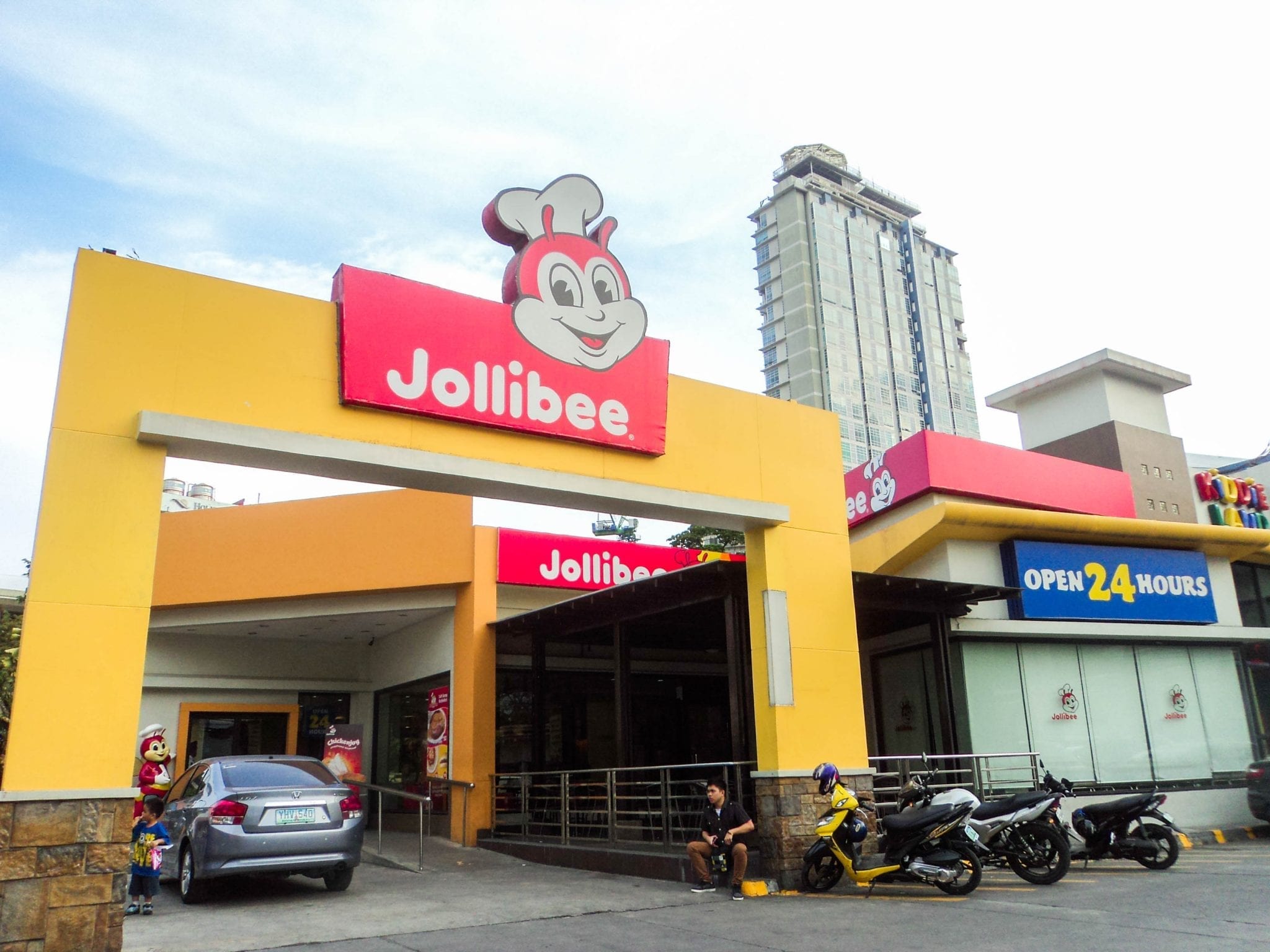
    Fast food company Jollibee was the largest among the three Philippine companies, with a market value of $5.9 billion. Other than the iconic Jollibee brand, it also owns Chowking, Greenwich, Red Ribbon, Mang Inasal, and Burger King in the country.

    Supermarket operator Puregold followed with $2.6 billion. The Lucio Co firm runs the Puregold and S&R Membership Shopping chains.

    Lastly, Robinsons Retail notched $2.5 billion. The company handles Robinsons’ supermarkets and department stores, as well as Ministop convenience stores, South Star Drug pharmacies, among others.

    Meanwhile, property developer SM Prime Holdings, Inc. was cited as one of “Asia’s Stars in the Making.”

    Forbes listed a dozen Asian companies “waiting in the wings” — just narrowly missing out on the Fab 50 for the year. These “rising stars” are considered “potential candidates in the coming years,” Forbes said in its website.

    The Sy-led SM Prime operates SM’s portfolio of shopping malls, residential properties, office buildings, and hotels.

  • Taiwan Eyes More than 200,000 Indonesian Tourists

    Taiwan Eyes More than 200,000 Indonesian Tourists

    Taiwan is eyeing as many as 200,000 tourists from Indonesia to visit Taiwan this year, or an increase from that in 2015, where at around 177,743 Indonesian tourists visiting Taiwan.

    Taiwan Tourism Bureau Director David Tsao said that to meet the target, it has held a tourism exhibition at Grand City Surabaya Mall & Convent on 26 to 30 August, 2016.

    “In 2015, tourists visiting Taiwan reached 10.439 million of them and 177,743 of them are Indonesian tourists,” he said in Surabaya.

    He added that one of the attractions of Taiwan’s tourism is its landscape that is different from the sights in Southeast Asian countries.

    “For example in the northern region of Taiwan precisely on the island of Li, the weather is cooler and you can find snowfall there,” he said.

  • Bahrain-Indonesia trade ties discussed

    Bahrain-Indonesia trade ties discussed

    Bahrain Chamber of Commerce and Industry (BCCI)’s chairman Khalid Almoayed alongside a number of board members and Acting CEO have met the Indonesian ambassador to Bahrain, Chilman Arisman.

    The meeting hailed the deep-rooted relation between the Kingdom of Bahrain and the Republic of Indonesia and discussed the promising sectors and incentives offered to investors.

    Almoayed underlined the importance of reinforcing the exchange of business delegations and holding business events to bridge the knowledge gap between Bahraini and Indonesian business owners and stimulate trade, partnership, and investments.

  • Jokowi to Open Indonesia Fintech Festival and Conference 2016

    Jokowi to Open Indonesia Fintech Festival and Conference 2016

    President Joko “Jokowi” Widodo is scheduled to open the Indonesia Fintech Festival and Conference 2016 at the Indonesia Convention Exhibition, Tangerang, on 29th August 2016. The event is organized by the Financial Service Authority (OJK) and the Indonesia Chamber of Commerce and Industry (Kadin).

    “President Jokowi will open the event and it will be closed by Queen Maxima of the Netherlands,” said the OJK’s Deputy Commissioners for Non-bank Finance Industry (IKNB) Dumoly F. Pardede on Thursday.

    Dumoly said a startup competition will be held during the event. In addition, an international financial technology conference will also be held. It will also provide assistance to fintech startups. “It will also host meetings between investors.”

    The event is aimed at establishing shared understanding of harmonious development of fintech ecosystem among industrial stakeholders in Indonesia. “There’s a shared commitment among several fintech practitioners to enhancing fintech in Indonesia,” Dumoly explained.

    Dumoly said the festival will be held annually in order to produce the best startups. “It’s a prestigious event, we will create an area of fintech, new trends and cultures in Indonesia,” he said.

    Kadin’s Startup Technology Innovation Department head Patrick Walujo said 72 startups will participate in the festival. “They will exhibit their products. We expect to see more startups next year,” he said.

  • Madiun develops tourism villages to attract tourists

    Madiun develops tourism villages to attract tourists

    Madiun district government in the Indonesian province of East Java is making efforts to develop a number of areas into tourism villages to attract local and foreign tourists, according to an official.

    “Of all 206 villages in Madiun district, 11 have been surveyed to be developed into tourism villages to attract both local and foreign tourists,” said the head of Department of Cooperatives, Industry, Trade and Tourism (Diskoperindagta), Sawung Rehtomo, here.

    He said the 11 villages are Brumbun, Kresek, Segulung, Dolopo, Durenan, Kare, Batok, Tawangrejo, Gunungsari, Pilangrejo, and Mruwak.

    According to him, the concept of the tourism village will highlight the potential that exists in each village for sale to tourists.

    In Brumbun village, for example, tourists will have the opportunity to cruise down the beautiful riven on the slopes of Mount Wilis, or to have the sensation of picking durian fruits in Kare village.

    Rehtomo explained that the development of tourist villages will be carried out as part of efforts to build the tourism industry in Madiun district, both nature and cultural tourism.

  • Differentiation can make or break Singapore brands as competition heats up

    Differentiation can make or break Singapore brands as competition heats up

    Consumers are hungry for novelty, innovation.

    Tight competition online and a tough operating environment have pushed many offline retailers—especially in the footwear and apparel sub-sectors—to downsize or flee Singapore.

    However, RHB noted in a report that brands that are able to spin unique selling point will weather the sector headwinds well, as consumers continue to be attracted to novelty and differentiated experience.

    “H&M, for instance, has numerous sub-collections each year to refresh its inventories. It also rolls out special collections each year, which are tie-ups with famous brands’ designers or style icons… Uniqlo, on the other hand, is known for its product innovation including HeatTech and AIRism technologies catered specially for cold and warm weather, respectively,” RHB stated.

    Meanwhile, BreadTalk comes out on top in terms of product innovation and willingness to experiment.

    “BreadTalk launched a new bakery concept every four years to maintain a fresh brand image. It also rolled out 50 new products along with its latest concept launch,” RHB noted.

    “Furthermore, the group is also up to date in using technology to engage customers. It is planning to build a new integrated system that allows the public to view its kitchen baking processes on external screens. The new system will also allow consumers to get alerts when new buns are up on the shelves,” it added.

  • Singapore’s services industry business receipts edge up 0.4% in Q2

    Singapore’s services industry business receipts edge up 0.4% in Q2

    Singapore’s services sector saw a mixed performance in the second quarter with overall revenue edging up 0.4 per cent year on year.

    This is according to the latest business receipts index, released on Friday (Aug 26) by the Department of Statistics Singapore, which excludes wholesale & retail trade and accommodation & food services.

    The health & social services industry reported the largest revenue growth of 7.7 per cent in April-June quarter from the same period a year ago.

    Other industries with higher business receipts included education services (5.0 per cent) and information & communications services (1.4 per cent).

    Industries that saw lower turnover included transport & storage services (-2.2 per cent) and recreation & personal services (-1.6 per cent).

  • Pos Malaysia Q1 net profit jumps 40% to RM32mil

    Pos Malaysia Q1 net profit jumps 40% to RM32mil

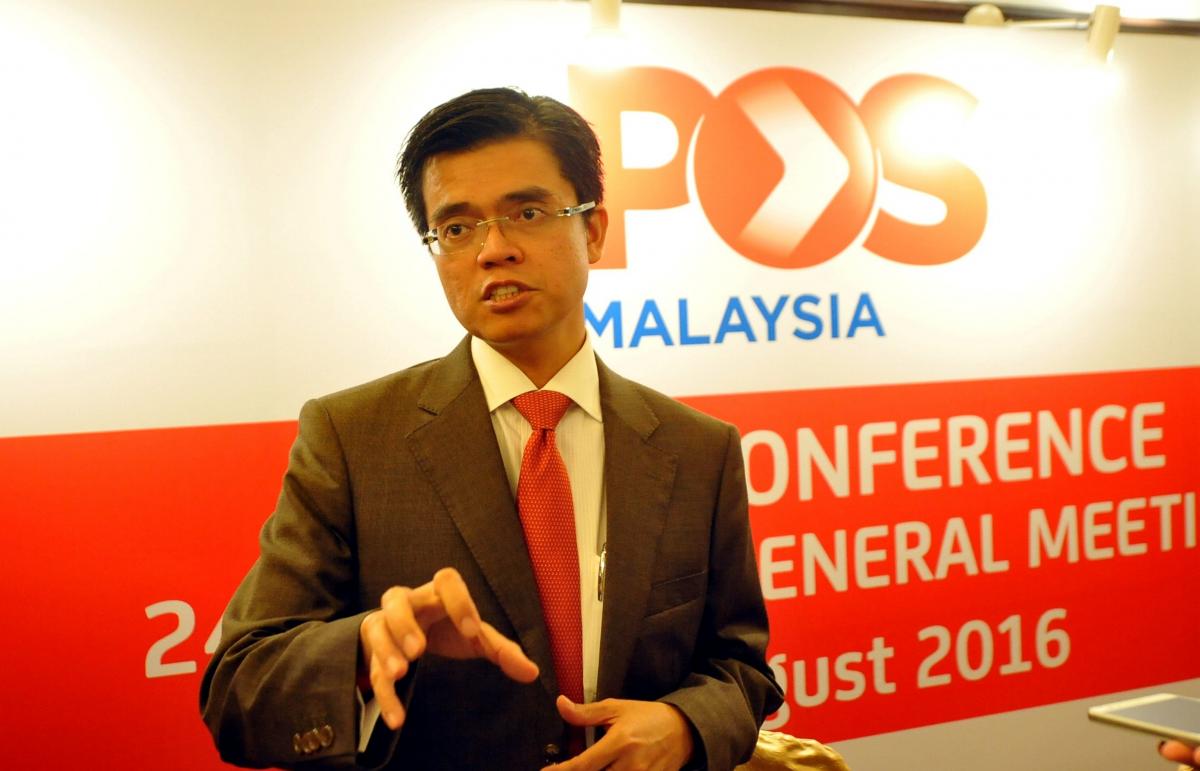
    Pos Malaysia Bhd’s net profit for its first quarter ended June 30, 2016 grew 40% to RM31.84mil, from RM22.74mil a year ago, despite operating in the current challenging environment, said group chief executive officer Datuk Mohd Shukrie Mohd Salleh.

    The increase was due to higher profits generated from its courier segment that was driven by demand from its e-commerce and online businesses. First quarter revenue rose to RM415.87mil from RM390.37mil a year earlier.

    Shukrie said Pos Malaysia is focussing to transform itself into a one-stop fully integrated logistics services provider through the recently approved and soon-to-be-completed corporate exercise of acquiring Kuala Lumpur Airport Services Sdn Bhd (KLAS) group of companies.

    The company will also introduce more new 24/7 e-commerce convenient touch points when it unveils a slew of new services. The company will also enhance facilities at all Pos Laju Centres and post offices nationwide. It is planning a total of 110 more touch points from the current total of 1,030 throughout Malaysia by end of 2016, Shukrie said.

    In a separate Bursa filing yesterday, the company said its courier segment registered higher revenue of RM162.8mil in the first quarter of this year compared with RM148.1mil a year ago.

    The upward performance was driven by increase in demand from e-commerce, the company said. Its postal services segment registered lower revenue of RM206.7mil in the first quarter of 2016 compared with RM230.6mil a year ago.

    “This is due to lower revenue for direct mail for mail segment and decrease of transactions from bill payment for retail segment,” Pos Malaysia said.

    Its international segment registered lower revenue by RM16.4mil as compared to RM36.1mil a year earlier due to lower transactions from transhipment business segment.

    Meanwhile, Pos Malaysia’s other segments which consist of digital certificates, printing and insertion registered higher revenue by RM7.8mil in the first quarter of this year due to higher business volume attributed to sales of digital certificates, as well as printing and insertion.

    Going forward, the company said its longer term prospects remain closely tied to the growth in the fulfilment and delivery of merchandise arising from the growth of e-commerce.

    “Investments by global e-commerce giants into the South-East Asia’s e-commerce players, for example the acquisition of Lazada by Alibaba, support the growth and development of the industry in the region.”

  • Robust profit for 7-Eleven Malaysia

    Robust profit for 7-Eleven Malaysia

    Despite a sluggish retail market, 7-Eleven Malaysia had robust after tax profit, growing 40.3 per cent, in its second quarter compared with the same period last year.

    Gross profit margin continued to improve, and the average customer spend edged up 4 per cent.

    A milestone was the opening of the 2000th 7-Eleven store in Malaysia.

    CEO Gary Brown says the net profit growth was achieved in a tough market in which the introduction of GST on April 1 last year dampened consumer FMCG spending.

    “We remain confident that continuous store expansion, refurbishment, promotional activity, improved merchandise mix and expanded in-store services will continue to deliver positive results despite the challenging headwinds.”

    Revenue for the second quarter, ended June 3, grew by 4.8 per cent to RM505.7 million (US$125.7 million). This was driven by store expansion, improved merchandise mix and promotional activity.

    Gross profit was up 6.8 per cent to RM156.7 million, mainly because of the revenue growth and gross profit margin expansion of 0.6 per cent.

    Profit before tax of RM21 million surged by 38.1 per cent, driven mainly by the revenue growth, gross profit margin expansion, other income growth and cost control.

    For the six months ended June 30, the group’s revenue grew 4.5 per cent to RM1.03 billion, driven by expansion (at the period end, the group had 2001 stores). Gross profit improved by RM18.9 million, or 6.3 per cent, thanks to the revenue growth plus gross profit margin edging up 0.5 per cent.

    Profit before tax was RM43.3 million, up 22 per cent.

  • Lotte Group vice chairman found dead, suicide suspected

    Lotte Group vice chairman found dead, suicide suspected

    A local news agency reports that a suicide note was found in the executive’s car.

    A senior executive at South Korea’s Lotte Group was found dead on Friday, a suspected suicide, hours before he was to be questioned by prosecutors conducting a criminal probe into the family-run conglomerate, news reports said.

    Lotte Group, in a text message to reporters, said it confirmed the death of Vice Chairman Lee In-won through police and other sources. It did not elaborate further or give the cause of death.

    South Korea’s Yonhap News Agency, citing unnamed sources, reported a body believed to be Lee’s was found on a walking path outside Seoul on Friday morning. Police were trying to confirm the body was Lee’s, Yonhap said, adding that a suicide note was found in the executive’s car.

    Prosecutors raided Lotte offices in June, looking into a possible slush fund as well as breach of trust involving transactions among the group’s companies, sources said at the time.

    Lee, who was 69, had been scheduled to appear before prosecutors on Friday morning for questioning, Yonhap said.

    Park Ju-gun, head of corporate analysis firm CEO Score, said Lee’s death is a blow to prosectors given his high rank in the group.

    “Lee’s standing within Lotte was almost on par with that of the owner family members,” he said.

    Lee had been with the group since 1973 and was a top lieutenant of Chairman Shin Dong-bin, who last year saw off a bitter challenge from his older brother for control of the conglomerate founded by their 94-year-old father, Shin Kyuk-ho.

    “He oversaw Lotte Group’s overall housekeeping and core businesses and accurately understood the minds of Chairman-in-Chief Shin Kyuk-ho and Chairman Shin Dong-bin to be carried out well in subsidiary companies,” Lotte Group said in a statement.

    Lee was also engaged in finding new growth opportunities for Lotte, the group said.

    “Vice Chairman Lee has always emphasized improving Lotte employees’ sense of ethics as he believed ethical management directly translates to improving company value.”

    The investigation had already exacted a devastating toll on Lotte’s business, which ranges from hotels to retail to chemicals. Its Hotel Lotte unit was forced in June to shelve an initial public offering to raise up to 5.7 trillion won ($5.12 billion), which would have made it the world’s largest this year.

    Also in June, its Lotte Chemical unit withdrew from bidding for U.S.-based Axiall AXLL 0.09% , citing its difficulties in South Korea. Rival Westlake Chemical WLK -0.58% ended up with a $2.33 billion deal for Axiall.

    Fire department staff and police found a body believed to be Lee’s, an official at the Yangpyeong fire department near Seoul told Reuters, declining to be named as he was not authorized to speak to media. Police officials could not be immediately reached for comment.

    A South Korean prosecution official, who declined to be identified as he was not authorized to comment on the matter, expressed condolences for Lee’s death and said prosecutors planned to reconsider the schedule for the ongoing investigation.

  • Foreign convenience stores in China to face lower-tier challenge

    Foreign convenience stores in China to face lower-tier challenge

    • Convenience store growth is surging, bucking the trend of weakening physical retail store sales. 7-Eleven is the market leader, though FT Confidential Research’s latest consumer brands survey found that other foreign chains were increasingly popular.
    • This is, however, a highly fragmented market and foreign chains will struggle to expand into lower-tier cities, where domestic operators offer greater competition, sometimes supported by local governments.
    • International operators are also coming under pressure from other big foreign retailers in China, while domestic newcomers are expanding aggressively in the belief that online-to-offline (O2O) services will help them seize market share and overcome short-term profitability issues.

    Convenience stores continue to eat into the retail market share of larger formats. In a second-quarter FT Confidential Research survey, 83.4 per cent of urban consumers described themselves as regular convenience store patrons, 0.9 percentage points up on our previous survey in the fourth quarter of last year, while the proportion regularly frequenting supermarkets or hypermarkets fell 1.2 percentage points (see chart).

    The convenience store format has been a standout in an otherwise gloomy market for bricks-and-mortar retailers. Though nationwide sales of fast-moving consumer goods rose 13.2 per cent last year, according to Kantar Retail, a consultancy, hypermarket sales slipped 0.2 per cent and sales at traditional, independent grocery stores fell 10.4 per cent.

    Convenience store chains are stealing market share, with store count growing an average 10 per cent each year from 2010 to 2015. Our survey found that 88.6 per cent of younger shoppers, aged 24-29, frequently go to convenience stores, up 3.4 percentage points from our survey six months ago. In contrast, the proportion of this cohort regularly going to supermarkets or hypermarkets fell 0.8 percentage points in that time.

    Despite growing demand, the convenience store market remains fragmented, with no national leader. The most popular chain was different in 10 of the 11 major markets in China, according to our survey (see chart).

    Beyond Shanghai

    Growth is concentrated in first-tier cities such Beijing and Shenzhen and certain second-tier cities. Shanghai, the biggest market by far, is now saturated, with store count increasing just 2.9 per cent in 2015, having shrunk in 2013, according to the China Chain Store & Franchise Association. Shanghai had one convenience store for every 3,466 residents, a far greater concentration than in Beijing (7,185 people per store) and Chongqing (28,846 people per store). Second-tier Harbin, Wuhan and Changsha were the three cities with the fastest-growing store count in 2015, while Beijing came in seventh (see chart).

    Foreign chains out in front

    Our survey found that foreign brands remain more popular than their domestic peers. Japanese brand 7-Eleven was the most popular, with 20.4 per cent of respondents saying they frequently shopped at its stores, up 1.1 percentage points from the fourth quarter of last year (see chart). The popularity of two other Japanese chains, FamilyMart and Lawson, also rose, up 0.8 and 1.2 percentage points, respectively.

    After years of losses, foreign brands may finally have found ways to consistently turn profits in China. Shanghai FamilyMart, a joint venture between FamilyMart Japan and Ting Hsin Group formed in 2004, turned a profit for the first time in 2013. This ¥745m ($7.4m) profit expanded to ¥1.5bn last year.

    FamilyMart’s clean, reliably stocked outlets appeal to white-collar workers, but it is the prepared fresh food options that have really proved popular. The company now has four factories preparing ready-made food in or around Shanghai and reportedly sells about 300,000 bento boxes each day in the city. Prepared fresh food makes up roughly half of the total sales of each FamilyMart store, according to Ting Hsin vice-president Wei Yingxing.

    Bottlenecks to expansion

    The nature of convenience stores makes brand loyalty tough to engender: is a Shanghai urbanite going to walk further to their favourite chain for something as basic as a bottle of water?

    This is helps explain why the expansion of foreign brands into lower-tier cities has been harder than they anticipated. In 2010, FamilyMart set a goal of opening 4,500 stores in China, but had only reached one-third of that by February 2016. Three years ago, Lawson targeted 1,500 stores in Shanghai and 500 in Chongqing by 2015. As of May 2016 it had opened just 506 and 111, respectively. Among the top 10 chains nationally, the market share of domestic chains has actually rebounded slightly since 2012, while the rapid growth of foreign chains has slowed, according to Kantar (see chart).

    Domestic competition tough to overcome

    Shanghai has provided domestic companies with a case study in how to compete against foreign entrants. Almost all big domestic convenience store chains have beefed up their offerings of ready-to-eat food products, mimicking FamilyMart’s success in Shanghai. Many are now accelerating store openings in areas dominated by foreign chains, while some have managed to poach middle managers from international companies.

    This competition from domestic chains is dragging on store count growth for the multinationals: the number of 7-Eleven stores in Chengdu dropped to just 56 by May this year from 87 in February 2013 (see chart). FamilyMart has also expanded only slowly in Chengdu. In contrast, local leader Hongqi has 1,543 outlets in the city, and reported a 15.2 per cent increase in operating revenue and a 5.3 per cent rise in net profits to Rmb170m ($26m) in 2015.

    The target demographic of foreign convenience stores is much smaller in second-tier cities than in the major coastal hubs, given lower incomes and different consumption patterns. In Beijing in 2015, the daily revenue of each 7-Eleven outlet was, on average, more than Rmb16,000. The equivalent figure in Tianjin and Chengdu rarely breaks Rmb10,000. This has forced foreign companies to be more strategic about where they open outlets in these cities.

    Government policy may also limit expansion. Since 2009, the Chinese government has banned retailers with foreign backgrounds from selling cigarettes nationwide, a business we estimate could account for a third of convenience store sales. In Shanghai, the municipal government also offers subsidies to state-owned firms, and in second-tier cities the relationship between local companies and local government is usually even closer.

    In response, Lawson has signed a franchise contract with Wuhan Zhongbai, authorising Hubei’s leading retailer to open Lawson convenience stores in the province — even though Zhongbai has its own convenience store chain, named Haobang. These sorts of tie-ups may be a solution for foreign chains to expand in the provinces, but maintaining service quality will prove a challenge.

    Here come the newcomers

    Furthermore, the market’s rapid growth is luring in new players. Large, established foreign retailers are looking to leverage their brand popularity and existing infrastructure. Carrefour, for example, has already opened 13 Carrefour Easy convenience stores in Shanghai. Germany’s Metro also recently opened its first two My Mart convenience stores in the city.

    Domestic entrants are even more aggressive. Quanshi has opened 270 stores in Beijing since it was established in 2011. In comparison, 7-Eleven had 192 stores in Beijing as of May 2016, having entered the market in 2004.

    Quanshi’s ampm brand (not to be confused with BP’s chain of service stations) is one of a swath of Chinese operations, across numerous industries, banking on O2O services to drive growth. The chain claims that short-term profitability issues from its model can be overcome once economies of scale are achieved. Companies like Quanshi see O2O services, including package storage but also delivery, as the future of the convenience store business.

    The commercial viability of this strategy is so far unproven. A deal between JD.com and Taiyuan Tangjiu, a Shanxi chain, in which the online mall hosts the convenience store’s online presence while its couriers provide one-hour delivery, has not been a success.

    Given such intense competition, we believe the convenience store market will remain fragmented and locally focused. For now, it is unclear that a national leader will emerge, as 7-Eleven has in Japan. In second- and third-tier cities, lower incomes and local protectionism mean that foreign chains may take over bustling, high-rent street corners, but will struggle to establish a dominant position.
     

  • Sunway’s footfall and sales up due to Pokemon Go

    Sunway’s footfall and sales up due to Pokemon Go

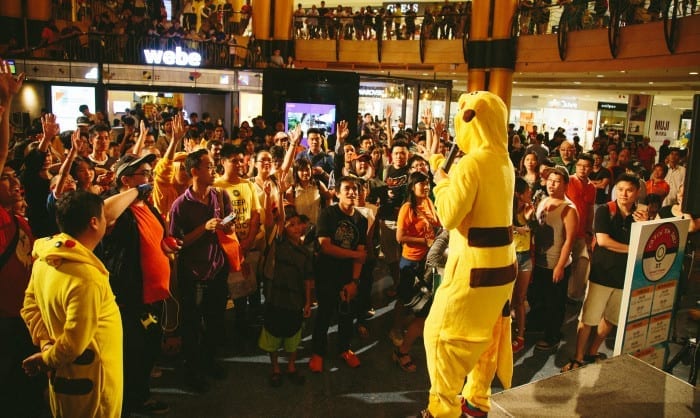
    Sunway Malls is seeing a surge in traffic and sales on the back of the launch of its Pokemon Go Lure Module earlier on 9 August- just a few days after the popular game was officially introduced in the country.

    The retail group said in a statement to A+M, with the retail industry already beset with a 4.4% fall in Q1 2016, the surge has offered a temporary relief for retailers. In comparison, growth was up 4.6% a year ago according to Retail Group Malaysia’s figures.

    Riding on game’s ability in moving large traction of traffic across various Poke stops, Sunway Malls was among the early adopters of the lure module activation to drive traffic into group’s four malls – Sunway Pyramid, Sunway Putra, Sunway Giza and Sunway Carnival in Klang Valley and Penang.

    “To date, we have seen traffic increase by an average of 10% for Sunway Pyramid, 8% for Sunway Giza, 6% for Sunway Putra Mall, and 4% for Sunway Carnival Mall,” Kevin Tan, chief operating officer of Sunway Malls said.

    Sunway said its preliminary report also suggests a rise in sales especially for its F&B retailers.

    “We are unable to verify exactly the total amount of overall sales achieved at the moment, but some of our retailers have shared that their shops have been busy because of the campaign. Currently, it looks like F&B operators have the most to gain whilst fashion retailers see the traffic but business is as usual,” Tan added.

    For example, for its Sunway Pyramid – F&B operator Gong Cha at recorded a 10% increase in sales while snacks retailers J&G Chicken and Crispy Crust saw higher than average sales. Similar trends were also observed in both Sunway Putra Mall and Sunway Giza, averaging an 8% increase.

    Over in Penang, Sunway Carnival reported the best results by far, with retailers such as Bread History recording a sales increase of 50% since the campaign began. Meanwhile, F&B operators Mocktail Bar and Blackball saw a 30% increase while Winter Warmers reported a 20% increase in sales.

    Other F&B operators of the mall such as Chatime, Sushi King, Kim Gary, New Zealand Natural and Shihlin Taiwan Street Snacks recorded a 15% increase in sales while Sakae Sushi, Yoshinoya, Starbucks and Kaffa Signature saw sales increased by 10%.

    A check on Google Trends also showed that the search for Sunway Pyramid coordinate shot up by a whopping 5000% due to its popularity as one of the locations with the most Poke stops, whereas Sunway Putra Mall saw a 180% increase for searches related to the mall’s tenant offerings.

    Much of this could be attributed to the fact that Malaysia was made to wait for Pokemon Go launch until recently, said the company. The game has been trending worldwide pending its official release here.

    “We saw it as our opportunity to leverage on game’s immense potential. The one thing unique about Pokemon Go is that gamers are finally coming out of their houses and converging in the outdoors. They have to explore their surroundings and learn the locations of the stops and gyms and familiarise themselves with whichever areas they are in, which is great for us as it means they explore our mall.  All these will ultimately translate into business and sales for our retailers,” Kevin said.

    It is widely known that malls in general have high traffic during the festive period and school holidays, but Sunway said – the introduction of Pokemon Go has certainly spiked up the footfall for the non-peak season.

    Ever since the introduction of GST (Goods & Service Tax) April last year, Malaysians were subsequently hit by the removal of petrol subsidy, sugar, inflation and drop in currency value.

    The retail and mall industry has been hit with lower consumer confidence, lower consumer spend and certainly lower footfall for certain malls. This prompted various malls in Malaysia to step up efforts in attracting more footfall, and riding the well-received Pokemon Go games is just one of the many strategies in place.

  • Singapore Builds Flight Simulation Center in Tangerang

    Singapore Builds Flight Simulation Center in Tangerang

    Singapore-based flight simulator provider SIM Aero Asia plans to build a flight simulator training center in Tangerang, Banten. The US$50 million (Rp666.6 billion) project is expected to start operating next year.

    SIM Aero Asia business development officer Alex Teoh said the Indonesian aviation industry’s growth rate is currently among the most rapid in Asia. He said this creates an opportunity for SIM Aero Asia to its business in Indonesia.

    “We have received the permit from the Investment Coordinating Board (BKPM). Through our subsidiary SIM Aero Indonesia we are ready to rent airline simulator equipment to Indonesian airlines,” he said in Jakarta, Wednesday, August 24.

    Teoh said Indonesia’s need for flight simulation devices will increase, especially since a number of domestic airlines are raising the number of their fleet to meet the rising demand for air transport services.

    Alex is confident SIM Aero optimistic Indonesia can contribute to the development of the Indonesian aviation industry by providing aviation training with international standards.

    Alex said his company plans to provide three simulation equipment; one A320 flight simulator and two helicopter simulators. The rent is around US$400 per hour for the A320 and US$800 for a helicopter simulation.