Category: General

Retail News Asia is committed to providing both local and global retailers with the latest General Retail news throughout the Asian market. This on a daily base.

  • Indonesia asks New Zealand to lower import duty

    Indonesia asks New Zealand to lower import duty

    Indonesia has asked New Zealand and Australia to lower import duties on two export products from Indonesia-herbicides and insecticides-from 5 percent to zero percent under the ASEAN-Australia New Zealand Free Trade Agreement (AANSFTA).

    “To increase trade with Indonesia, import duties for herbicide and insecticide, which are high at 5 percent need to be made zero percent,” said Industry Minister Airlangga Hartarto here on Thursday.

    Airlangga said this after holding a meeting with the Ambassador of New Zealand to Indonesia, Trevor Matheson at the Industry Ministry Building, Jakarta.

    Meanwhile, the Director General of Security and Development Access International Industry, Ministry of Industry, Harjanto explained, there are two ASEAN member countries that export herbicide and insecticide to New Zealand, namely Indonesia and Malaysia.

    Unfortunately, since the cooperation agreement has been in force, the import duty for Indonesian products is higher than for Malaysia, which is zero percent.

    This makes the products from Malaysia more competitive than the products from Indonesia.

    “Herbicide and insecticide is used by New Zealand for work on the farm. We hope products from Indonesia can be as competitive as from Malaysia through the liberalization of this market,” said Harjanto.

    Harjanto speculated that outside the AANZ FTA agreement, Malaysia and New Zealand have other agreements, which allow import duties for Malaysian products to be zero percent.

    According to data from the Industry Ministry, trade value between Indonesia and New Zealand reached US$1.07 billion, of which Indonesia is experiencing a deficit of US$200.8 million.

    Harjanto hoped that with zero percent import duty, the trade balance between Indonesia and New Zealand would become more balanced, so that cooperation between the two countries can be strengthened further.

  • Trade Expo Indonesia Targets 14,700 Potential Buyers

    Trade Expo Indonesia Targets 14,700 Potential Buyers

    The Trade Ministry is targeting the Trade Expo Indonesia (TEI) 2016, which will be held on October 12-16, to be able to attract 14,700 domestic and foreign potential buyers.

    “We provide 1,100 outlets,” Director General of National Export Development of The Trade Ministry Arlinda said in a press conference in Jakarta on Wednesday, August 24, 2016.

    Arlinda said there are currently 4,000 potential buyers who have confirmed to attend the expo.

    The Trade Expo 2016 comprises of six leading sector zones, namely manufacture, furniture and home decoration, food and agriculture, creative industry and investment.

    The TEI promotion has been intensively conducted in domestic and abroad.

  • East Nusa Tenggara proposes flights on Kupang-Dili-Darwin route

    East Nusa Tenggara proposes flights on Kupang-Dili-Darwin route

    The Tourism and Creative Economy Office of East Nusa Tenggara Province has suggested to the Ministry of Transportation to start the Kupang-Dili-Darwin flight route.

    “The flight route will increase the number of foreign tourist arrivals in East Nusa Tenggara and other regions in Indonesia,” Head of the Tourism and Creative Economy Office of East Nusa Tenggara Province, Marius Jelamu, stated here on Thursday.

    He noted that the Kupang-Dili-Darwin flight route is, so far, unavailable. Hence, foreign tourists keen on visiting the province have to take a flight via Jakarta or Denpasar to Komodo airport in Labuan Bajo or El Tari airport in Kupang.

    Until mid 80’s there were international commercial route between Kupang and Darwin in Australia.According to Jelamu, the flight route should be considered as the three destinations are located in proximity to each other.

    “East Nusa Tenggara shares its borders with Timor Leste, and it is close to Australia. If there is a flight connecting the three destinations located in three different countries, then the transportation and communication lanes will be smoother,” Jelamu affirmed.

    Starting a transportation lane from one country to East Nusa Tenggara would help the province boost its economic growth, especially in the tourism sector.

    “It will ease travel for the foreign tourists from Timor Leste and Australia planning to visit East Nusa Tenggara and other regions. Moreover, the visa-free policy will facilitate the flow of tourists into the province,” he stated.

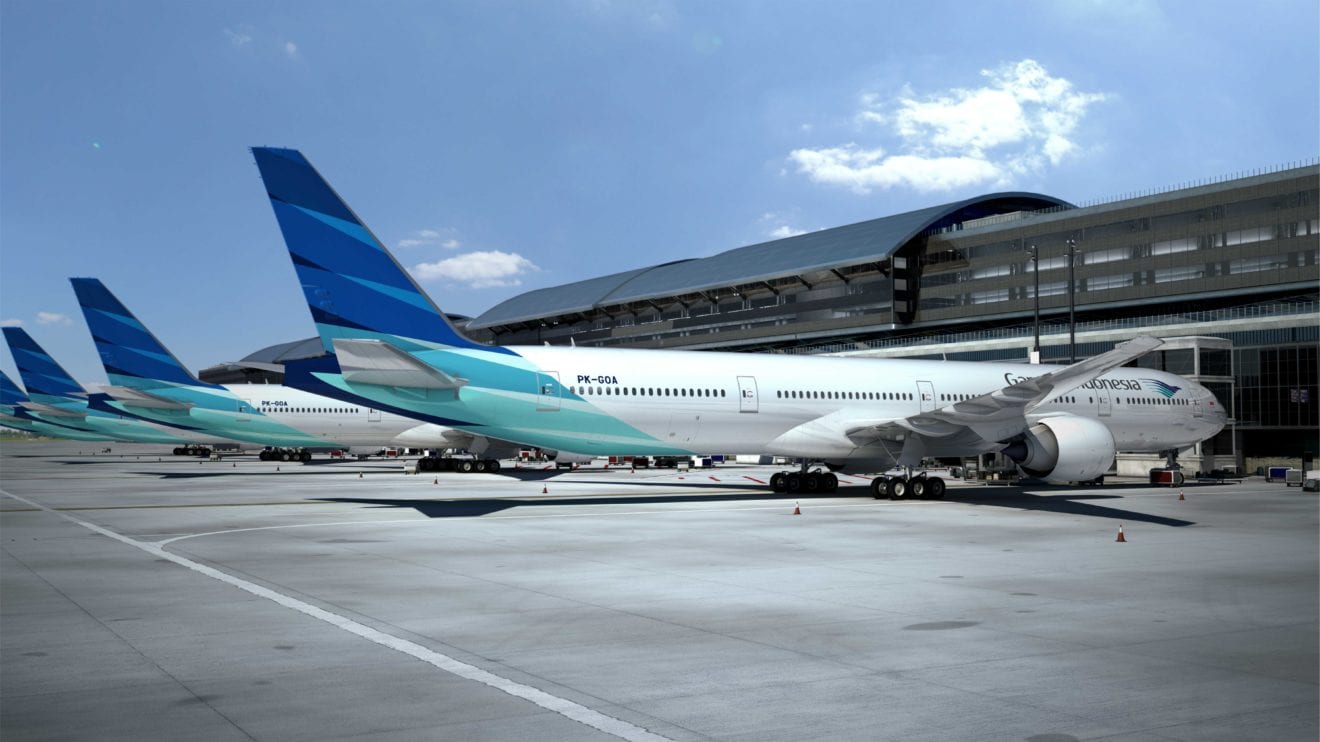
    He noted that the Indonesian flight carrier Garuda Indonesia could seize this opportunity as the market will always exist.

    “The flight carrier should not harbor concerns as passengers are always available,” he added.

  • Entrepreneur Now Awards 2016 nominations now open

    Entrepreneur Now Awards 2016 nominations now open

    Entrepreneur Now has launched the Entrepreneur Now Awards 2016 at a kickoff event at the Work Loft in Silom. This is the second year for the award ceremony which aims to honour and support SMEs in Thailand. The awards are organised with more than 20 community partners including many local chambers of commerce.

    There are eight categories in this year’s awards:

    • Outstanding female entrepreneur
    • Eco-entrepreneur
    • Creative entrepreneur
    • Innovative entrepreneur
    • Social enterprise entrepreneur
    • Most entrepreneurial team
    • SME (50 employees to 100)
    • Best newcomer

    In order to apply, entrepreneurs need to submit an application by October 31st, including uploading a 3-minute video about their company. Nominated startups will attend a networking evening with the judges, a group of seven diverse representatives from local startups, corporates, universities and organisations.

    The awards are open to both Thai and foreign SMEs with under 100 employees, provided they have a registered company in Thailand.

    This year’s awards ceremony will be held on November 23rd and organiser Pacharee Pantoomano promised it will be “bigger and better” than last year, with over 10 million baht worth of prizes available.

    The criteria the judges will use to select Thailand’s best entrepreneur are “uniqueness, eco-sustainability, striking achievements, recognition and traction, overcoming challenges, value in Thailand and ASEAN, vision and personal growth”.

    Judge Jacky Cheng said it was exciting to “mentor real businesses, not just ideas”.

    Duanghamon Kaewphongsri won last year’s Oustanding female entrepreneur award with her startup, Annette I Tim Tuk Tuk, selling artisan ice cream from iconic tuk-tuks. K. Duanghamon announced they are about to open their new 800 sqm factory and create products for export.

    Another of last year’s winners, Jonas Becker from Thinkatorium encouraged as many entrepreneurs as possible to apply: “There’s nothing to lose. It’s a good way to reflect on your company, where you are and where you want to be”.

    Probably the most complex part of the application process for startups is preparing the three minute video. The judges encouraged startups to include facts and figures. Rather than try to cover everything, focus on the criteria which best apply to you. K. Pacharee noted that many startups reuse their video to represent themselves at future events. Entepreneur Now will prepare additional help for preparing the video component in the next few weeks.

    Startups have until October 31 to submit their application via the Entrepreneur Now website.

  • Private-label deal for E-mart Korea

    Private-label deal for E-mart Korea

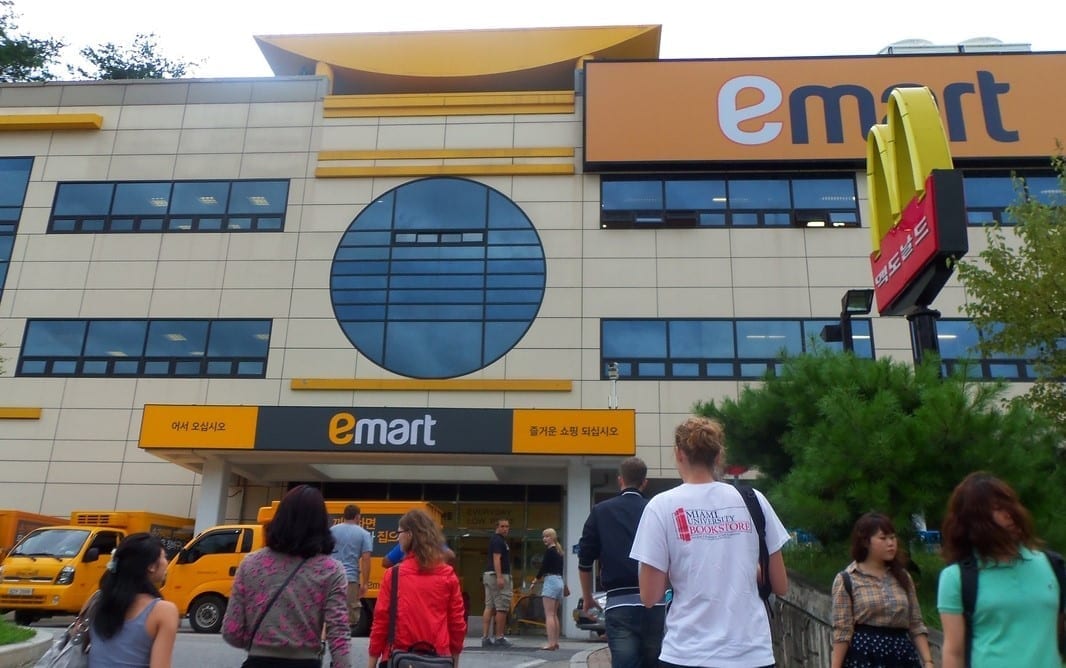
    Discount seller E-mart Korea has signed an agreement to supply its private-label items to Metro China.

    It is introducing four items from its No Brand range, to be sold from next month. It is the first time for E-mart to export to an overseas offline store.

    E-mart’s private-label products already sell in Mongolia and Vietnam. Sales of its No Brand range at its Ulaanbaatar branch, which opened last month, have already reached 600 million won (US$533,000), accounting for about 7 per cent of total sales. No Brand contributed 3 per cent of sales at its Vietnamese outlet, which opened in December.

    Introduced in April last year with nine items, No Brand now has more than 300 products, from butter cookies to car window wipers, and posted 63.8 billion won turnover in the first half of this year.

    Metro is a German retailer that is the third-largest franchise globally following Walmart and Carrefour. It has more than 2200 outlets in 33 countries, with 88 in China.

  • Direct India-Indonesia flights necessary to attract more Indian tourists

    Direct India-Indonesia flights necessary to attract more Indian tourists

    The Indonesian Tourism Ministry believes that direct flight from and to India could increase the number of Indian tourist arrivals in Indonesia.

    “The main challenge is direct flights as the existing ones are just transit flights from and to India,” Dody Prianto, assistant deputy director of the Tourism Ministry, noted here.

    Prianto was in Kolkata, India, for a roadshow to promote “Wonderful Indonesia,” the tourism brand of the country, at a hotel in the city, with the objective of attracting more tourists from India.

    He hoped airlines, such as Garuda Indonesia, would be interested in operating direct flights between India and Indonesia.

    To draw more Indian tourists to Indonesia, the ministry is intensifying tourism promotion to introduce other tourist destinations apart from Bali.

    He mentioned Sumatra as one of the interesting places for Indian tourists to visit as it is located near Singapore, and its culinary dishes bear similarities to those in Indonesia.

    The Tourism Ministry has set a target of attracting at least 350 thousand Indian tourists this year.

    “The target is quite high, but we are optimistic that it can be achieved,” Prianto stated.

    During the first semester of this year, a total of 185,911 Indian tourists had visited Indonesia, he said on the sidelines of a sales million event.

  • Consumer prices fall for 21st straight month in July

    Consumer prices fall for 21st straight month in July

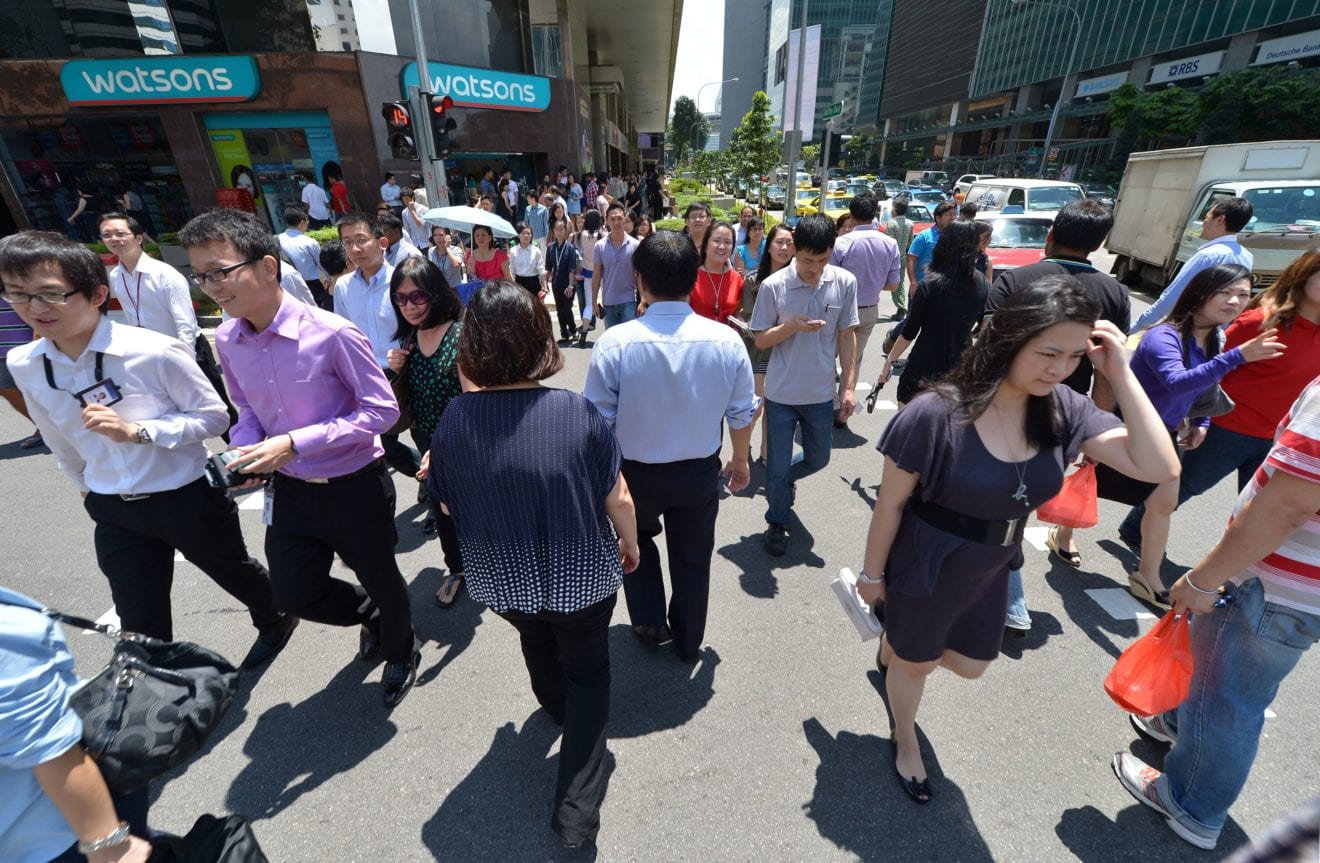
    Consumer prices fell further in July, marking the 21st straight month of decline, according to data released by the Department of Statistics on Tuesday (Aug 23).

    The consumer price index (CPI) fell 0.7 per cent last month, unchanged from the previous month, as a smaller decline in the cost of private road transport offset the impact of lower retail goods prices, the Monetary Authority of Singapore (MAS) and Ministry of Trade and Industry (MTI) said in a joint statement.

    Private road transport costs fell by 4.4 per cent, compared to the 5.7 per cent decrease a month earlier, largely due to a smaller decline in car prices from a year ago.

    Prices of retail goods fell 0.2 per cent, compared to an increase of 0.5 per cent in June. This was mainly because of steeper discounts on clothing and footwear during the Great Singapore Sale, MAS and MTI said.

    Services inflation was 1.6 per cent, unchanged from the previous month. While the cost of education services rose more sharply, this was offset by a slower pace of increase in holiday travel expenses.

    Food prices rose 2.1 per cent in July. Although there was a stronger pickup in the cost of non-cooked food items, it was offset by a smaller increase in the price of restaurant food.

    The cost of electricity, liquefied petroleum gas and gas fell by 12.7 per cent, compared to the 13.7 per cent decline in June. This was due to a smaller decrease in electricity tariffs on a year-ago basis, the agencies said.

    Core Inflation, which excludes the costs of accommodation and private road transport, fell slightly to 1 per cent from 1.1 per cent in June, due to the fall in retail goods prices.

    Ms Selena Ling, Head of Treasury and Strategy at OCBC Bank, said that the main drags on inflation were familiar.

    “Looking ahead, with headline inflation having likely troughed in the second quarter and likely to creep higher in the coming months, we maintain our full-year inflation forecast of -0.4 percent year-on-year,” she said.

  • Isetan Philippines in planning

    Isetan Philippines in planning

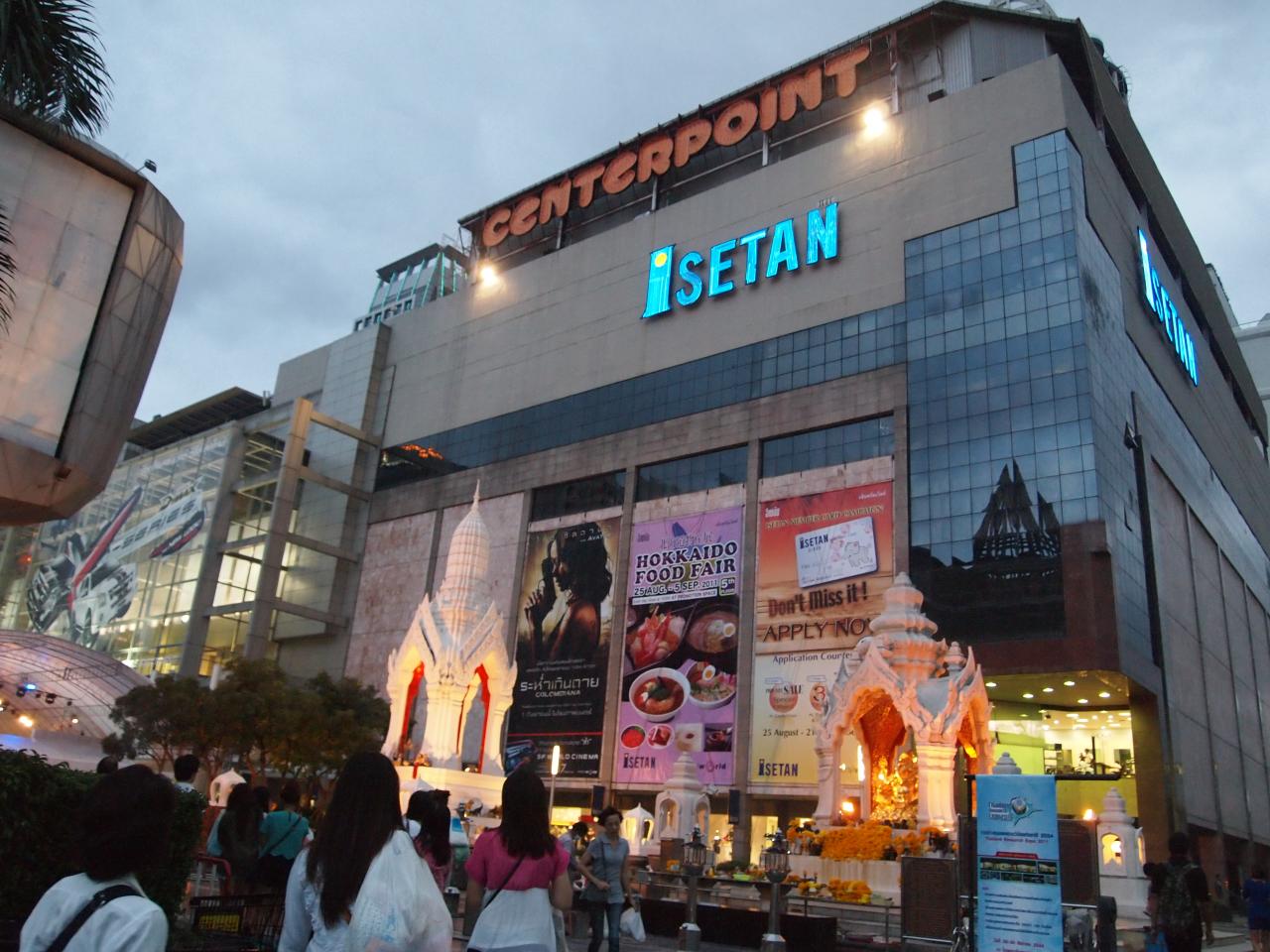
    A Japanese department store operator has set its eyes on the Philippines to build commercial-residential facilities by 2022.

    Isetan Philippines will work with Nomura Real Estate Holdings to build properties in Manila. The project is projected to reach approximately $500 million.

    The developer, a rival of Takashimaya, plans to erect four 40-story condo buildings with more than 1500 residential units on a 15,000 sqm lot.

    Isetan’s parent, Isetan Mitsukoshi, will operate a department store and other commercial facilities on the lower levels of the buildings. The retail giant plans to offer products developed in-house in addition to local favourites..

    According to reports, the Philippine project is part of Isetan Mitsukoshi’s Asia’s expansion amid Japan’s shrinking domestic market.

  • Raja Ampat launches tourism and conservation website

    Raja Ampat launches tourism and conservation website

    The government of Raja Ampat, West Papua, has launched a website on tourism and conservation to support tourism services in the region.

    The government is striving to boost innovation, Head of the Public Service Regional Office Technical Implementation Unit (BLUD UPTD) Water Conservation Area Raja Ampat Adrianus Kaiba noted in a press release received by Antara in Manokwari on Thursday.

    A technical institute, since its establishment in 2015 and under the coordination of the Department of Marine and Fisheries Raja Ampat, has been given the authority to manage water conservation in the area.

    He remarked that it was committed to improving services. Launching a website is rated as a step forward to improve the quality of services offered to both domestic and foreign tourists.

    “As a conservation area, we felt it was important to manage conservation in a professional and sustainable manner for the preservation of nature in this area,” he pointed out.

    He emphasized that the website was launched by Raja Ampat Regent Faris Abdul Umlati at Kampung Saonek, South Waigeo District, Wednesday (Aug. 17). It is part of a series of celebration activities to commemorate the 71st anniversary of the countrys independence.

    Kaiba said any information on water conservation in Raja Ampat can be updated on www.kkpr4.net, which is developed by BLUD UPTD.

    Meanwhile, Umlati highlighted that the website provides information on various conservation initiatives, scientific research, as well as water conservation activities being carried out in Raja Ampat in a sustainable manner.

    He believes the website will help domestic and foreign tourists obtain information regarding Raja Ampat, mainly related to water conservation.

    Moreover, Umlati remarked that the website is important to ensure that the areas biodiversity is always maintained and can be enjoyed by future generations.

    The Raja Ampat Islands are located at the northwestern tip of West Papua Province. They are located right in the heart of the coral triangle and are the worlds center of marine biodiversity.

    The results of ecological studies by The Nature Conservancy and Conservation International showed that Raja Ampat is home to 75 percent of the coral reefs in the world, with 553 species of coral and 1,437 species of reef fish.

    The waters in the area have abundant resources to provide sustenance and a means of livelihood for more than 40 thousand people spread across 135 villages in Raja Ampat.

    Local communities in Raja Ampat have cultural links and strong traditional ownership rights over the land and sea territory.

    Local authorities, through the BLUD UPTD Water Conservation Area, continue to ensure that water conservation is being carried out effectively, efficiently, and professionally.

    This step is being taken to ensure preservation of the natural resources and to improve the experience of tourists visiting the area to enjoy its natural beauty.

  • Lin Jia Convenience Store Debuts in Times Square

    Lin Jia Convenience Store Debuts in Times Square

    Lin Jia Convenience Store, the dark horse in China’s retail market, has shown remarkable growth recently, thanks to the retailer’s particular focus on excellence in customer service and innovation. The Chinese shop recently debuted on the large billboard overlooking New York’s Times Square, giving the world a glimpse of what a Chinese retailer looks like.

    Lin Jia Convenience Store, the dark horse in China’s retail market, debuts on the large billboard overlooking New York’sTimes Square

    The chosen theme “We are not just a neighbor, we are a family friend” clearly conveys Lin Jia Convenience Store’s brand philosophy of bringing the world to each shopper’s doorstep. The famous crossroads in the heart of New York City, one of the planet’s most popular destinations, has been drawing tourists from the four corners of the globe for many decades.

    In a globalized era, the world’s most well-known intersection has become a platform where leading companies can showcase their strength and where Chinese brands can announce their global expansion plans and successes.

    Catering to a wide range of demands and providing the most shopper-centric housekeeping services to help customers effortlessly maintain their preferred lifestyle

    As part of its commitment to becoming the most conscientious lifestyle service provider for shoppers, Lin Jia has paid utmost attention to both the range of services offered and the quality of those services. The store sells a wide range of fresh and instant foods, snacks, imported products and daily necessities, 24 hours a day, 7 days a week, catering to the whims of even the most demanding consumer.

    The range and variety of foods are designed to please every shopper, regardless of preferences or dietary restrictions. The store also provides a variety of user-friendly services, including laundry, printing, free charging booths for phones and tablets, free Wi-Fi, Lakala Kiosks for offline e-payments, self-service government lottery ticket kiosks and free toilets.

    As part of being the most customer-centric lifestyle products and services retailer, Lin Jia remains open all night. Providing products and services for customers round the clock is in line with the underlying meaning of its management concept encapsulated in the tag line “Lin Jia, Life+” and the basic guarantee underlying every product and service that is offered. The retailer provides the shopper with a quiet and comfortable shopping environment.

    Leading the industry trend, differentiating itself from the competition and accelerating brand development

    As the standard of living in China improves, the pace of day-to-day life accelerates, and expectations that shoppers have of their retailers continue to climb. In the face of this trend and ongoing industry competition, it becomes ever more important for convenience stores to provide a full range of services, while introducing innovations and differentiating themselves from the crowd.

    Lin Jia has already distinguished itself among its peers in the world of retail, by having continually enhanced and continuing to further enhance the quality of its services as well as bring in new innovations, delivering a constantly improving shopping experience to each and every person who enters the store.

    Innovative services create the best shopping experience

    Unlike other convenience stores, in terms of the interior layout Lin Jia Convenience Store installed highly directional speakers for announcements to ensure a quiet in-store environment and fully sealed off the kitchens to avoid having the smell of food being cooked wafting through the sales aisles, assuring the shopper of an end-to-end pleasant shopping experience during every minute spent within the store.

    At the same time, services offered by Lin Jia, including laundry, recharging stations for tablets and cell phones as well as online shopping with 30-minute delivery, maximizes the convenience of modern day living. In effect, Lin Jia has succeeded in filling in for the family housekeeper, with the same kind of personal touch and level of care.

    Lin Jia Convenience Store, a newly emerging force in the convenience retail sector, is committed to strictly adhering to the best practices that are expected of any top-notch retailer, enhancing branding through the excellence of its products and services, and serving as a guide to consumers for identifying the best services and products to support a quality life style.

    The retailer’s appearance in New York’s Times Square shows that China’s convenience stores are ready to take their place on the international stage as they prepare to enter markets beyond the borders of the home country.

  • Carrefour China concentrating on convenience

    Carrefour China concentrating on convenience

    Carrefour China says it will concentrate on convenience store development for the rest of this year.

    The French-headquartered retailer has been losing market share in the hypermarket segment and has closed about 30 stores during the past three years. It is trying to find a new growth model for the competitive Chinese model according to IGD analyst Catherine Ellwood and IGD Singapore program director Shirley Zhu.

    Hypermarkets will still play a role for Carrefour, particularly in western and central China, they say. The retailer is changing focus because of the increasing challenges for hypermarkets.

    Carrefour reportedly plans to open 40 to 50 convenience stores in Shanghai as well as about 15 Carrefour Easy stores by the end of the year.

    Rapid urbanisation, smaller families and rising affluence levels mean Chinese shoppers are demanding more convenient solutions, says the IDG team.

    “Convenience stores present a huge growth opportunity, but winning in this sector under rising costs and fierce competition is not an easy task.”

    However, Carrefour does have the advantage of existing sourcing and supply-chain capability for fresh products. Daily delivery from its own fresh distribution centre ensures availability and quality.

    A typical Carrefour Easy store has a floor size of 250 to 300 sqm with plenty of room for fresh produce displays. The stores act as pick-up locations for online shopping, and have kiosks to provide various services. There is also free Wi-Fi and charging devices in-store.

    For mobile payment alone, the stores accept Alipay, Apple Pay, Samsung Pay and WechatPay.

    Carrefour opened an extra distribution centre in June. The 21,000 sqm centre, in Dongguan, Guangdong province, will help with expansion in south China. Carrefour aims to have six distribution centres by the end the year.

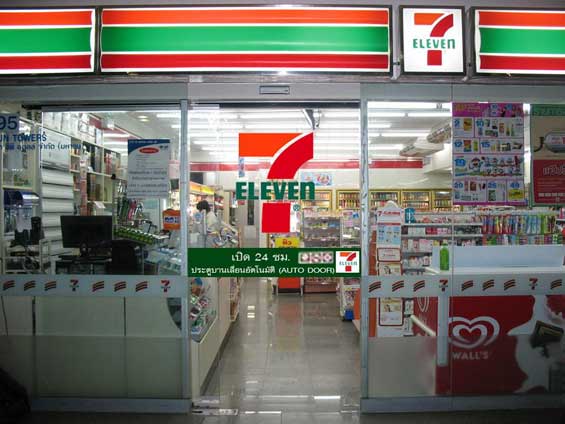
  • 7-Eleven Hits Milestone of 60000 Stores in 17 Countries

    7-Eleven Hits Milestone of 60000 Stores in 17 Countries

    7-Eleven Inc., the largest convenience retail chain in the world, keeps getting bigger with the opening of its 60,000th global store.

    The Irving-based company traces its roots to the 1927 opening of Southland Ice Co. in Oak Cliff, Texas. In 1946, with stores open from 7 a.m. to 11 p.m., the name was changed to 7-Eleven. Stores started staying open around the clock in 1971.

    7-Eleven moved into Canada in 1969 and into Mexico in 1971 as part of joint ventures. In 1974, the retail chain expanded into Japan with Seven-Eleven Japan, which became the parent company in November 2005.

    7-Eleven now has stores in Thailand, Taiwan, South Korea, China, Malaysia, Singapore, Philippines, Australia, Sweden, Norway, Denmark, Hong Kong, Macau, Indonesia and UAE through area license and master franchise agreements.

    The first 7-Eleven store in Vietnam is expected to open next spring, which will extend the retailer’s operations to 18 countries.

    “The 7-Eleven story is amazing and inspiring; we started as a small local ice house and have grown over the years store by store, community by community, and country by country into an iconic global brand,” said Joe DePinto, 7-Eleven Inc. president and CEO. “We will continue to grow by staying focused on the constantly changing convenience needs of our customers and by staying committed to the communities we serve.”

    Last year, 7-Eleven opened one store every 2.5 hours, for approximately 4,000 stores.

    The company currently has the most stores in Japan (18,860), followed by Thailand (9,278), the United States (8,378), South Korea (8,238) and Taiwan (5,057).

    Other milestones in 7-Eleven’s history include:

    • 1927: First store
    • 1952: 100th store
    • 1963: 1,000th store
    • 1984: 10,000th store
    • 2003: 25,000th store
    • 2010: 40,000th store
  • World Design Capital Taipei 2016 plans for world’s design devotees and designers

    World Design Capital Taipei 2016 plans for world’s design devotees and designers

    On the agenda for October are four major events in the World Design Capital® (WDC) Taipei 2016 program of International Signature Events: the International Design House Exhibition, International Design Week Forum, International Design Policy Conference, and Network of Cities Meeting. 

    WDC Taipei 2016 extends a warm invitation to participants and visitors from around the world to come and share their ideas and experiences, and bear witness to Taipei’s transformation into a model city that incorporates design thinking into public policy. 

    “October will be a defining month for the World Design Capital Taipei 2016,” says Pei-ni Beatrice Hsieh, Commissioner of the Department of Cultural Affairs of the Taipei City Government. “It is an opportunity both to reflect on the progress we have already made and to ignite international dialogue with other cities; to share experience and expertise. This is a chance to define a legacy for WDC Taipei 2016 that will be felt long into the future.”

    The International Design House Exhibition will be held at Taipei City’s historic Songshan Cultural and Creative Park, once home to a tobacco factory, from Thursday, October 13 to Monday, October 31. The Design House will bring together local and international designers, studios, and organizations to curate a series of thought-provoking exhibitions that will challenge visitors to reconsider their relationship with the urban environment and experience first-hand how design can radically change the world’s cities.

    An exhibition curated by Agua Zhou of Taipei-based studio Agua Design in the historical North Tobacco Factory, will showcase the results of innovative WDC Taipei 2016 projects, including the International Open Call and Designer in Residence Taipei programs, and explore the impact of Taipei City public planning and design policies.

    In Warehouse One, curator Li Wei-Lang, the Creative Director of Afterain Design (Taiwan), will mount an exhibition showcasing breakthroughs and innovation in Taiwanese design, particularly in the fields of science and technology, art and craft, and sustainability. In Warehouse Two, Page Tsou, celebrated visual artist and founder of Taipei-based studio, Auspicious Design, has invited renowned illustrators and visual artists from around the world to exhibit works that reflect on their impressions of Taipei.

    Warehouses Three and Four will be home to an international roster of exhibitors, with some participants hailing from cities that are past or future holders of the World Design Capital designation. The exhibition will explore the WDC Taipei 2016 theme of “Sisheng: Life Quality and Health, Ecological Sustainability, Smart Living, and Urban Regeneration.” In Warehouse Five, renowned Taiwanese contemporary calligraphic artist Tong Yang-Tze will collaborate with up-and-coming Taiwanese fashion designers, and spatial and sound designers to create an interactive exhibition that will breathe new life into traditional Chinese calligraphy.

    The International Design Policy Conference, which will be held on the weekend of October 15 and 16 at the Taipei International Convention Center, aims to explore how design thinking can be integrated into public policy. Policy experts, industry professionals, and academics will be invited to share their insights into and case studies on urban development through design. 

    The International Design Week Forum, which will be held on Monday, October 17 and Tuesday, October 18 at the Creativity Theater in Songshan Cultural and Creative Park, will bring representatives from various design weeks and festivals around the world to contribute their insights into how cities can support and harness the innovation of designers. The second day will be open to the public. Participants will be able to access free entry to both the International Design Week Forum and the International Design Policy Conference in August. Follow WDC Taipei 2016 on Facebook for updates: https://www.facebook.com/taipeidesign/.

    The final International Signature Event in the October series is the invitation-only Network of Cities Meeting. WDC Taipei 2016 organizers will invite mayors and city representatives from around the world to meet in Taipei, where together they will discuss WDC legacy programs, explore opportunities for collaboration, and share design-based solutions to the many civic and environmental challenges faced by cities around the globe.

  • CropLife Asia Signs Partnership with Asian Apiculture Association

    CropLife Asia Signs Partnership with Asian Apiculture Association

    CropLife Asia announced today that it has signed a Memorandum of Understanding (MoU) with the Asian Apicultural Association (AAA) to support a research initiative to catalogue and study the bee species and populations in Asia. CropLife Asia Executive Director Dr. Siang Hee Tan and AAA President Dr. Siriwat Wongsiri signed the agreement at Singapore’s M Hotel.

    It is estimated that at least 87 out 115 global primary food crops require some form of animal pollination, and insect pollination occupies a high value in the production of daily produce including vegetables, fruits, edible oil and spices.

    Comprehensive data on pollinators in Asia is scarce and much of the information that does exist has been derived using an array of different methods, making it difficult to draw comparisons across geographies and time. To better understand the state of Asia’s pollinators, a first step in protecting them and promoting their use in agriculture, CropLife Asia and AAA have agreed to collaborate in developing a harmonized method to survey the pollinators in key Asian countries.

    “When it comes to pollinators in Asia, there is a general lack of both awareness as to the important role they play in agriculture as well as reliable data reflecting their overall health,” said Dr. Tan. “Our industry has a responsibility to work with chief stakeholders who have unique perspective and expertise in this area, and our partnership with AAA is an important and impactful step forward on this front.”

    A key component of the MoU is developing a universally-applicable, harmonized method to capture the state of bee health in particular in key countries across the region. Specifically, this will entail surveying bee species in order to identify major pollinators (including indigenous subspecies) and their relative abundance.

  • Chinese Online Shoppers to ‘Walk Into Australia and New Zealand’ with Azoya

    Chinese Online Shoppers to ‘Walk Into Australia and New Zealand’ with Azoya

    A select group of influential online celebrities from China will arrive in Australia next week for the ‘Walk Into Australia and New Zealand’ campaign, organised by leading turnkey e-commerce solutions provider Azoya and China’s leading online shopping guide SMZDM

    The ‘Walk Into Australia and New Zealand’ campaign is focused on building the bridge between Chinese online shoppers and Australian retailers by offering face-to-face interactions to help them understand the authenticity and reliability of ethical products from Australia. Deterred by safety and quality issues with domestic products, particularly for healthcare and food supplements, Chinese consumers are increasingly looking to Australia to buy directly through cross-border e-commerce. 

    “China’s ecommerce landscape is rapidly evolving, offering Australian brands and retailers a huge opportunity to take advantage of it,” said Sylvia Wei, deputy managing director – Australia for Azoya. “If they’re going to survive in such a competitive market, they’ll need to build relationships with key online influencers, who are invaluable sources of promotion in China. This campaign will help them develop more effective and rewarding channels, as well as better understand what Chinese consumers need and want.”

    As traditional marketing channels continue to lose their impact in acquiring new consumers in China, live streaming marketing and influential online celebrities, known in China as key opinion leaders (KOLs), are emerging as the channels employed by the local ecommerce industry. While the marketing influence of celebrities in the Western world is useful, KOLs in China have a very powerful influence over consumers. They mainly attract followers by being an authority on a particular subject and gain credibility through a long history of interacting with followers, who have a high-level of trust in them. Therefore, leveraging high-profile bloggers and microbloggers boasting millions of followers is a very effective strategy for brands and retailers to reach target audiences. Retailers can directly influence a large community and reach thousands or even millions of potential customers.

    The 12 person delegation participating in the ‘Walk Into Australia and New Zealand’ tour – including four high-profile Chinese KOLs (selected from over 1,000 applicants) and editors from SMZDM – will participate in a series of online and offline events in Sydney, Melbourne and Auckland between 21-30 August. They will experience production, supply, marketing, order fulfillment and customer service from the stores and warehouses of five of Azoya’s participating retail customers, which all have established ecommerce businesses in China. These include Pharmacy Online (Sydney), Pharmacy 4 Less (Sydney), Amcal (Melbourne), Kiwi Discovery (Auckland) and Pharmacy Direct (Auckland). The delegation will also have the opportunity to meet with leading healthcare brands Swisse and Blackmores. 

    In return, the KOLs will share their experiences online on SMZDM and other sources, potentially exposing participating retailers and brands to more than four million Chinese consumers. The tour will also be broadcast by professional editors on online live streaming channels, giving Chinese consumers a glimpse into how their favourite products are packaged and distributed, showcasing the quality of the products they plan to purchase. During the live streaming, purchase links will be pushed to users to place orders immediately. In addition, a local team in China will help promote the ‘Walk Into Australia and New Zealand’ tour to attract more users to participate. 

    “We’re really excited to be able to offer our healthcare retail customers in Australia such an amazing opportunity to strengthen their brands with Chinese consumers,” added Ms Wei. “China’s healthcare sector keeps developing at an astonishing rate, fueled by favourable demographic trends, continuing urbanisation, an increasing disease burden, the overall economy’s healthy expansion and income growth. The campaign will help drive awareness of their quality healthcare products in China and take their ecommerce businesses to the next level.”